Illegal in Korea: 15 Things That Get Tourists Fined (and 5 That Don't)
Last updated: 17 November 2026. Fine amounts come from the Korean statutes named next to each one, as published by Korean government bodies (Seoul Metropolitan Government, the Korea National Park Service, the Korea Customs Service, the Ministry of Justice immigration portal) and as quoted in Korean-language reporting; where we rely on a press report rather than the statute, we say so. Dollar figures use ₩1,333.6 = US$1, the Seoul closing rate on 11 November 2026, and are rounded. This is a guide, not legal advice. Sources are at the end.
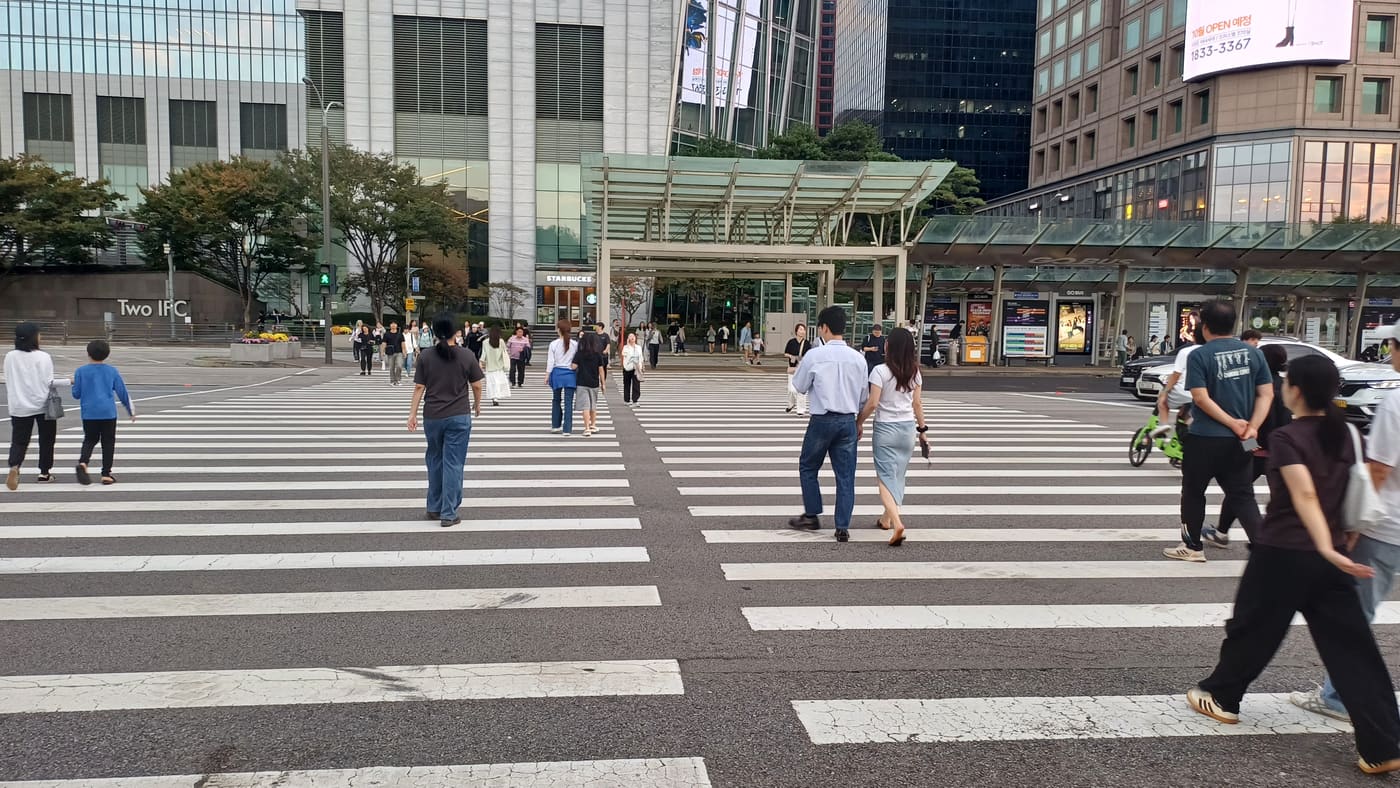
In the first week of October 2026, a group of apparently foreign men climbed the railing of Banpo Bridge (반포대교) in Seoul, jumped into the Han River, swam around and climbed out. The clip went round Korean social media within hours, and so did the question everyone asked: what is the fine? The answer from Seoul City Hall was that there isn't one. "We can't legally punish people just for jumping into the Han River," a city official told The Korea Herald, "so all we can really do is tell them not to."
A month earlier it was a German TikToker with 3.3 million followers DJing from a speaker inside packed Seoul subway carriages and backflipping on the platforms at Samgakji, Noksapyeong, Hyochang Park and Sinchon. Many online comments were critical. No fine was reported there either.
Those two stories get the shares, but they are the exceptions. The things that actually cost visitors money in Korea are small and boring: crossing against the light, dropping a cigarette butt, riding a shared e-scooter on a car-only licence, a pack of beef jerky in your suitcase. Below are 15 things that are illegal in Korea and get tourists fined, each with the amount in won and dollars, the Korean law behind it in Hangul so you can show it to someone, and a link to our detailed guide where we have one. Then come 5 things visitors expect to be illegal that are not.
Korea's ₩100,000 passport rule means carrying it every day: TOPBAG RFID passport and document wallet on AmazonAffiliate link. As an Amazon Associate, EpicKor earns from qualifying purchases at no extra cost to you.
Quick Guide: Korea fines for tourists, November 2026
Two Korean words help with every row. A beomchikgeum (범칙금) is an on-the-spot penalty notice from the police; pay it and the matter ends there. A gwataeryo (과태료) is an administrative fine from a city, district or agency, not a criminal record. A beolgeum (벌금) is a criminal fine imposed by a court, and that one is a conviction.
| # | What gets you fined | Typical amount | Korean law | Full guide |
|---|---|---|---|---|
| 1 | Not carrying your passport (17 and over) | ₩100,000 (US$75) first time, up to ₩1,000,000 (US$750) by the fourth | 출입국관리법 제27조 (Immigration Act) | Passport rule |
| 2 | Jaywalking | ₩20,000 (US$15); ₩30,000 (US$22) directly under a footbridge | 도로교통법 (Road Traffic Act) | Below |
| 3 | Littering a butt, gum or tissue | ₩30,000 (US$22) from police; ₩50,000 (US$37) from the district | 경범죄 처벌법 · 폐기물관리법 | Trash cans and fines |
| 4 | Leaving a bag of rubbish or picnic trash | ₩200,000 (US$150) | 폐기물관리법 시행령 (Wastes Control Act) | Trash cans and fines |
| 5 | Wrong bag, mixed food waste or wrong put-out night | ₩100,000 (US$75) first offence | 폐기물관리법 시행령 | Garbage bags 2026 |
| 6 | Smoking or vaping in a no-smoking zone | ₩100,000 (US$75) | 국민건강증진법 (National Health Promotion Act) | Smoking and vaping |
| 7 | Riding a shared e-scooter without a moped/motorcycle licence | ₩100,000 (US$75) | 도로교통법 | Bikes and scooters |
| 8 | E-scooter: no helmet / a passenger | ₩20,000 (US$15) / ₩40,000 (US$30) | 도로교통법 | Bikes and scooters |
| 9 | Riding a bike or e-scooter at 0.03% blood alcohol | ₩30,000 (US$22) on a bike; ₩100,000 (US$75) on a scooter | 도로교통법 제44조 | Drunk driving |
| 10 | Subway fare evasion (incl. someone else's discount card) | The fare plus 30 times the fare, about ₩48,000 (US$36) on a basic trip | 철도사업법 (Railway Business Act) · operator tariff | Subway etiquette |
| 11 | Entering a closed national park trail | ₩200,000 (US$150) first time; up to ₩500,000 (US$375) | 자연공원법 제86조 (Natural Parks Act) | Trail closures |
| 12 | Flying a drone in a no-fly zone without approval | Up to 1 year in prison or ₩10,000,000 (US$7,498), since 17 Sept 2026 | 항공안전법 (Aviation Safety Act) | Below |
| 13 | Secretly filming someone's body (the "molka" law) | Up to 7 years or ₩50,000,000 (US$37,492) | 성폭력처벌법 제14조 | Below |
| 14 | CBD, THC or cannabis, even legal at home; Adderall without a permit | Possession up to 5 years or ₩50,000,000; bringing it in is importation, life or at least 5 years | 마약류 관리에 관한 법률 (Narcotics Control Act) | Banned food and medicine |
| 15 | Undeclared meat, jerky or sausage in your luggage | ₩1,000,000 (US$750) first time; pork from swine-fever countries ₩5,000,000 (US$3,749) | 가축전염병 예방법 (Livestock Epidemics Prevention Act) | Banned food and medicine |
| + | Overstaying, or working on a tourist entry | Usually a fine set by length, ₩500,000–₩2,000,000 (US$375–1,500) under a month, then a departure order; statutory maximum 3 years or ₩30,000,000 | 출입국관리법 제94조 | Visa overstay |
CLOSCA foldable helmet: a folding commuter helmet that packs flat for a suitcase. On a shared e-scooter in Korea a helmet is a legal requirement with a ₩20,000 fine, and no scooter or bike rack hands you one. If you will ride at all, this is the one item on the list above that a purchase actually fixes; check the listing for current price and sizing. As an Amazon Associate, EpicKor earns from qualifying purchases at no extra cost to you.
See the CLOSCA folding helmet on AmazonThe street: passports, crossings, litter and cigarettes
1. Not carrying your passport: ₩100,000
This is the rule visitors are most surprised by. Article 27 of the Immigration Act (출입국관리법) says every foreigner aged 17 or over must carry a passport, or a residence card if they live in Korea, at all times. A photocopy is not on the list, and neither is a photo on your phone. The standard penalty is ₩100,000 the first time, rising step by step to ₩1,000,000 by the fourth. In practice the passport is what the police ask for the moment anything else happens: a traffic stop, a lost-property claim, a bar fight you were standing next to. Our passport guide has the full ladder and what counts as an acceptable ID.
2. Jaywalking: ₩20,000
Korea fines pedestrians. Crossing against the signal is an on-the-spot penalty (범칙금) of ₩20,000, and crossing directly beneath a footbridge is ₩30,000, as Gyeonggi Ilbo summarised the rules in October 2024, citing the Road Traffic Act (도로교통법) enforcement rules. A police official quoted in the same report pointed out the practical catch: jaywalking cannot be enforced from CCTV, so it is fined only when an officer sees you. Wide Seoul boulevards with long signals are exactly where it happens, and where drivers do not expect you.
3–5. Litter, rubbish bags and the wrong night
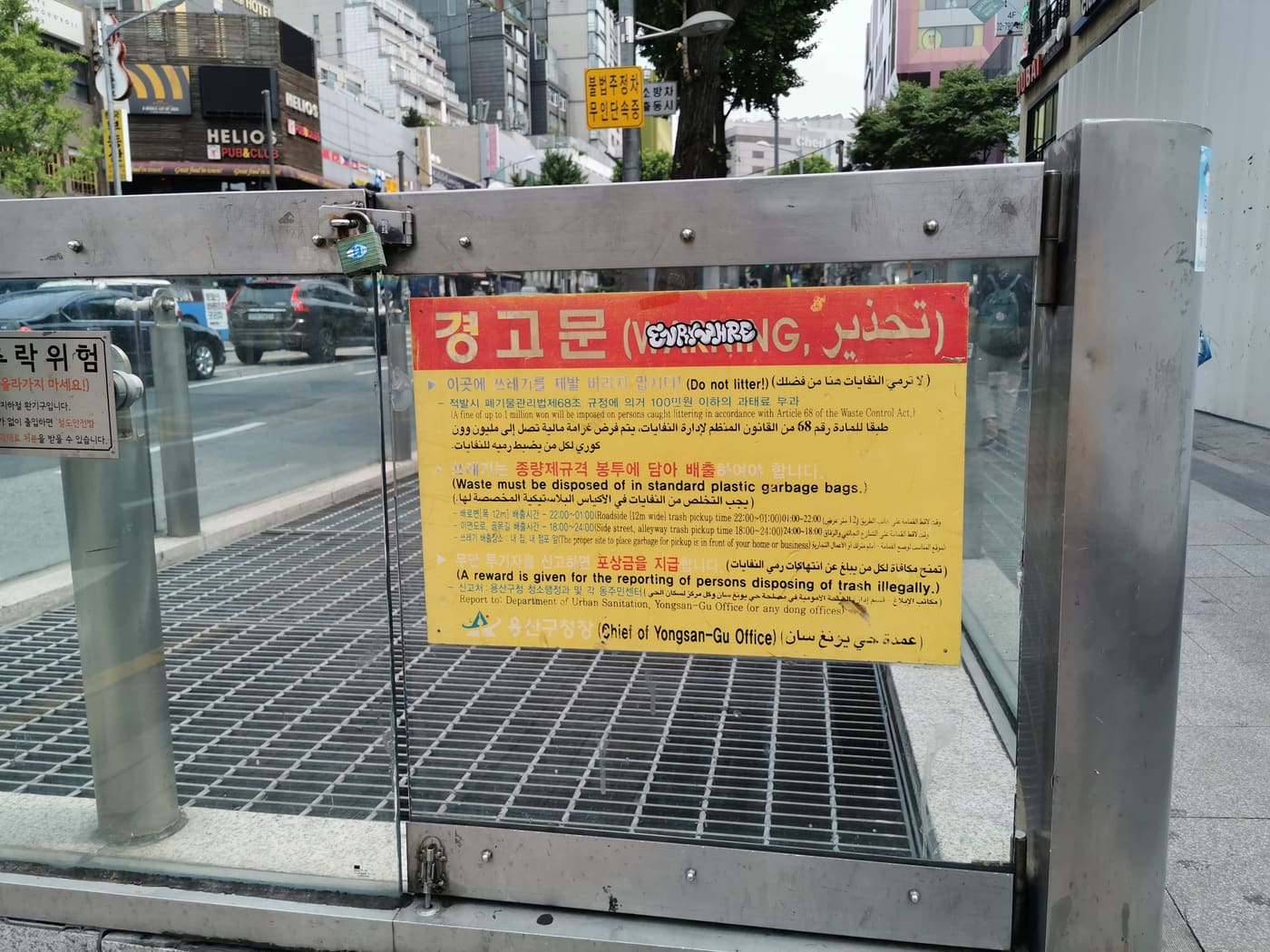
Korea has very few street bins (Seoul counted 7,142 in September 2026) and fines people who solve that problem on the pavement. Under the Minor Offenses Act (경범죄 처벌법), the police can fine you ₩30,000 for a cigarette butt, gum or tissue and ₩50,000 for other trash. Districts fine separately under the Wastes Control Act (폐기물관리법): ₩50,000 for a butt or tissue, and ₩200,000 for leaving a bag of trash or picnic leftovers behind. Our trash can guide maps where the bins actually are.
If you are in an Airbnb or a long stay, the bigger risk is the rubbish system. General waste goes in a paid district bag (a 20-litre bag costs ₩490 across Seoul), food waste goes separately, and each district sets which nights you may put it out. Mixing food or recyclables into the general bag, or using the wrong bag, carries a district fine of ₩100,000 for a first offence. The nights differ by district, so read our garbage bag guide before you put anything out.
6. Smoking or vaping in the wrong place: ₩100,000
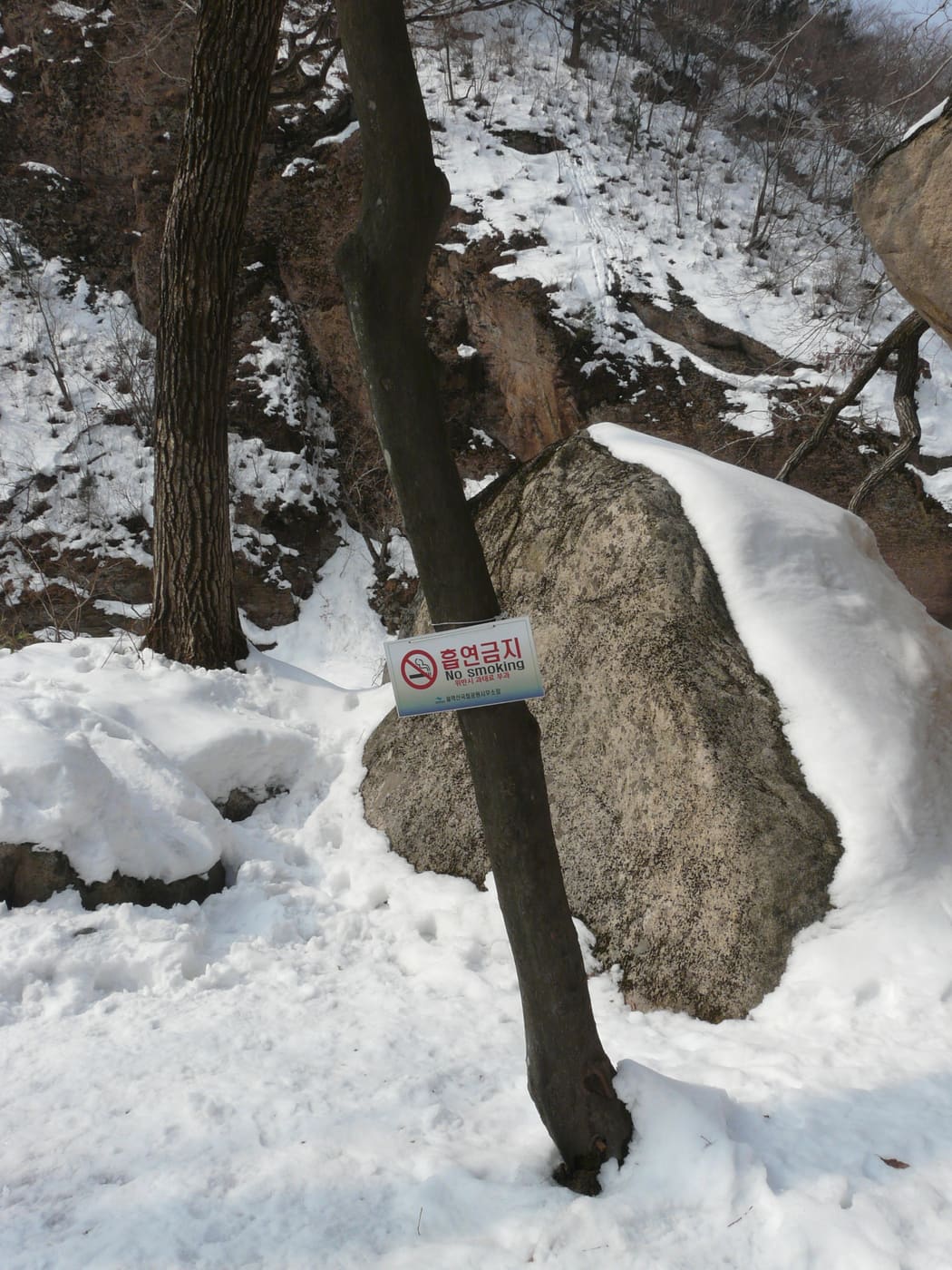
Smoking is legal in Korea from 19 by birth year, but the list of places where it is not is long: every restaurant, café, pub and PC bang, subway stations and their exits, bus stops, school zones and many streets designated by city or district ordinance. The fine under the National Health Promotion Act (국민건강증진법) is ₩100,000 in a listed facility, and Seoul's own ordinance sets ₩100,000 on its designated streets. Since 24 April 2026, synthetic-nicotine vape liquid has been legally tobacco too, so the "it's only a vape" defence has gone. On a plane in flight, smoking is a crime with a fine of up to ₩10 million. Details, and where you can smoke, are in our smoking and vaping guide.
You might like: Seoul Safety Guide: Taxi Scams, Street Recruiters, and Etiquette, which covers the other things that go wrong on a first night in Seoul, none of them fines.
Getting around: e-scooters, bikes, the subway and rental cars
7–8. Shared e-scooters: licence, helmet, passenger
In Korean law an electric kick scooter is a personal mobility device (개인형 이동장치), and riding one needs at least a moped licence (원동기장치자전거 면허). The app will usually let you ride without checking, and that is the trap: most visitors' International Driving Permits cover cars only (category B), and on the practical reading a B-only permit is riding without a licence. The penalties under the Road Traffic Act are specific:
- Riding without the licence: ₩100,000 (US$75)
- No helmet: ₩20,000 (US$15)
- Carrying a passenger: ₩40,000 (US$30)
- Riding on a designated scooter-free street (Hongdae's Red Road is one): ₩30,000, ₩60,000 in a school zone
The Ttareungi (따릉이) public bike is the legal alternative: a ₩1,000 tourist pass, no Korean phone needed and no licence at all. Our bike and scooter guide explains both.
9. Riding a bike or scooter after a drink
Korea's drink-drive limit is 0.03% blood alcohol, and Article 44 of the Road Traffic Act applies it to bicycles as well as cars. The penalty on a bike, including a ₩1,000 Ttareungi, is a ₩30,000 on-the-spot fine; on an e-scooter it is ₩100,000, or ₩130,000 if you refuse the breath test. In a car, it is criminal from the first offence. Read our drunk driving guide before you rent anything after dinner.
10. Subway fare evasion: 30 times the fare
Seoul's subway does not have barriers that are hard to get around, and it does not need them. If you are caught without a valid fare, you pay the fare plus a surcharge of 30 times that fare, under the Railway Business Act (철도사업법) and Seoul Metro's passenger tariff. At the 2026 base fare of ₩1,550 that is about ₩48,000 for one trip, and if staff find earlier misuse on the same card it is charged back too. Most cases are not jumpers but people using someone else's discounted senior or youth card; Herald Economy reported in April 2026 that Seoul Metro caught about 53,000 cases a year on average over 2023–2025 and collects about ₩2.5 billion in surcharges. Use your own T-money card and tap in and out. More in our subway etiquette guide.
Rental cars: the fines that follow you home
If you drive, Korea's speed and school-zone cameras do not care that you have flown home. Fines are forwarded through the rental company, usually with a handling fee. School zones (어린이보호구역) are where visitors get caught: lower limits and higher fines. Our car rental guide covers which licences work and how the billing reaches you.
Outdoors: national parks, drones and the Han River
11. Closed national park trails: ₩200,000
This one is timely. From 15 November to 15 December 2026, the wildfire-caution period, 18 Korean national parks close 148 trail sections (669.81 km), including every route to Seoraksan's summit, Daecheongbong. Entering a closed trail is an administrative fine under Article 86 of the Natural Parks Act (자연공원법): ₩200,000 for a first offence, ₩300,000 for a second, and up to ₩500,000. Carrying flammable materials or smoking inside a national park, which is banned all year, carries up to ₩2,000,000. The Korea National Park Service notice lists which trails stay open; our trail closure guide has the section-by-section table.
12. Drones in Seoul: now a crime, not a fine
Bringing a drone to film Seoul is the fine visitors walk into with the least warning, and since 17 September 2026 it is no longer only a fine. Seoul City announced that, under the amended Aviation Safety Act (항공안전법), flying an unapproved drone in a no-fly zone now carries up to one year in prison or a fine of up to ₩10,000,000, replacing the old administrative fine of up to ₩3,000,000. Part of the sky over central Seoul is the P-73 no-fly zone. YTN reported in October 2026 that flying within 9.3 km of an airport without prior approval can bring a separate fine of up to ₩5,000,000.
Before flying anywhere in Korea, check the map in the Ready to Fly app or the government's Drone One-Stop service (drone.onestop.go.kr), where approval is applied for. If you also plan to film from the air, check the aerial-photography rules on the same official services before you fly, since flight approval and filming permission are handled separately.
The Han River: what is actually banned
The Banpo Bridge jump falls into a gap. There is no explicit ban on swimming or diving in the Han River, which is why the city could only ask people not to. What does exist is the Water Leisure Safety Act (수상레저안전법), which covers water-leisure equipment: jet skis, motorboats and the like. It bans them in designated zones off Yeouido and Banpo. According to Herald Economy's April 2026 report on Seoul's crackdown, the fines are ₩200,000 to ₩600,000 for using a banned or dangerous zone, ₩100,000 for not wearing a life jacket, and up to a year in prison or ₩10,000,000 for unlicensed or drunk operation. Seoul ran a crackdown on illegal water leisure from April to October 2026. Jumping from a bridge is still dangerous; 119 rescue personnel were seen near the bridge in the October footage, and the absence of a fine is not an invitation.
The serious ones: filming people, drugs, food at the border and visas
13. Hidden-camera filming: up to 7 years
Korea's Act on Special Cases concerning the Punishment of Sexual Crimes (성폭력범죄의 처벌 등에 관한 특례법), Article 14, punishes anyone who films another person's body with a camera, against their will, in a way that may cause sexual desire or shame. The maximum, raised in 2020, is seven years in prison or a fine of ₩50,000,000. Possessing, buying, storing or viewing such footage is up to three years or ₩30,000,000. Subway carriages, escalators and bathhouses are where most cases arise, and foreigners are prosecuted under it like anyone else: in July 2024 Jeju Seobu police booked a Chinese woman in her sixties, a visa-free tourist, who was caught filming in the women's section of a bathhouse.
The practical rule for visitors: never point a camera at a stranger's body, on an escalator, in a changing room or under a table, even as a joke. Ordinary photos of a street, a crowd or a subway platform are a different matter (see the "not illegal" list below), but a Korean who thinks you filmed them will call the police first, and the police will look at your camera roll.
14. Drugs, including CBD and your prescriptions
Korean drug law applies to what you do in Korea, and Korea treats CBD, THC and CBN products as cannabis. That means CBD oil, gummies, vape cartridges and hemp cosmetics, legal in your home country or not, are a criminal matter under the Narcotics Control Act (마약류 관리에 관한 법률): possession carries up to five years in prison or ₩50,000,000, and carrying it across the border is importation, which the Korea Customs Service's penalty table puts at life or at least five years.
Prescriptions are the other trap. Adderall and other amphetamine medicines have no licensed product in Korea; bringing them needs a self-treatment permit from the Ministry of Food and Drug Safety that is not guaranteed, so plan to leave them at home and talk to your doctor about an alternative. Sleeping pills and some painkillers need the same permit filed online before you fly. Our banned food and medicine guide lists which medicines need what.
15. Meat, jerky and fruit in your suitcase: ₩1,000,000 and up
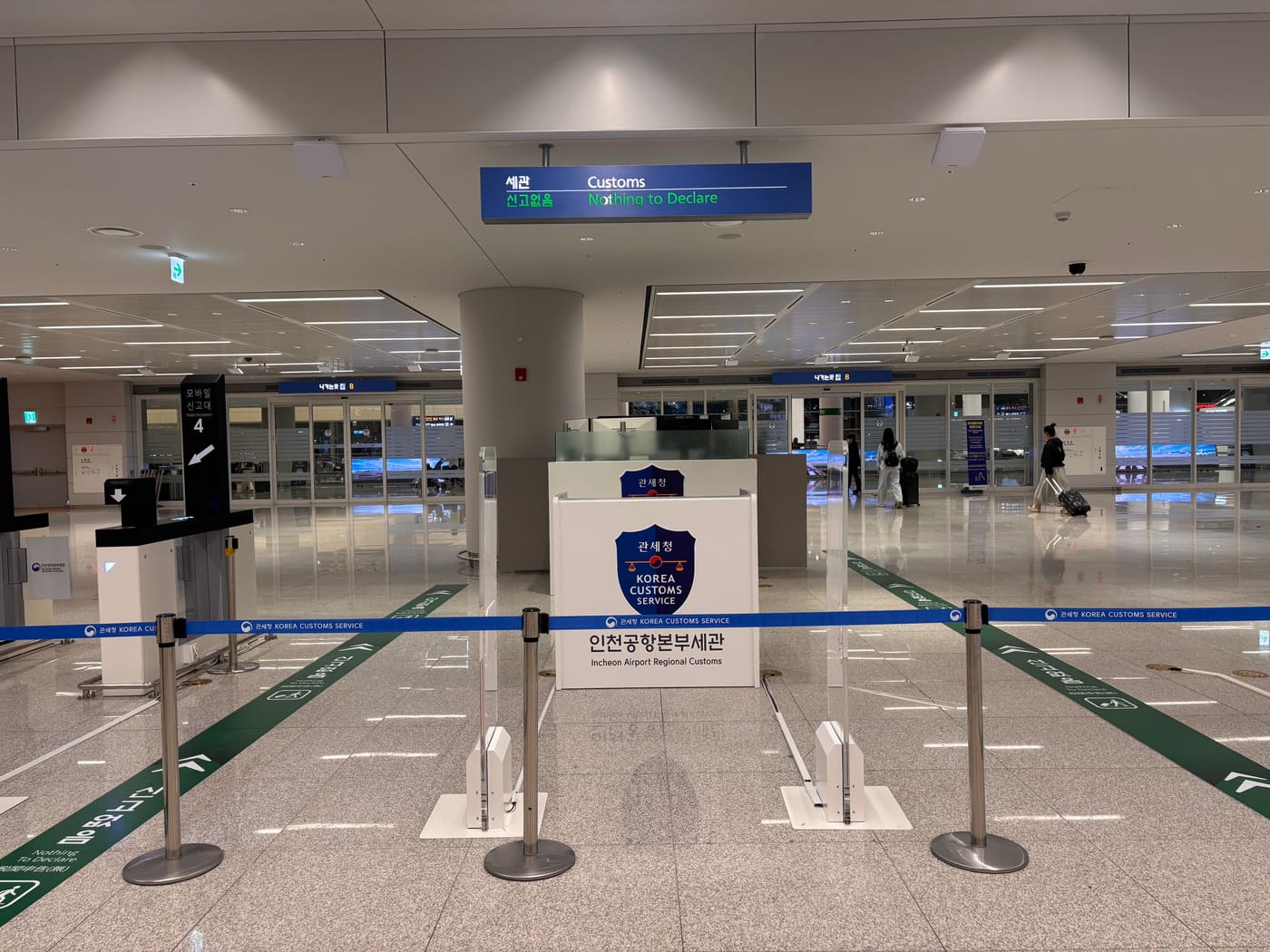
Korea bans all meat and meat products from hand luggage, from every country, in any quantity, sealed or not: jerky, sausage, ham, salami, and instant noodles with real meat pieces. If you declare it or drop it in the quarantine bin at the airport, it is destroyed and you pay nothing. If you walk through undeclared and are caught, the fine under the Livestock Epidemics Prevention Act (가축전염병 예방법) is ₩1,000,000 for a first offence, ₩3,000,000 for a second and ₩5,000,000 for a third; for pork products from a country with African swine fever it is ₩5,000,000, ₩7,500,000 and ₩10,000,000. Fresh fruit is banned the same way. The fix costs nothing: declare it. Details in our beef jerky guide.
Plus one: overstaying or working on a tourist entry
Overstaying even a day is, on paper, a crime under Article 94 of the Immigration Act: up to three years in prison or ₩30,000,000. In practice the immigration office settles most cases with a penalty set by how long you overstayed, ₩500,000 to ₩2,000,000 for under a month, followed by a departure order. Working for pay on a visa-free (B-2) entry or a short-term visit visa (C-3) is on the same scale, and that includes paid modelling, English tutoring and "helping out" at a guesthouse for a free room. If you need more time, apply to extend before your stay expires. Our overstay guide has the full table, and the K-ETA guide covers what changes at the border on 1 January 2027.
5 things that are not illegal in Korea (but feel like they should be)
1. Drinking in public
You can buy a beer at a convenience store and drink it on the bench outside, in a park or on the Han River lawns. Korea's drinking age is 19 by birth year, explained in our drinking age guide, and there is no general law against drinking in public.
There are a growing number of exceptions, each one local:
- Seoul's 22 city-run parks, including Seoul Forest, Namsan, Yeouido Park, World Cup Park and Seoul Children's Grand Park, have been "drink-clean zones" (음주청정지역) since April 2018. Drinking there is not banned; what is fined, up to ₩100,000, is drinking that causes loud noise, foul smells or otherwise disgusts other people.
- Tapgol Park in Jongno has fined drinking inside and outside the park ₩100,000 since 1 April 2026.
- Seoul Station Plaza became a no-drinking zone on 9 November 2026. Until 28 February 2027 it is warnings only; from 1 March 2027 drinking there is a ₩50,000 fine.
- Cheonggyecheon: Seoul announced in August 2026 that it plans to make the whole 8.12 km stream walk a no-smoking, no-drinking zone with fines of up to ₩100,000. At the time of writing we could not find that the designation has taken effect; look for signs on the steps down.
2. Having tattoos
Visible tattoos are completely legal in Korea, and no one will fine you for one. What Korea has regulated is doing tattoos: for decades only licensed doctors could legally tattoo. That changes with the Tattooist Act (문신사법, Act No. 21070), enacted on 28 October 2025, which creates a state licence for tattooists and takes effect on 29 October 2027. Until then the law aims at the person holding the needle, not the person with the ink. The place a tattoo still matters is private house rules: some bathhouses, gyms and pools turn away visible tattoos, which our Seoul jjimjilbang guide checks spa by spa.
3. Jumping into the Han River
As above: no fine, because no law bans swimming or diving in the river itself. Water-leisure equipment in the Yeouido and Banpo zones is another matter, and so is anything that needs a rescue.
4. Dancing or filming content on the subway
The September TikTok videos drew anger, not fines: the report cited no law and no penalty. That does not make a subway carriage a stage. Station staff can ask you to stop, blocking doors or aisles creates problems of its own, and smoking or vaping on a train is separately fined. The real risk in filming on the subway is the one in item 13: other passengers' bodies in your frame.
5. Photographing people in public
Taking ordinary photos in public places, of streets, markets, crowds or a festival, is not a crime in Korea. The hidden-camera law applies to filming someone's body in a way that may cause sexual shame, not to a person appearing in a street photo. Korea does recognise portrait rights, which are a civil matter (someone can ask you to delete a photo or sue over its commercial use), and it is good manners to ask before photographing an individual up close, especially children and older vendors at markets.
How fines are paid
Most fines in this guide are paid the same way: the officer or official hands you a notice with a payment account or number, and you pay within the period printed on it. For administrative fines (과태료), the Act on the Regulation of Violations of Public Order (질서위반행위규제법, Art. 18) allows a reduction of up to 20% if you pay within the advance-notice period. You will be asked for your passport when the notice is written, which is one more reason to carry it.
The serious categories are different. Drugs, hidden-camera filming and immigration offences are criminal cases, not notices, and they are handled by the police, prosecutors or the immigration office, often with an interpreter. If you are in that position, contact your embassy: it can give you a list of English-speaking lawyers and interpreters, though it cannot pay a fine or intervene in a Korean case.
FAQ
Q: What is illegal in Korea that is legal in the US or Europe?
A: The ones that catch visitors most often are CBD and THC products (treated as cannabis, a criminal offence), Adderall without a Korean permit, bringing any meat product into the country (₩1,000,000 fine if undeclared), and riding a shared e-scooter on a car-only driving licence (₩100,000). Not carrying your passport is also a fine, ₩100,000 the first time.
Q: Is jaywalking illegal in Korea?
A: Yes. Gyeonggi Ilbo reported the on-the-spot fine as ₩20,000 for crossing against the signal and ₩30,000 for crossing directly under a footbridge. It is enforced only when police see it, not from cameras.
Q: Can you drink alcohol in public in Korea?
A: Yes, from 19 by birth year, in most public places including parks and Han River lawns. Exceptions are local: Tapgol Park (₩100,000), Seoul Station Plaza (₩50,000 from 1 March 2027), and Seoul's 22 city-run parks, where only rowdy drinking that disturbs others is fined up to ₩100,000.
Q: Can I fly a drone in Seoul?
A: Only where the airspace allows it and with approval where required. Part of central Seoul is inside the P-73 no-fly zone, and since 17 September 2026 an unapproved flight there can bring up to one year in prison or a ₩10 million fine. Check the Ready to Fly app or drone.onestop.go.kr first, including the rules for aerial filming.
Q: Are tattoos illegal in Korea?
A: No. Having tattoos is legal. Only tattooing by non-doctors has been restricted, and the Tattooist Act legalises licensed tattooists from 29 October 2027. Some spas and gyms still refuse visible tattoos as a house rule.
Q: How do tourists pay a fine in Korea?
A: The notice you are handed shows a payment account or number and a deadline. Administrative fines (과태료) can be reduced by up to 20% if paid within the advance-notice period. Keep your passport on you, because the notice is written against it.
Sources
- The Korea Herald, 7 October 2026, "Men jumping from Banpo Bridge": the October incident, 119 personnel seen near the bridge, the Seoul City official's statement that there is no legal basis to punish jumping into the Han River, and the Water Leisure Safety Act ban zones off Yeouido and Banpo. https://www.koreaherald.com/article/10895677
- The Financial News (fnnews) English, 8 September 2026: German TikToker "Streichbruder" (about 3.3 million followers), six Seoul subway videos filmed at Samgakji, Noksapyeong, Hyochang Park and Sinchon stations; no law or penalty reported. https://en.fnnews.com/news/202609081605311377
- Immigration Act (출입국관리법) Arts. 27 and 94 and Enforcement Rule Table 7, as set out in our guides /blog/544 and /blog/548, read on law.go.kr on 27–28 October 2026; Ministry of Justice immigration notices linked there.
- Gyeonggi Ilbo (경기일보), 4 October 2024, on pedestrian jaywalking penalties under the Road Traffic Act rules as it summarised them (₩20,000; ₩30,000 directly beneath a footbridge) and on-the-spot-only enforcement. https://kyeonggi.com/article/20241003580152
- Minor Offenses Act (경범죄 처벌법) and Wastes Control Act (폐기물관리법) Enforcement Decree Annex 8, littering and waste-disposal fines; Seoul Living Environment Division bin count; as set out in /blog/213 and /blog/507. Easy Law (찾기쉬운 생활법령): https://www.easylaw.go.kr/CSP/CnpClsMainBtr.laf?popMenu=ov&csmSeq=1662&ccfNo=3&cciNo=1&cnpClsNo=1
- National Health Promotion Act (국민건강증진법) Art. 9 and 34, Tobacco Business Act (담배사업법) in force 24 April 2026, Seoul no-smoking ordinance, as set out in /blog/549.
- Act on the Regulation of Violations of Public Order (질서위반행위규제법) Art. 18 and Decree Art. 5, up to 20% reduction for early payment of administrative fines, as set out in /blog/549.
- Road Traffic Act (도로교통법) Art. 44 and Enforcement Decree Table 8, e-scooter and bicycle penalties, as set out in /blog/550 and /blog/465.
- Herald Economy (헤럴드경제), 26 April 2026, on the 30-times surcharge under the Railway Business Act and Seoul Metro's tariff, about 53,000 cases a year (2023–2025 average) and about ₩2.5 billion collected. https://www.heraldk.com/article/2026042615280254410
- Korea National Park Service notice 제2026-68호, 2026 autumn trail closures (15 November–15 December 2026, 18 parks, 148 sections, 669.81 km) and Natural Parks Act Art. 86 fines. https://www.knps.or.kr/front/portal/open/pnewsDtl.do?menuNo=7020013&pnewsId=PNEWSM035288
- Seoul Metropolitan Government, 2 September 2026, "비행금지구역 내 미승인 드론, 9월 17일부터 처벌 강화": up to 1 year in prison or ₩10 million, replacing a fine of up to ₩3 million. https://news.seoul.go.kr/gov/archives/580601
- Seoul Metropolitan Government, P-73 no-fly zone notice for light aircraft and drones. https://news.seoul.go.kr/gov/archives/544982
- YTN, 5 October 2026, on the amended Aviation Safety Act and the separate up-to-₩5 million fine within 9.3 km of an airport. https://www.ytn.co.kr/_ln/0115_202610050439145695
- Ministry of Land, Infrastructure and Transport, drone flight rules and the Ready to Fly / Drone One-Stop services (flight approval and aerial filming). https://www.molit.go.kr/USR/policyTarget/dtl.jsp?idx=584
- Herald Economy (헤럴드경제), 3 April 2026, Seoul's April–October Han River water-leisure crackdown and Water Leisure Safety Act fines (₩200,000–₩600,000 for banned or dangerous zones; ₩100,000 for no safety gear; up to 1 year or ₩10 million for unlicensed or drunk operation). https://www.heraldk.com/article/2026040300070343654
- Asia Economy (English), 29 December 2023, on Article 14 of the Act on Special Cases concerning the Punishment of Sexual Crimes (up to 7 years or ₩50 million; raised in 2020; possession and viewing up to 3 years or ₩30 million). https://www.asiae.co.kr/en/article/2023122918202868864
- Asia Economy (English), 8 July 2024, and Segye Ilbo (세계일보), 8 July 2024, on Jeju Seobu police booking a Chinese woman in her sixties, a visa-free tourist, for filming in a women's bathhouse. https://www.asiae.co.kr/en/article/2024070813411922309 · https://www.segye.com/view/20240708508992
- Korea Customs Service penalty table, Ministry of Food and Drug Safety self-treatment permit notices, Animal and Plant Quarantine Agency and Ministry of Agriculture rules on meat and fruit, and the Livestock Epidemics Prevention Act fine scale, as set out in /blog/459. https://www.customs.go.kr/kcs/cm/cntnts/cntntsView.do?cntntsId=829&mi=2842
- Seoul Media Hub, 16 May 2018, Seoul's 22 city-run parks as drink-clean zones (음주청정지역), drinking itself not banned, fine up to ₩100,000 for disturbing drinking, from 1 April 2018. https://mediahub.seoul.go.kr/archives/1157454
- Dailian (데일리안), 1 April 2026, Tapgol Park drinking fines of ₩100,000 from 1 April 2026. https://www.dailian.co.kr/news/view/1628371/
- Yonhap via Supple, 9 November 2026, Seoul Station Plaza no-drinking zone from 9 November 2026, ₩50,000 fines from 1 March 2027, about 20,000 m². https://supple.kr/news/cmw8lt5psjwghal9pgudtowit
- The Korea Herald, 26 August 2026, Seoul's plan to make Cheonggyecheon's 8.12 km a no-smoking, no-drinking zone with fines up to ₩100,000. https://www.koreaherald.com/article/10844049
- Ministry of Government Legislation, Tattooist Act (문신사법, Act No. 21070), enacted 28 October 2025, in force 29 October 2027, reasons for enactment. https://www.law.go.kr/LSW/lsRvsRsnListP.do?lsId=014953
- Exchange rate: eToday (이투데이), 11 November 2026, won–dollar close at ₩1,333.6. https://etoday.co.kr/news/view/2646954
Last updated: 17 November 2026.
You Might Also Like
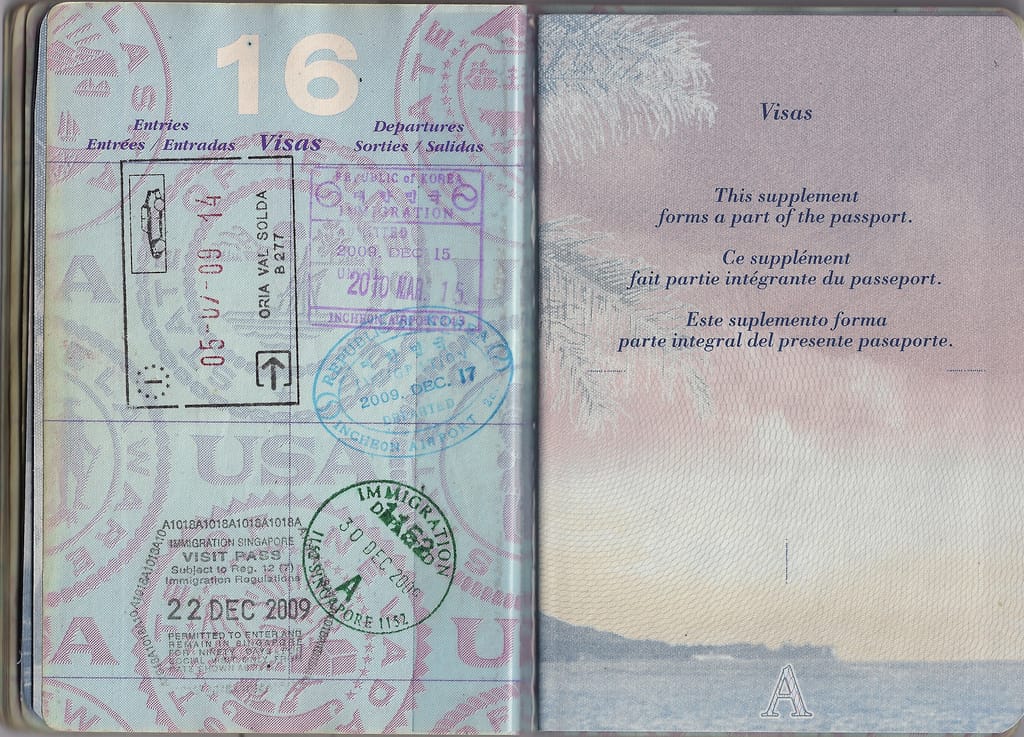
Do You Have to Carry Your Passport in Korea? Yes — the ₩100,000 Rule
Yes. Korea's Immigration Act, Article 27, says every foreigner aged 17 or over must carry a passport or residence card at all times. A photocopy is not on the list. The standard penalty is ₩100,000 the first time, rising to ₩1,000,000 by the fourth.
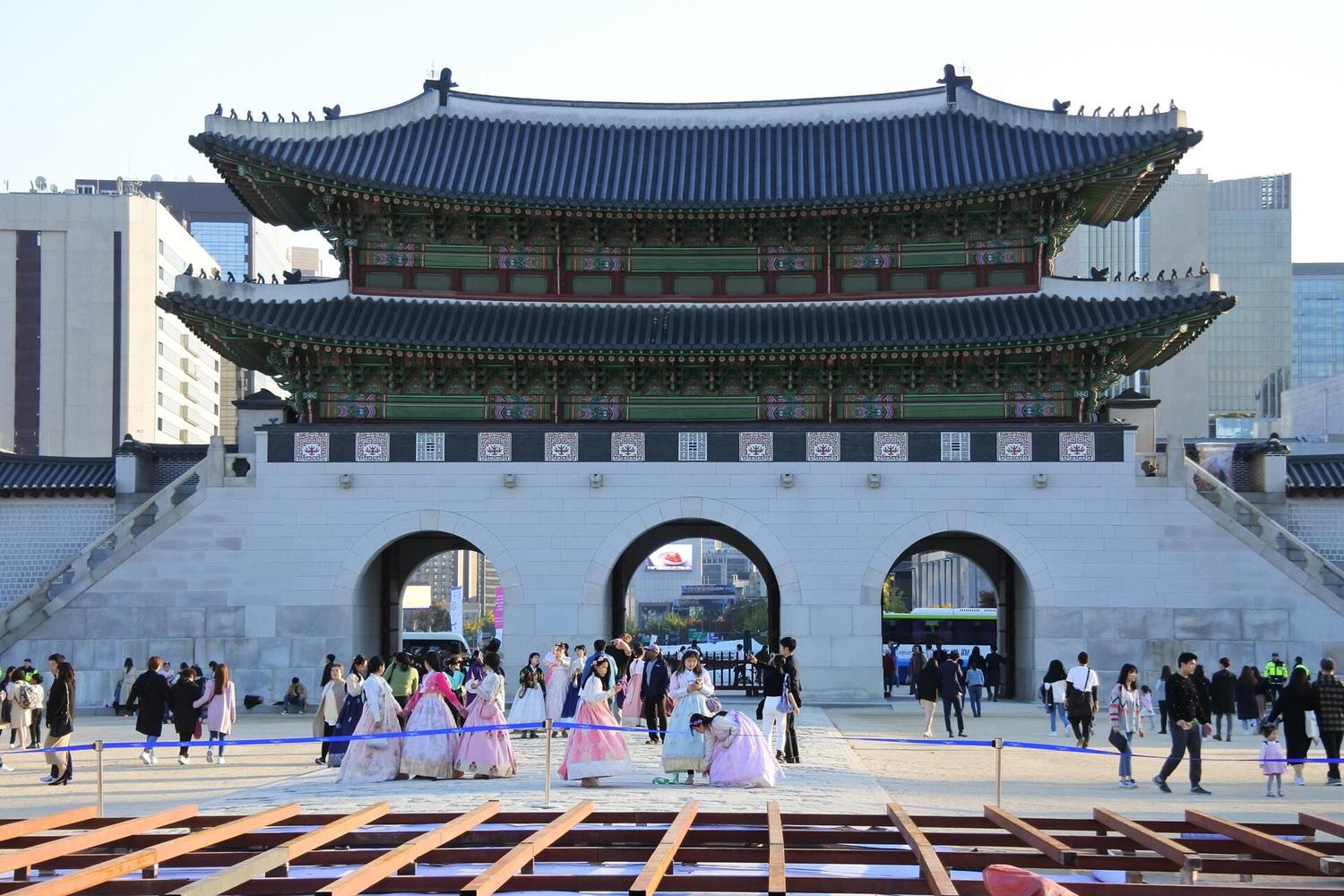
18.9 Million Visitors Told Korea What They Couldn't Find: Transport, Restaurants, Money and Festivals in Korea's Official Exit Survey, and the Answers to All Four
Korea's exit survey: half of 2025's visitors lacked nothing; the rest named transport (16.8%), restaurants (12.9%), money (11.7%) and festivals (11.5%). What 18.9 million visitors did, spent and loved, by passport, and the guide for each gap.

Korea's Viral Trends of 2026: What Is Still Worth the Queue in Seoul, and What Is Already Over
Korea's 2026 fads lasted weeks. Dubai chewy cookies went from about ₩8,000 at the peak to one seller's ₩2,000 clearance post a month later. What is still hot in Seoul this November (Namdaemun's scarf man, fruit mochi), what is over, and how to spot the next.