18.9 Million Visitors Told Korea What They Couldn't Find: Transport, Restaurants, Money and Festivals in Korea's Official Exit Survey, and the Answers to All Four
Last updated: September 2026. Figures are from the Ministry of Culture, Sports and Tourism's 2025 International Visitor Survey (Korea Culture and Tourism Institute): the missing-information figures are full-year 2025 from the fourth-quarter preliminary report published February 2026, with 2024 comparisons; the nationality, activity, spending and favourite-place figures are from the third-quarter 2025 report and are labelled as such. Arrival totals are the Korea Tourism Organization's. Percentages are of surveyed departing visitors; multiple answers were allowed where noted.
Korea does something most countries do not: it stops foreign visitors at the airport on the way out and asks them, in their own language, what they did, what they spent, what they liked, and what information they could not find before they came. The ministry publishes the answers every quarter, in Korean, in a 60-page PDF, and almost nobody outside Korea reads it. This post does. It is the map of what 18.7 million people, the most visitors Korea has ever had in a year, actually did in 2025, and it is the index for a series of EpicKor guides written to answer the four things they said were missing.
The headline is that Korea is doing fine. 97.4 percent of departing visitors said they were satisfied, more than half had been before, and half said nothing at all was missing from their planning. The other half named four gaps, in order: transport, restaurants, money and festivals. Each has a guide below.
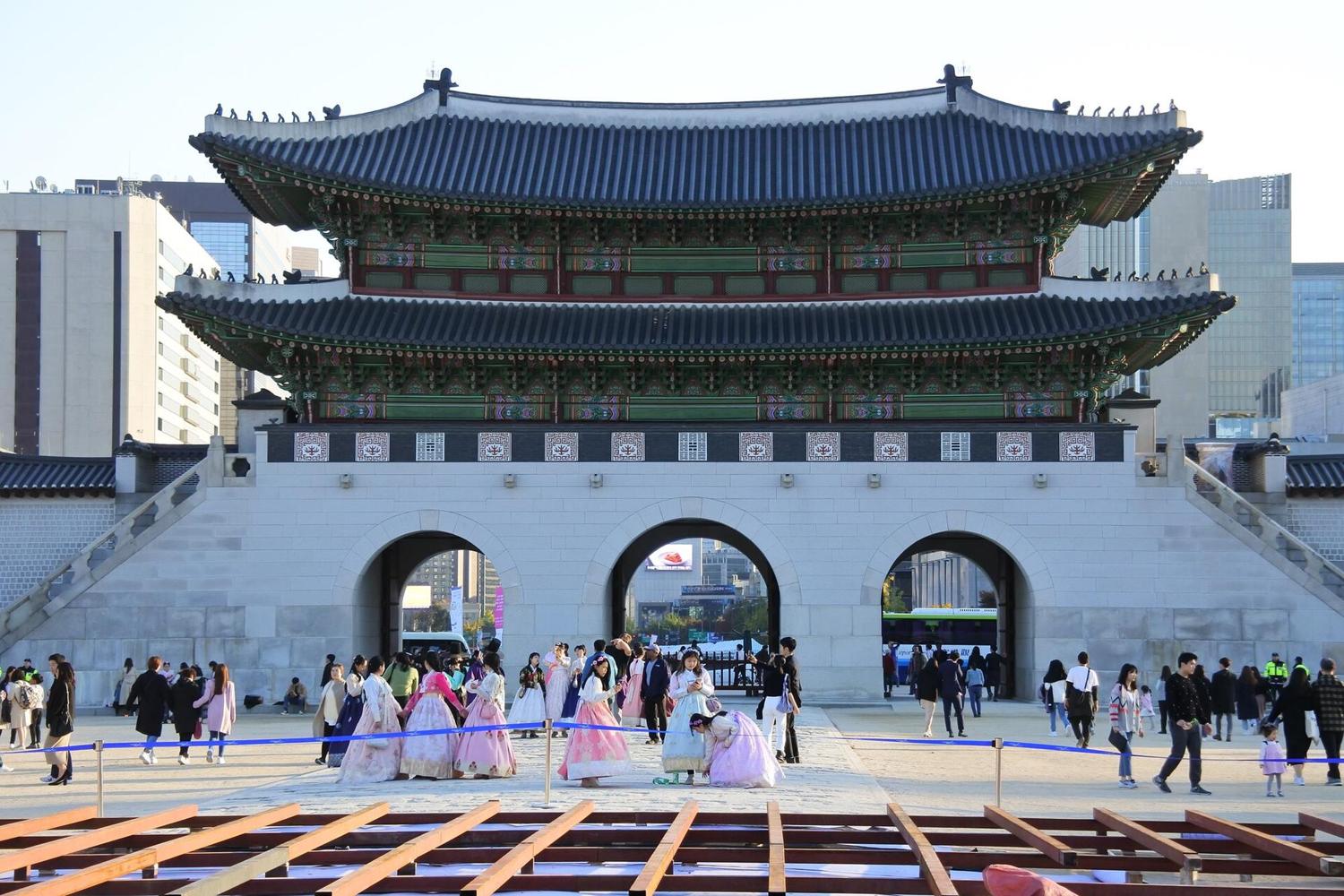
Gwanghwamun Gate, Gyeongbokgung. Palaces and historic sites were visited by 36 percent of 2025's third-quarter visitors and ranked among the most satisfying activities for a quarter of them. Photo: Ken Eckert, Wikimedia Commons, CC BY-SA 4.0 (2018).
The third gap is money, and the fix is organisation: a TOPBAG RFID travel wallet holds the passport the tax-refund till scans, the T-money card and the receipts the airport kiosk needs, flat in one place. As an Amazon Associate, EpicKor earns from qualifying purchases.
Quick Guide: the four gaps, and the guides that fill them
| Information visitors said was missing | 2025 | 2024 | The EpicKor answer |
|---|---|---|---|
| Nothing was missing | 50.3% | 47.9% | — |
| Transport | 16.8% | 19.7% | Subway first and last trains, line by line · Kakao Venti and the large-taxi options · Incheon Airport to Seoul · Airport taxi rules and scams · Getting around Incheon on a layover · Naver Map and Kakao T |
| Food and restaurants | 12.9% | 13.5% | Restaurant hours, break time, last order and the no-show fine · What Koreans eat for breakfast, and where at 7 a.m. · Pojangmacha tent bars · Eating alone in Korea · The kiosk guide |
| Money and payment | 11.7% | 13.3% | T-money, WOWPASS and the card you cannot tap · Tax refund: the ₩15,000 minimum and instant-refund limits |
| Local festivals and events | 11.5% | 11.5% | Korea festival calendar, month by month · Chuseok · Autumn foliage |
Three of the four gaps shrank between 2024 and 2025, transport by almost three points, which is the country's English signage, apps and kiosks catching up. It has not closed: one visitor in six still could not find out how to get around before landing.
Lonely Planet Korean Phrasebook — for the half of the gaps that are really a language gap "Which exit?", "Is the kitchen still open?", "Does this refund at the till?" are what the transport, restaurant and money gaps sound like in person. The food and transport chapters are the ones to mark. As an Amazon Associate, EpicKor earns from qualifying purchases.
See the Korean phrasebook on AmazonWho came, and who comes back
Korea recorded 18.9 million foreign visitors in 2025 (18,936,562, up 15.7 percent), past the 17.5 million of 2019 that had stood as the record, and the first half of 2026 brought 10.71 million, up 21.3 percent on the same months of 2025. In the third quarter of 2025 the survey's picture of them was this: 73.4 percent came for leisure, 13.5 percent for business, 9 percent to see friends or family and 3.6 percent to study. They stayed 6.6 days on average and 79.8 percent slept in hotels. And 53.6 percent had been to Korea before, which is the number that shapes everything else, because it is wildly different by passport.
| Passport | Had visited Korea before | Average stay | Came for leisure |
|---|---|---|---|
| Thailand | 80.7% | 5.7 days | 51.8% |
| Japan | 76.8% | 4.0 days | 77.3% |
| Hong Kong | 72.3% | 5.8 days | 86.1% |
| Singapore | 66.5% | 7.3 days | 77.2% |
| Taiwan | 52.9% | 5.5 days | 88.9% |
| China | 48.6% | 6.5 days | 80.4% |
| Mongolia | 46.0% | 11.8 days | 36.2% |
| United Kingdom | 38.0% | 9.7 days | 51.1% |
| France | 36.1% | 13.0 days | 63.6% |
| United States | 36.0% | 9.0 days | 50.3% |
| Germany | 26.9% | 10.5 days | 57.8% |
| India | 51.6% | 9.2 days | 18.9% (68.4% business) |
| All visitors | 53.6% | 6.6 days | 73.4% |
Read the first and second columns together and the shape of Korean tourism appears. East and South-East Asia treat Korea as a weekend: eight in ten Thais and Japanese are repeat visitors, and a Japanese trip lasts four days. Europe and North America treat it as a once-in-a-life trip: a third or fewer have been before, they stay nine to thirteen days, and half of the Americans and British are here for work or family rather than holiday. The guides in this series are written for the second group, the first-timers on a long stay, because the repeat visitors already know where the last train goes.
What they did, and what they loved
Two activities dominate and they are the same two every quarter: 83.6 percent of visitors went out to eat as an activity in itself, 82.9 percent went shopping. Behind them, 52.9 percent went to see natural scenery, 36.2 percent visited a palace or historic site, and 22.8 percent a museum or exhibition. Asked which activity satisfied them most, the order held: food 67.4 percent, shopping 64.4 percent, scenery 34.2 percent, palaces 25.7 percent, and, further down than the marketing would suggest, K-pop and Korean Wave sites at 13.1 percent, though that figure has been rising and hit 18.4 percent in June, the year's peak (9.6 percent across 2025 as a whole).
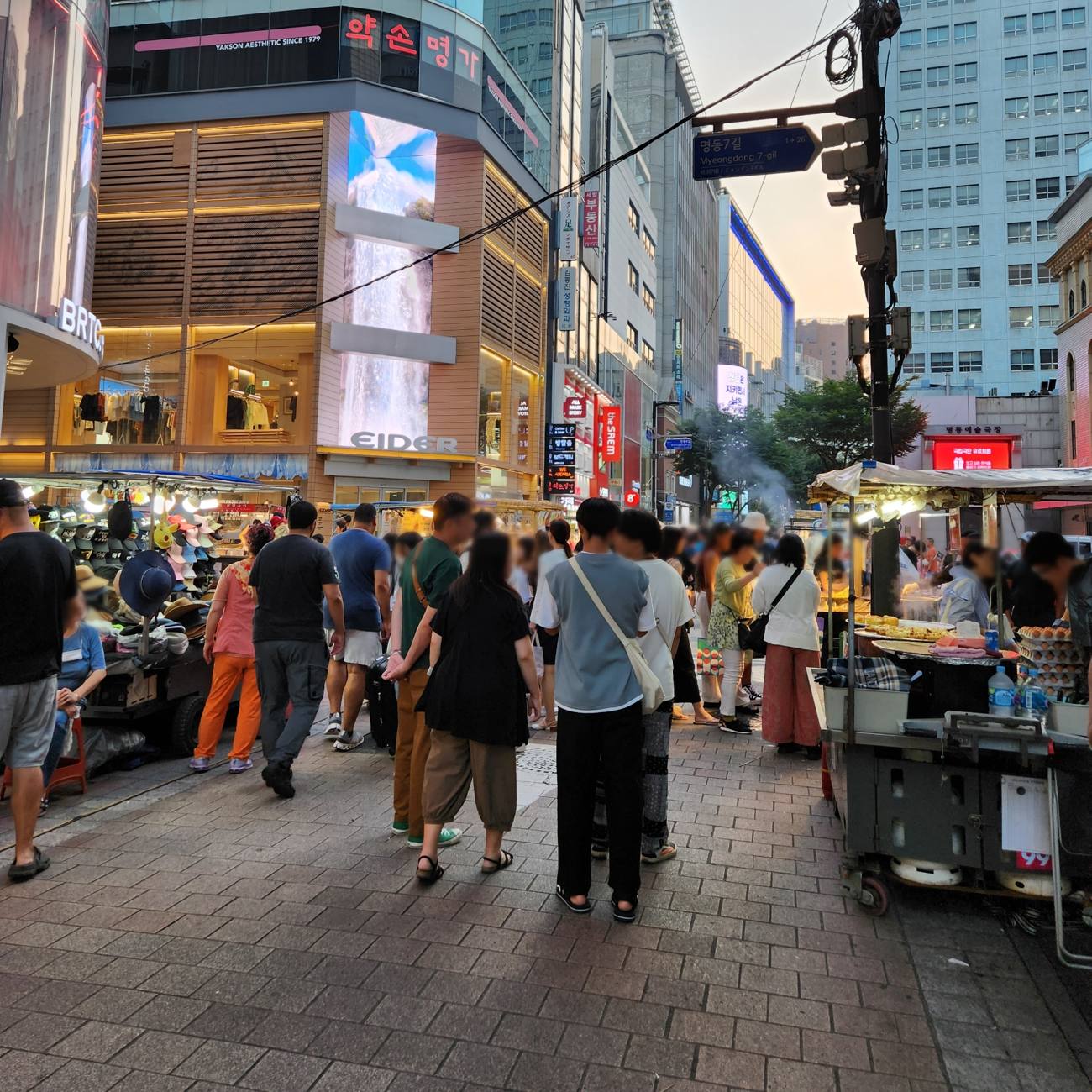
Myeongdong, the single most-named favourite place in Korea at 17.9 percent of visitors, nearly double the next. Photo: Wikimedia Commons, CC0 (2023).
The favourite-place question was open-ended, and the answers were: Myeongdong 17.9 percent, Hongdae 9.2 percent, Gyeongbokgung 6.3 percent, Seongsu-dong 5.0 percent and Gangnam 4.1 percent. Seongsu was 3 percent of answers in late 2024 and 5.5 percent a year later; our K-fashion guide explains why. By region, 77.3 percent of visitors went to Seoul, 16.4 percent to Busan, 11.3 percent to Gyeonggi province around the capital, 10.5 percent to Jeju and 6.5 percent to Incheon; every other province was under 4 percent. Korea, for a visitor, is still Seoul plus one.
What they spent, and on what
A visitor spent US$1,809.80 on the trip including the international flight, or US$1,347.30 without it, in the third quarter of 2025. Per day, that is US$315.70 with the flight and US$237.70 without, both up on 2024. Almost everyone shopped, and the basket is predictable: 71.4 percent bought perfume or cosmetics, 57.1 percent packaged food, 50.2 percent clothing, 17.5 percent shoes and 11.4 percent bags. Where they bought it is the useful part: 48.5 percent shopped at road shops, the standalone stores on Myeongdong and Hongdae streets, 41.2 percent at large malls and 35.1 percent at department stores. Our Olive Young guide and tax refund guide are the two posts that cover most of that basket.
Gap one: transport, 16.8 percent
Transport is the largest gap and the one that has shrunk fastest, from 19.7 percent in 2024. What is missing is not the existence of the subway; it is the specifics that Korean apps show in Korean: when the last train actually leaves your station and where it ends, which taxi to take from the airport with four suitcases, and how the airport connects to the city after the railway closes. Our subway first and last train guide gives the station-by-station cutoffs; the large-taxi guide explains Kakao Venti, the van that costs the same as a sedan by day, and how a foreigner calls one through K-RIDE; the airport transfer guide and the layover guide cover the rail, bus and night-bus options; and the safety guide answers the single most-searched transport question we see, the safest way to take a taxi from Incheon.
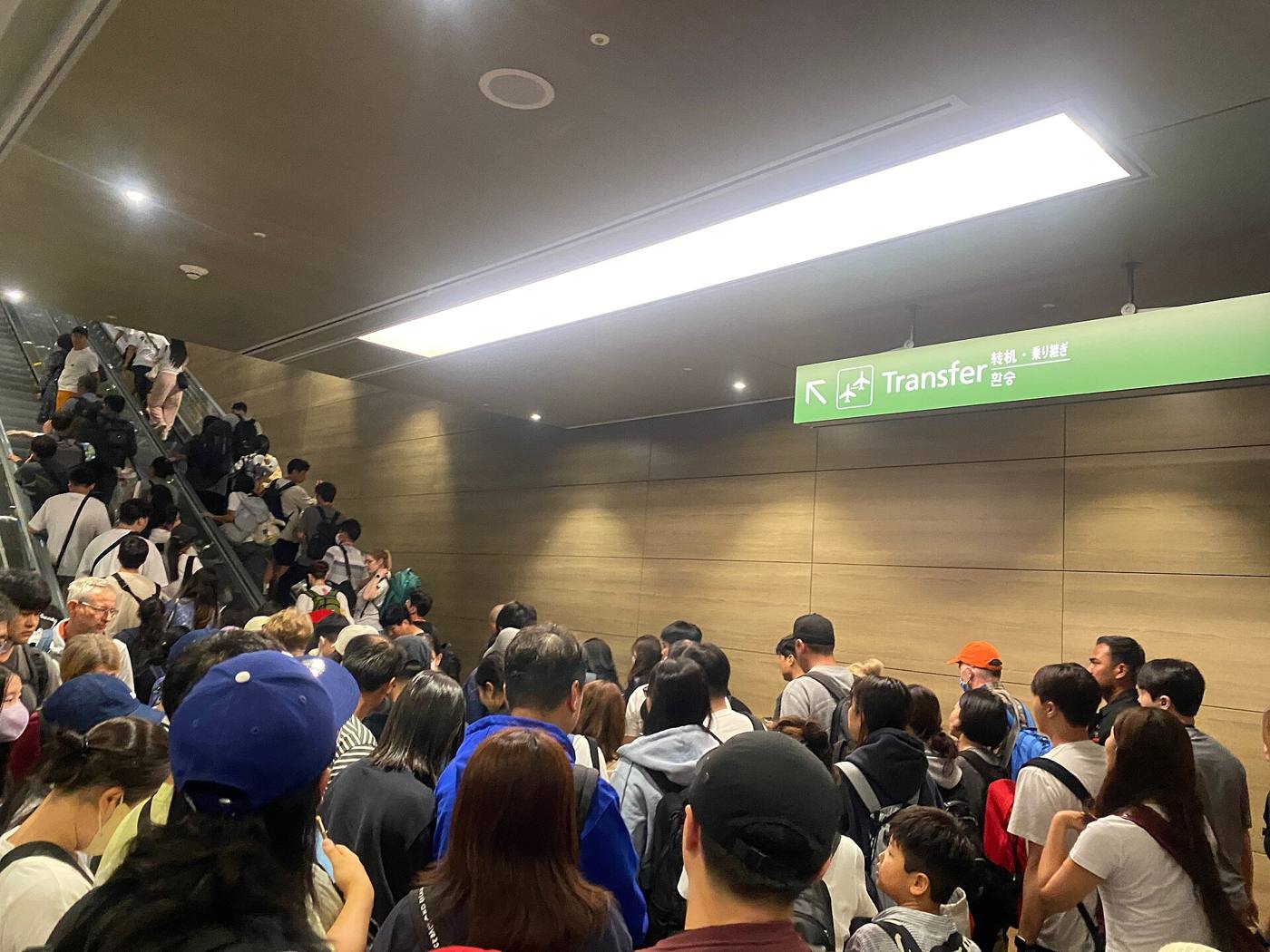
Incheon Airport, August 2024. Korea recorded 18.9 million foreign visitors in 2025 and 10.7 million in the first half of 2026 alone. Photo: Sgroey, Wikimedia Commons, CC BY-SA 4.0.
Gap two: food and restaurants, 12.9 percent
The restaurant gap is not "what to eat"; the English internet has that covered ten times over. It is the mechanics: why the restaurant is shut at 15:30 (break time, at seven in ten restaurants), why it is dark on Monday (the most common day off, at 31 percent), what last order means, and, since December 2025, the 40 percent no-show fine on a booked table. Our restaurant hours guide is the rulebook. The breakfast guide answers the second most common food question we see, what Koreans eat in the morning and where a visitor can get it at 07:00. The pojangmacha guide covers the tent bars, the solo dining guide the two-portion minimum, and the kiosk guide the screen that replaced the waiter.
Gap three: money, 11.7 percent
The money gap has two halves. The first is payment: which card taps where, what T-money is, and why a foreign Visa sometimes fails at a transit kiosk but not at a convenience store; our payment guide is kept current month to month, including Seoul's 2026 station kiosks that finally take overseas cards. The second is the tax refund, where the rules changed on 1 January 2024 and most English guides did not: the minimum purchase is now ₩15,000 on one receipt, instant refunds at the till cover purchases under ₩1 million and ₩5 million a trip, the medical-tourism refund ended on 31 December 2025, and the hotel refund, set by law to run to December 2028, would end in June 2027 under an August 2026 government proposal. Our tax refund guide has the numbers and the Daiso and Olive Young specifics.
Gap four: festivals and events, 11.5 percent
Festival information is the gap that exists for a structural reason: Korean local governments file dates late, in Korean, with the culture ministry's database, and English sites copy each other's "TBD." Our festival calendar is built from that database and from Seoul city's published season calendar, month by month, with the 27 festivals the ministry designated for 2026–2027 and each date marked confirmed or typical; the Seoul Winter Festa guide carries the city's already-confirmed 14 December to 31 January dates that every English site still lists as TBD. The Chuseok guide covers the holiday that moves everything, and the foliage guide the season most autumn visitors are actually here for.
Where visitors got their information
Before the trip, 72.5 percent of visitors got their Korea information from websites and apps, 48.5 percent from friends and family, 22.7 percent from news media, 12.9 percent from a travel agency at home and 12.2 percent from an airline or hotel. The website share rises every year (69.2 percent in 2024, 71.1 across 2025) while the friends-and-family share holds around 51 percent, which is the survey's way of saying that the first-time visitor from far away is planning alone, online, in a language Korea's own information mostly is not written in. That is the gap this series is for.
You might like: First Trip to Korea: 20 Essential Travel Tips
FAQ
Q: How many tourists visited Korea in 2025? 18.9 million foreign visitors (18,936,562, up 15.7 percent), the highest ever and above the 17.5 million of 2019. The first half of 2026 recorded 10.71 million, up 21.3 percent on the same period of 2025.
Q: What information do tourists say is missing when they plan a trip to Korea? In the ministry's 2025 survey, half said nothing was missing. Of the rest, transport information was cited by 16.8 percent, food and restaurant information by 12.9 percent, money and payment information by 11.7 percent, and local festival and event information by 11.5 percent (full-year 2025 figures).
Q: What do tourists do most in Korea? Eat and shop: 83.6 percent went out to eat as an activity and 82.9 percent went shopping in the third quarter of 2025, followed by natural scenery (52.9 percent), palaces and historic sites (36.2 percent) and museums (22.8 percent). Myeongdong was the most-named favourite place at 17.9 percent.
Q: How much do tourists spend in Korea? About US$1,810 per trip including the international flight, or US$1,347 without it; per day, US$316 with the flight and US$238 without. The most-bought items were cosmetics (71.4 percent of visitors), packaged food (57.1 percent) and clothing (50.2 percent).
Q: How long do tourists stay in Korea? 6.6 days on average. Japanese visitors stay four days; Americans nine; the French thirteen. Around 80 percent stay in hotels.
Q: What share of visitors to Korea are repeat visitors? 53.6 percent overall, but 81 percent of Thais and 77 percent of Japanese against 36 percent of Americans and 27 percent of Germans.
Bottom Line
Korea's own exit survey says visitors are satisfied, that half of them are regulars, and that the rest could not find four things before they came: how to get around, how restaurants work, how to pay and get tax back, and when the festivals are. Each of those has a guide in this series now, written from Korean sources rather than from other English guides, and each will be updated as the ministry publishes the next quarter. If you are a first-time visitor on a long trip, which the survey says you probably are if you are reading this in English, start with the transport guide and the festival calendar, and let the other two find you at the restaurant door and the tax-refund till.
You might like: Last Train in Seoul: When Trains Stop — 00:50 Weekdays, 23:50 Weekends and Korea Festival Calendar 2026–2027.
Sources
- Ministry of Culture, Sports and Tourism and Korea Culture and Tourism Institute, 2025 International Visitor Survey, third-quarter preliminary report (published December 2025) and fourth-quarter preliminary report with full-year figures (published February 2026): revisit rate, purpose, length of stay, regional visit rate, activities and satisfaction, favourite places, shopping items and venues, spending, information sources, and information lacking, with 2024 comparisons.
- Ministry of Culture, Sports and Tourism press release forecasting 2025 arrivals (18.7 million); Korea Tourism Organization December 2025 statistics (18,936,562 for the year, +15.7%) and first-half 2026 arrivals (10.71 million, +21.3%); Korea Tourism Organization arrival statistics.
- EpicKor guides linked above, each with its own sources.
You Might Also Like
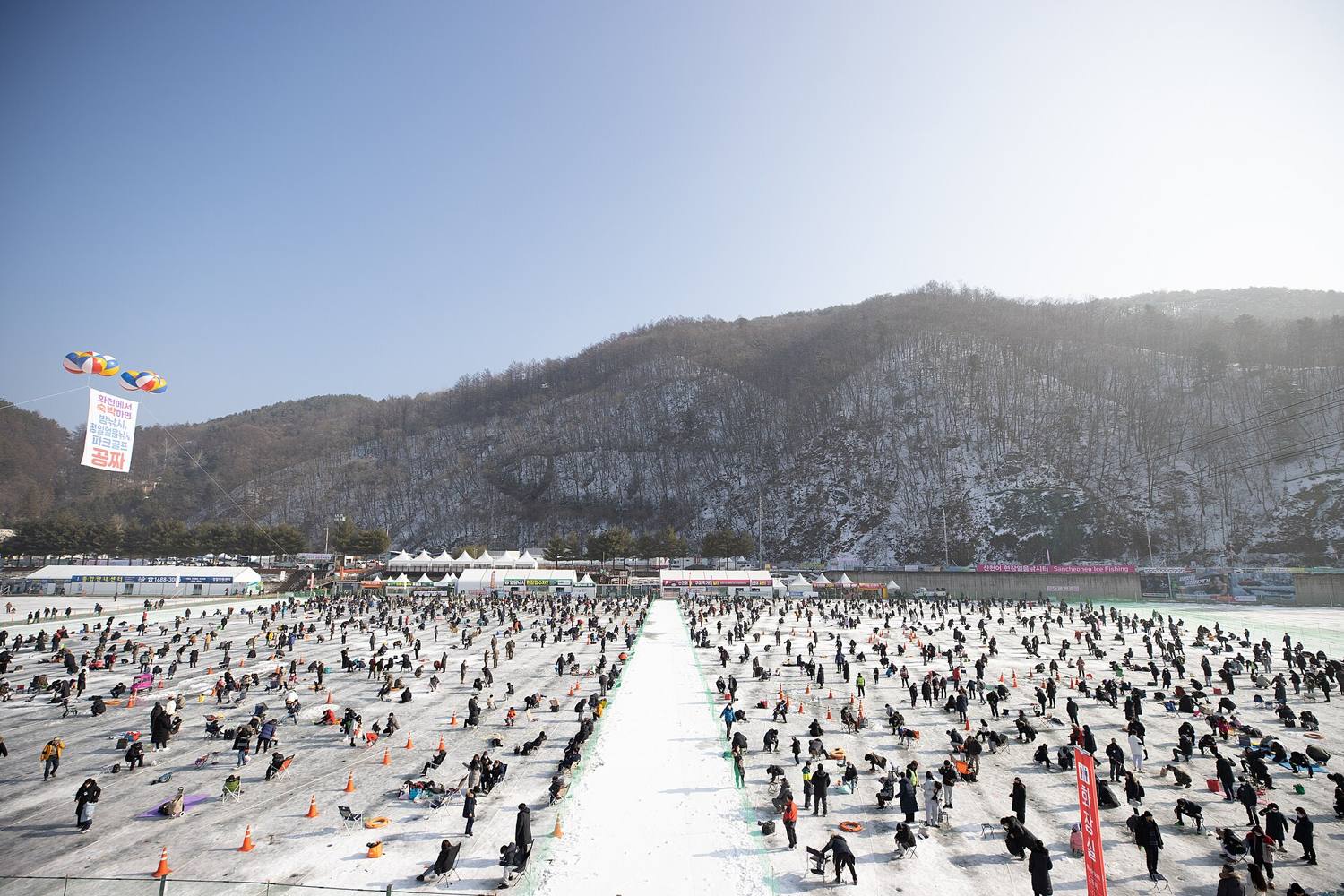
Korea Festival Calendar 2026–2027, Month by Month: The 27 Festivals Korea's Government Picked, Seoul's Official Seasons, Cherry Blossom to Ice Fishing, and Which Dates Are Confirmed
Month by month: the 27 festivals Korea's culture ministry designated for 2026–2027, Seoul's official spring, autumn and winter seasons, cherry blossom to ice fishing, with every date marked confirmed or typical.
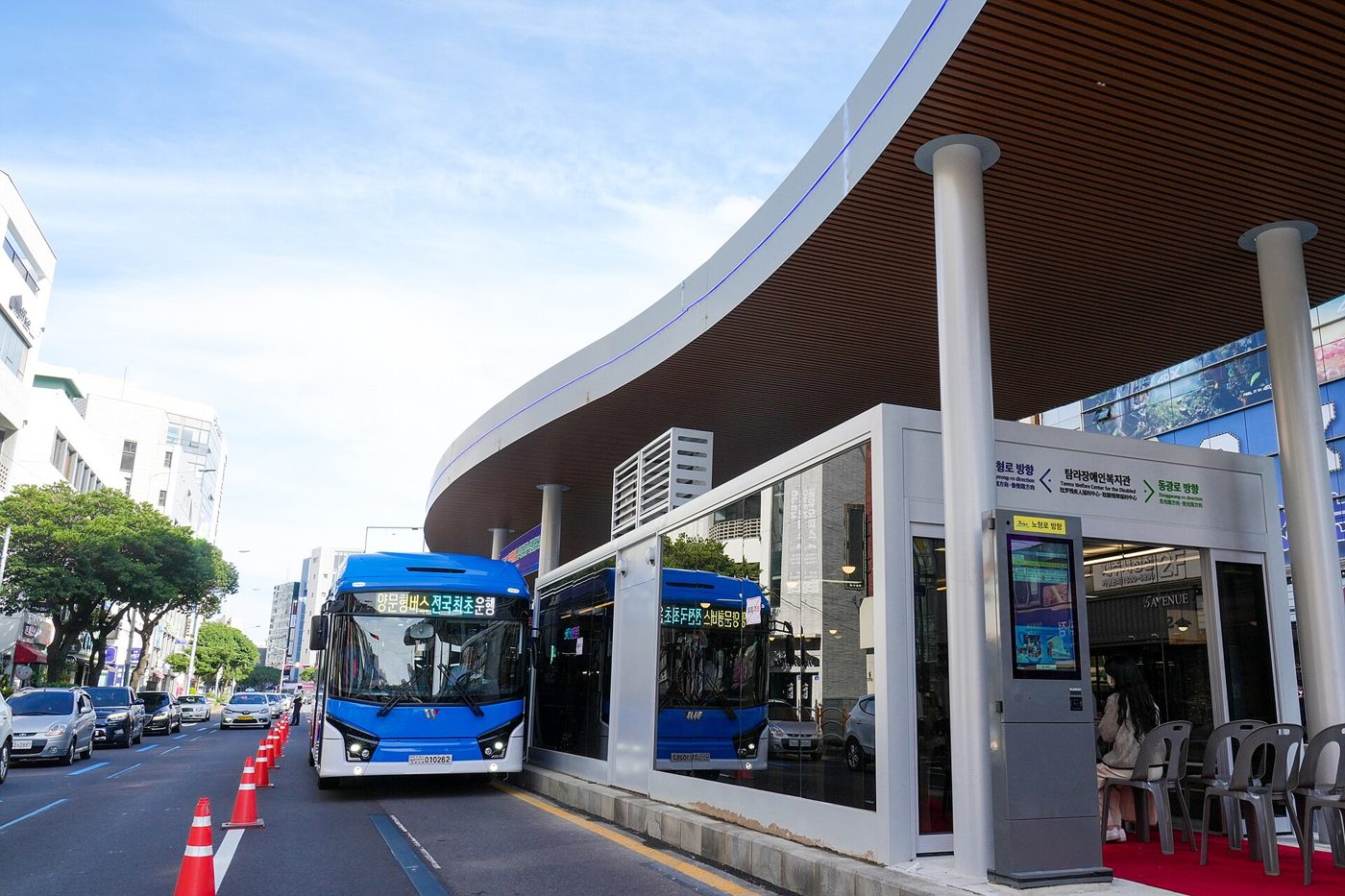
Jeju Buses, Korea (2026): ₩1,150 a Ride, the 600 and 601 Airport Buses to Jungmun, Foreign Cards That Tap, and Getting Around Without a Rental Car
A Jeju bus ride still costs ₩1,150 by card: the fare rise was frozen again for 2026. Since August 2025 foreign Visa cards tap to pay, a first in Korea. And the 601, not the 600, drives into the Jungmun hotels. Fares, routes, times.
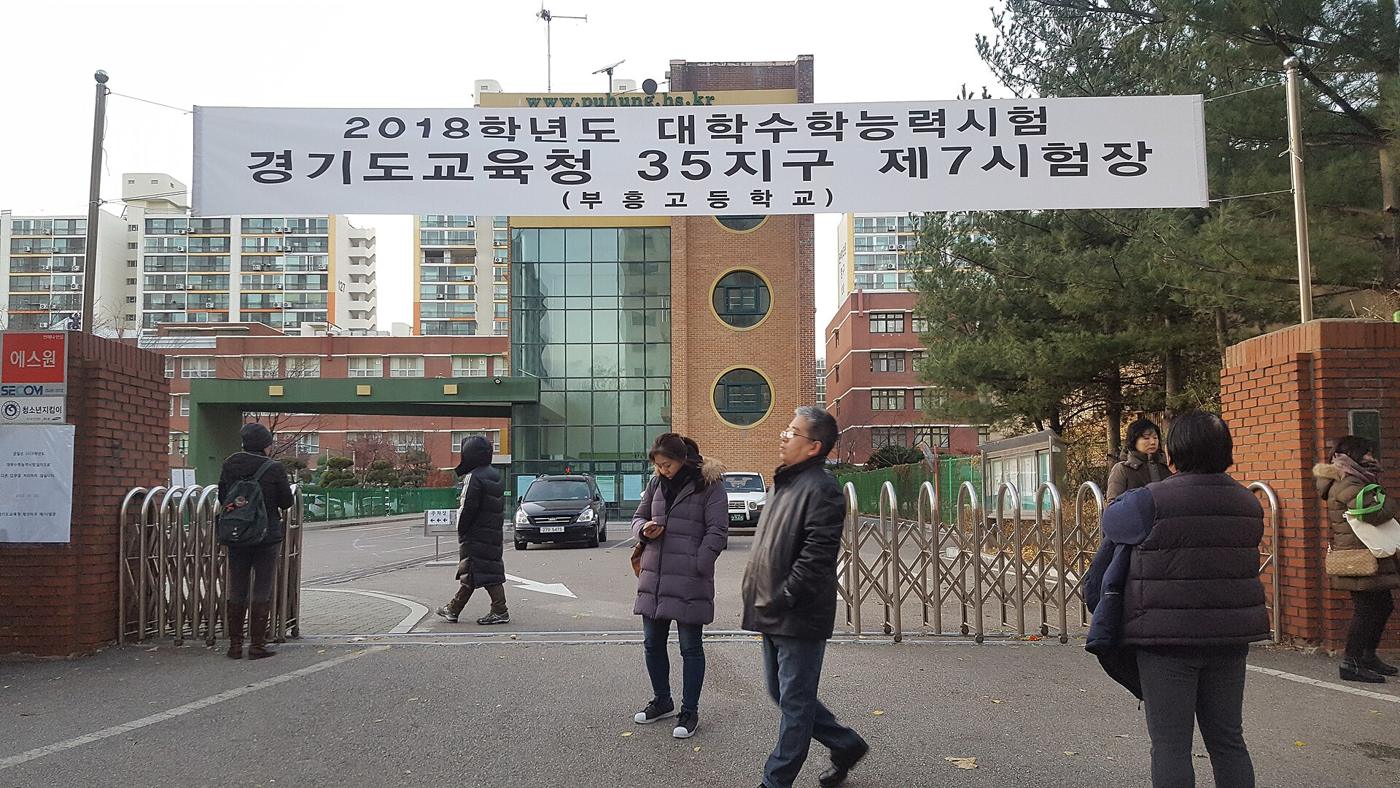
Suneung Day in Korea, 19 November 2026: The 35-Minute Flight Ban, 10 a.m. Office and Bank Openings, Extra Subway Trains and a Tourist's Hour-by-Hour Plan
Korea's Suneung exam is Thursday 19 November 2026. Last year the 35-minute listening-test flight ban (13:05–13:40) moved 140 flights, banks and the stock market opened at 10:00 and Seoul added 29 subway runs. An hour-by-hour plan for visitors.