Drunk Driving in Korea: 0.03% Covers Bikes and E-Scooters Too
Last updated: 28 October 2026. Law read that day on law.go.kr: the Road Traffic Act (도로교통법, MST 291133, current version promulgated 13 October 2026), its Enforcement Decree (시행령, in force 2 October 2026) including Table 8 of on-the-spot fines as revised on 2 June 2025, its Enforcement Rule (시행규칙, in force 24 August 2026) including Table 28 on licence suspension and revocation, and the Immigration Act (출입국관리법, in force 2 October 2026). ₩1,334 = US$1 (Federal Reserve, 16 October 2026). A guide, not legal advice; sources at the end.
Drunk driving in Korea starts at 0.03% blood alcohol, and the rule is not only about cars. Article 44(1) of the Road Traffic Act (도로교통법) says no one may operate "a motor vehicle, a tram or a bicycle" while drunk, and Article 44(4) sets drunk at a blood alcohol concentration of 0.03 percent or more. Because Korean law files an electric kick scooter under motor vehicles, the same line covers the shared e-scooter outside your hotel and the green Ttareungi (따릉이) bike you rented for ₩1,000.
What changes between them is the price. For the drunk driving Korea punishment on a car, Article 148-2 is criminal law: from 0.03% it is up to a year in prison or a fine of up to ₩5 million (about US$3,748), and at 0.2% and above it is two to five years or ₩10 million to ₩20 million. On a bicycle or an e-scooter the same breath test leads to an on-the-spot fine (범칙금, beomchikgeum) set in Table 8 of the Enforcement Decree: ₩30,000 (US$22) on a bicycle, ₩100,000 (US$75) on an e-scooter, and more if you refuse to blow.
This guide sets out each tier in won and dollars, what happens to a driving licence (yours, a Korean one, or an International Driving Permit), what a foreign visitor actually faces, the new rules that start in 2027, and how to get home in Seoul after the last train without riding anything.
Quick Guide: drink riding and drink driving in Korea, October 2026
| What you rode | Drunk (0.03% or more) | Refusing the breath test | Licence |
|---|---|---|---|
| Bicycle (Ttareungi, any pedal bike or legal e-bike) | ₩30,000 (US$22) on-the-spot fine | ₩100,000 (US$75) | None needed, none affected |
| E-scooter (개인형 이동장치, shared or your own) | ₩100,000 (US$75) | ₩130,000 (US$97) | A Korean licence can be suspended or revoked; an IDP can be barred for up to a year |
| Car, 0.03% to under 0.08% | Up to 1 year in prison or up to ₩5 million (US$3,748) | 1 to 5 years or ₩5 million–₩20 million (US$3,748–14,993) | 100 penalty points: about a 100-day suspension |
| Car, 0.08% to under 0.2% | 1 to 2 years or ₩5 million–₩10 million (US$3,748–7,496) | Revoked | |
| Car, 0.2% and above | 2 to 5 years or ₩10 million–₩20 million (US$7,496–14,993) | Revoked | |
| Car, second offence within 10 years | 1 to 5 years or ₩5 million–₩20 million; at 0.2%+, 2 to 6 years or ₩10 million–₩30 million | 1 to 6 years or ₩5 million–₩30 million | Revoked |
Sources: Road Traffic Act Arts. 44, 148-2 and 156; Enforcement Decree Table 8, rows 64-2 to 64-4; Enforcement Rule Table 28.
The 0.03% limit, word for word
Article 44 is short, and every phrase in it matters to a visitor:
- Paragraph 1: "No one may drive a motor vehicle etc. (자동차등), a tram or a bicycle while under the influence of alcohol." "Motor vehicle etc." is defined in Article 2(21) as cars plus 원동기장치자전거 (wondongi jangchi jajeongeo), the category of mopeds and small motorised vehicles, and Article 2(19-2) places the personal mobility device (개인형 이동장치), the stand-up e-scooter, inside that category. Article 2(20) defines a bicycle to include e-bikes that qualify as bicycles under the Bicycle Act.
- Paragraph 2: police may breath-test any of these riders "for traffic safety", or when there is good reason to think they rode drunk, and the rider must comply.
- Paragraph 3: if you dispute the breath result, police may re-test with your consent, by a blood sample or similar.
- Paragraph 4: drunk means a blood alcohol concentration of 0.03 percent or more. That figure dates from an amendment of 24 December 2018.
- Paragraph 5, added on 3 December 2024: no drinking more, or taking something that affects the reading, after riding in order to frustrate the test. This "measurement obstruction" (음주측정방해) is punished like a refusal.
Two things the article does not contain: a time limit and a vehicle size. There is no rule that the limit only counts while you are "driving home from the bar". A breath test the next morning at 0.03% is the same offence, and a ₩1,000 public bike is as much a "bicycle" as a racing one. The police also have a practical power under Article 47(2): they can order a drunk cyclist or scooter rider to stop riding until sober and move the vehicle out of the way.
Drunk cycling in Korea: what a Ttareungi ride can cost
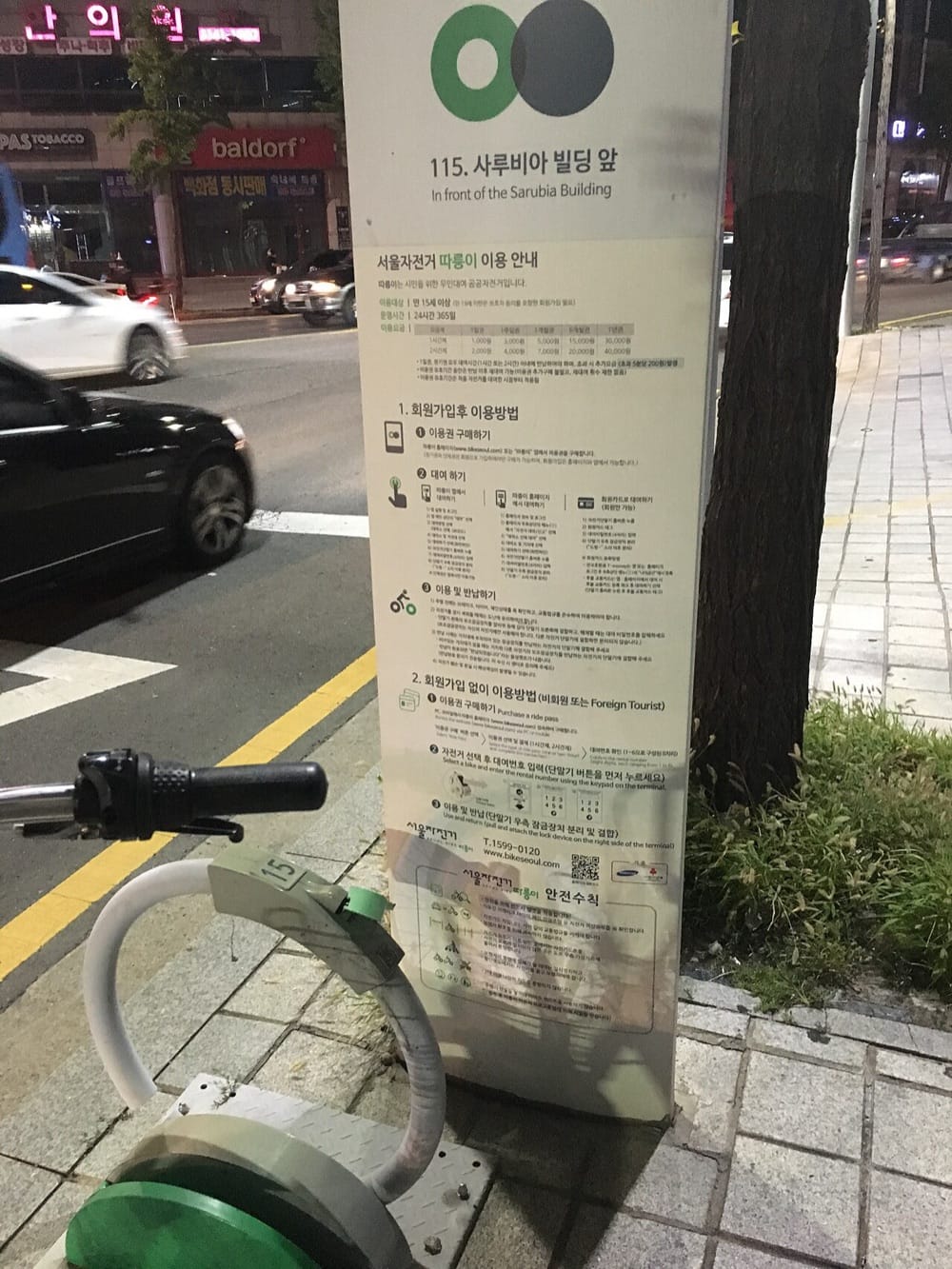
Drunk cycling in Korea is an offence under Article 156, item 11 of the Road Traffic Act, which punishes anyone who "rode a bicycle etc. (자전거등) while drunk in breach of Article 44(1)" with a fine of up to ₩200,000, detention, or a minor fine. "Bicycle etc." (Article 2(21-2)) means bicycles and personal mobility devices together, which is why scooters sit in the same item.
In practice, a first stop does not go to court. Article 163 lets a police station chief issue a notice of on-the-spot fine (범칙금 납부통고서) instead, and Table 8 of the Enforcement Decree sets the amount:
| Offence (Table 8 row) | Bicycle | E-scooter |
|---|---|---|
| Riding at 0.03% or more (row 64-2; Act Art. 44(1)) | ₩30,000 (US$22) | ₩100,000 (US$75) |
| Refusing a breath test when there is good reason to think you are drunk (row 64-3; Art. 44(2)) | ₩100,000 (US$75) | ₩130,000 (US$97) |
| Drinking more after riding to frustrate the test (row 64-4; Art. 44(5)) | ₩100,000 (US$75) | ₩130,000 (US$97) |
Read the second row twice. Refusing costs more than blowing: on a bicycle the refusal fine is more than three times the drunk-riding fine. Refusing does not get you out of anything.
There is no blood-alcohol tier for bicycles. A cyclist at 0.04% and one at 0.25% get the same ₩30,000 notice. The difference shows up elsewhere: crash into a pedestrian or a parked car while drunk and you are into ordinary criminal and civil liability for the damage, which no ₩30,000 notice settles.
For the Ttareungi itself, our Seoul bike rental guide explains the ₩1,000 pass and why the bikes are a good idea on a sober afternoon along the Han River. Nothing in the rental terms changes the Road Traffic Act: the bike is a bicycle, and for Article 44 the definition of driving in Article 2(26) expressly includes places off the road, so a park path or riverside track counts too.
You might like: Seoul Bike Rental for Tourists: Ttareungi Takes a ₩1,000 Pass and No Korean Phone
E-scooters: the ₩100,000 ride, and why your licence can be on the line
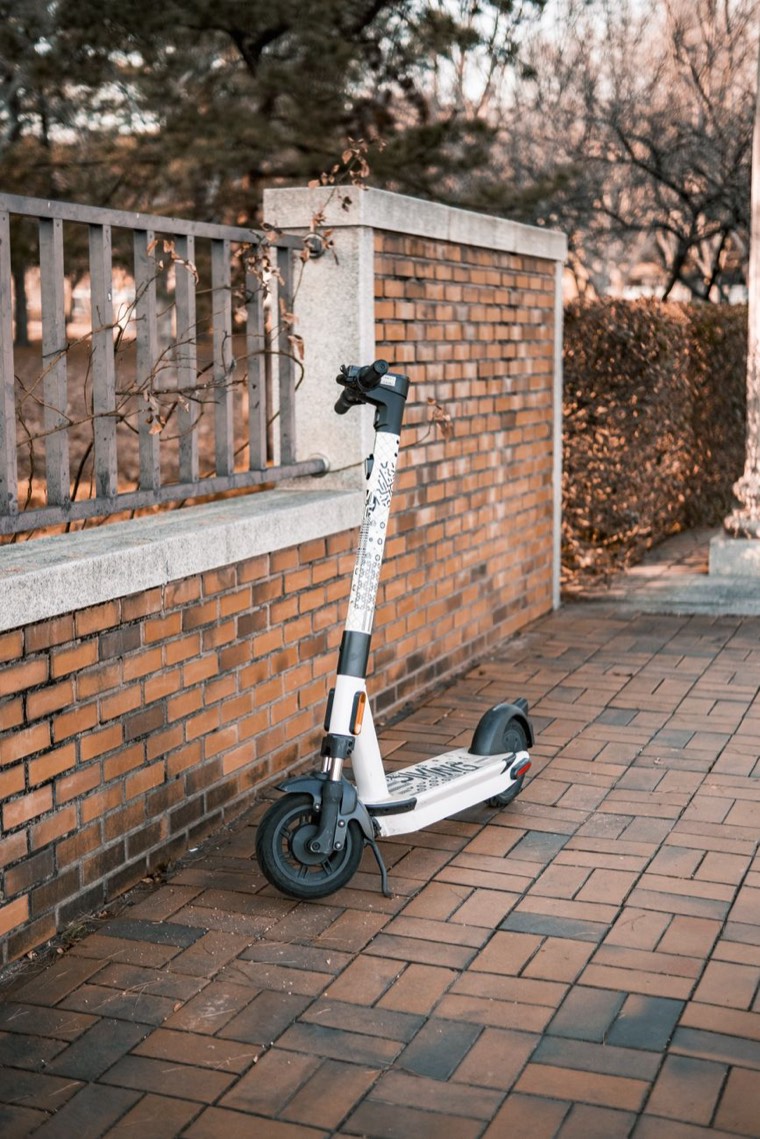
An e-scooter drunk in Korea is fined at ₩100,000 on the spot, or ₩130,000 for refusing the test. That is the figure most guides stop at. The part they skip is the licence.
A drunk scooter ride is punished like a bicycle, not like a car: Article 156 items 11, 12 and 12-2 cover drunk riding, refusal and obstruction on any "bicycle etc.", which includes personal mobility devices, and Table 8 rows 64-2 to 64-4 fix the on-the-spot amounts. Article 148-2 opens by limiting its offences to motor vehicles and trams "excluding cases of driving a personal mobility device", a definition paragraph (1) applies to the rest of that article. The licence is a separate track. The licence provision, Article 93(1)1, has no such carve-out. It lets the provincial police chief suspend or revoke a licence when someone "drove a motor vehicle etc. while drunk in breach of Article 44(1)", and an e-scooter is legally a motor vehicle etc. Items 2 and 3 of the same paragraph (repeat offence, refusal) also speak of "motor vehicles etc.". Table 28 of the Enforcement Rule then supplies the scale it uses for cars: 100 penalty points at 0.03% to under 0.08%, which the table converts at "one point to one day" of suspension, and revocation at 0.08% or above, for a refusal, or for a repeat offence. Our reading of those provisions is that a Korean licence holder who rides a scooter drunk risks licence action on top of the on-the-spot fine, and there is a published case: Korea's Central Administrative Appeals Commission (중앙행정심판위원회) upheld the revocation of a man's driving licence after he rode a shared e-scooter about 10 metres at a blood alcohol level above 0.08%, rejecting his argument that he did not know scooters were checked (Smart Today, 28 July 2022). Individual cases can still be appealed, and the outcome depends on the facts.
Two further points for visitors:
- To ride a scooter at all you need a licence covering mopeds. Article 156, item 13 fines riding a personal mobility device without one, and Table 8 row 1-4 sets that fine at ₩100,000. Our bike and scooter guide explains why a car-only International Driving Permit does not count. A tourist on a shared scooter after a night out can therefore collect two ₩100,000 notices for one ride.
- International Driving Permit holders are covered by Article 97(1)4: if you breach the Act "in relation to driving a motor vehicle etc.", the provincial police chief may bar you from driving in Korea on that permit for up to one year, and you must hand the permit in (Art. 97(2)). It is returned when the ban ends or if you leave Korea during it and ask for it back (Art. 97(3)).
Drunk driving in Korea in a car: the criminal tiers
If you drive a car, the penalties stop being fines and become criminal sentences. Article 148-2(3) sets three tiers by blood alcohol concentration:
| Blood alcohol | Prison | Or a fine of | In US dollars |
|---|---|---|---|
| 0.03% to under 0.08% | up to 1 year | up to ₩5,000,000 | up to $3,748 |
| 0.08% to under 0.2% | 1 to 2 years | ₩5,000,000–₩10,000,000 | $3,748–$7,496 |
| 0.2% and above | 2 to 5 years | ₩10,000,000–₩20,000,000 | $7,496–$14,993 |
Refusing the test in a car (Art. 148-2(2)1), or drinking more after driving to obstruct it (Art. 148-2(2)2), is 1 to 5 years or ₩5 million to ₩20 million, the same range as the top two tiers combined. As with bicycles, refusal is the worst option you have.
A second offence within 10 years of a final fine or heavier sentence (Art. 148-2(1)) moves you up: 1 to 5 years or ₩5 million to ₩20 million at 0.03% to under 0.2%, 2 to 6 years or ₩10 million to ₩30 million (US$22,489) at 0.2% or above, and 1 to 6 years or ₩5 million to ₩30 million for a repeat refusal or obstruction. This paragraph expressly excludes scooters.
The licence. Table 28 gives 100 points (roughly a 100-day suspension) from 0.03% to under 0.08%, and revocation at 0.08% or above, for a refusal, for injuring or killing someone while over the limit, or for a second drunk-driving violation. After revocation, Article 82(2) keeps you from getting a new licence for a fixed wait: one year as the general rule, two years if you breached Article 44 twice or more or caused a crash while drunk, and five years if you killed someone or fled after injuring someone. You also need a special safety course before reapplying (Art. 82(3)). These waiting periods are written for car drivers; we do not say how they apply when the only vehicle was a scooter.
A rental car is a car, and a foreign licence or IDP gives no discount. Our older guide to Korean drinking culture covers the social side: refusing a drink, rounds, and the Korean habit of calling a substitute driver.
What a foreign visitor actually faces
The ticket. On a bicycle or e-scooter, you are normally handed a notice and given 10 days to pay (Art. 164(1)). Miss that and you have a further 20 days at the amount plus 20 percent (Art. 164(2)). Miss that too and the police must send you to a summary trial (즉결심판, jeukgyeol simpan) unless you pay the amount plus 50 percent first (Art. 165). Paying settles the matter: Article 164(3) says you "will not be punished again" for the same act.
When there is no ticket. Article 163(1) says a notice is not issued to someone whose name or address is not certain, who may flee, or who refuses to accept the notice. Those cases go straight to summary trial (Art. 165(1)1). For a short-stay visitor with a passport and a hotel address this should rarely apply, but carry your passport or residence card and give a real address; arguing about the notice is the fastest way into court.
Owing money and leaving. Article 98-2 lets the police refuse to issue a Korean International Driving Permit to someone with unpaid traffic fines. It does not stop you boarding a plane, and we found no Road Traffic Act provision that bars departure for an unpaid on-the-spot fine. Pay it anyway: it is the cheapest outcome on offer.
Deportation and visas. The grounds for deportation are listed in Article 46(1) of the Immigration Act. Item 13 is a person "sentenced to imprisonment without labour (금고) or a heavier penalty and released". A fine alone is not on the list. Permanent residents are protected from deportation except in a short list of grave cases (Art. 46(2)). Whether a drink-driving record affects a later visa extension or change of status is a discretionary immigration decision, and we have not found a published rule we can cite, so we do not put a figure on it.
Coming in 2027: passengers and lenders can be punished too
Two amendments already on the statute book have not started yet:
- From 3 June 2027 (Act No. 21728 of 2 June 2026, in force one year after promulgation), a new Article 44-2 bans knowingly helping a drunk driver drive: handing them a car, urging them to drive, or asking them for a lift and riding along. Article 148-2(7) punishes it with up to 3 years or ₩10 million (US$7,496). It covers motor vehicles (scooters included) and trams, not bicycles.
- From 14 April 2027 (Act No. 22067 of 13 October 2026), most of the latest amendment takes effect; its alcohol-interlock rules (Art. 80-2, conditional licences for repeat drink drivers) took effect on promulgation.
If you are reading this after those dates: "I was just the passenger" stops being a safe answer in a car.
How to get home in Seoul without riding anything
The honest options after a night out, cheapest first. Prices are those our last-train guide checked against Seoul city sources in October 2026.
| Option | When | Cost | Notes |
|---|---|---|---|
| Last subway | Roughly to midnight; check your line | Normal card fare | The destination of the last train is what strands people |
| Owl bus (올빼미버스, N routes) | About 23:00 to 06:00 | ₩2,500 by card (US$1.87) | 14 routes; Naver Map switches to them automatically |
| Taxi | All night | Base ₩4,800 (US$3.60); +20% from 22:00, +40% from 23:00 to 02:00, +20% to 04:00 | Big groups: our Kakao Venti guide |
| Substitute driver (대리운전, daeri unjeon) | All night | Quoted per trip; varies by distance, hour and demand | Only if you drove: a driver takes your car home with you in it |
| Walk the bike | Any time | Free | Push the Ttareungi to the nearest station and dock it |
Taxis at night. Seoul's surcharge is tiered by the hour, so a ₩4,800 flag fare reads about ₩5,800 at 22:30 and ₩6,700 at 23:30. Friday and Saturday nights around Hongdae, Itaewon and Gangnam mean queues; a hailing app helps, and our Kakao Venti guide explains which apps take a foreign card (K-RIDE does; Kakao T often rejects one).
Substitute drivers. 대리운전 is Korea's own answer to drink driving: you call, a driver comes, often on a folding scooter, and drives your car home with you as a passenger. It matters only if you drove to dinner, which most visitors do not. We could not confirm that the main app, Kakao T (카카오 T), lets a visitor book 대리 without Korean identity verification, so the practical route is to ask the restaurant or your hotel to call a local 대리 company for you. Agree the price before the driver sets off, and expect it to rise after midnight.
Pushing a bike is not riding it. If you are on a Ttareungi when you realise you should not be, get off and walk it. The Road Traffic Act's offence is to drive (운전) a bicycle drunk, and Article 2(26) defines driving as using a vehicle "according to its original method of use". Our reading is that pushing a bike on foot is not riding it. The act uses the same idea at crosswalks: Article 13-2(6) tells cyclists to get off and push, and Article 27(1) protects a rider pushing a bike there as a pedestrian. Dock it at the nearest station so the meter stops.
Soju, the morning after, and other ways to get caught
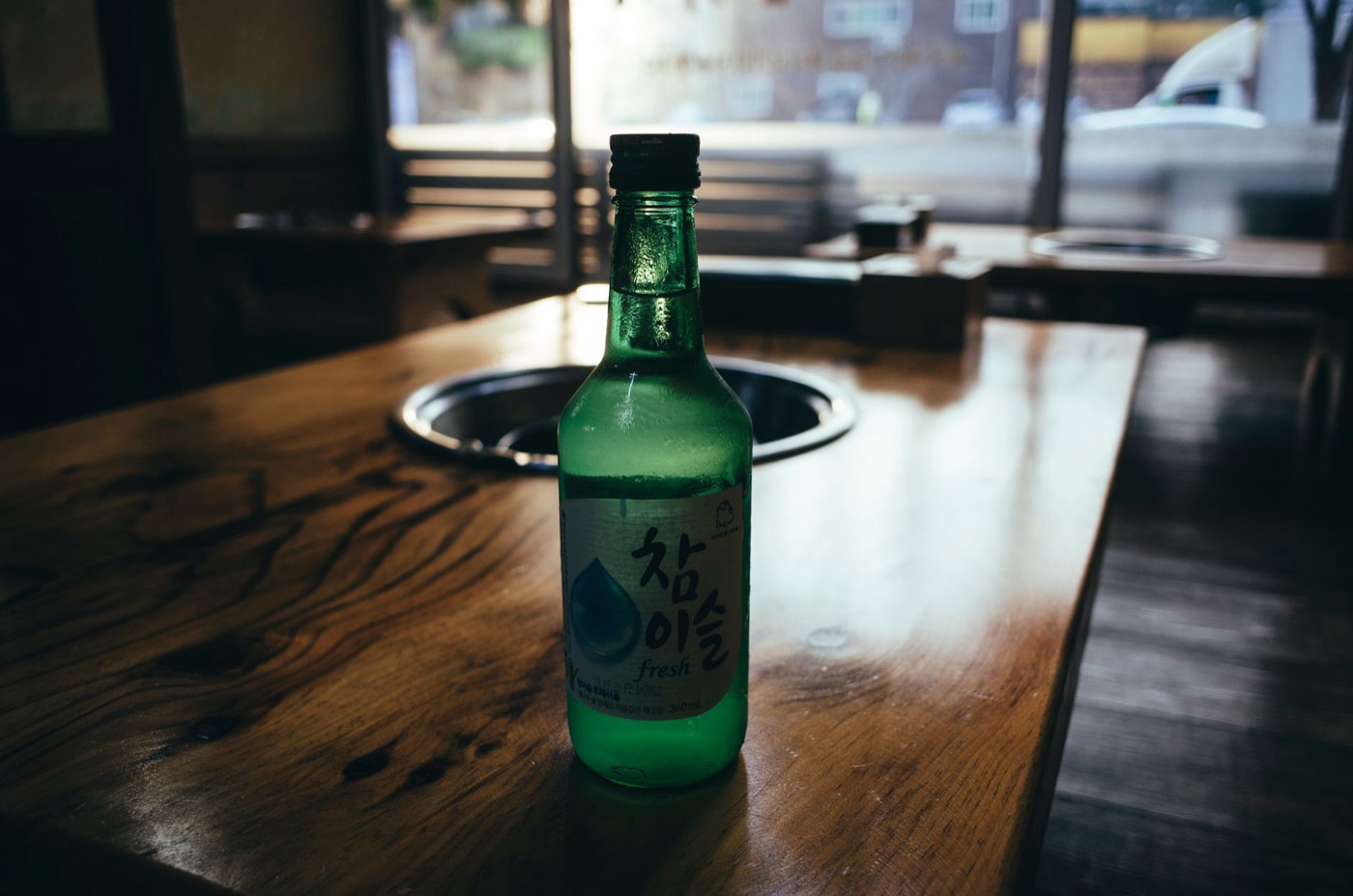
- Strength. Korea's best-selling soju, Chamisul Fresh, is now 15.7 percent alcohol, and a 360 ml bottle holds roughly 57 ml of pure alcohol (see our soju strength guide). A "weaker" bottle is not a safe bottle. There is no glasses-to-0.03% conversion the police accept; the breath test is the only number that counts.
- The morning after. The law has no clock. A dawn ride home from a jjimjilbang or a guesthouse at 0.03% is the same offence as at midnight.
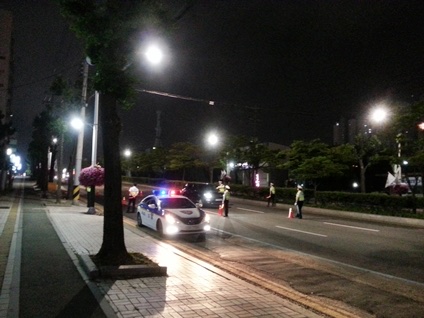
- Checkpoints stop everyone. Article 44(2) lets police test riders "for traffic safety", not only when they look drunk, and refusal is the most expensive line in every table.
- Age. The drinking age is 19 by birth year, set by the Youth Protection Act; our drinking-age guide explains how it is counted.
You might like: Why Korean Soju Keeps Getting Weaker, Pricier, and Less Drunk
FAQ
Q: What is the drink driving limit in Korea?
A: 0.03 percent blood alcohol concentration, under Article 44(4) of the Road Traffic Act. It applies to cars, motorcycles, e-scooters and bicycles alike.
Q: Is it illegal to ride a bicycle drunk in Korea?
A: Yes. Article 44(1) names bicycles expressly. Riding at 0.03% or more is a ₩30,000 (US$22) on-the-spot fine, and refusing the breath test is ₩100,000 (US$75). The same applies to a Ttareungi public bike.
Q: What is the fine for riding an e-scooter drunk in Korea?
A: ₩100,000 (US$75), or ₩130,000 (US$97) for refusing the test, under Table 8 of the Road Traffic Act Enforcement Decree. If you hold a Korean licence, the licence provisions also apply, and an International Driving Permit can be barred for up to a year. Riding without a moped-category licence is a further ₩100,000.
Q: What is the punishment for drunk driving in Korea?
A: In a car, from 0.03% up to one year in prison or a fine of up to ₩5 million; from 0.08%, one to two years or ₩5 million to ₩10 million; from 0.2%, two to five years or ₩10 million to ₩20 million. Refusing the test is one to five years or ₩5 million to ₩20 million. Licences are suspended from 0.03% and revoked from 0.08%.
Q: Will a foreigner be deported for drunk driving in Korea?
A: Not for a fine. The Immigration Act's deportation list (Art. 46(1)) includes a person sentenced to imprisonment without labour or heavier and released, not a fine. A bicycle or scooter notice does not reach that list; a serious car case with a prison sentence can.
Q: Can I push a Ttareungi home if I have been drinking?
A: Yes. Walk it to the nearest station and dock it. Riding it drunk is the offence. The act defines driving as using the vehicle in its normal way (Art. 2(26)), so our reading is that walking beside it is not driving.
Sources
- Road Traffic Act (도로교통법, MST 291133, Act No. 22067 promulgated 13 October 2026), law.go.kr (DRF text read 28 October 2026): Art. 2(19), (19-2), (20), (21), (21-2) definitions; Art. 44(1)–(6); Art. 2(26) definition of 운전; Art. 13-2(6); Art. 27(1); Art. 44-2 and Art. 148-2(7) with the addendum to Act No. 21728 (in force 3 June 2027); Art. 47(2); Art. 82(2)–(3); Art. 93(1)1–3; Art. 97; Art. 98-2; Art. 148-2(1)–(3); Art. 156 items 11, 12, 12-2 and 13; Arts. 163–165; addendum to Act No. 22067 (in force six months after promulgation; Art. 80-2 on promulgation). https://www.law.go.kr/DRF/lawService.do?OC=test&target=law&type=XML&MST=291133
- Enforcement Decree of the Road Traffic Act (MST 290387, in force 2 October 2026), Table 8 (범칙행위 및 범칙금액(운전자), revised 2 June 2025): rows 1-4, 64-2, 64-3, 64-4. https://www.law.go.kr/DRF/lawService.do?OC=test&target=law&type=XML&MST=290387
- Enforcement Rule of the Road Traffic Act (MST 289009, in force 24 August 2026), Table 28 (운전면허 취소·정지처분 기준): general rule on one point per day of suspension; revocation items 2, 3 and 3-2; suspension item 2 (100 points). https://www.law.go.kr/DRF/lawService.do?OC=test&target=law&type=XML&MST=289009
- Immigration Act (출입국관리법, in force 2 October 2026), Art. 46(1) item 13 and Art. 46(2). law.go.kr.
- Smart Today (스마트투데이), 28 July 2022 (smarttoday.co.kr/ko-kr/articles/24010), on the Central Administrative Appeals Commission upholding a driving-licence revocation after drunk riding on a shared e-scooter above 0.08%.
- Exchange rate: US Federal Reserve H.10, 16 October 2026, ₩1,334 = US$1.
- Night transport prices: EpicKor's last-train guide, citing Seoul Metropolitan Government's transport page (owl buses, updated 20 March 2026) and Seoul price information and Seoul Media Hub (taxi fare and night surcharge from 1 February 2023).
- Soju strength: EpicKor's soju guide, citing Hite Jinro's June 2026 announcement of Chamisul Fresh at 15.7 percent.
You Might Also Like
Seoul Bike Rental for Tourists (2026): Ttareungi Takes a ₩1,000 Pass and No Korean Phone — Shared E-Scooters Need a Moped Licence Most Visitors Don't Have
Seoul's Ttareungi bikes take a ₩1,000 tourist pass on an overseas card, no Korean phone needed. Shared e-scooters need a moped category on your permit, Lime and Swing's Seoul scooters are gone, and scooter-free streets grow on 30 September.
Seoul Climate Card: Tourist Pass Prices After the 30-Day Pass Ended
Seoul's Climate Card 30-day pass is gone: last top-up 31 August, last ride 29 September 2026. Visitors can still buy 1- to 7-day passes for ₩5,000–₩20,000 (US$3.75–$15). Residents move to the K-Pass based Climate Pass.
Smoking and Vaping in Korea: Where It's Banned and the ₩100,000 Fine
Smoking is legal in Korea from 19 by birth year, but every restaurant, café, pub, PC bang, station and school is a no-smoking zone with a ₩100,000 (US$75) fine. Since 24 April 2026 synthetic-nicotine vape liquid is legally tobacco too.