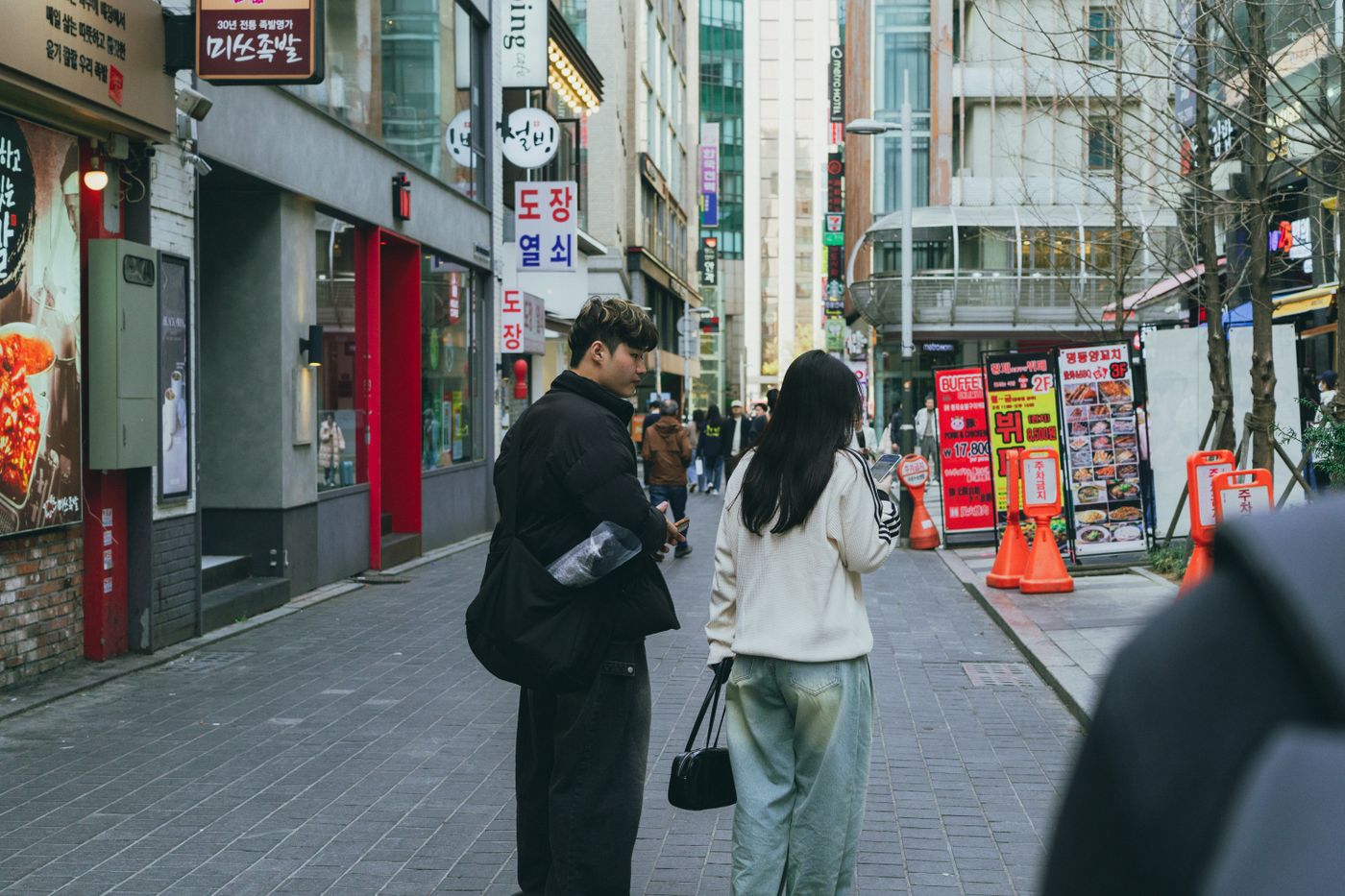
Why Are There No Trash Cans in Korea? Rules, Fines, and Where Your Cup Goes
Why Korea has no trash cans is one of the funniest serious questions travelers ask in Seoul.
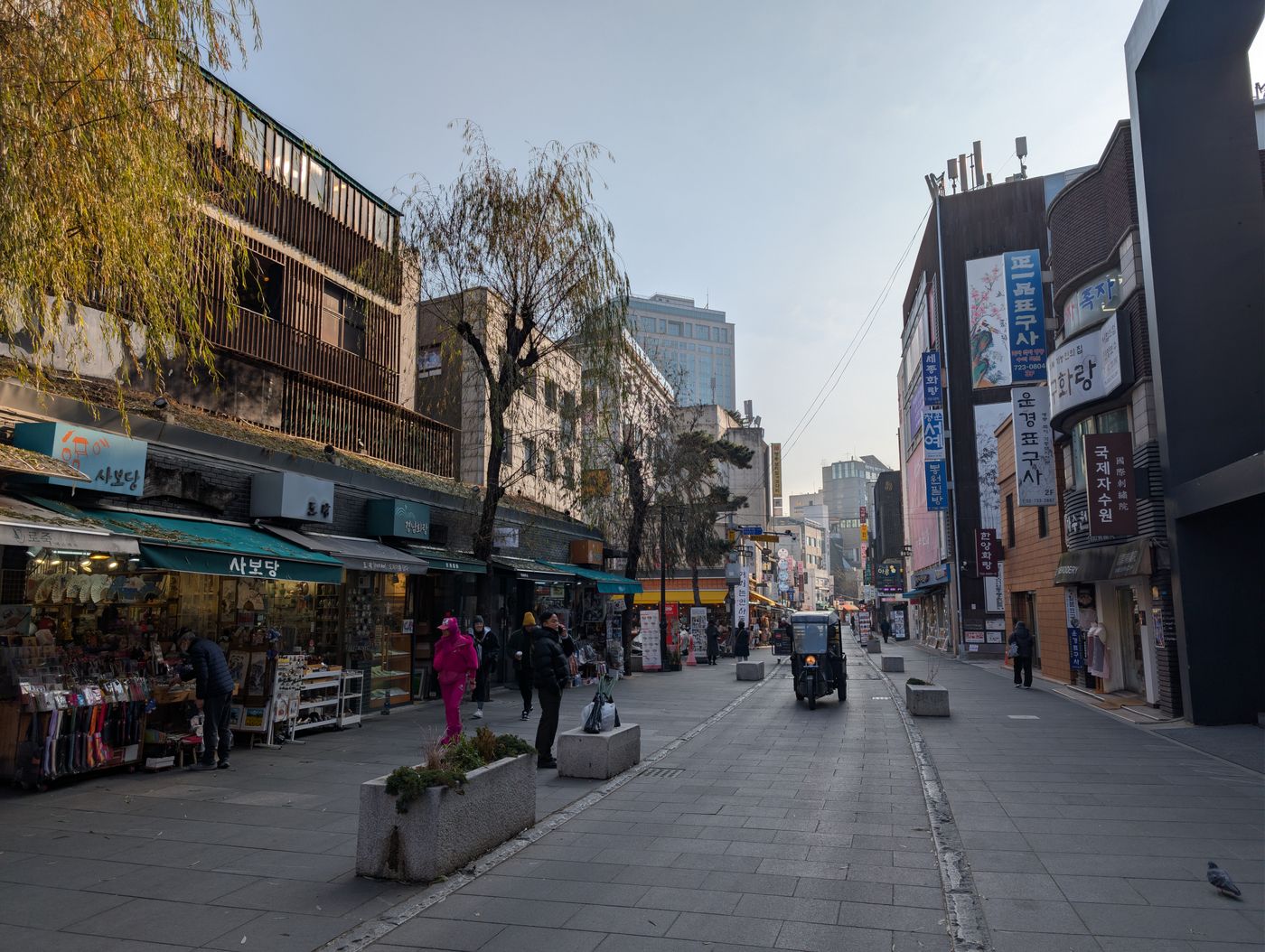
You buy an iced Americano. You finish it. You walk five minutes. No trash can. Ten minutes. Still no trash can. You pass a subway entrance, a beauty store, three restaurants, a bus stop, and a perfectly clean sidewalk. No trash can.
At this point, the cup becomes a travel companion. It sees Myeongdong with you. It joins your subway transfer. It almost enters a skin clinic. It may become the most loyal object of your trip.
The answer is not that Korea forgot trash exists. Korea built a waste system that pushes disposal into homes, businesses, official bags, recycling rooms, food-waste bins, and managed collection points instead of placing open public bins everywhere.
And here is the update most articles have not caught up with: Seoul heard the complaints, and since 2023 it has been putting street bins back. The numbers are further down.
Quick Answer: Why Are There So Few Public Trash Cans?
Korea has fewer public trash cans because ordinary household and business waste is supposed to be separated, paid for, and collected through regulated systems rather than dumped casually into street bins.
That does not mean there are zero trash cans. You can find bins in some subway stations, parks, airports, malls, tourist zones, convenience stores, large cafes, public facilities, and event venues. But compared with many cities, Seoul can feel unusually empty of public bins.
The system is shaped by several ideas:
- General trash often uses paid volume-based disposal bags.
- Recyclables are separated by material.
- Food waste is handled separately.
- Businesses manage their own waste.
- Open public bins can attract household dumping, overflow, odor, and sorting problems.
The result is a city where the sidewalk can be clean, but your finished drink cup has nowhere obvious to go.
BAGSMART zip travel wallet — on AmazonAffiliate link. As an Amazon Associate, EpicKor earns from qualifying purchases at no extra cost to you.
Korea Did Not Become Clean By Accident
Korea's waste culture is tied to policy, density, and habit.
South Korea introduced a volume-based waste fee system in the 1990s, making households buy official bags for general waste. Recyclables and food waste were pushed into separate streams. Food waste became especially important because Korean meals can produce wet, salty, heavy scraps, and landfilling that waste creates odor and environmental problems.
Recent reporting by The Guardian described South Korea as recycling 96.8 percent of its food waste in 2023, citing the climate, energy, and environment ministry. The same report traced the system through the 1995 pay-as-you-throw scheme, the 2005 food-waste landfill ban, mandatory separation, and the later spread of RFID food-waste bins in apartment complexes.
That is the big picture. For tourists, the street-level lesson is smaller: Korea wants waste to go into the right channel, not the nearest random can.
Update: Seoul Is Putting Bins Back
This is the part that changed after most English articles about Korean trash cans were written.
When the volume-based bag system launched in 1995, Seoul had 7,607 street bins. The city then spent two decades removing them — partly because people stuffed household and shop trash into free public bins to dodge the paid bags — and by 2023 the count was down to 4,956.
Then the policy reversed. In a 2021 Seoul survey of 3,112 residents, 73.3 percent said the city has too few street bins. As reported by Korean news coverage of the city's announcement, Seoul responded with a plan to bring the number back up: about 5,500 by the end of 2023, 6,500 in 2024, and 7,500 by the end of 2025 — roughly back to where 1995 started. New bins have been going in at high-traffic spots first: Gwanghwamun (광화문), Teheran-ro (테헤란로) in Gangnam, Yeouido (여의도), and around bus stops. The installation budget was raised more than fivefold to fund it.
What this means for a visitor in practice, as of August 2026: central tourist areas are noticeably easier than they were a few years ago, and the further you get from major intersections and bus stops, the more the old carry-your-cup reality still applies. The system underneath — paid bags, separated food waste, business responsibility — has not changed at all. Seoul added bins; it did not change the philosophy.
The Iced Americano Problem
The most common tourist trash item is not mysterious. It is a cup.
Korea's cafe culture is intense. You may buy an iced Americano in the morning, a fruit tea after lunch, and a convenience-store drink at night. Each one leaves a cup, lid, straw, sleeve, label, or bottle.
The easiest rule is this:
Return disposable cups to the cafe where you bought them if you are still nearby. If you are in a mall, station, or airport, look for a sorted bin area. If you are on the street, carry the cup until you reach a proper disposal point.
Do not shove a sticky cup into a subway corner, planter, restroom sink, or apartment recycling area. That is exactly the behavior the system is trying to prevent.
What Tourists Should Do With Common Trash
Here is the practical tourist version.
| Item | Best tourist move | Do not do this |
|---|---|---|
| Cafe cup | Return to cafe, use mall/station sorted bins, or carry it | Leave it on a bench or subway ledge |
| Plastic bottle | Empty liquid, look for recycling bin, carry if needed | Throw it into food waste or restroom bins |
| Snack wrapper | Keep a small trash pouch until a proper bin appears | Stuff it behind a sign or planter |
| Leftover food | Finish, pack responsibly, or ask the business | Put wet food into a street or restroom bin |
| Takeout container | Return where possible or separate after cleaning | Dump sauce-filled containers into recycling |
The tiny habit that helps most is carrying a small spare bag. Not a big camping thing. Just a lightweight pouch for receipts, wrappers, tissues, and one tragic cup lid.
Pack for the no-bin moment: As an Amazon Associate, EpicKor may earn from qualifying purchases. There is no single clever gadget for this. What works is one wipe-clean zip pouch — a BAGSMART zip travel wallet does it, since the same waterproof shell that protects a passport protects the rest of your bag from a sauce-stained container — plus a few ordinary resealable bags. Buy small — the point is your day bag, not your suitcase.
See BAGSMART zip travel wallet on AmazonRecycling Is Not One Magic Bin
Korea's recycling culture can look intimidating because it is not just "blue bin good."
Depending on the building or district, you may see separation for paper, plastic, vinyl, cans, glass, styrofoam, food waste, and general trash. Apartments often have detailed recycling rooms. Businesses have their own disposal areas. Some public facilities have sorted stations; others have almost nothing.
Tourists do not need to master every local collection rule, but they should understand the spirit:
- Empty liquid first.
- Keep food out of clean recycling.
- Do not hide mixed waste in recycling.
- Follow the labels on the bin in front of you.
- If you are not sure, ask staff instead of guessing.
The worst tourist mistake is putting half-finished food into a recycling bin because the container was plastic. In Korea, the container and the food are different problems.
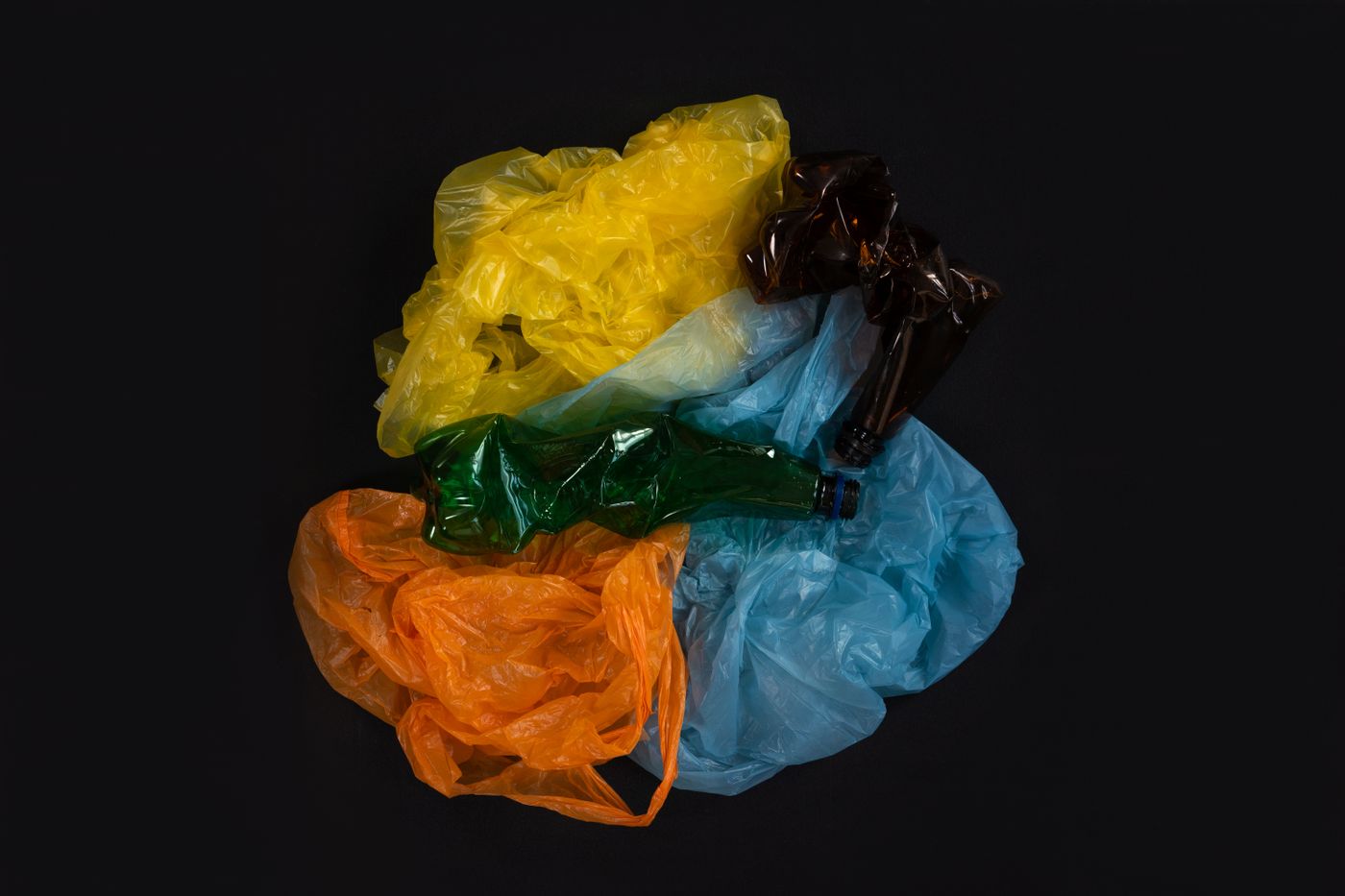
Food Waste Is The Hidden System
Food waste is where Korea becomes most different from many tourist expectations.
In many Korean homes and apartment complexes, food scraps are separated from general trash. Some places use paid food-waste bags. Many apartments use RFID bins that weigh household waste and charge through building fees. The Guardian's 2025 report described Seoul's RFID bin expansion and noted that the city operates tens of thousands of units, especially in apartment complexes.
As a tourist, you will probably not use a residential food-waste bin. You may not even see one. But you will feel the consequences:
- Businesses do not want tourists dumping leftovers into random bins.
- Wet food in general trash creates odor and collection problems.
- Takeout containers should not be recycled while full of sauce.
- Small hotel rooms can get smelly fast if you store leftovers badly.
If you buy street food, eat it near the vendor when possible. If you take food back to your hotel, dispose of it through the hotel guidance. If you are staying in an Airbnb, ask the host exactly how trash works. Do not guess based on your home country.
What Actually Counts as Food Waste — the Animal Rule
If you stay in Korea longer than a hotel trip — a month-long stay, a semester, a job — this is the distinction that will trip you up, because it is not intuitive and it is enforced.
Korea's working rule: if a farm animal could eat it, it is food waste. If it could not, it is general trash — even if it came off your plate.
So these are not food waste in Korea, and go in the general (paid-bag) trash instead:
| Looks like food waste | Actually general trash because |
|---|---|
| Chicken, pork, beef bones (뼈) | Animals cannot eat bone; it wrecks the feed and compost process |
| Clam, oyster, abalone, crab shells (조개·게 껍데기) | Hard shell, same reason |
| Egg shells (계란껍데기) | Too much calcium carbonate for feed |
| Peach, apricot, persimmon pits (핵과류 씨) | Hard pits do not break down |
| Chestnut and acorn shells, pineapple tops, corn husks | Too fibrous or hard |
| Tea bags, coffee grounds, herbal-medicine dregs (한약 찌꺼기) | Not feed material |
| Onion and garlic roots and dry outer skins, chili seeds | Compounds unsuitable for feed |
The logic is that Korean food waste is not buried — it is processed into animal feed, compost, and biogas, which is how the recycling rate reaches the high 90s. Anything that would poison that process is excluded, and districts can fine wrong disposal up to ₩100,000.
For the numbers-minded: as of August 2026 a 20-liter general waste bag costs ₩490 anywhere in Seoul, and the small food-waste bags most households use run about ₩140–200 for 2 liters and ₩210–300 for 3 liters depending on the district. The bags are sold at every convenience store and supermarket counter — you ask for a jongnyangje bongtu (종량제 봉투) for your district.
Convenience Stores Are Not Public Dump Sites
Convenience stores are tempting because they feel like tiny command centers. You can buy snacks, coffee, umbrellas, socks, chargers, and late-night comfort there. So travelers often assume they can also dump any random trash there.
Be careful.
Some stores have bins for items bought and consumed there. Some do not. Some may accept cup or packaging waste from their own products. Some will not appreciate outside trash from your entire day.
Use the store respectfully:
- If you bought it there and ate it there, use the provided bin if available.
- If there is no bin, ask or carry it.
- Do not bring a bag of street trash into a convenience store and treat it like a municipal facility.
That sounds strict, but it is also how Korea keeps small stores from becoming overflow trash rooms.
Why Restroom Bins Are Not The Answer
Tourists sometimes discover a restroom bin and feel saved.
Do not make that your default.
Restroom bins are for restroom waste, not coffee cups, takeout boxes, chicken bones, fruit peels, or shopping-bag cleanup. Putting food or drink trash there can create smell and extra cleaning problems. In busy subway stations or malls, it is also a fast way to turn a shared facility into a mess.
Use restroom bins only for the kind of waste they are meant to handle.
The Hotel Trash Strategy
Hotels are the simplest option for ordinary tourist trash, but even there you should avoid chaos.
Keep dry wrappers and receipts together. Empty bottles before disposal if possible. Do not leave leaking food containers in the room bin overnight. If you have takeout leftovers, ask the front desk or housekeeping what to do. Larger hotels deal with tourist trash constantly; smaller guesthouses may need you to follow local separation rules more carefully.
If your stay has a kitchen, the host's trash instructions matter. In Korea, Airbnb-style stays may require separate bags for general trash, recycling, and food waste. District rules can differ. The host should explain the exact bags and disposal area.
When You Actually Find A Bin
When you find a public bin, celebrate quietly and read it.
Many bins are labeled by type. If there are multiple openings, do not treat them as decoration. If one side is for bottles and another is for general waste, use them correctly. If the labels are only in Korean, icons can help. If the bin area is already full, do not stack your trash beside it unless everyone else clearly has and the facility is being actively managed.
This is less about being perfect and more about not making the system worse.
What This Says About Korean Daily Life
The trash-can mystery reveals something deeper about Korea.
Korea often makes public life feel smooth by moving the complicated parts backstage. Subway stations are clean because cleaning labor, station rules, and passenger habits support them. Apartment complexes are tidy because residents separate waste in specific areas. Food waste recycling succeeds because households, buildings, cities, and processing facilities all participate.
Tourists see the clean street first. They do not see the bags, bins, fees, rules, collection trucks, RFID systems, and local routines behind it.
That hidden structure is why the cup in your hand becomes annoying. You are trying to solve a private trash problem in a public system that expects more sorting than you expected.
Smart Tourist Habits
The best habits are small:
- Carry a lightweight trash pouch.
- Finish drinks before long subway rides.
- Use mall, airport, station, and cafe bins when available.
- Return cups to the business when reasonable.
- Empty bottles before recycling.
- Ask hotel staff about food leftovers.
- Do not use restroom bins as all-purpose bins.
- Do not leave trash beside a full bin unless staff clearly manage that area.
For broader Korea trip logistics, read EpicKor's Korea summer packing list and Korea convenience store breakfast guide. The trash issue shows up most during hot weather, cafe hopping, convenience-store meals, and long walking days.
Make day-bag life easier: Korea's no-bin moments are easier with a compact pouch, a strip of pocket tissues, and a bottle you can close. If you will be in Korea long enough to cook, the food-waste table above is the section to screenshot — the bags themselves you buy at any Korean convenience store, not on Amazon. EpicKor may earn from qualifying purchases at no extra cost to you.
See pocket tissues on AmazonFAQ About Trash Cans In Korea
Q: What is considered food waste in Korea?
Anything a farm animal could eat. Rice, vegetables, meat scraps, fruit flesh, and soaked noodles are food waste. Bones, clam and crab shells, egg shells, hard fruit pits, chestnut shells, tea bags, coffee grounds, and onion roots are not — they go in the paid general-waste bag, because Korea processes food waste into animal feed, compost, and biogas, and hard or inedible material breaks that process. Districts can fine wrong disposal up to ₩100,000.
Q: Are there more trash cans in Seoul now than a few years ago?
Yes. Seoul cut street bins from 7,607 in 1995 to 4,956 by 2023, then reversed course after 73.3 percent of surveyed residents said there were too few. The city has been adding bins since — the plan runs to about 7,500 by the end of 2025 — concentrated at busy spots like Gwanghwamun, Teheran-ro, Yeouido, and bus stops. Away from those areas, carry-your-cup still applies.
Q: Does Korea really have no trash cans? No. Korea has trash cans in some public facilities, stations, malls, airports, parks, and businesses. The tourist complaint is that street bins are much less common than visitors expect.
Q: Can I throw outside trash away at a convenience store? Only if the store provides a suitable bin and staff allow it. Do not treat convenience stores as public dumping sites for a whole day of trash.
Q: What should I do with a cafe cup in Seoul? Return it to the cafe if nearby, use a sorted bin in a mall or station if available, or carry it until you find a proper disposal point.
Q: Is recycling strict in Korea? Yes, separation matters. Rules can vary by building and district, but food, liquids, and dirty containers should not be mixed casually with clean recycling.
Q: What if I stay in an Airbnb? Ask the host for exact trash rules. You may need specific bags and separate disposal for general waste, recycling, and food waste.
Final Take
Korea's lack of public trash cans is not a random inconvenience. It is the visible edge of a larger waste system.
Once you understand that, the city makes more sense. The clean street is not proof that trash disappeared. It is proof that trash was routed somewhere else.
So carry the cup. Empty the bottle. Read the bin. Ask the hotel. Keep one tiny pouch in your bag. Seoul will feel less confusing, and your iced Americano cup will stop feeling like a travel partner with attachment issues.
You Might Also Like
Do Koreans Speak English? Ask Someone Under 35 — What Actually Happens on a Seoul Street
Yes, if you ask the right person. Stop a Korean in their twenties or thirties on a Seoul street and you will almost always get an answer in English. The forum answer that says otherwise is twenty years old. Who to ask, how to ask, where English is built in.
Gwangjang Market's Second Floor: Seoul's Vintage Arcade, and the One Day It's Shut
Everyone knows Gwangjang for the food alley that never closes. Above it is a vintage arcade signed 수입구제 where most items run under ₩20,000 — and it shuts every Sunday, which is exactly when visitors turn up.
Where to Buy Luggage in Seoul: Namdaemun, Real Prices, and When Not to Bother
You shopped too well and now you need another suitcase. Namdaemun is the answer, but the underground arcade shuts on the 2nd and 4th Sunday, the bag shops close for Chuseok, and a cheap case is not always cheaper than shipping.