Korea's Viral Trends of 2026: What Is Still Worth the Queue in Seoul, and What Is Already Over
Last updated: 17 November 2026. Prices, dates and crowd figures come from Korean-language news reports (Hankyung, Money Today, Financial News, MTN, Chosun Biz, The Scoop and others) and the Korea Times and Korea Herald, each dated in the sources at the end. Where a price was last reported in October rather than this month, the table says so. Dollar figures use ₩1,335 = US$1 (Bank of Korea base rate, 17 November 2026) and are approximate.

The snack Koreans used to fake the Dubai cookie when pistachio ran out: chal-tteok choco pie, 10-count box on AmazonAffiliate link. As an Amazon Associate, EpicKor earns from qualifying purchases at no extra cost to you.
On a Tuesday afternoon in November, police were called to an alley in Namdaemun Market because of a scarf shop. The shop, Hanyangsa (한양사), sells six scarves for ₩10,000 (about $7.50). Its owner, a vendor Korean social media calls "Scarf Uncle" (스카프 아저씨) or "Scarfprio" (scarf plus DiCaprio), tells customers not to buy, mocks their choices, and sends them away with a joke. Clips of him reached up to 4.12 million views, and his shop account gained 32,000 followers in a week. By 10 November the crowd outside his shuttered door was large enough that police were called over fears of a crush, and the Korea Times reported more than 30 officers on the scene.
That is how a Korea viral trend looks in 2026: it arrives in days, fills a street, and in the cases below faded within weeks to about three months. Earlier this year Koreans queued for Dubai chewy cookies (두쫀쿠), then butter tteok (버터떡), then a shark in Busan.
This guide is for deciding what to do with that in Seoul this winter: which of 2026's trends are still worth your time and money in November and December 2026, which are already over (so you can skip the queue or buy the cheap version), and how to read the signs yourself before the next one breaks.
Quick Guide: Korea's 2026 trends, status in November 2026
| Trend (Korean) | What it is | Price (date reported) | Where | Peak | Status, mid-November 2026 |
|---|---|---|---|---|---|
| Namdaemun scarf man (남대문 스카프 아저씨), shop 한양사 | Market stall selling scarves with a comedy routine | 6 scarves ₩10,000 (~$7.50); online set ₩10,000 + ₩3,000 shipping (Nov) | Namdaemun Market, Jung-gu | November 2026 | Hot, but often shut. Closed on and off since 31 Oct; online store sold out within a day of opening on 12 Nov |
| Hanjeongseon fruit mochi (한정선 찹쌀떡) | Chapssaltteok (glutinous rice cake) filled with whole fruit and cream | ₩4,000–₩6,000 a piece, pistachio ₩6,500 (Oct) | Seoul department-store food halls, Seongsu flagship, Seoul Station | Queues through autumn 2026 | Still hot (early-October reports). Waiting lists in the hundreds on one reporter's visit |
| GS25 Hanjeongseon yogurt mochi (한정선 요거트 찹쌀떡) | Frozen convenience-store version of the above | ₩3,900 (~$2.90) (Sep–Oct) | GS25 convenience stores | September 2026 | Still selling well; stock varies by store |
| Godiva mochi (고디바 모찌) | Chocolate-ganache mochi with fruit, sold at one shop | ₩7,500–₩9,000 a piece (Nov) | Godiva, Lotte World Mall, Jamsil | October 2026 | Still hot. 150 a day; 13-hour queues in October; reportedly same-day Catchtable reservations (10:00) since 29 Oct |
| Dubai chewy cookie (두쫀쿠, 두바이 쫀득 쿠키) | Pistachio-and-kadayif filling in a chewy marshmallow shell | ₩7,000–₩10,000 retail at the peak; ₩3,000s at marts (Feb) | Cafés and bakeries everywhere; mart and convenience-store copies | Mid-January 2026 | Over. Pistachio imports down 92.6% by July |
| Butter tteok (버터떡) | Baked rice-cake square, crisp outside and chewy inside | About ₩2,000 a piece (Mar); 1 kg home mix about ₩10,000 (Apr) | Bakeries, SPC's Passion5, all four convenience chains | 13 March 2026 | Over as a fad, settled as an ordinary snack |
| Spring-cabbage bibimbap (봄동비빔밥) | Bibimbap with seasonal bomdong cabbage | Bowl ₩8,000 → ₩12,000 (Jan → Mar) | Restaurants and home kitchens | Late February 2026 | Over (and out of season) |
| Bukang-i the shark (부캉이) | A wild shark living in a Busan waterfront canal | Free | Bukhang (North Port) Waterfront Park, Busan | Late September 2026 | Over. Guided out of the canal on 21 Oct; last seen in the harbour on 27 Oct |
What to actually do this winter
- You have one free afternoon in central Seoul: go to Namdaemun Market anyway, for the market. If the scarf shop is open, you will see the queue from the alley. If it is shut, the rest of the market is open and far less crowded than the scarf alley.
- You want the dessert everyone is posting right now: Hanjeongseon fruit mochi. Go to the department-store counter early on a weekday, or skip the line entirely with the ₩3,900 GS25 frozen version.
- You are in Jamsil for Lotte World: Godiva mochi is in the same mall, but do not plan your day around it. With 150 pieces a day, most visitors will not get one.
- You read about Dubai cookies or butter tteok and want to try them: good news, they are over. The copies sit on ordinary convenience-store and mart shelves now, with no queue, at a fraction of the peak price.
- You were hoping to see the Busan shark: it left. Busan's North Port park is still a pleasant waterfront walk, but there is no shark in the canal.
Korean honey yakgwa, mini size — the old-school dessert that had its own sell-out phase and stayed Yakgwa, the fried honey cookie, went through its own sell-out phase and never really left: the best-known maker still sells its broken-piece box one per person, three days a week. If you want a Korean sweet that outlasts a trend cycle, this is the safe bet to try at home or bring back. As an Amazon Associate, EpicKor earns from qualifying purchases at no extra cost to you. Check the current price on the listing.
See mini yakgwa on AmazonThe yakgwa story, including the royal bans, is in our yakgwa guide.
You might like: Namdaemun vs Dongdaemun: Which Seoul Market to Visit
The Namdaemun scarf man: still hot, but plan for a closed door
The vendor behind Hanyangsa has run the shop for more than ten years; Korean press give his age as 44 and do not print his name. What made him famous is the opposite of a sales pitch. "Don't spend money. Just take the vibe and go," he says in one clip. Middle-aged women make up much of the crowd, some travelling from Daegu and Daejeon by train. One shopper told the Korea Times she watches his videos four hours a day and waited six hours on her last visit.
The crowds outgrew the alley within days:
| Date (2026) | What happened |
|---|---|
| 31 October | Shop closes temporarily because of crowds |
| 4 November | Reopens; the crowd returns and police are dispatched |
| 5 November | Closed for a day "for a safety check", announced on the shop's YouTube channel |
| 6 November | Three private security guards posted outside from 11:00 |
| 10 November | Shop shut; people waiting since morning block the alley; police called over crush fears |
| 11 November, 13:00 | Seoul's real-time population indicator shows about 25,000 people in the area, rated "severely crowded" |
| 12 November | Opens a Naver Smart Store: six scarves (seller's choice) ₩10,000 + ₩3,000 shipping. Sold out in under 24 hours; orders may take more than two weeks to ship |
Status on 17 November: we found no report confirming regular opening hours. The Korea Times described him as having voluntarily suspended trading over crush concerns, and closures so far have been announced on the day through the shop's YouTube channel 남대문 다다구리 and its Instagram (@nam_dadaguri). Check both on the morning you plan to go.
How to go: Namdaemun Market is next to Hoehyeon Station (Line 4), exits 5 and 6. Search "남대문 한양사" on Naver Map, which works far better than Google Maps in Korea.
The honest note: the shop next door told the Korea Times that "all the attention is focused on the scarf shop, so sales at surrounding stores haven't increased at all," and an 82-year-old delivery worker said weekday crowds had doubled or tripled, slowing his rounds. If you go, buy something elsewhere in the market too; the knife-cut noodle alley and the kitchenware shops are a better reason to be there. Our Namdaemun vs Dongdaemun guide covers the rest of the market.
Hanjeongseon fruit mochi: the one dessert still worth a wait
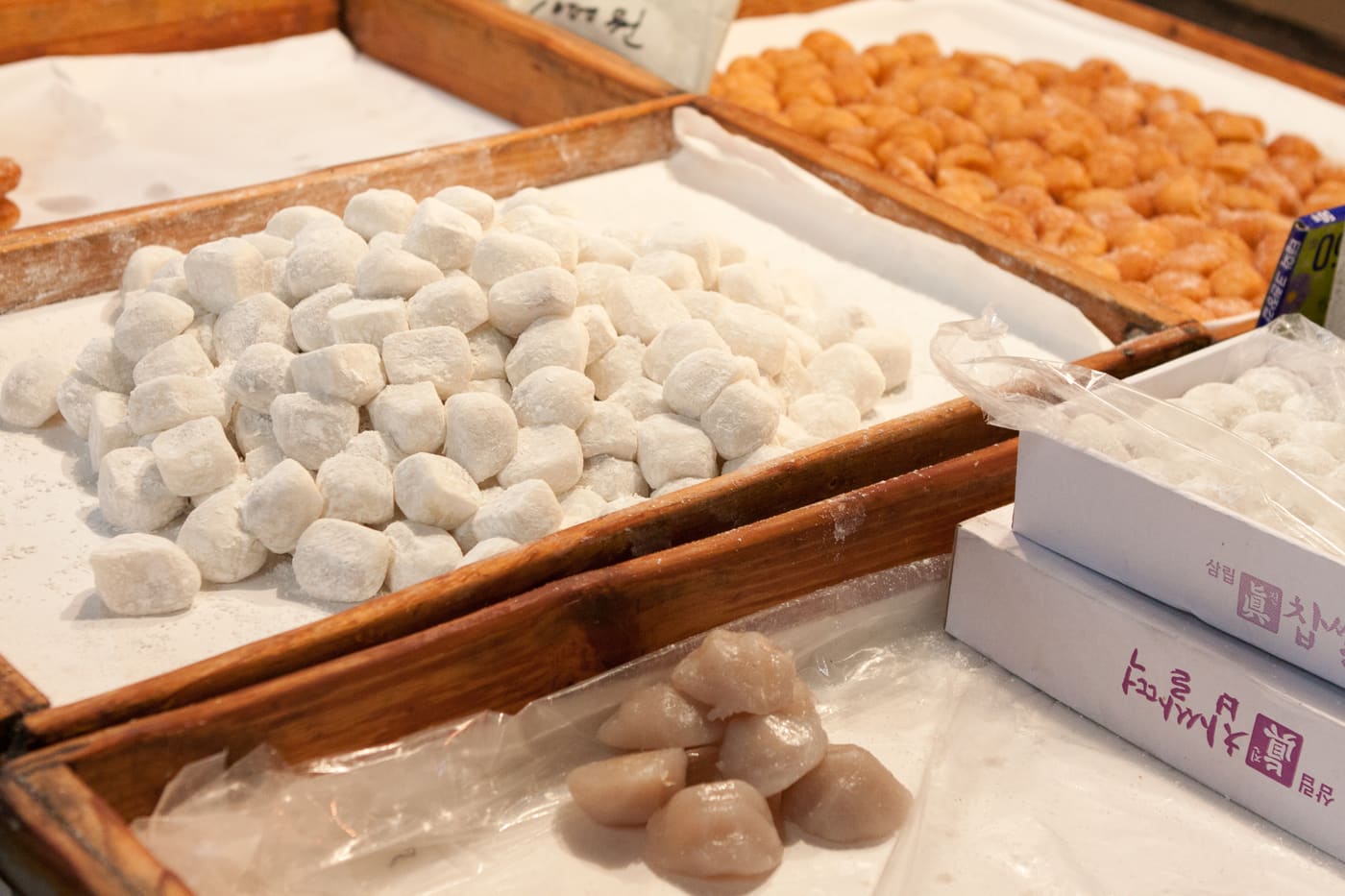
Hanjeongseon (한정선) makes modern chapssaltteok (찹쌀떡): a thin glutinous-rice skin wrapped around a whole strawberry, persimmon, fig, kiwi or muscat grape, with cream. It started in 2023 at a flagship in Seongsu-dong and now has counters in the food halls of Shinsegae, Hyundai and Lotte department stores across Seoul, plus a Seoul Station shop that opened on 11 April 2026. Outside Seoul, the only capital-area branch is Hyundai Pangyo; there are none in other regions.
As reported on 2 October 2026:
- Single pieces: ₩4,000–₩6,000 (about $3.00–$4.50). The pistachio "Dubai-style" piece is the most expensive at ₩6,500.
- Gift sets: 6 pieces ₩32,000, 9 pieces ₩45,000.
- The wait: at the Lotte World Mall (Jamsil) counter, on one reporter's visit in early October, registering at the kiosk at 10:40, ten minutes after opening, got number 220 with 141 groups ahead. By 14:40 the number had reached 1,142, with 214 groups waiting. Popular flavours were sold out on arrival.
The shortcut: GS25's frozen 한정선 요거트 찹쌀떡 (yogurt-cream mochi) costs ₩3,900 and launched on 3 September 2026. A presale of 400 at two stores (GS Tower in Yeoksam and Incheon Airport Terminal 2) sold out in 15 minutes, and it sold about 600,000 units in its first month. It is not the same as a fresh piece, but it costs less and needs no queue. Stock varies a lot by branch.
Why this one may last: it is older than the 2026 fad cycle (2023), sits in department stores rather than pop-ups, and is built on fruit that changes with the season, which gives people a reason to come back. That is the pattern of the trends that survived, below.
You might like: Korean Traditional Desserts Guide 2026: Tteok and Yakgwa
Godiva mochi: real, but not a plan
Godiva's mochi (dark-chocolate ganache with fresh strawberry or tangerine) is sold only at its Lotte World Mall shop by exit 10 of Jamsil Station, at ₩7,500–₩9,000 a piece (about $5.60–$6.75), and only 150 a day. Before any reservation system, in mid-October, the Korea Herald found the first person in line had arrived at 21:00, about 13 hours before opening; by 06:00 the queue ran past 100 metres in 9°C weather, and resale listings asked up to ₩45,000.
Korean reports in late October said the shop would switch to same-day online reservations on the Catchtable (캐치테이블) app from 29 October, opening at 10:00. We could not confirm the current rule on an official Godiva page, so check Catchtable for "고디바 롯데월드몰점" before you go. Either way, treat it as a bonus if you are already in Jamsil, not a reason to cross the city.
Already over: skip the queue, buy the cheap version
Dubai chewy cookie (두쫀쿠): the clearest boom and bust of 2026
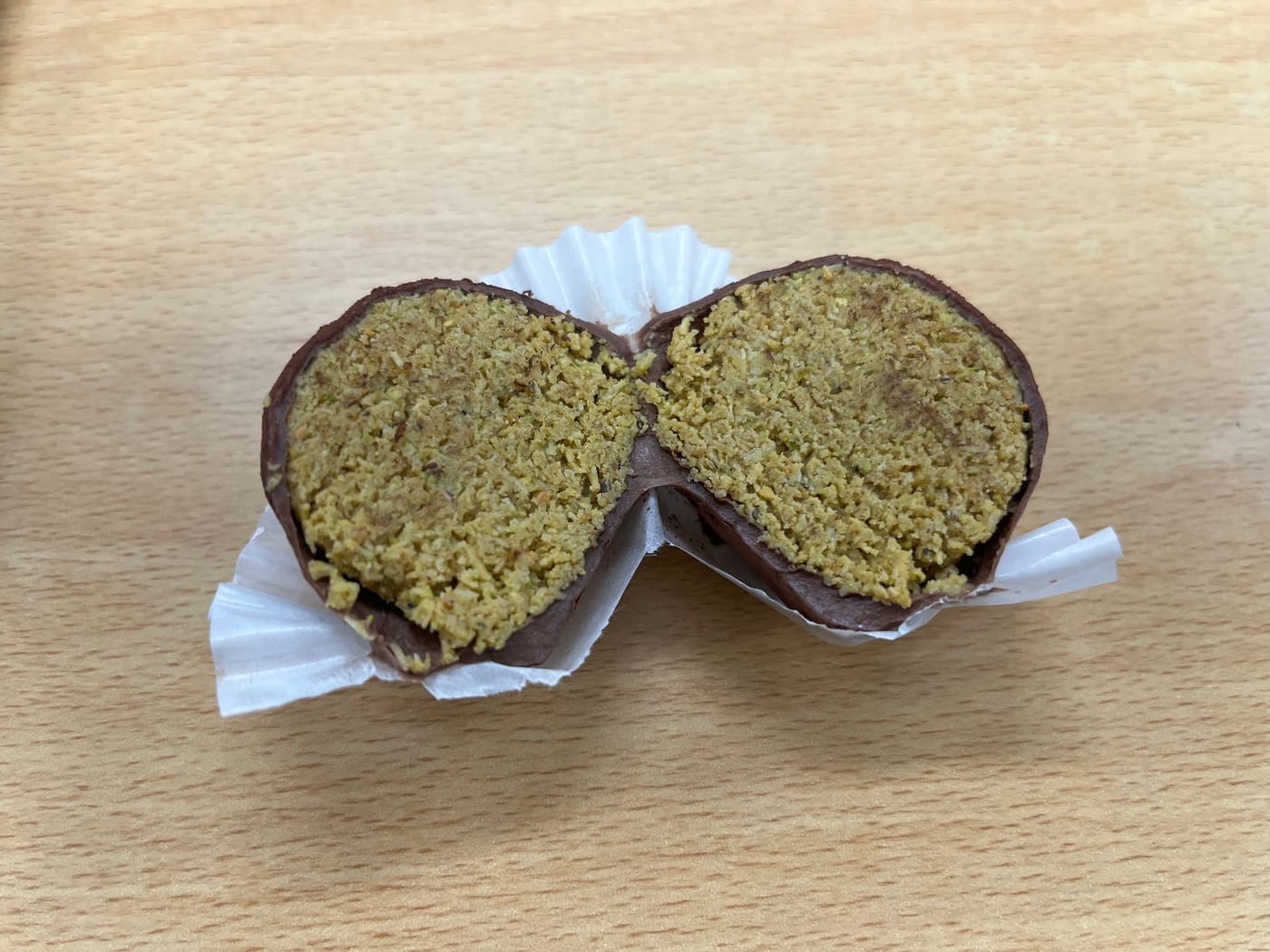
The Dubai chewy cookie packed pistachio cream and toasted kadayif pastry into a chewy marshmallow-and-cocoa shell. Naver searches for it rose from October 2025 and peaked in mid-January 2026. At the peak, shops sold it for ₩7,000–₩10,000 (one report put a typical piece at about ₩8,000), consumer complaints jumped from 15 in December 2025 to 118 in January 2026, and wholesale kadayif went from about ₩60,000 to over ₩140,000 for 5 kg.
Then big retailers moved in. E-mart and Lotte Mart put out versions in the ₩3,000s, and CU sold a Dubai chewy rice cake at ₩3,500 after a January price rise. By 17 February, a small seller was posting that it "doesn't sell even at a ₩2,000 clearance." Customs data later showed pistachio imports fell from 731 tonnes in February to 54 tonnes in July (down 92.6%), and new "Dubai" trademark filings fell from 23 in January to one in June.
What it means for you: if you are curious, buy a mart or convenience-store version for a few thousand won. Do not queue for one. The full story of the substitute snack, chal-tteok pie, is in our chal-tteok pie guide.
Butter tteok (버터떡): a fad that became a snack
Butter tteok is a baked square of glutinous-rice and tapioca dough with milk and butter, crisp outside and chewy inside; Korean reports trace it to Shanghai. On Naver's search index it went from 1 on 1 March 2026 to 100 on 13 March, then fell to 40 by 24 March. On 12 March a Seongsu bakery sold its 150-piece display in eight minutes at about ₩2,000 each, with a limit of ten per person. SPC's bakery brand Passion5 (패션파이브) launched its own on 13 March, and the convenience chains followed: CU first, then GS25, 7-Eleven and emart24.
By April it had settled into a cheap home-baking snack: a 1 kg mix costs around ₩10,000 (about $7.50). Verdict: over as a fad, easy to find, not worth a special trip.
Spring-cabbage bibimbap (봄동비빔밥) and the yellow-cheese chip
Bomdong bibimbap spread in February, and search interest halved about 17 days after its peak. Meanwhile bomdong cabbage rose from ₩4,500 to ₩6,000 a kilo and the bowl from about ₩8,000 to ₩12,000 between late January and early March. Bomdong is a winter-to-spring vegetable, so you will see it again from late winter.
The yellow-cheese (황치즈) snack wave, led by Orion's chip, resold at four to five times its ₩5,600 list price when the spring limited edition (launched in February) sold out; Orion ran extra production in mid-April and re-released it as a regular product in June. Why it sold out and where it stands now is in our Orion yellow cheese chip guide.
Bukang-i, the Busan shark (부캉이)

On 18 September 2026 a shark was spotted swimming in the artificial canal of Bukhang (North Port) Waterfront Park in Busan. Locals named it Bukang-i (부캉이). Holiday crowds reached up to 100,000 a day, and KNN reported 1.54 million visitors over the month on 17 October. Authorities guided it out of the canal into the harbour on 21 October; it was later seen near Pier 1 and, on 24 October, off the International Passenger Terminal, and was last seen on 27 October. By 1 November weekend visitors had dropped to about 10,000, most of them there for park events. As of 9 November no sighting had been reported for 14 days; experts think it moved to warmer water as the sea off Busan cooled to about 18°C.
Verdict: over. From first sighting to an empty canal took about six weeks.
You might like: Korean Pop-Up Store Culture: Why Seoul Lines Up for Limited Drops
The pattern: why Korean trends burn out so fast
The Scoop, a Korean business outlet, measured the "half-life" of food trends: the number of days from the peak of Naver search interest until it falls by half.
| Trend | Year | Half-life of search interest | What happened next |
|---|---|---|---|
| Croffle (크로플) | 2020 | 163 days | Stayed on café menus |
| Tanghulu (탕후루, sugar-glazed fruit) | 2023 | 54 days | About 1,300 shops opened in 2023; in 2024 closures outpaced openings for the first time on record |
| Dubai chocolate (두바이 초콜릿) | 2024 | 13 days | CU's ₩4,000 bar (launched 6 July 2024) sold its first 200,000 in one day |
| Dubai chewy cookie (두쫀쿠) | 2026 | about 17 days (cooled)* | One seller posted a ₩2,000 clearance about a month after the peak |
| Bomdong bibimbap (봄동비빔밥) | 2026 | about 17 days | Faded with the season |
*The Scoop described the Dubai chewy cookie as cooling within about 17 days of its peak rather than giving a strict half-life; the bomdong figure is a half-life.
Tanghulu shows the cost behind the curve. The largest chain, Dalkom Wangga Tanghulu (달콤왕가탕후루), grew from 43 franchise stores in 2022 to 531 in 2023, then shrank to 150 in 2024. Its successor in many of the same storefronts was yogurt ice cream, led by the chain Yoajung (요아정), which went from 166 stores in 2023 to more than 350 by June 2024.
A typical pattern we see across these cases (our reading of the reports above, not a measured rule):
- Weeks 1–4: a clip spreads on Instagram, YouTube Shorts and TikTok; a few shops sell out; resale prices appear.
- Weeks 4–8: the peak. Convenience stores and marts launch copies, often at half the café price, and news outlets start calling it a "syndrome."
- Weeks 8–12: the copies remove the scarcity. Search interest halves, ingredient prices fall, and small shops that bought stock at the top are left with it.
In the Korea Herald, psychologist Kwak Keum-joo (professor emerita, Seoul National University) said that with far more media outlets, attention now spreads across a much wider range of subjects, so excitement heats up quickly and cools just as fast when new content appears. Cultural-studies professor Lee Taek-gwang (Kyung Hee University) added that what draws crowds is often something rarely seen.
The honest counter-view
"Everything dies in three months" is too neat. Some caveats:
- Not everything burns out. Croffle lasted, salt bread became a fixture (our Seoul salt bread guide has the current prices), butter tteok turned into a ₩10,000 home mix, and Hanjeongseon has been growing since 2023. The survivors tend to be cheap, easy to make, or tied to seasons.
- Over is often better for visitors. When a trend ends, the copies get cheaper and easier to find. A ₩3,500 convenience-store version with no queue may be the better deal for a tourist with three days.
- Viral is not the same as good. A six-hour queue tells you about social media, not about taste. The scarf man's own line is that you do not have to buy anything.
- Crowds have costs. Neighbouring Namdaemun shops say they have not gained from the scarf crowds, and Jung-gu district plans to bring the market into Seoul's crowd-management system next year.
- Our dates are press dates. Most figures here come from Korean news reports; prices and opening rules change weekly during a craze. Check on the day.
You might like: Seongsu vs Hannam Guide: Seoul's Trend Neighborhoods
How to spot the next one before it peaks
You do not need to read Korean to follow this; copy the Hangul terms into Instagram, YouTube or Naver.
| Search this (Korean) | Meaning | What it tells you |
|---|---|---|
| 오픈런 | "Open run", queueing before opening | The current queue spots |
| 품절대란 | "Sell-out chaos" | Things that sold out this week |
| 제2의 두쫀쿠 | "The next Dubai cookie" | What Korean media expect to blow up next |
| 요즘 유행 디저트 | "Trending desserts lately" | Blog round-ups, newest first on Naver |
| 떡픈런 | "Rice-cake open run" | The current mochi queues |
| 편의점 신상 | "New at convenience stores" | When the copies arrive, the peak is near |
| 웨이팅 + place name | "Waiting" (e.g. 성수 웨이팅) | Live waits in a neighbourhood |
Three practical rules:
- Watch for the convenience-store copy. When CU or GS25 announces its own version, the café queue usually has weeks, not months, left.
- Use the queue apps. Seoul's busiest shops use Catchtable (캐치테이블) or Tabling (테이블링) for waiting lists and same-day reservations. Some functions may need a Korean phone number, so ask your hotel or a Korean friend if sign-up fails.
- Check Naver DataLab. Type the Korean name into Naver DataLab to see whether searches are still rising or already falling. If the line has turned down, the queue is shrinking too.
If your trip runs into December, the next queue is already forming: hotel Christmas cakes. Prices and pre-order dates are in our Christmas in Korea 2026 guide.
FAQ
Q: Is the Namdaemun scarf man still selling?
A: On and off. His shop, Hanyangsa, has closed several times since 31 October because of crowds and police calls, and his online store sold out within a day of opening on 12 November. Check the shop's YouTube channel 남대문 다다구리 or Instagram @nam_dadaguri on the morning you plan to go; closures have been announced the same day.
Q: How much are the scarves?
A: Six for ₩10,000 (about $7.50) at the shop. The online set was ₩10,000 plus ₩3,000 shipping, with six scarves chosen by the seller.
Q: What is the most popular dessert in Seoul right now?
A: In November 2026, Hanjeongseon fruit mochi (₩4,000–₩6,500 a piece, with long waits, both as reported in early October) and Godiva's mochi at Lotte World Mall (₩7,500–₩9,000). GS25 sells a frozen Hanjeongseon yogurt mochi for ₩3,900.
Q: Can I still find Dubai chewy cookies in Korea?
A: Yes, but the craze peaked in mid-January 2026. Mart and convenience-store versions sold for ₩3,000–₩4,300 by early 2026, with no queue.
Q: Why do Korean food trends end so fast?
A: Clips spread quickly, convenience stores and marts copy a hit within weeks, and the copies remove the scarcity that made it exciting. Naver search data shows recent trends losing half their interest in 13 to 54 days after peaking.
Sources
- The Korea Times, 12 November 2026, "Women flock to Seoul's Namdaemun Market for viral scarf man": Hanyangsa, six scarves for 10,000 won; more than 30 police officers dispatched on Tuesday (10 November); real-time population about 25,000 on Wednesday at 1 p.m., "severely crowded"; 7,715 people at 2 p.m. on 6 November vs 6,606 a year earlier; voluntary suspension over crush concerns; visitors from Daegu and Daejeon; neighbouring merchant and delivery-worker quotes; Jung-gu crowd-management plan for next year.
- Kyunghyang Shinmun (English), 4 November 2026, scarf seller report: related videos up to 4.12 million views; Hanyangsa SNS account over 32,000 followers in a week; "Don't spend money. Just take the vibe and go."
- WIKITREE, 11 November 2026, 「급기야 경찰 출동...'스카프 아저씨' 가게 앞에서 어제 벌어진 일」: 10 November closure notice (오늘 휴업), crowds since morning, police called over crush concerns; earlier closure and reopening dates.
- Money Today, 5 November 2026, 「남대문 스카프 아저씨 "경찰까지 출동"…영업 재개 하루 만에 또 휴업」: police dispatched 4 November; closure on 5 November announced on YouTube channel 남대문 다다구리 ("안전 점검을 이유로 영업을 하루 쉬어갑니다"); Instagram @nam_dadaguri.
- Weekly Kyunghyang, 7 November 2026, 「몰려드는 인파에···남대문 스카프 아저씨, 결국 경호원 고용」: closed 31 October, reopened 4 November, closed 5 November, three private security staff from 11 a.m. on 6 November.
- Hankyung, 12 November 2026, 「남대문 스카프 아저씨, 또 일냈다…온라인몰 열자마자 품절」: Smart Store listing "6개 1세트" unavailable on 12 November; 6 scarves for 10,000 won.
- WIKITREE, 12 November 2026, online store report: set price 10,000 won, shipping 3,000 won, seller chooses the six scarves; 95,871 store visitors that day by about 10:15.
- Financial News, 16 November 2026, 「"한사람이 50만원어치 왜 사는거냐?"...남대문 스카프 아저씨, 온라인도 품절대란」: Smart Store opened 12 November, sold out in under 24 hours, shipping may take over two weeks; owner aged 44 (Korean age), shop run for over 10 years; nickname 스카프리오.
- The Korea Herald via Asia News Network, 13 November 2026, "What makes South Koreans turn up for a shark or a scarf seller?": "Scarfprio" nickname; Bukang-i; comments from Kwak Keum-joo (Seoul National University) and Lee Taek-gwang (Kyung Hee University).
- MTN, 2 October 2026, 「백화점ㆍ편의점서 수십억씩 팔려나가는 찹쌀떡…왜 사나 봤더니」: Hanjeongseon pieces 4,000–6,000 won, pistachio 6,500 won, 6-piece set 32,000 won, 9-piece 45,000 won; Seongsu flagship 2023; Seoul Station store opened 11 April; Hyundai Pangyo only capital-area branch outside Seoul; Lotte World Mall waiting numbers; GS25 yogurt mochi about 600,000 units in a month.
- Hankyung, 3 September 2026, 「백화점에서 줄서 먹던 그 찹쌀떡, 편의점에 풀린다」: GS25 한정선 요거트 찹쌀떡 3,900 won, made with Lorolmelo; presale of 400 at GS Tower and Incheon Airport T2 sold out in 15 minutes on 28 August; department-store counters at Shinsegae, Hyundai, Lotte.
- Financial News, 17 November 2026, 「"한 알에 9000원이어도 오픈런"… 스몰 럭셔리 열풍에 프리미엄 디저트 전성시대」: Godiva mochi 7,500–9,000 won, opening-day queues and early sell-outs at Lotte World Mall.
- The Korea Herald, 14 October 2026, "Godiva mochi limited to 150 daily — one buyer waited 13 hours overnight": Lotte World Mall near Jamsil Station exit 10; 150 a day; first in line at 9 p.m.; queue over 100 m by 6 a.m.; resale up to 45,000 won.
- Godiva Lotte World Mall reservation change: reported by Edaily on 28 October 2026 (「'오픈런' 고디바 모찌, 29일부터 온라인 예약으로 바뀐다」), as cited in Korean blog and community posts; same-day Catchtable reservations opening at 10:00. Not confirmed on an official Godiva page as of 17 November 2026.
- LS Securities data via BizWatch, 23 February 2026, 「검색량도, 원재료값도 '뚝'...소멸각 접어든 '두쫀쿠'」: Naver searches rising from October 2025, peak mid-January 2026; kadayif 5 kg about 60,000 won (Oct 2025) → over 140,000 won (Jan 2026) → about 100,000 won (Feb).
- Hankyung, 7 February 2026, 「지금 창업하지 마세요…두쫀쿠 유행인데 경고 나온 이유」: 시중 (retail) 두쫀쿠 7,000–10,000 won; E-mart 두바이 스타일 쫀득볼 and Lotte Mart 스모어 두바이 쫀득 쿠키 in the 3,000-won range; 달콤왕가탕후루 franchise stores 43 (2022) → 531 (2023) → 150 (2024).
- Digital Daily, 19 January 2026, 「'금쫀쿠' 되나… CU, '두바이 쫀득' 가격 대폭 인상」: CU 두바이식 초코 쿠키 3,600 → 4,300 won; 두바이 쫀득 찹쌀떡 3,100 → 3,500 won.
- Asia Economy, 17 February 2026, 「"주문 폭주 걱정했는데 2000원 떨이해도 안 팔려"…인기 시들해진 '두쫀쿠'」: 2,000-won clearance post; consumer complaints 15 (Dec 2025) → 118 (Jan 2026).
- Money Today, 24 August 2026, 「'두쫀쿠' 그렇게 난리더니…반년 만에 원재료 수입 90% '뚝'」: pistachio imports 731 t (Feb) → 54 t (Jul), down 92.6% (Korea Customs Service); "Dubai" trademark filings 23 (Jan) → 1 (Jun); about 8,000 won a piece at the peak.
- The Scoop, 30 March 2026, 「두쫀쿠, 봄동, 버터떡 '짧은 유행' 씁쓸한 뒷맛」: search half-lives (croffle 163 days in 2020, tanghulu 54 days in 2023, Dubai chocolate 13 days in 2024, 두쫀쿠 and 봄동 about 17 days); 버터떡 Naver index 1 (1 Mar) → 100 (13 Mar) → 40 (24 Mar); Passion5 (패션파이브, SPC) 버터쫀득떡 13 March; CU first, then GS25, 7-Eleven, emart24; bomdong 1 kg 4,500 → 6,000 won and bowl 8,000 → 12,000 won (Korea Price Information).
- Chosun Biz via Daum, 15 March 2026, 「[르포] 진열 8분 만에 완판… 성수동 줄서기 만든 '버터떡'」: Seongsu bakery, about 150 pieces sold in 8 minutes on 12 March, about 2,000 won each, 10 per person; Shanghai origin.
- Newsis, 16 April 2026, 「버터떡, 반짝 유행할 줄 알았더니…가성비 디저트로 '변신'」: 1 kg mix about 10,000 won; settled as a regular snack.
- WIKITREE, 7 July 2026, 「정가 4~5배 웃돈 주고 거래… '제2의 허니버터칩' 노린다는 '한국 과자'」: Orion 촉촉한 황치즈칩 spring limited edition, list price 5,600 won (16 pieces), resold at 20,000–30,000 won; extra production mid-April; regular re-release in June.
- Hankyung, 1 November 2026, 「부캉이 보러 왔는데 썰렁…10만명 몰리더니 발길 뚝」: first spotted 18 September; up to 100,000 visitors a day on holidays; about 10,000 on weekends now; guided out of the canal about 33 days later; seen 24 October off the International Passenger Terminal; last seen 27 October.
- Hankyung, 9 November 2026, 「부캉이 마지막 목격 후 14일…따뜻한 바다 찾아갔나」: guided out of the canal 21 October; earlier sightings near Pier 1 and the International Passenger Terminal; no sighting for 14 days; water about 18°C.
- KNN, 17 October 2026, Bukhang Waterfront Park visitor count: 1.54 million visitors over the month, as of 17 October.
- CEO Score Daily, 9 July 2024, 「CU '두바이 스타일 초콜릿' 하루 만에 완판」: launched 6 July 2024, 4,000 won (48 g), first 200,000 sold out in a day.
- Newsis via Financial News, 14 July 2024, tanghulu closures report: about 1,300 tanghulu shops opened in 2023; 2024 closures exceeding openings (Ministry of the Interior and Safety permit data).
- Dailian, 30 July 2024, 「폐업한 '탕후루' 매장에 '요아정'…"창업 잔혹사 반복 안돼"」: Yoajung 166 stores (2023) → over 350 (June 2024), Fair Trade Commission disclosure data; closures exceeding openings for the first time on record.
You Might Also Like
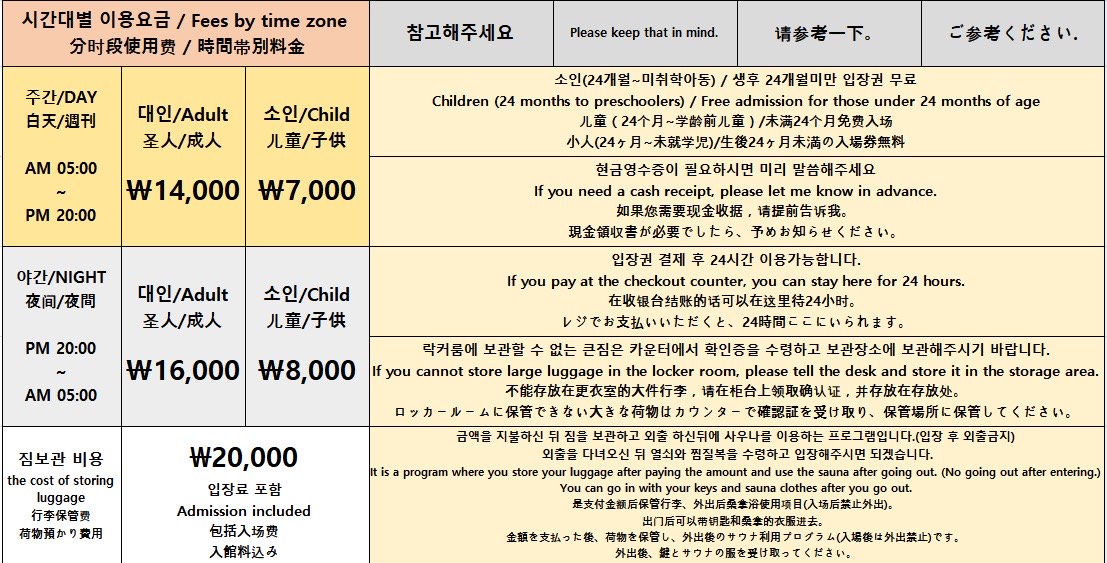
Best Jjimjilbang in Seoul, Korea for Foreigners: Prices, 24-Hour Options and Tattoo Rules
Dragon Hill Spa and Siloam, the two Seoul jjimjilbangs every guidebook still names, are shut with no reopening notice. What is open this winter: Sparex Dongdaemun at ₩14,000 by day and ₩16,000 overnight, Hongdae's 24-hour kiln sauna, and each spa's tattoo rule as written.

Korean Massage in Seoul: Every Type, What It Costs, and What to Avoid
Korean massage in Seoul, October 2026: ₩25,000 for 40 minutes of feet in Myeongdong, ₩50,000 for an hour of Thai, ₩60,000 for 안마 at a massage clinic, ₩80,000–150,000 in a hotel sauna. Every type compared, the blind-only law, and the signs to skip.
Illegal in Korea: 15 Things That Get Tourists Fined (and 5 That Don't)
Jaywalking in Korea is ₩20,000, a cigarette in the wrong place ₩100,000, a shared e-scooter on a car-only licence ₩100,000, and CBD gummies a crime. Drinking a beer in the park, a visible tattoo and the October Banpo Bridge jump carry no fine at all.