Seoul Safety Guide: Taxi Scams, Street Recruiters, and Etiquette
A good Seoul safety guide should do two things at once: reassure you that most visits are straightforward and prepare you for the small number of situations where attention matters. Seoul has extensive public transit, busy streets late into the evening, tourist assistance services, and a nationwide police lost-property system. In January 2026, the former LOST112 service moved into the new Police Civil Service 24 portal. The city also has taxi overcharging complaints, persistent street recruiters, nightlife risks, and etiquette rules that visitors can misread.
The goal is not to make Seoul sound dangerous or perfectly safe. No large city deserves either description. The useful approach is to know what normal service looks like, keep records when something feels wrong, and use Korea's official help channels rather than arguing on the street.
The Short Answer: Your Seoul Safety Setup
Before leaving the airport, save four numbers: police 112, fire and ambulance 119, the Korea Travel Helpline 1330, and the Seoul city information line 120. Install or bookmark a map app that works well in Korea, keep your accommodation address in Korean, and use an in-app taxi booking when possible.
Most everyday problems are not violent emergencies. They are misunderstandings about fares, a lost phone, an unwanted conversation, a missed last train, or a card that does not work. The table below shows the fastest first response.
| Situation | First Action | Official Help | Evidence to Keep |
|---|---|---|---|
| Immediate danger or crime | Move to a staffed, bright place | Police 112 | Location, description, photos only if safe |
| Medical or fire emergency | Call and state your location | 119 | Symptoms, allergies, hotel contact |
| Tourist complaint or interpretation | End the interaction and document it | 1330 | Receipt, plate, time, business name |
| Lost item | Retrace the last confirmed location | Police Civil Service 24 or transit operator | Serial number, photo, exact route and time |
Lonely Planet Korean Phrasebook & Dictionary — on AmazonAffiliate link. As an Amazon Associate, EpicKor earns from qualifying purchases at no extra cost to you.
Keep these services for real problems. A language barrier alone is often solved by showing written Korean or using translation, while a fare dispute is easier to report with a receipt than with a confrontation.
Seoul Taxi Scams: What Is Actually Against the Rules
The old warning to avoid every black taxi is wrong. Color does not tell you that a taxi is a scam. Seoul has regular sedans, deluxe taxis, large taxis, international taxis, and app-based premium services with different legitimate fare structures. Some deluxe or premium vehicles are black and cost more by design.
The official Seoul taxi guide states that ordinary taxis must charge by the meter unless an approved separate fare plan applies. In-app services may use predetermined or flexible pricing, and international taxis can offer approved airport section fares. A quoted flat fare is therefore not automatically illegal; the question is whether you booked a service that clearly disclosed it.
Red flags include a curbside driver soliciting you aggressively, refusing the meter without showing an approved fare, changing the agreed app price, or demanding cash while refusing a receipt. At an airport, use the official taxi stand or a confirmed app pickup point. Do not follow a person who approaches inside the terminal claiming to have a "special taxi."
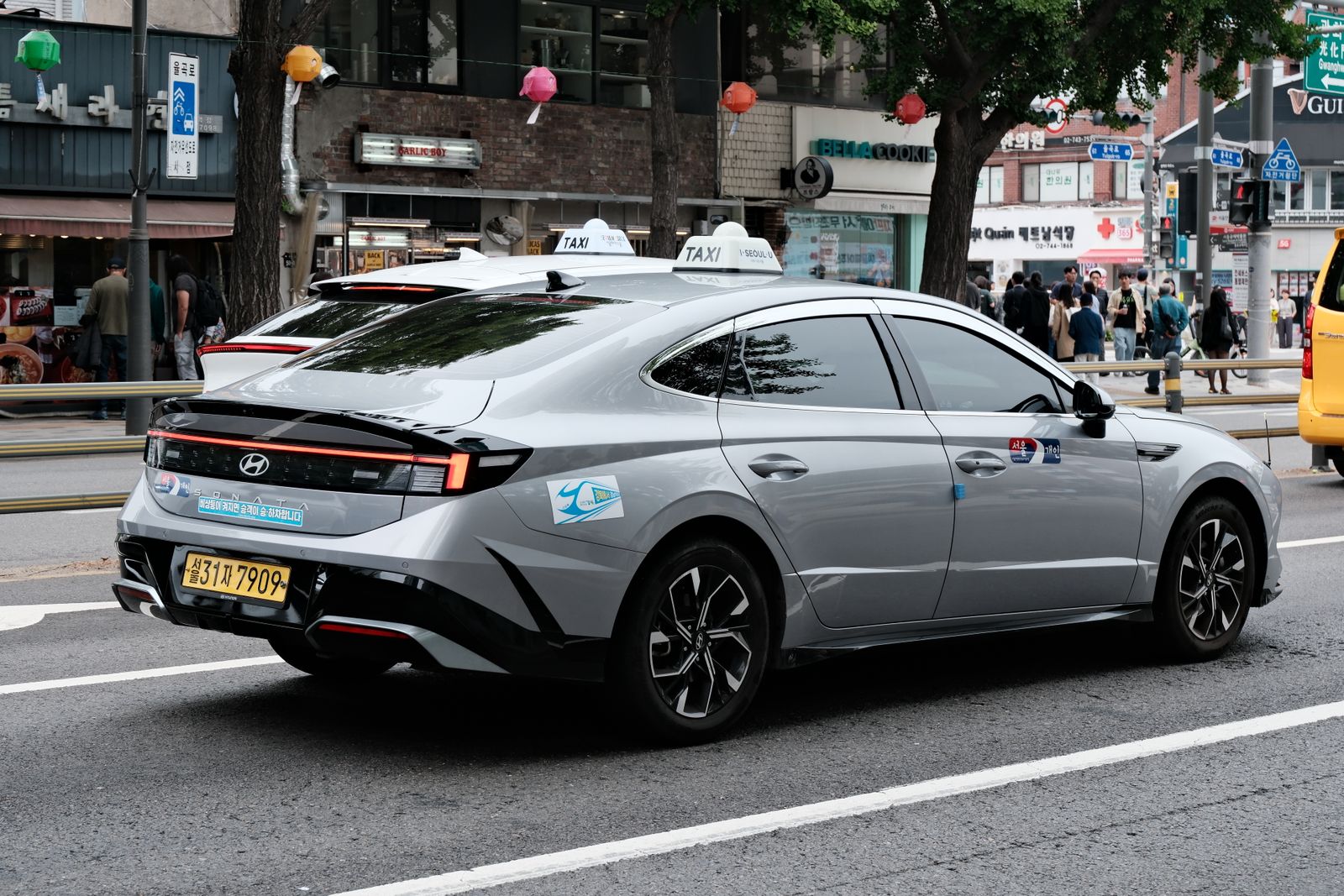
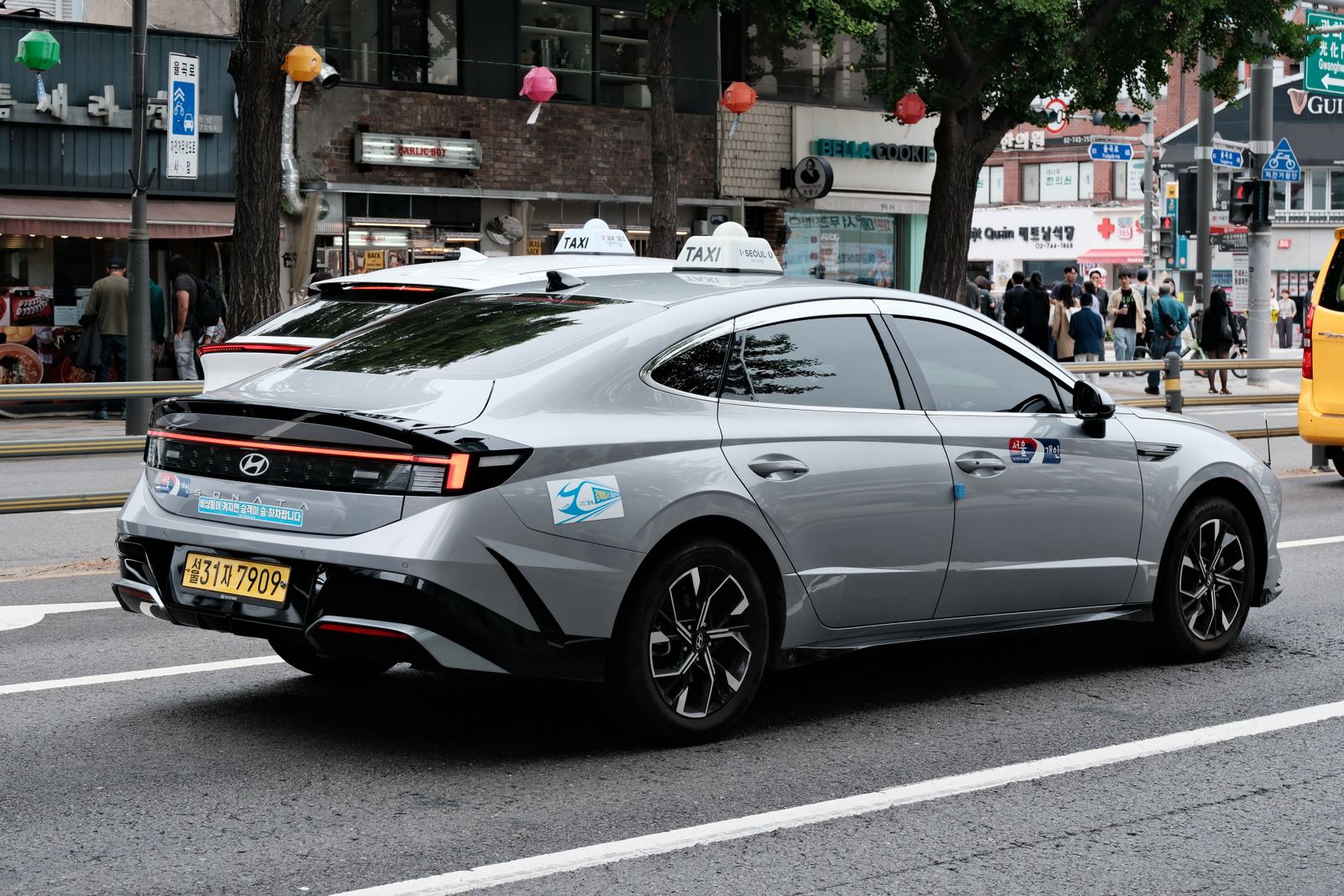
For a normal street taxi, check that the meter starts and that the route on your map generally makes sense. Seoul fares include legitimate late-night and out-of-city surcharges, so a higher total is not proof of fraud. Traffic also affects time-based meter charges. If you suspect overcharging, stay calm, pay in a traceable way if possible, request a receipt, and photograph the license plate after exiting safely.
The 1330 Korea Travel Helpline accepts tourist complaints by phone and provides real-time chat and interpretation options. Seoul has also continued targeted taxi enforcement in airport and tourist areas. A documented complaint is more effective than trying to win a roadside debate.
Make the first taxi conversation easier: As an Amazon Associate, EpicKor may earn from qualifying purchases. Compare Korean phrasebooks and mark the pages for your hotel address, receipts, payment, and polite refusals before departure.
See Korean phrasebooks on AmazonWhat Is the Safest Way to Avoid Taxi Scams at Incheon Airport?
Use the numbered stand, pay by card, and never follow anyone who approaches you inside the terminal. That is the whole answer; the rest is the detail that makes it easy.
The stands. Incheon publishes exactly where each kind of taxi waits. On Terminal 1's arrivals level (1F), stands 5C, 6C and 6D are the ordinary sedans, 7C is the deluxe (모범) black sedan, 8C is the large van, and 4C is the International Taxi. On Terminal 2's arrivals level, 7C is the Seoul sedan stand, 5D Incheon, 6D Gyeonggi, 7D deluxe and large, and 3C International Taxi. A driver who finds you at the baggage belt, the exit doors or the AREX escalator is not from any of these stands, and "special taxi," "no waiting" and "same price" are the three phrases that mean walk away.
The fare you should expect. A sedan to central Seoul (Myeongdong, Hongdae, Gangnam) runs on the meter: ₩4,800 for the first 1.6 km, ₩100 per 131 metres, ₩100 per 30 seconds in traffic, which lands between about ₩55,000 and ₩75,000 by day, plus one toll, the ₩3,200 Airport Expressway, which the passenger pays once. Between 22:00 and 04:00 the meter adds 20 to 40 percent by law. The deluxe and large taxis at 7C and 8C start at ₩7,000 and run about 1.7 times the sedan, roughly ₩85,000 to ₩100,000 to the centre; that is legitimate, it is just a different product. The International Taxi charges a fixed zone fare instead of a meter, ₩70,000 to ₩95,000 for a sedan and ₩100,000 to ₩140,000 for a deluxe car or van, booked online a day ahead. A "flat" ₩150,000 quoted at the kerb belongs to none of these.
The app alternative. If you would rather not read a meter at all, book from the arrivals hall: K-RIDE (Kakao's app for visitors, foreign card and phone), Uber (its Korean UT mode uses the card on your account) and TADA all show a fare or an estimate before the car arrives, and all three accept foreign cards. Our large-taxi guide compares them for a group with luggage, and the airport-to-Seoul guide covers the train and bus.
On the road. Check that the meter is running, pay by card, ask for the receipt (영수증, yeongsujeung), and photograph the plate if anything felt wrong. A round-trip toll, a "luggage charge" or a cash-only demand are not legitimate; report them with the plate number to the 1330 Korea Travel Helpline or Seoul's 120 line, both of which take complaints in English. The same rules hold in Busan, where the sedan meter also starts at ₩4,800 and Kakao T and K-RIDE work; Busan taxis are not more dangerous than Seoul's, only more likely to be hailed on the street, so the meter check matters more.
Street Recruiters, Donations, and Unwanted Invitations
Visitors in Hongdae, Myeongdong, university districts, and palace areas sometimes report being approached by friendly pairs who ask about Korean culture, ancestry, personality, or "good energy." Some are ordinary students practicing English. Others are religious recruiters, salespeople, unofficial tour promoters, or people seeking donations.
You do not need to identify which category they belong to. The safety rule is based on the request, not the person's appearance. Do not follow a stranger to a second location, hand over your passport, withdraw cash, or participate in an unplanned ceremony. A firm "No, thank you" while continuing to walk is sufficient.
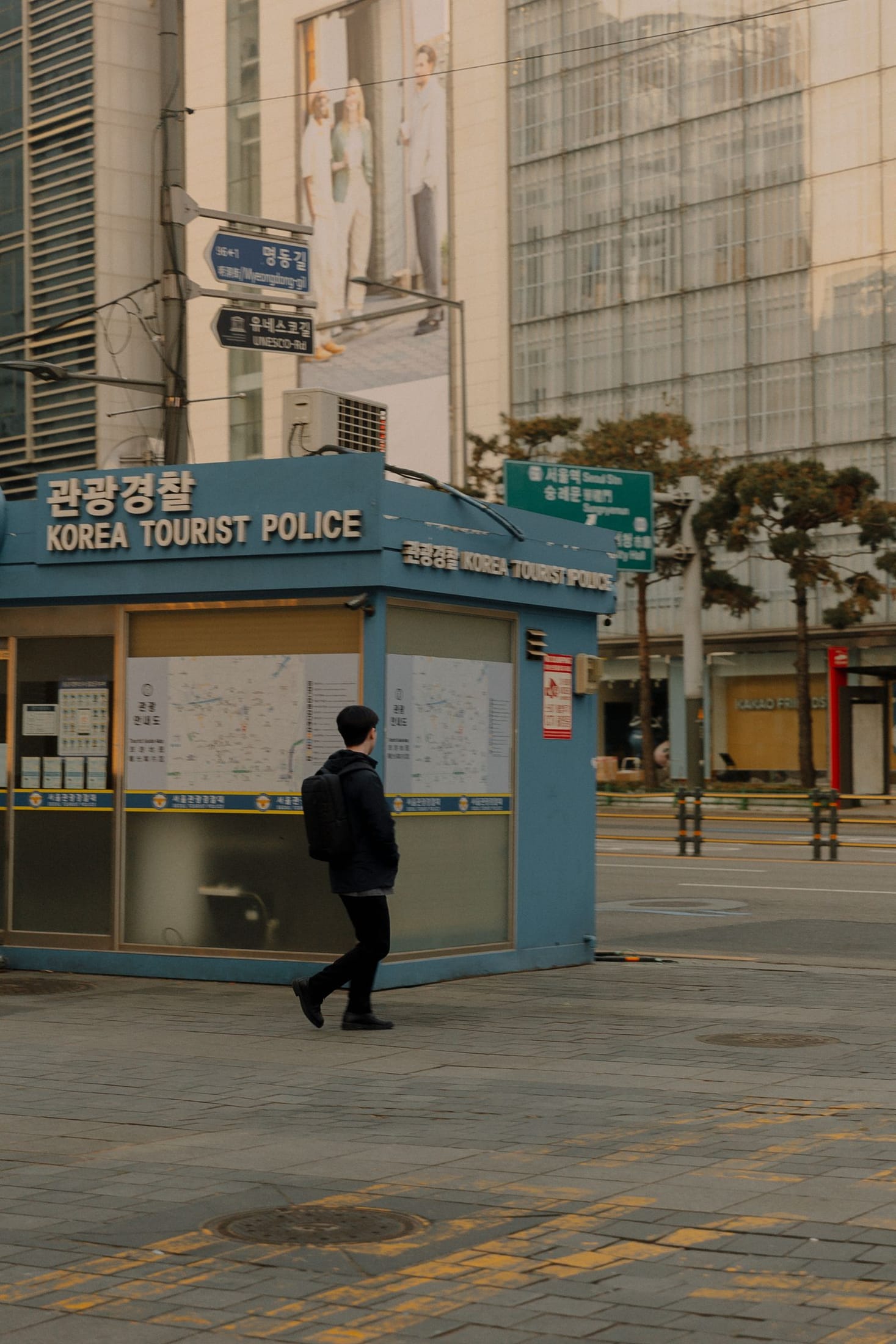
Persistent does not mean violent, but politeness can trap travelers into a long conversation. Korean social manners do not require you to keep engaging with an unknown person who ignores a refusal. Move into a convenience store, hotel lobby, subway information area, or police box if someone follows you.
Treat donation requests the same way you would at home. If a cause interests you, take the organization's official name and donate later through a verified channel. Do not rely on a clipboard, costume, or printed badge as proof.
Subway Etiquette Is a Comfort Rule, Not a Silence Law
Seoul subways can feel unusually quiet, especially during commuting hours. That does not mean conversation is forbidden. The expectation is to keep calls, videos, music, and group conversation at a volume that does not take over the carriage. Seoul Metro has run public campaigns encouraging earphone use because speaker noise is a recurring passenger complaint.
Priority seats should remain available to people who need them, including older riders, disabled passengers, pregnant passengers, and adults with small children. Pink pregnancy seats have a specific purpose, and visitors should not treat an empty one as ordinary seating during a busy ride.
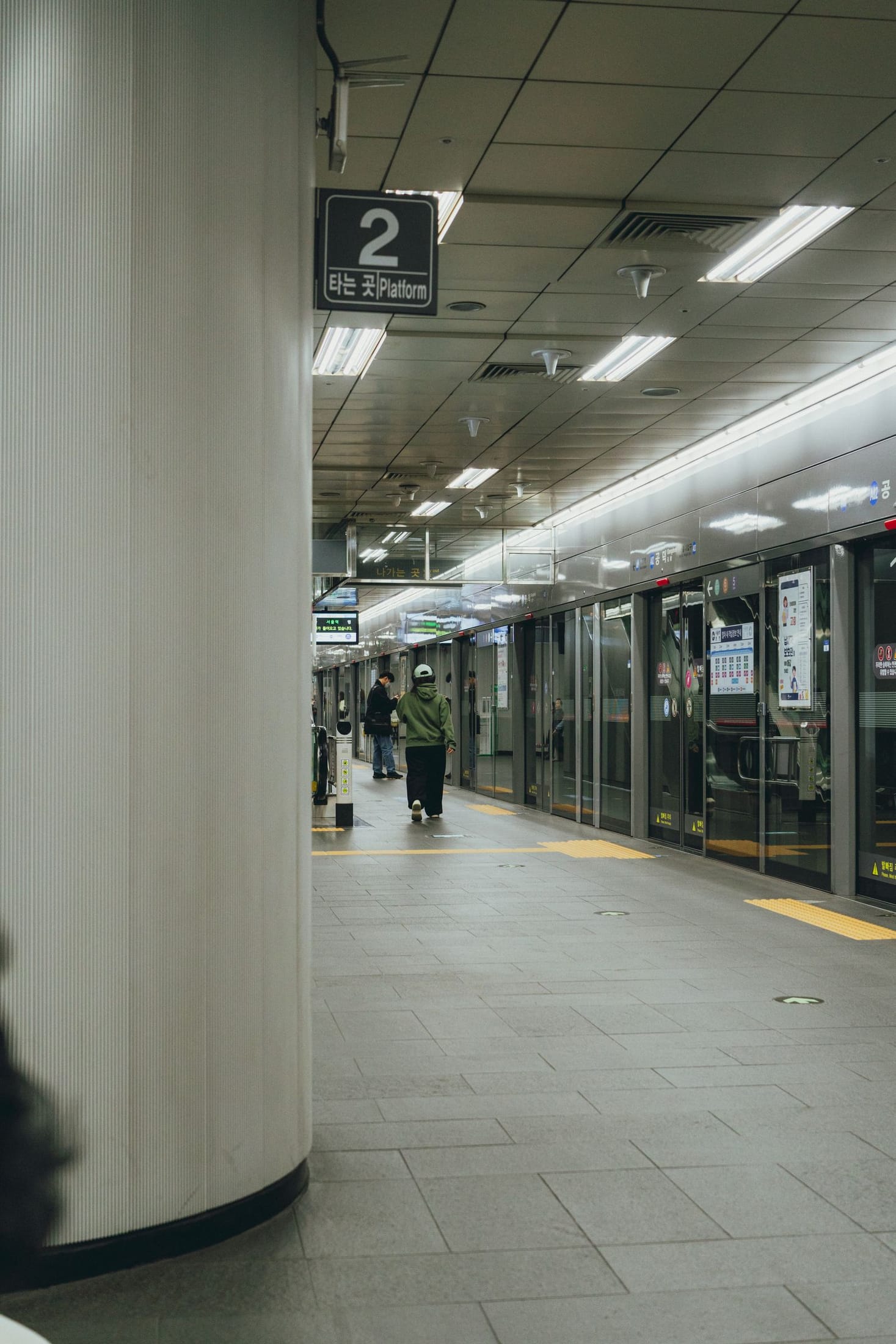
On escalators, follow posted guidance rather than assuming a universal standing side. Let passengers exit before boarding, move away from the train doors once inside, and remove a large backpack on a crowded car. Eating a full meal on the subway is a poor fit even when no employee stops you.
For a fuller explanation of priority seating, escalators, transfers, and commuter behavior, read our Seoul subway etiquette guide.
| Situation | Local-Friendly Choice | Common Visitor Mistake |
|---|---|---|
| Boarding a train | Wait beside the door markings and let riders exit | Standing in the center of the doorway |
| Phone use | Use earphones and keep calls brief and quiet | Playing video through the speaker |
| Backpack in a crowd | Hold it low or in front | Turning with a large pack on your back |
| Priority seating | Leave it for eligible riders | Assuming an empty seat is unrestricted |
| Navigation | Step aside before checking the map | Stopping at gates or stair landings |
Nightlife, Drinks, and Getting Home
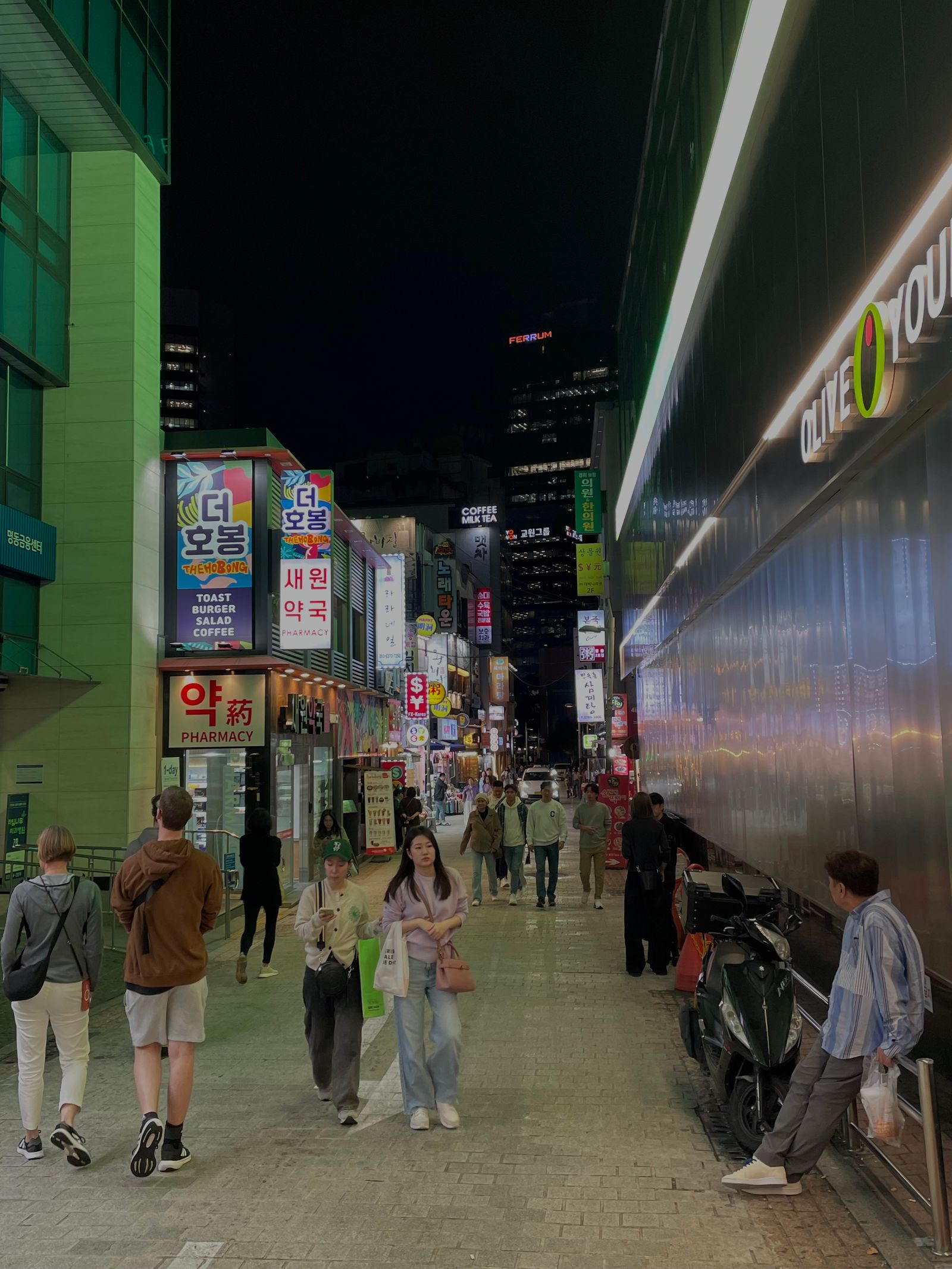
Seoul's nightlife districts can stay active late, but crowds do not eliminate risk. Watch your drink being prepared, do not accept an opened beverage from a stranger, and keep your group connected. If a venue changes the price or adds unexplained charges, ask for an itemized bill before paying.
The last subway time varies by station, direction, weekday, and service pattern. Do not build a plan around a generic "midnight" rule. Check the route on the day, and budget for a taxi if you will stay out late. Surge or late-night pricing can make that ride more expensive than expected.
Korea's legal and cultural environment around drugs is strict. Do not carry controlled medication without checking documentation requirements, and never accept unknown pills or substances. If you need prescription medicine on a trip, consult the relevant Korean embassy or customs guidance before flying.
Walking alone requires the same judgment as any major city. Use bright main streets, avoid isolated riverbanks or alleys when intoxicated, and share your live location with someone you trust. "Seoul is safe" should never be used to pressure yourself into ignoring discomfort.
Lost Wallets and Phones: Korea's Current Recovery System
If you lose something, identify the last controlled location first: taxi, subway, cafe, airport, or street. Contact that operator directly when possible because items may remain in a local office before entering the national system.
For taxis, a card receipt can help identify the vehicle. For rail and subway, note the line, direction, boarding and exit stations, carriage number if known, and exact time. For a cafe, call the branch rather than only the national brand account.
The Korean National Police Agency now provides found-property search and loss reporting through Police Civil Service 24. The former LOST112 site displays a notice that the service moved on January 26, 2026. The police non-emergency contact 182 can also guide lost-property inquiries during its service hours. If the missing item contains bank cards, freeze them immediately; do not wait for the physical wallet to appear.
Create a small record before the trip: phone IMEI or serial number, passport copy stored securely, insurer contact, and photos of important items. Never keep the copy and original passport in the same bag.
Keep the small essentials together: Compare travel card pouches for a T-money card, hotel key, and one payment card. Keep your passport and backup card somewhere separate.
A Five-Minute Safety Checklist
Save your hotel's Korean address as a screenshot. Add 112, 119, and 1330 to your contacts. Enable device tracking and a strong screen lock. Carry one backup payment method separately. Download an offline copy of your insurance details. Tell a trusted person when you are going somewhere alone late at night.
When moving between Incheon Airport and the city, use official transport and verify the pickup point. Our Incheon Airport layover guide explains when staying near the airport is more sensible than forcing a late transfer, and our subway last-train guide tells you when the trains actually stop, while the Seoul and Busan hotel comparison helps choose a practical base.
These habits are not Seoul-specific, which is exactly why they work. Good travel safety is mostly removing avoidable confusion before fatigue, language, and time pressure arrive together.
You might like: Can a Foreigner Win Korea's Lotto? Every Korean Lottery, Sports Toto, and the Casino Rule That Flips for Tourists
You might like: Seoul Subway First and Last Trains, Line by Line: When the Last Train Really Leaves, and What Runs After Midnight
You might like: Kakao Venti, Korea's Big Taxi: The Van That Costs the Same as a Sedan by Day, and the Large-Taxi Options from Incheon Airport
You might like: 18.9 Million Visitors Told Korea What They Couldn't Find: The Official Exit Survey, and the Answers to All Four Gaps
You might like: What You Cannot Bring Into Korea: jerky, mango, Adderall and CBD are banned, sleeping pills need a permit, and the fine is ₩1–10 million
FAQ
Q: What is the safest way to avoid taxi scams at Incheon Airport? Take a taxi only from the numbered stands (Terminal 1: 5C, 6C, 6D for sedans, 7C deluxe, 8C large van, 4C International Taxi; Terminal 2: 7C Seoul sedans, 7D deluxe and large, 3C International Taxi), or book through K-RIDE, Uber or TADA from the arrivals hall so the fare is shown in advance. Expect about ₩55,000 to ₩75,000 to central Seoul by day on a sedan meter plus the ₩3,200 toll, pay by card, take the receipt, and ignore anyone offering a "special taxi" inside the terminal.
Q: Is Seoul safe for solo travelers?
Many solo travelers visit without serious problems, but safety varies by situation and no city is risk-free. Use normal precautions, especially around alcohol, late-night transport, and isolated areas.
Q: Are black taxis in Seoul scams?
No. Some legitimate deluxe and premium taxis are black and charge higher published rates. Verify the service type, meter, or disclosed in-app fare rather than judging by color.
Q: What number should a tourist call for help in Korea?
Call 112 for police emergencies, 119 for fire or ambulance, and 1330 for travel information, interpretation, or tourist complaints.
Q: What should I do if a street recruiter will not leave me alone?
Stop engaging, move into a staffed public place, and call 112 if you feel followed, threatened, or prevented from leaving.
Q: Is talking on the Seoul subway illegal?
No. Quiet conversation is normal. Loud calls, speaker audio, blocking doors, and occupying priority seats create the problems visitors should avoid.
Q: Where do I search for lost property in Korea?
Use the National Police Agency's Police Civil Service 24 portal and contact the relevant taxi, subway, railway, airport, or business directly with exact times and identifying details.
Sources
You Might Also Like
Busan vs Seoul: Which Korean City Should You Visit First?
A practical Busan vs Seoul travel decision guide for first-time Korea visitors, comparing food, pace, nightlife, beaches, culture, transit, and itinerary fit.
Best Places to Visit in Korea: 2026 Travel Guide
Best places to visit in Korea for first-time travelers: Seoul, Busan, Gyeongju, Jeju, Gangneung, Jeonju, and how to choose your route.
Bicycle Theft in Korea: What Cyclists Should Actually Know
A practical Korea bicycle theft guide for Seoul riders, covering locks, parking, Ttareungi rentals, police reports, and safer cycling habits.