Seoul Bike Rental for Tourists (2026): Ttareungi Takes a ₩1,000 Pass and No Korean Phone — Shared E-Scooters Need a Moped Licence Most Visitors Don't Have
Last updated: September 2026. Bike rules and prices are from Seoul Facilities Corporation (서울시설공단), which runs Ttareungi, and Seoul City's English service pages; scooter law is from the Road Traffic Act as published on the government's Easy Law service (updated 15 August 2026); operator and policy changes are from Seoul City announcements and Korean press reporting through September 2026.
Seoul gives a visitor two ways to ride instead of walk, and they could hardly be more different.
The first is Ttareungi (따릉이), the green-wheeled public bike parked in racks outside many of the city's subway exits. About 45,000 bikes at 2,800 stations, in all 25 districts. For a tourist it is one of the easiest things in Korea to use: a ₩1,000 day pass, paid with the card in your wallet, no Korean phone number, no sign-up and no deposit. Many English guides still say otherwise; they are describing rules Seoul dropped in 2017.
The second is the shared e-scooter, and here the answer for most visitors is no — for three reasons that English guides tend to skip. Korean law lets a foreigner ride one only if their International Driving Permit lists the moped category, which a car-only permit does not. The two apps that made scooters easy for foreigners are gone from Seoul: Lime left Korea in 2022 and Swing stopped scooters in Seoul in November 2024. And from 30 September 2026, Seoul turns its trial "scooter-free streets" permanent and adds three more.
This guide covers both: how to rent a Ttareungi step by step, and what you would actually need to ride a scooter legally.
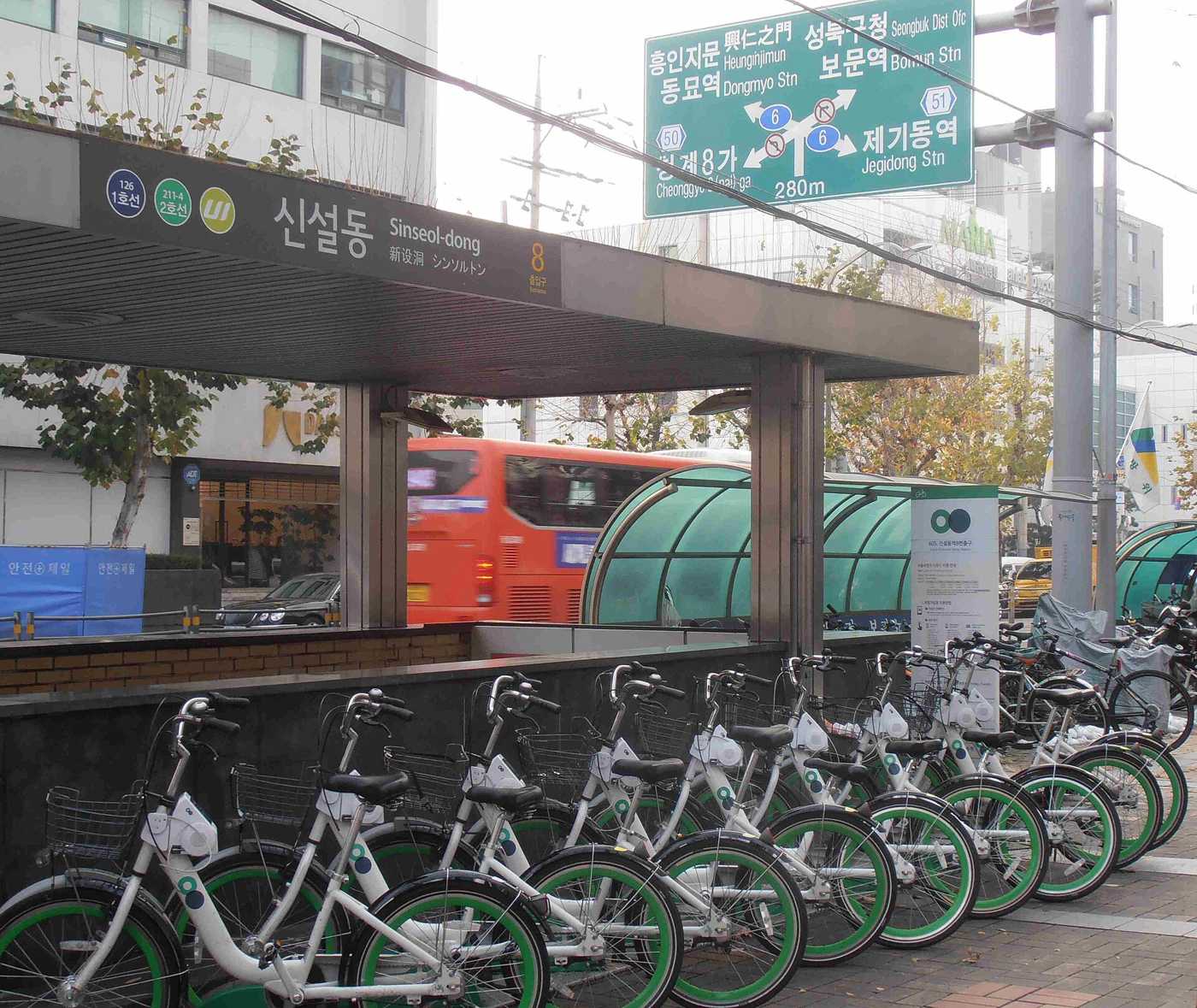
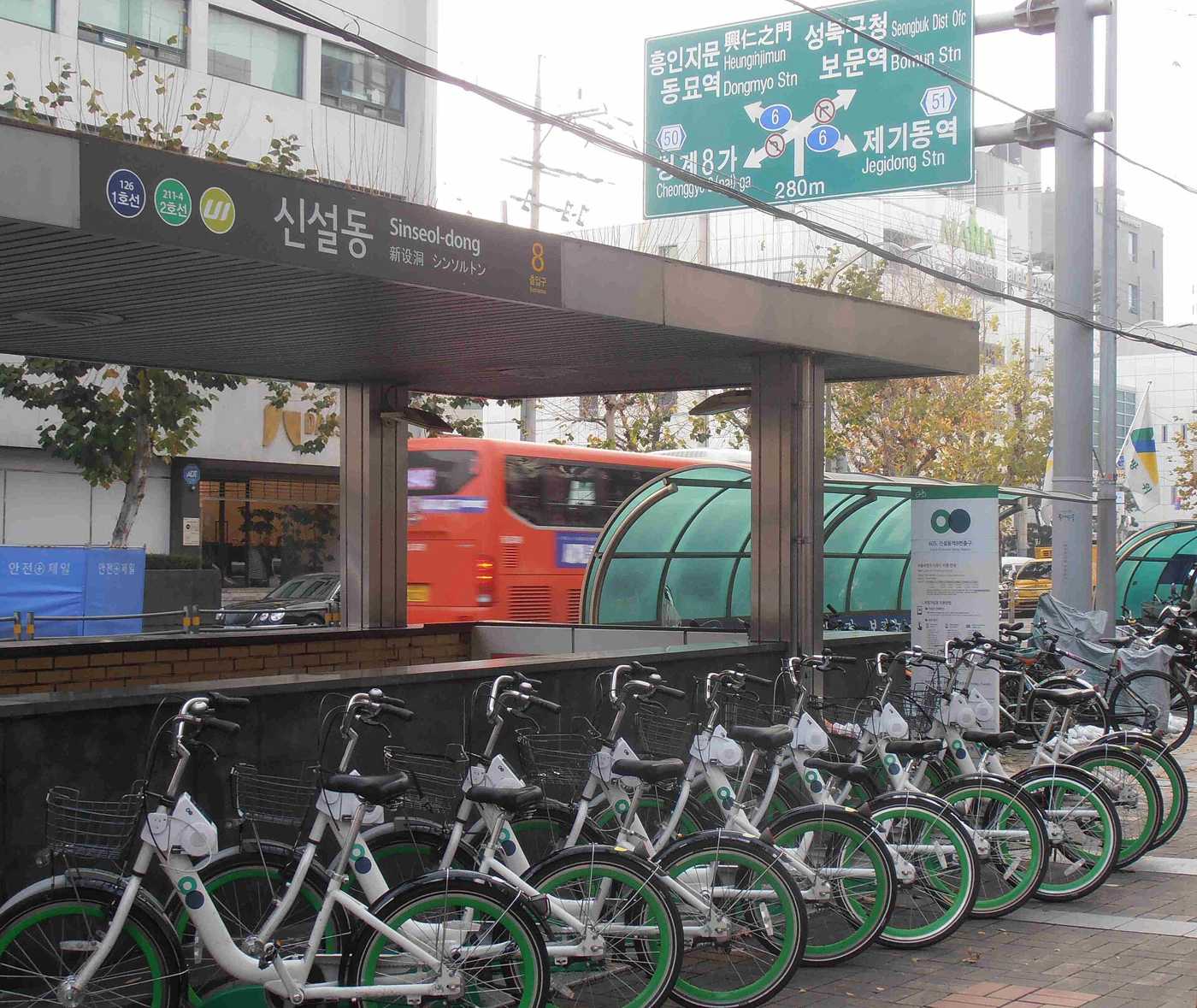
A Ttareungi station at exit 8 of Sinseol-dong station. Racks like this sit outside many subway exits; any bike can be returned to any station. Photo: Sarang, Wikimedia Commons, public domain.
A helmet is the one thing neither system hands you. On a shared scooter it is a legal requirement with a ₩20,000 fine; on a bicycle Korean law requires one too, though without a penalty, and Ttareungi racks do not supply them. A CLOSCA foldable helmet is certified for both bikes and e-scooters and folds to half its size for a suitcase. As an Amazon Associate, EpicKor earns from qualifying purchases.
Quick Guide: Ttareungi vs shared e-scooters for a tourist
| Ttareungi (public bike) | Shared e-scooter | |
|---|---|---|
| Can a tourist use it? | Yes — built for it | Only with the right licence, and on an app that accepts it |
| What you need | An overseas-issued credit card; an email address in the app | A licence covering mopeds: for an IDP, the moped/motorcycle category must be on the permit |
| Minimum age | 13 | 16 |
| Price | ₩1,000 (60 min per ride), ₩2,000 (120 min), ₩3,000 (180 min); ₩200 per extra 5 minutes | Set by each operator per minute, plus an unlock fee |
| Helmet | Required by law, no fine | Required — ₩20,000 fine |
| Riding without the licence | Not applicable | ₩100,000 fine |
| Pavement riding | Not allowed — a bicycle is a vehicle | Not allowed |
| Streets you cannot ride | None specific | Seoul's "scooter-free streets" — five from 30 September 2026 |
Lamicall bike phone mount — Naver Map on the handlebars, not in your hand Google Maps does not route cycling in Korea, so you will be following Naver Map, and riding a Ttareungi one-handed with a phone is how most visitors wobble into a kerb. This clamp locks the phone to the handlebar so both hands stay on the bike. As an Amazon Associate, EpicKor earns from qualifying purchases.
See the Lamicall mount on AmazonRenting a Ttareungi as a tourist, step by step
Seoul Facilities Corporation's own FAQ puts the whole process in two sentences: Ttareungi runs a dedicated fare plan for foreign tourists; you buy the foreigner pass by choosing English, Chinese or Japanese on the Ttareungi website, or by choosing the foreigner option in the app; payment must be made with a credit card issued abroad, and one card buys one pass. The Discover Seoul Pass also works.
- Get the pass. Open the Ttareungi app (or bikeseoul.com) and choose the foreigner option. It asks for an email address, not a Korean phone number. Pay with an overseas-issued card.
- Pick the pass length. Seoul's English service page lists three day passes: General, 60 minutes per ride, ₩1,000; Premium, 120 minutes, ₩2,000; and a 3-hour pass, 180 minutes, ₩3,000, on sale since 13 November 2025 (if the foreigner screen does not offer it, take the 120-minute pass). Go over the limit and it is ₩200 for every extra five minutes, capped at ₩30,000.
- Unlock the bike. On newer bikes, scan the QR code in the app or type the bike's number. With a Discover Seoul Pass you enter the pass's rental number on the bike's terminal.
- Return it to any Ttareungi station and lock it as the app or terminal instructs. If you want another ride within the day, return and re-rent before your time runs out — the limit is per ride, not per day.
The no-phone, no-deposit route is not new. Seoul removed the sign-up requirement for non-members on 7 July 2017, and with it the deposit that older guides still warn about. The minimum age is 13.
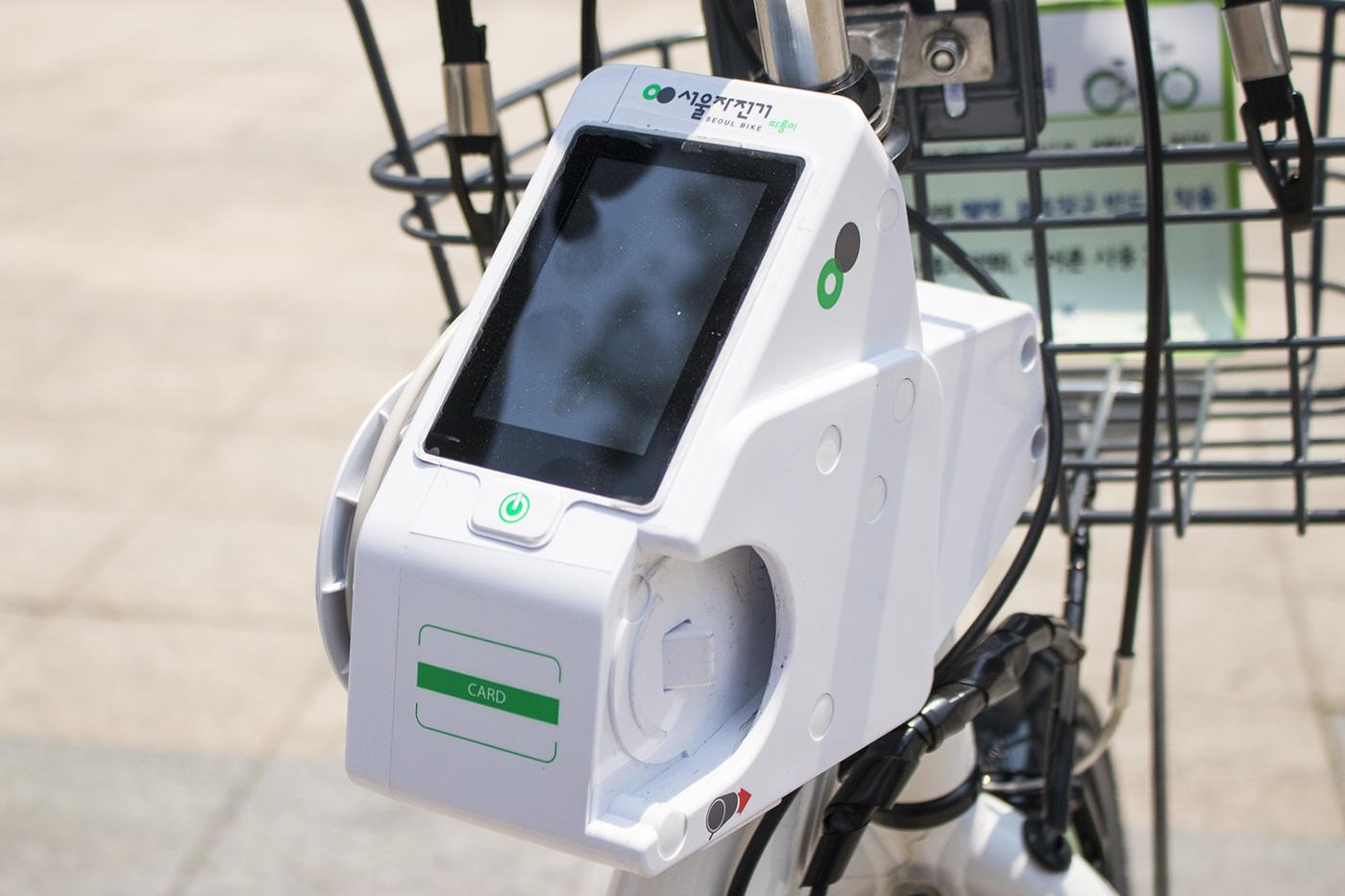
The terminal on an older Ttareungi. Discover Seoul Pass users enter their rental number here; app users unlock by bike number. Photo: Youngjin, Wikimedia Commons, CC BY-SA 3.0 (2019).
Two honest warnings. The bikes are heavy three-speed city bikes, fine for the flat Han River paths and miserable up the hills of Namsan or the old-town slopes; Mayor Oh Se-hoon pledged in May 2026 to replace them with seven- to eight-speed bikes at about 4,000 a year; for now, expect three gears. And the riverside is where a bike earns its ₩1,000: the Han River parks are long and thin, and as our Han River night picnic guide puts it, a bike is the difference between seeing one lawn and seeing the river.
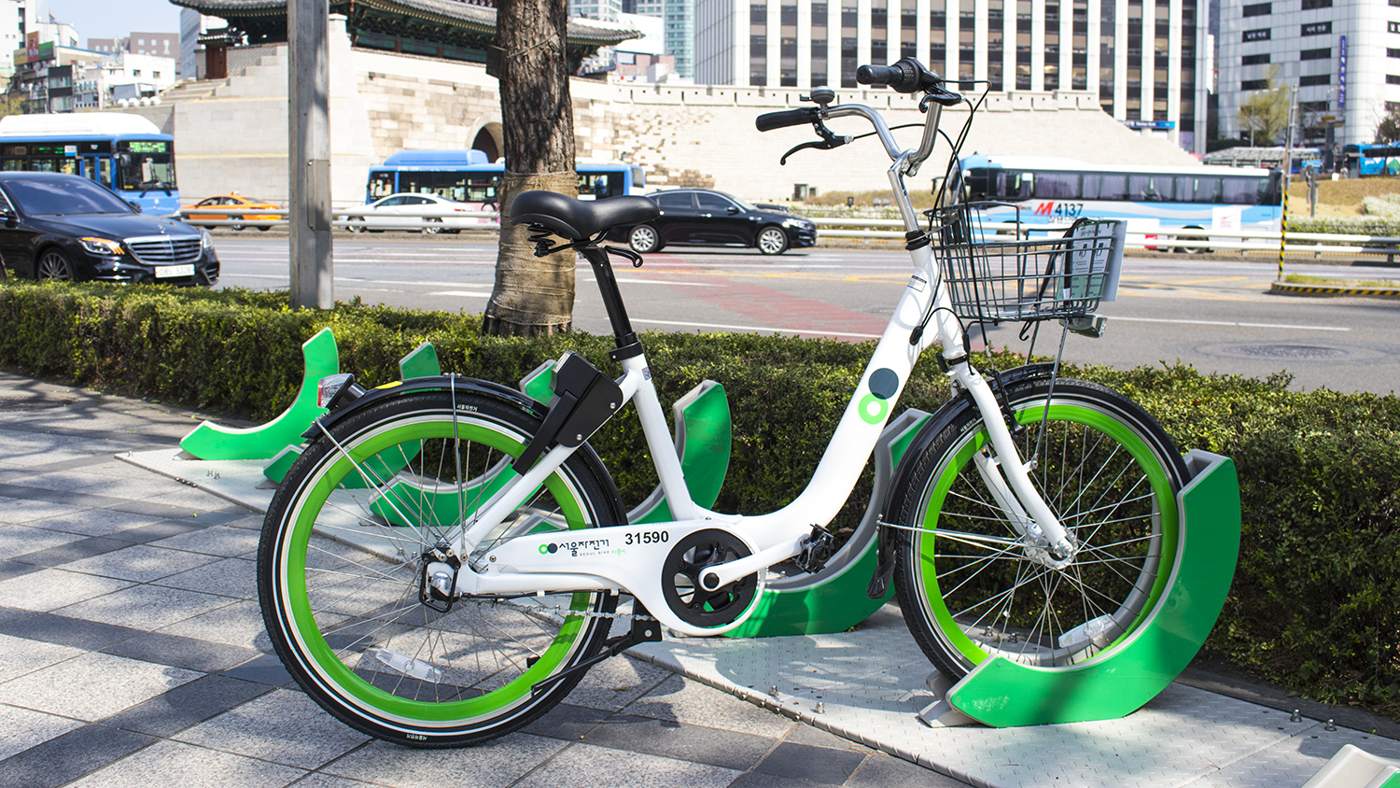
A QR-type "new Ttareungi" (뉴-따릉이): scan the code in the app instead of using a terminal. Photo: Youngjin, Wikimedia Commons, CC BY-SA 3.0 (2020).
The bike rules that catch visitors
- No pavement riding. In Korean law a bicycle is a vehicle and belongs on the road or a bike lane, not the pavement, except where a shared path is marked.
- Helmets are required, but not fined. The Road Traffic Act has required cyclists to wear helmets since 2018; there is no penalty, and in practice many Ttareungi riders go without. On a scooter it is a different matter (below).
- Drinking. Cycling under the influence is a ₩30,000 fine, and refusing a breath test ₩100,000. The Han River chimaek evening is a classic; ride there, not home.
- Where to ride. The Han River parks are the easy win: continuous bike paths along both banks, stations at the park entrances, and no traffic.
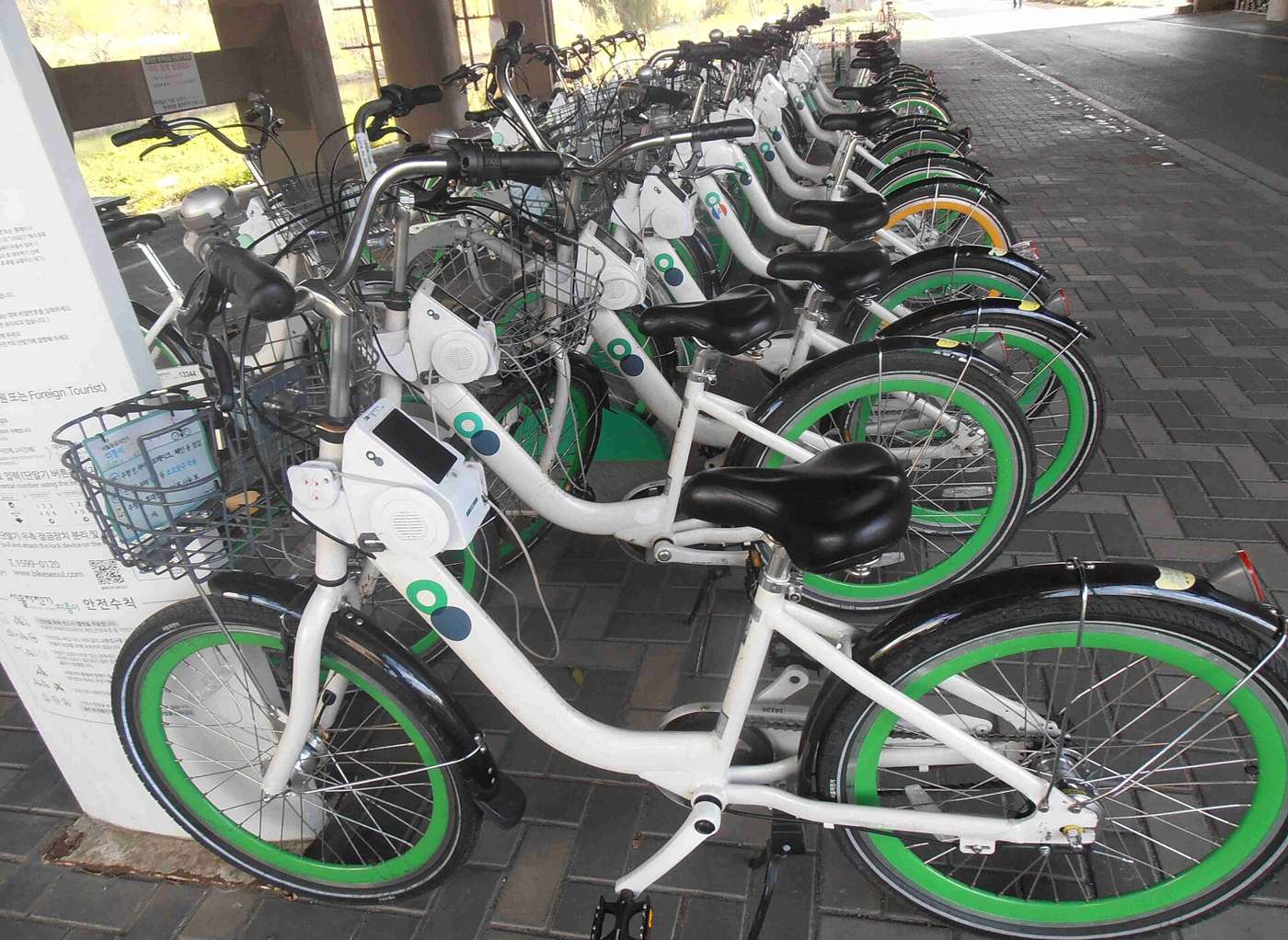
A Ttareungi station on the Han River bikeway, the flattest and safest riding in the city. Photo: Sarang, Wikimedia Commons, public domain.
Shared e-scooters: the licence question
In Korea an e-scooter is a personal mobility device (개인형 이동장치), and riding one requires at least a moped licence (원동기장치자전거 면허) — or any car licence, for a Korean licence holder. The minimum age is 16. The penalties are specific: riding without the licence is ₩100,000, no helmet ₩20,000, carrying a passenger ₩40,000, and riding drunk ₩100,000 (₩130,000 for refusing a breath test). The legal top speed is under 25 km/h.
The foreign-visitor question turns on two articles of the Road Traffic Act. Article 96 lets the holder of an International Driving Permit drive in Korea for one year from arrival, and Korea recognises both 1949 Geneva and 1968 Vienna permits — contrary to some English guides — but only for the vehicle types written on the permit. Article 156 then makes it an offence to ride a scooter without an IDP "listed as" allowing you to drive a 원동기장치자전거, a moped.
That is the trap. Most visitors' IDPs are issued for a car only — category B. Korea has not published an official table matching permit categories to scooters, but a Korean visa-services guide spells out the practical reading: you need the A or A1 (motorcycle) category on the permit, and a B-only permit counts as riding without a licence. A Korean car licence covers scooters; an IDP for a car does not. If your permit lacks the motorcycle category, riding a shared scooter in Seoul is the ₩100,000 offence, whatever the app lets you do.
It is not a paper risk. In 2024, 52.3 percent of accidents caused by e-scooter riders involved a rider with no licence, which is why enforcement keeps focusing on it. Accidents are falling (2,232 at-fault accidents in 2024 and 1,915 in 2025, by an industry association's analysis of the national TAAS accident data), but the licence check is where the police and the apps have tightened.
Who still runs scooters in Seoul, and who has left
Korea's shared-scooter market has shrunk from more than twenty operators in 2020 to nine nationally in 2026, with 1.57 million monthly users in July, down 10.1 percent on the year. Two exits matter for foreigners:
- Lime paused its Korean service on 30 June 2022 and has not come back.
- Swing was the app that had made foreign sign-up simple — a Google or Apple login plus passport and IDP verification, added in March 2023 — and it stopped its shared e-scooter service in Seoul in November 2024.
The remaining brands include GCOO (지쿠), Beam and Kickgoing (킥고잉), which PUMP (피유엠피) now runs after folding its Ssing Ssing scooters into it in 2024. The direction is the same across them: GCOO's app will not start a scooter ride until a licence is registered, and Kickgoing's own site tells users flatly that a scooter needs a driving licence. Seoul has pushed operators this way since June 2023, when it began towing scooters immediately — with no grace period — from operators that do not check riders' licences.
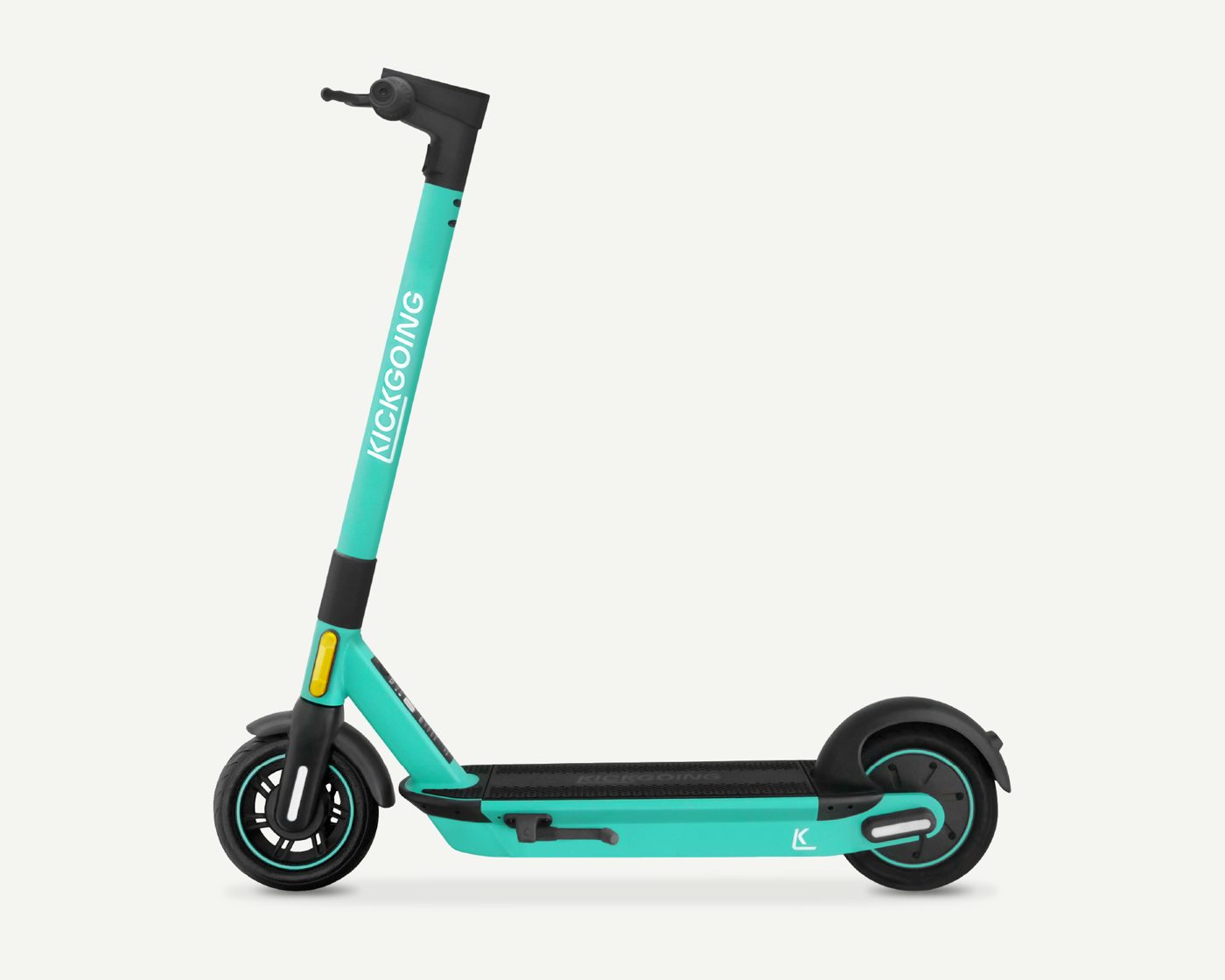
A Kickgoing scooter, from the operator's website — which states that riding one requires a driving licence. Image: Kickgoing.
Parking is the other hazard. Seoul tows scooters left in its immediate-tow zones — roadways and bike lanes, within five metres of subway exits and bus stops, on tactile paving and at accessible-lift entrances, within five metres of taxi ranks, and within three metres of crosswalks — at ₩40,000 plus ₩700 for every 30 minutes of storage.
Scooter-free streets: five from 30 September 2026
Seoul ran Korea's first "scooter-free streets" (킥보드 없는 거리) as a trial from 16 May 2025 on two roads: Hongdae's Red Road (홍대 레드로드, 1.3 km) in Mapo and the Banpo academy district (반포 학원가, 2.3 km) in Seocho, from noon to 11 p.m. On those streets e-scooters, self-balancing devices and throttle-only e-bikes are banned; pedal-assist e-bikes are not. The first five months were a warning-only period. In a June–August 2026 survey around the three new streets, 95 percent of residents (267 of 281) backed the expansion.
From 30 September 2026 both trial streets become permanent and three are added:
| Street | District | Length | Hours |
|---|---|---|---|
| Hongdae Red Road (홍대 레드로드) | Mapo | 1.3 km | 12:00–23:00 |
| Banpo academy street (반포 학원가) | Seocho | 2.3 km | 12:00–23:00 |
| Daechi-dong academy street (대치동 학원가) | Gangnam | 1,630 m | 12:00–23:00 |
| Wirye Transit Mall walkway (위례 트랜짓몰) | Songpa | 800 m | All day |
| Yeonsinnae Rodeo Street (연신내 로데오거리) | Eunpyeong | 200 m | 10:00–22:00 |
Riding a scooter on them is a ₩30,000 fine and 15 penalty points, or ₩60,000 and 30 points in a school zone. Hongdae's Red Road is the one tourists are most likely to be on; walk it.
Outside Seoul
Public bikes elsewhere are patchier. Busan has no citywide public bike system — Haeundae's scheme closed in 2015. Sejong's Eoulling (어울링) has an English website and a ₩1,000 day pass. Daejeon's Tashu and Changwon's Nubija exist, but how easily a foreign visitor can register was not something we could confirm, so check before you build a day around one.
The practical answer
- Want to ride? Take a Ttareungi. Buy the foreigner pass with your own card, pick the 60- or 120-minute pass, and use the Han River paths.
- Only consider a scooter if your IDP shows the motorcycle category (A or A1) and the app accepts foreign licences. If it shows only B, don't.
- For everything else, Seoul's subway goes almost everywhere — our first and last train guide has the late-night cut-offs — and a large Kakao taxi for groups is covered in our Kakao Venti guide. For directions on a bike, you need Naver Map, not Google Maps.
FAQ
Q: Can tourists use Ttareungi in Seoul? Yes. Ttareungi sells a foreigner pass through its website (choose English, Chinese or Japanese) or the app's foreigner option. You pay with an overseas-issued credit card, one pass per card, and you need an email address rather than a Korean phone number.
Q: How much does a Ttareungi day pass cost? ₩1,000 for a day pass with 60 minutes per ride, ₩2,000 for 120 minutes per ride, or ₩3,000 for 180 minutes. Going over the limit costs ₩200 per extra five minutes.
Q: Can I ride a shared e-scooter in Korea with an International Driving Permit? Only if the permit lists the moped or motorcycle category. The Road Traffic Act requires an IDP "listed as" covering mopeds; a car-only (category B) permit counts as riding without a licence, which is a ₩100,000 fine.
Q: Which e-scooter apps can foreigners use in Seoul? Lime left Korea in 2022 and Swing stopped scooters in Seoul in November 2024. The remaining operators, including GCOO, Beam and Kickgoing, require a registered driving licence before a ride, so check whether the app accepts your foreign licence before counting on it.
Q: Do I need a helmet on a Ttareungi or a scooter? Korean law requires helmets for both. On a bicycle there is no fine; on an e-scooter it is ₩20,000. Neither Ttareungi nor most scooter apps provide one.
Q: Where are e-scooters banned in Seoul? From 30 September 2026, on five "scooter-free streets": Hongdae Red Road, the Banpo and Daechi-dong academy streets, the Wirye Transit Mall walkway and Yeonsinnae Rodeo Street. The fine is ₩30,000 and 15 penalty points.
Sources
- Seoul Facilities Corporation (서울시설공단), Ttareungi FAQ "외국인의 따릉이 이용 방법은?" (foreigner pass, overseas card only, one pass per card, Discover Seoul Pass) and service page (about 45,000 bikes, 2,800 stations, overtime ₩200 per 5 minutes, age 13+).
- Seoul City English site, Seoul Public Bike service page (day passes ₩1,000 / ₩2,000, 3-hour pass ₩3,000 from 13 November 2025) and tourist instructions (foreigner route by email, 2023); Seoul City announcement of non-member use without sign-up or deposit (4 July 2017, effective 7 July).
- Road Traffic Act as published on Easy Law (easylaw.go.kr, updated 15 August 2026): PM licence, age 16, fines for no licence, no helmet, passengers and drunk riding; Articles 96 and 156 on International Driving Permits.
- Korean visa-services guide to personal mobility for foreigners (2026): the A/A1 versus B permit reading. No official category table exists.
- Korean press: Lime's exit (June 2022); Swing's Seoul scooter shutdown (Electimes, March 2025; Segye Ilbo, July 2026); operator count and monthly users (Hankyung, 2 September 2026); GCOO's licence gate and the unlicensed share of accidents (Segye Ilbo, July 2026); accident totals (Pressian 2025, ZDNet 9 July 2026); Kickgoing's operator PUMP and the Ssing Ssing merger; the Ttareungi gear pledge (Kukmin Ilbo, 10 May 2026).
- Seoul City: scooter-free streets trial from 16 May 2025 (Newsis, MBC, Seoul Mediahub) and the 30 September 2026 expansion and residents' survey (Ajunews and Metro Seoul, September 2026); towing zones and fees.
- Kickgoing official website ("킥보드는 운전면허증이 필요해요").
You Might Also Like
Renting a Car in Korea as a Foreigner (2026): Which Licences Work, Jeju's New 60 Percent Discount Cap and 28,300-Car Limit, What Incheon Airport Rentals Cost, the Hi-Pass Toll Unit, the Fines That Follow You Home, and Whether Tourists Can Use Socar
Driving in Korea as a visitor: an IDP plus home licence for a year from entry, Jeju's 28,300-car quota and new 60% discount cap, school-zone fines forwarded with a fee, Hi-Pass tolls billed after you leave, and Socar's Jeju-only tourist product.

Is Korea Kid-Friendly? What Foreign Parents Report — and What Korean Data Shows: Strangers Who Hand Out Tangerines, 114 No-Kids Zones, and the 68% Who Accept Them
Foreign parents say older Koreans shower babies with snacks and department-store nursing rooms beat London's. Korean data adds 114 no-kids zones, 68% public acceptance, and 64% of Korean parents who feel watched. What that means for your trip.
Car Seat Taxis in Korea: The Law Requires a Seat for Every Child Under 6, Ordinary Taxis Don't Carry One — What Tourists Can Actually Book in Seoul
Korea's Road Traffic Act requires a car seat for children under 6 in any car, taxis included, and fines the driver ₩60,000. Ordinary taxis carry none and police paused taxi enforcement in 2018. TADA, whose app takes foreign phones and cards, runs about 300 car-seat vans.