Korea National Park Trail Closures, Autumn 2026 (15 Nov–15 Dec): Which Seoraksan, Jirisan and Bukhansan Trails Shut, Which Stay Open, and the ₩200,000 Fine
Last updated: 7 November 2026. The closure dates, parks, section names and totals are from the Korea National Park Service (국립공원공단) notice 제2026-68호, "2026 autumn national park trail closures" (2026년 가을철 국립공원 탐방로 출입통제 공고), posted on knps.or.kr on 1 November 2026, and its attached section-by-section status table (산불조심기간 국립공원 탐방로 통제 현황), both read on 7 November 2026. The fine maximums are from the same notice; the first- and second-offence amounts are from the Natural Parks Act (자연공원법) enforcement decree on the national law database. The construction and rockfall closures are from the park offices' own notices, read on 16 October 2026. Dollar figures use ₩1,356.68 to $1 (7 November 2026). Sources are listed at the end.
Every autumn, just as the last colour leaves the mountains, Korea shuts the high ground. The official 2026 notice is out: from 15 November to 15 December 2026, the wildfire-caution period (산불조심기간), 18 national parks close 148 trail sections, 669.81 km in total, 33 of them only partly. The closures fall on exactly the routes a visitor has usually come for. On Seoraksan (설악산), every route to the summit, Daecheongbong (대청봉), is on the list. On Jirisan (지리산), the Nogodan–Jangteomok ridge is closed, so the classic ridge traverse is off. Seoul's Bukhansan (북한산) closes just one short section. Every other regular trail stays open, and the notice says so in as many words. Entering a closed trail can cost up to ₩500,000 (about $369); the first-offence fine is ₩200,000 (about $147).
English guides give the dates and little else. The closure list is published in Korean, with section names that do not match English trail maps. This guide translates what each park closes this year, which popular routes stay open, the closures for construction and rockfall that were already posted, the fines, and how to check on the day.
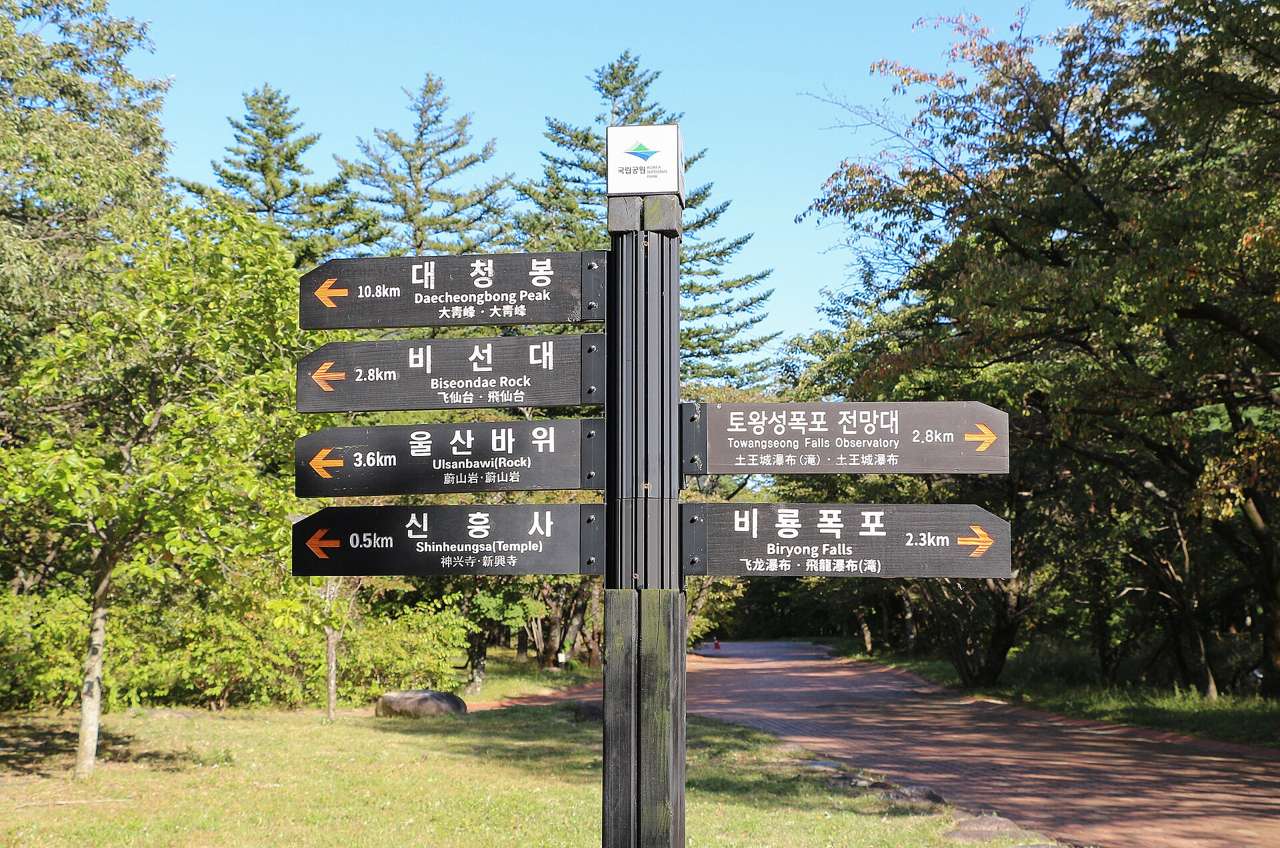
The signpost at Seoraksan's Sogongwon entrance. In the closure season, the arrow to Daecheongbong points to a closed route, while Biseondae, Ulsanbawi and the Towangseong Falls viewpoint are listed open in 2026. Photo: Bernard Gagnon, Wikimedia Commons, CC0 (2022).
The trails that stay open in late November are often icy by morning, and many Korean hikers pack traction spikes by then: Kahtoola MICROspikes pull over ordinary hiking boots and fold into a small bag. If you are only walking the flat Sogongwon path to Biseondae, ordinary boots are enough and you can skip them. As an Amazon Associate, EpicKor earns from qualifying purchases.
Quick Guide: Korea's autumn trail closures, 2026
| Question | Answer |
|---|---|
| When? | 15 November to 15 December 2026 in national parks |
| Official notice | Korea National Park Service notice 제2026-68호, posted 1 November 2026 |
| Which parks? | 18: Jirisan, Gyeongju, Gyeryongsan, Seoraksan, Songnisan, Naejangsan, Deogyusan, Odaesan, Juwangsan, Dadohaehaesang, Chiaksan, Woraksan, Bukhansan, Sobaeksan, Byeonsanbando, Mudeungsan, Taebaeksan, Palgongsan |
| No closures this autumn | Hallyeohaesang, Wolchulsan, Gayasan, Taeanhaean (0 sections in the 2026 table); Geumjeongsan not in the table; Hallasan is run by Jeju Province, not this list |
| How much closes? | 148 sections, 669.81 km (115 fully closed, 33 partly closed) out of 663 listed sections, 2,143.92 km. Autumn 2025: 146 sections, 653.71 km |
| Everything else | "Regular trails other than the closed trails above can be used" (the notice) |
| Seoraksan | 11 sections, all routes to Daecheongbong closed; Ulsanbawi, Towangseong Falls viewpoint, Sogongwon–Biseondae and the Osaek–Yongso Falls valley (Jujeongol) open |
| Jirisan | 28 sections; ridge traverse closed; Seongsamjae–Nogodan summit, Jungsan-ri–Cheonwangbong and Baengmudong–Jangteomok listed open; Seongsamjae road closed to cars on weekdays 12 Oct–10 Dec 2026 |
| Bukhansan | One section only: Darakwon entrance–Eunseokam (Dobong side, 1.0 km closed); Baegundae routes open |
| Fine for entering a closed trail | Up to ₩500,000 (about $369); ₩200,000 (about $147) for a first offence, ₩300,000 for a second |
| Smoking or carrying flammables | Banned in national parks all year; up to ₩2,000,000 (about $1,474), from ₩600,000 for a first offence |
| Already closed this autumn (not wildfire, as of 16 Oct) | Palgongsan: Haneul Jeongwon–Birobong to 5 Jan 2027 and two more sections to 26 Dec; Songnisan: Tteokbawi–Cheongseokjae (rockfall, from 16 Oct); Naejangsan Baegam: Yeongcheongul–Baekhakbong to 5 Dec; Bukhansan: Gucheon Valley (landslide); Chiaksan: four sections for rockfall since 1 Sep; Mudeungsan: three routes to Wonhyo Plaza since May |
| Entry fee | None: national park admission was abolished in January 2007 (parking is charged separately) |
INLIFE hand warmers, made in Korea — the pack Korean hikers carry in December Mid-December mornings on the open ridges are below freezing, and the trails that stay open are the long valley walks; these air-activated warmers last for hours in a glove or pocket. As an Amazon Associate, EpicKor earns from qualifying purchases.
See the INLIFE hand warmers on AmazonWhy Korea closes its mountains every autumn
The closures come from two laws. Inside national parks, the Natural Parks Act lets the park authority close areas for a set period and requires it to post the notice in advance. Outside the parks, the Korea Forest Service runs its own autumn wildfire-caution period, normally 1 November to 15 December, under the Forest Protection Act, and local governments close forest trails too. In 2025 the forest service moved its start forward to 20 October, ahead of the APEC summit; it had not announced its 2026 autumn dates by 16 October.
The reason is the numbers. Korea had 459 wildfires in 2025, burning 105,099 ha, about seven times the ten-year average area, almost all of it in the spring fires of March. Autumn is smaller but not quiet: the autumn caution period of 2025 had 53 fires, 66 percent more than the 32 of autumn 2024. In 2025 the forest service listed accidental fires by people in the mountains as the cause of 15 percent of fires, and burning in fields and rubbish as 19 percent. The park closures target the dry, windy weeks after the leaves fall and before the snow.
The fines
The 2026 notice states the penalties in one line: anyone who enters a closed trail without permission faces an administrative fine (과태료) of up to ₩500,000 under Article 86 of the Natural Parks Act, and anyone carrying flammable materials or smoking faces up to ₩2,000,000. It also reminds visitors that carrying flammables and smoking are banned in national parks all year, not only during the closure. The enforcement decree sets the actual amount by offence:
| Offence | 1st | 2nd | 3rd or more | Maximum (the notice) |
|---|---|---|---|---|
| Entering a closed trail without permission | ₩200,000 (about $147) | ₩300,000 ($221) | ₩500,000 ($369) | Up to ₩500,000 |
| Smoking | ₩600,000 ($442) | ₩1,000,000 ($737) | ₩2,000,000 ($1,474) | Up to ₩2,000,000 |
| Carrying flammable materials (lighters, stoves, fuel) | ₩600,000 ($442) | ₩1,000,000 ($737) | ₩2,000,000 ($1,474) | Up to ₩2,000,000 |
The second and third levels apply if you were fined for the same offence within the previous year. Park rangers photograph the offence and the county office issues the fine. The notice and most English guides give only the ceiling, "up to ₩500,000"; for a first-time visitor the realistic figure is ₩200,000. The same fines apply to the construction and rockfall closures below: Songnisan's 16 October rockfall notice cites the same article, "up to ₩500,000".
Park by park: what the 2026 autumn list closes
This is the official autumn 2026 list from the park service's notice of 1 November and its status table. Section names are as the park service writes them; "open" means the table lists the route as open (개방) during the closure. The notice adds that every regular trail not on the list can be used.
| Park | Sections closed (km closed) | Main closures | Popular routes listed open |
|---|---|---|---|
| Seoraksan (설악산) | 11 (74.9 km) | Madeungryeong–Hangyeryeong (incl. Gongnyong Ridge), Biseondae–Huiungak shelter, Baekdam–Daecheongbong, Osaek–Daecheongbong, Daeseung Falls–Daeseungnyeong, Namgyo-ri–Daeseungnyeong–Hangyeryeong junction, Biseondae–Yeongsiam, Oseam–Bongjeongam, Sogongwon–Anrakam (Gwongeumseong side, partly), Gombaeryeong (two sections) | Seoraksan-dong–Ulsanbawi, Sogongwon–Towangseong Falls viewpoint, Sogongwon–Biseondae (first 3 km of the Huiungak route), Osaek Yaksu–Yongso Falls (Jujeongol) |
| Jirisan (지리산) | 28 (143.1 km) | Nogodan Pass–Jangteomok (main ridge), Chibatmok–Cheonwangbong, Dujidong–Cheonwangbong, Uisin–Seseok, Georim–1400 m, Samjeong/Eumjeong–Byeoksoryeong, Manbokdae–Seongsamjae, Manbokdae–Jeongnyeongchi (2.0 of 13.7 km), Banyabong routes and others | Seongsamjae–Nogodan summit, Jungsan-ri–Cheonwangbong, Baengmudong–Jangteomok, Hwaeomsa–Muneunggi; Jikjeon–Piagol junction is partly closed (2.0 of 6.0 km) |
| Bukhansan (북한산) | 1 (1.0 km) | Darakwon entrance–Eunseokam (Dobongsan side), partly | Baegun–Haru-jae–Wimun–Baegundae, and all other listed routes |
| Odaesan | 8 (55.0 km) | Jeongmyeol Bogung–Durobong, Dongdaesan–Durobong, Guryong Falls–Noinbong–Dongpigol, Sangwonsa–Myeonggae-ri, Gyebangsan routes | Woljeongsa–Sangwonsa, Sangwonsa–Jungdae (toward Jeongmyeol Bogung), Sogeumgang–Guryong Falls |
| Deogyusan | 11 (62.7 km) | Hyangjeokbong–Yeonggak, Baengnyeonsa–Jungbong, Inwoldam–Seolcheonbong, Yuksimnyeong–Namdeogyusan, Anseong–Dongyeopnyeong and others | Gucheondong valley part of the Gucheondong–Yeonggak route (8.5 km), Hwangjeom–Satgatjae |
| Chiaksan | 5 (15.4 km) | Seryeom Falls–Biro junction, Hwanggol junction–Godeunjae and Hyangnobong–Yeongwon Fortress junction, Geumdae campsite–Sangwonsa, Seopjae, Geumdae–Ttarigul | Bugok Keunmuregol–Birobong, Yeongwon Fortress–main ridge; check the park page for the separate rockfall closures |
| Songnisan (속리산) | 13 (67.1 km) | Cheonwangbong–Hyeongjebong, Janggakdong–Cheonwangbong (partly), Myobong ridge, Chilbosan routes and others | Beopjusa–Sesimjeong–Sinseondae, Sesimjeong–Munjangdae, Osong–Munjangdae |
| Sobaeksan | 7 (51.6 km) | Choamsa–Gungmangbong, Gungmangbong–Neujeunmogi, Myojeongnyeong–Jungnyeong and others | Samga–Birobong, Jungnyeong–Yeonhwabong–Birobong, Eoui-gok, Cheondong, Huibang |
| Taebaeksan | 12 (37.1 km) | Geumdaebong, Daedeoksan, Hambaeksan and Manhangjae ridges, Busoebong–Gitdaebaegibong | Danggol–Cheonjedan, Yuilsa routes, Hwabangjae–Yuilsa |
| Palgongsan | 20 (47.9 km) | Pagyesa–Pagyejae, Donghwasa–Byeongpung rock, Bukjijangsa–Gatbawi car park and others | Gatbawi car park–Eunhaebong; Haneul Jeongwon–Birobong is open on the wildfire list but shut for construction to 5 January 2027 |
| Gyeongju | 10 (36.5 km) | Toham-san routes (Seokguram car park–Tohamsan–Bobullo partly, Churyeong, Sibugeori, Tapgol), Danseoksan routes, Gumisan | Namsan routes (Samneung–Geumobong, Yongjang Valley and others), Amgok–Mujangbong |
| Juwangsan | 6 (28.9 km) | Gamebong and Wanggeoam ridges | Daejeonsa–Jubong, Yongyeon Falls valley, Jusanji |
| Woraksan · Naejangsan · Mudeungsan | 3 · 3 · 3 | Jireupjae–Maepaebong, Haneuljae ridges; Kkachibong–Sunchang Pass, Jangseong Saejae–Sangwangbong, Guamsa–Baekhakbong ridge (partly); Inwangbong viewpoint–army gate, Gwangil ranch–Sinseondae junction, Seonjuam–Seoinbong junction | Deokjusa–Yeongbong; Naejangsa routes incl. Seoraebong; Jeungsimsa routes, Wonhyo Plaza–Seoseokdae |
| Byeonsanbando · Gyeryongsan · Dadohaehaesang | 5 · 1 · 1 | Gamaso–Sebong junction and others; Mingmokjae–Gwanamsan–Baegunbong–Jati Pass; Dorisan spring–Dorisan viewpoint (0.2 km) | Naesosa and Jiksocheon routes; Donghaksa and Gapsa routes |
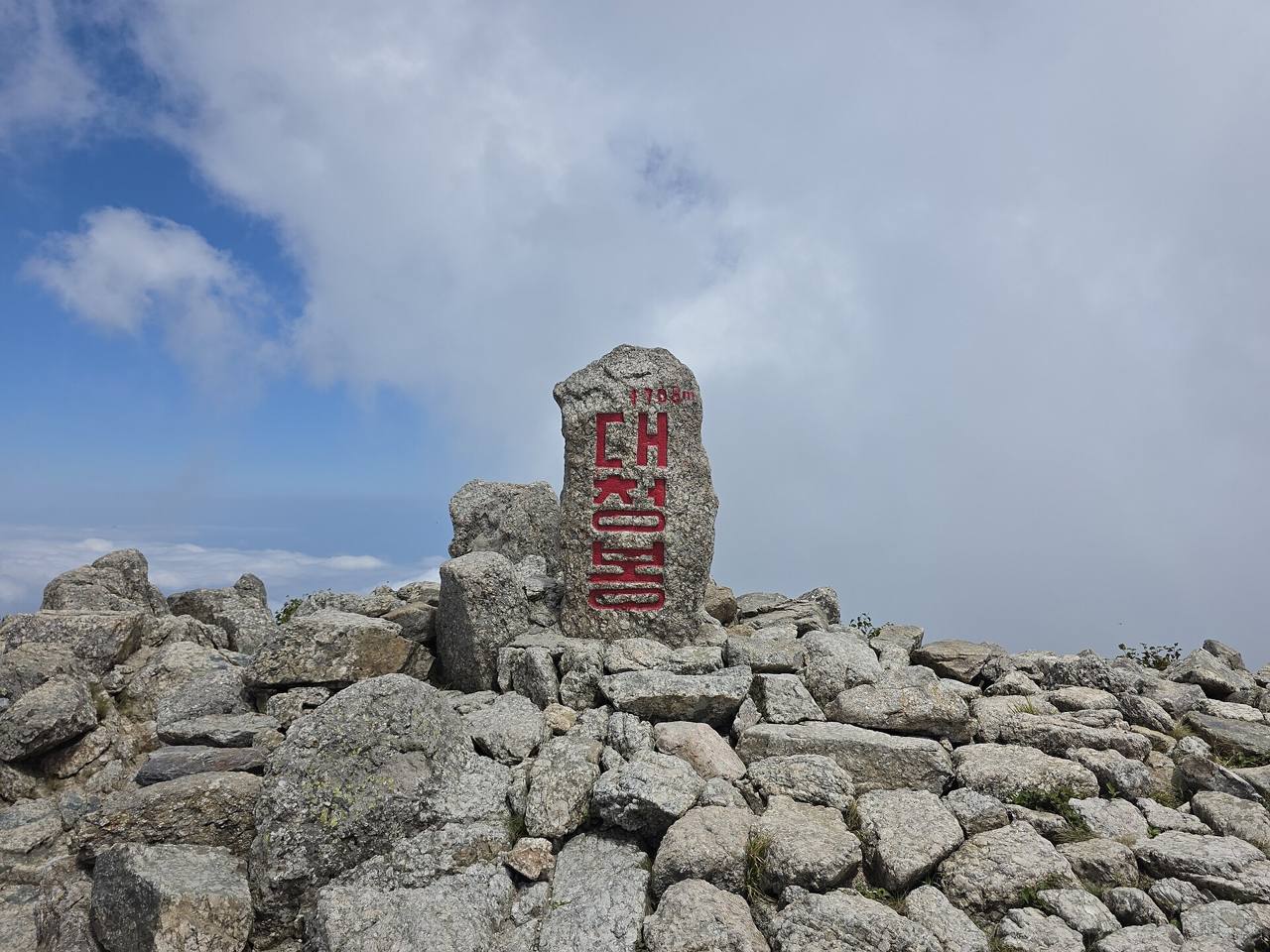
The summit stone on Daecheongbong (1,708 m), Seoraksan's highest peak. Every route to it is on the 2026 closure list. Photo: Wikifairy2, Wikimedia Commons, CC0 (2026).
Seoraksan: the summit closes, the valley stays
Seoraksan's closures are the ones visitors feel most, because November is still a popular month there. Its own closure page showed every trail open on 16 October, under the usual time-of-day entry limits (입산시간지정제), so the summit is walkable until 14 November. From 15 November the 2026 list closes 11 sections, 74.9 km, including every approach to Daecheongbong: from Osaek, from Baekdam, from Biseondae via Huiungak shelter, and the ridge from Madeungryeong to Hangyeryeong, which includes Gongnyong Ridge. Gombaeryeong on the Inje side is closed too. The status table lists the lower routes open: Seoraksan-dong to Ulsanbawi, Sogongwon to the Towangseong Falls viewpoint, the first 3 km of the Huiungak route, which is the flat walk from Sogongwon to Biseondae, and the Osaek Yaksu to Yongso Falls valley (Jujeongol). The short Sogongwon–Gwongeumseong side route is only partly open. If you are in Sokcho in late November, plan the Sogongwon side: Biseondae (비선대) and Ulsanbawi (울산바위). Entry to Korea's national parks has been free since January 2007, when the park admission fee was abolished; the Sogongwon car park charges separately. Our Korea autumn foliage forecast has Seoraksan's peak dates.
Sokcho hotels on Agoda — the base for Seoraksan's open routes In the closure season the hikes that stay open start from Sogongwon, a short bus ride from Sokcho, so a night there lets you be on the Ulsanbawi path before the tour buses arrive. If you are only coming for Daecheongbong, go before 15 November or wait for spring; a Sokcho stay will not get you onto a closed ridge. EpicKor may earn a commission if you book through this Agoda link, at no extra cost to you. Confirm dates, taxes, cancellation terms and the final price on Agoda before booking.
Compare Sokcho stays on Agoda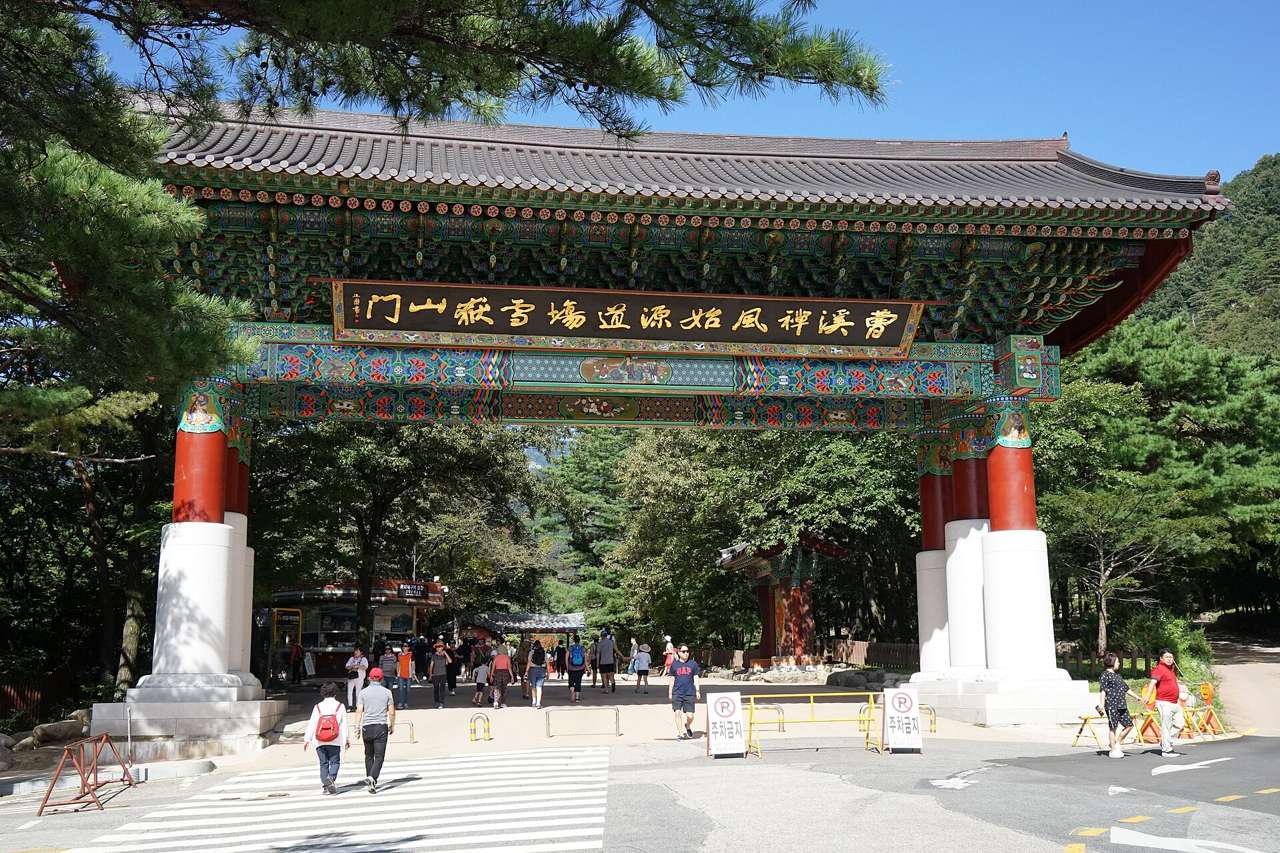
The Sinheungsa gate at Seoraksan's Sogongwon entrance, where the lower routes to Biseondae and Ulsanbawi begin. Photo: De-Shao Liu, Wikimedia Commons, CC BY-SA 4.0 (2018).
Jirisan: no ridge traverse, and a road closure first
Jirisan is Korea's largest mountain park and has the longest list: 28 sections, 143.1 km closed in 2026, 18 of them fully and 10 partly, against 29 sections last autumn. The list includes the Nogodan Pass–Jangteomok stretch of the main ridge (23.8 of its 25.5 km), so the Jirisan ridge traverse (지리산 종주) is not possible during the closure. Approaches to Cheonwangbong from Chibatmok and Dujidong are closed, but the status table lists the popular Jungsan-ri–Cheonwangbong route and Baengmudong–Jangteomok as open, and Seongsamjae (성삼재) to the Nogodan (노고단) summit is open too. Manbokdae–Seongsamjae is closed, and 2.0 km of the 13.7 km Manbokdae–Jeongnyeongchi section is closed.
There is a new catch for 2026, and it has already started. Jirisan's Jeonnam office posted on 7 October that Gurye County has closed county road 12 from Siamjae rest area to Seongsamjae (1.4 km) to all vehicles on weekdays from 12 October to 10 December 2026 for slope-stabilisation works; it stays open on weekends and public holidays (Gurye County road team 061-780-2436). The notice itself flags it for Nogodan hikers and ridge-traverse plans. On weekdays you cannot drive up to the Seongsamjae trailhead for Nogodan from the Gurye side; the notice does not cover the Dalgung (Namwon) side, so check before relying on it. One piece of good news on the Jeonbuk side: the Guryong Valley trail reopened on 16 October after rockfall repairs.
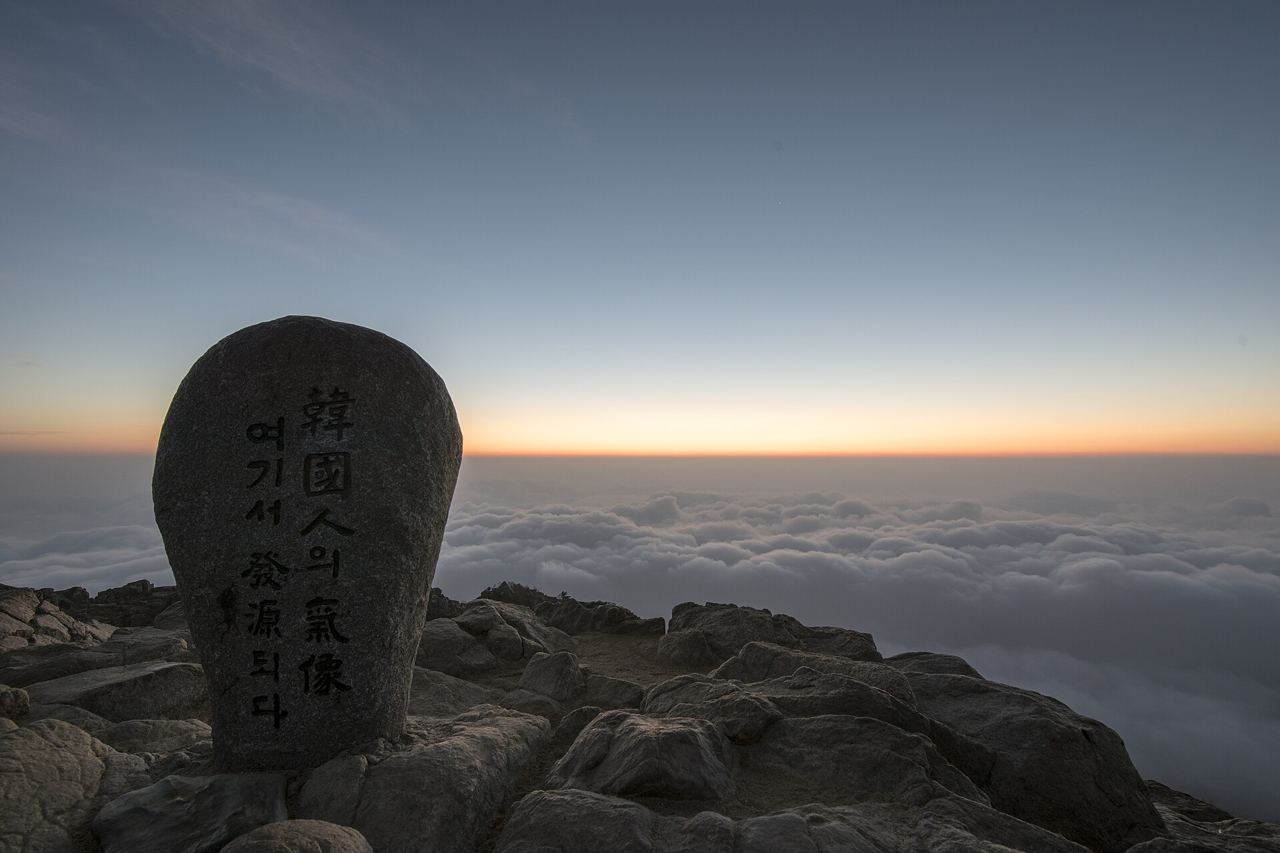
Cheonwangbong (1,915 m), Jirisan's summit, at daybreak in early November. Photo: Rhkgkr42, Wikimedia Commons, CC BY-SA 3.0 (2016).
Bukhansan: Seoul's mountain barely closes
For a Seoul-based visitor the good news is that Bukhansan (북한산) closes almost nothing. The 2026 list has one section out of 97: Darakwon entrance to Eunseokam on the Dobongsan side, and even that is only partly closed (1.0 of 1.3 km). The Baegundae route from Baegun ranger station via Haru-jae and Wimun is listed open. The wildfire table also lists the Academy Park–Gucheon Falls–Daedongmun route as open, but that route was shut separately after a landslide on 15 August 2025, and the park's closure page still listed it on 16 October 2026; check that page before you take it. The Dobong district reopened all its trails on 12 September after rockfall work. Our Seoul hiking guide covers the routes from the city.
Parks with no closures this autumn
- Hallyeohaesang and Wolchulsan, which had sections on earlier lists, show zero closed sections in the 2026 autumn table.
- Gayasan and Taeanhaean have no closed sections either.
- Geumjeongsan in Busan, Korea's 24th national park since 3 March 2026, does not appear in the 2026 table.
- Gyeongju and Dadohaehaesang, which earlier guides (and an earlier version of this page) listed as autumn-exempt, are on the 2026 list: ten sections in Gyeongju, mostly on Tohamsan and Danseoksan, and one 0.2 km section on Dorisan in Dadohaehaesang.
- Hallasan on Jeju is run by Jeju Province, not the national park service. Its winter rules (October to March) set entry cut-off times, such as 12:00 at Eorimok and Yeongsil and 11:30 at Seongpanak and Gwaneumsa, and close trails in storms and heavy snow; we found no wildfire closure in its notices.
How to check the list before you go
The national notice is out, and the park offices repost it park by park in Korean. Closures for rockfall, construction and storm damage can be added at any time, so look again the week you go.
- The national notice: knps.or.kr → 홍보미디어센터 → 공지사항, "2026년 가을철 국립공원 탐방로 출입통제 공고" (1 November 2026), with the section-by-section status table attached as a PDF. A browser translator is enough to read it.
- Korea National Park Service closure pages (knps.or.kr → 탐방통제정보): one page per park or district, with each section's status ("정상" open, "부분통제" partly closed) and the date of the update.
- The government wildfire trail map (hiking.kworks.co.kr): the national list as a map, run with the forest service and local governments.
- National park reservation system (reservation.knps.or.kr, with an English button): shelter and campsite bookings, which are also limited in the closure season; phone 1670-9201 (weekdays 09:00–18:00).
- Park offices: Seoraksan 033-801-0914, Jirisan (Gyeongnam) 055-970-1044, Bukhansan 02-940-3765 (Dobong side 031-828-8065), Odaesan 033-330-4625, Deogyusan 063-320-3853, Chiaksan 033-740-9900.
- On the ground, closed trailheads are roped off with a sign. Rangers patrol them; do not walk around the rope.
Planning a hike between 15 November and 15 December
- Pick the lower route in parks where the summit closes, or a park with few or no closures: Bukhansan, Gyeryongsan, Wolchulsan, or Jirisan's Jungsan-ri route to Cheonwangbong.
- Go before 15 November if the summit is the point; the high ridges are past their colour by then anyway.
- Check the park page the week you go. Rockfall and construction closures are added outside the wildfire list.
- Carry no lighter or stove. Smoking and carrying flammables are banned in national parks all year, and a first offence costs ₩600,000 (about $442).
- Dress for ice. Mid-November mornings on open ridges are cold enough for frost, and our Korean hiking culture guide covers what Koreans pack.
FAQ
Q: When are Korea's national park trails closed in autumn 2026? From 15 November to 15 December 2026, in 18 national parks, to prevent wildfires, under the Korea National Park Service notice of 1 November 2026. The Korea Forest Service's own autumn caution period for other forests normally runs from 1 November to 15 December.
Q: How many trails close? 148 sections, 669.81 km in total, of which 33 are only partly closed. Every regular trail not on the list stays open.
Q: Can I climb Seoraksan's Daecheongbong in late November? Not from 15 November. Every route to the summit is on the 2026 list, including Osaek, Baekdam, Biseondae–Huiungak and the ridge from Madeungryeong to Hangyeryeong. Ulsanbawi, the Towangseong Falls viewpoint, Sogongwon–Biseondae and Jujeongol are listed open.
Q: Is Bukhansan closed in November? Almost not. The 2026 list closes one section, Darakwon entrance–Eunseokam on the Dobongsan side, and the Baegundae route is open. A separate landslide closure has shut the Gucheon Valley route since August 2025; check the park's page before you go.
Q: Can I still climb Jirisan's Cheonwangbong? Yes, from Jungsan-ri, which the 2026 table lists as open; Baengmudong–Jangteomok is open too. The Chibatmok and Dujidong approaches and the main ridge from Nogodan Pass to Jangteomok are closed.
Q: What is the fine for hiking a closed trail in Korea? Up to ₩500,000 (about $369) under the Natural Parks Act: ₩200,000 for a first offence, ₩300,000 for a second and ₩500,000 for a third within a year. Smoking or carrying flammables, banned all year, costs up to ₩2,000,000 (about $1,474).
Q: Is Hallasan closed in autumn? Hallasan is managed by Jeju Province and is not on the national park service's list. It has winter entry cut-off times and closes in bad weather; we found no autumn wildfire closure in its notices.
Sources
- Korea National Park Service notice 제2026-68호, "2026년 가을철 국립공원 탐방로 출입통제 공고" (posted 1 November 2026 on knps.or.kr, https://www.knps.or.kr/front/portal/open/pnewsDtl.do?menuNo=7020013&pnewsId=PNEWSM035288), and its attachment "2026년 산불조심기간 국립공원 탐방로 통제 현황" (read 7 November 2026): period 15 Nov–15 Dec, 18 parks, 148 sections and 669.81 km (33 partly closed), sections and open routes by park, fines up to ₩500,000 and ₩2,000,000, year-round ban on flammables and smoking.
- Natural Parks Act, Articles 28 and 86, and Enforcement Decree, Articles 26, 46 and 47 and Annex 3 (Annex 3 as amended 30 December 2022; national law database, re-read 17 October 2026): closure power and fines by offence.
- Korea.kr policy reporter article (24 November 2025): autumn 2025 total of 146 sections, 653.71 km. Gyeongnam Ilbo (26 October 2025): Jirisan autumn 2025 figures.
- Korea National Park Service closure pages (탐방통제정보) for all 32 parks and districts, read 16 October 2026: Bukhansan Gucheon Valley landslide closure; Bukhansan Dobong reopened 12 Sep; Naejangsan Baegam Yeongcheongul–Baekhakbong to 5 Dec; Palgongsan East construction closures (posted 6 Oct); Jirisan Jeonbuk Guryong Valley reopened. Park notice boards (공원별 알림): Jirisan Jeonnam office, Siamjae–Seongsamjae road weekday closure 12 Oct–10 Dec 2026 (posted 7 Oct); Songnisan office notice 2026-31, Tteokbawi–Cheongseokjae rockfall closure from 16 Oct 2026.
- Government wildfire trail map, hiking.kworks.co.kr.
- Korea Forest Service, wildfire damage statistics (e-Narajipyo, 2025 annual figures) and 2025 autumn caution period notice (14 October 2025).
- Jeju Province Hallasan National Park office, entry time notice (2024).
- Exchange rate: ₩1,356.68 to $1, 7 November 2026 (open.er-api.com).
You Might Also Like
Suneung Day in Korea, 19 November 2026: The 35-Minute Flight Ban, 10 a.m. Office and Bank Openings, Extra Subway Trains and a Tourist's Hour-by-Hour Plan
Korea's Suneung exam is Thursday 19 November 2026. Last year the 35-minute listening-test flight ban (13:05–13:40) moved 140 flights, banks and the stock market opened at 10:00 and Seoul added 29 subway runs. An hour-by-hour plan for visitors.

Seoul Hiking Guide: Easy, Scenic, and Challenging Trails
A practical Seoul hiking guide comparing Inwangsan, Achasan, Namsan, Bukhansan, Gwanaksan, gear etiquette, seasons, and first-timer trail tips.

Korea ARC Fee: ₩35,000 and Every Immigration Fee in One Table
A Korean ARC costs ₩35,000 (about US$26), paid in cash. Register within 90 days of entry or face a fine from ₩200,000. Extensions ₩60,000, 20% off online.