Do You Have to Carry Your Passport in Korea? Yes — the ₩100,000 Rule
Last updated: 27 October 2026. Law read that day on law.go.kr: the Immigration Act (출입국관리법) in the version in force from 2 October 2026, and its Enforcement Rule (시행규칙) in force from 23 October 2026, whose Schedule 7 sets the fines. ₩1,334 = US$1 (Federal Reserve, 16 October 2026). A guide, not legal advice; sources at the end.
Do you have to carry your passport in Korea? Yes. If you are a foreigner aged 17 or over, Korean law says you must have it on you at all times, or, if you live in Korea, your residence card. It is not a tip from a travel forum. It is Article 27 of the Immigration Act (출입국관리법), and it applies in Seoul, Busan, Jeju and everywhere else in South Korea from the day you land.
The article has two halves. You must carry the document, and you must show it when an immigration officer or another official with authority asks for it as part of their job. Breaking either half is an offence under Article 98, with a criminal fine of up to ₩1,000,000 (about US$750). In practice the immigration office can settle it with a fixed penalty instead, and the Ministry of Justice's own schedule sets that penalty at a standard ₩100,000 (about US$75) for a first offence, doubling to ₩200,000 for a second, adjustable by half either way.
What the law does not list is a photocopy, a photo on your phone or a hotel key card. This guide sets out exactly what counts, what each offence costs, what to do if you live in Korea, and how to carry a passport all day without losing it.
The law means the passport goes out with you every day. A slim FINTIE passport cover keeps it flat in a front pocket. See it on AmazonAffiliate link. As an Amazon Associate, EpicKor earns from qualifying purchases at no extra cost to you.
Quick Guide: carrying your passport in Korea, October 2026
| Question | Answer (law in force 27 October 2026) |
|---|---|
| Do I have to carry it? | Yes, always (항상), if you are a foreigner staying in Korea and 17 or older (Immigration Act Art. 27(1)) |
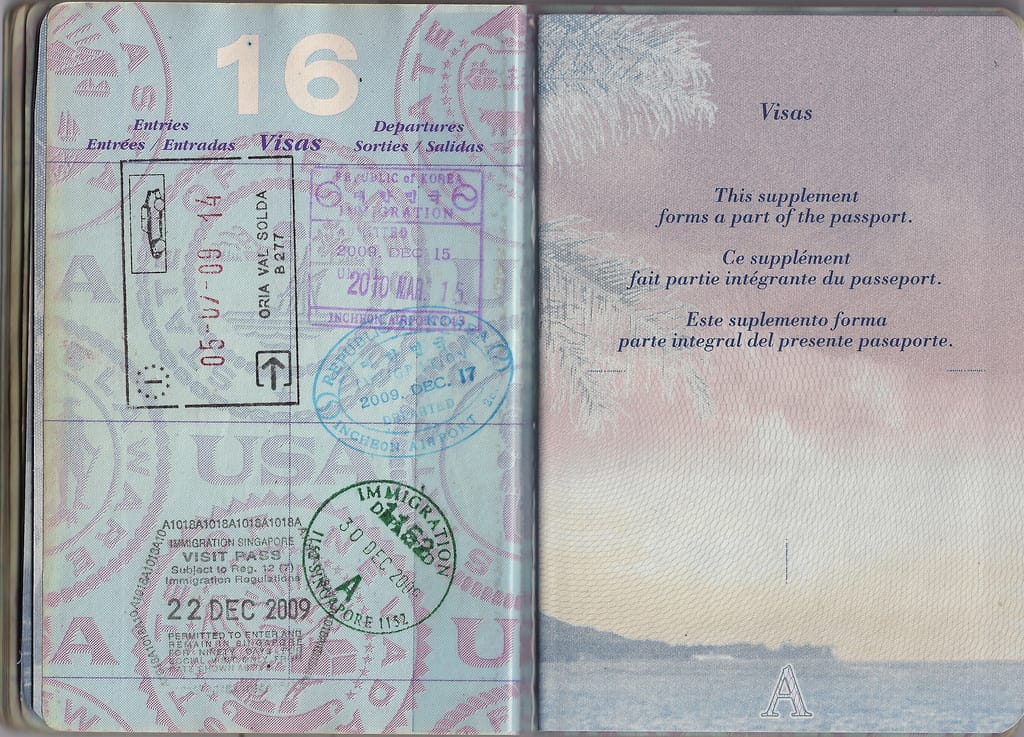
| What counts | Passport, residence card (외국인등록증, ARC), mobile residence card, seafarer's ID, alien entry permit or landing permit. Nothing else |
| Does a photocopy count? | No. A copy or phone photo is not on the Article 27 list |
| Who is exempt | Foreigners under 17 (Art. 27(1), proviso) |
| When must I show it | When an immigration officer or other authorised official asks in the course of their duties (Art. 27(2)) |
| Maximum penalty | Criminal fine up to ₩1,000,000 (about US$750) (Art. 98) |
| Fixed penalty (범칙금) | 1st ₩100,000 (US$75) · 2nd ₩200,000 (US$150) · 3rd ₩500,000 (US$375) · 4th+ ₩1,000,000 (US$750) — standard amounts, adjustable by half |
| Living in Korea? | Register within 90 days (Art. 31); report a new address within 15 days of moving in (Art. 36), or pay from ₩100,000 |
| Also needs the passport | Tax-free shopping and instant VAT refund; K-pop concert entry; hotel VAT refund forms |
TOPBAG RFID passport wallet — passport, transit card and receipts in one flat case. If the passport has to leave the hotel every day, it helps to give it one fixed home that also holds the T-money card and the tax-refund slips, so it never ends up loose in a shopping bag. As an Amazon Associate, EpicKor earns from qualifying purchases at no extra cost to you.
See the TOPBAG passport wallet on AmazonWhat Article 27 actually says
The Korean text of Article 27(1) is one sentence and one exception. In translation:
A foreigner staying in the Republic of Korea shall always carry a passport, seafarer's identity document, alien entry permit, alien registration card, mobile alien registration card or landing permit (the "passport etc."). This shall not apply to a foreigner under the age of 17.
Article 27(2) adds the second duty: when an immigration officer (출입국관리공무원) or an official with authority (권한 있는 공무원) asks to see the "passport etc." in connection with their duties, you must show it.
Three things follow from the wording, without any guessing about how it is enforced.
- "Always" means always. The text does not say "when travelling between cities" or "when asked to bring it". There is no carve-out for a walk to the convenience store.
- The list is closed. Six documents are named. A photocopy, a scan, a phone photo, a driving licence from home, a student card or a hotel key card are not among them. Carrying a copy is sensible as a backup, but it is not compliance.
- The age line is 17. Children under 17 are exempt. The exception is old: it already stood in the 2010 text. The 13 June 2023 amendment added the mobile residence card to the list, not the age line. Parents still need the children's passports for the flight and for anything that checks ID, but the carrying duty itself does not apply to them.
The article covers every foreigner "staying" (체류) in Korea, which includes a tourist on a 90-day visa-free entry or a K-ETA. There is no separate tourist version. If you are on a short visit you will not have a residence card, so for you the list reduces to one item: the passport.
You might like: Korea e-Arrival Card vs K-ETA: 22 Countries Are Exempt, and the Paid One Cancels the Free One
What it costs if you break it: ₩100,000 to ₩1,000,000
Article 98 of the Immigration Act lists two offences that carry a criminal fine (벌금) of up to ₩1,000,000: breaking the carry-or-show duty in Article 27, and failing to report a change of address under Article 36.
An immigration offence like this does not have to go to a court. Article 102 lets the head of a regional immigration office, once the facts are established, send a written notice of disposition (통고처분) telling the person to pay a set amount, called a 범칙금 (beomchikgeum), in place of a fine. Article 105 gives 15 days to pay. If it is not paid, the office must refer the case for prosecution (고발), unless it was paid before the referral.
The amounts are set in Schedule 7 (별표 7) of the Enforcement Rule, amended on 23 January 2026. For Article 27:
| Offence count (same offence, last 3 years) | 범칙금 | In US dollars (₩1,334 = $1) |
|---|---|---|
| 1st | ₩100,000 | about $75 |
| 2nd | ₩200,000 | about $150 |
| 3rd | ₩500,000 | about $375 |
| 4th or more | ₩1,000,000 | about $750 |
Two rules in the same schedule and the Enforcement Rule change the number in front of you.
- The count is per three years. A higher step applies only if you were already fined for the same offence within the last three years, measured from the earlier penalty to the date the new offence is caught.
- The amount can move by half. Article 86(2) of the Enforcement Rule lets the office lower or raise the standard amount by up to one half, weighing your age and circumstances, motive and result, ability to pay and number of offences. A first-offence penalty can therefore be set anywhere from ₩50,000 to ₩150,000 (about $37 to $112).
- It can be waived. Article 103(2) of the Act lets the Minister of Justice waive the notice altogether on the same kind of grounds.
What the law does not tell you is how often anyone is actually stopped and asked. We did not find an official count of Article 27 penalties, and we are not going to guess one. The fair reading is narrower: if you are asked and cannot produce the document, there is a written price for that, and it is the same for a tourist as for a resident.
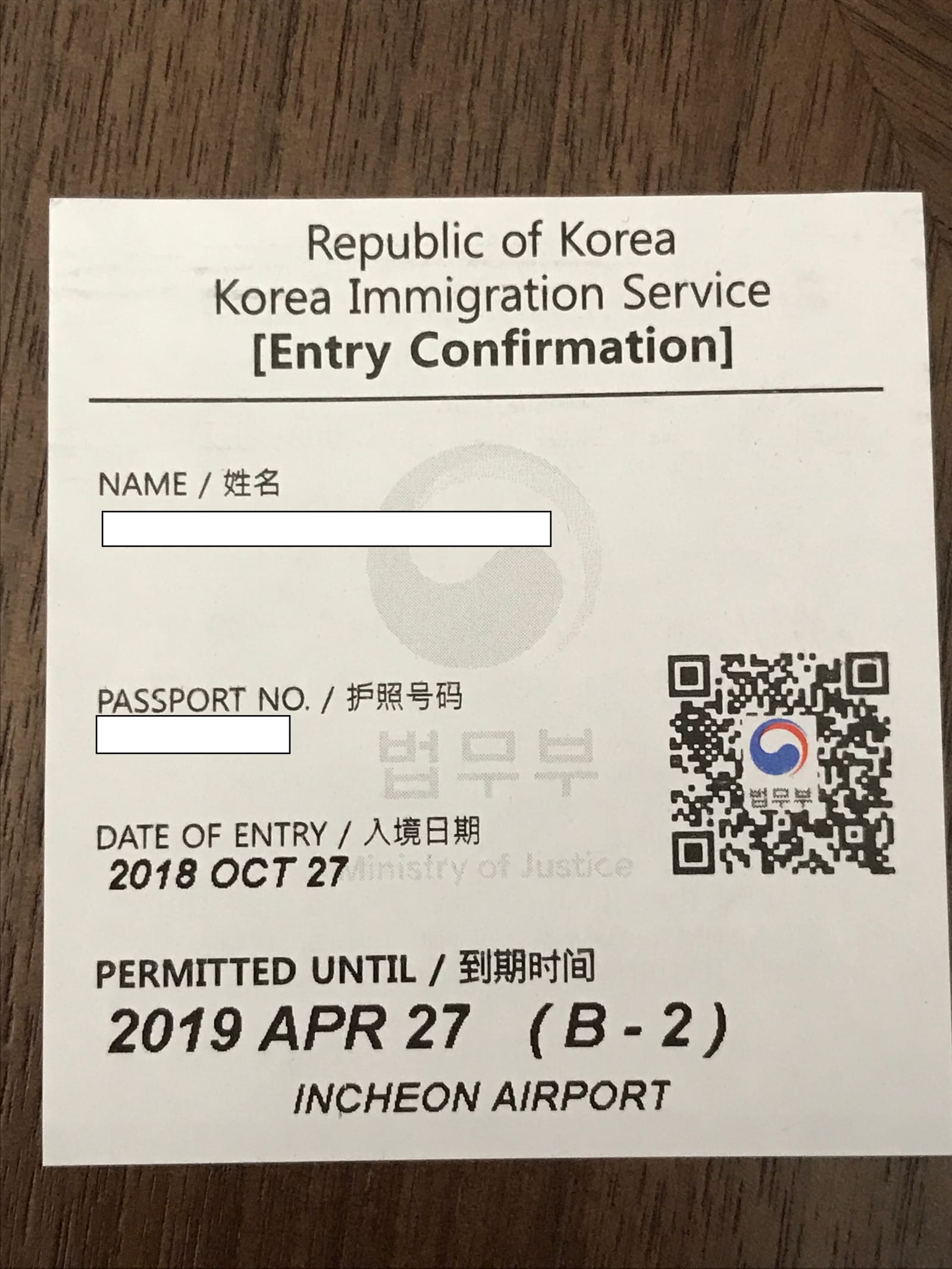
Passport, residence card or mobile card: what each visitor should carry
Who you are decides which document does the job.
| You are | Carry | Why |
|---|---|---|
| Tourist or short business visitor (visa-free, K-ETA, C-3 visa) | Passport | You have no residence card; the passport is the only listed document you hold |
| Resident (work, study, working holiday, family visa), registered | Residence card (외국인등록증) or the mobile residence card | Both are on the Article 27 list; the passport can stay at home |
| Resident in the first weeks, card not yet issued | Passport | Until the card is in your hand, the passport is your listed document |
| Child under 17 | Nothing required by Article 27 | Exempt; bring the passport where a venue, shop or flight asks for it |
| Ship crew on shore leave | Seafarer's ID or landing permit | Both are on the list |
The residence card and the 90-day rule
Anyone staying in Korea for more than 90 days must register with the local immigration office within 90 days of arriving (Article 31(1)). Registration produces the residence card, still called 외국인등록증 (alien registration card) in the law. Under Article 33(1) the office may choose not to issue a card to someone under 17; when that person turns 17, they must apply for one within 90 days (Article 33(2)).
Once you have the card, it satisfies Article 27 on its own, and your passport can stay in a drawer.
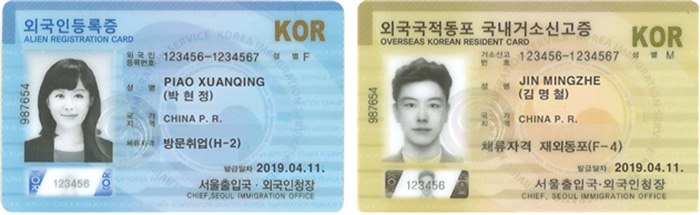
The mobile residence card counts
Article 33(6), added in 2023, lets immigration issue a mobile residence card (모바일외국인등록증) to anyone who holds the plastic one: an encrypted version installed on your phone, with "the same effect" as the card. Article 27 names it explicitly. The Financial Services Commission reported on 21 March 2025 that the Ministry of Justice began issuing it on 10 January 2025, to registered foreigners aged 14 or older with a smartphone in their own name, through the government's mobile ID app, and that six banks would accept it for opening accounts from that day.
The practical upshot for residents: if your phone holds the mobile card, you are carrying a listed document whenever you carry your phone. A screenshot of the plastic card is not the same thing. Only the app-issued card is named in the law.
You might like: Korea Minimum Wage 2027: ₩10,700 an Hour, ₩2,236,300 a Month — What Foreign Workers Are Owed and What They Actually Earn
Living in Korea: the 15-day address rule sits in the same article
Article 98 puts a second duty next to the passport rule: a registered foreigner who moves must report the new address within 15 days of moving in (Article 36(1)), at the new 시·군·구 office, the community centre (주민센터) or the immigration office, bringing the residence card so the new address can be written on it. If you hold a mobile card and use the online civil-service window, the update can be recorded on the mobile card instead (Article 36(8)).
The penalty schedule for a late report runs by how late you are:
| How late the address report is | 범칙금 | US$ (₩1,334 = $1) |
|---|---|---|
| Under 3 months | ₩100,000 | about $75 |
| 3 to 6 months | ₩300,000 | about $225 |
| 6 months to 1 year | ₩500,000 | about $375 |
| 1 to 2 years | ₩700,000 | about $525 |
| 2 years or more | ₩1,000,000 | about $750 |
The same plus-or-minus-half adjustment applies. For students, working-holiday makers and new hires, it helps to put the address report on the moving-day list next to the lease and the utilities.
You might like: Korea Health Insurance for Foreigners: At Least ₩158,630 a Month After Six Months — Students, Workers, and What Happens If You Don't Pay
Where else in Korea you will need the passport anyway
Even without Article 27, a visitor's passport gets asked for at several ordinary moments of a Korea trip.
- Tax-free shopping and the instant refund. The decree on VAT refunds for foreign tourists (외국인관광객 등에 대한 부가가치세 및 개별소비세 특례규정), Article 8(1), says a tax-free seller must confirm the buyer's identity "by passport etc." before issuing the sales confirmation. For the instant refund at the till, Article 8(4) says the seller must check the passport and send the electronic record to customs. Our Korea tax refund guide has the ₩15,000 minimum and the airport steps.
- Hotel VAT refunds. The 118 hotels in the hotel VAT refund scheme issue the refund form at check-out, and the airport counter pays it against your passport. Details in our hotel tax refund guide.
- K-pop concerts. Foreigner ticket sites verify your account with your passport, and at the gate the name on the booking has to match the person holding the ticket. See K-pop concert tickets in Seoul for how NOL World and Melon Ticket Global handle it.
- Leaving Korea. You cannot clear departure immigration without the passport. If you are planning a pension refund on departure day, the airport counter also wants it (pension refund guide).
The common thread is that a day of shopping or a concert night is exactly the kind of day when a passport left in the hotel costs you something real, apart from any penalty.
Valante family travel document organizer — a zipped folio for several passports and refund forms. Families are the case where the passport count goes up: the adults must carry theirs, and the children's passports still come out at tax-free tills, concert gates and the airport. One zipped folio keeps every booklet and slip together. As an Amazon Associate, EpicKor earns from qualifying purchases at no extra cost to you.
See the Valante document organizer on AmazonHow to carry a passport all day without losing it
The law settles whether to carry it. The real risk for most visitors is losing it. Some habits help:
- Front pocket or a zipped inner pocket, not a back pocket or an open tote. Crowded subway carriages and festival crowds are where things slip out.
- Keep it apart from your cash wallet. If the wallet goes, the passport stays.
- Make a copy anyway, on paper and as a photo in a secure place. It is not legal compliance, but it makes a replacement much faster if the original goes missing.
- Write down the passport number and issue date somewhere separate from the passport.
- Check before you leave each place. Most lost passports are not stolen; they are left on a hotel desk, in a shop's scanner tray or in a taxi.
- Residents: switch to the card. Once your residence card or mobile card is issued, there is no reason to carry the passport day to day.
You might like: Things to Know Before Traveling to Korea: 2026 Guide
If your passport is lost or stolen in Korea
The steps are the same in Seoul, Busan or anywhere else.
- Retrace the last controlled place: hotel front desk, the shop where you did a tax refund, the taxi company, the airport rail counter.
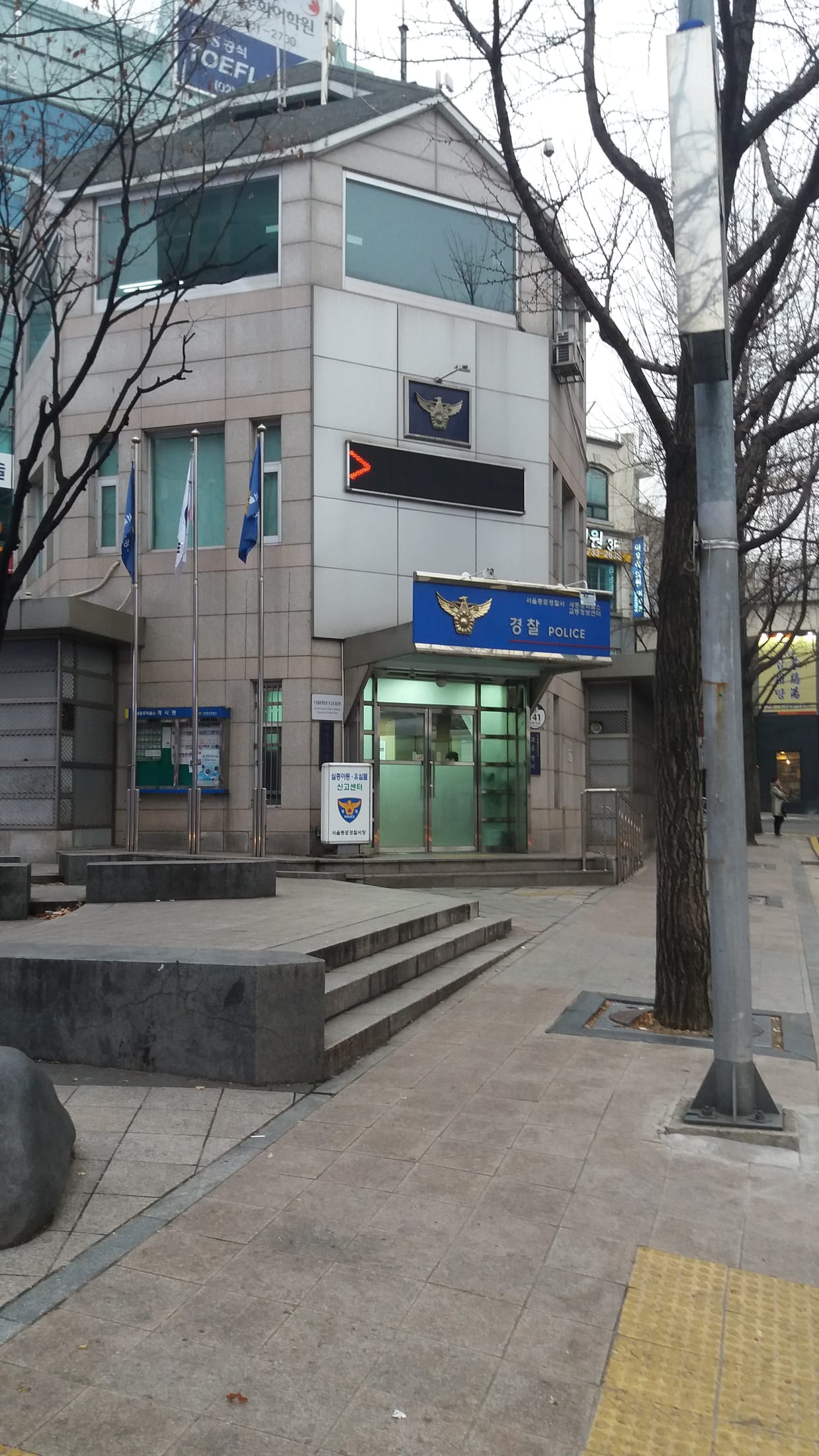
- Report it to the police. Any police station or neighbourhood police box (파출소 or 지구대) takes lost-property reports, and Korea's police run a national lost-and-found portal, Lost112 (lost112.go.kr), where found items handed in anywhere are listed. Ask your embassy whether it wants the police report number for an emergency document.
- Contact your embassy or consulate. Only your own government can issue a replacement passport or emergency travel document. Requirements vary by nationality, so take them from the embassy itself.
- Do not book a tight departure. Replacement takes office hours, photos and sometimes several days.
Our Korea lost and found guide covers phones, wallets and items left on the subway as well.
The honest part: what this guide cannot tell you
- How often the rule is enforced. We found no published figure for Article 27 penalties, and nothing in the law says tourists are treated differently. We are not going to tell you "nobody checks", and we are not going to tell you that checks are common. The written penalty is all we can report.
- Which officials can ask. Article 27(2) says immigration officers and "officials with authority", in connection with their duties. The Act does not list them by agency, and we have not tried to fill in that list.
- Whether a copy might be accepted in practice. An official might accept a copy on a given day, but the law does not list it, so you would be relying on that official's goodwill.
- The safe-versus-pocket trade-off is real. A common piece of travel advice is to leave the passport in the hotel safe to avoid losing it. That advice cuts the risk of loss, but it is not what Article 27 says. This guide follows the law. You can weigh the two risks yourself, knowing that one of them has a written price.
- You do not need special gear. Any pocket that closes does the job. A holder or wallet makes daily carrying easier, but it does not make you any more compliant, and a cheap cover works as well as an expensive one.
FAQ
Q: Do you have to carry your passport in Korea?
A: Yes. Article 27 of Korea's Immigration Act says a foreigner staying in Korea must always carry a passport or one of five other listed documents (residence card, mobile residence card, seafarer's ID, alien entry permit, landing permit). Foreigners under 17 are exempt. Tourists have no residence card, so for them it means the passport.
Q: Is a copy of my passport enough in South Korea?
A: No. A photocopy or phone photo is not on the Article 27 list. Keep one as a backup for replacing a lost passport, but carry the original (or, if you live in Korea, your residence card or mobile residence card).
Q: What is the fine for not carrying a passport in Korea?
A: The law allows a criminal fine of up to ₩1,000,000 (about US$750). In practice the immigration office can issue a fixed penalty instead: ₩100,000 (about $75) for a first offence, ₩200,000 for a second, ₩500,000 for a third and ₩1,000,000 from the fourth, counted over three years. The office can adjust the amount by up to half.
Q: Do I need to carry my passport in Seoul if I have an ARC?
A: No. Your residence card (외국인등록증, ARC) or the mobile residence card on your phone satisfies the law, so the passport can stay at home. You will still need it to leave the country, and for tax-free purchases if you qualify as a tourist.
Q: Do children have to carry a passport in Korea?
A: Not under Article 27: foreigners under 17 are exempt from the carrying duty. Families still need children's passports for flights and for anything that checks ID.
Q: Should you carry your passport in Korea or leave it in the hotel safe?
A: Legally, carry it. Leaving it in the safe lowers the risk of losing it, but it means you are not carrying a listed document, and on tax-free shopping days or at a concert you will need it anyway. Carry it in a closed front pocket, separate from your cash.
Sources
- Immigration Act (출입국관리법), version in force from 2 October 2026 (MST 290729): Art. 27 (carrying and showing the passport etc.; under-17 proviso; mobile residence card added 13 June 2023), Art. 31 (registration within 90 days), Art. 33 (residence card, mobile residence card), Art. 36 (address change within 15 days), Art. 98 (fine up to ₩1,000,000), Art. 102 (notice of disposition), Art. 103 (penalty standards, waiver) and Art. 105 (15 days to pay, referral), National Law Information Center (law.go.kr), read 27 October 2026.
- Enforcement Rule of the Immigration Act (출입국관리법 시행규칙), in force from 23 October 2026 (MST 291289): Art. 86 (adjustment by half, exceptions) and Schedule 7 (범칙금의 양정기준, amended 23 January 2026), rows 로 (Art. 27: ₩100,000 / ₩200,000 / ₩500,000 / ₩1,000,000) and 조 (Art. 36: ₩100,000 to ₩1,000,000 by delay), law.go.kr, read 27 October 2026.
- Special Rules on VAT and Individual Consumption Tax for Foreign Tourists (외국인관광객 등에 대한 부가가치세 및 개별소비세 특례규정), in force 2 January 2026: Art. 8(1) and 8(4) (identity by passport; passport check for instant refunds), law.go.kr, read 27 October 2026.
- Financial Services Commission, Mobile Foreigner Residence Card to be Accepted for Opening Bank Account at Six Domestic Banks from March 21, 21 March 2025 (issuance from 10 January 2025, age 14+, own-name smartphone, same validity as the plastic card).
- Korean National Police Agency, Lost112 lost-and-found portal.
- Exchange rate: Federal Reserve H.10 via FRED (DEXKOUS ₩1,334.03 per US$), 16 October 2026. Dollar figures are rounded.
The short version: in Korea the passport goes with you, every day, from age 17. A copy does not count. If you live in Korea, the residence card or the mobile card on your phone does the same job. The written price for being caught without one is a standard ₩100,000, climbing to ₩1,000,000 for repeat offences. Losing the passport costs more in time than either, so keep it in a closed pocket.
You Might Also Like

18.9 Million Visitors Told Korea What They Couldn't Find: Transport, Restaurants, Money and Festivals in Korea's Official Exit Survey, and the Answers to All Four
Korea's exit survey: half of 2025's visitors lacked nothing; the rest named transport (16.8%), restaurants (12.9%), money (11.7%) and festivals (11.5%). What 18.9 million visitors did, spent and loved, by passport, and the guide for each gap.
Seoul Climate Card: Tourist Pass Prices After the 30-Day Pass Ended
Seoul's Climate Card 30-day pass is gone: last top-up 31 August, last ride 29 September 2026. Visitors can still buy 1- to 7-day passes for ₩5,000–₩20,000 (US$3.75–$15). Residents move to the K-Pass based Climate Pass.

Drunk Driving in Korea: 0.03% Covers Bikes and E-Scooters Too
Korea's 0.03% drink limit covers bikes and e-scooters: ₩30,000 (US$22) on a Ttareungi, ₩100,000 on a scooter, up to ₩20 million for a first offence in a car.