K-Fashion Shopping in Seoul: The Flagship Addresses and When They Open
K-fashion shopping in Seoul is not "buy Korean clothes." It is a moving map of concept stores, online-born brands, designer flagships, eyewear installations, quiet minimalist labels, department stores, and neighborhoods that feel different from each other even when they are one subway ride apart.
What most guides leave out is the boring part that decides your day: where these brands physically are, and what time the doors open. Almost nothing in this guide opens before 11:00, and several of the best stops open at 12:00. A shopping day that starts at nine is a coffee day that starts at nine.
The map also moved recently. Two of the largest K-fashion retail spaces in Seoul opened within the last eighteen months — Haus Nowhere Seoul in September 2025 and Musinsa Megastore Seongsu on 24 April 2026 — and both are in Seongsu, not in Apgujeong or Myeongdong. Guides written before that send you to the wrong side of the river.
Packing cubes — compare on AmazonAffiliate link. As an Amazon Associate, EpicKor earns from qualifying purchases at no extra cost to you.
Quick Guide: The Five Stops, With Addresses And Hours
| Stop | Address | Hours | Why go |
|---|---|---|---|
| 무신사 메가스토어 성수 Musinsa Megastore Seongsu |
성동구 성수이로 62 Seongsui-ro 62, Seongdong-gu |
Opened 24 Apr 2026 | Korea's largest Musinsa store. B1–4F, roughly 2,000 pyeong (~6,600 m²), about 1,000 brands |
| 하우스 노웨어 서울 Haus Nowhere Seoul |
성동구 뚝섬로 433 Ttukseom-ro 433, Seongdong-gu |
11:00–21:00 daily | Gentle Monster's Seongsu building and its parent company's head office. 2F eyewear, 3F Tamburins, 5F Nudake tea house |
| 아모멘토 한남 Amomento Hannam |
2F, 용산구 이태원로 242 Itaewon-ro 242, Yongsan-gu |
12:00–20:00 daily | Quiet minimalism, on the Hannam leg. The label's most convenient store for a one-day route |
| 하우스 도산 Haus Dosan |
강남구 압구정로46길 50 Apgujeong-ro 46-gil 50, Gangnam-gu |
11:00–21:00, no closing day | The older Gentle Monster house. Not the same building as Haus Nowhere — see below |
| 송지오 갤러리 느와 Songzio Galerie Noir |
강남구 압구정로42길 54 Apgujeong-ro 42-gil 54, Gangnam-gu |
11:00–20:00 daily | Songzio's Seoul flagship, opened May 2024. B1–4F gallery-and-store, about 130 pyeong |
Note the geography in that table. Galerie Noir and Haus Dosan are two streets apart — 압구정로42길 and 압구정로46길 — so the Apgujeong leg is a short walk, not a taxi ride. And both Seongsu stops are in Seongdong-gu, roughly fifteen minutes apart on foot.
Quick Answer: Where Should You Shop For K-Fashion In Seoul?
If you have one day: Seongsu in the late morning, Hannam in the afternoon, Apgujeong before closing. That order works because Seongsu's two big buildings open at 11:00, Amomento Hannam opens at 12:00, and the Apgujeong pair stay open until 20:00 and 21:00.
If you have one afternoon: pick Seongsu only. Musinsa Megastore and Haus Nowhere in the same district give you the platform side and the concept side of K-fashion without a subway transfer.
If you want the older, quieter version: Jongno. Amomento has two stores there, and one of them is only open Wednesday to Sunday — see the Amomento section before you plan around it.
Why Seoul Fashion Feels Different Now
Global fashion media is paying closer attention to Seoul retail, Korean designer labels, and Korean brand worlds. Vogue Business has covered Amomento's Seoul-based global push, Songzio's international expansion, and Gentle Monster's Haus Nowhere.
The Korean numbers say the same thing from the other direction. Musinsa reported ₩821.7 billion in revenue for the first half of 2026, up 22.5% year on year — its best half ever. Its own-label chain, 무신사 스탠다드 (Musinsa Standard), ran 41 domestic stores whose second-quarter sales rose 64% year on year while offline visitors rose more than 66%, passing ten million in a single quarter for the first time. Overseas transaction value for that label was up 162%, against a stated target of 60 stores within the year.
That is the context for the buildings. The retail is not a marketing gesture; it is where the growth is.
Gentle Monster Has Two Seoul Houses, And They Are Not The Same Place
This is the single most common way to waste an afternoon here, and almost no English guide flags it.
| 하우스 노웨어 서울 (Haus Nowhere Seoul) | 하우스 도산 (Haus Dosan) | |
|---|---|---|
| Where | 성동구 뚝섬로 433 — Seongsu, north of the river | 강남구 압구정로46길 50 — Apgujeong, south of the river |
| Opened | September 2025 | 2021 |
| Hours | 11:00–21:00 daily | 11:00–21:00, no closing day |
| What it also is | Head office of IICombined, Gentle Monster's parent company | Showroom and brand house |
| Inside | 1F pop-ups, 2F Gentle Monster, 3F Tamburins and homeware, 5F Nudake tea house | Gentle Monster, Tamburins, Nudake |
Haus Nowhere Seoul is the fourth in that series, after Dosan, Shanghai and Shenzhen. Practically: if you are already in Seongsu, go to Haus Nowhere. If you are already in Apgujeong, go to Haus Dosan. They are not worth crossing the city for twice, and Korean visitors report queues at Haus Nowhere from about 13:00 on weekends, so a weekend visit works better before lunch.
For a traveler, the other useful decision is whether you are buying, browsing, or documenting. If you are buying, try frames seriously — Korean eyewear stores are excellent for fit and face-shape comparison, but not every statement frame survives daily life at home. If you are browsing, give yourself time. Neither house is a five-minute errand.
If you want to buy sunglasses, compare these points:
- Nose bridge fit.
- Lens darkness and UV protection.
- Frame weight.
- Whether the style works outside Seoul street photos.
- Warranty, receipt, and tax refund handling.
- Whether you can buy the same frame cheaper at home.
Do not buy only because a celebrity wore something. Buy because the frame works on your face.
Musinsa: The Trend Engine, And Now A Building
Musinsa is how many younger shoppers discover Korean fashion: digitally, by ranking, by brand page, by discount, by styling photos. Even if you prefer physical shopping, it is useful pre-trip research.
Use it to answer:
- Which Korean brands are currently visible?
- What price range is normal for the category?
- Are oversized fits still dominant for the item you want?
- Does a brand have an offline store, pop-up, or stockist?
On prices, one honest warning. 무신사 스탠다드 basics sit in the ₩10,000–30,000 band, but the same item can move by ₩10,000 inside a week because the platform runs near-continuous promotions and event pricing. A single figure printed in a guide would mislead you more than a range does. Check the item page the day you buy, and do not treat a "sale" badge as information.
메가스토어 성수 (Megastore Seongsu) changed what Musinsa is offline. It opened on 24 April 2026 at 성동구 성수이로 62, across five floors from B1 to 4F, roughly 2,000 pyeong with about a thousand brands — the largest Musinsa store in the country. There is a food court on 4F if the day runs long.
And it is genuinely a foreign-shopper destination, which is worth stating carefully because the Korean headlines overstated it. Over its first fifty days, from 24 April to 13 June 2026, the store took about ₩3 billion of ₩7 billion total transactions from foreign customers — just over 40%. In the week ending 13 June that share reached 56%, and on 9 June it peaked at 66% for a single day. Several Korean outlets ran "two-thirds are foreigners" as a headline; that was the one-day peak, not the norm. The honest version is still remarkable: four in every ten won spent in Korea's biggest fashion store, in its first two months, came from visitors.
The trap is thinking Musinsa equals all of K-fashion. It does not. It is a powerful window into the contemporary, streetwear and casual end. It is not the same as spending a day in Cheongdam, Hannam, or a luxury department store. Use Musinsa before the trip, then let Seoul complicate the picture.
Start With A Brand Map, Not A Shopping List
A shopping list makes you chase items. A brand map makes you understand lanes, and lanes are what Seoul actually organises itself by.
Four useful lanes:
- Platform-native — Musinsa and the labels that grew on it. Trend-fast, price-accessible, heavy on fit and silhouette.
- Concept-retail — Gentle Monster and its sibling brands. The space is part of the product.
- Quiet designer — Amomento and the minimalist labels. Restraint, fabric, proportion.
- Runway designer — Songzio and the independent houses. Tailoring, palette, art reference.
You do not need all four in one trip. You need to know which one you are standing in, because the etiquette, the price band, and the try-on culture differ in each.
Amomento: Quiet Seoul Minimalism, And Four Different Stores
Amomento shows a side of K-fashion that is not loud, idol-coded, or logo-first: calm silhouettes, neutral tones, texture, layering, pieces that feel designed rather than shouted. That makes it a good stop for travelers who want something wearable after the trip.
It has four Seoul stores, and they are not interchangeable:
| Store | Address | Hours |
|---|---|---|
| Hannam — best for a one-day route | 2F, 용산구 이태원로 242 | 12:00–20:00 daily |
| Yulgok-ro | 4F, 종로구 율곡로 1 | 12:00–20:00 daily |
| Archive | 1F, 종로구 자하문로11길 12 | 12:00–20:00, Wednesday–Sunday only |
| Shinsegae Gangnam | 5F, Shinsegae Department Store, Gangnam | 10:30–20:00 Mon–Thu, 10:30–20:30 Fri–Sun |
Two practical notes. The Archive store closes Monday and Tuesday — it is the one that trips people up, and it is the only Amomento address that is not open daily. And the Shinsegae Gangnam counter is the only one that opens before noon, which makes it the option if your morning is already committed south of the river.
When shopping minimalist Korean brands, check fabric and fit carefully. The item may look simple, but the value is in proportion. Shoulder width, sleeve length, drape, and fabric weight matter more than a visible logo. If you are between sizes, try both.
Songzio: Art-Fashion And Darker Tailoring
Songzio is a different K-fashion signal. It is not a tourist streetwear stop. It belongs to a more dramatic designer lane: dark palettes, runway identity, art references, menswear history. The brand was founded in Seoul in 1993 and is one of Korea's important independent houses.
Its Seoul flagship is 갤러리 느와 (Galerie Noir), at 강남구 압구정로42길 54, open 11:00–20:00 daily. It opened on 4 May 2024, runs from B1 to 4F across about 130 pyeong, and is built as a contemporary-art gallery and a store at once — deliberately sited near Dosan Park, where Songzio opened its first store.
For travelers, Songzio is most useful if you are thinking about investment pieces, tailoring ideas, or Korean designer history. You may not buy a runway look, but you can learn from the styling: long layers, black-on-black textures, oversized proportions, sharp coats, and the balance between theatrical and wearable.
The Neighborhood Route
Here is the route with the times attached, which is the only version that survives contact with a real day.
Seongsu, from 11:00. Both big buildings open at 11:00 — Haus Nowhere Seoul at 뚝섬로 433 and Musinsa Megastore Seongsu at 성수이로 62, about fifteen minutes apart on foot. On a weekend, do Haus Nowhere first; queues build there from around 13:00. Seongsu is also where pop-ups and brand spaces cluster, and those change fast, so check opening hours the day before rather than the week before — EpicKor's Korean pop-up store culture guide explains why Seoul queues for limited drops and how the release calendar works.
Hannam, from 12:00. Quieter boutiques and designer browsing, and this is where Amomento's most convenient store is — 이태원로 242, second floor, 12:00–20:00. A good lane for less obvious purchases and slower coffee breaks.
Apgujeong and Cheongdam, until 20:00–21:00. Two flagships two streets apart: Songzio's Galerie Noir at 압구정로42길 54 (closes 20:00) and Haus Dosan at 압구정로46길 50 (closes 21:00). Do Songzio first because it shuts an hour earlier. Garosu-gil is a pleasant walk west of both but is not itself the reason to come.
Hongdae or Myeongdong, only if you still have energy. Easy casual shopping, beauty, albums, accessories, food. Convenient, but distracting if serious fashion discovery is the goal. This is also the lane where the non-clothing souvenirs live: Korean four-cut photo booths for the frames everyone brings home, K-pop fan routes if the trip has that shape, and Korean red ginseng among the pharmacy and gift-shop buys. If you want the opposite of a flagship day, see EpicKor's Seoul vintage shopping guide — Dongmyo's clothing piles start at ₩1,000 and the market runs on cash.
What To Buy: A Practical Matrix
| If you want | Look at | Where | Watch out for |
|---|---|---|---|
| Cheap, wearable basics | 무신사 스탠다드 | Megastore Seongsu, or 41 stores nationwide | Promotional pricing swings; check the item page the day you buy |
| A statement object | Gentle Monster eyewear | Haus Nowhere (Seongsu) or Haus Dosan (Apgujeong) | Frames that only work in Seoul street photos |
| Something you still wear in a year | Amomento | Hannam 2F, 12:00–20:00 | Sizing runs differently in shoulder and length |
| Tailoring and designer study | Songzio | Galerie Noir, 압구정로42길 54 | Closes 20:00, an hour before Haus Dosan |
| Trend research before you fly | Musinsa app or site | Online | Musinsa is one lane of K-fashion, not all of it |
| Cheap, strange, secondhand | Dongmyo flea market | 동묘앞역 Exit 3 | Cash only on the street piles |
Tax Refund: The Numbers That Actually Matter
Korea's tourist refund scheme has two modes, and knowing which one you are in changes how you shop.
| Threshold | Figure | What it means for you |
|---|---|---|
| Minimum per receipt | ₩15,000 | Below this, no refund document is issued at all |
| Immediate refund — per transaction | ₩1,000,000 | Under this, the store can deduct the refund at the till |
| Immediate refund — total per visit | ₩5,000,000 | Cumulative cap across your whole stay |
| Above either cap | — | Refund is claimed at the airport instead, with documents |
Both immediate-refund caps were doubled on 1 January 2024 — from ₩500,000 per transaction and ₩2.5 million total. Guides written before then understate the limit by half, which matters if you are buying one expensive coat or several pairs of frames.
Three things this changes in practice. A single purchase near ₩1,000,000 is the awkward zone — split across two receipts and both stay in immediate-refund territory. Not every store participates, so ask before you commit, and ask specifically whether it is immediate or airport. And keep receipts flat and readable — a crumpled receipt at the bottom of a tote is not a system.
Sizing is the other issue. Korean sizing is not impossible, but it can differ from what you expect, and oversized styling hides actual measurements online. Pants length, waist, shoulder width, and sleeve length deserve real attention. If a store has a fitting room, use it. If it does not, ask about the exchange policy before buying.
Returns are not always as flexible as in the United States. Sale items, cosmetics, accessories, and worn items may be final or limited. If you are leaving Korea soon, assume you have to make the decision correctly the first time.
How To Avoid Fake Or Misleading Shopping Content
K-fashion content online is messy. Some videos call every Korean-looking outfit "Korean streetwear." Some list brands without checking whether they have offline stores. Some confuse Korean, Japanese, Chinese, and global fast-fashion labels. And a great many still send you to Haus Dosan for a building that opened in Seongsu.
Use this filter:
- Does the creator name the exact brand?
- Does it give an address and an opening time? This is the fastest test. A guide that cannot tell you what time the door opens has not been there.
- Does the store location match the brand's official channel?
- Is the product current, archived, resale, or inspired by?
- Is the photo actually from Korea?
- Does the advice separate Musinsa, department stores, and designer flagships?
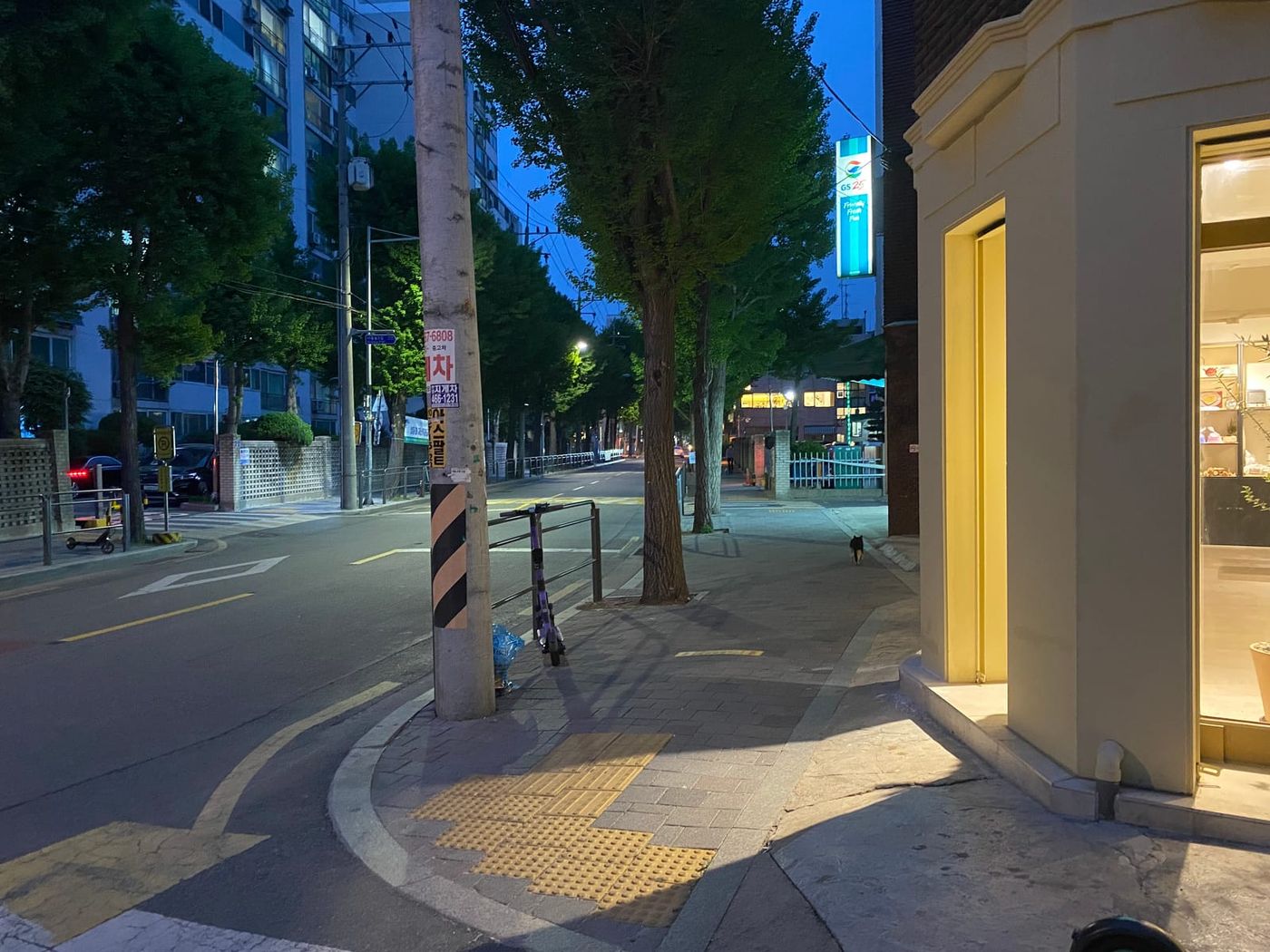
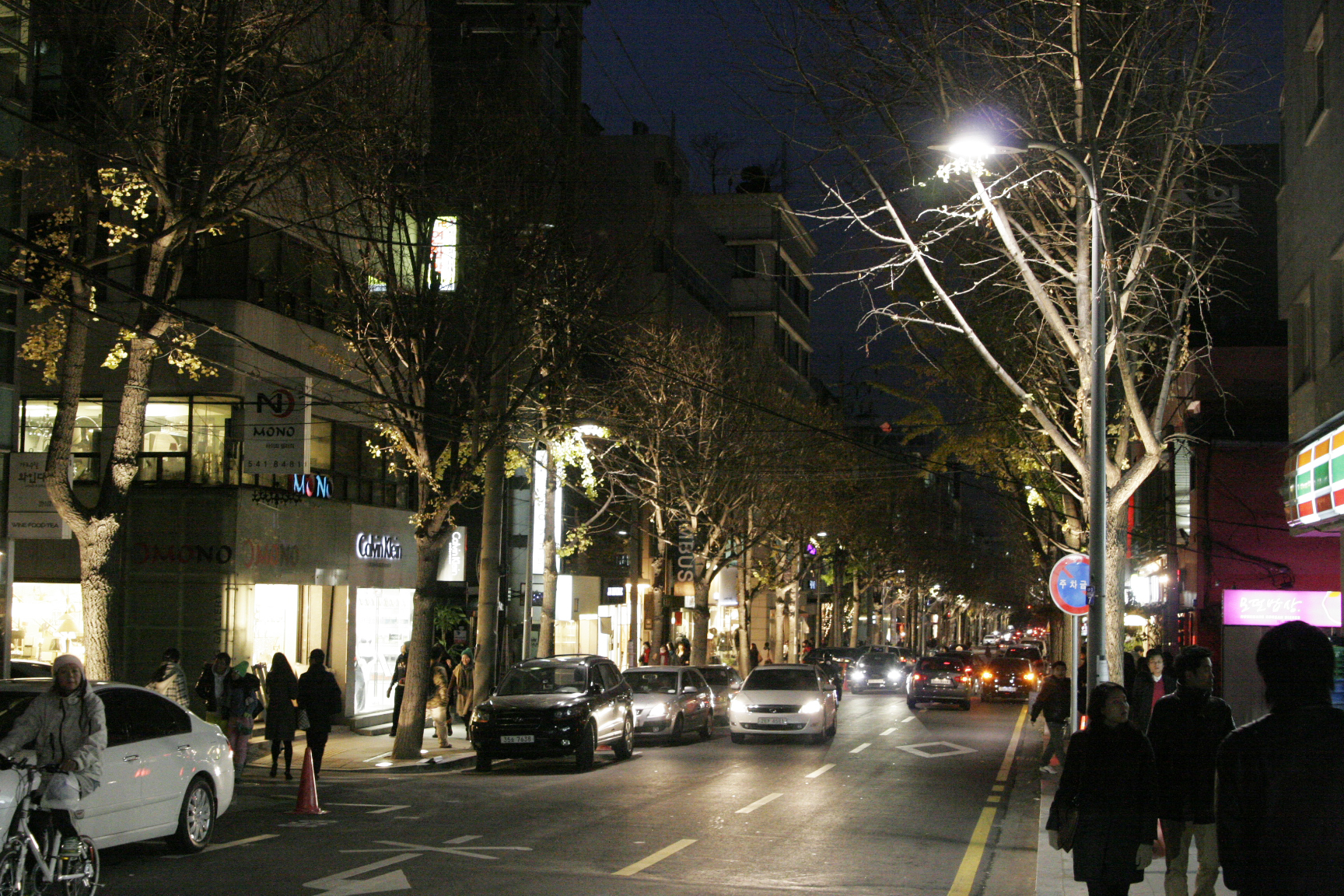
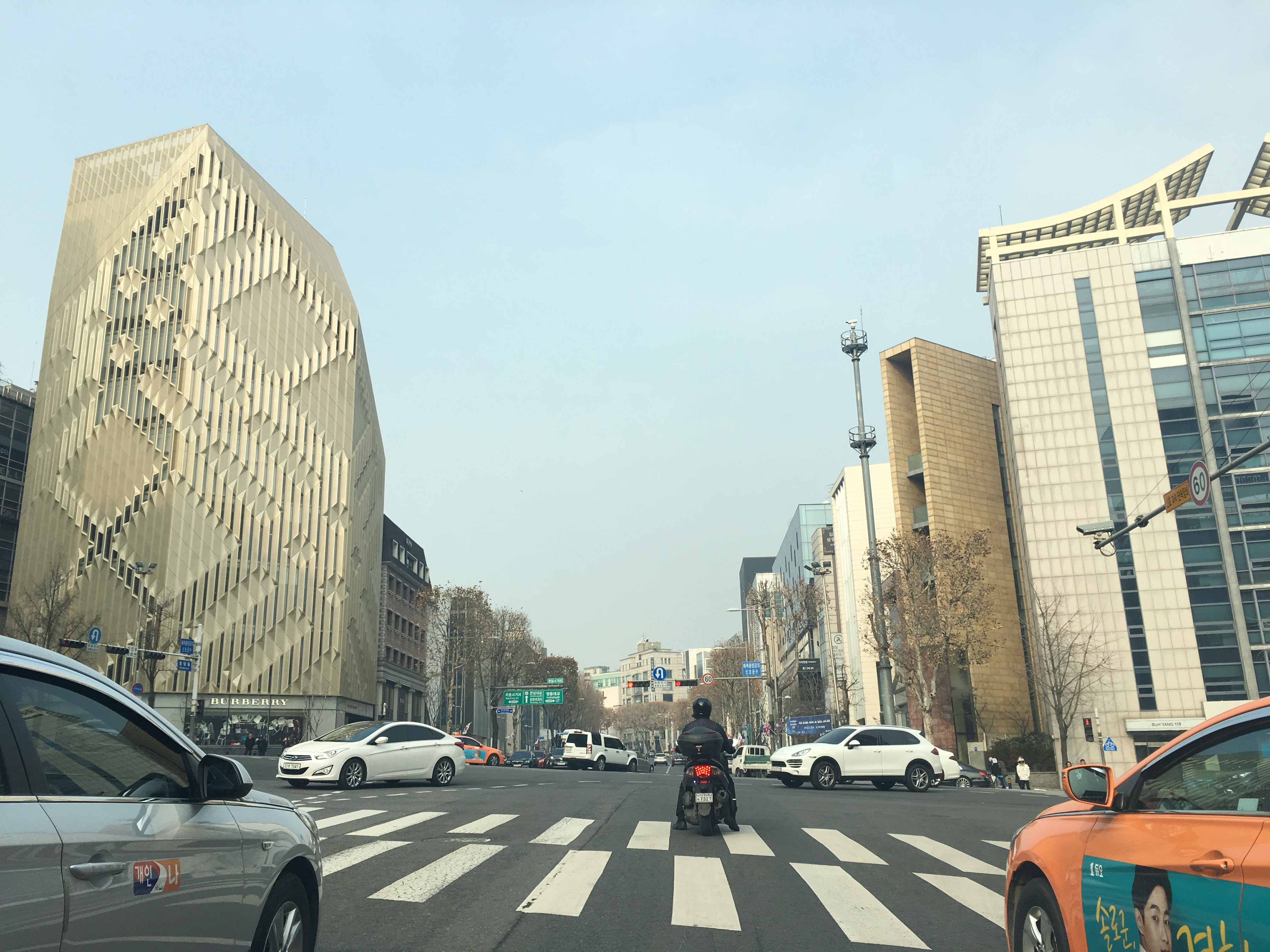
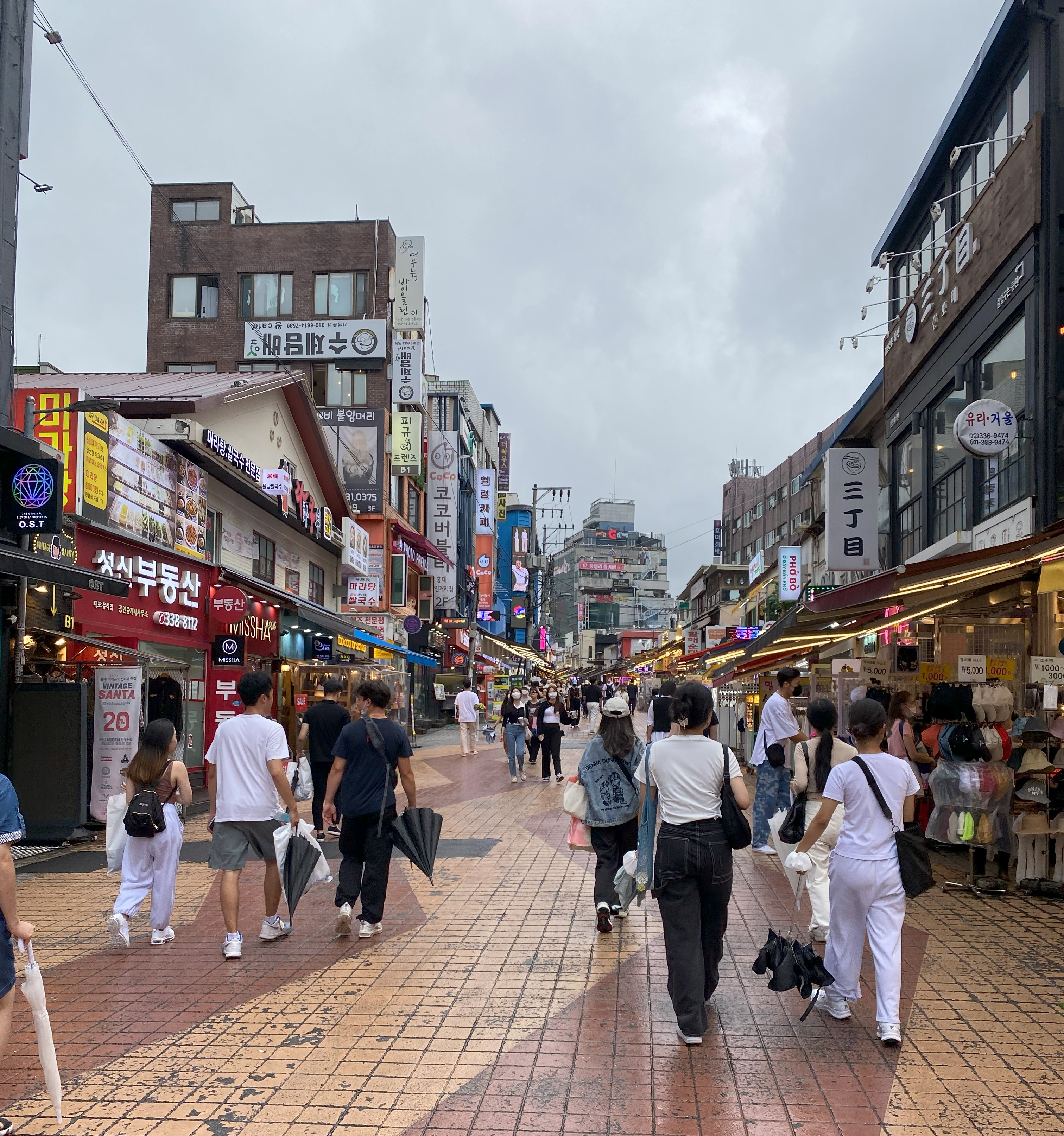
For this article, the reference images are Seoul neighborhood and shopping-context scenes rather than rehosted brand or person photos. That keeps the guide useful without implying that unknown people endorse it, and without relying on restricted media imagery. Where a photograph could not carry a fact, the fact is in the text with its source.
A One-Day K-Fashion Plan
- 10:30 — Coffee in Seongsu. Nothing is open yet; this is not a failure of planning, it is the schedule.
- 11:00 — Haus Nowhere Seoul, 뚝섬로 433. Start at 5F and work down if it is a weekend.
- 12:30 — Musinsa Megastore Seongsu, 성수이로 62. Fifteen minutes on foot. Lunch on 4F if needed.
- 14:30 — Hannam. Amomento at 이태원로 242, second floor, plus whatever the street offers.
- 16:30 — Apgujeong. Songzio's Galerie Noir first (압구정로42길 54, closes 20:00), then Haus Dosan (압구정로46길 50, closes 21:00).
- Evening — Garosu-gil or Cheongdam on foot, or stop. Six hours of concentrated retail is enough.
If you have a second day and want the opposite experience, spend it on secondhand rather than flagships. The Seoul vintage shopping guide covers Dongmyo, where the price ladder starts at ₩1,000 and the street stalls take cash only.
FAQ
Q: What time do K-fashion stores open in Seoul?
Mostly 11:00, and several of the best at 12:00. Haus Nowhere Seoul and Haus Dosan open at 11:00 and close at 21:00 and 20:00 respectively; Amomento's own stores open at 12:00; Songzio's Galerie Noir runs 11:00–20:00. Department store counters open earliest, around 10:30.
Q: Is Haus Nowhere the same as Haus Dosan?
No. Haus Nowhere Seoul is at 성동구 뚝섬로 433 in Seongsu and opened in September 2025; Haus Dosan is at 강남구 압구정로46길 50 in Apgujeong. They are on opposite sides of the river. Go to whichever is in the district you are already visiting.
Q: Where is the biggest Musinsa store?
무신사 메가스토어 성수, at 성동구 성수이로 62, opened 24 April 2026. Five floors from B1 to 4F, roughly 2,000 pyeong, about a thousand brands, with a food court on 4F.
Q: What is the minimum purchase for a Korean tax refund?
₩15,000 per receipt. Immediate in-store refunds are capped at ₩1,000,000 per transaction and ₩5,000,000 in total across your visit; above either cap you claim at the airport. Both caps doubled on 1 January 2024.
Q: How much do Musinsa Standard basics cost?
Roughly ₩10,000–30,000 for basics, but the platform runs near-continuous promotions and the same item can move by ₩10,000 within a week. Check the product page on the day rather than trusting a printed figure.
Q: Do I need to speak Korean to shop for K-fashion in Seoul?
No. The big flagships and Musinsa's own stores handle foreign customers routinely — foreign shoppers accounted for over 40% of Megastore Seongsu's transactions in its first fifty days. Smaller designer stores are quieter but used to visitors.
Q: Is Musinsa the same as K-fashion?
No. It is one lane — contemporary, streetwear, casual, platform-native. Designer houses, department stores, and secondhand markets are separate ecosystems with different prices and different etiquette.
Bottom Line
The brands in this guide have not changed much in two years. The map has. Two of the largest K-fashion spaces in Seoul opened in the last eighteen months, both north of the river in Seongsu, and a guide that still routes you through Myeongdong and Garosu-gil is describing a city that has moved.
Take the addresses, take the opening times, and accept that the day starts at eleven. Then let the shopping be the part you improvise.
Sources Checked
- Musinsa 2026 first-half results — revenue ₩821.7bn, up 22.5% year on year, a record half.
- Musinsa Standard offline figures, Q2 2026 — 41 domestic stores, sales up 64% year on year, offline visitors up more than 66% and past ten million in a quarter for the first time, overseas transaction value up 162%, 60-store target for the year.
- Herald Business, June 2026 — Megastore Seongsu's first fifty days (24 April – 13 June 2026): about ₩3bn of ₩7bn total transactions from foreign customers, 56% in the week to 13 June, and a 66% single-day peak on 9 June. The widely repeated "two-thirds" figure is that one day, not the average.
- Musinsa Megastore Seongsu opening coverage, April 2026 — 성수이로 62, opened 24 April 2026, B1–4F, roughly 2,000 pyeong, about 1,000 brands, 4F food court.
- Haus Nowhere Seoul — 성동구 뚝섬로 433, opened September 2025, 11:00–21:00, IICombined head office, floor mix and the weekend queue pattern from Korean visitor reports.
- Gentle Monster and Visit Gangnam listings — Haus Dosan at 강남구 압구정로46길 50, 11:00–21:00, no closing day.
- AMOMENTO official store list — Hannam (2F, 이태원로 242), Yulgok-ro (4F, 율곡로 1), Archive (1F, 자하문로11길 12, Wed–Sun only), Shinsegae Gangnam 5F, with hours as listed.
- SONGZIO official store page and opening coverage — Galerie Noir at 강남구 압구정로42길 54, 11:00–20:00, opened 4 May 2024, B1–4F, about 130 pyeong.
- Korean tourist VAT refund rules — ₩15,000 minimum per receipt; immediate-refund caps raised on 1 January 2024 from ₩500,000/₩2.5m to ₩1,000,000 per transaction and ₩5,000,000 in total.
Hours and addresses were checked in September 2026 against each brand's own channels where one exists. Pop-ups and store fits change faster than a guide can; confirm on the day before you cross the city.
You Might Also Like
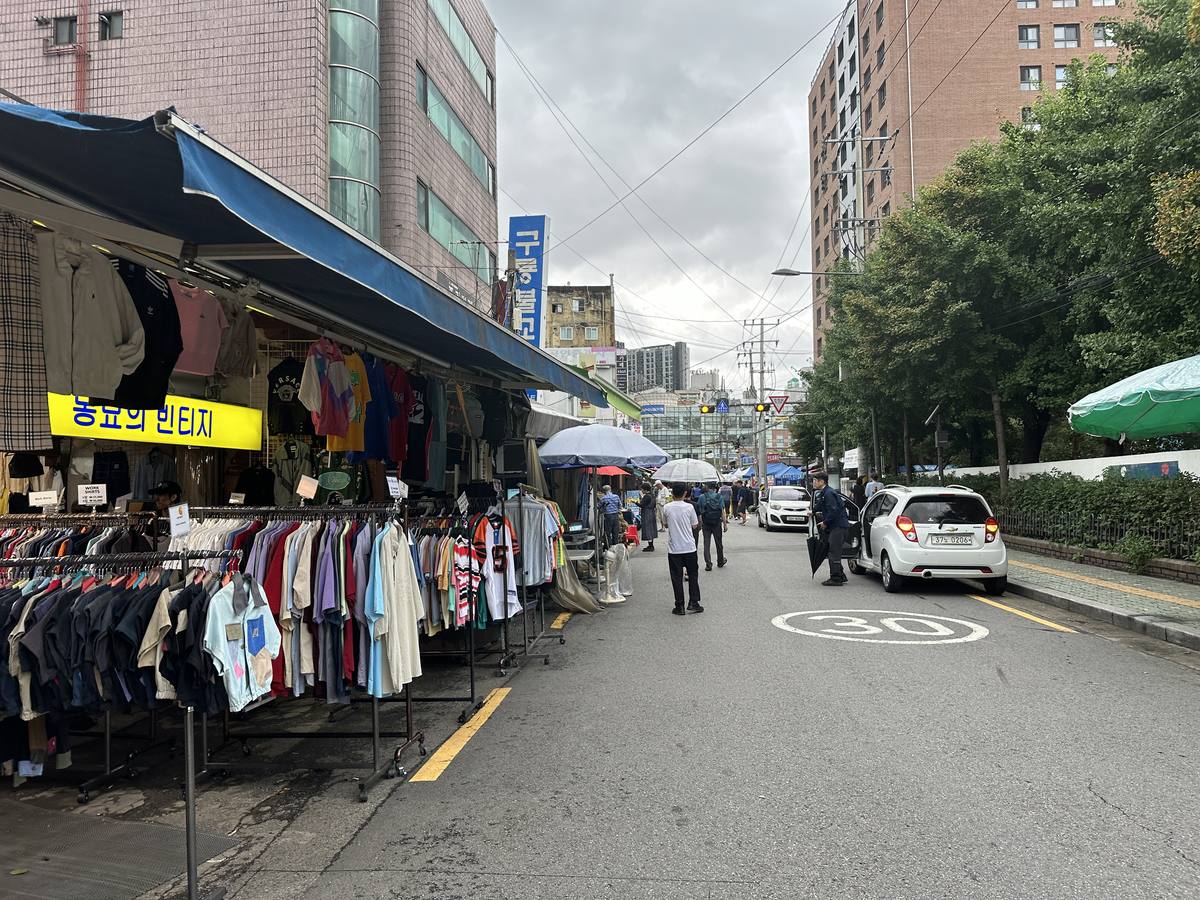
Seoul Vintage Shopping: What Dongmyo Costs and When to Go
Korean media wrote Dongmyo's secondhand market off as finished in late 2024. Then foreign shoppers arrived, and Seoul Metro now ranks 동묘앞 the city's biggest weekend jump of any station. Real stall prices, the restock day, and what to check.
Korean Color Contact Lens and Eyewear Shopping Guide 2026
A Korean color contact lens and eyewear shopping guide for 2026 covering safety, fit, Seoul stores, sunglasses, and tourist mistakes.
Korean Fragrance Shopping 2026: Seoul Perfume Guide
A Korean fragrance shopping guide for 2026 covering Seoul perfume routes, skin scents, Korean brands, testing, gifts, and tourist mistakes.