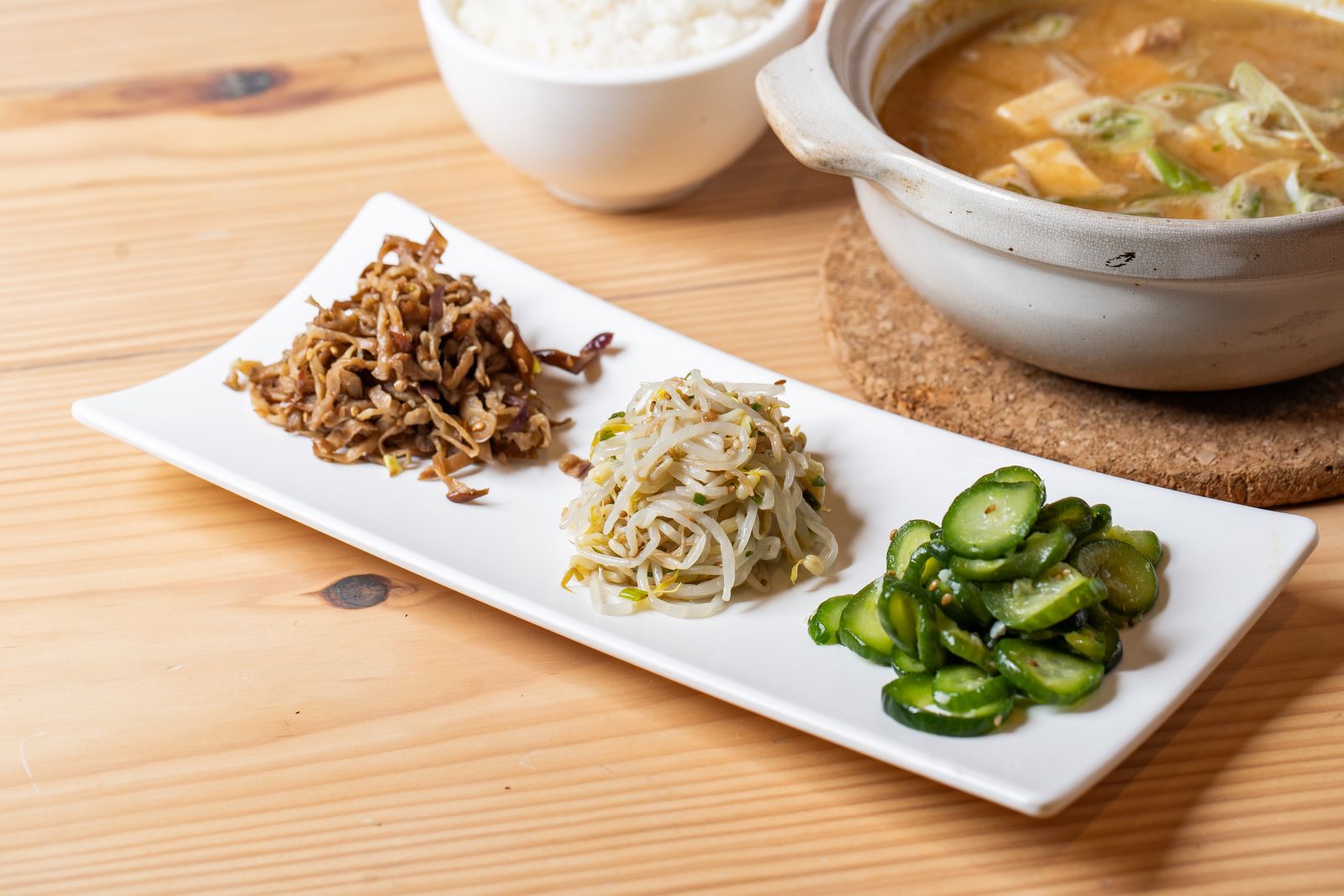
What Do Koreans Eat for Breakfast? 12 Real Meals, and Why a Third Skip It
What do Koreans eat for breakfast? The honest answer starts with a number most guides skip: about a third of Korean adults eat nothing at all. In the national health survey, breakfast-skipping ran to 35.2% of men and 32.8% of women, and it was highest among people in their twenties.
So the real answer is not one photogenic "traditional Korean breakfast." Some people eat rice, soup, kimchi and side dishes. Some buy gimbap or a hot bowl of gukbap. Others grab street toast, convenience-store food, yogurt, fruit, or only coffee. And a large minority — increasingly young and urban — skip the meal entirely.
The other difference from many Western breakfast cultures is that Korea does not draw a hard line around foods that are allowed in the morning. Rice, soup, stew, grilled fish and yesterday's side dishes can appear at 7 a.m. because they are normal meals, not special breakfast dishes.
This guide maps 12 real Korean breakfast foods, gives what each costs as of August 2026, and explains where travellers can actually find them before 9 a.m.
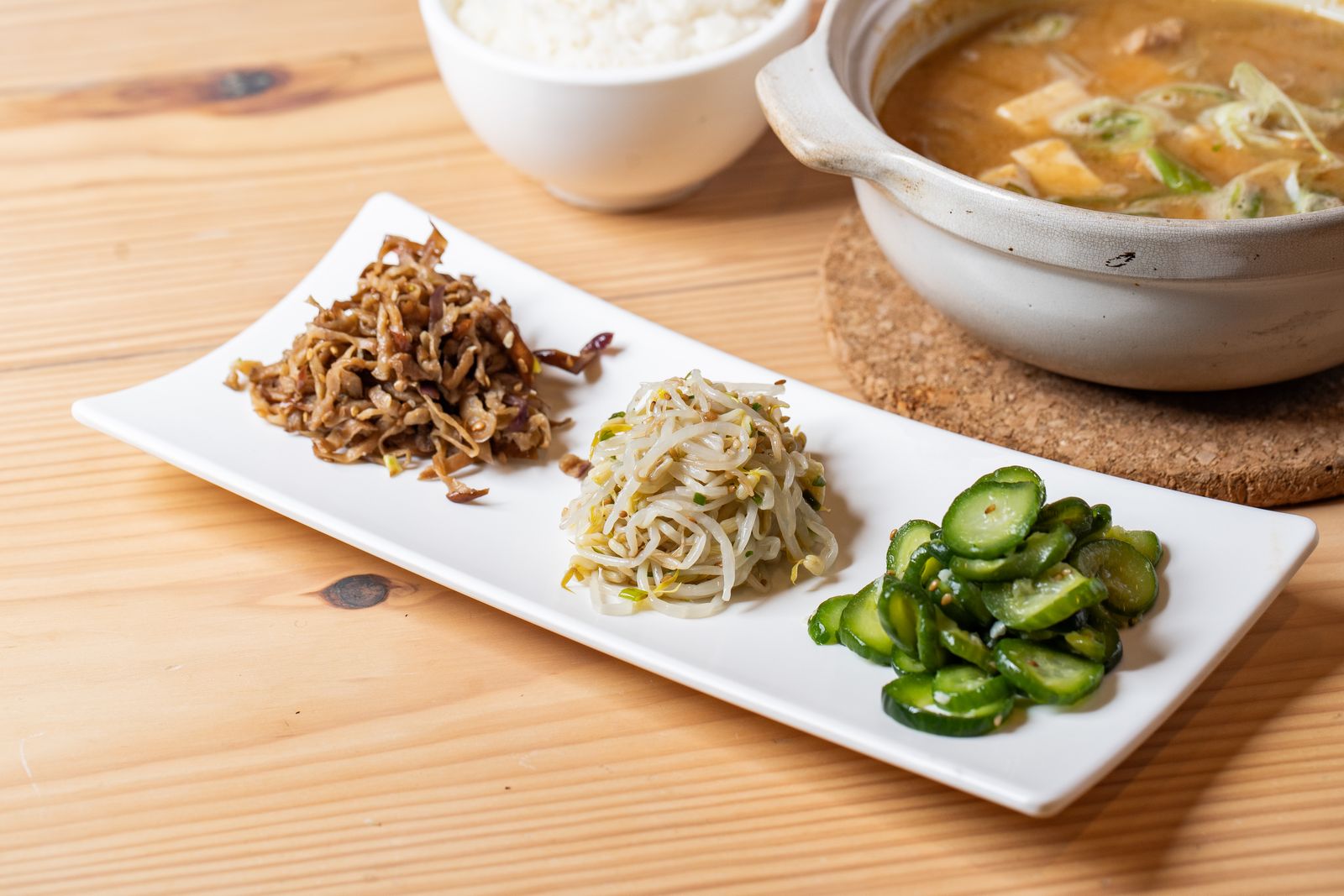
The rice under nine of these twelve breakfasts — CJ Hetbahn cooked rice, 12-count, on AmazonAffiliate link. As an Amazon Associate, EpicKor earns from qualifying purchases at no extra cost to you.
The Short Answer: What Do Koreans Usually Eat for Breakfast?
| Question | Answer |
|---|---|
| Is there one traditional breakfast? | No. The structure is 밥·국·반찬 — rice, soup, side dishes — the same as lunch and dinner |
| Do Koreans actually eat it? | Often not. ~1 in 3 adults skip breakfast, highest in their twenties |
| Cheapest real meal | Gimbap, ₩3,800 Seoul average |
| Sit-down set meal | Kimchi-jjigae baekban, ₩8,654 Seoul average |
| Gentle option | Juk (죽) — chain porridge from about ₩8,000, abalone near ₩18,900 |
| Fastest | Convenience store — see our breakfast basket guide |
| Biggest planning mistake | Assuming Seoul restaurants open early. Many do not |
Restaurant averages: Korea Consumer Agency 참가격 price index, Seoul, 2026.
What Korea's own survey says about breakfast
This is the part almost no English guide carries, and it changes how you should read the rest of the page.
Korea runs a national health and nutrition survey (국민건강영양조사) through the Korea Disease Control and Prevention Agency. Its most recent diet-quality release, published on 4 August 2026 and covering 2022–2024, scored adult diet quality at 58.6 out of 100 — essentially unchanged from the previous round's 58.9.
The age breakdown is the striking part:
| Age group | Diet-quality score (out of 100) |
|---|---|
| 20s | 50.3 — lowest of any age group |
| 30s | 52.8 |
| … | … |
| 70+ | 66.1 — highest |
Breakfast is one of the fourteen components that index is built from, and it is specifically one of the items where people in their twenties and thirties score below half marks, alongside whole grains, fruit, and saturated fat.
Read that together with the skipping rate — 35.2% of men, 32.8% of women, highest in the twenties — and a clear picture emerges. The full rice-and-soup table is real, and it is most reliably eaten by older Koreans. The younger and more urban the person, the more likely breakfast is a triangle gimbap, a coffee, or nothing.
That is not a decline story to be sad about. It is useful information: if you want to see the traditional table, you are more likely to find it in a baekban restaurant or a regional guesthouse than in a Seoul studio apartment.
What breakfast costs in Seoul, August 2026
The Korea Consumer Agency publishes an official price index (참가격) tracking common eating-out items by region. Seoul figures for 2026:
| Dish | Seoul average | Note |
|---|---|---|
| 김밥 gimbap | ₩3,800 | The cheapest real meal on this list |
| 김치찌개 백반 | ₩8,654 | Stew, rice and side dishes — the standard set meal |
| 자장면 | ₩7,731 | Not breakfast, included for scale |
| 칼국수 | ₩10,038 | Crossed ₩10,000 for the first time this year |
| 비빔밥 | ₩11,769 | |
| 냉면 | ₩12,615 | April 2026 figure |
Two things follow.
A sit-down Korean breakfast is now around ₩8,000–10,000. The "₩10,000 barrier" is a live topic in Korean media precisely because staples keep crossing it — kalguksu did this year.
Gimbap is the value anchor at ₩3,800, which is why it does so much of the work in real Korean mornings. Convenience-store options undercut even that; our convenience store breakfast guide has those prices item by item.
CJ Hetbahn cooked white rice, 12-count — the 210g bowl that is the default in Korean kitchens, and under most of the breakfasts below. Recreate the easiest morning first: rice, gim, a soup sachet and kimchi covers three of the twelve breakfasts on this list before you buy a single sauce. As an Amazon Associate, EpicKor earns from qualifying purchases at no extra cost to you.
See Hetbahn on Amazon1. Bap, Guk, and Banchan: The Classic Pattern
The classic Korean meal is built around 밥 (bap, rice), 국 (guk, soup) and 반찬 (banchan, side dishes). Breakfast historically followed the same structure as lunch and dinner rather than creating a separate morning menu.
A realistic home version is simpler than a hotel buffet: rice, soybean sprout soup, kimchi, a fried egg, one leftover vegetable side. Another household reheats doenjang jjigae or miyeokguk. If the birthday-soup meaning interests you, read our miyeokguk guide; if the side-dish rules are new, the banchan guide covers the table etiquette.
Do not call this automatically "healthy." A table can be rich in vegetables and fermented food and still carry high sodium — which is one reason the national index sits at 58.6 rather than somewhere comfortable. The cultural point is the structure: a neutral bowl of rice supported by soup and small savoury dishes.
Where to find it as a traveller: look for 백반 (baekban), the set-meal format, rather than searching "breakfast." A baekban restaurant serves exactly this pattern and averages ₩8,654 for the kimchi-jjigae version in Seoul.
2. Gukbap: Soup and Rice in One Working Breakfast
국밥 (gukbap) combines soup and rice, either pre-mixed or served alongside. Styles include beef, pork, blood sausage (순대국밥), bean sprout (콩나물국밥) and dried pollack.
It works in the morning because it is hot, filling and fast. Many gukbap houses open very early or run 24 hours, serving night-shift workers, market traders and people finishing a late night — which is why this is one of the few genuinely reliable pre-9 a.m. options.
Search the dish name (국밥) in Naver Map or Kakao Map rather than "breakfast." Searching in English hides restaurants that serve excellent morning food but never describe themselves as breakfast places.
3. Seolleongtang and Gomtang: Mild Broth, Rice, and Kimchi
설렁탕 (seolleongtang) is a milky ox-bone soup; 곰탕 (gomtang) is the broader family of long-simmered meat broths. Both come with rice and kimchi or kkakdugi.
They suit travellers who want a savoury Korean breakfast without a spicy base. Season at the table — most soup houses serve the broth deliberately under-salted so you finish it yourself with salt, pepper and spring onion.
Simple to order, but not light, and "clear-looking" does not mean vegetarian. Confirm the broth if you have dietary or religious restrictions. Our Seoul nopo restaurant guide covers the old soup houses, including Imun Seolnongtang, where this format has been served for over a century.
4. Haejangguk: Breakfast After a Late Seoul Night
해장국 (haejangguk) literally means the soup that clears a hangover. There are many versions — bean sprout, dried pollack, beef, and richer regional bowls.
You do not need to have been drinking. Its breakfast identity is about timing as much as function: hot broth, rice, salt, and a restaurant open when much of the city is still asleep.
Some versions contain blood curd (선지) or organ meat. Check the style before ordering — haejangguk is a category, not one mild universal soup. For the drink-shelf side of the same culture, our Korean hangover drinks guide covers what Koreans take before the night rather than after.
5. Juk: Korean Rice Porridge for a Gentle Start
죽 (juk) is rice porridge cooked until the grains collapse into something thick and mild. Restaurant varieties include abalone (전복죽), chicken, beef and vegetable, pumpkin (호박죽), red bean and plain.
Juk is associated with illness and recovery, but it is also an ordinary light meal — and for a jet-lagged traveller on the first morning it is far more manageable than a full soup-and-rice set.
Prices, August 2026: the dominant chain is 본죽 (Bonjuk), with branches across Seoul. Standard nutritious porridges run roughly ₩8,000–10,000, while abalone juk sits near ₩18,900 and premium versions climb toward ₩23,000. That spread surprises people — juk looks humble, and abalone is not.
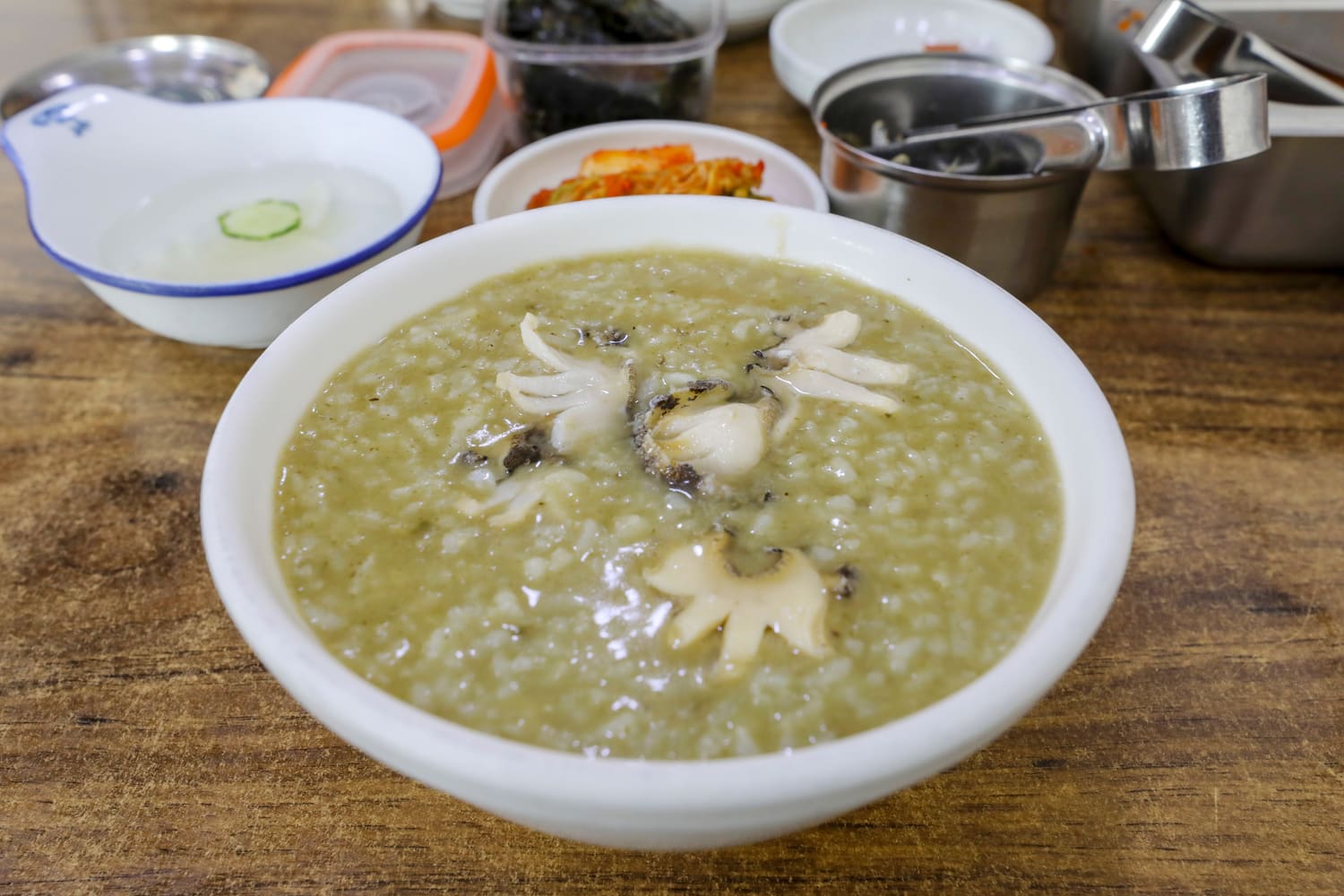
Do not assume any porridge is vegetarian. Broth, meat, seafood or fish sauce turn up even when a bowl looks plain. Ask when allergies or dietary rules matter.
6. Gilgeori Toast: Korea's Sweet-Savoury Street Breakfast
길거리 토스트 (gilgeori toast) means street toast. The standard build presses a cabbage-and-egg omelette between buttered slices, then adds sugar, ketchup, mayonnaise, and often cheese or ham.
The sweet-salty balance is the point. Visitors expecting a Western egg sandwich are startled by sugar and ketchup on the same slice — that contrast is the dish, not a mistake. Korea Tourism Organization material describes it as finely chopped cabbage with omelette, sugar, ketchup and mayonnaise, popular as a cheap filling snack for students and office workers.
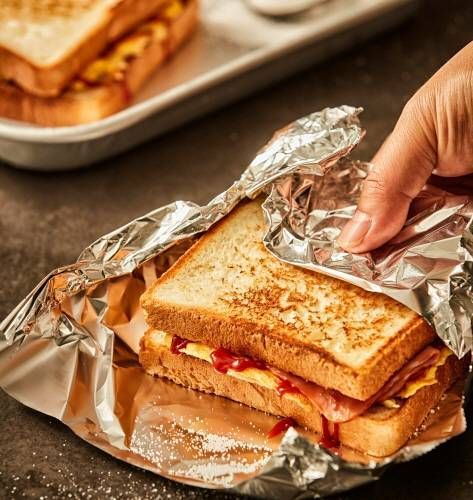
Prices: independent street stalls remain the cheap route. The franchise version, 이삭토스트 (Isaac Toast), runs from a few thousand won for a basic ham-and-cheese to about ₩8,700–9,500 for a premium brioche set. Our Isaac Toast sauce guide breaks down the menu and the signature sweet sauce.
Street stalls do not all operate all day, and famous branches attract queues. If a specific stall is the plan, check its current location before you build a morning around it.
7. Gimbap: The Dependable Early-Morning Roll
김밥 (gimbap) is rice and fillings rolled in gim seaweed. It is not a breakfast dish, which is exactly why it works as one — gimbap shops prepare rolls early for commuters, students and hikers.
At a Seoul average of ₩3,800, it is the cheapest complete meal in this guide. Budget chains like 김밥천국 (Gimbap Cheonguk) run cheaper still and often 24 hours, though prices vary a lot between franchisees; premium chains charge noticeably more for better ingredients.
Fillings include egg, pickled radish, carrot, spinach, fish cake, ham, beef, tuna or cheese. Vegetarian-looking rolls routinely contain fish cake, egg or ham — ask rather than guess.
For a train morning, gimbap is neat, shareable and quick. Buy from a busy shop and eat it reasonably soon; rice rolls are not built to spend a summer day in a backpack. For the wider food map, seven everyday Korean favourites sets gimbap beside jjajangmyeon, bossam and sundubu-jjigae.
8. Samgak Gimbap: The Convenience-Store Shortcut
삼각김밥 (samgak gimbap) is a triangle rice ball wrapped so the seaweed stays dry and crisp until you open it. Fillings run from tuna mayo and kimchi to beef, chicken and seasonal collaborations.
It is Korea's most efficient breakfast: cheap, portable, and stocked within a minute of most subway exits and hotels. Add a boiled egg, soy milk, yogurt, banana milk or bottled coffee if rice alone is not enough.
Our convenience store breakfast guide covers the numbered wrapper, the microwave area, the current prices, and workable combinations at CU, GS25, 7-Eleven and Emart24. That page also explains the promotion tags — and our 1+1 guide explains why the "save the free one for later" trick does not work for most visitors.
9. Kimchi Fried Rice and Leftovers
Breakfast at home does not need to look ceremonial. Leftover rice becomes 김치볶음밥 (kimchi bokkeumbap), usually with a fried egg on top. Yesterday's soup returns with fresh rice. A few banchan go on the table without anything new being cooked.
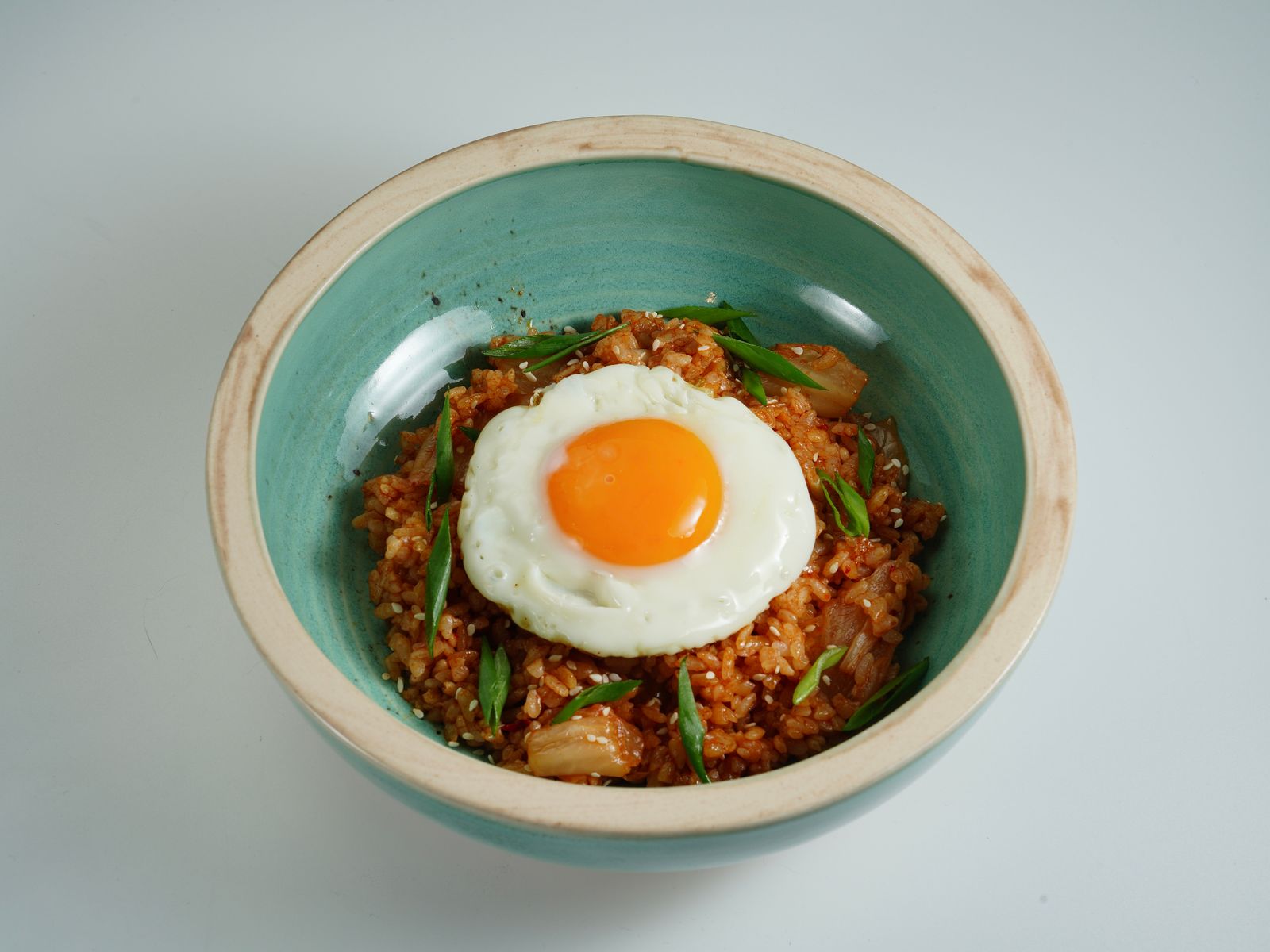
This is a truer picture of domestic life than twelve fresh side dishes every morning. Korean food culture values variety, but weekday breakfast is shaped by time, leftovers, school runs and who is willing to cook — which is exactly what the national survey scores measure.
10. Egg, Gim, and Rice: The Minimal Home Set
A fried egg over rice with 김 (gim) seaweed is a breakfast almost anyone can assemble in minutes. Soy sauce, sesame oil, kimchi or one leftover side make it feel complete without building a spread.
This is also the best starting point for trying Korean breakfast at home. Learn how rice, egg, gim and one strong condiment work together before buying appliances. Our Korean gim guide separates snack sheets from the larger gimbap sheets and explains why the seasoning changes how each behaves.
11. Bread, Bakery Sandwiches, and Yogurt
Modern Korean breakfast also looks familiar: toast, packaged bread, an egg sandwich, yogurt, fruit, cereal, or a bakery item with coffee. Korea's density of bakeries, cafes and convenience stores makes this the path of least resistance.
Korean bakery bread leans soft and mildly sweet — red bean buns, castella, cream bread, croissants, sandwiches and seasonal items. If your morning starts at a convenience-store cold shelf, our Viyott yogurt guide explains that small topping yogurt; if it starts at a cafe counter, the iced Americano guide explains Korea's year-round default.
A traveller should not dismiss a bakery breakfast as "not authentic." Authentic morning life includes people choosing what is fast, close, affordable and edible on a commute.
12. Coffee Only — and Skipping Breakfast
Some Koreans have coffee and nothing else. Many have nothing at all. This is the section the survey numbers at the top of this page belong to.
Long commutes, late nights, dieting, school schedules and convenience all push the same direction. Travel content often presents a full Korean table as if every office worker simmers soup before sunrise. The table is culturally real; it is not universal daily behaviour, and the national data says so plainly.
If coffee is your breakfast, Korea offers bottled convenience-store coffee, cafe Americanos, instant mix and specialty shops. Our Korean instant coffee mix guide covers the sweeter office-and-home tradition behind brands such as Maxim.
Where to Eat Breakfast in Seoul Before 9 A.M.: The Chains and Districts That Open Early
Seoul is full of food, but most restaurants open at 11:00, and cafés often open later than travellers expect (our restaurant hours guide explains the whole day). What is reliably open at 07:00 is a short list, and it is worth knowing by name.
- Gukbap and seolleongtang houses, especially the 24-hour ones near markets and office districts. The soup alley between Jongno 3-ga Station and Insadong is serving by 06:30; Seomyeon in Busan runs pork-rice soup around the clock.
- Juk chains. Bonjuk (본죽) branches mostly open between 08:00 and 09:00; the Myeongdong porridge house Migabon (미가본), a Michelin Bib Gourmand, opens early and is the tourist-district answer.
- Kimbap shops. Kimbap Cheonguk (김밥천국) and its imitators open by 06:00 or run 24 hours, though fewer branches keep the overnight shift than the sign claims.
- Toast. Isaac Toast (이삭토스트) branches open at 07:00 or 08:00; the independent street-toast stalls near universities and stations start with the commute.
- Fast food. McDonald's runs the McMorning menu from 04:00 to 10:30; Lotteria and Burger King have morning menus from about 07:00.
- Convenience stores and bakeries, everywhere, from before dawn; Paris Baguette and Tous Les Jours open around 07:00 to 08:00.
Then use this sequence:
- Search the dish in Korean, not "breakfast": 죽, 국밥, 설렁탕, 해장국, 김밥, 백반, or 토스트.
- Check today's hours in Naver Map or Kakao Map — Korean map apps carry accurate per-branch hours where Google often does not.
- Favour the categories that open early by nature: gukbap and seolleongtang houses, gimbap shops, and 24-hour convenience stores.
- Keep a convenience store or bakery as the backup. There is one within a few minutes almost everywhere.
- For an early KTX departure, buy before the platform. Station food is limited early.
| Your morning | Best choice | Search in Korean | Rough cost | Backup |
|---|---|---|---|---|
| Jet-lagged, not hungry | Juk | 죽 / 전복죽 | ₩8,000–18,900 | Yogurt and banana |
| Cold day, heavy walking | Gukbap or seolleongtang | 국밥 / 설렁탕 | ~₩10,000+ | Microwave rice meal |
| Early tour or airport transfer | Gimbap | 김밥 | ₩3,800 | Triangle gimbap |
| First fun Korean breakfast | Street toast | 길거리 토스트 | a few thousand won | Isaac Toast branch |
| Want the classic table | Baekban set | 백반 | ₩8,654 avg | Hotel Korean set |
| Familiar and light | Bakery and coffee | 베이커리 / 카페 | varies | Convenience-store bread |
What Do Koreans Eat for Breakfast, Lunch and Dinner?
The same structure three times, at three price points. Breakfast is the meal most often skipped or shrunk; lunch is the meal Korea eats out, in a set (정식) or a one-bowl dish; dinner is where the meat, the grill and the drinks live.
| Meal | Typical at home | Typical eating out | Seoul price, 2026 |
|---|---|---|---|
| Breakfast (아침) | Rice, soup, kimchi and two or three banchan; or egg, gim and rice; or nothing | Gukbap, juk, gimbap, street toast, convenience store | ₩3,800 (gimbap) to ₩10,000 (soup) |
| Lunch (점심) | Rare on weekdays; leftovers | Set lunch (점심 특선), kimchi-jjigae or doenjang-jjigae baekban, naengmyeon, a noodle bowl, a company cafeteria | ₩8,654 (kimchi-jjigae baekban average) to ₩15,000 |
| Dinner (저녁) | Rice, a stew and banchan, the fullest home table of the day | Barbecue (samgyeopsal, galbi), fried chicken, jjigae, a shared pot; drinks with it | ₩15,000 to ₩25,000 a head for a grill; chicken about ₩20,000 a bird |
The point that surprises visitors is that no dish belongs to a time of day. Yesterday's stew is breakfast, and gukbap is as normal at 07:00 as at 23:00. Our Korean food prices guide tracks what each of these costs month to month.
Build a Korean Breakfast at Home
Start with one of three systems rather than copying a feast.
The rice system is rice, egg, gim, kimchi and one soup. The porridge system is juk with one salty or sour side. The toast system is bread, cabbage-and-egg, cheese or ham, and a sweet-savoury sauce.
Use a rice cooker only if it improves your normal week, not because a Korean breakfast article made it feel mandatory — our rice cooker guide covers when the appliance earns its counter space, and the pantry starter kit puts sauces and staples in a sensible buying order. Freeze rice in meal-size portions, keep gim sealed against humidity, and pick one or two banchan you will actually finish.
Kewpie Japanese-style mayonnaise — the street-toast route, with a pan you already own. The cabbage-and-egg filling and the sweet-salty balance matter far more than equipment; Kewpie plus a little sugar on the griddle reproduces the stall, and no single-use press does it better. As an Amazon Associate, EpicKor earns from qualifying purchases at no extra cost to you.
See Kewpie mayo on AmazonYou might like: What Time Do Restaurants Close in Korea? Closing Times, Break Time, Last Order and Monday Closures
You might like: 18.9 Million Visitors Told Korea What They Couldn't Find: The Official Exit Survey, and the Answers to All Four Gaps
FAQ About Korean Breakfast
Q: How many Koreans skip breakfast?
About one in three adults. Korea's national health and nutrition survey recorded breakfast-skipping at 35.2% of men and 32.8% of women, highest among people in their twenties. The most recent diet-quality release, published 4 August 2026, scores people in their twenties lowest of any age group at 50.3 out of 100, with breakfast one of the specific weak components.
Q: What does a Korean breakfast cost?
As of August 2026, Seoul averages from the Korea Consumer Agency price index: gimbap ₩3,800, kimchi-jjigae set meal ₩8,654, kalguksu ₩10,038. Chain porridge runs about ₩8,000–10,000, with abalone juk near ₩18,900. Convenience-store combinations cost less than all of these.
Q: Do Koreans eat kimchi for breakfast?
Yes, kimchi appears with rice-based morning meals, soups, porridge and leftovers. Not every person eats it every morning.
Q: Is there a special traditional Korean breakfast?
No separate menu. Korean breakfast follows the general meal pattern of rice, soup and side dishes, and almost nothing on the table is morning-only.
Q: What is the best Korean breakfast for tourists?
Choose by appetite: juk for something gentle, gukbap for a full hot meal, gilgeori toast for a portable signature experience, gimbap for an early travel day, or a baekban set if you want the classic table.
Q: What do Koreans eat for breakfast, lunch and dinner? The same rice-soup-banchan structure at all three, with breakfast the smallest or skipped, lunch eaten out as a set or a bowl for ₩8,000 to ₩15,000, and dinner the meal with meat, a grill and drinks. No dish is reserved for a time of day.
Q: What time does breakfast start in Seoul?
There is no single time. Gukbap, seolleongtang and gimbap shops often open very early or run 24 hours, while cafes and many restaurants open later. Check the branch in a Korean map app rather than assuming.
Q: Is Korean breakfast spicy?
It can be, but it does not have to be. Juk, seolleongtang, gomtang, egg, rice, gim and bakery foods are mild. Kimchi and some soups add heat.
The Real Korean Breakfast Is a System, Not a Menu
The most accurate answer to "what do Koreans eat for breakfast?" is a range — and, increasingly, a gap. Korea has the full rice-and-soup tradition, and it also has porridge chains, toast stalls, gimbap shops, bakeries, cafes, convenience stores, and about a third of adults who eat nothing before lunch.
Try one hot bowl, one portable breakfast and one convenience-store combination during your trip. Between them you will learn more about Korean daily life than chasing a single perfect "traditional" table that a lot of Koreans are not eating either.
Official and Reliable Sources
- Korea Tourism Organization: Street Food Loved by Koreans
- Korea Tourism Organization: Korean winter street snacks, including gilgeori toast
- Ministry of Foreign Affairs: Korean food and living culture
- Korea Consumer Agency 참가격: eating-out price index
- Diet-quality and breakfast-skipping figures: Korea Disease Control and Prevention Agency, 국민건강영양조사 (KNHANES). Diet-quality index from the 9th-round release covering 2022–2024, published 4 August 2026; skipping rates from the survey's 2022 results. Chain prices from published menu listings, checked August 2026.
You Might Also Like
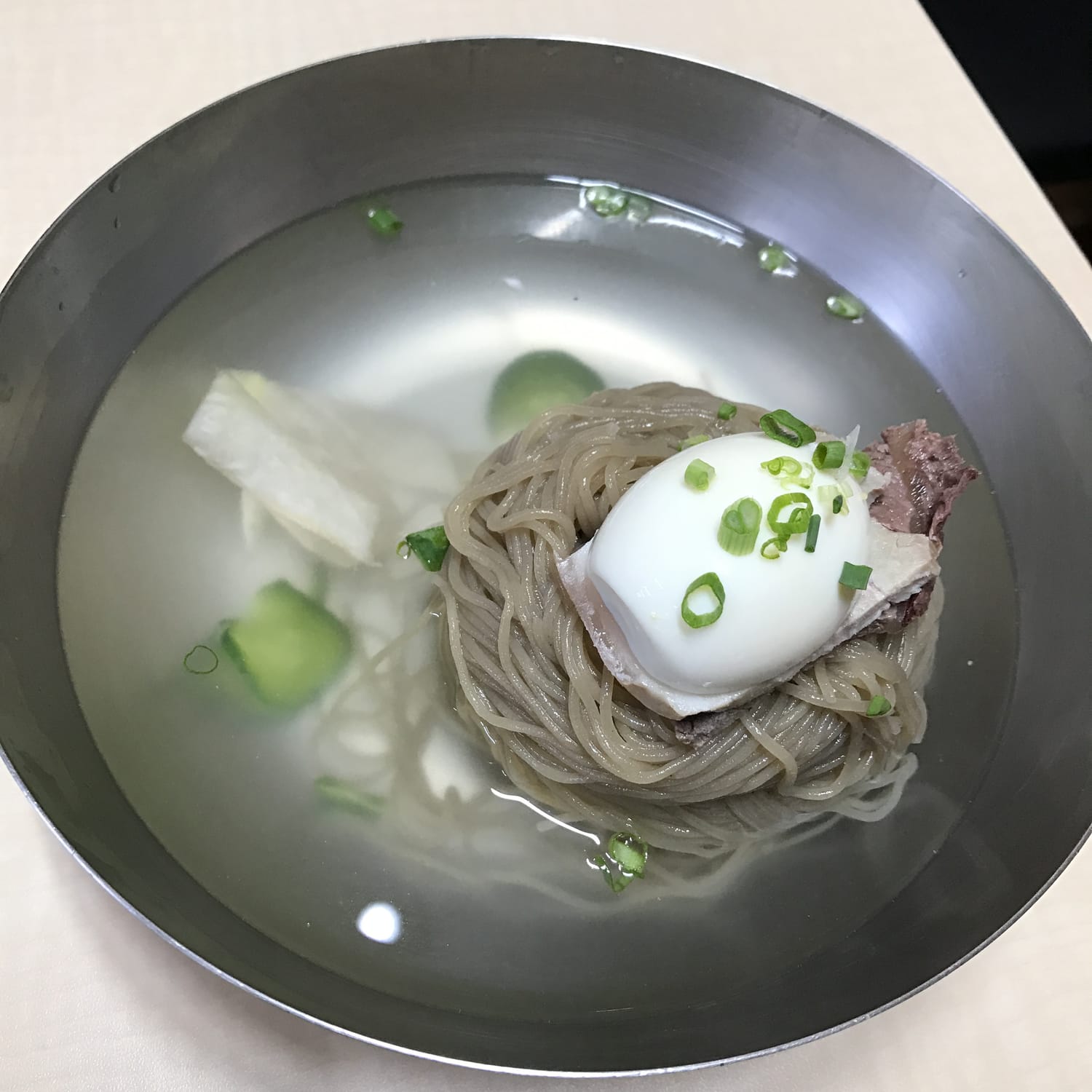
The One Korean Food Foreigners Never Learn to Love: Hamheung Naengmyeon, and Why Koreans Can't See the Problem
Foreigners who eat cheonggukjang and even hongeo still will not pay for this twice. A Korean creator who fed foreigners for years says naengmyeon was the overwhelming number one refusal, and Koreans, who rank it first every summer, cannot see why.
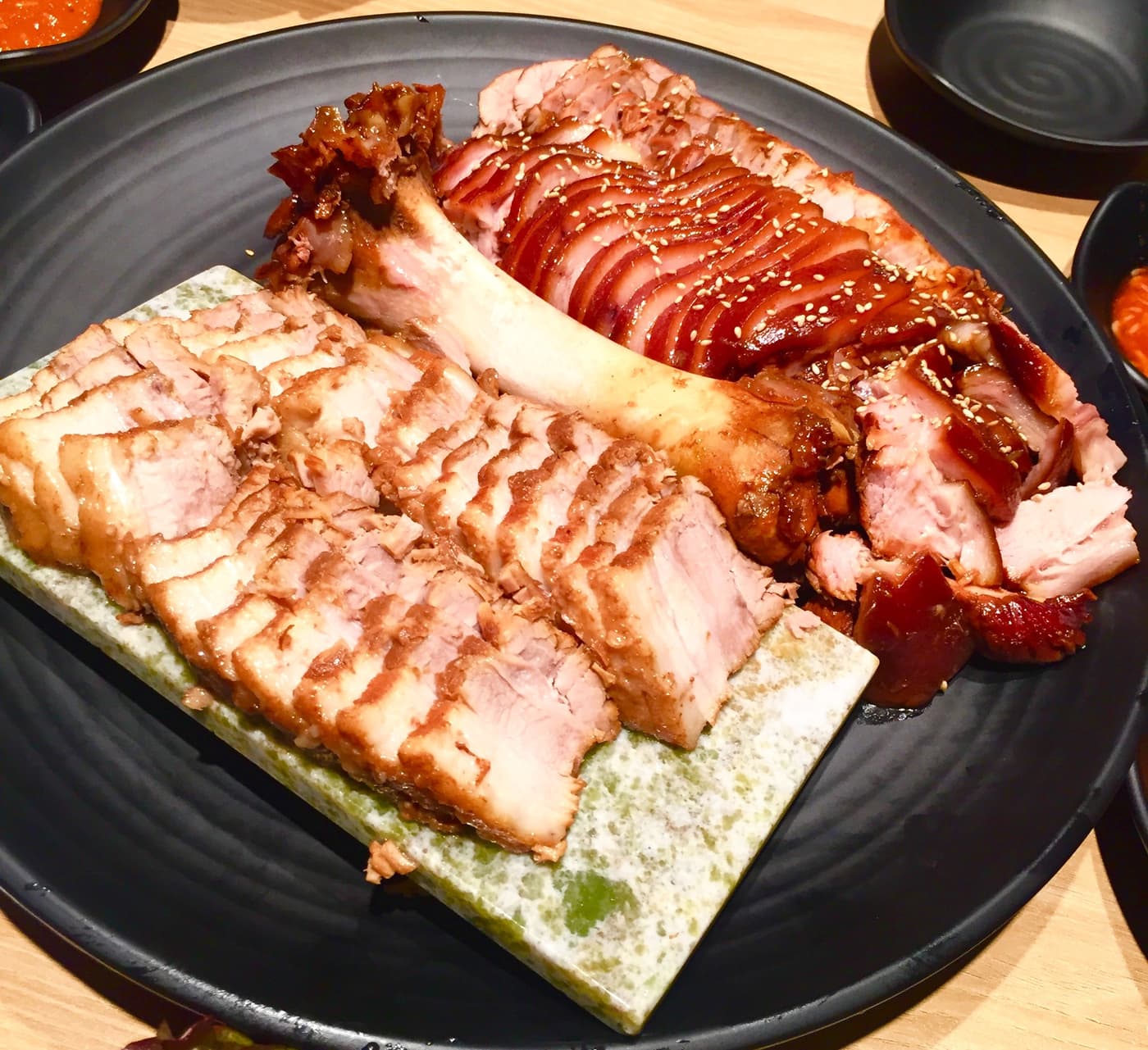
Jokbal vs Bossam: Which Korean Pork Dish Should You Order?
Jokbal and bossam share a menu, a price, and the same side dishes — but one is soy-braised trotter and the other is plain-boiled belly. Which to order, what a portion costs in August 2026, and why they are always sold together.
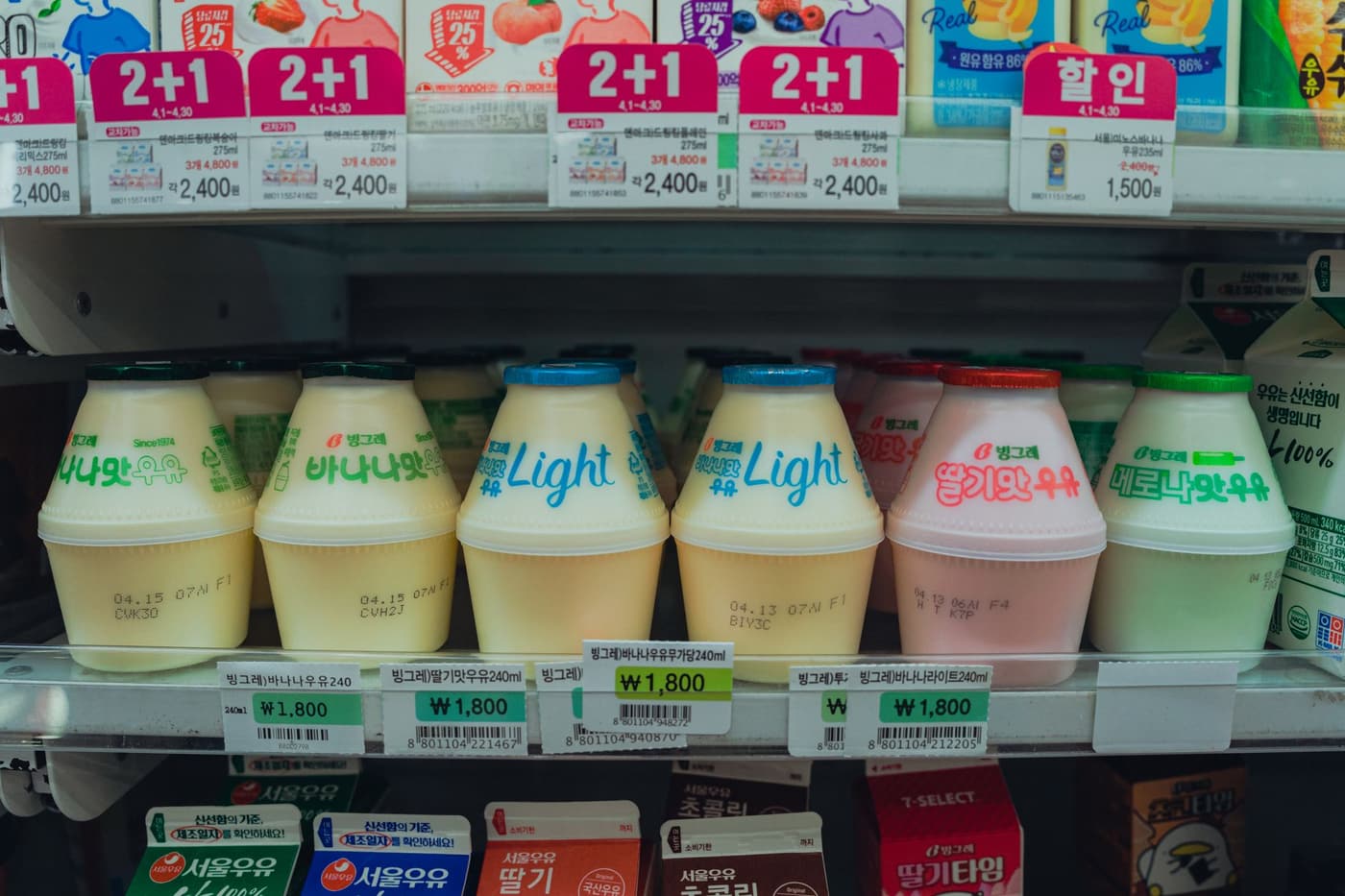
Korean Convenience Store Breakfast: What Locals Buy at CU, GS25 and 7-Eleven, and What It Costs
A Korean convenience store breakfast costs ₩3,000–5,000: tuna-mayo triangle gimbap ₩1,200, egg sandwich ₩2,800, banana milk ₩1,800 at CU in October 2026. What locals buy before 9 a.m., how to heat it and how to pay.