Pojangmacha Guide: Korean Street Tent Food and Etiquette
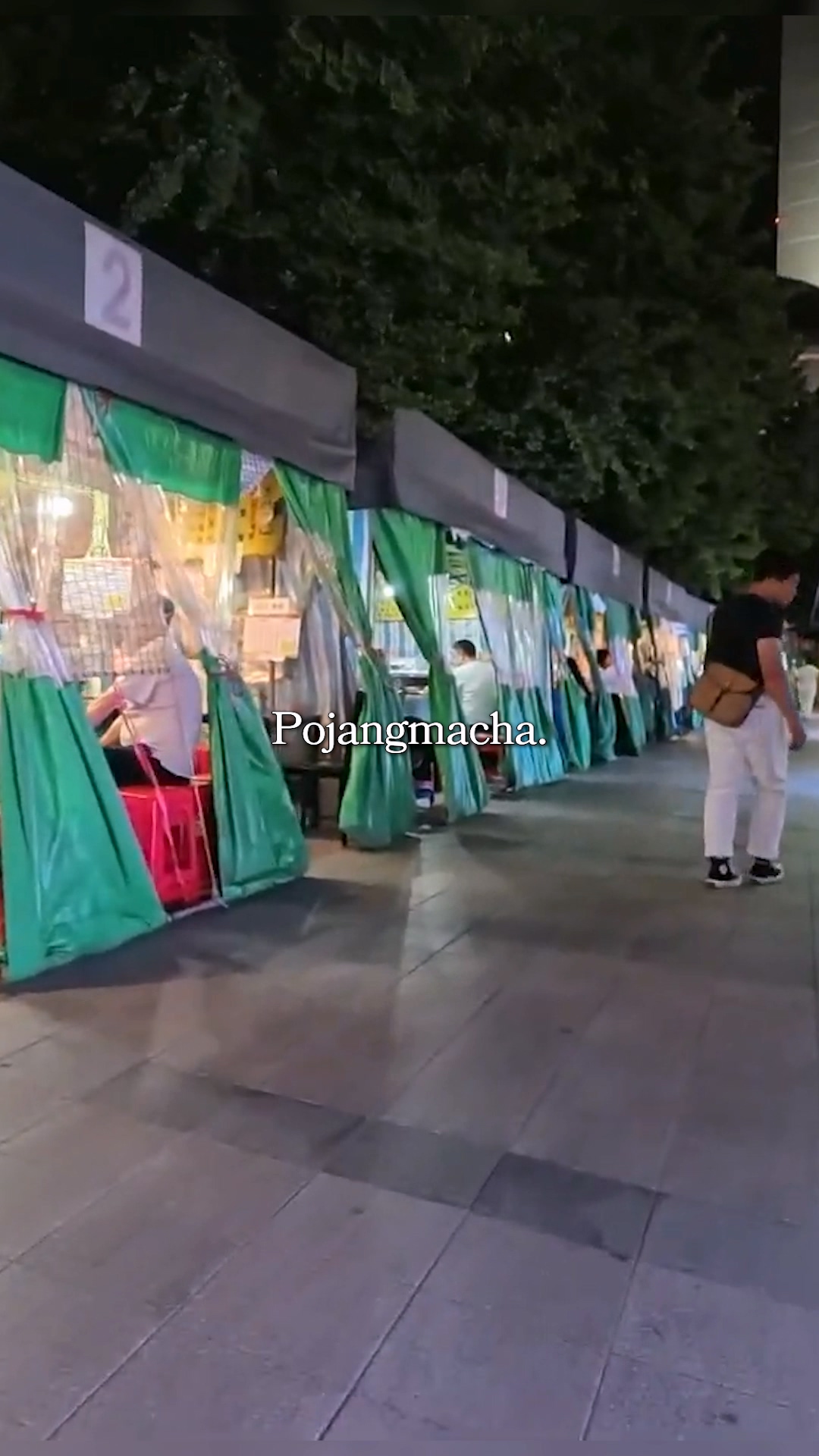
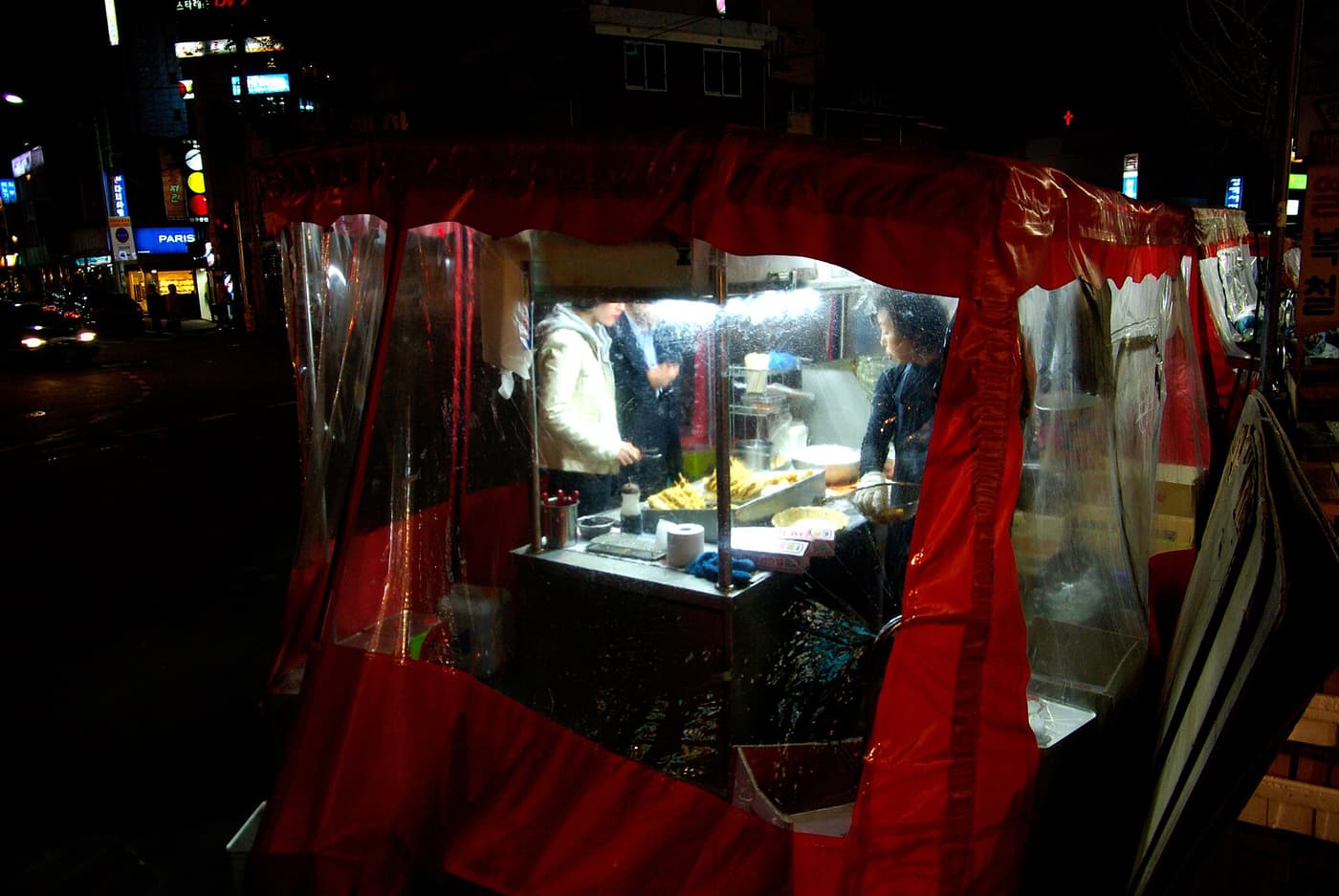
Pojangmacha is one of Korea's most recognizable night scenes: plastic tents glowing on the sidewalk, steam from fishcake broth, small tables, soju bottles, spicy food, and people talking a little more honestly than they might in a polished restaurant. In Korean, pojangmacha means a covered wagon or covered cart, but the modern travel meaning is simpler: a temporary street tent or stall where people eat warm snacks and drink casually, especially at night.
If you have seen a Korean drama scene where characters sit under an orange or red tent after a hard day, that is the image. But real pojangmacha is not only drama romance. It is also street-food logistics, cash/payment uncertainty, alcohol etiquette, shared space, local licensing realities, cold-weather comfort, and menus that can surprise first-time visitors.
This guide explains how to enjoy a pojangmacha without turning the experience into a performance. You will learn what to order, how much to expect, how to behave, where the classic Seoul mood appears, and when an indoor pocha may be a better choice.
Korean ramen cooking pot — compare on AmazonAffiliate link. As an Amazon Associate, EpicKor earns from qualifying purchases at no extra cost to you.
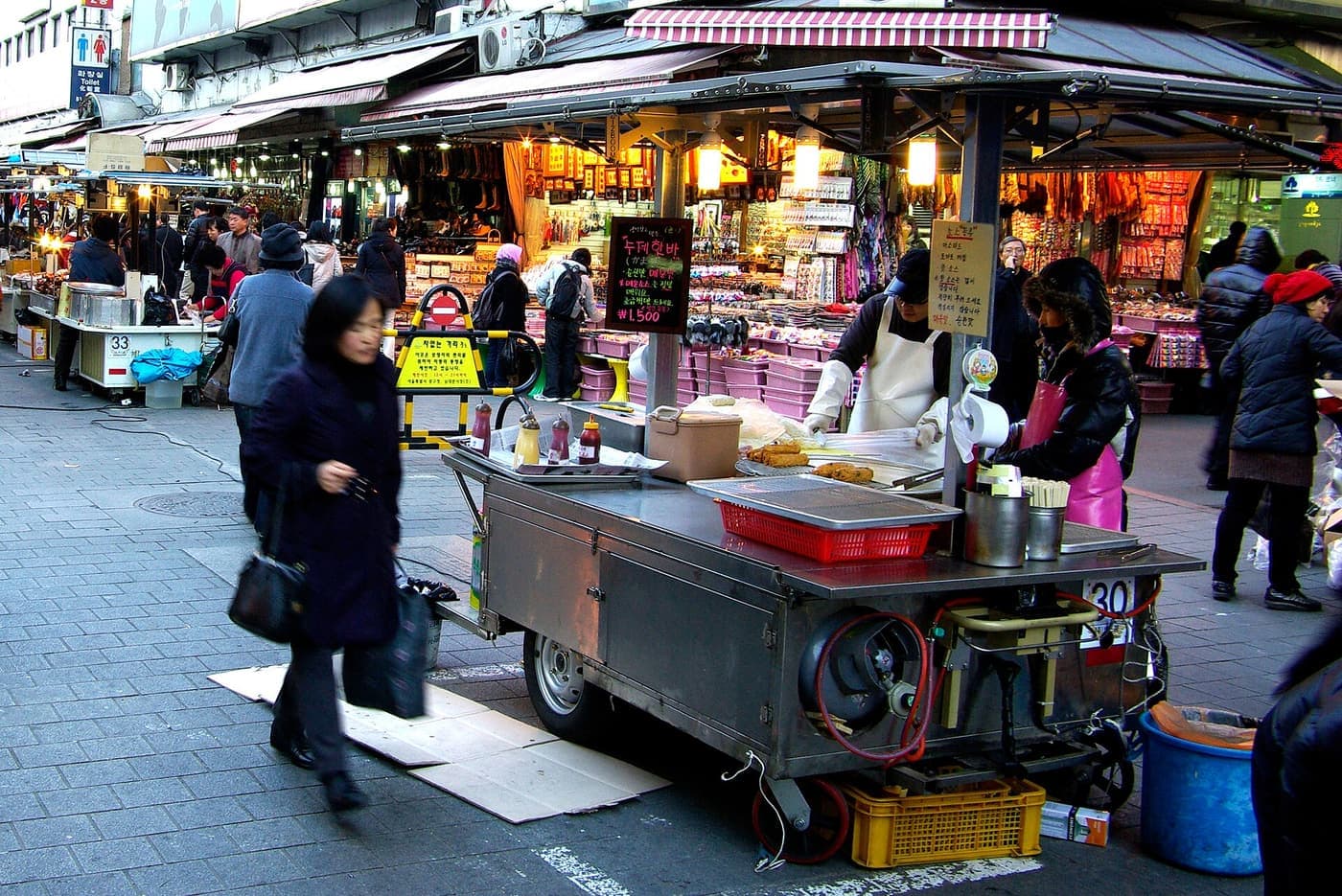
A street cart in Seoul, prices chalked on a board. This is the daytime, standing-up end of the pojangmacha spectrum. Photo by LinasD, CC BY-SA 4.0.
This is EpicKor's original pojangmacha post. The updated guide, with 2026 prices, the Jongno 3-ga exit and the current tent rows, is Korean Pojangmacha Guide: What a Pojangmacha Is, Seoul's Tent Bar Rows, the Menu and Prices.
Quick Answer: What Is a Pojangmacha?
A pojangmacha is a Korean street-food tent or temporary stall, usually associated with late-night eating and drinking. Korea.net's K-InfoHub describes night markets and pojangmacha as part of Korea's distinctive street-food culture, with pojangmacha operating mainly at night and serving simple warming foods such as fishcake soup, tteokbokki, sundae, ramyeon, gimbap, soju, and makgeolli. It also frames them as working-class, social, unpretentious spaces rather than only food stalls. See Korea.net's night markets and street food tent culture explainer.
That cultural context is useful, but travelers should keep expectations realistic. A real sidewalk pojangmacha may be cramped, smoky, loud, cash-preferred, menu-limited, and not always foreigner-friendly. Some street operations are temporary or regulated differently by district. Many modern "pocha" bars are indoor restaurants that borrow the mood without the outdoor tent uncertainty. Neither version is automatically more authentic. They are just different experiences.
If you want a wider food foundation before going, read EpicKor's Korean banchan guide, ssamjang guide, and Korean drinks beyond soju guide. Pojangmacha food makes more sense when you understand how Korean meals pair small dishes, sauces, rice, broth, and alcohol.
| Type | Best For | Pros | Watch Out |
|---|---|---|---|
| Classic outdoor pojangmacha | Street-night atmosphere | Warm, local, cinematic, simple | Weather, smoke, limited English, payment uncertainty |
| Indoor pocha | Groups and first-timers | Menu, seats, toilets, payment, clearer ordering | Less street-tent atmosphere |
| Market food stall | Eating without heavy drinking | Easy snacks, more daylight options | Not the same as late-night pocha culture |
| Night market | Variety and casual browsing | More choices, good for groups | Can be crowded or seasonal |
| Drama-style themed pocha | Photo-friendly mood | Accessible and comfortable | Sometimes more concept than local routine |
What to Order First
Start with something warm and shareable. Fishcake soup, called eomuk-tang or odeng-tang, is the easiest first order because the broth is comforting and the flavor is familiar even if you do not know Korean drinking food. Tteokbokki is the obvious spicy snack. Sundae, Korean blood sausage, is more polarizing but very traditional in street-food settings. Gimbap or ramyeon can make the table feel less alcohol-heavy.
If the table is drinking, order anju, food meant to accompany alcohol. Common anju-style dishes include spicy stir-fried pork, chicken feet, grilled seafood, tofu kimchi, rolled omelet, fishcake soup, stir-fried squid, or assorted fried foods. Menus vary widely. Do not assume every tent has the same dishes.
For a gentle first visit, order one hot broth dish, one spicy dish, and one neutral dish. That lets the table balance heat, salt, alcohol, and comfort. If you do not drink, you can still eat, but choose a stall or indoor pocha where the mood is food-friendly rather than a place built mainly around late-night alcohol rounds.
Korean ramen pot, 20cm — the pot every pojangmacha ramyeon comes in. If the late-night noodle-and-broth mood is what you want to recreate, this is the whole setup: thin aluminium, boils in two minutes, eat from the pot. As an Amazon Associate, EpicKor earns from qualifying purchases at no extra cost to you.
See the ramen pot on AmazonHow to Drink and Behave Politely
Pojangmacha can feel casual, but Korean drinking etiquette still matters. Pour for others before pouring for yourself when you are with a group. Receive a drink with two hands or with your other hand lightly supporting your arm, especially if the person is older or you do not know them well. Do not pressure someone to drink if they refuse. If you are the visitor, let the Korean friend or local host set the pace.
Keep your voice and body awareness under control. The tent may be noisy, but it is still a shared space. Do not film strangers closely. Do not treat older customers or the owner as props for a "real Korea" video. Ask before filming food preparation or the interior. If you are unsure whether a place welcomes filming, put the phone away and enjoy the meal.
Pay attention to the owner. In older street-tent culture, the owner may be direct, busy, and efficient rather than performatively friendly. That is not necessarily rude. Order clearly, do not occupy a tiny table forever after finishing, and pay without making the last moment complicated. If a place looks full or regulars-only, move on.
What is on the counter changes by neighbourhood and by hour. Look at the trays before you decide where to stop. Photo by LinasD, CC BY-SA 4.0.
Where to Find the Pojangmacha Mood in Seoul
Seoul's pojangmacha landscape changes, so do not treat any single list as permanent. District rules, redevelopment, licensing, weather, and business turnover can change what appears on a given night.
That said, Jongno 3-ga remains one of the most famous places for a classic tent-bar feel. Visit Seoul's go!Seoul newsletter describes Jongno 3-ga as a street with vibrant night culture, tents, lights, affordable foods and drinks, and a social mix of office workers, couples, and overseas tourists. It also notes the area's link to the 1970s and 1980s rapid-growth period. See the Visit Seoul newsletter for that framing.
Other options depend on what you actually want. If you want food variety, Gwangjang Market, Mangwon Market, Namdaemun Market, and night-market-style areas may be easier than a tiny drinking tent. If you want a safer first-timer version, choose an indoor pocha in Hongdae, Euljiro, Gangnam, or near your hotel. If you want a drama mood, go with someone who can help read the room rather than wandering into the first tent with a camera out.
For night movement, pair this with EpicKor's Seoul subway etiquette guide, Korea payment setup guide, and Google Maps vs Naver/Kakao guide. A late-night food plan is only fun if you can get home smoothly.
| Traveler Goal | Better Choice | Why | Backup |
|---|---|---|---|
| Classic Seoul tent mood | Jongno 3-ga area | Known for pojangmacha-style night culture | Nearby indoor pocha if weather is bad |
| Food variety without pressure | Traditional market route | More snacks and easier browsing | Gwangjang or Mangwon-style food stops |
| Group drinking | Indoor pocha | Seats, toilets, menus, payment clarity | Korean BBQ or chicken hof |
| Solo traveler | Market stall or small indoor bar | Less awkward than taking a whole tent table | Convenience-store food night |
| Rainy or freezing night | Indoor pocha | Comfort matters more than aesthetics | Hot soup restaurant |
Price, Payment, and Safety Reality
Prices vary by neighborhood and menu. Simple snacks can be inexpensive, but seafood, stir-fried dishes, and alcohol can add up quickly. Ask or check the menu before ordering expensive items. If there is no visible price and you feel unsure, choose a different place.
What you are actually paying for a bottle of soju
This is the number that decides your bill, because a pojangmacha night is usually two or three bottles rather than the food.
| Where | Korean | Price for a 360ml bottle |
|---|---|---|
| Factory shipping price | 출고가 | about ₩1,250 |
| Convenience store | 편의점 | around ₩1,900 |
| Restaurant, bar, or pojangmacha | 식당·포차 | ₩5,000–6,000 |
Korea has been arguing about that third row for years under the phrase 소주 6000원 시대 — "the 6,000-won soju era." What makes it an argument rather than simple inflation is the first row: when Hite Jinro raised Chamisul's factory price, the increase was about ₩81 a bottle, yet restaurant prices moved by ₩1,000 at a time. Korean newspapers ran the comparison directly, and the gap is not really about the distillery — it is rent, staff, and the fact that alcohol is where a small food business makes its margin.
Practical read for your night out:
- The food is the good value; the alcohol is the markup. Order more food and fewer bottles rather than the reverse.
- Do not pre-load at a convenience store and then sit down at a stall. Bringing your own drinks to a pojangmacha is not acceptable, and the price difference is precisely what pays for your seat.
- If the drinking is the point and the budget is tight, a convenience store table outside — a completely normal thing to do in Korea — costs a third as much. It is a different evening, not a worse one.
- Check the price before ordering seafood. Stir-fried or live seafood is where a modest bill becomes a large one, and it is often priced by weight or market rate rather than listed.
Payment is another reason to bring backup cash. Korea is card-friendly overall, but temporary street-food settings can be less predictable. Have a credit card, transit/payment card, and some won. If you are drinking, decide how you will get home before the second bottle appears. Kakao T or a hotel taxi can be useful, but late-night demand and language friction can still happen.
Safety is simple: go with at least one other person if you plan to drink, watch your belongings, avoid arguments, avoid filming strangers, and do not let the romantic K-drama image override judgment. Pojangmacha is supposed to be relaxed, not reckless.
Season also changes the experience. Winter is the classic pojangmacha fantasy because hot broth, steam, plastic tent walls, and cold air work together. Summer can still be fun, but tents may feel humid and crowded. Rainy nights can be atmospheric if the tent is comfortable, but they also make taxis harder and sidewalks messier. If the weather is rough, choose an indoor pocha and save the outdoor tent for a clearer night.
Korean kimchi stew with tofu, 2-pack — the warm plate that sits next to the soju at a tent. The low-effort home starting point before a full pojangmacha spread: heat, pour over rice, and the tent smell is most of the way there. As an Amazon Associate, EpicKor earns from qualifying purchases at no extra cost to you.
See the kimchi stew on Amazon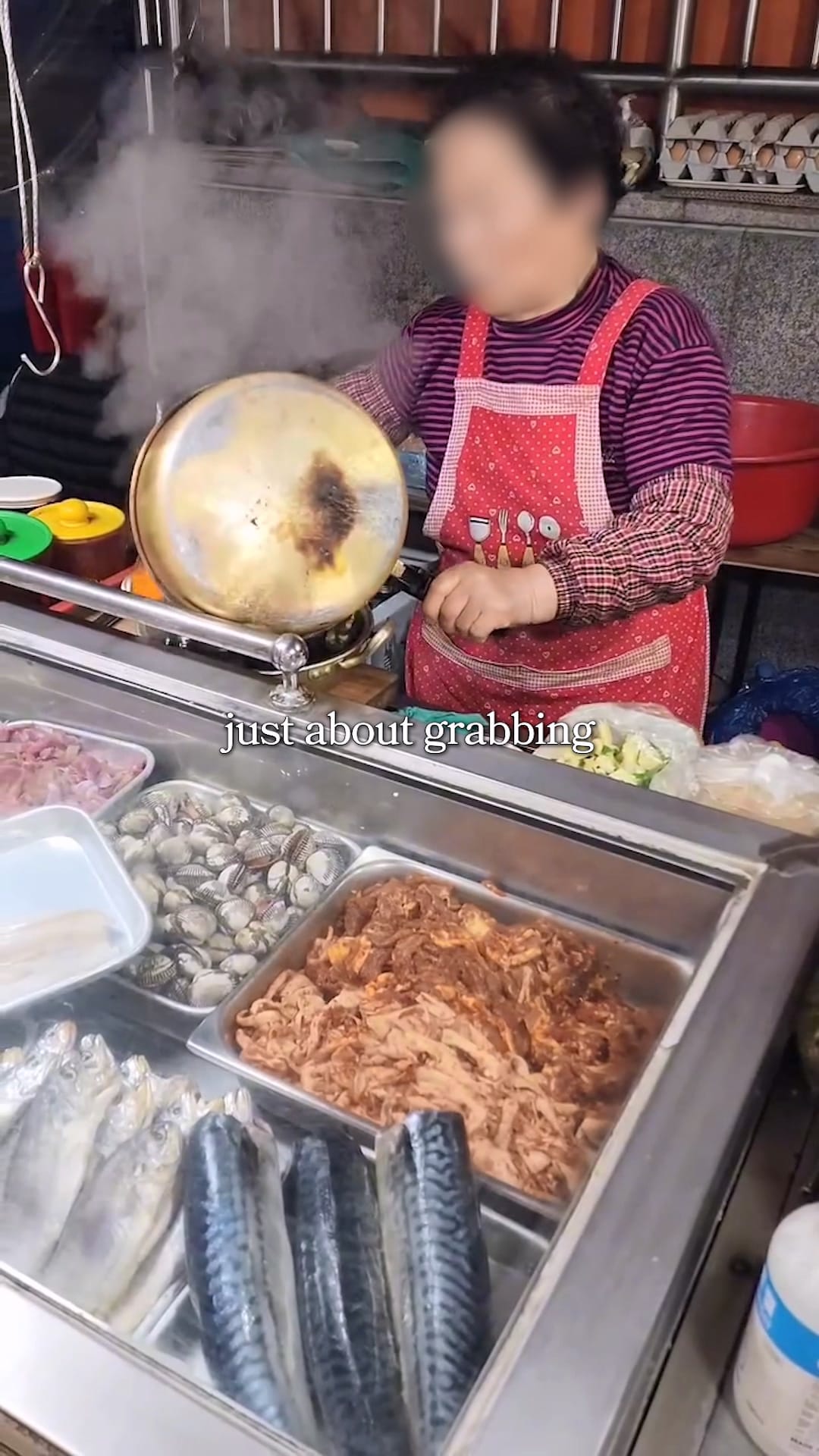
FAQs About Pojangmacha
Q: What does pojangmacha mean? A: It literally means a covered wagon or covered cart. In travel use, it usually means a Korean street-food tent or temporary stall serving snacks, anju, and drinks.
Q: Is pojangmacha only for drinking? A: No, but many night-time pojangmacha are built around food with alcohol. If you do not drink, choose a food-focused stall, market, or indoor pocha where eating without alcohol feels natural.
Q: What should I order first at a pojangmacha? A: Start with fishcake soup, tteokbokki, ramyeon, gimbap, or a simple anju such as tofu kimchi or rolled omelet. Add stronger dishes once you understand the menu.
Q: Can tourists go to a pojangmacha alone? A: Yes, but it can feel awkward at crowded drinking tents with tiny tables. Solo travelers may feel more comfortable at markets, indoor pocha, or casual snack stalls.
Q: Do pojangmacha accept credit cards? A: Some may, but do not rely on it. Carry some Korean won and a backup card, especially at temporary outdoor setups.
Q: Is Jongno 3-ga good for pojangmacha? A: Yes, it is one of Seoul's best-known areas for the tent-bar mood. Still, conditions change by night, weather, and local rules, so treat it as an area to explore rather than a guaranteed fixed attraction.
Bottom Line
Pojangmacha is one of Korea's most atmospheric food experiences, but it is best approached with respect and practical expectations. Go for warmth, broth, snacks, conversation, and the feeling of a city letting its shoulders drop after dark.
Order simply, drink politely, do not film strangers, carry payment backup, and plan your ride home. That is how the plastic tent becomes a good memory instead of a travel misunderstanding.
You Might Also Like
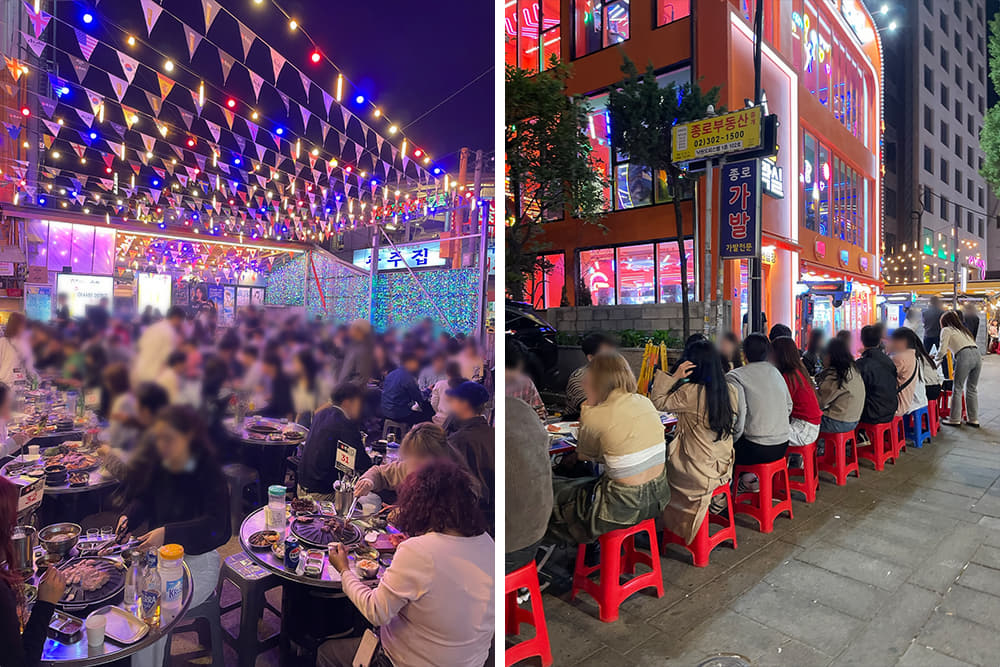
Korean Pojangmacha Guide: What a Pojangmacha Is, Seoul's Tent Bar Rows at Jongno 3-ga, the Menu and Prices, and the Etiquette
A Korean pojangmacha night at Jongno 3-ga costs about ₩15,000 for a shared dish and ₩5,000 a bottle. Which tent row to pick, the exit to use, what to order, how to pay, and the etiquette that keeps a seat.
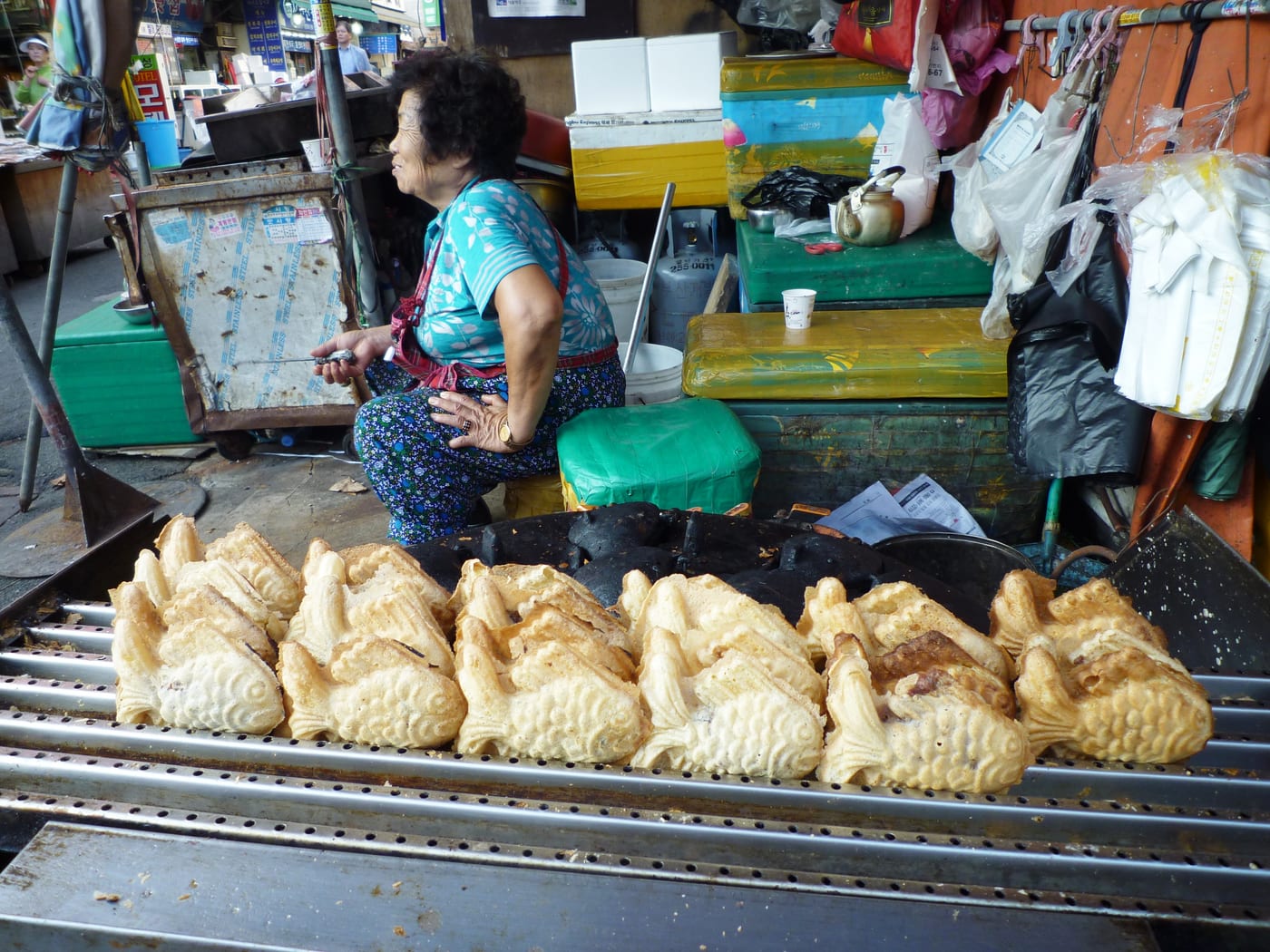
Cham Bungeoppang: The Korean Fish Snack That Is Four Different Fish Abroad
붕어빵 is a winter street food you have to find a cart for. Orion boxed it in 2011, released it in May on purpose, and sold 640 million packs — then renamed it after a different fish in China, Vietnam and Russia.
Tornado Potato: The Korean Invention Everybody Thinks Is Generic Fair Food
The spiral potato on a stick has a named inventor, a debut date in Myeongdong, and patents in six jurisdictions. 회오리감자 was designed in Korea in 2006, and the word itself is a trademark — which is why Korean vendors write 스프링감자 instead.