Korea Autumn Foliage 2026: The Forecast Peak Dates for Seoraksan, Seoul and Naejangsan
Last updated: 11 September 2026, with the two Korean foliage forecasts published this month — K-Weather (케이웨더, 11 September) and WeatherEye (웨더아이, 5 September) — and 2026 prices from the Seorak cable car's own guide and Nami Island's ticket office.
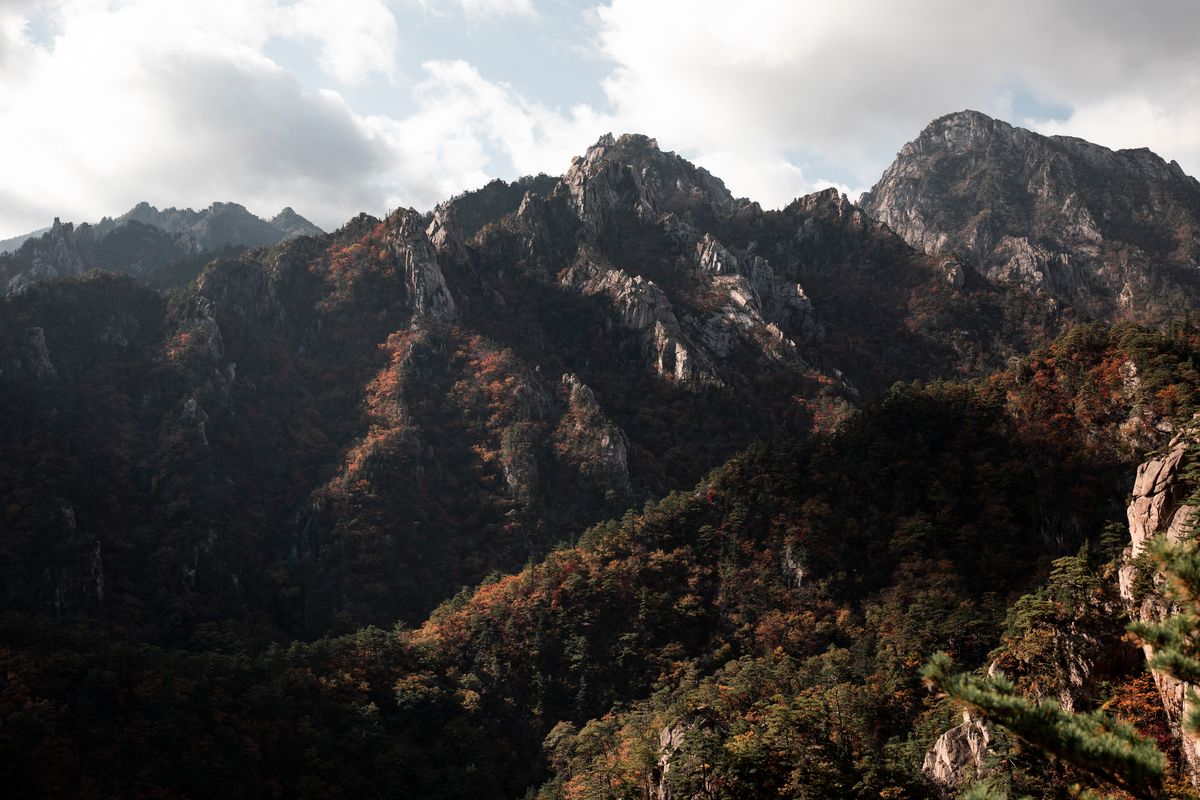
Korea autumn foliage 2026 will be late. The two Korean weather companies whose foliage forecasts came out this month agree it will be late. K-Weather puts first colour 2 to 8 days later than normal and the peak 2 to 9 days later, because the warmth has lasted into autumn. Seoraksan (설악산) turns first, around 30 September, and peaks around 16–25 October. The central region, including Seoul, peaks from about late October into the first days of November. Naejangsan (내장산) and Jirisan (지리산) in the south run a week or more behind their usual dates; the southern region peaks around 1–13 November (K-Weather 1–11, WeatherEye 5–13).
That shifts every plan built on an ordinary year. If you booked for the second week of October expecting Seoraksan at full colour, you will probably catch the opening, not the peak. If you are coming in early November, the south is at its best and Seoul is finishing. This guide gives the 2026 dates side by side, then the four routes that matter — Seoul, Seoraksan, Nami Island and Naejangsan — with what each actually costs and how long it takes to get there.
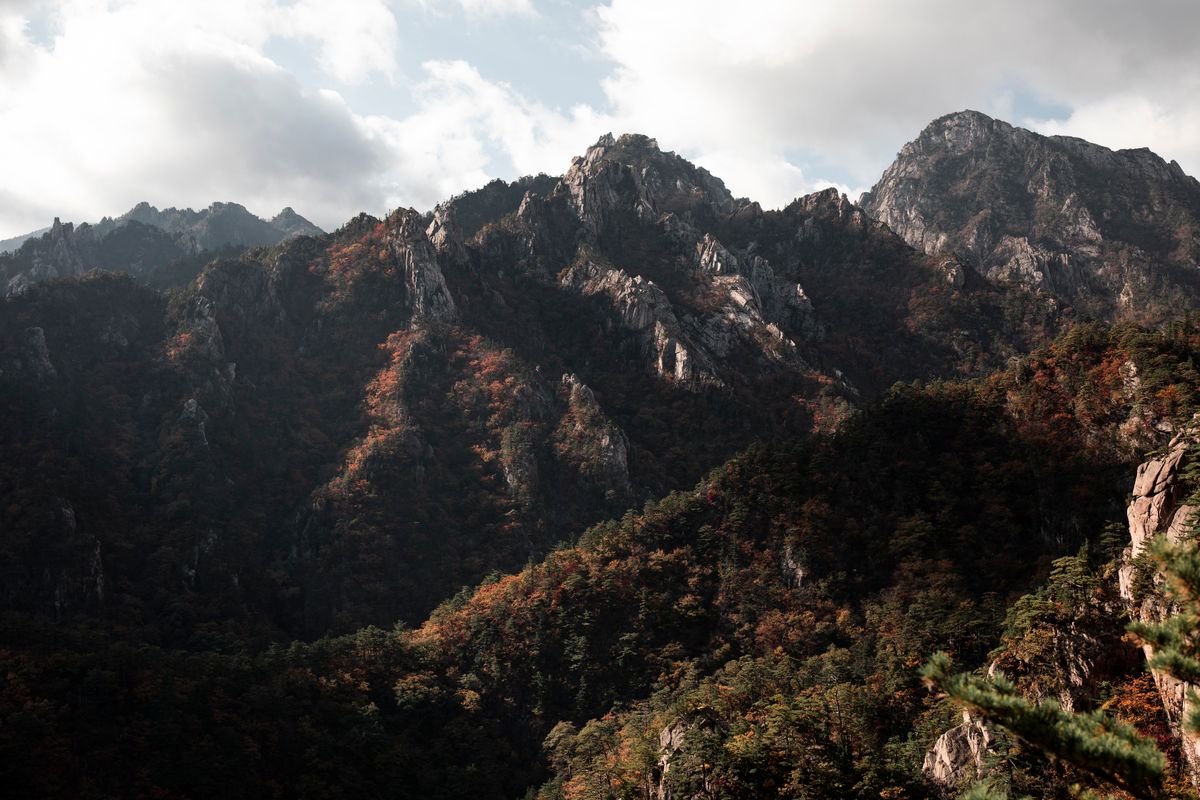
Seoraksan's cable-car summit and Naejangsan's valley floor are cold at 9 a.m. even in a warm autumn — the difference between a mountain morning and a Seoul afternoon can be ten degrees. A pack of INLIFE hand warmers, made in Korea weighs almost nothing and lasts through a whole morning on the ridge. As an Amazon Associate, EpicKor earns from qualifying purchases.
Quick Answer: When Is Peak Autumn Foliage in Korea in 2026?
| Where | First colour (2026 forecast) | Peak (2026 forecast) | Compared with a normal year |
|---|---|---|---|
| Seoraksan (설악산), Gangwon | Around 30 September (K-Weather); around 3 October (WeatherEye) | 16–25 October (WeatherEye, with Odaesan) | About 2 days late |
| Central region, including Seoul and Bukhansan | 30 September–18 October (K-Weather); 10–27 October (WeatherEye) | 19 October–1 November (K-Weather); 31 October–5 November (WeatherEye) | Several days late |
| Naejangsan (내장산), North Jeolla | About 7 days later than normal | 6–9 days later than normal (K-Weather); the southern region peaks 1–13 November | A week late |
| Jirisan (지리산) and the south | 19–27 October (K-Weather); 22 October–5 November (WeatherEye) | 1–11 November (K-Weather); 5–13 November (WeatherEye) | About 8 days late |
In both forecasts "first colour" (첫 단풍) means the day about 20 percent of a mountain, counted down from the summit, has turned, and "peak" (절정) means about 80 percent. Peak usually follows first colour by about two weeks, and the front moves south at roughly 20–25 km a day. These are forecasts from two private weather companies, not guarantees: a cold snap brings them forward, a warm spell or a typhoon pushes them back. Use them to choose your week, then check again a few days before you travel.
Repel windproof travel umbrella — because rain is what ends a peak early A wet, windy day strips a mountain's colour faster than anything else, and Seoraksan's ridges are exactly where a cheap umbrella turns inside out. This one is built for wind and packs small enough for a day bag. As an Amazon Associate, EpicKor earns from qualifying purchases.
See the Repel umbrella on AmazonWhy 2026 Is Late, and How to Use the Two Forecasts
Korea does not turn autumn all at once. Cooler, higher mountains in the north-east change first; Seoul's parks and palaces follow; the lower, warmer south finishes last. This year the whole sequence is running behind because September has stayed warm — K-Weather puts all eleven mountains it tracks 2 to 8 days late for first colour and 2 to 9 days late for the peak, with Naejangsan 7 days and Jirisan 8 days behind their averages.
The two forecasts differ by a few days, which is normal: they model the same weather with different methods. The practical reading:
- Seoraksan in 2026 is a third-week-of-October trip. Earlier than 16 October you will see the high ridges coloured and the valleys still green.
- Seoul's best week is likely the last week of October into early November. It is also the most forgiving: city routes work even if the date is off by a week.
- Naejangsan and the south belong to early and mid-November this year, later than most guides written for a normal year say.
- Don't plan only from last year's photos. The same weekend can be bare one year and at peak the next.
Early colour can be beautiful because there is contrast between green and orange, and a few days past peak still works if leaves remain on paths and temple roofs. The best day is the one with good light, manageable crowds, and a route you can actually enjoy.
Pair this guide with EpicKor's Korean hiking culture guide, KTX vs SRT vs express bus guide and Korea hands-free travel guide. Autumn travel is easier when transit, luggage, layers and walking difficulty are planned in advance.
Seoul: The Easiest Foliage Choice
Seoul is the safest autumn foliage base because you can adjust day by day. If the weather is good, go out. If it rains, move to cafés, museums or shopping. If one park is crowded, choose another. If the leaves are late — as they will be this year — palaces and city views still make the day worthwhile.
Good Seoul foliage routes include the palaces, Namsan (남산), Seoul Forest (서울숲), Olympic Park (올림픽공원), Seokchon Lake (석촌호수), the Deoksugung stone-wall walk (덕수궁 돌담길), Samcheong-dong (삼청동) and the riverside parks. You do not need a 5 a.m. bus; you can build a half-day around one area.
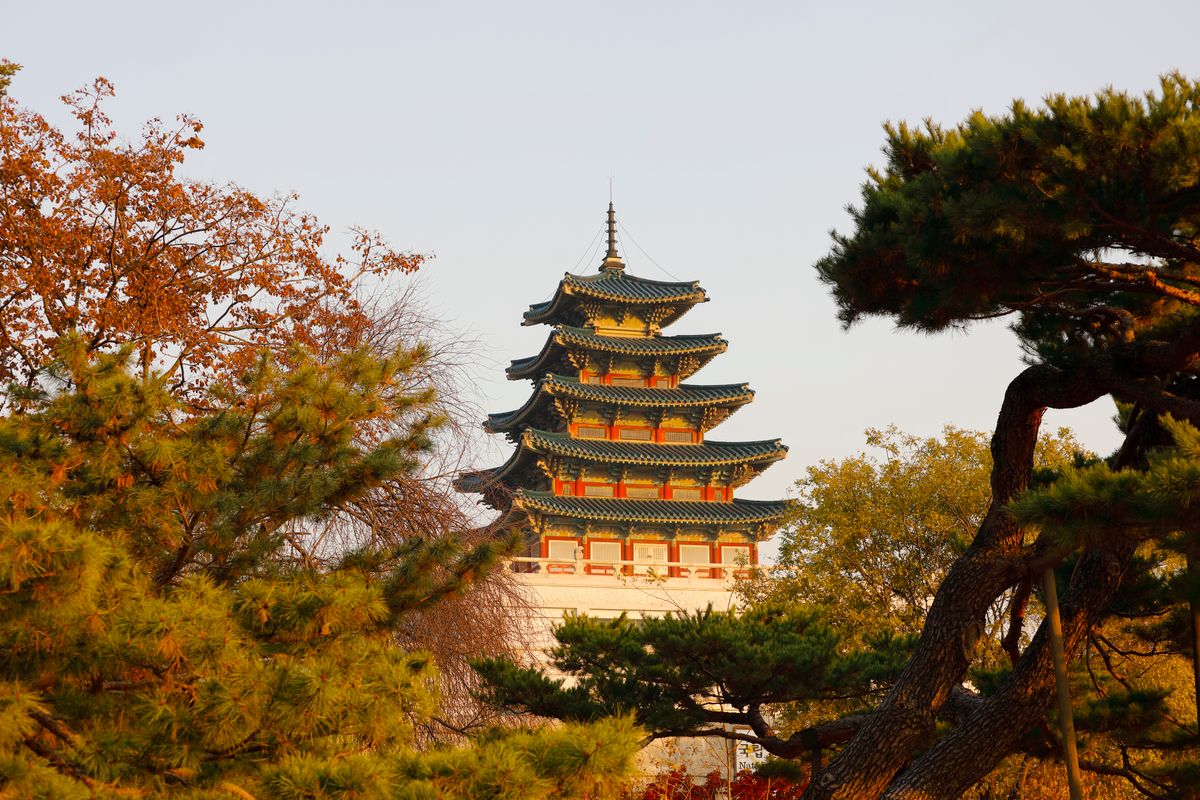
For first-timers, a palace plus a neighbourhood works well. Gyeongbokgung (경복궁) is ₩3,000 for adults (palace fees are being revised from January 2027) and free if you are wearing hanbok; Deoksugung (덕수궁) and Changdeokgung (창덕궁) give you architecture and leaves together. Add a café, museum or shopping stop so the day does not depend on perfect foliage.
Seoraksan: The Big Mountain Memory
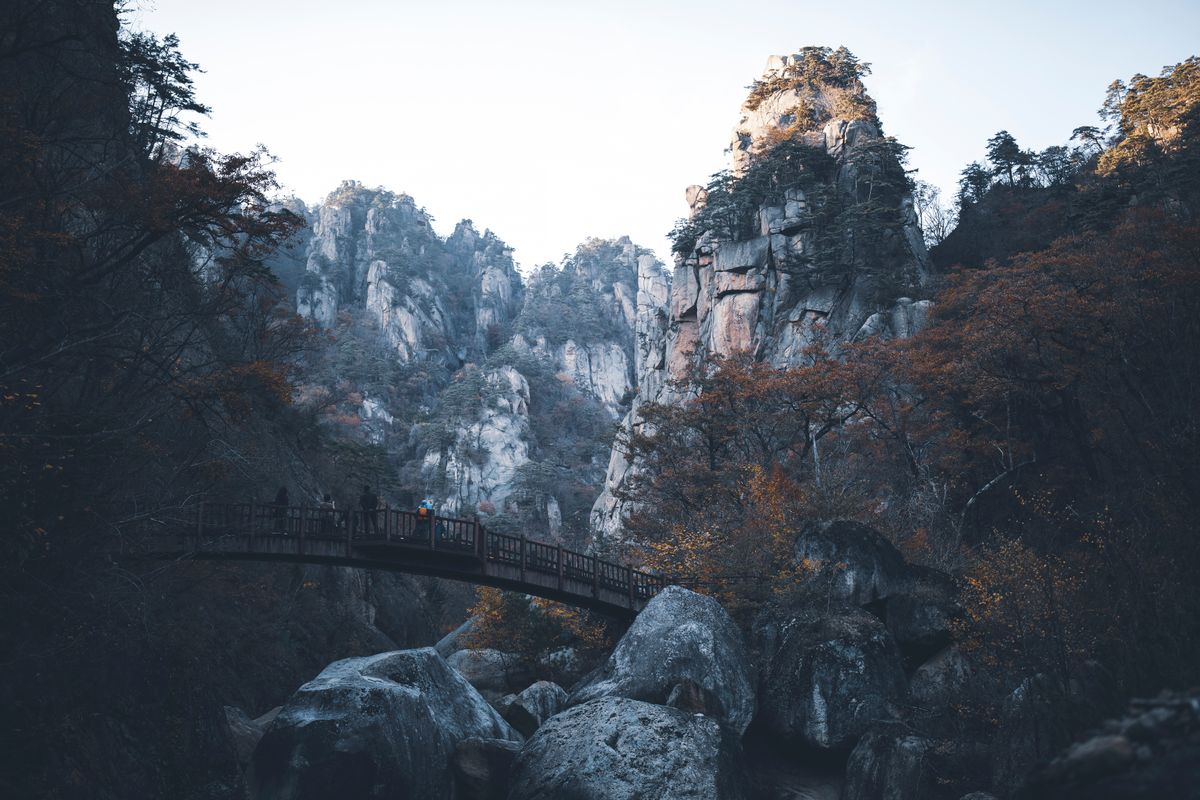
Seoraksan is the stronger choice if you want dramatic rock, mountain valleys, and a trip that feels different from Seoul. The Korea National Park Service Seoraksan page describes it as one of Korea's representative national parks, and it is the mountain Koreans associate most with autumn.
Getting there takes a full day from Seoul. Express buses from Dong Seoul Terminal (동서울터미널) to Sokcho (속초) take about 2 hours 15 minutes and cost from about ₩16,100 (standard) to about ₩21,300 (deluxe), per the September 2026 timetables; check the fare when you book; from Sokcho, local buses run to the park entrance at Seorak-dong's Sogongwon (소공원). Many visitors stay a night in Sokcho so the mountain gets a morning, not an afternoon.
The easiest way up is the Seorak cable car (설악 케이블카) to Gwongeumseong (권금성). In 2026 it costs ₩16,000 return for adults and ₩12,000 for children; there are no one-way tickets, and no online or phone booking — tickets are sold on the day only, because wind stops the line without notice. Hours move with the season and the weather, and the operator posts each day's times on its site. In foliage season (19 September–15 November 2026) the usual senior discount does not apply, and the queue on an October weekend can run to hours: arrive before opening or go on a weekday.
But Seoraksan needs respect. Routes vary from the cable car and short walks near Sogongwon to serious ridge hikes. Weather changes fast. If you are not a hiker, choose a realistic route near the main entrance; if you are hiking, wear real shoes and check the course difficulty.
Nami Island: Easy Photos, Big Crowds
Nami Island (남이섬) in Gapyeong is popular because it is easy to understand: tree lanes, water, paths, and a clear day-trip identity. In 2026 a standard ticket is ₩19,000 for adults, including the return ferry (₩16,000 for secondary students and over-70s, ₩13,000 for children from 36 months through primary school). Ferries run from about 08:00 to 21:05, every 10–20 minutes in the middle of the day. The official Nami Island site has current notices.
It is not the most adventurous choice, but it suits travellers who want autumn photos without a national-park hike. The trade-off is crowding. At peak the famous lanes feel less peaceful than the photos; start early and build in nearby flexibility. Nami's colour follows the central region's timing, so in 2026 aim for the last week of October.
Naejangsan: Classic Foliage, Harder Logistics
Naejangsan is famous for autumn — temple, valley and maple scenery around Naejangsa (내장사). The Korea National Park Service Naejangsan page is the best starting point for current park information.
From Seoul, the KTX to Jeongeup (정읍) takes about 1 hour 45 minutes from Yongsan, and the local bus to the park about another 30 minutes; in peak season extra shuttles run from Jeongeup Station. By car, the parking lots fill by mid-morning at the peak, which is why locals leave the car at their lodging. This year matters most here: the forecast puts Naejangsan about a week behind normal, so the classic "late October" advice for Naejangsan points to early and mid-November in 2026.
Naejangsan is best when the trip is about foliage itself. If you only want one good autumn photo, stay in Seoul; if you want a memorable mountain-autumn day and have the patience for the transport, it makes sense.
Which Route Should You Choose?
| Destination | Best 2026 week (forecast) | Getting there from Seoul | Cost to note | Watch out for |
|---|---|---|---|---|
| Seoul parks and palaces | Late October–early November | Subway | Gyeongbokgung ₩3,000 (free in hanbok) | Weekend crowds at the famous spots |
| Nami Island | Last week of October | ITX or bus to Gapyeong, then ferry | ₩19,000 adult, ferry included | Tour crowds and rushed combo routes |
| Seoraksan | 16–25 October | Bus to Sokcho, about 2 h 15 min, from about ₩16,100 | Cable car ₩16,000 return, on-site tickets only | Cable-car queues, trail difficulty, wind |
| Naejangsan | Early to mid-November | KTX to Jeongeup, about 1 h 45 min, then bus | Parking fills by mid-morning at peak | Distance and peak-weekend pressure |
What To Pack For A Foliage Day
Autumn packing in Korea is about layers and walking comfort. A morning can feel chilly, a sunny midday warm, and a mountain valley cools quickly. Seoul streets may be comfortable while Seoraksan feels cold in the shade.
Bring comfortable shoes, a light layer, a compact umbrella, a small water bottle, a transit card and a simple snack. For a real hike, bring more: traction-friendly shoes, extra water, route information and weather awareness. Do not hike a rocky route in fashion shoes because the photos looked easy.
Anker 10,000 mAh power bank — for the phone that is now your map, camera and ticket A long foliage day drains a phone through Naver Map, photos, translation and bus times, and the best view of the day tends to arrive at 3 percent. As an Amazon Associate, EpicKor earns from qualifying purchases.
See the Anker power bank on AmazonFor photography, bring less than you think. A phone with battery is enough for most travellers, and a heavy camera bag makes crowded trails and buses harder.
Crowd Strategy
Peak foliage crowds shape the day. Weekends, famous viewpoints, the Seorak cable car, parking lots and shuttle stops all fill quickly. If you hate crowds, avoid the most famous spots on weekends or choose Seoul routes with more flexibility.
Start early. Eat early. Use restrooms when you see them. If a famous photo point is packed, take a different angle and move on; a quiet side path with decent leaves can feel better than a platform with twenty people waiting behind you. And be realistic in a group: if one person wants a ridge hike and another wants café photos, split the plan or choose Seoul.
Common Mistakes
The first mistake is planning 2026 from a normal year's dates. This season is running about a week late in the south; a mid-October Naejangsan trip will likely be early.
The second is chasing every famous place. Choose one big foliage goal and support it with flexible Seoul days.
The third is turning up at the Seorak cable car expecting to book ahead — there is no advance booking, and October weekend queues are long.
The fourth is underestimating shoes. Leaves hide wet stone, uneven paths and slippery ground.
The fifth is treating Nami, Seoraksan and Naejangsan as interchangeable. They offer different kinds of autumn, different logistics and different crowds.
You might like: Korea Festival Calendar 2026–2027, Month by Month: The 27 Festivals Korea's Government Picked, and Which Dates Are Confirmed
FAQ
Q: When is peak autumn foliage in Korea in 2026?
The 2026 forecasts put Seoraksan's peak around 16–25 October, the central region including Seoul from about 19 October to early November, and the south, including Naejangsan and Jirisan, around 1–13 November. The season is running 2 to 9 days later than normal.
Q: When does Seoraksan's foliage start in 2026?
K-Weather forecasts Seoraksan's first colour around 30 September, about two days later than normal; WeatherEye puts it around 3 October. The peak follows about two weeks later.
Q: How much is the Seoraksan cable car in 2026?
₩16,000 return for adults and ₩12,000 for children. There are no one-way tickets and no online or phone reservations — tickets are sold on site on the day, and the line stops in strong wind.
Q: Is Nami Island good for fall foliage, and how much does it cost?
Yes, for easy tree-lane photos and a softer day trip. A 2026 adult ticket is ₩19,000 including the return ferry. It is crowded at peak, so start early; in 2026 aim for the last week of October.
Q: Can I see autumn leaves without leaving Seoul?
Yes. Palaces, parks, lake paths, the city walls and neighbourhood walks are beautiful in late October and early November, and Seoul is the best option if your schedule is tight or the weather is uncertain.
Q: What should I wear for Korea autumn travel?
Layers and comfortable shoes. City days can be mild, but mountain mornings are cold and routes can be demanding. Bring a compact umbrella, a battery pack and enough warmth for the morning.
Final Take
A Korea autumn foliage trip works best when you stop chasing every red-leaf photo and choose the route that fits your schedule — and in 2026, when you move your dates about a week later than an ordinary year. Seoul is flexible and at its best at the turn of October and November. Nami Island is easy and photogenic. Seoraksan is dramatic and worth a full travel day in the third week of October. Naejangsan is classic, and this year it belongs to November.
Sources
- K-Weather (케이웨더) 2026 foliage forecast, 11 September 2026, as reported by Kyunghyang Shinmun and Korea Economic Daily: Seoraksan first colour around 30 September; central region first colour 30 September–18 October, peak 19 October–1 November; southern region first colour 19–27 October, peak 1–11 November; eleven mountains 2–8 days late for first colour and 2–9 days late for the peak; Naejangsan 7 and Jirisan 8 days late; definitions of first colour (20 percent) and peak (80 percent).
- WeatherEye (웨더아이) 2026 foliage forecast, 5 September 2026, as reported by Gukje News: Seoraksan first colour around 3 October; Seoraksan and Odaesan peak 16–25 October; central region peak 31 October–5 November; Jirisan and the south peak 5–13 November.
- Seorak Cable Car official guide (sorakcablecar.co.kr): 2026 fares, no one-way tickets, no advance booking, hours and the 19 September–15 November 2026 no-discount period.
- Nami Island ticket information (2026): adult ₩19,000 including the return ferry, concession fares and ferry hours.
- Dong Seoul–Sokcho express bus fare and journey time (2026 timetables); KTX journey time to Jeongeup.
- Korea National Park Service pages for Seoraksan and Naejangsan.
You Might Also Like
Korea Hands-Free Travel Guide: Lockers and Luggage
A Korea hands-free travel guide for tourists: lockers, luggage delivery, hotel storage, Seoul Station check-in, and airport transfer planning.
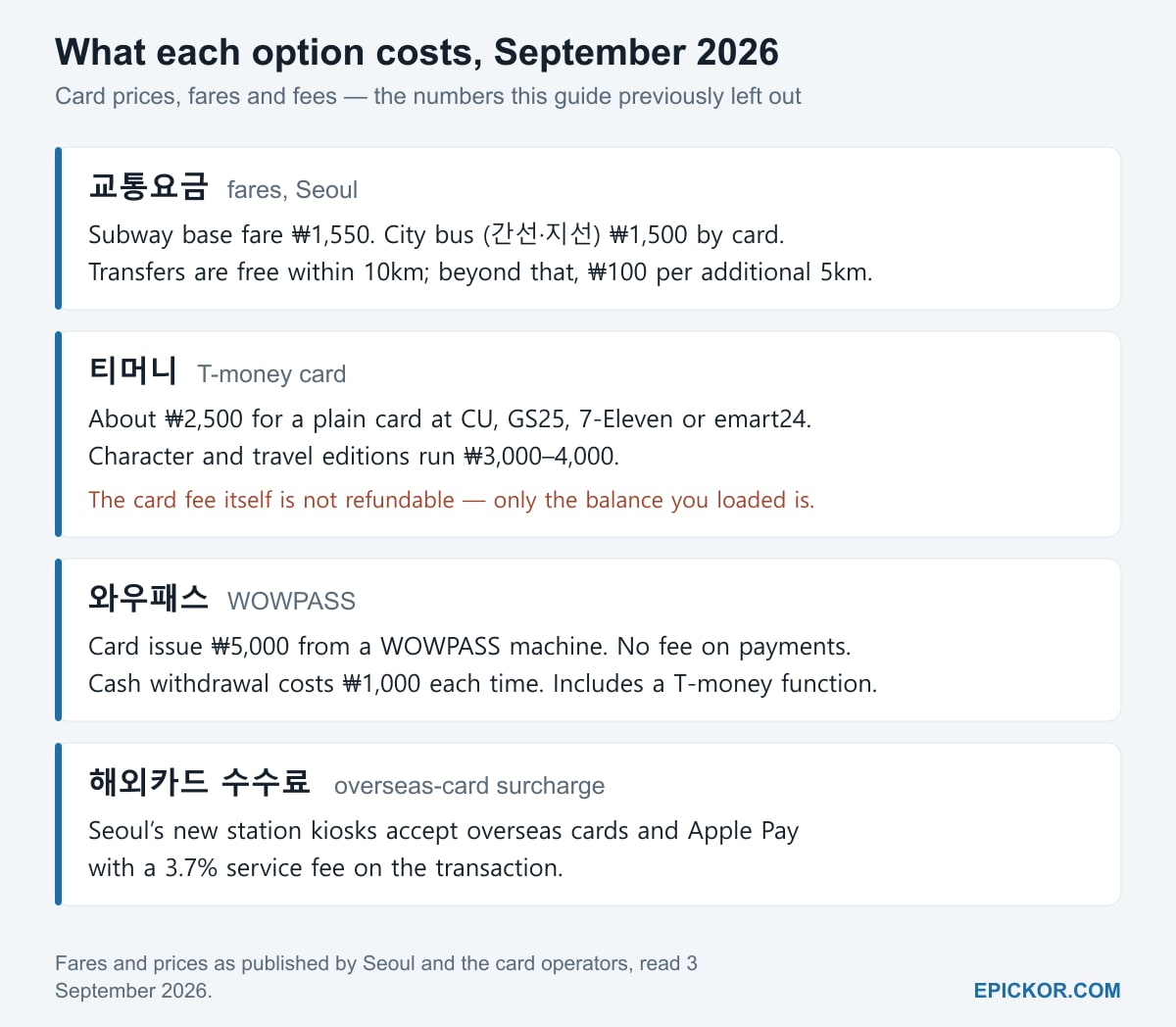
Korea Payment Guide: T-money, WOWPASS, and the Card You Cannot Tap
Seoul's 30-day Climate Card ended on 1 September 2026; short passes continue at ₩5,000–20,000. And you still cannot tap a foreign Visa at a subway gate — EMV open-loop is a 2027–2030 project. Base fare ₩1,550, T-money card about ₩2,500.
Chuseok 2026: Korea Slows Down 24-26 September, Train Seats Sell 7-11 September
Chuseok 2026 is Friday 25 September: 6.05 million vehicles a day on the expressways, Seoul-Busan 10h30m at worst, tolls waived 24-27 September though the standing rule is three days, trains 84% sold, the subway running 288 fewer trips a day, and what closes on the 25th.