Kakao Venti, Korea's Big Taxi: The Van That Costs the Same as a Sedan by Day, Incheon Airport Fares for Four Suitcases, and K-RIDE, Uber Premier Van, i.M and TADA Compared
Last updated: September 2026
Four people, four suitcases, Incheon Airport at 15:00. A Seoul sedan taxi takes four passengers and two bags if the driver is generous. The airport limousine bus is ₩17,000 a head and drops you two blocks from the hotel. The big taxi at stand 8C starts its meter at ₩7,000 and runs it at nearly twice the sedan rate. And then there is Kakao Venti (카카오 T 벤티), a Kia Carnival or Hyundai Staria van with a base fare of ₩4,000, which is ₩800 less than the sedan, and the same ₩100 per 131 metres after that. By day, at a multiplier of one, the van costs what the sedan costs. The catch is the multiplier: Venti's fare is multiplied by anything from 0.8 to 4.0 depending on demand, the multiplier is set by the taxi association at the drivers' request, and at 4.0 the same airport run is nearly ₩200,000.
This post is the large-taxi map for a visitor with luggage. It explains what Venti is and what its terms actually say about bags, who can call it (Kakao T accepts foreign cards on paper but rejects them often; the foreigner app K-RIDE is the reliable route), what the Incheon run costs on each meter, and the four alternatives: the large-taxi stand at the airport, the city's International Taxi with fixed zone fares, the i.M Carnival taxis you can hail on the street, TADA, and Uber's Premier Van, which launched in Seoul on 1 April 2026 with an upfront fare and room for four 30-inch cases.
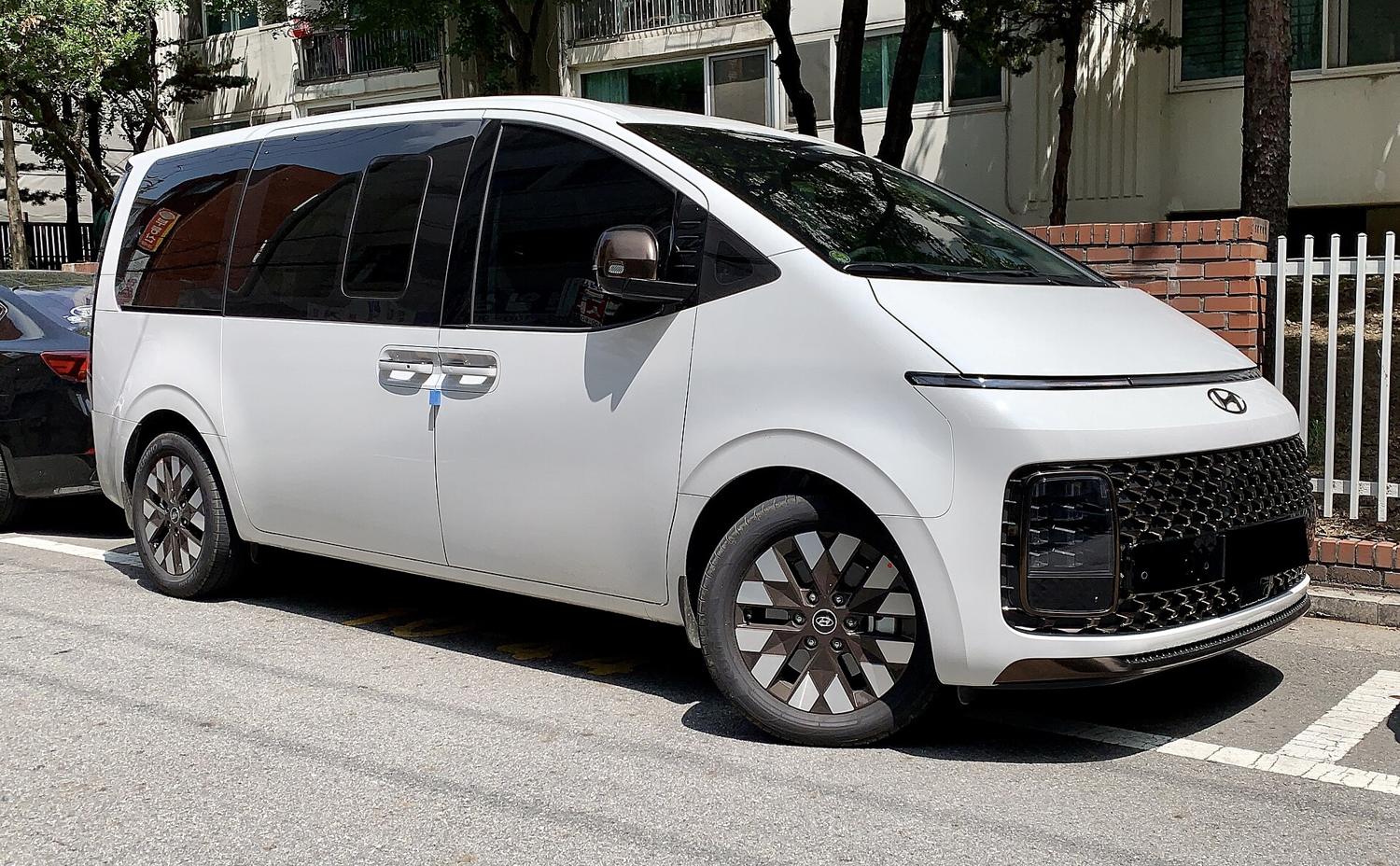
The Hyundai Staria, one of the two vans Kakao Venti runs; Hyundai built a taxi version of the Staria Lounge specifically for Venti in 2021. Photo: Benespit, Wikimedia Commons, CC BY-SA 4.0 (2021).
Four suitcases, one van: Venti's terms allow one suitcase per passenger, so the thing that decides whether you fit is how the bags are packed. Gonex compression packing cubes are how Koreans get a Myeongdong haul home in the same case they arrived with. As an Amazon Associate, EpicKor earns from qualifying purchases.
Quick Guide: every big taxi in Korea, by what it costs and who can call it
Estimates below are for Incheon Airport Terminal 1 to Myeongdong, roughly 60 km, in free-flowing daytime traffic, on the published meters, before tolls. Add the ₩3,200 Airport Expressway toll, which the passenger pays. Traffic adds time charges on every meter, so a weekday afternoon run lands 10 to 25 percent above these figures.
| Service | Vehicle, seats | Meter | Airport to Myeongdong, day (estimate) | Night | How a foreigner books |
|---|---|---|---|---|---|
| Kakao Venti (카카오 T 벤티) | Carnival / Staria, 5 passengers | ₩4,000 to 800 m, ₩100 per 131 m, ₩100 per 40 s, times 0.8 to 4.0 | ₩39,000 at 0.8, ₩49,000 at 1.0, ₩98,000 at 2.0 | No night surcharge; the multiplier does the job | K-RIDE app (foreign card and phone). Kakao T itself needs a Korean-registered card |
| Seoul sedan taxi (중형) | Sonata / K5, 3 to 4 passengers | ₩4,800 to 1.6 km, ₩100 per 131 m, ₩100 per 30 s | ₩49,000 | +20% 22:00 to 23:00 and 02:00 to 04:00; +40% 23:00 to 02:00 | Street, stand, K-RIDE, Uber, TADA |
| Airport large / deluxe taxi (대형·모범) | Van (up to 8–10) or black sedan (4) | ₩7,000 to 3 km, ₩200 per 151 m, ₩200 per 36 s | ₩82,000 | Base ₩8,400 from 22:00 | Stand 8C at T1, 7D at T2; no app |
| International Taxi (외국인 관광택시) | Sedan, deluxe or van | Fixed zone fare, no meter | ₩70,000 to ₩95,000 sedan; ₩100,000 to ₩140,000 deluxe or van | Same fixed fare | Book online 24 hours ahead; stand 4C at T1, 3C at T2 |
| i.M taxi (아이엠택시) | Carnival 11-seat body, 5 passengers | ₩5,500 to 2 km, ₩100 per 101 m, ₩100 per 24 s | ₩63,000 | +20% 00:00 to 04:00 | i.M app, or hail one on the street: it is a real taxi |
| TADA large (타다 넥스트) | Staria / Carnival, 5 passengers | ₩5,000, no base distance, ₩100 per 123 m, ₩100 per 35 s (since 11 Dec 2023) | ₩54,000 | Surge in app | TADA app accepts foreign phones and cards |
| Uber Premier Van | Van, 5 passengers, four 30-inch cases | Upfront fare shown before you book, fixed against traffic | Quoted in app; no public rate card yet | Quoted | Your existing Uber app; Seoul since 1 April 2026, Jeju large taxi added the same month |
| Airport limousine bus 6015 / 6001 | Coach | ₩17,000 per person | ₩68,000 for four | Last buses about 23:00 | Ticket machine or T-money at the kerb |
The line that matters is the first two. At a multiplier of 1.0 the van and the sedan cost within a few hundred won of each other, because Venti's base fare is lower and its distance rate identical. The van only becomes expensive when demand pushes the multiplier up, and the multiplier is shown in the app before you confirm.
Etekcity digital luggage scale — because the van's rule is 20 kg per item Venti drivers can refuse any single item over 20 kg, and the airline's limit for the flight home is 23. A ₩15 scale on the hotel floor answers both before the van arrives. As an Amazon Associate, EpicKor earns from qualifying purchases.
See the luggage scale on AmazonYou might like: Getting Around Korea in 2026: Subway Fares, Last Trains, KTX Booking, Bus Prices and Which App to Use
What Kakao Venti actually is
Venti is the large-taxi tier inside Kakao T, Korea's dominant taxi app, run by Kakao Mobility (카카오모빌리티). It began as a Seoul pilot at the end of 2019 and was formalised in 2020; the fleet passed 1,000 vans in September 2022 with 2,000 under contract, most of them in Seoul and the surrounding Gyeonggi and Incheon area, plus Gwangju, Daejeon and Sejong. The vehicles are the two Korean minivans: the Kia Carnival, which had the market to itself until Hyundai built a taxi version of the Staria Lounge with an LPG engine, powered sliding doors and a roof monitor specifically for Venti in August 2021.
Three rules from Kakao's own terms matter more than the vehicle.
Five passengers, not nine. The vans are registered as nine or eleven seaters, but Venti carries a maximum of five passengers. Six people cannot ride, however small the sixth is.
One suitcase each, and the driver may refuse the rest. The terms allow a suitcase per passenger and golf bags, and they let a driver refuse moving boxes, furniture, appliances and any single item over 20 kg. Refusal after the van arrives can trigger a cancellation fee, so the honest version of "we have a lot of luggage" is four people, four cases.
Card on file, no cash. Venti cannot be paid at the end of the ride. It is only offered to accounts with an automatic payment method registered, and Kakao T does accept overseas Visa, Mastercard, Amex and JCB on paper, with Venti and Black appearing once one is registered; in practice the Korean payment gateway rejects foreign cards often enough that most visitors never get that far. That is the wall, and it is why the next section exists.
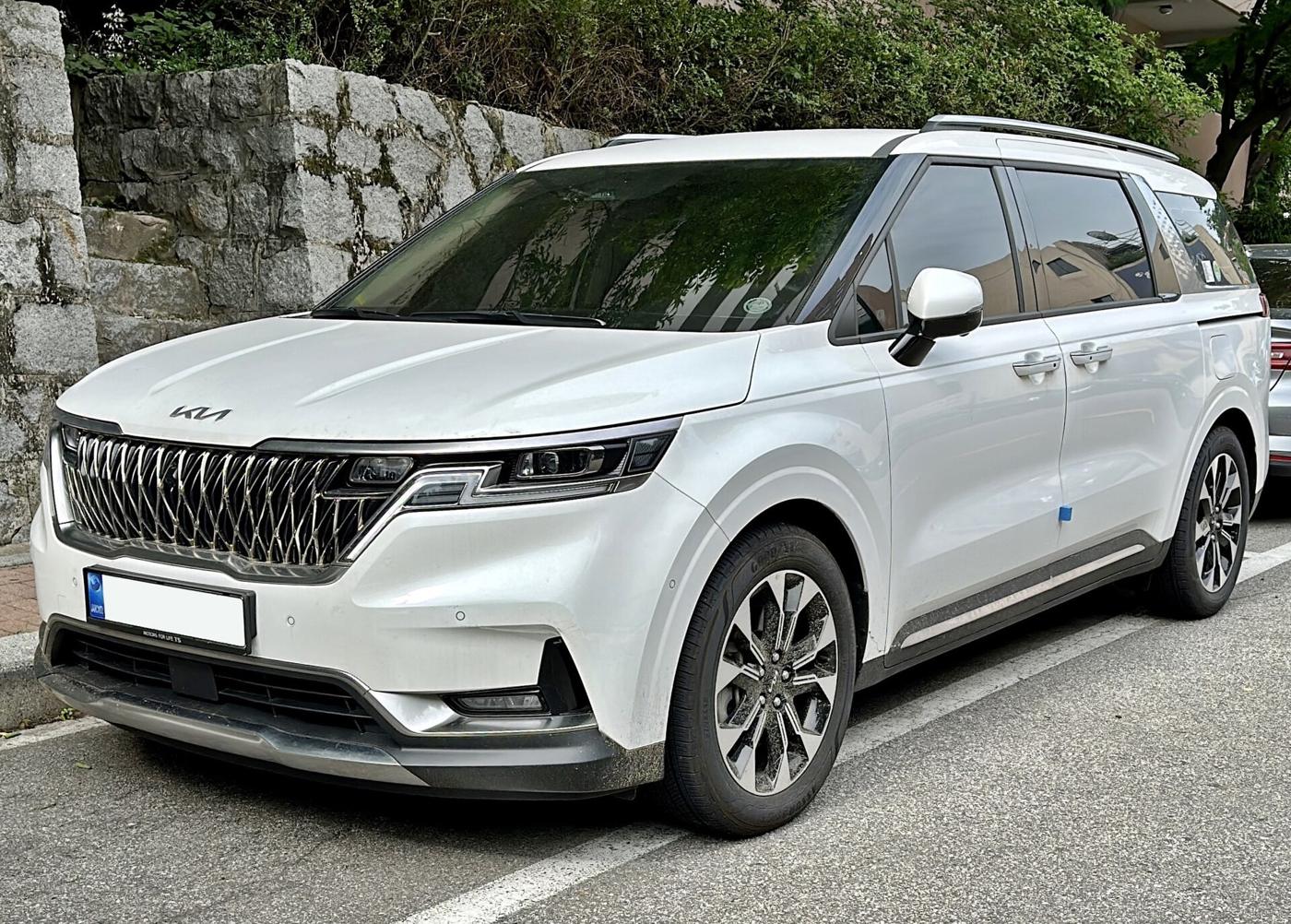
The Kia Carnival, the other Venti van and the one i.M uses in its 11-seat body. Five passengers ride, whatever the badge says. Photo: Benespit, Wikimedia Commons, CC BY-SA 4.0 (2023).
The fare, and the multiplier that is the whole story
Venti's meter is nearly the sedan's. The base fare is ₩4,000 and covers the first 800 metres; it was ₩4,000 for 1.5 km until 4 July 2022, when the Seoul Individual Taxi Association filed to shorten the base distance and, in the same filing, to raise the maximum surge multiplier from 2.0 to 4.0, on the grounds that competing large-taxi platforms already surged to four times. After the base, Venti charges ₩100 per 131 metres, the same as a sedan, and ₩100 per 40 seconds when the van is crawling, which is slightly kinder than the sedan's 30 seconds. The sum is then multiplied by the day's rate, from 0.8 at the quietest hours to 4.0 at the busiest.
There is no separate night surcharge. Where a sedan adds 40 percent between 23:00 and 02:00 by law, Venti's multiplier simply rises with demand, which in practice means the same hours. The two systems produce a similar number on a Friday night and a very different one on a Tuesday afternoon, when the sedan is at 100 percent and the van may be at 80.
| Multiplier | Airport to Myeongdong, about 60 km | Gangnam to Hongdae, about 15 km | When you see it |
|---|---|---|---|
| 0.8 | ₩39,000 | ₩12,000 | Mid-morning and early afternoon on weekdays |
| 1.0 | ₩49,000 | ₩15,000 | Most daytime hours; equals a sedan |
| 1.5 | ₩74,000 | ₩22,000 | Evening rush, rain |
| 2.0 | ₩98,000 | ₩30,000 | Late Friday and Saturday nights |
| 4.0 | ₩196,000 | ₩59,000 | The legal ceiling; seen after concerts, on holiday eves and in snow |
Those are meter arithmetic, not quotes; time charges in traffic push them up. The app shows the multiplier and an estimated fare before you tap confirm, and the estimate is the number to decide on. Reservations are possible from 30 minutes to two weeks before departure in Seoul, Gyeonggi and Incheon, and a reserved Venti is the sane way to leave for a 07:00 flight with a family.
How a foreigner calls a Venti: K-RIDE, not Kakao T
Kakao T will let a visitor register and hail a sedan with "pay the driver," but Venti is card-on-file only, and although a foreign card can in theory be registered, the registration fails often. Kakao Mobility's answer, launched in 2024, is K-RIDE (k.ride), a separate app for non-residents in English, Japanese and Chinese that runs on the same driver pool. It accepts a foreign phone number for sign-up and a foreign Visa, Mastercard or Amex as the payment method, and its vehicle menu includes Venti alongside Blue, Black and deluxe. Set up the account and card at home before the flight, because the verification text arrives on your own number.
The Seoul city-backed tourist app TABA (built by the startup Globalier with T-money Onda and launched in December 2023) charges exactly the meter with no platform fee and runs through the T-money taxi terminals, but it is a sedan service. Uber, which in Korea runs as Uber Taxi inside the same app and uses the card already on your account, added the missing piece on 1 April 2026: Premier Van, a Seoul large-taxi tier for five passengers and four 30-inch suitcases with an upfront fare that does not change with traffic, aimed at airport runs, families and golf trips; a Jeju large-taxi tier followed the same month. TADA, the app that once fought the taxi industry and now runs licensed vans, accepts foreign phone numbers and foreign cards, and its large tier runs a slightly dearer meter than Venti at 1.0 (₩100 per 123 metres and ₩100 per 35 seconds since December 2023, with surge in the app).
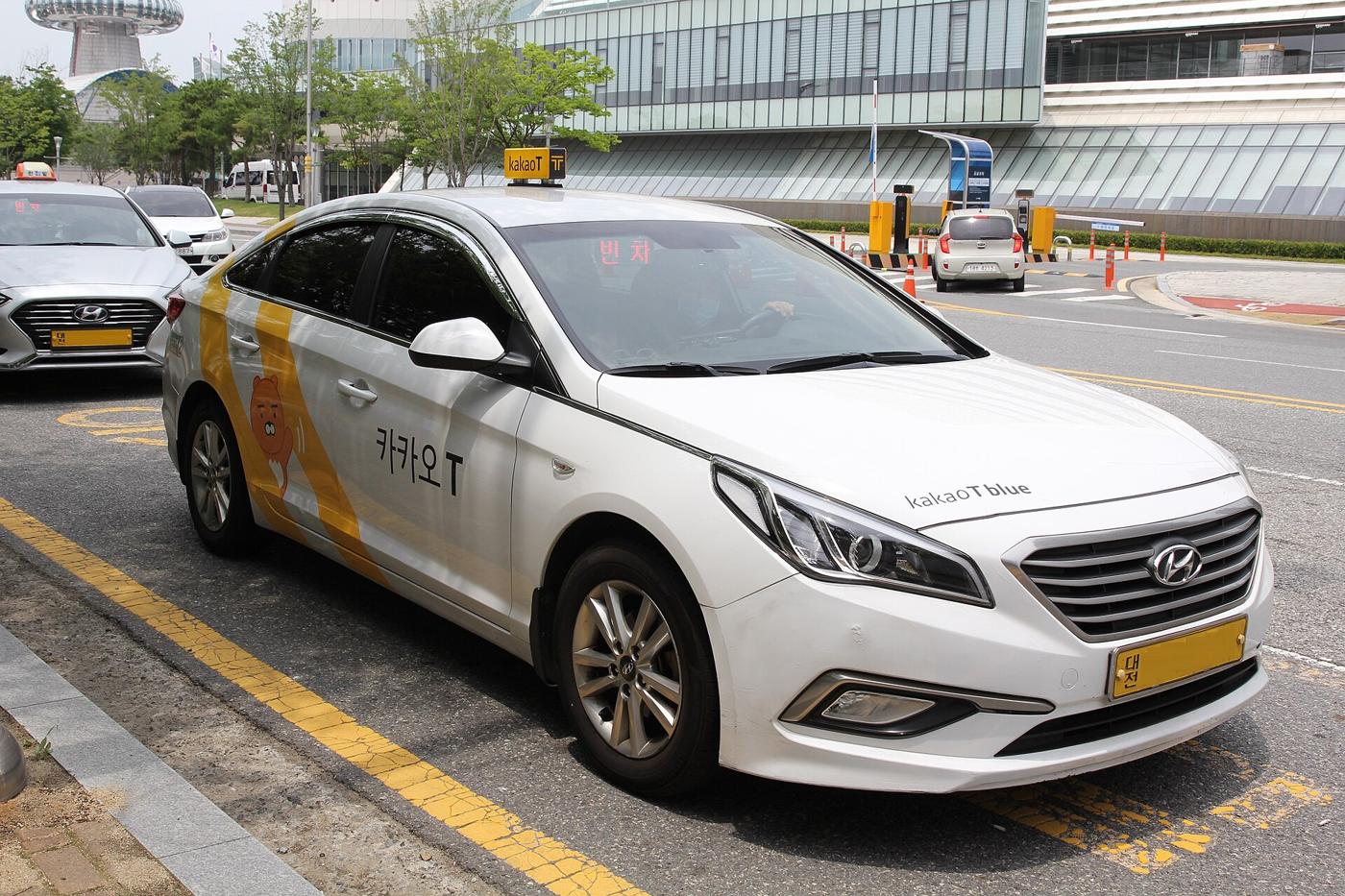
A Kakao T Blue sedan, the tier that cannot refuse a destination. The same driver pool serves K-RIDE, which is where a visitor finds Venti. Photographed in Daejeon. Photo: Rickinasia, Wikimedia Commons, CC BY-SA 4.0 (2020).
At the airport: the stands that need no app
If the phone is dead or the app is unwilling, Incheon has the large taxi waiting at the kerb, and the airport publishes where. On Terminal 1's arrivals level the stands are 5C, 6C and 6D for ordinary sedans, 7C for deluxe (모범) taxis, 8C for large vans and 4C for the International Taxi. On Terminal 2's arrivals level, 7C is the Seoul sedan stand, 5D Incheon, 6D Gyeonggi, 7D deluxe and large, and 3C International Taxi.
The van at 8C runs the deluxe meter: ₩7,000 for the first 3 km, ₩200 per 151 metres, ₩200 per 36 seconds, ₩8,400 base from 22:00. That is roughly ₩82,000 to Myeongdong by day before the toll, or about 1.7 times the sedan, for the same five seats Venti sells at sedan price. It is the right choice at 01:00 with a tired family and no multiplier in sight; it is the wrong choice at 15:00.
The International Taxi (외국인 관광택시, intltaxi.co.kr, 1644-2255) is the city-designated service with English-speaking drivers and no meter at all: fixed fares by destination zone, ₩70,000 for the nearest Seoul zone rising to ₩95,000 for the farthest in a sedan, and ₩100,000 to ₩140,000 in a deluxe car or van, cash or foreign card. It needs a booking 24 hours ahead and confirms by email with the driver's details, which for an arriving family is worth more than the ₩20,000 it costs over a Venti at 1.0.
Whichever car you take, two lines on the receipt are legitimate and two are not. The Airport Expressway toll to Seoul is ₩3,200 (it was ₩6,600 until 1 October 2023), and the Incheon Bridge, if the driver takes it toward Songdo or the south, is ₩2,000 (cut from ₩5,500 on 18 December 2025); the passenger pays the toll actually driven, once. A return toll, or a "luggage fee," is not a thing, and our Seoul safety guide covers the airport taxi tricks in detail.
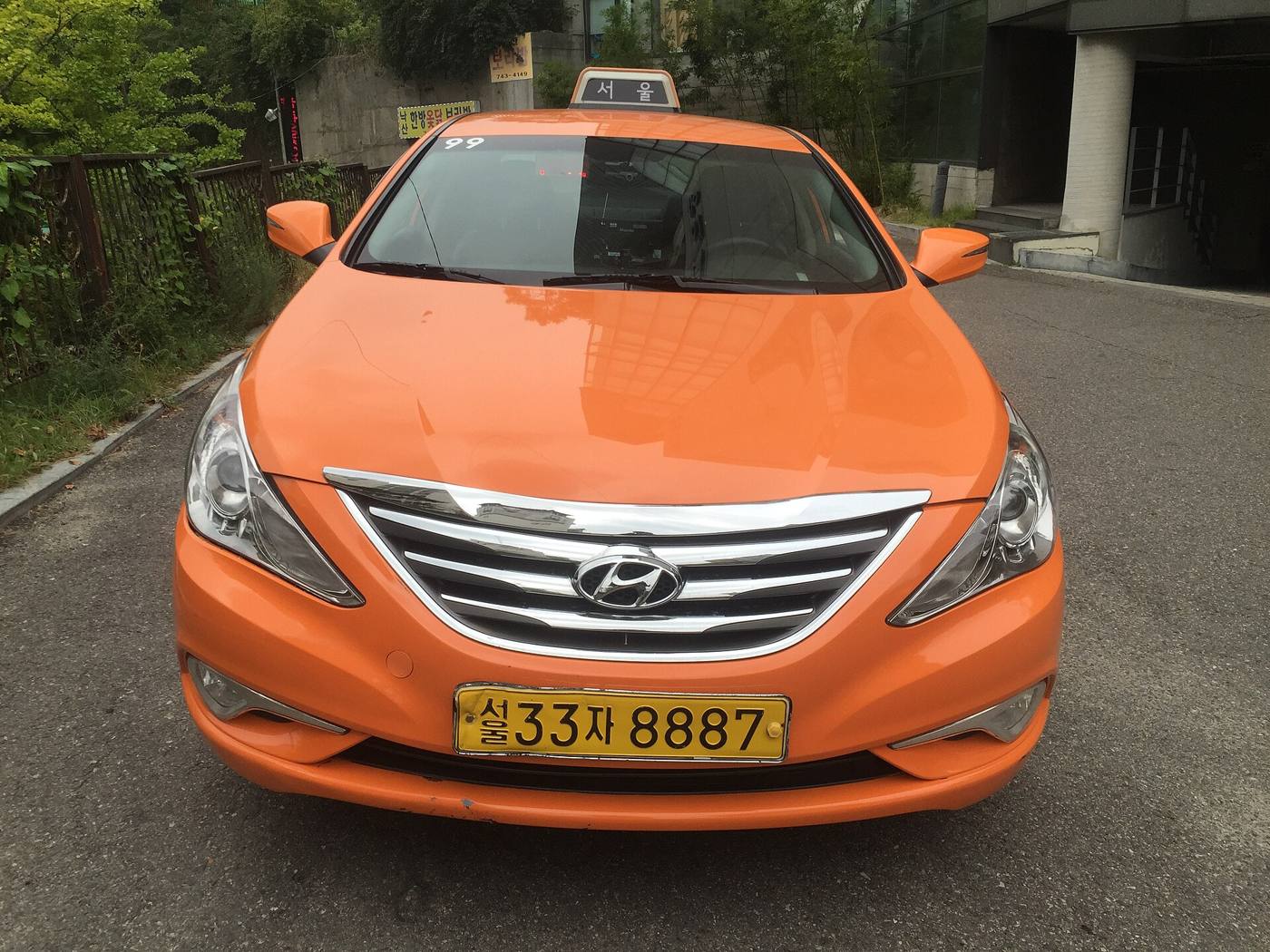
Seoul's standard sedan: ₩4,800 for 1.6 km, four passengers and a boot that holds two suitcases. Venti's base is ₩800 lower. Photo: U2em, Wikimedia Commons, CC BY-SA 3.0 (2015).
i.M: the big taxi you can wave at
i.M (아이엠택시) is the one large taxi in Seoul that behaves like a taxi. Nine Seoul taxi companies formed Jinmobility (진모빌리티) with the IT firm MHQ and launched it on 19 December 2020 with fourth-generation Carnivals in the 11-seat body, which matters for one reason: with a driver and five passengers the van qualifies for the motorway bus lane, so an i.M to the airport on a Friday evening moves when the sedans do not. The meter is higher, ₩5,500 for 2 km, ₩100 per 101 metres and ₩100 per 24 seconds, with a flat 20 percent surcharge from midnight to 04:00; the app fixes the fare before you book, and the meter is what you pay from a street hail. It can be booked in the i.M app, including airport pickups without a deposit, and, unlike Venti or TADA, it can be hailed on the street or taken from a rank. Supply is the complaint: the fleet is small and reviews are full of failed dispatches, so it is a plan B, not a plan.
Which one, in one paragraph each
Arriving with luggage, daytime, four or five of you: book a Venti through K-RIDE from the arrivals hall, check the multiplier, and if it reads above 1.5, walk to stand 8C and take the meter van instead; at 1.0 the Venti is about 60 percent of the stand's price.
Arriving after midnight: the International Taxi you booked yesterday for ₩100,000, or the stand van at the night meter. Do not chase a Venti at a 2.0 multiplier at 01:00; the meter van is cheaper and waiting.
Leaving for a morning flight: reserve a Venti the night before (30 minutes ahead is the minimum), or an i.M, which will use the bus lane. Uber's Premier Van gives you a fixed number, which on a rush-hour morning is its whole argument.
Around the city with bags: TADA's large tier takes your foreign card but its meter runs about 10 percent above a sedan; Venti at 1.0 is the same as a sedan and takes five of you. Neither is worth it for two people with backpacks, who should take the sedan.
You might like: Last Train in Seoul: When Trains Stop — 00:50 Weekdays, 23:50 Weekends
Don't do this
- Don't try to pay a Venti driver at the end. There is no cash option; the ride is charged to the card on file. If your card is not on file, the app will not show you the van.
- Don't bring six to an app van. Five passengers is the ceiling in a Venti, an i.M, a TADA van and Uber's Premier Van alike; the stand van at 8C or 7D is the one large taxi that legally takes more.
- Don't assume the multiplier is a night thing. It follows demand, not the clock. Rain at 17:00 can read 1.5; a dry Tuesday at 14:00 can read 0.8.
- Don't pay a return toll. One toll, the one driven, ₩3,200 on the expressway. A driver who asks for the toll both ways is asking for a tip.
- Don't confuse the deluxe sedan with the van. At the airport, 7C is a black sedan for three on the ₩7,000 meter; 8C is the van for five on the same meter. Same price, different car.
You might like: 18.9 Million Visitors Told Korea What They Couldn't Find: Transport, Restaurants, Money and Festivals in Korea's Official Exit Survey
FAQ
Q: What is Kakao Venti? The large-taxi tier in Kakao T: a Kia Carnival or Hyundai Staria van for up to five passengers, with a ₩4,000 base fare for the first 800 metres, ₩100 per 131 metres after that, and a demand multiplier from 0.8 to 4.0 applied to the whole fare. About 1,300 vans ran by late 2022, mostly in Seoul and its region.
Q: Can foreigners use Kakao Venti? Through K-RIDE, Kakao Mobility's app for non-residents, which accepts foreign phone numbers and foreign cards and lists Venti as a vehicle option. In the Kakao T app itself Venti needs a card on file because it cannot be paid in the car, and foreign cards fail registration often enough that K-RIDE is the dependable route.
Q: How much is a Venti from Incheon Airport to Seoul? On the meter, about ₩49,000 to Myeongdong at a multiplier of 1.0, the same as a sedan, plus the ₩3,200 expressway toll and time charges in traffic. At 0.8 it is about ₩39,000; at 2.0 about ₩98,000; the ceiling of 4.0 would be nearly ₩200,000. The app shows the multiplier and an estimate before you confirm.
Q: How much luggage fits in a Kakao Venti? One suitcase per passenger and golf bags are allowed under Kakao's terms; drivers may refuse moving boxes, furniture, appliances and any single item over 20 kg. Uber's Premier Van states four 30-inch suitcases for five passengers.
Q: Is there a large taxi at Incheon Airport without an app? Yes. Stand 8C at Terminal 1 and 7D at Terminal 2 have large vans on the deluxe meter (₩7,000 base, about ₩82,000 to Myeongdong by day). The International Taxi at 4C (T1) and 3C (T2) charges fixed zone fares of ₩100,000 to ₩140,000 for a van, booked 24 hours ahead.
Q: What is the difference between Venti, i.M and TADA? Venti is app-only with a surge multiplier and a ₩4,000 base; i.M is a real taxi you can hail, with a higher ₩5,500 base and no surge; TADA's large tier has a ₩5,000 base with no base distance, ₩100 per 123 metres and ₩100 per 35 seconds. All three carry five passengers in a Carnival or Staria.
Bottom Line
Korea's big taxi is not a premium product; at a multiplier of one, Kakao Venti costs within a few hundred won of the sedan and carries five people and five suitcases. The whole decision is the multiplier on the screen, and the whole obstacle for a visitor is that Kakao T's card registration fails on most foreign cards, which K-RIDE removes. From the airport by day, a Venti at 1.0 is about ₩49,000 to Myeongdong plus a ₩3,200 toll; the stand van at 8C is about ₩82,000 on the deluxe meter and needs no app; the International Taxi is ₩100,000 fixed and booked a day ahead. After midnight or above a 1.5 multiplier, take the stand. For a morning flight, reserve the night before, or let Uber's new Premier Van quote you a number that will not move.
You might like: Incheon Airport to Seoul Guide: AREX, Bus, Taxi and Does Google Maps Work in Korea? Naver Map and Kakao T.
Sources
- Kakao Mobility, Kakao T paid-service terms (Venti passenger limit, luggage and payment rules); Digital Today and Auto Diary on the 4 July 2022 Venti fare filing (₩4,000 base to 800 m, multiplier ceiling 2.0 to 4.0) and the daytime price inversion against sedans; ZDNet Korea and Dailian on the Staria Lounge Mobility launch for Venti (9 August 2021); iNews24 on TADA's April 2023 fare restructuring and Herald Economy on the 11 December 2023 reversal (₩100 per 123 m, ₩100 per 35 s); Digital Today and Seoul Economic Daily on the Venti fleet passing 1,000 vans in September 2022.
- Seoul Metropolitan Government taxi fare table effective 1 February 2023 (sedan, deluxe and large meters, night bands); Incheon International Airport Corporation taxi guidance (stand numbers, night surcharge, International Taxi contact); Seoul International Taxi (intltaxi.co.kr) zone fares and booking rules.
- Namu Wiki, "i.M (택시)" (Jinmobility, Carnival 11-seat body, bus-lane eligibility, meter); The Investor on TADA opening to foreign phone numbers and cards; Kakao Mobility k.ride app listings and 2026 guides on K-RIDE vehicle tiers; Digital Today and ET News on Uber Taxi Premier Van, 1 April 2026; Kakao Mobility's overseas-card notice on Kakao T.
- Ministry of Land, Infrastructure and Transport and Korea.kr on the Airport Expressway toll cut to ₩3,200 (September 2023) and the Incheon Bridge cut to ₩2,000 (18 December 2025); Kookje Shinmun on the illegality of round-trip toll demands.
You Might Also Like
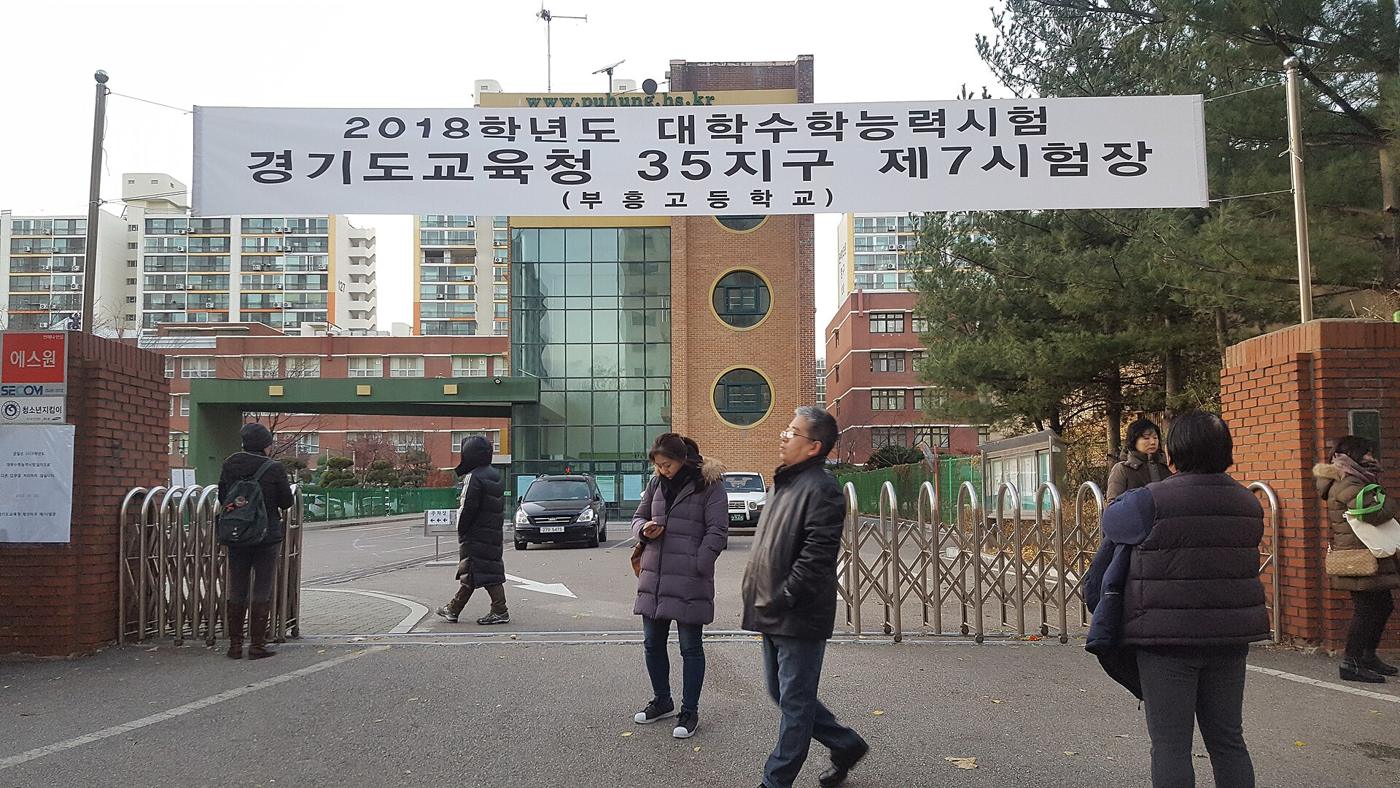
Suneung Day in Korea, 19 November 2026: The 35-Minute Flight Ban, 10 a.m. Office and Bank Openings, Extra Subway Trains and a Tourist's Hour-by-Hour Plan
Korea's Suneung exam is Thursday 19 November 2026. Last year the 35-minute listening-test flight ban (13:05–13:40) moved 140 flights, banks and the stock market opened at 10:00 and Seoul added 29 subway runs. An hour-by-hour plan for visitors.

Korea Hotel and Airbnb Cancellation Rules 2026: The Official Refund Table, the 24-Hour Rule, and the 12 November Ban on Unregistered Listings
Korea has an official refund table for hotel and guesthouse cancellations: free until 10 days out in peak season, 80–90% kept the day before. From 12 November 2026, platforms may not list unregistered stays. The rules, and where to complain.
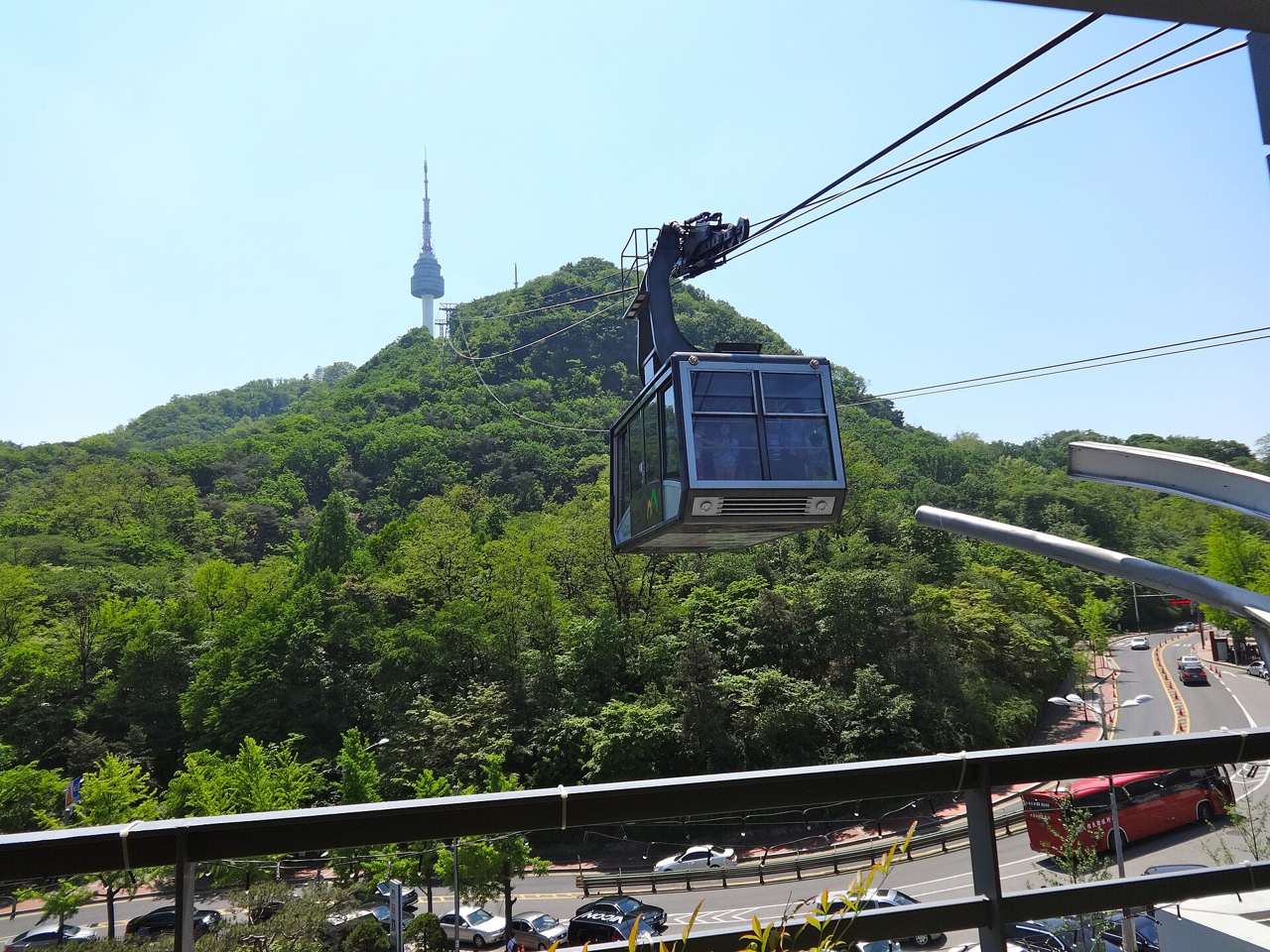
Namsan Cable Car, Seoul, Korea: ₩15,000, a 1–2 Hour Weekend Line, Three Cheaper Ways Up, and Why the Myeongdong Gondola Isn't Running
Namsan's cable car moves a few hundred people an hour in two 48-passenger cabins, so weekend lines run 1–2 hours. The ₩15,000 fare, the free incline elevator, the 954-step trail, buses 01A and 01B, and the court fight over the new gondola.