What Time Do Restaurants Close in Korea? Seoul Closing Times, Last Order, Break Time and Meal Hours
Last updated: 8 October 2026
The short answer: most restaurants in Korea, Seoul included, close between 21:00 and 22:00, and the kitchen stops taking orders (last order, 라스트오더) 30 to 60 minutes before that, so be seated by 20:30. Many also lock the door from about 15:00 to 17:00 for break time (브레이크타임), and most take one fixed day off a week, Monday more often than any other. After 22:00 you eat at a chicken-and-beer shop, a pojangmacha, a bar, a 24-hour soup house or a convenience store.
| Question | Answer in Korea (October 2026) |
|---|---|
| What time do restaurants close? | 21:00 to 22:00 at most ordinary restaurants; barbecue 22:00 to 23:00; bars, chicken shops and pojangmacha midnight to 02:00 |
| When is the last order? | 30 to 60 minutes before closing, so usually 20:00 to 21:30 |
| Is there an afternoon closure? | Yes, at many places: break time, about 15:00 to 17:00 (14:30 to 16:30 is the other common slot) |
| What time is lunch in Korea? | 12:00 to 13:00 for office workers; the busiest moment to pay is now 11:30 |
| What time is dinner in Korea? | 18:30 to 20:00 is the rush; restaurants reopen around 17:00 |
| Which day are they closed? | One fixed day a week; Monday most often, then Sunday and Tuesday |
| What is open all night? | 24-hour soup houses (gukbap, haejangguk), many McDonald's, most convenience stores (but not all) |
| How many hours does a restaurant open? | 10.6 hours a day on average, down from 11.0 in 2018 (government survey, below) |
No national law sets these hours. Article 43 of the Food Sanitation Act (식품위생법) lets a city or province restrict restaurant hours by ordinance, but no general limit is in force; the last blanket one, the pandemic curfew that at its strictest closed dining rooms at 21:00, ended on 18 April 2022. Some English pages still quote it, so if you read that restaurants in Seoul must stop serving at 21:00, that was a pandemic rule that ended in April 2022. Every restaurant now picks its own hours, which is why they differ so much by type of place.
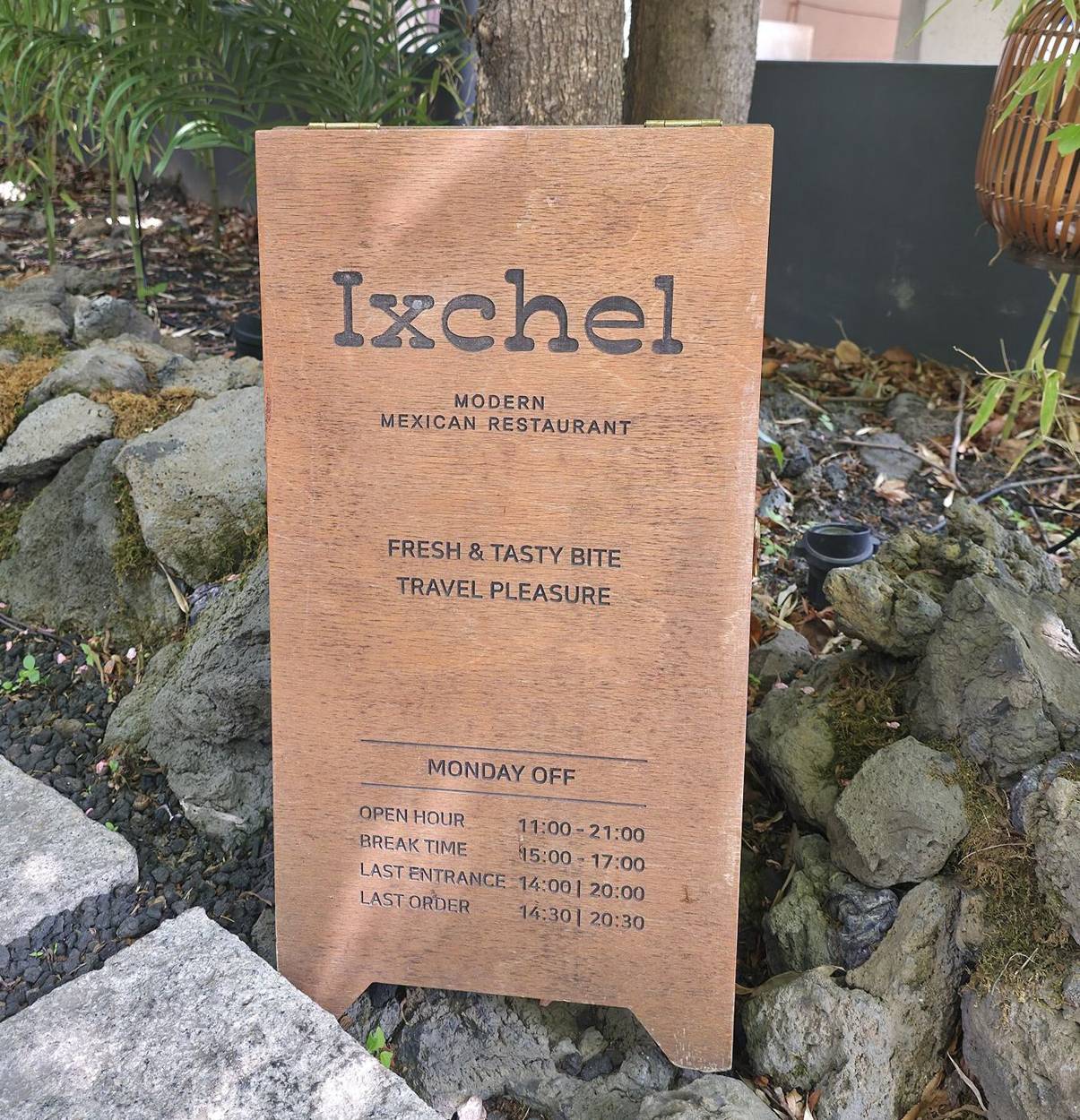
Every rule in this post on one board, outside Ixchel, a Mexican restaurant in Hapjeong, Seoul, whose sign happens to be in English: Monday off, open 11:00 to 21:00, break time 15:00 to 17:00, last entrance 14:00 and 20:00, last order 14:30 and 20:30. Photo: myplog, Wikimedia Commons, CC BY 2.0 KR (2025).
The five words on the door: 브레이크타임, 라스트오더, 정기휴무, 매진, 영업 종료. A Lonely Planet Korean phrasebook covers the ordering side; this post covers the closing side. As an Amazon Associate, EpicKor earns from qualifying purchases.
What time places close in Korea, by type
| Type of place | Typical hours | Last order | Late-night option? |
|---|---|---|---|
| Ordinary Korean restaurant (식당: stews, set meals, noodles) | 11:00 to 21:00 or 21:30; many break 15:00 to 17:00 | 14:00 to 14:30 at lunch; 20:30 to 21:00 at dinner | No |
| Korean barbecue (고깃집) | 11:30 or 16:00 to 22:00 or 23:00 | About an hour before closing | In nightlife districts, some run to midnight or 02:00 |
| Chicken-and-beer shop (치킨집) and pub (호프) | 16:00 to midnight, often 01:00 or 02:00 | 30 to 60 minutes before closing | Yes, the default after 22:00 |
| Pojangmacha and indoor pocha (포장마차, 실내포차) | 17:00 or 18:00 to 02:00 or later | Varies; ask | Yes |
| Soup house (국밥, 해장국, 설렁탕) | Many open 24 hours in office and nightlife districts; others about 06:00 to 22:00 | Rarely posted | Yes, the classic 03:00 meal |
| Kimbap and snack restaurant (분식, Kimbap Cheonguk type) | About 07:00 to 21:00 or 22:00; a few branches still 24 hours | About 30 minutes before closing | Only where the sign says 24시 and Naver Map agrees |
| Fast food (McDonald's, Lotteria, Burger King, Mom's Touch) | Roughly 10:00 to 22:00 or 23:00; McDonald's opens early for breakfast | Until closing | Many McDonald's branches run 24 hours |
| Café (카페) | Typically opens 08:00 to 10:00 and closes 21:00 to 22:00; 11.3 hours a day on average | 30 minutes before closing | Some 24-hour study cafés and chains |
| Department-store food hall | About 10:30 to 20:00, later at weekends | About 30 minutes before closing | No |
| Convenience store (편의점) | 24 hours at most branches | None | Yes, but at GS25 about one store in five no longer opens overnight |
| Gwangjang Market food alley | About 09:00 to 23:00, every day | Stall by stall | Until about 23:00 |
These are the hours you will see posted on doors and on Naver Map, not an official schedule; each place sets its own, and the board on the door wins. The café average comes from the government survey in the next section; the rest of this post explains each closure, and how to read the sign that announces it.
South Korea eSIM, 5GB for 15 days — because the hours are on Naver Map, not on Google Break time, last order and the Monday closure are listed for almost every Korean restaurant in Naver Map, in the 영업시간 line, and Google Maps has them wrong or missing for most. Naver Map needs data at the door, not later. As an Amazon Associate, EpicKor earns from qualifying purchases.
See the Korea eSIM on AmazonKorean restaurants are closing earlier: the official numbers
The government counts this. The Ministry of Agriculture, Food and Rural Affairs and the Korea Rural Economic Institute run an annual restaurant survey (외식업체 경영실태조사), and its 2025 edition, as reported by the Korea Economic Daily on 26 July 2026, put the average restaurant day at 10.6 hours, down from 11.0 hours in 2018. The share of restaurants open for less than 12 hours a day rose from 53.5 percent in 2018 to 68.6 percent, and the share open exactly 12 hours, the old 10:00-to-22:00 day, nearly halved, from 31.6 percent to 16.2 percent.
| Survey figure (외식업체 경영실태조사) | 2018 | Latest (2025 survey) |
|---|---|---|
| Average hours open per day, all restaurants | 11.0 | 10.6 |
| Share open less than 12 hours a day | 53.5% | 68.6% |
| Share open exactly 12 hours a day | 31.6% | 16.2% |
| Cafés, hours per day | — | 11.3 (11.9 a year earlier) |
| Bars (주점), hours per day | — | 9.1 (7.7 in 2021, the pandemic low) |
The reason is the same one behind break time and the dark convenience store: the extra hour at either end of the day costs more in staff than it sells. The survey's main release in March 2026 put the average operating margin at 8.7 percent in 2024, down from 12.1 percent in 2020, even though average sales rose 41 percent over the same five years. For a visitor, the practical result is simple: the average restaurant day is now 24 minutes shorter than in 2018, so an hour you remember from an older trip may have been trimmed; check Naver Map.
Lunch time and dinner time in Korea
Lunch time in Korea is 12:00 to 13:00, and dinner time is about 18:30 to 20:00. Noon to 13:00 is the standard lunch hour in most workplaces, and restaurants near offices fill from about 11:40. The real peak has moved earlier: payment data from the meal-voucher service Sikshin e-Sikgwon (식신e식권) found 11:30 was the busiest single time to pay for lunch in the third quarter of 2024, as companies staggered their lunch breaks, and the average lunch bill at ordinary restaurants was ₩10,037 nationwide and ₩10,798 in Seoul. Dinner runs later and looser: restaurants reopen from break time around 17:00, fill from about 18:30, and the rush lasts to around 20:00, when the last orders start. A dinner that turns into drinks (회식, the company dinner, is the classic case) simply moves to a second place, the 2차, after the restaurant closes, which is why the bar and chicken-shop hours in the table run so much later than the restaurant hours.
So the two quiet windows that rarely fail are 13:15 to 14:00, before the lunch last order, and 17:00 to 18:00, the hour after break time ends.
The Korean restaurant day, hour by hour
| Time | What is happening | What it means for you |
|---|---|---|
| 06:00 to 09:00 | Gukbap, seolleongtang and juk shops open; most other restaurants do not | Breakfast is soup, porridge, kimbap or a convenience store |
| 11:00 to 11:30 | Standard opening | Arrive by 11:15 to beat the office lunch wave |
| 11:30 to 13:30 | Lunch rush; set lunches (점심 특선) at ₩9,000 to ₩15,000 | Queues at popular places; many close the kitchen to new orders at 14:00 to 14:30 (last order) |
| 15:00 to 17:00 | Break time, usually one to two hours; 14:30 to 16:30 is the other common window | The door is locked. Cafés, bakeries, convenience stores, department-store food halls and 24-hour soup shops are open |
| 17:00 to 17:30 | Dinner service reopens | The quietest good hour to eat; no queue, full menu |
| 20:30 to 21:30 | Last order at most restaurants, 30 to 60 minutes before closing | Arrive by 20:30 for a 21:30 close, earlier for barbecue, which needs an hour |
| 21:00 to 22:00 | Standard closing; bars, chicken shops and pojangmacha run to midnight or later | After 22:00 you are eating in a bar, a chicken shop or a 24-hour place |
| Monday | The most common regular day off (정기휴무): 31 percent of the Yogiyo partner restaurants that set one; Sunday 29 percent; Tuesday 28 percent | Check the sign or Naver Map before crossing the city on a Monday |
Break time: the two hours every visitor walks into
You arrive at a restaurant at 15:20 and the door is locked. The lights are on, a cook is visible through the glass, and a small sign has the numbers 15:00 and 17:00 on it. You have met break time. Come back the next morning and the same restaurant is dark, because it is Monday. Come on the right day at 20:40 and you will be turned away with a smile and the word 라스트오더, last order, which was at 20:30. None of this is on the English map apps, and very little of it is in English at all.
Break time (브레이크타임, beureikeu taim, and yes, it is the English words) is a scheduled closure between lunch and dinner. The classic window is 15:00 to 17:00; 14:30 to 16:30 and 15:00 to 16:30 are the other two you will meet. The door locks, the sign flips, and the staff eat, prep and sit down. It is not a Seoul quirk or a fine-dining habit: Yogiyo, the delivery platform, analysed the hours its restaurant partners set in their own dashboards and found that, of the partners that set a break at all, about 70 percent set one of one to two hours, most often covering 14:00 to 15:00. Yogiyo does not publish what share of all restaurants take a break; the sign on the door is the only census.
Two things put it there. The first is the labour law: the Labour Standards Act gives a worker 30 minutes of rest for every four hours and an hour for eight, and in a kitchen that runs 11:00 to 22:00 the only place to put that hour is the dead zone after lunch. The second is money: with the average operating margin down to 8.7 percent (the survey above), paying staff to stand in an empty dining room from 15:00 to 17:00 is the first cost to go.
The newest twist, from late 2025, is restaurants selling the break instead of closing for it. E-Land's Ashley Queens (애슐리퀸즈) buffet chain, for example, sells a cheaper afternoon "dessert time" (디저트 타임) between lunch and dinner at its branches, and other buffet chains have tried similar afternoon menus — The Public reported in November 2025 that the industry now treats empty afternoon hours as something to sell rather than close. So in 2026 a break-time door may be locked, or it may be open with a different, smaller menu. Either way, the full kitchen is off.
What is open from 15:00 to 17:00: every café and bakery, every convenience store, department-store food halls (which run straight through, roughly 10:30 to 20:00 or 21:00), fast-food chains, 24-hour soup restaurants, Kimbap Cheonguk and its imitators, and most Chinese-Korean (짜장면) delivery shops. Our café guide explains why there are 100,000 of them to choose from.
Last order and last entrance: the two numbers before closing
Korean restaurants close the kitchen before they close the door. Last order (라스트오더, or 주문 마감, jumun magam) is the time after which no new order is taken, usually 30 minutes before closing and up to an hour at barbecue and hot-pot restaurants, where a table needs time. Last entrance (입장 마감) is the time after which nobody new is seated, and at busy places it comes before last order: the sign in the photograph above stops seating at 20:00 and stops ordering at 20:30 for a 21:00 close, and does the same at 14:00 and 14:30 for the lunch service.
The practical rule is to treat the posted closing time as an hour earlier than it says. A 21:30 close means arrive by 20:30, and by 20:00 if you want barbecue. Arriving at 20:50 to be told the kitchen is closed is the other closure visitors never see coming.
One more phrase closes restaurants early: 재료 소진 (jaeryo sojin, ingredients sold out) or simply 매진 (sold out). Soup houses that make one pot a day, noodle shops with a fixed batch, and anywhere with a queue at 11:00 can close at 14:00 with the day's food gone. Naver Map marks these as 조기 마감 (early close) when the owner updates it, which the good ones do.
Monday: the day Korean restaurants close
Korean restaurants take one fixed day off a week, the 정기휴무 (jeonggi hyumu, regular closure), and it is more likely to be Monday than any other day. Yogiyo's 2020–21 partner data found 31 percent closing on Monday, 29.1 percent on Sunday and 28.3 percent on Tuesday, with the other days far behind. The pattern is the same one that puzzles people in every country with a restaurant trade: the weekend is the money, so the rest day is the day after it, and the restaurants that stay open on Monday tend to take Tuesday instead, which is why a street can be half shut on a Tuesday too. Sunday is the other big one, and it follows the customers: in office districts such as Gwanghwamun, Yeouido and Gangnam's Teheran-ro, many lunch restaurants close on Sunday, or the whole weekend, because their diners are at home. Large supermarkets add their own closures: under the Distribution Industry Development Act (유통산업발전법) they close two days a month, the second and fourth Sundays in many districts, though several Seoul districts have moved those days to weekdays. Gwangjang Market is the reassuring exception for visitors: its food alley runs every day, Monday included, while the vintage arcade upstairs takes Sunday off (our Gwangjang Market second-floor guide).
The sign is easy once you know the pattern: 매주 월요일 휴무 (maeju woryoil hyumu, closed every Monday), with the weekday swapped as needed: 화요일 Tuesday, 수요일 Wednesday, 목요일 Thursday, 금요일 Friday, 토요일 Saturday, 일요일 Sunday. Some write 월요일 정기휴무. A restaurant with no day off writes 연중무휴 (yeonjung muhyu, open all year), which is common at chains and 24-hour places and rare at anything family-run.
Reading the sign, and reading Naver Map
The board on the door uses a small vocabulary, and it is worth learning the seven items on it.
| Korean | Romanised | Meaning |
|---|---|---|
| 영업시간 | yeongeop sigan | Opening hours |
| 브레이크타임 | beureikeu taim | Break time (afternoon closure) |
| 라스트오더 / 주문 마감 | raseuteu odeo / jumun magam | Last order |
| 입장 마감 | ipjang magam | Last entrance |
| 정기휴무 / 매주 ○요일 휴무 | jeonggi hyumu | Regular day off (closed every ○day) |
| 연중무휴 | yeonjung muhyu | Open every day of the year |
| 재료 소진 시 조기 마감 | jaeryo sojin si jogi magam | Closes early when ingredients run out |
| 명절 휴무 / 추석 연휴 휴무 | myeongjeol hyumu | Closed for the holiday (with dates) |
Naver Map, which is the app Koreans use for this (Google's data for Korean restaurant hours is thin and often wrong), shows the same information as a status line under the restaurant name: 영업 중 (open), 브레이크타임 (on break, with the reopening time), 곧 영업 종료 (closing soon), 영업 종료 (closed for the day) and 휴무일 (day off). Tap the hours to see the full week, including the break and the regular day off, and look for 영업시간 변동 가능 (hours may vary), which is the owner's warning that the board on the door wins. Our Naver Map and Kakao T guide covers the app itself.
Chuseok, Seollal and the August week
Korea's two big holidays, Seollal (Lunar New Year) and Chuseok (harvest festival), each run three days plus whatever weekend attaches, and the picture from inside the trade is more open than visitors fear. Yogiyo's analysis of the six-day Chuseok holiday in 2023 found that 89.2 percent of the restaurants that closed at all took only one day off, and the single most popular day to shut was the day before Chuseok itself (45.4 percent), when families travel, followed by Chuseok day. An earlier Yogiyo dataset put the average closure at 3.1 to 3.9 days across the four- and five-day holidays of 2020 and 2021. Chicken was the top delivery and takeout order that Chuseok, steamed and soup dishes (찜·탕) jump about 31 percent in takeout, and the 14:00 to 15:00 slot sees about 25 percent more orders than in the days before the holiday as families give up on cooking.
What stays open on the holiday itself: fast-food and coffee chains, department-store and mall food courts (with reduced hours), hotel restaurants, 24-hour soup houses and Kimbap Cheonguk, most restaurants in Myeongdong, Hongdae and other tourist districts, and convenience stores. What closes: family-run restaurants, the traditional markets on the day itself, and most of the neighbourhood places that also close on Monday. Our Chuseok guide covers the transport side; the next big closure is Seollal, in early February 2027.
The third closure season is August, the Korean summer holiday (여름휴가). Yogiyo found 12.8 percent of its partners closing three consecutive days in August and 11.5 percent closing for more than a week, and the sign that announces it, 여름휴가 안내, goes up a week or two before with the dates.
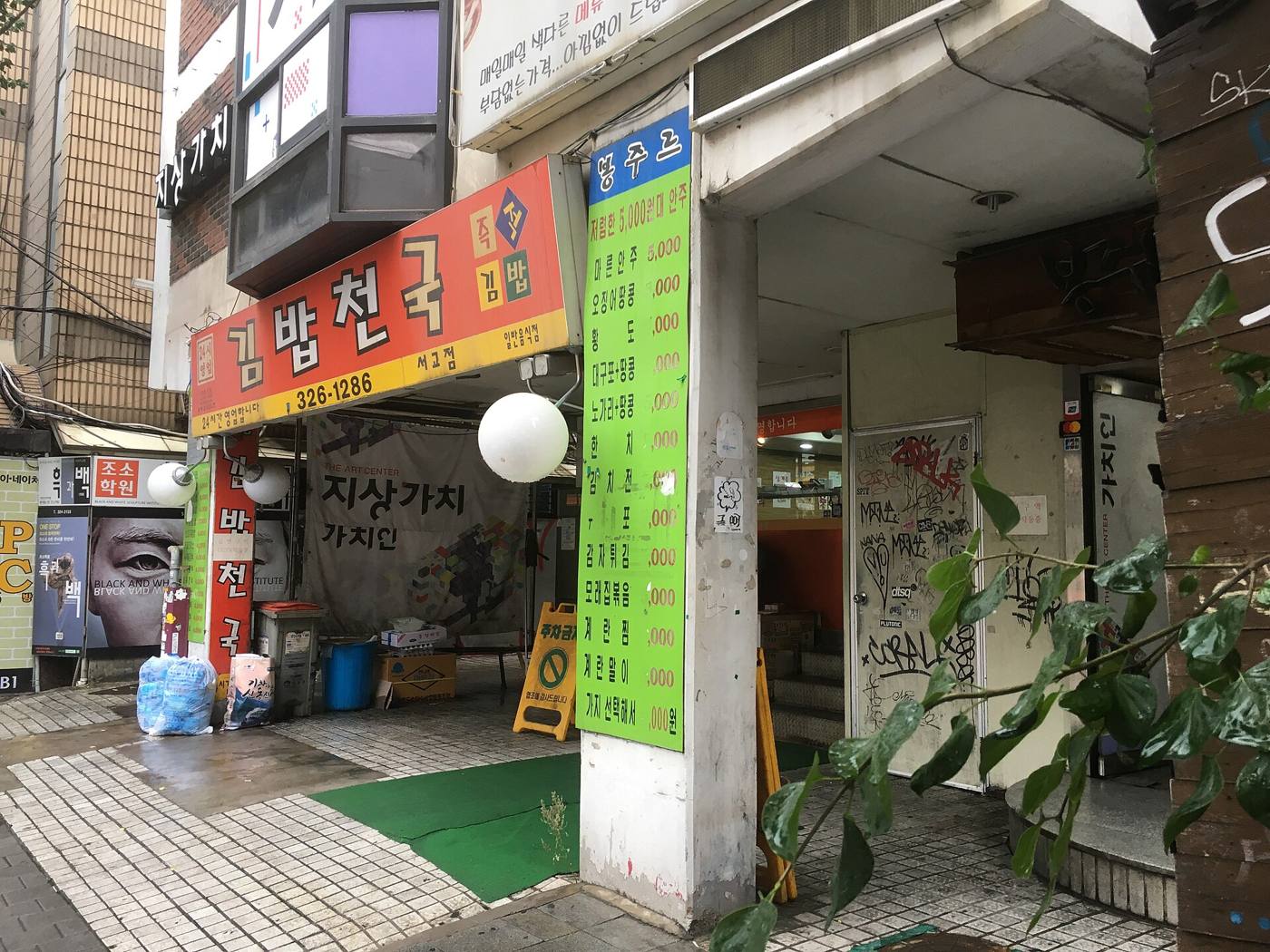
The Seogyo branch of Kimbap Cheonguk (김밥천국) in Mapo, Seoul, in 2019, with a 24시 badge on the sign and "24시간 영업합니다" (open 24 hours) under the phone number; the green board belongs to the bar next door. It is a promise a shrinking number of branches still keep, so check Naver Map before walking there at 02:00. Photo: Nesnad, Wikimedia Commons, CC BY 4.0 (2019).
What is open late at night in Korea: soup, chicken, and the convenience store that is not always
What is open late at night in Seoul: the 24-hour soup house, the chicken-and-beer shop, the pojangmacha, the bar, many McDonald's and most convenience stores. Seoul still has a real 24-hour food layer, and it is mostly soup: gukbap, seolleongtang, haejangguk (hangover soup) and the pork-rice-soup chains that came up from Busan run through the night in every district with offices or bars, and they are where Koreans eat at 03:00.
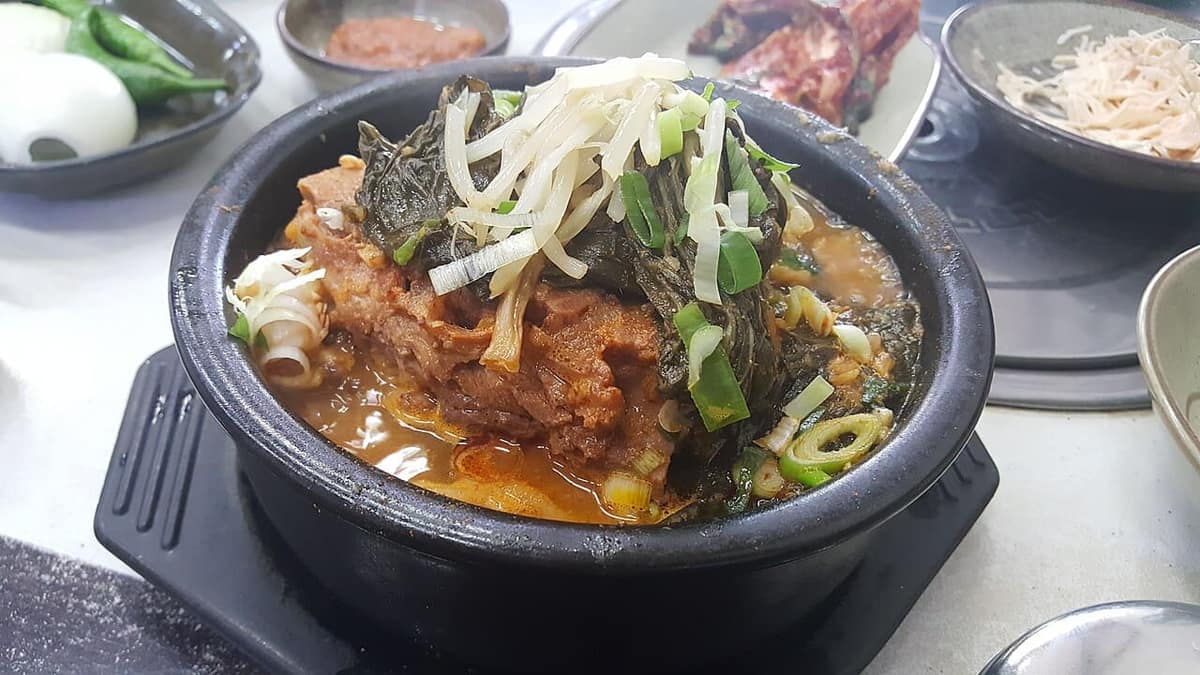
Ppyeodagwi haejangguk (뼈다귀해장국), pork-bone hangover soup with bean sprouts and dried cabbage leaves, one of the soups most often served behind a 24시 sign in Seoul's bar districts. Photo: Choi2451, Wikimedia Commons, CC BY-SA 3.0 (2016).
Fast food is thinner than visitors expect: most burger branches close at 22:00 or 23:00, and McDonald's is the exception, with many branches running around the clock (the store finder in the McDonald's Korea app shows which). Delivery apps fill the gap for anyone with a Korean address and phone number; our Baemin delivery guide explains why that is harder than it sounds for a visitor. Kimbap Cheonguk and its clones were the other pillar, and here the picture has changed: not every branch still runs overnight, so the 24시 on the sign is a claim to check on Naver Map rather than trust.
The clearest measure of the shift is the convenience store, the one business every visitor assumes is always open. At GS25, which lets owners choose, the share of stores not operating between midnight and 06:00 rose from about 15 percent in 2019 to 21.8 percent in 2023 (3,688 stores), so at the largest chain roughly one store in five no longer opens through the night. The reason is the same one that created break time: the night shift costs more than it sells. In a residential district after 01:00 the lit sign may be a locked door.
The chains are now selling the night by delivery instead. From 19 May 2026 GS25 (about 1,000 stores) began 24-hour delivery through the Coupang Eats app in Seoul, Gyeonggi and the big cities, and CU, which started with 1,000 stores in November 2025, widened it to about 7,500, and GS25 said its 22:00-to-03:00 delivery sales had grown 42.7 percent in six months, with late night rising from 17.4 to 21.7 percent of all its delivery orders. Like Baemin, Coupang Eats is built for a Korean phone number and address, so for most short-stay visitors the walk to an open store is still the answer.
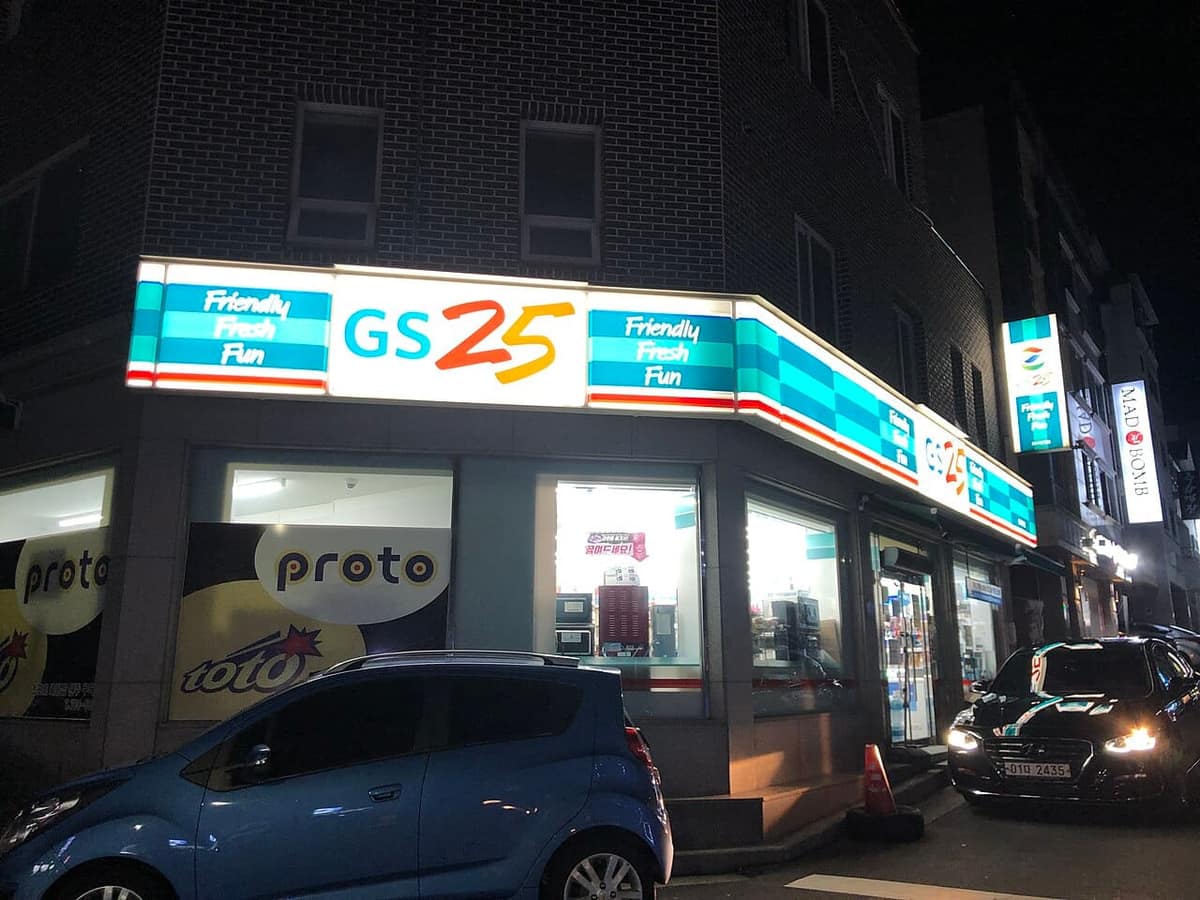
A GS25 at night in South Korea, photographed in 2020. GS25 is the chain whose owners choose their own hours, and about one in five of its stores now closes between midnight and 06:00, so a lit sign is not a promise. Photo: Choi Kwang-mo, Wikimedia Commons, CC0 (2020).
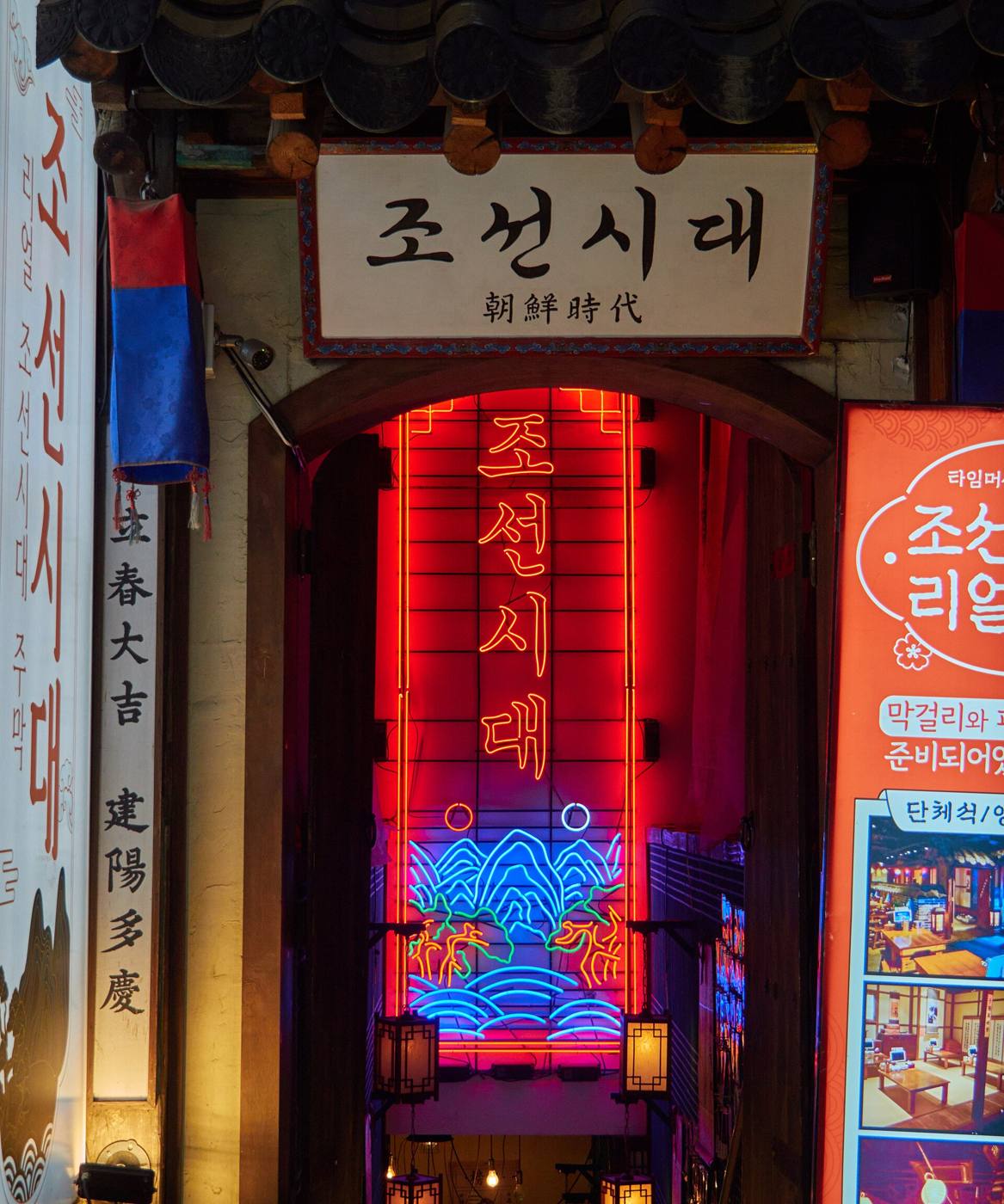
Joseon Sidae (조선시대), a jumak-style makgeolli pub in Hongdae. Pubs like this run long after the restaurants close, which is why "closed at 21:30" is never the end of a Seoul evening. Photo: Wikimedia Commons, CC0 (2024).
After the last train, the honest list is short: a 24-hour gukbap house, a chicken-and-beer shop, a pojangmacha tent (our pojangmacha guide; Seoul's biggest row is Jongno 3-ga), a bar, or a convenience store that is actually open, which at 06:00 is also breakfast (our convenience store breakfast guide). Our subway last-train guide has the cutoffs that put you in that position.
Reservations and the no-show fine that went to 40 percent
Most Korean restaurants do not take reservations, and the ones that do increasingly take them through the Catch Table app, which also runs the remote queue at the popular places (you register, leave, and get a text when your table is near). The law behind a booking changed on 18 December 2025, when the Fair Trade Commission revised the consumer dispute resolution standards to deal with no-shows.
The revision splits restaurants in two. A reservation-based restaurant (예약 기반 음식점), meaning omakase, fine dining and anywhere that buys and prepares ingredients against a specific booking, may now keep up to 40 percent of the expected bill as a no-show penalty, with the deposit ceiling raised alongside it; the old cap was 10 percent. An ordinary restaurant may keep up to 20 percent, double the old 10 percent, rising to 40 percent for a large order or group booking (the FTC's example was 100 rolls of kimbap) if the terms were made clear in advance. Two conditions protect the customer: the restaurant must tell you in advance, in writing (a text message counts), what the deposit and the penalty are, what counts as a no-show (including a lateness cutoff), and how refunds work; and if the penalty is less than the deposit, the difference must be refunded. Catch Table's "₩0 deposit" booking, launched in December 2024, holds a card instead of cash and charges the restaurant's cancellation fee if you do not show, so no deposit does not mean no penalty.
For a visitor the rule is simple. If a restaurant asks for a card to hold a booking and sends you the terms, the 40 percent is real and the lateness cutoff stated in the booking terms is real. Cancel through the app or by phone before the deadline in those terms and the deposit comes back. Do not book two places for the same night and choose later; that is exactly the behaviour the 40 percent was written for.
You might like: What Do Koreans Eat for Breakfast? 12 Real Meals, and Why a Third Skip It
The habits that keep you fed
- Eat lunch at 11:15 or 13:15, not 12:15. Office Korea eats 12:00 to 13:00, the peak payment time is now 11:30, and the queue is a Korean queue.
- Treat 15:00 to 17:00 as café time. It is not a mistake to be hungry then; it is a mistake to be hungry in front of a restaurant then.
- Arrive an hour before closing, ninety minutes for barbecue. Last order is the real closing time.
- Check the day off before a special trip. Monday first, then Sunday and Tuesday. The sign says 매주 ○요일 휴무; Naver Map says 휴무일.
- On Chuseok and Seollal, eat in tourist districts, malls, hotels and soup houses. The neighbourhood places take one to three days off, most often the day before the holiday.
- Verify "24 hours" on Naver Map after 23:00. Kimbap Cheonguk branches and convenience stores no longer promise the night.
- If you book with a deposit, read the text. Forty percent at a tasting menu, 20 percent elsewhere, and a lateness cutoff that counts as a no-show.
You might like: Korea Festival Calendar 2026–2027, Month by Month: The 27 Festivals Korea's Government Picked, and Which Dates Are Confirmed
You might like: 18.9 Million Visitors Told Korea What They Couldn't Find: The Official Exit Survey, and the Answers to All Four Gaps
You might like: Seoul Winter Festa 2026: planned dates, Cheonggyecheon lantern hours, the free Gwanghwamun market and the ₩1,000 skating rink
FAQ
Q: Why are Korean restaurants closed from 3 to 5 in the afternoon? That is break time (브레이크타임), a scheduled closure between lunch and dinner, usually 15:00 to 17:00 or 14:30 to 16:30, and one to two hours long at about 70 percent of the restaurants that set one. It covers the legally required rest for staff and cuts labour cost in the empty hours. Cafés, bakeries, convenience stores, food halls and 24-hour soup shops stay open.
Q: What time do restaurants close in Korea, and in Seoul? Most close between 21:00 and 22:00, in Seoul as elsewhere, with last order 30 to 60 minutes earlier, so be seated by 20:30. Barbecue restaurants run to 22:00 or 23:00; chicken shops, pubs and pojangmacha to midnight or 02:00; gukbap and haejangguk houses in busy districts run 24 hours. Lunch service often stops taking orders at 14:00 to 14:30. On average a Korean restaurant is now open 10.6 hours a day, down from 11.0 in 2018 (외식업체 경영실태조사).
Q: What time is lunch and dinner in Korea? Lunch is 12:00 to 13:00 for most office workers, but the busiest time to pay is now 11:30 (Sikshin meal-voucher data, 2024). Dinner runs from about 18:00, with restaurants busiest from 18:30 to 20:00. Arrive at 13:15 or 17:00 to skip the queue.
Q: What is open late at night in Korea? After 22:00: chicken-and-beer shops, pubs and pojangmacha (to midnight or 02:00), 24-hour soup houses, many McDonald's and a few Kimbap Cheonguk branches open 24 hours, and most convenience stores (at GS25, about four in five run all night). Check Naver Map before trusting a 24-hour sign.
Q: Why are Korean restaurants closed on Monday, or Tuesday? Monday is the most common regular day off, at 31 percent of the restaurants that set a day off in Yogiyo's partner data, followed by Sunday (29 percent) and Tuesday (28 percent). The weekend is the busiest period, so the rest day follows it, and restaurants that open on Monday often take Tuesday instead. The sign reads 매주 월요일 휴무 (Monday) or 매주 화요일 휴무 (Tuesday). Office-district restaurants close on Sunday instead.
Q: What does last order mean in a Korean restaurant? The time after which the kitchen takes no new orders, typically 30 minutes before closing and up to an hour at barbecue restaurants. Some restaurants also post a last entrance time, after which nobody is seated. Plan on arriving an hour before the posted closing time.
Q: Are restaurants open during Chuseok and Seollal? Many are. In 2023, 89 percent of the restaurants that closed for Chuseok closed for a single day; the day before the holiday is the most common day off. Chains, food courts, hotels, tourist districts, 24-hour soup houses and convenience stores stay open.
Q: What is the no-show penalty in Korea? Since 18 December 2025, a reservation-based restaurant (omakase, fine dining) may keep up to 40 percent of the expected bill if you do not show, and an ordinary restaurant up to 20 percent (40 percent for a large group or bulk order), provided it told you the terms in advance and refunds any deposit above the penalty.
Bottom Line
Restaurants in Korea close at 21:00 to 22:00, and the day has three closures a visitor never expects: the afternoon break from about 15:00 to 17:00, the last order that arrives an hour before the door shuts, and the fixed weekly day off that is most likely Monday. Around the two big holidays most places lose a day or two, usually the day before, and in early August a week. "Twenty-four hours" now belongs to soup houses more than to kimbap chains or convenience stores. And since December 2025 a table you book against a deposit is a table you pay for if you do not come. Read the board on the door, read Naver Map, eat at 11:30 and 17:30, and the city feeds you at every hour it is actually open.
You might like: Last Train in Seoul: When Trains Stop — 00:50 Weekdays, 23:50 Weekends and Korean Kiosk Panic Guide: How To Order Food In Seoul
Sources
- Yogiyo Partner Centre analyses of restaurant-set hours and closures: regular days off by weekday (Monday 31%, Sunday 29.1%, Tuesday 28.3%), break-time adoption (about 70%, 14:00 to 15:00 peak), holiday closures 2020 to 2021 (3.1 to 3.9 days) and August vacations (12.8% closing three days in a row, 11.5% more than seven days); Yogiyo Chuseok 2023 analysis (89.2% single-day closures, 45.4% closing the day before Chuseok, delivery and takeout order patterns).
- The Public, "Monetising empty hours is a survival condition: the restaurant industry's break-time push" (26 November 2025), and the Korea Rural Economic Institute's 2025 restaurant operator survey (operating margin 12.1% in 2020 to 8.7% in 2024, published March 2026); Labour Standards Act article 54 on rest breaks.
- Korea.kr and the Fair Trade Commission, revision of the Consumer Dispute Resolution Standards effective 18 December 2025 (reservation-based restaurants 40%, ordinary restaurants 20%, advance notice, deposit refund rule; wedding-hall schedule); Money Today (16 December 2024) on Catch Table's "₩0 deposit" card-hold booking.
- Herald Business (July 2021) and Money Today (22 February 2024) on GS25 stores giving up overnight operation (about 15% in 2019, 21.8% or 3,688 stores in 2023; Hankyung, 25 March 2024).
- Food Sanitation Act (식품위생법) article 43, on restricting business hours by city or provincial ordinance; Central Disaster and Safety Countermeasures Headquarters, end of social distancing including business-hour limits, 18 April 2022.
- Ministry of Agriculture, Food and Rural Affairs and Korea Rural Economic Institute, 2025 restaurant business survey (2025년 외식업체 경영실태조사), as reported by the Korea Economic Daily, 26 July 2026 (hankyung.com/article/202607255538i): average 10.6 hours a day against 11.0 in 2018; under 12 hours 53.5% to 68.6%; exactly 12 hours 31.6% to 16.2%; cafés 11.3 hours; bars 9.1 hours (7.7 in 2021). Margin and sales figures from the ministry's release of 29 March 2026, via Newsis (NISX20260328_0003567838).
- Money Today, 18 May 2026 (mt.co.kr/living/2026/05/18/2026051811041115197), on GS25's 24-hour Coupang Eats delivery from 19 May 2026 and CU's expansion to about 7,500 stores and GS25's late-night delivery figures (42.7% growth in six months; 17.4% to 21.7% of delivery sales).
- Sikshin e-Sikgwon (식신e식권) Q3 2024 lunch data, via Byline Network (16 October 2024): peak payment time 11:30, average lunch ₩10,037 nationwide, ₩10,798 in Seoul.
- Fair Trade Commission no-show revision as reported by YTN and Seoul Shinmun (October and December 2025): ordinary restaurants 10% to 20%, 40% for group and bulk orders with prior notice.
- Seoul Metropolitan Government media hub (mediahub.seoul.go.kr) on Gwangjang Market hours (food alley daily, about 09:00 to 23:00; vintage arcade closed Sunday); Distribution Industry Development Act on large-supermarket mandatory closing days.
- South of Seoul, "Restaurant Break Times in Korea," the one English treatment of the subject before this one.
You Might Also Like
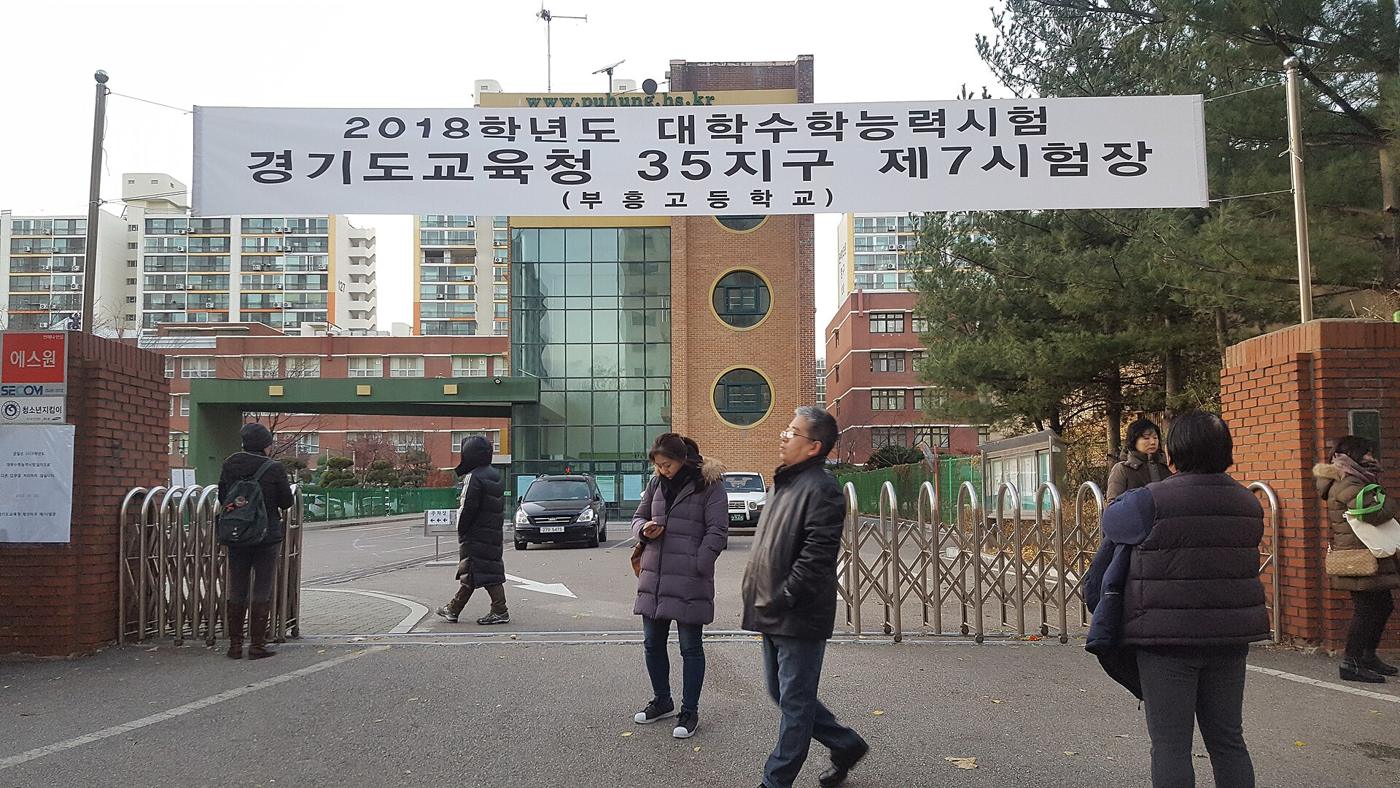
Suneung Day in Korea, 19 November 2026: The 35-Minute Flight Ban, 10 a.m. Office and Bank Openings, Extra Subway Trains and a Tourist's Hour-by-Hour Plan
Korea's Suneung exam is Thursday 19 November 2026. Last year the 35-minute listening-test flight ban (13:05–13:40) moved 140 flights, banks and the stock market opened at 10:00 and Seoul added 29 subway runs. An hour-by-hour plan for visitors.
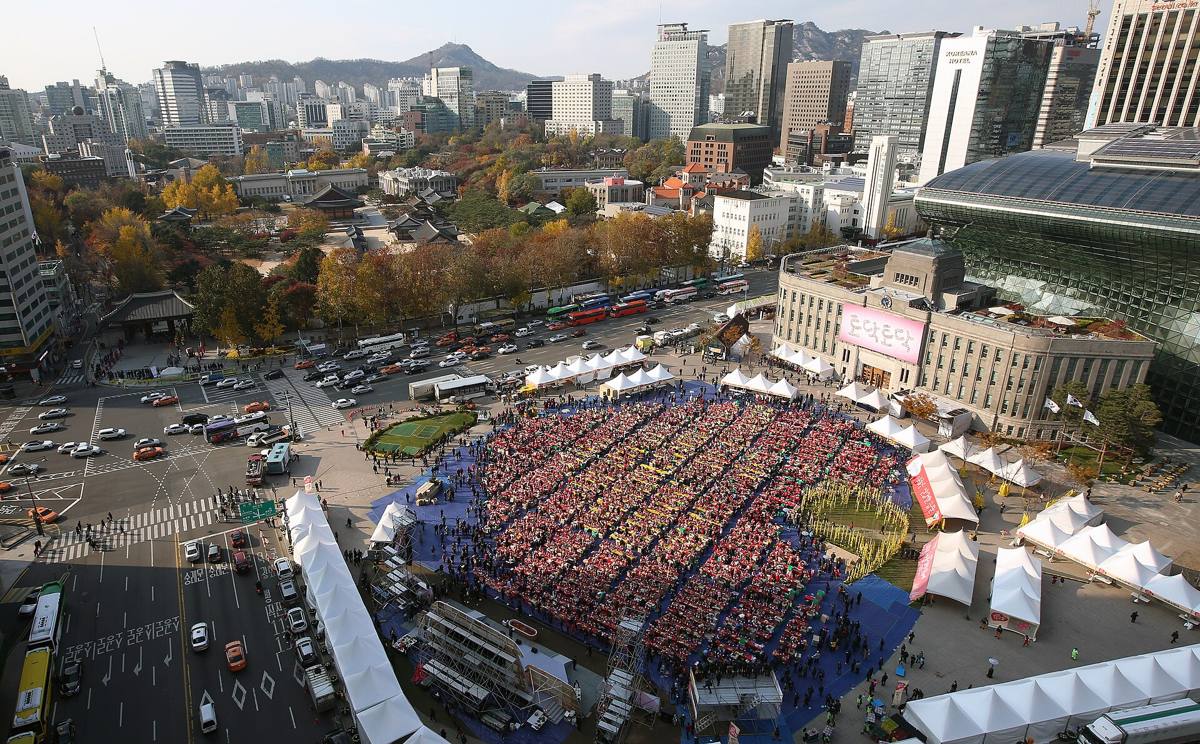
Kimjang Season in Korea 2026: What Kimchi-Making Costs, Salted Cabbage Prices, When It Happens and Where You Can Join
Kimjang season in Korea 2026: 2025 surveys put a family's kimchi-making at ₩201,151 to ₩404,280, salted cabbage pre-orders from ₩29,900 a 20 kg box (card price), and Museum Kimchikan's class costs ₩40,000. Dates by region, kimchi on planes.
Korea Hotel and Airbnb Cancellation Rules 2026: The Official Refund Table, the 24-Hour Rule, and the 12 November Ban on Unregistered Listings
Korea has an official refund table for hotel and guesthouse cancellations: free until 10 days out in peak season, 80–90% kept the day before. From 12 November 2026, platforms may not list unregistered stays. The rules, and where to complain.