Korean Convenience Store Breakfast: What Locals Buy
Most tourists imagine Korean breakfast as a hotel buffet, a bowl of soup, or maybe a famous toast sandwich in Myeongdong.
But a very normal Korean convenience store breakfast is quieter than that. It is a triangle gimbap grabbed before class. It is an iced coffee from the fridge. It is a boiled egg, a banana milk, a small rice bowl, or a microwave meal eaten at a tiny counter before the day gets serious.
That is the part visitors often miss.
Korean convenience stores are not only places to buy snacks after midnight. For students, office workers, commuters, and travelers, CU, GS25, 7-Eleven, and Emart24 can also function as a fast breakfast station. The food is not fancy. It is not trying to be traditional. It works because it is quick, cheap, predictable, and close to the subway. For the bigger lunch-box and celebrity-brand context, read EpicKor's Korean convenience store food guide.
If you want to understand how ordinary mornings work in Korea, look at what people buy when they have five minutes.
The exact coffee stick in every GS25 coffee corner — Maxim White Gold, on AmazonAffiliate link. As an Amazon Associate, EpicKor earns from qualifying purchases at no extra cost to you.
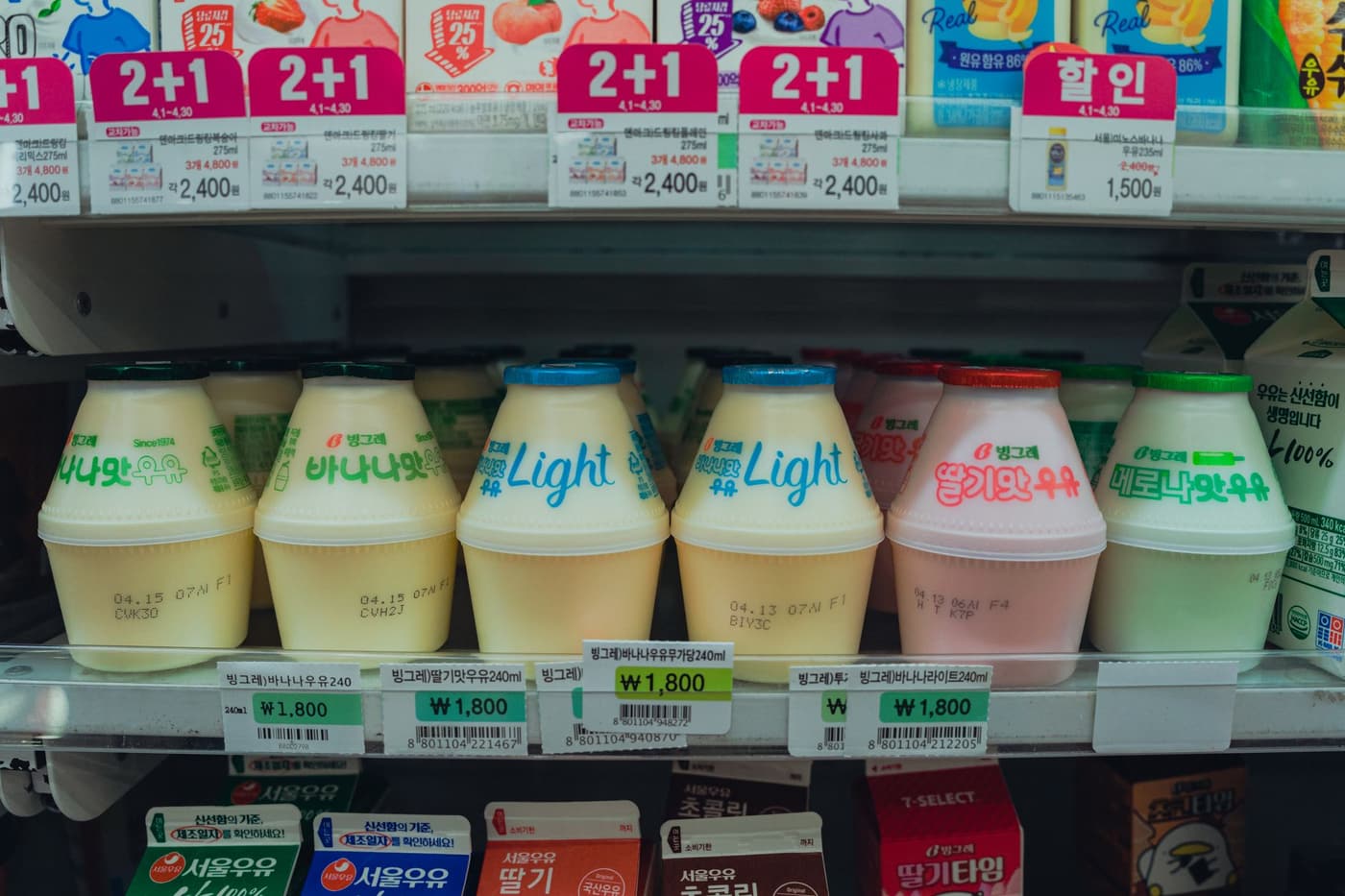
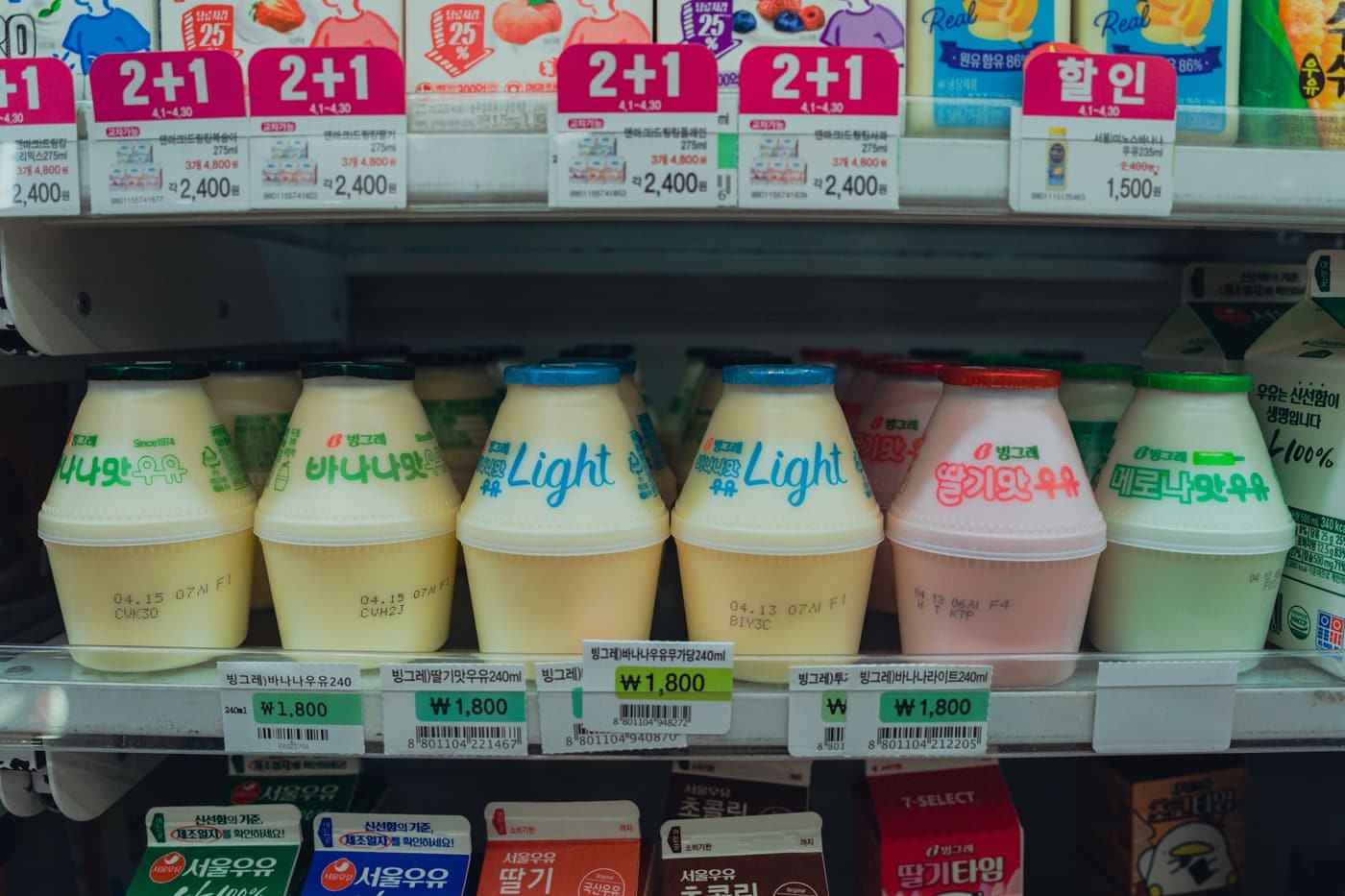
A Korean convenience store drink fridge can become part of a very normal breakfast plan. Photo by Theodore Nguyen on Pexels.
What Koreans Actually Buy for Convenience Store Breakfast
The most important thing to understand is that Korean convenience store breakfast is not one menu. It is a set of small choices: rice, bread, coffee, milk, eggs, or a microwave meal depending on the morning.
The classic local choice is samgak gimbap, or triangle gimbap. It is a triangular rice ball wrapped in seaweed, usually filled with tuna mayo, spicy tuna, tuna kimchi, beef, chicken, or other savory fillings. It is portable, cheap, and filling enough to carry you through a commute or a first class.
The reason triangle gimbap works so well in the morning is balance. Rice gives bulk, the filling gives flavor, and the seaweed wrapper keeps it neat. You do not need a spoon, a table, or a long wait.
If the seaweed wrapper is the part you keep noticing, EpicKor's Korean seaweed snack guide explains the difference between snack packs, gim sheets, and gimbap sheets before you buy the wrong type at home.
The second big category is ready-to-eat rice meals. These can be lunch boxes, small rice bowls, curry rice, fried rice, or simple microwave dishes. Some are more common at lunch or dinner, but in Korea the line between breakfast and lunch food is not always strict. If someone has an early shift, a long study day, or a hard commute, rice in the morning can make sense.
Then there are bread and bakery items. You will see sandwiches, cream bread, egg sandwiches, castella-style cakes, sweet red bean bread, and other soft packaged bakery items. This is the convenience store version of a lighter Western-style breakfast, but with Korean snack logic: soft texture, mild sweetness, tidy packaging, and easy pairing with coffee or milk.
For protein, locals may add a boiled egg, a small sausage, yogurt, or a protein drink. This is especially common when someone wants something more practical than a sweet pastry but does not want a full meal.
And then comes the drink.
Korean breakfast from a convenience store often includes one of these:
- iced Americano or bottled coffee
- banana milk or flavored milk
- soy milk
- yogurt drink
- bottled tea
- energy drink when the morning is rough
That drink choice matters. The food is fuel; the coffee or milk makes it feel like a routine.
What makes Korean convenience store breakfast unique is not that each item is rare. It is the way the store lets you build a breakfast by mood, time, and budget.
Maxim White Gold coffee mix — the exact stick in every GS25 coffee corner. The two convenience-store staples that actually exist on Amazon are the coffee and the toast flavour. For the sweet-savoury toast, the Isaac-style trick is Kewpie mayo plus sugar on the griddle — our Isaac toast guide has the ratio. As an Amazon Associate, EpicKor earns from qualifying purchases at no extra cost to you.
See Maxim White Gold on Amazon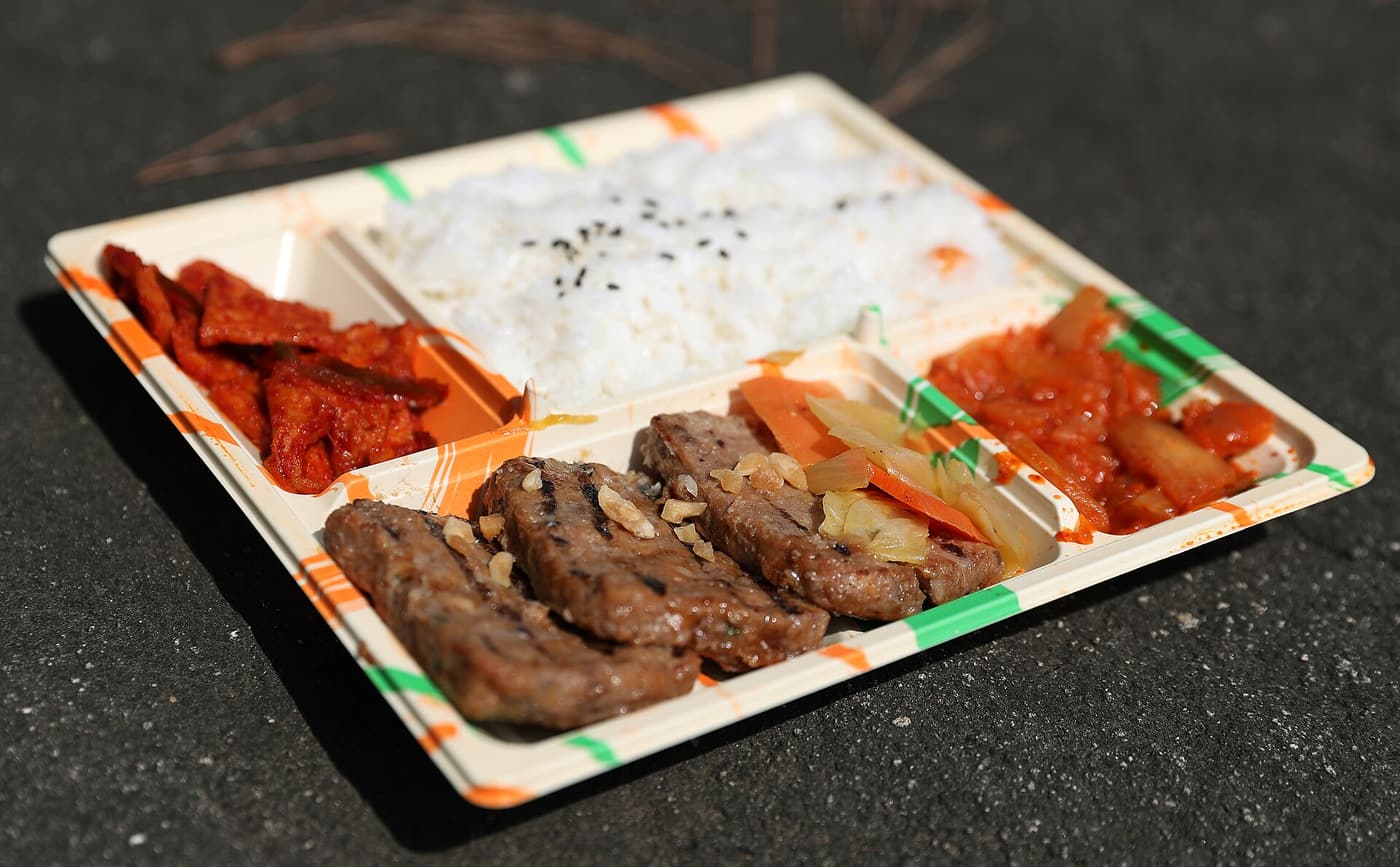
A convenience store meal as it is actually sold in Korea — compartments, a drink, and a microwave twenty seconds away. Photo by Republic of Korea (Korea.net), CC BY-SA 2.0.
The Local Logic: Fast, Small, and Predictable
Korean mornings can be compressed. Students leave early, office workers move with the subway schedule, and travelers try to reach palaces, tours, or train stations before the crowds.
Not every commuter breakfast comes from a convenience store, either. The warm corn-shaped custard cakes you can smell from the stairs are Deli Manjoo (델리만주), a franchise that has sold to this exact morning crowd from inside subway stations since 1998.
That is why convenience stores matter.
They remove friction.
You do not need to search for a restaurant. You do not need to read a long menu. You do not need to commit to a large meal. You can walk in, scan the fridge, choose something familiar enough, heat it if needed, pay, and leave.
This is the same everyday efficiency that shows up across Korean city life. Convenience store breakfast belongs to that world: small decisions designed to keep the day moving.
If Isaac Toast is the famous tourist-friendly Korean breakfast, convenience store breakfast is the ordinary version. Isaac Toast gives you a hot sandwich and a memorable sauce. The convenience store gives you a practical morning toolkit. Both are useful, but they answer different questions.
For a more specific Korean toast breakfast, see EpicKor's guide to Isaac Toast sauce and why the sandwich became famous.
The convenience store also fits Korea's mixed breakfast culture. Some people want rice, some want bread and coffee, some skip breakfast, and some grab whatever is available. The store lets all those habits exist on the same shelf.
That is why tourists should not walk in expecting a single "best breakfast." The better question is: what kind of morning are you having?
If you are heading to a train station, choose something neat and portable. If you are walking a lot, choose rice. If your stomach is not awake yet, choose coffee and a small bread. If you want a local-feeling snack, choose triangle gimbap and banana milk.
That is how locals think: not as a food tour, but as a morning solution.
For a home version of that morning solution, use EpicKor's Korean instant coffee mix guide for the drink side and the Korean pantry starter kit for the rice, sauce, seaweed, and quick-meal basics that make the routine repeatable. If the rice-box idea becomes lunch instead of breakfast, the Korean dosirak lunchbox guide shows how gim, rice, eggs, and small sides turn into a practical home routine.
What to Choose at CU, GS25, or 7-Eleven
The exact products change by store, season, brand collaboration, and neighborhood. Still, the basic categories are easy to recognize.
Here is a practical first-timer map.
| Breakfast pick | Why locals buy it | Best for |
|---|---|---|
| Triangle gimbap 삼각김밥 |
Rice, filling, and seaweed in one portable bite | Subway mornings, students, light breakfast |
| Egg sandwich 계란 샌드위치 |
Soft, familiar, and easy with coffee | Travelers who want low-risk breakfast |
| Packaged bread | Cheap, sweet, and shelf-stable | People who are not very hungry yet |
| Lunch box or rice bowl 도시락 / 덮밥 |
More filling than a snack, usually microwaveable | Long sightseeing days or early work shifts |
| Coffee or flavored milk 커피 / 바나나맛우유 |
Turns a small food item into a morning routine | Almost everyone |
If it is your first time, try this simple set: triangle gimbap, bottled coffee, and a boiled egg. It is not glamorous, but it teaches you the local rhythm quickly.
If you want something easier, choose an egg sandwich and iced coffee.
If you want something more Korean, choose a spicy tuna or tuna kimchi triangle gimbap with banana milk. The sweet milk and salty rice combination may feel unusual at first, but it makes sense as a quick comfort pairing.
If you are very hungry, choose a microwave rice bowl or lunch box. Most convenience stores have a microwave area, and many branches have a tiny counter or standing space. Be considerate: heat your food, move aside, and do not occupy a small eating area for too long during busy hours.
When to skip it
Convenience store breakfast is genuinely good, but it is not always the right call, and pretending otherwise wastes a meal.
- If you have one morning in Seoul and want a memorable meal, skip it. A ₩8,000 gukbap or a proper haejangguk is a better use of a single Korean breakfast than a ₩1,500 rice triangle.
- If you are shopping for souvenirs, skip the fresh case entirely. Gimbap, sandwiches, and lunch boxes are same-day food. Buy shelf-stable snacks instead.
- If the fresh case looks thin or picked over, walk to the next store. Convenience stores are usually within a few minutes of each other, and a well-stocked case in the morning is a direct signal that the branch actually turns over its fresh items.
- If you cannot read the label and have an allergy, be careful. Fillings are printed in Korean, and mayo-based and seafood fillings are extremely common. A photo translation app on the back label takes ten seconds.
One useful tip is to follow the shelf logic. If a store has several rows of the same sandwiches or gimbap in the morning, that usually means the branch expects those items to sell.
What It Actually Costs
Here is the part most guides leave out. A convenience store breakfast in Korea is cheap, but it is no longer as cheap as the internet thinks, and knowing the real numbers stops you from overspending on the wrong things.
| Item | Korean | Typical price (July 2026) |
|---|---|---|
| Triangle gimbap | 삼각김밥 | ₩1,200–1,900 |
| Oversized triangle gimbap (2XL–3XL) | — | ₩1,600–1,900 |
| Two-pack of smaller ones | — | ₩2,000–2,300 |
| Banana milk, 240ml | 바나나맛우유 | ₩1,800 (often ₩1,200 on promotion) |
| Store-brand brewed coffee | — | from about ₩1,000 |
| Sandwich | 샌드위치 | ₩2,500–4,500 |
A realistic full breakfast lands around ₩3,000–5,000 — one gimbap, one drink, sometimes a second item. That is roughly the price of a single café latte, which is exactly why the habit exists.
The Korean-source detail worth knowing: the ₩1,000 triangle gimbap is gone, and Korean media treated its disappearance as a small national milestone. A 2025 Hankyung piece ran under the headline "편의점 갔다가 화들짝… 1000원으로 삼각김밥도 못 산다" — ₩1,000 no longer buys a triangle gimbap. (₩1,000 is a banknote in Korea; the coins stop at ₩500.) If you find an older English blog quoting ₩900 gimbap, that page is out of date.
There is a way around it, and locals use it constantly: 마감 할인, the end-of-day markdown. Fresh items — gimbap, sandwiches, lunchboxes — get discounted as their sell-by time approaches, typically in the evening rather than at breakfast. It is the single biggest price lever in a Korean convenience store, and it is why the same sandwich costs different amounts depending on when you walk in.
How to Eat It Without Looking Lost
The most intimidating item for foreigners is usually triangle gimbap, not because it tastes strange, but because the wrapper has a system.
The seaweed is separated from the rice by plastic so it stays crisp. The package usually has numbered tabs. Pull the first strip, then remove the side wrappers in order.
Do not feel embarrassed if it takes a moment. Many tourists mess it up the first time.
For microwave meals, check the package for heating time. Some labels are in Korean, but you can often identify microwave icons and numbers. If you are unsure, choose simpler cold items like sandwiches, bread, milk, or gimbap.
At the counter, payment is straightforward. Put your items down, pay by card or cash, and bag them only if needed.
If the store has seating, treat it as quick-use space. Korean convenience store seating is practical, not cafe seating. It is fine to eat there, but it is not the place to spread out luggage, film strangers, or turn breakfast into a long office session.
That etiquette matters because convenience stores are part of daily infrastructure. Locals are not there for a theme experience. They are starting their day.
The best way to enjoy it is to keep your expectations honest. Convenience store breakfast is not supposed to beat a famous restaurant. It is supposed to solve a morning.
That observation is half the value.
Why This Breakfast Feels So Korean
What makes Korean convenience store breakfast unique is not the existence of sandwiches, rice balls, or coffee. Many countries have quick breakfast food.
The Korean part is how tightly the store fits into the city.
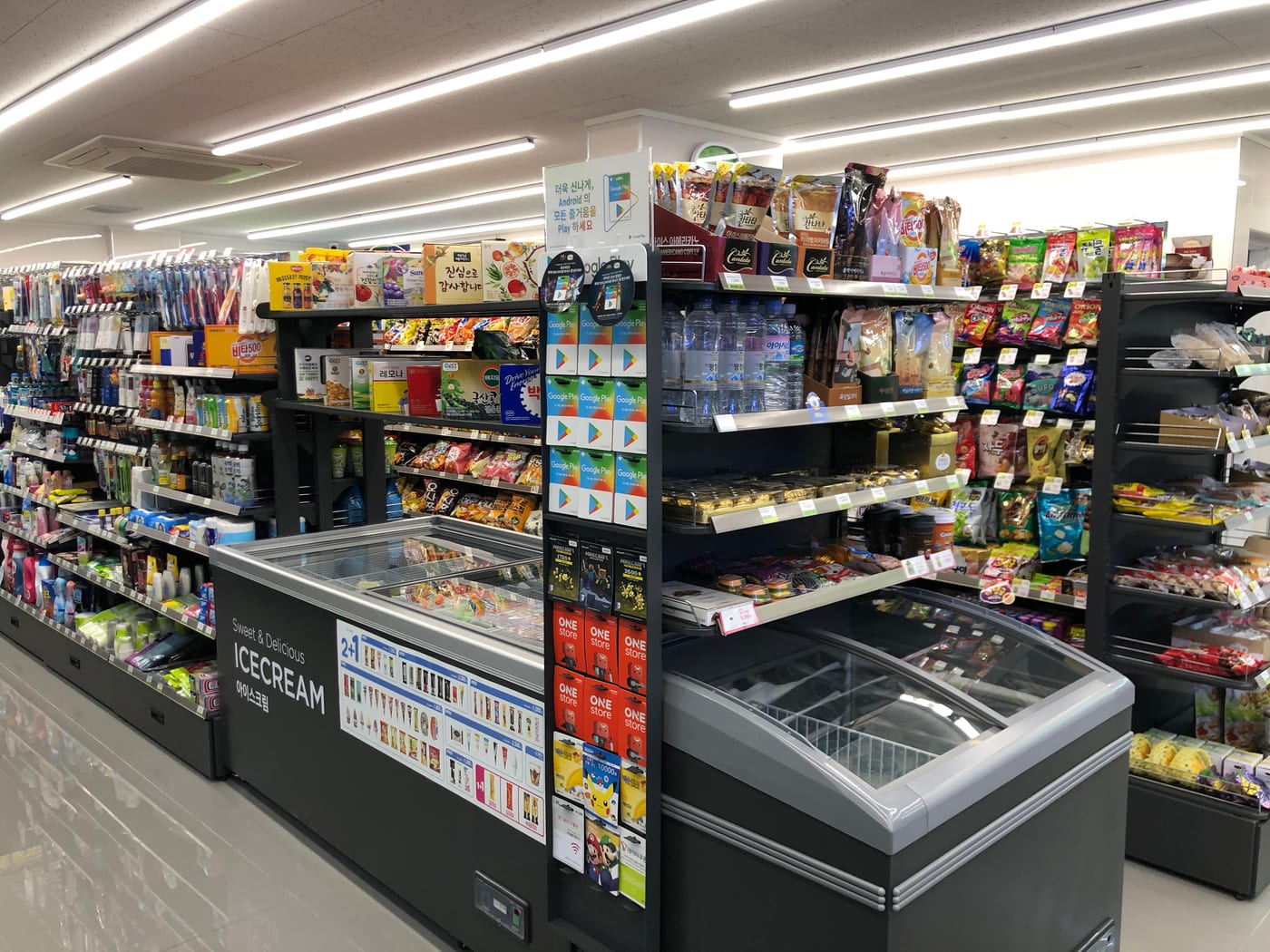
Convenience stores are everywhere in Seoul and other Korean cities. They sit near subway exits, officetels, schools, apartment complexes, bus stops, and hotel streets. That density changes behavior. If breakfast is always a two-minute detour away, it becomes easy to improvise.
This also explains why the food range is so broad. A Korean convenience store has to serve the student who wants cheap rice, the office worker who needs coffee, the traveler who wants a safe sandwich, and the person who insists breakfast is just a drink.
The store becomes flexible because Korean mornings are flexible.
There is also a comfort element. Packaged food can feel impersonal, but in Korea some items carry everyday nostalgia. Triangle gimbap can feel like school mornings. Banana milk can feel like childhood. A small coffee can feel like survival.
That is why convenience store food appears again and again in Korean daily life content. It is not just emergency food. It is a tiny mirror of habits, budgets, schedules, and taste.
For visitors, this is useful because it lowers the pressure of eating in Korea. Not every meal needs to be barbecue, market food, cafe hopping, or a reservation. Some mornings should be simple.
Buy the triangle gimbap. Drink the coffee. Watch the commute flow past the window.
You will understand more than you expected.
Maxim Mocha Gold — the yellow stick, for a Korea-at-home morning that takes thirty seconds. The lowest-effort way to recreate the convenience-store breakfast: one stick, hot water, and a triangle gimbap from the freezer aisle if your Korean grocer has one. As an Amazon Associate, EpicKor earns from qualifying purchases at no extra cost to you.
See Maxim Mocha Gold on AmazonFAQ About Korean Convenience Store Breakfast
Q: What is a typical Korean convenience store breakfast?
Simply put, a typical Korean convenience store breakfast might be triangle gimbap, an egg sandwich, packaged bread, a boiled egg, yogurt, banana milk, or bottled coffee. The exact choice depends on how hungry someone is and how much time they have.
Q: Is triangle gimbap good for breakfast in Korea?
Simply put, yes. Triangle gimbap is one of the easiest Korean convenience store breakfast choices because it is portable, filling, inexpensive, and available in many flavors.
Q: Can tourists eat inside Korean convenience stores?
Simply put, sometimes. Many stores have a small counter or seating area, but not all do. If seating is available, use it briefly and be considerate because locals may need the space too.
Q: What should I buy first at CU or GS25 for breakfast?
Simply put, start with triangle gimbap, bottled coffee, and a boiled egg if you want a local-feeling breakfast. If you want something easier, choose an egg sandwich and coffee.
Q: Are Korean convenience store breakfasts healthy?
Simply put, it depends on what you choose. A rice ball, egg, and unsweetened drink can be fairly practical, while sweet bread and flavored milk feel more like a snack breakfast. The convenience store gives you options, not one perfect answer.
The Morning Move Locals Understand
A Korean convenience store breakfast is not a bucket-list meal.
That is exactly why it is worth trying.
It shows you Korea at normal speed: people moving fast, choosing small comforts, balancing rice and coffee, spending little, and getting on with the day. It is not staged for tourists, and it does not need a long explanation once you experience it.
The best first order is simple: choose one triangle gimbap, one drink, and one small extra like an egg or yogurt.
If you want to compare this quick setup with a home-style rice meal, juk, gukbap, and gilgeori toast, continue with EpicKor's complete Korean breakfast guide.
Then step outside, eat slowly, and let the city wake up around you.
That little breakfast may teach you more about Korean mornings than a hotel buffet ever could.
Convenience store breakfast is part of EpicKor's Korean convenience store guide — the four chains compared, current prices, and what each product actually is.
Also in the section: Convenience store food and Samgak kimbap.
You Might Also Like
Delaffe: Korea's Convenience-Store Coffee Brand That Cut Its Price to ₩900
델라페 is not a drink, it is CU's own label — 150 million units a year, sold as a pouch you pour into a separate cup of ice. In March 2026 five of them dropped to ₩900, which makes the convenience store cheaper than Korea's cheapest café chain.
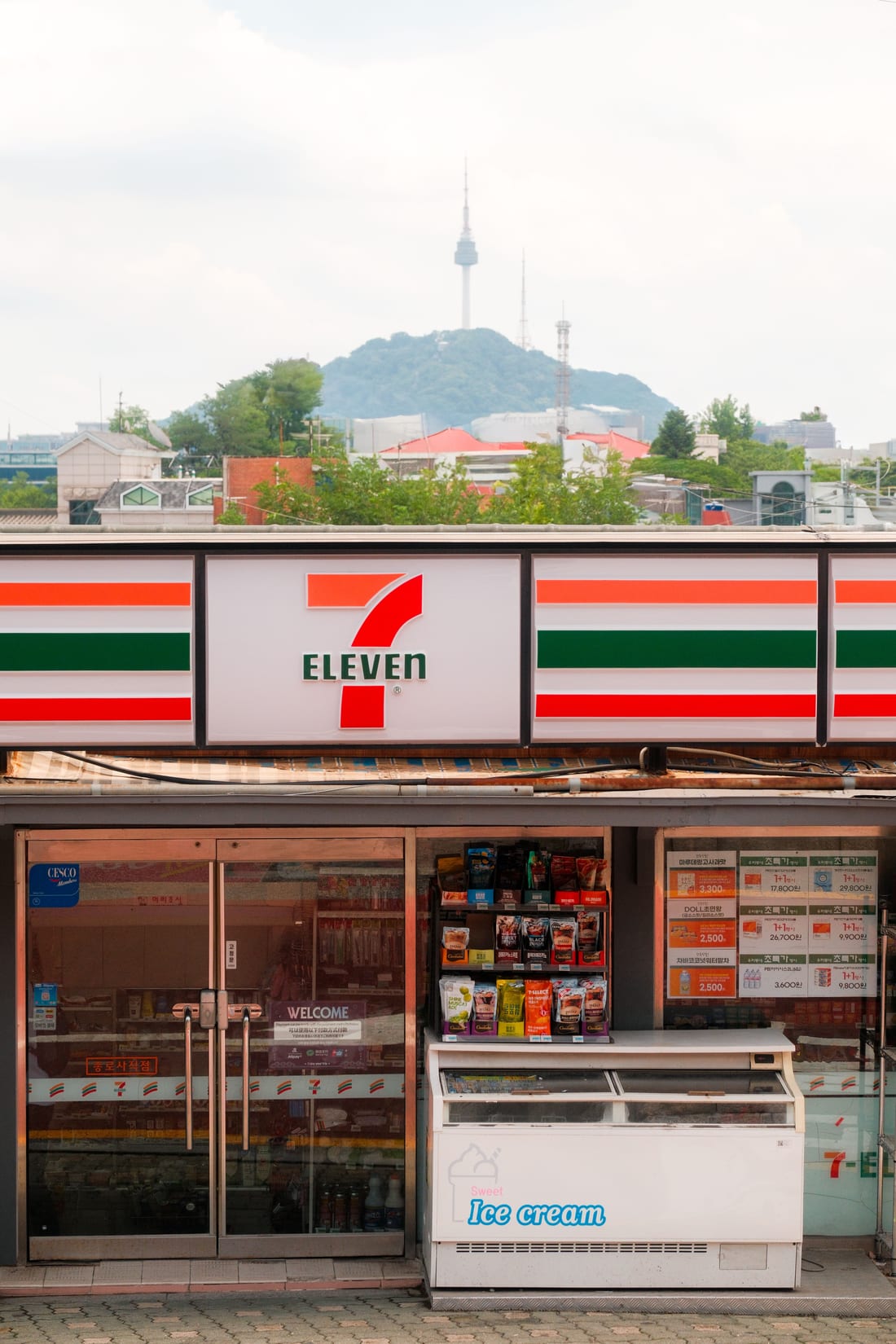
Korean Convenience Store Ice Cups: The Best-Selling Item Is a Cup of Ice
A cup of ice outsells everything else in a Korean convenience store. What it costs in August 2026 after June's price rise, why the drink is sold separately, what Koreans pour into it, and why the ₩800 cup tested cleaner than café ice.
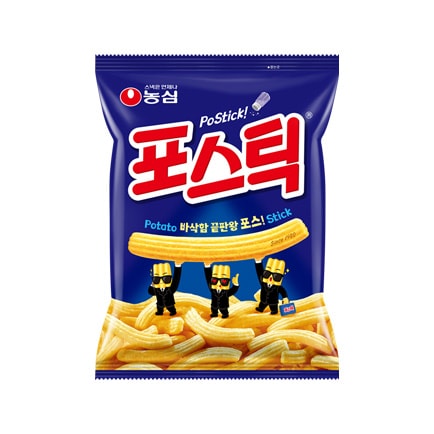
Postick: The Korean Snack That Used to Come With a Ketchup Packet
Postick (포스틱) has been on Korean shelves since 1980, it is only 23% potato, and it shipped with a ketchup sachet until the sachet got too expensive. What it costs now, and the ramyun-powder trick Koreans use on it.