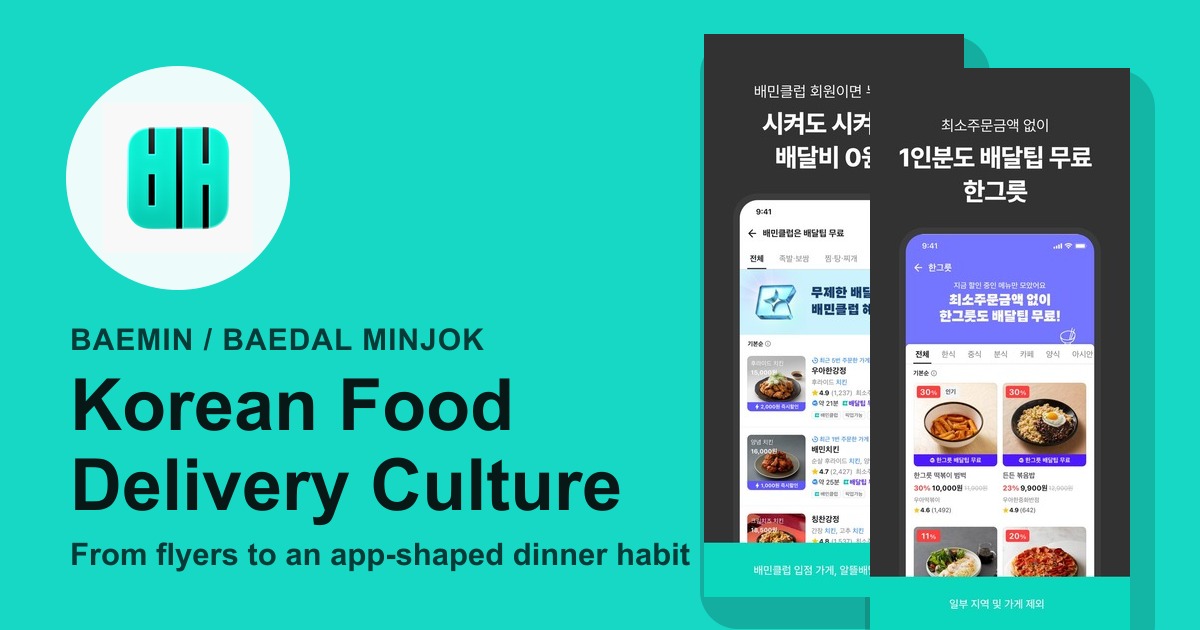
Korean Food Delivery Culture: How Baemin Changed Eating
Korean food delivery culture is not just about being too tired to cook.
It is about a country that turned dinner into an app-shaped reflex.
In Korea, delivery can mean fried chicken during a football match, tteokbokki after study group, soup when someone is sick, jjajangmyeon on moving day, bossam for a family night, iced coffee sent to an office, or one bowl of rice ordered by someone eating alone in a tiny apartment.
That is why Baemin matters.
Baemin, short for Baedal Minjok, did not invent Korean delivery. Korea already had a strong delivery habit long before smartphones. Chinese-Korean restaurants delivered noodles. Chicken shops delivered boxes. Flyers sat on apartment doors. Phone orders were normal. What Baemin changed was the feeling of the whole system.
It made delivery searchable, visual, trackable, reviewable, and normal for almost any mood.
Suddenly, "What should we eat?" became less like a question and more like opening a map of cravings.
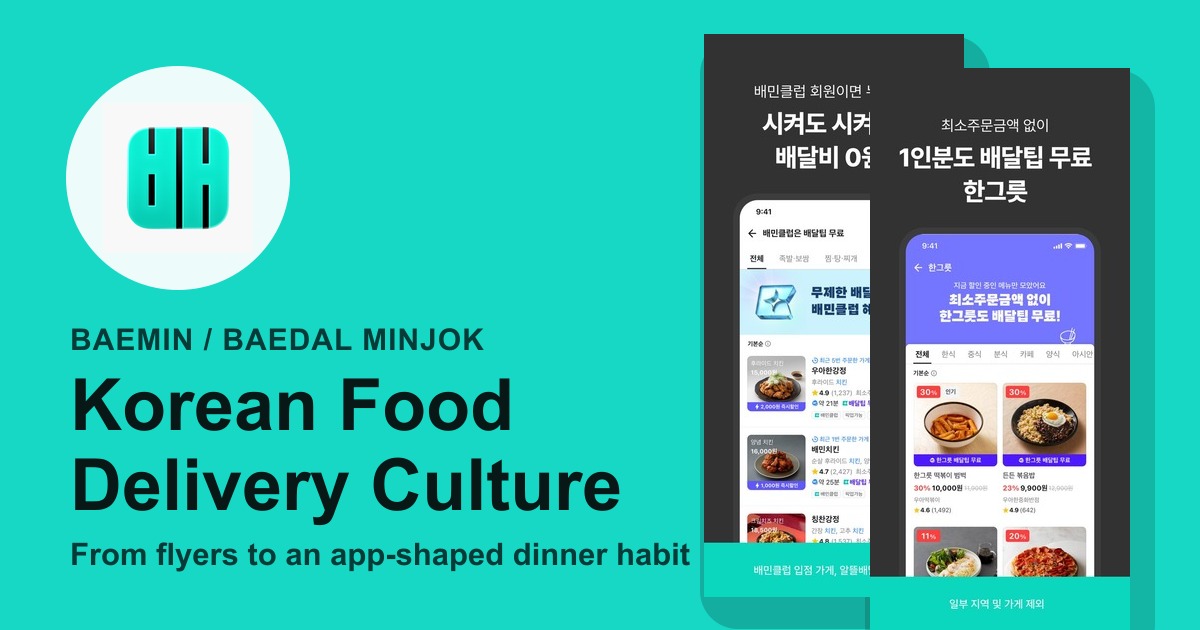
Korea Already Loved Delivery Before Apps
To understand Baemin, you have to understand that Korea was ready for it.
Delivery worked in Korea because the country already had the ingredients: dense cities, apartment living, fast restaurant turnover, late work and study schedules, strong phone-order habits, and a food culture built around sharing.
If you live in a dense Seoul neighborhood, a restaurant does not need to drive thirty minutes to reach you. It may only need to cross a few blocks. Apartment complexes put many customers close together. Office districts create predictable lunch and dinner demand. University areas create late-night snack demand. Families want full meals without cooking every side dish from scratch.
That density changes what "convenience" means.
In some countries, delivery feels like a backup plan. In Korea, it can feel like a normal part of the food system. You are not always replacing a restaurant meal with delivery. Sometimes delivery is the restaurant meal, just moved into your living room.
This is why Korean delivery culture developed around specific foods that travel well or feel socially complete: fried chicken, pizza, jokbal, bossam, tteokbokki, jjajangmyeon, jjampong, soups, stews, gimbap, dosirak, and late-night snacks. The food is often not delicate in a fine-dining way. It is built for arrival.
The real Korean detail is not only speed. It is completeness.
When delivery arrives, you often get sauces, pickles, radish cubes, side dishes, chopsticks, napkins, and sometimes a small extra. That expectation connects to the same Korean table logic EpicKor covered in Korea gives food even if you do not order it: the meal is not only the main dish. The small extras help the food feel like a proper table.
Baemin walked into that culture and organized it.
Instead of collecting flyers or remembering phone numbers, people could scroll through choices. Instead of guessing whether a shop was open, they could see hours. Instead of asking what was nearby, they could browse by category. Instead of trusting a menu photo on a paper flyer, they could check reviews, ratings, minimum orders, fees, and estimated delivery time.
That is a bigger change than it sounds.
It did not just make ordering easier. It made craving more searchable.
Korean food starter pack — compare on AmazonAffiliate link. As an Amazon Associate, EpicKor earns from qualifying purchases at no extra cost to you.
What Baemin Really Changed
Baemin changed Korean eating by making delivery feel like a daily interface.
Before apps, food delivery was practical but limited by friction. You needed the right flyer, the right number, some Korean phone confidence, and often cash. With apps, the meal became easier to compare. A person could open one screen and see chicken, noodles, cafe drinks, convenience items, Korean food, Japanese food, bunsik, dessert, and late-night menus fighting for attention.
That turned the app into a kind of food mood board.
You do not only search "chicken." You browse until your appetite recognizes itself.
This is why Baemin's design and tone mattered. The brand became known for playful copy, bold typography, and a very Korean sense of casual humor. It made the app feel less like a utility and more like a familiar voice asking, "So, what are we eating today?"
The scale shows how deeply this became part of daily life. Maeil Business News reported in 2025 that Woowa Brothers said Baemin had reached about 6.5 billion cumulative app orders over 15 years and that transaction value through the app had passed 153 trillion won. The same report said Baemin launched on June 25, 2010, first as a guide app replacing restaurant flyers, and had more than 21 million monthly users connected to about 300,000 stores at the time of the report.
Those numbers are not just business trivia.
They explain why delivery in Korea can feel like infrastructure. A normal person may not care who owns the platform or what investors think about it. They care that dinner appears, the rider knows where to go, the order history remembers what they liked, and the app reduces the little decisions that make a tired evening harder.
Baemin also helped change restaurant behavior. Restaurants had to think about photos, packaging, ratings, delivery menus, app exposure, and whether a dish could survive the trip. Some meals are now designed with delivery in mind from the beginning. A soup lid needs to hold. Fried food needs ventilation. Side dishes need separate packaging. A one-person meal needs to feel complete without becoming too expensive.
That is the quiet shift.
Baemin did not simply digitize delivery. It pushed restaurants and customers to think in app-shaped meals.
Korea-at-home note: As an Amazon Associate, EpicKor may earn from qualifying purchases. If this article makes you want a simple Korean delivery-style pantry, compare a broad Korean food starter pack before buying random snacks one by one.
Why Delivery Fits Korean Daily Life So Well
Korean delivery works because it solves real daily problems.
The first problem is time.
Korea's work and study rhythms can be intense. Office workers stay late. Students go from school to academy to home. Parents juggle schedules. Couples meet after long commutes. Friends gather late because everyone had something before dinner. Delivery fits into those gaps because it does not demand a full restaurant plan.
The second problem is space.
Many people live in apartments or small rooms. Cooking a full Korean meal at home can mean buying ingredients, preparing rice, cooking soup or stew, making side dishes, cleaning pans, and storing leftovers. Delivery turns that work into a few taps. That does not mean Koreans do not cook. It means delivery gives people another way to access a meal when the energy is gone.
The third problem is group decision-making.
Korean food is often social. Fried chicken is better with people. Jokbal and bossam are built to share. Tteokbokki can become a snack table. Delivery lets a group turn a room into a casual meal space. You do not need a reservation. You do not need everyone to travel to the same restaurant. You only need agreement.
The fourth problem is weather.
Rain, heat, snow, air quality, and humid summer nights all make delivery more tempting. Korea has many walkable food streets, but there are days when the smarter choice is staying inside.
Then there is the emotional reason: delivery feels like permission to pause.
You can be alone, tired, underdressed, busy, sick, lazy, focused, or halfway through a drama episode. Delivery does not ask you to become presentable. It lets the meal come to the version of you that exists right now.
That is why Korean food delivery culture connects naturally with solo dining too. A person eating alone no longer has to choose between cooking, convenience-store food, or feeling awkward at a restaurant. Apps make one-person ordering easier, even if minimum-order rules and fees still matter.
For travelers, this is both helpful and tricky.
The helpful part is obvious: Korea has a powerful delivery ecosystem. The tricky part is access. Some apps may require Korean phone verification, Korean-language navigation, local payment methods, or addresses written in a way the system understands. Tourists often find that food delivery looks easy from the outside but becomes harder at the payment screen.
If you are visiting Korea, do not build your whole trip around app delivery unless you know your hotel, phone, and payment setup will work. It may be easier to ask hotel staff, use a concierge-friendly option, order through a Korean friend, choose restaurants that support easier foreigner ordering, or simply walk to the dense food streets around you.
And honestly, that is not a bad outcome. Some of Korea's best food memories still happen outside the app.
The Menu Categories Tell You How Korea Eats
Open a Korean delivery app and the categories feel like a cultural map.
Chicken is not just chicken. It is a social plan. Fried chicken and beer, called chimaek, can turn a night into an event without anyone cooking.
Bunsik is not just cheap food. It is comfort: tteokbokki, twigim, sundae, gimbap, and simple noodle dishes that feel casual and familiar. This connects with the same everyday-food logic behind EpicKor's Korean ramen guide. Some foods are not fancy because they are not trying to be. They are there when the mood is simple.
Korean soups and stews work because they solve the "real meal" problem. A hot jjigae or guk can feel more nourishing than snacks, especially when it arrives with rice and side dishes.
Cafe delivery shows another shift. In Korea, coffee is not only something you drink at a cafe. It can be sent to the office, ordered during study time, or added to a group order. That connects with EpicKor's Korean cafe culture guide: coffee is often a space, but it can also be a small emotional tool.
Convenience food delivery and quick commerce add another layer. The boundary between restaurant, convenience store, cafe, and grocery has become softer. People can order a meal, a drink, a snack, or small everyday items with similar habits.
This is where Baemin's influence becomes bigger than "food delivery app."
It trained people to think of local consumption as something that could be summoned.
That does not mean everyone loves the results. Delivery fees, platform commissions, rider safety, packaging waste, restaurant dependence on app rankings, and discount competition are real concerns. In 2026, platform ownership and strategy are still business stories too; Yonhap reported in May 2026 that Delivery Hero was reviewing options around Woowa Brothers, the operator of Baemin.
But for culture, the main point is simpler.
Once a country gets used to summoning meals this easily, the meaning of "going out to eat" changes. Restaurants are no longer only places you visit. They are also nodes in a neighborhood delivery system.
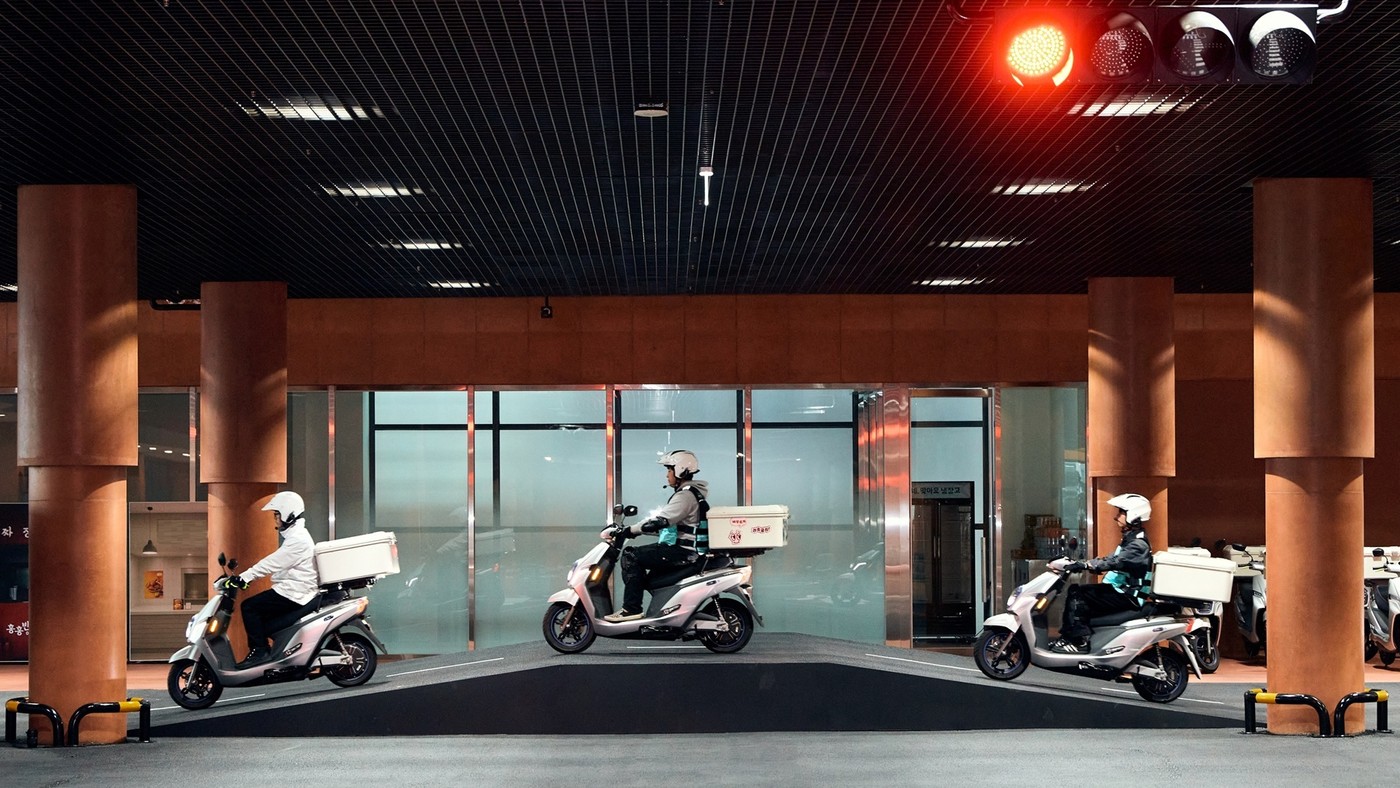
How To Understand Korean Delivery as a Visitor
If you are a visitor, the first thing to understand is that delivery is not always the easiest option.
That sounds strange after a whole article about convenience, but it is true. Delivery is convenient when you are already inside the Korean system: address format, local phone number, payment, language, app account, and building access. Without those pieces, the process can feel weirdly difficult.
So use Korean delivery culture as something to understand first, and as a tool second.
If you can order, start simple. Choose food that travels well. Fried chicken, gimbap, tteokbokki, soups, stews, pork cutlet, simple rice bowls, and cafe drinks are easier starting points than delicate restaurant dishes. Watch the minimum order amount. Check delivery fees. Look at recent reviews, not just star ratings. Be ready for a phone call or message if the rider cannot find the entrance.
If you cannot order, recreate the feeling in easier ways.
Buy fried chicken and take it back to your hotel. Pick up gimbap and convenience-store drinks. Use a food court. Try a late-night bunsik shop. Visit a market. If it is late, check first: most restaurants close at 21:00 to 22:00, and our guide to what time restaurants close in Korea lists what stays open after that. Or build a small room meal with ramen, kimchi, seaweed, and snacks.
That is still part of the same culture. Korean delivery is not only about the app. It is about flexible eating: meals moving to where people actually are.
If you want to recreate a small delivery-table feeling at home, keep it practical. One hot dish, one crunchy or pickled side, one rice or noodle base, and one drink is enough. Do not overbuild it.
Delivery-table shortcut: For an easy Korean comfort-food setup, compare Korean kimchi stew with tofu with a simple Korean ramen cooking pot. It will not recreate Baemin, but it can recreate the warm, low-effort meal mood.
See Korean kimchi stew with tofu on AmazonThat is the honest version of Korea-at-home content. You are not buying a culture. You are borrowing a routine.
FAQ
Q: What is Korean food delivery culture?
Simply put, Korean food delivery culture is the habit of treating delivered meals as a normal part of daily eating, not only as an emergency backup. It includes restaurant meals, late-night snacks, group food, cafe drinks, convenience items, and one-person meals.
Q: What is Baemin in Korea?
Baemin is the common short name for Baedal Minjok, one of Korea's best-known food delivery platforms. It began as a way to replace restaurant flyers with an app-based guide and grew into a major ordering platform for everyday meals.
Q: Can foreigners use Baemin easily?
Sometimes, but not always. The main friction points can be Korean phone verification, Korean-language menus, local payment methods, address entry, and building access. Travelers should not assume delivery will be as easy as it looks unless their setup is ready.
Q: What food should I order first in Korea?
For a safe first delivery-style meal, choose food that travels well: fried chicken, tteokbokki, gimbap, pork cutlet, soup, stew, rice bowls, or cafe drinks. If you are staying in a hotel and cannot use an app, picking up the same foods nearby can be easier.
Q: Did Baemin invent Korean delivery?
No. Korea had delivery long before Baemin, especially through restaurants like Chinese-Korean noodle shops and fried chicken places. Baemin's role was to organize, expand, and app-ify a habit that already fit Korean urban life.
Delivery Changed the Shape of Dinner
The most important thing about Baemin is not that it made food faster.
It made food feel available.
That is a subtle but huge difference. When a meal is searchable, comparable, reviewed, tracked, and paid for inside one app, it changes how people plan evenings. A tired student can still eat something warm. A group of friends can turn an apartment into a chicken night. A worker can send coffee to the office. A person living alone can order one meal without explaining anything to anyone.
That is why Korean food delivery culture is worth understanding even if you never successfully order from Baemin as a tourist.
It shows how Korea eats when the restaurant comes to the room.
You Might Also Like
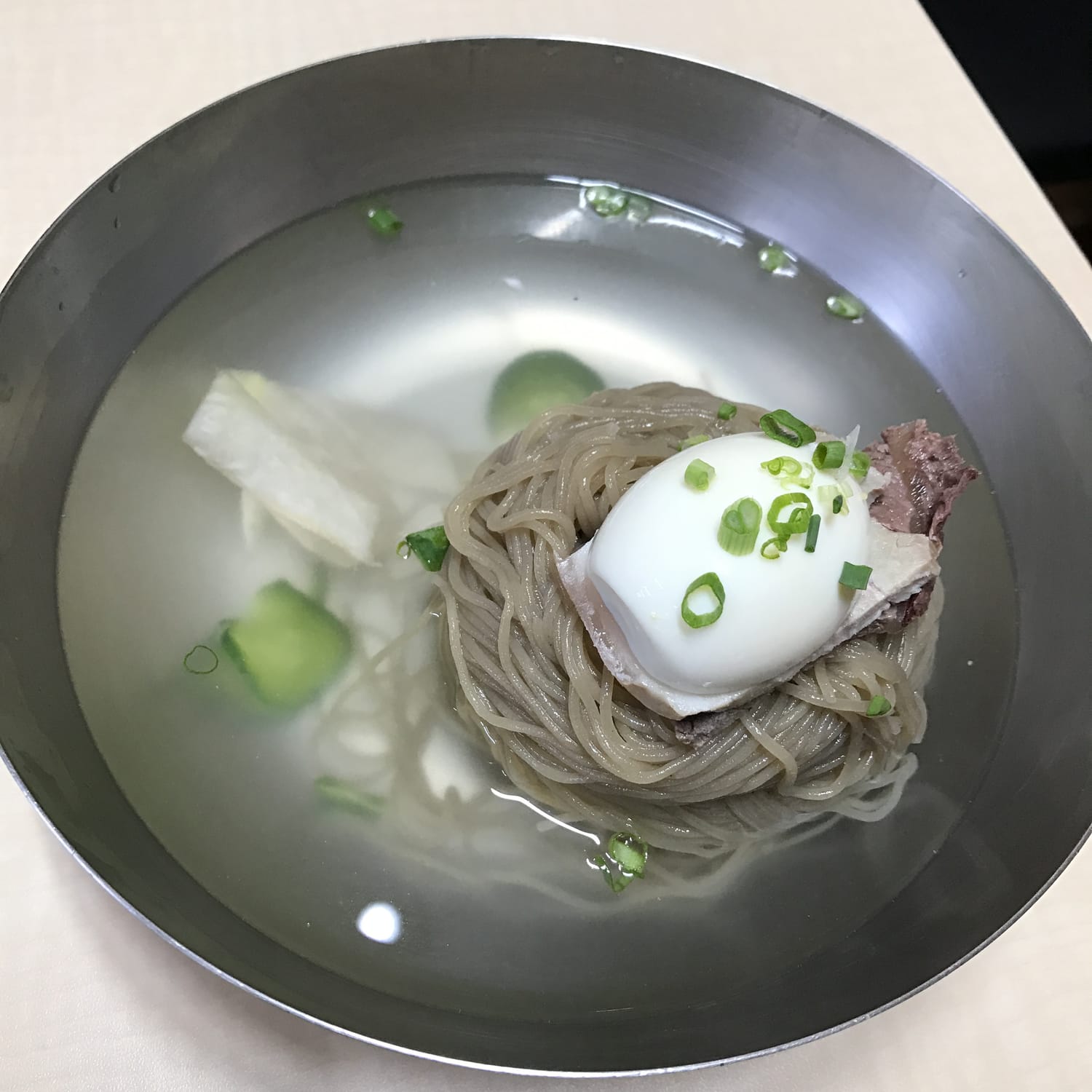
The One Korean Food Foreigners Never Learn to Love: Hamheung Naengmyeon, and Why Koreans Can't See the Problem
Foreigners who eat cheonggukjang and even hongeo still will not pay for this twice. A Korean creator who fed foreigners for years says naengmyeon was the overwhelming number one refusal, and Koreans, who rank it first every summer, cannot see why.
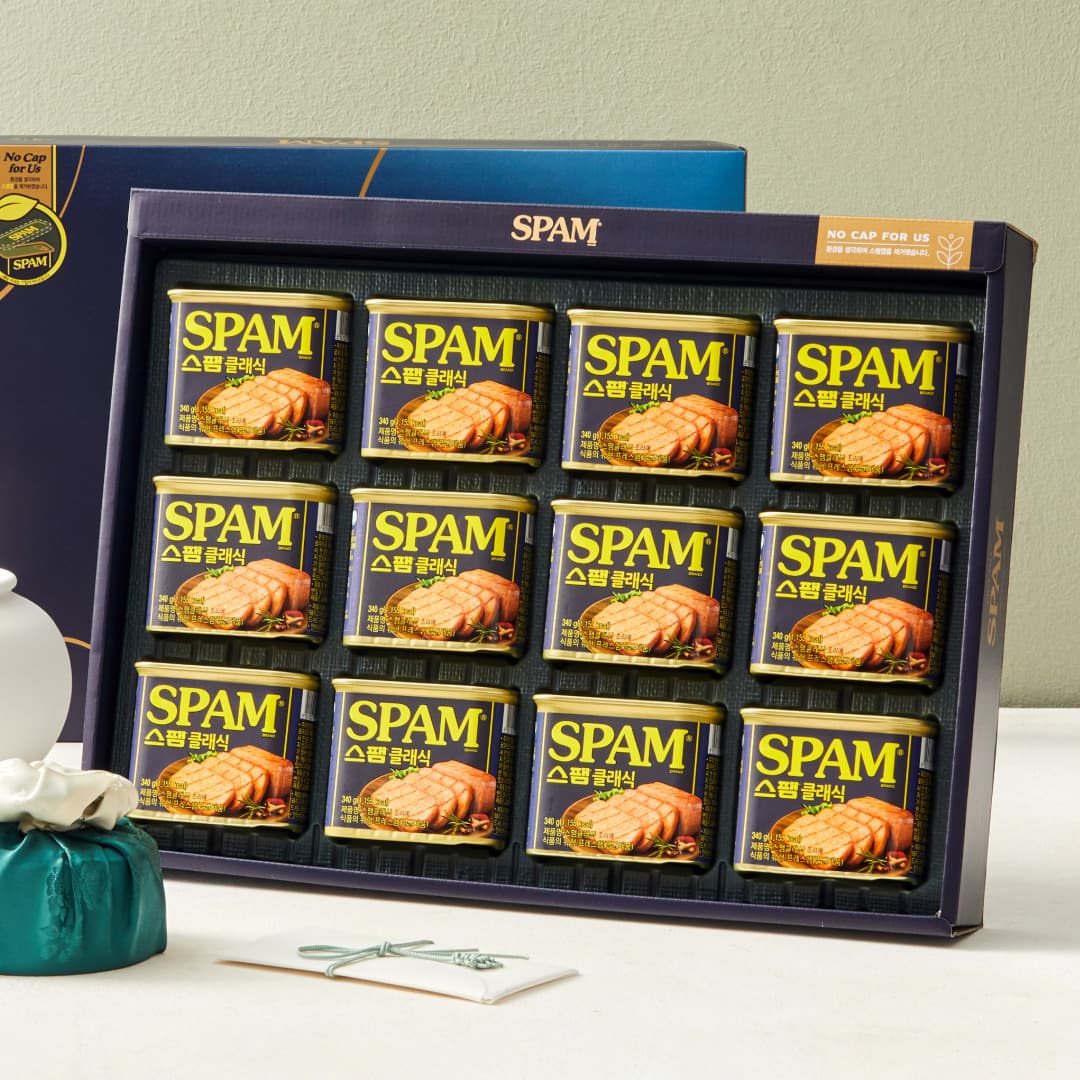
Korea's Spam Gift Sets Explained: What the Numbers Mean and Which One to Buy
Spam is a serious Chuseok gift in Korea, and the sets are sold by number. Lower number means bigger box — 1호 is twelve 340g cans, 12호 is eight 200g. The price printed on the box is fiction: every set is selling 40-45% below it right now.
Maxim Coffee Mix: Korea Invented the Coffee Stick, and Still Drinks 8 Billion a Year
Coffee mix is a Korean invention: Dongsuh Foods sealed coffee, creamer and sugar into one packet in December 1976, and Korea still drinks about 8 billion sticks a year. What Maxim costs this month, how sweet it really is, and which stick to buy.