Kimjang Season in Korea 2026: What Kimchi-Making Costs, Salted Cabbage Prices, When It Happens and Where You Can Join
Last updated: 3 October 2026. The 2026 facts on this page (salted-cabbage pre-order prices, the harvest outlook, Museum Kimchikan's class fees) come from announcements made between January and October 2026. The cost of a whole kimjang is a different matter: the Korean surveys for 2026 come out in November, so the cost tables below are the 2025 figures, labelled as 2025. We will update this page when the 2026 surveys are published.
Every November, Korea makes a winter's worth of kimchi in a weekend. The custom is called kimjang (김장): a family, or a whole apartment block, buys cabbage by the box, salts it, stuffs it with red-pepper paste and packs it away for the cold months. UNESCO listed it as intangible heritage in 2013. For a visitor it is easy to see without trying: hills of cabbage outside markets, red rubber gloves on every balcony, and supermarkets selling brined cabbage by the 20 kg box.
It is also a money story that Korea tracks closely. A state agency surveys the cost of a family kimjang every year, the government releases cabbage from stockpiles when prices jump, and the big supermarkets start taking orders for salted cabbage in October. This guide puts those numbers in one place, explains why three surveys give three different totals, and covers what a visitor can actually do: watch, join a class, or carry kimchi home.
The Korean way to keep kimchi from taking over your fridge: E-Jen kimchi container with an inner press lid, 1.7 L, on AmazonAffiliate link. As an Amazon Associate, EpicKor earns from qualifying purchases at no extra cost to you.
Quick Guide: Kimjang Season in Korea 2026
| Question | Answer | Source / status |
|---|---|---|
| When is kimjang season? | Mid-November to December; Seoul around the last week of November, the south coast in December | Weather-based guidance, see below |
| What did a family kimjang cost? | ₩201,151 (aT, 17 Nov 2025) to ₩404,280 (Korea Price Information, large marts) | 2025 figures; 2026 surveys due in November |
| Market or supermarket? | Traditional markets were 10.8% cheaper in the 2025 market agency survey | 2025 |
| Salted cabbage, 20 kg box | ₩29,900 (Haenam, Lotte Mart with promotion card) to ₩59,900 (Pyeongchang highland) | 2026 pre-order, 1–7 Oct |
| Will cabbage be expensive? | Autumn cabbage area forecast up 4.5% and output up 20.4% on 2025; the ministry says the crop is growing well, radish less so | KREI (Jan 2026), MAFRA (2 Oct 2026) |
| Kimchi class for visitors | Museum Kimchikan, Insadong: ₩40,000 (60 min) or ₩65,000 (90 min), English, minimum 4 people | 2026 price list |
| Napa-cabbage kimchi in that class? | Only from November; June to October it is radish kimchi | Museum curriculum |
| Kimchi Day | 22 November (Sunday in 2026) | Legal commemoration day |
| Kimchi in carry-on? | Only containers of 100 ml or less in the 1 L bag; any amount in checked baggage | Incheon Airport |
Wang Sun-Dried Coarse Gochugaru, 16 oz — Korean chilli flakes cut coarse for kimchi If a kimjang class makes you want to repeat it at home, the coarse red-pepper flakes are the one ingredient you cannot swap. The listing names Samjin Globalnet as the maker but does not say where the chillies were grown, so check the origin line before you buy. As an Amazon Associate, EpicKor earns from qualifying purchases at no extra cost to you.
See Wang coarse gochugaru on AmazonWhat kimjang actually is
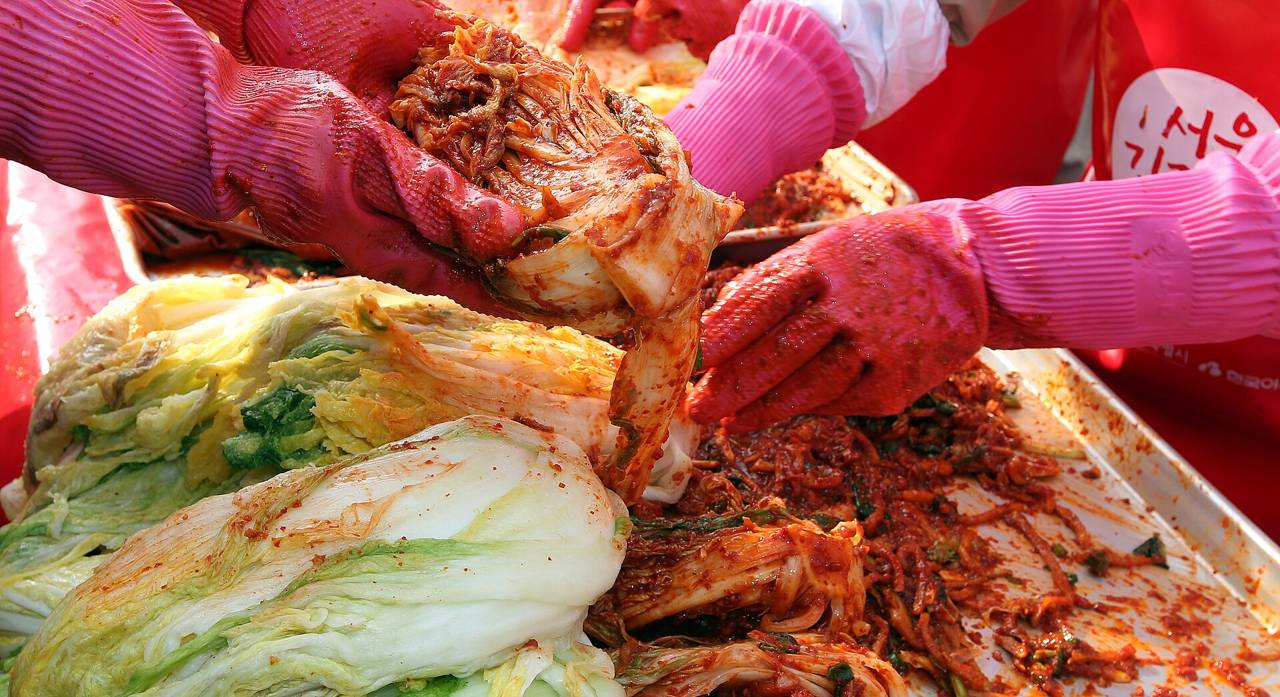
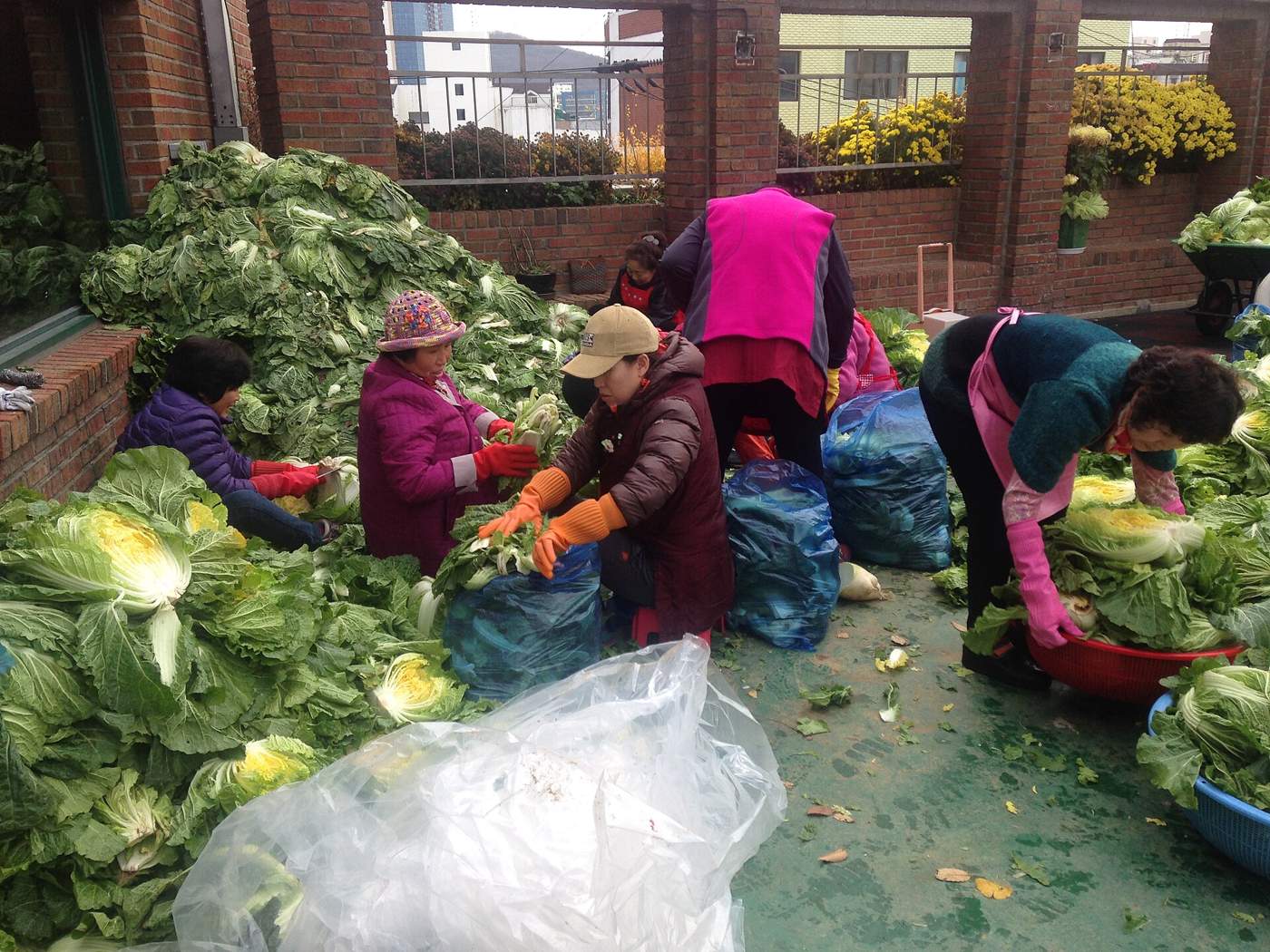
Kimjang is not "making kimchi". Koreans make small batches of kimchi all year. Kimjang is the one big batch before winter, traditionally 20 or more heads of napa cabbage (배추, baechu) for a family of four, plus radish. It runs in two stages. First the cabbage is split, salted and left overnight so it softens and loses water. Then a crew of relatives or neighbours sits around a tarpaulin and rubs the filling (소, so) into every leaf: red-pepper flakes, garlic, ginger, radish strips, spring onion, salted shrimp or fish sauce.
In the old days the jars went into the ground for the winter. Today they go into a dedicated kimchi refrigerator, a machine Korea invented for exactly this job; our guide to kimchi refrigerators explains why nearly every household has one. And the meal everyone eats when the work is done is boiled pork wrapped in fresh, unfermented kimchi, the dish that became bossam.
If you want the culture first, with the museum's exhibits on why kimjang made the UNESCO list, start with our Museum Kimchikan guide. This page is the dated, numbers version for the 2026 season.
What a kimjang costs: three 2025 surveys, three answers
The figure Korean news quotes every November is the kimjang cost for a four-person household (4인 가족 김장비용), built around 20 heads of cabbage. Three organisations publish one, and they disagree by almost ₩200,000 because they price different baskets. All three below are 2025 surveys.
| Survey (2025) | When and where | Traditional market | Large mart | What it says |
|---|---|---|---|---|
| aT, Korea Agro-Fisheries & Food Trade Corp. (한국농수산식품유통공사) | 17 Nov 2025; 17 markets and 36 large retailers; 14 items | ₩201,151 combined, after government and retailer discounts (down 5.6% from ₩213,003 a year earlier) | Cabbage −10%, radish −24%, garlic +9% year on year | |
| SEMAS, the small-business and market agency (소상공인시장진흥공단) | 5–7 Nov 2025; 37 markets and 37 nearby marts; 15 items | ₩350,447 | ₩393,007 | Markets 10.8% (₩42,560) cheaper, on 12 of 15 items |
| Korea Price Information (한국물가정보), private price bureau | Mid-Nov 2025 | ₩338,500 | ₩404,280 | 20 heads of cabbage ₩120,000 at a market, up from ₩100,000 in 2024 |
Three things are worth knowing before you quote any of these.
The baskets are different. aT prices 14 items, reports one blended figure across markets and retailers, and counts the ministry's discount support and supermarket promotions in the price, the main reason its total is the lowest. SEMAS prices 15 items, including oysters, and Korea Price Information uses its own list and quantities; both split the total by store type. None of them is "the real cost"; each is a yardstick that is comparable with its own past years.
Markets win, but not on everything. In the SEMAS survey the biggest gaps were fresh ginger (30% cheaper at markets), chives and water dropwort (27.3% each), salted shrimp (19.2%), garlic (14.5%) and red-pepper flakes (13.7%). Large marts were cheaper on the other three of the fifteen items.
Timing changes the answer more than the shop does. Cabbage is the swing item. In 2025, aT's KAMIS retail price for one head peaked at ₩7,606 on 10 October and was down to ₩3,517 by 7 November, as reported by Herald Business. The year before, it peaked at ₩9,963 in late September and bottomed at ₩2,990 on 21 November 2024. Families who buy early pay for it; that is why Korean price columns tell people every year to wait for the autumn crop.
The shortcut most families now buy: salted cabbage (절임배추)
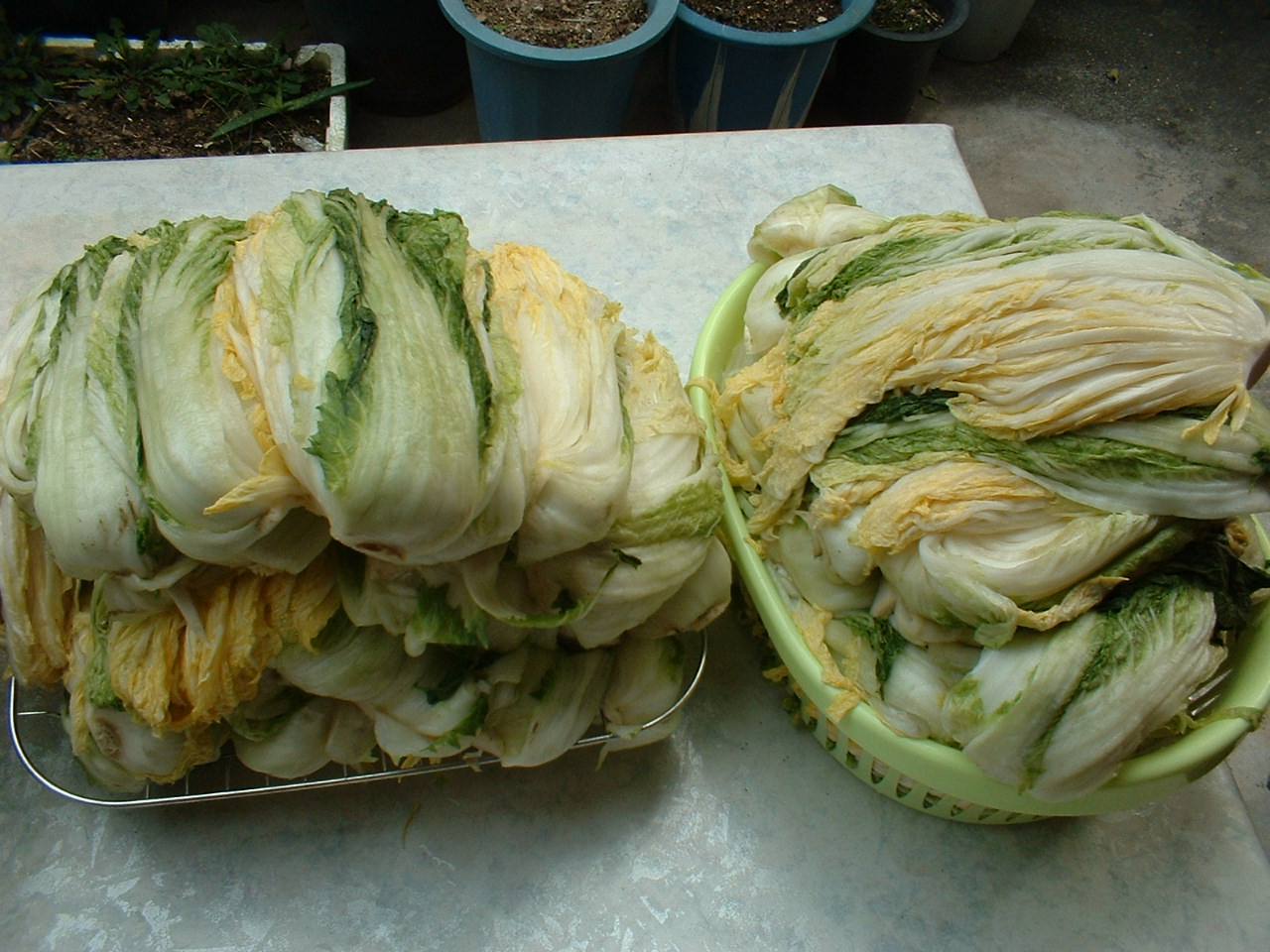
Salting 20 heads takes a night and a lot of floor space. Most urban households now skip it and buy 절임배추 (jeolim baechu), cabbage already split, brined and drained, sold in 20 kg boxes. Sellers list a 20 kg box as roughly 8 to 10 heads. The famous growing areas are printed on the box: Haenam (해남) at the south-western tip of the peninsula, Goesan (괴산) in the central hills, and Pyeongchang (평창) in the Gangwon highlands, which costs the most.
Supermarkets sell it by pre-order: Lotte opens on 1 October, while E-Mart and GS25 opened in the second half of October in 2025, for pick-up from November. These are the prices so far.
| Seller | Product (20 kg) | 2026 price | 2025 price |
|---|---|---|---|
| Lotte Mart / Lotte Super | Haenam salted cabbage | ₩29,900 with promotion card (₩39,900 without); round 1, 1–7 Oct; pick-up 5 Nov–21 Dec | ₩39,990 |
| Lotte Mart / Lotte Super | Goesan semi-highland | ₩35,900 | ₩39,990 |
| Lotte Mart / Lotte Super | Pyeongchang highland | ₩59,900 | ₩59,990 |
| E-Mart | Salted cabbage | Not announced at 3 Oct 2026 | ₩27,800 with card (pre-order 23–29 Oct 2025) |
| GS25 convenience stores | Goesan salted cabbage | Not announced at 3 Oct 2026 | ₩34,800 (list price ₩57,000), 3,000 boxes |
2025 prices as reported by Newsis on 22 October 2025; for Lotte the report does not say whether a card discount applied.
Lotte said it prepared 65,000 boxes for its first 2026 round, 20% more than last year, and kept pre-orders open until 15 December. It also added a 6.5 kg "easy kit" (5 kg of Haenam salted cabbage plus 1.5 kg of seasoning) for small households, and sells ready-made filling: Jeolla-style with anchovy sauce or Gyeonggi-style with salted shrimp, ₩69,900 for 6.5 kg. Those two styles are a real regional divide, and the label tells you which one you are buying.
Will 2026 be a cheap year? The harvest outlook
Korea forecasts this formally. The Korea Rural Economic Institute (KREI, 한국농촌경제연구원) publishes a monthly agricultural outlook (농업관측), and the ministry of agriculture (MAFRA) comments on kimjang supply each autumn. As of 3 October 2026:
- KREI's annual outlook (22 January 2026) expected the autumn cabbage area to rise 4.5% and autumn cabbage output to rise 20.4% on 2025, because last year's high prices encouraged planting. Autumn radish output was expected up 14.2%.
- MAFRA (2 October 2026) said the autumn cabbage crop is growing well and kimjang supply should be stable, but that kimjang radish had a slow start and needs managing. It plans to release government stockpiles and send field advisers with crop-care support for the radish.
- Lotte Mart (30 September 2026) said rain delayed some August planting and that September and October heat swings were a risk, the reason it gave for ordering more boxes early.
What that means in practice: a bigger cabbage crop points to a cheaper kimjang than 2025's late-season scare, but radish is the item to watch. Do not read the forecast as a price. The figure that matters is the November survey, and the Korean habit of waiting until the autumn cabbage lands, usually from late October, is the cheapest strategy in most years.
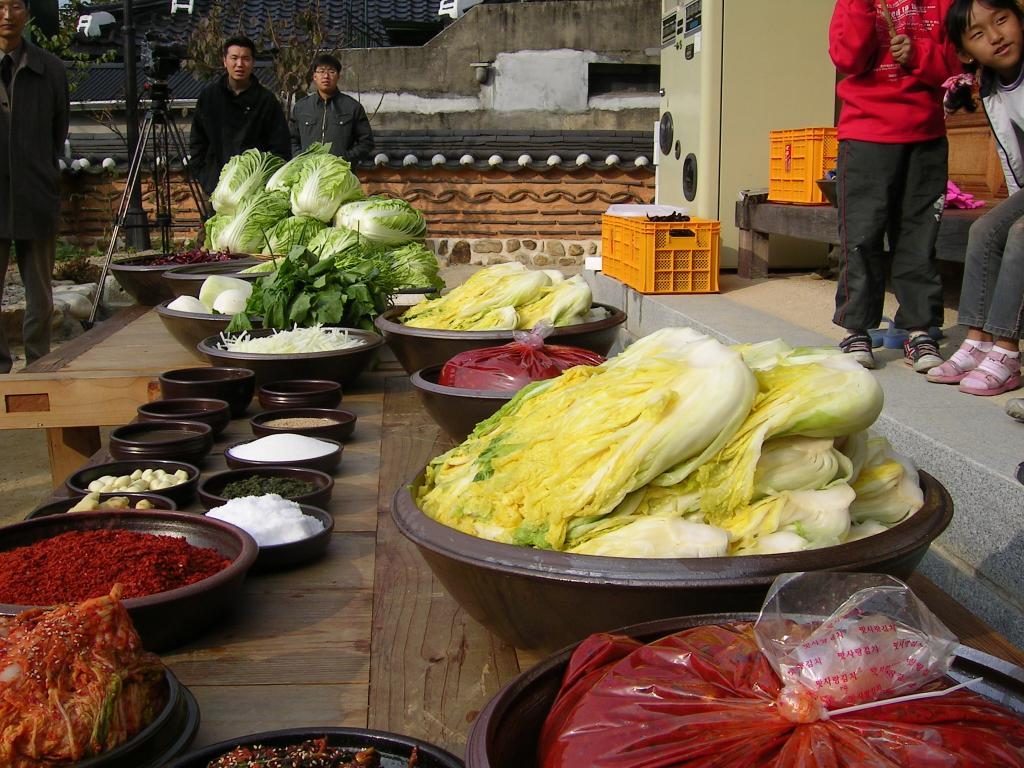
When kimjang season runs, by region
There is no fixed date. The old rule of thumb, used by the weather service and private forecasters, is to make kimjang once the daily average temperature stays at 4°C or below and the daily minimum at 0°C or below. Make it too warm and the kimchi sours before winter; make it too cold and the vegetables freeze. That moves kimjang south as the season goes on.
| Region | Typical kimjang window |
|---|---|
| Seoul, Gyeonggi, western Gangwon | Mid to late November |
| West coast (Chungcheong, Jeolla coast) | Late November to early December |
| South and east coast (Busan, Ulsan, eastern Gangwon) | Early to mid December |
| Far south coast and islands | Late December onward |
Windows from WeatherI (웨더아이), a private forecaster, built from Korea Meteorological Administration data and normals.
The windows are drifting later. WeatherI calculated that Seoul's ideal kimjang date moved from 25 November (1920–1950 average) to 29 November (1981–2010). In November 2025, with a warm month forecast, Korea Price Information advised waiting about two weeks: late November to early December in the central region, early to mid December in the south. For a visitor that means the last week of November and the first week of December are the surest time to see kimjang happening in and around Seoul.
Where a visitor can join or watch kimjang
You cannot invite yourself to a family kimjang, and you do not need to. In late November you will see it from the street: cabbage stacked outside market stalls, crews working on rooftops and apartment courtyards, and pick-up queues at supermarket service desks. If you want to do it yourself, these are the options.
| Option | What you do | Price | When / how |
|---|---|---|---|
| Museum Kimchikan, Kimchi! Basic (뮤지엄김치간, Insadong) | Make one kimchi, taste kimchi dishes, take your kimchi home | ₩40,000 adult, ₩38,000 age 8–18, ₩37,000 age 3–7; admission included | Tue–Fri, 10:00 or 14:00, 60 min; English; 4–24 people; book online |
| Museum Kimchikan, Kimchi All-in-one | Make kimchi plus a kimchi dish (Nov–Dec: cheese kimchi fried rice) | ₩65,000 adult | Tue–Fri, 10:00 or 14:00, 90 min; 4–12 people |
| Museum Kimchikan, It's Kimchi | 40-minute group session | ₩21,000 adult | Groups of 16 or more, Tue–Sun, by phone or email |
| Museum exhibits only | Kimchi history and kimjang exhibits | ₩5,000 adult | Tue–Sun 10:00–18:00; closed Mondays |
| Korea Kimjang Festival (대한민국 김장대축제), aT Center, Yangjae | Kimjang market, food-master booths, culture exhibits | Free entry | 2025: Saturday 22 Nov, 10:00–18:00; 2026 date not yet announced |
Three details matter for planning.
The cabbage only arrives in November. The museum's curriculum switches with the season: napa-cabbage kimchi from March to May and in November and December, radish kimchi (kkakdugi) from June to October. If you book an October class expecting the classic red cabbage, you will cube radish instead.
The minimum is four. Classes with fewer than four bookings can be cancelled, so solo travellers should book a busier slot or a date with existing bookings. Changes and cancellations close at 10:59 three days before the class; late cancellations are charged for the booked number and blocked from booking for six months.
Kimchi Day is a Sunday this year. 22 November is Korea's legal Kimchi Day (김치의 날). In 2024 the museum let everyone in free on the day. Its classes run Tuesday to Friday, though, so in 2026 a Kimchi Day visit means exhibits, not a class.
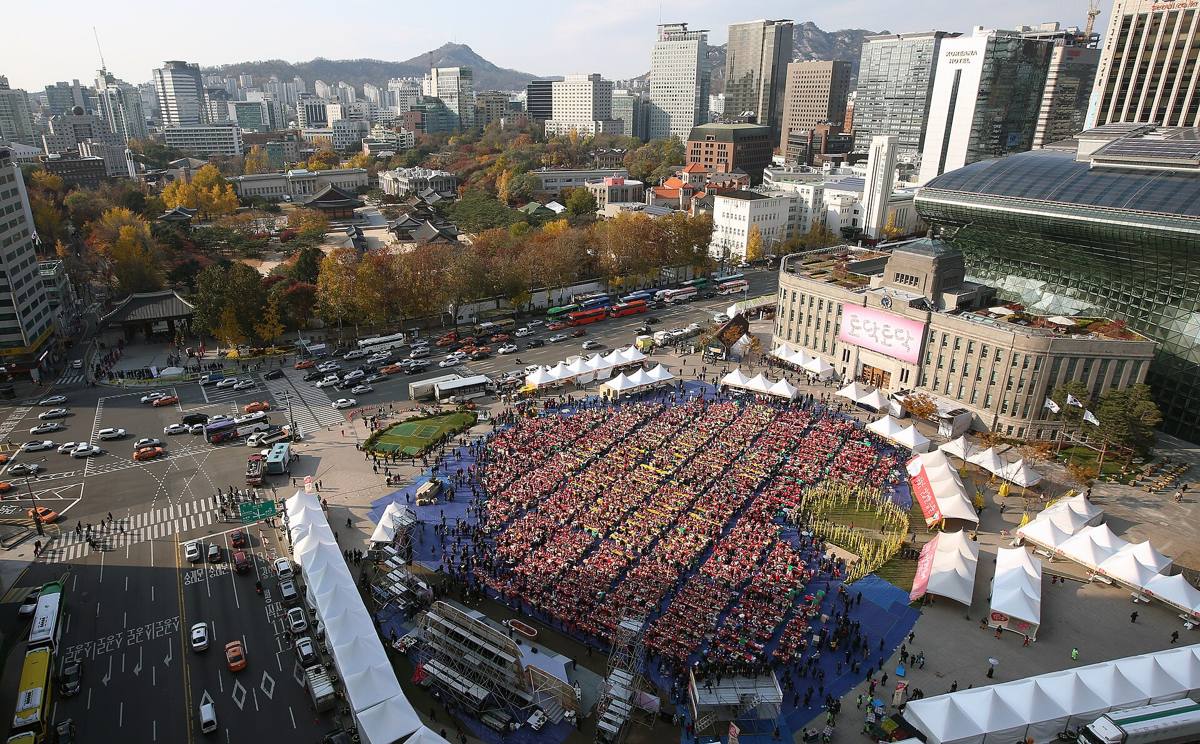
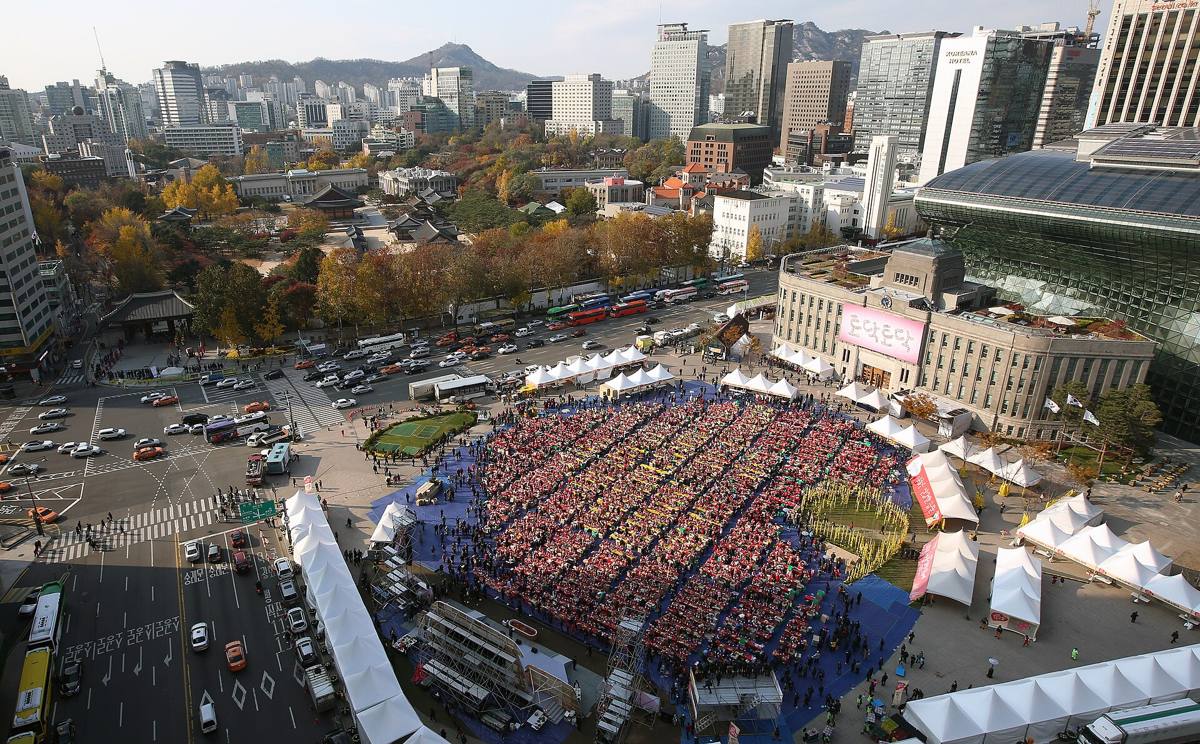
As for the big public kimjang: the famous image of thousands of people in red aprons on Seoul Plaza (photo at the top) is the Seoul Kimchi Making & Sharing Festival (서울김장문화제), a mass kimjang the city held on Seoul Plaza; the photo is from 2014. In 2025 the city's kimjang event was the Korea Kimjang Festival at the aT Center, co-hosted with aT and the Korea Kimchi Association, and Seoul's own notice said it had no hands-on kimchi-making for general visitors because of space. Go for the market, with discounts of up to 55% in 2025, not to make kimchi.
Taking kimchi home: the airport and customs rules
Museum Kimchikan sends you home with a container of your kimchi and a carrying bag, and it does not ship. So the airport rules matter.
- Carry-on: Incheon Airport classes kimchi and gochujang as liquid or gel foods. In the cabin on international flights they are allowed only in containers of 100 ml or less, inside your one 1 L clear resealable bag. A class tub is bigger than that.
- Checked baggage: kimchi is allowed with no volume limit. On domestic flights inside Korea the airport lists no cabin limit for these foods.
- Packing: kimchi keeps fermenting and gives off gas, so a full, tight tub can leak or bulge in the hold. Leave room at the top, seal the lid with tape, double-bag it and pack it in the middle of your suitcase among clothes. Sealed retail packs travel better than a homemade tub.
- At home: your own country's rules apply. The US, for example, says all agricultural items must be declared to CBP and that undeclared prohibited items can be confiscated with a civil penalty. Products containing meat are the usual problem; check your country's food import rules before you pack anything with meat in it.
What to skip
- Don't buy a 20 kg box as a tourist. Salted cabbage is a family-scale purchase that has to be stuffed within a day or two. If you want the experience, a class costs about the same as the box and gives you a portion you can carry.
- Don't book an October class for napa cabbage. It is radish kimchi until November. Book from 3 November if the cabbage is the point.
- Don't go to the kimjang festival to make kimchi. In 2025 it was a market and a stage, not a workshop.
- Don't quote one cost survey as "the" price. ₩201,151 and ₩404,280 are both 2025 figures for the same family of four. They measure different baskets.
- Don't assume gochugaru abroad is Korean-grown. Some popular US listings state "Product of China" in the small print, while others say nothing. Korean-grown flakes are labelled 국산 (domestic). Read the origin line.
FAQ
Q: When is kimjang season in Korea in 2026? A: From mid-November into December (late December on the far south coast), moving from north to south as the temperature drops. In Seoul the usual window is the second half of November into early December. Lotte Mart's salted-cabbage pick-ups run from 5 November to 21 December 2026.
Q: How much does kimjang cost in Korea? A: For a family of four in 2025, ₩201,151 by aT's survey (17 November 2025), ₩350,447 at traditional markets and ₩393,007 at large marts by the SEMAS survey, and ₩338,500 to ₩404,280 by Korea Price Information. The 2026 surveys are published in November.
Q: How much is a 20 kg box of salted cabbage? A: In the 2026 pre-orders that opened on 1 October, Lotte Mart sells Haenam salted cabbage for ₩29,900 with a promotion card (₩39,900 without), Goesan for ₩35,900 and Pyeongchang highland for ₩59,900, with pick-up from 5 November.
Q: Can I make kimchi in Seoul as a tourist? A: Yes. Museum Kimchikan in Insadong runs English classes Tuesday to Friday at 10:00 and 14:00: Kimchi! Basic (₩40,000, 60 minutes) and Kimchi All-in-one (₩65,000, 90 minutes), admission included, minimum four people. Napa-cabbage kimchi is taught from November.
Q: Can I take kimchi on a plane from Korea? A: In checked baggage, yes, with no volume limit. In the cabin on international flights only in containers of 100 ml or less inside a 1 L clear bag. Declare it when you land if your country asks about food.
Sources
- Kimjang cost 2025: aT survey of 17 Nov 2025, reported by Nongmin Shinmun, 18 Nov 2025 (₩201,151; ₩213,003 a year earlier; 17 markets, 36 retailers, 14 items). SEMAS survey of 5–7 Nov 2025, reported by Kukmin Ilbo (Kukinews), 17 Nov 2025. Korea Price Information survey, reported by Segye Ilbo, 16 Nov 2025.
- Cabbage retail prices (aT KAMIS): Herald Business, 9 Nov 2025.
- Salted cabbage 2026: Lotte Mart / Lotte Super pre-order, reported by Newspim and Metro Seoul, 30 Sep 2026. Salted cabbage 2025: Newsis, 22 Oct 2025 (GS25, E-Mart, Lotte Mart, Homeplus).
- Harvest outlook: KREI, Agricultural Outlook 2026 (농업전망 2026), reported by Nongmin Shinmun, 23 Jan 2026. MAFRA September 2026 price briefing, reported by Newspim, 2 Oct 2026.
- Kimjang timing: WeatherI kimjang forecast, 5 Nov 2019 (regional windows; Seoul 25 Nov → 29 Nov); Korea Price Information advice reported by Wikitree, 16 Nov 2025.
- Museum Kimchikan 2026 programmes, prices, schedules and cancellation rules: kimchikan.com (Programs & Reservation, English), checked 3 Oct 2026. Kimchi Day free admission 2024: Seoul Mediahub, 20 Nov 2024.
- Korea Kimjang Festival 2025: Seoul Metropolitan Government notice (news.seoul.go.kr) and Herald Business, 20 Nov 2025. Seoul Kimchi Making & Sharing Festival 2014: Korean Culture and Information Service photo record.
- Liquids and kimchi in baggage: Incheon International Airport, restricted items page (airport.kr). US declaration rule: U.S. Customs and Border Protection, "Agricultural Items" (cbp.gov).
- UNESCO: Kimjang, making and sharing kimchi in the Republic of Korea, inscribed 2013 (ich.unesco.org).
You Might Also Like
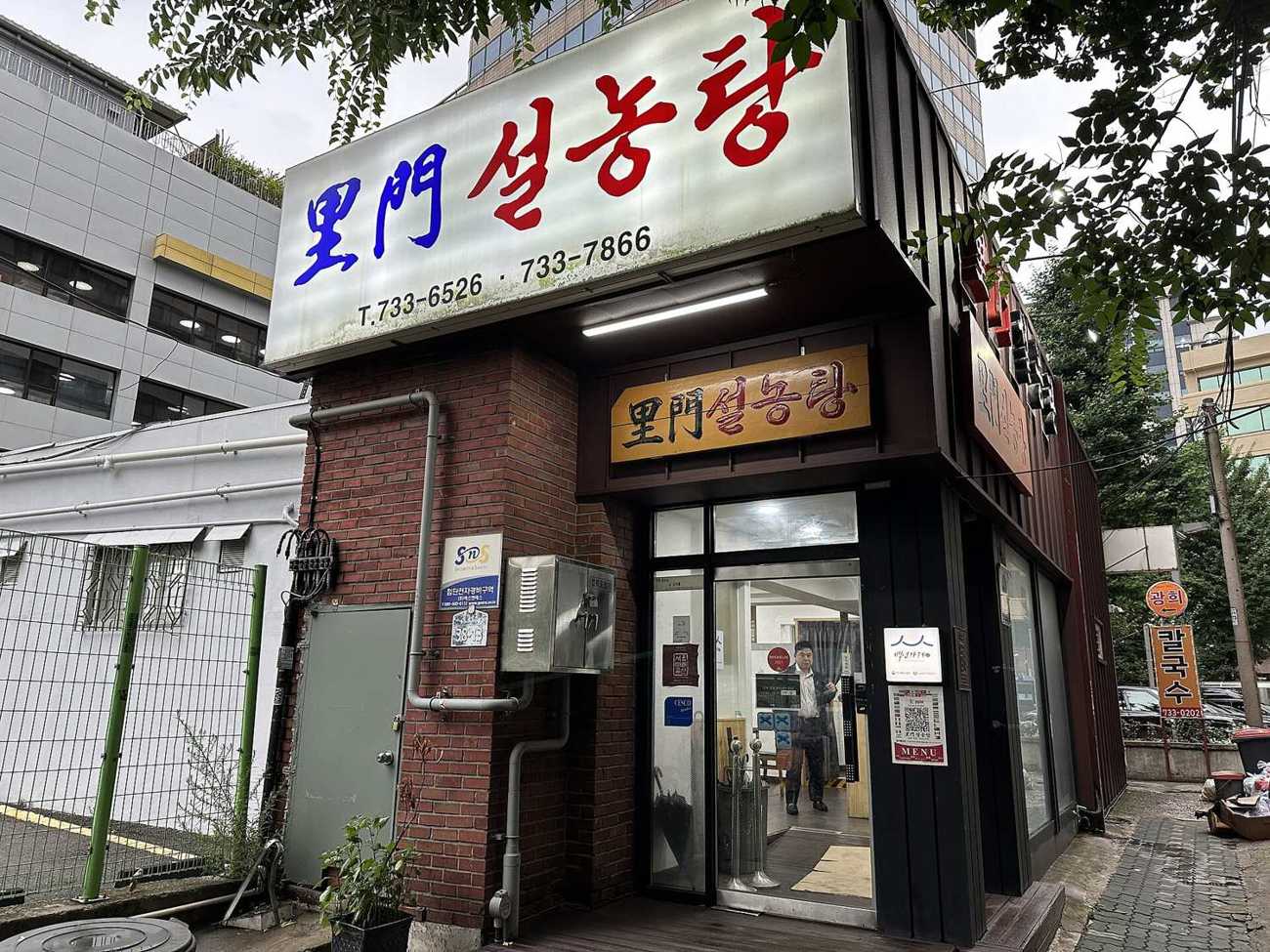
Korea's Century-Old Restaurants (Nopo): The 1,545 Shops the Government Certified as Baengnyeon Gage, Seoul's 50 Future-Heritage Restaurants, and What a Bowl Costs in 2026 at Imun Seolnongtang (1904), Hadongkwan (1939), Woo Lae Oak (1946) and the Others Koreans Actually Queue For
Korea certifies its old restaurants: 1,545 'hundred-year shops' with a government plaque, plus Seoul's 50 heritage restaurants. The oldest, with 2026 prices, hours, closing days and subway exits: Imun (1904), Hadongkwan (1939), Woo Lae Oak (1946).
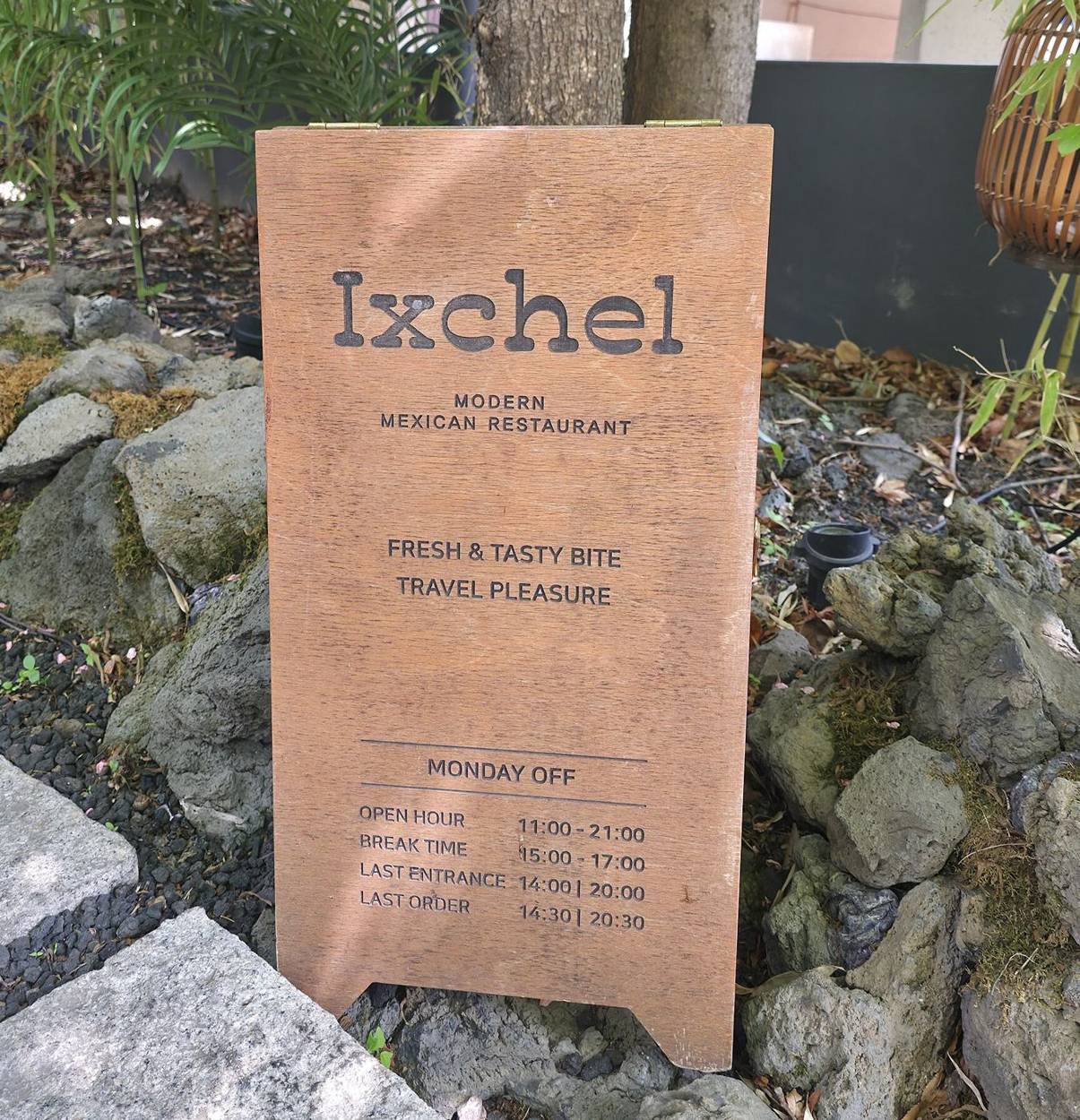
What Time Do Restaurants Close in Korea? Closing Times, Break Time, Last Order and Monday Closures
Most restaurants in Korea close at 21:00 to 22:00, take last orders 30 to 60 minutes earlier and shut 15:00 to 17:00 for break time; Monday is the usual day off (31%), and 24-hour soup houses feed you after midnight.

Museum Kimchikan Guide: Korean Kimchi, Kimjang, and Insadong Tips
Museum Kimchikan costs ₩5,000 for adults, opens Tuesday to Sunday 10:00-18:00 and closes every Monday. Kimchi culture, kimjang, the Insadong location, hands-on programs, allergy notes, and what to pair it with.