Korea's Other International Airports: Which Ones Actually Fly Abroad
Korea has eight designated international airports. As of August 2026, you can realistically fly abroad from five of them.
That gap between the official list and the working reality is the reason this guide exists. Almost every English-language Korea trip runs through Incheon by default, and for many itineraries that is a mistake — flying into Busan puts you two hours closer to the southern half of the country, Daegu's terminal is a ten-minute taxi from the city's main station, and Cheongju has quietly become the fastest-growing international airport in Korea.
But two of the eight are not options right now, and one of them is closed for a reason that matters. Here is the honest map.
10,000mAh power bank — on AmazonAffiliate link. As an Amazon Associate, EpicKor earns from qualifying purchases at no extra cost to you.
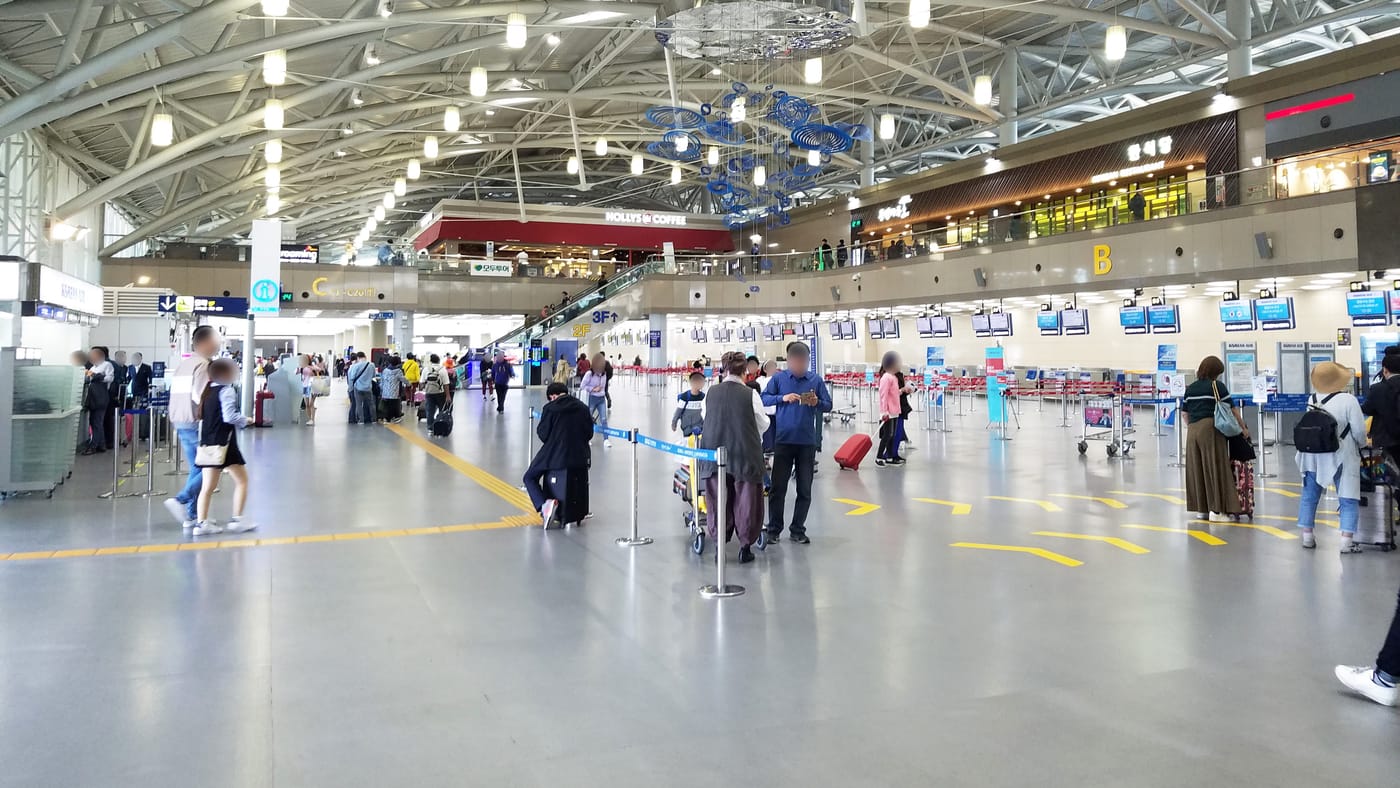
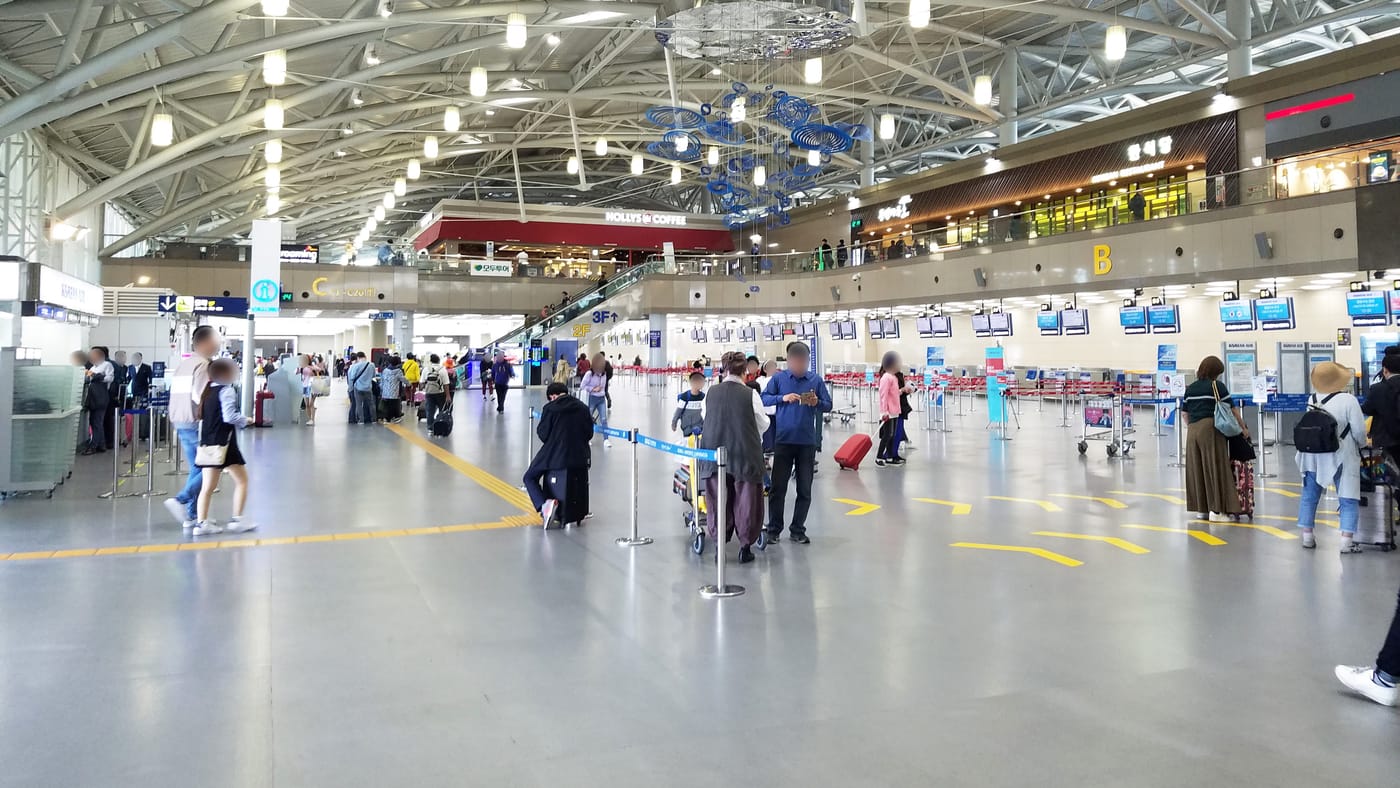
Gimhae's international terminal in Busan — Korea's number two international gateway, with 39 licensed international routes against Incheon's 155. Photo via Wikimedia Commons, CC BY-SA 4.0.
The Eight, Ranked By Whether You Can Use Them
| Airport | Code | Status | International routes |
|---|---|---|---|
| Incheon | ICN | The hub | 155 licensed routes |
| Gimhae (Busan) | PUS | Fully working | 39 — the real number two |
| Cheongju | CJJ | Fully working, growing fastest | 19 — third nationally |
| Daegu | TAE | Fully working | 14 routes, summer 2026 |
| Jeju | CJU | Working, plus a visa quirk | Japan, Taiwan, China, Hong Kong, Singapore |
| Gimpo (Seoul) | GMP | Working, short-haul only | Tokyo, Osaka, Beijing, Shanghai, Taipei |
| Yangyang | YNY | Effectively dormant | Essentially none right now |
| Muan | MWX | Closed | None — see below |
You might like: Getting Around Korea in 2026: Subway Fares, Last Trains, KTX Booking, Bus Prices and Which App to Use
Gimhae (Busan) — The Genuine Alternative
If any airport on this list should change your booking, it is this one.
Gimhae International Airport (김해국제공항, PUS) serves Busan and the whole southeast, and it holds 39 licensed international routes — the second-largest network in the country and more than double the next airport. Its busiest international destinations are Fukuoka, Osaka and Taipei, which tells you what it is really for: it is Korea's Japan gateway, and flying Busan–Japan is often faster and cheaper than routing through Seoul.
Getting into the city. The Busan–Gimhae Light Rail (부산김해경전철) runs directly from the airport, and the two interchanges are what matter:
- Sasang (사상) connects to Busan Subway Line 2 — for Seomyeon, Haeundae and the east of the city
- Daejeo (대저) connects to Line 3 — for Gangseo, Gupo and Yeonsan
There is also a limousine bus running to Bujeon and Seomyeon. Between them, Gimhae is one of the better-connected airports in Korea for its size.
What to watch. The long-haul network is thin and volatile. An Uzbek carrier opened Busan–Tashkent in June 2025 and closed it by March 2026 on poor loads. Emirates has been in discussions with the city about a Busan–Dubai route. Do not assume a long-haul route exists because you read about it once — check the current schedule.
Book Gimhae if: you are starting in Busan, Gyeongju or the south; you are flying to Japan; or you want to fly out of Korea without backtracking to Seoul. EpicKor's 7-day Korea itinerary by KTX shows how much of the country sits closer to Busan than to Incheon.
Cheongju — The One Nobody Abroad Has Heard Of
Cheongju International Airport (청주국제공항, CJJ) is the surprise on this list, and the numbers are why.
- 19 licensed international routes — third in the country, behind only Incheon and Gimhae
- International passengers up 39.1% in January–July 2026, the highest growth rate of any Korean regional airport
- It passed one million international passengers on 4 August 2026, beating its own record for the second consecutive year
- First-half 2026 traffic of 2,551,261 passengers, up 23.4%, with international up 44.2%
- On track for five million passengers a year
Its network is Japan-heavy — a Kobe route opened in February 2026 — plus Taiwan (Taichung), China and Southeast Asia. It sits in Korea's geographic centre, in North Chungcheong, which makes it useful for anyone whose trip is built around central Korea rather than Seoul.
The honest caveat: Cheongju is a small terminal growing very fast, and facilities have not necessarily kept pace with traffic. It is also the base of Aero K, a small carrier, so a large share of its flying comes from one airline.
Daegu — Closest To Its City Of Any Korean Airport
Daegu International Airport (대구국제공항, TAE) flew 14 international routes in the summer 2026 season and carried 780,000 international passengers in the first half of 2026, up 8.6%.
The network is broad for its size: Tokyo Narita, Osaka and Fukuoka in Japan; Shanghai Pudong, Yanji, Zhangjiajie, Qingdao and Hong Kong in Greater China; Taipei; Bangkok Suvarnabhumi, Da Nang and Nha Trang in Southeast Asia; Guam; and Ulaanbaatar.
Its real advantage is location. The airport is roughly 10 minutes by taxi from Dongdaegu Station — the main KTX station — and about 18 minutes from Daegu City Hall. Very few airports anywhere sit that close to a city centre, and it makes Daegu unusually painless for a short trip.
The catch, and it is a big one. Daegu Airport is scheduled to be replaced by the Daegu–Gyeongbuk Integrated New Airport (대구경북통합신공항) at a site well outside the city. Local opposition centres precisely on access: even with a new rail line, the projected journey is 28 minutes from Dongdaegu and 22 from Seodaegu, against today's 10-minute taxi. The convenience described above has an expiry date — check whether the move has happened before planning around it.
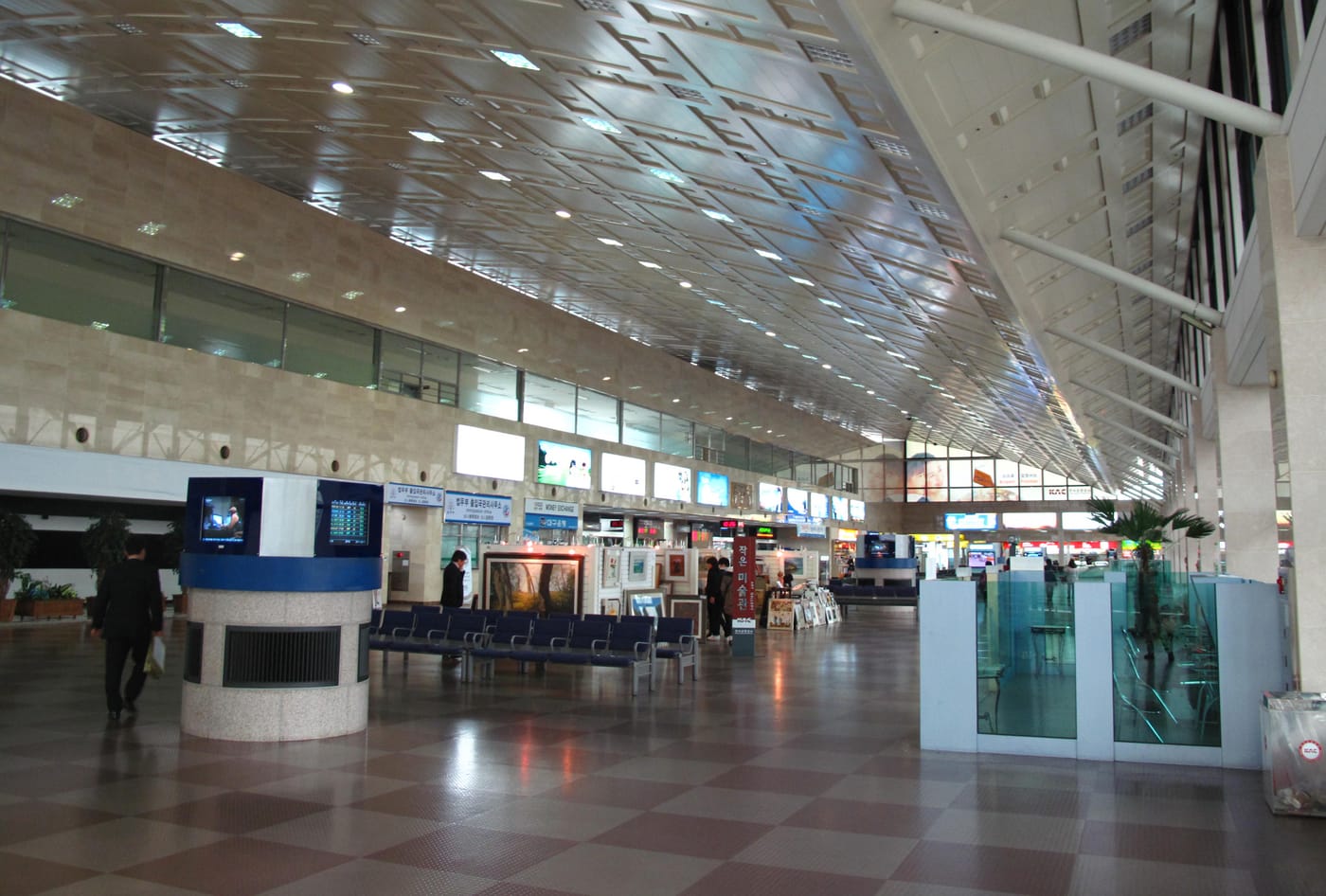
Daegu's terminal is small — this is most of it. That is the trade: a modest building, but one you can reach from the KTX station in about ten minutes. Photo by Ken Eckert via Wikimedia Commons, CC BY-SA 4.0.
Jeju — Useful, With A Visa Trap
Jeju International Airport (제주국제공항, CJU) has international service to Japan (Tokyo, Osaka, Fukuoka), Taiwan (Taipei, Kaohsiung, Taichung), Singapore, Hong Kong and Macau, and a long list of mainland Chinese cities. Hong Kong Express began flying it daily in early 2026, and Jin Air also serves the route.
Now the part that catches people out. Jeju operates a special visa-free zone: nationals of over 100 countries can enter directly at Jeju for up to 30 days for tourism without a visa, which is far more generous than the mainland regime.
But if you enter Korea under the Jeju visa-free scheme, you cannot then travel to the mainland. Not to Seoul, not to Busan. Going on to the rest of the country requires a Permit for Extension of Area of Stay from a local immigration office. Work and study are not permitted either.
For most Western travellers this is academic — the K-ETA exemption for 22 countries including the US, Canada, UK, Australia, Japan and much of Western Europe runs through 31 December 2026, so you enter Korea normally and Jeju is just another domestic destination. But if your nationality relies on the Jeju scheme, a Jeju arrival is a Jeju-only trip. Confirm your own status before booking a Jeju-first itinerary.
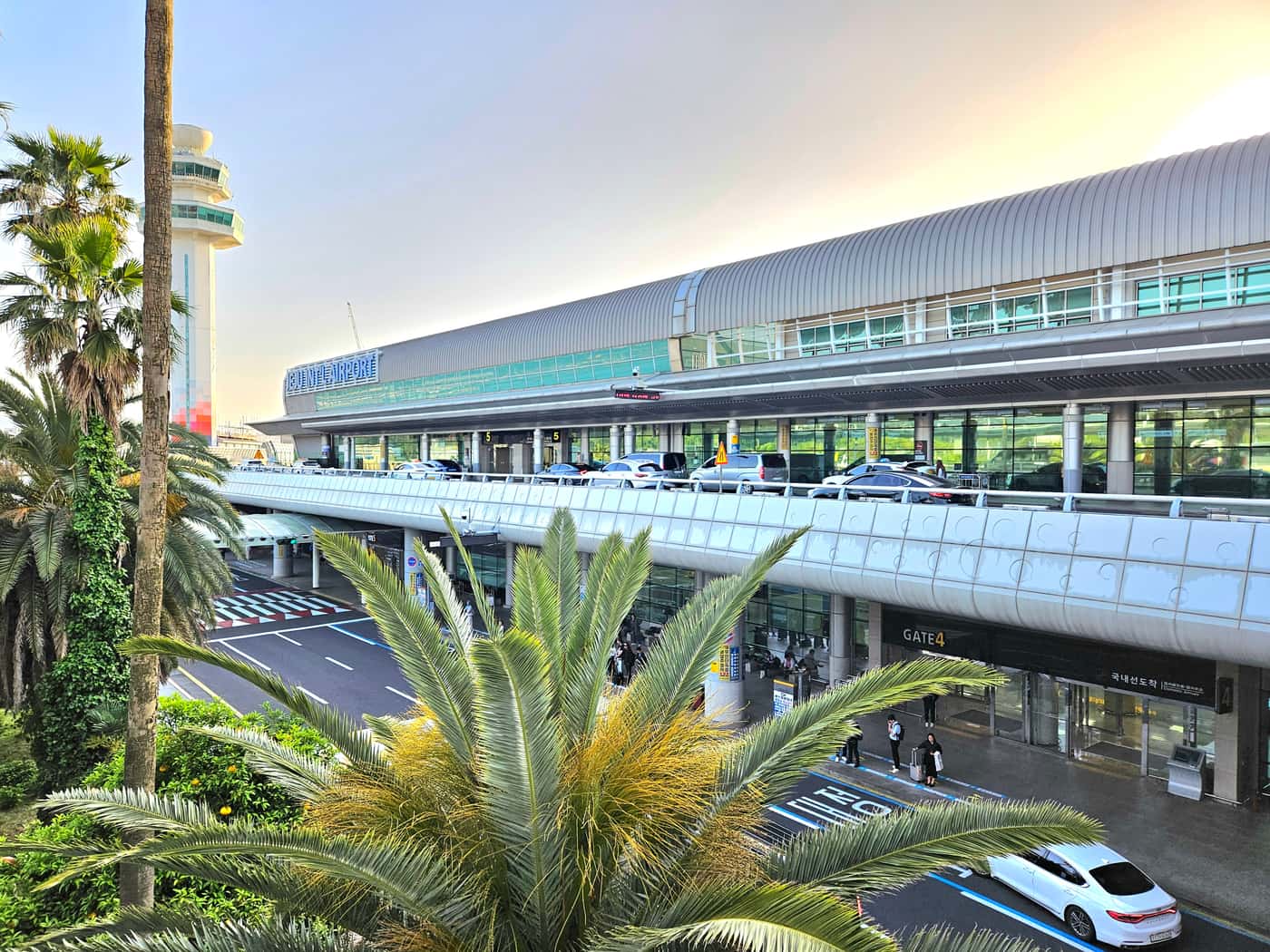
Jeju's terminal, palm trees and all. It is a full international airport with an entry regime that works differently from the rest of the country. Photo by Kimhs5400 via Wikimedia Commons, CC BY 4.0.
Yangyang — Technically Open, Practically Not
Yangyang International Airport (양양국제공항, YNY) on the east coast is designated international but is, in practice, barely operating.
It was the base of Fly Gangwon, which went bankrupt and was bought by the air purifier manufacturer Winix and relaunched as Parata Air (파라타항공) — a story EpicKor covers in its Winix company deep dive. Parata resumed a Yangyang–Jeju domestic route on 30 September 2025 and moved it to twice daily that November, but the airline now concentrates its flying at Incheon and Gimpo rather than at its own home base.
The airport's booking system has been carrying a notice that international reservations are unavailable "due to airline circumstances." Trial domestic routes from Cheongju and Gimpo ended early, and the free shuttle bus was suspended from 31 August. Parata obtained traffic rights for a Yangyang–Shanghai route in April 2026 and says it will launch within the year.
Do not build a trip around Yangyang. If you are heading to the east coast — Sokcho, Gangneung, the ski resorts — take the KTX from Seoul instead.
Muan — Closed
Muan International Airport (무안국제공항, MWX) in South Jeolla has been closed since 29 December 2024, when Jeju Air flight 2216 crashed on landing. 179 of the 181 people on board died — the deadliest aviation accident on Korean soil.
Korea's Aviation and Railway Accident Investigation Board has released interim findings; a final report had not been published as of the accident's first anniversary. The airport itself remains shut, and the practical position for travellers is unambiguous: the Ministry of Land's confirmed summer 2026 schedule (29 March–24 October) contains no Muan routes at all, and the winter schedule is not expected to either. Local groups have been pressing for reopening; Korean reporting suggests that if the investigation area is widened, normalisation could be two to three years away.
If you are travelling to Gwangju or South Jeolla, use the KTX from Seoul, or fly into Gwangju's domestic airport. Muan is not an option and should not appear in your planning.
Practical Notes For Regional Airports
Regional Korean airports are easier than Incheon in some ways and harder in others.
Easier:
- Security and immigration queues are short. Ninety minutes before an international departure is usually generous at Gimhae, Daegu or Cheongju — at Incheon it is tight.
- The terminals are small enough that you cannot get lost.
- They are often much closer to city centres than Incheon is to Seoul.
Harder:
- Fewer flights per day means less recovery from a delay. A missed connection at Incheon has options; at Daegu it may mean tomorrow.
- Fewer lounges, fewer places to eat, earlier closing. Do not plan on a late meal airside.
- Tax refund facilities are more limited. If you are claiming VAT back on a big purchase, check the desk exists and its hours before you rely on it — EpicKor's Korea tax refund guide explains the process.
- Foreign-carrier presence is thin. Most international flying at regional airports is done by Korean LCCs, and — as covered in EpicKor's guide to Korean airlines in 2026 — several of those airlines are changing their names this year and next.
What regional airports do not have: As an Amazon Associate, EpicKor may earn from qualifying purchases. Small terminals mean few charging points and fewer shops, so arrive self-sufficient — a 10,000mAh power bank covers the gap, and Korea runs 220V on Type F sockets, so bring a Korea plug adapter rather than hoping a small airport shop stocks one.
See 10,000mAh power bank on AmazonWhich One Should You Actually Use
| Your trip | Fly into |
|---|---|
| Seoul, or anything long-haul | Incheon |
| Busan, Gyeongju, the southeast | Gimhae (PUS) |
| Anywhere via Japan, from the south | Gimhae — the Fukuoka and Osaka network is dense |
| Central Korea, or you found a cheap fare | Cheongju (CJJ) |
| Daegu itself, short trip | Daegu (TAE) — 10 minutes from the KTX station |
| Jeju holiday only | Jeju (CJU) — check the visa scheme first |
| Tokyo or Shanghai city-to-city | Gimpo (GMP) — closer to Seoul than Incheon |
| East coast, Gwangju, South Jeolla | None of the above. Take the KTX |
FAQ
Q: How many international airports does Korea have?
Eight are designated: Incheon, Gimpo, Gimhae, Jeju, Cheongju, Daegu, Yangyang and Muan. As of August 2026 only five are practically usable for international travel — Muan is closed and Yangyang has essentially no international service.
Q: Can I fly into Busan instead of Seoul?
Yes, and it is often the better choice for the southern half of the country. Gimhae International Airport holds 39 licensed international routes, second only to Incheon, and is strongest on Japan — Fukuoka, Osaka and Taipei are its busiest destinations. The Busan–Gimhae Light Rail connects to subway Lines 2 and 3.
Q: Why is Muan Airport closed?
It has been shut since 29 December 2024, when Jeju Air flight 2216 crashed there and 179 of 181 people on board died. The investigation is ongoing and the confirmed 2026 summer schedule contains no Muan routes. Travellers to Gwangju and South Jeolla should use the KTX.
Q: Is Jeju really visa-free?
Jeju has a special visa-free zone allowing nationals of more than 100 countries to enter for up to 30 days of tourism. The catch is that entering under that scheme does not let you continue to the mainland — that requires a separate permit. Travellers from the 22 countries under the K-ETA exemption, which runs to 31 December 2026, enter Korea normally and are unaffected.
Q: Which Korean regional airport is growing fastest?
Cheongju. Its international passengers rose 39.1% in January–July 2026, the highest of any Korean regional airport, and it crossed one million international passengers on 4 August 2026 — beating its own record for a second straight year.
Q: Is Daegu Airport moving?
Yes, eventually. It is due to be replaced by the Daegu–Gyeongbuk Integrated New Airport at a site outside the city. The current airport is about 10 minutes by taxi from Dongdaegu Station; projections for the new one are 28 minutes by rail. Check the current status before relying on the convenience.
The Bottom Line
Defaulting to Incheon is a habit, not a plan. If your trip is centred on Busan or the southeast, Gimhae is a genuinely better airport to arrive at. If you are flying to Japan from southern Korea, it is usually faster and cheaper. Cheongju is worth watching and worth checking for fares. Daegu is the most convenient terminal in the country right up until it moves.
And two of the eight are not choices at all. Yangyang is waiting for an airline. Muan is closed, and will be for some time.
Sources: 한국공항공사 — 공항별 운항정보 · 충북일보 — 청주공항 2026 하계 국제선 19개 노선 · 한국연합신문 — 청주 국제선 39.1% 증가, 지방공항 1위 · 경북매일 — 대구공항 상반기 국제선 78만 명 · 국민일보 — 무안공항 재개항 난항 · Jeju Air Flight 2216 — Wikipedia · Jeju visa & entry requirements
You Might Also Like
Korean Airlines in 2026: Which to Fly, and Which Names Vanish
Asiana disappears on 17 December 2026. T'way already became Trinity Airways. Jin Air, Air Busan and Air Seoul merge in March 2027. Four names on Korean flight results now will not exist in 18 months. What each airline is, and which to book.
Korea e-Arrival Card vs K-ETA: 22 Countries Are Exempt, and the Paid One Cancels the Free One
Nationals of 22 countries do not need K-ETA through 31 December 2026. But holding a K-ETA exempts you from the e-Arrival Card — so the ₩10,000 optional one cancels the free mandatory one. Which to do, and when.

Korea eSIM vs SIM vs Pocket WiFi: Tourist Setup
A practical Korea eSIM vs SIM card vs pocket WiFi guide for tourists: airport pickup, unlocked phones, groups, maps, and first-day setup.