Korean Airlines in 2026: Which to Fly, and Which Names Vanish
Book a flight to Korea today and roughly half the airline names in your search results are scheduled to stop existing.
That is not a figure of speech. Asiana Airlines is absorbed into Korean Air on 17 December 2026, ending a 38-year-old brand. T'way Air has already been renamed — it is Trinity Airways as of this year, same aircraft, same routes, different name on the ticket. Air Busan and Air Seoul disappear into Jin Air in March 2027. And a carrier most travellers have never heard of, Parata Air, only started flying in September 2025.
Korean aviation is going through the biggest restructuring in its history, and it is happening right now, in the middle of your booking window. This guide is the map: who each airline actually is, what happens to the ones that are vanishing, and which one to book depending on what you care about.
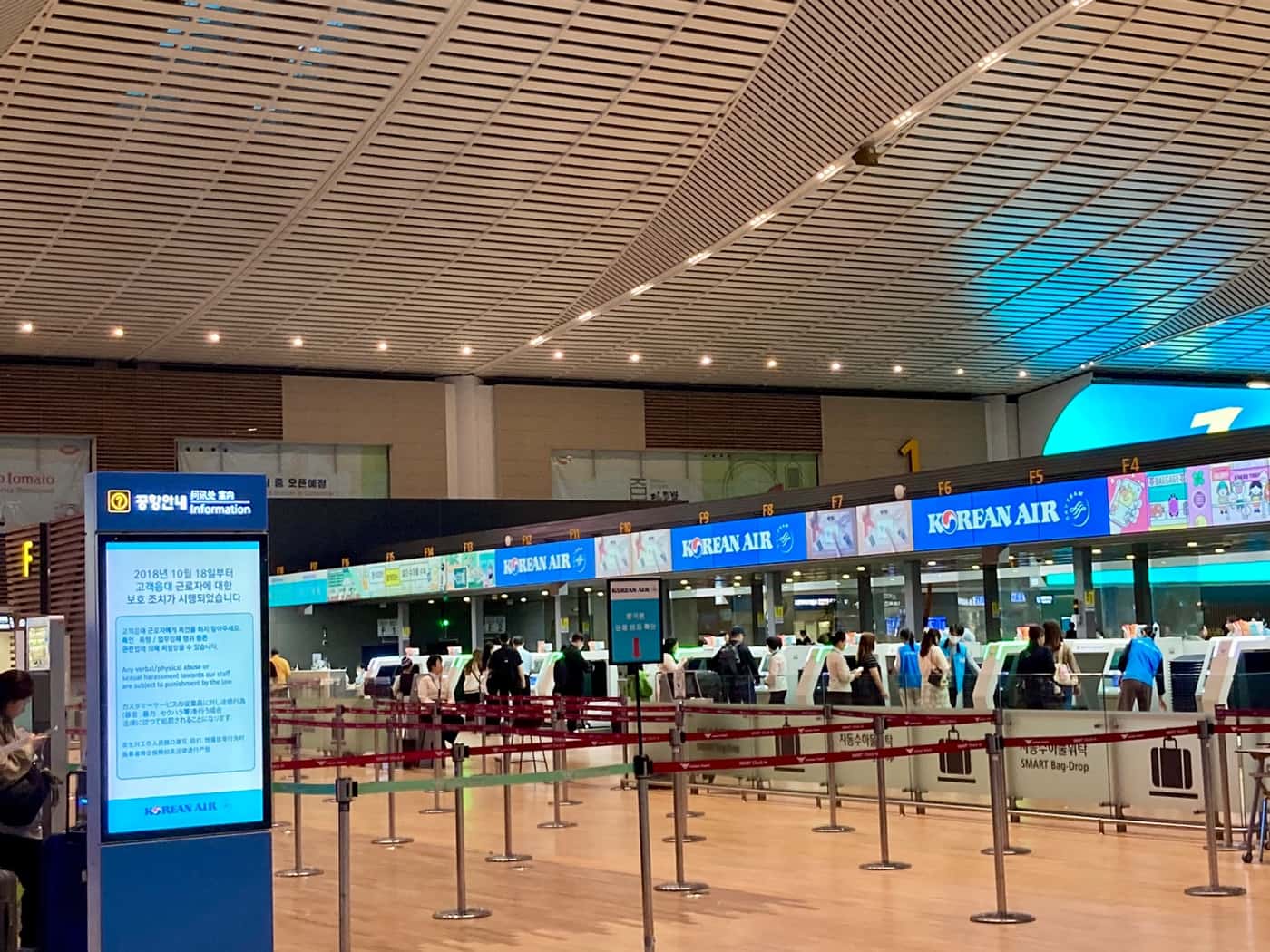
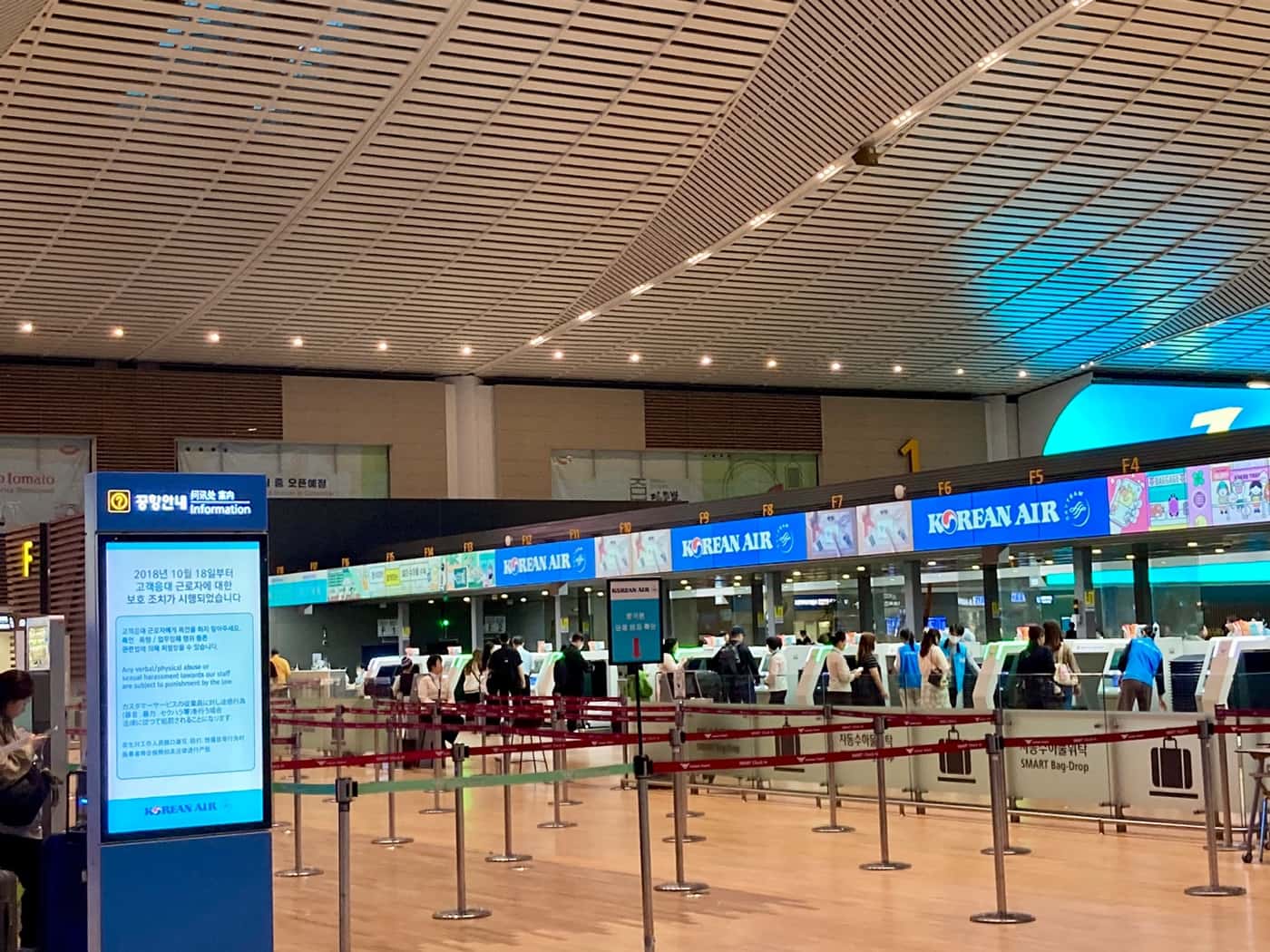
Incheon Terminal 2 — the building the whole industry is consolidating into. Asiana moved its operations here on 14 January 2026, putting all five Hanjin Group carriers under one roof ahead of the merger. Photo by Narubaru7 via Wikimedia Commons, CC BY 4.0.
Whichever airline you pick, you land on 220V Type F sockets — the TESSAN Korea plug adapter, sorted before IncheonAffiliate link. As an Amazon Associate, EpicKor earns from qualifying purchases at no extra cost to you.
The Short Answer
| If you want | Book | Note |
|---|---|---|
| Full service, long-haul, alliance miles | Korean Air (대한항공) | Soon Korea's only full-service carrier. SkyTeam |
| Long-haul on a budget, but not a squeeze | Air Premia (에어프레미아) | 35-inch economy pitch. US west and east coast |
| Short-haul reliability, most routes | Jeju Air (제주항공) | Korea's largest LCC by passengers. 42 aircraft |
| A cheap seat, willing to gamble on schedule | Jin Air, Eastar, Aero K | Jin Air becomes the biggest LCC in March 2027 |
| Do not be surprised by | Trinity Airways | This is T'way. Renamed 2026. Europe routes shrinking |
| Currently booking | Asiana Airlines | Fine to fly — but read the miles section below |
Cabeau Evolution S3 — a memory-foam neck pillow that straps to the seat. Even Air Premia's 35-inch economy is eleven-plus hours upright from the US; the seat strap stops your head dropping forward, which is what actually wakes you on a long-haul. As an Amazon Associate, EpicKor earns from qualifying purchases at no extra cost to you.
See the Cabeau Evolution S3 on AmazonYou might like: Getting Around Korea in 2026: Subway Fares, Last Trains, KTX Booking, Bus Prices and Which App to Use
Tier 1: The Full-Service Carrier — Now Just One
For 38 years Korea had two full-service airlines. From December, it has one.
Korean Air (대한항공) absorbs Asiana Airlines (아시아나항공) on 17 December 2026. The combined airline serves more than 120 cities with over 230 aircraft, which puts it in the same weight class as the major European and American network carriers.
If you are holding an Asiana booking or Asiana miles, three dates matter:
- 1 December 2026 — the last day to book Star Alliance award tickets on Asiana. Partner programmes such as Aeroplan, United MileagePlus and Singapore KrisFlyer stop displaying Asiana award seats about 16 days before the merger.
- 17 December 2026 — Asiana leaves Star Alliance and the brand ends. Korean Air is SkyTeam, and that is where the network goes.
- Conversion rate: Asiana Club miles fold into Korean Air's SKYPASS. Miles earned from Asiana flights convert 1:1. Miles earned through partners convert at 1:0.82 — an 18% haircut that has not been widely reported in English.
That last detail is the single most valuable thing in this article for anyone with a Korean mileage balance. If your Asiana miles came from a credit card or a partner airline rather than from flying Asiana itself, they are worth less after December than before.
Practical booking advice: flights operate normally through the transition, and a ticket on Asiana today is a ticket on a functioning airline. But if you are choosing between the two for a flight after December, book Korean Air — you avoid a re-accommodation and your miles land in the right programme.
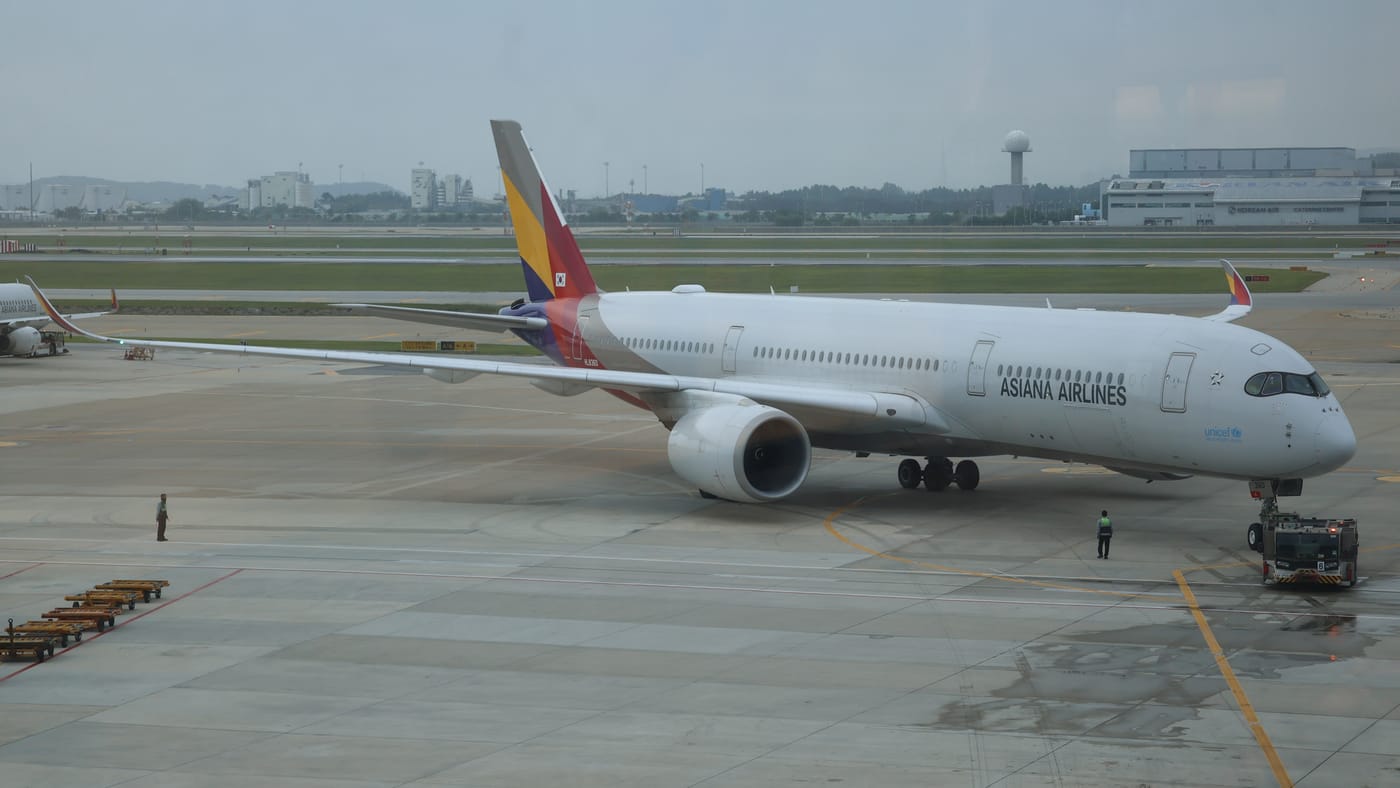
Asiana on stand at Incheon in June 2026, six months before the brand ends. That striped tail is the thing being retired — the A350s themselves carry on in Korean Air colours. Photo by S5A-0043 via Wikimedia Commons, CC BY 4.0.
You might like: Korea's Other International Airports: Which Ones Actually Fly Abroad
Tier 2: The Hybrid — Air Premia
This is the airline most worth knowing about, because it occupies a category that barely exists elsewhere and is genuinely useful to a long-haul traveller.
Air Premia (에어프레미아) calls itself a Hybrid Service Carrier — priced near a budget airline, configured like a better one. It flies Boeing 787-9 Dreamliners only, and its pitch is literally its pitch:
- Economy is branded "Economy 35" — about 35 inches of seat pitch, in a 3-3-3 layout with roughly 253 economy seats. Standard long-haul economy is 31–32 inches.
- Premium economy runs about 42 inches.
- There is no first or business class. The whole fleet is one aircraft type in one configuration, which is how the economics work.
Its US network runs to Los Angeles, New York (Newark), San Francisco, Honolulu and Washington DC. For a traveller crossing the Pacific in economy, three to four extra inches of legroom for eleven hours is not a small thing, and it is the reason aviation reviewers keep writing about this airline.
The honest caveat: Air Premia is small and its ownership has been contested. AP Holdings holds about 46% with allied shareholders, JC Partners about 22%. Daemyung Sono Group bought into it, then sold its 22% stake to Tirebank in May 2025 to concentrate on T'way instead. A small airline with a shifting shareholder register is a different risk profile from Korean Air — book it for the seat, not for the certainty.
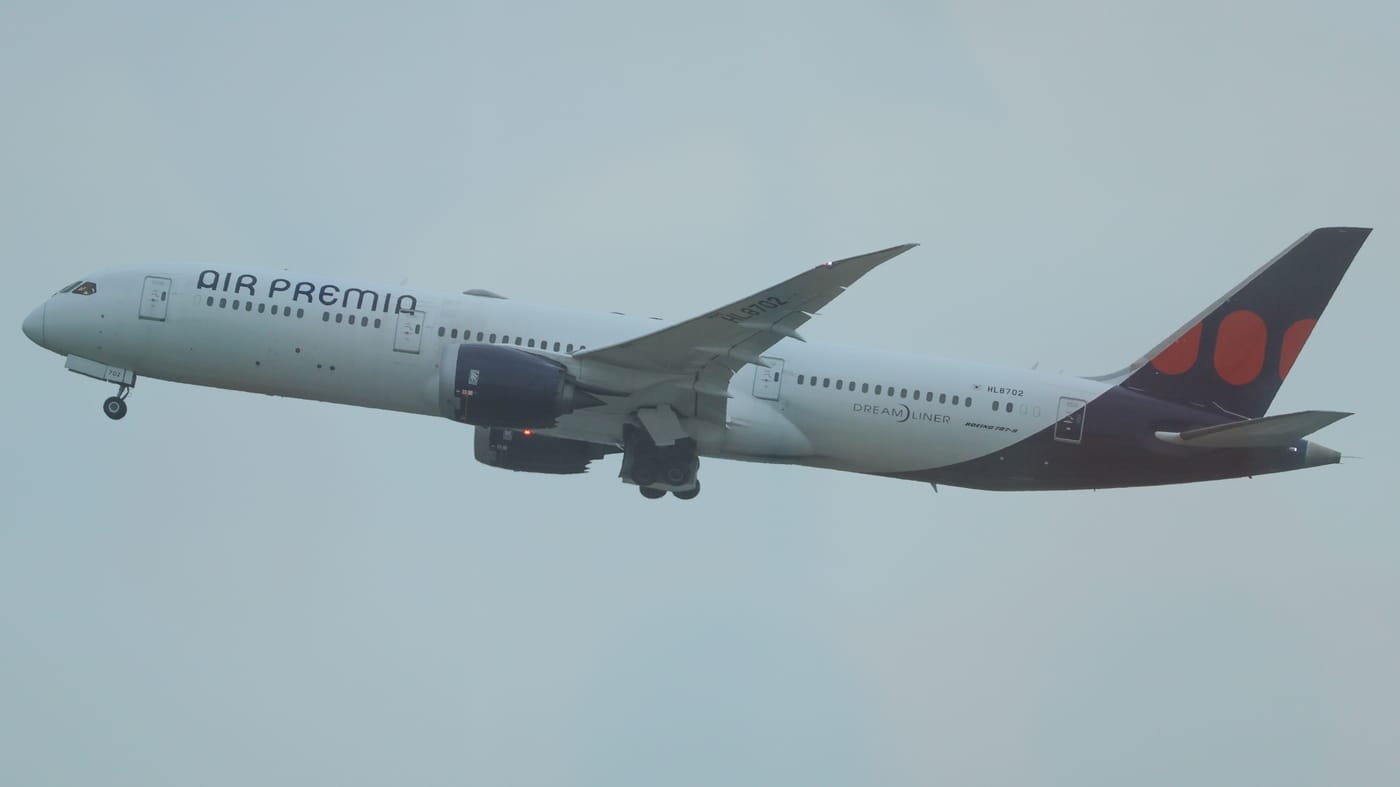
Air Premia departing Incheon, June 2026. The fleet is 787-9s and nothing else — one aircraft type, one cabin layout, and the widest economy pitch flying out of Korea. Photo by S5A-0043 via Wikimedia Commons, CC BY 4.0.
Tier 3: The Budget Carriers, Mid-Reshuffle
Korea has an unusually crowded low-cost sector, and it is being consolidated into two big blocks plus stragglers.
Jeju Air (제주항공) — the incumbent
Korea's largest LCC by passengers, and currently the healthiest.
- 42 aircraft, average age 11.8 years and falling
- 3,311,358 passengers in Q1 2026, up 24.2% year on year — first among Korean LCCs
- 91.9% load factor against an industry average of 88.8%
- Two consecutive profitable quarters; Q1 2026 revenue ₩498.2 billion, operating profit ₩64.4 billion
- Modernising on the Boeing 737-8: 12 delivered, more due this year — though it cut its firm order from 40 to 32
For most short-haul trips within Asia, Jeju Air is the default LCC answer: most routes, most frequencies, best current operating numbers.
Trinity Airways (트리니티항공) — this is T'way, renamed
If you remember one thing from this article, make it this one. T'way Air no longer exists as a name.
Daemyung Sono Group took control and renamed the airline Trinity Airways (트리니티항공). The name was registered on 1 April 2026 and the brand formally launched on 6 August 2026 with new uniforms and a strategy the company calls SSC — "Selective Service Carrier", meaning it unbundles and sells only the services passengers actually choose, tied into the group's hotel and resort business.
It is Korea's second-largest LCC with 48 aircraft, and it is the only Korean budget airline flying long-haul to Europe — Paris, Rome, Barcelona, Frankfurt, Zagreb — routes it originally received as remedies for the Korean Air–Asiana merger's competition problems.
But the European network is contracting, and this is the part to check before booking. Despite load factors reported at 80–90%, Frankfurt bookings have been closed, Paris has gone from five weekly flights to roughly two or three, and Rome and Barcelona have been cut similarly. High oil prices and long-haul losses are the stated cause. Verify your specific route is still operating before you plan around it.
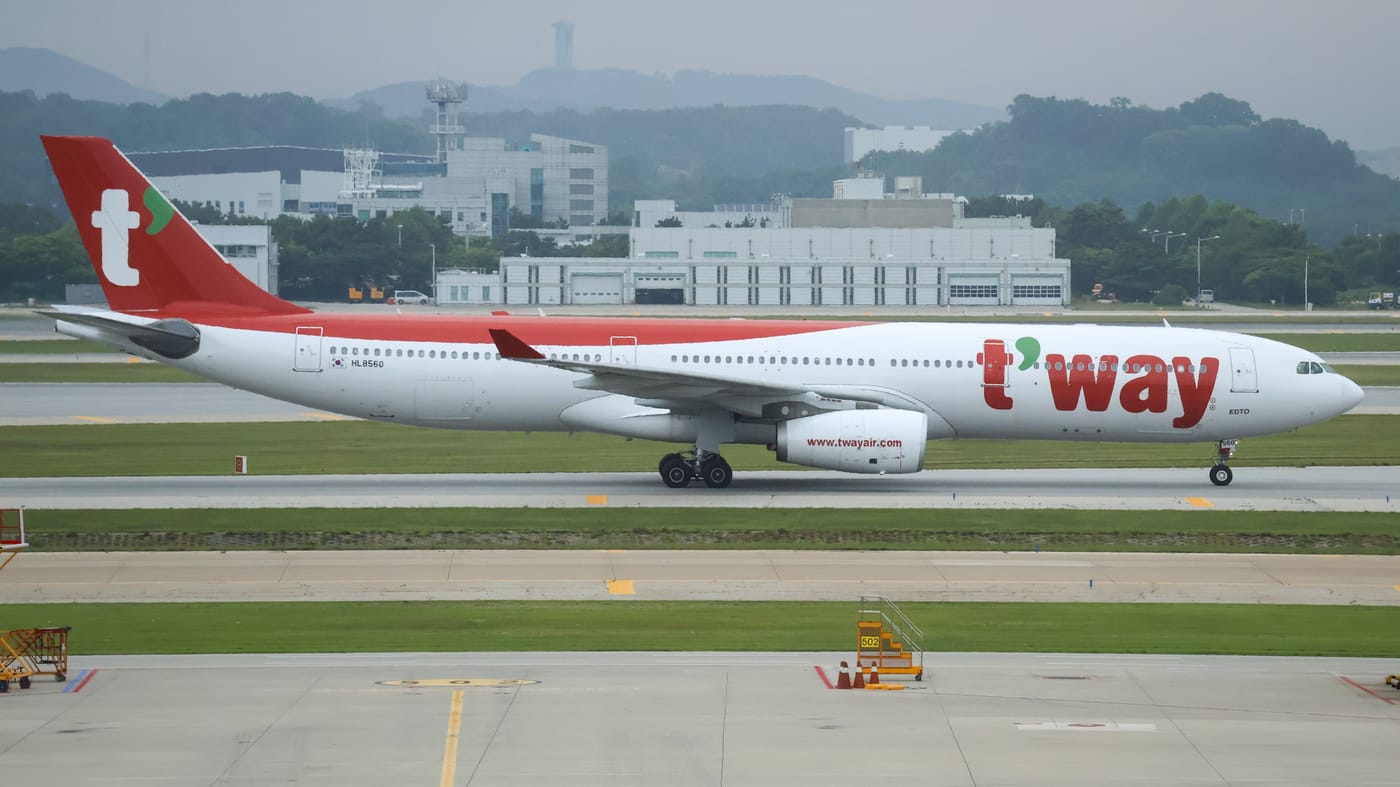
T'way at Incheon in June 2026. This is the livery and the name being replaced by Trinity Airways — the same A330s that fly the European routes. Photo by S5A-0043 via Wikimedia Commons, CC BY 4.0.
Jin Air (진에어) — about to become the biggest
Hanjin Group's LCC, and the vehicle for the other half of the consolidation.
On 21 August 2026, Jin Air, Air Busan (에어부산) and Air Seoul (에어서울) signed a merger agreement. Extraordinary shareholder meetings are set for December 2026, and the combined airline launches on 17 March 2027.
The arithmetic: Jin Air's 32 aircraft plus Air Busan's 21 plus Air Seoul's 6 equals 59 — overtaking Trinity's 48 to become Korea's largest low-cost carrier by fleet.
What this means for you: if you are booking travel into 2027, Air Busan and Air Seoul are names with an expiry date. Air Busan matters particularly to anyone flying into Busan (Gimhae) rather than Seoul, since it is the carrier built around that hub.
The smaller ones
- Eastar Jet (이스타항공) — rebuilt after bankruptcy and rehabilitation, targeting 27 aircraft across 25 airports in six countries.
- Aero K (에어로케이) — based at Cheongju, useful only if that airport suits you.
- Parata Air (파라타항공) — the newest and strangest. It is the former Fly Gangwon, bought in 2024 by the air purifier manufacturer Winix and relaunched on 30 September 2025. It is running a handful of A320s with long-haul ambitions. Korean financial press reports it back in complete capital erosion despite about ₩115 billion in support from its parent. EpicKor's Winix company deep dive covers how an appliance company ended up owning an airline. Treat it as a startup carrier, not an established one.
What Actually Changes For A Traveller
Most of this restructuring is invisible from a passenger seat. Four things are not.
1. Fewer full-service options means less price competition on long-haul. Two full-service carriers competing on the same routes kept fares honest. One does not. This is exactly why regulators forced the remedy routes that Trinity now flies — and why Trinity cutting those routes matters beyond Trinity.
2. Terminal logistics changed at Incheon. Asiana moved to Terminal 2 on 14 January 2026, joining Korean Air, Jin Air, Air Seoul and Air Busan. Thirteen airlines now use T2, including Delta, Air France, KLM and China Airlines. If your last trip had you at Terminal 1 for an Asiana flight, that is out of date. Check your terminal — the two are a shuttle ride apart.
3. Names on your booking may not match anything you can look up. A ticket issued as T'way, an aircraft painted Trinity, and a search engine that knows neither is a genuinely confusing experience. The same will be true of Air Busan and Air Seoul from March 2027.
4. Miles are the one thing with a deadline. Everything else in this article is inconvenience. The Asiana mileage conversion is money.
Booking Strategy By Trip Type
| Your trip | Best choice | Why |
|---|---|---|
| Long-haul from North America, economy | Air Premia | 35-inch pitch at close to LCC pricing |
| Long-haul, need alliance status or upgrades | Korean Air | SkyTeam, the only full-service option |
| Long-haul from Europe on a budget | Trinity — but verify | Routes actively being cut |
| Short-haul in Asia | Jeju Air | Most routes, best current reliability numbers |
| Flying into Busan | Air Busan (until March 2027) | Built around Gimhae |
| Anything after March 2027 | Check the name still exists | Three brands retire between now and then |
If you are still deciding when to come rather than how, EpicKor's best time to visit Korea covers the seasons, and things to know before travelling to Korea covers what to sort out before you fly.
Lonely Planet Korea — the full-country guidebook, Seoul to Jeju. Once the flight is booked, the next decisions are where you go after Incheon; this is the one printed guide that covers the whole country rather than just Seoul. As an Amazon Associate, EpicKor earns from qualifying purchases at no extra cost to you.
See Lonely Planet Korea on AmazonWhat To Verify Before You Book
Airline restructuring moves faster than travel guides, this one included.
- Confirm the operating carrier, not just the marketing name. A codeshare booked as one airline may be flown by another, and during a merger that gap widens.
- Confirm your Incheon terminal on the day. T1 and T2 are separate buildings.
- Confirm European routes are still scheduled if you are flying Trinity. This is the live one.
- Convert or use Asiana partner miles before December if the 1:0.82 rate would cost you meaningfully.
- Treat 2027 schedules as provisional for Air Busan, Air Seoul and Parata Air.
FAQ
Q: Is Asiana Airlines safe to book right now?
Yes. It is operating normally and will keep flying until the merger completes on 17 December 2026, after which the flights continue as Korean Air. The real considerations are mileage conversion and alliance change, not operations.
Q: What happened to T'way Air?
It was renamed. Daemyung Sono Group took control and the airline became Trinity Airways (트리니티항공) — registered 1 April 2026, brand launched 6 August 2026. Same aircraft, same fleet of 48, new name and a new "Selective Service Carrier" model. Its European routes are being reduced.
Q: Which Korean airline has the most legroom in economy?
Air Premia, by a clear margin. Its "Economy 35" cabin is about 35 inches of pitch against the 31–32 inches typical of long-haul economy, and its premium economy is around 42 inches. It flies 787-9s only.
Q: What will happen to my Asiana miles?
They convert into Korean Air SKYPASS. Miles earned from flying Asiana convert 1:1; miles earned through partners convert at 1:0.82. The final details were still being reviewed by Korean regulators as of August 2026, so confirm the current terms before acting.
Q: Which is Korea's biggest low-cost airline?
Jeju Air by passengers carried, with 42 aircraft and over 3.3 million passengers in Q1 2026. By fleet size, Trinity Airways leads with 48 — until March 2027, when the merged Jin Air, Air Busan and Air Seoul reach 59 aircraft.
Q: Do all Korean airlines fly from Incheon Terminal 2?
No. Thirteen airlines use T2 — including Korean Air, Asiana (since January 2026), Jin Air, Air Seoul, Air Busan, Delta, Air France and KLM. Jeju Air, Trinity, Eastar and most foreign carriers use Terminal 1. Always check, because the terminals are separate buildings.
The Bottom Line
Korea's airline map in 2026 is a photograph of a country mid-consolidation: one full-service carrier where there were two, two large LCC blocks forming out of six, one genuinely interesting hybrid, and a couple of small carriers whose futures are open questions.
For the traveller, the practical version is short. Korean Air if you want the network and the miles. Air Premia if you want to arrive from across the Pacific able to walk. Jeju Air for everything short-haul. And check the name on your ticket still exists by the time you fly.
Sources: Korean Air Newsroom — merger contract and 17 December 2026 launch · Business Traveller — Asiana merges with Korean Air this December · LoyaltyLobby — shareholder and board approvals, mileage conversion · eNewsToday — 통합 진에어 2027-03-17 출범 · Bloter — 티웨이항공, 트리니티항공으로 사명 변경 · Kukinews — 트리니티항공 공식 출범 · 시사저널e — 유럽 노선 감편 · Money Today — 제주항공 2분기 연속 흑자·기단 현황
You Might Also Like
Korea's Other International Airports: Which Ones Actually Fly Abroad
Korea has eight international airports on paper. One is closed, one is nearly dormant, and the rest are genuinely useful — Busan flies 39 international routes, Cheongju is the fastest-growing in the country. Which to use, and the Jeju visa trap to avoid.
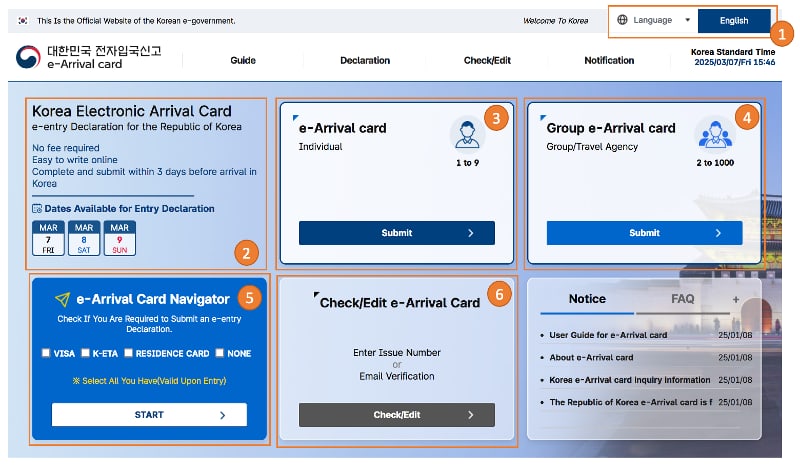
Korea e-Arrival Card vs K-ETA: 22 Countries Are Exempt, and the Paid One Cancels the Free One
Nationals of 22 countries do not need K-ETA through 31 December 2026. But holding a K-ETA exempts you from the e-Arrival Card — so the ₩10,000 optional one cancels the free mandatory one. Which to do, and when.
Korea eSIM vs SIM vs Pocket WiFi: Tourist Setup
A practical Korea eSIM vs SIM card vs pocket WiFi guide for tourists: airport pickup, unlocked phones, groups, maps, and first-day setup.