Where to Stay in Busan, Korea, in Winter: Haeundae vs Seomyeon vs Gwangalli vs Nampo vs Busan Station, by the Numbers
Last updated: 9 October 2026. Airport bus fares, routes and hours are from the City of Busan's own Gimhae Airport Limousine page (김해공항리무진), which lists the network that took effect on 5 January 2026. Subway and light-rail fares are from Busan Transportation Corporation (부산교통공사, Humetro) and Busan-Gimhae Light Rail (부산김해경전철). The drone-show schedule is from the City of Busan's English events page. Visitor and spending figures are from Korea Tourism Data Lab (한국관광데이터랩) analyses reported in the Korean press. All prices are in won, as of October 2026. Sources are listed at the end.
Haeundae (해운대) is the answer every English guide gives to "where should I stay in Busan?", and in July it usually is. Winter changes the maths. In January 2026, foreign visitors spent ₩13.88 billion on cards in Haeundae-gu. In May they spent ₩34.97 billion, two and a half times as much. The beach is the same; the reason most people went there is not. Meanwhile the airport bus to Seomyeon (서면) got cheaper on 5 January, to ₩6,000. The Gwangalli (광안리) drone show moves earlier in winter, to 19:00 and 21:00 on Saturdays, and it is free.
So the winter question is which area fits what a December-to-February trip is made of: the ride from Gimhae Airport (김해공항), warm evenings, a night event or two, and day trips by train. Here are five bases, with the numbers.
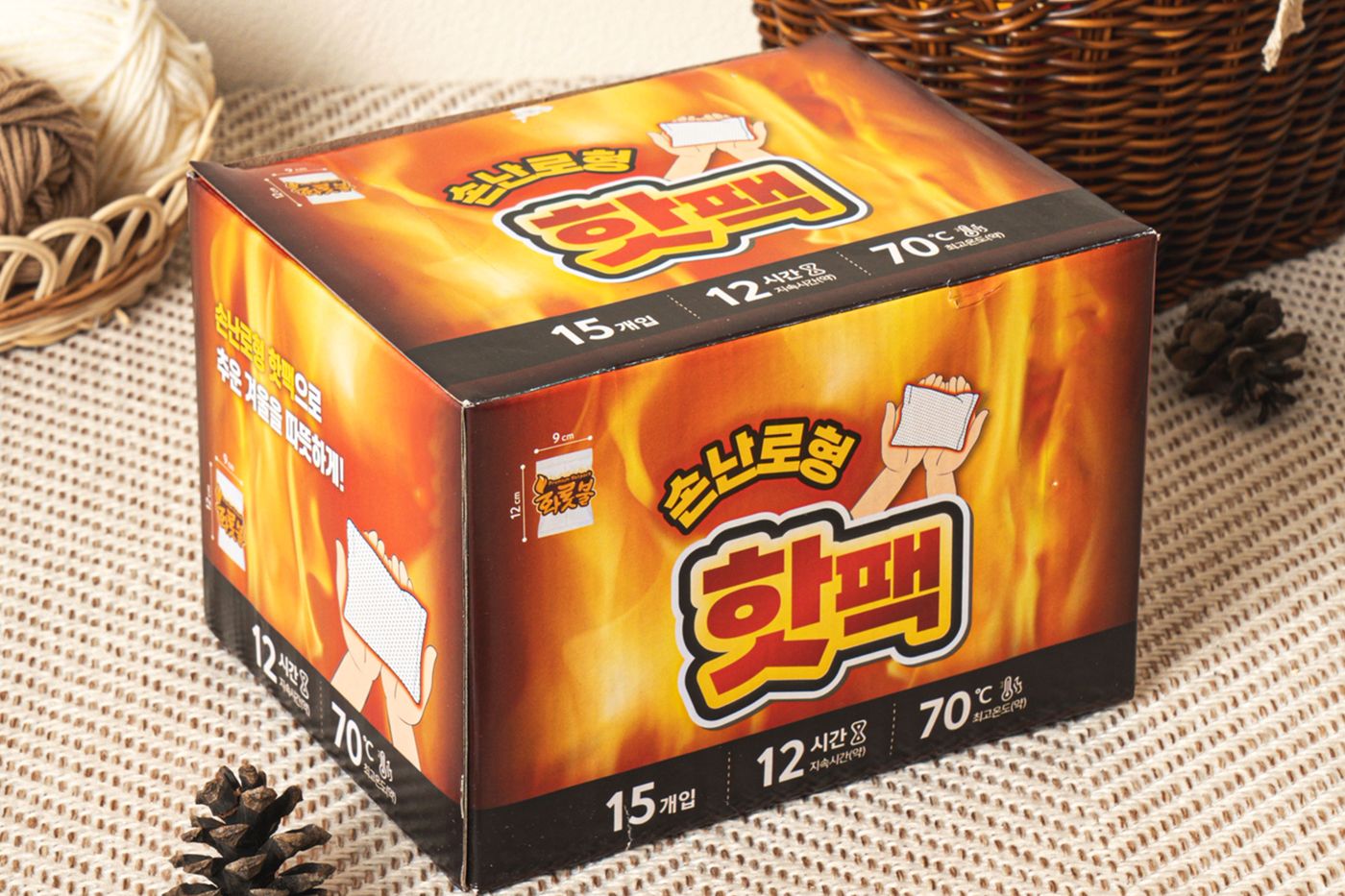
The 21:00 drone show means 12 minutes standing on a sea-wind beach in December: Korean-made INLIFE hand warmers (핫팩), 30-pack, on AmazonAffiliate link. As an Amazon Associate, EpicKor earns from qualifying purchases at no extra cost to you.
Quick Guide: five Busan bases in winter
| Area | Best for in winter | From Gimhae Airport (adult, as of Oct 2026) | Subway | Winter plus | Winter minus |
|---|---|---|---|---|---|
| Seomyeon 서면 | Short trips, first-timers, bad weather | Airport Limousine 2, ₩6,000 (route runs 50 min end to end); or light rail + Line 2, ₩1,600, about 35 min* | Lines 1 and 2 (transfer station) | Everything is indoors and underground; one stop to Bujeon for the Donghae Line | No sea; the night view is neon, not water |
| Haeundae 해운대 | Sea-view rooms, spa days, New Year sunrise | Airport Limousine 1, ₩9,500 (route runs 90 min end to end); or light rail + Line 2, ₩1,800, about 65 min* | Line 2 (Haeundae, Dongbaek) | January foreign spending under 40% of May's; Spa Land at Centum City | Farthest of the five from the airport by rail; far from Nampo and Busan Station |
| Gwangalli 광안리 | Saturday drone shows, the bridge at night | No airport bus; light rail + Line 2, ₩1,800, about 55 min* | Line 2 (Gwangan, Geumnyeonsan) | Free drone shows at 19:00 and 21:00, Oct–Feb | Wind off the bay at night; Saturday crowds |
| Nampo 남포동 | Markets, old Busan, the Christmas street | No airport bus; light rail + Lines 2 and 1, ₩1,800, about 55 min* | Line 1 (Nampo, Jagalchi) | Gwangbok-ro Christmas lights; Jagalchi fish market | About 24 stops from Haeundae |
| Busan Station 부산역 | KTX arrivals, one-nighters, Gyeongju day trips | No airport bus; light rail + Lines 2 and 1, ₩1,800, about 50 min* | Line 1 (Busan Station) | KTX from Seoul ₩54,400; Gyeongju 27–35 min | Least atmosphere of the five after dark |
*Rail times are our estimates from stop counts at about two minutes a stop, plus the transfer walks at Sasang and Seomyeon. Check Naver Map or Kakao Map for your departure time. Rail fares are adult transit-card fares: the transfer is free and you pay only the higher of the two fares. Airport to Sasang is ₩1,600 on the light rail; on the subway, Sasang to Seomyeon is 7.5 km (first zone, ₩1,600) and every other base is over 10 km (second zone, ₩1,800), per Humetro's distance table.
Busan stays on Agoda: compare the area before the hotel Search Busan without dates first and use the map view to see what Seomyeon, Haeundae and Gwangalli look like side by side. Then enter your nights and read the cancellation deadline, taxes, room type and final price on the listing itself. A room labelled "ocean view" is the property's claim, so check which side of the building it faces. EpicKor may earn a commission if you book through this Agoda link, at no extra cost to you. Agoda partner link.
Compare Busan stays on AgodaWhy winter is a different Busan
Three numbers explain why a winter Busan trip needs its own answer.
It is the low season. The Korea Tourism Data Lab analysis reported by the Seoul Shinmun (서울신문) in July 2026 put foreign card spending in Haeundae-gu at ₩13.884 billion in January and ₩34.97 billion in May. January was under 40 percent of May. Across Busan, the city counted 1,936,572 foreign visitors from January to May 2026, up about 40 percent on a year earlier. Part of the January-to-May gap is growth through the year (May was up 44 percent on May 2025), so read it as a direction rather than an exact measure of the season. But the direction is clear: winter is when Haeundae is quietest.
It is mild, and it does not snow. The Korea Meteorological Administration's 1991–2020 normals give Busan an average December high of 10.4°C and low of 2.0°C. Its nights are 5.4°C warmer than Seoul's. KMA recorded 0.0 cm of snow in Busan all last winter (more in our December in Korea guide). What a winter visitor meets instead is wind. Busan's beaches face open water, and the evening breeze on the sand is what makes 2°C feel colder than it is.
The sea becomes a view, not an activity. In winter the beach is something you look at or walk along for twenty minutes. Value shifts to what works in the cold and dark: transport, indoor streets, warm baths and a few night events.
Seomyeon: the winter default for most short trips
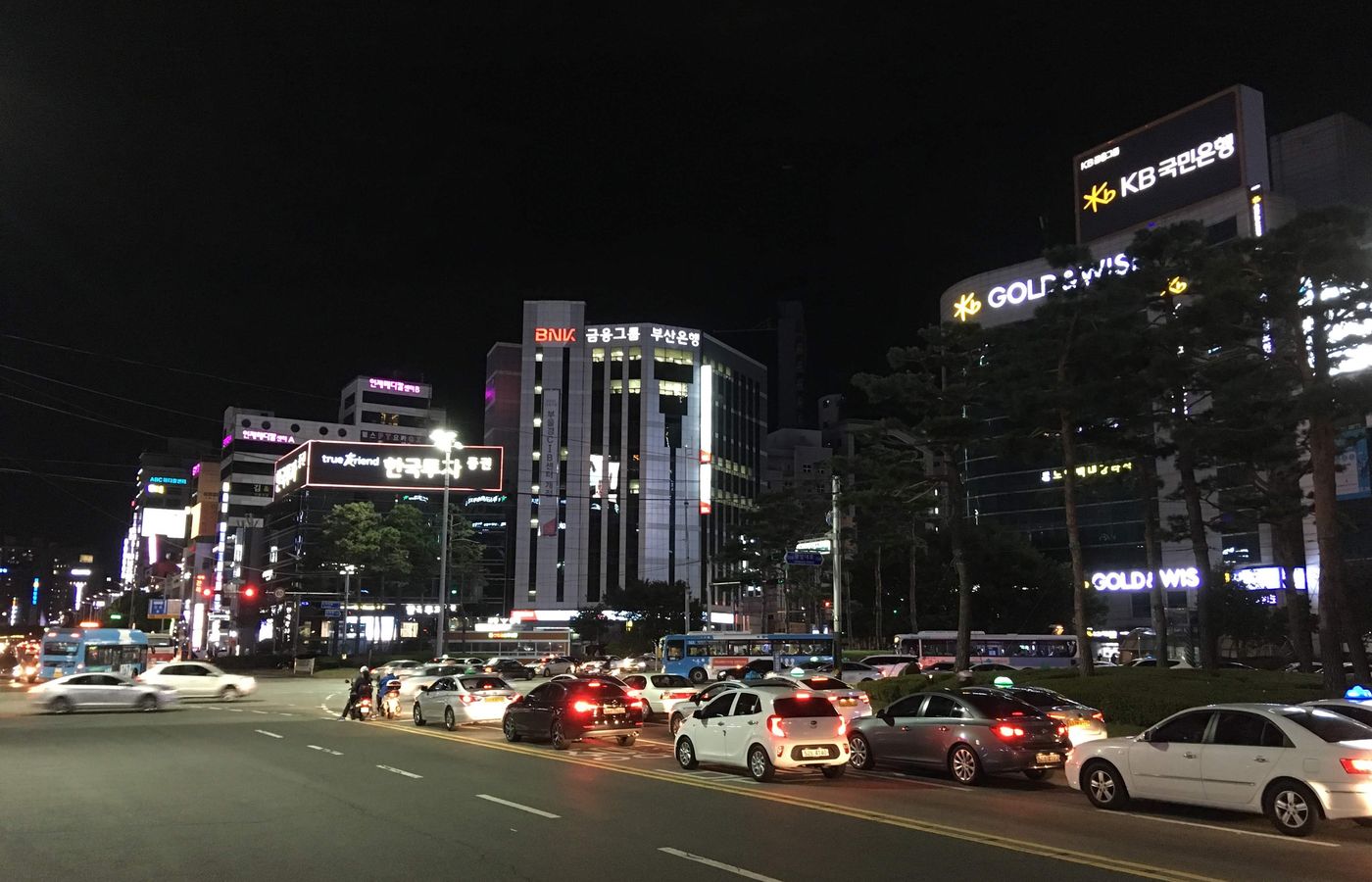
Seomyeon is Busan's downtown hub, and the only place where subway Lines 1 and 2 cross (Seomyeon station is 119 on Line 1 and 219 on Line 2). In winter its advantages get bigger.
- The cheapest direct ride from the airport. Airport Limousine 2 (공항리무진2) runs Bujeon (부전) – Seomyeon – Gimhae Airport. Since 5 January 2026 the adult fare is ₩6,000, down from ₩7,500. Buses leave the airport from 07:20 to 21:30, every 60 to 80 minutes. There is no cash on board: pay by card or book a QR ticket in the Bustago (버스타고) app.
- Or ride the rail for less. The Busan-Gimhae Light Rail runs from Airport station to Sasang (사상), three stops. There you change to Line 2 for eight more stops to Seomyeon. On a transit card (a Seoul T-money card works) the trip costs ₩1,600: the transfer is free, you pay only the higher fare, and both legs are first-zone fares (Sasang to Seomyeon is 7.5 km).
- It works when it rains. An underground shopping street runs below, department stores above.
- It is one stop from Bujeon. Bujeon is the station for the Donghae Line trains to Gyeongju and the east coast. The KTX to Gyeongju leaves from Busan Station, six stops down Line 1. Our Busan to Gyeongju guide compares the two.
The honest minus: Seomyeon has no sea, and its weekend nightlife is young and loud. If you came to wake up to the water, it is the wrong base.
Haeundae: when it is right in winter, and when it is not
Getting there. Airport Limousine 1 (공항리무진1) costs ₩9,500; unlike Limousine 2, its fare did not fall in January. Two branches run through Haeundae Beach, stopping at Centum City, BEXCO and Dongbaekseom on the way. The Jangsan (장산) branch takes 90 minutes end to end and leaves the airport from 07:10 to 16:50; the Gijang (기장) branch leaves from 10:10 to 21:40. By rail it is light rail to Sasang, then 24 stops on Line 2 to Haeundae (203): an hour or more, for ₩1,800.
Why it works in winter:
- The sea-facing room. A winter sunrise over the sea, seen from the room, out of the wind.
- New Year's morning. The sun rises at Haeundae at 07:32 on 1 January, and the city expected over 100,000 people last year (our New Year sunrise guide).
- A warm afternoon indoors. Spa Land at Shinsegae Centum City, three stops from Haeundae on Line 2, charges ₩26,000 for four hours (details and the tattoo rules in our Korean spa prices guide).
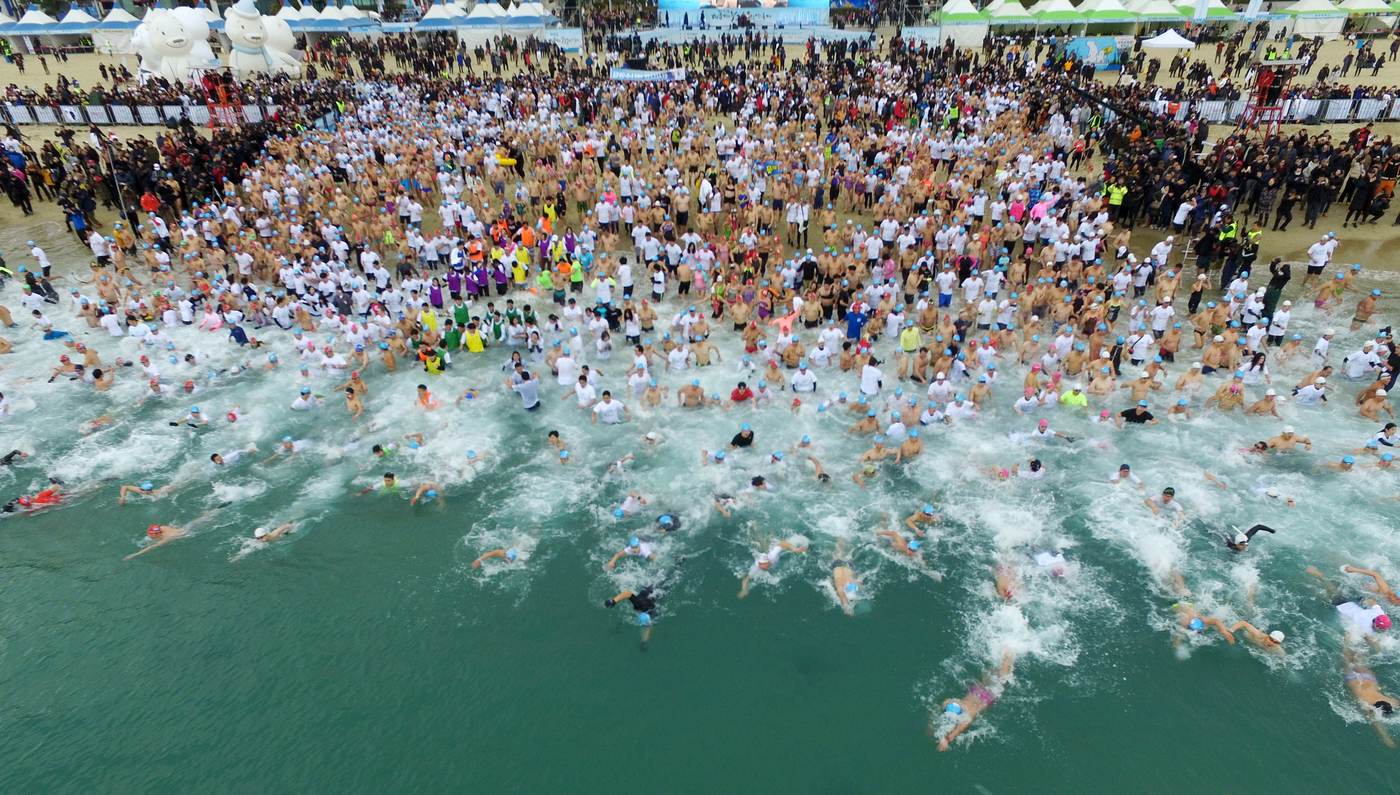
- The Polar Bear swim, maybe. Busan's Polar Bear Festival was a January fixture at Haeundae for decades, but its 2025 edition moved to Gwangalli Beach and to 7–9 February. The 2027 date and beach had not been announced as of 9 October 2026, so do not pick a hotel for it yet.
When Haeundae is the wrong winter base:
- You land after about 21:40. The last Limousine 1 has gone.
- Your trip is two nights and the KTX. Busan Station is about 22 stops and two lines away.
- Your plans are on the west side. Nampo, Jagalchi, Gamcheon and Songdo are all a long ride.
- You picked it for the beach. In winter the beach is a walk, and any subway line gets you a walk.
It is also the expensive end. Korea Hotel Association figures for 2023, quoted in a March 2025 Asia Economy (아시아경제) article, put the average daily rate at Haeundae's five-star hotels at about ₩350,000, more than double the four-stars, at 72 percent occupancy. That is 2023 data, the latest published figure we found, so treat it as a rough scale rather than this winter's price. We found no official room-rate figures for the other four areas, so this guide gives no area-by-area prices. Compare your actual nights instead.
Gwangalli: book it for the Saturday drone show
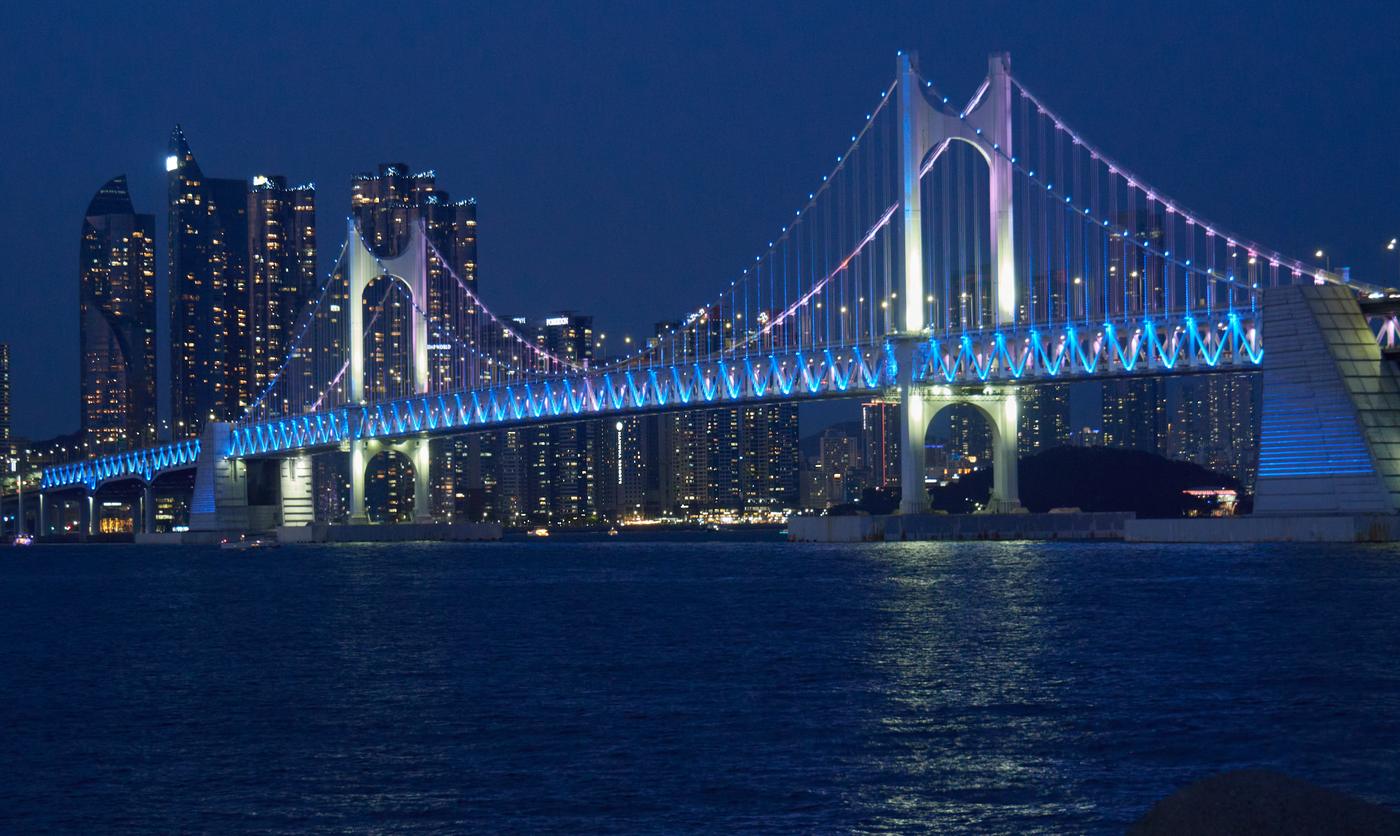
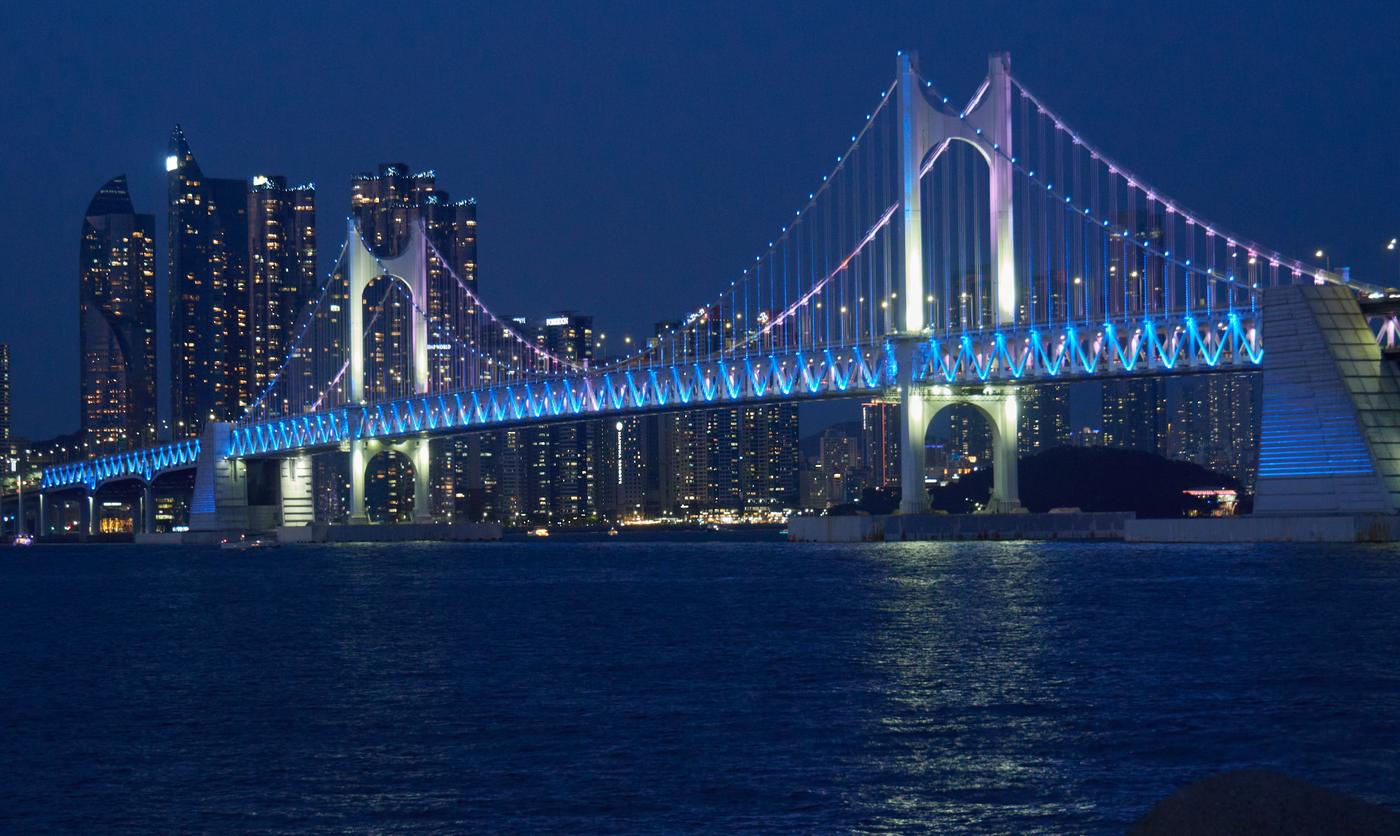
Gwangalli faces Gwangan Bridge, and on Saturdays it has a winter reason no other area has: the Gwangalli M Drone Light Show (광안리 M 드론라이트쇼). In winter it starts earlier, according to the City of Busan's events page:
| Months | Show times (Saturdays) | Length | Price |
|---|---|---|---|
| October – February | 19:00 and 21:00 | About 12 minutes each | Free, anywhere on the beach |
| March – September | 20:00 and 22:00 | About 12 minutes each | Free |
Suyeong-gu (수영구), the district that runs it, contracted UVify (유비파이) from July 2026 to 30 June 2027 for more than 1,100 drones a show and more than 100 shows a year (Unicorn Factory, 2 July 2026); the city's page still says 1,000. Weather or technical problems can cancel or delay a show, and Suyeong-gu streams it live on its YouTube channel, Suyeong-gu TV. Holiday specials are bigger: the 31 December 2025 countdown used 2,500 drones.
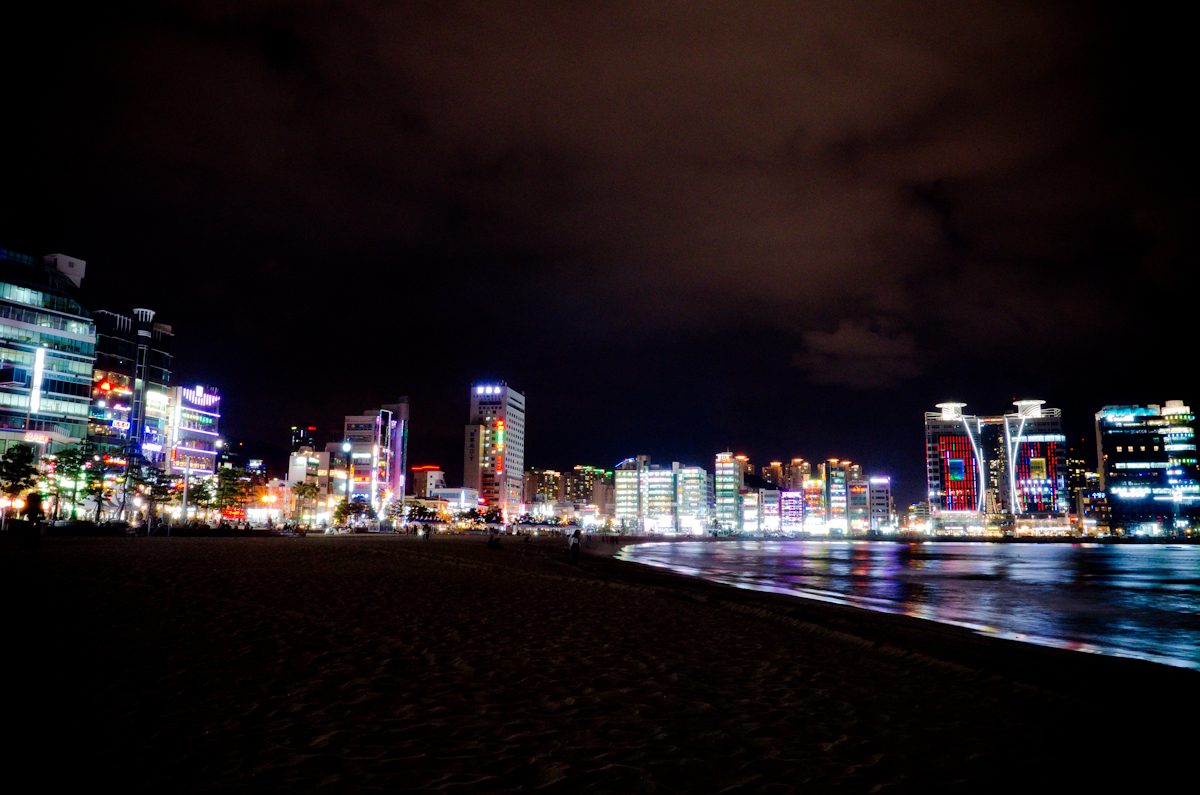
Why stay there rather than visit. The second show ends around 21:12. Haeundae is five or six stops away on Line 2, but Nampo or Busan Station is 16 to 18 stops and a change, on a cold night with the whole beach leaving at once. The beachfront strip faces the bridge, but whether a room has that view depends on the building and the floor: check the room type, not the hotel name.
Book early for one night in particular. The Busan Fireworks Festival is on Saturday 7 November 2026 at Gwangalli. It is the most contested hotel night in Busan's year, and our fireworks guide covers the seats and the free viewing spots.
The minus: the beach is the most exposed place in this guide to the night wind, and on non-show nights it is quiet.
Columbia Arcadia II packable rain jacket: a windproof shell for the beach at night At 2°C a wind off the bay feels much colder, and a thin waterproof shell over a sweater blocks it better than a second sweater. This one packs into its own pocket for the day and comes out for the 21:00 show. The men's equivalent is the Columbia Watertight II. If you already own a wind-blocking layer, skip this and pack that. As an Amazon Associate, EpicKor earns from qualifying purchases at no extra cost to you.
See the Columbia Arcadia II on AmazonNampo: old Busan, and the Christmas street
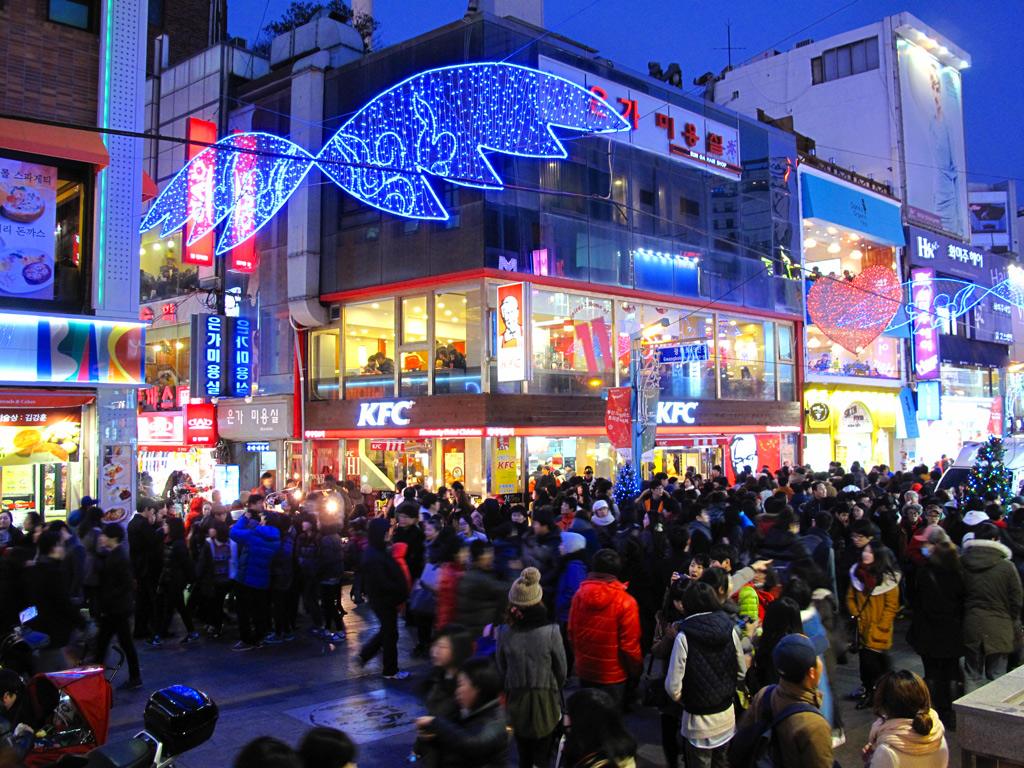
Nampo-dong (남포동) is the old harbour downtown: Jagalchi Market (자갈치시장), BIFF Square, Gukje Market and Gwangbok-ro (광복로), the street that hosts Busan's Christmas tree festival each winter. The 2026 dates were not announced as of 9 October 2026; check the Jung-gu (중구) office in November.
Why stay here: it is the base for the west side. Jagalchi, Gamcheon Culture Village, Songdo and Taejongdae are all closer from here, and winter evenings here feel most like a festival.
Getting there: neither of the city's two airport limousine routes serves Nampo or Busan Station. By rail it is light rail to Sasang, Line 2 to Seomyeon, then Line 1 to Nampo (111): three light-rail stops, then 16 subway stops with two changes. A taxi is the easier option with luggage.
The minus: Haeundae is 24 stops away with a change.
Busan Station: the practical one
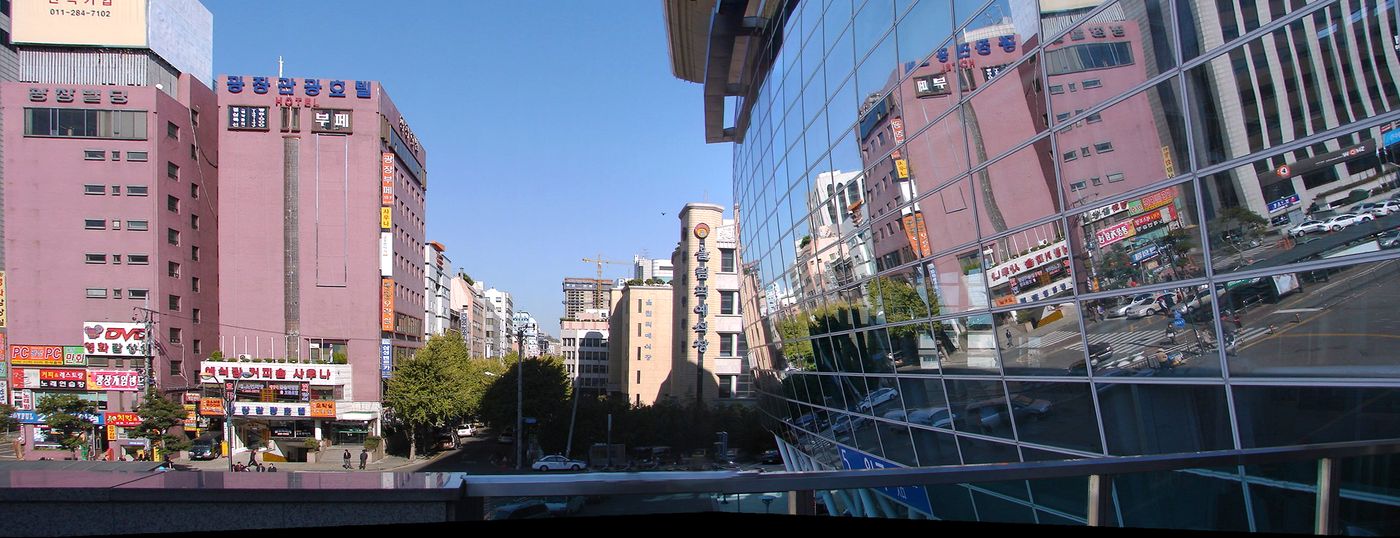
Busan Station (부산역) is where the KTX from Seoul arrives, and the right base when trains shape your trip more than the sea does.
- KTX in and out. The standard Seoul–Busan KTX fare has been ₩54,400 since the 1 September 2026 rail merger (see our KTX and SRT guide). Sleeping by the station cuts the transfer on both ends.
- Day trips by train. The KTX to Gyeongju takes 27–35 minutes for ₩10,100, with 28 trains a day (from our Busan to Gyeongju guide).
- It is on Line 1, two stops from Nampo (Busan Station is 113, Nampo 111), so the old town is a short ride or a long walk away.
The minus: the blocks around it are business hotels and offices, the least atmosphere of the five, and Haeundae and Gwangalli are a long ride with a change.
How to choose, in one line each
- Two or three nights, first time, arriving by air: Seomyeon. It has the ₩6,000 bus, both subway lines, and indoor evenings.
- A sea-view room is the point, or you want the New Year sunrise: Haeundae. Take Limousine 1 and land before about 21:40.
- A Saturday night in the trip: Gwangalli for that night, even if you sleep elsewhere for the rest of the trip.
- Markets, the Christmas street and the west side: Nampo.
- In and out by KTX, or using Busan as a base for Gyeongju: Busan Station.
Splitting the trip is often the best winter answer: one night at Gwangalli for the show, two in Seomyeon for everything else. For the summer version of the beach choice, see our Busan beach guide. For whether Busan should come before Seoul at all, see Busan vs Seoul.
When you have picked the area, compare Busan stays on Agoda with your actual dates. EpicKor may earn a commission on qualifying bookings, at no extra cost to you. Check the cancellation deadline, taxes, room type and final price on the listing before you pay.
FAQ
Q: Is Haeundae or Seomyeon better to stay in Busan in winter? For most short winter trips, Seomyeon. It has the cheaper airport bus (₩6,000 against ₩9,500), both main subway lines, and an underground shopping street for cold evenings. Haeundae is better when the sea-view room or the New Year sunrise is the reason for the trip.
Q: What time is the Gwangalli drone show in winter? From October to February it runs on Saturdays at 19:00 and 21:00, for about 12 minutes each, and it is free from anywhere on Gwangalli Beach. From March to September the times are 20:00 and 22:00. Wind can cancel or delay it, so check Suyeong-gu's live stream or the official site before you go.
Q: How much is the airport bus from Gimhae Airport to Haeundae? ₩9,500 for adults on Airport Limousine 1, as of October 2026. Seomyeon is ₩6,000 on Limousine 2, a fare that was cut on 5 January 2026. Neither bus takes cash.
Q: Are Busan hotels cheaper in winter? The visitor data points that way. Foreign card spending in Haeundae in January 2026 was under 40 percent of May's, and spending tracks demand. But we found no official month-by-month room-rate data for Busan, so compare your actual dates, and book the fireworks night and New Year's Eve early.
Sources
- City of Busan, Gimhae Airport Limousine page (김해공항리무진), routes, fares, hours and the 5 January 2026 reorganisation, read 9 October 2026: busan.go.kr/depart/khairportlm
- Twig24 (트윅24), "김해공항 리무진버스, 동부산관광단지 정류소 신설…운행 개편", 31 December 2025: twig24.com
- Busan Transportation Corporation (Humetro), fare table, read 9 October 2026: humetro.busan.kr
- Busan Transportation Corporation, distance and fare-zone table (영업키로정 및 역간 구간설정표), read 9 October 2026, from the fare page above.
- Busan-Gimhae Light Rail, fare table and transfer rules (last updated 22 September 2025): bglrt.com
- City of Busan, Calendar of Events, "Gwangalli M Drone Light Show": busan.go.kr/eng/bsevents/1713160
- City of Busan, Calendar of Events, "The 38th Busan Polar Bear Festival" (7–9 February 2025, Gwangalli Beach): busan.go.kr/eng/bsevents/1663239
- Unicorn Factory (유니콘팩토리), on UVify's Gwangalli contract (1,100+ drones per show, 100+ shows a year, to 30 June 2027), 2 July 2026: unicornfactory.co.kr
- Seoul Shinmun (서울신문), Korea Tourism Data Lab analysis of Haeundae foreign visitors and card spending, 21 July 2026: seoul.co.kr
- Financial News (파이낸셜뉴스), Busan foreign visitors January–May 2026, 6 July 2026: fnnews.com
- Asia Economy (아시아경제), Haeundae hotel market, citing Korea Hotel Association 2023 data, 6 March 2025: asiae.co.kr
- Korea Meteorological Administration, 1991–2020 climate normals for Busan (station 159), as compiled in our December guide.
- Agoda Busan city ID 17172, from agoda.com/city/busan-kr.html, partner link checked 9 October 2026.
You Might Also Like
Korea in December 2026: Snow Odds, Winter Festa Dates, Christmas and New Year's Eve, Week by Week
Seoul's December averages a 4.2°C high and just 22.6 mm of rain and snow, so a white Christmas is never promised. Korea in December 2026, week by week: KMA normals, Winter Festa from 14 Dec, a Friday Christmas holiday and the bell on 31 Dec.
Korean Hot Packs (핫팩) This Winter: Korea's 70°C Legal Limit, What They Cost at Daiso, CU and GS25, and Which Ones You Can Fly With
Korea's safety standard caps a hot pack at 70°C, and a consumer-agency survey once caught two packs labelled 75°C. Daiso sells them from ₩1,000, stick-on packs stop at 63°C, and Korean airlines ban rechargeable warmers with built-in batteries.
When Does It Snow in Korea? The Official First-Snow Dates by City (Seoul 20 November) and What the Forecast Says for Winter 2026
Seoul's official first snow normally falls on 20 November, but last winter it came on 4 December, and Busan waited until 7 February. Every city's first-snow date from Korea's weather agency, where snow shows first, and this winter's outlook.