Busan Fireworks Festival 2026: Korea's Other Fireworks Night, and Why Tickets Vanish in a Minute
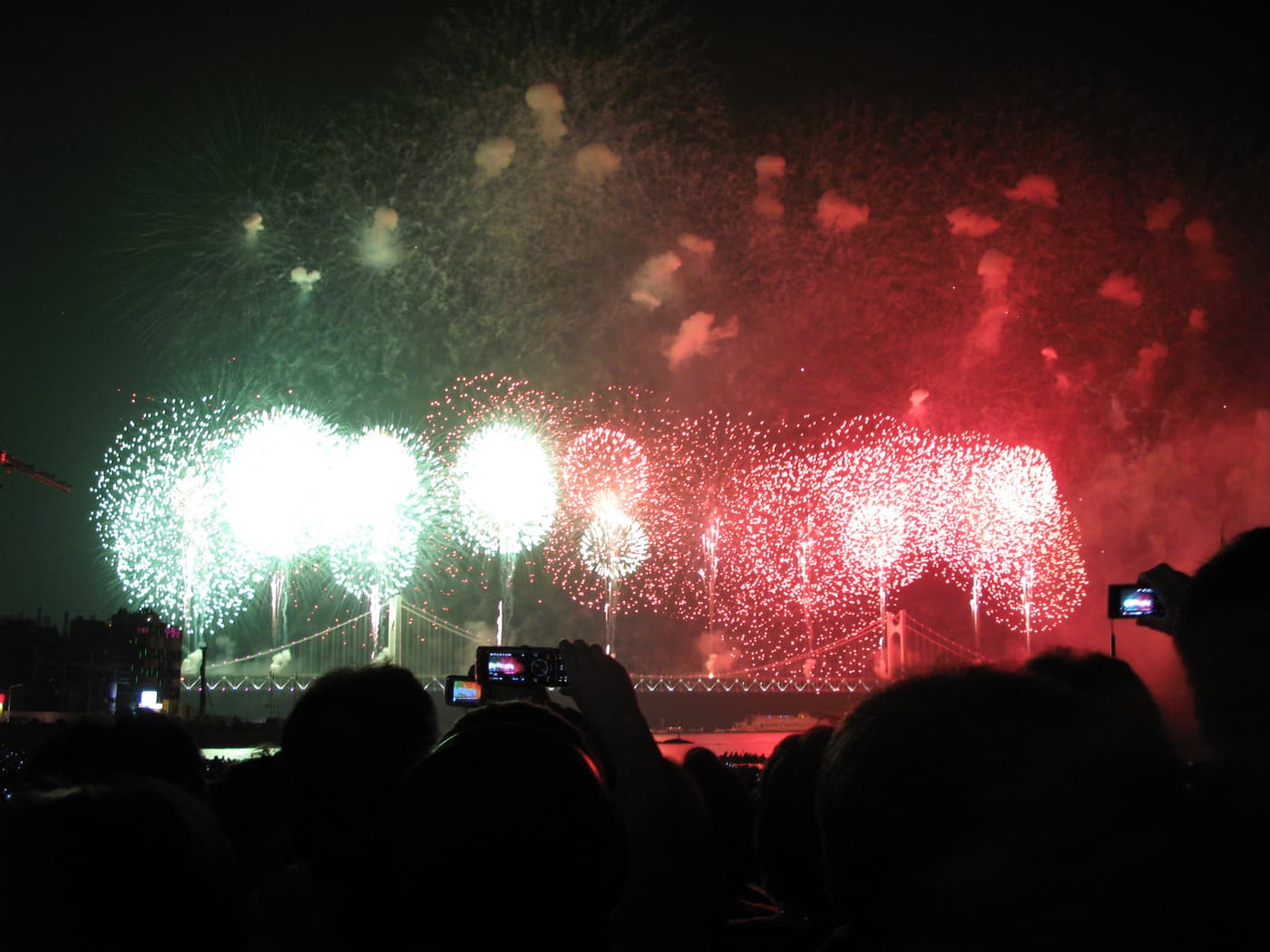
Korea has two fireworks nights that matter, and they are not the same event twice. Seoul's is a river show. Busan's is a bridge show — and that single structural difference decides everything about where you should stand.
The 21st Busan Fireworks Festival is Saturday 7 November 2026, at Gwangalli Beach, with official viewing extending to Haeundae and Igidae. It is run by the city of Busan through the Busan Festival Organizing Committee, not by a corporate sponsor.
One thing to know before you read further: the 2026 ticket schedule is now published, and one round has already closed. The early-bird window was 26 August and lasted a single evening. General tickets open Friday 4 September at 2:00pm — and the seller is not the one it was last year.
The Short Answer
| Question | Answer |
|---|---|
| Date | Saturday 7 November 2026 (the 21st edition) |
| Where | Gwangalli Beach, with Haeundae and Igidae as official areas |
| Tickets | General sale opens Fri 4 Sep 2026, 2:00pm KST on NOL Ticket — early-bird (26 Aug) has closed |
| Last year's prices | R ₩100,000 (table and chair), S ₩70,000 (chair) |
| Paid seats | About 14,000 — a small slice of the crowd |
| Free viewing | The rest of Gwangalli sand, plus Igidae, Hwangnyeongsan, Dongbaekseom and more |
| The catch | Gwangan Bridge closes, and metro stations can be skipped |
The bridge is the stage, which changes the whole calculation
In Seoul, the shells are fired from barges in the middle of the Han River, so both banks get an equivalent view and there is no meaningful front row. Busan does not work like that.
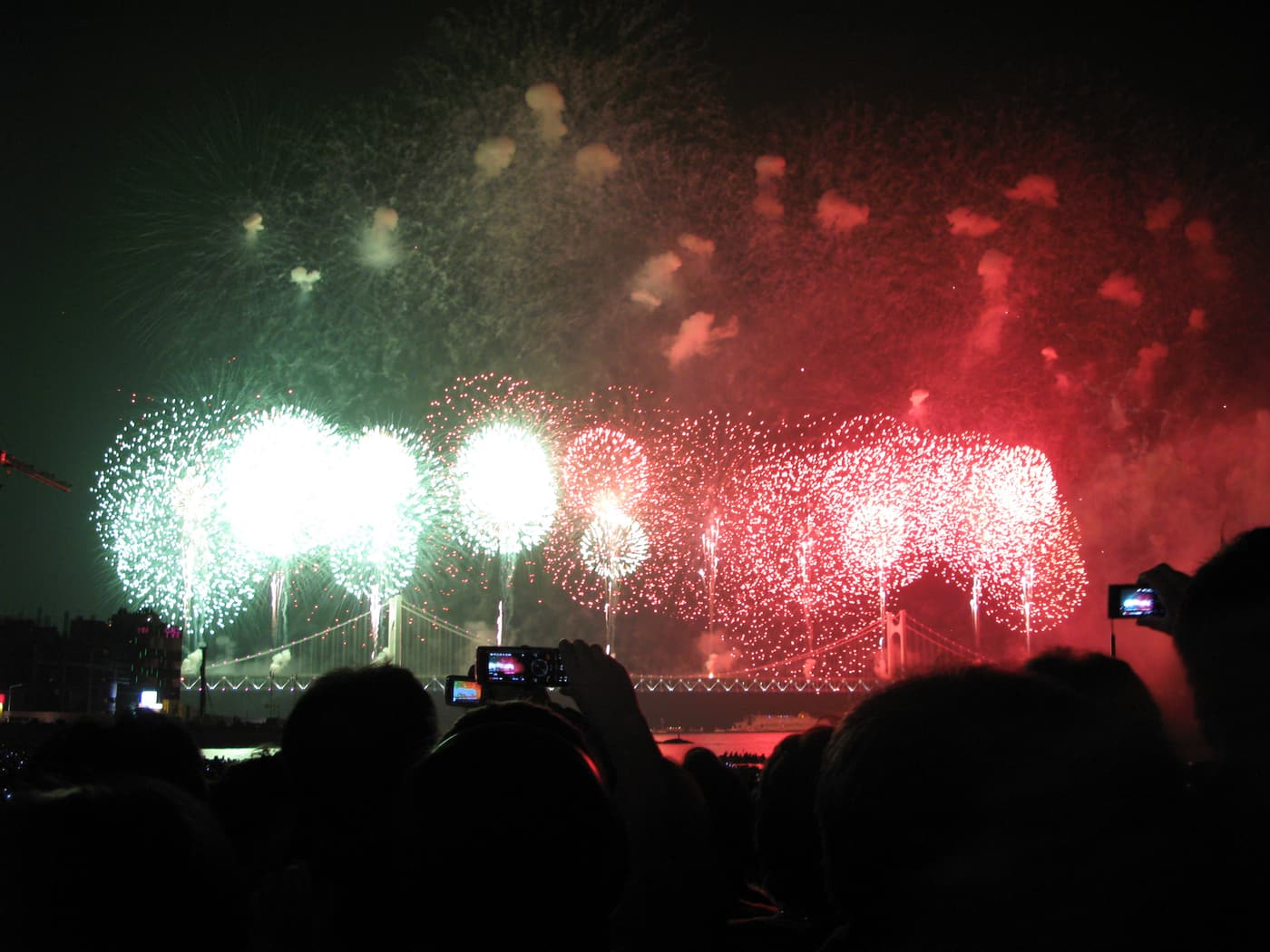
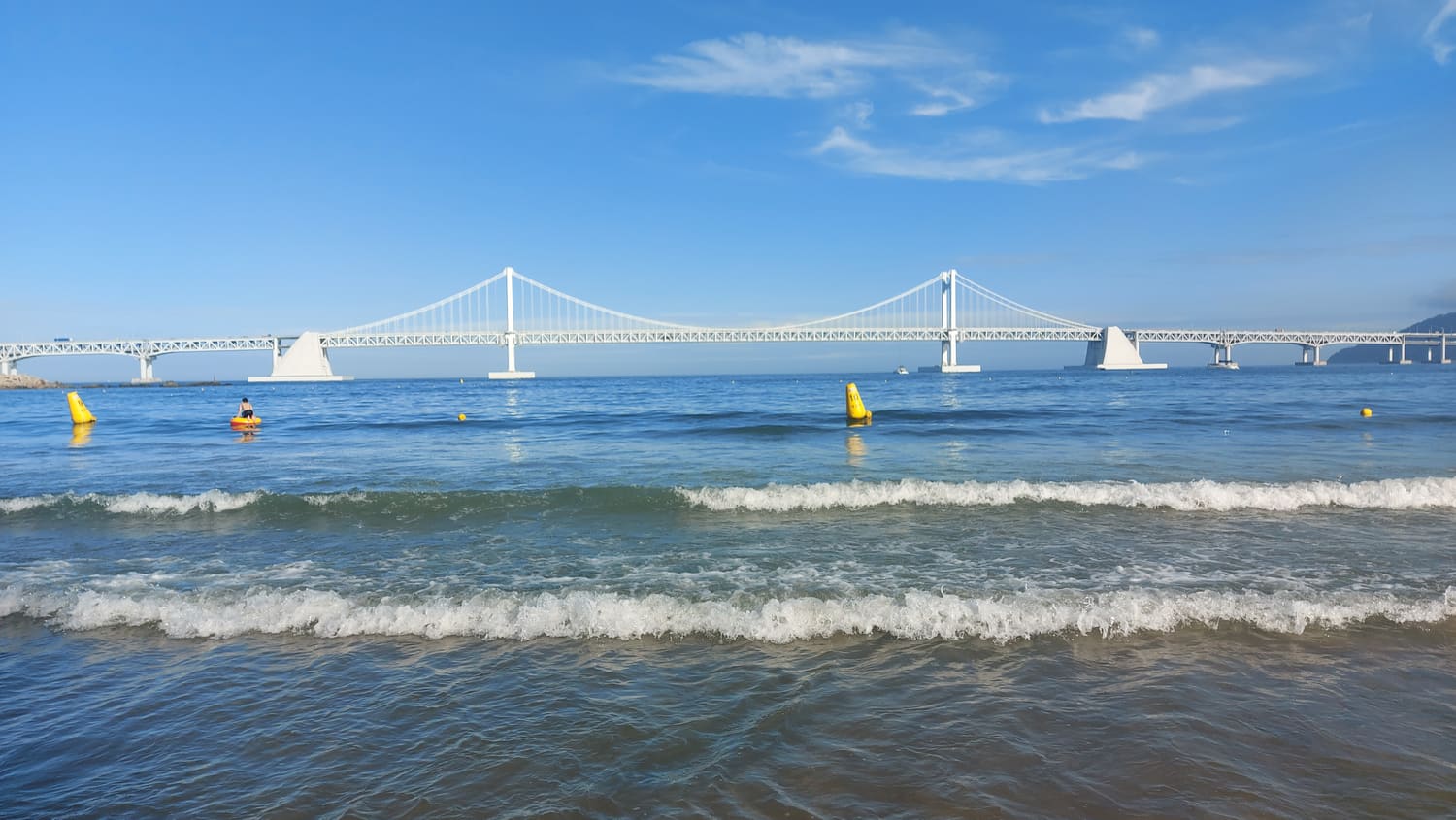
Here, the Gwangan Bridge (광안대교) is itself the primary firing platform. Pyrotechnics run along its 7.4km span and cascade off the deck into the water — the effect Korean coverage calls the Niagara. There are also barges and shore positions, but the bridge is the spine of the show.
That has one practical consequence: you need to be facing the bridge broadside. A view of the bridge end-on, from an angle, or with buildings in the way is not a slightly worse version of the same show. It is a different and much poorer show. This is why Busan has a real hierarchy of viewpoints and Seoul does not.
You might like: Korea's Other International Airports: Which Ones Actually Fly Abroad
Where to actually watch
| Spot | What you get | Trade-off |
|---|---|---|
| Gwangalli sand, centre | Closest, loudest, music in sync, the full Niagara | Densest crowd; arrive many hours early |
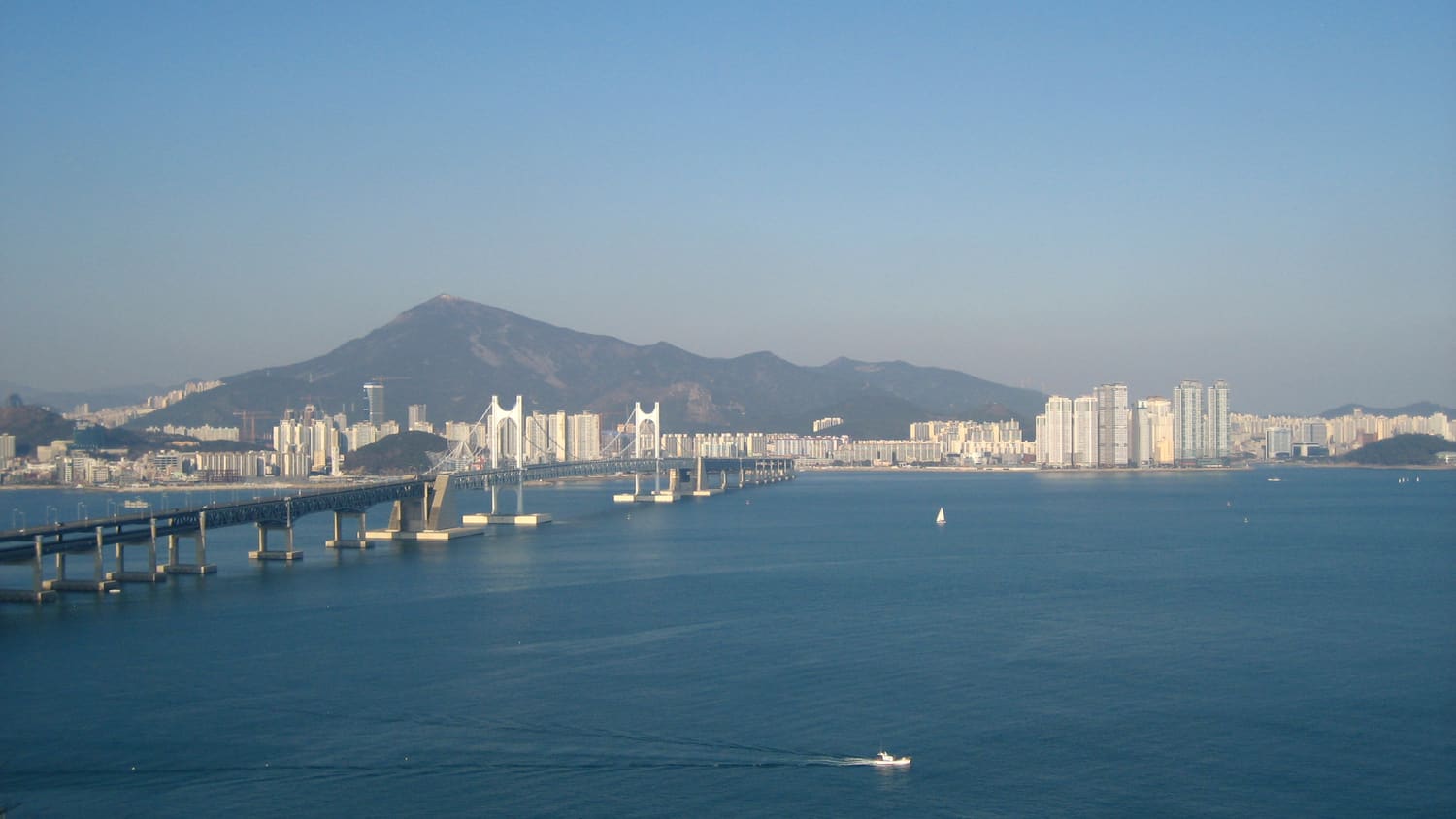
| Igidae (이기대) | The whole bridge broadside with the city behind it | A coastal trail — dark, uneven, plan the walk |
| Hwangnyeongsan (황령산) | Bridge and beach head-on from above, plus all of Busan at night | Access is congested; it is a mountain |
| Dongbaekseom / Marine City | Bridge from the Haeundae side, high-rise skyline framing | Angled rather than broadside |
| Millak Waterfront Park | Beside Gwangalli with a little more room | Slightly off-centre |
| Geumnyeonsan (금련산) | Elevated, quieter than Hwangnyeongsan | Partial views depending on where you stop |
The honest ranking: if you want the show, be on the Gwangalli sand. If you want the photograph, go to Igidae or Hwangnyeongsan, where the bridge, the beach and the city skyline all fit in one frame.
Tickets: what is known, and when to watch
The 2026 schedule is out, and the most important change is not a date — it is the seller. In 2025 the paid seats went through YES24 Ticket. For 2026 the festival moved to NOL Ticket (the Interpark ticketing platform). Anyone repeating last year's routine will be refreshing the wrong website at the wrong moment.
Here is the full 2026 sale calendar as published by the festival organisers:
| Round | Opens | Closes | Where |
|---|---|---|---|
| Early-bird | Wed 26 Aug 2026, 2:00pm | Same day, 11:59pm | NOL Ticket — closed |
| General sale | Fri 4 Sep 2026, 2:00pm | Fri 6 Nov, 5:00pm | NOL Ticket |
| BNK (Busan Bank) online | Fri 4 Sep 2026, 2:00pm | Sun 1 Nov, 11:59pm | Busan Bank app |
| BNK offline | Fri 4 Sep 2026, 2:00pm | Thu 5 Nov, close of business | Busan Bank branches |
| Accommodation package | Fri 4 Sep 2026, 2:00pm | Sun 25 Oct, 11:59pm | NOL Ticket |
All times are KST. Note that the early-bird round was a single evening — it opened at 2:00pm and shut at midnight the same day, which is a much narrower window than the phrase "early-bird" suggests anywhere else.
On prices: the festival's own pages publish the sale windows but not the seat prices, which sit on the NOL Ticket product page. For reference, the 2025 structure was R ₩100,000 (table and chair) and S ₩70,000 (chair only), with roughly 14,000 paid seats on the sand in front of the Hotel Aquapalace and Homers Hotel stretch, facing the bridge straight on. Treat those as last year's numbers, not this year's — check the actual figure on NOL Ticket before you commit.
What this means in practice:
If you want paid seats, the general sale on 4 September is now your round. The early-bird is gone. In 2025 that early round sold out in about one minute, so plan to be logged in and ready before 2:00pm rather than arriving to look around.
If you do not get them, you have not lost much. Fourteen thousand seats against a beach-wide crowd means the overwhelming majority of people at this festival watch for free, from sand that faces exactly the same bridge. The paid seat buys you a guaranteed spot and a chair, not a better angle.
In Busan, the hotel genuinely is the seat. EpicKor may earn a commission if you book through this Agoda link, at no extra cost to you. The paid seating is laid out in front of the Gwangalli beachfront hotels for a reason — an ocean-view room on that strip faces the bridge broadside, and you never join the crowd at all. Check Busan accommodation on Agoda and compare the Gwangalli, Millak and Haeundae areas. Book early and confirm your dates, taxes, cancellation terms and final price — this is the single most contested hotel night of Busan's year.
The bridge closes, and the metro may not stop
The same structural fact that makes the show good makes the logistics hard: they are setting off explosives from a motorway.
Gwangan Bridge closes completely on festival day. The pattern in recent years has been the upper deck from late afternoon and the lower deck a couple of hours later, with partial lane closures running past midnight while crews dismantle the rigging. Exact times are published each year shortly before the event.
Metro stations can be skipped. Suyeong, Gwangan and Geumnyeonsan are the stations that serve the beach, and Busan's stated policy is to insert empty trains when they get congested and to run trains through without stopping if crowding becomes dangerous. This is the same measure Seoul uses at Yeouinaru — and in Seoul in 2025 it started at 6:19pm, before the show began.
What the city puts in against that, based on the 2025 operation:
- 223 extra metro runs across Lines 1–4, with intervals cut from 5–8 minutes to 3.5–5.5 minutes
- 8 temporary ticket booths at Suyeong, Gwangan and other stations, plus 15 mobile gates at Gwangan, Geumnyeonsan and Namcheon
- 27 designated priority-management zones with around 5,300 safety staff
- Extra bus services, with routes around the venue shortened so they run like shuttles
Buy your transit credit before the day. If you are new to Korean transit cards and payment, our Korea transit and payment guide covers the setup.
Practical notes for a November night on a beach
It is cold, and it is a beach. Early November in Busan is mild in the afternoon and genuinely cold after dark with wind off the water — this is not the September evening you would get at Seoul's festival. People sit on the sand for hours.
Arrive in the afternoon for the sand. The same all-day-picnic pattern applies as in Seoul: the centre of the beach goes early.
Do not drive. Roads around Gwangalli are closed to general traffic and the bridge itself is shut. Parking is a fiction on this night.
Plan the exit before the finale. Everything that makes leaving Yeouido difficult applies here in a narrower space, and a beach has fewer ways out than a riverbank. Waiting out the first wave beats standing in it.
Seoul or Busan, if you can only do one
| Seoul, 5 September | Busan, 7 November | |
|---|---|---|
| Firing from | Barges mid-river | The bridge itself, plus barges |
| Does your angle matter? | Not much | A great deal |
| Weather | Late summer, humid | Cold sea wind after dark |
| Paid seating | One island zone, ₩110,000–220,000 | About 14,000 beach seats, ₩70,000–100,000 last year |
| Best free spot | Yeouido or Ichon riverbank | Gwangalli sand, or Igidae for the wide frame |
| Character | Enormous, urban, three national teams | Enormous, coastal, city-run |
If you are choosing a trip rather than an evening, our Busan versus Seoul comparison works through the wider question, and the Busan beach guide covers what Gwangalli is like on an ordinary day.
You might like: Korea Festival Calendar 2026–2027, Month by Month: The 27 Festivals Korea's Government Picked, and Which Dates Are Confirmed
FAQ About the Busan Fireworks Festival
Q: When is the Busan Fireworks Festival 2026?
Saturday 7 November 2026, the 21st edition, at Gwangalli Beach with Haeundae and Igidae as official viewing areas. Note the date moves year to year — the 2025 festival was 15 November — so confirm on busanfireworks.com before booking travel.
Q: How much are Busan Fireworks Festival tickets? The 2026 sale dates are published but the prices are not — they appear on the NOL Ticket product page when each round opens. General sale is 4 September 2026 at 2:00pm KST on NOL Ticket, which is a change from 2025, when tickets went through YES24 Ticket and the Busan Bank app. In 2025, R seats with a table were ₩100,000 and S seats ₩70,000, with about 14,000 paid seats; that year's early-bird opened 22 August and sold out in roughly one minute. The 2026 early-bird ran on 26 August and has closed.
Q: Where do I buy Busan Fireworks Festival tickets in 2026? NOL Ticket, the Interpark ticketing platform — not YES24, which is where the 2025 tickets were sold. Busan Bank (BNK) also sells through its app and, for offline seats, its branches. All three channels open at the same moment: 4 September 2026, 2:00pm KST. An accommodation package is sold on NOL Ticket in the same window and closes earlier, on 25 October.
Q: Can I watch the Busan fireworks for free? Yes, and most people do. Paid seating is a small fraction of the crowd. The rest of Gwangalli's sand faces the same bridge, and Igidae, Hwangnyeongsan, Dongbaekseom, Millak Waterfront Park and Geumnyeonsan are all established free viewpoints.
Q: Where is the best place to watch the Busan fireworks? The centre of Gwangalli Beach for the closest and loudest experience with the music in sync. Igidae or Hwangnyeongsan for the wide photograph that includes the whole bridge and the city behind it. What matters is facing the bridge broadside, because the bridge is the launch platform.
Q: Is Gwangan Bridge closed during the festival? Yes. The bridge closes completely on festival day — recent years have shut the upper deck in the late afternoon and the lower deck a couple of hours later, with partial closures continuing after midnight for dismantling. Exact times are published shortly before each event.
Q: How do I get to Gwangalli for the festival? By metro to Suyeong, Gwangan or Geumnyeonsan, accepting that those stations may be skipped by trains if crowding becomes unsafe. Busan adds hundreds of extra runs and tightens intervals for the night. Do not drive — the surrounding roads are closed.
The one thing to decide now
Two dates, one decision. If paid seats matter to you, the moment that counts is not 7 November — it is whenever the booking announcement lands, probably in the next few weeks, and it will be over in about a minute.
If they do not matter to you, then there is nothing to book and nothing to rush. Turn up in the afternoon, take a patch of sand facing the bridge, and let 14,000 people pay ₩70,000 for a chair you did not need.
You Might Also Like
Korea's Other International Airports: Which Ones Actually Fly Abroad
Korea has eight international airports on paper. One is closed, one is nearly dormant, and the rest are genuinely useful — Busan flies 39 international routes, Cheongju is the fastest-growing in the country. Which to use, and the Jeju visa trap to avoid.
Gwangjang Market's Second Floor: Seoul's Vintage Arcade, and the One Day It's Shut
Everyone knows Gwangjang for the food alley that never closes. Above it is a vintage arcade signed 수입구제 where most items run under ₩20,000 — and it shuts every Sunday, which is exactly when visitors turn up.
Where to Buy Luggage in Seoul: Namdaemun, Real Prices, and When Not to Bother
You shopped too well and now you need another suitcase. Namdaemun is the answer, but the underground arcade shuts on the 2nd and 4th Sunday, the bag shops close for Chuseok, and a cheap case is not always cheaper than shipping.