Winix Deep Dive: America's Favorite Budget Air Purifier Is a 50-Year-Old Korean Company That Just Bought an Airline
The Winix 5500-2 sits in Costco carts and Wirecutter lists, and almost nobody who buys one knows the maker: a Korean company founded in 1973 that localised refrigerator heat exchangers, owns Korea's dehumidifier market — and in 2024 bought an airline.
Quick Answer
Walk the appliance aisle of an American Costco and you will pass a stack of white air purifiers labelled Winix C535. Search "best budget air purifier" on Reddit and the same machine's retail twin, the Winix 5500-2, is the default answer — the "budget king." The New York Times' Wirecutter describes the current-generation model as a variant of its own air purifier pick.
Almost none of the people buying it can tell you what Winix is. There is no brand story on the box, no country of origin in the marketing, and — until now — no feature article in English that explains it.
Winix (위닉스) is a Korean company from 성수동, Seoul, founded in 1973 — which means it is older than the consumer air purifier category it now competes in by about three decades. It spent its first decades making the parts inside other companies' refrigerators. It owns the Korean dehumidifier market outright. It is still controlled by its founding family. And in 2024 it did something that puzzled everyone watching: it bought an airline.
This is a public-information-only company spotlight. EpicKor has no relationship with Winix, and nothing here is investment advice. The goal is the story the review sites skip: what this company actually is, what the public numbers say as of August 2026, and what an overseas buyer or Korea-market researcher should verify independently.
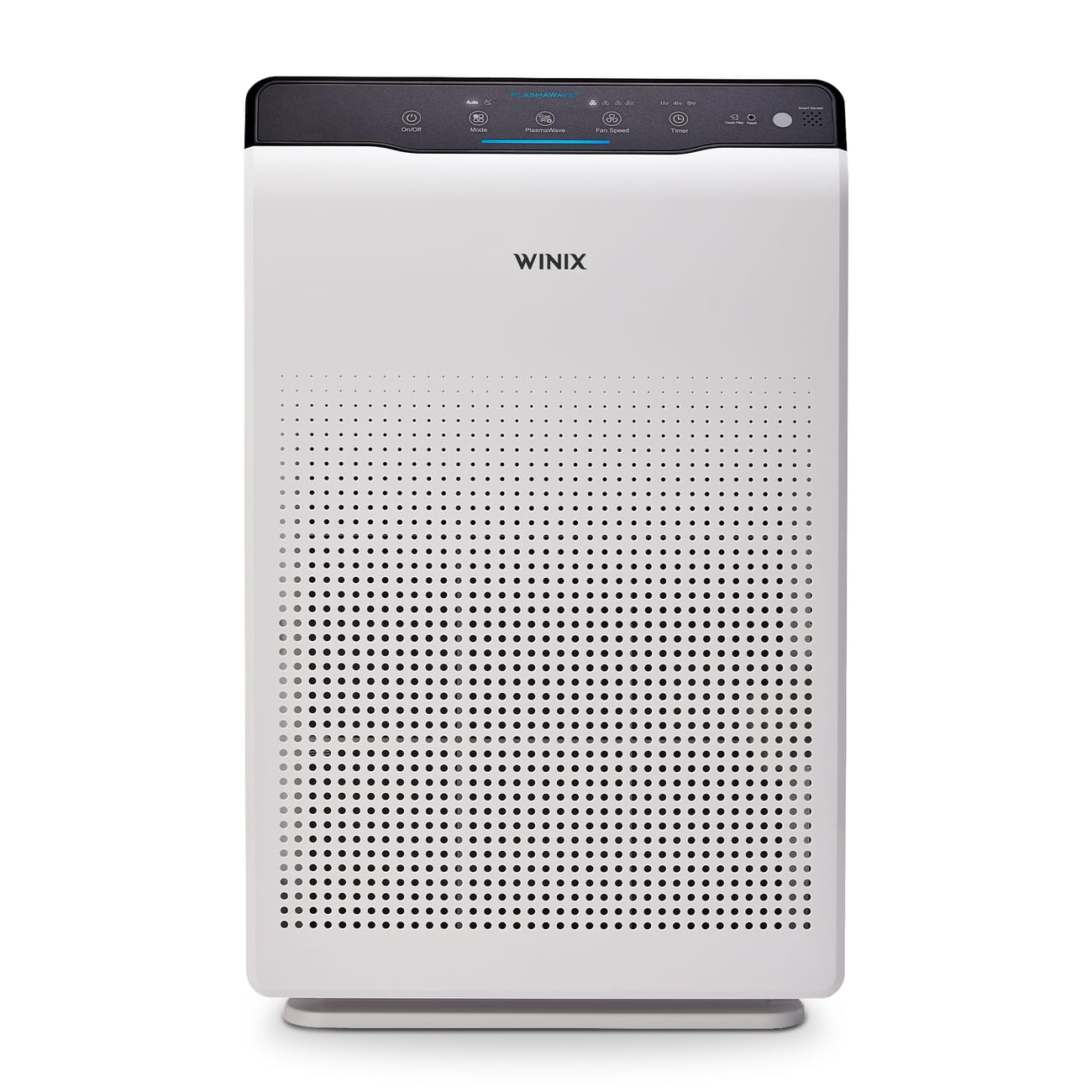
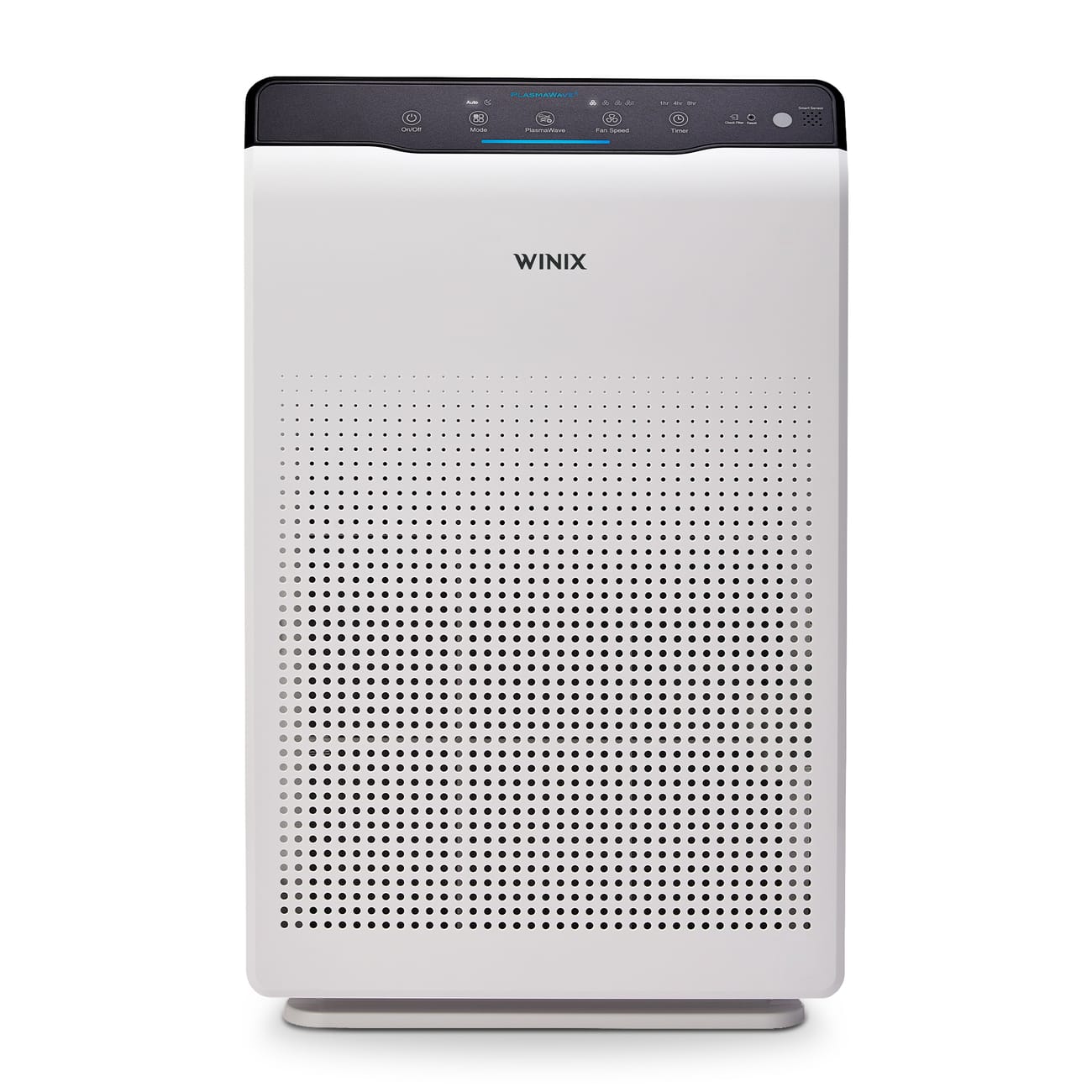
The machine Americans know without knowing the company: the Winix C535, the Costco version of the 5500-2 — same specifications, different label. Official product image: Winix America, used for identification.
The Product Americans Know
The 5500-2 is one of the quiet standards of American home retail, and its footprint is easy to document.
- Costco sells it as the C535, a Costco-exclusive label with the same specifications — a distinction that generates its own genre of forum threads asking whether the cheaper one is the same machine. (It is.)
- Amazon carried the 5500-2 for years as a long-running category best-seller; since its discontinuation the listing shows as currently unavailable, and the 5510, its app-connected successor, is the in-stock model.
- Wirecutter — whose air purifier recommendations move the entire US market — calls the 5510 "a variant of our air purifier pick that offers strong performance with a brutalist design." Its actual top pick, for the record, is another Korean machine: the Coway AP-1512HH.
- Reddit's r/AirPurifiers treats the 5500-2 as the default budget answer: durable, effective on pet hair, cheap to refilter.
- Korean coverage records that in 2018, the year Winix began supplying major US retailers and Amazon at scale, its US air purifier sales rose 66% and market-research firm NPD ranked it 4th in US air purifier market share.
Notice what that list is made of: a warehouse club, a marketplace, a review site, a forum. Winix built one of the most recommended products in an American category without ever building a consumer brand story. The product is famous; the company is invisible. That gap is this article.
The Company Is Older Than Its Category
The corporate history, from the company's own record and Korean registries, reads like a compressed history of Korean manufacturing itself.
| Year | Event | What it meant |
|---|---|---|
| 1973 | Founded as 유신기업사 (Yusin Enterprise) in Seongsu-dong, Seoul | First Korean localisation of the refrigerator heat exchanger — until then an imported part |
| 1986 | Incorporated as 유원전자 (Yuwon Electronics) | A components supplier formalising |
| 1987 | First finished product: water coolers (냉온수기) | The first step from parts to products |
| 1997 | Develops dehumidifiers | The heat-exchanger competence pointed at a consumer problem |
| 2000 | Lists on KOSDAQ; renamed 위닉스 (Winix) | The brand era begins — 27 years in |
| 2002 | Develops air purifiers | The product America would eventually know |
| 2018 | Scales supply to major US retailers and Amazon | US sales +66%; NPD ranks it 4th in US share |
| 2020 | Thailand plant starts production (February) | US-bound purifiers manufactured outside both Korea and China |
| 2024 | Acquires the bankrupt airline Fly Gangwon, relaunched as 파라타항공 (Parata Air) | See below — the strangest chapter |
The detail that organises everything else: the heat exchanger. A dehumidifier is, at its core, a heat exchanger with a fan and a bucket. Winix did not diversify into dehumidifiers — it climbed up from the component the machines are built around, after decades of making that component for other manufacturers' refrigerators. Korean coverage of the company still leads with this: when it announced its five-millionth dehumidifier, the milestone was framed as "열교환기 기술력의 결실" — the fruit of heat-exchanger technology.
That is the same pattern as two other companies in this series: Navien, which turned Korean boiler engineering into North American tankless dominance, and Cuckoo, which spent its first two decades building rice cookers for LG's label before its own. Korean mid-size manufacturing keeps producing this specific shape: a component or OEM company that quietly becomes a category leader under its own name, decades in, and is discovered by overseas consumers who never learn its history.
At Home, It Is Not a Budget Brand
The American framing of Winix — the value alternative — inverts in Korea, and the difference is worth understanding if you are reading the company from abroad.
In Korea, Winix's flagship is the dehumidifier line 뽀송 (Ppo-song — the Korean mimetic word for "pleasantly dry"). Its standing there, per Korean industry coverage:
- No. 1 in domestic dehumidifier sales since 2009, online and offline combined
- First place in the National Brand Competitiveness Index (NBCI) dehumidifier category for six consecutive years, 2019–2024
- Five million units cumulative production, announced March 2026
- The core component — the heat exchanger — developed and produced in-house
Korea's climate explains the category's seriousness: the summer monsoon (장마) makes weeks of the year feel like the inside of a rice cooker, and a dehumidifier is standard household equipment, not a nice-to-have. EpicKor's Korea rainy season guide covers what that season does to daily life; Winix is, to a first approximation, the company Koreans trust to deal with it.
So the accurate one-line description is not "a budget air purifier brand." It is: Korea's dehumidifier leader, exporting its second product line to America at a price point that reads as budget there.
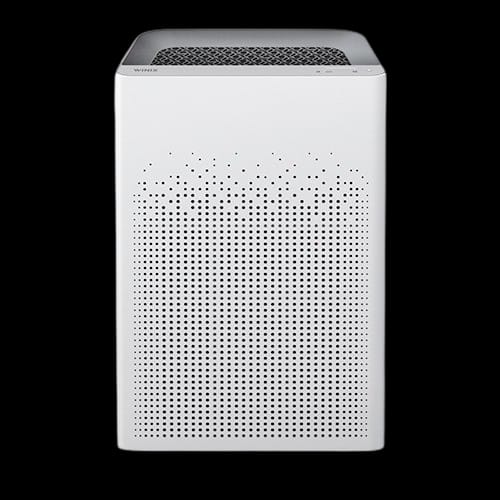
The Korean-market lineup runs taller and more design-led than the boxy units exported to the US. Official product image: winix.com, used for identification.
The Numbers, With Their Limits
Winix is KOSDAQ-listed (044340), so the figures below are from disclosed results and Korean financial press, as of August 2026.
| Figure | Value | Note |
|---|---|---|
| FY2025 revenue | ₩369.5 billion (3,695억원), up 5.2% | Consolidated; growth attributed to US-centred exports and the Thailand plant |
| Export share | Reported as passing 50% of revenue in a recent half-year (52.8%) | Korean press figure; check the latest filing for the current ratio |
| Australia | US$30 million cumulative air purifier revenue | Announced August 2026 — the export story is wider than the US |
| Ownership | Chairman 윤희종 (Yoon Hee-jong) and related parties: 47.92% | Founding family control; son 윤철민 (Yoon Chul-min) serves as co-CEO |
| Production | Korea, China, and Thailand (since Feb 2020) | Thai plant built to serve US demand — tariff-era geography |
Scale context matters for this series: at ₩370 billion in revenue, Winix is roughly a third of Navien and a fraction of the conglomerate appliance divisions it shares shelves with — but an order of magnitude larger than JMW. It is a mid-size, family-controlled exporter. That is precisely the size of company whose story never gets written in English.
The products in question: As an Amazon Associate, EpicKor may earn from qualifying purchases. The machine this article is about is the Winix 5500-2, now discontinued and currently unavailable on Amazon US; its app-connected successor is the Winix 5510. If you want the machine Wirecutter ranks first — also Korean — compare the Coway Airmega Mighty2 (the in-stock successor to the AP-1512HH) before deciding; the honest difference is small and mostly about filter cost and looks.
And Then It Bought an Airline
This is the part of the Winix story that no US review site mentions, and the part any serious observer of the company has to grapple with.
In July 2024, Winix acquired 100% of Fly Gangwon — a failed regional low-cost carrier in court rehabilitation — for ₩20 billion, and relaunched it as 파라타항공 (Parata Air), which began flying on 30 September 2025.
Korean financial press coverage of what followed is not gentle. The airline has required repeated support: loans, then debt-to-equity conversions of ₩25 billion (October 2024) and ₩70 billion (November 2025). Total funds committed, including the purchase, are reported at about ₩115 billion — approaching a third of Winix's annual revenue — and by mid-2026 the airline was reported to be back in complete capital erosion (완전자본잠식) while adding aircraft under an emergency-management posture. Analysts have openly questioned the strain on Winix's own liquidity.
Why would a dehumidifier company buy an airline? At acquisition, Korean media asked exactly that, and no clear public strategic rationale has been offered since. What can be said factually: it is a founding-family-controlled company making a bet far outside its competence, funded by the appliance business this article describes. If the bet works, Korea gets a fifth long-haul carrier group and this becomes a visionary chapter. If it does not, it will have been an expensive one.
For an overseas buyer or partner, the practical takeaway is neither alarm nor dismissal — it is that the financial profile of this supplier now includes an airline, and any due diligence should read the consolidated statements with that in mind.
What This Means If You Are Sourcing From Korea
Winix is a case study in three things overseas readers regularly get wrong about Korean suppliers.
A "budget brand" abroad can be a category leader at home. If you evaluated Winix from its US price point, you would file it as a value manufacturer. Its Korean position — first in dehumidifiers for fifteen years, in-house core components, family control since 1973 — describes a different company. Price positioning in an export market tells you about the export strategy, not the manufacturer.
Component history is the best predictor of appliance quality. The 5500-2's reputation for durability is not luck; it comes from a company that spent decades making the thermal core of other people's refrigerators. When you screen Korean appliance suppliers, ask what they made before the consumer product — the answer is usually more informative than the catalogue.
Read the group, not the product line. The airline is the current example: nothing about a well-reviewed air purifier tells you the parent has committed ₩115 billion to an LCC in capital erosion. Korean mid-size groups diversify in ways that surprise outside partners — Cuckoo went from OEM to owning its category, Winix went from heat exchangers to aviation. Consolidated filings, not product reviews, are where a supplier's real risk profile lives.
Honest Caveats
- PlasmaWave, the signature technology, has sceptics. Winix's plasma ionisation layer is marketed as a differentiator; the most common critique in US user communities is weak VOC removal, and many owners simply run the feature switched off. The HEPA-plus-carbon core is what earns the recommendations.
- The export concentration cuts both ways. A US-heavy, retail-channel-heavy export mix means Costco and Amazon shelf decisions — and US tariff policy — move the company more than any Korean factor does. The Thailand plant exists precisely because of this.
- The airline is an open question, not a resolved one. This article describes it as of August 2026; the situation has moved quickly and should be re-verified at reading time.
- Company-reported milestones (cumulative units, award rankings) are treated here as public signals, not audited facts.
Sources Checked
- Winix official Korean site and Winix America
- Money Today: five-millionth dehumidifier and the heat-exchanger frame, 2026-03-18
- Money Today: US$30M cumulative in Australia, 2026-08-10
- SENTV: domestic dehumidifier share No.1 since 2009
- Global Economic: NPD 4th place in US air purifier share, 2018
- TopDaily: Parata Air support and Winix liquidity, 2026 · Dealsite: Parata capital erosion, 2026
- Korean corporate registries (FnGuide A044340, Saramin) for ownership and FY2025 figures
- EpicKor Business: Navien Deep Dive · EpicKor Business: JMW Deep Dive
FAQ
Q: Is Winix a Korean company?
Yes — founded in Seoul in 1973 as 유신기업사, a refrigerator heat-exchanger maker, renamed Winix in 2000, KOSDAQ-listed, and still 47.92% held by founder-chairman Yoon Hee-jong and related parties. Design and core components are Korean; production spans Korea, China, and a Thailand plant that has built US-bound purifiers since 2020.
Q: Are the Winix 5500-2 and the Costco C535 the same machine?
Functionally yes. The C535 is the Costco-exclusive version of the 5500-2 with the same specifications — same three-stage filtration, same coverage class. The practical difference is the label, the bundle, and whichever price is lower the week you look.
Q: What is PlasmaWave and do I need it?
It is Winix's plasma ionisation feature, marketed for breaking down odors and vapors. US user communities are split on it, and the most common critique is weak VOC performance; many owners run the machine with it off. The True HEPA and carbon stages are what the recommendations rest on.
Q: Why did an air purifier company buy an airline?
No clear public answer exists. Winix bought the failed carrier Fly Gangwon for ₩20 billion in 2024, relaunched it as Parata Air in September 2025, and has committed about ₩115 billion in total support while Korean press reports the airline back in complete capital erosion. It is the biggest open question over the company.
Q: Is Winix bigger than Coway?
No. Coway is several times larger and Wirecutter's actual top pick is a Coway. The honest comparison: Coway is Korea's rental-appliance giant with a consumer brand; Winix is a family-controlled manufacturer that wins on component heritage and price. Both put Korean machines at the top of the US category.
Q: Can overseas buyers work with Winix directly?
The company supplies major US, European, and Australian retail channels, so it has export infrastructure. As with any Korean supplier, verify current terms, capacity, and the consolidated financial picture — including the airline — directly rather than relying on consumer-side visibility.
More Business Guides
Kovea Deep Dive: The Korean Burner Maker That Took Apart a Swedish Stove — and Now Builds for MSR
Look at the box your Snow Peak LiteMax came in and it says Made in Korea. Kovea started in 1982 when its late founder took apart a Swedish SVEA burner, now supplies MSR and Decathlon, and still earned a 21% operating margin after Korea's camping market halved.

Mooto Deep Dive: Korea Still Dresses Taekwondo — Spain Makes the Part That Scores the Points
World Taekwondo recognises Mooto in six equipment categories. The two it is absent from are the electronic ones — and the scoring system at Tokyo 2020 and Paris 2024 came from Barcelona. A look at the Korean company that dresses the sport Korea exported.
Aurora World Deep Dive: The Korean Company Behind the Plush Toy on Your Shelf
Aurora's plush sits in zoo shops, bookstores and Target aisles worldwide, and its own American website never mentions Korea. A public-information deep dive on the Seoul company that owns its factories, built Palm Pals, and bought a 90-year-old Vermont brand.