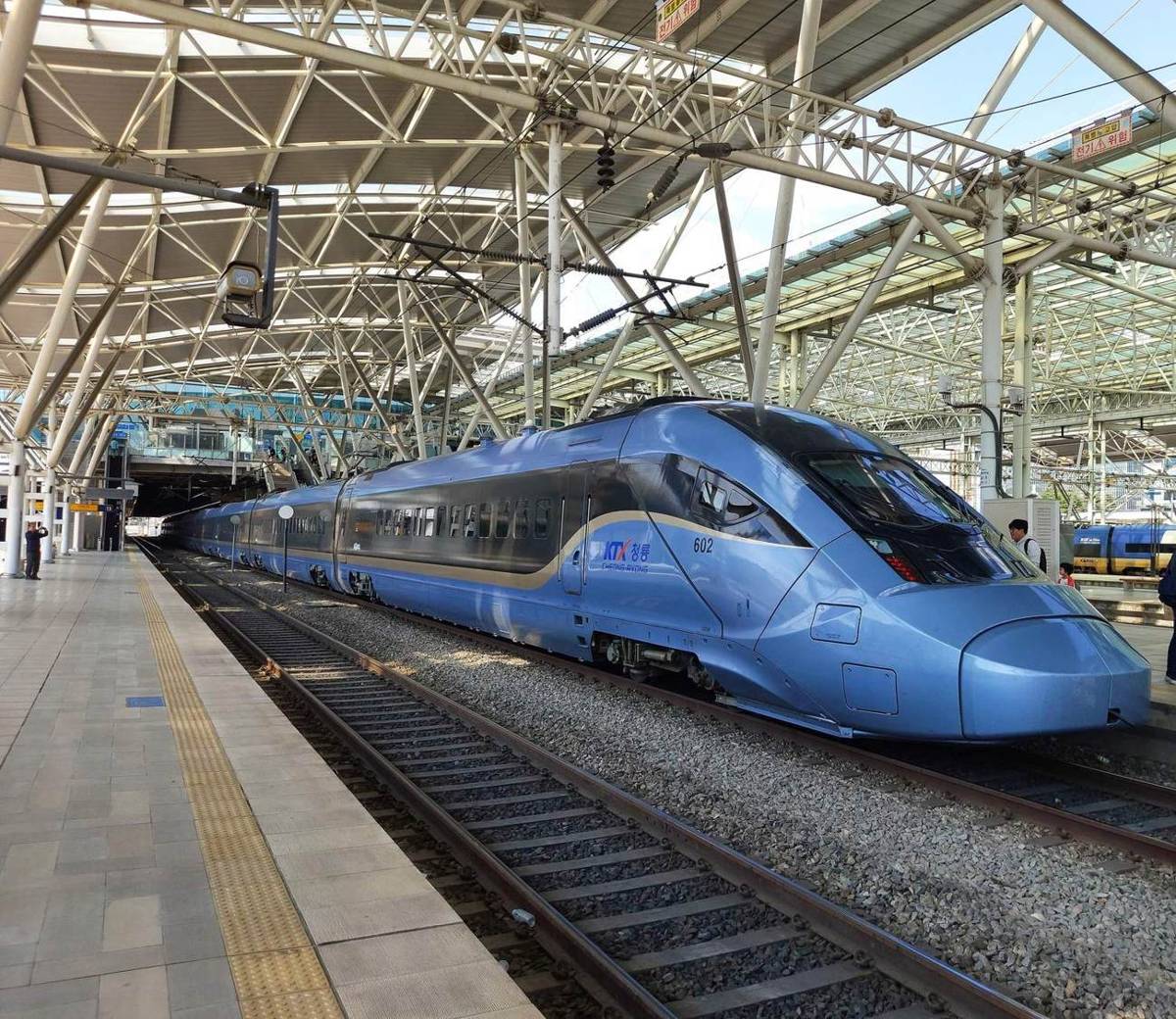
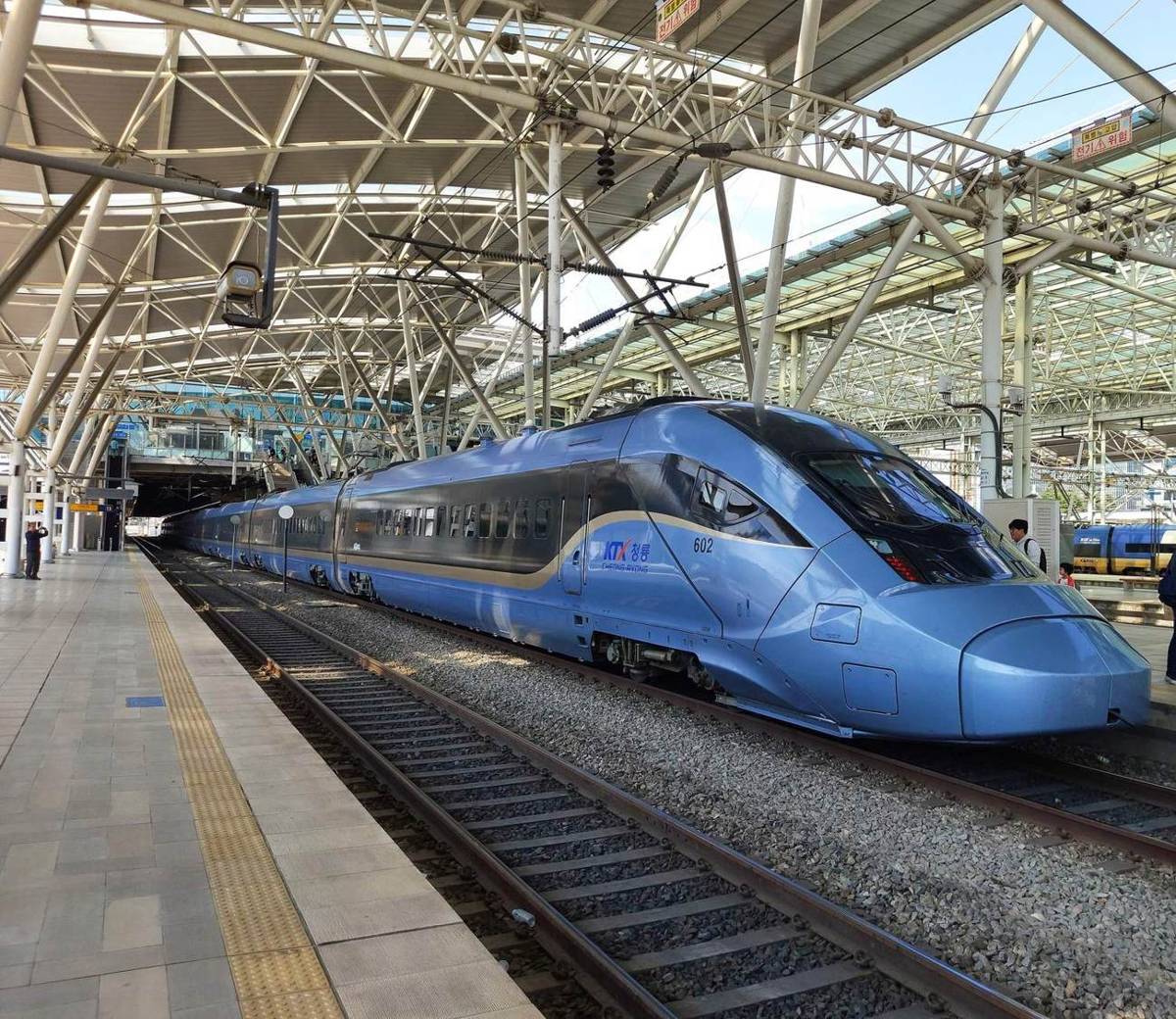
Korea Train Tickets Open Two Months Ahead From 1 October 2026 — and Buses Rise 9%: Seoul–Busan KTX vs Bus
Last updated: 28 September 2026. Booking-window facts are from the Ministry of Land, Infrastructure and Transport (국토교통부) and Korail press release of 20 September 2026; the 1 October opening schedule is from Korail's announcement as carried by Korean press on 28 September; bus fare facts are from the ministry's 26 August 2026 release; live bus fares and timetables were read from kobus.co.kr (고속버스통합예매) on 28 September 2026. Bus fares after 1 October marked "estimate" are EpicKor's arithmetic, not published fares.
If you have ever tried to lock in a KTX seat before your flight to Korea was even booked, you know the rule every English guide repeats: Korean train tickets go on sale one month before departure, at 7 a.m. That rule ends this week.
From Thursday 1 October 2026, tickets for KTX and other Korail trains go on sale two months before departure (출발 2개월 전). The ministry's own reasoning is aimed squarely at visitors: foreign tourists tend to buy flights about two months out, and until now they could not book the train leg until a month before. On the same day, a second change arrives that almost nobody writing in English has mentioned: the fare caps on Korea's express and intercity buses rise 9%, the first increase since July 2023.
Both land on the same route most visitors ride: Seoul to Busan. So this guide does two things. It shows exactly which trips open when, and it puts the KTX and the bus side by side with real fares read from the booking systems, plus the one number the bus fare headlines leave out.
For the four-hour bus to Busan: Cabeau Evolution S3 memory-foam neck pillow, with seat straps, on AmazonAffiliate link. As an Amazon Associate, EpicKor earns from qualifying purchases at no extra cost to you.
Quick Guide: what changes on 1 October 2026
| Question | Answer |
|---|---|
| Train booking window | 2 months before departure (was 1 month), from 1 October 2026 |
| Daily opening time | 07:00 Korea time, two months before the travel date |
| The one-off opening | Trains running 1 November – 1 December all go on sale 1 October at 10:00 |
| Which trains | KTX and other Korail trains (국토부: "KTX 등 철도 승차권") |
| KTX Seoul–Busan fare | ₩54,400 standard class (since 1 September 2026) |
| Bus fare change | Express and intercity bus fare caps +9% from 1 October |
| Seoul–Busan bus today (28 Sep) | Standard ₩26,700 · Deluxe (우등) ₩39,700 · Premium ₩51,600 |
| Seoul–Busan bus after the rise | About ₩29,100 · ₩43,300 · ₩56,200 — estimates at the full 9% |
| Cheap buses per day | Only 3 of 32 Seoul–Busan departures are standard class |
| Coming for foreigners | French, German, Mongolian on Korail's foreign site by year end; WeChat Pay and Alipay "in development" |
The line that matters most: if your Korea trip is in November, every train seat for it goes on sale at the same moment — 10:00 on Thursday 1 October — and so does every Korean's. Busan's fireworks night on 7 November is inside that window.
Loop Quiet 2 ear plugs — soft reusable plugs for sleeping on a night bus or train If the cheapest way to Busan for you turns out to be the 1 a.m. deluxe bus, or you simply want to sleep through two and a half hours of KTX announcements, these block engine hum and chatter without the ache of foam plugs. The current price is on the listing. As an Amazon Associate, EpicKor earns from qualifying purchases at no extra cost to you.
See Loop Quiet 2 on AmazonWhen your trip opens: the new two-month calendar
The rule itself is simple. The ministry's release says bookings open "2개월 전", two months before departure, and Korail keeps its usual 07:00 opening time. The example Korail gave pins down how the dates line up: on 1 October you can book trains up to 1 December, so it counts calendar date to calendar date.
The awkward part is the switch-over. On 30 September the window still ends on 30 October; the next morning it jumps to 1 December. Rather than open a month's worth of seats at 07:00, Korail is releasing the entire block at once:
| Your travel date | Tickets go on sale | Note |
|---|---|---|
| Up to 30 October | Already on sale | Old one-month rule |
| 31 October | Not stated | The announcement does not cover it; check the app on 30 September and 1 October |
| 1 November – 1 December | 1 October, 10:00 | The one-off block release |
| 7 November (Busan fireworks) | 1 October, 10:00 | Part of the block |
| 24 December | 24 October, 07:00 | Two months ahead |
| 31 December | 31 October, 07:00 | Two months ahead |
| 15 January 2027 | 15 November, 07:00 | Two months ahead |
The dates after 1 December are EpicKor's application of the published rule, not a Korail list; check the app the evening before. The announcement also does not say how month-end dates such as 31 January are handled (there is no 31 November).
In practice, a whole month of November weekends goes on sale in one morning. If you need a specific Friday-evening train, be logged in before 10:00.
You might like: Busan Fireworks Festival 2026: Korea's Other Fireworks Night, and Why Tickets Vanish in a Minute
Why Korea changed it — and what English guides still say
The ministry's release, issued jointly with Korail, singles out foreign visitors: they "often buy flights from two months before departure" but could only book trains one month out, "which made domestic travel plans inconvenient." The stated aim is that you book the train "at the same time as the flight."
The number behind it is in the same release: 6.69 million foreign rail passengers from January to August 2026, up 68% on the same period of 2025.
The English web has not caught up: booking guides we checked on 28 September still said one month or 30 days. That was right until this week.
What else the release promises foreign passengers
- More languages. Korail's foreign-visitor booking pages currently run in seven languages, including English, Chinese, Japanese, Thai and Vietnamese. French, German and Mongolian are to be added "by year end", for ten in total.
- Wallet payments, later. Foreign cards (Visa, Mastercard, UnionPay) work now. The ministry says it is developing WeChat Pay and Alipay; it gives no launch date, so do not plan on them yet.
Booking two months early is lower-risk than it sounds
The worry with booking a December trip in October is being stuck with the wrong day. Korail removed most of that risk earlier this year.
Since 3 February 2026, a ticket bought in the Korail app can be switched without a fee to another train on the same route running up to seven days before or after the original date, right up to 30 minutes before departure. The old rule only let you swap to another train on the same day, and only until three hours before departure (Seoul Shinmun, 3 February 2026).
So book your most likely day as soon as it opens and move it if plans shift. A different route means cancelling and paying the refund fee that applies then; fees rise as departure nears.
You might like: Korea's KTX and SRT Merged on 1 September: Cheaper Fares, One App, One Thing to Do First
Buses: a 9% cap rise, and why the bus fare in the headlines is misleading
The bus change was announced on 26 August 2026. From 1 October the ministry raises the fare caps (운임 상한) for express buses (고속버스) and intercity buses (시외버스) by 9% each. Bus companies had asked for far more: 20.1% for express buses and 17% for intercity buses. The ministry cut the rise to about half, citing its own cost review and the burden on passengers.
The Korean release is blunt: against 2019, express bus passengers are down about 30%, intercity passengers about 50%, and express routes 21%, while labour and fuel costs rose. The ministry calls the rise "the minimum" needed to stop more routes closing.
Two things to understand before you do the arithmetic:
- Nine percent is a ceiling, not a price list. The ministry raises the maximum; operators set the actual fares under it. Korean outlets that quoted Seoul–Busan figures (₩29,100 standard, ₩43,300 deluxe) all say they are simply today's fare plus 9%.
- The new fares were not in the booking system yet. When we searched kobus.co.kr on 28 September for Seoul–Busan departures on 5 and 27 October, the fare panel still showed the current fares. Whether the new fares will apply to tickets already bought for October is not stated in the release.
The number the headlines leave out
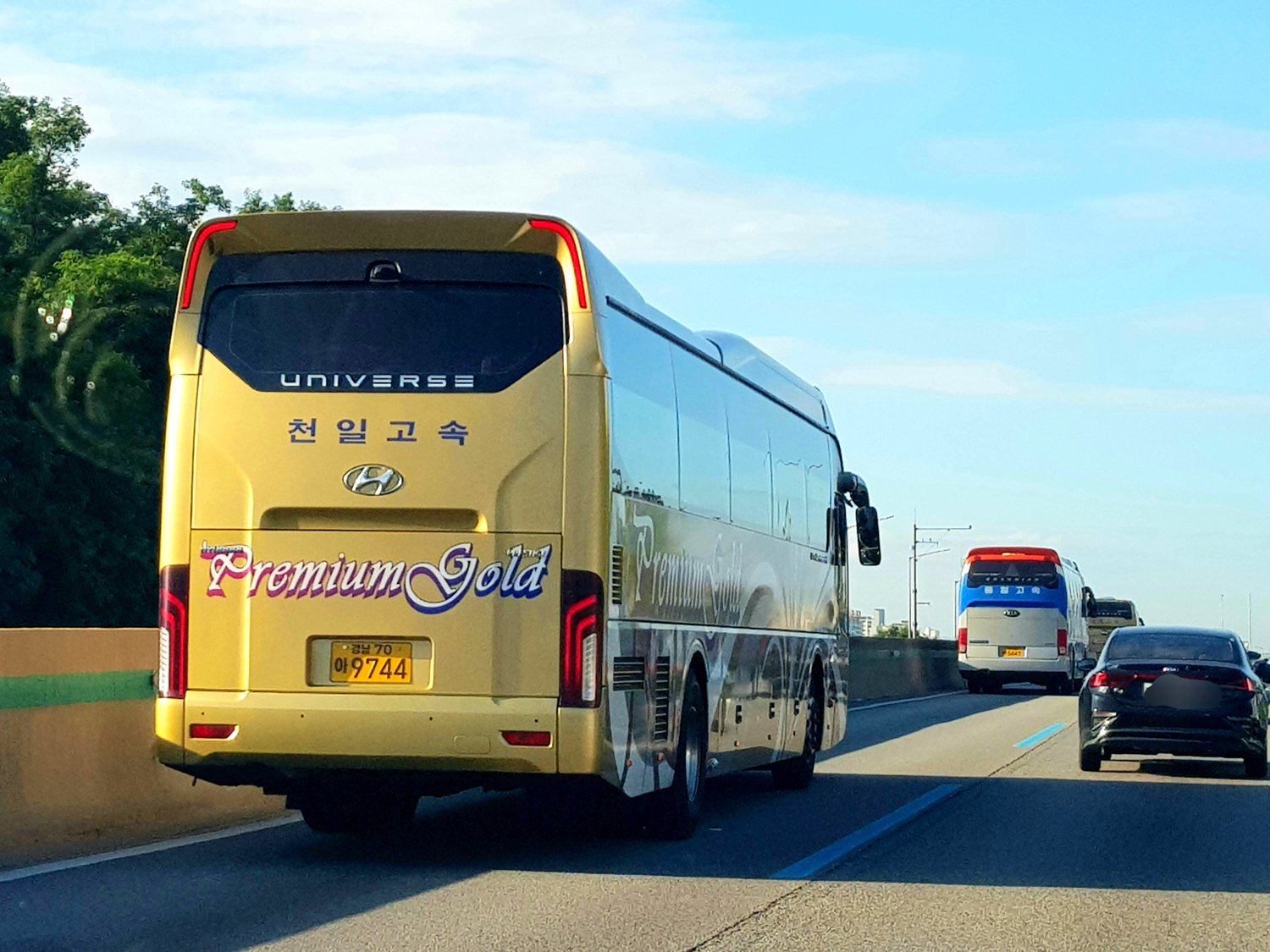
Korean articles lead with the cheapest fare, ₩26,700 rising to about ₩29,100. But the Seoul Gyeongbu terminal (서울경부) timetable to Busan for Monday 5 October (a public holiday, the substitute for National Foundation Day) showed 32 departures, and only 3 were standard class. An ordinary Tuesday, 27 October, showed the same 32 and 3:
| Class (Korean) | Departures, Mon 5 Oct | Fare today | After 1 Oct (estimate, +9%) |
|---|---|---|---|
| Standard (고속) | 3 | ₩26,700 | about ₩29,100 |
| Deluxe (우등), 28 seats | 13 | ₩39,700 | about ₩43,300 |
| Premium (프리미엄) | 11 | ₩51,600 | about ₩56,200 |
| Night deluxe (심야우등) | 4 | ₩47,600 | about ₩51,900 |
| Night premium (심야프리미엄) | 1 | ₩61,900 | about ₩67,500 |
Night fares apply to buses leaving between 22:00 and 04:00. The estimates are today's fare plus the full 9%, rounded to ₩100; the real fares may be lower.
So the bus most people will actually ride is the deluxe, not the standard, and the realistic comparison is about ₩43,300 by bus against ₩54,400 by KTX. And if operators take the full 9%, a daytime Premium seat would cost more than the KTX.
The counterweight: on Wednesday 30 September and Tuesday 27 October, most Premium departures showed a 15% discount to ₩43,900; on the 5 October public holiday they did not. Look for the "15% 할인" tag when you search.
Seoul to Busan: KTX vs bus, side by side
| KTX | Express bus | |
|---|---|---|
| Fare (standard seat) | ₩54,400 | ₩39,700 deluxe now; about ₩43,300 after 1 Oct (estimate) |
| Time | About 2½ hours, depending on stops | 4 hours 0 minutes scheduled (to Busan Central); 4 hours 20 minutes to Sasang |
| Seoul departure | Seoul Station, or Suseo in Gangnam | Seoul Express Bus Terminal (서울고속버스터미널), Seocho-gu — Express Bus Terminal station, lines 3, 7, 9 |
| Busan arrival | Busan Station, central, Metro Line 1 | Busan Central Bus Terminal at Nopo, the northern end of Line 1; a few buses go to Sasang instead |
| Latest departures | Late evening | Through the night: 23:00, midnight, 01:00, 02:00 on the day we checked |
| How far ahead | Two months from 1 October | Unchanged; late-October seats were on sale on 28 September |
| Where to book | Korail app (코레일+) or korail.com, English site for visitors | kobus.co.kr (English version) or the express bus app |
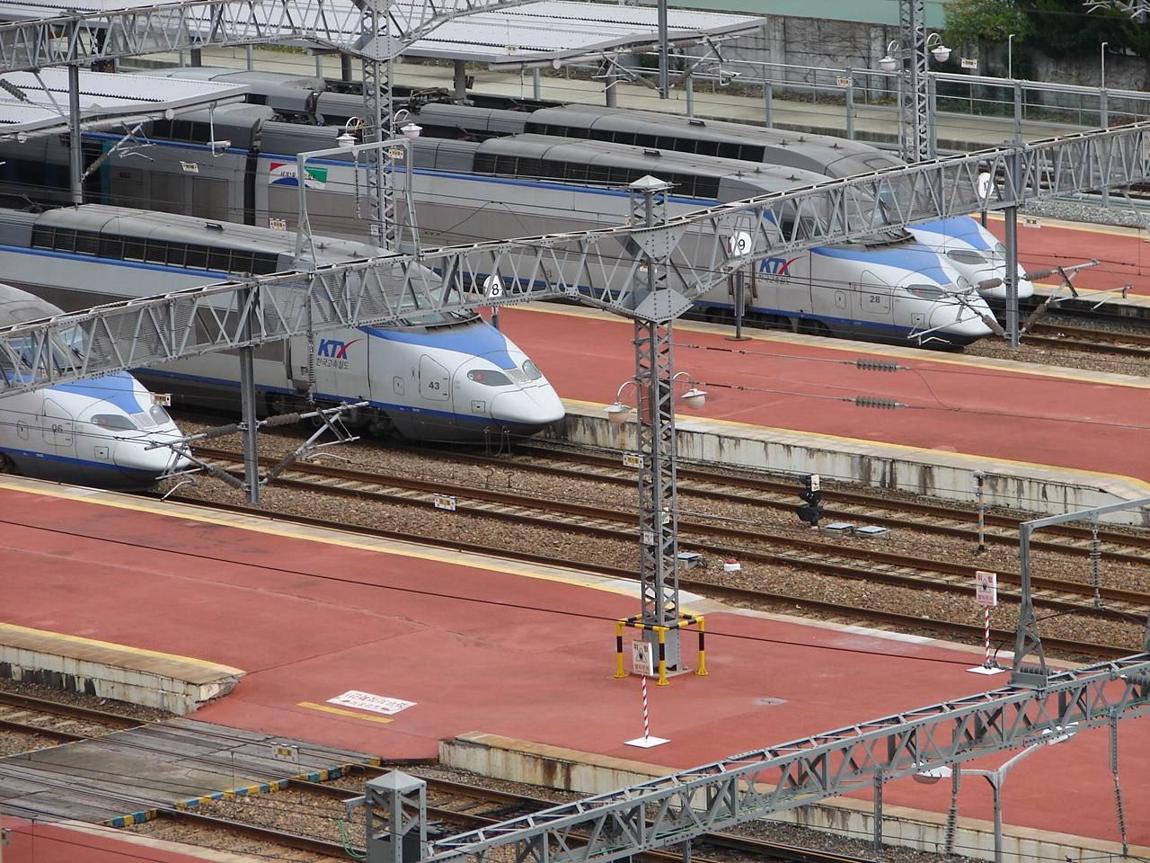
KTX Seoul–Busan dropped from ₩59,800 to ₩54,400 on 1 September, when Korail and SR merged. On today's fares the train costs ₩14,700 more than a deluxe bus; after 1 October, at the full 9%, the gap shrinks to about ₩11,100 for roughly an hour and a half less on the road.
You might like: KTX vs SRT vs Express Bus in Korea: What the Merger Changed
Where you arrive decides more than the fare
This is the part the fare comparison hides. Busan Station (부산역) is in the centre: two stops from Nampo (111) and six from Seomyeon (119) on Metro Line 1, with the Jagalchi and Nampo-dong area on the doorstep.
The bus to "Busan" on kobus goes to Busan Central Bus Terminal (부산종합버스터미널), which is in Nopo-dong, Geumjeong-gu, at the far northern end of the city. It connects to Nopo station (134), the last stop on Line 1. From there it is 15 stops to Seomyeon and 21 to Busan Station. The whole of Line 1 takes about an hour end to end, so budget the best part of an hour from the terminal to a hotel in the south or centre. Haeundae and Gwangalli mean a transfer on top.
A smaller number of buses run from the same Seoul terminal to Busan Sasang (부산사상), the western terminal. On the Tuesday we checked there were only three, at ₩27,200 standard or ₩40,400 deluxe, with a scheduled 4 hours 20 minutes.
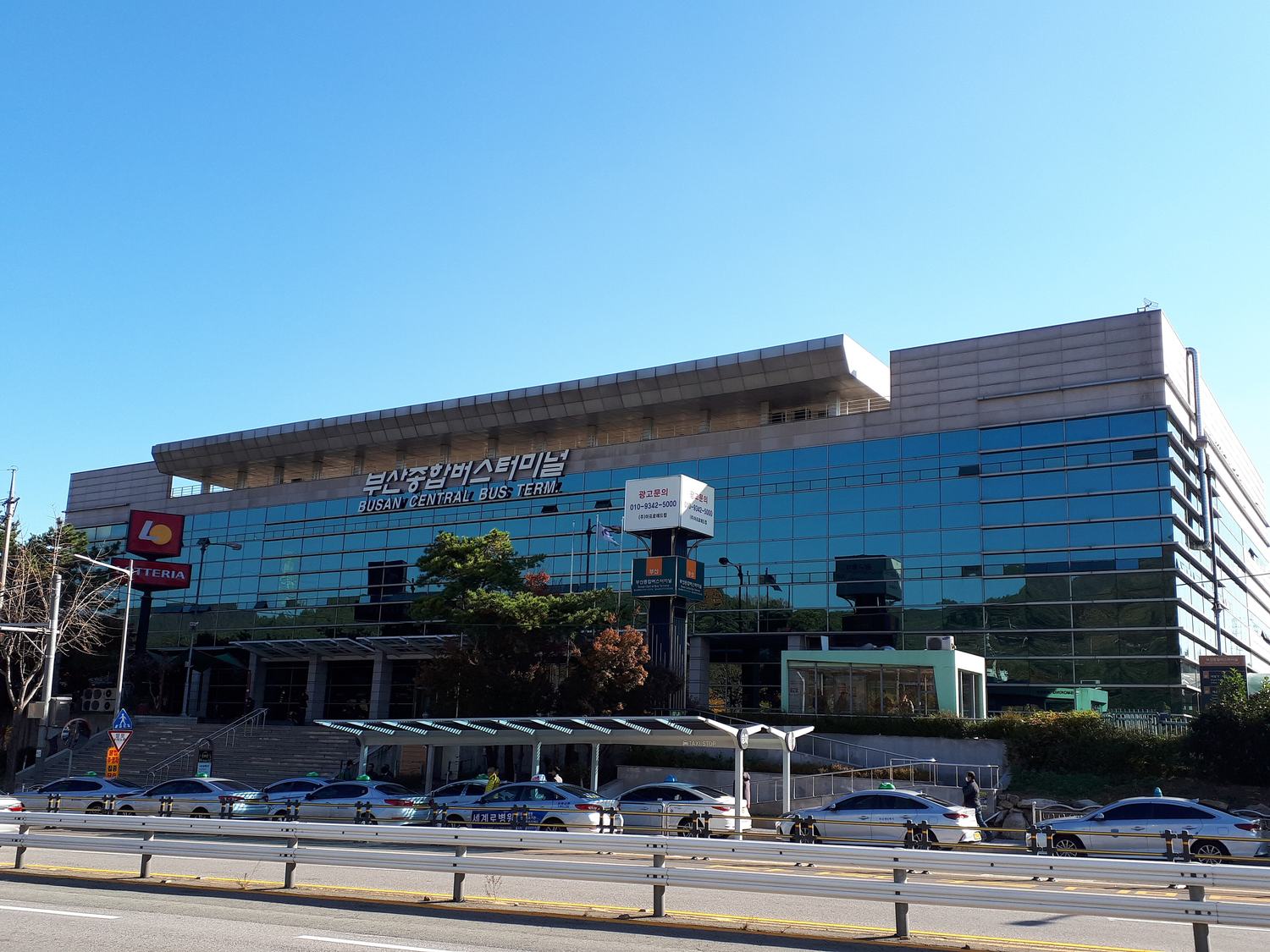
So choose your base before the vehicle. Near Busan Station or Nampo, the KTX drops you at the door and the bus adds most of an hour. In the north of the city, near Beomeosa or Busan National University, the bus terminal is closer.
Busan hotels on Agoda — compare Busan Station, Seomyeon and Haeundae before you pick a train or a bus Your arrival point decides your first hour in Busan: the KTX lands in the centre, most buses at Nopo on the northern edge. Pick the neighbourhood first, then the ticket. EpicKor may earn a commission if you book through this Agoda link, at no extra cost to you. Confirm dates, taxes, cancellation terms and the final price on Agoda before booking.
Compare Busan stays on AgodaYou might like: Busan vs Seoul: Which Korean City Should You Visit First?
When the bus is still the better choice
The bus still wins in four cases:
- You are staying in Gangnam or Seocho. The Seoul Express Bus Terminal is in Seocho-gu. If your hotel is on Line 3, 7 or 9, the bus may save you the trip across the river to Seoul Station. (Suseo, the Gangnam KTX station, is the other answer here; check its Busan fare in the app.)
- You want to leave late. Buses were scheduled at 23:00, midnight, 01:00 and 02:00 on the day we checked — a night's accommodation saved, if you can sleep in a deluxe recliner.
- You catch a discounted Premium. At ₩43,900 with the 15% discount (shown on the ordinary days we checked, not the holiday), a Premium seat with a wide recliner costs far less than the KTX.
- The trains are sold out, which is likelier on November weekends after the 1 October block release.
The bus loses when the day is tight. Four hours is the schedule, not a promise — kobus itself warns that arrival times slip with road conditions.
What the announcement does not answer yet
Three things are not in the Korean release, so we have left them open:
- KORAIL PASS. The release does not mention the foreigners' rail pass, and pass guides still say seats can be reserved a month ahead. Check Korail's global site before assuming two months applies.
- Holiday seats. Seollal (Lunar New Year) 2027 falls in early February. Korail sells holiday seats in a separate advance sale (the Chuseok sale ran 7–11 September by route), and the release does not say whether that changes. Wait for Korail's Seollal notice.
- Bus tickets already bought. Whether an October bus ticket bought now keeps today's price is not stated; check the fare at payment.
You might like: Does Google Maps Work in Korea? Naver Map and Kakao T
FAQ
Q: How far in advance can I book KTX tickets in Korea? A: From 1 October 2026, two months before departure, opening at 07:00 Korea time on the same calendar date two months earlier. Before that date the window was one month. Trains running 1 November to 1 December all go on sale together at 10:00 on 1 October.
Q: Can foreigners book KTX two months ahead too? A: The ministry explicitly presented the change as a benefit for foreign visitors, who buy flights about two months ahead. Korail's English booking pages sell the same trains with foreign cards. The announcement does not mention the KORAIL PASS, whose guides still quote a one-month reservation window.
Q: How much is the bus from Seoul to Busan in October 2026? A: On 28 September kobus.co.kr listed ₩26,700 standard, ₩39,700 deluxe and ₩51,600 Premium from Seoul Gyeongbu to Busan. From 1 October the government fare cap rises 9%, which would make them about ₩29,100, ₩43,300 and ₩56,200 at most. Those are estimates; operators had not posted the new fares on 28 September.
Q: Is the KTX or the bus better from Seoul to Busan? A: The KTX costs ₩54,400 and takes about two and a half hours to central Busan Station. The usual deluxe bus costs ₩39,700 now, about ₩43,300 after the rise, and takes four hours to Nopo on the northern edge of Busan. Take the KTX for a tight day or a central hotel; take the bus for a Gangnam start, a late-night departure or a discounted Premium seat.
Q: What if I book early and my plans change? A: Since February 2026 a Korail ticket can be changed free to another train on the same route within seven days either side of the original date, until 30 minutes before departure. Changing the route means cancelling and paying the refund fee that applies at that time.
Sources
- Ministry of Land, Infrastructure and Transport (국토교통부) and Korail, press release "철도여행 2개월 전부터 준비하세요", embargoed to 20 September 2026 11:00: booking window 1 month → 2 months from 1 October; reason (foreign tourists buy flights two months ahead); 6.69 million foreign rail passengers January–August 2026, +68%; 7 → 10 languages by year end; WeChat Pay and Alipay in development.
- Korail's 1 October opening schedule (07:00 daily release, 1 November–1 December trains on sale 1 October at 10:00), as reported by Topstar News, 28 September 2026.
- Ministry of Land, Infrastructure and Transport, reference release "시외·고속버스 운임 상한 조정", 26 August 2026 (via korea.kr): 9% cap rise for express and intercity buses from 1 October; industry requests of 20.1% and 17%; passenger and route declines since 2019.
- kobus.co.kr (고속버스통합예매), timetable and fare searches read 28 September 2026: Seoul Gyeongbu to Busan and Busan Sasang, departures on 30 September and 5, 6 and 27 October (5 October is a public holiday); fares by class, departure counts, 15% Premium discounts, scheduled journey times.
- Korean press on the Seoul–Busan bus estimates (Aju Business Daily, 1 September 2026; NewDaily, 28 September 2026), both calculated as current fare plus 9%.
- KTX Seoul–Busan fare ₩59,800 → ₩54,400 from 1 September 2026: Korea Economic Daily and Kookje Shinmun.
- Korail change rule (±7 days, until 30 minutes before departure, from 3 February 2026): Seoul Shinmun, 3 February 2026.
- Busan Metro Line 1 station numbers and end-to-end time: Busan Transportation Corporation line data as summarised on Wikipedia.
Book the train when you book the flight. And price the bus door to door: the cheap fare in the headlines is the one you will rarely ride, and it drops you at the other end of Busan.
You Might Also Like
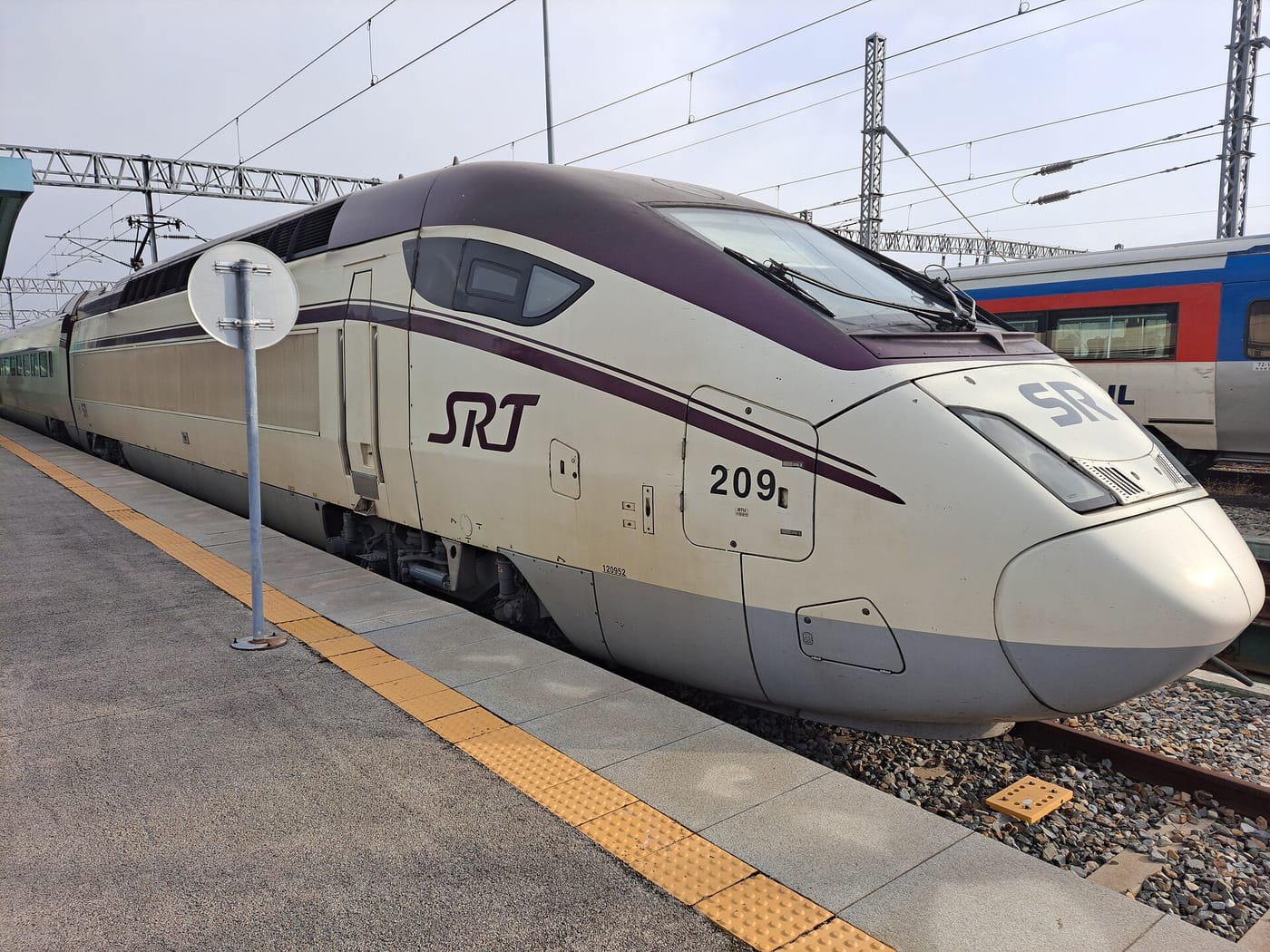
Korea's KTX and SRT Merged on 1 September: Cheaper Fares, One App, One Thing to Do First
Korail and SR merged on 1 September and the SRT is now KTX-Sancheon. Seoul-Busan dropped from ₩59,800 to ₩54,400 that day, not gradually. Chuseok booking runs 7-11 September by route, Suseo on the 10th, and an SR-only account cannot book.
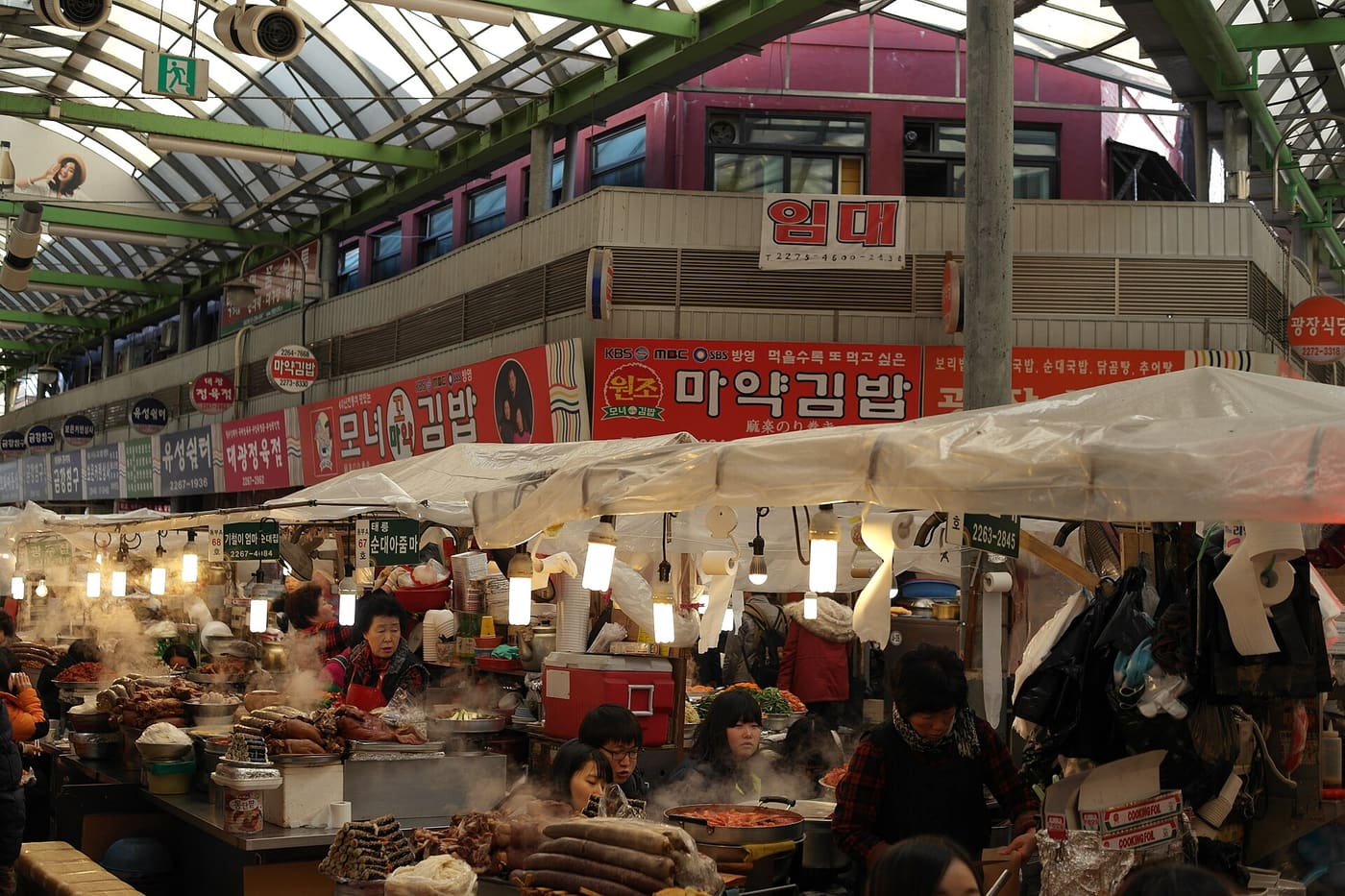
Gwangjang Market's Second Floor: Seoul's Vintage Arcade, and the One Day It's Shut
Everyone knows Gwangjang for the food alley that never closes. Above it is a vintage arcade signed 수입구제 where most items run under ₩20,000 — and it shuts every Sunday, which is exactly when visitors turn up.
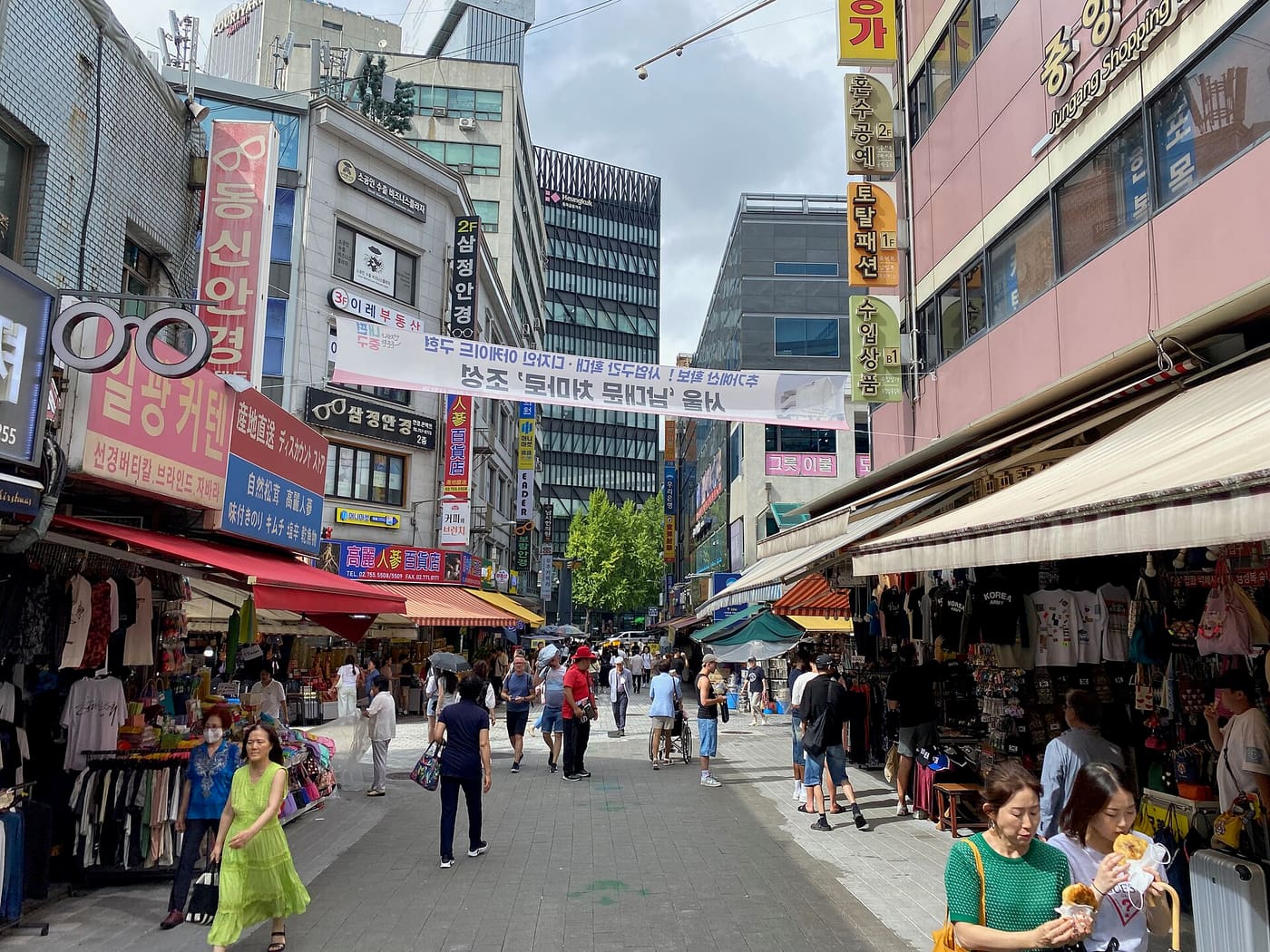
Where to Buy Luggage in Seoul: Namdaemun, Real Prices, and When Not to Bother
You shopped too well and now you need another suitcase. Namdaemun is the answer, but the underground arcade shuts on the 2nd and 4th Sunday, the bag shops close for Chuseok, and a cheap case is not always cheaper than shipping.