Korea's KTX and SRT Merged on 1 September: Cheaper Fares, One App, One Thing to Do First
For ten years Korea has had two high-speed rail operators pretending to be one railway. If you have researched a Seoul-to-Busan trip, you have run into it: KTX from Seoul Station, SRT from a station called Suseo that no guidebook explains, two apps, two accounts, two sets of prices for the same 400 kilometres.
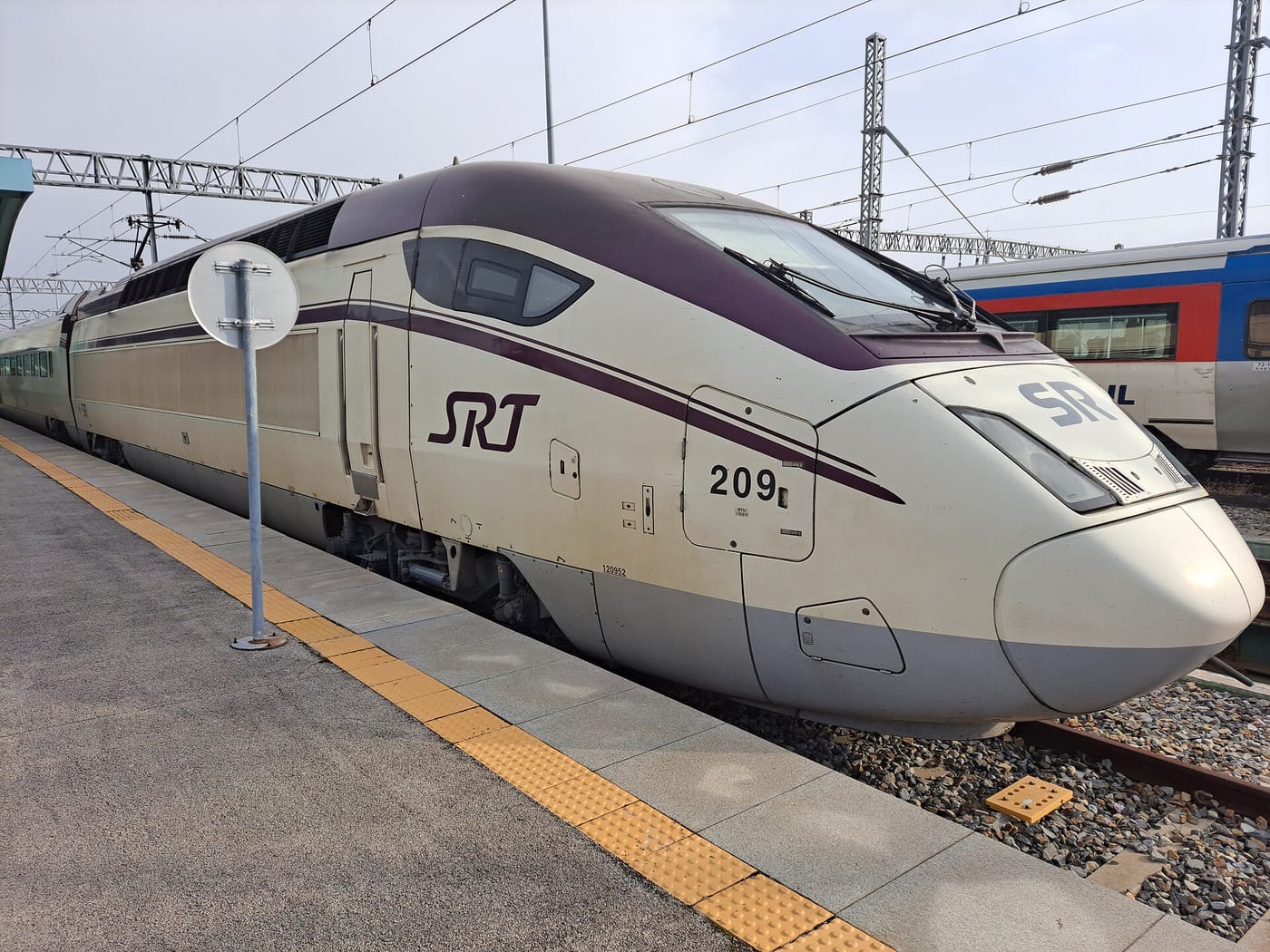
That ended today — 1 September 2026. Korail and SR are one operator, the SRT has been renamed KTX-산천 (KTX-Sancheon), and KTX fares came down to the cheaper SRT level on the same day, in one step.
The reason this still needs your attention rather than filing as done: Chuseok — Korea's biggest domestic travel week — falls on 24-26 September, three weeks from now. The holiday seats are sold in a separate advance release that opens within days, on a booking system that was replaced weeks before it. If you are travelling in Korea this month, the account you book with matters more than the fare you save.
The Short Answer
| Question | Answer |
|---|---|
| Merger date | Tuesday, 1 September 2026 — in effect now |
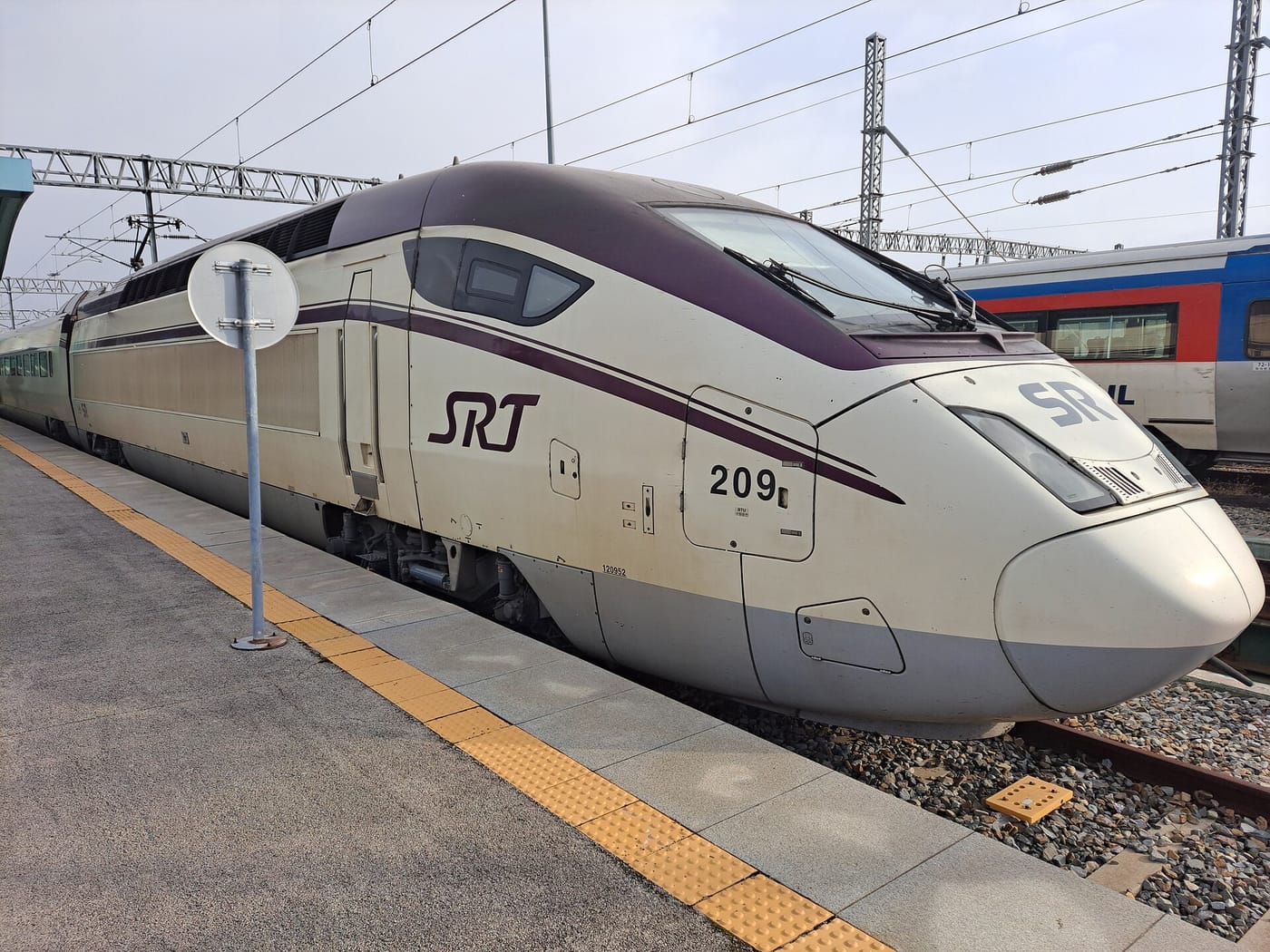
| What SRT is now | KTX-산천 (KTX-Sancheon) — same trains, same route, new name |
| Fare change | About 10% lower on KTX, applied 1 September in one step, not phased in |
| Seoul-Busan | ₩59,800 → ₩54,400 (−₩5,400) |
| Yongsan-Gwangju Songjeong | ₩46,800 → ₩42,000 (−₩4,800) |
| Booking app | 코레일+ (Korail+) — live since 3 August, an update to Korail Talk |
| Tickets already on sale | Travel from 1 September went on sale 5 August, 10:00 |
| The thing to do first | Migrate your account if you ever registered with SR |
| Chuseok holiday | Thursday 24 - Saturday 26 September, Chuseok day Friday 25 |
| Chuseok booking dates | Priority 3-4 Sep, general 7-11 Sep by route. Suseo departures on 10 Sep — see below |
What actually changes, and what does not
Most coverage of this has been on business desks, where the story is a corporate combination approved by Korea's Fair Trade Commission on 2 August 2026, putting the two operators back together twelve years after they were split. That is accurate and almost useless if you are a person trying to buy a train ticket.
Here is the traveller's version.
Changed on 1 September:
- The name on the train. SRT is now KTX-산천, which is the name of a train type Korail already ran — so KTX-Sancheon services now depart from both Seoul Station and Suseo, and the train's name no longer tells you which corridor you are on. Read the station, not the train name.
- The price of a KTX ticket, downward.
- Where you book. One app searches and sells both, including departures from Seoul and Suseo in the same results list.
- How much there is to book. Korail added roughly 116,000 high-speed seats per week — about 16,000 a day (15,679 on weekdays, 17,655 at weekends). Weekday high-speed trips went from 379 to 402, weekends from 431 to 457, split across both stations.
- How freely you can change a ticket, and this is the underreported one. SRT's old rule gave you a narrow same-day window. On the merged system a booking can be moved to a departure up to seven days before or after the original, right up to 30 minutes before departure, with no change fee. For a trip whose dates are not final, that is worth more than the ₩5,400.
Does not change:
- The tracks, the trains, or the journey times. Suseo-line services still run on the Suseo-Pyeongtaek high-speed line and still take about the same time to Busan.
- Which station you leave from. Seoul Station and Suseo remain two different places, roughly an hour apart on the metro, and picking the wrong one is still the single most expensive mistake on this trip.
- The fact that Korean holiday seats sell out in minutes.
The fare cut lands all at once — this part gets reported wrong
There are two numbers circulating and they describe different things.
Korail's commitment to the FTC covers three years, during which KTX fares are held at the lower SRT level. Some coverage compressed that into "fares fall 10% over three years," which reads as though you would see roughly 3% now.
That is not how it works. The reduction is applied on 1 September, and Korail has published the actual figures:
| Route | Before | From 1 September | Saving |
|---|---|---|---|
| Seoul - Busan | ₩59,800 | ₩54,400 | ₩5,400 |
| Yongsan - Gwangju Songjeong | ₩46,800 | ₩42,000 | ₩4,800 |
| Average across KTX routes | — | about 10% lower | — |
The three years is the commitment window — the period over which the lower level is guaranteed — not a phase-in schedule.
Now the honest part: ₩5,400 is not a reason to move your trip. It is roughly two convenience-store coffees. If your dates are fixed, book the seat you want and stop optimising. The saving matters if you are travelling several intercity legs, or if you are a family of four, where the same trip quietly returns about ₩21,600.
Cheaper fares and 16,000 more seats a day make a second city genuinely easier to add. EpicKor may earn a commission if you book through this Agoda link, at no extra cost to you. If the merger is what finally makes you add Busan or Gwangju to a Seoul trip, the accommodation decision is the one worth spending time on rather than the ₩5,400. Compare Busan accommodation on Agoda and look at the Seomyeon and Haeundae areas against Busan Station. Confirm your dates, taxes, cancellation terms and final price before booking.
Suseo is the station most visitors have never used, and it now matters more
If you have only ever booked KTX, you have probably never heard of 수서역 (Suseo Station). It sits in Gangnam-gu in southeast Seoul, on metro lines 3 and Suin-Bundang plus the GTX-A line, and it opened as SR's high-speed terminus at the end of 2016.
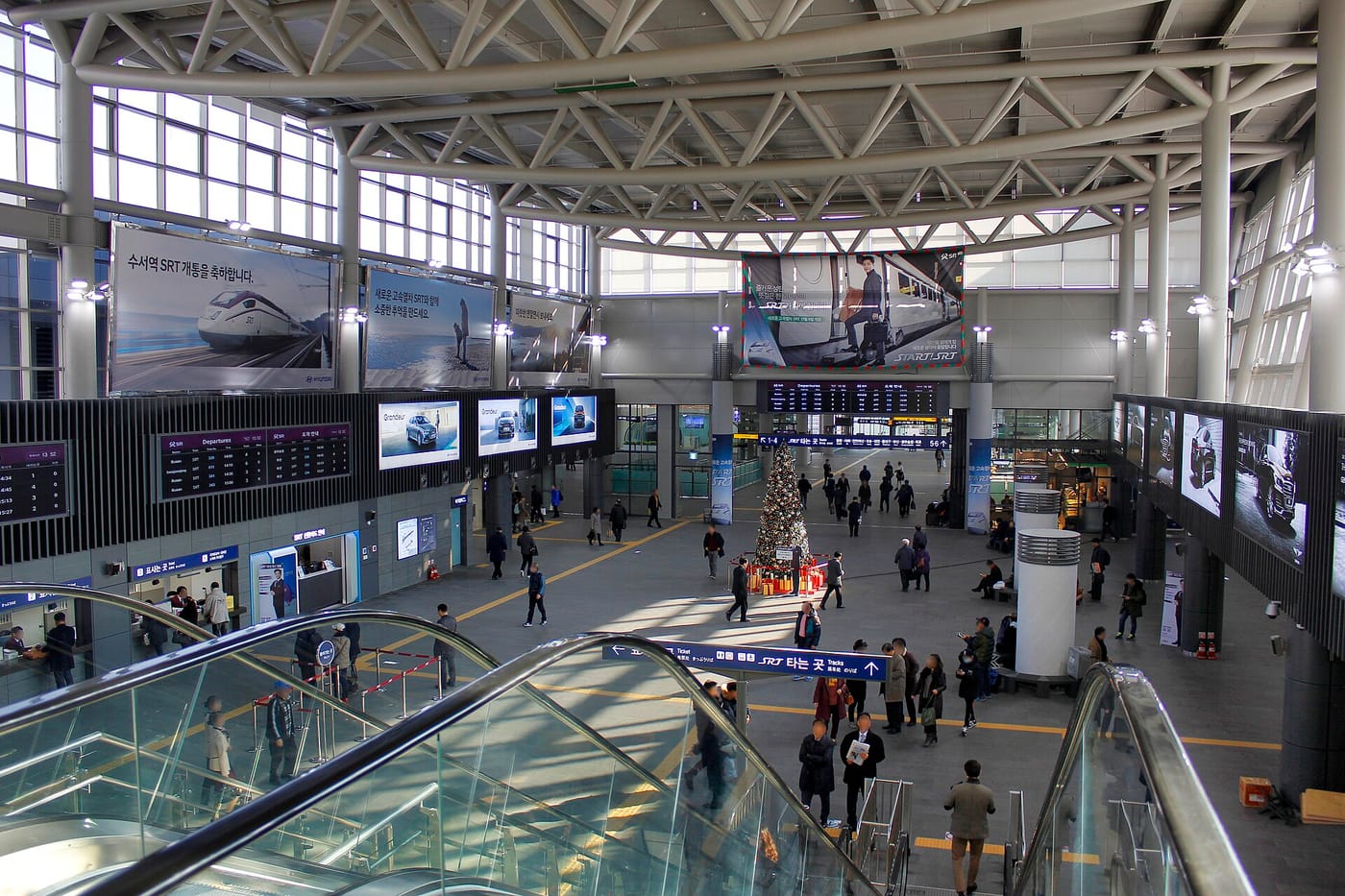
Suseo's role grows with the merger. Korail expects seats on Suseo departures and arrivals to rise by about 30%, and the KTX sets it is putting on the route carry up to 955 seats per train — considerably more than the SRT sets they supplement.
Whether that helps you depends entirely on where you are staying. Suseo is convenient if your base is Gangnam, Jamsil, Songpa or Seongnam. It is a bad idea if you are in Myeongdong, Hongdae or near Seoul Station, because you would spend an hour crossing the city to save nothing.
Two smaller benefits arrive with the integration and neither has been reported in English: a mileage scheme worth 5% of the ticket payment, and a 30% discount on the connecting conventional-train fare for passengers transferring off a high-speed service. If your final destination is a small city that a KTX does not reach, that second one is real money.
Do this before you book anything: the account migration
This is the part that will actually cost people seats, and it is invisible from the English-language internet.
Merging two railways means merging two membership databases, and Korail has been running a conversion process since 14 July 2026. What you must do depends on which accounts you hold:
| If you have | What happens | What you must do |
|---|---|---|
| Korail account only | Converted automatically | Nothing |
| Both Korail and SR accounts | Converted automatically | Consent to the data transfer in the SR app or site, or you lose your SR booking history and discount coupons |
| SR account only | Nothing happens on its own | Register with Korail, then run the transfer yourself. Skip this and your SR history and coupons are gone |
| No account at all | — | Create a Korail account now, not on the morning tickets go on sale |
The conversion is reachable through the existing Korail Talk and SR apps and sites. Do it on a quiet weekday evening, not at 08:55 on a booking morning. Korean holiday ticket sales are decided in the first three or four minutes, and an account you are still setting up is an account you are not booking with.
If you are visiting Korea for the first time and have never registered with either, this section is a non-issue — just make a Korail account in advance. Log in and confirm it works before the day.
Chuseok is the stress test, and the dates are now official
Chuseok 2026 is Friday 25 September, with the public holiday running Thursday 24 to Saturday 26. There is no substitute holiday this year — Korea grants one when the holiday falls on a Sunday, and none of the three days does. In practice, though, Sunday 27 follows immediately, so the country is effectively shut for four days.
Holiday train tickets are not sold on the normal rolling schedule. They are pulled out and sold in a separate advance release, and popular departures are gone within minutes of the window opening.
The widely-repeated dates were wrong, and the merger is why. Korean travel blogs had been circulating 20 August for KTX and 25 August for SRT, matching the usual five-weeks-ahead pattern. Korail's official notice, posted 13 August 2026 (2026년 추석 연휴 승차권 예매 안내문), put the sale much later and stretched the general window from three days to five: priority passengers 3-4 September, everyone else 7-11 September, covering travel on 23-27 September.
And the open question about Suseo has been answered. Historically, holiday tickets were the one category not cross-sold between the two operators online — SR's own Lunar New Year notice this year said exactly that. On the merged system there is no longer a separate SR sale at all. Instead, Suseo departures get their own day inside the Korail sale: Thursday 10 September, covering the Gyeongbu, Gyeongjeon, Donghae, Honam and Jeolla lines. If you were planning to catch what used to be an SRT, that is your morning, and it is one day before Seoul-Busan opens on the 11th.
| Day | Hours | What goes on sale |
|---|---|---|
| Thu 3 Sep | 09:00–15:00 | Priority passengers — Gyeongbu, Gyeongjeon, Donghae, Jungbu Naeryuk, Gyeongbuk, Daegu, Chungbuk, Gyoeoe lines |
| Fri 4 Sep | 09:00–15:00 | Priority passengers — Honam, Jeolla, Jungang, Gangneung, Janghang, Yeongdong, Taebaek, Seohae, Gyeongchun, Mokpo–Boseong lines |
| Mon 7 Sep | 07:00–13:00 | Conventional trains, all lines — ITX-Saemaeul, ITX-Maeum, Mugunghwa |
| Tue 8 Sep | 07:00–13:00 | KTX from Seoul / Cheongnyangni — Gyeongjeon, Gangneung, Donghae, Jungang, Jungbu Naeryuk |
| Wed 9 Sep | 07:00–13:00 | KTX from Yongsan — Honam, Jeolla |
| Thu 10 Sep | 07:00–13:00 | KTX to and from Suseo — Gyeongbu, Gyeongjeon, Donghae, Honam, Jeolla |
| Fri 11 Sep | 07:00–13:00 | KTX from Seoul, Gyeongbu line — Daejeon, Dongdaegu, Gyeongju, Ulsan, Busan |
| Fri 11 Sep, 15:00 → | ongoing | Remaining seats — app, website and station counters |
Two details that decide whether the account work above was worth doing. The advance sale is online and members-only — Korail's notice says 역 창구 예매 없음, no station-window sales — and payment runs 12–15 September, separately from the booking itself. An SR-only account that has not been converted cannot book on any of those mornings. Our Chuseok 2026 guide has the full rule set, including the rehearsal window on the booking page from 24 August.
What this means for a normal trip
Strip out the corporate story and the practical advice is short.
If you are travelling before 1 September: nothing has changed for you. Book as you always did, at current fares.
If you are travelling now: those tickets have been on sale since 5 August at 10:00, through 코레일+ and the Korail website. You will see Seoul and Suseo departures in one list for the first time, which makes it much easier to notice that a Suseo train leaves twenty minutes sooner — and much easier to book it without realising Suseo is nowhere near your hotel. Check the station, not just the time.
If you are travelling over Chuseok: the seat matters more than the fare. Have a working, logged-in unified Korail account days beforehand, and look up your route's own sale morning — Suseo departures on 10 September, Seoul-Busan on 11 September, conventional trains as early as 7 September. Getting the account right and the date wrong costs you the same as doing neither.
If you were choosing between KTX and SRT: that decision no longer exists in the form our older guide describes. It has become a simpler question — which of the two Seoul stations is closer to you.
FAQ About the KTX and SRT Merger
Q: Is the SRT being discontinued?
A: No. The trains, the route and the Suseo terminus all continue. Only the name changes — from 1 September they run as KTX-산천 (KTX-Sancheon). If you have an SRT ticket for a date after the merger, it is the same physical train either way; confirm the booking in the Korail+ app rather than assuming.
Q: Do I need a new app?
A: You need 코레일+ (Korail+), which went live on 3 August. If you already had Korail Talk, updating it is enough — it becomes Korail+. If you only ever used the SRT app, install Korail+ and migrate your account.
Q: How much cheaper is Seoul to Busan?
A: ₩59,800 → ₩54,400, a saving of ₩5,400, from 1 September. Yongsan to Gwangju Songjeong goes ₩46,800 → ₩42,000. The average KTX reduction is about 10%, and it applies on the day rather than gradually.
Q: Should I delay my trip to September to get the cheaper fare?
A: Almost certainly not. ₩5,400 is a small fraction of what a day in Korea costs, and late September is Chuseok week, when trains, hotels and intercity buses are at their most contested and expensive. The fare cut is a nice side effect, not a reason to move.
Q: When do Chuseok train tickets go on sale?
A: Korail's official notice of 13 August 2026 sets it out by route. Priority passengers book 3-4 September, everyone else 7-11 September, 07:00-13:00. Conventional trains open on the 7th, KTX from Seoul or Cheongnyangni on the 8th, KTX from Yongsan on the 9th, anything to or from Suseo on the 10th, and Seoul-Busan on the Gyeongbu line on the 11th. Remaining seats go on open sale from 11 September at 15:00, which is the only stage sold at station counters. Ignore the 20 and 25 August dates still circulating on travel blogs — those were the pre-merger pattern and they did not happen.
Q: I have an SR account and no Korail account. What happens if I do nothing?
A: Your account is not carried over automatically. Register with Korail and run the transfer through the conversion process, or you lose your SR booking history and any discount coupons attached to it.
Q: Is Suseo or Seoul Station better?
A: Whichever is closer to where you are sleeping. Suseo suits Gangnam, Jamsil, Songpa and Seongnam. Seoul Station suits almost everywhere else a visitor stays. Seat availability at Suseo improves with the merger, but not by enough to justify an hour of metro.
The one thing to do today
The merger is done. The clock that matters now is Chuseok, and it starts in two days: priority booking opens 3 September, general booking 7-11 September, with Suseo departures on 10 September.
If you already hold a Korean rail account of any kind, open it and check whether it needs migrating. That takes five minutes today and is impossible to fix at 06:58 on a booking morning.
If you do not have one, create a Korail account, log in once, and confirm it works. Then watch korail.com for the notice rather than a date someone reposted — the widely-circulated dates for this year were wrong, and the merger is why.
The merger itself is genuinely good news for visitors: one app, one search, about 116,000 more seats a week, a real fare cut, and change rules that finally forgive a shifted itinerary. It just landed three weeks before the hardest week of the year to get a train, which is why the boring account admin is the part that decides whether you get a seat.
Related reading on EpicKor: our Chuseok guide covers what closes and what stays open across the holiday, what to choose now that KTX and SRT are one explains the intercity options in more detail, and if you are landing first, Incheon Airport to Seoul covers the AREX, bus and taxi routes into the city.
Sources: Korea Fair Trade Commission approval of the Korail-SR business combination (2 August 2026); Korail fare and service figures as reported by Seoul Economic Daily, SBS, Korea Times, Korea JoongAng Daily, Herald Business and Kyunghyang Shinmun, August 2026; Korail and SR official notice boards, checked 13 August 2026; merger commencement, fare, service-frequency and ticket-change figures re-verified against Korean rail-trade and national press coverage on 1 September 2026, the day it took effect. Fares and schedules are subject to change — confirm on korail.com before you travel.
You Might Also Like
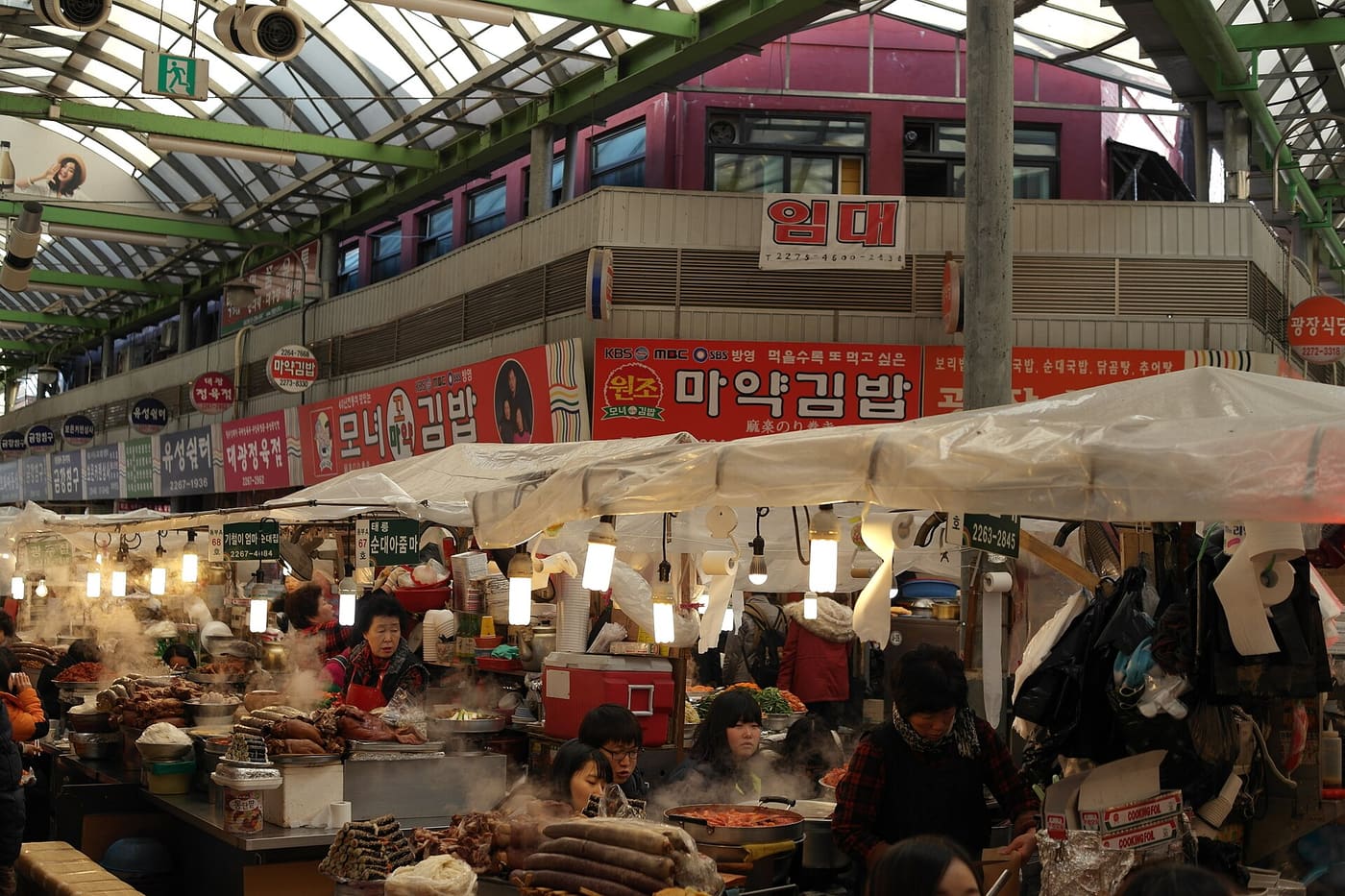
Gwangjang Market's Second Floor: Seoul's Vintage Arcade, and the One Day It's Shut
Everyone knows Gwangjang for the food alley that never closes. Above it is a vintage arcade signed 수입구제 where most items run under ₩20,000 — and it shuts every Sunday, which is exactly when visitors turn up.
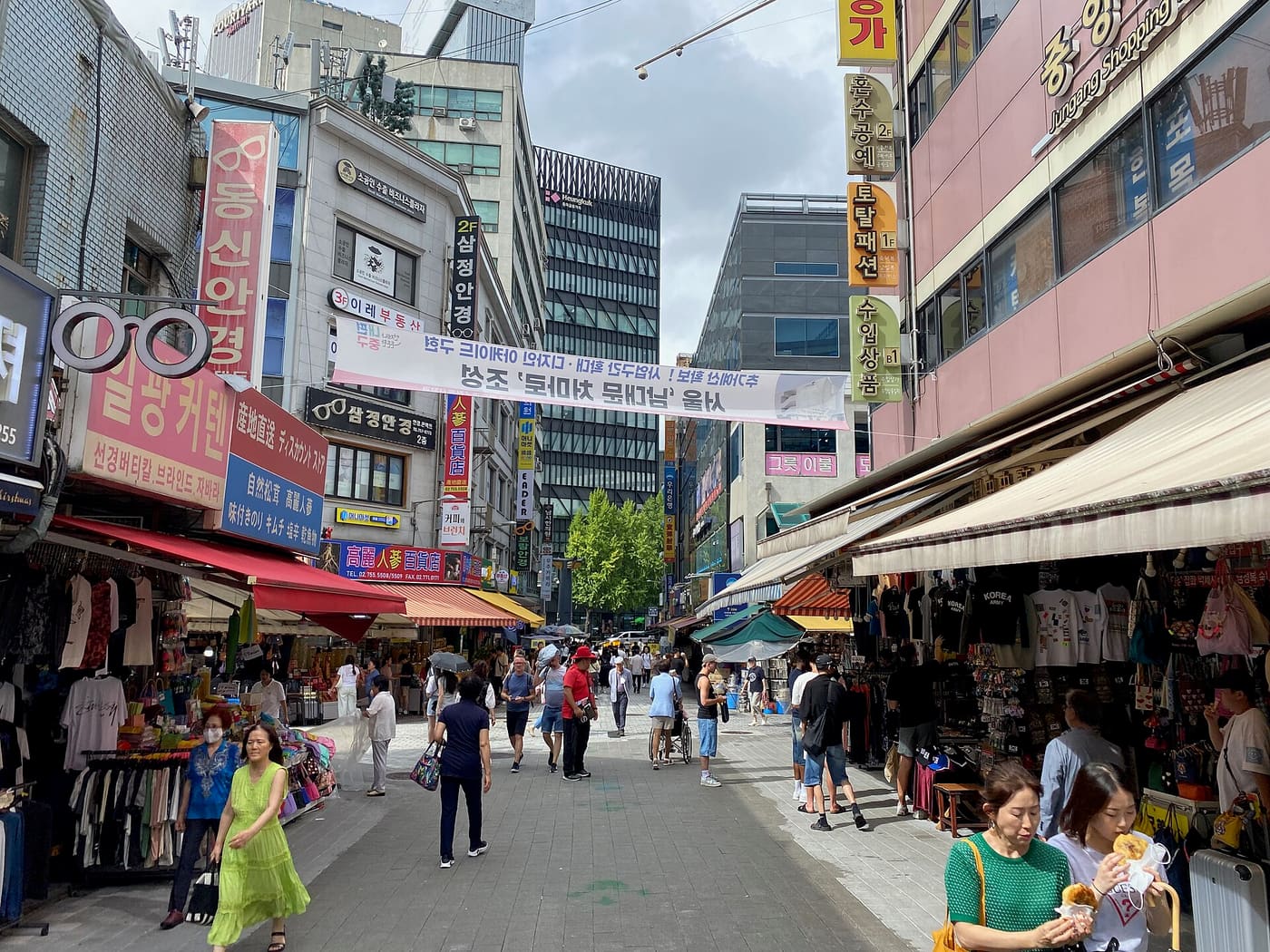
Where to Buy Luggage in Seoul: Namdaemun, Real Prices, and When Not to Bother
You shopped too well and now you need another suitcase. Namdaemun is the answer, but the underground arcade shuts on the 2nd and 4th Sunday, the bag shops close for Chuseok, and a cheap case is not always cheaper than shipping.

Why Your Phone Screams in Korea: Emergency Alerts, Air-Raid Sirens, and Telling Them Apart
Korea has two alarm systems and visitors confuse them constantly. One is a text on your phone, usually a heat advisory. The other is a street siren that stops traffic. On 20 August 2026 both go off at 2pm, and neither means what you fear.