KORAIL PASS: Is Korea's Rail Pass Worth It? The Break-Even Against Real KTX Fares
Last updated: 4 November 2026. Pass prices, products, age rules, seat rules and refund rules were read that day on Korail's own English pages (korail.com, which letskorail.com now redirects to): the KORAIL PASS guide, FAQ and benefits pages, the notice of 11 November 2025 that changed the pass, and the pass product list Korail's booking system returns. KTX fares come from our own route guides, each of which read Korail's timetable on the date shown in its source line at the end; Seoul–Busan is Korail's published post-merger fare. ₩1,334 = US$1 (Federal Reserve H.10, release of 2 November 2026). Sources at the end.
Is the KORAIL PASS worth it? For most visitors in 2026, no. It pays only if you ride two long legs on the same day, usually a Seoul–Busan day trip, return. The KORAIL PASS (코레일패스), Korail's rail pass for foreign visitors, is now sold in four forms: 2, 3, 4 or 5 travel days, chosen within 10 days, at ₩131,000 (US$98), ₩186,000 (US$139), ₩234,000 (US$175) and ₩275,000 (US$206) for adults. That works out to ₩55,000–65,500 per travel day. Since Korail and SR merged on 1 September 2026, a one-way KTX from Seoul to Busan, the long trip most visitors take, costs ₩54,400. A day with one train ride on it, even Seoul to Busan, now costs less on a single ticket than on any pass.
The pass is not dead. It wins clearly when you base yourself in Seoul and go to Busan, Gyeongju, Daegu or Yeosu and back in a day. This guide gives the official prices, the rules that cost pass holders money, and seven real trips worked out in won. For the wider picture of trains, buses and subway fares, start with Getting Around Korea in 2026.
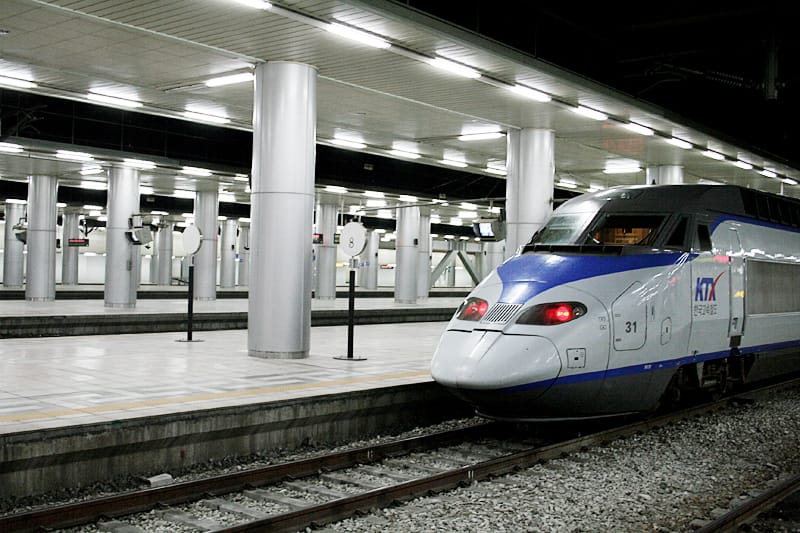
A KORAIL PASS is valid only with the passport it was bought with, and the conductor can ask for both on every train. The TOPBAG RFID passport wallet keeps them together. See it on AmazonAffiliate link. As an Amazon Associate, EpicKor earns from qualifying purchases at no extra cost to you.
Quick Guide: KORAIL PASS prices and break-even
| Pass (official price, 4 Nov 2026) | Adult | Child (6–12) | Cost per travel day (adult) | Buy it if each travel day costs more than |
|---|---|---|---|---|
| 2 day select pass | ₩131,000 (US$98) | ₩66,000 (US$49) | ₩65,500 | ₩65,500 in single tickets, e.g. Seoul–Busan return in a day |
| 3 day select pass | ₩186,000 (US$139) | ₩93,000 (US$70) | ₩62,000 | ₩62,000, e.g. Seoul–Daegu or Seoul–Jeonju return in a day |
| 4 day select pass | ₩234,000 (US$175) | ₩117,000 (US$88) | ₩58,500 | ₩58,500 |
| 5 day select pass | ₩275,000 (US$206) | ₩138,000 (US$103) | ₩55,000 | ₩55,000, just more than a one-way Seoul–Busan (₩54,400) |
| No pass | Single tickets on korail.com or the Korail+ app (코레일+) | What you ride | Most trips with one train ride per travel day | |
The travel days do not have to be consecutive. You pick a starting date, and all your travel days must fall within 10 days of it. Adults are 13 and over. Children are 6 to 12, and one child under 6 rides free with each adult pass holder.
Lonely Planet Korea: plan the route before you price the pass. Whether a pass pays depends entirely on which cities you sleep in and which you visit for a day, and a country guide with rail maps helps you decide that before you buy anything. The pass itself is not sold on Amazon, so this is the only product box here. As an Amazon Associate, EpicKor earns from qualifying purchases at no extra cost to you.
See Lonely Planet Korea on AmazonWhat changed: the KORAIL PASS most guides still describe is gone
Two changes in twelve months have turned the old advice around. Most English guides predate one or both.
1. The pass lineup changed on 11 December 2025. Korail's English notice of 11 November 2025, titled "Change in KORAIL PASS types and age categories", replaced the old range with four "select" passes and two age groups, Adult and Child. The booking system now returns exactly four products, "KORAIL PASS FX (2 day use)" to "(5 day use)", and two passenger types. If a guide offers you a consecutive-day pass, a Youth pass or a Saver (group) pass, it is describing the pre-December lineup. Passes bought before 11 December 2025 stay under the old rules, according to the same notice.
2. KTX fares fell on 1 September 2026. When Korail and SR merged, KTX fares dropped to SR's lower scale in one step: Seoul–Busan went from ₩59,800 to ₩54,400, and the average KTX route fell about 10% (what the KTX and SRT merger changed). The pass price did not fall with it. Every break-even sum written before September is now too kind to the pass, including the rough "a Seoul–Gyeongju–Busan loop is break-even" rule our own 7-day itinerary used to give.
The result is simple. The cheapest pass day, ₩55,000 on the 5-day pass, now costs more than the most expensive one-way KTX trip most visitors take (Seoul–Busan).
What the pass covers, and what it does not
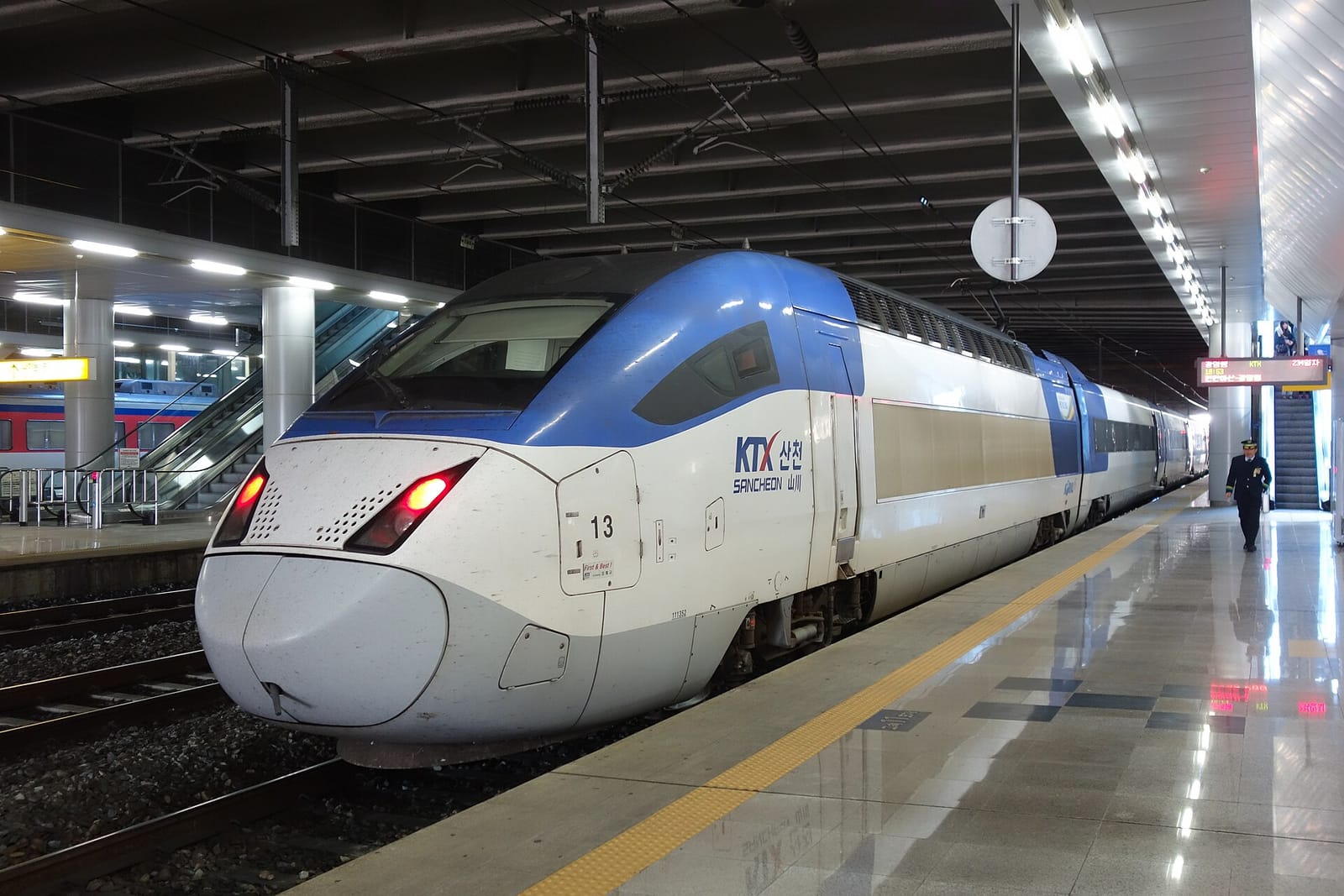
Korail's pass page says the pass "allows foreigners visiting Korea to journey across the country by train". It covers KTX and Korail's conventional trains (ITX-Saemaeul, ITX-Maum, Mugunghwa and others). Korail's 2024 notice on pass details lists the eligible trains; check the pass page for the current list before you plan around a particular train.
It does not cover:
- Seoul's subway and the metropolitan railway. Korail lists the metropolitan railway as excluded; we could not find a line-by-line list. For those, use a transit card (T-money and payment guide).
- Temporary tourist trains, such as special event trains.
- First-class seats for free. A pass holder can book first class but must pay an extra charge for first class (Korail's pass page gives it as 50% of the first-class fare — confirm at booking).
What about the old SRT trains from Suseo? A Korail notice of November 2024 said plainly: "You cannot board SRT trains ... with a KORAIL PASS." Since 1 September 2026, those trains run as Korail's KTX-Sancheon (KTX-산천), sold in the same app. The current English pass page no longer names SRT among the exclusions. We could not find a Korean or English statement from Korail confirming that pass holders can now reserve Suseo departures. If you are staying in Gangnam, check whether Suseo trains appear in the pass seat-reservation search before you count on them. Otherwise plan from Seoul Station, Yongsan or Cheongnyangni.
You might like: KTX vs SRT vs Express Bus in Korea: What the Merger Changed
The rules that quietly cost pass holders money
Two reservations a day, then you stand. The pass page says you "can select up to two tickets for one person per day". A third train that day means a standing place. If seats are sold out, Korail tells pass holders to board in a standing place with the pass and passport. That is fine for an hour to Daejeon, and miserable for three hours to Yeosu.
The 10-day window is fixed. You pick a starting date when you buy, and all travel days must be registered within 10 days of it. You can change the starting date once.
Refunds end the day before you start. Korail's FAQ says there is no refund fee up to the day before the pass's starting date, Korea time, and "refunds are not possible after the starting date". You must cancel any seat reservations first. A pass bought at a station or travel agency is refunded there, not online. Compare that with a single ticket: on the merged system you can move a booking to a train up to seven days earlier or later, up to 30 minutes before departure, with no change fee (merger guide).
Seats open two months ahead. Pass holders get the same two-month window as everyone else, because the national rule changed on 1 October 2026 (the new two-month booking calendar). Confirm on Korail's pass page when you book.
No changes to the pass itself. Pass type, passenger type and personal details cannot be edited after purchase. You refund and buy again, which is only possible before the start date.
It is personal. The pass works only for the person named on it, with that person's passport. Korail treats misuse as fare evasion and charges the fare plus a heavy surcharge.
Screenshots do not count. Korail's terms say a screenshot of a train ticket is not valid. Show the live ticket screen on the website or app, or carry the printout.
No delay compensation. The terms state that pass holders "cannot receive compensation for train delays and suspensions".
Break-even: seven real trips, with the numbers
Every fare below is the adult standard-class KTX fare after the 1 September cut, as read in our route guides (dates in the sources). The pass is compared with what you would actually pay on single tickets.
First, the per-day test
A single test works for every trip: add up the train fares for each day you would use the pass, and compare that with the pass's cost per day.
| Route from Seoul (station) | One way | Return in one day | Beats which pass day? |
|---|---|---|---|
| Busan (Seoul Station) | ₩54,400 | ₩108,800 | All four |
| Yeosu EXPO (Yongsan) | ₩45,400 | ₩90,800 | All four |
| Gyeongju (Seoul Station) | about ₩44,500 | about ₩89,000 | All four |
| Suncheon (Yongsan) | ₩42,300 | ₩84,600 | All four |
| Gwangju Songjeong (Yongsan) | ₩42,000 | ₩84,000 | All four |
| Daegu, Dongdaegu (Seoul Station) | ₩39,000 | ₩78,000 | All four |
| Jeonju (Yongsan) | ₩31,600 | ₩63,200 | 3-, 4- and 5-day only |
| Andong (Cheongnyangni) | ₩27,700 | ₩55,400 | 5-day only, by ₩400 |
| Gangneung (Cheongnyangni) | ₩26,000 | ₩52,000 | None |
| Daejeon (Seoul Station) | ₩21,600 | ₩43,200 | None |
| Busan → Gyeongju | ₩10,100 | Not applicable | None |
Read it this way: a one-way ride on any of these routes never beats a pass day. Only a same-day return on the top six routes, or two long legs on one day, does.
Seven trips worked out
| Trip (adult, travel days) | Single tickets | Pass | Result |
|---|---|---|---|
| 1. Seoul → Busan, two nights, Busan → Seoul (2 days) | ₩108,800 | 2-day ₩131,000 | Singles win by ₩22,200 |
| 2. The classic loop: Seoul → Gyeongju, Gyeongju → Busan, Busan → Seoul (3 days) | ₩109,000 | 3-day ₩186,000 | Singles win by ₩77,000 |
| 3. Same loop, pass only on the two long days (Busan–Gyeongju on a single ticket) | ₩98,900 | 2-day ₩131,000 | Singles win by ₩32,100 |
| 4. Seoul base, day trips to Busan and Daegu (2 days) | ₩186,800 | 2-day ₩131,000 | Pass wins by ₩55,800 |
| 5. Seoul base, day trips to Gangneung, Jeonju and Daegu (3 days) | ₩193,200 | 3-day ₩186,000 | Pass wins by ₩7,200 |
| 6. Five-day mix: Seoul → Busan, Busan → Gyeongju, Gyeongju → Seoul, then Gangneung and Jeonju day trips | ₩224,200 | 5-day ₩275,000 | Singles win by ₩50,800 |
| 7. Rail marathon from Seoul: day trips to Busan, Gyeongju, Daegu and Jeonju (4 days) | ₩339,000 | 4-day ₩234,000 | Pass wins by ₩105,000 |
What follows from the table:
- The usual first trip, Seoul plus Busan with a night or two in each, loses money on a pass. That is trips 1, 2, 3 and 6, which are what most visitors actually do. Buy single tickets.
- The pass wins on long same-day returns. Trips 4 and 7 keep a Seoul hotel and ride three hours each way. If that is your plan, the 2-day pass at ₩131,000 is the best value Korail sells.
- Trip 5 is a coin toss. ₩7,200 on three days is less than the cost of one lost seat. Starting the Gangneung trip at Seoul Station instead of Cheongnyangni (₩27,600 each way) widens it to ₩10,400. Either way, a single cancelled day makes singles win, because the pass cannot be refunded once it starts.
- The pass does not make up for a weak plan. Every winning row has a three-hour train in each direction on the same day. Before you buy, ask whether you actually want that day.
What about the bus, and the cheaper Suseo fares?
Single tickets have two more ways to undercut a pass. Suseo departures are slightly cheaper on several routes, for example ₩37,500 to Daegu against ₩39,000 from Seoul Station (Daegu day trip), and the pass may not cover them anyway. Express buses are cheaper again on many routes, even after the 9% rise of 1 October 2026 (Seoul–Busan, KTX vs bus). Busan to Gyeongju is ₩8,400 by bus against ₩10,100 by KTX, and the bus ends downtown (Busan to Gyeongju compared).
The cheapest Busan trip is usually a night there, not a pass. Trips 1 and 2 above, with a night or two in Busan, beat every pass. The money you would put into a pass goes further on a room near Busan Station, Seomyeon or Haeundae. EpicKor may earn a commission if you book through this Agoda link, at no extra cost to you. Confirm dates, taxes, cancellation terms and the final price on Agoda before booking.
Compare Busan stays on AgodaHolidays: Seollal and Chuseok
The pass page says only that "the use of the pass may be limited on specific dates, as notified on the website". On 4 November 2026 the English notice board had no pass restriction for the coming holidays. But holiday trains are a separate problem. Korean holiday seats go on sale in a members-only advance window weeks before (the Chuseok 2026 booking dates and the account you need). A pass does not put you ahead of that queue.
The next two holidays to plan around:
- Seollal 2027: 6–9 February, with Seollal itself on Sunday 7 February (Seollal 2027 guide).
- Chuseok 2027: 14–16 September (Chuseok 2027 guide).
If your pass days fall on those dates, assume you may be standing, and check korail.com's notice board before you set a starting date. Outside those weeks, KTX seats are rarely a problem two months out.
Where to buy, and who can buy it
Where: Korail's FAQ lists three places: the Korail website, train stations, and "designated sales agencies". The English site letskorail.com now redirects to korail.com, and the pass is under KORAIL PASS → Book Korail Pass. You need a valid passport and a credit card to buy online. After buying, you register each travel date and reserve seats under MY TICKET.
Who: "Any foreigners visiting Korea." The page adds: "Unavailable for persons with Korean nationality."
Beware lookalike sites. Korail has warned against unofficial resellers that charge more than its own site. The same applies to the pass. If the price is not in won and the site is not korail.com, find out who you are paying.
KORAIL PASS Plus (코레일패스 플러스). Announced on 29 December 2025, it lets pass holders add a prepaid transit card for ₩8,000 (US$6). It works on subways and buses nationwide and in some shops, and is collected from NAMANE card kiosks at Incheon Airport and major KTX stations. It is a convenience, not a discount: you still top it up with your own money. The card can be refunded before you collect it, and is refunded automatically if not collected within 60 days. For most visitors a normal transit card does the same job (Getting Around Korea).
Pass partner discounts. Korail's benefits page lists a few, including ₩1,000 off the AREX express from Incheon Airport (₩13,000 to ₩12,000) and 10% off Seoul's Tiger Bus Tour 1. They are small and do not change the arithmetic above.
When to skip the pass
- You sleep in two or three cities and move once a day. That is most first trips to Korea, and single tickets win.
- Your trains are short. Daejeon, Gangneung, Andong, Chuncheon and Suwon days cost less than any pass day (12 train day trips from Seoul).
- You want to stay flexible. A single ticket can be moved for free up to 30 minutes before departure. A pass cannot be refunded once its start date arrives.
- You will travel at Seollal or Chuseok. The pass does not help you get a holiday seat.
- You want first class. You pay an extra charge for first class on top of the pass (Korail's pass page gives it as 50% of the first-class fare — confirm at booking), which erodes the margin on all but the longest days.
Buy it if you are staying in one Seoul hotel and will go to Busan, Gyeongju, Daegu, Yeosu, Suncheon or Gwangju and back on the same day, at least twice. Then the 2-day pass at ₩131,000 (US$98) is good value.
FAQ
Q: How much is the KORAIL PASS in 2026?
A: On Korail's site on 4 November 2026: 2-day select pass ₩131,000, 3-day ₩186,000, 4-day ₩234,000 and 5-day ₩275,000 for adults (13 and over). Child passes (6–12) are ₩66,000, ₩93,000, ₩117,000 and ₩138,000. The travel days are chosen within 10 days.
Q: Is the KORAIL PASS worth it?
A: Only if your average travel day costs more than ₩55,000–65,500 in single tickets. Since the 1 September 2026 fare cut, a one-way Seoul–Busan KTX is ₩54,400, so the pass pays only on days with two long legs, such as a Busan day trip from Seoul.
Q: Is there still a consecutive-day, Youth or Saver KORAIL PASS?
A: No. Korail's notice of 11 November 2025 replaced the lineup from 11 December 2025 with 2- to 5-day select passes and two age groups, Adult and Child. Passes bought before that date keep the old rules.
Q: Does the KORAIL PASS cover the SRT or Suseo trains?
A: Before the merger it did not. Since 1 September 2026 the former SRT trains run as Korail KTX-Sancheon, and the pass page no longer lists SRT as excluded, but we found no Korail statement confirming coverage. Check the pass seat search for Suseo departures before relying on it.
Q: How many seats can I reserve with a KORAIL PASS?
A: Up to two per person per day. Seats open two months before departure, the same window as everyone else under the national rule of 1 October 2026; confirm on Korail's pass page when you book. If seats are sold out, you can board in a standing place with the pass and your passport.
Q: Can I get a refund on a KORAIL PASS?
A: Yes, with no fee up to the day before the starting date, Korea time. After the starting date, no refund is possible. Cancel any seat reservations first, and refund through the seller you bought from.
Q: Does the KORAIL PASS work on the Seoul subway?
A: No. It excludes the metropolitan railway. The optional KORAIL PASS Plus card (₩8,000) adds a prepaid transit card, but you pay the subway and bus fares from your own top-up.
Q: Can Koreans or Korean residents buy the KORAIL PASS?
A: Korail's page says it is for foreigners visiting Korea and is "unavailable for persons with Korean nationality".
Sources
- Korail, About Korail Pass, read 4 November 2026: products and prices, age groups, coverage and exclusions, seat reservation rules, first-class charge (confirm at booking), 10-day window, conditions, eligibility.
- Korail, KORAIL PASS FAQ and Benefits, read 4 November 2026: where to buy, start-date change, refunds, partner discounts.
- Korail, Notice (About KORAIL PASS), 11 November 2025: new pass types and prices effective 11 December 2025. Korail's booking system pass product list (ebizweb/global/pass/types), read 4 November 2026: four FX passes, Adult and Child only.
- Korail, PASS details, 1 November 2024: eligible trains, two seats a day, SRT excluded before the merger.
- Korail, notice warning against unauthorised ticket websites, 18 August 2025.
- Two-month advance booking for all train tickets from 1 October 2026: MTN (머니투데이방송), 20 September 2026.
- KORAIL PASS Plus, service overview, read 4 November 2026: ₩8,000 card fee, kiosks, refund. Launch and prices reported in Korean by ZDNet Korea and Herald Business (헤럴드경제), 29 December 2025 (코레일, '외국인 전용' 통합교통패스 출시).
- KTX fares after the 1 September 2026 merger: Seoul–Busan ₩54,400 from Korail's published figures (merger guide, KTX vs bus, fare read 28 September 2026); Daejeon (20 October), Gangneung and Gyeongju (3 November), Jeonju (19–25 October), Daegu (31 October), Andong (11–17 October) and Suncheon (12–18 October), as recorded in our 12 train day trips from Seoul; Yeosu EXPO from our Yeosu guide; Busan–Gyeongju from our Busan to Gyeongju guide; Yongsan–Gwangju Songjeong from Korail's merger figures in our merger guide. Fares change; confirm in the Korail+ app.
- Federal Reserve, H.10 foreign exchange rates, release of 2 November 2026. Dollar figures are approximate.
You Might Also Like
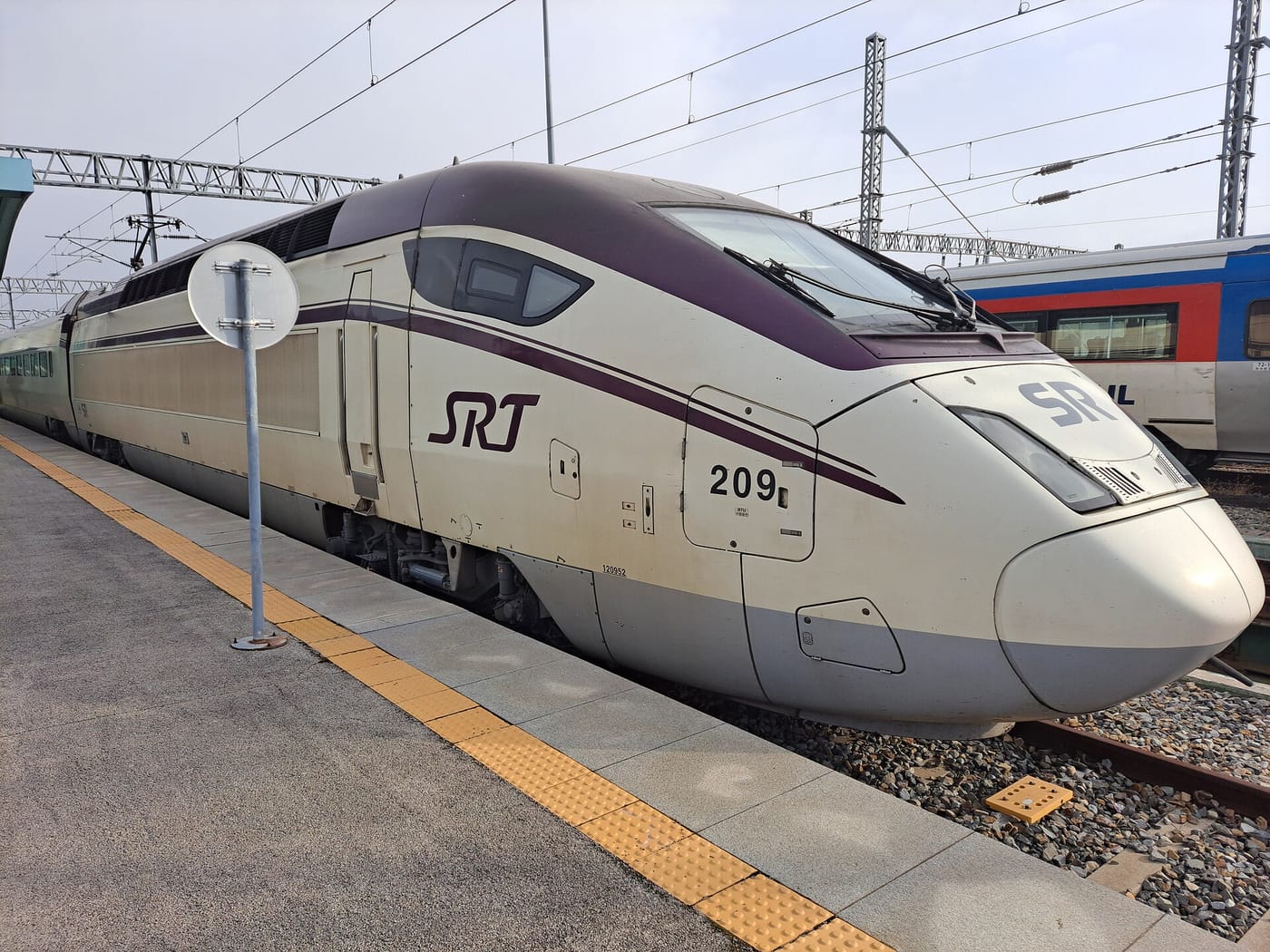
Korea's KTX and SRT Merged on 1 September: Cheaper Fares, One App, One Thing to Do First
Korail and SR merged on 1 September and the SRT is now KTX-Sancheon. Seoul-Busan dropped from ₩59,800 to ₩54,400 that day, not gradually. Chuseok booking runs 7-11 September by route, Suseo on the 10th, and an SR-only account cannot book.
Getting Around Korea in 2026: Subway ₩1,550, Last Trains Before 1 a.m., KTX Seats Two Months Ahead and Buses 9% Dearer — the Numbers, the Apps and Which Guide to Read
Getting around Korea, in official numbers as of October 2026: subway ₩1,550, last trains 00:40–00:58 on weekdays, KTX seats on sale two months ahead, Seoul–Busan ₩54,400 by KTX or ₩43,300 by bus after the 1 October rise.
Seoul to Sokcho by Train? There Is None Until 2029: Fastest Bus vs KTX-Eum + Bus, Korea
There is no train from Seoul to Sokcho; the line is officially due in 2029. The bus is the answer: ₩22,500 and 2 hr 10 from Dong Seoul. KTX-Eum to Gangneung plus a bus costs about ₩34,000 and takes roughly 3½–4 hours.