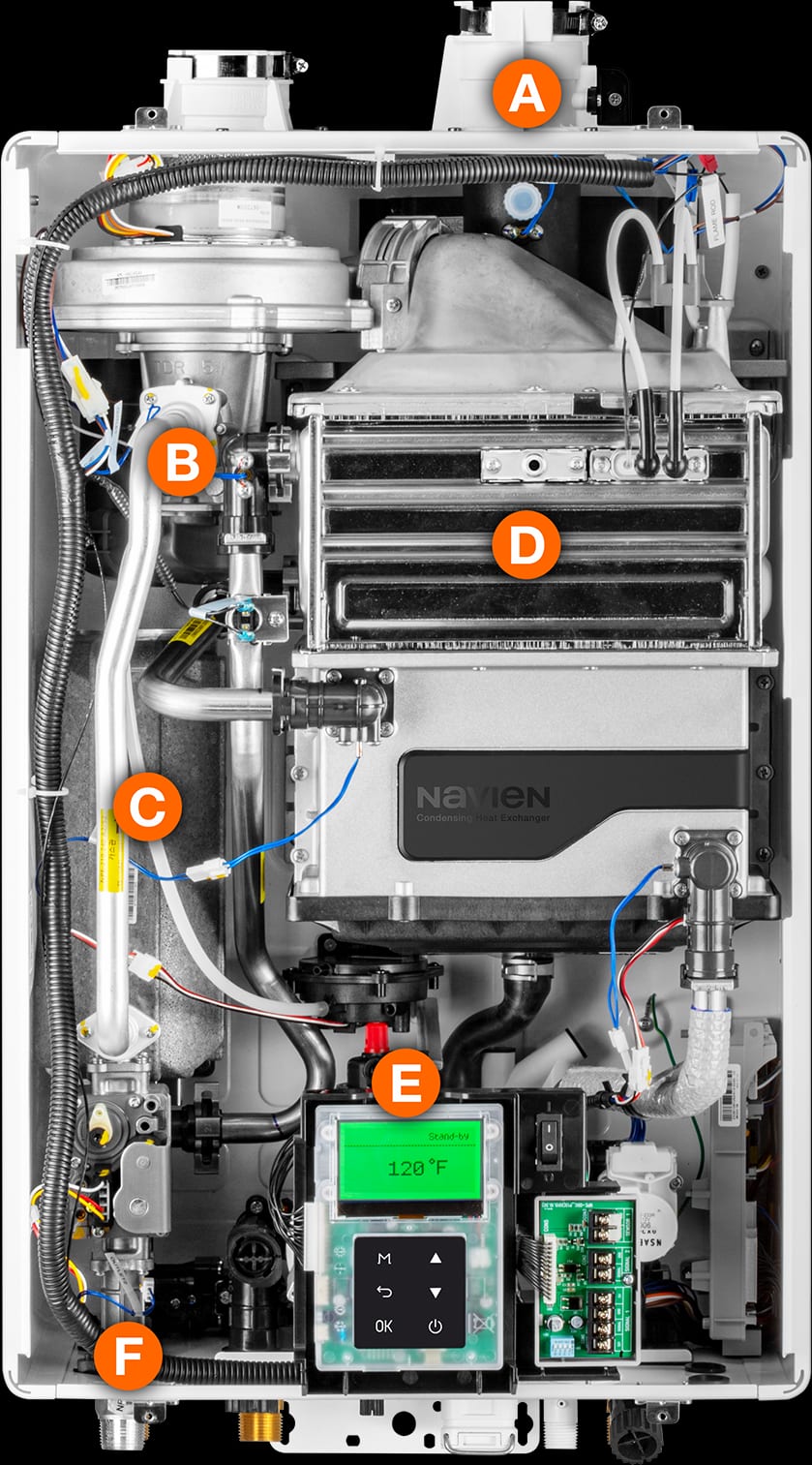
Navien Deep Dive: The Korean Company That Did Not Take America's Tankless Market — It Built One
American plumbers install more Navien gas tankless units than Rinnai or Rheem, and most buyers do not know the company is Korean. The stranger fact is that the market it leads was 20,000 units a year before it arrived.
Quick Answer
If you have had a tankless water heater installed in an American house in the last five years, there is a good chance it says Navien on the front. In 2024 the brand was the top-selling manufacturer of gas tankless water heaters and wall-hung boilers in North America — ahead of Rinnai and Rheem, the two names the category used to belong to.
Almost nobody buying one knows it is Korean. Google's own autocomplete shows people working it out in real time: navien korean company, where is navien located, is navien a good brand.
But the more interesting fact is not the nationality. It is this: when Navien entered North America, the market it now leads barely existed. Condensing tankless water heaters were selling roughly 20,000 units a year there. Today the category runs at something like 800,000. Navien did not win a fight for share. It grew the board by roughly forty times and then took the largest seat at it.
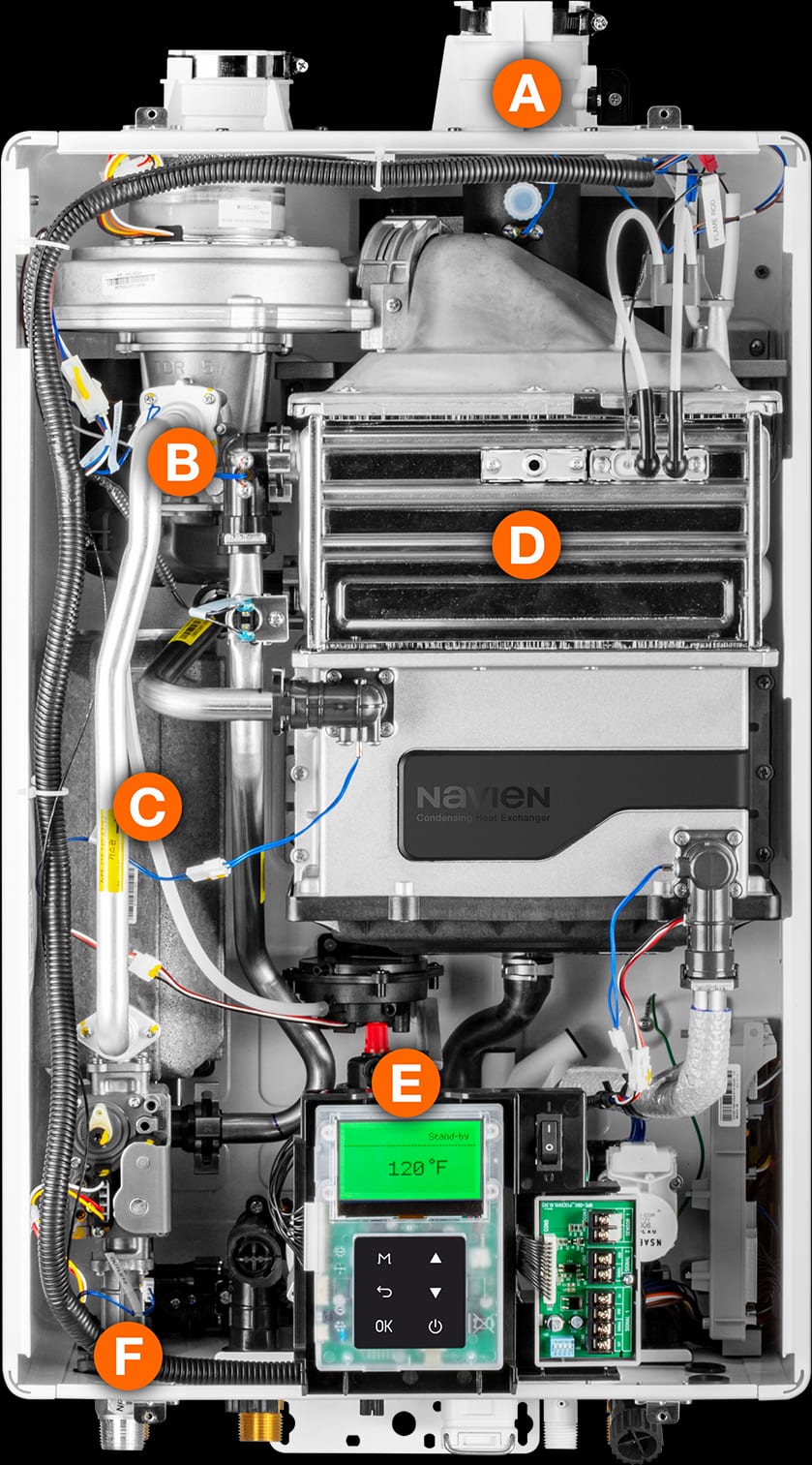
The question American buyers actually ask
Company deep dives usually have to argue that anyone cares. Here the search data does it.
navien returns a full fifteen autocomplete suggestions — heating system, control panel, water heater, tankless. That is ordinary product-level familiarity, the sort of thing a brand earns by being on walls.
The revealing set is one layer down. Type navien korean and you get navien korean company, what is navien, is navien a good brand, where is navien located. These are not enthusiast questions. They are the questions of someone standing in front of a quote from a contractor, deciding whether to trust a name they have not heard of.
And the results those questions land on are thin. On 14 August 2026 the first page was a Korean wiki's English mirror, two plumbing-review sites, Navien's own About and History pages, and two US trade-magazine pieces from 2018 and 2020 about contractor tours of the Korean factory. Useful for a plumber. Nothing written for the person asking the question.
For the record on that factory: it is in Seotan, about ninety minutes from Seoul, and the company bills it as the single largest boiler manufacturing plant in the world. The North American business is headquartered in Irvine, California.
It did not take the market — it built one
This is the part that makes Navien worth writing about rather than simply listing.
American water heating was, and largely still is, a tank business: a cylinder in the basement holding fifty gallons at temperature, all day, whether anyone showers or not. Tankless units existed, and condensing tankless units — which recover heat from their own exhaust — were a niche inside a niche.
When Navien brought its condensing tankless product to North America in 2008, the category was moving on the order of 20,000 units a year across the whole continent. That is not a market. That is a rounding error in American housing.
The company's bet was that the category was small because nobody had made it work at a price and reliability that contractors would stake their reputation on — not because Americans did not want it. It took roughly fifteen years to be proved right. The category now runs at approximately 800,000 units a year, and Navien supplies a large share of it: figures in circulation range from 400,000 to over 600,000 units annually, with market share reported between 30% and 40%, and some accounts putting the US figure closer to half.
Treat those share numbers as a range, not a fact. They come from different years, different definitions of the category, and in some cases from the company. What is not in dispute is the direction, or the 2024 ranking above Rinnai and Rheem.
The 1988 boiler nobody outside Korea noticed
The reason Navien had a condensing product ready for a market that did not want one yet is that Korea had wanted one for twenty years.
Kyungdong Navien was founded in 1978. In 1988 it became the first company in Asia to develop and manufacture a high-efficiency condensing boiler. That was not an export play. Korean homes run on ondol — under-floor heating fed by a wall-hung boiler in almost every apartment — so boiler efficiency is a domestic consumer issue in Korea in a way it simply is not in the United States, where the furnace is in the basement and out of mind.
So the company spent two decades refining condensing heat exchangers for a domestic market that cared, and then carried that into a foreign market that did not know it should. The technology was not developed for America. It was aimed there afterwards, which is a pattern worth recognising if you are looking at Korean manufacturers generally.
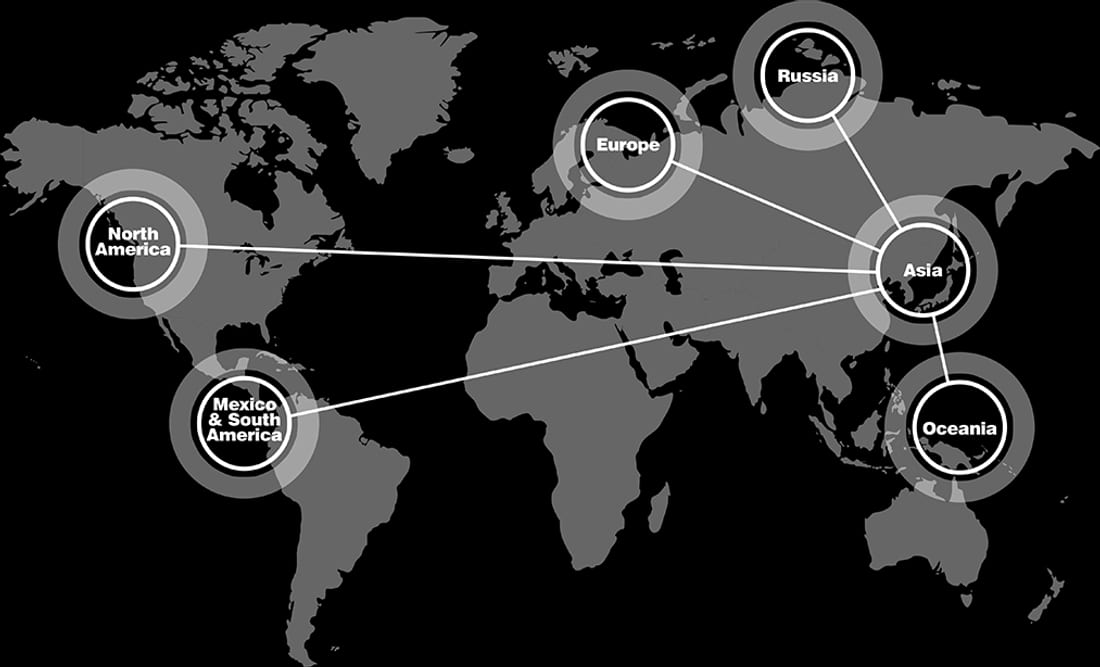
The numbers, with their limits
Kyungdong Navien is listed in Korea, so the financials are reported rather than estimated.
| 2025 (consolidated) | |
|---|---|
| Revenue | ₩1.5022 trillion (+11.0% year on year) |
| Operating profit | ₩143.4 billion (+8.7%) |
| Overseas revenue | ₩1.0438 trillion — about 70% of the total, and its first time above ₩1 trillion |
| North America | ₩865.8 billion (+11.7%), water heaters leading |
| Streak | Fourth consecutive year above ₩1 trillion in revenue |
The momentum carried into this year: Q1 2026 revenue rose 16.5%, operating profit 61.7% and net profit 52.2% against the same quarter of 2025.
The limits worth stating. These are consolidated group figures, not a North American segment audited on its own, so "how profitable is the US business specifically" is not answerable from them. Unit and share numbers come from a mix of company statements and trade coverage across several years. And a single quarter is a quarter — Q1 2026 is genuinely strong, but it is one data point in a business with seasonal heating demand.
If you are researching Korean manufacturers as suppliers rather than as case studies, the gap is usually context rather than contacts. As an Amazon Associate, EpicKor earns from qualifying purchases at no extra cost to you. Korean industrial history explains a lot of what looks inexplicable in a first meeting — why a mid-size firm has twenty years of a technology nobody asked it for. Compare books on Korean business practice on Amazon before your first sourcing trip.
The tariff problem, and an unusual answer
Here is the live risk, and Navien's response to it is more interesting than the risk itself.
More than 60% of group revenue comes from North America. That is an enviable position and a dangerous one in the same sentence. The Trump administration's proposed universal tariff of 15-20% lands directly on the part of the business that carries the company.
Most exporters facing that either absorb it, move production, or wait. Navien did something blunter: from the second half of 2025 it raised North American prices by 3-7% pre-emptively, before the tariff, passing the anticipated cost to customers ahead of time.
That tells you something about market position. A company raises prices ahead of a cost it has not yet incurred only when it believes buyers will not walk — which is a stronger claim about competitive standing than any share statistic. Whether it holds is the thing to watch through the rest of 2026, and it is the single clearest test of how durable that number-one ranking really is.
What this means if you are sourcing from Korea
Three transferable observations, which is why this company is worth a buyer's attention beyond the product itself.
One: Korean domestic conditions produce export capability by accident. Ondol made boiler efficiency a mass-market consumer concern in Korea decades before it was one in the US. Look for that pattern — a Korean company with an oddly mature technology usually has a domestic reason for it, and that reason is often invisible from outside.
Two: category creation is a real Korean export strategy, not just a Navien story. Entering a market where your product barely sells, and growing the category rather than fighting for share, requires patience most firms do not have and a domestic base that funds the wait. Navien had both.
Three: the same pattern shows up across this section. Cuckoo outlasted LG in rice cookers because Korean rice cooking is unforgiving in ways that forced the engineering; Hurom invented the slow juicer category and then had to watch the world copy the name; JMW put a BLDC motor in a dryer first and became the salon standard. Domestic pressure, then export. If you are evaluating a Korean supplier, ask what its home market demanded of it — that is usually where the capability came from. Our guide to finding suppliers in Korea covers the verification side.
Four: the branding gap is deliberate and it cuts both ways. "Navien" is a name built for the North American market — the company traded recognisability in Korea for neutrality abroad. It worked commercially, and it is exactly why English-language buyers keep typing is navien a korean company into a search box.
The honest caveats
- This is a non-client company spotlight built from public information. EpicKor has no relationship with Kyungdong Navien, and nothing here is endorsed by the company.
- Market share figures vary by source and year and some originate with the company. The 2024 top-selling ranking and the reported financials are the firmest numbers here; unit volumes and share percentages are the softest.
- The 20,000-to-800,000 figures describe the North American condensing tankless category as reported in coverage of Navien. They are directionally well supported and should not be read as an audited market study.
- Product recommendations are outside this article's scope. Whether a tankless unit suits a specific house depends on gas supply, venting and water hardness — that is a conversation with a licensed contractor, not with a company profile.
Sources checked
- Kyungdong Navien corporate history and product documentation —
kdnavien.co.kr,navieninc.com, including the 1978 founding, the 1988 condensing boiler, the Seotan plant description and the Irvine North American headquarters. - Korean financial press, 2025 full-year and Q1 2026 consolidated results — Herald Business, Bloter, News1 and Global Economic reporting of revenue, operating profit, overseas revenue share and the North American figure.
- US plumbing trade press — Plumbing & Mechanical (2020) and phcppros (2018) on contractor visits to the Korean facility.
- Search observation, 14 August 2026 — Google autocomplete for
navienandnavien korean, and first-page results foris navien a good brand. AI Overview presence was not verified; automated inspection is blocked and this was checked through a search API rather than a browser.
FAQ
Q: Is Navien a Korean company?
A: Yes. It is Kyungdong Navien (경동나비엔), founded in Seoul in 1978 and listed in Korea. The North American arm is headquartered in Irvine, California, and the main plant is in Seotan, roughly ninety minutes from Seoul.
Q: How big is Navien?
A: Group revenue was ₩1.5022 trillion in 2025, with operating profit of ₩143.4 billion. Overseas revenue passed ₩1 trillion for the first time that year, about 70% of the total, and North America contributed ₩865.8 billion.
Q: Is Navien really bigger than Rinnai and Rheem?
A: In 2024 it was reported as the top-selling manufacturer of gas tankless water heaters and wall-hung boilers in North America, ahead of both. That is a units-sold ranking in a specific category, not a statement about total company size — Rheem in particular is far larger overall.
Q: Why has nobody heard of it?
A: Because the brand was built for the destination market rather than carrying its Korean identity with it, and because business coverage of mid-size Korean manufacturers in English barely exists. The trade press writes for plumbers; nobody writes for buyers.
Q: What is the biggest risk to the business?
A: Concentration. More than 60% of revenue comes from North America, which makes a US universal tariff of 15-20% an existential-scale variable rather than a line item. The company began raising North American prices 3-7% in the second half of 2025 in anticipation.
Q: What is a condensing water heater, in one sentence?
A: One that extracts additional heat from its own exhaust gases before venting them, which is why efficiency rises and why the heat exchanger is the expensive part of the box.
Q: Does EpicKor have a relationship with Navien?
A: No. This is a non-client spotlight assembled from public sources.
More Korean manufacturers in this section: Cuckoo on rice cookers, Hurom on slow juicers, Dorco on the razors behind Dollar Shave Club, Samick on guitars, and Win&Win on Olympic archery bows. If you are sourcing rather than reading, start with how to find suppliers in Korea and Korea trade shows for overseas buyers.
More Business Guides
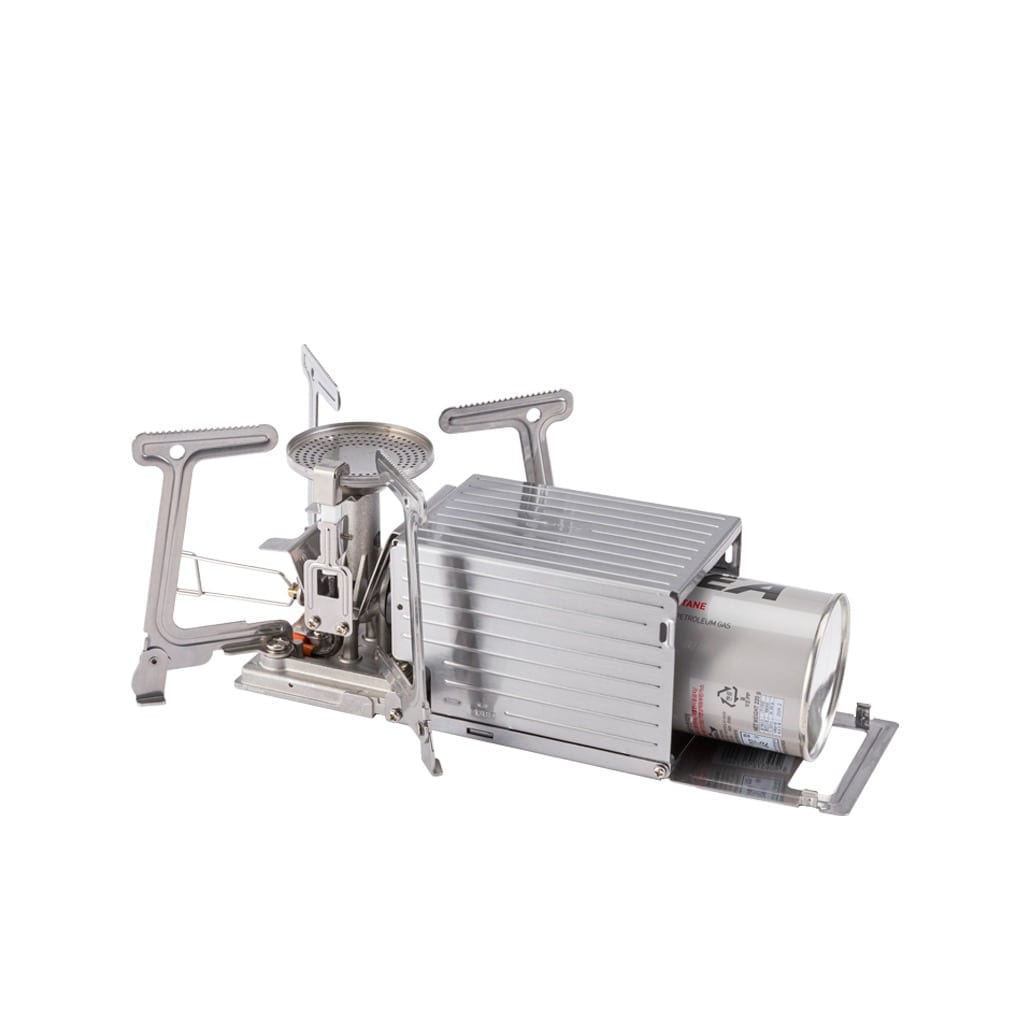
Kovea Deep Dive: The Korean Burner Maker That Took Apart a Swedish Stove — and Now Builds for MSR
Look at the box your Snow Peak LiteMax came in and it says Made in Korea. Kovea started in 1982 when its late founder took apart a Swedish SVEA burner, now supplies MSR and Decathlon, and still earned a 21% operating margin after Korea's camping market halved.

Mooto Deep Dive: Korea Still Dresses Taekwondo — Spain Makes the Part That Scores the Points
World Taekwondo recognises Mooto in six equipment categories. The two it is absent from are the electronic ones — and the scoring system at Tokyo 2020 and Paris 2024 came from Barcelona. A look at the Korean company that dresses the sport Korea exported.

Aurora World Deep Dive: The Korean Company Behind the Plush Toy on Your Shelf
Aurora's plush sits in zoo shops, bookstores and Target aisles worldwide, and its own American website never mentions Korea. A public-information deep dive on the Seoul company that owns its factories, built Palm Pals, and bought a 90-year-old Vermont brand.