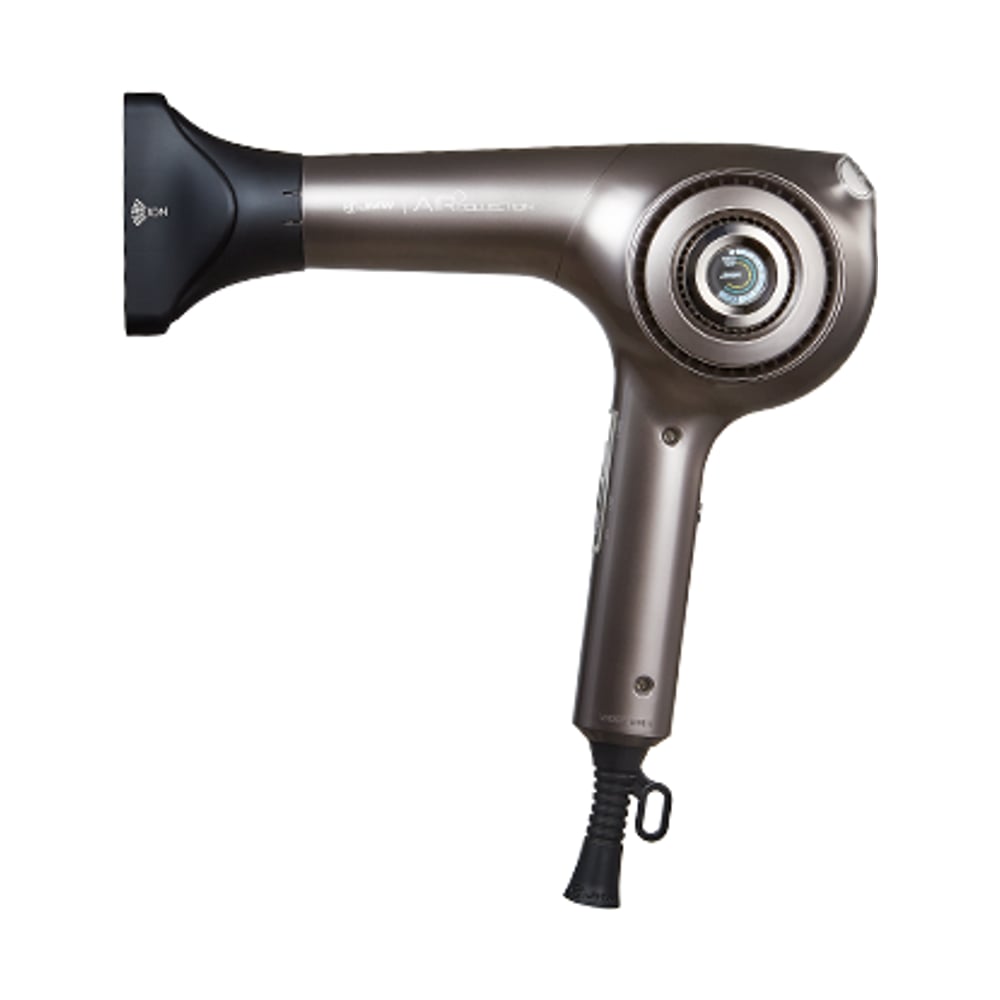
JMW Deep Dive: The Dryer in Every Korean Salon Does Not Have an Aircraft Motor
Overseas listings say JMW builds aircraft motors. It does not — it is a 50-person Seoul company that put a BLDC motor in a hair dryer first, became the Korean salon standard, and coined a category name its own buyers now believe.
Quick Answer
Ask a Korean hairdresser what dryer the salon uses and the answer is very often JMW. Ask an overseas buyer what JMW is, and a surprising number will tell you it is an aircraft-motor manufacturer that also makes hair dryers.
The second sentence is false, and tracing why so many people believe it is the most instructive part of this company's story.
JMW (주식회사 제이엠더블유) is a roughly 50-person Seoul company, founded 15 March 2004, with reported revenue around ₩50 billion — a genuine small-to-mid Korean manufacturer, not an aerospace supplier. What it actually did is arguably more impressive than the myth: it was first in Korea to put a brushless DC (BLDC) motor into a hair dryer, filed the core fan-coupling patent application in 2008, won export towers before it was famous at home, became the de facto salon standard, and has taken Korea's Brand of the Year in the hair-dryer category for eight consecutive years through 2025. In 2023 the government pinned an industrial merit medal (산업포장) on it.
Along the way it coined a marketing phrase — 항공모터 (aircraft motor) — that worked so well it became the name of an entire retail category, got translated literally by resellers, and hardened overseas into a corporate origin story that never happened.
For overseas buyers, this is a case study in two things at once: how good Korean SMEs actually grow (export first, brand later), and how a Korean marketing phrase can mutate into an English "fact" nobody upstream ever quite claimed.
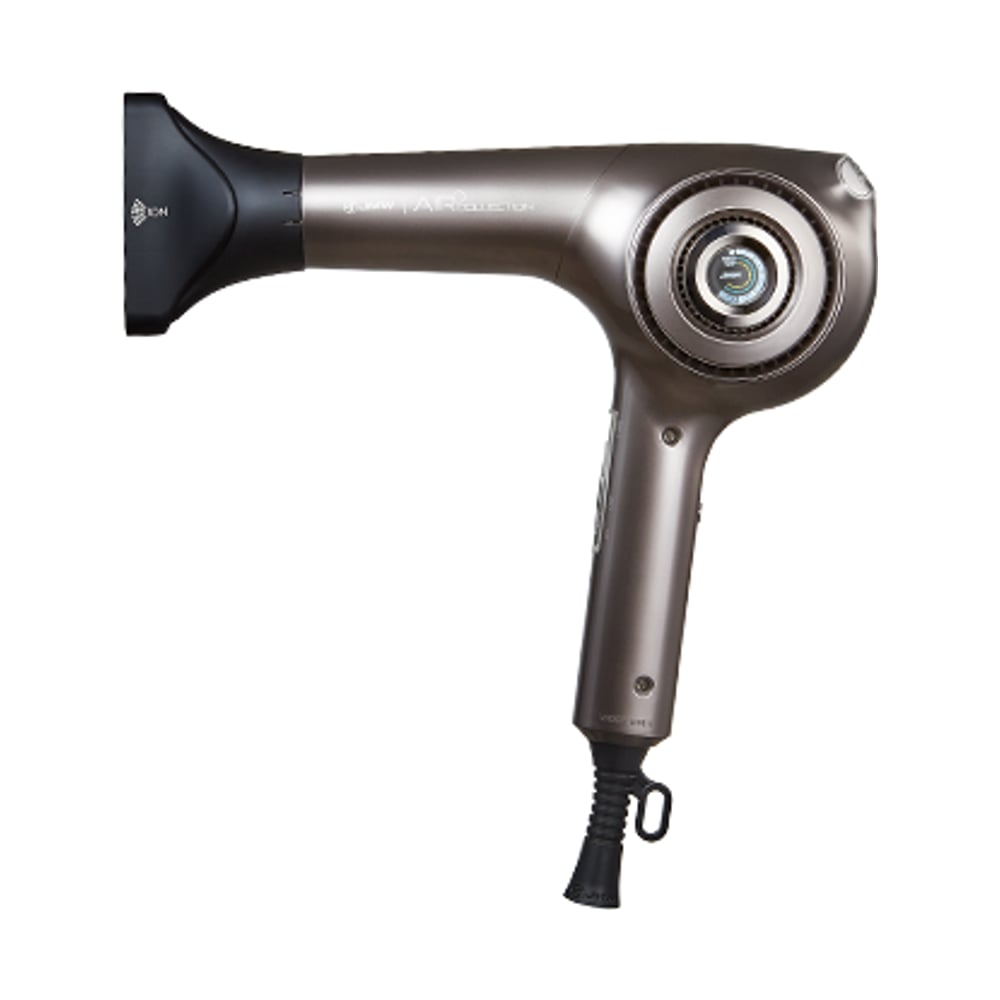
The Claim, Traced to Its Source
Run the claim backwards and it resolves cleanly into three layers.
Layer one: what JMW's corporate pages say. The company's official history and about pages do not mention aircraft at all. The timeline is patents, export certifications, product launches and trade shows — the biography of an appliance manufacturer.
Layer two: what JMW's product marketing says. The company's own shop copy describes one dryer's motor as "reminiscent of an F4 fighter jet" (F4 전투기를 연상시키는) and sells an "improved 항공모터". When JMW received its 2023 medal, the company's own framing was that it had "led the 항공모터 dryer market" — using the phrase as a category name, the way "SUV" stopped referring to sport or utility. Note the grammar: reminiscent of a fighter jet. A simile, in Korean, on a Korean shopping page.
Layer three: what resellers say in English. Export listings and overseas distributor pages compress the simile into a noun phrase — "aircraft motor," "airplane motor dryer" — and a Canadian distributor's about-page repeats it as technology heritage. At that point an English-speaking buyer reads that JMW puts aircraft motors in dryers, and the reasonable inference is that JMW makes aircraft motors.
Korean consumers, it is worth saying, never fully bought it. Korean forum threads ask outright whether the "aircraft motor" is real, and the standing comparison in those threads is 항공냄비 — "aircraft-grade" aluminium cookware, Korea's classic example of aviation-flavoured kitchen marketing. The skepticism just never made it into English, because the listings did and the forums did not.
The factual bottom line for a buyer: BLDC motors are real, and their aerospace association is not invented from nothing — brushless motors power drones and RC aircraft, where power-to-weight matters. But full-size aircraft fly on engines, and JMW is not in that supply chain. What JMW owns is the application: getting a BLDC motor, with its lifespan and efficiency advantages, into a salon dryer before anyone else in Korea, and patenting the fan-coupling mechanism that made it work.
The Actual History Is an Exporter's History
Here is the sequence from the company's own timeline, and it inverts the usual assumption about Korean consumer brands.
| Year | What happened | Why it matters |
|---|---|---|
| 2004 | Founded (as 기화; incorporated 15 March 2004) | Capital today: ₩750 million. This was never a chaebol project. |
| 2005 | $3 million export tower | Export awards before any domestic brand recognition — the company sold abroad first. |
| 2006 | $10 million export tower | |
| 2007 | Renamed JMW | |
| 2008 | BLDC motor–fan coupling patent application | The technical moat. First BLDC dryer application in Korea. |
| 2010 | PSE certification, Japan exports begin | Certification-led market entry: Japan, then the US, then China. |
| 2012 | Intertek, US exports begin | |
| ~2015 | CCC certification, China exports | |
| 2012–2019 | Cosmoprof circuit: Bologna, Las Vegas, Hong Kong; brand awards begin | The B2B beauty-trade route, not consumer advertising. |
| 2017 | 1 million cumulative BLDC dryer units | |
| 2018–2025 | Brand of the Year, hair-dryer category, 8 consecutive years | Domestic fame arrives roughly 13 years after the first export tower. |
| 2023 | 산업포장 (industrial merit medal), 57th Taxpayers' Day | State recognition of the manufacturing record. |
That 2005–2006 detail deserves underlining for anyone sourcing from Korea: JMW won two export towers before almost any Korean consumer knew the brand. The company built its base OEM-style in overseas trade — the Cosmoprof B2B circuit, certification-first market entries — and only later converted professional credibility into a domestic consumer brand. That is the standard growth path for good Korean beauty-hardware SMEs, and it means the interesting Korean suppliers at a trade show are frequently companies you have never heard of that are already shipping eight figures.
Why Salons Actually Standardised on It
Strip the aviation language and the engineering case is straightforward, which is presumably why professionals — who buy on running cost, not similes — adopted it.
A conventional dryer uses a brushed DC or AC motor; the brushes wear, and under salon duty cycles (hours of daily runtime) the motor is the component that dies. A BLDC motor has no brushes. JMW's stated engineering claims are a service life around ten times a conventional motor, 20%+ better energy efficiency, lower vibration, and a higher sustained airflow — which for a working stylist translates to faster dries, a lighter tool, and a dryer that survives years of commercial use.
For a salon owner the arithmetic is simple: a ₩79,000–239,000 tool (JMW's own current retail band, from the entry AIRJET line to the AIR COLLECTION flagship) that outlives three cheap dryers is the cheaper dryer. That — not the fighter jet — is why the answer at the salon chair is so often JMW.
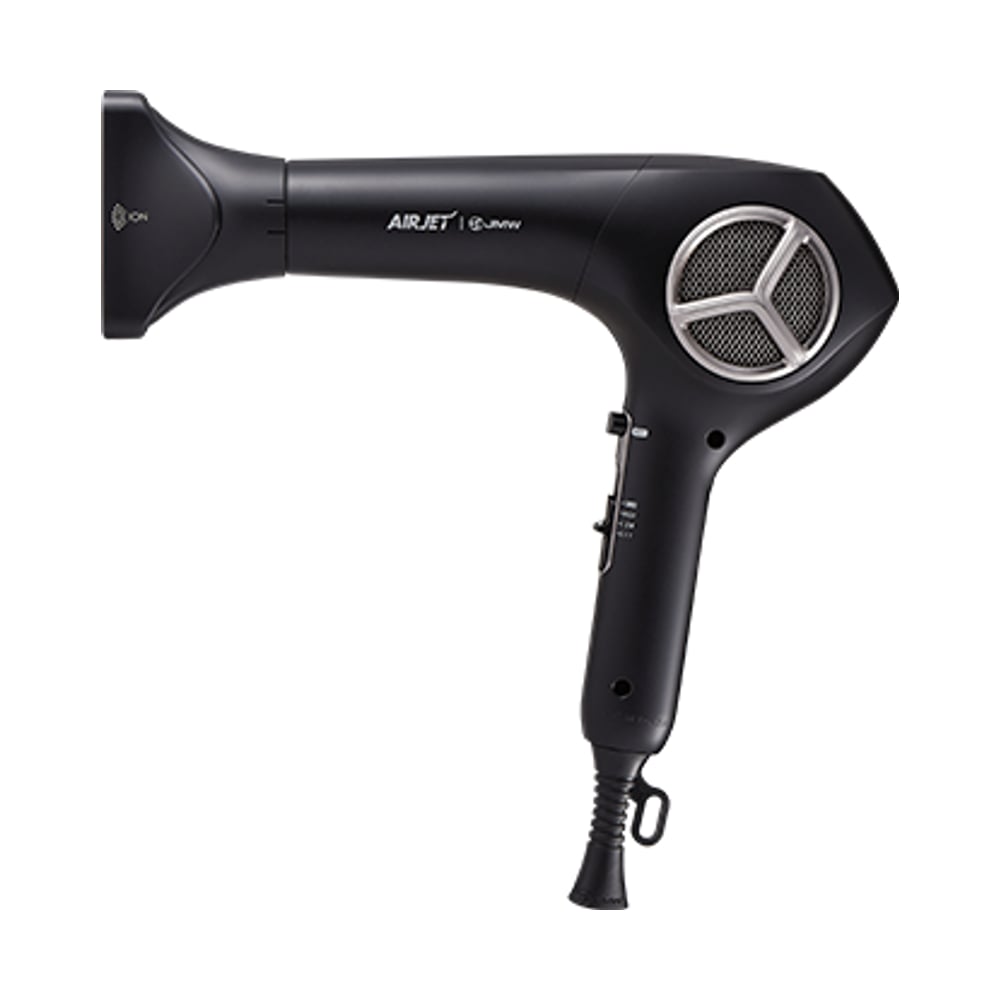
As an Amazon Associate, EpicKor may earn from qualifying purchases at no extra cost to you. JMW sells directly on Amazon US — compare the JMW AIR Storm 1600W against the JMW AIR Sense — the listings themselves are a small case study in how the Korean marketing copy crosses into English.
The Numbers, With Their Limits
JMW is unlisted, so the public financial picture comes from Korean corporate-registry data surfaced through job platforms rather than audited disclosures. Treat the figures as indicative:
- Revenue: around ₩50.0 billion (Saramin corporate data)
- Employees: about 50
- Capital: ₩750 million; classified as an SME (중소기업)
- Founded: 15 March 2004; CEO Kang Min-woong (강민웅)
- HQ: Gasan Digital Complex, Geumcheon-gu, Seoul; service operations in Hwaseong, Gyeonggi
- Export markets on the record: Japan (PSE, 2010), US (Intertek, 2012), China (CCC), with the Cosmoprof trade-show circuit across Bologna, Las Vegas and Hong Kong
Run the division and the shape of the business appears: ₩50 billion across ~50 people is about ₩1 billion of revenue per employee, which for a company that does its own R&D and domestic production is a lean, healthy hardware operation — and a reminder that "the salon standard in Korea" can be a company smaller than a single department of the conglomerates it out-brands.
What is not public: salon-channel market share (the "every Korean salon uses it" claim is reputational, not measured — we could not find an audited share figure and neither should you trust one in a listing), export revenue split, and unit volumes since the 1-million mark in 2017.
What This Means If You Are Sourcing from Korea
1. The lesson about claims. The aircraft-motor story shows exactly how Korean marketing Korean-to-English drift works: a simile on a Korean product page (연상시키는, "reminiscent of") becomes a literal noun in an English listing, and two hops later it is a corporate biography. When a Korean supplier's English materials contain a surprisingly dramatic technical claim, the fastest check is the company's Korean corporate history page — Korean companies are usually precise there, because that page is read by banks, ministries and award committees. JMW's Korean history page never mentions aircraft. That told us everything in one click.
2. The lesson about finding suppliers. JMW's export towers predate its domestic fame by more than a decade. The Korean suppliers worth meeting are disproportionately in this profile: certification-led exporters with thin English marketing and strong trade-show histories. Searching Korean award records (export towers, 산업포장, Brand of the Year categories) surfaces them faster than searching English. Our guide to finding suppliers in Korea covers the mechanics, and the same exporter-first pattern appears in our COSMAX ODM deep dive — the manufacturer behind brands you know, invisible in English.
3. The lesson about category names. 항공모터 dryer is now a Danawa retail category that JMW's competitors also use. When a Korean company invents a category name that sticks, it keeps the halo even after the category commoditises — but it also loses control of the claim, which is partly how the myth crossed the ocean. If you are branding a product into Korea, that trade-off runs in both directions.
The Honest Caveats
- The revenue and headcount figures are registry data, not audited statements. JMW publishes no annual report we could find.
- "Every salon in Korea" is a reputation, not a statistic. JMW's salon dominance is widely asserted and nowhere independently measured; we repeat it here as the perception it is.
- JMW never says "we make aircraft motors." Fairness requires the precision: the company's sin, if it is one, is a fighter-jet simile and a category name. The literal claim was manufactured downstream, mostly in translation. Korean consumers spotted the stretch years ago.
- BLDC is no longer a moat. The premium dryer market JMW helped create now includes global players and Korean competitors using the same motor type — and the same 항공모터 label. The remaining edge is salon trust and 20 years of application engineering, which is harder to copy than a motor.
As an Amazon Associate, EpicKor may earn from qualifying purchases. If you want the folding-travel format instead of the salon format, the JMW AIR B with diffuser and stand is the same BLDC platform in the home configuration.
Sources Checked
- JMW official corporate history for the 2004 founding, 2005/2006 export towers, 2007 rename, 2008 BLDC fan-coupling patent application, certification-led exports (PSE 2010, Intertek 2012, CCC), product timeline and trade-show record. The page contains no aircraft claims — which is itself a finding.
- JMW official shop for current retail pricing (₩79,000–239,000) and the company's own marketing language, including "F4 전투기를 연상시키는" and "개선된 항공모터."
- Ilgan NTN on the 2023 산업포장 for the medal at the 57th Taxpayers' Day and the company's own "led the 항공모터 dryer market" framing.
- Saramin corporate registry data for revenue (~₩50.0 billion), headcount (~50), capital, founding date and CEO.
- Korea Economic Daily on JMW's salon reputation and Korean Consumer Forum Brand of the Year records for the eight consecutive category wins through 2025, and the 1-million cumulative BLDC units by 2017.
- Korean community discussion of the aircraft-motor claim for the domestic skepticism and the 항공냄비 comparison, and an overseas distributor page as an example of the claim's English-language form.
FAQ
Q: Does JMW make aircraft motors?
A: No. JMW is a Seoul beauty-appliance manufacturer. Its dryers use BLDC (brushless DC) motors — a motor type also found in drones and RC aircraft, which is where the marketing association comes from. The company's own corporate history contains no aerospace claims; the literal "aircraft motor manufacturer" story emerged from resellers translating Korean marketing similes into English nouns.
Q: What is JMW actually known for?
A: Being first in Korea to put a BLDC motor in a hair dryer (patent application 2008), becoming the professional salon standard, and winning Korea's Brand of the Year in the hair-dryer category eight years running through 2025. It passed 1 million cumulative BLDC dryer units in 2017 and received an industrial merit medal in 2023.
Q: How big is JMW?
A: Around 50 employees and roughly ₩50 billion in revenue per Korean corporate-registry data — an SME, not a conglomerate. It won $3 million and $10 million export towers in 2005–2006, before it had meaningful domestic brand recognition.
Q: Why do Korean salons use JMW dryers?
A: Duty-cycle economics. Brushless motors have no brushes to wear out, so JMW claims roughly ten times the motor life and 20%+ better efficiency than conventional dryers — which matters when a dryer runs for hours daily. Retail runs about ₩79,000–239,000 depending on the line.
Q: Can I buy JMW dryers outside Korea?
A: Yes. JMW has exported since 2005 (Japan from 2010, the US from 2012, China via CCC) and currently sells on Amazon US under the JMW brand, plus regional distributors.
Q: Is the 항공모터 (aircraft motor) label unique to JMW?
A: Not any more. It has become a retail category name in Korea that competitors also use — which is both a testament to how well the phrase worked and the reason JMW no longer controls what it implies.
More Business Guides
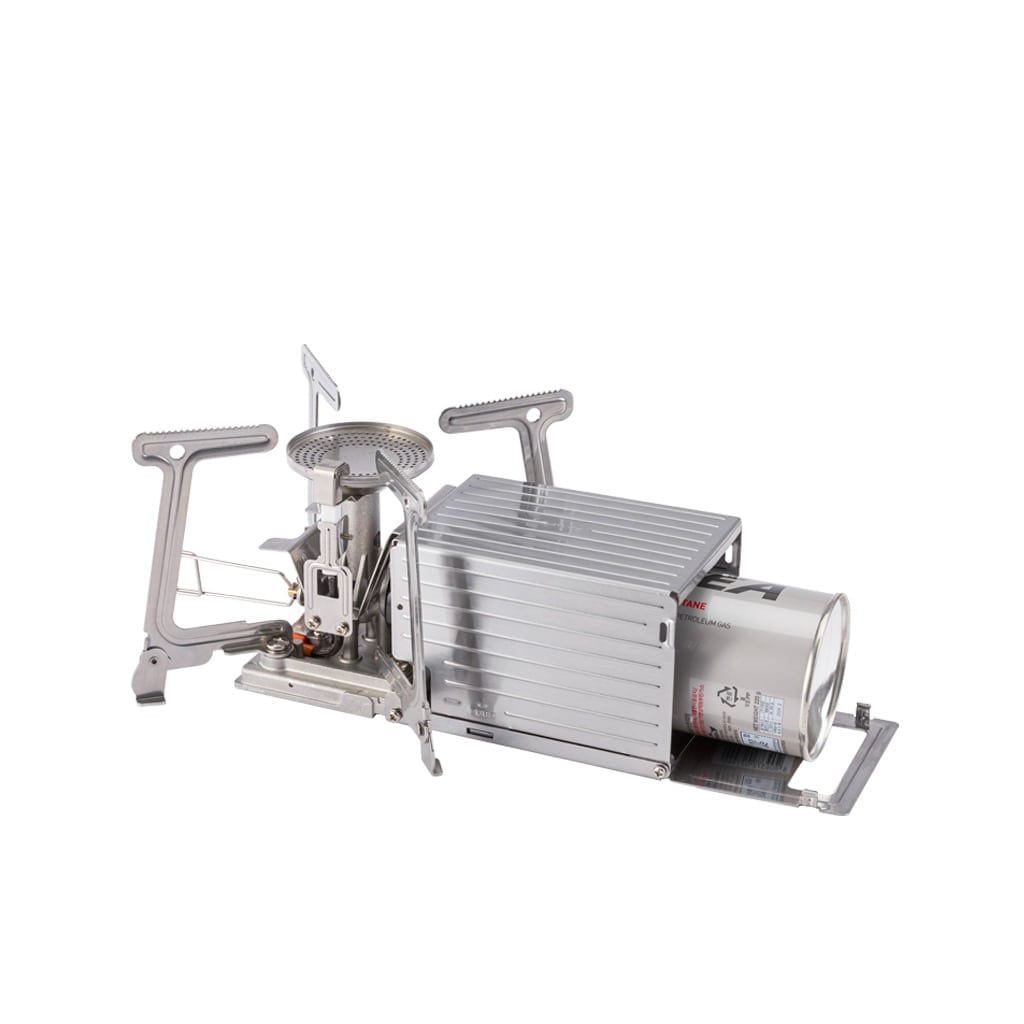
Kovea Deep Dive: The Korean Burner Maker That Took Apart a Swedish Stove — and Now Builds for MSR
Look at the box your Snow Peak LiteMax came in and it says Made in Korea. Kovea started in 1982 when its late founder took apart a Swedish SVEA burner, now supplies MSR and Decathlon, and still earned a 21% operating margin after Korea's camping market halved.
Mooto Deep Dive: Korea Still Dresses Taekwondo — Spain Makes the Part That Scores the Points
World Taekwondo recognises Mooto in six equipment categories. The two it is absent from are the electronic ones — and the scoring system at Tokyo 2020 and Paris 2024 came from Barcelona. A look at the Korean company that dresses the sport Korea exported.
Aurora World Deep Dive: The Korean Company Behind the Plush Toy on Your Shelf
Aurora's plush sits in zoo shops, bookstores and Target aisles worldwide, and its own American website never mentions Korea. A public-information deep dive on the Seoul company that owns its factories, built Palm Pals, and bought a 90-year-old Vermont brand.