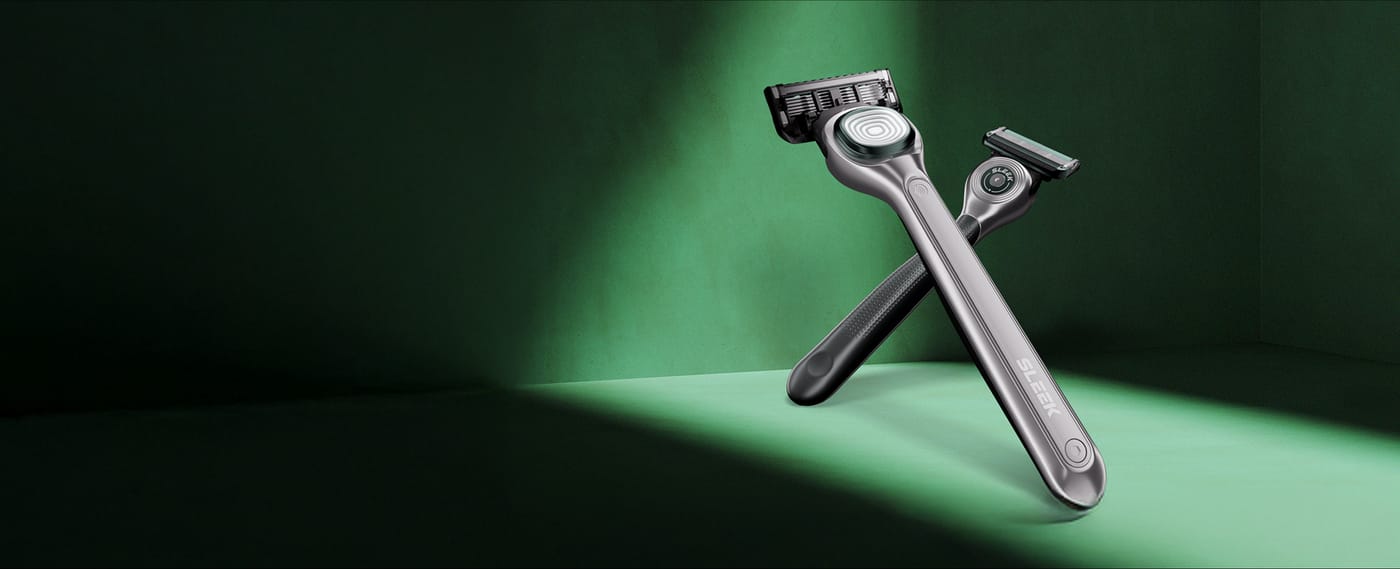
Dorco Deep Dive: The Korean Company That Made Dollar Shave Club's Blades — and Outlived the Hype
Millions of Americans shaved with Korean blades and never knew. Dorco made Dollar Shave Club's razors while DSC sold to Unilever for $1 billion — then DSC faded and the 70-year-old Korean blade maker grew 26% with a 20% margin. Koreans think it is Japanese.
Quick Answer
Between 2012 and the late 2010s, millions of American men shaved with Korean blades and never knew it. Dollar Shave Club — the startup whose launch video rewired razor marketing, the company Unilever bought for $1 billion in cash — did not make razors. Its blades came from Dorco (주식회사 도루코), a Seoul-headquartered manufacturer that has been grinding steel since 1955.
Then the story inverted. Unilever admitted DSC "did not deliver as expected" and offloaded a 65% stake to a private-equity firm in 2023. The famous customer faded. The anonymous supplier, meanwhile, posted ₩503.3 billion in revenue in 2025, up 26.2%, with a ₩101.7 billion operating profit — a roughly 20% operating margin, earned the old way: by making one of the world's hardest small objects well, and selling it in 130-plus countries, with about 70% of revenue from exports.
There is a second mystery stacked on the first. Inside Korea, Dorco is routinely mistaken for a Japanese company — the name sounds Japanese, and in Japanese 도루코 literally means "Turkey." In the 1980s the company ran campaigns telling Koreans it was Korean. So the same manufacturer is misidentified at home and invisible abroad, while its blades sit in bathrooms on six continents.
This is the second entry in our series on Korean manufacturers hiding behind their own products, after JMW, the salon-dryer maker behind the "aircraft motor" myth.
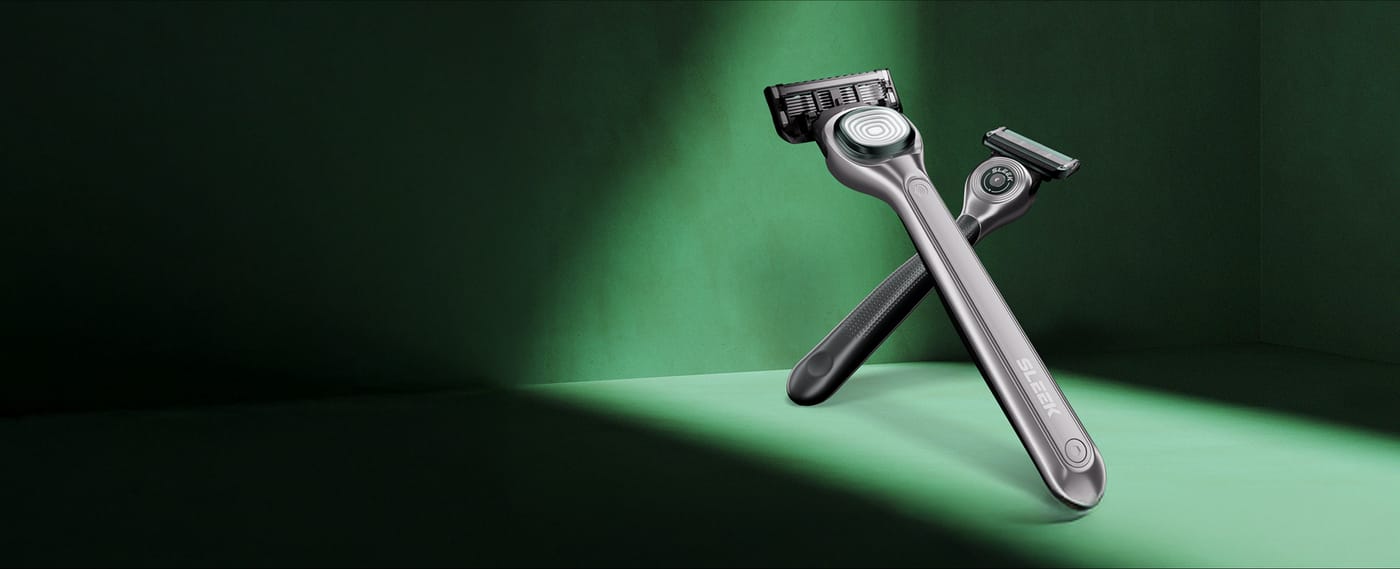
Founded on Scavenged Blades
The origin story is almost too on-the-nose. In 1955, entrepreneur Tak Si-geun (탁시근) founded 동양경금속공업 (Dongyang Light Metal Industry) and began production by collecting razor blades discarded by US soldiers and grinding them into stationery knives. Postwar Korea had no steel to spare; the raw material was other people's garbage, and the product was the box cutter.
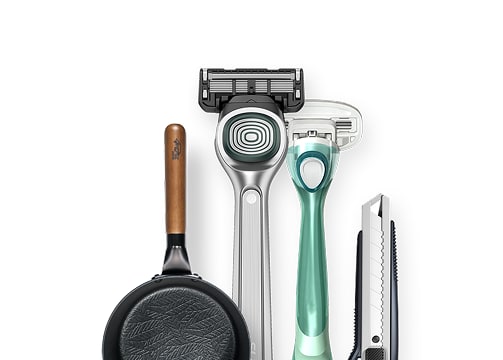
That sequence — cutter first, razor later — still shapes the company. Dorco today makes razors, blades, and cutting tools, plus kitchen knives and cookware through its living division. The product family photo below is, in effect, the corporate history in one frame: the stationery cutter it started with, the razors it became famous for (elsewhere), and the kitchen tools the same steel discipline produced.
The corporate names track the growth: 동양경금속 (1955) → 한일공업 (1960) → Dorco (1990). Exports began in 1976, and the company has since passed a $100 million export tower — with exports now roughly 70% of everything it sells.
The Name Problem, Which Is Also the Story
Here is the detail that makes Dorco a perfect case study in Korean brand invisibility.
DORCO is an initialism: Do from 동양경금속, R from razor, co from company. Rendered into Korean in the 1970s — an era when English arrived filtered through Japanese — it became 도루코, a spelling with a distinctly Japanese cadence. By coincidence, 도루코 is also the Japanese word for Turkey, the country.
The consequences have been genuinely strange:
- Koreans assumed it was Japanese. The association was strong enough that in the early 1980s the company advertised specifically to say it was Korean, and Korean media still periodically "reveals" that the 70-year-old domestic blade maker is domestic.
- The company knows the romanization is off — by its own English name it should be 도르코 — but the wrong reading is now the brand, and changing it would cost more than living with it.
- Abroad, nobody asked at all, because for decades the blades shipped under other companies' names.
For anyone building or buying Korean brands, this is the cautionary pattern in miniature: a name can be simultaneously too foreign for home and too anonymous for abroad. (JMW had the opposite problem — a marketing phrase that travelled too well.)
The Dollar Shave Club Years
The DSC relationship is the reason any American has heard of Dorco, usually secondhand.
When Dollar Shave Club launched in 2012 with its famous "Our Blades Are F***ing Great" video, the blades in question were Dorco's — the startup handled branding, subscription logistics and comedy; the Korean factory handled metallurgy. Shaving forums figured it out quickly, and a small arbitrage bloomed: buying Dorco-branded cartridges directly cost meaningfully less than the subscription for functionally the same hardware.
The corporate timeline since:
| Year | Event | The Dorco angle |
|---|---|---|
| 2012 | DSC launches; blades sourced from Dorco | The product was Korean from day one |
| 2016 | Unilever buys DSC for $1 billion cash (~$225M sales that year) | The brand premium — roughly 4.4x sales — priced the marketing, not the blades |
| 2022 | Unilever CEO: DSC "did not deliver as expected; the economics of the DTC model changed" | The famous customer declined... |
| 2023 | Unilever sells 65% to Nexus Capital, keeps 35%; terms undisclosed | |
| 2025 | Dorco posts ₩503.3bn revenue, +26.2%; ₩101.7bn operating profit | ...and the anonymous supplier kept compounding |
One honesty note: whether DSC still sources from Dorco today is not publicly confirmed — supply relationships of this kind rarely are. What is documented is the sourcing during DSC's rise, which is the period that made the point: a $1 billion brand was, at the hardware level, a Korean OEM product.
The Blades Themselves: World Firsts Nobody Marketed
Dorco's engineering record is unusual in that its firsts are genuine and almost entirely unknown outside the category.
- 2007 — world's first six-blade razor system (PACE 6). Gillette's flagship Fusion, launched the year before, carried five.
- September 2014 — world's first seven-blade razor, PACE 7. Dorco's US Amazon listing still describes it, accurately, as the world's first and only seven-blade system.
Whether seven blades shave better than five is a fair argument. That a mid-sized Korean manufacturer beat Gillette and Schick to both counts is simply a fact, and it reframes the DSC story: DSC did not find a cheap commodity supplier. It found a company that had been out-engineering the incumbents in the one dimension the incumbents advertised most.
The margin data supports the reframing. Blade-making is precision metallurgy with brutal tooling costs and decades-long learning curves — which is why the global industry is an oligopoly, and why a competent independent produces 20% operating margins once at scale. 2024: revenue ₩398.9 billion, operating profit ₩78.4 billion. 2025: ₩503.3 billion and ₩101.7 billion. Growth and margin, in a category most business media stopped watching when the DSC hype ended.
As an Amazon Associate, EpicKor may earn from qualifying purchases at no extra cost to you. Dorco sells under its own name on Amazon US — the Pace 7 value pack (handle + 10 cartridges) is the world-first seven-blade system, and the Pace 7 II with trimmer is its successor. This is the same buy-direct arbitrage shaving forums discovered in the DSC era.
What This Means If You Source from Korea
1. The best Korean suppliers are often famous for someone else's brand. Dorco's fame is a customer's launch video; JMW's export towers predate its domestic awards by a decade; COSMAX manufactures for beauty brands you know without appearing on a single label; and Kovea builds camping stoves that ship under Japanese, American and French logos. If you are looking for Korean manufacturing partners, the visible consumer brand is the wrong search key — export records and OEM litigation are better ones.
2. A world-first is not a moat without distribution. Dorco built the six- and seven-blade firsts and still spent decades as the invisible half of other people's margins. What changed its trajectory was not another blade — it was DSC proving, with Dorco's own hardware, that razor distribution could be disrupted. The lesson cuts both ways for Korean SMEs going direct.
3. Beware the $1 billion brand premium. Unilever paid ~4.4x sales for DSC and wrote the experiment down within six years, while the supplier compounded quietly. When evaluating a DTC brand, ask what remains if the marketing stops — in DSC's case, the honest answer was: a Korean factory that would keep selling blades either way.
The Honest Caveats
- Financial figures are Korean corporate-registry data (Saramin), not an annual report Dorco publishes in English. The trend and scale are reliable; treat precise decimals accordingly.
- The current DSC–Dorco supply status is unconfirmed. We state the documented rise-era sourcing and stop there.
- "World's first seven-blade" is a count, not a verdict. Blade-count marketing is the industry's oldest arms race, and Dorco is a participant, not a bystander. The engineering point is who got there first, not whether you need seven.
- Dorco is not small. With ₩500 billion revenue it is an established mid-cap manufacturer, not a scrappy unknown — the invisibility is a branding fact, not a size fact.
Sources Checked
- Korean Wikipedia and Namuwiki on Dorco for the 1955 founding by 탁시근, the discarded-blade origin, the 동양경금속 → 한일공업 → Dorco name sequence, the DORCO initialism, and the Japanese-reading history.
- Insight, "the 63-year-old Korean company mistaken for Japanese because of its name" for the domestic misidentification and the 1980s Koreanness campaigns.
- Saramin corporate financials for 2024 (₩398.9bn / ₩78.4bn) and 2025 (₩503.3bn, +26.2% / ₩101.7bn, +29.8%).
- KOCIS Korea.net on Dorco's blade science and Newstown on the $100M export tower for exports since 1976, 130+ countries, ~70% export share, and the 2007 PACE 6 world first.
- Bizhankook, September 2014 for the PACE 7 launch timing.
- Fortune on the $1bn Unilever acquisition, Inc. on the 2023 divestment, and Unilever's press release for the 65% Nexus Capital sale, the retained 35%, and the "did not deliver as expected" assessment.
- Marketing Week and shaving-community documentation for the DSC-era Dorco sourcing.
FAQ
Q: Who made Dollar Shave Club's razors?
A: During its rise, Dollar Shave Club sourced its blades from Dorco, a Korean manufacturer founded in 1955. DSC handled branding and subscriptions; Dorco made the hardware. Whether the relationship continues under DSC's current ownership is not publicly confirmed.
Q: Is Dorco a Japanese company?
A: No — and the confusion is famous enough in Korea that the company once ran ads about it. Dorco is Korean, founded in Seoul in 1955. The name is an initialism (Dongyang + Razor + Company) whose 1970s Korean rendering happens to sound Japanese; 도루코 is also, coincidentally, the Japanese word for Turkey.
Q: How big is Dorco?
A: 2025 revenue of ₩503.3 billion (up 26.2%) with ₩101.7 billion in operating profit — roughly a 20% margin. It exports to more than 130 countries, with exports around 70% of revenue, and has passed a $100 million export tower.
Q: What did Dorco invent?
A: The world's first six-blade razor system (PACE 6, 2007) and the world's first seven-blade razor (PACE 7, September 2014) — both ahead of Gillette and Schick on blade count.
Q: Can I buy Dorco razors directly?
A: Yes. Dorco sells under its own brand on Amazon US and elsewhere — the same buy-direct route shaving forums used during the DSC years, at a fraction of big-brand cartridge prices. For the wider phenomenon of Korean products travelling better than Korean brand names, see our Korean pantry guide — the same pattern, in sauce form.
Q: What happened to Dollar Shave Club?
A: Unilever bought it for $1 billion in 2016, said in 2022 it "did not deliver as expected," and sold 65% to Nexus Capital Management in October 2023 while keeping 35%. The supplier it was built on kept growing.
More Business Guides
Kovea Deep Dive: The Korean Burner Maker That Took Apart a Swedish Stove — and Now Builds for MSR
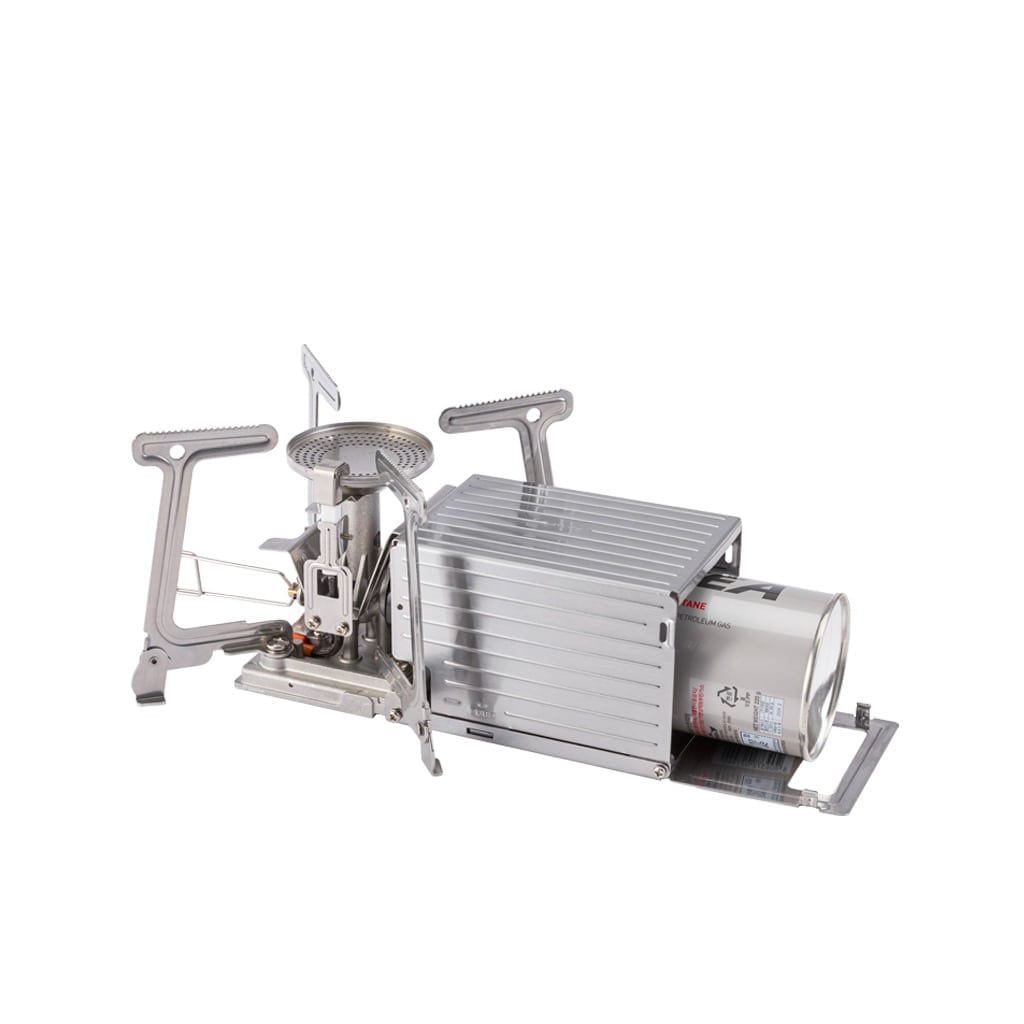
Look at the box your Snow Peak LiteMax came in and it says Made in Korea. Kovea started in 1982 when its late founder took apart a Swedish SVEA burner, now supplies MSR and Decathlon, and still earned a 21% operating margin after Korea's camping market halved.
Mooto Deep Dive: Korea Still Dresses Taekwondo — Spain Makes the Part That Scores the Points
World Taekwondo recognises Mooto in six equipment categories. The two it is absent from are the electronic ones — and the scoring system at Tokyo 2020 and Paris 2024 came from Barcelona. A look at the Korean company that dresses the sport Korea exported.
Aurora World Deep Dive: The Korean Company Behind the Plush Toy on Your Shelf
Aurora's plush sits in zoo shops, bookstores and Target aisles worldwide, and its own American website never mentions Korea. A public-information deep dive on the Seoul company that owns its factories, built Palm Pals, and bought a 90-year-old Vermont brand.