How to Find Suppliers in Korea: Official Platforms, Verification, and First Contact
A practical Korea sourcing guide for overseas buyers comparing KOTRA, buyKOREA, tradeKorea, GobizKOREA, verification, and first contact.
Quick Answer
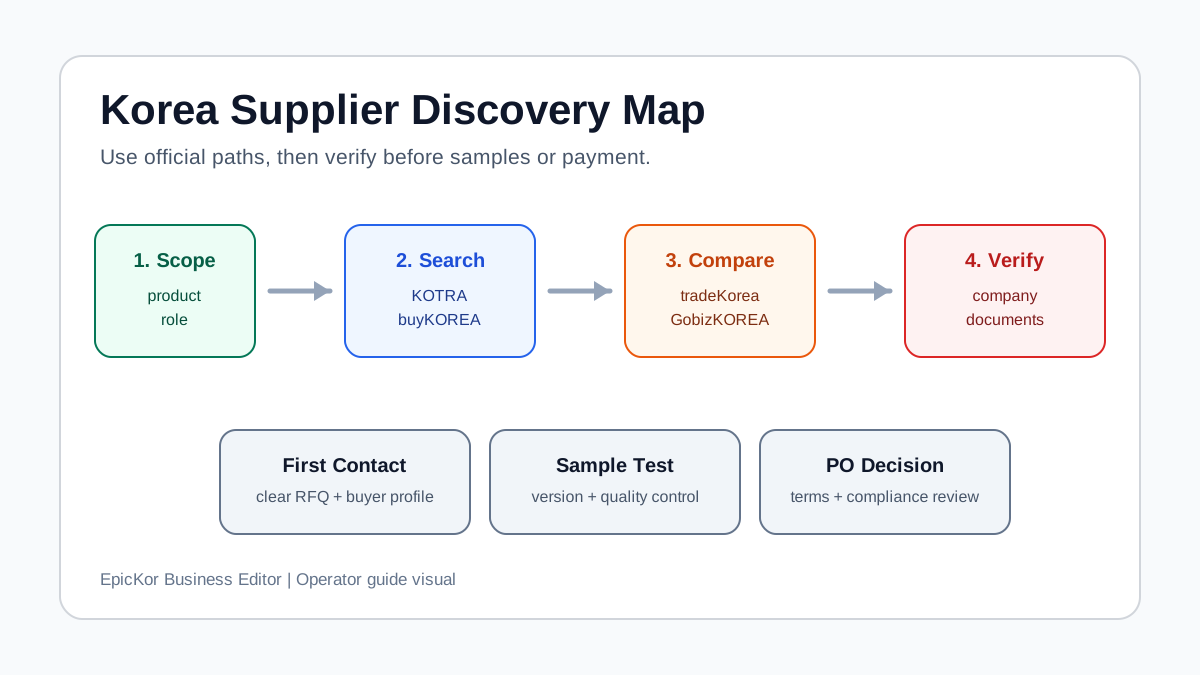
If you are trying to find suppliers in Korea, start with official and Korea-focused B2B channels before you send money, request samples, or trust a random cold email. The practical order is simple: define the product and buyer role, search Korean supplier platforms, compare company evidence across more than one source, contact a short list with a structured request, then verify documents before sampling or payment.
For many overseas buyers, the first useful public paths are KOTRA's buyer services, buyKOREA, tradeKorea, and GobizKOREA. These are not magic filters that remove every risk. They are starting points that make the search more Korea-specific and more organized than a generic web search.
The key is to treat supplier discovery as a workflow, not a hunt for one perfect directory. A good Korean supplier search usually combines platform listings, public company information, trade-show evidence, certifications, email response quality, and small sample-stage tests.
What Overseas Buyers Usually Get Wrong
The biggest mistake is asking, "Which Korean supplier is reliable?" before asking, "What exactly am I buying, under what terms, and for which market?" Supplier reliability is not a single label. A manufacturer can be strong at domestic private label but weak at export documentation. A distributor can answer quickly but not have brand authorization. A trading company can be useful for mixed small orders but not ideal for OEM development. A platform listing can help you find a company, but it does not replace your own due diligence.
The second mistake is using Korea as a vague quality signal. "Made in Korea" can be valuable, especially in beauty, food, medical-adjacent products, packaging, electronics, and consumer goods. But Korea has the same practical sourcing issues as any market: minimum order quantities, lead times, export packing, language gaps, payment risk, category regulations, and differences between manufacturer, distributor, agent, and reseller.
The third mistake is contacting too many companies with a weak message. Korean SMEs often receive vague inquiries such as "send catalog and best price" with no buyer profile, no target market, no quantity, and no specification. Serious suppliers may ignore those messages because they cannot judge whether the buyer is real. A narrow, credible first contact often performs better than a broad blast.
Platform Map for Korea Supplier Search
Use the platforms for different jobs. Do not expect one site to solve every step.
| Path | Best Use | What To Check | Limit |
|---|---|---|---|
| KOTRA buyer services | Import inquiries, business meetings, Korea pavilions, and official trade support context | Whether your category fits KOTRA support, local office routing, and event timing | It is not a substitute for your commercial, legal, and quality review |
| buyKOREA | Finding Korean product listings, sellers, trade-show pages, and KOTRA-linked inquiry paths | Company details, product categories, response history, and whether the seller matches your target role | Listings still require buyer verification before payment or exclusivity |
| tradeKorea | Searching Korean products, companies, RFQ paths, and category-specific B2B listings | Company profile depth, matching service options, category fit, and quotation consistency | RFQs can attract mixed-quality responses if your specification is too loose |
| GobizKOREA | Exploring Korean SME export products and categories, especially when you want smaller suppliers | Verified-by-KOSME signals, category relevance, and product documentation readiness | Do not treat platform volume or product count as proof that one seller fits your market |
| Trade shows and pavilions | Meeting suppliers, checking product quality, and comparing categories in one trip | Exhibitor list, booth evidence, export manager contact, and post-show responsiveness | High-energy meetings still need written follow-up and document checks |
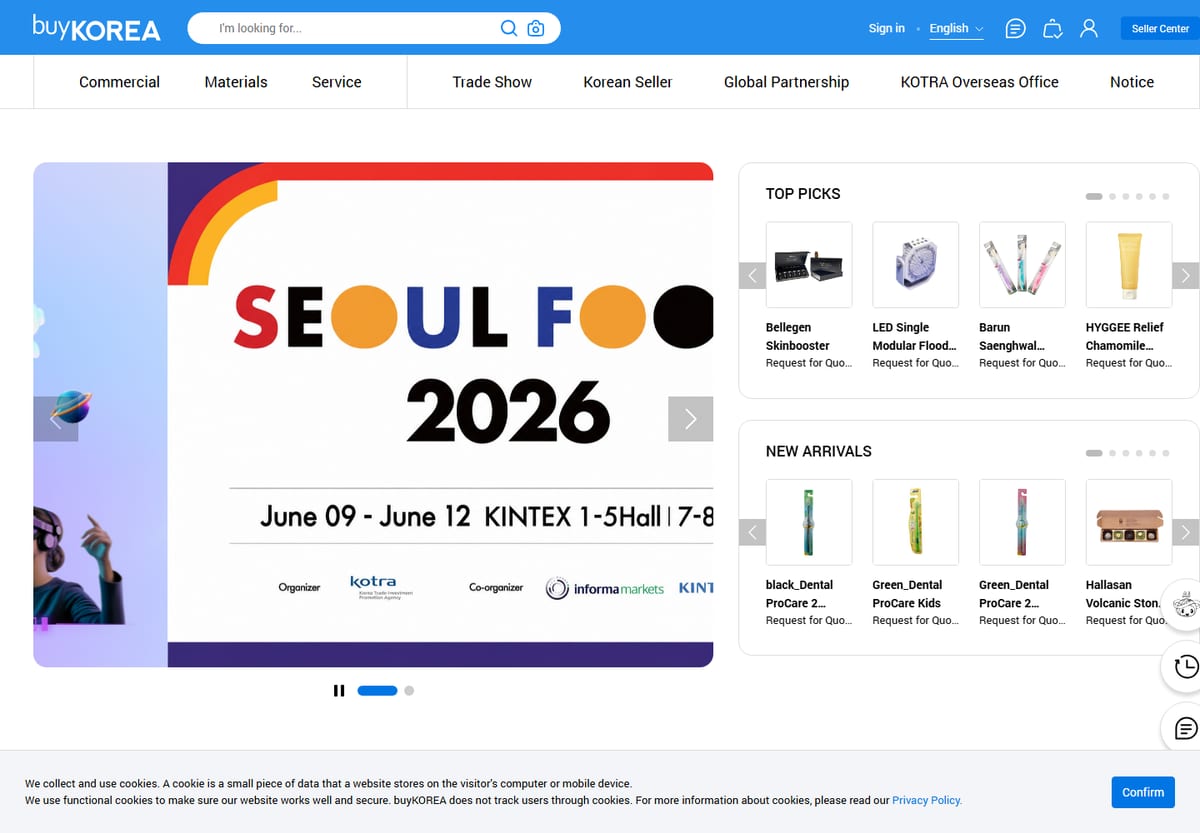
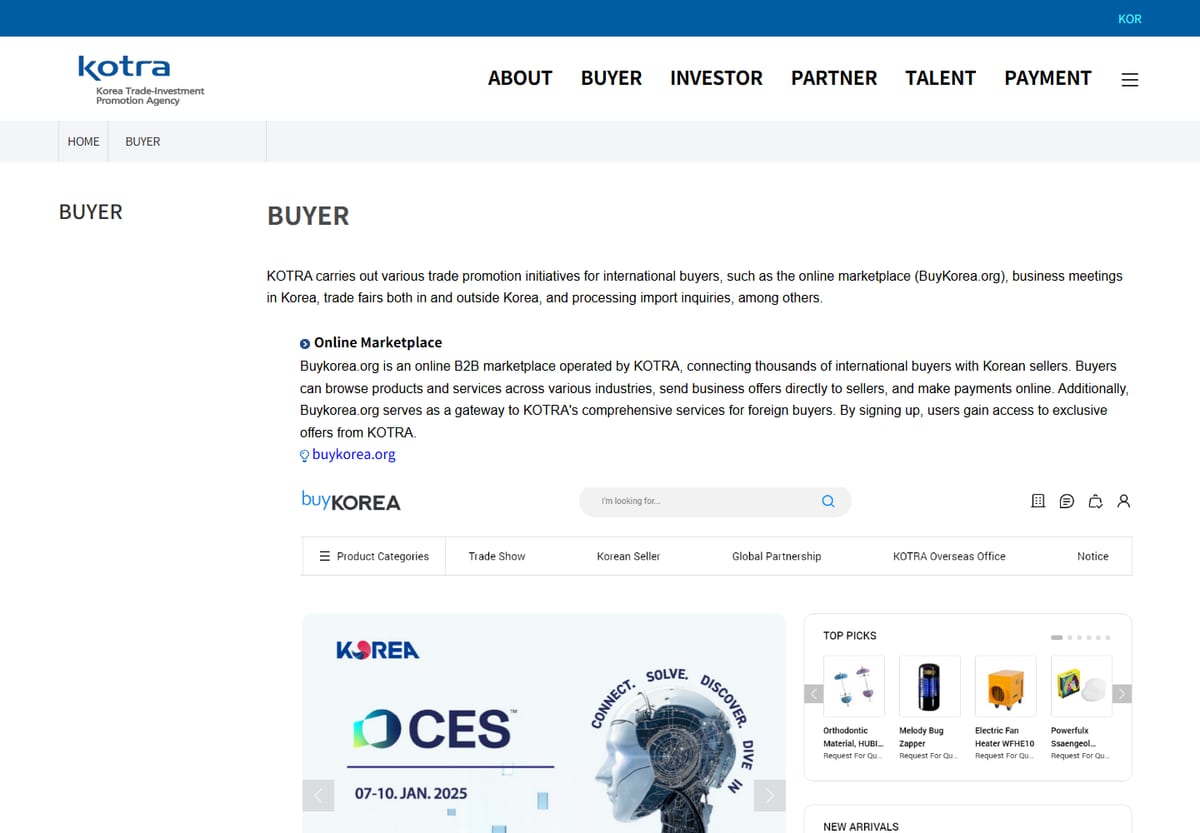
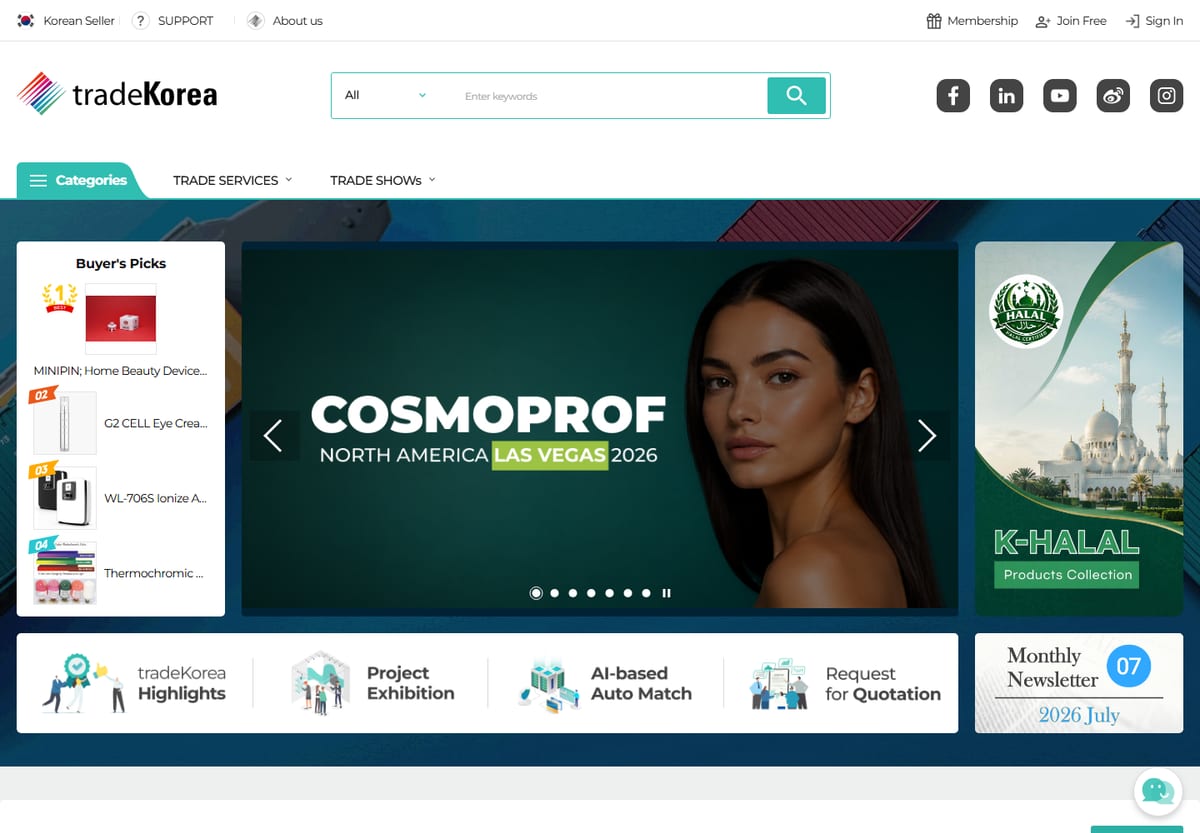
KOTRA says it supports international buyers through BuyKorea.org, business meetings, trade fairs, and import inquiries. buyKOREA describes itself as an export support platform that helps South Korean companies promote products to overseas buyers and connect online. tradeKorea states that it is operated by KITA and is designed to help global buyers discover Korean partners.
Buyer desk note: As an Amazon Associate, EpicKor may earn from qualifying purchases. If Korea sourcing is new for your team, compare import/export sourcing books before sending RFQs, because the first mistakes are usually process mistakes, not Korea-specific mistakes.
Step 1: Define the Supplier Role Before Searching
Before you open a directory, decide which kind of counterpart you need. A manufacturer makes the product or controls production. An OEM factory makes to your specification. An ODM partner may offer existing formulas, designs, molds, or product concepts that you can adapt. A trading company aggregates suppliers and handles export coordination. A distributor or wholesaler sells finished branded products. An agent introduces or manages the relationship.
Those roles are easy to mix up in Korea because some companies perform more than one role. A cosmetics company may have its own brand, operate ODM work, and also introduce sister-company products. A food exporter may coordinate with multiple factories. A packaging supplier may produce some parts in-house and outsource others. Your first email should make the role clear: "We are looking for an OEM manufacturer," "We are looking for an authorized distributor," or "We need a trading partner for mixed small-lot export."
If the category is finished K-beauty rather than private-label manufacturing, use the Korean cosmetics wholesale guide before you contact sellers. Branded beauty inventory needs authorization, batch, expiry, marketplace, and channel checks that are different from a normal supplier search.
Two categories carry regulatory weight that changes the search before it starts. For supplements, licensing and health-claim rules decide which factories can even export to your market — see the Korean health supplement suppliers guide. For anything classed as a medical device, certification and registration come before pricing, not after — see the Korean medical device suppliers guide.
This avoids a common mismatch. If you ask an ODM lab for wholesale branded products, the conversation slows down. If you ask a distributor to develop a private-label product, you may be speaking to the wrong company. If you ask a marketplace reseller for exclusive rights, the answer may be commercially meaningless.
Step 2: Build a Short List, Not a Long Spreadsheet
A useful first pass is 20 to 40 supplier candidates. A useful working short list is usually 5 to 8. The goal is not to contact every company. The goal is to identify enough good options that you can compare price, capability, communication, certification, lead time, and market fit.
Start with platform searches using product keywords, category pages, and company searches. Then search the company name separately in English and Korean. Look for a real corporate website, address consistency, product lines, event participation, certificates, export experience, and whether the company appears in more than one credible place.
If the company name appears only inside one listing and nowhere else, that does not automatically mean it is bad. Many Korean SMEs have weak English web presence. But weak web presence means you need stronger direct verification before money moves.
Step 3: Verify the Company Before You Verify the Product
Supplier verification has layers. Start with identity, then capability, then category-specific compliance.
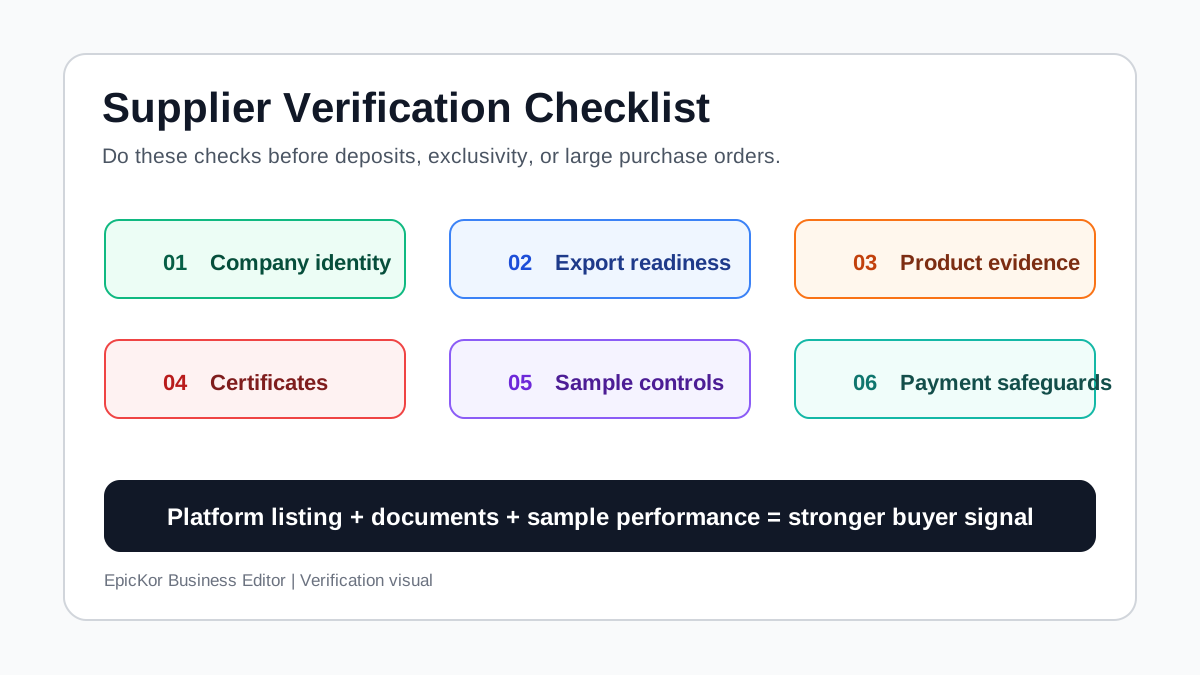
At minimum, ask for the official company name in Korean and English, business registration details, address, website, export manager contact, product catalog, manufacturing role, export experience, and relevant certificates. Compare those details across the platform profile, email signature, company website, invoice draft, certificate names, and sample labels.
Be careful with certificates. A certificate can be expired, irrelevant to the exact product, held by a different company, or used for marketing more than compliance. For regulated categories such as food, cosmetics, medical devices, electronics, children products, and health-related goods, you need category-specific professional review for your target import market. A Korean supplier can help, but your destination-market responsibility does not disappear.
Ask one more question that buyers routinely skip: which items in the catalogue does this company actually make? Korean manufacturers frequently run a distribution arm beside the factory, and the consumer storefront mixes both. Our Kovea deep dive is a worked example — three legal entities, one brand name, and a shop that carries partner brands next to the company's own burners. The revenue figure you find will also differ depending on which entity it describes.
Step 4: Send a First Contact Message That Looks Serious
Your first message should be short, specific, and easy to answer. Include who you are, your target market, product category, estimated first order range, required certification or documentation, desired role, timeline, and the next decision point. If you are not ready to reveal volume, give a range and say that exact quantities depend on sample and landed-cost review.
Do not ask for the "best price" without a specification. Ask for a quotation based on a defined product, packaging, order quantity, Incoterms preference, lead time, and sample availability. For an early screen, you can ask whether they support export to your country, whether they have English documentation, whether they are manufacturer or trading company, and whether they can share a catalog under ordinary business use.
A strong supplier will not always reply instantly, but the quality of the reply matters. Look for whether they answer the actual questions, ask reasonable follow-up questions, avoid unrealistic claims, and send documents that match the company identity.

Step 5: Control the Sample Stage
The sample stage is where many buyer teams lose discipline. They like the product, then rush the purchase order. Instead, treat samples as a controlled test. Record the exact sample name, batch or formula if relevant, packaging version, supplier contact, quoted lead time, shipping method, and the assumptions behind the price.
For finished goods, compare the sample to the listing, catalog, and invoice. For OEM or ODM work, separate concept sample, lab sample, pre-production sample, and production sample. Do not let a beautiful sample hide weak documentation, unclear ownership, unstable pricing, or packaging that cannot legally enter your market.
When a Korea Trip or Trade Show Makes Sense
You do not need to fly to Korea for every supplier search. A trip makes sense when the category is visual, tactile, regulated, expensive, or relationship-heavy. Cosmetics, food, packaging, machinery, branded wholesale, and multi-supplier sourcing can benefit from in-person meetings because you can compare products quickly and judge the seriousness of the team.
If trade shows are part of your plan, read EpicKor's guide to Korea trade shows for overseas buyers. If your category is beauty manufacturing, pair this guide with K-Beauty OEM/ODM in Korea before contacting factories.
Simple sourcing kit: Before a Korea trip or supplier call week, compare trade-show planner notebooks or travel document organizers. They are not strategic tools, but they help keep samples, business cards, invoices, and meeting notes from becoming a mess.
FAQ
Q: What is the safest way to find suppliers in Korea?
There is no single safest directory. A safer workflow is to use Korea-focused platforms, compare company evidence across sources, contact a short list with a specific request, verify identity and documents, test samples carefully, and avoid large payments before the supplier and product are properly reviewed.
Q: Is buyKOREA only for large buyers?
No. buyKOREA is a public export support platform, and many listings are relevant to smaller overseas buyers. The practical issue is not only buyer size. It is whether your inquiry is clear enough for the seller to judge your seriousness and whether the seller can support your country, quantity, and documentation needs.
Q: Is tradeKorea different from buyKOREA?
Yes. Both are Korea-focused B2B paths, but they are operated in different institutional contexts and have different site structures, matching options, and category presentation. Serious buyers often compare results across both rather than choosing one platform only.
Q: Should I work with a manufacturer or trading company?
Use a manufacturer when product control, OEM work, or direct technical discussion matters. Use a trading company when you need mixed categories, smaller lots, export coordination, or help bridging several suppliers. The right answer depends on category, volume, documentation, and your team's sourcing experience.
Q: Can KOTRA verify a supplier for me?
KOTRA can support buyer inquiries and matching paths, but you should not treat any support channel as full commercial due diligence. Your team still needs contract review, payment controls, product inspection, compliance checks, and destination-market import advice.
Sources and Further Reading
More Business Guides
Korean Apparel Manufacturers 2026: Dongdaemun Sourcing Guide
An overseas-buyer guide to Korean apparel manufacturers and Dongdaemun sourcing: wholesale vs OEM, MOQs, sample rooms, quality checks, and export risk.
Korean Health Supplement Suppliers 2026: K-Supplement Sourcing Guide
An overseas-buyer guide to Korean health supplement suppliers: red ginseng, collagen, MFDS health functional food rules, GMP, and sourcing risk.
Korean Medical Device Suppliers 2026: Buyer Due Diligence Guide
A practical overseas-buyer guide to Korean medical device suppliers, dental implants, aesthetic devices, trade shows, MFDS checks, and sourcing risk.