Hurom Deep Dive: The Korean Company That Invented the Slow Juicer — and What Happens After Everyone Copies You
Every slow juicer on earth descends from a machine a Gimhae company launched in 2005. Hurom sold 12 million units in 80 countries — then a European court voided its patent, revenue fell 15%, and the invention outgrew the inventor. The full arc, honestly.
Quick Answer
Every slow juicer in the world — every "cold press" machine on Amazon, every juice-bar workhorse, every wellness-influencer counter appliance — descends from a machine that Hurom (주식회사 휴롬) of Gimhae, South Korea put on sale in 2005: the world's first vertical slow juicer.
The invention was real, the success was enormous, and the numbers are worth stating plainly: over 12 million units sold across 80 countries, cumulative revenue past ₩2.18 trillion, and a category — 원액기, the slow juicer — that simply did not exist before founder Kim Young-ki (김영기) spent, by his own account, a decade and thousands of failed prototypes chasing juice that tasted hand-squeezed.
But this deep dive is about the second half of the story, the half the company's own marketing understandably skips. In 2024–2025 a European court voided a core Hurom patent as unoriginal, its Korean arch-rival won the continent, revenue fell 15.2% in a single year and operating profit went negative — while the founding family, holding roughly 85% of the shares, kept dividends flowing. The company that invented the category now holds a shrinking piece of it.
For anyone building on Korean innovation — or licensing it, or competing with it — Hurom is the honest case study of what a world-first buys you, and what it does not.
This is the third entry in our series on Korean manufacturers behind global products, after JMW and Dorco.
The Invention Was Real
It is worth being precise about what Hurom actually invented, because "first" claims in appliances are usually marketing. This one is not.
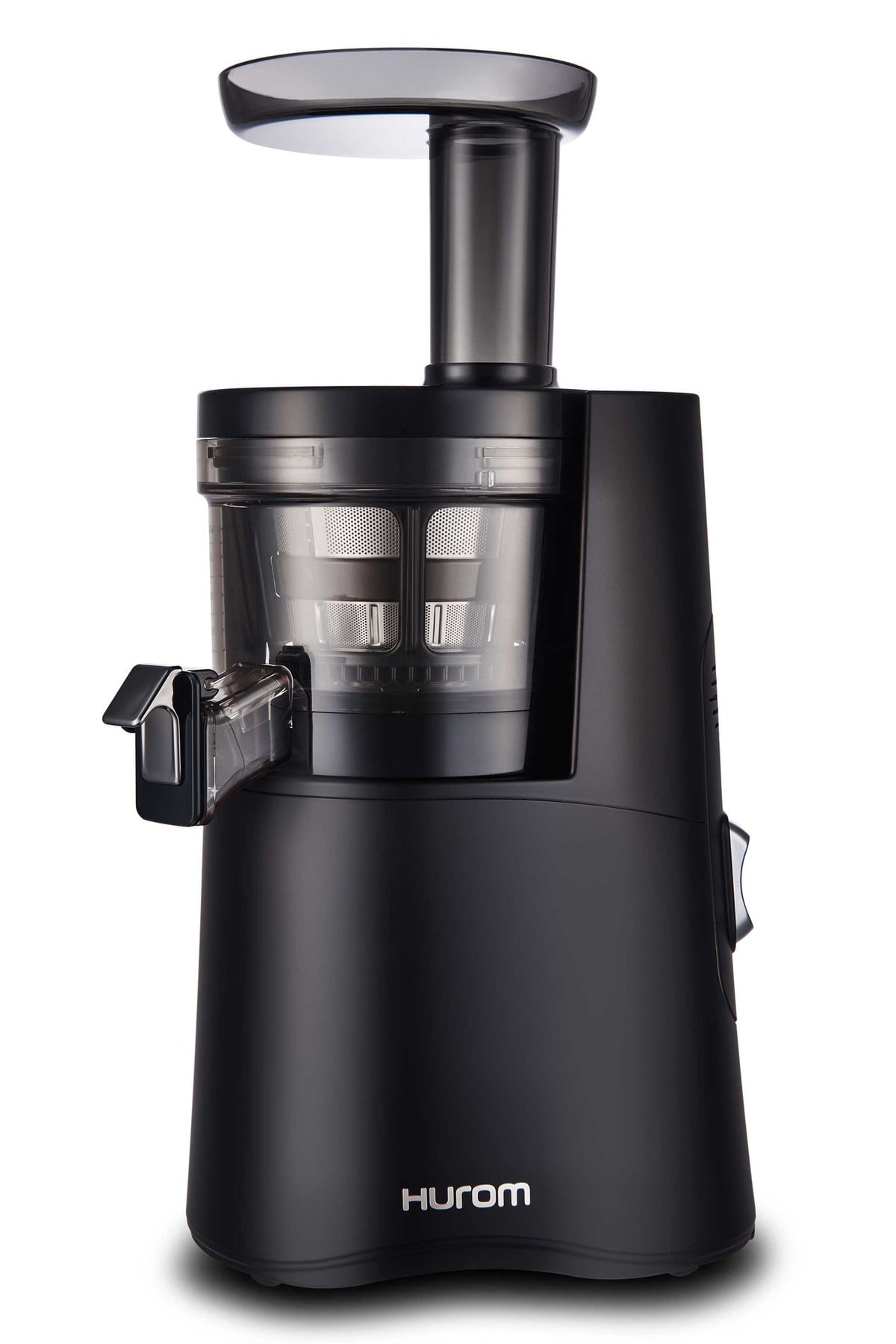
Kim Young-ki, born 1949 in Gimhae, founded 개성공업사 in his hometown in 1974 — a metal workshop that evolved through decades of kitchen equipment. The through-line of his career was juice: he developed green-juice extractors (녹즙기) in the 1990s, and then spent years on a different mechanism entirely — a vertical auger that squeezes produce slowly instead of shredding it with blades, the way a hand wrings a cloth.
Hurom's Slow Squeeze Technology dates to 2003; the world's first vertical slow juicer shipped in 2005. The pitch was physics, not wellness-speak: no high-speed blades means no heat and less oxidation, so the juice keeps more of what fruit walls held. Whether the nutritional delta matters is debated; that the juice tastes different is not. The same slow-pressed logic shows up across the K-wellness aisle — Korea industrialises health rituals into appliances and shelf products faster than almost anywhere.
The market agreed at scale. Exports began in earnest around 2009 (Australia and the UK first), overseas subsidiaries followed, and by the mid-2010s the vertical slow juicer was a global category with Hurom's silhouette at the centre of it — 12 million units, 80 countries, ₩2.18 trillion cumulative.
Then Everyone Copied It — Legally
Here is where the story becomes a business lesson rather than a founder legend.
A category-creating appliance patent is only as strong as its narrowest claim, and juicing mechanisms are old technology. Hurom's problem was structural: the concept "squeeze slowly with an auger" could not be owned, only specific implementations could — and competitors, above all fellow Korean manufacturer NUC Electronics (엔유씨전자) selling globally as Kuvings, engineered around the claims from the same home market, with the same supplier base, at full speed.
The litigation record tells the score honestly:
| When | Venue | What happened |
|---|---|---|
| April 2024 | Unified Patent Court (Europe) | Hurom sued NUC/Kuvings (EVO820 and others) over European patent EP 3 155 936 — a brush-rotation mechanism — seeking injunctions across France, Germany, Italy, the Netherlands and Poland |
| 2025 | UPC ruling | Hurom lost. The court found the patent "not substantially different" from already-published Chinese and Korean patents — derivable by an ordinary engineer from existing literature, and therefore invalid |
| January 2025 | Korea Trade Commission | Hurom won a parallel case against NUC at home — the company's own announcement, and a real one |
Read together: Hurom holds the home field and lost the continent. For overseas buyers this split matters practically — in Europe the ruling means the "patented Hurom mechanism" argument is dead as a differentiator, and the two Korean rivals compete on yield, cleaning convenience, and price like any two appliance makers.
The Numbers Now
Hurom is family-held and unlisted; figures below are Korean corporate-registry and financial-press data.
- Ownership: founder Kim Young-ki 58.4%, wife 10.4%, son Kim Jae-won (now CEO) 10.4%, daughter 6.2%, treasury shares 14.6% — effectively ~85% family control, with a second-generation succession already in the CEO seat.
- Scale: revenue was about ₩66.8 billion in 2022; the 2025 year brought a 15.2% revenue decline and an operating swing from a ₩961 million profit (2024) to a ₩743 million loss (2025) — margins of +1.2% to −1.1%.
- The governance flag Korean financial press raised: in the loss year, the company still paid out roughly 78% of net income as dividends — flowing overwhelmingly to the family — while carrying patent-litigation costs. That is legal, common in Korean family firms, and exactly the kind of detail a prospective partner should know how to read.
Put the two halves side by side: cumulative ₩2.18 trillion across two decades, but a current run-rate around ₩60 billion and shrinking. The category Hurom invented keeps growing globally; Hurom's share of it does not. Kuvings out-executed it abroad, Chinese manufacturers commoditised the low end, and the premium segment now includes players (Nama and others) who took the concept somewhere new.
What This Means If You Work with Korean Innovators
1. A world-first is an option, not an annuity. Hurom converted its invention into a decade of dominance — a genuine win — but the patent estate could not hold the category once serious rivals engineered around it. If you are licensing Korean technology, price the claims, not the story. The UPC decision is a public, readable example of how a famous "invented it" patent dies.
2. Korea's fiercest competition is often Korean. The slow-juicer war is Gimhae versus Daegu — Hurom versus NUC/Kuvings — fought in Munich courtrooms. If a Korean supplier tells you their technology is protected, ask specifically about their Korean competitors' workarounds; those rivals share suppliers, talent and trade shows, and they move first.
3. Read the family structure before you sign. An 85% family-held company that dividends through a downturn is telling you where cash goes under stress. That is not a scandal — it is standard Korean 중소기업 governance — but distribution partners and private-label clients should model it.
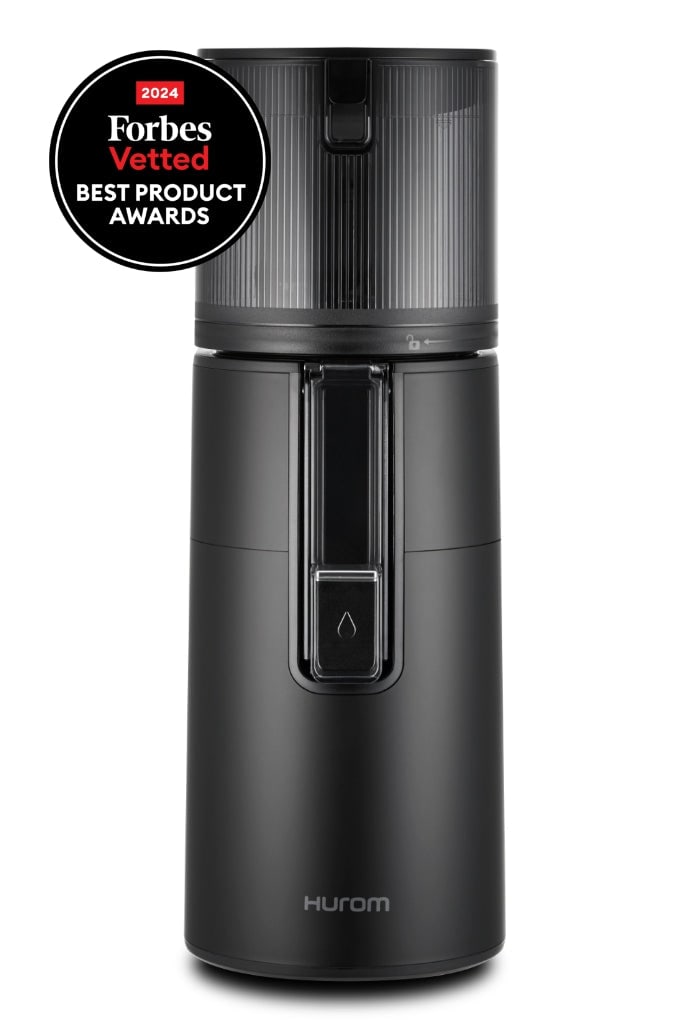
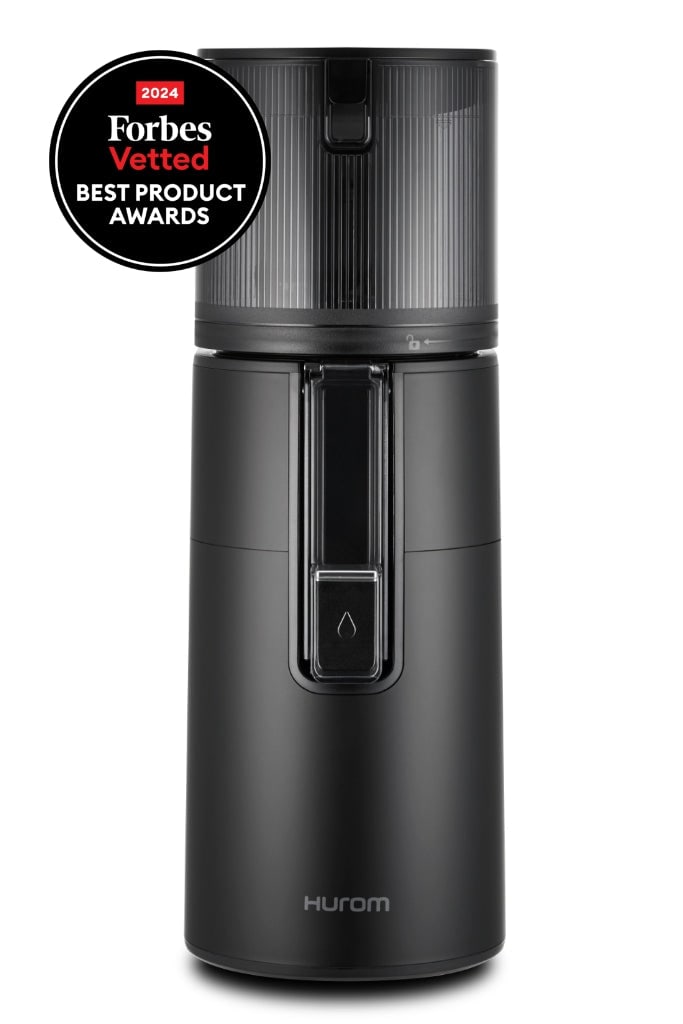
4. The product can stay excellent while the business struggles. The H400 is a genuinely good machine winning current awards. Product quality and corporate trajectory are separate curves; buyers conflate them at their own cost — in both directions.
As an Amazon Associate, EpicKor may earn from qualifying purchases at no extra cost to you. Hurom sells directly on Amazon US — the H400 self-feeding flagship and the classic H-AA are the two poles of the line: hands-free convenience versus the icon that built the category.
The Honest Caveats
- Financials are registry and press figures, not an English annual report. Trends are solid; precise decimals less so.
- The 12M / 80-country / ₩2.18tn figures are Hurom's own cumulative claims, widely republished and plausible against the export record, but not independently audited numbers.
- We are not calling the company failing. A ₩60bn manufacturer with a global brand, current product awards and no visible debt distress is a going concern with a strategy problem, not a collapse.
- The patent loss is jurisdiction-specific. EP 3 155 936 fell in Europe; Hurom's Korean win against NUC stands; other patents were not adjudicated. "Hurom lost its patents" would be an overstatement — one load-bearing European claim died.
- Much English-language Hurom content is the company's own marketing (including sponsored-adjacent business-media features). This piece leans on Korean financial press and court reporting precisely because the independent English record is thin — which is, of course, why it is in this series.
Sources Checked
- Korea Economic Daily on Kim Young-ki and Forbes Korea's founder profile for the 1974 개성공업사 founding, the decade of prototypes, and the invention narrative.
- Hurom official history for Slow Squeeze Technology (2003), the 2005 world-first vertical slow juicer, 2009 export beginnings, and the cumulative 12M units / 80 countries / ₩2.18tn claims.
- Press9 on the UPC ruling for the April 2024 filing against NUC/Kuvings, patent EP 3 155 936, the five-country injunction request, and the court's "not substantially different from published Chinese and Korean patents" invalidation.
- Hurom's announcement of the Korea Trade Commission win against NUC for the domestic side of the split decision.
- Newsspace's financial analysis and Newsworker's governance coverage for the 15.2% revenue decline, the ₩961M-profit-to-₩743M-loss swing, the ~78% dividend payout in the loss year, and the family shareholding (58.4 / 10.4 / 10.4 / 6.2 / 14.6).
- Saramin corporate financials for the 2022 revenue baseline (₩66.8bn).
FAQ
Q: Did Hurom really invent the slow juicer?
A: Yes — the vertical slow juicer as a category. Hurom developed Slow Squeeze Technology in 2003 and shipped the world's first vertical slow juicer in 2005, from Gimhae, South Korea. Founder Kim Young-ki had been building juice extractors since the 1990s.
Q: How big is Hurom?
A: Cumulatively, over 12 million units across 80 countries and past ₩2.18 trillion in lifetime revenue. Currently, around ₩60 billion a year and shrinking — 2025 revenue fell 15.2% and operating profit swung to a ₩743 million loss.
Q: What happened with Hurom's patents?
A: A split decision. Hurom sued NUC/Kuvings at Europe's Unified Patent Court in April 2024 over its brush-rotation patent EP 3 155 936; the court invalidated the patent as obvious against existing Chinese and Korean publications. In January 2025 Hurom won a parallel Korea Trade Commission case against NUC at home.
Q: Who owns Hurom?
A: The founding family, at roughly 85%: Kim Young-ki 58.4%, his wife 10.4%, son and current CEO Kim Jae-won 10.4%, daughter 6.2%, plus 14.6% treasury shares. It is unlisted.
Q: Is Hurom still worth buying?
A: The products remain genuinely good — the current H400 carries live third-party awards, and the engineering lineage is real. The corporate turbulence is a business story, not a product-quality one.
Q: Who is Hurom's biggest competitor?
A: NUC Electronics of Daegu, selling globally as Kuvings — a fellow Korean manufacturer, which is the pattern with Korean categories: the fiercest rival to a Korean inventor is usually another Korean company one province over.
More Business Guides
Cuckoo Deep Dive: The Korean Rice Cooker That Outlived LG, Its Own Client
For 20 years Cuckoo built rice cookers as LG's anonymous OEM. When the IMF crisis pushed LG out of the market, the subcontractor launched its own brand on April Fools' Day 1998 — and now holds 70% of Korea, talks to you in Korean, and runs a ₩2 trillion group.
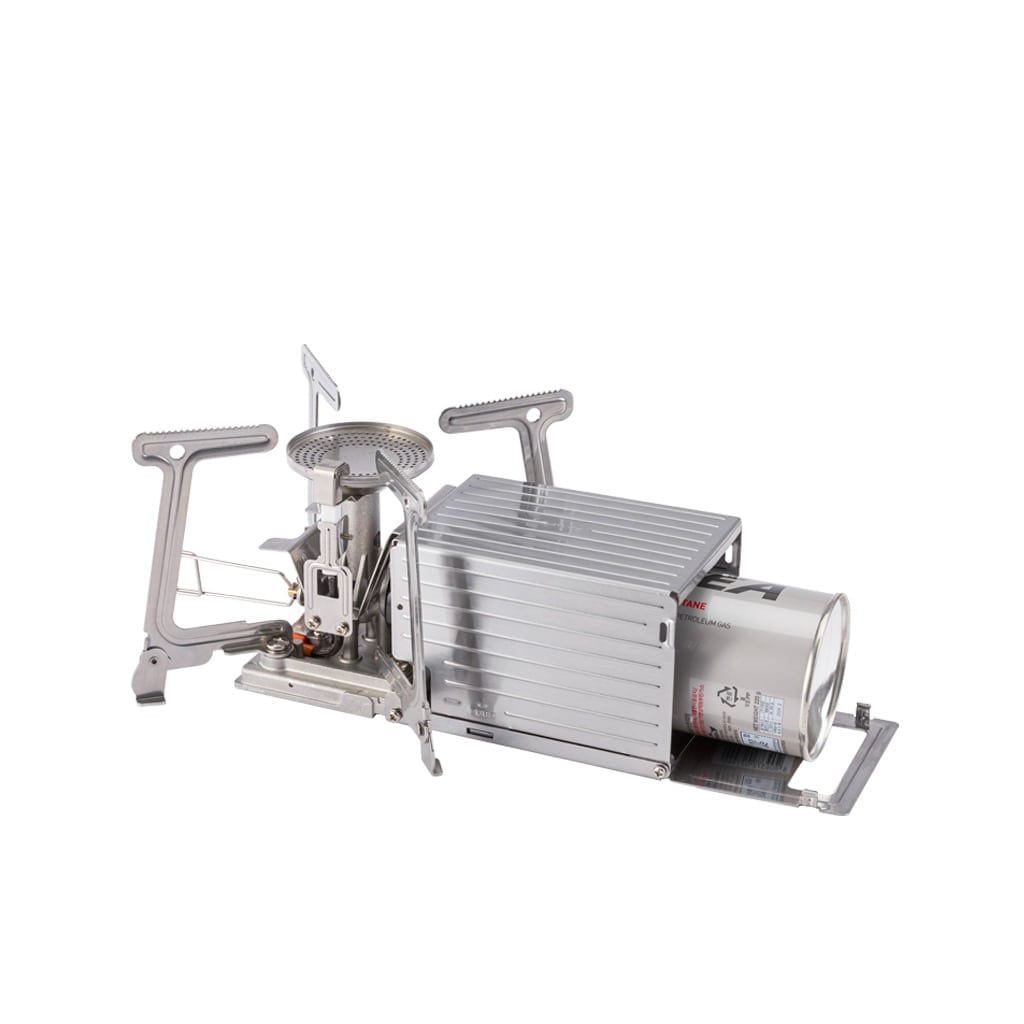
Kovea Deep Dive: The Korean Burner Maker That Took Apart a Swedish Stove — and Now Builds for MSR
Look at the box your Snow Peak LiteMax came in and it says Made in Korea. Kovea started in 1982 when its late founder took apart a Swedish SVEA burner, now supplies MSR and Decathlon, and still earned a 21% operating margin after Korea's camping market halved.

Mooto Deep Dive: Korea Still Dresses Taekwondo — Spain Makes the Part That Scores the Points
World Taekwondo recognises Mooto in six equipment categories. The two it is absent from are the electronic ones — and the scoring system at Tokyo 2020 and Paris 2024 came from Barcelona. A look at the Korean company that dresses the sport Korea exported.