Travel Insurance for Korea: Required? What Care Costs Without It
Last updated: 20 November 2026. Entry rules are from the K-ETA portal (k-eta.go.kr) and the Ministry of Foreign Affairs' Working Holiday Info Center (whic.mofa.go.kr), both read on 20 November 2026. Health-insurance eligibility is from the National Health Insurance Act (국민건강보험법) Article 109 as summarised in our resident health-insurance guide. Treatment prices are from our own cost guides, which calculate them from the health ministry's fee notices and the Health Insurance Review and Assessment Service's 2026 non-covered price data. Certificate fee caps are the amounts set when the health ministry issued 「의료기관의 제증명수수료 항목 및 금액에 관한 기준」 on 19 September 2017, as reported by the medical newspaper Medical Times (메디칼타임즈); the notice was revised on 5 February 2021 (제2021-34호), and we could not confirm that revision's amount table, so treat the caps as the 2017 figures. Dollars are at ₩1,335 = US$1 (Bank of Korea ECOS, 17 November 2026), rounded. This is a guide to rules, prices and paperwork, not medical, legal or insurance advice. Sources are listed at the end.
Korea travel insurance is not an entry requirement for most visitors. If you arrive visa-free, with a K-ETA or on an ordinary short-term visa, nobody at Incheon asks for a policy, and the official K-ETA requirements list no insurance. Two kinds of visa do write a number into the rules: the working holiday visa asks for health insurance valid for the whole stay with at least ₩40,000,000 (about US$30,000) of cover, and the F-1-D workation visa asks for ₩100 million (about US$75,000).
For a tourist the question is what happens without a policy. The answer has three parts. You cannot join Korea's national health insurance as a visitor. You will be billed as an uninsured patient at the hospital's own price, which starts at ₩68,070 (US$51) just for walking into a regional emergency room. And if you do have a policy, it pays only against Korean paperwork that the hospital gives you in Korean, at fees the government caps.
TOPBAG RFID passport wallet: passport and insurance card in one zipped pouch, on Amazon Korean hospitals register you by passport, and your insurer will ask for the policy number first.Affiliate link. As an Amazon Associate, EpicKor earns from qualifying purchases at no extra cost to you.
Quick Guide: travel insurance for Korea in numbers
| Question | Answer | Source |
|---|---|---|
| Required for visa-free or K-ETA entry? | No. The official K-ETA requirements list passport and trip details and a ₩10,000 fee, not insurance | K-ETA portal |
| Required for a working holiday visa? | Yes: valid for the whole stay, minimum cover ₩40,000,000 (≈US$30,000) | MOFA Working Holiday Info Center |
| Required for the F-1-D workation visa? | Yes: private medical insurance of at least ₩100 million (≈US$75,000) for treatment and repatriation | Korean embassy notices, June 2026 |
| Can a tourist join Korean national health insurance? | No. Foreigners are enrolled only after registering and staying 6 months | National Health Insurance Act Art. 109 |
| Clinic first visit, uninsured | ₩18,840 (≈US$14) consultation fee | 2026 fee schedule |
| Walking into an ER, uninsured | ₩22,690–₩68,070 (≈US$17–51) access fee alone, by ER grade | Ministry fee notice × 2026 conversion factor |
| Brain MRI, uninsured | National median ₩450,000 (≈US$337); ₩768,500 (≈US$576) at a teaching hospital | HIRA 2026 non-covered prices |
| 119 ambulance | Free, including for foreigners | National Fire Agency |
| English diagnosis certificate (영문진단서) | Cap ₩20,000 (≈US$15) in the 2017 notice | Health ministry certificate-fee notice, as reported in 2017 |
| Hotlines | 119 emergency and ambulance; 1330 travel hotline (+82-2-1330 from abroad) | National Fire Agency; Korea Tourism Organization |
Valante Family Travel Document Organizer: one zip case for the claim paperwork A claim for a Korean hospital bill runs on paper: the receipt, the itemised statement and the diagnosis certificate, all in Korean, all issued at the cashier on the day. A flat zipped folio that holds them next to your passport is the difference between a claim and a lost receipt. As an Amazon Associate, EpicKor earns from qualifying purchases at no extra cost to you.
See the Valante document organizer on AmazonIs travel insurance required for Korea? Only for some visas
Start with the people who make up most of Korea's visitors: travellers who arrive visa-free or with a K-ETA (전자여행허가, Korea's electronic travel authorisation).
The K-ETA portal's official guide lists what an application needs: passport details, trip details, a facial photo and a ₩10,000 fee (about US$7.50). Insurance is not on the list, and it is not an entry condition at the border either. If you are one of the 22 nationalities currently exempt from K-ETA, note that the exemption ends on 31 December 2026; our K-ETA guide tracks whether it is extended. Either way, the answer on insurance is the same: not required.
If your nationality needs a short-term visit visa (C-3) instead, follow the document list of the embassy or visa centre where you apply; any of them can ask for extra papers, so that list, not a forum post, is the final word.
Two visa types are different, and both put a won figure in writing:
| Visa | Insurance rule | Where it is written |
|---|---|---|
| Working holiday (워킹홀리데이) | "Health insurance that will remain valid throughout your stay in Korea (minimum coverage: KRW 40,000,000)" | MOFA Working Holiday Info Center, required documents; the same page asks for at least ₩3,000,000 in funds |
| Workation / digital nomad (F-1-D, 워케이션 비자) | Private medical insurance of at least ₩100 million covering treatment and repatriation, for the full period requested | Korean embassy notices on the rules in force from 30 June 2026 (see our F-1-D guide) |
Note throughout your stay: a policy that ends before your planned departure does not meet it.
A third group falls into a gap rather than a rule: language students on a D-4 visa are not enrolled in national health insurance until they have been in Korea for six months. Some schools fill that gap themselves. Sogang University, for example, enrols its language students in group insurance at no charge for the first term (our language school fees guide has the details), but that is a school's choice, not a national rule. If your school does not, the first six months are on you.
You might like: Korea K-ETA in 2027 vs the e-Arrival Card: The Exemption Ends 31 December 2026
Why tourists are not covered by Korea's national health insurance
Korea's national health insurance (국민건강보험) takes foreigners in through Article 109 of the National Health Insurance Act. In practice that means two routes. You are enrolled from your first day at a Korean workplace, or, if you are not employed in Korea, you are enrolled automatically after six months in the country as a registered foreigner (외국인등록), at a 2026 premium of at least ₩158,630 a month (about US$119). University students on D-2 visas are the main exception, enrolled from alien registration. Our health insurance guide for foreign residents covers every case.
A tourist meets none of those conditions. Alien registration is for foreigners staying more than 90 days, which a visa-free or C-3 visit by definition is not, and you cannot clock up six months on a 90-day entry. There is no paid opt-in, no short-term version and no way to buy into the national scheme for a two-week trip.
Korean residents pay a share of an insured price, and you will see rules quoted such as "minor ER visits now cost 90 percent." The Health Insurance Review and Assessment Service's own Q&A on that September 2024 rule ends with one line: "대상 환자는 건강보험 환자를 대상으로 함", the rule applies to national health insurance patients. An uninsured visitor is never inside that percentage system. You pay the hospital's full price.
And the full price can carry a foreigner's premium. Some large hospitals publish an international price (국제수가) for foreign nationals without Korean insurance. For health checkups, Severance's is exactly 30% above its Korean list, as we documented in our health checkup price guide. That is a checkup programme, not a rule for every treatment, but it is a reason to ask which price list you are on.
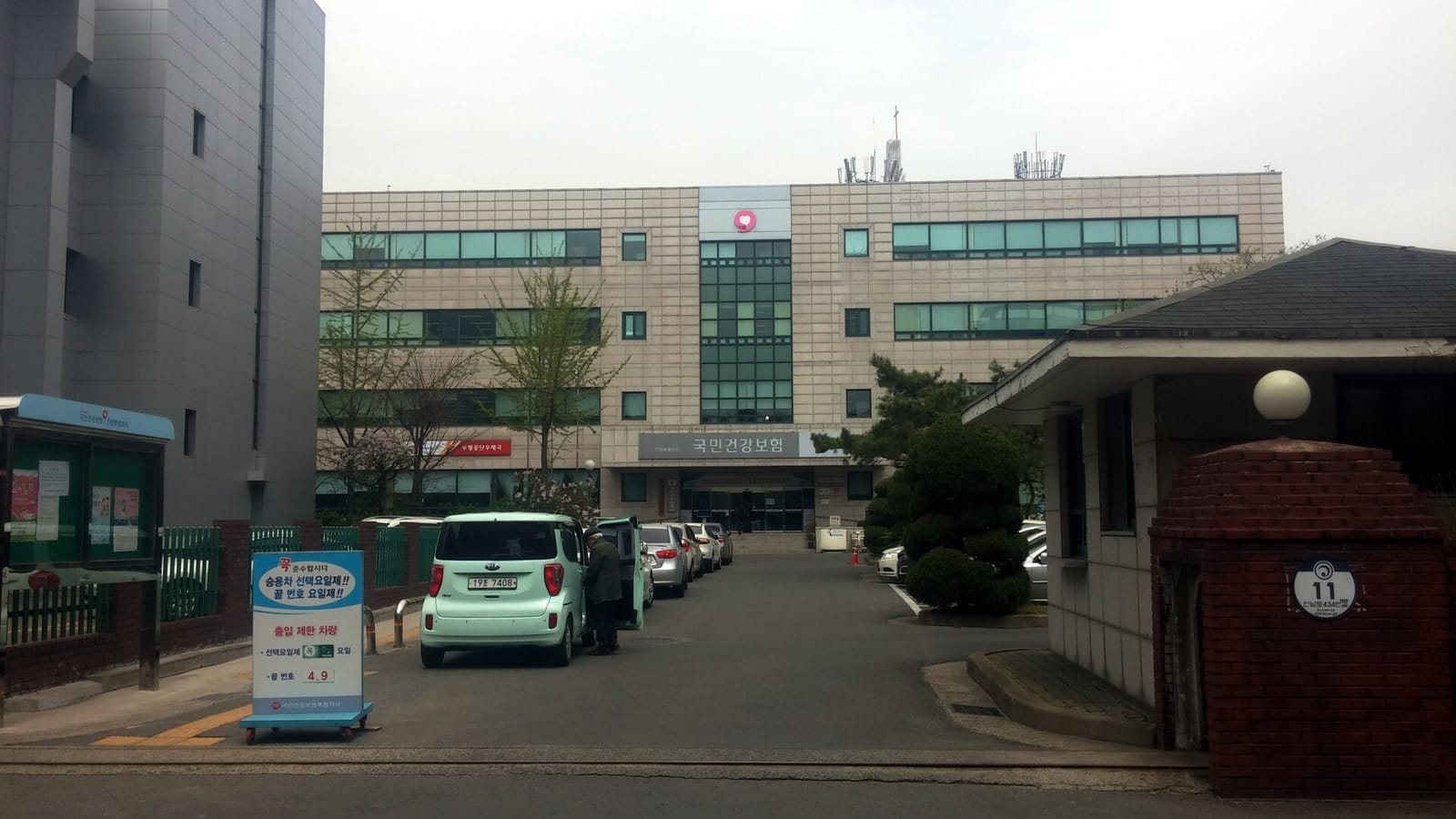
What care costs in Korea without insurance
Every figure below comes from one of our cost guides, each calculated from Korean primary sources; follow the link for the method.
| Situation, uninsured | 2026 price | ≈ US$ | Detail in |
|---|---|---|---|
| Neighbourhood clinic (의원), first visit consultation | ₩18,840 | $14 | Doctor without insurance |
| Clinic, repeat visit for the same illness within 30 days | ₩13,370 | $10 | Doctor without insurance |
| Tertiary hospital (상급종합병원), first visit consultation | ₩29,580 | $22 | Doctor without insurance |
| ER access fee, local emergency institution (지역응급의료기관) | ₩22,690 | $17 | Doctor without insurance |
| ER access fee, regional emergency centre (권역응급의료센터) | ₩68,070 | $51 | Doctor without insurance |
| Rapid flu A/B test, median posted price | ₩30,000 | $22 | Flu in Korea |
| Brain MRI, national median (clinic → teaching hospital) | ₩450,000 (₩400,000 → ₩768,500) | $337 ($300 → $576) | MRI cost |
| Whole-body MRI, national median | ₩1,000,000 | $749 | MRI cost |
| 119 ambulance | ₩0 | $0 | Doctor without insurance |
| Private general ambulance, first 10 km | ₩40,000 (+₩1,500/km) | $30 | Doctor without insurance |
The ER access fee is only the entry charge. Korea's emergency-department access fee (응급의료관리료) is written in the health ministry's fee notice as relative value points, 812.28 at a regional centre, 270.76 at a local institution, multiplied by 2026's conversion factor of ₩83.8. It is what you pay for walking through the door. The consultation, tests, scans, drugs and any admission are billed on top. A night that starts at a regional ER and includes a brain scan at a teaching hospital has already cost ₩836,570 (about US$627) in access fee and MRI alone, before a doctor's time, blood tests or a bed are counted. That is a floor, not an estimate of a full bill.
The grade of the building decides the first number, three times higher at a regional centre than at a local emergency institution. E-Gen (e-gen.or.kr) shows each ER's grade; our ER cost guide explains how to read it.
What the table cannot give you is a price for a broken leg or three nights on a ward. Korea publishes no single uninsured price for those, and that uncertainty is the real case for a policy.
You might like: MRI Cost in Korea Without Insurance (2026): The Government's Data Puts a Brain MRI at ₩450,000
The hospital papers you need to claim (and what each one costs)
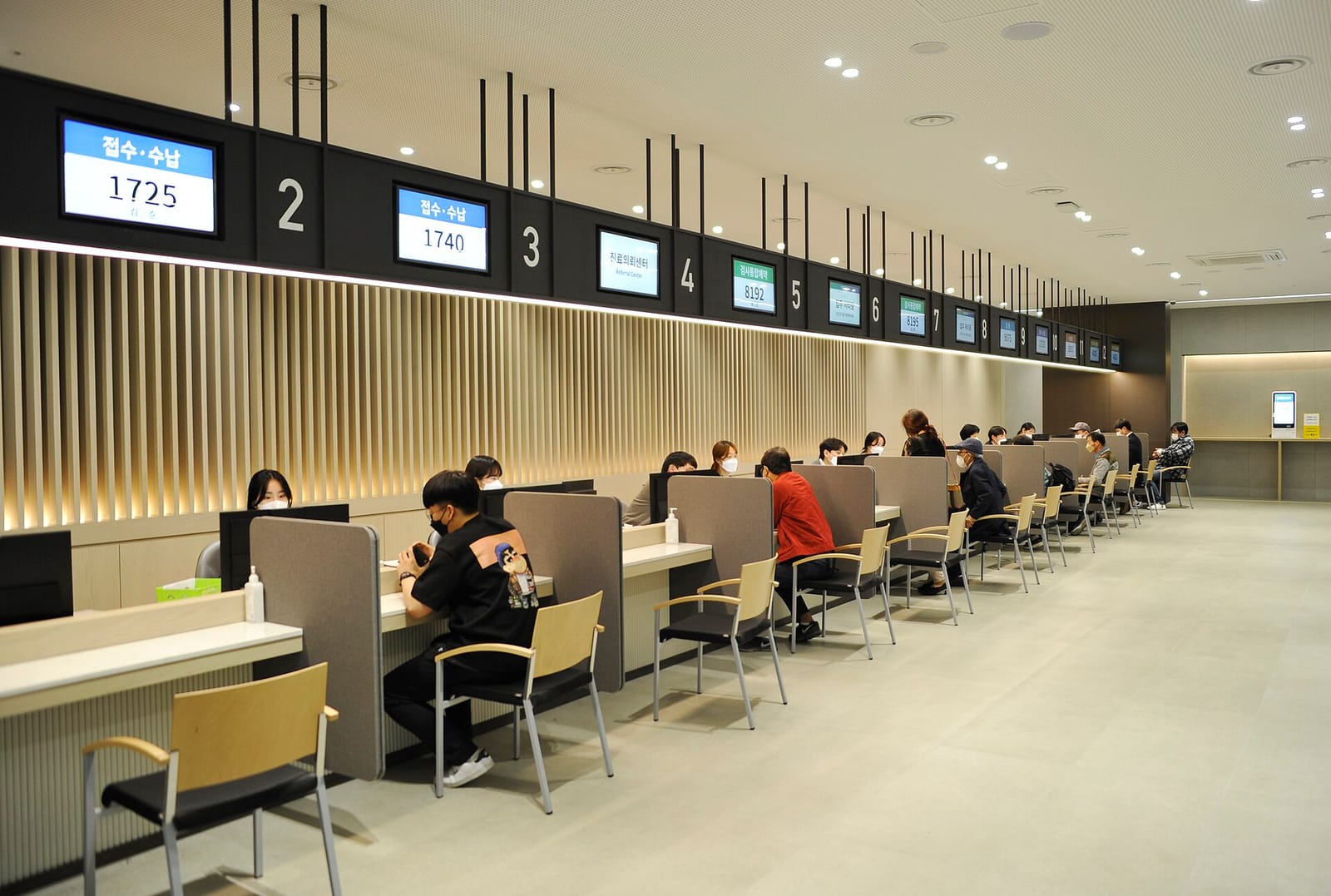
Most travel policies reimburse: you pay the Korean hospital, then claim from home, so the policy is only as good as the paper you walk out with. Ask for each document by name at the cashier (수납) or the records desk (원무과 or 의무기록실); some are certificates with a fee.
The fees are not entirely up to the hospital. Under the Medical Service Act (의료법), the health ministry sets an upper limit for each certificate in 「의료기관의 제증명수수료 항목 및 금액에 관한 기준」. Hospitals may charge anything from ₩0 up to that cap, must post their prices, and face correction orders and suspension if they charge more. The caps below are the amounts set in September 2017, as Medical Times reported them. The notice was revised on 5 February 2021 (제2021-34호); we could not confirm that revision's amount table, so check the price the hospital posts.
| Document (Korean) | What it is | Cap (2017 notice) | Why your insurer wants it |
|---|---|---|---|
| Medical bill receipt (진료비 영수증) | Proof of payment, issued when you pay | Not a certificate; given with payment | Shows you paid, and how much |
| Itemised statement (진료비 세부산정내역서, often called 세부내역서) | Line-by-line list of every fee, test and drug | Not a capped certificate; many hospitals issue it free | Shows what you paid for; the receipt alone usually is not enough |
| General diagnosis certificate (일반진단서) | Doctor's certificate with the diagnosis and its disease code | ₩20,000 | Proves the medical reason for the bill |
| English general diagnosis certificate (영문 일반진단서) | The same certificate in English | ₩20,000 | Saves translating the Korean one |
| Treatment confirmation (진료확인서) / outpatient visit confirmation (통원확인서) | Confirms the dates you were seen | ₩3,000 | Often accepted instead of a diagnosis certificate for small outpatient claims |
| Admission and discharge confirmation (입퇴원확인서) | Confirms the dates of a hospital stay | ₩3,000 | For hospital cash or inpatient benefits |
| Injury diagnosis certificate (상해진단서) | Certificate for an injury, with the expected recovery time | ₩100,000 (under 3 weeks) / ₩150,000 (3 weeks or more) | Only if your insurer asks for it; the general certificate is cheaper |
| Copy of scans on CD (진료기록영상 CD) | Your MRI, CT or X-ray images | ₩10,000 (DVD ₩20,000) | For the doctor at home, and for big claims |
Prices at or below those figures are what you should expect. The Health Insurance Review and Assessment Service's 2026 price data put the national median for an English diagnosis certificate at the full ₩20,000, but Hanyang University Seoul Hospital lists its receipts, its itemised statements (outpatient, inpatient and emergency) and its outpatient visit confirmation as free, and charges ₩1,000 to reissue a diagnosis certificate.
Note one trap: the injury certificate (상해진단서) was capped at five to seven times a general one. It is designed for accident and police cases. Unless your insurer specifically asks for it, ask for the 일반진단서 or 영문 일반진단서 instead.
A short script for the cashier, in the order you will need it:
- 영수증이랑 진료비 세부내역서 주세요. (Yeongsujeung-irang jinryobi sebu-naeyeokseo juseyo.) "The receipt and the itemised statement, please."
- 보험 청구용으로 영문 진단서도 발급해 주세요. (Boheom cheonggu-yong-euro yeongmun jindanseo-do balgeup-hae juseyo.) "An English diagnosis certificate too, for an insurance claim."
- 약국 영수증도 주세요. (Yakguk yeongsujeung-do juseyo.) At the pharmacy: "The pharmacy receipt too, please." Prescription drugs are bought separately, at a pharmacy (약국), and need their own receipt.
Get everything before you leave: a diagnosis certificate needs the doctor, who may not be there tomorrow.
What to look for in a policy for Korea
We do not rank policies or quote premiums; they depend on your age, country, trip length and insurer. Korea's own rules tell you what to check.
- A medical limit you can compare. The government's own benchmarks are ₩40,000,000 (about US$30,000) for a working holiday year and ₩100 million (about US$75,000) for a remote worker's stay, including repatriation.
- How claims work. Expect to pay the hospital and claim later. Check whether your insurer accepts Korean originals plus an English diagnosis certificate, and the claim deadline.
- Repatriation. The 119 ambulance costs nothing; a medical flight home is where the large numbers are.
- Flight delays are partly covered by Korean law whatever your policy says; see our flight delay compensation guide.
- Free local schemes are not a plan. In 2025 the Gyeonggi Tourism Organization ran a free accident insurance for foreign visitors in Gyeonggi Province, with injury treatment capped at ₩1,000,000 (about US$750), from 12 March to 31 December 2025. We found no 2026 renewal, and it was never meant to replace a travel policy.
You might like: Flu in Korea (2026): a ₩30,000 Rapid Test, a ₩30,000–₩40,000 Shot, and Who Gets the Free Vaccine
When something happens: numbers and order of steps
- Emergency: call 119. Fire, ambulance and rescue are one number, and the 119 ambulance is free. Money comes afterwards.
- Not an emergency, but you need help in English: call 1330. The Korea Tourism Organization's travel hotline answers 24 hours a day in English, Japanese and Chinese according to local-government guides, though the Korea Times gave its hours as 07:00 to 24:00 in March 2026, and it can interpret in a three-way call. From abroad it is +82-2-1330.
- Medical or infectious-disease questions: 1339, the Korea Disease Control and Prevention Agency's 24-hour line, which can bring in an interpreter for foreigners in a three-way call with 1330 or 1345.
- Call your insurer's assistance line before a planned admission or scan if your policy asks for pre-approval. Many do, and skipping it is a common reason claims are cut.
- Pay, then collect the papers from the table above, before you leave.
- Keep the passport you registered with. Korean hospitals register foreigners by passport, and every document will carry that name and number. Your policy should match it.
For the which-door question, pharmacy, clinic, ER or international clinic, see our Korean healthcare guide for tourists. This article is the money and paperwork side of the same trip.
The honest case against (or for) buying a policy
Travel insurance is not a legal requirement for a Korean holiday, and a clinic visit for a cold is ₩18,840 for the consultation, then a pharmacy. If that is the only risk you are weighing, you could pay it yourself.
The case for a policy is the bill nobody can quote in advance: an admission, surgery, or being flown home. Korea publishes no uninsured price for a week in hospital. If you already hold cover through a credit card or a home policy, check that it reimburses treatment abroad and which documents it wants, then use the list above.
FAQ
Q: Do I need travel insurance to enter Korea? No, not as a visa-free visitor or a K-ETA holder. The official K-ETA requirements are passport and trip details, a photo and a ₩10,000 fee, not insurance. The working holiday visa does require health insurance for your whole stay with at least ₩40,000,000 of cover, and the F-1-D workation visa requires ₩100 million.
Q: Can tourists use Korea's national health insurance? No. Foreigners join only by working at a Korean workplace or after six months as a registered foreigner. A tourist cannot register as a foreigner on a stay of 90 days or less, and there is no paid short-term option.
Q: How much does a hospital visit cost in Korea without insurance? In 2026 a clinic first visit consultation costs ₩18,840 (about US$14), and walking into an emergency room costs ₩22,690 to ₩68,070 for the access fee alone, depending on the ER's grade. Tests, scans and treatment are extra: a brain MRI has a national median of ₩450,000.
Q: What documents do I need from a Korean hospital for an insurance claim? Usually the receipt (진료비 영수증), the itemised statement (진료비 세부산정내역서) and a diagnosis certificate, ideally the English general diagnosis certificate (영문 일반진단서). Add the pharmacy receipt for prescription drugs and the admission and discharge confirmation (입퇴원확인서) if you stayed in hospital.
Q: How much does an English medical certificate cost in Korea? The health ministry's 2017 certificate-fee notice capped the English general diagnosis certificate at ₩20,000, the same as the Korean version, and treatment and outpatient confirmations at ₩3,000. The notice was revised in 2021 and we could not confirm the current amount table, so check the price the hospital posts. Hospitals may charge less, and some issue receipts and itemised statements free.
Q: Is the ambulance free in Korea for foreigners? The 119 fire-service ambulance is free for everyone, regardless of nationality or insurance. Private ambulances are metered: from ₩40,000 for the first 10 km since 14 August 2026.
Sources
- K-ETA portal (k-eta.go.kr), official application guide, read 20 November 2026: requirements and the ₩10,000 fee; no insurance listed. Exemption end date of 31 December 2026 as checked for our K-ETA guide.
- Ministry of Foreign Affairs, Working Holiday Info Center (whic.mofa.go.kr), "General Information", read 20 November 2026: health insurance valid throughout the stay with minimum coverage of ₩40,000,000; minimum funds of ₩3,000,000.
- Korean embassy notices on the F-1-D workation visa rules in force from 30 June 2026: ₩100 million private medical insurance (as documented in our F-1-D guide).
- National Health Insurance Act (국민건강보험법) Article 109 and Enforcement Decree; NHIS 2026 premium notice (₩158,630 minimum for foreign regional subscribers), as documented in our health insurance guide. Immigration Act (출입국관리법) Article 31: alien registration for stays over 90 days.
- Health Insurance Review and Assessment Service, Q&A of 12 September 2024 on the raised patient share for non-emergency ER visits: "대상 환자는 건강보험 환자를 대상으로 함".
- Ministry of Health and Welfare, 응급의료수가기준 (notice 제2014-83호), and NHIS 2026 conversion factors (₩83.8 hospital, ₩95.6 clinic); clinic consultation ₩18,840; Wonju Severance price list (₩29,580); ambulance fares from 14 August 2026; National Fire Agency on the free 119 ambulance: as calculated and sourced in our guide 480.
- Health Insurance Review and Assessment Service, 비급여 진료비용 정보 (hira.or.kr/npay), 2026 release: MRI medians and the ₩20,000 English diagnosis certificate median (queried 29 September 2026, guide 488); rapid flu test median ₩30,000 (queried 26 September 2026, guide 482).
- Severance international price (국제수가) for checkups, 30% above the Korean list: as documented in our checkup price guide, October 2026.
- Ministry of Health and Welfare, 「의료기관의 제증명수수료 항목 및 금액에 관한 기준」, issued 19 September 2017, in force 21 September 2017. Cap amounts as reported by 메디칼타임즈 (Medical Times), 19 September 2017 (medicaltimes.com/Main/News/NewsView.html?ID=1113944): ₩20,000 (general and English general diagnosis certificates), ₩100,000 / ₩150,000 (injury certificates), ₩3,000 (treatment, outpatient and admission confirmations), ₩10,000 / ₩20,000 (images on CD / DVD); posting duty and sanctions. The notice was revised on 5 February 2021 (제2021-34호, law.go.kr); we could not confirm the revised amount table.
- Hanyang University Seoul Hospital, online certificate issuance page, read 20 November 2026: free receipts, itemised statements and outpatient visit confirmation; ₩1,000 diagnosis certificate reissue.
- Gyeonggi Tourism Organization foreign visitor safety insurance, March 2025: KPI뉴스 (kpinews.kr/newsView/1065571525909176) and 국민일보/쿠키뉴스 (kukinews.com/article/view/kuk202503200084): ₩1,000,000 injury treatment cap, 12 March to 31 December 2025. No 2026 renewal found as of 20 November 2026.
- Korea Tourism Organization 1330 travel hotline: 24-hour service in English, Japanese and Chinese per local-government guides (Busan Metropolitan City English site, busan.go.kr/eng); Korea Times, 14 March 2026, gives 07:00–24:00; three-way interpretation per the UK Foreign Office's Korea travel advice.
- Korea Disease Control and Prevention Agency, 1339 call centre (kdca.go.kr/kdca/2777/subview.do): 24-hour medical and infectious-disease line; foreigners connected through three-way interpretation with 1330 or 1345.
You Might Also Like
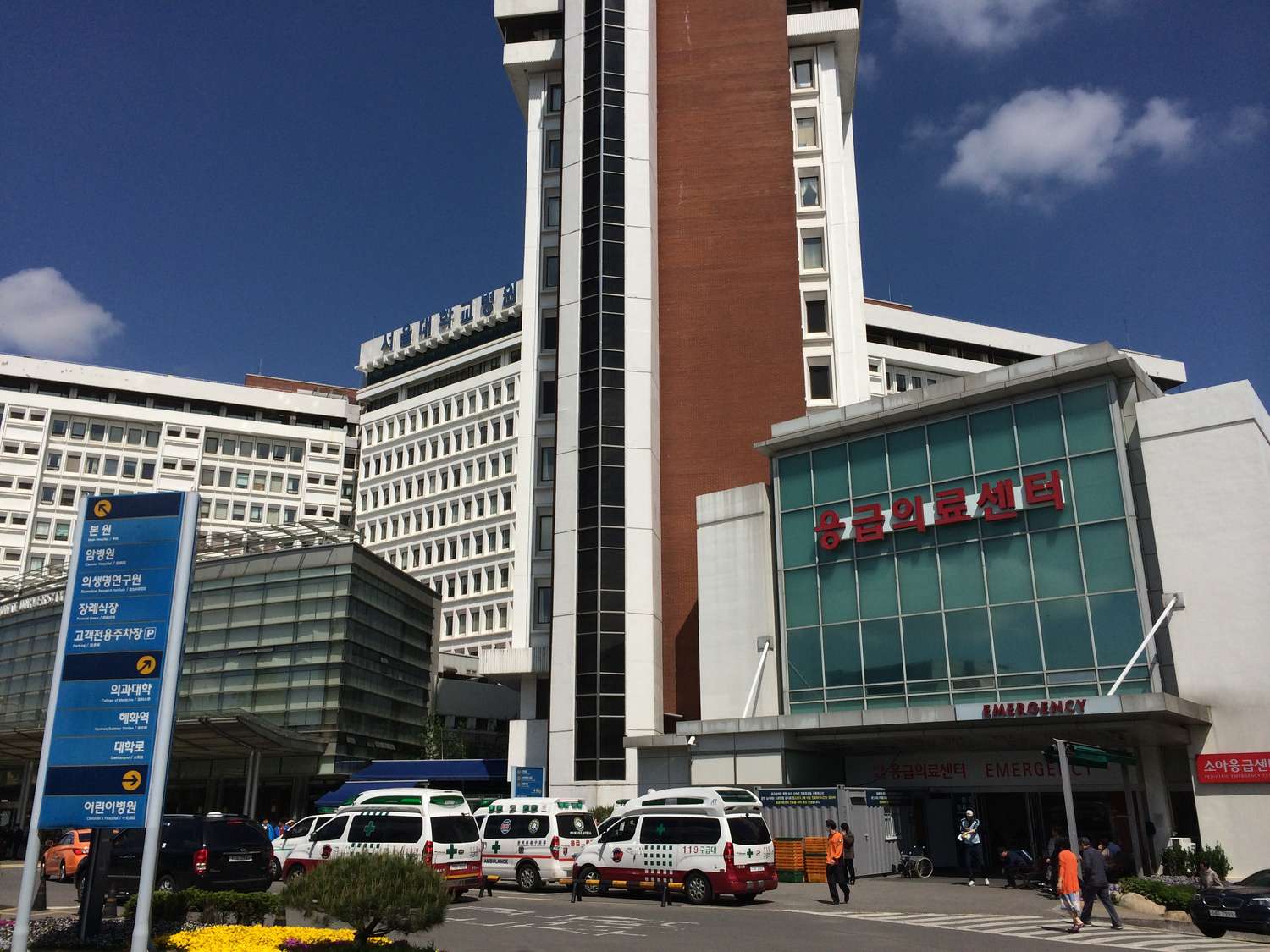
What a Doctor Costs in Korea Without Insurance (2026): ₩18,840 at a Clinic, ₩68,070 to Walk Into a Regional ER, and Why the 119 Ambulance Is Free
Korea's emergency-room access fee is not written in won. It is 812.28 relative value points times 2026's ₩83.8, making it ₩68,070 at a regional centre and ₩22,690 at a local one, against ₩18,840 at a clinic. The 119 ambulance is free.
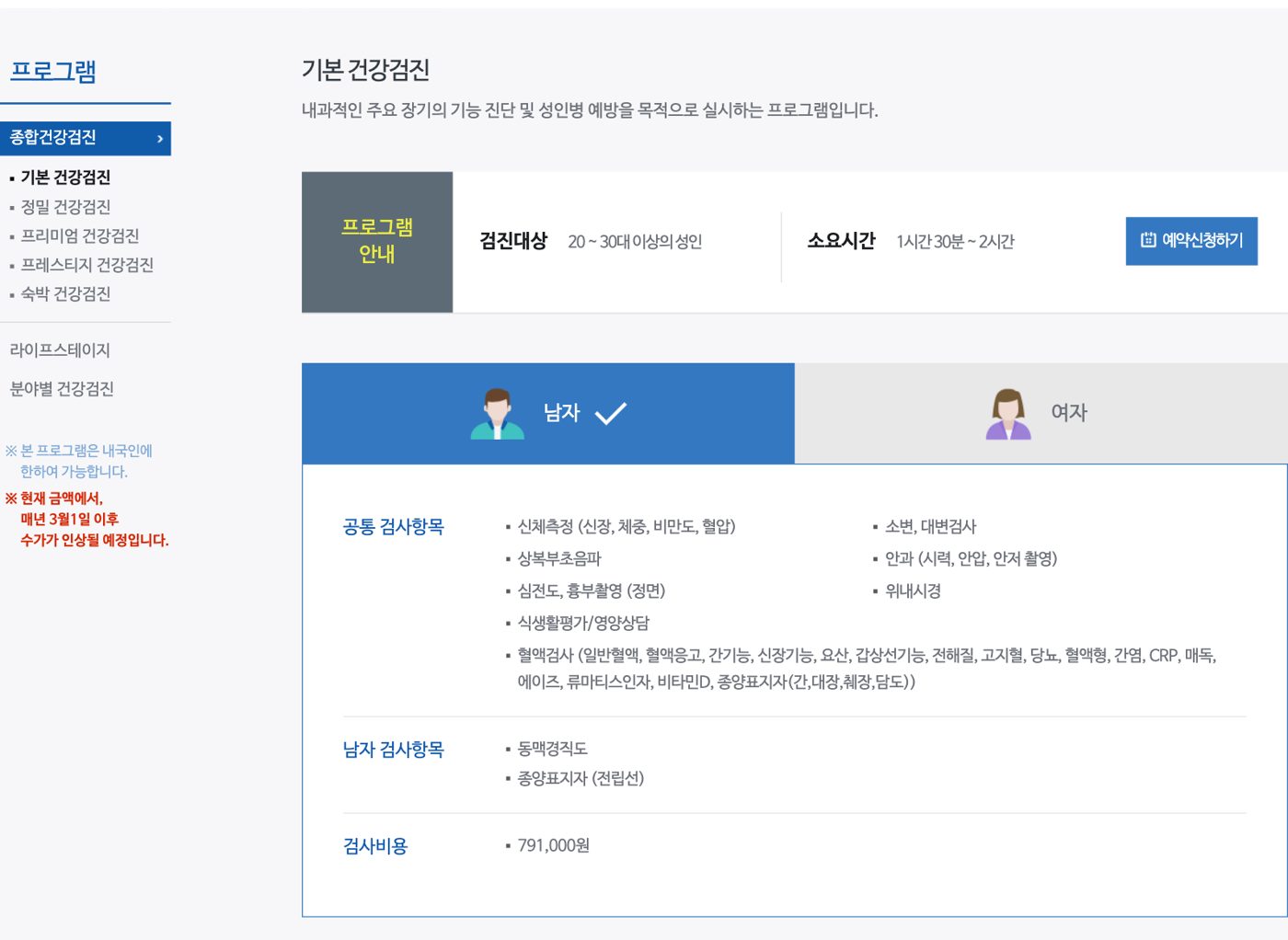
Health Checkup in Korea (2026): Hospitals Run Two Price Lists — ₩791,000 on Samsung's Korean Page, ₩1,874,000 on Its English One
Samsung Medical Center's Korean checkup page lists ₩791,000 "for Korean nationals only"; its English page lists ₩1,874,000. Severance charges foreigners without Korean insurance exactly 30% more. Both price lists, test by test, October 2026.
Flu in Korea (2026): The Advisory Came on 11 September, a Rapid Flu Test Costs ₩30,000 and a Flu Shot ₩30,000–₩40,000 Without Korean Insurance, and Short-Term Visitors Cannot Get the Free One
Korea declared its 2026–27 flu advisory on 11 September, the earliest date in KDCA's records back to 2011. Uninsured, a rapid flu test's median posted price is ₩30,000 and a shot ₩30,000–₩40,000. Visitors staying under 3 months get no free vaccine.