MRI Cost in Korea Without Insurance (2026): The Government's Data Puts a Brain MRI at ₩450,000 — ₩400,000 at a Clinic, ₩768,500 at a Teaching Hospital
Last updated: September 2026. Prices are from the Health Insurance Review and Assessment Service (건강보험심사평가원, HIRA) non-covered fee disclosure — the 2026 release of 753 items from 74,449 medical institutions, published on 3 September 2026 — queried item by item and hospital by hospital on 29 September 2026. This is a cost guide. It contains no medical advice, and nothing here tells you whether you need a scan.
Search "MRI cost in Korea" in English and you get ranges without a source. One guide for foreigners gives an MRI as ₩400,000 to ₩1,200,000 and a CT as ₩200,000 to ₩600,000, and says nothing about which body part, which kind of hospital, or where the numbers came from. Others quote a dollar figure "with insurance", which is no help if you do not have Korean insurance.
Korea publishes the real numbers, because the Medical Service Act makes every hospital and clinic report the prices it charges when insurance does not apply. HIRA lists 39 MRI body parts, each with and without contrast. A standard brain MRI (뇌 MRI) has a national median of ₩450,000, across about 1,370 prices reported by 1,156 institutions. At an ordinary clinic the median is ₩400,000. At a tertiary teaching hospital (상급종합병원) — the big university hospitals foreigners are usually sent to — it is ₩768,500, 1.9 times as much for the same scan. CT, the other big imaging test, has no line in the data at all. This guide shows what each number covers and how to find the exact price at any hospital.
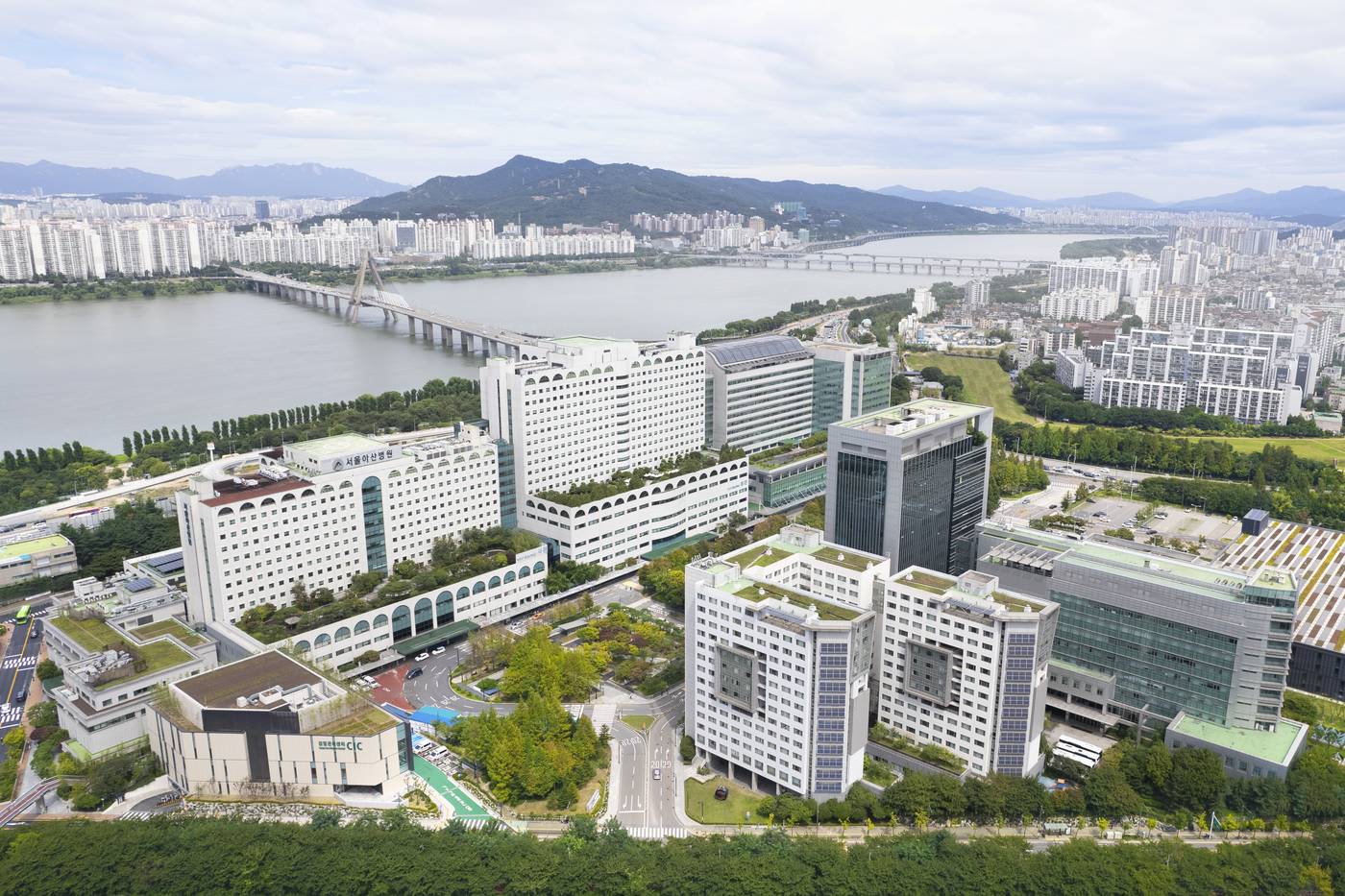
Asan Medical Center (서울아산병원) in Songpa, Seoul, one of the country's largest tertiary hospitals. In the 2026 data it reports a standard brain MRI at ₩553,000 to ₩1,022,000. Photo: Edit4567, Wikimedia Commons, CC BY-SA 4.0 (2022).
Korean hospitals hand your scan over on a disc — a USB-C drive to open it on a laptop: ASUS ZenDrive V1M External DVD DriveAffiliate link. As an Amazon Associate, EpicKor earns from qualifying purchases at no extra cost to you.
Quick Guide: what an MRI costs in Korea, by the government's numbers
| Scan (HIRA item) | 2026 national median | Clinic (의원) → teaching hospital (상급종합병원) | Reported range |
|---|---|---|---|
| Brain MRI, standard — 뇌 일반 (HE1010001) | ₩450,000 | ₩400,000 → ₩768,500 | ₩100,000 – ₩1,045,000 |
| Brain MRI with contrast — 뇌 조영제 주입 전·후 (HE2010001) | ₩600,000 | ₩400,000 → ₩835,370 | ₩300,000 – ₩1,375,000 |
| Brain blood vessels (MRA) — 혈관-뇌혈관 (HE1350001) | ₩450,000 | ₩350,000 → ₩725,000 | ₩70,000 – ₩1,208,000 |
| Lower back — 척추-요천추 (HE1110000) | ₩450,000 | ₩400,000 → ₩780,450 | ₩100,000 – ₩995,000 |
| Neck spine — 척추-경추 (HE1090000) | ₩450,000 | ₩400,000 → ₩792,750 | ₩100,000 – ₩1,235,460 |
| Knee — 근골격계-슬관절 (HE1200000) | ₩450,000 | ₩400,000 → ₩786,000 | ₩100,000 – ₩1,001,000 |
| Shoulder — 근골격계-견관절 (HE1150000) | ₩450,000 | ₩400,000 → ₩794,565 | ₩100,000 – ₩1,050,000 |
| Abdomen — 복부 (HE1270001) | ₩500,000 | ₩400,000 → ₩770,000 | ₩250,000 – ₩1,033,900 |
| Whole body — 전신 (HE1410001) | ₩1,000,000 | ₩800,000 → ₩1,165,000 | ₩200,000 – ₩1,961,000 |
| CT scan | No line in the 2026 non-covered data — see below | ||
| Copy of your images on CD — 진료기록영상/CD (PDZ110004) | ₩10,000 | Most common price ₩10,000; DVD median ₩20,000 | |
Prices are per scan, as each institution reported it; HIRA publishes them, it does not approve them. The pattern holds for almost every body part: about ₩400,000 at a clinic and ₩750,000–₩800,000 at a teaching hospital.
Valante Family Travel Document Organizer — a zip case for passports and the paperwork a claim needs A travel insurer will ask for the receipt (진료비 영수증), the itemised statement (진료비 세부내역서) and usually a doctor's note in English (영문진단서), which the hospital issues as a separate certificate. Keep them flat, together and next to the passport the hospital registered you under. As an Amazon Associate, EpicKor earns from qualifying purchases at no extra cost to you.
See the Valante document organizer on AmazonWhat the government price includes — and what it does not
Korean national health insurance covers MRI only when a doctor judges it medically necessary; everything else is 비급여 (bigeubyeo) — non-covered care, priced by each institution and reported to HIRA, which publishes the lot once a year. The 2026 release came out on 3 September 2026, and 1,138 of the 1,156 brain MRI listings took effect that day.
HIRA's glossary answers the question English pages skip — what is in the price? Under every standard MRI item it says: "판독료, 촬영료 등을 포함한 1회 비용입니다" — one scan, including the reading fee and the imaging fee. The radiologist's report is part of the number, not an extra.
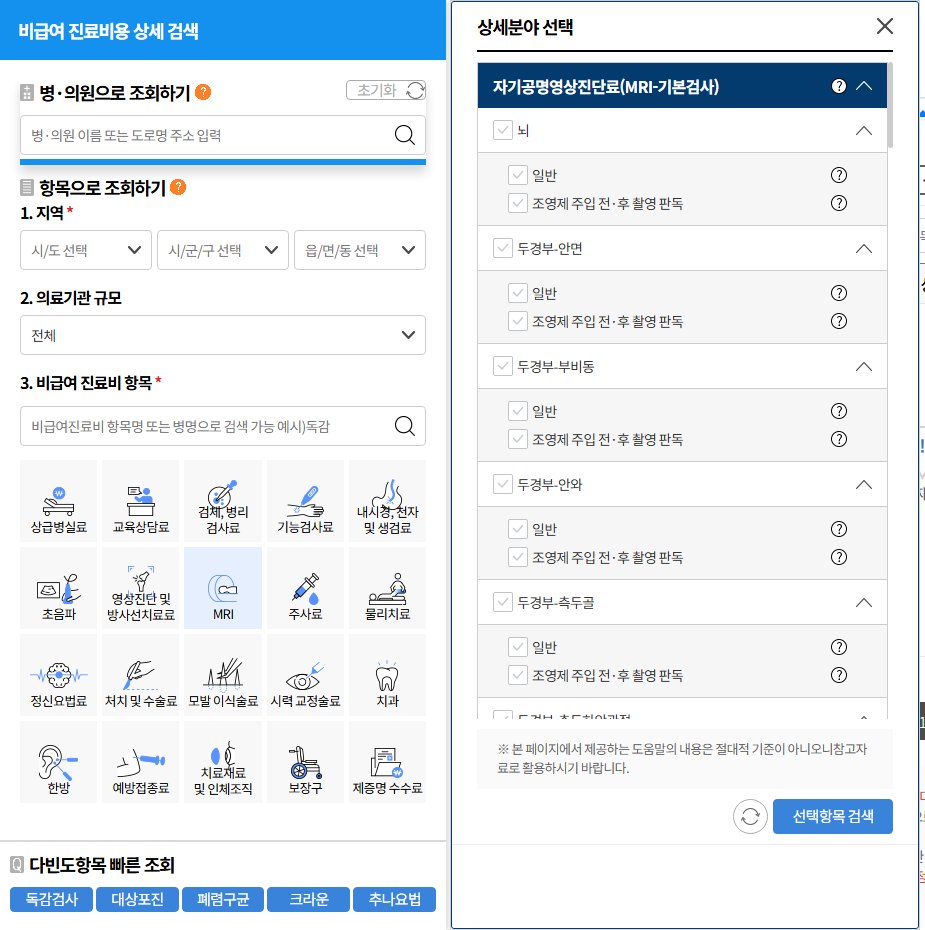
HIRA's MRI item list: every body part comes in two lines, 일반 (standard) and 조영제 주입 전·후 촬영 판독 (images before and after a contrast injection). Screenshot by EpicKor from hira.or.kr/npay, 29 September 2026.
Three things are not in it.
- Contrast is a different item, not a surcharge. If the doctor orders a scan with contrast, the hospital bills the contrast line instead of the standard one — for the brain, a national median of ₩600,000 instead of ₩450,000. HIRA's definition of that line mentions the imaging and the reading, and says nothing about the contrast drug itself. Ask whether the quote includes it.
- Special sequences are separate lines. HIRA lists seven MRI special tests (MRI-특수검사) on their own. The most common, diffusion imaging (확산), has a national median of ₩267,500 across 809 prices. A quote for "a brain MRI" may or may not include one.
- The doctor's visit is separate. A hospital will not scan you without an order from one of its own doctors. That consultation is its own charge — our guide to seeing a doctor without insurance has the 2026 numbers, starting at ₩18,840 at a clinic.
You might like: LASIK Cost in Korea (2026): The Government's Price Data Says ₩2.5 Million for Both Eyes
The size of the hospital sets the price, not the scan
HIRA splits every item by institution tier, and the brain MRI shows the pattern most clearly:
| Tier | Brain MRI, standard — median (prices) | Brain MRI with contrast — median (prices) | Whole-body MRI — median (prices) |
|---|---|---|---|
| 의원 — clinic, including imaging clinics (영상의학과의원) | ₩400,000 (267) | ₩400,000 (21) | ₩800,000 (12) |
| 병원 — hospital | ₩450,000 (566) | ₩455,000 (98) | ₩690,000 (11) |
| 종합병원 — general hospital | ₩550,000 (414) | ₩620,000 (201) | ₩929,000 (45) |
| 상급종합병원 — tertiary teaching hospital | ₩768,500 (94) | ₩835,370 (90) | ₩1,165,000 (34) |
The step from general hospital to teaching hospital is the expensive one: about ₩220,000 for the same brain scan. From clinic to teaching hospital the brain scan costs 1.92 times as much (our calculation from HIRA's tier medians), and the same gap holds for the spine (₩400,000 against ₩780,450 for the lower back), the knee and the shoulder.
It matters because foreign-patient desks and English-speaking international clinics are mostly found in the big teaching hospitals — the bottom row. Here is what the best-known Seoul names reported:
| Hospital (Korean name) | Tier | Brain MRI, standard (2026) | Whole-body MRI (2026) |
|---|---|---|---|
| Seoul National University Hospital (서울대학교병원), Jongno | Tertiary | ₩830,000 | ₩1,170,000 |
| Severance Hospital (세브란스병원), Sinchon | Tertiary | ₩980,000 | ₩1,350,000 |
| Samsung Medical Center (삼성서울병원), Gangnam | Tertiary | ₩995,000 | ₩1,389,000 |
| Asan Medical Center (서울아산병원), Songpa | Tertiary | ₩553,000 – ₩1,022,000 | ₩1,320,000 – ₩1,356,000 |
| Seoul St. Mary's Hospital (서울성모병원), Seocho | Tertiary | ₩610,000 – ₩899,000 | ₩1,302,000 |
| Korea University Anam Hospital (고려대학교 안암병원), Seongbuk | Tertiary | ₩1,045,000 — the national maximum, shared with its Guro hospital | Not reported |
| National Medical Center (국립중앙의료원), Jung-gu | General | ₩619,000 | Not reported |
Of the 14 Seoul tertiary hospitals that report this scan, the lowest single price is Hanyang University Hospital's (한양대학교병원) ₩749,000; Asan, Seoul St. Mary's and Kangbuk Samsung (강북삼성병원) report ranges that start lower, at ₩553,000, ₩610,000 and ₩689,000. At the other end of the market, all 17 branches of the Korea Association of Health Promotion (한국건강관리협회 건강증진의원), a non-profit health-screening network, report exactly ₩225,820 — about half the national median.
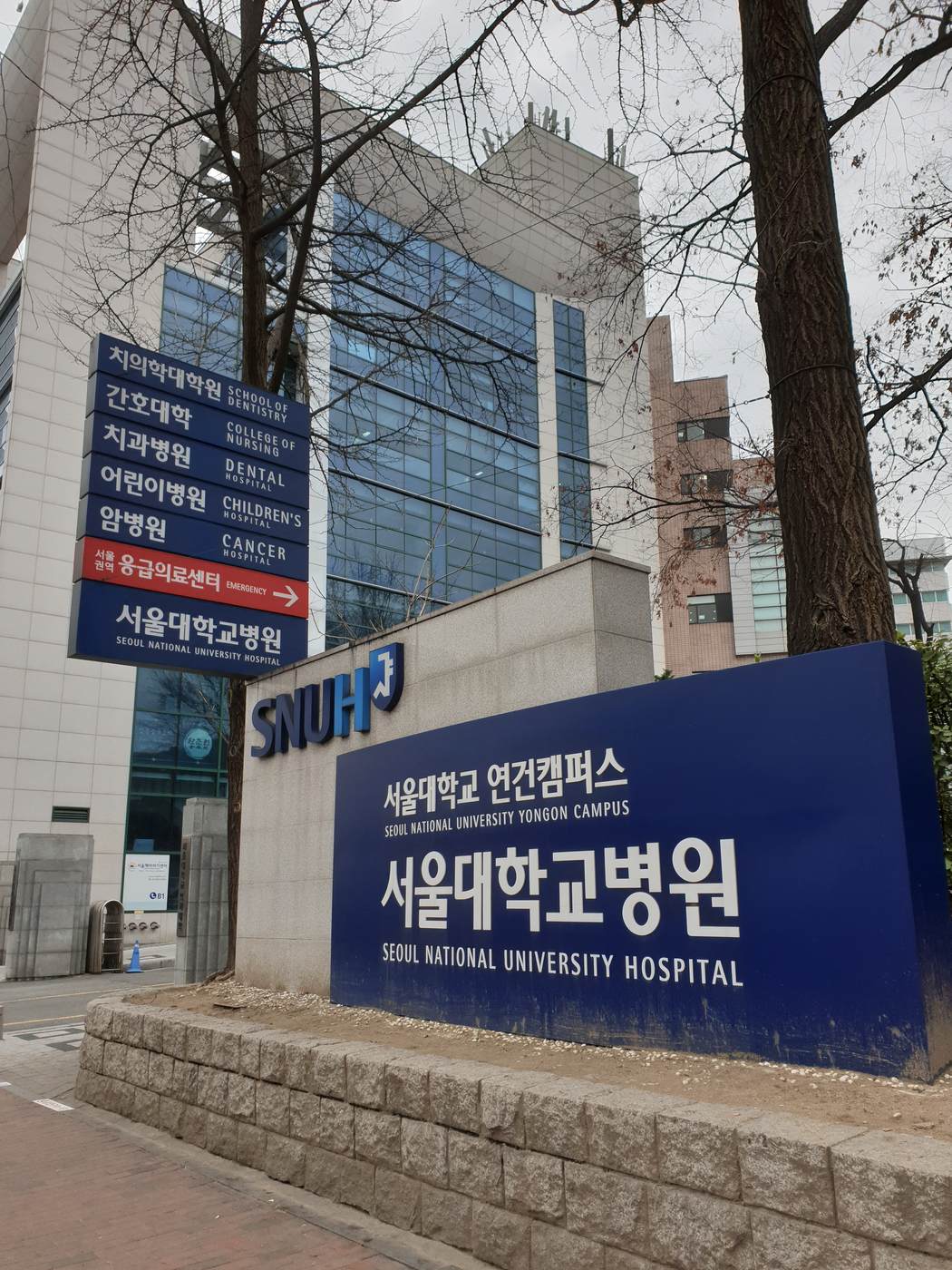
The main gate of Seoul National University Hospital. Its 2026 report puts a standard brain MRI at ₩830,000 — a little above the teaching-hospital median of ₩768,500, and about double the clinic median. Photo: Thddbfk, Wikimedia Commons, CC BY-SA 4.0 (2020).
Where in Korea: Jeju is the most expensive, Chungbuk the cheapest
By region, the brain MRI median runs from ₩400,000 in North Chungcheong (충북) to ₩620,000 on Jeju (제주) — the same 1.6-times gap Korean papers reported from the release. Seoul's median is ₩480,000 across about 315 prices, Busan's ₩500,000, Ulsan's ₩580,000, and Gyeonggi, around Seoul, ₩450,000. Jeju's figure rests on only 11 prices, but the island is not a cheap place to need a scan.
You might like: Dental Implant Cost in Korea (2026): The Government's Own Price Data Says ₩1.19 Million
Why a Korean pays ₩140,000 and you pay the posted price
English pages quote far lower MRI prices "with insurance", and for residents they are real. Korea moved MRI into national health insurance body part by body part: the brain on 1 October 2018, the spine in March 2022. The Ministry of Health and Welfare's 2018 example: at a general hospital, a brain MRI patient had paid an average of ₩480,000 and would now pay about ₩140,000 (university hospitals: ₩660,000 to ₩180,000). A resident pays 30 percent of a covered outpatient scan at a clinic, 60 percent at a teaching hospital. Two conditions sit under those numbers.
- You have to be insured. Foreigners staying six months or more have been enrolled automatically since 16 July 2019. A tourist or short-stay visitor is outside the system.
- The scan has to be medically necessary. Since 1 October 2023, a brain MRI for headache or dizziness is covered only when the doctor suspects brain disease. When the doctor judges it unnecessary for simple migraine or chronic headache and the patient wants one anyway, the ministry says "건강보험이 적용되지 않는다" — insurance does not apply.
That second case is exactly the price in HIRA's data, and it is the benchmark for a visitor without Korean insurance, who is billed as a non-covered patient. Article 45 of the Medical Service Act forbids a hospital from charging more than the non-covered price it has posted. Large hospitals often route foreign patients through an international clinic, so ask for a written estimate that names the scan the way HIRA does — body part, standard or contrast, any special sequence.
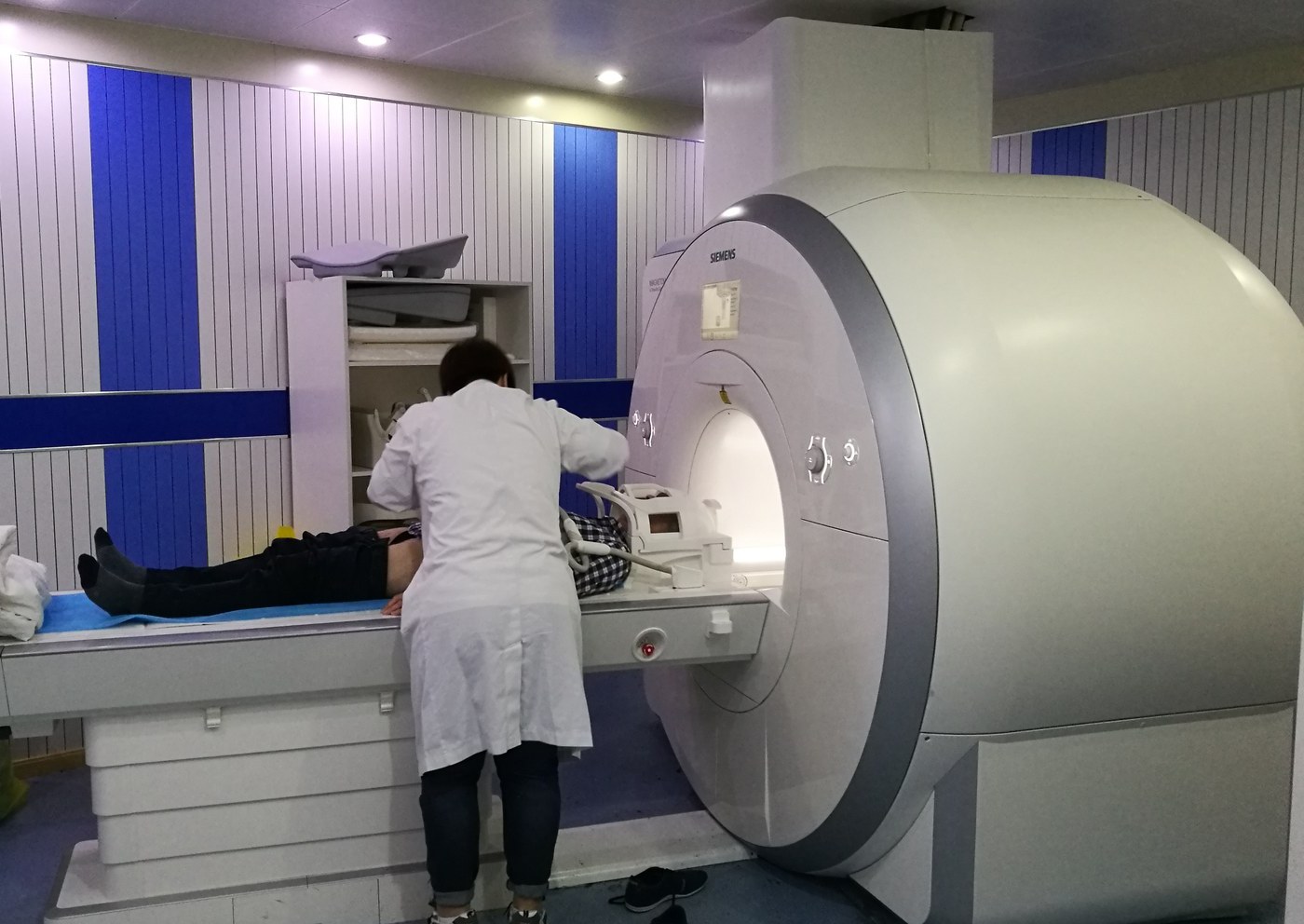
A patient being positioned for a head scan on a Siemens MAGNETOM Aera, a 1.5-tesla scanner. It illustrates the procedure and was not taken in Korea. Photo: Ptrump16, Wikimedia Commons, CC BY-SA 4.0 (2017), cropped.
"Full-body MRI": what the government line says
Korean health-check centres sell MRI-heavy screening packages to foreigners. The government data has one line that matches the phrase: 전신 (whole body), reported by 92 institutions. Its national median is ₩1,000,000, the average ₩980,432, and the range ₩200,000 to ₩1,961,000; teaching hospitals report a median of ₩1,165,000, and the top price in Korea belongs to Inje University Ilsan Paik Hospital (인제대학교 일산백병원) at up to ₩1,961,000. A few Seoul screening clinics report it too: CHA's Chaum clinic (차움의원) in Gangnam at ₩1,450,000, Kangbuk Samsung's Taepyeong-ro clinic (강북삼성태평로의원) at ₩1,200,000, and Hanaro clinic (하나로의원) at ₩1,050,000.
Packages are not in the disclosure: a check-up programme bundles tests at one price. If a package lists "brain MRI" or "whole-body MRI", ask which HIRA items it contains and compare each with the lines above.
CT: the scan with no government price
CT has no line in the 2026 list at all — no 전산화단층영상 item, no median, no range. The disclosure covers care that insurance does not pay for, and CT is priced within the insurance system, so there is no public benchmark for a visitor. The English-page range (₩200,000 to ₩600,000 in the guide quoted above) has no source, and we could not verify it. Ask the hospital for its written price before the scan.
How to look up a specific Korean hospital's MRI price
The database is searchable hospital by hospital, free and in Korean.
- Go to hira.or.kr/npay (비급여 진료비용 정보), or open HIRA's app 건강e음. Tick the box on the notice about commercial use of the data and close it.
- Under 항목으로 조회하기 (search by item), choose a region: 시/도, then 시/군/구 — for example 서울 → 종로구.
- Tap the MRI icon. In the panel that opens, tick the body part and the version: 일반 (standard) or 조영제 주입 전·후 촬영 판독 (with contrast). The question mark beside each opens HIRA's definition.
- Press 선택항목 검색. Each result shows the hospital, its tier and its lowest and highest reported price. 지역별·규모별 금액 비교 gives the regional and tier medians used in this guide.
- To check one hospital, type its Korean name under 병·의원으로 조회하기 instead — 서울대학교병원, 세브란스병원, 삼성서울병원.
Then compare with the hospital's own posted list, which Article 45 of the Medical Service Act requires it to display.
What to ask for before and after the scan
- Ask for the scan by name. "Brain MRI, standard, no contrast" (뇌 MRI 일반) is a different price from "with contrast" (조영제). If the doctor adds contrast or a diffusion sequence, ask what it adds.
- Ask for your images on a disc. Korean hospitals copy scans onto CD as a separate certificate fee; the 2026 median is ₩10,000, the same as a USB copy, and a DVD is ₩20,000. The report and the images are what a doctor at home will ask for.
- Get both pieces of paper. The 진료비 영수증 (receipt) and the 진료비 세부내역서 (itemised statement) — the second is the one that shows which MRI line you were billed. Our doctor-cost guide explains the difference.
- Bring your passport and a card. Registration starts with identification; our payment guide covers the terminals where foreign cards fail.
The honest part: when this guide is the wrong guide
- In an emergency, none of this applies first. A suspected stroke or head injury goes to an emergency room; call 119, the ambulance is free. Our healthcare guide for tourists covers the rest.
- The cheapest scan is not always the right one. If you need a specialist to act on the result the same day, the teaching-hospital premium buys the specialist, not a better magnet.
- A scan nobody ordered is often a scan you do not need. If a Korean doctor says the MRI is unnecessary, your insurer may say the same when you claim.
- Prices change. HIRA's figures are what hospitals reported for the 2026 release, and a price can change after that; the hospital's posted list on the day is the one that binds it.
- This is a price guide, not medical advice. Whether you need an MRI, a CT or nothing at all is for the examining doctor.
You might like: Flu in Korea (2026): a ₩30,000 Rapid Test, a ₩30,000–₩40,000 Shot, and Who Gets the Free Vaccine
FAQ
Q: How much does an MRI cost in Korea without insurance in 2026? A: For a standard brain MRI, the government's 2026 non-covered fee data gives a national median of ₩450,000 (about 1,370 prices from 1,156 institutions): ₩400,000 at clinics and ₩768,500 at tertiary teaching hospitals, including the radiologist's reading. Spine, knee and shoulder MRIs have the same national median.
Q: How much is a brain MRI with contrast in Korea? A: The contrast version is a separate item, with a 2026 national median of ₩600,000 and a teaching-hospital median of ₩835,370. HIRA's definition covers the imaging and the reading; ask the hospital whether its quote includes the contrast drug.
Q: How much does a full-body MRI cost in Korea? A: HIRA's whole-body MRI item (전신) has a 2026 national median of ₩1,000,000 across 92 institutions; Seoul's teaching hospitals report ₩835,000 (Konkuk University Hospital) to ₩1,389,000 (Samsung Medical Center). Health-check packages are bundles and are not in the data.
Q: How much does a CT scan cost in Korea? A: There is no government non-covered figure: CT has no line in HIRA's 2026 list, because it is priced inside the insurance system. Ask the hospital for a written price before the scan.
Q: Can I get my MRI images to take home? A: Yes. Hospitals copy images onto CD, DVD or USB as a certificate fee; the 2026 national median is ₩10,000 for a CD or USB and ₩20,000 for a DVD. An English diagnosis certificate (영문진단서) has a median of ₩20,000.
Sources
- Health Insurance Review and Assessment Service (건강보험심사평가원), 비급여 진료비용 정보 (hira.or.kr/npay), queried 29 September 2026: MRI items HE1010001 뇌/일반, HE2010001 뇌/조영제, HE1350001 뇌혈관, HE1090000 경추, HE1110000 요천추, HE1150000 견관절, HE1200000 슬관절, HE1270001 복부, HE1410001 전신 and HF1010000 확산 — national, tier and regional medians, averages, ranges and price counts (지역별·규모별 금액 비교); institution listings for HE1010001 (1,156 institutions) and HE1410001 (92), 공개연월 202608; the item glossary; certificate fees PDZ110004–110006 and PDE010001. No CT item appears in the item list.
- 헬스경향 and 메디파나뉴스 on the 3 September 2026 release (753 items, 74,449 institutions; Chungbuk ₩400,000 and Jeju ₩620,000 regional medians).
- Ministry of Health and Welfare (보건복지부) via 정책브리핑: brain MRI coverage from 1 October 2018 with before-and-after costs (2018); coverage limited to suspected brain disease from 1 October 2023 (17 July 2023). 메디포뉴스 (2022) on spine MRI coverage from March 2022.
- National Health Insurance Service (국민건강보험공단), 2019: automatic enrolment of foreigners staying six months or more from 16 July 2019.
- Medical Service Act (의료법) Article 45: posting of non-covered prices and the ban on charging above them.
- careinkorea.com, "Medical Costs in Korea Without Insurance", read 29 September 2026: the unsourced MRI and CT ranges quoted in the introduction, as an example of English-language pricing, not as data.
You Might Also Like
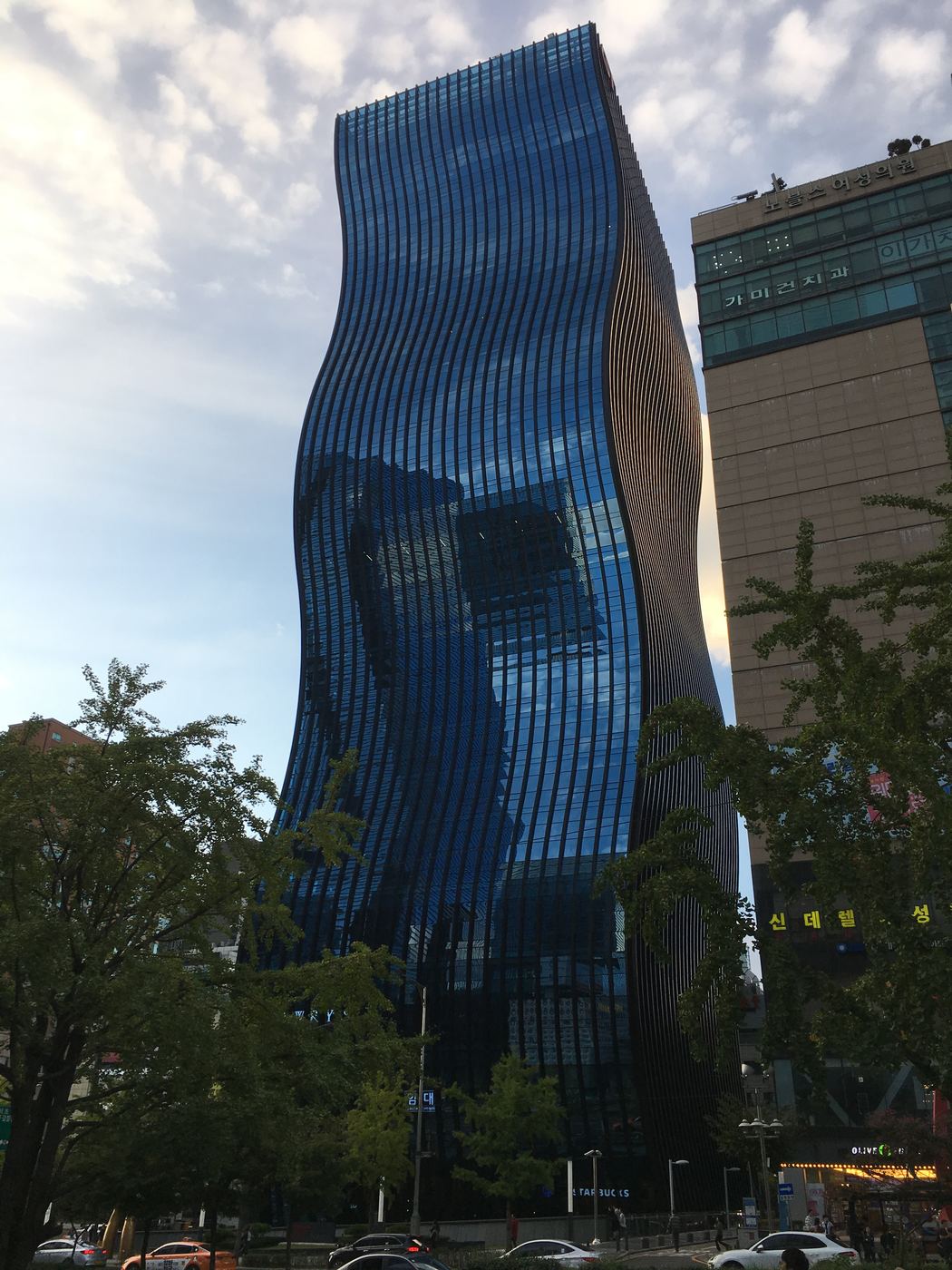
LASIK Cost in Korea (2026): The Government's Price Data Says ₩2.5 Million for Both Eyes, LASEK ₩1.6 Million, and SMILE Is Hiding Inside the LASIK Number
Korea's official fee data puts LASIK at a national median of ₩2,500,000 for both eyes, not one, and LASEK at ₩1,600,000. SMILE has no line of its own, and the ₩7.7 million top price is one clinic's SmilePro. How to check any Korean clinic.
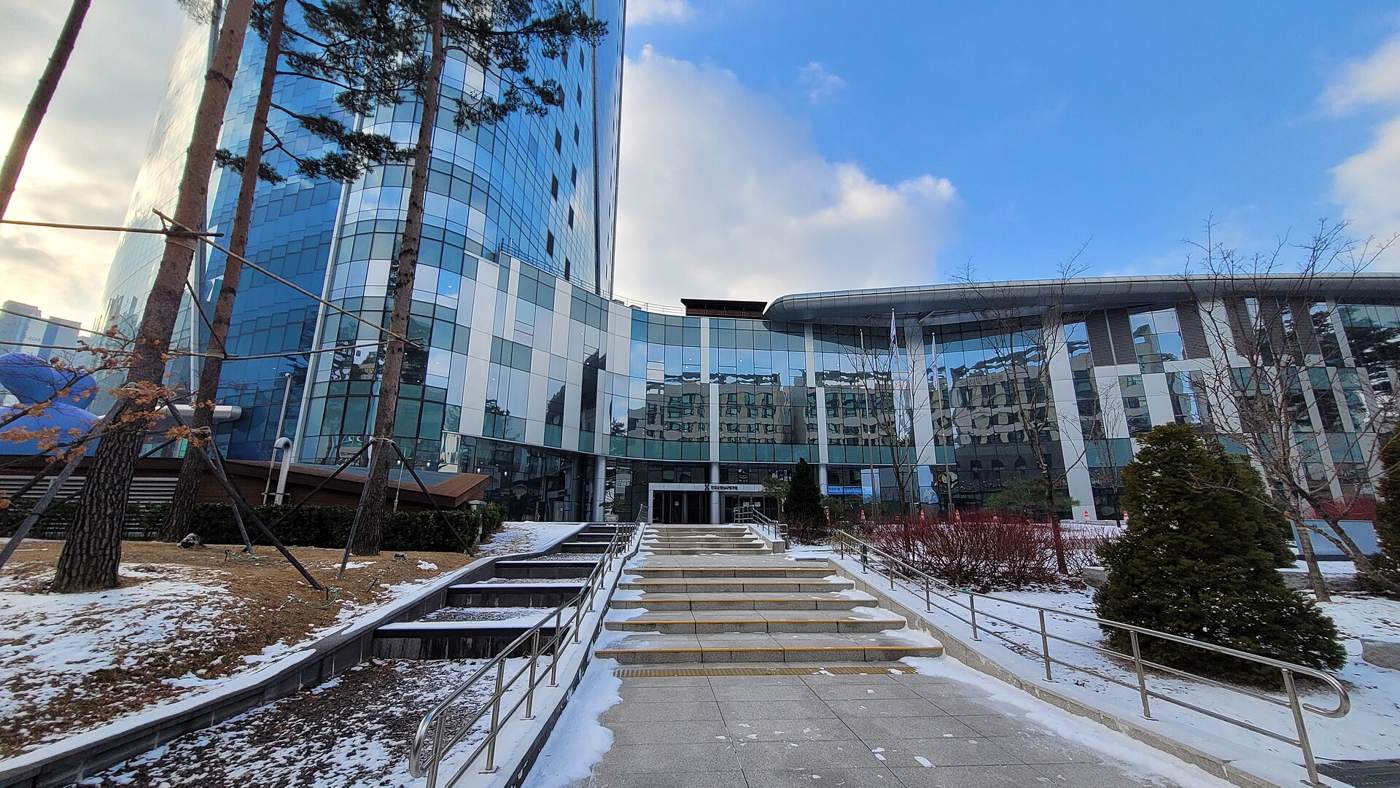
Dental Implant Cost in Korea (2026): The Government's Own Price Data Says ₩1.19 Million, Not the ₩1.5–3 Million the Clinic Ads Quote
Korea publishes what every clinic charges. The 2026 government data puts a dental implant at a national median of ₩1,190,000, below where most English clinic ads start. Crowns, fillings, scaling, and how to check any clinic's price yourself.
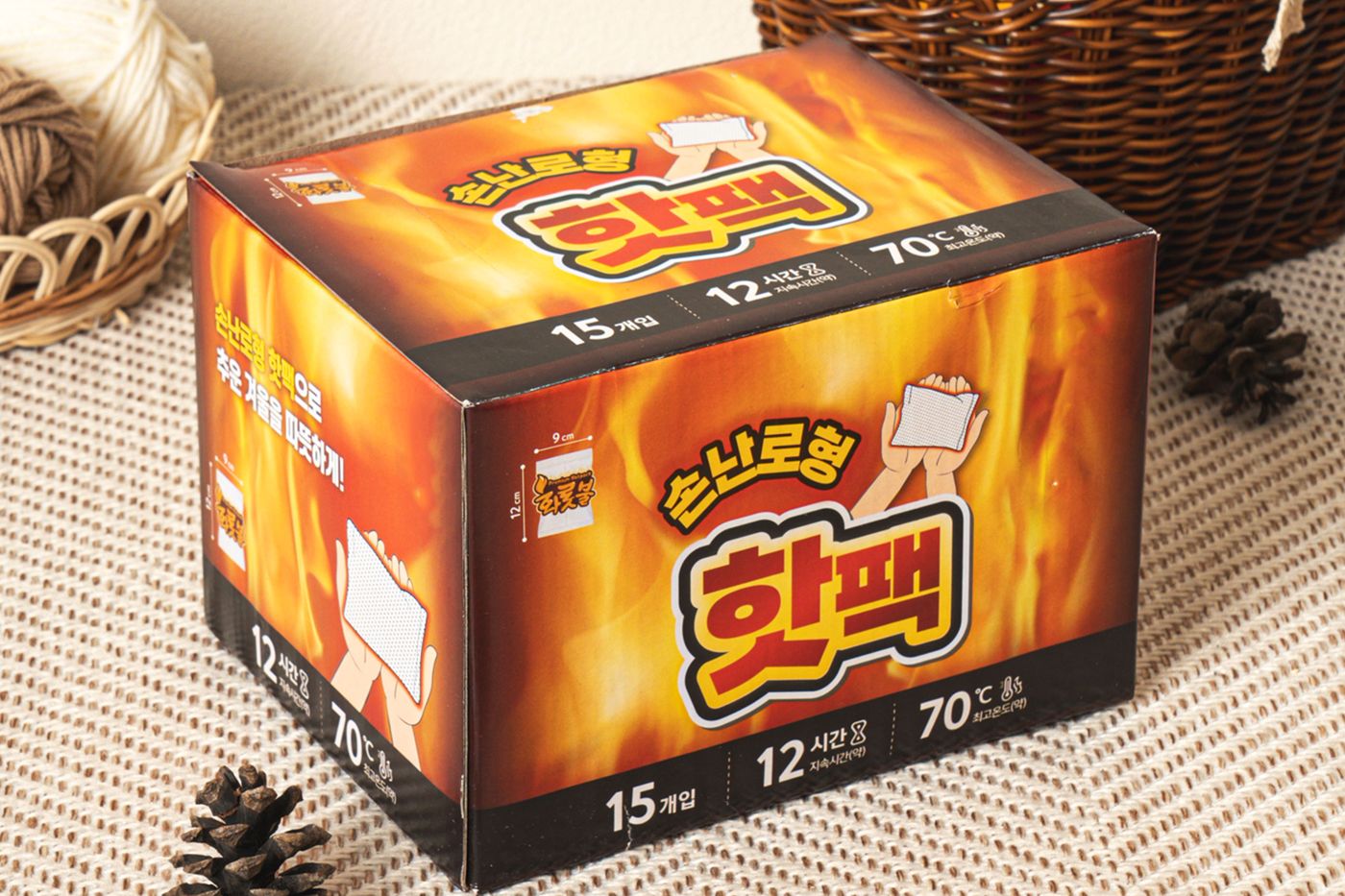
Korean Hot Packs (핫팩) This Winter: Korea's 70°C Legal Limit, What They Cost at Daiso, CU and GS25, and Which Ones You Can Fly With
Korea's safety standard caps a hot pack at 70°C, and a consumer-agency survey once caught two packs labelled 75°C. Daiso sells them from ₩1,000, stick-on packs stop at 63°C, and Korean airlines ban rechargeable warmers with built-in batteries.