Flu in Korea (2026): The Advisory Came on 11 September, a Rapid Flu Test Costs ₩30,000 and a Flu Shot ₩30,000–₩40,000 Without Korean Insurance, and Short-Term Visitors Cannot Get the Free One
Last updated: September 2026. Sources: the Korea Disease Control and Prevention Agency (질병관리청, KDCA) press release of 11 September 2026, its revised vaccination notice of 16 September and its 2026 National Immunization Guidelines; the Health Insurance Review and Assessment Service (건강보험심사평가원, HIRA) non-covered fee data, 2026 release, queried on 26 September 2026; and Seoul Metropolitan Government's June 2026 notice on late-night pharmacies. This is a guide to cost and procedure, not medical advice.
The English-language news got the headline right. Korea's disease agency declared a nationwide influenza epidemic advisory from 00:00 on 11 September 2026, and outlets from SBS to the Seoul Economic Daily reported that cases were running 3.8 times last year's level. What none of them told a foreign reader was the part that decides your week if you start shivering in a Seoul hotel room: what a flu test costs if you are not in Korean national health insurance, what a flu shot costs, and whether the free government vaccine is open to you at all.
Korea publishes all three answers — in Korean. The price of a rapid flu test and of every brand of flu vaccine sits in HIRA's non-covered fee database — the test alone is priced by 14,863 medical institutions. The rule on foreigners sits in one line of KDCA's national vaccination guidelines: "3개월 미만 단기 체류자의 경우 지원 대상에 해당하지 않음" — short-term stayers of under three months are not eligible. This guide puts those numbers in one place, then covers the other problem with a fever at 23:00: finding a pharmacy that is open.
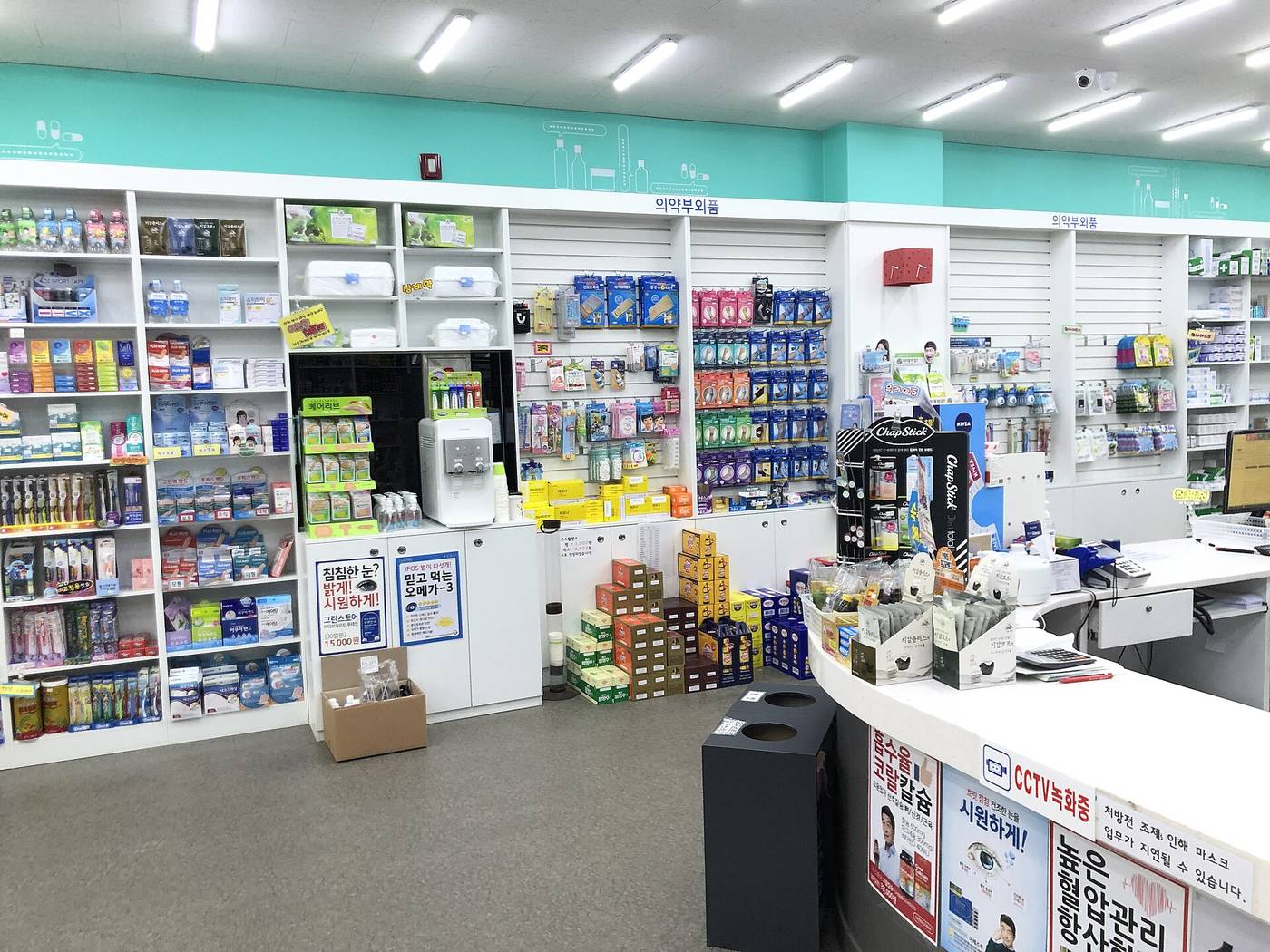
A neighbourhood 약국 (yakguk, pharmacy) in Hoengseong, Gangwon Province: over-the-counter shelves on the left, the dispensing counter on the right. Taken in March 2020, during mask rationing — the note on the counter is about masks. Photo: Choi Kwang-mo, Wikimedia Commons, CC0.
Korean clinics usually take your temperature at the desk — pack your own: Vicks SpeedRead V912US digital thermometerAffiliate link. As an Amazon Associate, EpicKor earns from qualifying purchases at no extra cost to you.
Quick Guide: flu in Korea in autumn 2026, by the numbers
| Question | Answer | Source |
|---|---|---|
| Is there a flu epidemic in Korea? | Yes. Advisory in force from 00:00, 11 September 2026: 25.3 flu-like cases per 1,000 outpatients against a threshold of 12.9 | KDCA, 11 Sep 2026 |
| Rapid flu A/B test, uninsured | Median posted price ₩30,000 (range ₩5,000–₩100,000) | HIRA 2026, 15,012 prices from 14,863 institutions |
| Paid flu shot, standard vaccines | Median ₩30,000–₩40,000 depending on brand | HIRA 2026, vaccine included |
| Free national flu shot | Children 6 months–14, pregnant women, 65+; to 30 April 2027 | KDCA notice, 16 Sep 2026 |
| Can a foreigner get the free shot? | Only if you are in an eligible group (child, pregnant, 65+) and hold an alien registration number or are staying 3 months or more; no for stays under 3 months | KDCA 2026 guidelines |
| Seoul public late-night pharmacies | 39 across 25 districts, 22:00–01:00; 28 open every day | Seoul, 4 Jun 2026 |
| Night surcharge at a pharmacy | +30% on dispensing fees for a prescription, 18:00–09:00 on weekdays (from 13:00 on Saturdays) and all day on public holidays | HIRA |
| Disease hotline | 1339, 24 hours; English via a three-way call with 1330 | KDCA |
Every price above is what institutions themselves report to the government. HIRA publishes them; it does not set or approve them.
KN FLAX KF94 masks, made in Korea — 10 individually wrapped KDCA's advisory asks anyone with respiratory symptoms to wear a mask and to wear one in crowded places. KF94 is the Korean certification grade you will see on pharmacy shelves in Seoul; bringing a few in your bag means one less errand on the day you feel ill. As an Amazon Associate, EpicKor earns from qualifying purchases at no extra cost to you.
See the KF94 masks on AmazonWhat the 11 September advisory actually says
In epidemiological week 36 (30 August to 5 September 2026), sentinel clinics recorded 25.3 influenza-like illness cases per 1,000 outpatients — "influenza-like" meaning a fever of 38°C or higher with a cough or sore throat. This season's epidemic threshold is 12.9. The same week last year recorded 6.6, which is where the "3.8 times" in the English headlines comes from.
Over four weeks the rate went 7.5 → 9.2 → 13.3 → 25.3. Flu admissions at sentinel hospitals went 78 → 89 → 166 → 300, against 23 in the same week of last season — the "13 times" figure; 60% of those inpatients were 65 or older. The circulating strain is mostly A(H1N1)pdm09, which KDCA says is similar to this season's vaccine strain, with no mutation affecting antiviral resistance. Schoolchildren lead: 75.1 per 1,000 among 7- to 12-year-olds, against 23.5 among adults aged 19 to 49.
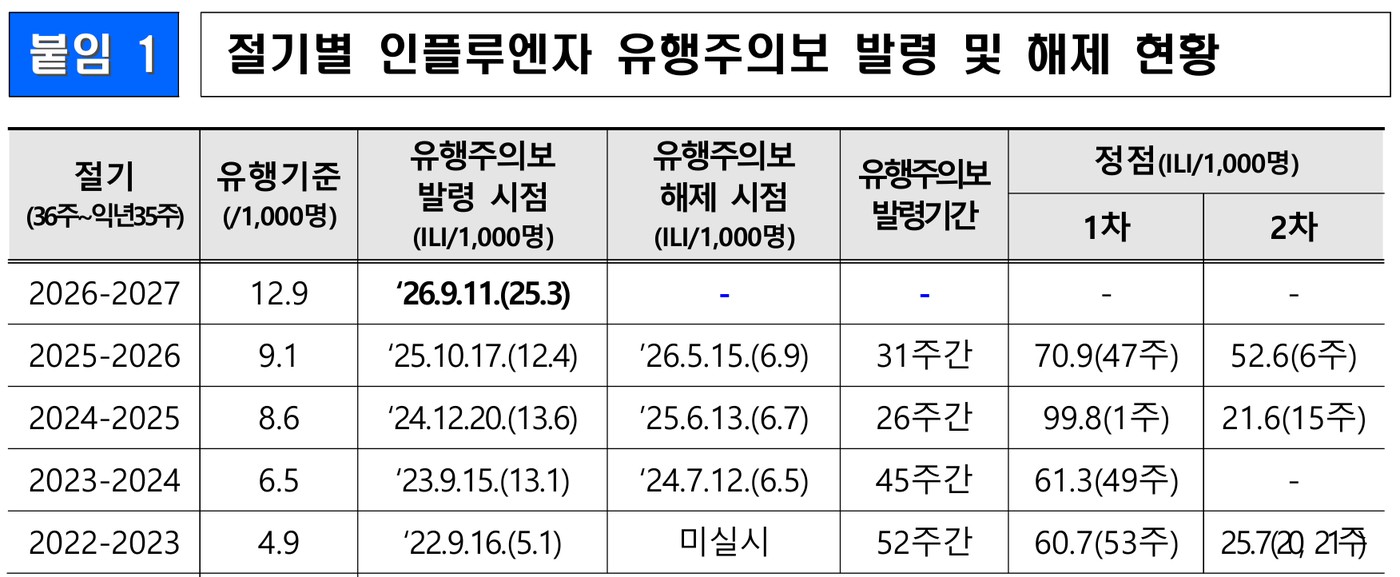
KDCA's own record of advisory dates, from the annex to the 11 September release. Last season's advisory came on 17 October; the season before, on 20 December. Source: 질병관리청 보도참고자료, 11 September 2026, KOGL (공공누리) free-use licence.
English coverage skipped that table. It runs back to the 2011–12 season, and 11 September is the earliest issue date on it — ahead of 15 September 2023 and five weeks before last year's 17 October. One caution: this season KDCA expanded its sentinel network from 300 to 800 clinics, so year-to-year rates are not measured on an identical base.
The advisory changes one rule, and it is a rule for the insured. While it is in force, patients in high-risk groups — children (aged 9 and under for oseltamivir), pregnant women and women within two weeks of giving birth, people 65 and over, the immunocompromised and people with chronic conditions — can have oseltamivir (Tamiflu) or zanamivir (Relenza) covered by national health insurance without a flu test, on the doctor's judgment. Anyone with a positive rapid test or PCR is covered at any time. If you are not in Korean national health insurance, none of this changes your bill.
You might like: What a Doctor Costs in Korea Without Insurance (2026): ₩18,840 at a Clinic
What a flu test costs without Korean insurance
For a visitor outside Korean insurance, the useful figure is the price clinics post for the test as a non-covered (비급여) item. HIRA lists it as 인플루엔자 A·B 바이러스항원검사[현장검사] — influenza A/B virus antigen test, point-of-care — with the definition "a test that rapidly diagnoses infection using fluid taken from inside the nose or the nasopharynx of a patient suspected of influenza A or B."
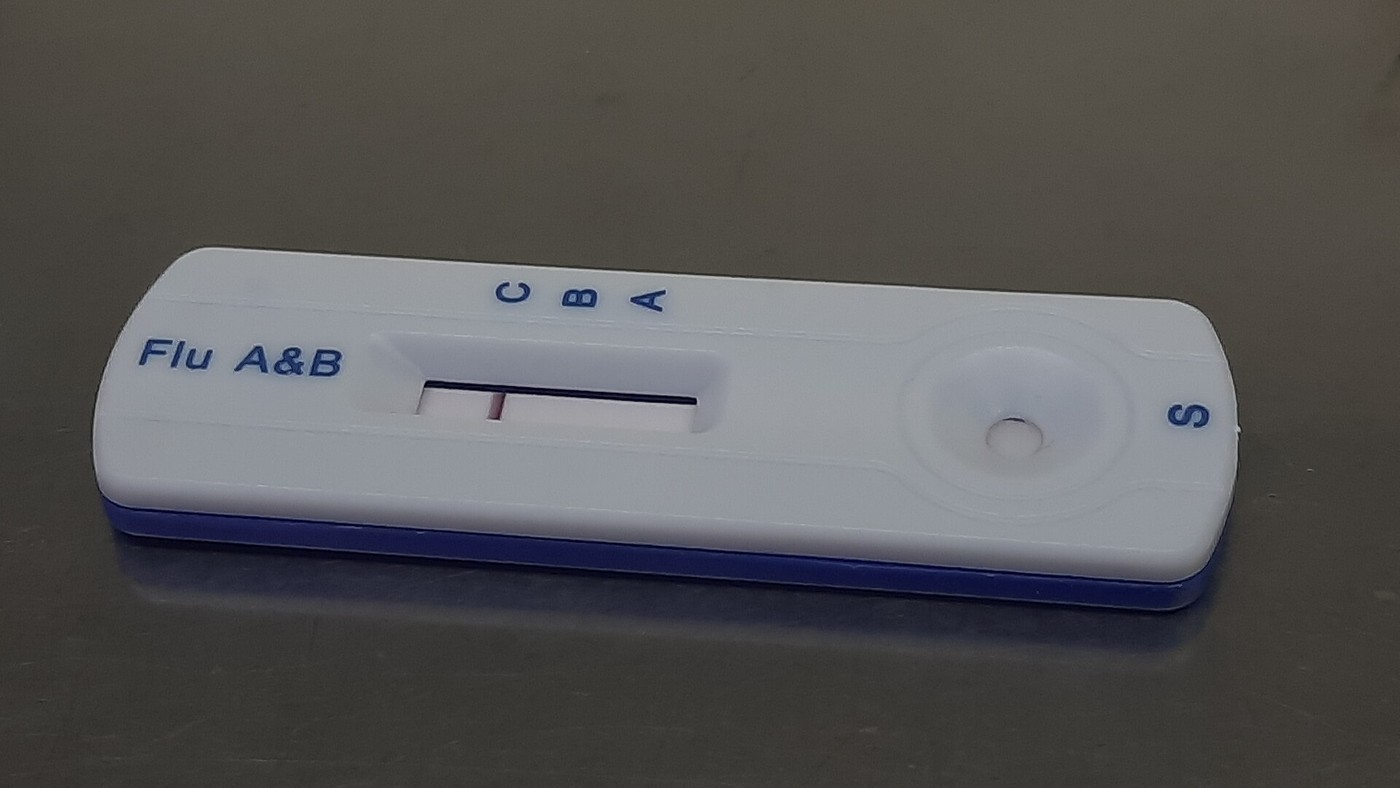
A Flu A&B rapid antigen cassette with only the control line showing — a negative result. The swab goes in the nose; the answer takes minutes. Photo: Ajay Kumar Chaurasiya, Wikimedia Commons, CC BY 4.0 (2025); not taken in Korea.
The 2026 data, queried on 26 September:
| Test (HIRA item) | Median | Average | Range | Reported prices / institutions |
|---|---|---|---|---|
| Flu A/B rapid antigen test (CZ3940000) | ₩30,000 | ₩27,458 | ₩5,000 – ₩100,000 | 15,012 / 14,863 |
| … at tertiary hospitals only | ₩49,000 | ₩48,938 | ₩30,000 – ₩67,600 | 55 prices |
| Flu A/B + COVID-19 combined antigen test (D66300000) | ₩40,000 | ₩39,642 | ₩5,000 – ₩100,000 | 5,050 / 5,012 |
At a clinic (의원) the median is the same ₩30,000, and so is Seoul's. The practical reading: expect about ₩30,000 for the test, on top of the consultation — our doctor-cost guide explains how the consultation fee is built — and then the medicine. If the doctor prescribes an antiviral, an uninsured patient pays the full price of the drug at the pharmacy.
What a flu shot costs, and why there are 14 prices
HIRA defines a vaccination price as one injection including the vaccine, excluding shots under the national free programme; whether a consultation fee is added is for the clinic to say. There is one price line per product, 14 in all.
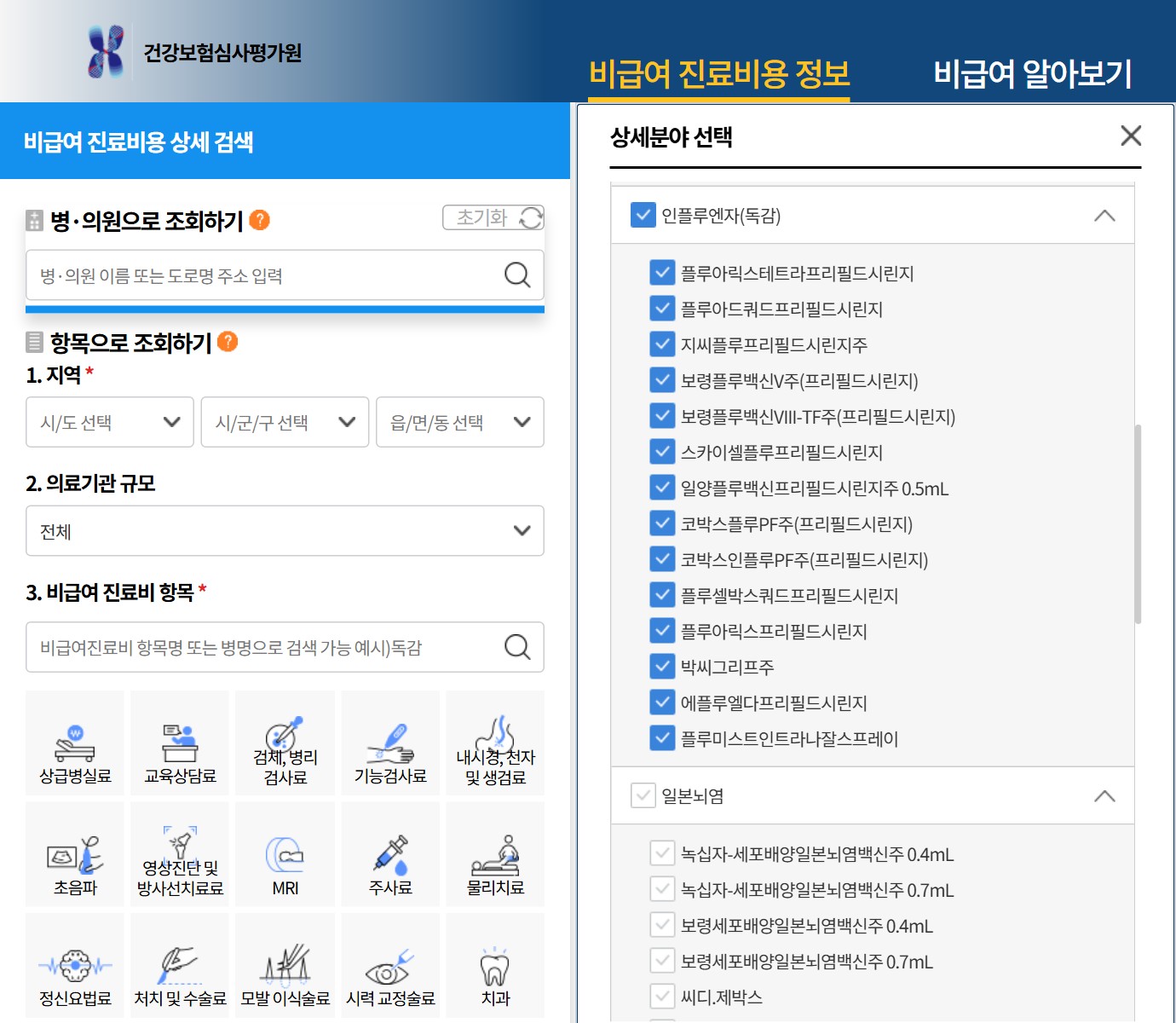
HIRA's lookup, 예방접종료 → 인플루엔자(독감): each brand is a separate price line. Screenshot by EpicKor from hira.or.kr/npay, 26 September 2026.
The most-reported ones, national figures from the 2026 release:
| Vaccine (as listed by HIRA) | Median | Most common price | Range | Reported prices |
|---|---|---|---|---|
| 플루아릭스테트라 (Fluarix Tetra) | ₩40,000 | ₩40,000 | ₩15,000 – ₩60,000 | 4,181 |
| 지씨플루 (GC Flu) | ₩35,000 | ₩30,000 | ₩11,250 – ₩55,000 | 939 |
| 박씨그리프 (Vaxigrip) | ₩35,000 | ₩35,000 | ₩15,000 – ₩50,000 | 519 |
| 스카이셀플루 (SKYCellflu) | ₩30,000 | ₩30,000 | ₩15,000 – ₩45,000 | 507 |
| 보령플루백신V (Boryung) | ₩30,000 | ₩30,000 | ₩14,000 – ₩60,000 | 490 |
| 플루아드쿼드 (Fluad Quad, for older adults) | ₩50,000 | ₩60,000 | ₩30,000 – ₩100,000 | 211 |
| 플루미스트 (FluMist nasal spray) | ₩60,000 | ₩60,000 | ₩30,000 – ₩80,000 | 11 |
| 에플루엘다 (Efluelda, high-dose, for older adults) | ₩100,000 | ₩100,000 | ₩70,000 – ₩120,000 | 33 |
So the realistic paid shot at a Korean clinic is ₩30,000 to ₩40,000, depending mostly on which vaccine that clinic stocks. Ask which one before you sit down. Some brand names in HIRA's list are four-strain (quadrivalent) products; this season's free programme uses a three-strain vaccine. The institution records we checked for these items all carry a publication month of 2026-08 and an effective date of 3 September 2026 or later; a clinic may have updated its price since, and it must post the current one.
You might like: LASIK Cost in Korea (2026): ₩2.5 Million for Both Eyes, by the Government's Own Price Data
The free national flu shot: who, when, and the foreigner rule
Korea's national immunisation programme (국가예방접종) gives one free flu shot this season to three groups, using a trivalent vaccine. Because of the early epidemic, KDCA brought several start dates forward; the revised notice is dated 16 September 2026:
| Group | Born | Free shot from | Originally planned (19 Aug) |
|---|---|---|---|
| Children 6 months–14, two-dose group | 1 Jan 2012 – 31 Aug 2026 | 21 Sep 2026 | 21 Sep |
| Children 6 months–14, one-dose group | 1 Jan 2012 – 31 Aug 2026 | 21 Sep 2026 | 28 Sep |
| Pregnant women (any stage) | — | 21 Sep 2026 | 21 Sep |
| Age 75 and over | On or before 31 Dec 1951 | 6 Oct 2026 | 12 Oct |
| Age 70–74 | 1 Jan 1952 – 31 Dec 1956 | 12 Oct 2026 | 15 Oct |
| Age 65–69 | 1 Jan 1957 – 31 Dec 1961 | 15 Oct 2026 | 19 Oct |
All groups run to 30 April 2027. Children aged 6 months to under 9 who have never had a flu shot, or have had only one dose before, get two doses. Shots are given at designated private clinics (위탁의료기관) and public health centres (보건소); KDCA tells people to check a clinic's availability on its 예방접종도우미 site (nip.kdca.go.kr) first.
Now the rule for foreigners. KDCA's 2026 National Immunization Guidelines (for medical institutions, revised 9 September 2026) asks in its FAQ "외국인도 비용지원을 받을 수 있나요?" — can foreigners get the subsidy? — and answers yes: holders of an alien registration number (외국인등록번호, including those exempt from registration) can get the free shot at designated clinics, and long-term stayers of three months or more without one can get a temporary management number (임시관리번호) at a public health centre and then be vaccinated free. For that number the health centre checks a passport and visa; the guideline lists A-1, D-2 (study), D-4 (training), the E (employment) and F (residence) series and H-2 as examples. The procedure section adds the line that matters for tourists: "3개월 미만 단기 체류자의 경우 지원 대상에 해당하지 않음" — short-term stayers of under three months are not eligible.
So a foreign resident who is 65, pregnant, or the parent of an eligible child is in the programme on the same terms as a Korean; a tourist is not, whatever their age. If your case is unclear, call 1339, KDCA's 24-hour call centre. Its page offers foreign-language help by three-way call with the tourism line 1330 (07:00–24:00; English and six other languages) or the immigration centre 1345; from abroad, +82-2-2633-1339.
Where to get medicine at night in Seoul
Most Korean pharmacies close in the evening. Seoul's answer is the 공공심야약국 (public late-night pharmacy). According to Seoul Metropolitan Government's notice of 4 June 2026:
- There are 39 of them, spread across Seoul's 25 districts.
- They are open 22:00 to 01:00.
- 28 open every day of the year; the other 11 only on designated weekdays (for example Monday, Wednesday and Friday), so check before you set off.
- To find one: search 심야약국 in the Naver Map app, use Smart Seoul Map (스마트서울맵), or the city's 손목닥터9988 app.
What night costs. HIRA's rule is that when a pharmacy dispenses a prescription between 18:00 and 09:00 on weekdays, from 13:00 on Saturdays, or on public holidays, the dispensing fees — 조제기본료, 복약지도료 and 조제료 — carry a 30% surcharge. It applies to the fees for filling a prescription, not to the shelf price of a box of cold tablets you buy over the counter; pharmacies set those prices themselves.
After 01:00. Korean convenience stores sell a short government list of household medicines (안전상비의약품): 13 designated items in four groups — fever and pain relief (the Tylenol family and children's Brufen syrup), cold remedies (판콜에이 and 판피린티), digestives and pain patches. Two of the children's Tylenol tablets are no longer produced, and the government said in July 2026 that it plans to widen the list to up to 20 items by December. For anything stronger, including every antiviral, you need a doctor's prescription.
If it is an emergency, the rules change completely: call 119, which is free. Our healthcare guide for tourists covers emergency rooms and how the pharmacy system works day to day.
The honest part: what this guide does not promise
- A tourist will pay for the shot. The under-three-months rule is written into KDCA's guidelines. If you want a flu shot on a short trip, the realistic option is a paid one at a clinic — about ₩30,000–₩40,000 — or, better, before you fly.
- The prices are medians, not quotes. One clinic posts the rapid test at ₩5,000 and another at ₩100,000. Clinics must post their non-covered prices and cannot charge more than posted, so ask at the desk before the swab.
- Antivirals need a prescription. No Korean pharmacy will sell you oseltamivir over the counter, at night or otherwise, and the advisory's no-test insurance rule helps only people inside Korean national health insurance.
- An emergency room is the expensive door. A clinic the next morning costs a fraction of the ER access fee alone — see our doctor-cost guide.
- If you have lived here more than six months, your case is different. Foreign residents are enrolled in national health insurance and pay the insured share; the high-risk antiviral rule applies to you if you are in one of its groups.
- This is not medical advice. Whether you have flu, and whether you need a test, a shot or an antiviral, is for a doctor.
FAQ
Q: How much is a flu test in Korea without insurance? The 2026 national median posted price for the rapid influenza A/B antigen test as a non-covered item is ₩30,000, across 15,012 prices from 14,863 institutions; a combined flu and COVID-19 test, ₩40,000. The consultation is extra.
Q: How much does a flu shot cost in Korea? ₩30,000 to ₩40,000 at the median for the common vaccines, vaccine included — ₩40,000 for Fluarix Tetra, ₩30,000 for SKYCellflu. FluMist nasal spray is ₩60,000 and high-dose Efluelda ₩100,000.
Q: Can foreigners get the free flu shot in Korea? Foreign residents with an alien registration number can, if they are in an eligible group (children 6 months–14, pregnant women, 65+), and so can stays of three months or more via a temporary number from a public health centre. KDCA's guidelines exclude short-term stayers of under three months.
Q: Where can I buy medicine at night in Seoul? At one of Seoul's 39 public late-night pharmacies, open 22:00 to 01:00 (28 of them every day). Search 심야약국 in Naver Map. After 01:00, convenience stores sell a short government list of fever, cold and digestive medicines.
Sources
- KDCA, 보도참고자료 "2026-2027절기 인플루엔자 유행주의보 발령", 11 September 2026 (kdca.go.kr/bbs/kdca/42/312593/artclView.do), with annexes 1–3 (advisory dates by season, week-36 surveillance, antiviral insurance criteria).
- KDCA, "(수정) 2026-2027절기 인플루엔자 안내문", 16 September 2026 (kdca.go.kr/bbs/kdca/46/312547/artclView.do): revised start dates. Korean Hospital Association circular 제2026-452호, 19 August 2026, relaying KDCA: the original schedule. Government24 service 135200000115 (updated 17 September 2026): end date and birth-date ranges.
- KDCA, 2026년 국가예방접종 지침 (의료기관용), revised 9 September 2026 (kdca.go.kr/bbs/kdca/55/309683/artclView.do): foreigners' eligibility and the under-three-months exclusion. KDCA 1339 page (kdca.go.kr/kdca/2777/subview.do).
- HIRA, 비급여 진료비용 정보 (hira.or.kr/npay), 2026 release of 753 items, queried 26 September 2026: items CZ3940000, D66300000 and the 14 influenza-vaccine lines under 예방접종료; institution listings dated 공개연월 202608, 적용 2026-09-03 or later. An institution may report more than one price. HIRA notice on the 30% night and holiday dispensing surcharge (9 April 2012).
- Seoul Metropolitan Government, 내 손안에 서울 (mediahub.seoul.go.kr/archives/2018350), 4 June 2026: public late-night pharmacies.
- Gongju City Health Centre: the 13 convenience-store medicines; Herald Korea (March 2025) and Money Today (20 July 2026) on discontinued items and the planned expansion (secondary).
- English coverage read for comparison: SBS News, Seoul Economic Daily (11 September 2026), Korea Herald (14 September 2026).
You Might Also Like
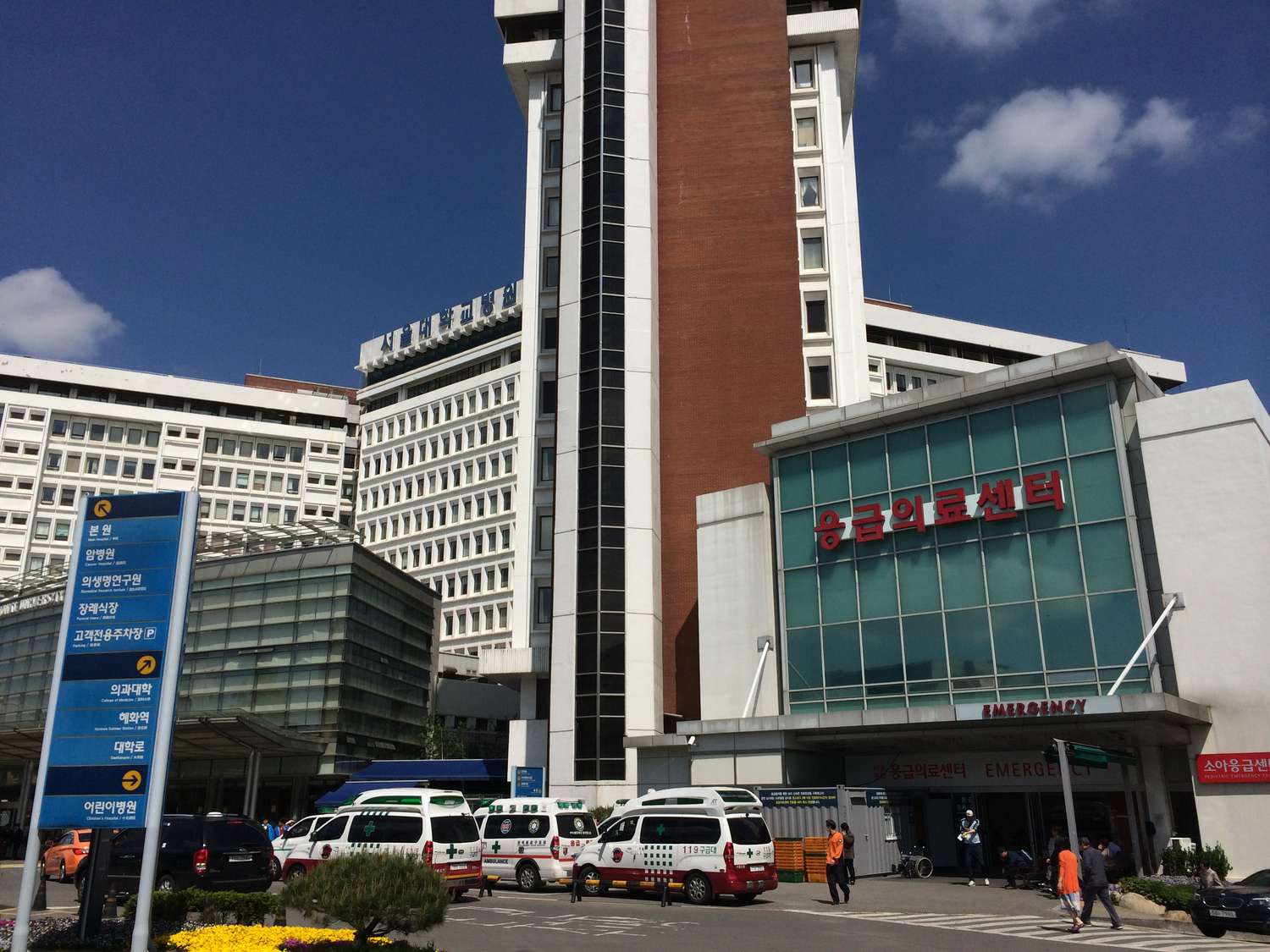
What a Doctor Costs in Korea Without Insurance (2026): ₩18,840 at a Clinic, ₩68,070 to Walk Into a Regional ER, and Why the 119 Ambulance Is Free
Korea's emergency-room access fee is not written in won. It is 812.28 relative value points times 2026's ₩83.8, making it ₩68,070 at a regional centre and ₩22,690 at a local one, against ₩18,840 at a clinic. The 119 ambulance is free.
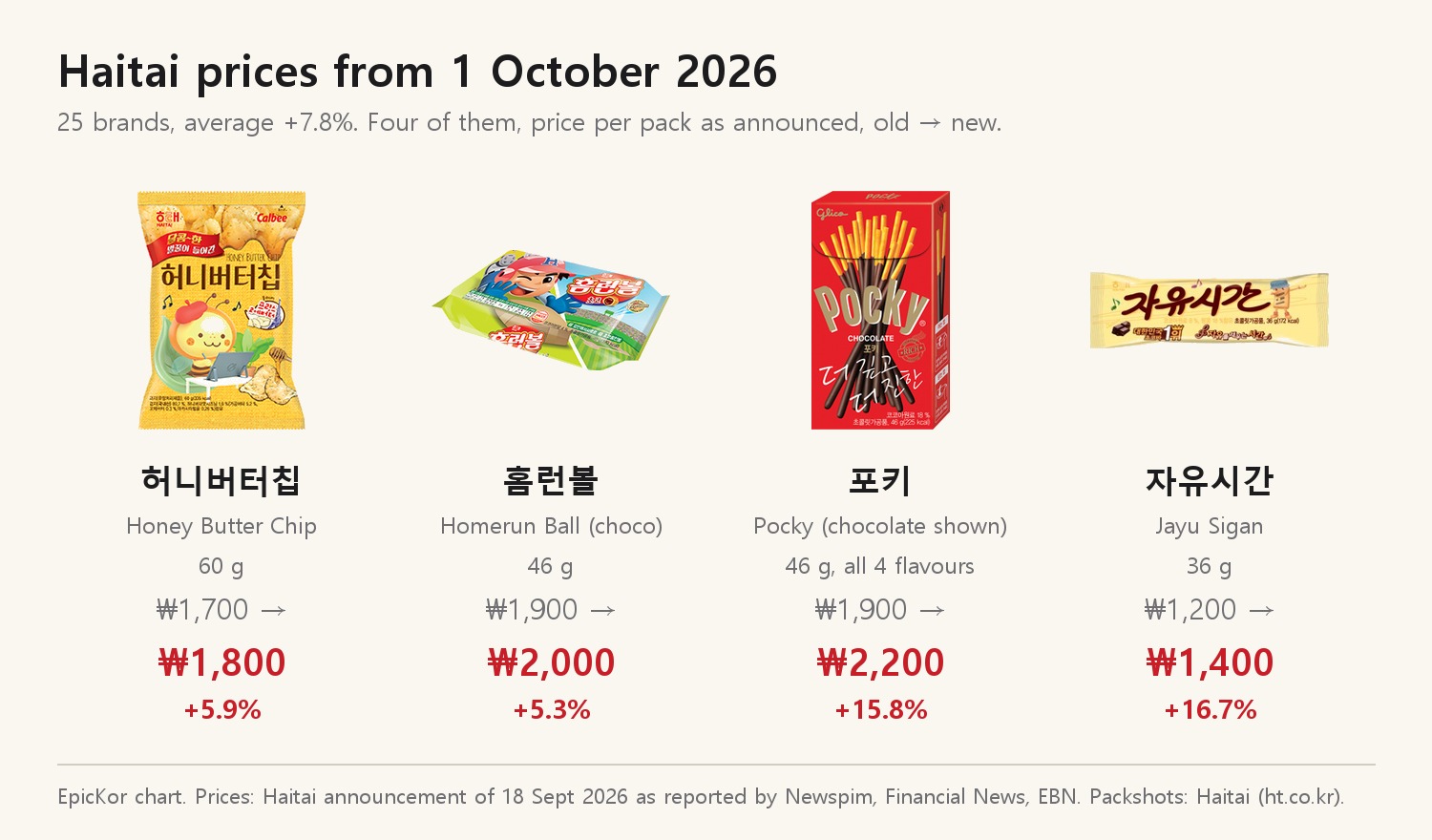
Korean Snack Prices From 1 October 2026: Haitai Raises 25 Brands by 7.8%, Pocky Jumps 15.8%, and 14 Packs Shrink Instead
Pocky goes from ₩1,900 to ₩2,200 in Korea on 1 October 2026, and Honey Butter Chip is on both of Haitai's lists: the 60 g bag rises ₩100 while other packs shrink instead. Every new price, the shrink list, and Ottogi's 20% rice rise.
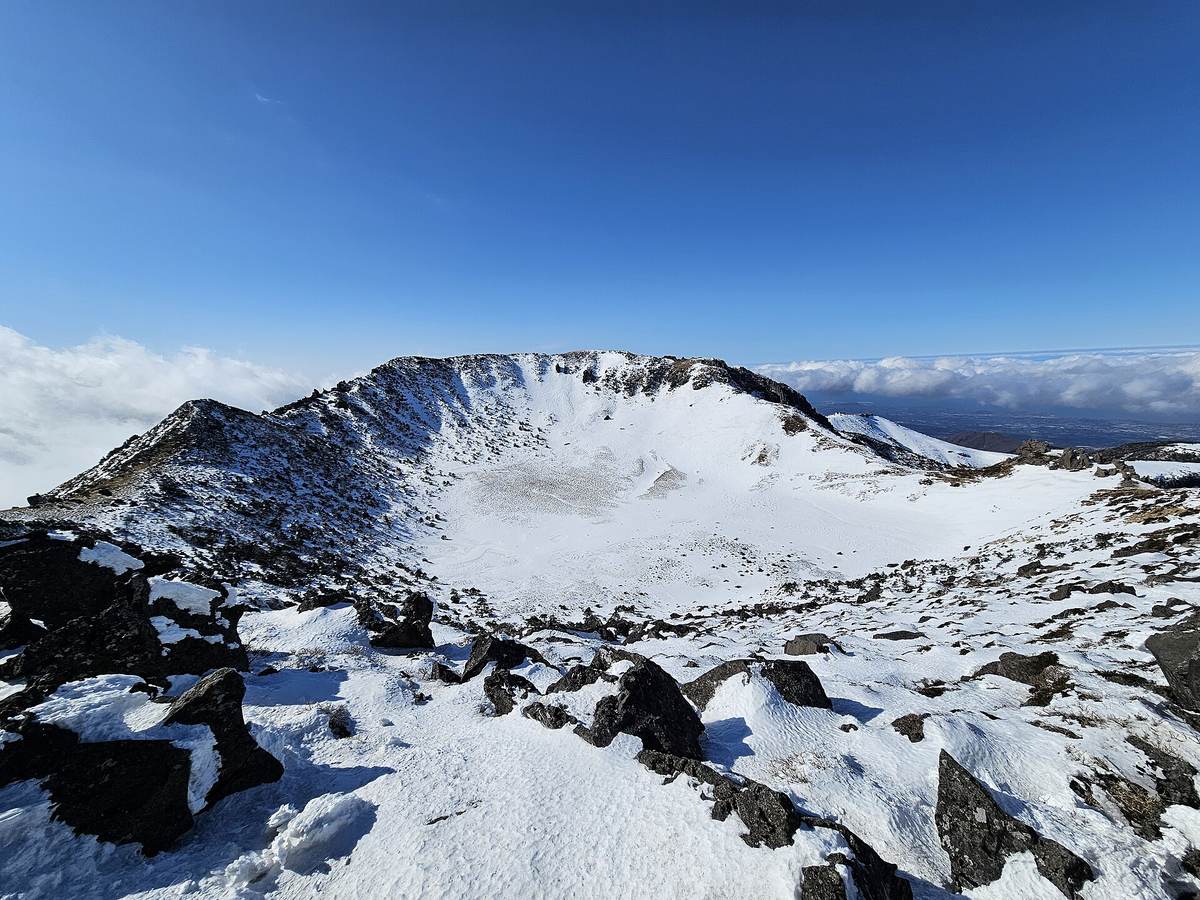
Hallasan, Jeju, Korea This Winter: Gwaneumsa Reopened 24 September 2026, the 11:30 Summit Cutoff From 1 October, 1,500 Places a Day and the No-Show Ban
Hallasan's Gwaneumsa summit trail reopened on 24 September 2026 after rockfall-fence repairs. From 1 October the summit checkpoints close at 11:30, not the 12:00 English guides list; 1,500 summit places a day, and one no-show costs three months.