Korea's Digital Nomad Visa (F-1-D), Two and a Half Years On: 743 Issued, 398 Still Here, Zero Applications in Jeju, the New ₩52–105 Million Income Bar, and What It Actually Costs to Work Remotely from Seoul for a Month
Last updated: September 2026. Visa rules are the Ministry of Justice's 30 June 2026 regulations for the F-1-D "workation" (워케이션) status, as published by the ministry and the Korean embassies; issuance and residence figures are the ministry's own, released on 7 July 2026 and reported by the Korean press; costs are September 2026 Seoul prices from Korean listings.
Korea launched a digital nomad visa in January 2024, and the English internet has been selling it ever since: law-firm pages, relocation blogs, "Korea is now open to remote workers." The Ministry of Justice's (법무부) own numbers, released when the pilot ended, tell a smaller story. In 29 months the visa was issued 743 times. As of May 2026 398 people were living in Korea on it, seven in ten from OECD countries, 85 percent of them in Seoul, Gyeonggi or Incheon, half of them in their thirties. The regions the visa was meant to revive drew almost nobody: of the 309 applications filed by September 2025, 213 came from Seoul and 34 from Gyeonggi, and Jeju, Sejong, Ulsan, North Chungcheong and North Jeolla recorded none. The income bar, twice Korea's per-capita income, was about ₩85 million when the pilot opened and about ₩105 million by 2026.
On 30 June 2026 the visa became permanent, the income bar was lowered for younger applicants and for anyone living outside the capital region, and the maximum stay went from two years to three. This guide gives the rules as they now stand, the numbers that show who actually uses them, and, because most remote workers who come to Korea never touch this visa, what a month of working from Seoul costs on an ordinary 90-day entry.
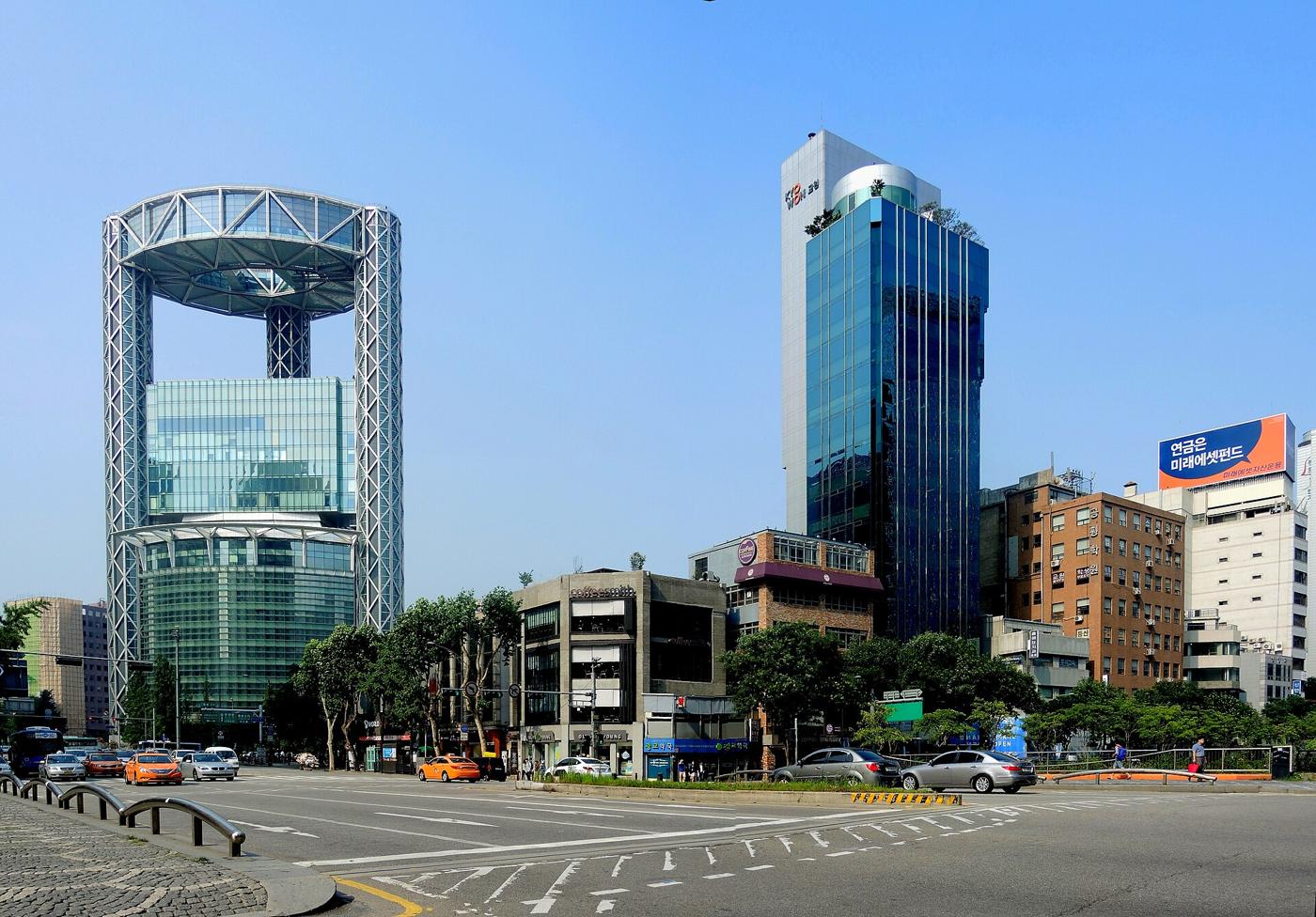
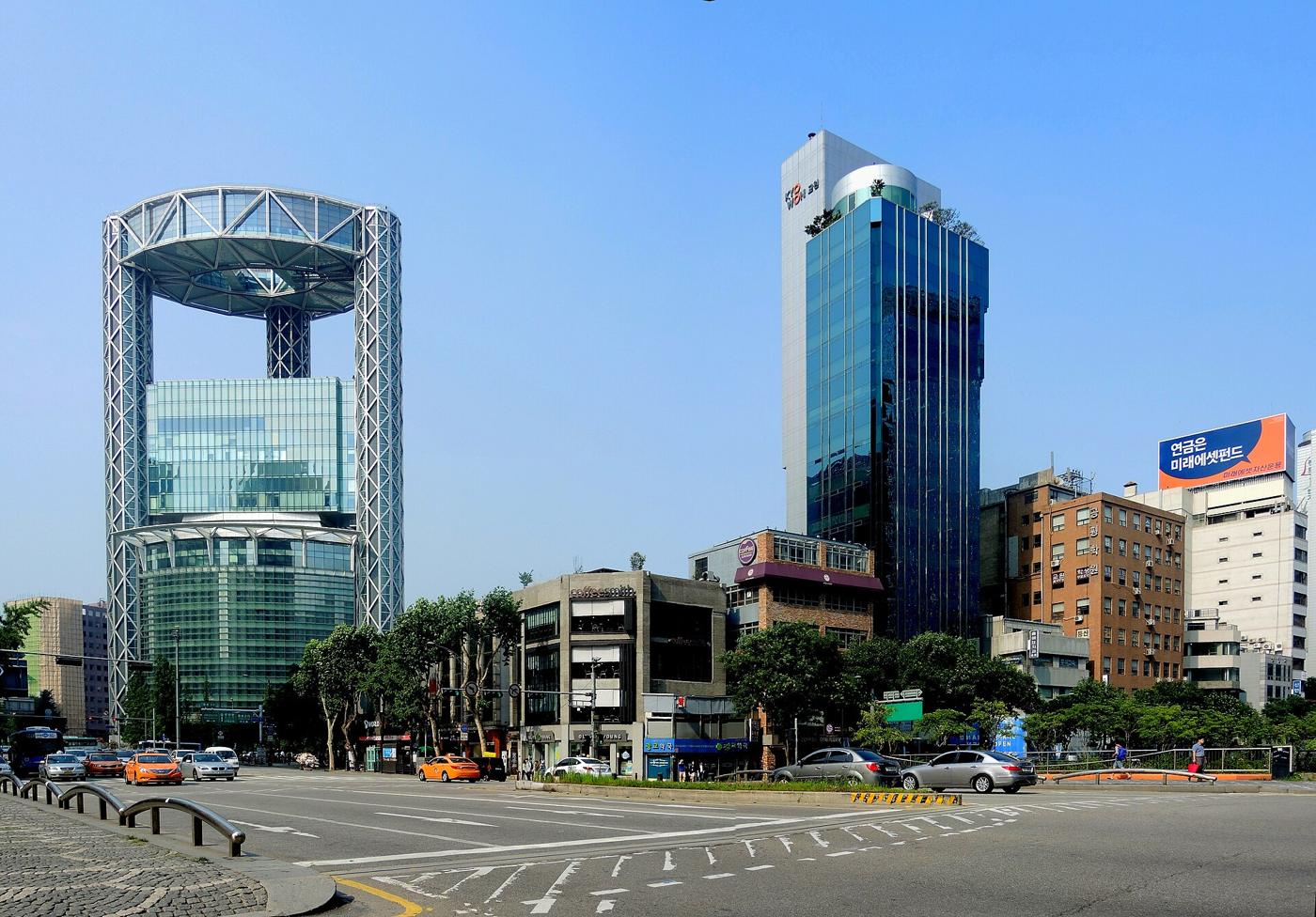
Jongno Tower above Jonggak Station, home to one of WeWork's Seoul coworking spaces, the kind of monthly hot desk this guide prices below. Photo: Schölla Schwarz, Wikimedia Commons, CC BY 3.0 (2013).
The first thing a remote worker sets up in Korea is data, not a desk: the coworking space, the study café and the apartment all assume you already have it, and a Korean number is not needed for any of them. A Korea Telecom 30-day unlimited-data SIM with a local number covers a month and gives you the Korean number that delivery apps and bookings want. As an Amazon Associate, EpicKor earns from qualifying purchases.
Quick Guide: the F-1-D visa in 2026
| Rule | As of 30 June 2026 |
|---|---|
| Who | A foreign national aged 18 or over, employed by, or self-employed for, a company outside Korea, working remotely, with at least one year in the same field; spouse and minor children may accompany |
| Income (based on 2025 per-capita GNI of ₩52.4 million) | Age 18–34 in the Seoul capital region: 1.5× GNI, about ₩78.6 million a year. Age 35 and over in the capital region: 2× GNI, about ₩104.8 million. Outside the capital region, or in a designated population-decline area: 1× GNI (₩52.4 million) under 35, 1.5× over. Bringing family: 2× in the capital region, 1.5× elsewhere |
| Insurance | Private medical insurance covering at least ₩100 million for treatment and repatriation, for the whole stay |
| Documents | Employment certificate or business registration, pay slips and bank statements, a criminal record certificate, proof of ₩100 million insurance, family documents if applicable; for the lower non-capital bar, proof you will live there (a lease of a month or more, or a workation booking) |
| Stay | One year, extendable a year at a time to a maximum of three (the pilot allowed two) |
| Work | Only for your foreign employer or clients; no employment or business activity in Korea |
| Where to apply | A Korean embassy or consulate abroad; or, if you are already in Korea on a B-1, B-2 or C-3 short-term status, a change of status at an immigration office |
| Track record | 743 issued January 2024–May 2026; 398 holders in May 2026, 70 percent OECD nationals, 85 percent in the capital region, 52 percent aged 30–39 |
TESSAN Korea plug adapter — the desk starts with the socket Korean sockets are two-round-pin Type F at 220 V, and neither the coworking space nor the officetel supplies adapters; this one takes a laptop plug plus two USB devices in a single socket, which is the whole desk setup. As an Amazon Associate, EpicKor earns from qualifying purchases.
See the TESSAN adapter on AmazonWho the visa is for, in the ministry's own numbers
The pilot ran from 1 January 2024. By September 2025 immigration had received 309 applications, four in five from the capital region: Seoul 213, Gyeonggi 34, then Busan 24, Incheon 14 and South Gyeongsang 10, with one each from Daejeon and Gwangju. Jeju, Sejong, Ulsan, North Chungcheong and North Jeolla received none, which a Seoul Shinmun report in January 2026 called "a shabby report card for the country's number-one tourist island."
By the end of the pilot in May 2026 the total issued was 743, and 398 people held the status: 278 (70 percent) from OECD countries, about 340 (85 percent) living in Seoul, Gyeonggi or Incheon, 206 (52 percent) in their thirties and 74 (19 percent) in their forties. For comparison, Korea received 18.9 million visitors in 2025; the visa's entire population would fit in one Myeongdong hotel.
The ministry's response was to make the visa permanent and easier, from 30 June 2026: the income floor came down from a flat two times GNI to a scale of one to two times by age and location, the stay went to three years, and the regional discount was written in explicitly, with the stated aim of steering remote workers to "population-decline areas" outside the capital. Whether a Berlin developer moves to Gangwon for a lower income bar is the question the ministry has bet on; the 85 percent figure suggests the answer so far.
The income bar, worked through
The bar is tied to Korea's per-capita gross national income as published by the Bank of Korea for the previous year: ₩52,416,000 for 2025, so the 2026 thresholds are:
| Applicant | Capital region (Seoul, Gyeonggi, Incheon) | Elsewhere, or a population-decline area |
|---|---|---|
| Single, aged 18–34 | 1.5× GNI ≈ ₩78.6 million (about US$57,000) | 1× GNI ≈ ₩52.4 million (about US$38,000) |
| Single, aged 35+ | 2× GNI ≈ ₩104.8 million (about US$76,000) | 1.5× GNI ≈ ₩78.6 million |
| With spouse or children | 2× GNI ≈ ₩104.8 million | 1.5× GNI ≈ ₩78.6 million |
Proof is the previous year's income: an employment contract or business registration abroad, a year of pay slips or bank statements, and tax records; a criminal record certificate from your home country is also required; the embassy decides what it accepts, and the one-year-in-the-same-field rule is checked against the contract. The lower bar outside the capital region needs proof that you will actually live there, such as a lease of a month or more. The ₩100 million insurance is a private policy, not Korean national health insurance, and it has to run for the full period requested. Applications go through the Korean embassy where you live; the change-of-status route inside Korea exists for people already here on a short-term status, but immigration offices can and do ask for the same documents.
Two things the visa does not do. It does not let you take Korean work, freelance for Korean clients or open a business; that is the E-7 or D-8 world. And it does not by itself decide your tax: spend 183 days or more in Korea in a year and you are tax-resident here regardless of the visa, which is a question for an accountant before the second extension.
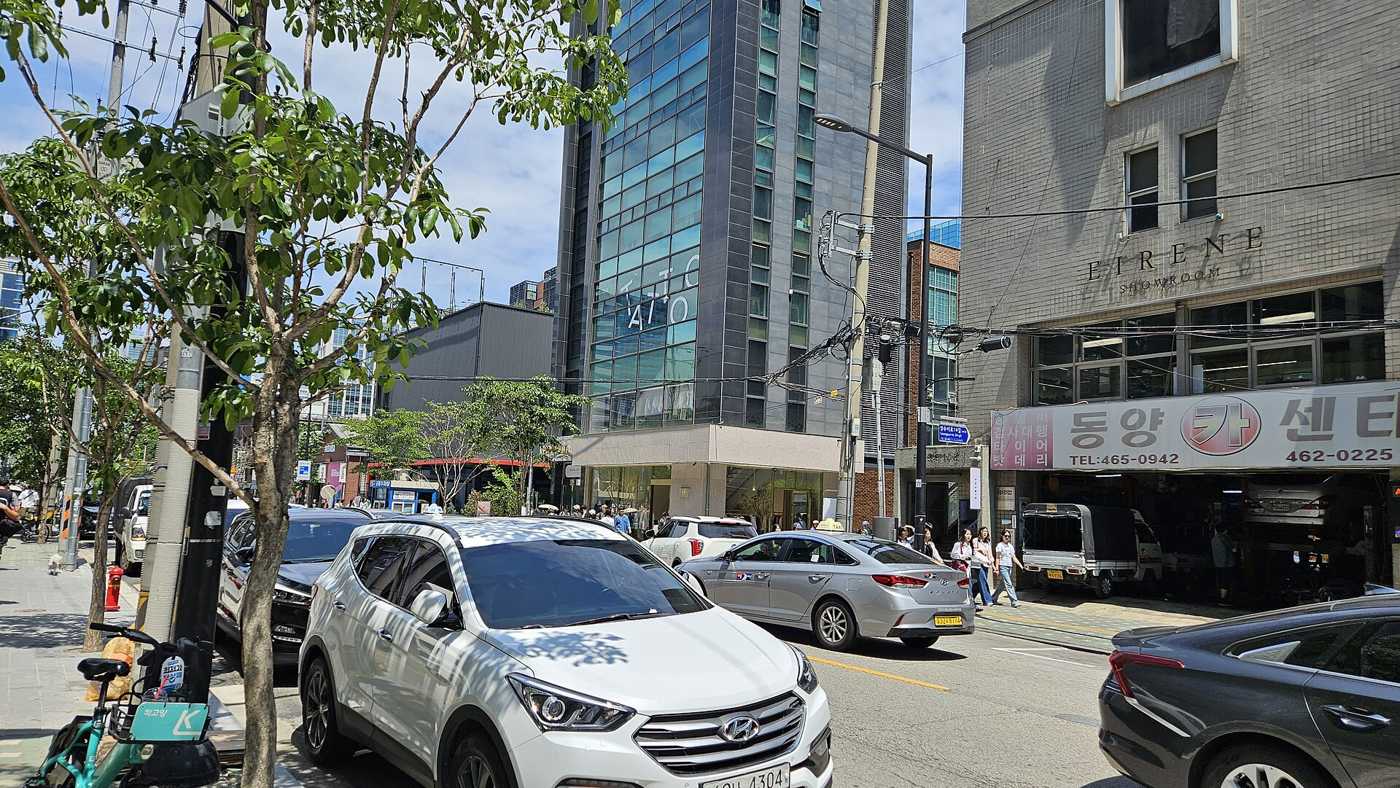
Seongsu-dong (성수동) in May 2026, where glass offices and showrooms have moved in beside the old car-repair garages and workshops; Line 2 runs through it. Photo: Aspere, Wikimedia Commons, CC0.
What most remote workers do instead
The 743 figure is small because the alternative is easy. Citizens of the countries that supply most of Korea's visitors enter for 90 days visa-free (180 for Canadians), with the K-ETA waiver currently extended for 22 countries and the e-Arrival Card replacing the paper form; our K-ETA and e-Arrival guide has the current list. A remote worker on that status is, strictly, a tourist: Korean law does not authorise work on a short-term entry, and the digital nomad visa exists precisely to make remote work legal. Answering work email on holiday is one thing; a stay built around remote work is what the visa exists to cover. The visa matters most when you want to stay past 90 days, bring your family, sign a real lease, or be able to answer "what are you doing here" honestly on a second and third entry. Below that line, the practical question is cost.
What a month in Seoul costs a remote worker (September 2026)
| Item | Monthly cost | Notes |
|---|---|---|
| Coworking hot desk | ₩280,000–₩450,000 | Gangnam ₩300,000–₩450,000; central Seoul ₩280,000–₩420,000; Yeouido ₩250,000–₩400,000. Fixed desks ₩380,000–₩650,000; a one-person office ₩600,000–₩1.2 million |
| Study café instead | ₩90,000–₩150,000 | Day passes ₩6,000–₩10,000; 24-hour, silent, unlimited coffee; our [study café guide](/blog/251) covers the etiquette and the "cagongjok" table rules |
| Café-hopping | ₩150,000–₩250,000 | A ₩5,000–₩7,000 coffee buys three or four hours; Seongsu, Yeonnam and Hapjeong tolerate laptops, Myeongdong does not |
| Room: goshiwon (single room, shared kitchen) | ₩350,000–₩550,000 | No deposit, weekly rental possible, 5–8 m²; central Seoul ₩400,000+ |
| Room: officetel or studio, short-term | ₩1.1–₩1.8 million | Furnished, monthly, via Korean short-let platforms (33m2, Dallbang); Airbnb adds 15–25 percent |
| Room: hotel | ₩2.7–₩3.9 million | Three-star business hotel at ₩90,000–₩130,000 a night, before any long-stay discount; our [hotel price guide](/blog/460) has the season table |
| Data | ₩30,000–₩60,000 | Unlimited SIM or eSIM for 30 days; a Korean number matters for delivery apps and bookings |
| Food | ₩800,000–₩1.2 million | Convenience-store breakfast ₩4,000, lunch set ₩10,000–₩13,000, dinner ₩15,000–₩25,000; our [restaurant hours guide](/blog/455) explains the 15:00–17:00 break that catches remote workers |
| Transport | ₩60,000–₩90,000 | Subway ₩1,550 a ride on T-money, or the ₩62,000 Climate Card (기후동행카드) for unlimited subway and bus |
Adding up the rows, a Seoul month on a goshiwon-and-study-café setup is ₩1.4–₩2.0 million; on an officetel with a coworking desk, ₩2.3–₩3.6 million, food and transport included. Busan runs 15 to 25 percent under Seoul and has the beach; Jeju's costs are similar to Busan but the coworking supply is thin, and the visa drew no applicants there before the June 2026 changes.
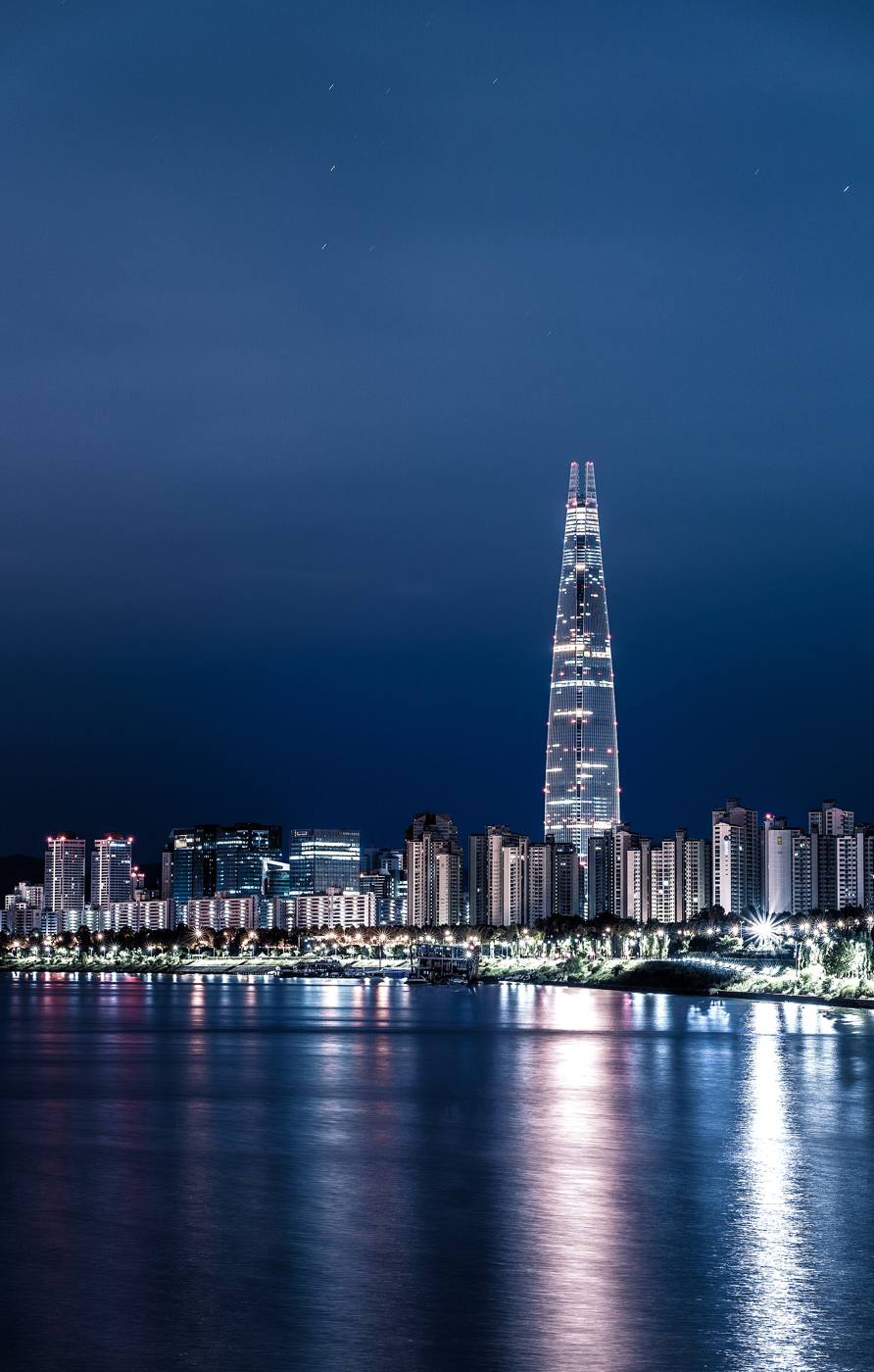
Seoul at night. Eighty-five percent of the visa's holders live in the capital region, whatever the regional discount says. Photo: mauveine.kim, Wikimedia Commons, CC0 (2018).
The practical setup
- Coworking (공유오피스): WeWork (Jongno Tower, Yeouido, Gangnam and other Seoul sites), FastFive and SparkPlus sell monthly hot desks to anyone with a passport and a card; day passes ₩20,000–₩35,000. All three have English-speaking front desks.
- The study café (스터디카페) is the Korean alternative: ₩6,000–₩10,000 a day, 24 hours, silent floors, free coffee, entry by kiosk. Take calls outside.
- Cafés: the "cagongjok" (카공족, café study tribe) is tolerated in the university and creative districts and discouraged in tourist ones; one drink per two to three hours is the unwritten rate.
- Housing under 90 days: goshiwon (고시원) for the cheapest private room with no deposit; Korean short-let platforms for furnished studios by the month; Airbnb for convenience at a premium. A proper lease with a jeonse (전세) or wolse (월세) deposit can be signed on a passport, but registering the tenancy to protect the deposit works through an alien registration card, which the nomad visa gives and a tourist entry does not.
- Banking: a tourist cannot open a Korean bank account; WOWPASS and T-money cover payments, and our payment guide explains which foreign cards fail at which terminals. Nomad-visa holders with an alien registration card can open an account.
- Health: the ₩100 million private policy is a visa condition; on a tourist entry, travel insurance and our healthcare guide for how a visitor sees a doctor.
FAQ
Q: Does Korea have a digital nomad visa? Yes, the F-1-D "workation" (워케이션 비자) visa, piloted from January 2024 and permanent since 30 June 2026. It allows up to three years' stay for remote workers employed abroad who earn one to two times Korea's per-capita GNI (₩52–105 million depending on age and location) and hold ₩100 million of medical insurance.
Q: How many people have Korea's digital nomad visa? 743 were issued between January 2024 and May 2026, and 398 people held it in May 2026: 70 percent from OECD countries, 85 percent in Seoul, Gyeonggi or Incheon, and just over half in their thirties.
Q: What is the income requirement for Korea's digital nomad visa? Based on 2025 GNI of ₩52.4 million: ₩78.6 million (1.5×) for single applicants under 35 in the capital region, ₩104.8 million (2×) for those 35 and over or with family; ₩52.4 million (1×) or ₩78.6 million outside the capital region.
Q: Can I work remotely in Korea on a tourist visa? Short-term entry does not legally authorise work, and a stay built around remote work is what the nomad visa exists for. It matters most for stays past 90 days, family, leases and repeated entries.
Q: How much does it cost to live in Seoul as a digital nomad? About ₩1.4–₩2.0 million a month on a goshiwon room and study café, or ₩2.3–₩3.6 million on a furnished officetel with a coworking desk, with food (₩800,000–₩1.2 million) and transport included. Busan is 15–25 percent cheaper.
Q: Why did Jeju get no digital nomad visa applications? Applications to September 2025 showed none from Jeju, Sejong, Ulsan, North Chungcheong or North Jeolla, and 85 percent of holders in May 2026 lived in Seoul, Gyeonggi or Incheon; a Jeju official said a visa requiring high income from foreign work gives little reason to live outside the capital. The June 2026 rules lowered the income bar outside the capital region to change that.
Sources
- Ministry of Justice, digital nomad (workation) visa pilot announcement (December 2023, korea.kr) and permanent-operation announcement (7 July 2026, in force 30 June): 743 issued January 2024–May 2026; 398 holders in May 2026 by nationality, region and age; income thresholds by age and region; three-year maximum stay.
- Korean embassy notices (Canada, Ireland) and law-firm summaries of the 30 June 2026 rules: income 1–2× GNI, ₩100 million insurance, criminal record certificate, age 18+, one year in the same field, family, residence proof for the lower bar, application channels. Korea.kr (December 2023): the pilot's income bar of about ₩85 million (2× 2022 GNI).
- Seoul Shinmun, exclusive (7 January 2026): 309 applications to September 2025 by region (Seoul 213, Gyeonggi 34, Busan 24, Incheon 14, South Gyeongsang 10); none in Jeju, Sejong, Ulsan, North Chungcheong or North Jeolla.
- Bank of Korea, 2025 per-capita GNI ₩52,416,000.
- Korean coworking price surveys (2025–2026), goshiwon and short-let listings (gobang.kr, 33m2), study-café rate cards; Seoul Metropolitan Government Climate Card.
You Might Also Like

Is Korea Kid-Friendly? What Foreign Parents Report — and What Korean Data Shows: Strangers Who Hand Out Tangerines, 114 No-Kids Zones, and the 68% Who Accept Them
Foreign parents say older Koreans shower babies with snacks and department-store nursing rooms beat London's. Korean data adds 114 no-kids zones, 68% public acceptance, and 64% of Korean parents who feel watched. What that means for your trip.
Car Seat Taxis in Korea: The Law Requires a Seat for Every Child Under 6, Ordinary Taxis Don't Carry One — What Tourists Can Actually Book in Seoul
Korea's Road Traffic Act requires a car seat for children under 6 in any car, taxis included, and fines the driver ₩60,000. Ordinary taxis carry none and police paused taxi enforcement in 2018. TADA, whose app takes foreign phones and cards, runs about 300 car-seat vans.
Seoul Subway With a Stroller: Every Seoul-Run Station Now Has a Street-to-Platform Elevator — at Half of Seoul Metro's on Just One Exit — and Only 108 Have a Nursing Room
Since December 2025 all 338 Seoul-run subway stations have a lift route from street to platform, but in Seoul Metro's own register 116 of 217 stations have it at one exit only: Myeongdong exit 1, Gyeongbokgung 4, Hongik 8. Just 108 have a nursing room.