Korea in January 2027: Weather, Festivals and Prices, and Why Seollal Is in February
Last updated: 18 November 2026. Every weather normal below was read from the Korea Meteorological Administration's (기상청, KMA) printed climate normals for 1991–2020 (「한국기후표」), station by station. The January 2027 outlook is KMA's three-month forecast of 23 October 2026 and is labelled as a forecast. Event dates are marked confirmed, planned, not announced or last season's pattern. Prices were read from our own guides' primary sources on the dates given. Dollars are at ₩1,335.0 = US$1 (Bank of Korea ECOS, 17 November 2026), rounded. Sources are listed at the end.
Korea in January is the coldest and driest month of the year, and for some trips the best one. Seoul's average afternoon is 2.1°C and its average night −5.5°C, and KMA's observers record ice on about 29 of January's 31 days. Yet Seoul's average lodging rate in January 2026 was the lowest of the months measured (January to March). The Hwacheon ice festival is confirmed for 9–31 January 2027, ski slopes are at their best, and January is the snowiest month in every Korean city.
One thing January 2027 does not have is the Lunar New Year. Seollal falls on Sunday 7 February 2027, so the four-day holiday is 6–9 February. The only public holiday in January is Friday 1 January.
So should you go? Yes, if you pack for −10°C and want low prices, snow and winter festivals. No, if you want long days, green parks or beach weather.
INLIFE made-in-Korea hand warmers, 30 packs, for a −5.5°C Seoul night before you find a Daiso, on AmazonAffiliate link. As an Amazon Associate, EpicKor earns from qualifying purchases at no extra cost to you.
Watch the 2-minute episode: Winter in Korea: What to Wear, and Why Seoul's Coats Are All Black — A Seoul January averages 2°C (36°F) by day and −5.5°C (22°F) at night (KMA 1991–2020 normals), which is why the long padded coat (롱패딩) took over.
Quick Guide: Korea in January 2027
| Question | Answer | Source and status |
|---|---|---|
| Seoul high / low | 2.1°C / −5.5°C, mean −1.9°C | KMA normal 1991–2020 |
| Busan high / low | 8.2°C / −0.1°C | KMA normal |
| Jeju City high / low | 8.6°C / 3.7°C | KMA normal |
| Snow days | Seoul 7.1, Jeju City 7.2, Busan 1.4 | KMA normal · snow guide |
| Will January 2027 be mild? | Temperature normal or above, 40% each; precipitation near normal, 50%; sharp cold outbreaks at times | Forecast, KMA 23 Oct 2026 |
| Daylight in Seoul | Sunrise about 07:47 on 1 Jan; sunset 17:24 on 1 Jan, 17:54 on 31 Jan | Calculated (KASI-type model) |
| Public holidays | Fri 1 January only. Seollal is 6–9 February 2027 | Confirmed (2027 calendar) |
| Hwacheon Sancheoneo Ice Festival | 9–31 January 2027; fee ₩15,000 ($11) in 2026, ₩25,000 ($19) planned | Dates confirmed; 2027 fee not confirmed |
| Seoul Winter Festa | Portal lists 11 Dec 2026 – 31 Jan 2027; last season the core programme ended 4 Jan, lanterns 18 Jan, rink 8 Feb | Planned (Seoul festival portal) |
| Ski day ticket | High1 ₩111,000 ($83); Konjiam 6 h ₩87,000 ($65) weekday | 2026–27 resort price pages, 16 Nov 2026 |
| Seoul lodging | Average ₩152,885 ($115) a night, 70.5% full, in January 2026, the lowest of January–March 2026 | Yanolja Research |
| K-ETA for the 22 exempt countries | Exemption ends 31 Dec 2026; no 2027 extension announced | K-ETA portal; checked 16–18 Nov 2026 |
The short version: January in Korea is dry, bright and bitterly cold in Seoul and the mountains, mild by day in Busan, and grey and windy on Jeju. Snow in Seoul is likely over a week but rarely deep. The real hazard is ice on pavements and steps.
Smartwool Classic Thermal Merino Base Layer Crew — a mid-weight wool first layer Seoul's January mean is −1.9°C, but the subway, cafés and museums are heated hard, so one thin wool layer you can keep on all day beats a thick jumper you have to carry. There is also a men's cut of the same crew. The current price is on the listing. As an Amazon Associate, EpicKor earns from qualifying purchases at no extra cost to you.
See the Smartwool merino crew on AmazonKorea's weather in January: the official normals
KMA publishes 30-year normals for each station. These January figures for 1991–2020 come from its printed climate tables. They describe an average January, not the one you will get.
| January normal (1991–2020) | Seoul | Busan | Jeju City |
|---|---|---|---|
| Average daily high | 2.1°C | 8.2°C | 8.6°C |
| Average daily mean | −1.9°C | 3.6°C | 6.1°C |
| Average daily low | −5.5°C | −0.1°C | 3.7°C |
| Precipitation (rain + melted snow) | 16.8 mm | 34.5 mm | 67.5 mm |
| Days with precipitation (≥0.1 mm) | 6.1 | 5.4 | 12.2 |
| Days with snow | 7.1 | 1.4 | 7.2 |
| Days with ice (얼음) | 29.4 | 21.2 | 5.5 |
| Cold-wave days (low of −12°C or below) | 1.8 | 0.0 | 0.0 |
| Sunshine | 169.6 hours | 203.1 hours | 70.2 hours |
| Average wind speed | 2.3 m/s | 3.5 m/s | 4.1 m/s |
| Relative humidity | 56.2% | 46.8% | 64.0% |
Stations: Seoul (서울, Songwol-dong, no. 108), Busan (부산, no. 159), Jeju City (제주, no. 184). Snow and ice days are visual observations; a snow day counts even if nothing settles. A day with precipitation counts 0.1 mm or more. An ice day (얼음) is a day on which observers see ice form, on puddles or other open water surfaces, not a day with icy roads. A cold-wave day (한파일) is KMA's count of days with a minimum of −12°C or lower.
Seoul is the cold one, and it has got colder, not warmer. January is Seoul's coldest month and its driest, with 16.8 mm of precipitation against 414.4 mm in July. The same KMA table splits the normal into decades. Seoul's January mean for 2011–2020 was −2.3°C, below the 30-year −1.9°C, with an average low of −6.0°C. Its cold-wave days rose to 2.4 in that decade. On average expect about two mornings a January at −12°C or colder, fewer in a mild year.
Busan is the bright one. It gets 203 hours of January sunshine, more than in June, July or September, and rain or snow on only 5.4 days. Afternoons reach 8°C, nights hover at freezing, and snow is rare: Busan's first snow of last winter did not come until 7 February 2026, and KMA recorded 0.0 cm for the whole season (snow guide).
Jeju is mild but grey. Jeju City has the warmest nights (3.7°C) but only 70 hours of sunshine, about a third of Busan's, precipitation on 12 days, and the strongest average wind of the three, 4.1 m/s. Hallasan above it is deep in snow all month.
The mountains are another climate. At Daegwallyeong (대관령, about 770 m), home of Yongpyong and Alpensia in Pyeongchang, the January mean is −6.9°C and the average night −12.2°C. That is why snow stays on the slopes there for weeks.
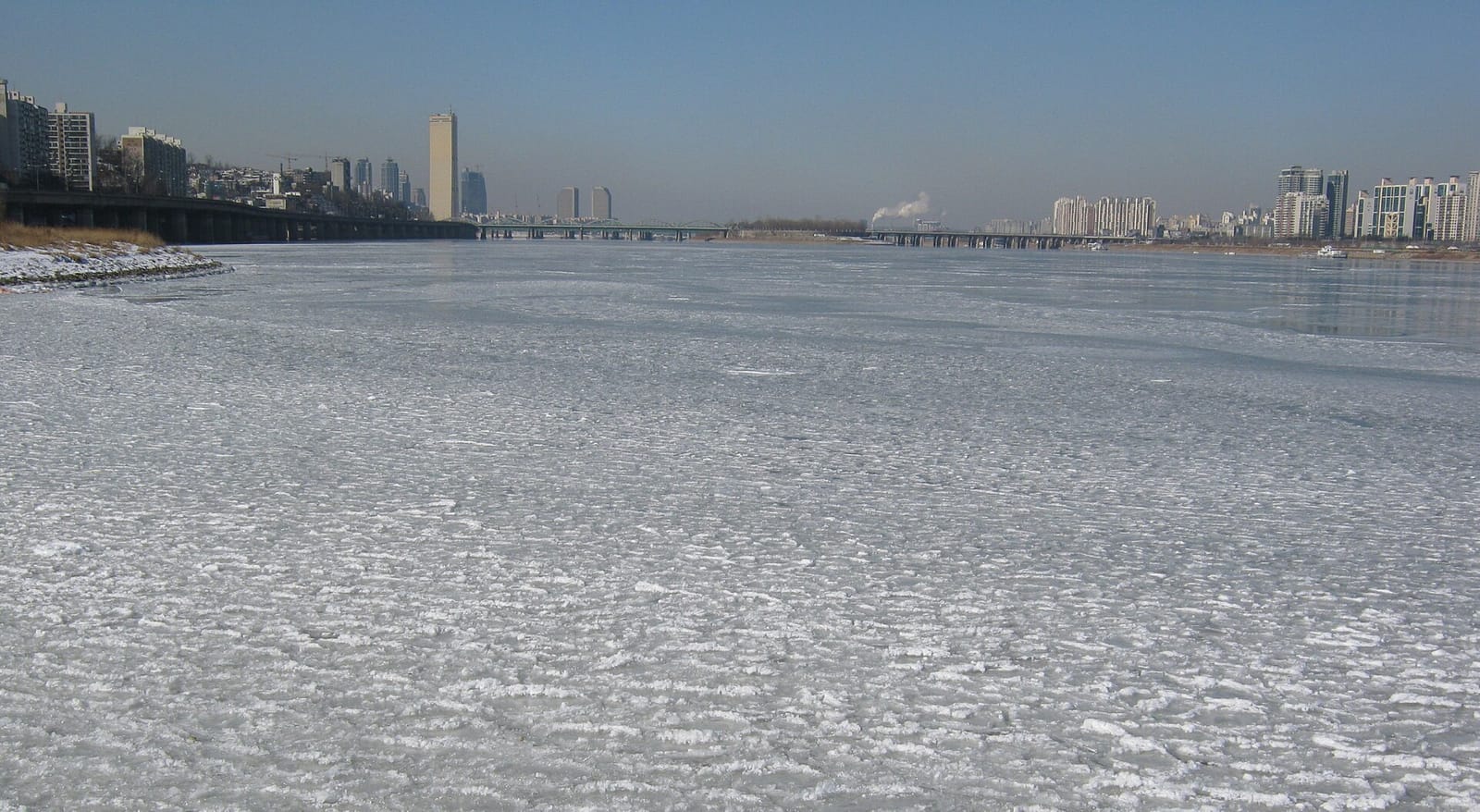
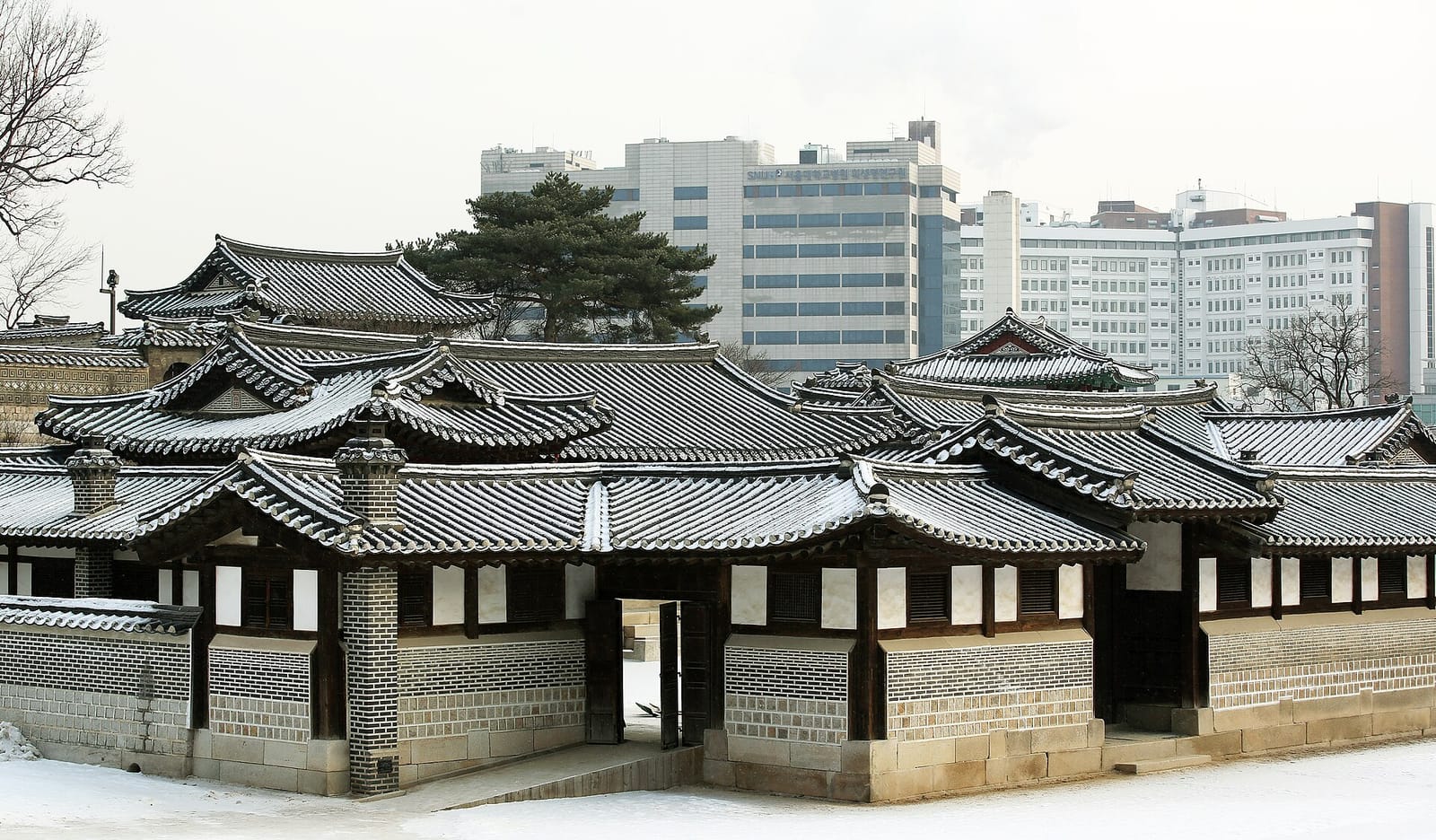
You might like: Korea Weather in December 2026: Seoul, Busan and Jeju Temperatures, Snow Odds, Winter Festa, Christmas and New Year's Eve
The forecast for January 2027
KMA's three-month outlook issued on 23 October 2026 gives January 2027 a 40% probability of normal and 40% of above-normal temperature, with precipitation most likely near normal (50%). Normal here is a national mean of −1.5 to −0.3°C and 17.4–26.8 mm of precipitation.
The reasoning: a strong El Niño, expected to peak in December, strengthens high pressure east of Korea and pulls in milder air. But KMA also says low sea ice in the Barents–Kara Sea will let Arctic air break through at times, with sharp temperature drops on occasion. In plain terms: an average-to-mild month with a few brutal days that cannot be dated this far ahead. KMA's next three-month outlook is due on 23 November 2026; we will update this page with it.
Does it snow in Korea in January?
Yes. January is the snowiest month in every Korean city. KMA's normals count snow falling on 7.1 days in Seoul, 7.2 in Jeju City and 1.4 in Busan. Seoul also averages 7.6 days with snow on the ground in January, more than its snow days, because cold January air keeps what falls.
What that means for a trip:
- One day in Seoul gives roughly a one-in-four chance of snow falling that day.
- A week in Seoul makes seeing some snow likely; keep one morning free for a palace the day after a snowfall.
- Snow that lasts is in Gangwon's mountains and on Hallasan, not in the cities.
- Busan for snow is a mistake.
Last winter Seoul had measurable snow on 12, 19 and 23 January 2026 and 21.6 cm over the whole season, 0.9 cm below normal. City-by-city first-snow dates and odds by month are in our snow guide.
Daylight: about 9 hours 40 minutes, growing
| 2027 | Seoul | Busan | Jeju City |
|---|---|---|---|
| 1 January: sunrise / sunset | 07:47 / 17:24 | 07:32 / 17:23 | 07:38 / 17:37 |
| 15 January | 07:46 / 17:37 | 07:32 / 17:35 | 07:38 / 17:48 |
| 31 January | 07:37 / 17:54 | 07:24 / 17:51 | 07:31 / 18:04 |
Calculated with a standard solar-position model at sea level, Korea Standard Time, rounded to the minute; the 1 January Seoul and Busan-area times match those in our New Year sunrise guide, computed with KASI's own model. Allow a minute either way.
Sunrise stays late all month, so mornings start dark. Sunsets move about 30 minutes later across January in Seoul. Plan outdoor sights between 10:00 and 16:30 and save light shows and markets for after dark.
January 2027 week by week
| When (2027) | What happens | Status |
|---|---|---|
| Fri 1 Jan | Public holiday. First mainland sunrise 07:31 at Ganjeolgot (간절곶), Ulsan; Jeongdongjin 07:39; Seoul hills about 07:46–07:47. Banks, post offices and government offices close; the National Museum of Korea closes | Sunrise times fixed; holiday confirmed |
| 2–3 Jan | A three-day weekend after New Year; then hotel prices drop | Confirmed calendar |
| Sat 9 Jan | Hwacheon Sancheoneo Ice Festival opens. Last season the Pyeongchang Trout Festival also opened on 9 January | Hwacheon confirmed; Pyeongchang not announced |
| Mid-January | Coldest stretch of the year in a normal winter. Last season the Cheonggyecheon lanterns ran to 18 January | Normal; lanterns last season's pattern |
| Late January | Taebaeksan Snow Festival opened on 31 January last season | Not announced |
| Sun 31 Jan | Hwacheon ends; last day of Seoul Winter Festa's portal-listed range | Hwacheon confirmed; Festa planned |
| 6–9 Feb | Seollal holiday (Seollal Day Sun 7 Feb, substitute holiday Tue 9 Feb). Not in January | Confirmed |
Why Seollal matters even though it is in February. Many English guides list Lunar New Year as a "January or February" event. In 2027 it is firmly February, a day after China's (Saturday 6 February). That means January 2027 has no Seollal closures, no holiday train sell-outs and no toll-free traffic jams. If your trip runs into early February, read our Seollal 2027 guide: crossing the country on 5–7 February is the thing to avoid.
You might like: New Year Sunrise in Korea 2027: The 1 January Sunrise Times at Jeongdongjin, Homigot, Ganjeolgot, Haeundae, Seongsan and Seoul
Winter festivals in January 2027: what is confirmed
Hwacheon Sancheoneo Ice Festival (화천산천어축제), 9–31 January 2027: confirmed. Korea's biggest winter festival by visitor numbers puts visitors on the frozen Hwacheon stream to fish through the ice for sancheoneo (산천어), a small cold-water trout, and have the catch grilled on the spot. In 2025 it drew more than 1.86 million visitors between 11 January and 2 February, by the county's preliminary count.
- Fee: in 2026 the general ticket was ₩15,000 ($11) with a ₩5,000 farm-produce voucher back. The county plans ₩25,000 ($19) with ₩15,000 back for 2027. Korean press reported it on 2–5 October 2026; on 18 November we still found no confirmation. Either way the net cost is ₩10,000 ($7.50) if you spend the vouchers in Hwacheon.
- Foreign visitors: foreign passport holders paid ₩10,000 ($7.50) in 2026 and had their own fishing area with a rest area and a prayer room. The 2027 foreigner rate has not been announced.
- From Seoul: ITX-Cheongchun to Namchuncheon, then a bus: ₩14,600 ($11), about 3 hours 15 minutes each way.
Booking, catch limits and a timed day plan: our Hwacheon 2027 guide.
Pyeongchang Trout Festival (평창송어축제): not announced. Last season it ran 9 January to 9 February 2026, with ice fishing at ₩25,000 ($19). It is the fastest of the ice festivals from Seoul (KTX to Jinbu, about 1 hour 25). Some tour sellers already list 9 January to 9 February 2027; that copies last season, and the organiser had published nothing when we checked on 18 November.
Taebaeksan Snow Festival (태백산눈축제): not announced. Last season it ran 31 January to 8 February 2026, with snow sculptures in Taebaeksan National Park lit until 22:00. If it follows that pattern, it opens on the last weekend of January.
Seoul Winter Festa (서울윈터페스타): to 31 January 2027, planned. The city's festival portal lists 11 December 2026 to 31 January 2027, but that is the umbrella range, not the length of every event: last season the core Festa programme ended on 4 January. In January the useful parts are the Seoul Plaza skating rink, which last season ran to 8 February at ₩1,000 ($0.75) an hour with skates and helmet, and the Cheonggyecheon lanterns, which last season ran to 18 January, free. The Gwanghwamun Christmas market closed on 31 December last year, so do not plan a January trip around it (Winter Festa guide).
Inje Icefish Festival: cancelled three winters running; do not plan around it until Inje announces it is back.
All five compared by fee, distance and who each suits: our Korea winter festivals guide.
You might like: Korea Winter Festivals 2026–27: Hwacheon, Pyeongchang Trout, Taebaek Snow and Seoul Winter Festa
Skiing in January: the season's peak
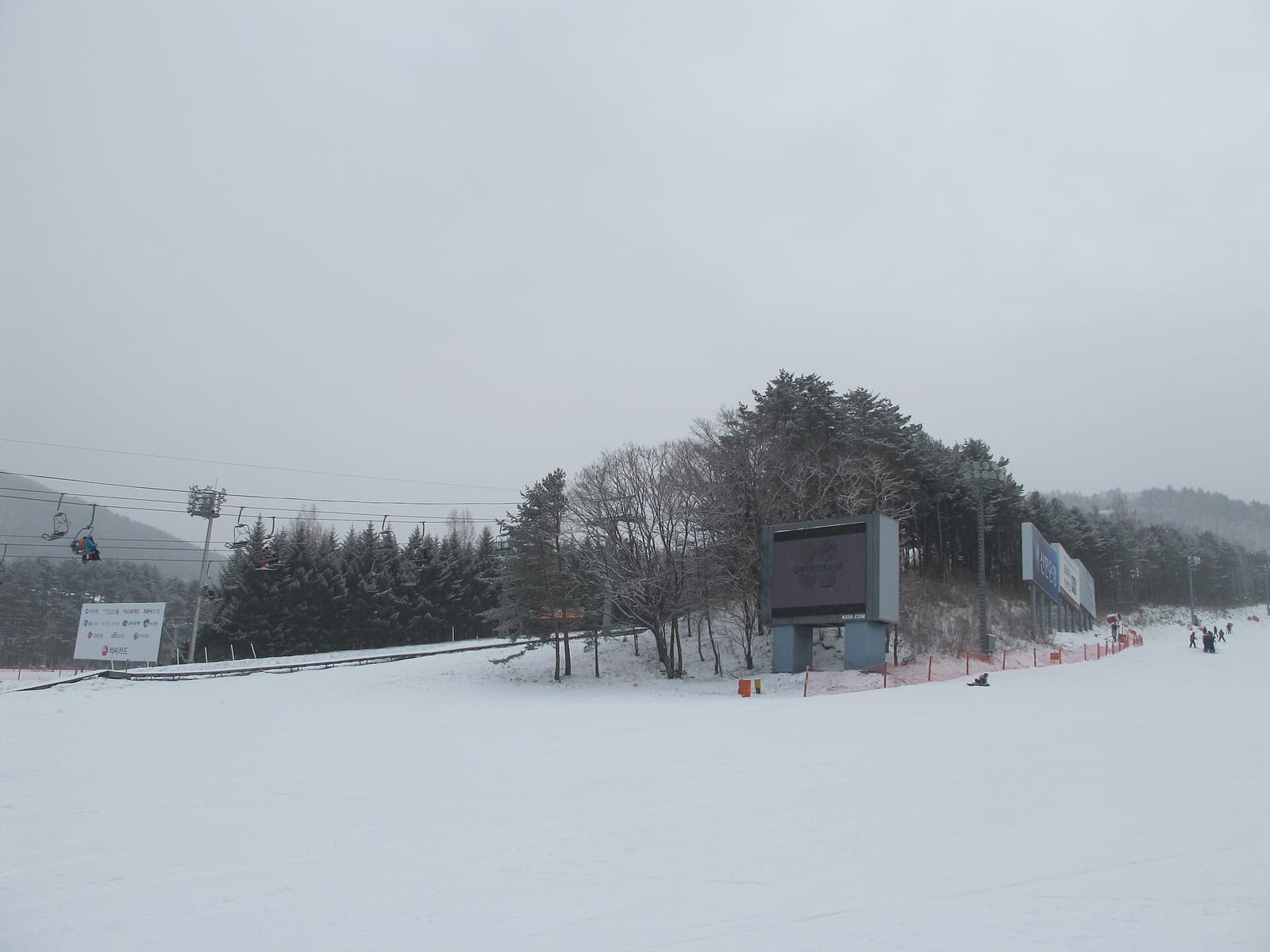
Korean slopes run on machine-made snow, so in January every major resort is open in a normal season: last season the last of them, Konjiam, opened on 10 December 2025. For 2026–27, resorts gave the press opening targets between 20 November and the second week of December, all weather-dependent. Here are the January day costs, read off the resorts' own Korean price pages on 16 November 2026:
| Resort | Adult lift ticket | Full rental set | Seoul shuttle, round trip |
|---|---|---|---|
| High1 (하이원), Jeongseon | Full day ₩111,000 ($83), every day (26/27) | Full day ₩54,000 ($40) | ₩52,000 ($39), foreigner booking site |
| Konjiam (곤지암), Gyeonggi | 6 h ₩87,000 ($65) weekday / ₩105,000 ($79) weekend (26/27) | 6 h ₩36,000 / ₩39,000 | Timetable behind a member login |
| Vivaldi Park (비발디파크), Hongcheon | 7 h ₩83,000 / ₩99,000 (last season's list) | 8 h ₩38,000 / ₩47,000 | ₩20,000 ($15), foreigner fare |
| Mona Yongpyong (모나용평), Pyeongchang | Daytime ₩96,000 (last season's list) | Daytime ₩48,000 | ₩34,000 ($25) |
So a lift ticket plus full rental costs roughly ₩121,000–₩165,000 ($91–124) on these lists, before transport and clothing hire: about ₩121,000 at Vivaldi on a weekday, ₩165,000 at High1. Where a Seoul shuttle fare is published it adds ₩20,000–₩52,000 ($15–39) round trip. Konjiam's English page still shows an older, cheaper price list and does not mention that tickets are sold online only. Details, night skiing and how to book: our ski resort guide.
Hallasan in snow. Jeju's summit trails take 1,500 people a day by advance booking, January slots open on 1 December at 09:00, the upper checkpoints close at 11:30, and crampons are required in snow (Hallasan guide). In January 2026 most winter walkers took the shorter, booking-free Yeongsil (64,235 visitors) and Eorimok (42,890) trails.
What January costs: hotels at the low end
January is a low season for Korean hotels once the New Year weekend is over, though the monthly data only lets us compare it with February and March.
- Seoul: Yanolja Research measured an average Seoul lodging rate of ₩152,885 ($115) a night in January 2026, at 70.5% occupancy, against ₩156,263 ($117) in February and ₩164,995 ($124) at 79.8% in March: the lowest of the three months measured. Those are averages across all lodging types, motels included. A central three-star business hotel in an ordinary week runs about ₩90,000–₩160,000 ($67–120) (Seoul hotel price guide).
- Busan: foreign visitors' card spending in Haeundae was ₩13.88 billion in January 2026 against ₩34.97 billion in May, under 40% of the May figure. Part of that gap is growth through the year, but winter is plainly Haeundae's quiet season (Busan winter stays).
- Exceptions: 31 December to 2 January, the weekends of the Hwacheon festival in Hwacheon and Chuncheon, and Pyeongchang ski-resort hotels on January weekends.
Seoul stays on Agoda — price a January week against a March one Seoul rooms were cheaper in January 2026 than in February or March, so the same budget can buy a better area: Jongno or Myeongdong for the lanterns and the Seoul Plaza rink, or near Cheongnyangni or Seoul Station if you plan day trips to Hwacheon or the ski slopes. Compare areas without fixed dates, then set your own. EpicKor may earn a commission if you book through this Agoda link, at no extra cost to you. Check dates, taxes, cancellation terms and the final price on Agoda before booking.
Compare Seoul stays on AgodaEntry in January 2027: the K-ETA question
Travellers from 22 countries and regions, including the US, Canada, the UK, Germany, Japan and Australia, have been exempt from K-ETA (전자여행허가) since 1 April 2023. That temporary exemption ends on 31 December 2026 (KST). As of 16 November 2026, no 2027 extension had been announced on the K-ETA portal, and our own Korean- and English-language searches on 18 November found none either.
What that means if you land in January:
- If nothing is announced, the 22 go back to needing a K-ETA from 1 January 2027. The fee today is ₩10,000 ($7.50) plus a 3% online payment fee.
- A K-ETA bought now is valid for three years (or to passport expiry), covers January either way, and waives the free e-Arrival Card.
- Under 18 or 65 and over on your entry date: exempt under the standing rule, regardless of the temporary list.
Last year the extension notice was dated 23 December, so a late decision is normal. Check k-eta.go.kr in the last week of December, or buy one now and stop worrying. Full detail: our K-ETA 2027 guide.
You might like: Korea K-ETA in 2027 vs the e-Arrival Card: The Exemption Ends 31 December 2026
What to pack for −10°C
Build the bag around Seoul's range, −5.5°C to 2.1°C, and the average of about two cold-wave mornings at −12°C or colder. Last New Year's Day, Seoul's sunrise hills stood at about −10°C. Add wind chill on the Han River bridges and at Gangwon festival sites.
- Base layer: thin thermal or merino top and leggings. Indoors is heated hard, so open layers beat one thick jumper.
- Outer: a long, hooded padded coat. The knee-length 롱패딩 (long padding) is what Seoul wears in January; in Seoul it runs from ₩49,900 ($37) for a polyester sale coat to about ₩329,000 ($246) for a discounted outdoor-brand down coat (padded-coat guide).
- Extremities: hat over the ears, gloves you can use a phone in, a neck warmer. On festival ice, waterproof gloves.
- Feet: grippy, waterproof soles and wool socks. KMA observers see ice form on about 29 January days in Seoul, so after any snow, expect refrozen patches on steps and hill lanes.
- Hot packs (핫팩): Daiso sold two for ₩1,000 ($0.75) on 29 September 2026, so bring only enough for the first night. Pocket packs go in a pocket, never on skin; rechargeable warmers with built-in batteries are banned in both cabin and checked bags on Korean airlines (hot-pack guide).
- Skin: lip balm and hand cream. Busan's January humidity is 47%, Seoul's 56%, and heated rooms are drier still.
What is closed or worse in January
- 1 January: banks, post offices and government offices close; the National Museum of Korea and MMCA Seoul close for the day. Shops, palaces and most restaurants open.
- Weekly palace closures still apply: Gyeongbokgung closes on Tuesdays; Changdeokgung, Changgyeonggung and Deoksugung close on Mondays.
- Christmas markets are over: the Gwanghwamun market closed on 31 December last season.
- Parks and gardens are brown. No blossom, no autumn colour; trees are bare until late March.
- Beaches are for walking, not swimming. Busan is sunny, but the sea is cold and the nights are at freezing.
- Jeju's views are unreliable. It is the cloudiest of the three in January, and Hallasan needs crampons.
Do not go in January for long days: Seoul has under ten hours of daylight for most of the month. Do not trust a firm 2027 date for Pyeongchang or Taebaek until the organisers publish it. And do not plan an outdoor-only itinerary in Seoul: on a −12°C morning, palaces and markets are hard going, so keep museums, malls and a jjimjilbang (찜질방) in reserve.
So, should you go to Korea in January?
| If you want… | January verdict |
|---|---|
| Lower hotel prices and fewer crowds | Yes. Seoul's lowest average rate of January–March 2026, after the New Year weekend |
| Snow on palaces, skiing, ice fishing | Yes. The snowiest month; Hwacheon confirmed 9–31 Jan |
| Lunar New Year | No. Come 6–9 February instead |
| Long sightseeing days and parks in colour | No. Try April or late October |
| Mild weather | Busan, by day. 8°C afternoons and 203 hours of sun |
| Christmas markets | No. They end on 31 December; see our December guide |
FAQ
Q: What is the weather like in Korea in January? A: Cold, dry and often clear. KMA's 1991–2020 normals give Seoul an average high of 2.1°C and low of −5.5°C, Busan 8.2°C and −0.1°C, and Jeju City 8.6°C and 3.7°C. Seoul gets just 16.8 mm of precipitation and KMA observers see ice form (on puddles and open water) on about 29 days of 31.
Q: Does it snow in South Korea in January? A: Yes, more than in any other month. Snow falls on about 7 days in Seoul and Jeju City and 1.4 days in Busan in a normal January, and Seoul averages 7.6 days with snow on the ground. Gangwon's mountains and Hallasan stay white all month.
Q: Is Lunar New Year (Seollal) in January 2027? A: No. Seollal Day is Sunday 7 February 2027, and the holiday runs from Saturday 6 to Tuesday 9 February, including a substitute holiday. The only public holiday in January 2027 is Friday 1 January.
Q: Do I need a K-ETA to visit Korea in January 2027? A: If you hold one of the 22 exempt passports and are aged 18 to 64, probably yes: the exemption ends on 31 December 2026 and no extension had been announced by 18 November. Check k-eta.go.kr in late December, or apply now for ₩10,000; a K-ETA lasts three years.
Q: Is January a good time to visit Korea? A: For budget, snow, skiing and ice festivals, yes: Seoul lodging averaged ₩152,885 a night in January 2026, lower than in February or March, and the Hwacheon ice festival runs 9–31 January 2027. For long days, greenery or Lunar New Year, choose another month.
Sources
- Korea Meteorological Administration (기상청), 「한국기후표(1991~2020)」 Climatological Normals of Korea, data.kma.go.kr (PDF), read 18 November 2026: January monthly normals and 2011–2020 decadal values for Seoul (108, pp. II-27–28), Busan (159, pp. II-65–66) and Jeju (184, pp. II-79–80) for temperature, precipitation, humidity, sunshine and wind; days with precipitation and cold-wave days (현상별 일수, pp. II-837, II-847, II-850); snow and ice days (목측 현상일수, pp. II-876–878). Daegwallyeong normals and lying-snow days: same tables, as cited in our snow guide.
- KMA three-month outlook, November 2026–January 2027, issued 23 October 2026, weather.go.kr (PDF). Winter 2025–26 snow in Seoul and Busan: KMA and regional offices, as cited in our snow guide.
- Sunrise and sunset: 1 January 2027 times from the Korea Astronomy and Space Science Institute (한국천문연구원) model, as computed in our New Year sunrise guide (astro.kasi.re.kr); 15 and 31 January calculated by EpicKor with a standard solar-position model, 18 November 2026.
- Public holidays and Seollal 2027: Korea Astronomy and Space Science Institute, 「2027년 월력요항」 (29 June 2026), and the Regulation on Public Holidays of Government Offices, as cited in our Seollal 2027 guide.
- Hwacheon: official festival site (narafestival.com) and Hwacheon County; 2025 preliminary visitor count: Aju News, 2 February 2025; fee plan reported by MTN, 2 October 2026 and Shinailbo, 5 October 2026; 2026 fees, foreigner area and transport as cited in our Hwacheon guide. Pyeongchang, Taebaek and Inje 2025–26 dates and fees: organisers' sites and press, as cited in our winter festivals guide; no 2027 dates found in Korean-language searches on 18 November 2026.
- Seoul Winter Festa: Seoul festival portal, festival.seoul.go.kr; 2025–26 rink season and fee: Seoul Metropolitan Government, December 2025; lantern and market dates as cited in our Winter Festa guide.
- Ski prices and opening targets: each resort's Korean price page and shuttle site, read 16 November 2026; News1 (5 November 2026) and Hankooki (7 November 2026), as cited in our ski guide. Hallasan rules and January 2026 trail counts: Hallasan reservation system and park statistics, as cited in our Hallasan guide.
- Hotel rates: Yanolja Research, Seoul lodging average rate and occupancy for January and March 2026, as cited in our Seoul hotel price guide. Busan card spending: Korea Tourism Data Lab analysis reported by the Seoul Shinmun, July 2026, as cited in our Busan winter guide.
- K-ETA: K-ETA portal notice (exemption to 31 December 2026) and eligibility page, k-eta.go.kr, as cited in our K-ETA guide (checked 16 November 2026); no 2027 extension found in searches on 18 November 2026.
- Closures: National Museum of Korea and MMCA closing days, as cited in our posts 200 and 300; Gyeongbokgung closing day: Korea Heritage Service, as cited in 470.
- Prices for coats and hot packs: brand stores (3 October 2026, 504) and Daiso (29 September 2026, 487).
- Exchange rate: Bank of Korea ECOS, ₩1,335.0 per US dollar, 17 November 2026.
You Might Also Like
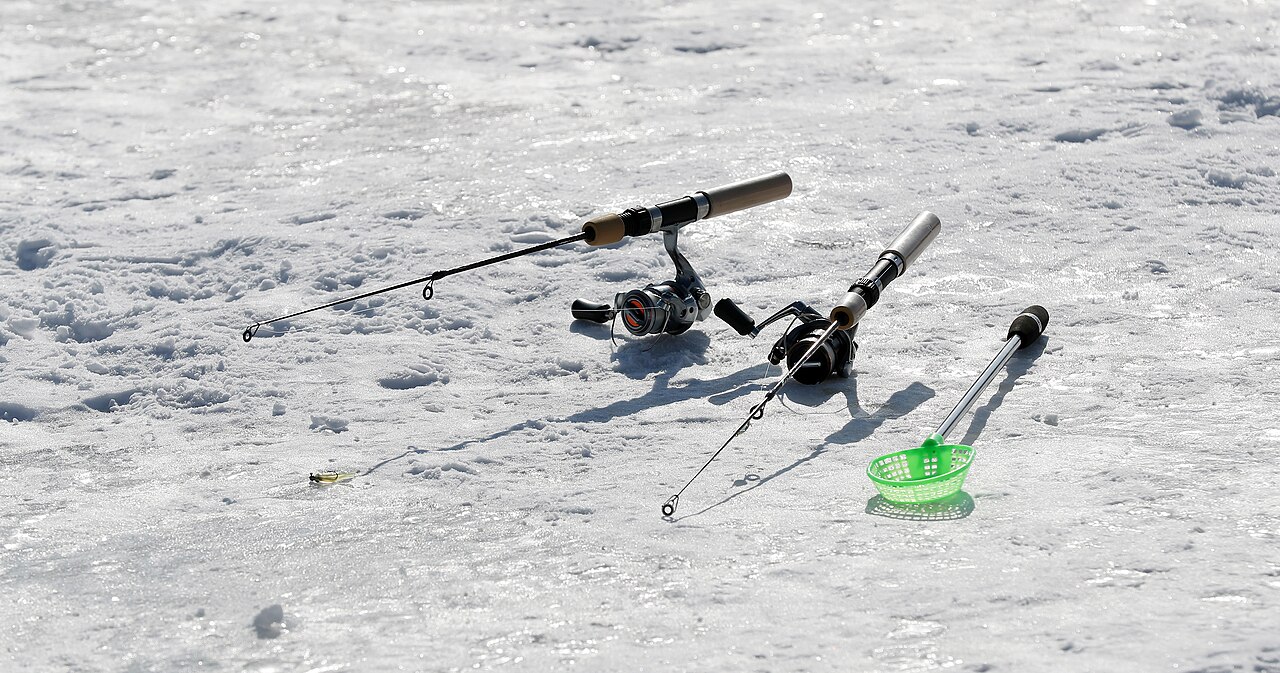
Korea Winter Festivals 2026–27: Hwacheon, Pyeongchang Trout, Taebaek Snow and Seoul Winter Festa — Dates, Fees and Which One to Pick
Only two Korea winter festivals have 2026–27 dates: Hwacheon (9–31 January) and Seoul Winter Festa (from 11 December). Pyeongchang and Taebaek have not announced; Inje has been cancelled three winters running. Fees, trains, which to pick.
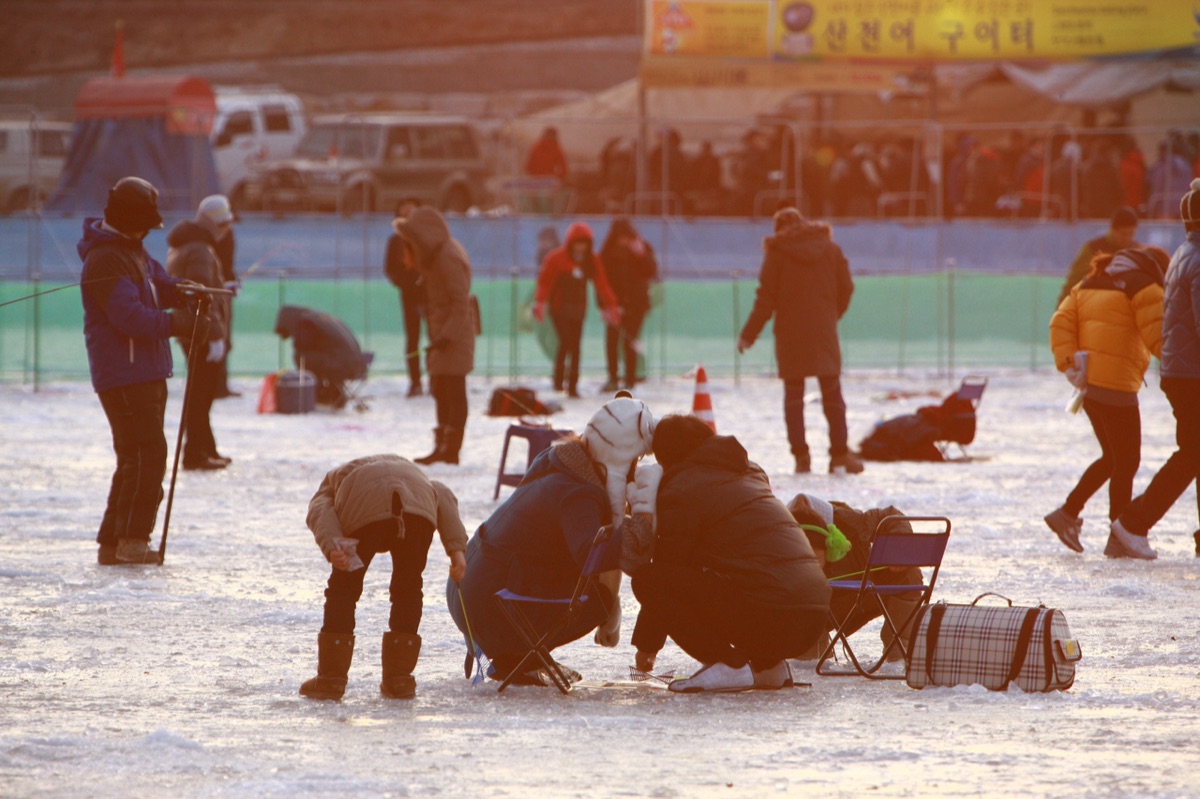
Hwacheon Sancheoneo Ice Festival 2027, Korea: 9–31 January, the ₩25,000 Fee Plan and How to Book
Hwacheon Sancheoneo Ice Festival 2027 runs 9–31 January. The county plans a ₩25,000 ticket, up from ₩15,000, with ₩15,000 back in local vouchers, but it is not final. Foreign passport holders paid ₩10,000 in 2026. Booking, buses and a Seoul day plan.
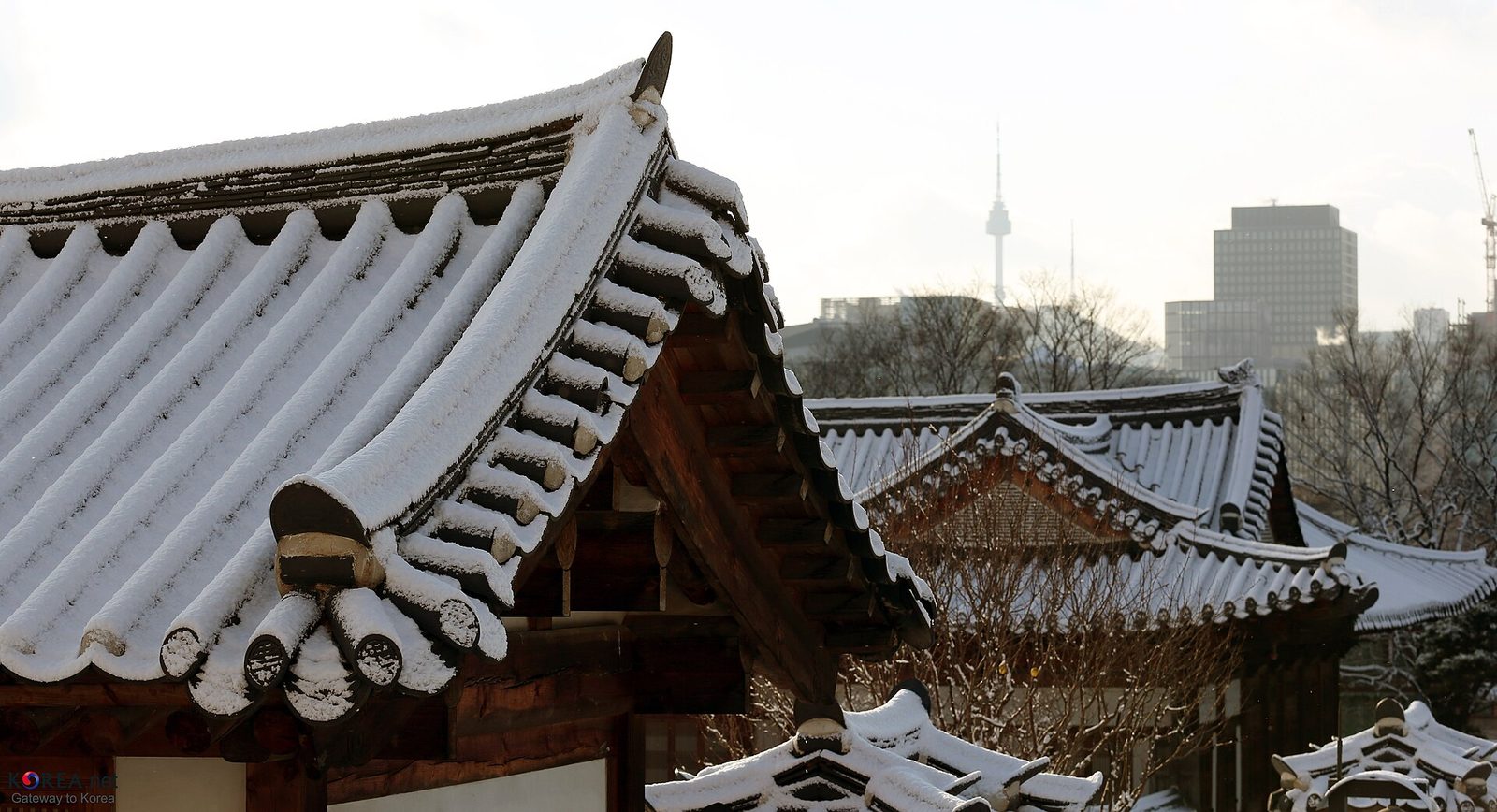
Korea Weather in December 2026: Seoul, Busan and Jeju Temperatures, Snow Odds, Winter Festa, Christmas and New Year's Eve
Seoul records ice on 27 of December's 31 days, yet only 22.6 mm of rain and snow falls. Korea weather in December 2026: KMA normals for Seoul, Busan and Jeju, the forecast, snow odds, Winter Festa, Christmas and New Year's Eve.