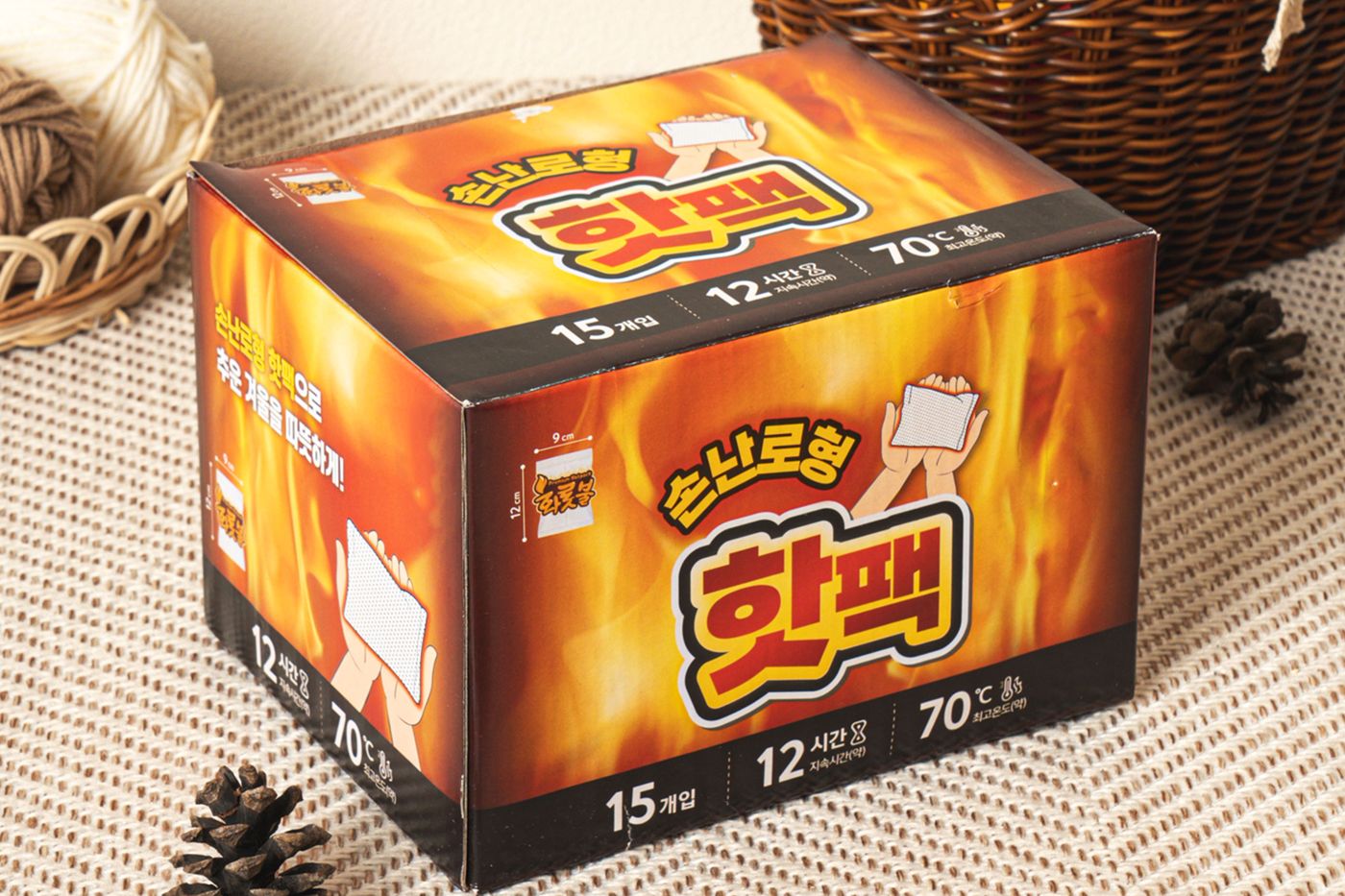
Korean Hot Packs (핫팩) This Winter: Korea's 70°C Legal Limit, What They Cost at Daiso, CU and GS25, and Which Ones You Can Fly With
Last updated: September 2026. Temperature rules are from Korea's safety standard for thermal packs (Annex 68, Korean Agency for Technology and Standards); test results are from the Korea Consumer Agency (한국소비자원); prices were read on Daiso's and Olive Young's own online stores on 29 September 2026. Sources are listed at the end.
In a Korean winter the hot pack (핫팩, hat-paek) is not camping gear. People buy one at a time at the convenience-store counter on the way to the bus stop. On 19 October 2025, the first Sunday that autumn when the morning low fell into single digits, GS25's hot-pack sales were 587% higher than the Sunday before.
What the packets do not tell a visitor in English is that Korea has a legal ceiling on how hot they may get: 70°C. When the Korea Consumer Agency surveyed 30 packs on sale, two were labelled as reaching 75°C. The same agency has twice tallied hot-pack injuries, in 2014 and 2018, and most burns come not from over-hot packs but from ordinary ones left on one spot for hours.
Here is the rule in plain English, what each type on a Korean shelf is labelled to do, what they cost at Daiso, CU, GS25 and Olive Young, and which ones you can take on a plane, where the answer for rechargeable warmers changed in September 2025.
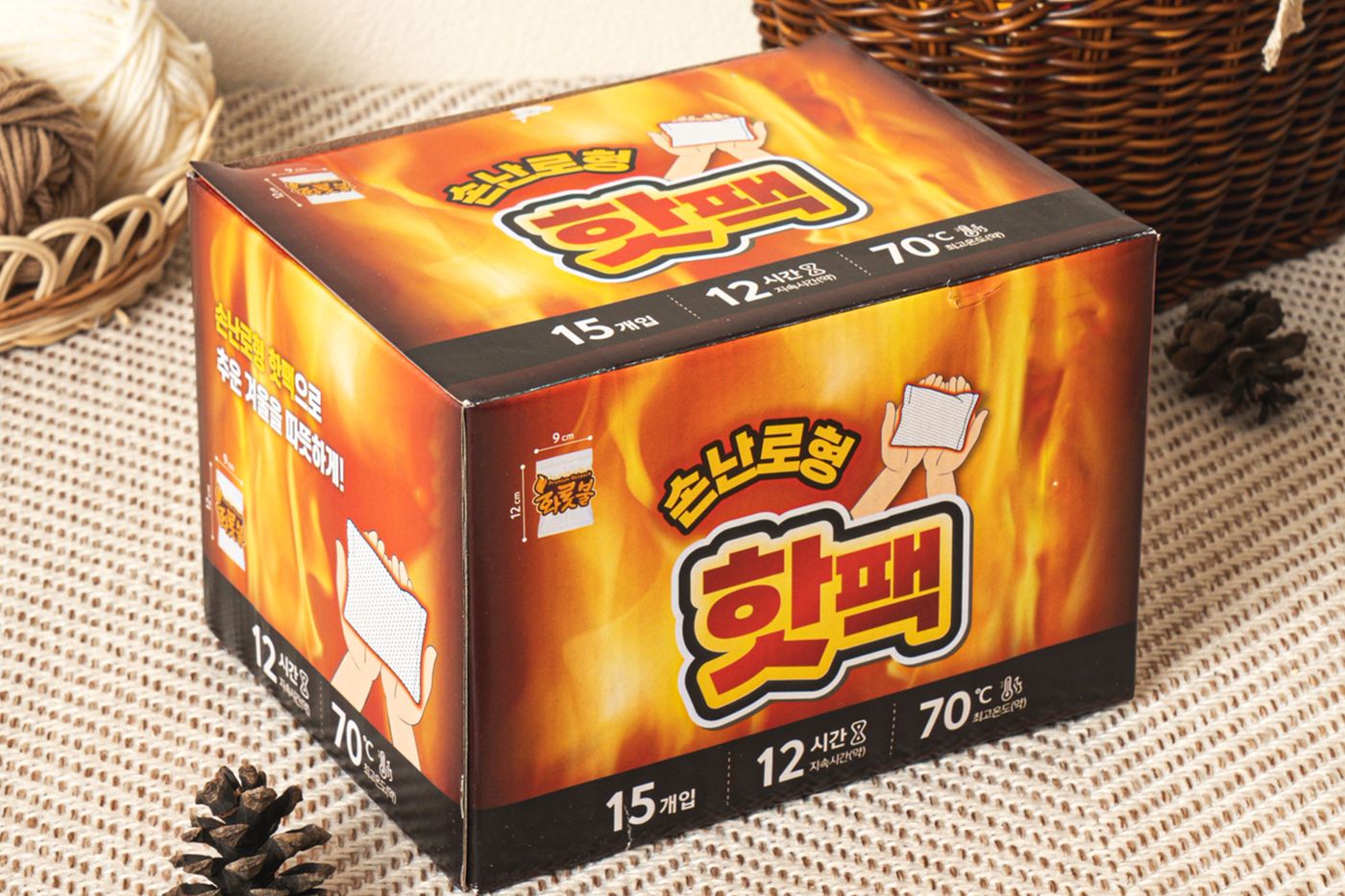
BARO Premium Korean pocket heat packs (바로핫팩), made in Korea and labelled 70°C maximum, 10-pack on AmazonAffiliate link. As an Amazon Associate, EpicKor earns from qualifying purchases at no extra cost to you.
Quick Guide: Korean hot packs at a glance
| Type (Korean name) | What the label says | Daiso price, 29 Sep 2026 | Where it goes | On a plane from Korea |
|---|---|---|---|---|
| Pocket pouch (주머니 핫팩 / 손난로형) | 12–15 hours, max 70°C | ₩1,000 for 2; ₩5,000 for 15 | Coat pocket or glove, never on skin | Cabin and checked bag |
| Stick-on (붙이는 핫팩 / 부착형) | 12 hours, max 63°C | ₩1,000 for 2; ₩5,000 for 15 | On an inner layer, back or belly | Cabin and checked bag |
| Foot and insole (발난로 / 깔창형) | 5–10 hours, max 55–63°C | ₩1,000 for 4 (foot) or 2 (insole) | On socks or inside shoes | Cabin and checked bag |
| Liquid click pack (똑딱이 손난로) | Reusable; heats when you snap the metal disc | Not sold at Daiso | In the hand, short bursts | Checked bag, or within the 100 ml liquids rule |
| Rechargeable electric (충전식 손난로) | Battery device, often doubles as a power bank | Not at Daiso; ₩39,800 for one model at Olive Young | In the hand or pocket | Banned in both bags on Korean airlines if the battery cannot come out |
Temperatures and durations are what the packets print; the flying column is explained further down.
In Korea, a Daiso 15-pack works out at about ₩333 a pouch. The reason to pack some anyway: you may land at 6 a.m. in December, and the first queue is the airport bus stop.
INLIFE hand warmers, made in Korea, 30-pack — the pocket pouch Korean commuters carry A box for your checked bag so the first cold morning is covered before you find a Daiso. Honest note: in Korea the same kind of pouch costs far less per piece, so pack only what you need for arrival. As an Amazon Associate, EpicKor earns from qualifying purchases at no extra cost to you.
See the INLIFE Korean hand warmers on AmazonThe 70°C rule: what Korea's safety standard says
Disposable hot packs are on Korea's list of safety-confirmed household goods (안전확인대상생활용품). The Korean Agency for Technology and Standards (국가기술표준원) sets their technical standard in Annex 68, "thermal packs, including pocket warmers" (온열팩, 주머니난로를 포함한다). Four numbers in it matter to anyone holding one:
- Maximum temperature: 70°C or below (최고온도 70℃ 이하). This is the ceiling the 75°C labels broke.
- Warm-up: 40°C within 20 minutes. A pouch still lukewarm after twenty minutes is failing the standard or was stored badly.
- "Duration" means time at or above 40°C. The "12 hours" on the packet is the time above 40°C, and the pack must last at least that long.
- Half the duration near the top. The pack must stay above the midpoint between its peak and 40°C for at least 50% of its duration (온도보증시간).
These are measured at 20°C room temperature, on a plate held at skin temperature (30°C) under layers of cloth: 70°C is what the pack reaches under clothing, and under a duvet it runs hotter.
The standard covers powder packs (iron powder in a pouch), both non-stick (붙일 수 없는 타입) and stick-on (붙이는 타입), and liquid packs (액체형). It does not cover electric warmers. And it has one surprising line: "군납용으로 사용하는 것은 제외한다", packs for military supply are excluded.
Every pack sold in Korea must print, in Korean, its duration and maximum temperature, maker and five warnings, including low-temperature burns (저온화상) and, on stick-on packs, not directly on skin. Look for the KC mark too; a pack with no Korean text was not made for sale in Korea.
What Korea's consumer agency found: two packs labelled 75°C
On 18 December 2014 the Korea Consumer Agency (한국소비자원) published a survey of 30 powder-type hot packs on the Korean market, stick-on and non-stick:
- 2 of the 30 were labelled as reaching up to 75°C, "exceeding the standard", in the agency's words.
- 25 of the 30 (83.3%) broke the labelling rules in some respect.
- 4 Chinese products sold through social-commerce sites had no Korean labelling at all.
Its injury-monitoring system (CISS) had logged 107 hot-pack reports from 2011 to September 2014, rising every year from 18 to 42 in the first nine months of 2014.
On 5 December 2018 the agency issued a consumer safety alert (소비자안전주의보): 226 hot-pack reports from 2015 to June 2018, 197 of them burns, 92.2% of those with a known depth second- or third-degree, and, of the 133 cases from 2015–2017 with a known date, 65.4% happened in December to February.
Two honest caveats. The 75°C finding is from 2014; it was a check of what the packets claimed, not a lab measurement, and the agency's 2018 follow-up again looked only at labels. And over-hot packs were the rare case: most burns come from ordinary packs used badly.
You might like: When Does It Snow in Korea? The Official First-Snow Dates by City
The kinds on a Korean shelf, and what each is labelled to do
Daiso's range prints the two required numbers in large type, and the pattern is worth knowing at the rack.
Pocket pouches (주머니 핫팩, 손난로형 핫팩): up to 70°C
A flat pouch you tear out of its wrapper and keep in a pocket. Daiso's hand-warmer type prints 12 hours, max 70°C; its large single pouch prints 15 hours, "max 70°C or below, average 63°C (±5°C)". They run hottest because they sit in a pocket or glove, not on your body.
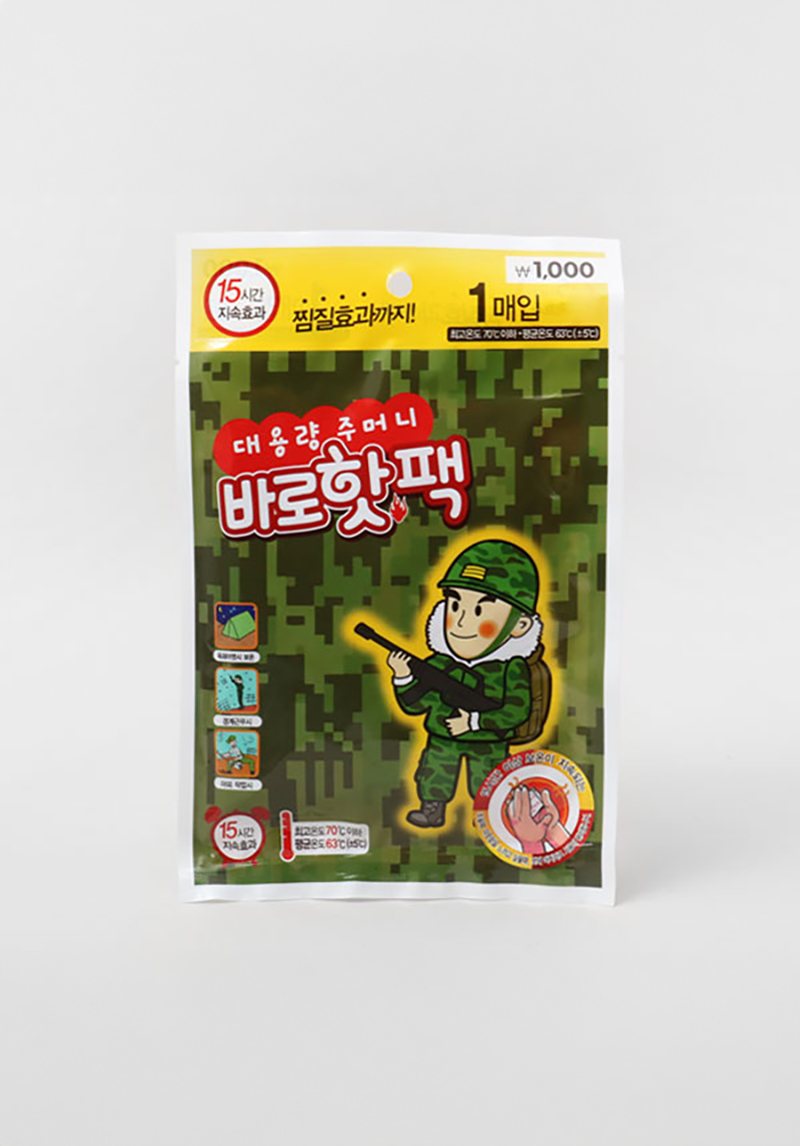
These are what English searches call a "Korean army hot pack" (군용 핫팩). The standard excludes packs made for military supply, but the ones in Korean shops such as Daiso are civilian products under the same 70°C cap.
Stick-on packs (붙이는 핫팩, 부착형): 63°C
Stick-on packs have an adhesive back and go on your clothes, usually the lower back or belly over a thin inner layer. Daiso's box of 15 prints 12 hours, max 63°C, and says on the box "피부에 직접 부착하지 마세요!", do not stick it directly on your skin.
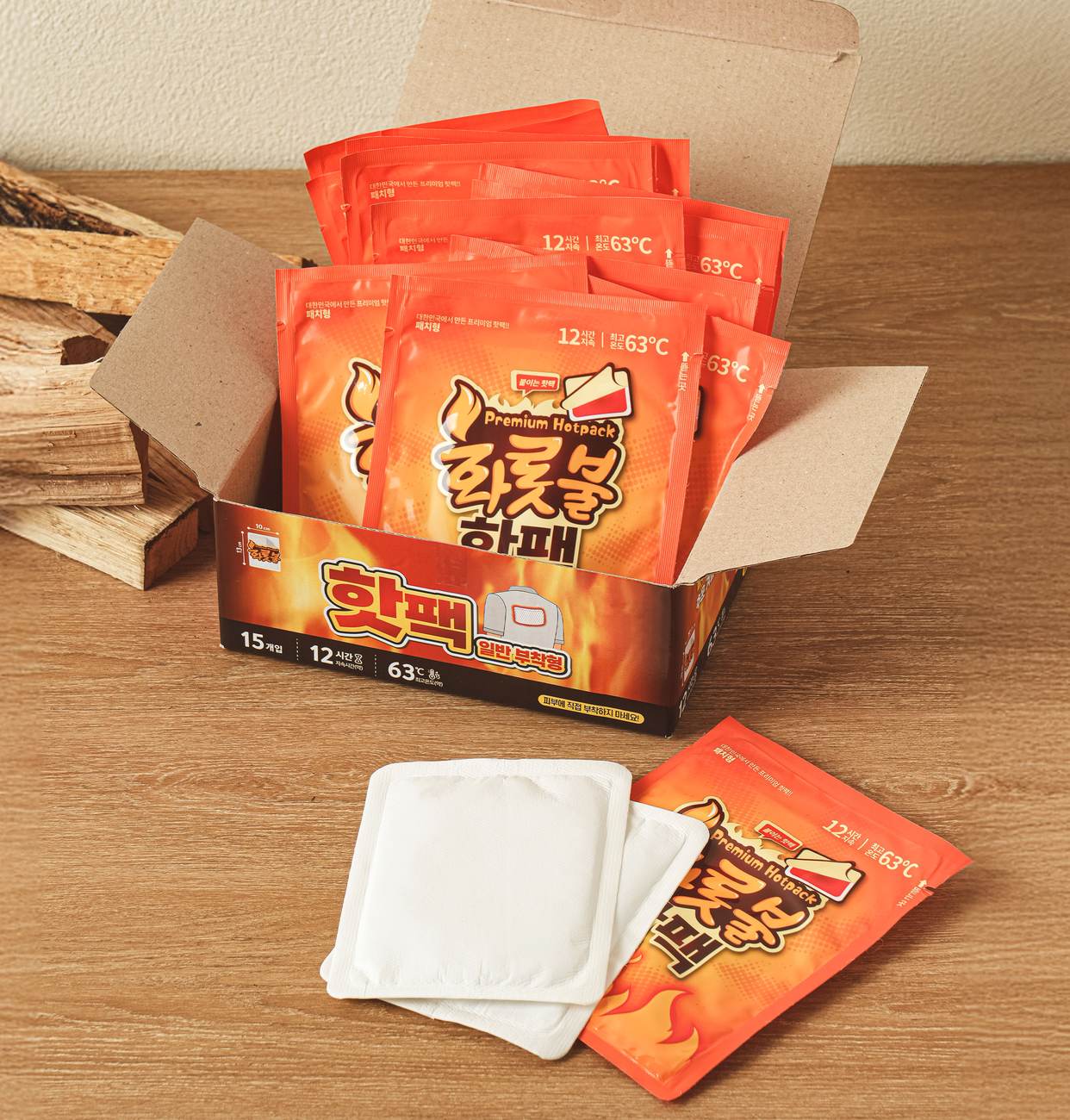
The lower number is deliberate: a pack pressed to your back cannot be moved away. It suits long, still stretches of cold, such as an evening on Seoul Winter Festa's lantern walk or a lift queue at a Korean ski resort.
myHOT adhesive body warmers, made in Korea, 30-pack — the stick-on type, for your back over a base layer For hours standing still outdoors at a festival, a ski slope or a winter hike. Honest note: stick it on clothing, never skin, and take it off before you sleep or lie on a heated floor; if you only need a few, Daiso's box of 15 in Korea is the cheaper buy. As an Amazon Associate, EpicKor earns from qualifying purchases at no extra cost to you.
See the myHOT stick-on warmers on AmazonFoot warmers and insoles (발난로, 깔창형 핫팩): 55–63°C
Feet get the lowest numbers, because shoes trap heat. Daiso's foot-warmer prints 5 hours, 63°C; its insole max 55°C, 10 hours, in 230–250 mm and 260–280 mm sizes.
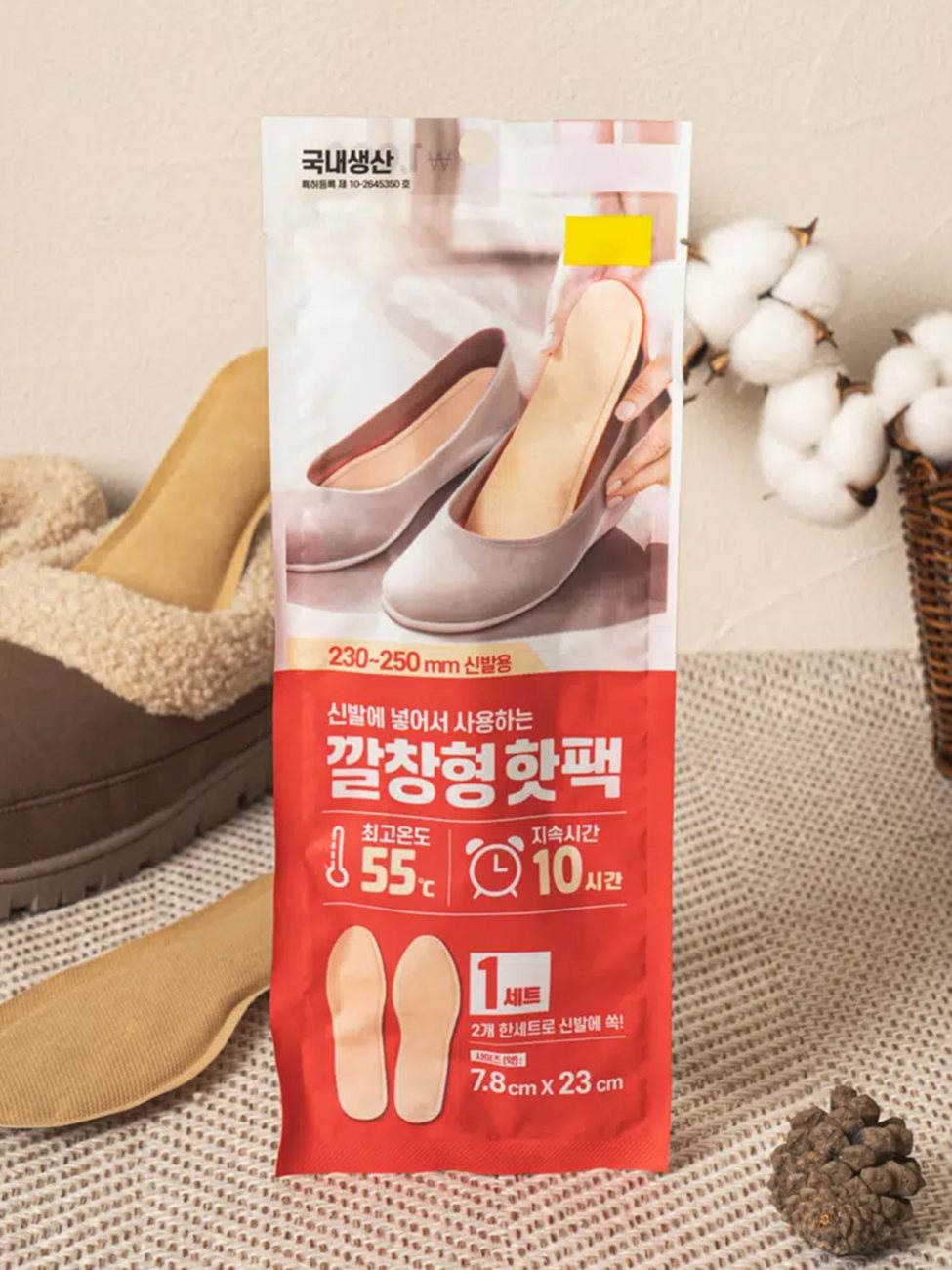
For a pre-dawn Hallasan winter climb in snow, insoles are worth more than any pocket pack.
Liquid click packs (똑딱이 손난로) and rechargeable warmers (충전식 손난로)
The liquid click pack is a pouch of solution with a small metal disc inside; snap the disc and it crystallises and warms, briefly. You reset it by boiling it. The rechargeable warmer is a small battery device that usually doubles as a phone charger; Olive Young lists one, 단미 고구마 듀얼 손난로, at ₩39,800. Think twice before flying with it, as explained below.
What hot packs cost in Korea this winter
| Store | Product (Korean name) | Price | Per pack | Date |
|---|---|---|---|---|
| Daiso | 손난로형 핫팩 일반 2개입 (pocket, 12 h, 70°C) | ₩1,000 | ₩500 | 29 Sep 2026 |
| Daiso | 손난로형 핫팩 대용량 15개입 (pocket, box) | ₩5,000 | ₩333 | 29 Sep 2026 (online stock sold out that day, as were the foot and insole packs) |
| Daiso | 부착형 핫팩 일반 2개입 / 대용량 15개입 (stick-on) | ₩1,000 / ₩5,000 | ₩500 / ₩333 | 29 Sep 2026 |
| Daiso | 발난로형 핫팩 4개입 / 깔창형 핫팩 2개입 | ₩1,000 each | ₩250 / ₩500 | 29 Sep 2026 |
| GS25 | 푸르내 핫팩 140g / 붙이는 핫팩 40g | ₩1,400 / ₩1,200 | same | Feb 2026, 2+1 offer |
| GS25 | 무직타이거 손발핫팩 2입 (hand and foot) | ₩1,500 | ₩750 | Dec 2025, 1+1 offer |
| CU | 소방희망 웅이핫팩 특대형 (extra-large pocket) | ₩1,500 | same | Mar 2026, 1+1 offer |
| Olive Young | 굿잠 포켓핫팩 무직타이거 1입 | ₩1,200 | same | 29 Sep 2026 |
| Olive Young | 라엘 붙이는 핫팩 5개입 (stick-on) | ₩8,900 | ₩1,780 | 29 Sep 2026 |
The convenience-store prices are last winter's, from lists that track each chain's 1+1 and 2+1 offers; neither chain had this winter's packs on offer when we checked on 29 September. In 2025, CU put its three hot packs on sale on 18 September, so expect new stock from mid-September to October.
Daiso is cheapest by far; convenience stores cost two to four times as much per pack for the privilege of buying one at 11 p.m.; Olive Young has the character and branded packs, plus Japan's Kobayashi stick-ons (10 for ₩11,900), which are not Korean. Our Daiso Korea must-buy guide covers the rest of the store.
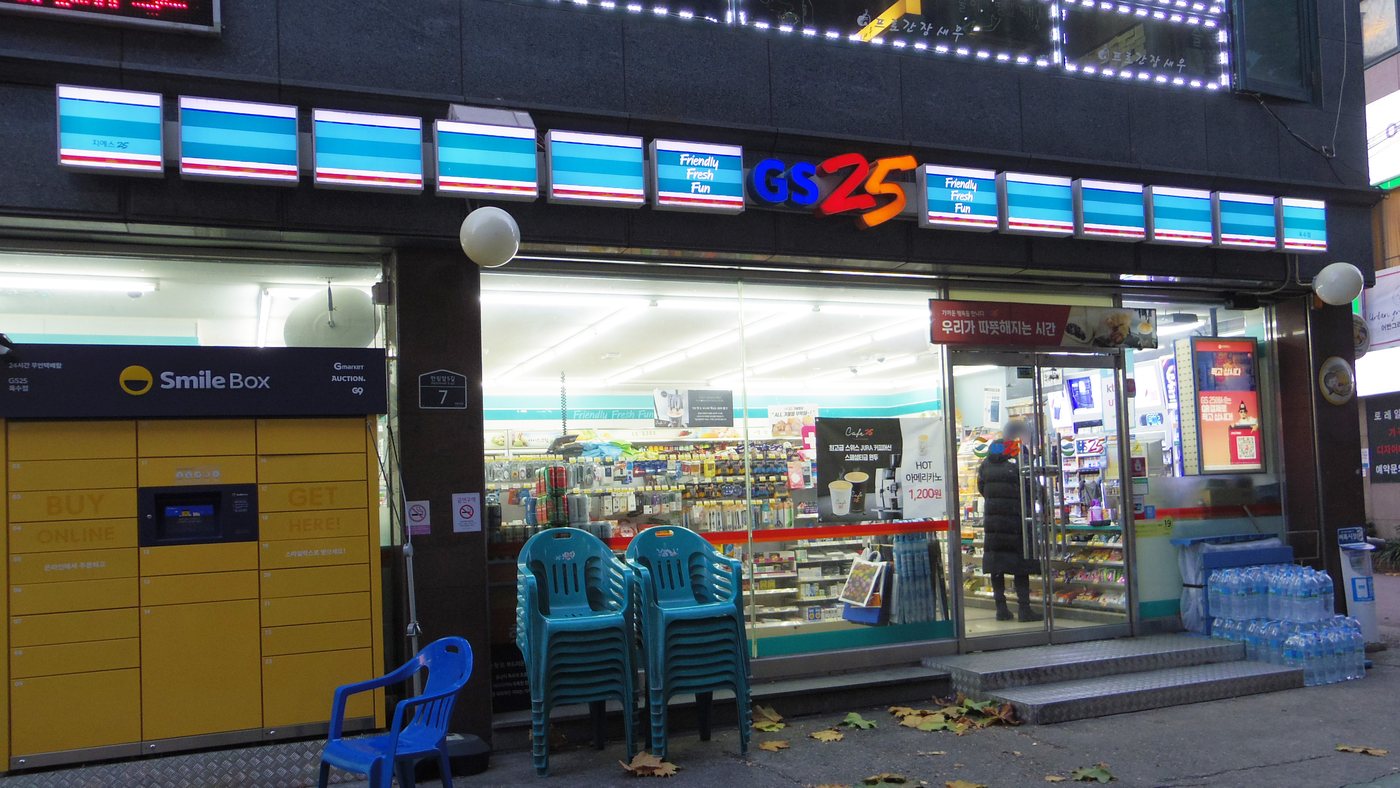
In the store, hot packs hang by the counter, not in the household aisle. Our guide to Korean convenience store 1+1 deals explains the offers, and the convenience-store breakfast and food guide cover what else to pick up on the way to the bus.
Low-temperature burns: the Korean winter mistake
The Korea Consumer Agency calls the injury a low-temperature burn (저온화상), one that happens "at relatively low temperatures of 40–70°C" when a pack is worn while sleeping or left on one spot for a long time. It barely hurts while it happens, and it goes deep.
Korea has a specific trap: the heated floor. Most homes, guesthouses and hanok stays heat through the floor (ondol), and jjimjilbang warm rooms are hotter still. A stick-on pack on your back while you sleep on a heated floor is two heat sources on one patch of skin, exactly what the agency warns against. The same goes for Korean stone beds and electric blankets.
The agency's rules, also printed on every Korean packet:
- Never directly on skin. Stick-on packs go on clothing.
- Never while sleeping or inside bedding.
- Never with another heat source, such as an electric blanket or heated floor.
- Move it, and take it off if the skin reddens.
- Extra care for infants, older people, and anyone with diabetes, poor circulation or sensitive skin, who may not feel the heat building.
If a pack feels too hot, believe the feeling, not the label.
How to use a hot pack in a Korean winter
- Open it 15–20 minutes early. The standard allows 20 minutes to reach 40°C; open it on the subway platform, not at the palace gate.
- Stick-on packs go on the lower back over an inner layer, not under a tight waistband, where pressure adds heat.
- Seoul's December nights average −3.4°C and January nights −5.5°C (Korea Meteorological Administration normals), so a 12-hour pack opened at 8 a.m. covers a full day out.
- Bin it as general waste, unopened, in the pay-as-you-throw bag (종량제 봉투); the plastic wrapper goes with plastic recycling.
You might like: Korean Ski Resorts 2026–27: Season-Pass Prices and the Rounds Closing This Month
Flying with hot packs out of Korea
| Type | Carry-on | Checked bag |
|---|---|---|
| Iron-powder pouches, stick-on packs, insoles | Yes | Yes |
| Liquid click pack (똑딱이) | Within the 100 ml liquids rule on international flights | Yes |
| Rechargeable warmer, battery cannot be removed | No | No |
| Rechargeable warmer, battery removable | Only with airline approval, battery removed or disconnected | No |
| Power bank | Up to 2, each 160 Wh or less | No |
The rechargeable ban. On 23 September 2025, Korea's Ministry of Land, Infrastructure and Transport (국토교통부) told Korean airlines that battery-integrated cordless hair irons (배터리 내장 무선 고데기) count as battery equipment that can produce dangerous heat and may go neither in the cabin nor in the hold, after a string of lithium-battery fires on aircraft. Korean carriers have since applied the same ban to any device that heats and has a battery that cannot be removed from both the cabin and the hold. Jeju Air's restricted-items page puts it in one sentence: "열을 발생시키는 기능이 탑재되어 있고, 배터리를 분리할 수 없는 일체형 전자기기는 기내 휴대 및 위탁수하물 모두 운송할 수 없습니다" (a device with a heating function and a battery that cannot be separated may be carried neither in the cabin nor as checked baggage). Some airlines' notices name only hair irons, others (Jin Air, for one) hand warmers too; the rule is about what a device does, so assume a built-in-battery hand warmer is covered, including the kind that doubles as a power bank.
Power banks on Korean airlines: up to two per person, each 160 Wh or less, from 20 April 2026; over 100 Wh needs airline approval; terminals protected; kept on you or in the seat pocket, not the overhead bin; and on Korean Air, from 26 January 2026, no charging or use in flight.
Disposable iron-powder packs are the easy case: they are not on Korean carriers' restricted lists, and the US TSA allows hand warmers in both bags. Rules move, so check your airline's page before packing anything with a battery.
FAQ
Q: How hot do Korean hot packs get? A: By law, no more than 70°C. On Daiso's current range, pocket pouches are labelled 70°C, stick-on packs and foot warmers 63°C, and insoles 55°C. In 2014 the Korea Consumer Agency found 2 of 30 packs labelled 75°C.
Q: Where can I buy hot packs in Korea, and how much are they? A: Daiso is cheapest: ₩1,000 for two pocket or stick-on packs, ₩5,000 for 15 (29 September 2026). CU and GS25 keep them by the till for about ₩1,200–₩1,500 each, often on 1+1 or 2+1 offers. Olive Young sells branded and character packs from ₩1,200.
Q: Can I take hot packs on a plane from Korea? A: Disposable iron-powder packs, yes, in both carry-on and checked bags. Rechargeable hand warmers whose battery cannot be removed are banned from both on Korean airlines, following the transport ministry's 23 September 2025 decision on cordless hair irons, which airlines apply to heating devices generally.
Q: Can I stick a hot pack on my skin or sleep with one? A: No. Every Korean packet warns against both; hot packs cause low-temperature burns at 40–70°C when left on one spot or worn while sleeping. Keep them on clothing and away from heated floors.
Q: What is a "Korean army hot pack"? A: The English name for large, long-lasting Korean pocket pouches, often in camouflage print. Packs made for military supply are excluded from the civilian safety standard, but those sold in shops or online are consumer products with the same 70°C cap.
Sources
- Korean Agency for Technology and Standards (국가기술표준원), 안전확인대상생활용품의 안전기준, Annex 68, 온열팩(주머니난로를 포함한다), via law.go.kr: scope and military-supply exclusion, 70°C maximum, 40°C within 20 minutes, duration and temperature-guarantee definitions, test conditions, labelling. Read 29 September 2026.
- Korea Consumer Agency (한국소비자원), "핫팩 사용 시 저온화상 주의해야" (18 December 2014): 30 packs, 2 labelled 75°C, labelling failures, CISS injury counts 2011–2014, the 40–70°C description of low-temperature burns.
- Korea Consumer Agency, "[소비자안전주의보] 핫팩 사용 시 저온 화상 주의" (5 December 2018) and its webzine article on the alert: 226 reports and 197 burns (2015 to June 2018), burn depths, seasonality, the 20-pack label check.
- Daiso Mall (daisomall.co.kr) and Olive Young (oliveyoung.co.kr): prices and packaging read 29 September 2026.
- Pyony (pyony.com) promotion lists for GS25 (December 2025, February 2026) and CU (March 2026): convenience-store shelf prices.
- Business Post (29 September 2025): CU hot packs on sale from 18 September 2025. Digital Chosun (21 October 2025): GS25 hot-pack sales up 587.3% on 19 October 2025 against the previous Sunday.
- Newspim (29 September 2025): the transport ministry's 23 September 2025 decision on battery-integrated cordless hair irons, which airlines extended to other heating devices, and their differing notices.
- Jeju Air restricted-items page (read 29 September 2026): the built-in-battery heating-device ban and power-bank limits. Korean Air notices of 26 January 2026 (no power-bank use on board) and 20 April 2026 (power-bank count).
- US Transportation Security Administration, "What Can I Bring? Hand Warmers".
- Korea Meteorological Administration, 1991–2020 normals for Seoul: December and January mean lows.
You Might Also Like
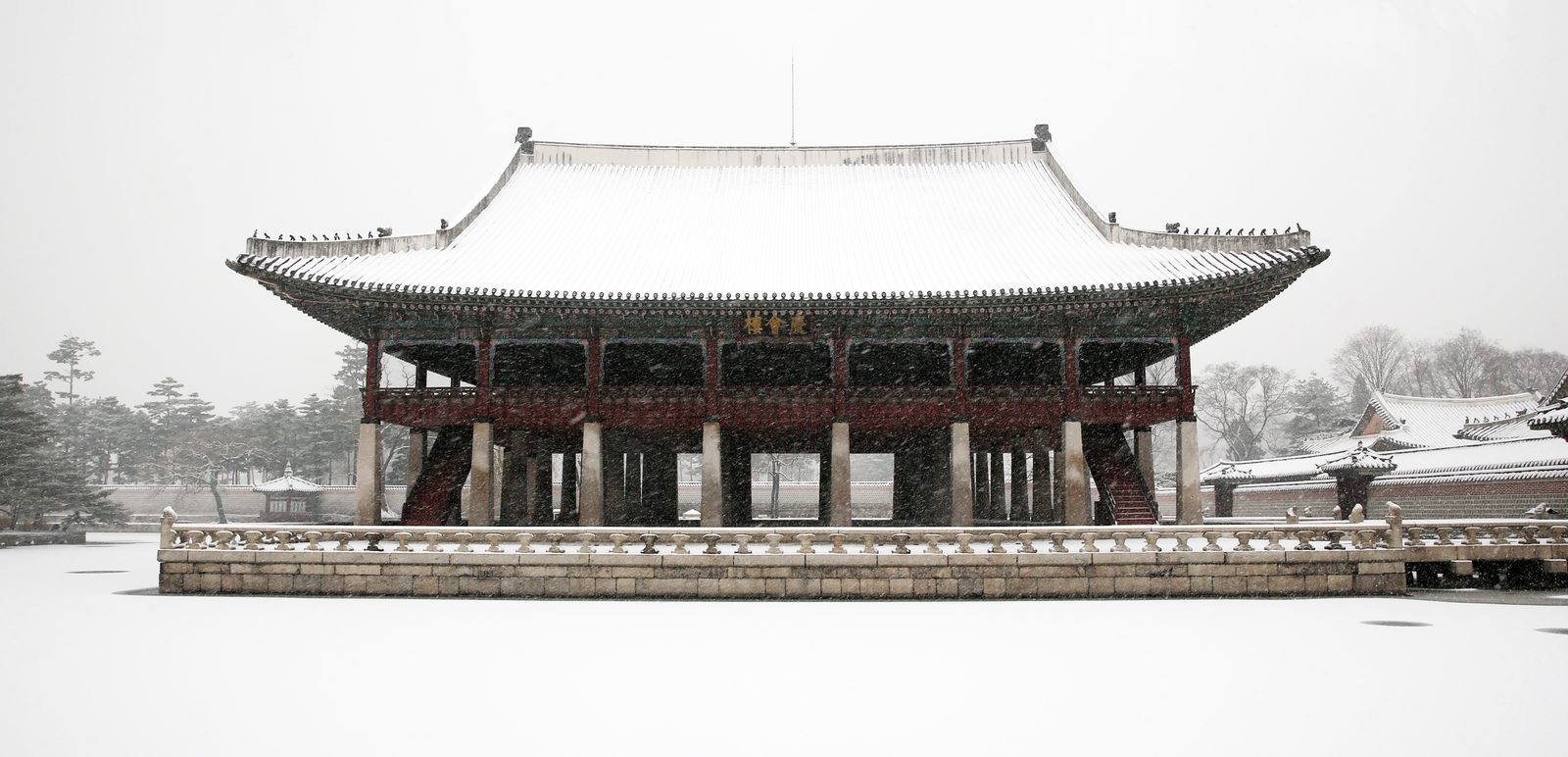
When Does It Snow in Korea? The Official First-Snow Dates by City (Seoul 20 November) and What the Forecast Says for Winter 2026
Seoul's official first snow normally falls on 20 November, but last winter it came on 4 December, and Busan waited until 7 February. Every city's first-snow date from Korea's weather agency, where snow shows first, and this winter's outlook.
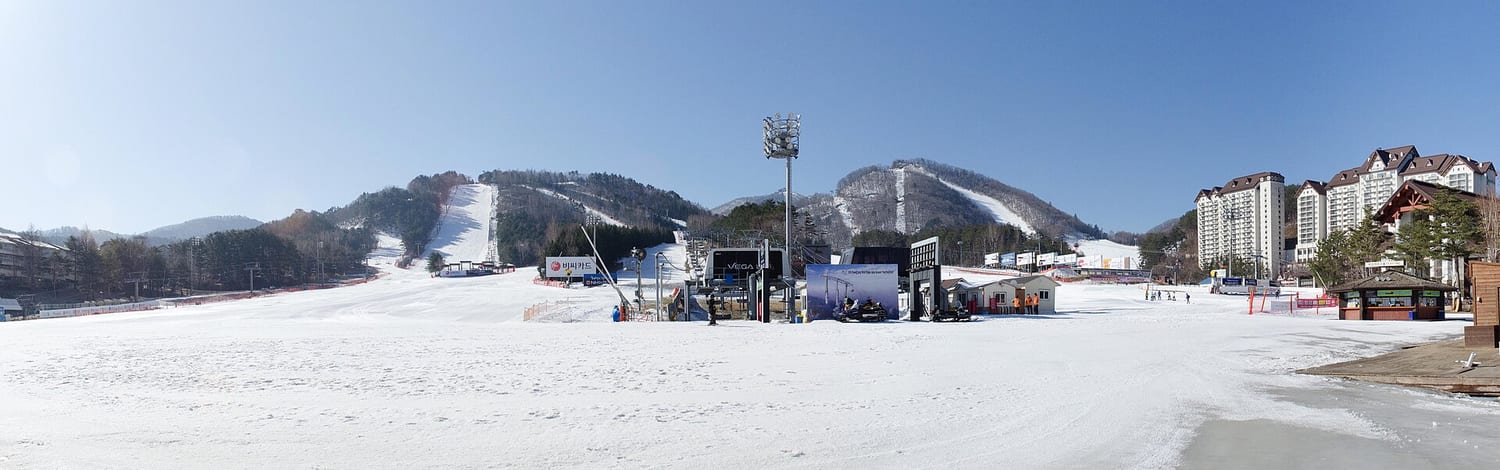
Korean Ski Resorts 2026–27: Season-Pass Prices, the Rounds Closing This Month, and Why Konjiam's English Page Says ₩42,000 When Its Korean Page Says ₩72,000
Konjiam's English page quotes ₩42,000 for a two-hour lift ticket. Its Korean page says ₩72,000 — and that there is no on-site ticket window at all. Verified 26/27 season-pass prices and round deadlines for Muju, Konjiam, X6+, Phoenix and Yongpyong.
Seoul Winter Festa 2026 Dates Confirmed (14 December 2026 to 31 January 2027): Seoul Lantern Festival on Cheonggyecheon, Gwanghwamun Christmas Market Hours, the ₩1,000 Seoul Plaza Skating Rink, and New Year's Eve at Bosingak
Seoul's official calendar fixes Winter Festa 2026 at 14 December to 31 January, twice last year's run. What 2025 actually ran: lantern hours on Cheonggyecheon, the free Gwanghwamun market, the ₩1,000 skating rink, and the subway to 2 a.m. on New Year's Eve.