New Year Sunrise in Korea 2027: The 1 January Sunrise Times at Jeongdongjin, Homigot, Ganjeolgot, Haeundae, Seongsan and Seoul, and How to Get There Before 07:31
Last updated: 4 October 2026. The sunrise times below are for 1 January 2027 and were calculated with the Korea Astronomy and Space Science Institute's own sunrise model (KASI, 한국천문연구원), so they are fixed now. Nothing else for New Year 2027 has been announced yet. The festival programmes, special trains and road closures normally come out in mid to late December, so every event, crowd and traffic figure on this page is from last New Year (1 January 2026) and is labelled that way. We will update the page when the 2027 plans are published.
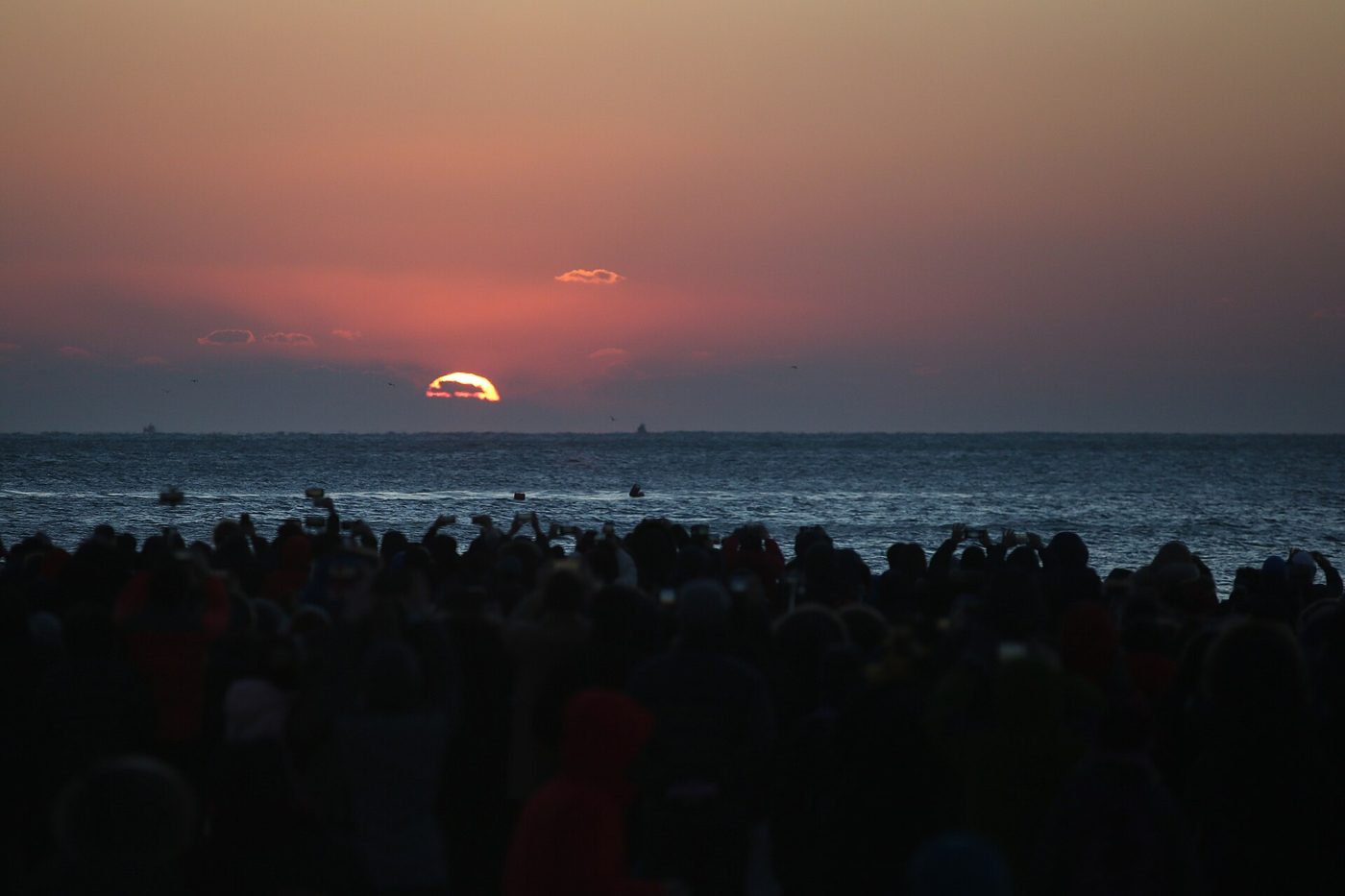
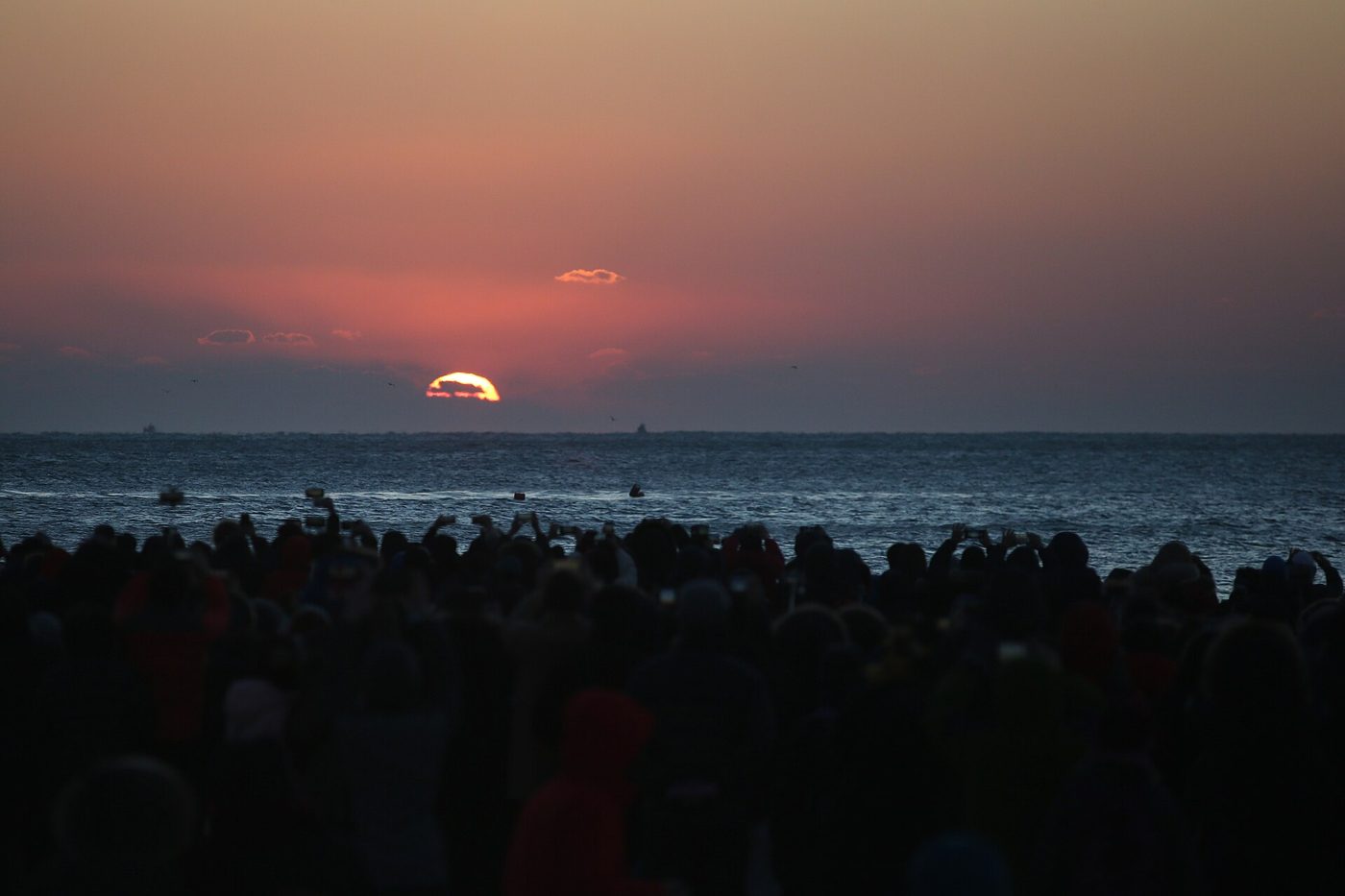
Watching the first sunrise of the year (해돋이, haedoji, or 해맞이, haemaji, "greeting the sun") is one of the few things almost every Korean has done at least once. Last New Year, about 300,000 people stood on Gangneung's beaches before dawn, 100,000 more at Ganjeolgot near Ulsan and 50,000 at Homigot in Pohang. Families drive through the night, couples sleep in their cars, and the expressway back to Seoul takes up to six hours.
On Friday 1 January 2027 the sun reaches the Korean mainland at 07:31, and the place it reaches first is not Jeongdongjin, the most famous spot, which gets it eight minutes later. This page covers the official times for each spot, which one suits you, how to arrive before dawn now that the overnight sunrise train has gone, and what last year's crowds, cold and cloud were like.
An hour on a −6 °C beach before the sun appears: INLIFE Korean-made hand warmers (30-pack) on AmazonAffiliate link. As an Amazon Associate, EpicKor earns from qualifying purchases at no extra cost to you.
Quick Guide: Korea's New Year Sunrise Spots, 1 January 2027
| Spot | Sunrise 1 Jan 2027 | Crowd last New Year | Getting there before dawn | Main risk |
|---|---|---|---|---|
| Ganjeolgot 간절곶 (Ulsan) | 07:31, first on the mainland | About 100,000 | Cars barred from 18:00 the day before; shuttle buses from car parks and Seosaeng Station | Shuttle queues |
| Haeundae 해운대 (Busan) | 07:32 | 100,000+ expected (no final count) | Busan Metro, which ran up to 2 hours late on New Year's Eve | Easiest of all |
| Homigot 호미곶 (Pohang) | 07:32 | About 50,000 | Car or tour bus; expect heavy traffic and roadside parking | Traffic, wind |
| Seongsan Ilchulbong 성산일출봉 (Jeju) | 07:36 at sea level | Dawn summit climb capped at 500, sold out | Stay in Seongsan; summit opens 06:00 | Cloud: Jeju's 2026 forecast was overcast |
| Jeongdongjin 정동진 (Gangneung) | 07:39 | About 110,000 (Gangneung total about 300,000) | Sleep in Gangneung and take the 05:46 local train; no Seoul train arrives in time | Getting there |
| Seoul (Achasan, Namsan and 14 other hills) | 07:46–07:47 | Not counted city-wide | Subway, then a 20–40 minute walk up in the dark | Cold (about −10 °C last year) |
Times: KASI sunrise model for 1 January 2027, at sea level, rounded to the minute. Crowds: police and city figures for 1 January 2026 as reported in Korean news (sources at the end).
The table hides one thing worth knowing before you choose. Every coastal time is when the sun crosses a clear horizon. On the East Sea in winter there is often a low bank of cloud sitting on the water, and last year it held the sun back by about four minutes at Ganjeolgot and five at Homigot. Nobody minded, but if you are on a tight schedule, add five minutes.
The official times, and why Jeongdongjin is not first
KASI publishes the New Year sunrise times every December. We did not wait for that release: KASI's sunrise calculator runs its astronomical formulas inside the web page, so we ran the same code for 1 January 2027. To check it, we ran it for 1 January 2026 as well, and it gave exactly the times KASI published last December (Dokdo 07:26, Ganjeolgot 07:31, Seoul 07:47).
| Place | Sky starts to brighten (civil dawn) | Sunrise, 1 Jan 2027 | Same day in 2026 |
|---|---|---|---|
| Dokdo 독도 (East Sea islets, not reachable on New Year) | 06:57 | 07:26 | 07:26 |
| Ganjeolgot 간절곶, Ulsan | 07:03 | 07:31 | 07:31 |
| Haeundae 해운대, Busan | 07:04 | 07:32 | 07:32 |
| Homigot 호미곶, Pohang | 07:04 | 07:32 | 07:32 |
| Seongsan Ilchulbong 성산일출봉, Jeju | 07:09 | 07:36 | 07:36 |
| Jeongdongjin 정동진, Gangneung | 07:10 | 07:39 | 07:39 |
| Gyeongpo Beach 경포, Gangneung | 07:10 | 07:40 | 07:40 |
| Achasan 아차산, Seoul | 07:17 | 07:46 | 07:46 |
| Namsan 남산, Seoul | 07:18 | 07:47 | 07:47 |
Three things follow from these numbers.
The sun reaches the south-east corner first, not the famous east coast. Ganjeolgot, Haeundae and Homigot all get the sun at 07:31–07:32. Jeongdongjin, the name on every Korean New Year poster, is 300 km further north and gets it at 07:39. Ganjeolgot and Homigot both advertise themselves as the place where Korea's day begins. On 1 January the answer is Ganjeolgot, by about a minute. (KASI's release lists Pohang city at 07:33; the Homigot tip is a minute earlier by the same model.)
Height makes the sun earlier. KASI's times are for sea level. KASI notes that from 100 m up the sun appears about two minutes earlier, and the gain grows more slowly with height after that. From Seongsan Ilchulbong's 182 m crater rim the sun comes up roughly three minutes before the 07:36 in the table, and the Seoul hills gain a minute or two as well.
The show starts half an hour early. The sky goes from black to orange around civil dawn, about 29 minutes before sunrise. Crowds are in place by then, and on a packed beach the good spots at the water's edge are taken an hour or more before that.
Black Diamond Spot 400-R: a rechargeable headlamp with a red night mode On New Year's morning you walk to the viewpoint in the dark: Seongsan's summit path opens at 06:00, and the Seoul hill trails start in pitch black at 06:30. A headlamp keeps both hands free on icy steps, and the red mode will not dazzle the people around you. The battery charges over USB, so the cold cannot leave you with a dead spare. As an Amazon Associate, EpicKor earns from qualifying purchases at no extra cost to you.
See the Black Diamond Spot 400-R on AmazonYou might like: When Does It Snow in Korea? for what winter weather is normally like in Seoul and on the east coast by the end of December.
Which spot: the six main choices compared
Jeongdongjin and Gyeongpo, Gangneung: the classic, and the hardest to reach
Jeongdongjin (정동진) is a small station village on the coast south of Gangneung. Its platform sits right on the beach, which is why it became the place to watch the New Year sun after a 1995 TV drama, Sandglass (모래시계), was filmed there. The town has a giant hourglass, 8 m across, weighing 40 tonnes and holding 8 tonnes of sand, which takes a year to run out and is turned over at midnight on New Year.
Last New Year, Gangneung counted about 300,000 people at its sunrise spots: some 130,000 at Gyeongpo Beach (경포), 110,000 at Jeongdongjin and 60,000 at Anmok (안목) and smaller beaches. The festival ran from 20:00 on New Year's Eve to 00:30, with a countdown and fireworks, and restarted at 06:00 for the sunrise.
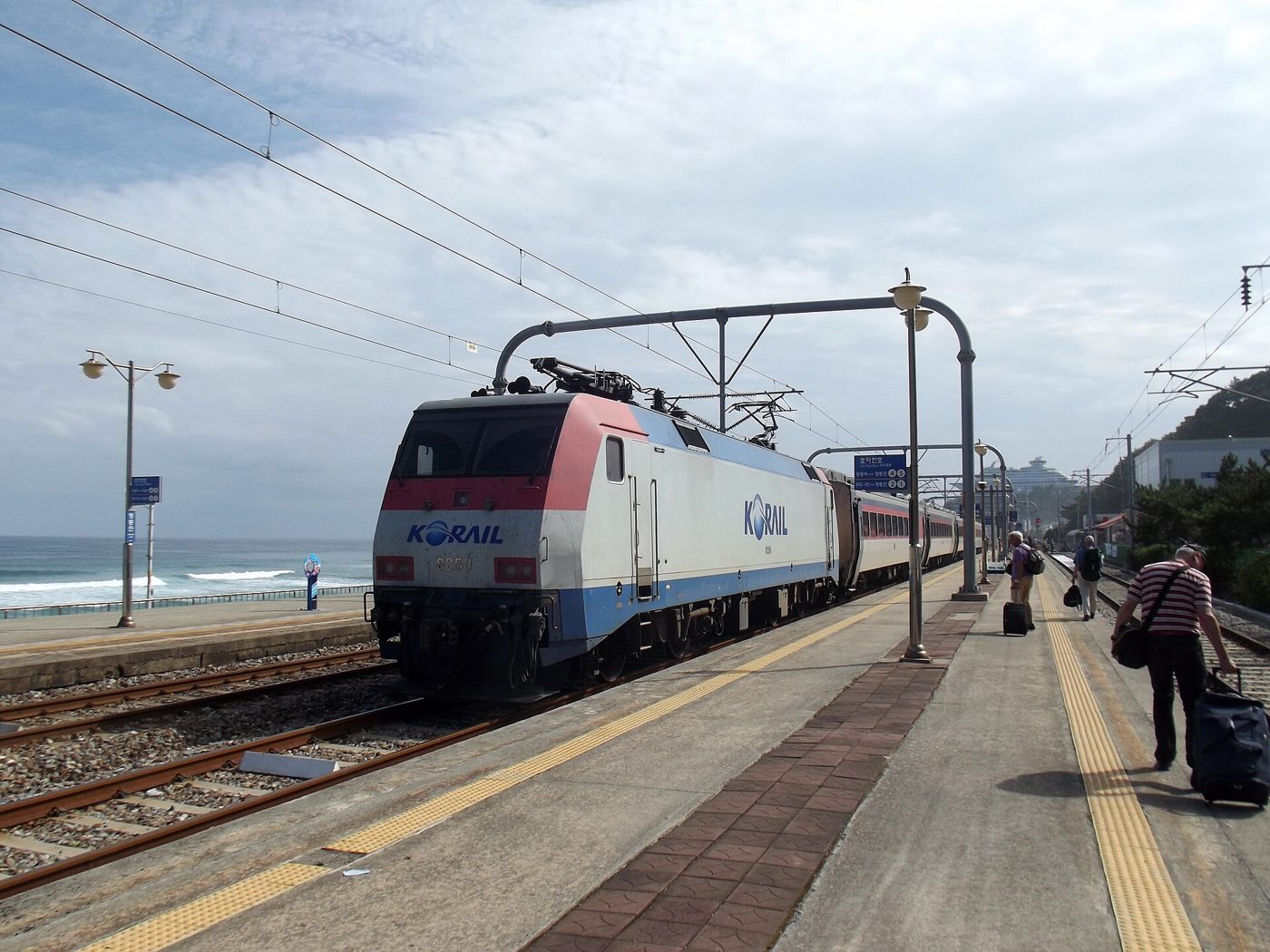
Choose it if you want the famous version, are happy to stay overnight in Gangneung, and do not mind being one of 100,000. Skip it if you hoped to come from Seoul the same morning: you can't by train (see below), and the road is the busiest in the country that night.
Ganjeolgot, Ulsan: first light on the mainland
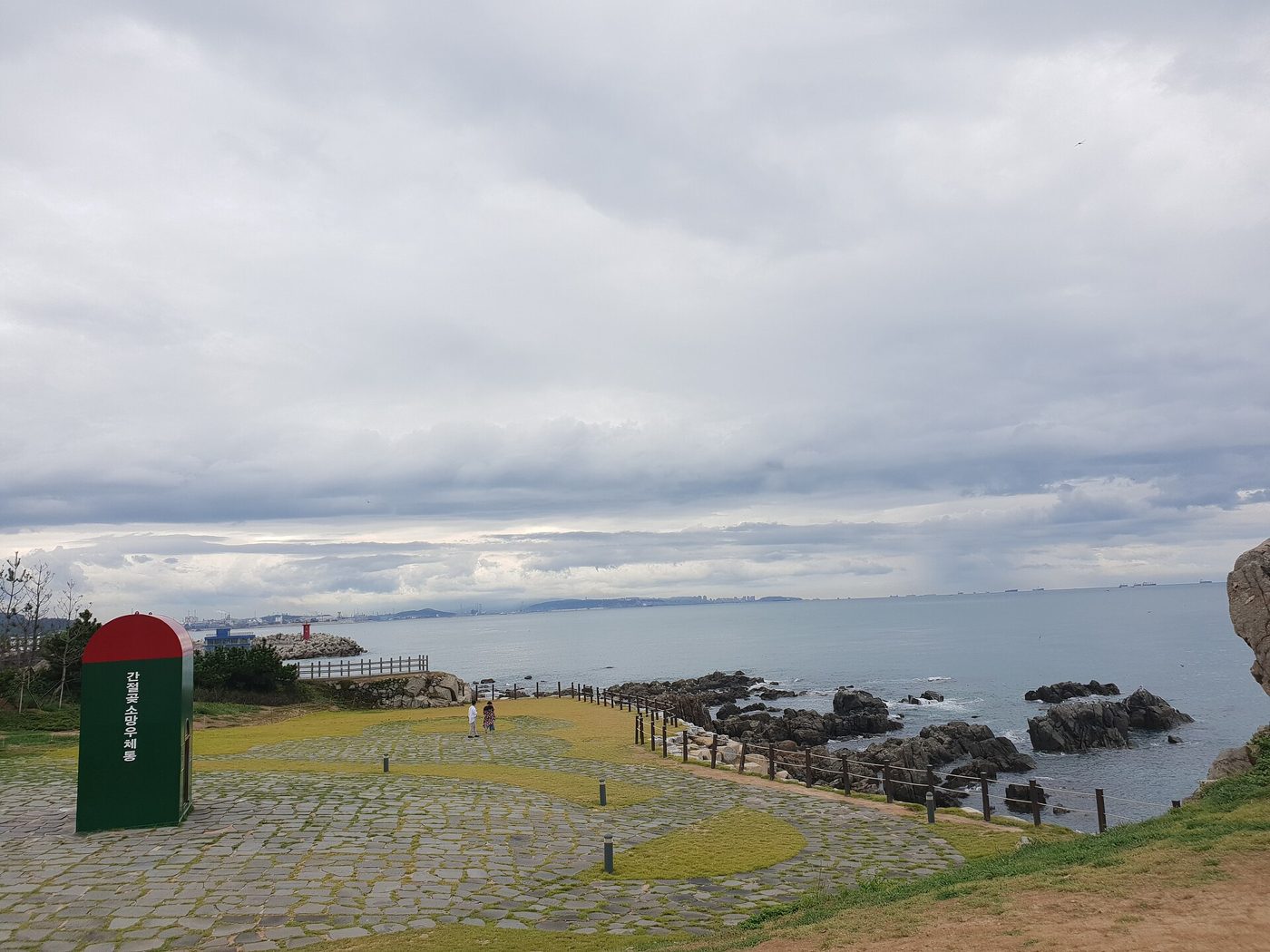
Ganjeolgot (간절곶) is a headland south of Ulsan with a lighthouse, a lawn sloping to the rocks and a giant red-and-green "wish mailbox". It gets the earliest mainland sunrise on 1 January, and it puts on the biggest show. Last New Year it had a concert from 21:30, a 1,500-drone show and fireworks before dawn. Police had planned for 130,000 visitors; about 100,000 came. Two years earlier, 150,000 had come.
The catch is access. Private cars were barred from the headland from 18:00 on New Year's Eve, and visitors parked at six outer car parks and took shuttle buses. One shuttle route ran from Seosaeng Station (서생역), which is on the Donghae Line, so you can come by train from Busan or Ulsan.
Homigot, Pohang: the hand in the sea
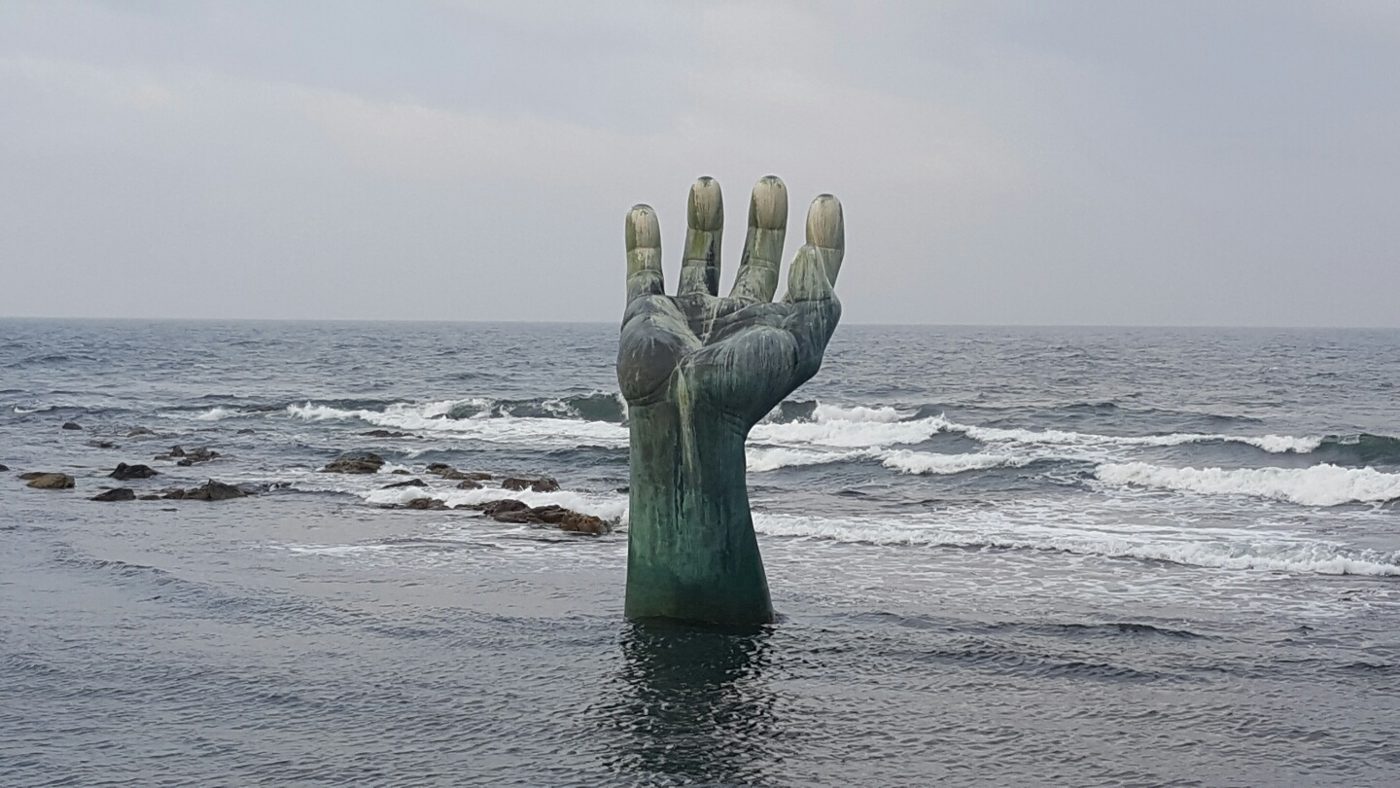
Homigot (호미곶) is the cape at the tip of the "tiger's tail" peninsula east of Pohang. Its symbol is the Hand of Harmony (상생의 손), a bronze right hand rising out of the water, with a matching left hand on land. Photographers try to frame the sun between its fingers.
Last New Year it held its 28th sunrise festival (호미곶한민족해맞이축전): an eve show, a countdown and fireworks, a shaman ritual at 06:50, a tightrope walk timed to the sunrise and rice-cake soup for 3,000 people. About 50,000 came. It is the hardest of the big spots without a car, and the roads in fill overnight. Even the new sea-view Pohang rest area on the Pohang–Yeongdeok Expressway, a separate sunrise spot north of the city, filled its 160 spaces by 01:30, and police then closed its entrance.
Haeundae, Busan: the easy one
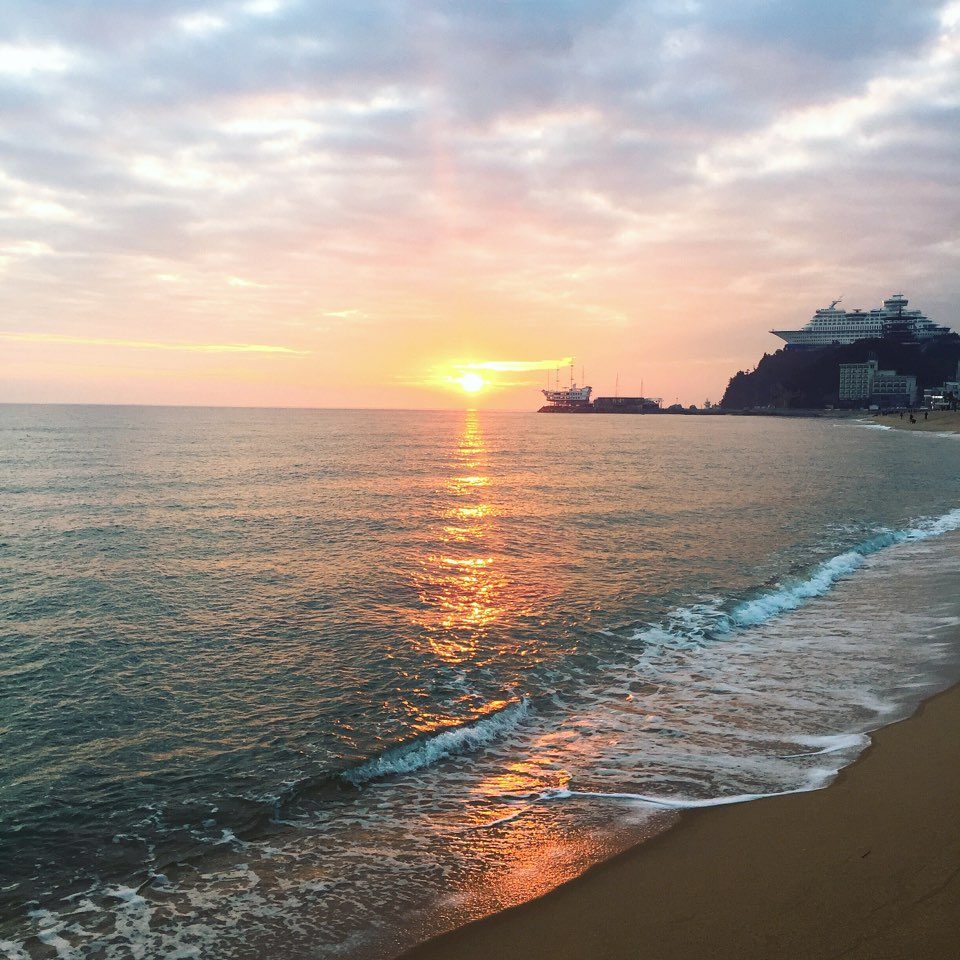
Haeundae (해운대) gets the sun at 07:32, only a minute after Ganjeolgot, and you reach it by subway. Busan said it expected over 100,000 there last New Year, and it extended Metro lines 1–4 by up to two hours on New Year's Eve. Busan's big countdown, with a 2,500-drone show, was held last year at Gwangalli beach the night before. Many people do both: Gwangalli at midnight, a few hours' sleep, then Haeundae at dawn.
Choose it if you are in Busan anyway or want the sunrise without a car. Read our Busan beach guide for how Haeundae and Gwangalli differ.
Seongsan Ilchulbong, Jeju: the most beautiful, and the least reliable
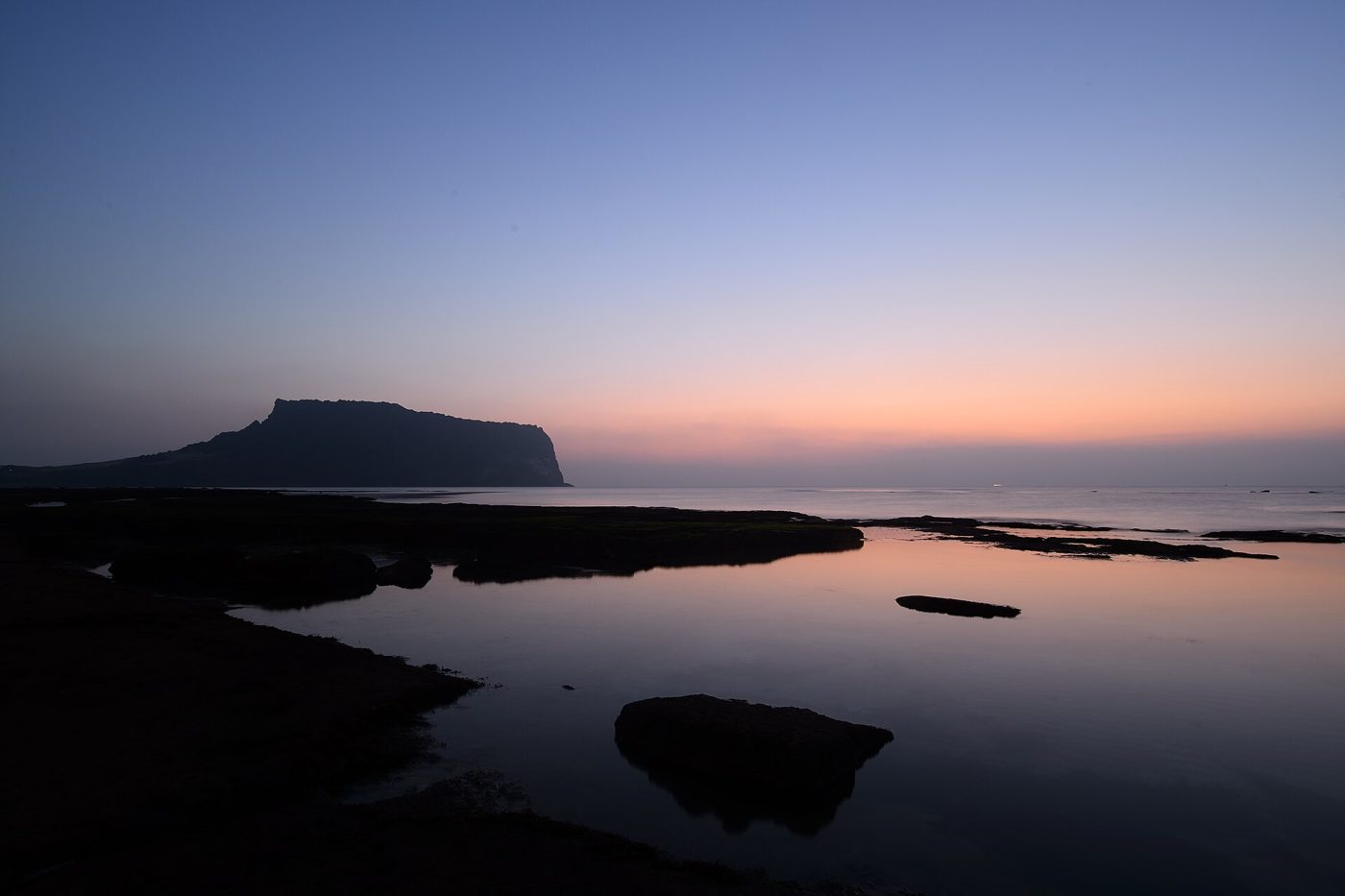
Seongsan Ilchulbong (성산일출봉, "Sunrise Peak") is a crater rising straight out of the sea on Jeju's east tip. Its name promises a sunrise, and from the rim it is spectacular. In winter (November to February) the summit path opens at 06:00, an hour before sunrise, and costs ₩5,000 for adults. The climb takes about 25–30 minutes each way. For New Year the dawn climb is limited, and last year's 500 places sold out.
The problem is the weather. Winter winds bring sea cloud to Jeju and the west coast far more often than to the east coast. Last New Year the Korea Meteorological Administration forecast clear skies almost everywhere, but overcast skies on Jeju.
Seoul: no travel, colder, and 16 official hills
If you are in Seoul and do not want to travel, the city publishes a list of 16 official sunrise spots: hills and parks including Achasan (아차산), Inwangsan, Eungbongsan, Dobongsan, Gaehwasan, Haneul Park and Olympic Park. Achasan is the busiest. Last year the district held a programme from 06:00 at the square at the trailhead and lit the trail entrance with LED light tunnels. The sun clears the eastern ridges at about 07:46–07:47, later than on the coast. Seoul's low last New Year's morning was about −10 °C, with a forecast wind chill of −17 °C.
Namsan is open but is not an official event site. And Bosingak, the bell in central Seoul you may have seen on TV, is a midnight event: the bell is struck 33 times at the turn of the year, and there is no sunrise there. Our Seoul Winter Festa guide covers the bell night. For the hills, see our Seoul hiking guide.
You might like: Getting Around Korea in 2026: Subway Fares, Last Trains, KTX Booking and Bus Prices, which covers all the transport numbers on one page.
Getting there before dawn: the overnight sunrise train is gone
For about 20 years, the classic way to see the New Year sun was an overnight train from Seoul to Jeongdongjin. You left Cheongnyangni around midnight, dozed in a Mugunghwa seat and stepped onto the beach platform in the dark. That train no longer runs. Korail's regular overnight trains to Jeongdongjin were withdrawn around 2020–21, a few years after the KTX line to Gangneung opened in December 2017. Since then the overnight trip has been sold only as travel-agency packages on chartered trains or coaches, with no regular ticket you can buy from Korail.
That leaves three realistic plans for the east coast.
| Plan | How it works | Times and fares | Verdict |
|---|---|---|---|
| Sleep in Gangneung | KTX-Eum from Seoul on 31 December, sleep in Gangneung, local train to Jeongdongjin before dawn | Cheongnyangni → Gangneung ₩26,000, 1 h 27 – 1 h 50. Gangneung → Jeongdongjin ITX-Maum 05:46 → 06:01 (₩4,800) or Nuriro 06:30 / 06:52 (₩2,600), October 2026 timetable | Best. Or walk to Gyeongpo Beach from a central hotel |
| First train on the day | First KTX-Eum from Cheongnyangni straight to Jeongdongjin | 07:05 → 08:58, ₩26,700 | Arrives an hour after sunrise. Does not work |
| Agency night trip | Charter train or coach from Seoul at about 22:00–23:00, free time on the beach from about 06:00, back the same day | Prices vary by agency; check what is included | Works, but you will not sleep |
Book on the right morning. Since 1 October 2026, Korail sells tickets two months ahead, with each day's trains released at 07:00. So trains for 31 December 2026 go on sale at 07:00 on 31 October, and trains for 1 January 2027 at 07:00 on 1 November. Evening trains to Gangneung on New Year's Eve sell out fast. Our guide to the two-month booking rule explains the release pattern, and our Gangneung guide has the full KTX-Eum and bus timetables.
Coming from the south is easier. Ganjeolgot's shuttle meets the Donghae Line at Seosaeng Station, and Haeundae is on the Busan Metro. Since 30 December 2025 KTX-Eum trains also run the length of the east coast between Busan (Bujeon) and Gangneung in about four hours. From Gyeongju, see our Busan–Gyeongju comparison for the Donghae Line.
Driving is how most Koreans go, and it shows. For the last New Year period, Korea Expressway Corporation forecast up to 4 hours 10 minutes from Seoul to Gangneung on New Year's Day and up to 6 hours back, with jams on the Yeongdong, Seoul–Yangyang and Pohang–Yeongdeok expressways. At Jeongdongjin the car parks near the beach are small, and a travel writer's advice last year was to park on the main road about 10 minutes away and walk in. 1 January 2027 is a Friday, so the New Year holiday makes a three-day weekend. Expect the return traffic to spread over Friday to Sunday rather than ease.
Gangneung hotels on Agoda: the bed that makes the 05:46 train possible For the east-coast sunrise, the night of 31 December is the real booking decision. A room near Gangneung Station puts you on the 05:46 train to Jeongdongjin, and a room near Gyeongpo lets you walk to the beach. In past years Korean news has described rooms for 31 December as almost fully booked by the last week of December. There is also a new rule this year: since 14 July 2026, Korean lodgings must post their room rates, including online, and charging more than the posted rate brings a five-day suspension for a first offence. EpicKor may earn a commission if you book through this Agoda link, at no extra cost to you. Confirm dates, taxes, cancellation terms and the final price on Agoda before booking.
Compare Gangneung stays on AgodaCold, cloud, and whether you will see anything
The east coast is usually the safe bet. In winter the cold north-west wind crosses the Taebaek Mountains before it reaches the east coast. It arrives dry, so Gangneung, Pohang, Ulsan and Busan usually have clear New Year mornings. Jeju and the west coast get the cloud. That matched the last two years: on 1 January 2025 the sunrise was forecast to be visible across the country, and for 1 January 2026 everywhere except the cloudy west coast and Jeolla, and overcast, snowy Jeju.
It is colder than the numbers suggest, because you stand still. Last New Year's morning it was −4.2 °C at Ganjeolgot and −6 °C at Homigot, with a wind chill near −10 °C, and about −10 °C in Seoul. Gangneung's normal January minimum is −2.7 °C (KMA 1991–2020 average). You will wait 60 to 90 minutes on a beach in the wind, so dress for a mountain, not a city: hat, gloves, two warm layers under a windproof coat, and hand warmers in your pockets. Our guide to Korean hot packs covers the ones every convenience store sells from November.
When the events are cancelled, the sunrise still happens
Twice in recent years New Year sunrise events were called off nationwide. For 1 January 2021 it was COVID, and east-coast beaches were closed off. For 1 January 2025 it was the Jeju Air crash at Muan on 29 December 2024, in which 179 people died. The government declared seven days of national mourning, and within a day or two almost every event was cancelled: the Ganjeolgot sunrise festival, the Jeongdongjin and Gyeongpo fireworks, Busan's countdown and drone show, the Homigot festival and Jeju's Seongsan sunrise festival.
People came anyway, and about 22,000 still went to Homigot. The beaches stayed open, and Seongsan's summit still opened at 06:00, with the same 500-person cap. So book for the sunrise, not for the show. If an event is cancelled at a few days' notice, the reason to be there remains.
An hour-by-hour plan: Gangneung, 31 December to 1 January
| When | What |
|---|---|
| 31 Oct, 07:00 | Book the 31 December KTX-Eum to Gangneung and a room near Gangneung Station or Gyeongpo |
| 31 Dec, afternoon | Train from Seoul (Cheongnyangni) to Gangneung, about 1 h 30. Buy hot packs and breakfast at a convenience store |
| 31 Dec, 20:00–00:30 | Optional: the New Year's Eve programme and midnight fireworks at Gyeongpo or Jeongdongjin (last year's times). Then sleep |
| 1 Jan, 05:15 | Up, dressed in every layer |
| 05:46 | ITX-Maum from Gangneung, arriving at Jeongdongjin at 06:01 (October 2026 timetable; check the New Year timetable when you book). Or walk to Gyeongpo Beach |
| 06:00–07:10 | Find your place on the beach; the sky brightens from about 07:10 |
| 07:39 | Sunrise at Jeongdongjin (07:40 at Gyeongpo); add a few minutes if there is cloud on the horizon |
| 08:00–09:00 | Rice-cake soup (떡국), the traditional New Year breakfast, at a local restaurant, if you can get a table |
| Midday or later | Train back. Book it on 1 November at 07:00: daytime trains on 1 January sell out, and the road is worse |
Frequently Asked Questions
Q: What time is sunrise in Korea on 1 January 2027? On the mainland it is 07:31 at Ganjeolgot (Ulsan), 07:32 at Haeundae and Homigot, 07:39 at Jeongdongjin and 07:47 in Seoul. On Jeju it is 07:36 at Seongsan Ilchulbong, and on Dokdo 07:26. These are KASI sea-level times; from a hilltop 100 m up, the sun appears about two minutes earlier.
Q: Where is the first sunrise in Korea? On 1 January it is Dokdo (07:26), which visitors cannot reach that morning. On the mainland it is Ganjeolgot in Ulsan (07:31), about a minute before Homigot and Haeundae. Jeongdongjin is the most famous spot, but not the first.
Q: Can I take a train from Seoul to see the sunrise at Jeongdongjin? Not on the same morning. The first KTX-Eum from Seoul arrives at 08:58, over an hour after the 07:39 sunrise, and the old overnight sunrise train no longer runs. Either stay in Gangneung on New Year's Eve and take the 05:46 local train, or book an agency night trip.
Q: Which New Year sunrise spot is least crowded? Of the famous ones, Homigot had about 50,000 last year against about 300,000 in Gangneung and 100,000 at Ganjeolgot. In Seoul, Achasan draws the biggest crowd; the other official hills, such as Gaehwasan or Eungbongsan, are smaller events. Any beach a few kilometres from the festival sites gets the same sun with a fraction of the people.
Q: Is it worth going to Seongsan Ilchulbong for the New Year sunrise? Only if you are already on Jeju and accept the risk. Jeju is cloudier than the east coast in winter, and for 1 January 2026 the forecast there was overcast with snow. The dawn summit climb is also capped (500 places last year, sold out).
Q: Will the New Year sunrise festivals happen in 2027? They are expected, but nothing has been announced yet. Programmes usually come out in mid to late December. Events were cancelled for 1 January 2021 (COVID) and 1 January 2025 (national mourning after the Jeju Air crash), but the beaches stayed open both times.
Sources
- Korea Astronomy and Space Science Institute (한국천문연구원, KASI), sunrise and sunset calculator, astro.kasi.re.kr: 1 January 2027 times computed with the page's own model at sea level, checked 4 October 2026 against KASI's published 1 January 2026 times. KASI's 2026 release and the KMA forecast for 1 January 2026 were reported by Newsis, 31 December 2025 and Korea JoongAng Daily, 30 December 2025.
- Gangneung crowd of about 300,000 (Gyeongpo 130,000, Jeongdongjin 110,000): Kukmin Ilbo / Kukinews, 1 January 2026; programme: twig24, 31 December 2025.
- Homigot (50,000, sun about 5 minutes late, Pohang rest area car park): Kyungbuk Maeil, 1 January 2026; programme: twig24, 29 December 2025.
- Ganjeolgot (about 100,000, −4.2 °C, sun about 4 minutes late): twig24, 1 January 2026; Busan and Ulsan event plans: Herald Kyungje, 29 December 2025; Ganjeolgot 2024 figures: News Seoul.
- Busan Metro extension and New Year's Eve events: Busan Metropolitan City, 30 December 2025.
- Seoul's 16 official sunrise spots: Seoul Media Hub, 30 December 2025; Achasan programme: Herald Kyungje, 26 December 2025.
- Seongsan Ilchulbong winter hours and fee: KB Think, 2 December 2025.
- 1 January 2025 cancellations after the Jeju Air crash, and 22,000 at Homigot: News Seoul, 30 December 2024; Kyungbuk Maeil, 1 January 2025.
- Korea Expressway Corporation New Year traffic forecast: Herald Kyungje, 29 December 2025. Jeongdongjin parking advice: YTN Radio, 31 December 2025.
- Donghae Line KTX-Eum between Busan and Gangneung from 30 December 2025: Kyunghyang Shinmun, 15 December 2025. History of the Jeongdongjin sunrise trains: Namuwiki, 정동진역. Train times and fares: Korail, as compiled in our posts 495 and 485 (October 2026).
- Lodging rate-posting rule in force 14 July 2026 (공중위생관리법 시행규칙): Segye Ilbo, 13 July 2026.
- Seoul's observed low on 1 January 2026 (about −10 °C): Hankyung, 1 January 2026.
- Gangneung climate normals (KMA 1991–2020): Wikipedia climate table citing KMA.
You Might Also Like
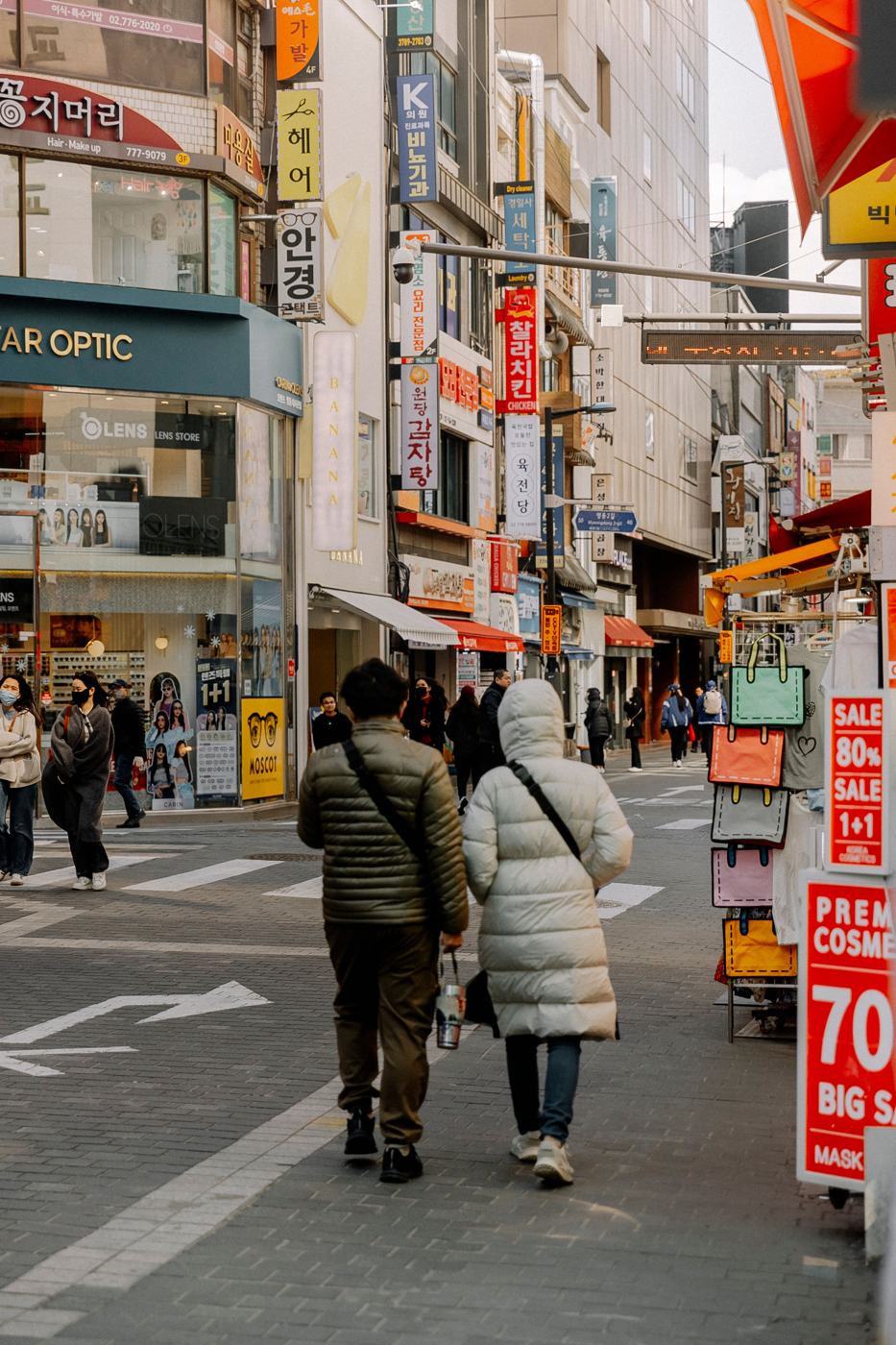
Buying a Long Padded Coat (롱패딩) in Korea, Winter 2026: Real Prices from ₩49,900 to ₩469,000, Duck vs Goose Labels, Tax Refund and When You Actually Need One
Buying a long padded coat in Korea this winter: as of October 2026 a polyester one is ₩49,900, an 80/20 down bench parka ₩218,390, outdoor brands ₩279,000 to ₩329,000 after 30–40% cuts. How to read the label, the tax refund, sizes.
Suneung Day in Korea, 19 November 2026: The 35-Minute Flight Ban, 10 a.m. Office and Bank Openings, Extra Subway Trains and a Tourist's Hour-by-Hour Plan
Korea's Suneung exam is Thursday 19 November 2026. Last year the 35-minute listening-test flight ban (13:05–13:40) moved 140 flights, banks and the stock market opened at 10:00 and Seoul added 29 subway runs. An hour-by-hour plan for visitors.
Kimjang Season in Korea 2026: What Kimchi-Making Costs, Salted Cabbage Prices, When It Happens and Where You Can Join
Kimjang season in Korea 2026: 2025 surveys put a family's kimchi-making at ₩201,151 to ₩404,280, salted cabbage pre-orders from ₩29,900 a 20 kg box (card price), and Museum Kimchikan's class costs ₩40,000. Dates by region, kimchi on planes.