Who Makes Melona? Binggrae, the Korean Banana Milk Company, and Who Owns It
Melona is Korean: it is made by Binggrae (빙그레), the Banana Milk company, about 41% owned by Kim Ho-youn, younger brother of Hanwha's chairman.
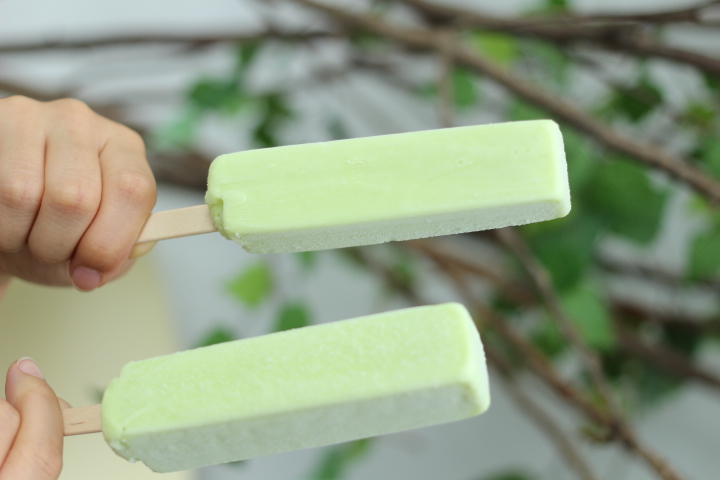
Melona, launched in 1992, is the bar most people outside Korea know. The company behind it is better known at home for something else entirely. Photo: Hyeon-Jeong Suk, Wikimedia Commons, CC BY 2.0.
The bar itself cannot ship frozen. The green wrapper can: a Melona T-shirtAffiliate link. As an Amazon Associate, EpicKor earns from qualifying purchases at no extra cost to you.
Quick Answer
Is Melona Korean? Yes. Melona (메로나) is made by Binggrae Co., Ltd. (주식회사 빙그레), a Korean dairy and ice cream company listed on the Korea Exchange's main KOSPI market since August 1978 (ticker 005180). Its head office is in Namyangju (남양주), just east of Seoul, and it runs five plants in Korea: Namyangju, Gwangju, Gimhae, Nonsan and Gyeongsan. Korea's disclosure system, DART, classifies it as a mid-sized enterprise (중견기업), not a conglomerate.
Is it Japanese or Mexican? No to both. Melona was developed in Korea and launched there in 1992. Melon is a classic Japanese dessert flavour and fruit paletas are a Mexican staple, which is why a pale green fruit bar in an American freezer gets mistaken for either.
Who owns Melona? Binggrae owns the brand and lists "Melona" first among its trademarks in its filings. Binggrae's largest shareholder is Chairman Kim Ho-youn (김호연). He held 39.06% on 30 June 2026, which works out to about 40.95% after the company cancelled treasury shares on 31 August 2026 (EpicKor calculation from DART figures). He is the second son of Hanwha Group founder Kim Chong-hee and the younger brother of Hanwha chairman Kim Seung-youn. Binggrae has been separate from Hanwha since 1992.
The part most foreign fans do not know: in Korea, Melona is not the company's signature product. That is Banana Flavored Milk (바나나맛우유), the squat jar-shaped bottle launched in 1974. Binggrae's own filing calls it Korea's No. 1 flavoured milk.
Melona Korean melon ice cream T-shirt: the wrapper, not the bar Melona is a frozen product, so it never ships through Amazon. For an American fan, Costco, Walmart or an Asian grocery is the place to buy the bar itself. This novelty tee reproduces the green wrapper, and it is the only Melona item here that actually makes sense to buy online. We kept this page to one product box for that reason. Skip it if you only wanted the ice cream. Check the current price on the listing. As an Amazon Associate, EpicKor earns from qualifying purchases at no extra cost to you.
See the Melona T-shirt on AmazonThe question people actually type
The search data explains why this page exists. On 13 November 2026, typing who makes melona into Google returned who makes melona ice cream, who owns melona, who owns melona ice cream and who made melona. Typing is melona korean returned is melona korean or japanese, is melona korean or mexican and is melona a korean brand. One level up, binggrae company suggests binggrae parent company.
These read like questions from someone holding a box from Costco and wondering whose product it is. The English answers are thin: an encyclopaedia entry, grocery listings and food blogs. Nobody connects the bar to the company, the company to its owners, or the owners to the numbers. Korean filings answer all three.
Who owns Binggrae
Binggrae is a family-controlled listed company with no holding company above it. The chairman holds his stake directly.
| Shareholder | Relationship | Shares | Stake on 30 June 2026 | Stake after 31 Aug 2026 cancellation |
|---|---|---|---|---|
| Kim Ho-youn (김호연) | Largest shareholder, chairman | 3,620,527 | 39.06% | about 40.95% |
| Kim Ku Foundation (재단법인 김구재단) | Foundation the chairman funds | 200,000 | 2.16% | about 2.26% |
| Jettae Co., Ltd. (주식회사 제때) | Logistics firm owned by the chairman's relatives | 195,590 | 2.11% | about 2.21% |
| Hyeondam Mungo (재단법인 현담문고) | Foundation under the chairman's influence | 12,200 | 0.13% | about 0.14% |
| Controlling group total | 4,028,317 | 43.46% | about 45.56% | |
| National Pension Service (국민연금공단) | Korea's state pension fund | 885,651 (19 Oct 2026) | 6.45% (2025 register) | 10.02% |
Sources: Binggrae H1 2026 half-year report, section VII (shareholders), as of 30 June 2026; National Pension Service ownership report filed 22 October 2026. The right-hand column is an EpicKor calculation that assumes no change in holdings, dividing by the 8,841,801 shares outstanding after the company cancelled 427,230 treasury shares on 31 August 2026. The pension fund's 10.02% is its own reported figure on that same base.
The chairman. Kim Ho-youn was born in April 1955. DART records him as Binggrae's CEO and chairman from 1992 to 2008 and chairman again from 2014. The gap is politics: according to Seoul Shinmun, he entered politics in 2008 and won a 2010 National Assembly by-election in Cheonan-eul (천안을), before returning to the company in 2014. His board seat expired at the March 2026 shareholders' meeting and was not renewed. On 30 June 2026 he was listed as a full-time but non-registered chairman, meaning he is no longer a board director.
The Kim Gu connection. The second-largest holder in the family group is a foundation named after Kim Gu (김구), the independence leader who headed Korea's provisional government in exile. Kim Ho-youn's wife, Kim Mi (김미), is Kim Gu's granddaughter. Seoul Shinmun reports that the chairman set up the foundation with his own money.
Management. Since June 2025 the company has been run by a professional CEO, Vice Chairman Kim Kwang-soo (김광수, born 1957). He joined Binggrae in 1985, according to Seoul Shinmun, and ran Jettae from 2015 until 2025. The two family members in management are both listed as presidents without board seats: Kim Dong-hwan (김동환, born 1983), the chairman's elder son, in charge of strategy, and Kim Dong-man (김동만, born 1987), his younger son, who moved from running Haitai Ice Cream to head Binggrae's overseas business in April 2026.
Is it Korean capital? Yes. The controlling stake sits with a Korean individual and two Korean foundations, and the next-largest holder is the Korean state pension fund. DART shows a business group of eight companies under Binggrae, none of them Hanwha companies.
The succession puzzle in the shareholder table
There is a detail in that table that Korean business press has written about for two years. None of the chairman's three children owns a single Binggrae share directly.
What they own is Jettae (제때), the logistics company. Bizhankook reported in January 2026 that the three children hold 33.33% each. DART describes Jettae only as a firm in which the chairman's relatives own more than 30%. Jettae in turn holds about 2% of Binggrae. Seoul Shinmun put Jettae's revenue at roughly ₩570 billion for 2025, up from ₩86 billion a decade earlier, an estimate that has not been checked against Jettae's own filings.
In November 2024 Binggrae's board approved a plan to split the company in two: a holding company, Binggrae Holdings, and a new operating company keeping the Binggrae name. A split like that is a common Korean route to handing control to the next generation. On 24 January 2025 the board withdrew it. Binggrae said it needed a clearer plan for raising shareholder value first, as SmartToday reported. Korean press linked the reversal to the push, then under way, to amend Korea's Commercial Act so that directors owe duties to all shareholders, not just the controlling family. A split while the heirs hold no shares of their own would have drawn exactly that scrutiny. That reading belongs to the press, not to the company.
What the company has done since is cancel shares. It retired 286,672 treasury shares (3.00%) on 26 March 2026 and 427,230 (4.61%) on 31 August 2026. Each cancellation raises every remaining holder's percentage, the chairman's included.
From Daeil Yanghaeng to Banana Milk
Binggrae was founded on 13 September 1967 as Daeil Yanghaeng (주식회사 대일양행). Hanwha, then Korea Explosives, took it over in 1973. The current name came in February 1982: binggeure (빙그레) is the Korean word for a quiet, closed-mouth smile.
The product that made it was Banana Flavored Milk (바나나맛우유), launched in 1974 (December, per Seoul Shinmun; other sources give June). Korea at the time had little fresh fruit and less dairy. Bananas were an expensive import, and a sweet banana milk in a rounded, jar-like bottle became a treat that never went away. The bottle shape has stayed. The filing lists the convenience store price at ₩1,800 for the past three years, about $1.27. Seoul Shinmun reported in October 2025 that the drink was on course for its first ₩300 billion year, roughly a fifth of company revenue. That figure is a press projection. The filing does not break out individual products.
The rest of the range is where Korean shoppers know the company:
- Together (투게더): a carton ice cream that the filing calls Korea's first made with raw milk.
- Yoplait (요플레): spoonable yogurt, which the filing calls Korea's No. 1 fermented milk.
- Samanco (붕어싸만코): the fish-shaped ice cream sandwich filled with red bean. We cover it in our guide to Korean fish ice cream.
- Bravo Cone (부라보콘): the filing calls it Korea's first cone ice cream. It came from Haitai, and more on that below.
- Melona (메로나): the export.
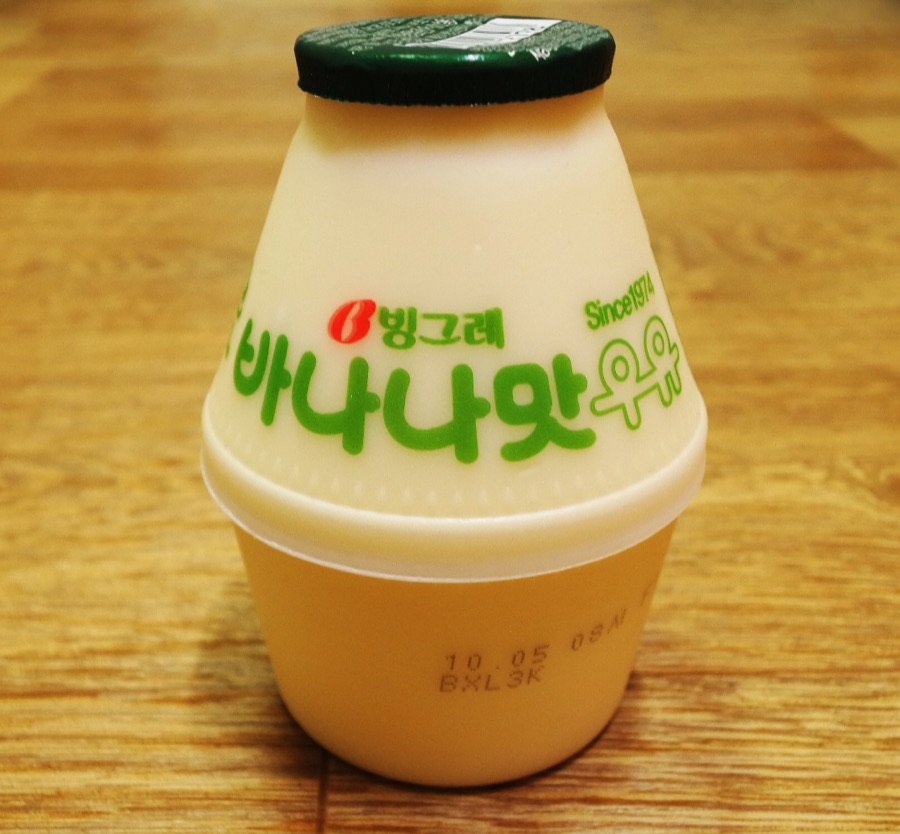
Banana Flavored Milk (바나나맛우유), launched in 1974, is the product Koreans associate with Binggrae. The convenience store price has been ₩1,800 since at least 2024, according to the company's filings. Photo: Jocelyndurrey, Wikimedia Commons, CC BY-SA 4.0.
Melona: a Korean melon standing in for a melon
Melona came out of a product search in 1991. According to a 2018 Inews24 brand history, a Binggrae developer noticed melon on a market trip to Southeast Asia. Back in Seoul, the imported melons in department store food halls were not fresh enough to work from. The team tasted melon alongside chamoe (참외), the small yellow Korean melon, as it tuned the flavour, and launched the bar in 1992. First-year sales were about ₩21 billion, Inews24 reported.
Exports started early. Seoul Shinmun dates Binggrae's first exports to the Americas and Russia to 1993. Hawaii followed in 1995, aimed at Korean residents there. For years the American market for Melona was the Korean diaspora.
The shift came in the late 2010s. Binggrae set up BC F&B USA Corp. in California in July 2016. From July 2017, Inews24 reported, Melona was produced in the US under contract by a dairy manufacturer in Washington State, which that report identified as part of Albertsons. Local production removed the frozen cross-Pacific shipping problem and made a wider retail push possible. The flavour range widened too. Honeydew is the original, joined by strawberry, banana and mango, among others, depending on the market.
Today Seoul Shinmun reports Melona on shelves at Costco and Walmart in the US, with about 70% of the Korean ice cream market there. That share describes Korean brands only, not American ice cream as a whole, and it comes from press, not a filing. Binggrae's own filing explains the US bet in one line: the American ice cream market is the world's largest, and growing Hispanic and Asian populations are widening demand for unfamiliar products. That may also explain why so many searchers wonder whether Melona is Mexican.
The wider Korean picture. Korea's ice cream exports passed US$100 million for the first time in 2025, reaching $118.72 million, according to Korea Customs Service data reported by Aju News. The United States was the largest destination at $36.64 million, and Binggrae accounted for more than half of Korea's ice cream exports.
The numbers, with their limits
Binggrae is listed in Korea, so its financials are filed, not estimated. Group figures below are consolidated, from DART.
| 2024 | 2025 | H1 2026 (Jan–Jun) | |
|---|---|---|---|
| Revenue | ₩1.4630 trillion | ₩1.4896 trillion (about $1.05bn), +1.8% | ₩754.4 billion (about $531m) |
| Operating profit | ₩131.3 billion | ₩88.4 billion (about $62m), −32.7% | ₩83.5 billion (about $59m) |
| Net profit | ₩103.2 billion | ₩55.6 billion | ₩67.4 billion |
| Frozen and other (ice cream) share of revenue | 57.9% | 60.5% | 62.2% |
| Exports (Binggrae Co. only) | ₩154.0 billion | ₩172.2 billion (13.1% of its sales) | ₩111.6 billion (about 16%) |
| BC F&B USA revenue | — | ₩97.0 billion (about $68m) | ₩81.1 billion (about $57m) |
| BC F&B USA net profit | — | ₩4.0 billion | ₩16.2 billion |
Sources: Binggrae FY2025 annual report and H1 2026 half-year report on DART (summary financials, revenue by product group, subsidiary summary financials in note 1). Ice cream shares and export shares are EpicKor calculations from the filings. The export line covers the listed parent company only and counts sales to its own overseas subsidiaries. Dollar figures use ₩1,421.4 to the dollar, the 2025 average of the US Federal Reserve's daily KRW/USD rate (FRED DEXKOUS), and are rounded. The H1 2026 column uses the same 2025 average rate, so it shows size, not a 2026 dollar result.
One: the American subsidiary has turned from a distributor into a profit centre. BC F&B USA earned ₩16.2 billion in net profit in the first half of 2026, four times its full-year 2025 figure of ₩4.0 billion, on revenue that was already 84% of the whole of 2025. Hankyung TV put US subsidiary revenue at ₩40.2 billion in 2021. The business has more than doubled since.
Two: 2025 was a bad profit year, and the fourth quarter was the worst of it. Revenue hit a record, but operating profit fell by about a third. Subtracting the nine-month figure in the Q3 2025 report from the full-year total leaves a fourth quarter with an operating loss of about ₩10.9 billion on ₩292 billion of revenue (EpicKor calculation). Hankyung TV attributed it to rising costs and labour expenses, US tariffs and merger-related costs. Ice cream is seasonal, so the fourth quarter is always the weakest. A loss is still unusual.
Three: the first half of 2026 recovered sharply. Operating profit for the six months, ₩83.5 billion, was already 94% of all of 2025. Seoul Shinmun reported first-half 2025 operating profit of ₩40.2 billion, so the half roughly doubled. The second quarter did most of the work: Binggrae's standalone revenue rose 7.9% to ₩442.1 billion and operating profit rose 159.9% to ₩69.7 billion, lifting the margin from 6.5% to 15.8%. According to the company and Korean press, the reasons were operating efficiency after the Haitai Ice Cream merger, trimming low-margin items, lower selling and administrative costs (analysts put the second-quarter figure down about 20%, at ₩74.5 billion), strong frozen sales during the summer heatwave, and strong exports to the US, China and Australia. Raw material prices and exchange rates worked against it. The Q3 2026 report had not been filed when this page was written, on 13 November 2026, so treat one strong half as one strong half.
Limits. Binggrae reports a single dairy segment, so there is no audited Melona figure, no audited Banana Milk figure and no audited US segment margin beyond the subsidiary's own summary. Market-share claims in Korea are not published: the filing itself says there is no recognised source and leaves them out. Korean credit agencies rate the company AA−, stable (NICE Investors Service and Korea Investors Service, June 2026), so its balance sheet is not the issue.
The Haitai merger: Binggrae now owns its old rival's classics
In October 2020 Binggrae bought 100% of Haitai Ice Cream (해태아이스크림), the ice cream business of one of Korea's oldest confectioners. That brought in Bravo Cone, which the filing calls Korea's first cone ice cream, and Haitai's other long-running bars. Haitai Ice Cream had ₩187.6 billion of revenue in 2025. Binggrae spent 2025 buying its freezers, display equipment and storage assets piece by piece, then absorbed the company in a small-scale merger effective 1 April 2026. No new shares were issued, because Binggrae already owned all of it.
The result is a Korean ice cream market with two large players. Binggrae's filing names Lotte Wellfood as its main ice cream competitor, and Seoul Uyu, Maeil and Namyang in milk. For shoppers abroad, the practical effect is that several Haitai brands now come from the same company as Melona. Our ranking of Korean convenience store ice cream goes through which is which.
What comes next: Australia and the US push
Binggrae set up a fourth overseas subsidiary, BC F&B Australia Pty Ltd., in Sydney in December 2025. Its filing goes further than distribution. It describes Australia as a market with world-class dairy and stable milk supply, and says the company plans to build local production there to serve Australia, Oceania and Europe. It made ₩0.7 billion of sales in its first half-year, so for now this is a plan more than a business.
In the US, Hankyung TV reported in March 2026 that Binggrae plans to move beyond the Asian-American market into mainstream retail, starting with new regions and channels in 2026. The filing's shareholder data hints at who is accountable: the chairman's younger son took over the overseas business in April.
What this means if you are buying from Korea
Three observations carry beyond ice cream.
One: the product a market knows is often not the product the company is built on. Americans know Melona. Koreans know Banana Milk, Together and Yoplait, and the refrigerated dairy line still made up 37.8% of revenue in the first half of 2026. Ottogi is the mirror image, huge at home and modest abroad, and Samyang Foods is the extreme case of one export product carrying a company. When you evaluate a Korean supplier, look up what it sells in Korea. That is usually where the scale and the factories come from.
Two: local production is the turning point for Korean frozen and chilled food. Melona sold to diaspora shops for two decades. Contract manufacturing in the US, which the press dates to 2017, is when it stopped being an import curiosity. Paldo went much further with Doshirak in Russia. If a Korean food company tells you it is "big in America", ask where the product is made.
Three: read Korean family ownership through the filing, not the brand. Binggrae's shareholder table shows a controlling family, a foundation, a logistics company owned by the next generation, and a withdrawn holding-company plan. That is a very ordinary Korean structure. Our guide to finding suppliers in Korea covers how to pull these documents from DART yourself.
The honest caveats
- This is a non-client company spotlight built from public information. EpicKor has no relationship with Binggrae, and nothing here is endorsed by the company or is investment advice.
- Melona's US production arrangement is from a 2018 Korean press report. We have not confirmed that the same contract manufacturer is still used in 2026.
- The 70% share of the Korean ice cream market in the US and the Banana Milk revenue projection are press figures, not filed numbers.
- Jettae's ownership split (33.33% per child) and revenue come from press. The filing describes Jettae only as more than 30% owned by the chairman's relatives.
- The post-cancellation stakes are EpicKor calculations. They assume the family's share counts did not change between 30 June and 31 August 2026.
- The Q3 2026 quarterly report was not yet on DART when this page was written, on 13 November 2026.
Sources checked
- Binggrae, H1 2026 half-year report, filed 14 August 2026, DART receipt no. 20260814000452: company overview, founding and listing date, plants and mid-sized enterprise status (I.1), history, board changes and the Haitai merger (I.2), products and convenience store prices (II.2), revenue by product group and exports (II.4; the export share is our calculation, about 16%, against 15.9% in Asia Economy's report), trademarks and competitors (II.7), summary financials (III.1), subsidiaries' summary financials (consolidated note 1), shareholders (VII), officers (VIII.1), subsequent events and share cancellations (XI.4).
- Binggrae, FY2025 annual report, filed 18 March 2026, DART receipt no. 20260318001526: affiliates and Jettae's 2.05% holding (IX), asset purchases from Haitai Ice Cream (X), the merger contract and R&D spending (II.6).
- Binggrae, Q3 2025 quarterly report, filed 14 November 2025, DART receipt no. 20251114001029: nine-month 2025 revenue and operating profit, used to derive the fourth-quarter figures.
- National Pension Service, ownership report on Binggrae, filed 22 October 2026, DART receipt no. 20261022000457: 885,651 shares, 10.02%, as of 19 October 2026.
- Seoul Shinmun, 28 October 2025: 1992 separation from Hanwha, 1974 Banana Milk launch, 1993 first exports, Melona in Costco and Walmart, the November 2024 split plan and its 24 January 2025 withdrawal, Kim Kwang-soo's career, first-half 2025 results.
- Seoul Shinmun via Twig24, 4 May 2026: Kim Ho-youn's family, his wife's descent from Kim Gu, the Kim Ku Foundation, his political career.
- Inews24, 2 June 2018: Melona's development, first-year sales, the 1995 Hawaii launch and US contract production from July 2017.
- Hankyung TV via Daum, 5 March 2026: US subsidiary revenue 2021–2024, Q4 2025 loss and its causes, mainstream US retail plans.
- Aju News, 25 January 2026: Korea Customs Service ice cream export figures for 2025 and Binggrae's share of volume.
- Bizhankook, 19 January 2026: the three children's holdings in Jettae.
- SmartToday: the company's stated reason for withdrawing the split.
- Asia Economy, 14 August 2026, CEO Score Daily, 14 August 2026 and Dealsite: second-quarter 2026 standalone results, the reasons for the recovery, SG&A estimates and the 15.9% export share.
- FRED, DEXKOUS South Korean Won to U.S. Dollar spot rate: 2025 average ₩1,421.4.
- Search observation, 13 November 2026: Google autocomplete (US English) for
who makes melona,is melona korean,melona koreanandbinggrae company.
FAQ
Q: Is Melona Korean?
A: Yes. Melona is made by Binggrae (빙그레), a Korean dairy and ice cream company based in Namyangju near Seoul and listed in Korea since 1978. It launched in Korea in 1992.
Q: Is Melona Japanese or Mexican?
A: Neither. It was developed by Binggrae's Korean team, which tasted melon alongside the Korean melon, chamoe, as it tuned the flavour. Melon desserts are common in Japan and fruit paletas in Mexico, which is probably where the confusion comes from.
Q: Who owns Melona?
A: Binggrae owns the brand. Binggrae's largest shareholder is Chairman Kim Ho-youn (김호연), with 39.06% on 30 June 2026, about 40.95% after the August 2026 share cancellation. With two family foundations and the family-owned logistics firm Jettae, the controlling group holds about 45.6%. Korea's National Pension Service holds 10.02%.
Q: Is Binggrae part of Hanwha?
A: Not since 1992. Hanwha bought the company in 1973, and it separated in 1992 under Kim Ho-youn, the Hanwha founder's second son. He is the younger brother of Hanwha chairman Kim Seung-youn, but there is no shareholding link between Binggrae and Hanwha today.
Q: Where is Melona made?
A: In Korea at Binggrae's own plants, and since July 2017, for the US market, reportedly by a contract manufacturer in the United States, per a 2018 Korean press report. The company does not publish a plant-by-plant breakdown for Melona.
Q: How big is Binggrae?
A: Consolidated revenue was ₩1.4896 trillion in 2025 (about $1.05 billion), with operating profit of ₩88.4 billion. In the first half of 2026, revenue was ₩754.4 billion and operating profit ₩83.5 billion. Its US subsidiary had ₩81.1 billion of revenue in that half.
Q: Does the Banana Milk company make Melona?
A: Yes, it is the same company. Banana Flavored Milk (바나나맛우유), launched in 1974, is Binggrae's best-known product in Korea. Melona is its best-known product abroad.
Q: Who makes Bravo Cone now?
A: Binggrae. It bought Haitai Ice Cream in 2020 and merged it into Binggrae on 1 April 2026.
Q: Does EpicKor have a relationship with Binggrae?
A: No. This is a non-client spotlight assembled from public sources.
More Korean food companies in this section: Samyang Foods on Buldak, Ottogi on Jin Ramen, Paldo on the Doshirak cup Russia adopted, and Pulmuone on tofu in America. For the shelf side of the story, see our Korean convenience store ice cream ranking and the Korean convenience store drinks guide.
Last updated: 13 November 2026. Financials, shareholdings, management, products and history from 1967 to 2026 are from Binggrae's filings on DART up to the H1 2026 half-year report (filed 14 August 2026); the Q3 2026 report had not been filed when this page was written. The pension fund's stake is from its 22 October 2026 filing. Melona's development story, US production, US market share, Banana Milk revenue, Jettae's ownership and the chairman's biography beyond his DART career are from Korean press. Post-cancellation stakes, ice cream and export shares and the Q4 2025 figures are EpicKor calculations. Dollar figures use ₩1,421.4 to the dollar. EpicKor has no commercial relationship with Binggrae, and nothing here is investment advice.
More Business Guides
Ottogi (Otoki) Deep Dive: The Korean Food Giant That Wins at Home and Lags Abroad
Ottogi renamed itself Otoki in English in 2024. It sells more curry, mayonnaise and instant rice inside Korea than almost anyone, yet only about 11% of revenue comes from overseas while Samyang Foods runs at 84.5%. Here is why, and what changes by 2030.
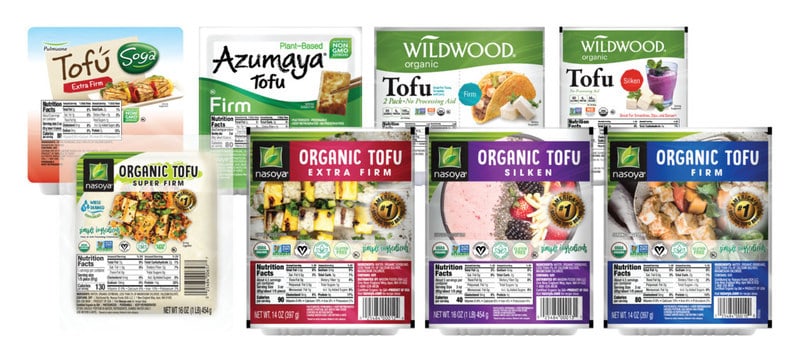
Pulmuone Deep Dive: The Korean Company That Quietly Owns America's Tofu Aisle
Nasoya, Wildwood, Azumaya and Soga are all owned by one Korean company, and none of them say so on the pack. Pulmuone has led the US tofu market for 11 straight years. Its overseas division still lost money in 2025. Both facts are true.
Who Makes Buldak? Is It Korean? Samyang Foods: Owners, Factories, Sales
Yes, Buldak is Korean: Samyang Foods (삼양식품), KOSPI-listed, makes it in Wonju, Iksan and Miryang. Owners, plants and H1 2026 sales (83% exported), from DART filings.