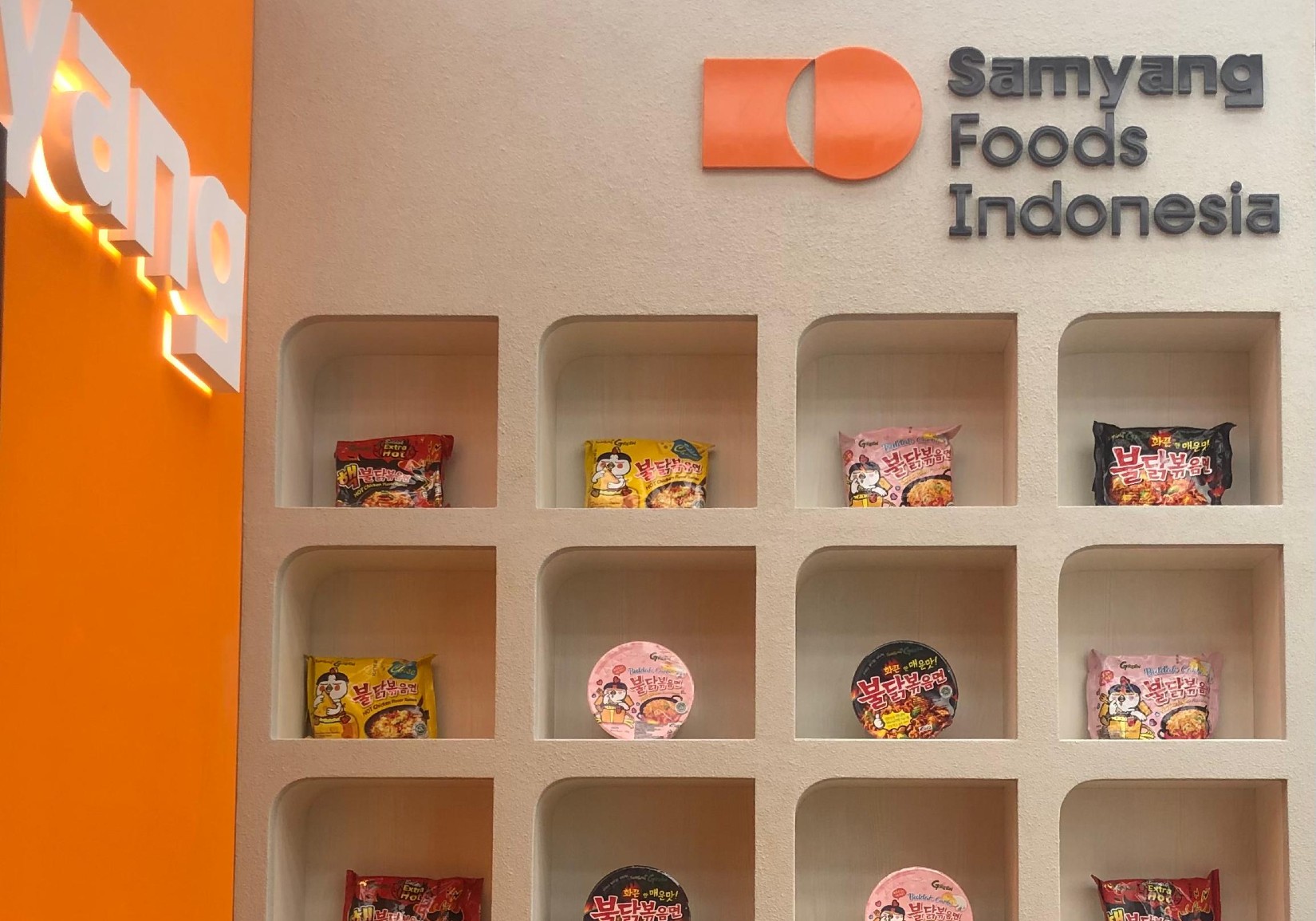
Who Makes Buldak? Samyang Foods, the Korean Company Behind It: Owners, Factories, Revenue
Buldak is made in Korea by Samyang Foods (삼양식품), a Seoul-listed company controlled by the Kim Jung-soo family through Samyang Roundsquare. Factories, owners, ₩2.35 trillion in 2025 sales, 80% exported (83% in H1 2026), from DART filings.
Quick Answer
Buldak (불닭) is made by Samyang Foods (삼양식품), a South Korean company headquartered in Seoul. Buldak sold abroad is made in Korea: Samyang has three plants, in Wonju (원주공장), Iksan (익산공장) and Miryang (밀양공장), and Miryang is the export-focused one. It has no factory outside Korea yet. Samyang Foods is listed on the Korea Exchange (KOSPI: 003230) and is controlled by its holding company, Samyang Roundsquare (삼양라운드스퀘어), which owned 35.48% of the shares at 30 June 2026. The holding company's largest shareholder is Kim Jung-soo (김정수), the chair who came up with Buldak. Buldak is not owned by Nestlé or any foreign food group.
The numbers have grown fast. Samyang Foods' DART filings report consolidated sales of ₩2.352 trillion in 2025 (about US$1.74 billion) and ₩1.485 trillion in the first half of 2026 (about US$1.10 billion). In that half, 83% of sales were exports. Buldak itself passed 10 billion packs sold at the end of May 2026, and the company says about 63 are sold every second.
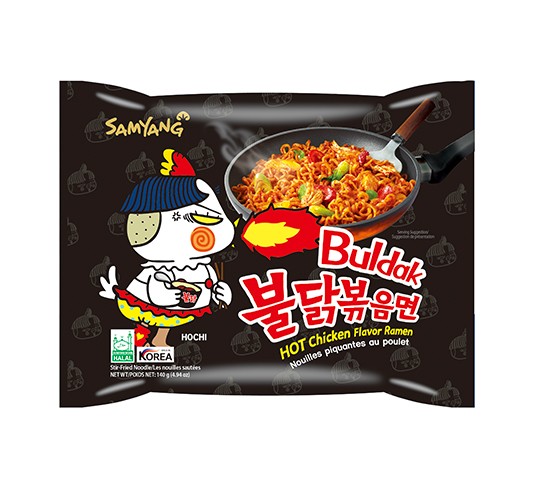
The pack this whole company now rests on: original Buldak Hot Chicken Ramen, 5-packAffiliate link. As an Amazon Associate, EpicKor earns from qualifying purchases at no extra cost to you.
Dollar figures in this article use ₩1,349 = US$1, Hana Bank's closing rate on 2 October 2026, for every year, so they show size, not historical dollar results. This is a public-information company profile, not investment advice, and EpicKor has no relationship with Samyang Foods.
Who Owns Buldak? The Short Answers
| Question | Answer (as of October 2026) | Where it comes from |
|---|---|---|
| Who makes Buldak? | Samyang Foods Inc. (삼양식품주식회사), a Korean instant-noodle maker founded in 1961 | Company history page |
| Is Buldak Korean? | Yes. Korean brand, Korean company, Korean-made. "Buldak" is Korean for "fire chicken" | Product page, DART filings |
| Where is Buldak made? | Three Korean plants: Wonju (Gangwon), Iksan (North Jeolla) and Miryang (South Gyeongsang). In the first half of 2026, Miryang produced 576 million servings of noodles, Wonju 569 million and Iksan 210 million | 2026 half-year report (반기보고서) |
| Who owns Samyang Foods? | Samyang Roundsquare holds 35.48%. With family members and the Samyang Igeon scholarship foundation, the controlling group holds 44.98%. Korea's National Pension Service holds 10.69% | Half-year report, shareholders at 30 June 2026 |
| Who controls the holding company? | Chair Kim Jung-soo (김정수), its largest shareholder with 31.98% | Half-year report |
| Who created Buldak? | Kim Jung-soo. She got the idea in Myeongdong (명동), Seoul, watching young people sweat through a very spicy dish, and the noodle launched in April 2012 | Company press release, January 2026; Korean press |
| Where is the headquarters? | Samyang Roundsquare Building, 159 Toegye-ro, Jung-gu, Seoul (Myeongdong), since 26 January 2026. The old head office was in Hawolgok-dong (하월곡동) | Half-year report, press release |
| How big is it? | 2025 sales ₩2.352 trillion (about $1.74 billion), operating profit ₩524.2 billion (about $389 million) | 2025 annual report |
| What is it worth? | Market value about ₩9.15 trillion (about $6.8 billion) at the 2 October 2026 close, with shares at ₩1,215,000 (about $901) | KOSPI quote, 2 October 2026 |
"Buldak net worth" is a common search, but Buldak is a brand, not a company, so it has no net worth of its own. The nearest public numbers are Samyang Foods' market value above and the company's own figure for Buldak noodles: about ₩7 trillion (about $5.2 billion) in cumulative sales by May 2026.
Samyang Buldak Carbonara (까르보불닭볶음면), the best-known flavour spin-off Put it next to the original and you see the export logic in one pack: same brand, less heat, a wider audience. Samyang itself mentions the US Carbonara shortages as a sign of Buldak's reach. As an Amazon Associate, EpicKor earns from qualifying purchases at no extra cost to you.
See Buldak Carbonara on AmazonWho Owns Samyang Foods, in Detail
Samyang Foods was founded in 1961 by Jeon Joong-yoon (전중윤) and launched Samyang Ramen (삼양라면) in 1963, which the company calls Korea's first instant ramen. It is still a family-controlled company, but the family holds it through a holding company rather than directly.
| Shareholder | Relation | Shares | Stake |
|---|---|---|---|
| Samyang Roundsquare (삼양라운드스퀘어) | Largest shareholder (holding company) | 2,672,949 | 35.48% |
| Kim Jung-soo (김정수) | Chair; related party | 283,488 | 3.76% |
| Jeon In-jang (전인장) | Former chair; related party | 236,000 | 3.13% |
| Samyang Igeon Scholarship Foundation (삼양이건장학재단) | Foundation | 126,630 | 1.68% |
| Jeon Byung-woo (전병우) and two other relatives | Related parties | 69,350 | 0.91% |
| Controlling group total | 3,388,417 | 44.98% | |
| National Pension Service (국민연금공단) | Outside shareholder over 5% | 805,319 | 10.69% |
Source: Samyang Foods 2026 half-year report, shareholders at 30 June 2026. Total shares issued: 7,533,015.
The holding company itself is controlled by the same family. The report names Kim Jung-soo as Samyang Roundsquare's largest shareholder with 31.98%.
One change came after that date. On 6 July 2026, Kim Jung-soo gave 200,000 of her shares to two family members: 171,500 to her son Jeon Byung-woo, a Samyang executive, and 28,500 to Jeon Ha-young (전하영). His direct holding rose from 44,750 to 216,250 shares. Because the gift stayed inside the family, the controlling group's total did not change: it is still 44.98%. The company reported this in a DART ownership-change filing on 9 July 2026.
Kim was promoted from vice-chair to chair (회장) on 1 June 2026. She is also one of the company's two representative directors, alongside Kim Dong-chan (김동찬). In its May 2026 announcement, Samyang credited her with growing sales from ₩642 billion in 2021 to ₩2.35 trillion in 2025 and lifting the operating margin from 10% to 22%.
From Korea's First Ramen to Buldak
Samyang's export story is older than Buldak. The company says it started exporting ramen to Vietnam in 1969, the first Korean noodle maker to do so.
Buldak Bokkeum-myeon (불닭볶음면) launched in April 2012. The idea came from Kim Jung-soo, who had seen young people in a Myeongdong restaurant eating a fiercely spicy dish and enjoying it. Early reviews in Korea said it was almost too hot to eat. Samyang's June 2026 release says that in 2012 the noodle first went abroad, as a new-product introduction, to only three countries: Japan, Germany and New Zealand.
The company's numbers show how it grew from there:
| Milestone | When |
|---|---|
| Buldak launches in Korea | April 2012 |
| 1 billion Buldak packs sold (cumulative) | 2017 |
| 4 billion packs | 2022 |
| US$400 million Export Tower award | December 2022 |
| US$700 million Export Tower, a first for a Korean food company | December 2024 |
| 9 billion packs | 2025 |
| US$900 million Export Tower | December 2025 |
| 10 billion packs, about ₩7 trillion in cumulative sales | end of May 2026 |
Samyang now says it sells about 2 billion Buldak packs a year in roughly 100 countries, and that it accounts for more than 60% of Korea's ramen exports. Those are company figures, not independent ones.
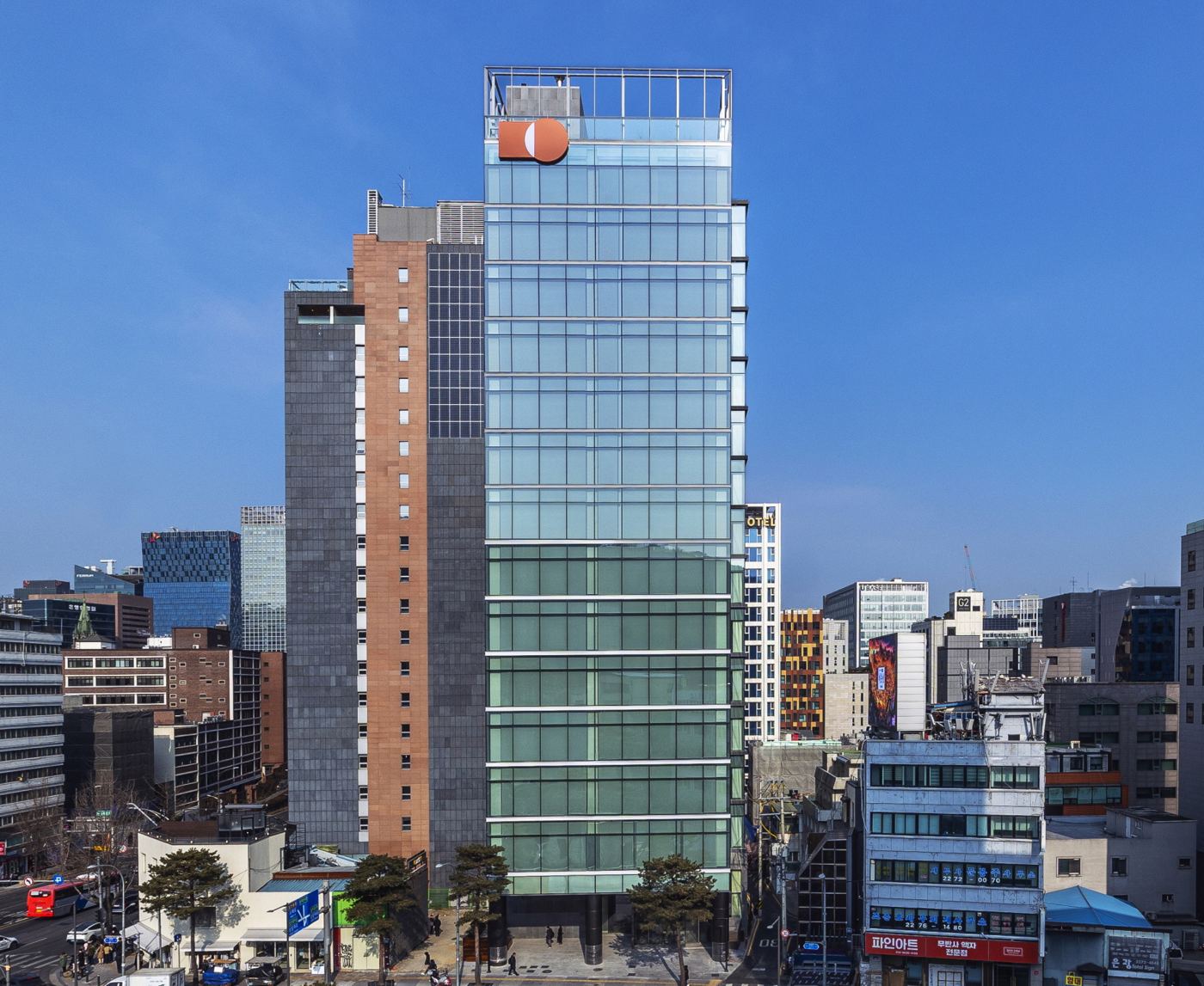
In January 2026, the company moved its head office back to Myeongdong, the place where Buldak began. The 15-storey building, with six basement floors, also houses the main Samyang Roundsquare affiliates. In summer 2026 the company opened its ground-floor "Peppo Lounge" to tourists. The old Hawolgok-dong building now serves as a sales and logistics base.
The Money: Revenue and Profit, 2021 to 2026
| Period | Sales | Operating profit | Operating margin | Sales in US$ (at ₩1,349) |
|---|---|---|---|---|
| 2021 | ₩642.0 billion | ₩65.4 billion | 10.2% | about $476 million |
| 2022 | ₩909.0 billion | ₩90.4 billion | 9.9% | about $674 million |
| 2023 | ₩1.193 trillion | ₩147.5 billion | 12.4% | about $884 million |
| 2024 | ₩1.728 trillion | ₩344.6 billion | 19.9% | about $1.28 billion |
| 2025 | ₩2.352 trillion | ₩524.2 billion | 22.3% | about $1.74 billion |
| H1 2026 (Jan to Jun) | ₩1.485 trillion | ₩353.3 billion | 23.8% | about $1.10 billion |
Annual figures are consolidated and audited, from Samyang Foods' financial page and DART reports. The first-half 2026 figures (₩1.4847 trillion in sales, ₩353.3 billion in operating profit) are stated in the half-year report, which was reviewed rather than audited.
Sales roughly doubled in two years after 2023, while operating profit more than tripled. In 2025 the company passed ₩2 trillion in sales for the first time, and net profit was ₩388.7 billion.
The 2026 quarters kept that pace. In the first quarter, sales were ₩714.4 billion and operating profit ₩177.1 billion, both company records. The second quarter brought ₩770.3 billion in sales (+39.3% year on year) and ₩176.2 billion in operating profit (+46.7%), the sixth quarter in a row with a margin above 20%. Samyang put part of that down to the weak won. Exports earn dollars and euros, so a high exchange rate inflates profits counted in won. That boost can disappear if the won strengthens.
Where the sales come from
The half-year report splits sales into exports and domestic sales. Of ₩1.485 trillion in the first half of 2026, ₩1.231 trillion (82.9%) was exports. Noodles and snacks alone made up ₩1.183 trillion of that. In 2025, exports were 80.0% of sales.
Samyang's second-quarter release broke out the main regions:
| Q2 2026 | Sales | Change vs Q2 2025 | In US$ |
|---|---|---|---|
| All overseas sales | ₩645.8 billion | +46.7% | about $479 million |
| Americas | ₩203.6 billion | +54% | about $151 million |
| China | ₩181.0 billion | +44% | about $134 million |
| Europe | ₩80.6 billion | +61% | about $60 million |
The Americas figure includes Mexico and Central America as well as the US. Europe is the smallest of the three regions but the fastest-growing. In the first quarter of 2026 European sales were up 215% on a year earlier, which the company linked to a new UK subsidiary and wider mainstream retail listings in Germany and the Netherlands.
Where Buldak Is Made: The Korean Factories
Samyang Foods' factory page lists three Korean plants. Wonju (원주공장) makes ramen, snacks and sauces. Iksan (익산공장) makes bagged ramen. Miryang (밀양공장) is the export plant: Miryang Plant 1 opened in May 2022, and Miryang Plant 2 was completed in June 2025. The company's 2025 IR presentation described Plant 2 as six lines with planned capacity of 690 million servings a year.
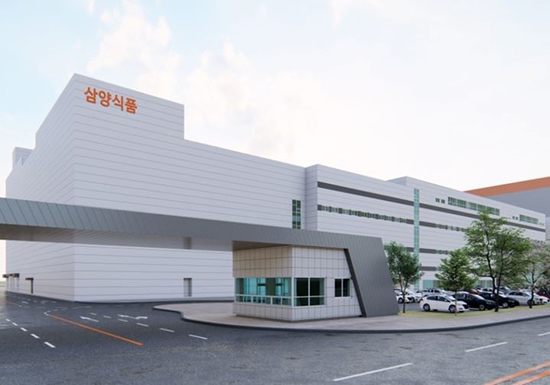
DART filings show what Plant 2 changed. Noodle capacity at Miryang was 610 million servings in 2024, 965 million in 2025, and 664 million in the first half of 2026 alone, which is a rate of about 1.33 billion a year. In that half, Miryang turned out more noodles than Wonju for the first time: 576 million servings against 569 million, with Iksan at 210 million.
The plants are also running hard. In the first half of 2026, Wonju ran at 101% of its standard hours and Iksan at 119%. Miryang, still ramping up its new lines, was at 87%.
So where are the Buldak packs in a US, UK or Australian shop made? In Korea. The filings list no noodle plant outside Korea yet. That changes in 2027:
- China, Jiaxing (삼양식품(절강) 자싱공장). Construction started in July 2025. In November 2025 a DART filing revised the plan from six lines and ₩201.4 billion to eight lines and ₩207.2 billion (about $154 million), due for completion by 31 January 2027. A company official told Korean press in May 2026 that the plant will make about 1.1 billion packs a year, all for sale in China. Until then, China is supplied from Korea.
- United States. Samyang has a US sales company, Samyang America, but no US factory. We found no filing announcing one as of October 2026, and in May 2026 the company said only that it was considering more regional liaison offices.
Regional Subsidiaries
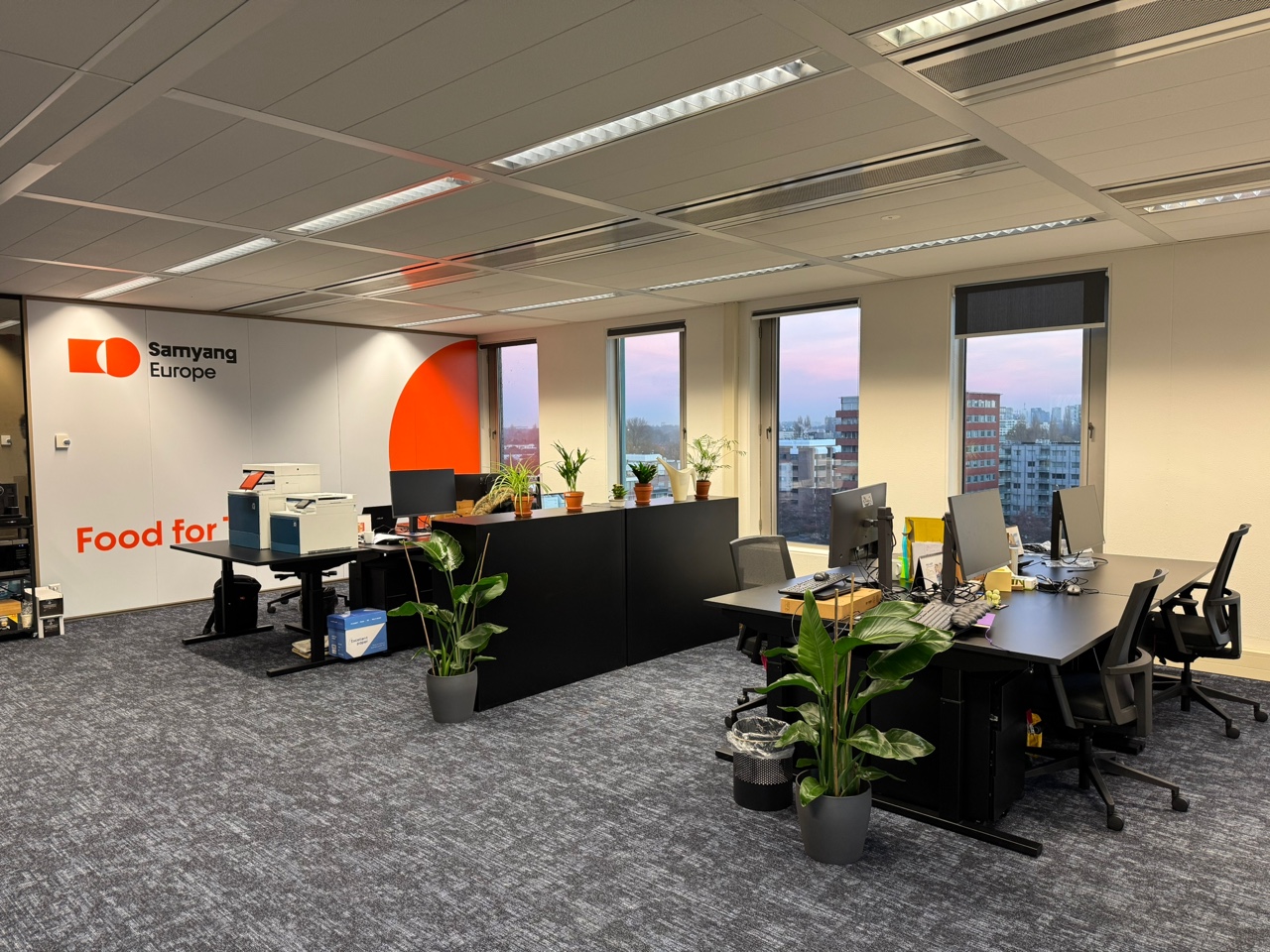
Samyang now runs its own sales companies instead of relying only on importers. According to the global-network page and DART filings, they are Samyang Japan (2019), Samyang America and Samyang Foods Shanghai (both 2021), Samyang Foods Indonesia (2023), Samyang Foods Europe (2024, Netherlands) and, most recently, Samyang Foods UK. A Singapore company set up in 2025 holds the China production subsidiary.
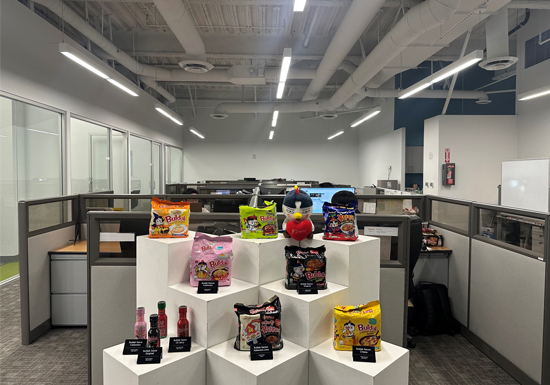
Samyang says the American company handles US sales and distribution. The European company is based in the Amsterdam area and says it covers more than 40 European countries. In the half-year report, 95.2% of the overseas division's sales are still classed as direct export, with 4.8% as local sales. Most Buldak sold abroad is still made in Korea and shipped out as Korean exports, even when a local subsidiary sells it to the retailer.
Localization: One Brand, Many Versions
Buldak is not one product sold everywhere. Samyang changes the heat level, pack size, cup or bag format, certifications such as halal, and even the flavour lineup for each market. In Japan, for example, Samyang launched a Japan-only Buldak Curry (불닭카레), a curry made with Buldak sauce, in 2026. Carbonara, cheese and extra-hot versions show the range.
Sauce is the other expansion. Samyang said in September 2025 that Buldak sauce was exported to about 50 countries. Sauce turns Buldak from a noodle meal into a flavour that people put on chicken, rice, eggs or pizza. In the first half of 2026, sauce and seasoning sales were ₩53.4 billion, with ₩36.7 billion of that exported. That is still small next to noodles, so Buldak remains a ramen business first.
Buldak Original Hot Chicken Sauce (불닭소스), the noodle turned into a condiment This is the extension the section describes: the same heat on chicken, rice or eggs, with no ramen to cook. A small bottle is the cheapest way to find out whether you like Buldak heat before buying a case. As an Amazon Associate, EpicKor earns from qualifying purchases at no extra cost to you.
See Buldak Sauce on AmazonFor a taster's view of the noodles rather than the company, see EpicKor's why a Korean ramen packet now costs ₩1,900 and the Carbo Buldak guide.
Is Buldak Going Out of Business?
No. People search for this, probably because of shortage headlines and the 2024 Danish recall. Samyang's own June 2026 release mentions "Carbonara shortages in the US" and a "recall happening in Europe" as signs of how far Buldak reaches. The 2026 filings show the opposite of a business in trouble: record quarterly sales, margins above 20%, two of its three factories running above their standard hours, and a new plant under construction.
The real risks are different:
- One-brand concentration. Noodles and snacks are about 90% of sales, and most of that is Buldak. A change in taste, a strong rival, or fatigue on social media would hit the whole company.
- Food rules abroad. Labels, allergens, permitted ingredients and heat warnings differ by country. A very visible brand gets very visible recalls.
- Exchange rates. Part of the 2025 and 2026 margin came from a weak won. If the won gets stronger, profit in won falls even if pack sales stay the same.
- Capacity. Korea's plants are near full. The China plant has to be finished and run well before it adds supply.
- Retail terms. Mainstream US and European chains bring volume, but they also want promotions, service levels and working capital.
What Overseas Buyers Should Check
Popularity does not replace due diligence. A distributor or retailer interested in Samyang products should work through the official regional company or an appointed distributor and confirm, in writing:
| Area | Question | Evidence to request |
|---|---|---|
| Authorization | Is the seller appointed for this market, channel and product range? | Current authorization letter, legal entity, territory and channel scope |
| Product compliance | Does the exact SKU meet local rules on ingredients, allergens, labels and claims? | Specification sheet, label artwork, certificates, registrations |
| Commercial terms | MOQ, case pack, payment terms, lead time, Incoterms | Formal quotation and purchase agreement |
| Supply | Which Korean plant supplies the order, and what happens during allocation? | Manufacturing-site statement, shelf-life commitment, shortage process |
| Quality and recall | Who handles complaints, withdrawals and regulators? | Lot traceability, recall contacts, responsibility matrix |
The same approach works for any Korean supplier. EpicKor's supplier verification workflow covers entity checks, samples and payment, and the Korea trade-show guide helps with meeting food makers in person. For other Korean companies that grew from one hit product into a full system, see MUSINSA and Toss.
FAQ
Q: Who makes Buldak noodles?
Samyang Foods Inc. (삼양식품), a Korean food company founded in 1961 and listed on the Korea Exchange. Buldak is its brand. It also makes Samyang Ramen, Samyang 1963, Tangle protein pasta and other products.
Q: Is Buldak Korean or Japanese?
Korean. The brand, the company and the factories are all in Korea. Japan is one of the export markets, with a local sales company, Samyang Japan.
Q: Where is Buldak made?
In Korea, at Samyang Foods' plants in Wonju, Iksan and Miryang. Packs sold in the US, Europe and elsewhere are exported from Korea. A plant in Jiaxing, China, is due to be completed by the end of January 2027 and is meant to supply only the Chinese market.
Q: Who owns Buldak?
Samyang Foods owns the brand. Samyang Foods' largest shareholder is the holding company Samyang Roundsquare (35.48%), whose largest shareholder is chair Kim Jung-soo (31.98%). With family and the group's foundation, the controlling group owns 44.98% of Samyang Foods. Nestlé and other foreign groups do not own Buldak.
Q: Who created Buldak and when?
Kim Jung-soo, now Samyang Foods' chair, came up with it after watching people eat a very spicy dish in Myeongdong, Seoul. Buldak Bokkeum-myeon launched in April 2012.
Q: How much revenue does Samyang Foods make?
₩2.352 trillion in 2025 (about US$1.74 billion at ₩1,349 per dollar), with ₩524.2 billion in operating profit. In the first half of 2026 it made ₩1.485 trillion in sales, 83% of it from exports.
Q: How much is Samyang Foods worth?
About ₩9.15 trillion (about US$6.8 billion) in market value at the 2 October 2026 close, when one share cost ₩1,215,000. The price changes daily. Over the 52 weeks to that date it ranged from ₩981,000 to ₩1,565,000.
Sources
- Samyang Foods 2026 half-year report (반기보고서), DART, filed 14 August 2026: sales by type, plant capacity and output, utilization, shareholders, history
- Samyang Foods 2025 annual report (사업보고서), DART, filed 18 March 2026
- Ownership-change filing (최대주주등소유주식변동신고서), DART, 9 July 2026: the 6 July 2026 gift of shares
- Future business plan disclosure on the China plant (장래사업·경영계획), DART, 19 November 2025: eight lines, ₩207.2 billion, completion 31 January 2027
- Samyang Foods official financial information, 2021 to 2025
- Samyang Foods press release: Q2 2026 results by region (14 August 2026)
- Samyang Foods press release: Q1 2026 results (13 May 2026)
- Samyang Foods press release: Buldak passes 10 billion packs (5 June 2026)
- Samyang Foods press release: Kim Jung-soo promoted to chair (15 May 2026)
- Samyang Foods press release: head office moves to Myeongdong (26 January 2026)
- Samyang Foods press release: 2025 results (29 January 2026)
- Samyang Foods official company history
- Samyang Foods official factory overview
- Samyang Foods official global network
- Samyang Foods 2025 IR presentation (Miryang Plant 2 capacity)
- Korean press, 4 May 2026: Jiaxing plant output and China-only sales
- Newsis (Korean), the origin of Buldak Bokkeum-myeon
- KOSPI quote for Samyang Foods (003230): close and market value on 2 October 2026; USD/KRW from Hana Bank's 2 October 2026 close
Last Updated: 3 October 2026. Financial and ownership figures come from Samyang Foods' DART filings and official releases. The first-half 2026 figures are reviewed, not audited, and unit sales, country counts and export shares are the company's own figures. Share prices and exchange rates change daily. EpicKor has no commercial relationship with Samyang Foods, and nothing here is investment advice.
More Business Guides
Ottogi (Otoki) Deep Dive: The Korean Food Giant That Wins at Home and Lags Abroad
Ottogi renamed itself Otoki in English in 2024. It sells more curry, mayonnaise and instant rice inside Korea than almost anyone, yet only about 11% of revenue comes from overseas while Samyang Foods runs at 84.5%. Here is why, and what changes by 2030.
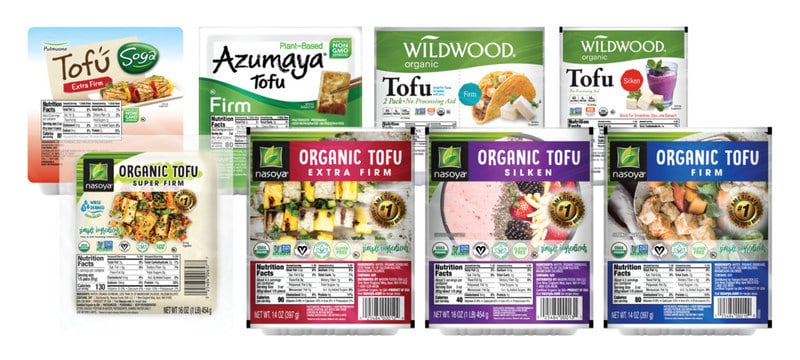
Pulmuone Deep Dive: The Korean Company That Quietly Owns America's Tofu Aisle
Nasoya, Wildwood, Azumaya and Soga are all owned by one Korean company, and none of them say so on the pack. Pulmuone has led the US tofu market for 11 straight years. Its overseas division still lost money in 2025. Both facts are true.
Who Owns Beauty of Joseon? Goodai Global, the Korean Company Behind TIRTIR, SKIN1004 and Round Lab
Beauty of Joseon is not independent. It belongs to Goodai Global (구다이글로벌), a Seoul company 96.4% owned by its founder that also owns TIRTIR, SKIN1004, Round Lab and Skinfood. ₩1.47 trillion revenue in 2025, read from its DART audit report.