Ottogi (Otoki) Deep Dive: The Korean Food Giant That Wins at Home and Lags Abroad
Ottogi renamed itself Otoki in English in 2024. It sells more curry, mayonnaise and instant rice inside Korea than almost anyone, yet only about 11% of revenue comes from overseas while Samyang Foods runs at 84.5%. Here is why, and what changes by 2030.
Quick Answer
Most English coverage of Korean food companies right now is about the ones that exploded overseas. Otoki is the interesting opposite case: a company that is close to unbeatable inside Korea and has spent fifty years failing to translate that into an export business.
The gap is not subtle. Measured over the same quarter — the first of 2025 — overseas sales were 10.8% of Otoki's revenue, 37% of Nongshim's, and 84.5% of Samyang Foods'. Three companies in the same country, in the same category, with wildly different exposure to the world outside Korea. Otoki has since edged up to 11.5% in the first quarter of 2026, which tells you both that the number is moving and how far it has to go.
This matters to anyone sourcing Korean food, because Otoki is the largest Korean food manufacturer that is still mostly a domestic company — and it has now committed money and buildings to changing that by 2030. It also renamed itself in English two years ago, which quietly broke a lot of procurement paperwork.
This is a public-information-only company spotlight. EpicKor is not implying any client relationship with Otoki, and none of this is investment advice.
The Two Names Problem, First
Before anything else, the practical part.
In August 2024 the company changed its English name from OTTOGI to OTOKI. The trademark application went in on 8 August 2024 and the company announced it on 9 August. The stated reason was that "Ottogi" produced too many pronunciations abroad, and the company wanted one legible English handle for global consumers.
The Korean name never changed. It is still 오뚜기, a modified spelling of 오뚝이 — the roly-poly tumbler doll that rights itself when you push it over. That is the mascot on every pack.
For a buyer, the consequence is that both spellings are live at once:
| Where you look | What you will see |
|---|---|
| Korean legal and financial filings | 오뚜기 / Ottogi Corporation — the older romanization persists in registry documents |
| Current corporate website and signage | Otoki (the site itself now resolves to otoki.com) |
| Export packaging | Mixed — the new symbol has been applied gradually, not in one sweep |
| Retail and marketplace listings | Both, often on the same product page |
Search both spellings when you check certifications, past shipments, or supplier records. A "no results" on one spelling is not evidence of anything.
What Otoki Actually Sells (It Is Not Mainly Ramyun)
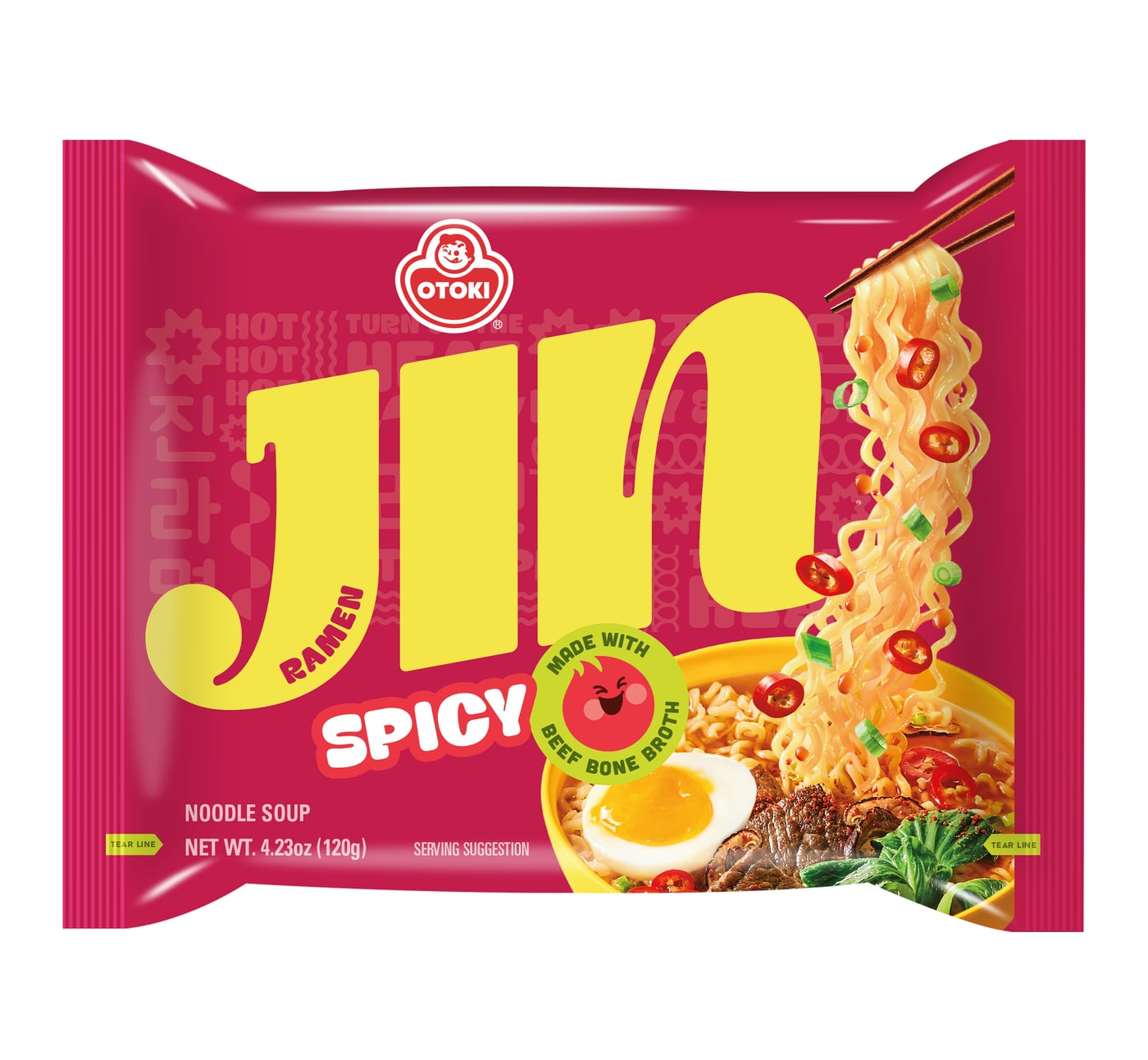
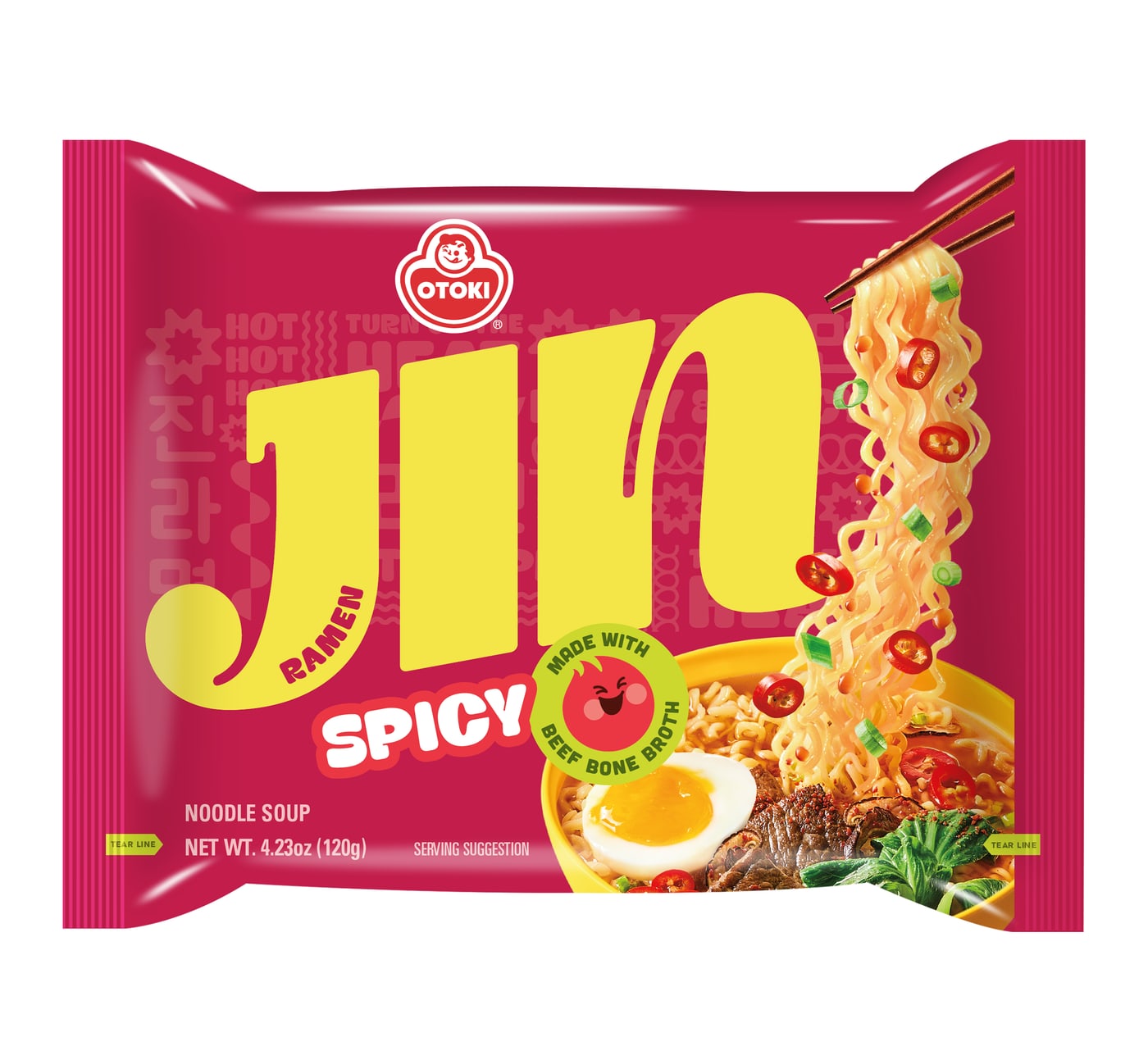
English readers usually meet Otoki through Jin Ramen, which gives a misleading picture of the company.
Otoki started in May 1969, founded by Ham Tae-ho (함태호) under the name Poongnim Sangsa (풍림상사), out of a small plant in Mullae-dong, Yeongdeungpo. The first product, launched on 5 May 1969, was Ottogi Curry — the first curry product made in Korea. Ramyun came much later.
The company then produced Korea's first domestically made soup mix (1970), ketchup (1971) and mayonnaise (1972). In 1981 it launched 3-Minute Curry (3분카레), the retort pouch that made shelf-stable ready meals normal in Korean kitchens.
That history is why the domestic position is so hard to attack. Otoki holds over 85% of Korea's powdered curry market. It is the default mayonnaise, the default ketchup, and a leading brand in instant rice, sesame oil and retort meals. Revenue passed ₩1 trillion in 2007, ₩2 trillion in 2017 and ₩3 trillion in 2022.
For 2025 the company reported consolidated revenue of ₩3.6745 trillion, up 3.8%. But operating profit fell 20.2% to ₩177.3 billion, an operating margin of 4.8%. Management pointed to the won exchange rate, raw and packaging material costs, labour costs and higher advertising spend.
That combination — revenue up, profit down by a fifth — is the whole argument for going overseas, made in two numbers.
Taste the domestic position: As an Amazon Associate, EpicKor may earn from qualifying purchases. If you want to understand why Jin Ramen holds its place at home, the useful test is to cook it beside the market leader — a Korean ramyun pot gets the boil and the timing close enough to judge the broth rather than your cookware.
Why Jin Ramen Is The Strength And The Risk
Jin Ramen is the second best-selling ramyun in Korea, behind Nongshim's Shin Ramyun, and it has been closing the gap. It carries a broth simmered for 13 hours from New Zealand beef bones — which is a quiet link back to Otoki's New Zealand operation, running since the mid-1990s.
Here is the problem, and it is the clearest single fact about this company: Jin Ramen is the only Otoki product in Korea's ramyun top ten. Nongshim has five. Samyang and Paldo have two each.
Otoki's noodle sales were ₩799.4 billion in the first three quarters of 2025, up 5.2% year on year and 10.1% against the same point in 2023. Steady, healthy, and concentrated in one product line worth over ₩200 billion a year on its own.
| Company | Products in Korea's ramyun top 10 | Overseas share of revenue |
|---|---|---|
| Nongshim | 5 | ~37% (Q1 2025) |
| Samyang Foods | 2 | 84.5% (Q1 2025) |
| Paldo | 2 | — |
| Otoki | 1 (Jin Ramen) | 10.8% (Q1 2025) |
Samyang's position shows why concentration is not automatically bad — two products carried it to 84.5% overseas. The difference is that Buldak travelled and Jin Ramen mostly has not. Jin Ramen's appeal is that it is reliable, balanced and mild enough for a child; that is a description of a staple, not of a product people film themselves eating. We wrote about how Koreans actually choose between the mild and spicy versions in the Jin Ramen mild vs spicy guide, and about Otoki's other well-known snack in the Ppushu Ppushu explainer.
Compare this with how Samyang Foods turned one product into an export engine and the contrast is the point: same country, same category, opposite outcomes.
The Overseas Network Otoki Already Has
It would be wrong to say Otoki has no international operation. It has had one for thirty years — it simply built it to serve Korean diaspora demand and regional manufacturing rather than mass-market export.
| Entity | Location | Since |
|---|---|---|
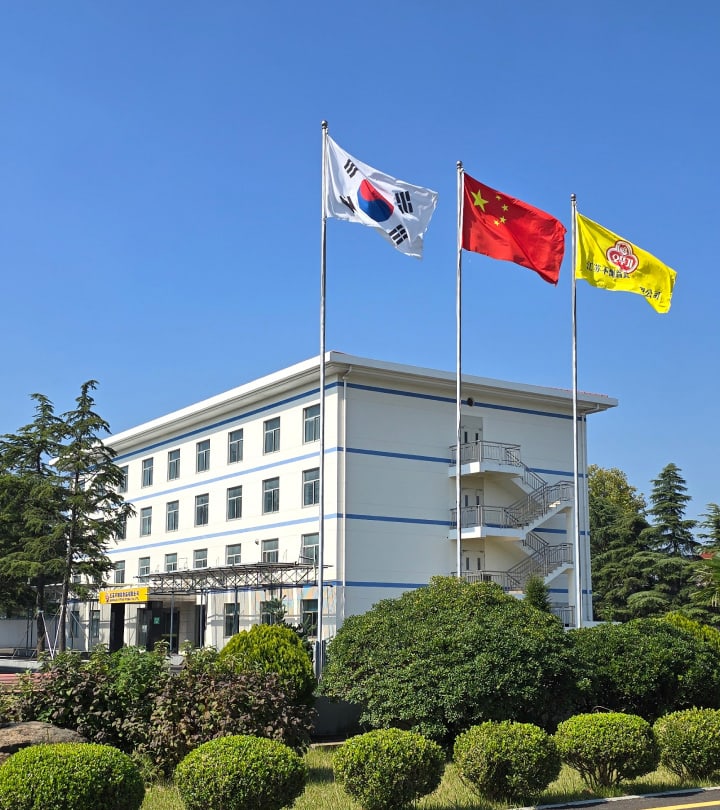
| Jiangsu Otoki Foods | Donghai County, Lianyungang, China | May 1993 |
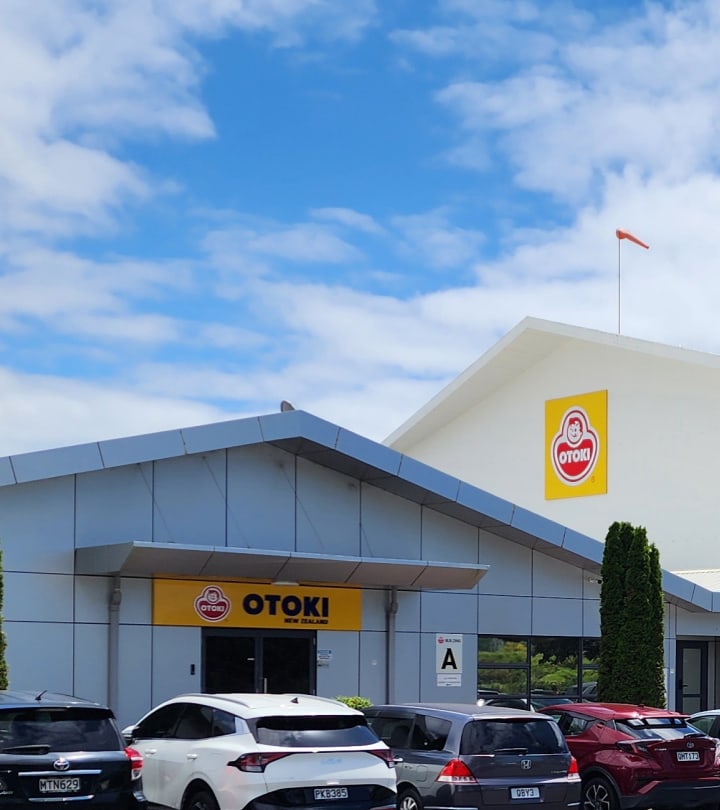
| Otoki New Zealand | Takanini, Auckland | Factory 1995, operations May 1997 |
| Jiangsu Taedong Foods | Donghai County, Lianyungang, China | May 2002 |
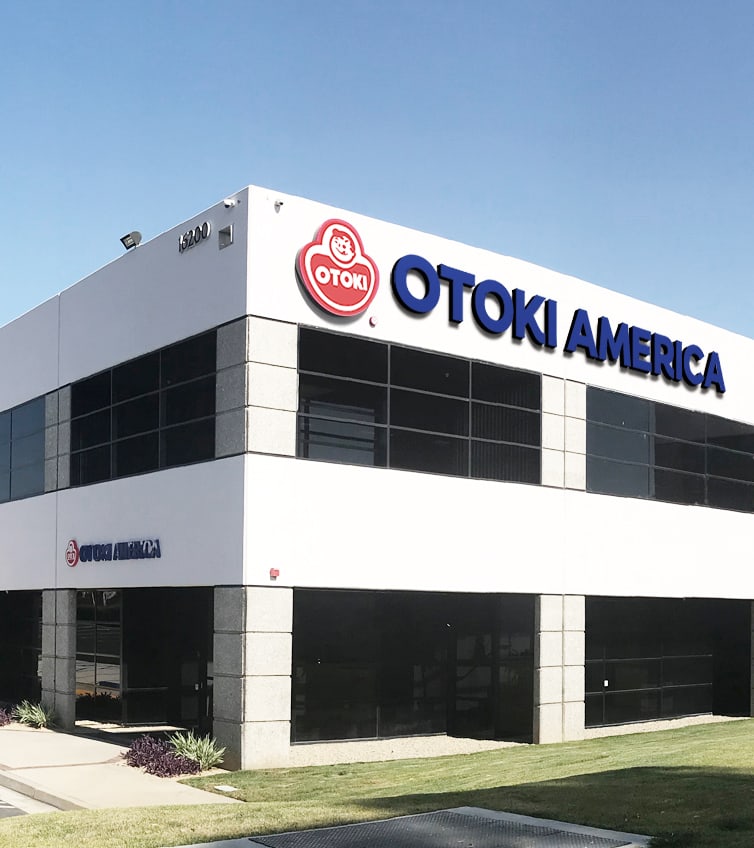
| Otoki America Holdings | Norwalk, California | May 2005 (restructured as a holding company in 2019, with seven North American affiliates) |
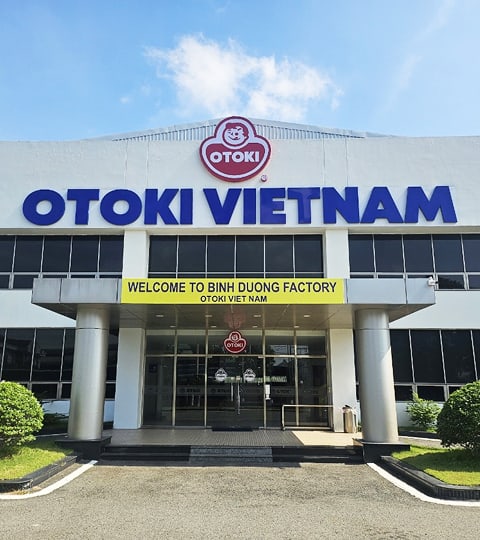
| Otoki Vietnam | Binh Duong and Bac Ninh factories; Ho Chi Minh City and Hanoi offices | 2007 |
| Otoki Japan | Tokyo sales unit | Registered 15 May 2026; trading from September 2026 |
The United States is the largest single piece, at 23.7% of overseas sales. In the first quarter of 2025 the US business turned over ₩26.9 billion, up 16.6% year on year, though net profit slipped 1.3% to ₩1.3 billion — growth on the top line, nothing on the bottom.
And here is the structural weakness underneath that growth: more than 98% of what Otoki sells in the United States is still made in Korea or Vietnam and shipped in. The company has no US production. That was survivable when Korean ramyun entered the US at zero tariff. It stopped being survivable when the rate went to 10% in April 2025 and then 15% on 1 August 2025.
The 2030 Plan Is Three Buildings
Otoki's target is ₩1.1 trillion in overseas sales by 2030, which the company frames as raising the overseas share to roughly 30%. Against ₩361.4 billion in 2024, that is close to a tripling. It is being pursued with construction rather than marketing:
| Project | Detail | Timing |
|---|---|---|
| Global Logistics Center | Consolidates export handling | Completion April 2026 |
| US plant, La Mirada, California | Otoki Food America (established August 2023); ₩56.5bn (about USD 40m) funded via 400,000 new shares on 27 June 2025; will make ramen, sauces and convenience foods for local taste | Completion 2027 |
| Gumi export-only ramyun plant | ₩200bn in the Gumi No. 2 National Industrial Complex, North Gyeongsang; 120 new jobs | 2026–2029 |
Lee Shin-hyuk, CEO of Ottogi Ramen, described Gumi as "a key investment that goes beyond simply expanding production capacity to enhance our global export response capabilities."
Read together, the sequence is coherent: a dedicated export plant in Korea for volume, a US plant to get under the tariff, and a logistics centre to move both. Otoki currently exports to more than 70 countries, up from 65 in 2024.
Indonesia, Halal, And A Useful Coincidence
The most interesting recent move is Indonesia, and it is a better-designed play than the US one.
Indonesia is the second-largest instant noodle market in the world — 14.68 billion servings in 2023, roughly 12% of global demand, according to WINA. It is also about to become much harder to enter: Indonesia's halal certification becomes mandatory for all food and beverage products in October 2026.
Otoki obtained MUI (Indonesian Ulema Council) certification in late 2024, ahead of that deadline, and began selling halal-certified Jin Ramen there in November 2025 alongside three cheese ramen varieties. Korean domestic packs are not halal-certified; this is a separate export specification.
Then the coincidence. Otoki signed BTS member Jin as the face of the campaign. The product is called Jin Ramen — the 진 in 진라면 means "genuine," and has nothing to do with the singer's name — but the two are homophones, and the company used it. An earlier collaboration moved 13 million multipacks and produced what Korean reporting described as a tenfold sales surge.
That is the template Otoki has been missing: a specific market, a regulatory gate cleared early, a local certification, and a reason for people to notice. Whether it repeats outside Indonesia is the open question.
Build the operator file: If you are studying Otoki as a market-entry case rather than a snack, compare books on doing business in Korea with halal certification and food-export guides before you map certification timelines into a launch plan.
What Overseas Buyers And Researchers Should Check
Four things, in order of how often they cause problems.
Check both English names in every system. Customs records, certification databases, retailer portals and internal supplier lists were populated before August 2024 and mostly still say Ottogi. Your search is incomplete if it only covers one.
Confirm the origin of the specific SKU, not the brand. Otoki manufactures in Korea, Vietnam and China, and will add California from 2027. Country of origin changes tariff treatment, labelling requirements and lead time. Ask per item.
Do not assume halal status carries across markets. The MUI certification covers a defined export range. Korean domestic packs are outside it. If halal matters to your channel, ask for the certificate covering the exact product code.
Read the margin, not just the revenue. The company grew sales in 2025 and lost a fifth of its operating profit. A supplier under that kind of margin pressure behaves differently in a price negotiation than one riding an export boom.
For the wider sourcing process, our guide to finding suppliers in Korea covers verification steps, and Korea trade shows for overseas buyers covers where these companies actually take meetings.
The Honest Assessment
Otoki is not a struggling company. It is a ₩3.67 trillion business with a near-monopoly in curry, a top-two ramyun, and fifty-seven years of continuous operation. Inside Korea it also carries an unusual reputation: it is nicknamed 갓뚜기, "God-ttogi," partly because the founding family paid an inheritance tax bill of around ₩150 billion in full without using the ownership structures Korean conglomerates normally reach for, settling the last tranche in March 2022, and partly because the company froze ramyun prices from April 2008 until 1 August 2021 — thirteen years and four months — before raising Jin Ramen from ₩684 to ₩770. It has also funded heart surgery for children with congenital heart disease since July 1992, passing 4,357 children by the end of 2016.
None of that is an export strategy. It explains why Otoki is trusted at home and why it moved slowly abroad while a competitor with a fraction of its domestic footprint built an 84.5% overseas business on one spicy noodle.
The next four years are the test. Gumi and La Mirada are real capital in the ground with completion dates. If overseas revenue is still near 11% when those plants are running, the constraint was never capacity.
Frequently Asked Questions
Q: Is Ottogi the same company as Otoki? A: Yes. It is one company with two English spellings. The Korean name 오뚜기 never changed; the English name was changed to Otoki in August 2024 to fix pronunciation confusion in export markets. Older documents, filings and product listings still use Ottogi.
Q: Why is Otoki so much smaller overseas than Samyang Foods? A: Otoki built its business on Korean household staples — curry, mayonnaise, ketchup, instant rice, sesame oil — which are strongly tied to domestic cooking habits and do not carry easily into foreign kitchens. Samyang exported one visually and culturally legible product, Buldak, that people discovered through social media. Otoki's overseas operations were also structured for regional manufacturing and diaspora supply rather than mass-market export.
Q: Where are Otoki products made? A: In Korea, at Vietnamese plants in Binh Duong and Bac Ninh, and in China at two Jiangsu facilities in Lianyungang. The company also operates in New Zealand. A US plant in La Mirada, California is due for completion in 2027; until then more than 98% of what Otoki sells in the United States is imported.
Q: Is Jin Ramen halal? A: The version sold in Indonesia is. Otoki received MUI halal certification in late 2024 and launched halal-certified Jin Ramen in Indonesia in November 2025. Packs sold in Korea are not halal-certified, so check the certificate for the specific export product code rather than assuming it applies to the brand.
Q: Is Jin Ramen named after BTS's Jin? A: No. The 진 in 진라면 means "genuine" and the product launched decades before the group existed. The two are homophones in Korean, and Otoki used that overlap by making Jin a campaign face for its Indonesian and US launches.
Q: How big is Otoki compared with Nongshim? A: Otoki reported ₩3.6745 trillion in consolidated revenue for 2025. Nongshim's ramyun revenue alone was about ₩3 trillion in the same year, and Nongshim earns roughly 37% of its revenue overseas against Otoki's 11.5% in the first quarter of 2026. Otoki is broader across food categories; Nongshim is deeper in noodles and far more international.
More Business Guides
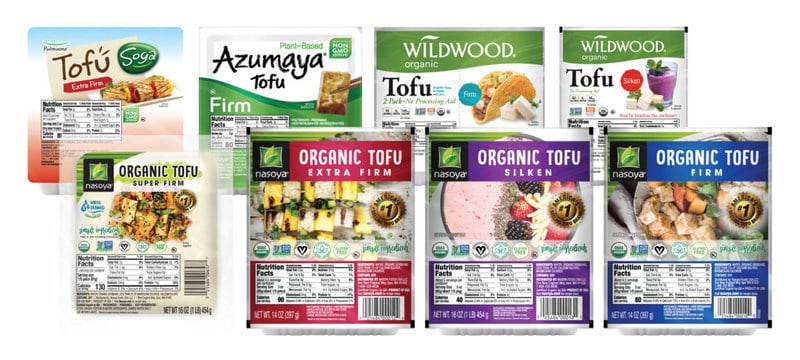
Pulmuone Deep Dive: The Korean Company That Quietly Owns America's Tofu Aisle
Nasoya, Wildwood, Azumaya and Soga are all owned by one Korean company, and none of them say so on the pack. Pulmuone has led the US tofu market for 11 straight years. Its overseas division still lost money in 2025. Both facts are true.
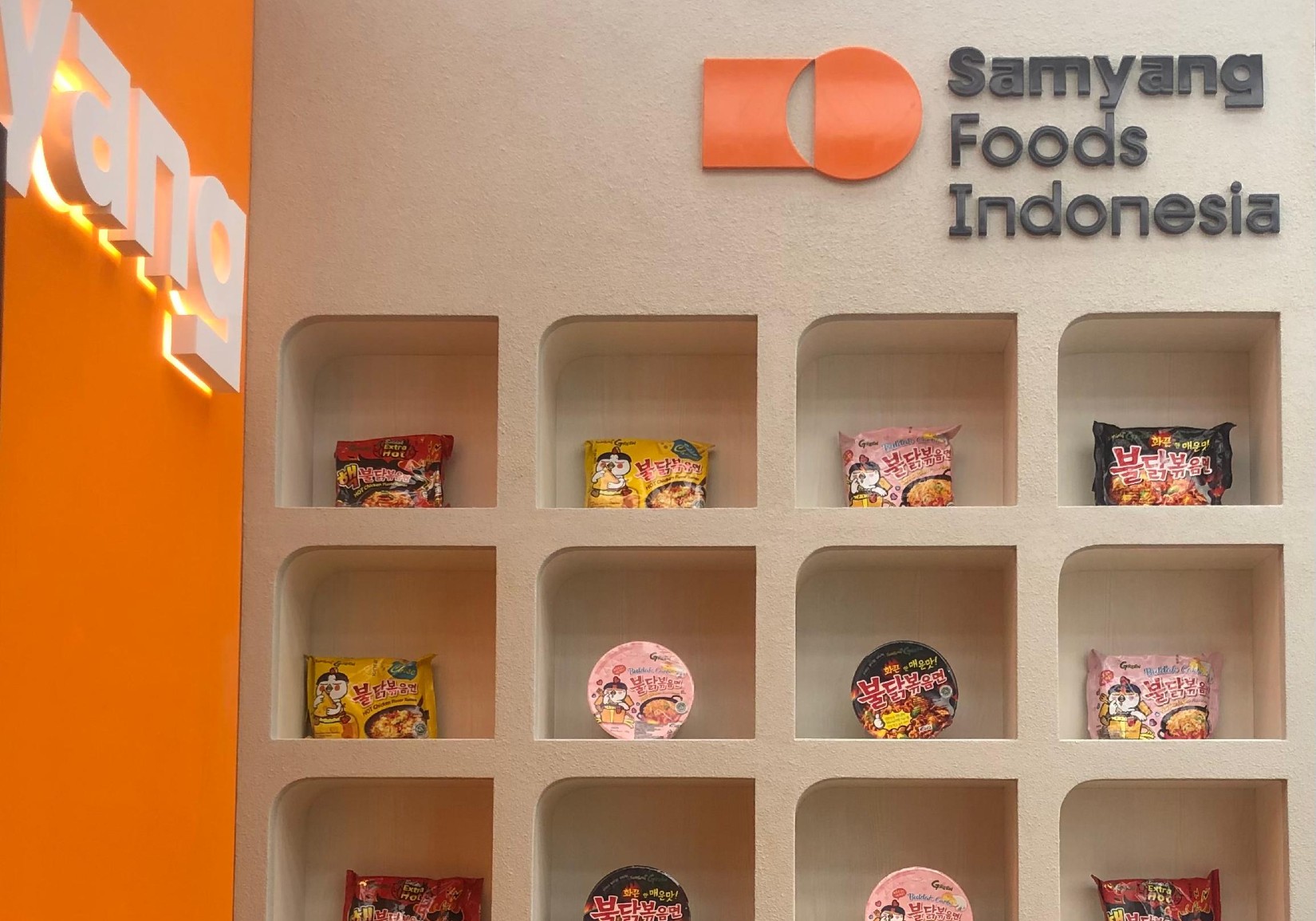
Samyang Foods Deep Dive 2026: How Buldak Became a Global Export Engine
A public-info deep dive on Samyang Foods, covering Buldak's viral growth, export network, factories, financial expansion, localization, and business risks.
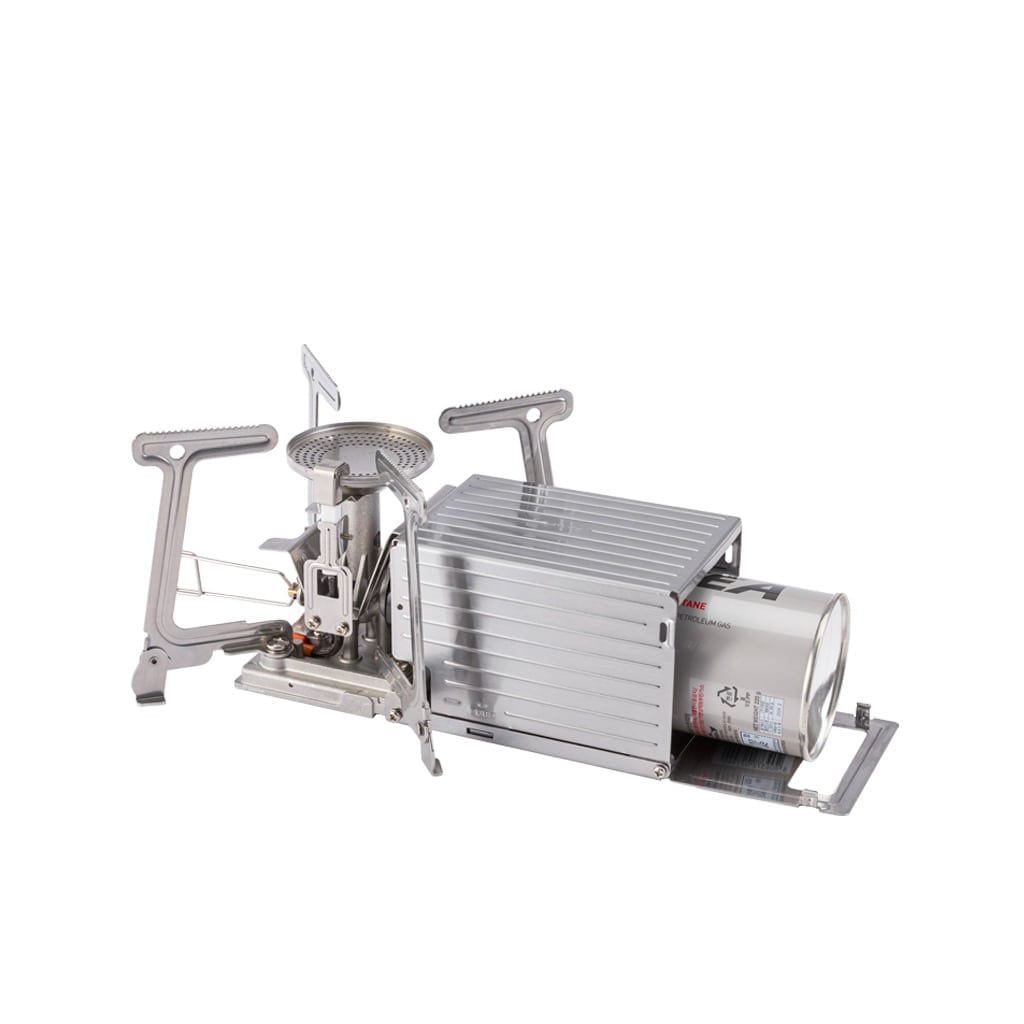
Kovea Deep Dive: The Korean Burner Maker That Took Apart a Swedish Stove — and Now Builds for MSR
Look at the box your Snow Peak LiteMax came in and it says Made in Korea. Kovea started in 1982 when its late founder took apart a Swedish SVEA burner, now supplies MSR and Decathlon, and still earned a 21% operating margin after Korea's camping market halved.