Korean Convenience Store Ice Cream, Ranked
Here's what nobody tells you about Korean convenience store ice cream: the shelf price is basically a suggestion. Almost every bar in that freezer case is running a 1+1 or 2+1 deal at any given time, and locals know it well enough that paying full price feels like a rookie mistake. Once you know that, the whole freezer case turns from confusing to genuinely fun to navigate.
This isn't a "Korean desserts" roundup. It's a specific, practical ranking of the actual bars, cones, and pouches you'll find in a GS25, CU, 7-Eleven, or emart24 freezer — real brand names, real prices, and the eating-method quirks that make a few of these genuinely unlike anything in a Western freezer aisle.
You might like: Korean Convenience Store Food Guide: Dosirak and Snacks
Melona — The One That Made It to Costco
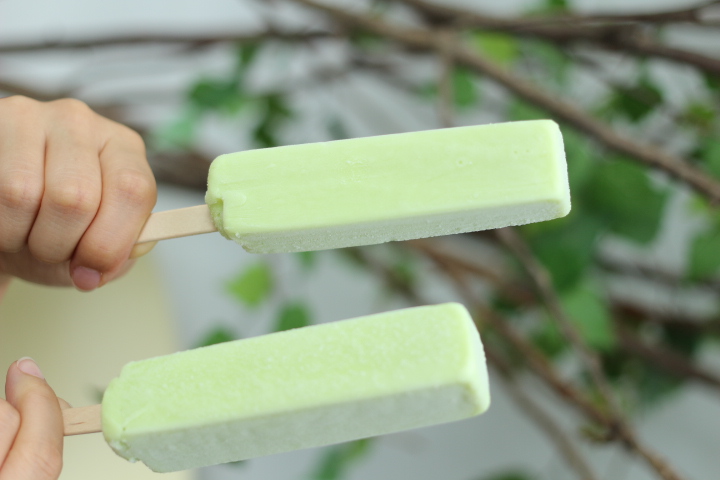
Melona, made by Binggrae, launched in 1992 as a cantaloupe/honeydew-flavored ice bar, and it's the single most recognizable Korean convenience store ice cream in the world at this point. Binggrae's R&D team developed the flavor using chamae (Korean melon) as a stand-in for fresh melon, itself not a common ice cream flavor in Korea either — so the "why melon" story is really a story about a team chasing a specific fresh-fruit taste and improvising with what was actually available.
It worked. First-year sales hit 21 billion won, and by 1994 Melona was the best-selling ice cream in Korea's domestic market, moving over 280 million bars that year alone. Today it comes in far more flavors than the original: strawberry, mango, banana, coconut, purple yam (ube), blueberry, grape, and pistachio, plus a Hawaii-exclusive piña colada.
The export story is the real headline here. Melona reached Hawaii in 1995, expanded to the US mainland in 2016, and Binggrae began actually manufacturing it domestically in the US in 2017 — the first Korean ice cream company to do so — through an OEM deal with a Washington-based producer. It's now a genuine Costco seasonal staple (spring through summer, sold as a 24-count mixed box, roughly $10-15), and Binggrae's US overseas sales hit a record 160 million units in 2024, up 14.3% year over year. Melona alone is estimated to account for the large majority of Korean ice cream sales in the US.
Current price in Korea: as of August 2026, convenience-store bars in this class list at ₩1,200–1,500 — Jaws Bar has sat at ₩1,500 at CU since a July 2023 rise — and a 2+1 promotion takes the effective price to roughly ₩800–1,000 a bar.
A Melona T-shirt — the bar itself can't ship frozen, the green wrapper canAffiliate link. As an Amazon Associate, EpicKor earns from qualifying purchases at no extra cost to you.
The Real Line-Up: What's Actually Iconic
Beyond Melona, the genuinely well-documented convenience store classics — the ones Korean nostalgia media and industry coverage consistently name — look like this:
| Product (Korean name) | Maker | Launched | What makes it distinctive |
|---|---|---|---|
| Melona (메로나) | Binggrae | 1992 | Melon-cream bar, Korea's top ice cream export |
| Jaws Bar (죠스바) | Lotte | 1983 | Shark-shaped, black exterior, strawberry interior — named after the movie |
| Screwbar (스크류바) | Lotte | 1985 | Spiral shape, eaten by twisting in the mouth, not biting |
| Watermelon Bar (수박바) | Lotte | 1986 | Green rind/red flesh two-tone bar with chocolate "seeds" made of coated peanuts |
| Bravocon (부라보콘) | Haitai | 1970 | Korea's first cone-format ice cream; ~2 years of R&D |
| Gugucon (구구콘) | Lotte | 1990 | Chocolate cone with marshmallow, caramel, and peanuts |
| World Cone (월드콘) | Lotte | 1986 | Korea's #1 selling ice cream overall since 1996; deliberately oversized vs. rivals |
| Papico (빠삐코) | Lotte Food | 1974 | Not a bar at all — a soft frozen chocolate-milk pouch you bite and squeeze |
A couple of corrections worth making up front: "Guava Bar" and a product sometimes called "Jorangi" are commonly misremembered as convenience-store classics, but neither checks out as a real, currently-sold icon — the closest real match to the second one is Joanna, a bulk home-tub ice cream brand, not a single-serving bar. If you go looking for either by name in Korea, you won't find them on the shelf.
One genuinely fun anecdote: Bravocon's cone format was reportedly so novel in 1972 that visiting North Korean officials, during inter-Korean Red Cross talks that year, mistook it for an American product. And World Cone's whole marketing hook in 1986 was simply being visibly bigger than its rivals — deliberately sized so shoppers could tell the difference at a glance in the freezer case.
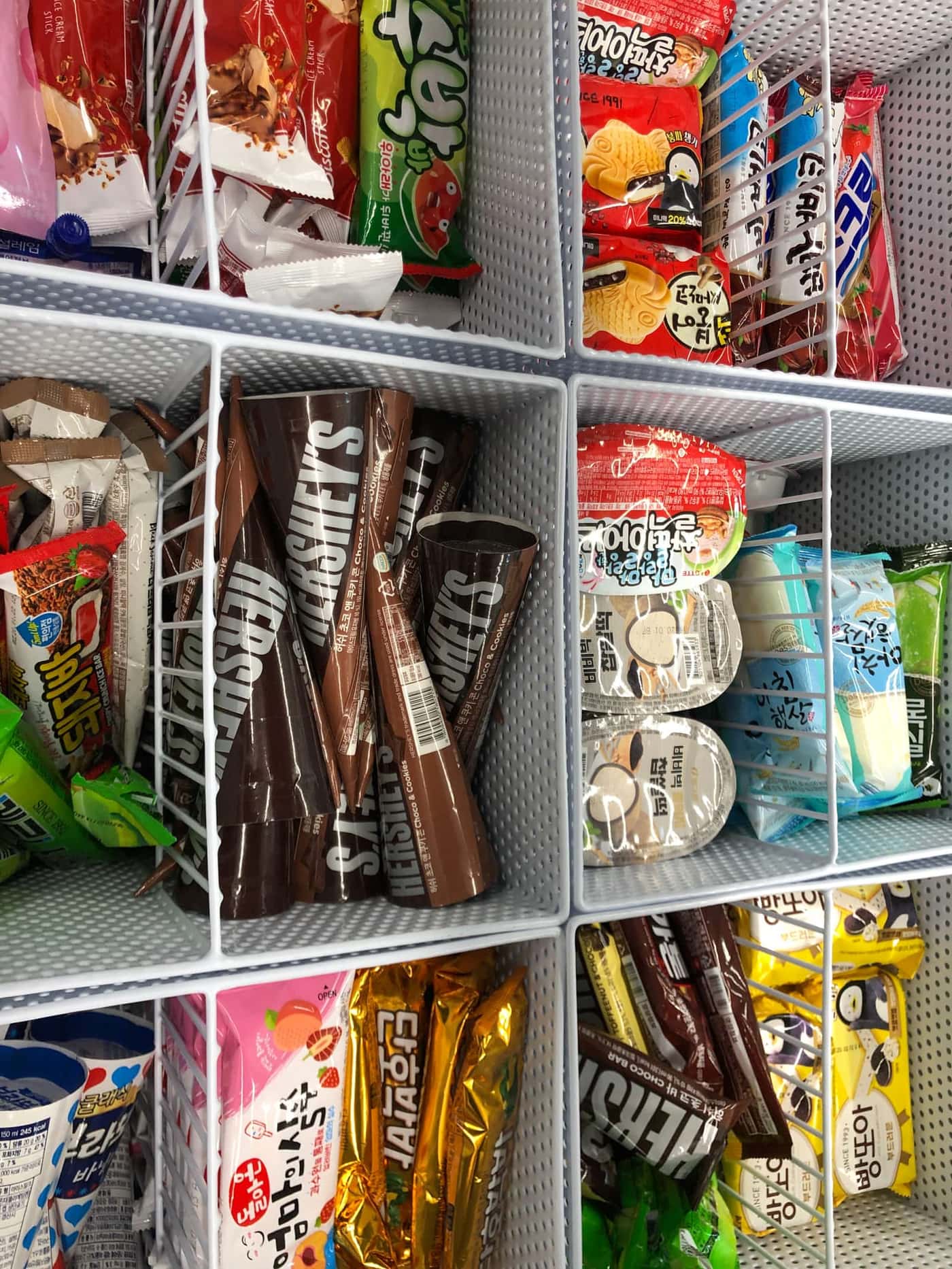
Want to recreate the fridge-raid feeling at home? As an Amazon Associate, EpicKor may earn from qualifying purchases. Browse a Korean snack box to try Korean convenience-store flavors before your trip, or to keep the habit going after you're back.
The Eating-Method Novelty: Papico and the Twist
Two items on this list are genuinely unlike a normal ice cream bar, and they're worth trying specifically for the format, not just the flavor. Papico (빠삐코), launched in 1974, isn't a bar at all — it's a soft-frozen chocolate-milk pouch with no stick, eaten by biting a corner off and squeezing or sucking it out. It also comes in "white sour" and Sicilian lemon variants. Screwbar, meanwhile, is a spiral-shaped bar specifically meant to be twisted and rotated in your mouth as you eat it, rather than bitten straight through like everything else in the case.
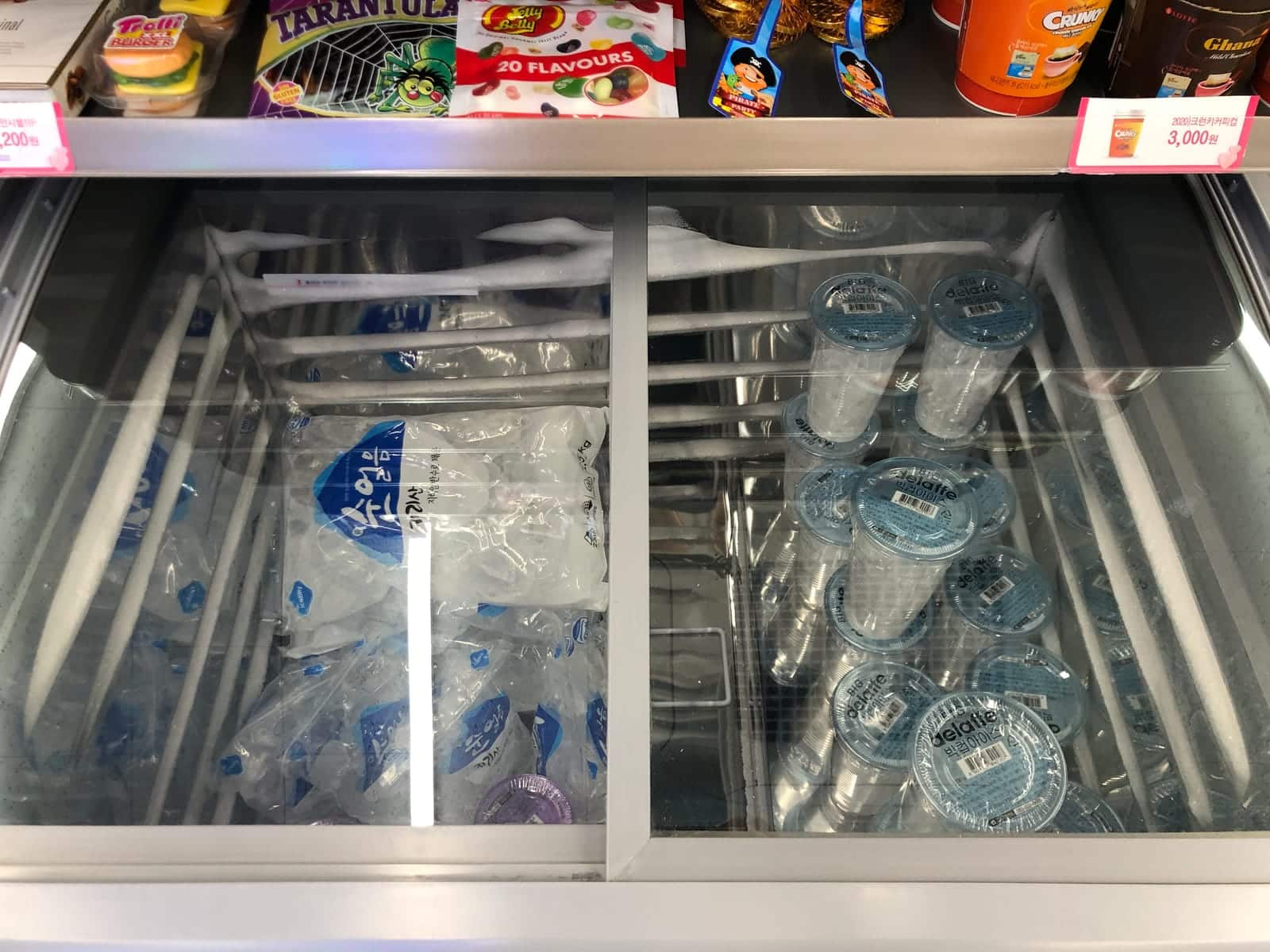
Related but genuinely different from packaged ice cream: the ice cup (얼음컵). This isn't a slush machine — it's just a cup of plain ice you buy empty, then fill yourself with a drink (coffee, soda, whatever) to make an instant iced beverage. It sounds almost too simple to matter, but it's been CU's single best-selling item by volume for multiple consecutive years running, moving 67 million units in 2015 alone. It started as a supporting accessory product and became a genuine bestseller in its own right.
The Legacy Bars Are Changing Owners As You Read This
Here's a genuinely current news hook: Haitai's ice cream division — maker of Bravocon, plus long-running favorites like Nougat Bar (누가바, 1974), Baboomba (바밤바, 1976), Twin Bar (쌍쌍바, 1979), and Pola Pop (폴라포, 1983) — is being absorbed into Binggrae. The board decision was made January 13, 2026, with the merger finalized April 1, 2026, ending Haitai Ice Cream's independent existence after 56 years. Binggrae had already acquired a stake in Haitai back in 2020. If you've grown up with any of those legacy names, they're changing corporate hands right around now, even if the packaging on the shelf looks the same.
Why the Freezer Case Looks the Way It Does
Part of what makes this category fun to explore is how much of it is genuinely old. Bravocon (1970), Papico (1974), Nougat Bar (1974), Baboomba (1976), Twin Bar (1979), Jaws Bar (1983), Screwbar (1985), and both Watermelon Bar and World Cone (1986) all predate Melona by years, sometimes decades. What Melona actually did wasn't invent the convenience-store ice cream bar — it turned that already-established Korean format into something that could travel, by picking a flavor distinctive enough to be memorable outside Korea and backing it with real overseas manufacturing investment. Most of its freezer-case neighbors never got that same export push, which is exactly why a foreign visitor is far more likely to have heard of Melona than of Bravocon, even though Bravocon came first by more than two decades.
Practical Buying Advice
The single most useful thing to know: check the freezer door or shelf tag for a small "1+1" or "2+1" sticker before assuming the listed price is what you'll actually pay. As of mid-2026, 7-Eleven alone was reportedly running these deals across roughly 120 ice cream SKUs at once, and GS25 and CU run similarly frequent promotions, especially concentrated at the start and end of each month.
Typical individual pricing runs ₩1,200–2,000 per bar or cone as of August 2026, often effectively halved under an active promotion. Soft-serve from the counter machine, where available, is usually under ₩1,000 and is a completely separate category from the packaged freezer bars.
The category is also genuinely growing, not stagnant: Korea registered 72 new ice cream and shaved-ice brands in the most recent tracked year, a 16.1% growth rate against a 6.9% dining-industry average, with zero deregistrations. Recent launches back that up — GS25's "Frozen Sorbet" sold over a million units within a month, CU's "Banana Bar" moved roughly 50,000 units in three weeks, and health-conscious "zero sugar" versions of Jaws Bar and Watermelon Bar are now real, purchasable options if you want the nostalgia without the sugar. A "seedless, 0-calorie" Watermelon Bar variant launched around mid-2024 specifically targeting shoppers who love the classic but are watching sugar intake.
A standard Korean convenience store setup splits ice cream across two zones: a glass-door chest or upright freezer near the entrance stocked with packaged bars, cones, and sandwiches, and often a separate soft-serve machine near the register for a same-day treat. Tourists tend to check only one of the two and miss half the actual selection.
Planning a Korea trip around snacks? As an Amazon Associate, EpicKor may earn from qualifying purchases. A small insulated bag is genuinely useful if you're stocking up on convenience-store ice cream to bring back to a hotel room.
Frequently Asked Questions
Q: What is the most famous Korean convenience store ice cream? Melona, made by Binggrae since 1992, is the most internationally recognized — it's sold at Costco in the US and accounts for the large majority of Korean ice cream sales there.
Q: Why do Korean convenience stores have so many ice cream deals? Promotions like 1+1 (buy one get one) and 2+1 (buy two get one) are extremely common for packaged ice cream specifically, running across dozens of SKUs at once at major chains. Always check for a small sticker on the freezer before assuming the shelf price is final.
Q: What is an "ice cup" at a Korean convenience store? It's a cup of plain ice sold empty, meant to be filled with your own drink to make an instant iced beverage. It's not a slush machine — and it's been one of CU's best-selling single items for years.
Q: Is Melona the same thing as a regular ice cream bar? Yes in format, but the flavor is distinctive — a honeydew/cantaloupe cream taste that's unusual for ice cream in most Western markets, which is part of why it stood out enough to become an export success.
Q: What's changing about Korean ice cream brands in 2026? Haitai's ice cream division, maker of classics like Bravocon and Nougat Bar, formally merged into Binggrae on April 1, 2026, ending 56 years as an independent company.
The Bottom Line
Korean convenience store ice cream rewards actually paying attention to the freezer case instead of grabbing the first familiar-looking bar: the promotions are real money saved, the format novelties (Papico, Screwbar) are worth trying specifically because nothing at home works quite like them, and half the "classic" brands on the shelf are quietly changing corporate hands or getting healthier reformulations while you're not looking.
Next time you're in a GS25 at midnight, skip the tourist instinct to grab whatever's familiar. Check for the sticker first.
Sources and further reading:
- Melona (Wikipedia)
- Haitai Ice Cream's merger into Binggrae (KB Think, Jan 2026)
- Melona at Costco (Costco Cakes)
- EpicKor Korean convenience store food guide
- EpicKor guide to samgak kimbap
Convenience store ice cream is part of EpicKor's Korean convenience store guide — the four chains compared, current prices, and what each product actually is.
Also in the section: Yonsei Cream Bread and Viyott.
You Might Also Like
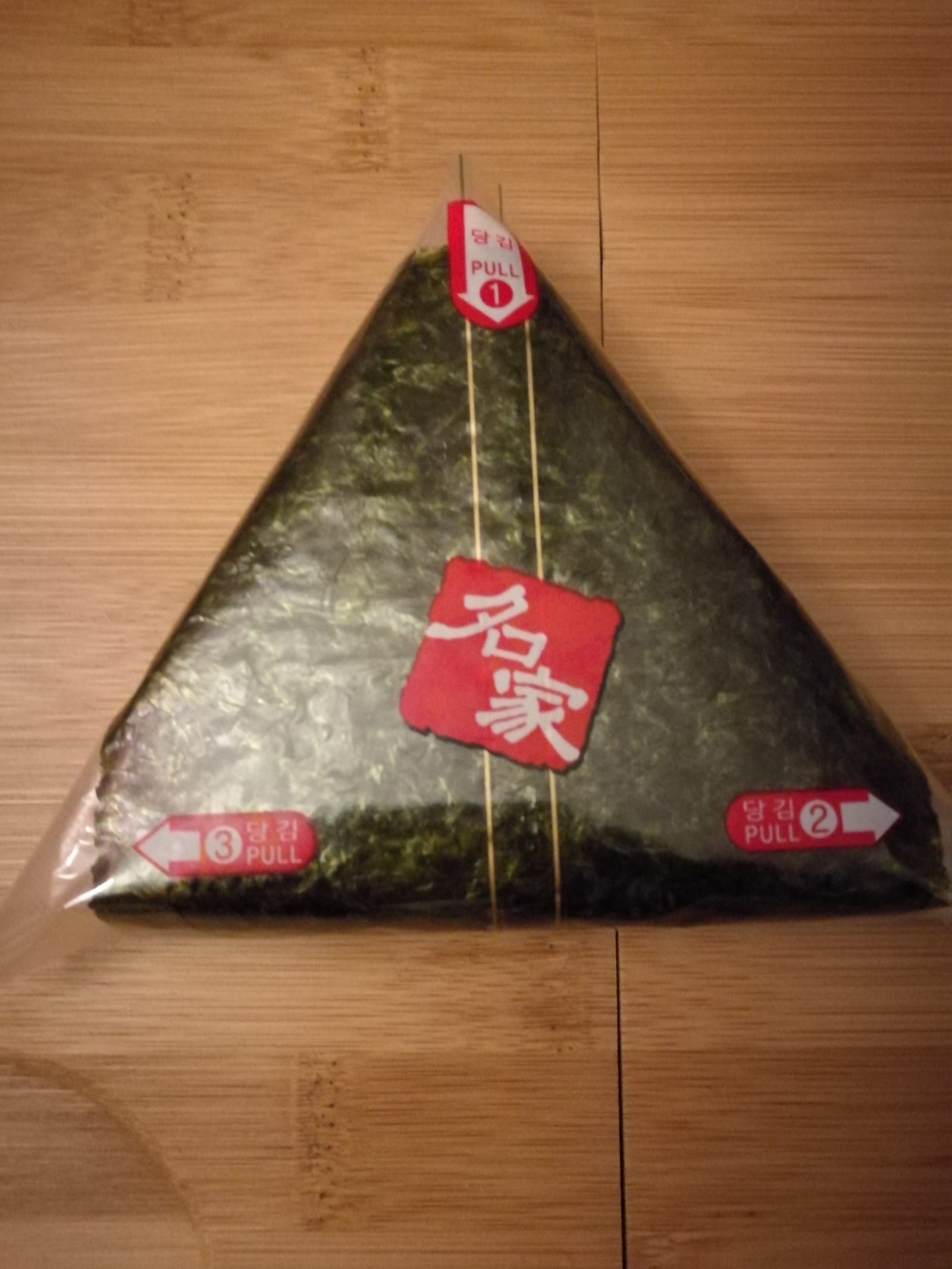
Samgak Kimbap (Triangle Kimbap): The Engineering Behind Korea's Favorite Snack
Samgak kimbap's plastic wrapper is a small feat of engineering: numbered pull tabs keep the seaweed crisp until the exact moment you eat it.
Korean Snacks Guide: What to Buy, Taste, and Pack
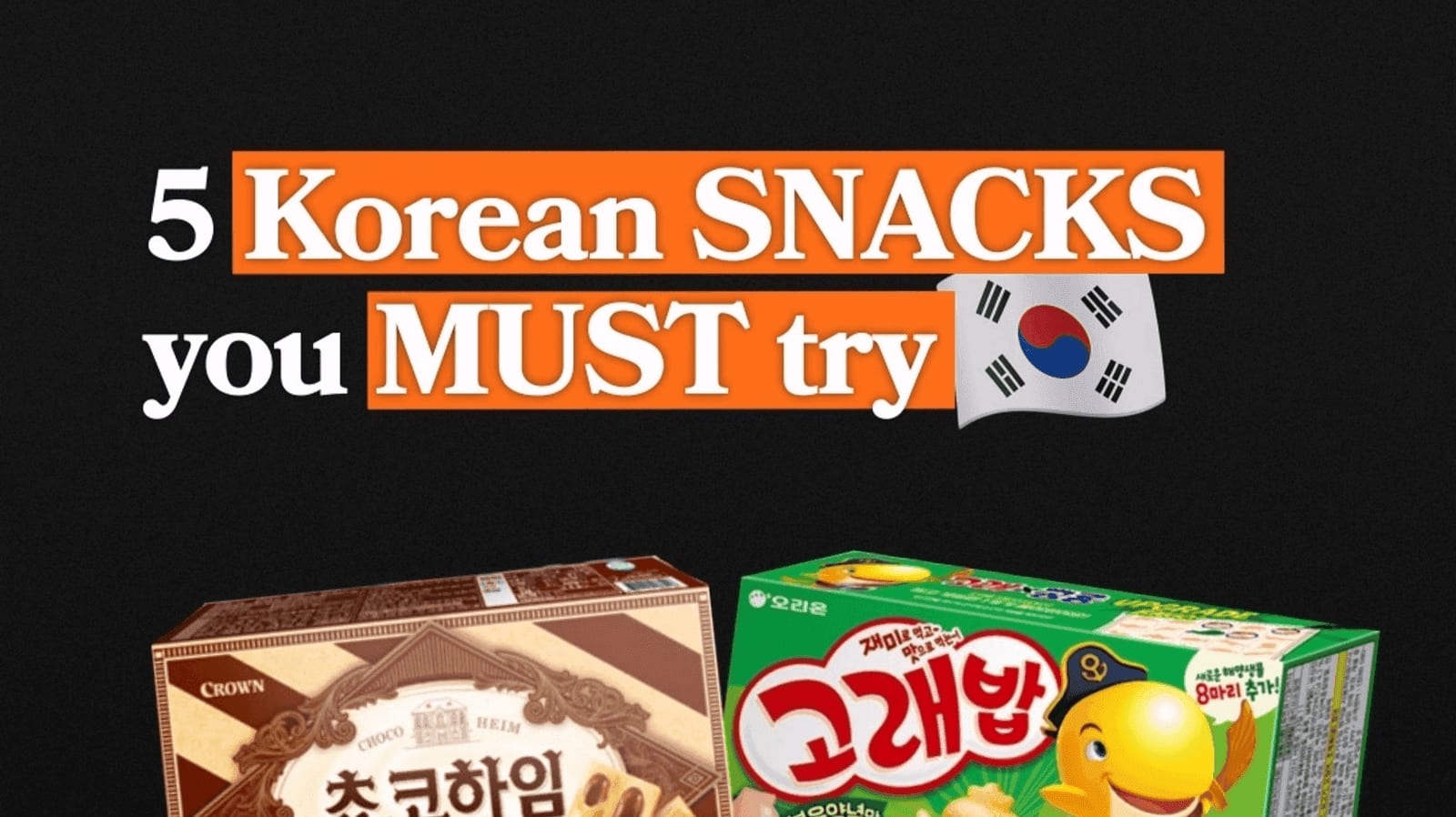
A practical Korean snacks guide comparing Turtle Chips, honey-butter flavors, seaweed snacks, convenience-store finds, souvenirs, and packing tips.
Postick: The Korean Snack That Used to Come With a Ketchup Packet
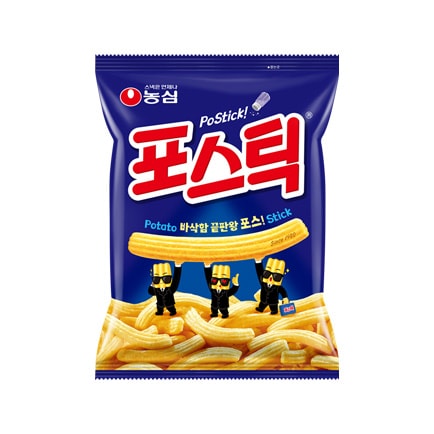
Postick (포스틱) has been on Korean shelves since 1980, it is only 23% potato, and it shipped with a ketchup sachet until the sachet got too expensive. What it costs now, and the ramyun-powder trick Koreans use on it.