Jeju Lava Tubes in 2026, Korea: Manjanggul Reopened After Two and a Half Years, How Foreigners Book Geomunoreum, and the Closed Caves That Open 4–18 October
Last updated: September 2026. Fees, hours, booking rules and closing days are from Jeju Province's World Heritage Office pages for Manjanggul and Geomunoreum and the Visit Jeju Korean listing, read on 16 September 2026; the reopening details are from Gukje News, Jeju Sori and Yonhap (29–30 May 2026); bus times are from Jeju's bus information system; festival programmes are from the 2026 World Heritage Festival's official site. Sources are listed at the end.
Jeju's lava tubes are the part of the island's UNESCO listing you can walk into, and for two and a half years the main one was shut. Manjanggul (만장굴) closed after a rockfall at its entrance on 29 December 2023 and reopened on 30 May 2026, after a ₩12.1 billion renovation that laid a walkway along its whole public section. Several English pages still describe it as closed, or describe the old uneven floor.
The other half of a lava-tube day is Geomunoreum (거문오름), the volcanic cone whose lava flow made Manjanggul and the other caves. It is a guided walk with 50 people per departure, closed every Tuesday, and booked from the first day of the previous month. Its Korean booking page has a "Foreigners Only" button that lets you book with a Google account, which no English guide we found mentions. And from 3 to 18 October 2026 Jeju's World Heritage Festival opens caves that are normally closed to everyone.
This guide gives the fees, the booking rules, the buses and the festival dates, and what English guides still get wrong.
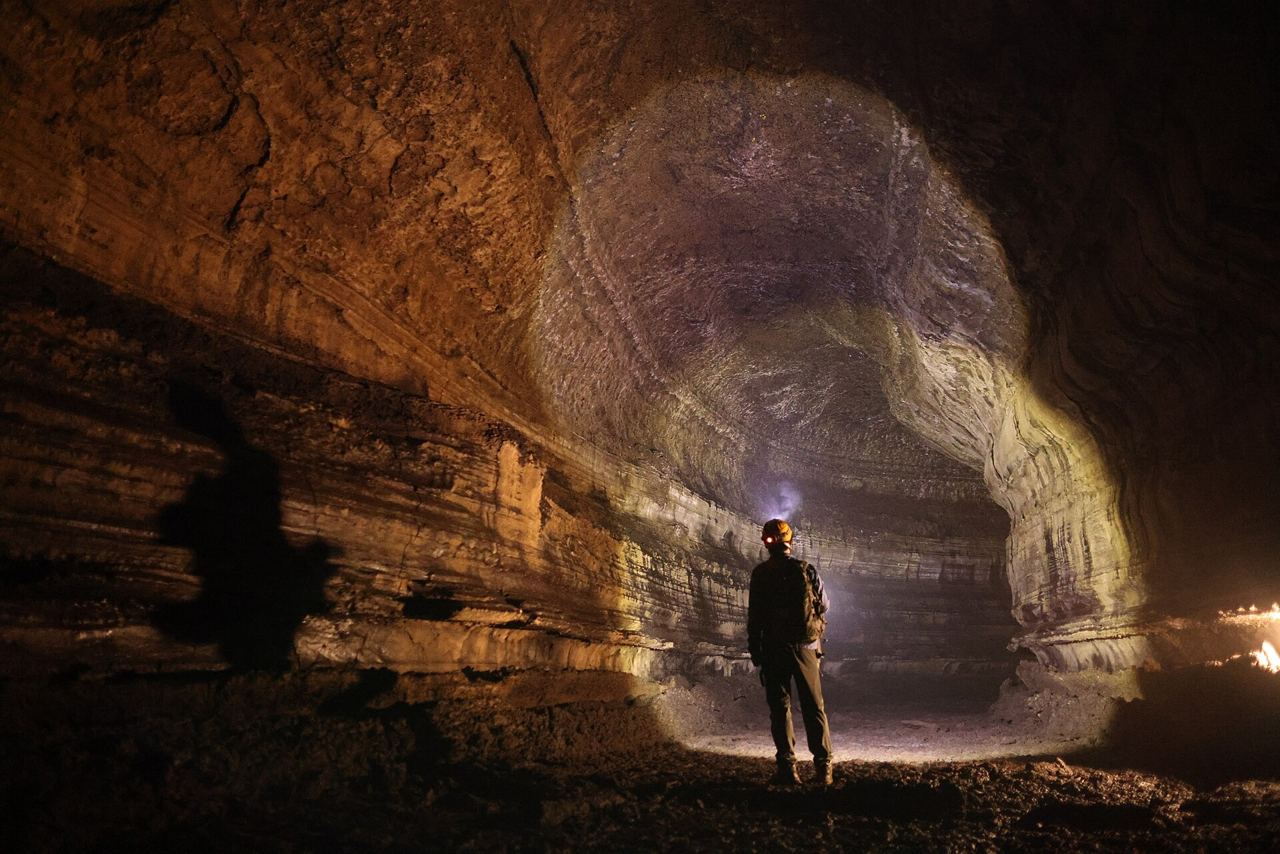
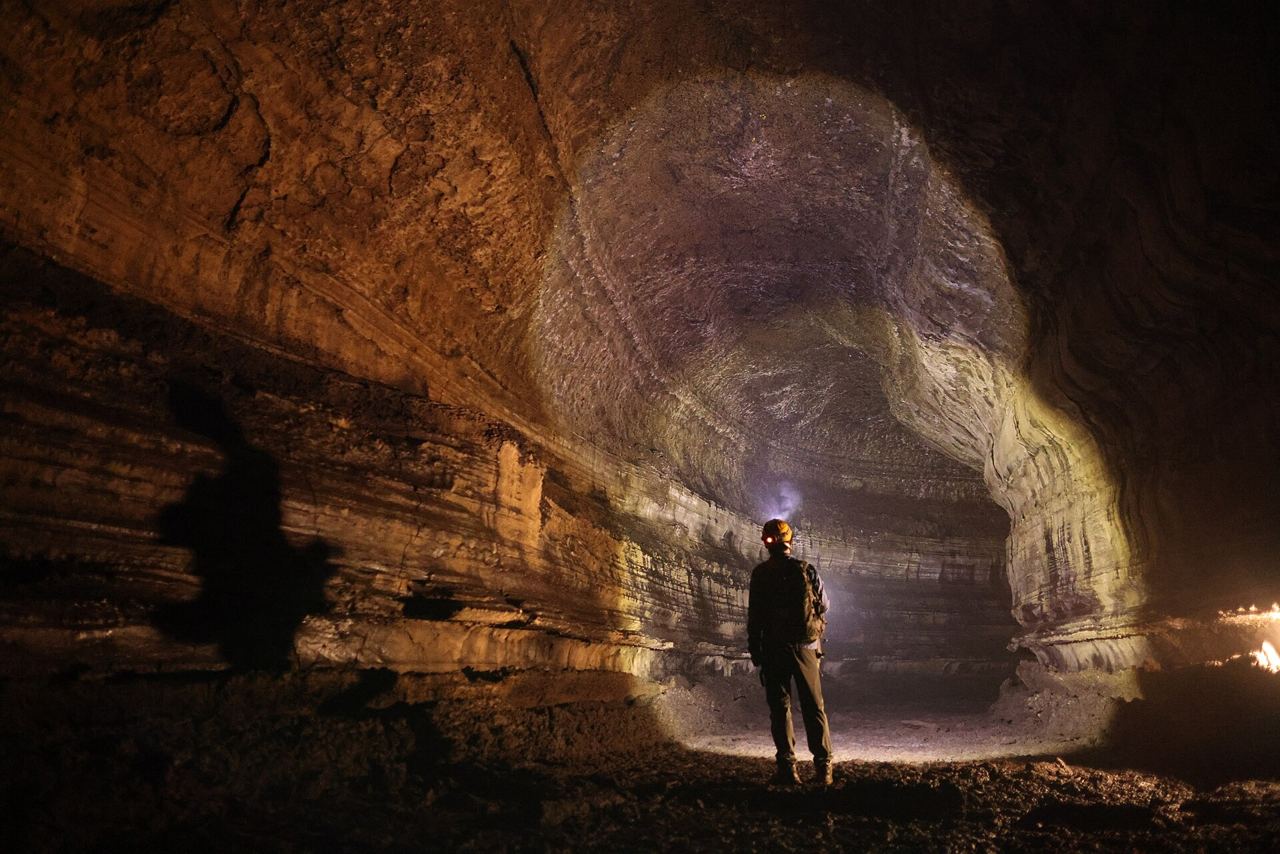
Manjanggul's main passage, photographed in 2022, before the renovation added a walkway along the public section. The tunnel here is up to 18 m wide and 23 m high. Photo: 강형원, Wikimedia Commons, CC BY 4.0.
Jeju's own Manjanggul page lists a lantern first under what to bring, and the new LED lighting is dimmer than before: a Black Diamond Spot 400-R headlamp recharges by USB and keeps both hands free on the damp walkway. As an Amazon Associate, EpicKor earns from qualifying purchases.
Quick Guide: Jeju's lava tubes in 2026
| Manjanggul (만장굴) | Geomunoreum (거문오름) | |
|---|---|---|
| Status | Open again since 30 May 2026; about 1 km of a 7.4 km tube is public | Open by booking; guided walks on a volcanic cone |
| Adult fee | ₩4,000 (youth 13–24 and soldiers ₩2,000, children 7–12 ₩2,000) | ₩2,000 (youth, soldiers and children ₩1,000) |
| Hours | 09:00–18:00, last ticket 17:00 | Departures 09:00–14:00, every 30 minutes, 11 a day |
| Closed | First Wednesday of each month | Every Tuesday, Seollal and Chuseok (25 Sep 2026) |
| Booking | None; walk in | From 09:00 on the 1st of the previous month until 17:00 the day before; 50 per slot; same-day spaces at the door if any are left |
| Foreign visitors | Same as everyone | "Foreigners Only" button on the booking page, sign in with Google |
| Inside | About 10–15°C all year | No toilets on the trail, no food except sweets |
| Phone | 064-710-7903 | 064-710-8980~1 (09:00–17:00) |
Columbia Women's Arcadia II packable rain jacket — the "raincoat and warm jacket" on Jeju's list, in one The cave stays near 14°C, and Geomunoreum's forest trail has no shelter when an east-coast shower comes through; this waterproof shell packs into its own pocket for the bus between the two. As an Amazon Associate, EpicKor earns from qualifying purchases.
See the Columbia Women's Arcadia II jacket on AmazonManjanggul: what reopened, and what it costs
Manjanggul is part of the Geomunoreum Lava Tube System, which UNESCO inscribed in 2007 as part of "Jeju Volcanic Island and Lava Tubes". The whole tube is about 7.4 km long; visitors enter by the second entrance and walk about 1 km upstream, ending at a lava column about 7.6 m tall, which Jeju describes as among the largest known. The main passage is up to 18 m wide and 23 m high.
It closed on 29 December 2023 after rock fell near the entrance. The province spent ₩12.1 billion on a safety and visitor-access project finished in March 2026, and reopened the cave on 30 May 2026. What changed:
- A walkway now runs along the whole public section, with safety structures where the rockfall happened. A World Heritage Office official told reporters, the day before reopening, that once you are down the entrance stairs, even a stroller is easy to push.
- The lighting is now dimmer LED, to protect the cave.
- The temperature on that visit was about 14°C; Yonhap notes that even in midsummer the cave stays at 10–15°C, like the inside of a fridge. Bring a layer.
Fees and rules, from the province's Manjanggul page:
- Adults (25–65) ₩4,000, youth (13–24) and soldiers ₩2,000, children (7–12) ₩2,000; groups of 10 or more pay ₩3,000 / ₩1,500 / ₩1,500. The page does not list exemptions, so do not assume seniors get in free.
- Open 09:00–18:00, tickets and entry until 17:00 (Visit Jeju's Korean listing).
- Closed the first Wednesday of every month. In October 2026 that is 7 October, in the middle of the festival.
- Free parking for 135 vehicles.
- Free guided talks, 09:00–16:00; sign up on the spot.
- No high heels, no pets, no food. The page's own packing list: a lantern, trainers, a raincoat or hat for rain, and a warm jacket.
The walk is about 2 km there and back on the walkway; most English guides allow about an hour. The entrance has stairs down into the tube, so a wheelchair cannot get in unaided; the province does not publish a wheelchair statement.
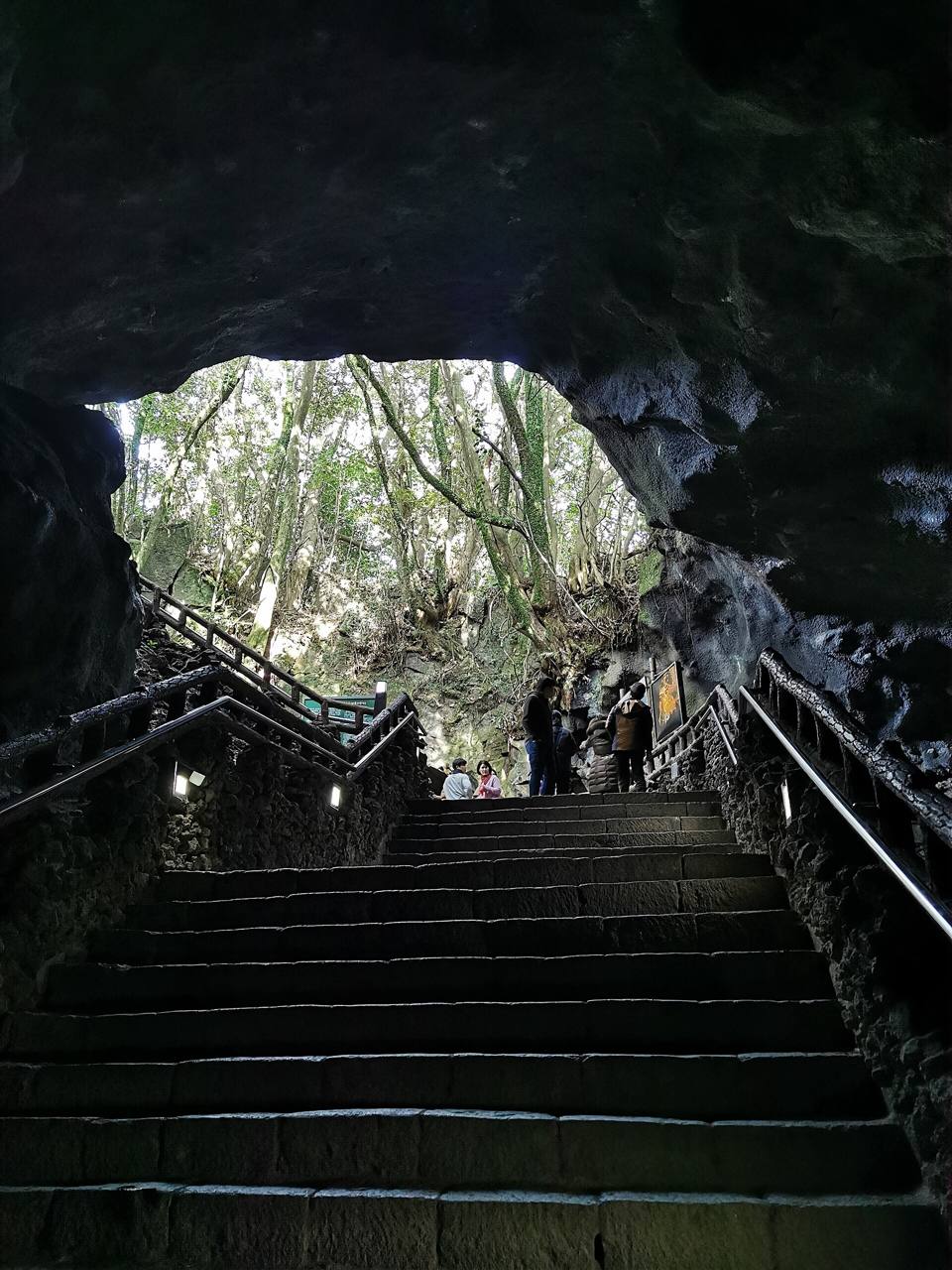
The climb back out of Manjanggul's second entrance in 2020. The stairs are still the only way in; the renovation added a walkway beyond them. Photo: AhmadElq, Wikimedia Commons, CC BY-SA 4.0.
Geomunoreum: the booking rules in full
Geomunoreum is a 456 m forested cone near the World Natural Heritage Centre in Seongyo-ro, Jocheon. It was designated a natural monument in 2005 and inscribed by UNESCO in 2007. You cannot wander in: every visit is booked for a set departure from the centre, and most visitors walk with a guide.
When and how many. Departures run from 09:00 to 14:00, every 30 minutes, 11 times a day, with 50 places per departure, so up to 550 a day. English guides that say "450 a day" or "the last tour is at 13:00" are working from an older schedule.
When you can book. Online and phone bookings open at 09:00 on the 1st of the month before your visit and close at 17:00 the day before, first come, first served. The province's own example: for 10 May, you can book from 09:00 on 1 April. If places are left, you can turn up the same day and join at the desk; phone first to ask.
When it is closed. Every Tuesday is a "nature rest day". It is also closed on Seollal and Chuseok (25 September in 2026), and closes completely in bad weather.
Which route you can take. There are three courses, and the late departures limit your choice:
| Course | Length | Time | Available at 13:30 and 14:00? |
|---|---|---|---|
| Summit course (정상코스) | 2.1 km | About 1 hour | Yes |
| Crater course (분화구코스) | 5.0 km | About 2 hours 30 minutes | Yes |
| Full course (전체코스) | 6.7 km | About 3 hours 30 minutes | No |
Self-guided walking is also not allowed on the 13:30 and 14:00 departures. If you want the full course, book 13:00 or earlier.
How a foreigner books. The booking page (jeju.go.kr/wnhcenter) has three buttons above the calendar. The "Foreigners Only" button leads to a page that says "You can reserve after [Login with Google]" — so instead of the Korean phone verification most Korean booking sites demand, you sign in with a Google account. The page also carries a short English summary of the rules. Groups of 20 or more must book by phone. Confirmations arrive by KakaoTalk or text.
Rules that catch people:
- Cancel and you cannot rebook the same date. To change the date or number of people, phone the office instead.
- Arrive 10 minutes before your slot to buy your ticket and collect the entry pass. Walking in without a pass means removal and a penalty under the heritage law.
- No slippers or high heels, and no pets. Wear proper walking shoes.
- No food, except emergency sweets and chocolate.
- No toilets on the trail. Use the one at the centre before you set off.
Fees: adults ₩2,000; youth, soldiers and children ₩1,000; groups of 10 or more pay ₩1,600 / ₩800. Children 6 and under enter free. One detail for older travellers: the exemption for people 65 and over applies to Koreans only, so a foreign visitor aged 65 pays the adult fee.
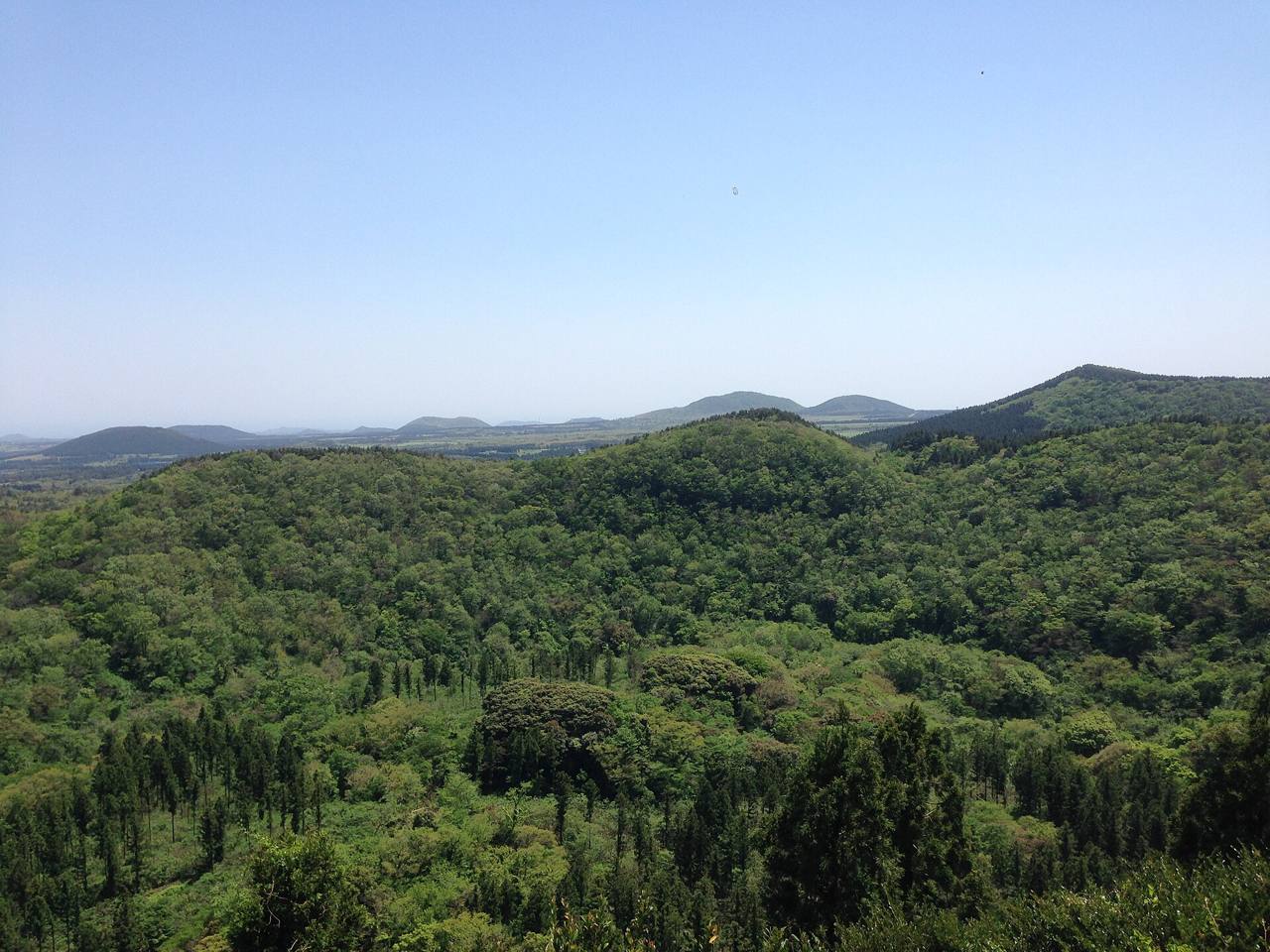
The forested crater of Geomunoreum, the cone whose lava flows formed Manjanggul and the other caves. Photo: Liszt uhm, Wikimedia Commons, CC BY-SA 3.0 (2016).
Getting there without a car
Both sites are on the east side of Jeju City, and both can be reached by bus from Jeju Bus Terminal, but the second leg to Manjanggul is the trap.
- Geomunoreum: take bus 211, 221 or 222 (the Beonyeong-ro routes; 212 goes via Gyorae and does not stop there) to the Geomunoreum Entrance stop (거문오름입구), then walk about 10 minutes to the World Natural Heritage Centre, where tours start. The heritage centre itself (its exhibition costs ₩3,000) is closed the first Tuesday of each month.
- Manjanggul: take bus 201 along the coast road to Gimnyeong (김녕), about 59 minutes from the terminal, then change to 711-1 or 711-2 for the 10-minute ride to the cave. From Gimnyeong, the 711-1 leaves at 06:52, 08:03, 09:43, 10:52, 11:45 and 13:14, and the 711-2 at 06:45, 08:35, 10:25, 11:38 and 12:55. Going back, the last timetabled buses leave Manjanggul for Gimnyeong at 12:25 (711-2) and 13:40 (711-1).
- After 14:20, the 711 buses become call-only "Opseo buses" (옵서버스). You phone the call centre (1877-8257, last call 20:30) and a bus comes to you. A visitor who planned an afternoon cave visit around the timetable will find no scheduled bus. The province's own page gives the walk from the Manjanggul entrance stop as about 30 minutes.
There is no direct bus between the two sites. Without a car, the realistic order is Geomunoreum in the morning, Manjanggul before the timetabled 711 buses stop, or a taxi for the middle leg. Our Jeju car rental guide covers the other option.
The World Heritage Festival, 3–18 October 2026
Jeju's World Heritage Festival (세계유산축전 – 제주 화산섬과 용암동굴) runs from Saturday 3 to Sunday 18 October 2026, opening with a ceremony and outdoor performance on a special stage at Manjanggul from 19:30 to 20:40 on 3 October. This year is also the 80th anniversary of Manjanggul's discovery in 1946. The festival is the only time the public can enter some of the caves that are normally closed.
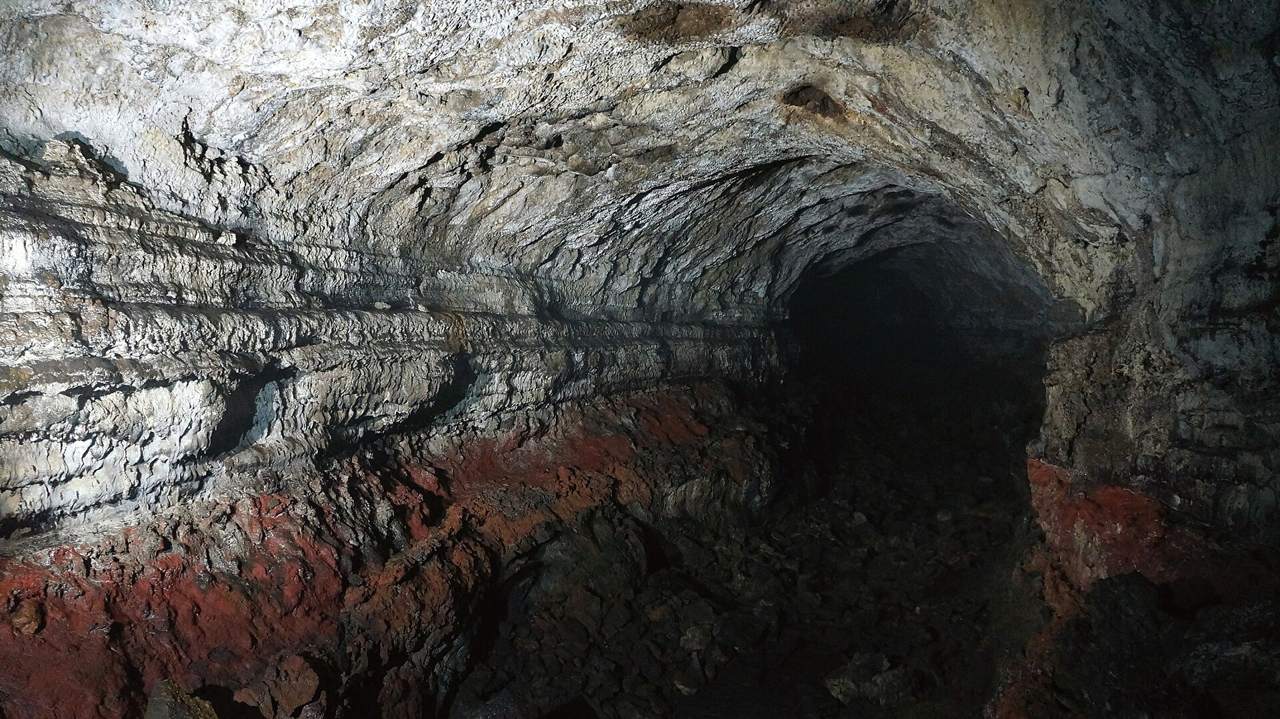
One of the upstream caves of the Geomunoreum Lava Tube System, closed to the public outside special programmes. Photo: Cultural Heritage Administration, Wikimedia Commons, KOGL Type 1 (2018).
The programmes, from the festival's own site:
- Special Expedition (특별탐험대): small-group trips into Bengdwigul (벵뒤굴), a 4.5 km maze-like tube with traces of human use, or into Manjanggul's first entrance and Gimnyeonggul (김녕굴). They run Thursday to Sunday only, between 4 and 18 October (nine days), five times a day, for 8 people (Bengdwigul) or 10 people (Manjanggul and Gimnyeonggul) at a time, ₩10,000 each, with transport and gear provided. English summaries that give "Wednesday, Friday and Saturday" are wrong. Booking opened on Ticketlink on 20 August, including foreigner-only listings, and when we checked in mid-September Ticketlink showed no remaining dates for any of these cave trips, so treat them as sold out unless places are released.
- Walking Tour: three routes of 5.7 to 9.2 km between the lava tubes, passing the closed caves from outside, on every festival day except Tuesdays (14 days), ₩5,000, open to "anyone in the world", with shuttle buses. Dates were still available in mid-September.
- Heritage Explorer Bus: 15–18 October, twice a day (09:00 and 13:00), 20 seats each; check the fee on Ticketlink.
- Manjanggul full-length expedition (7.4 km, 9–11 October): the six participants were chosen in August; it is closed.
Outside the programmes, the festival site at Manjanggul and Seongsan Ilchulbong has exhibitions and performances open to anyone. We found no notice that Manjanggul's normal 1 km visit or Geomunoreum's bookings change during the festival, but Manjanggul's monthly closure still falls on 7 October.
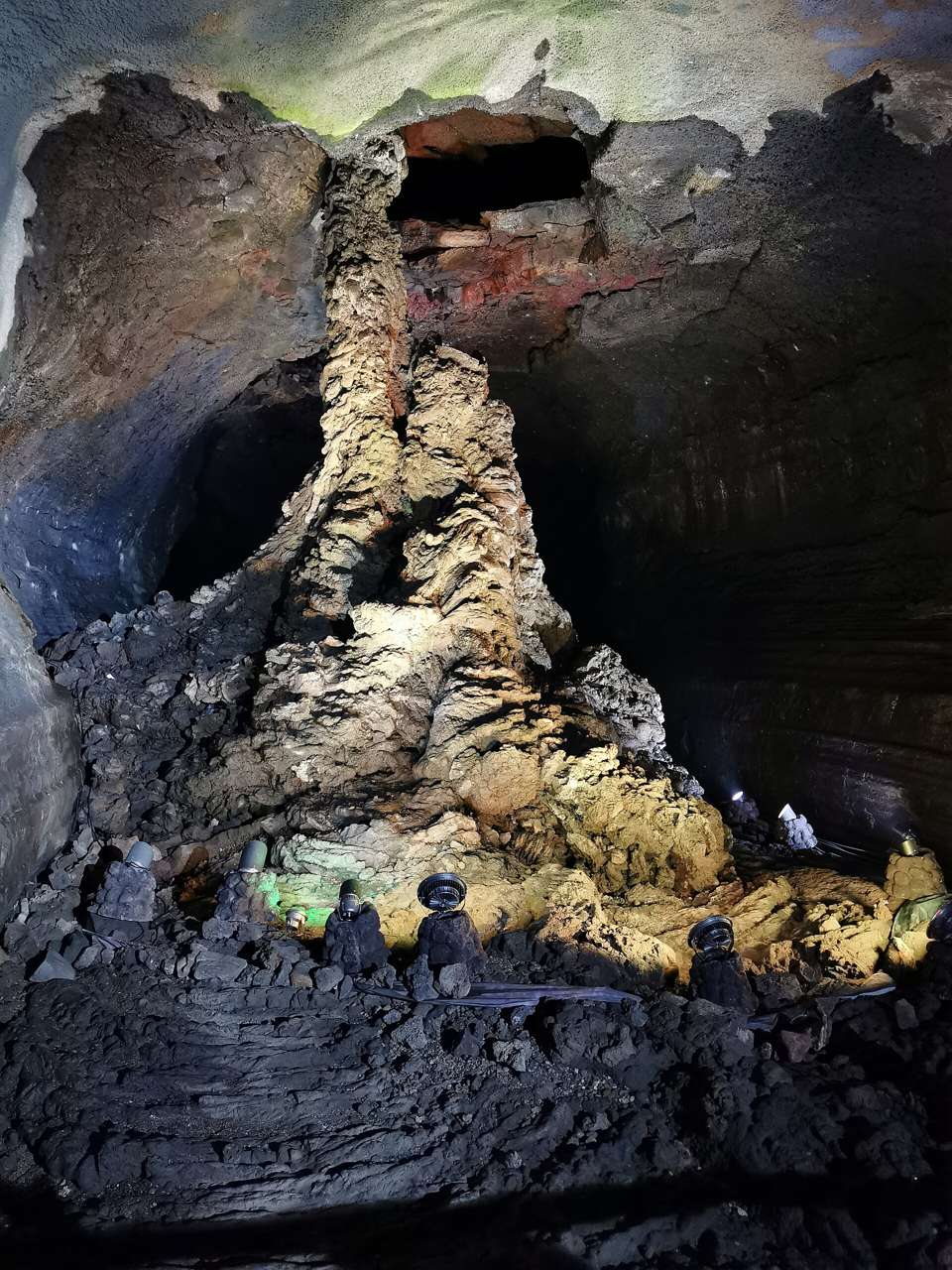
The lava column that ends Manjanggul's public section, about 7.6 m tall. Photographed in 2020, before the walkway renovation. Photo: AhmadElq, Wikimedia Commons, CC BY-SA 4.0.
The other caves you will see mentioned
Jeju's heritage office lists eight caves in the World Heritage lava tube system, and Manjanggul's 1 km is the only part open to ordinary visitors. Gimnyeonggul (705 m, also called Gimnyeong Sagul) and Bengdwigul are marked "closed to the public" and open only through programmes like the festival's. Yongcheondonggul and Dangcheomuldonggul, known for their limestone formations inside a lava tube, are also closed.
On the west side of the island, Hyeopjae and Ssangyong caves are lava tubes inside Hallim Park, a private garden park with its own ticket and hours (09:00 to between 16:30 and 17:30, depending on the season). They are not part of the World Heritage listing, and are a different trip from the east-side caves.
What English guides still get wrong
- "Manjanggul is closed." At least one English travel site still says the cave is closed until August 2025. It reopened on 30 May 2026.
- The numbers. English Wikipedia gives the tube as 8.9 km long and 30 m high; the province's page says about 7.4 km and 23 m.
- Geomunoreum's schedule. Guides still say 450 visitors a day, tours only until 12:30 or 13:00, or bookings from two days before. The official schedule is 11 departures from 09:00 to 14:00, booked from the 1st of the previous month.
- Course lengths. The official courses are 2.1, 5.0 and 6.7 km.
- How foreigners book. Most English pages say "call". The booking page has a Google sign-in for foreigners.
- The 65+ exemption. At Geomunoreum it is for Korean citizens only.
- The afternoon bus. No English guide we found warns that the Manjanggul connecting buses become call-only after 14:20.
Before you go
- Book Geomunoreum on the 1st of the previous month if your date is a weekend or holiday; choose 13:00 or earlier for the full course.
- Avoid Tuesdays for Geomunoreum and the first Wednesday for Manjanggul (7 October, 4 November, 2 December 2026).
- Wear closed shoes and bring a layer for the cave, and use the toilet before the Geomunoreum walk.
- Plan buses around the 14:20 switch to call-only service, or combine the day with a rental car or taxi.
- For the rest of the trip, our Jeju, Busan or Gyeongju comparison, Jeju haenyeo guide and Korea festival calendar have more.
FAQ
Q: Is Manjanggul Cave open in 2026? Yes. It reopened on 30 May 2026 after closing on 29 December 2023 because of a rockfall at the entrance. About 1 km of the cave is open, now with a walkway, from 09:00 to 18:00 (last entry 17:00), closed the first Wednesday of each month.
Q: How much is Manjanggul's entrance fee? ₩4,000 for adults, ₩2,000 for youth aged 13–24, soldiers and children aged 7–12. Groups of 10 or more pay ₩3,000 and ₩1,500.
Q: How do foreigners book Geomunoreum? On Jeju Province's booking page (jeju.go.kr/wnhcenter), choose "Foreigners Only" and sign in with a Google account. Bookings open at 09:00 on the 1st of the previous month and close at 17:00 the day before; same-day places may be available at the door.
Q: Is Geomunoreum open on Tuesdays? No. Every Tuesday is a nature rest day, and it is also closed on Seollal and Chuseok and in bad weather.
Q: Can I visit Bengdwigul or Gimnyeonggul? Only through special programmes. During the World Heritage Festival (3–18 October 2026) small expeditions run Thursday to Sunday for ₩10,000, but these were fully booked by mid-September.
Q: How cold is Manjanggul? About 10–15°C all year, and about 14°C when reporters visited in May 2026. Bring a jacket even in summer.
Sources
- Jeju Special Self-Governing Province, World Natural Heritage Jeju: Manjanggul page (fees, closing day, parking, guided talks, what to bring, public section and column size), Gimnyeonggul and Bengdwigul pages; World Heritage Office: Geomunoreum visit guide, booking page and foreigner booking page (read 16 September 2026).
- Visit Jeju (Korean): Manjanggul opening hours and UNESCO listing; Hallim Park hours.
- Gukje News, Jeju Sori (30 May 2026) and Yonhap via Jnuri (29 May 2026): reopening date, ₩12.1 billion project, walkway, lighting, temperature, stroller access, 80th anniversary.
- Jeju bus information system (bus.jeju.go.kr): routes 201, 211, 212, 221, 222, 711-1 and 711-2, timetables and Opseo call-bus hours.
- 2026 World Heritage Festival – Jeju Volcanic Island and Lava Tubes (worldheritage.kr): dates, Special Expedition, Walking Tour, Explorer Bus and programme schedule; Jnuri and Sisa Journal (20 August 2026): booking on Ticketlink. Ticketlink availability checked 16 September 2026.
You Might Also Like
What a Doctor Costs in Korea Without Insurance (2026): ₩18,840 at a Clinic, ₩68,070 to Walk Into a Regional ER, and Why the 119 Ambulance Is Free
Korea's emergency-room access fee is not written in won. It is 812.28 relative value points times 2026's ₩83.8, making it ₩68,070 at a regional centre and ₩22,690 at a local one, against ₩18,840 at a clinic. The 119 ambulance is free.
Korean Ski Resorts 2026–27: Season-Pass Prices, the Rounds Closing This Month, and Why Konjiam's English Page Says ₩42,000 When Its Korean Page Says ₩72,000
Konjiam's English page quotes ₩42,000 for a two-hour lift ticket. Its Korean page says ₩72,000 — and that there is no on-site ticket window at all. Verified 26/27 season-pass prices and round deadlines for Muju, Konjiam, X6+, Phoenix and Yongpyong.
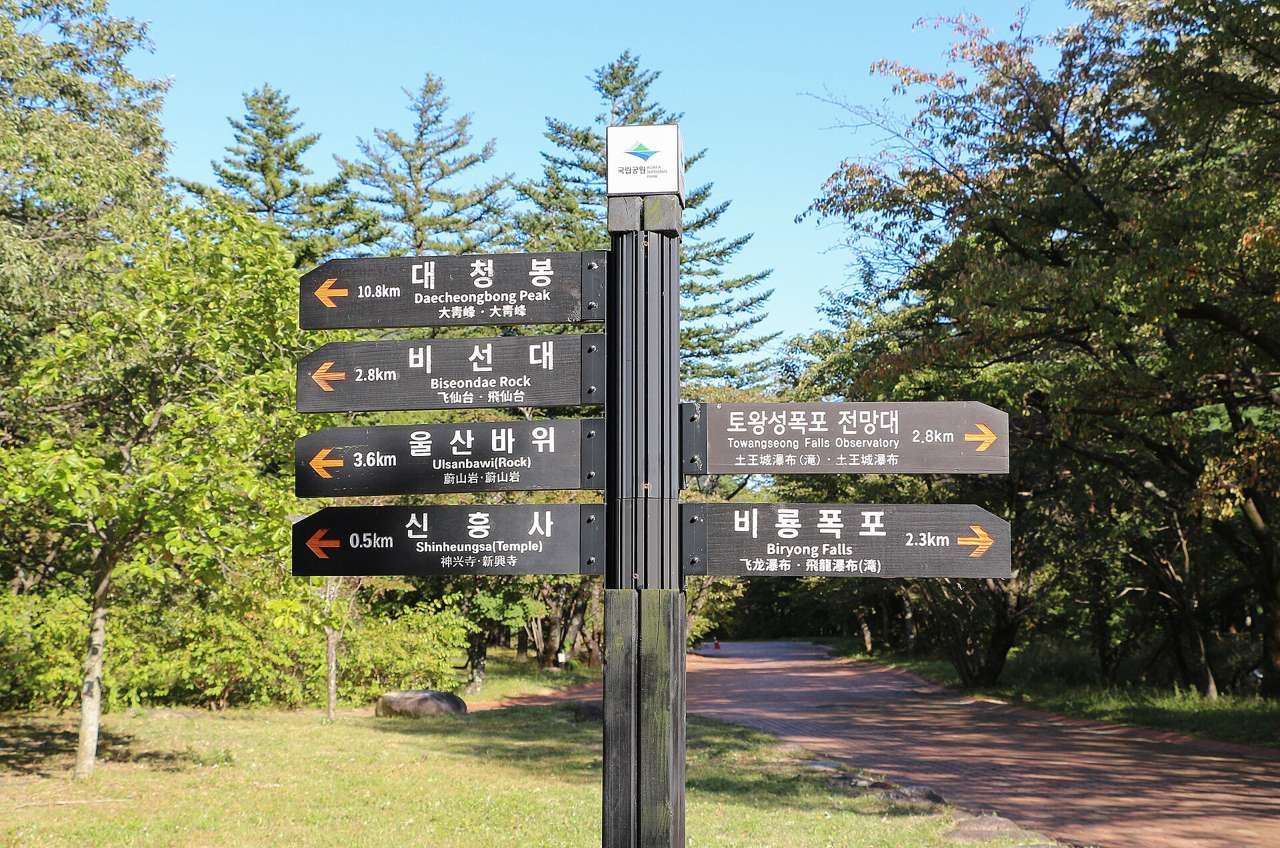
Korea National Park Trail Closures, Autumn 2026 (15 Nov–15 Dec): Which Seoraksan, Jirisan and Bukhansan Trails Shut, Which Stay Open, and the ₩200,000 Fine
From 15 November to 15 December, 18 Korean national parks close high trails for wildfire season: last autumn 146 sections, 653 km. Every route to Seoraksan's Daecheongbong and the Jirisan ridge traverse shut then; fines start at ₩200,000.