Haenyeo of Jeju: Korea's Free-Diving Sea Women, Explained
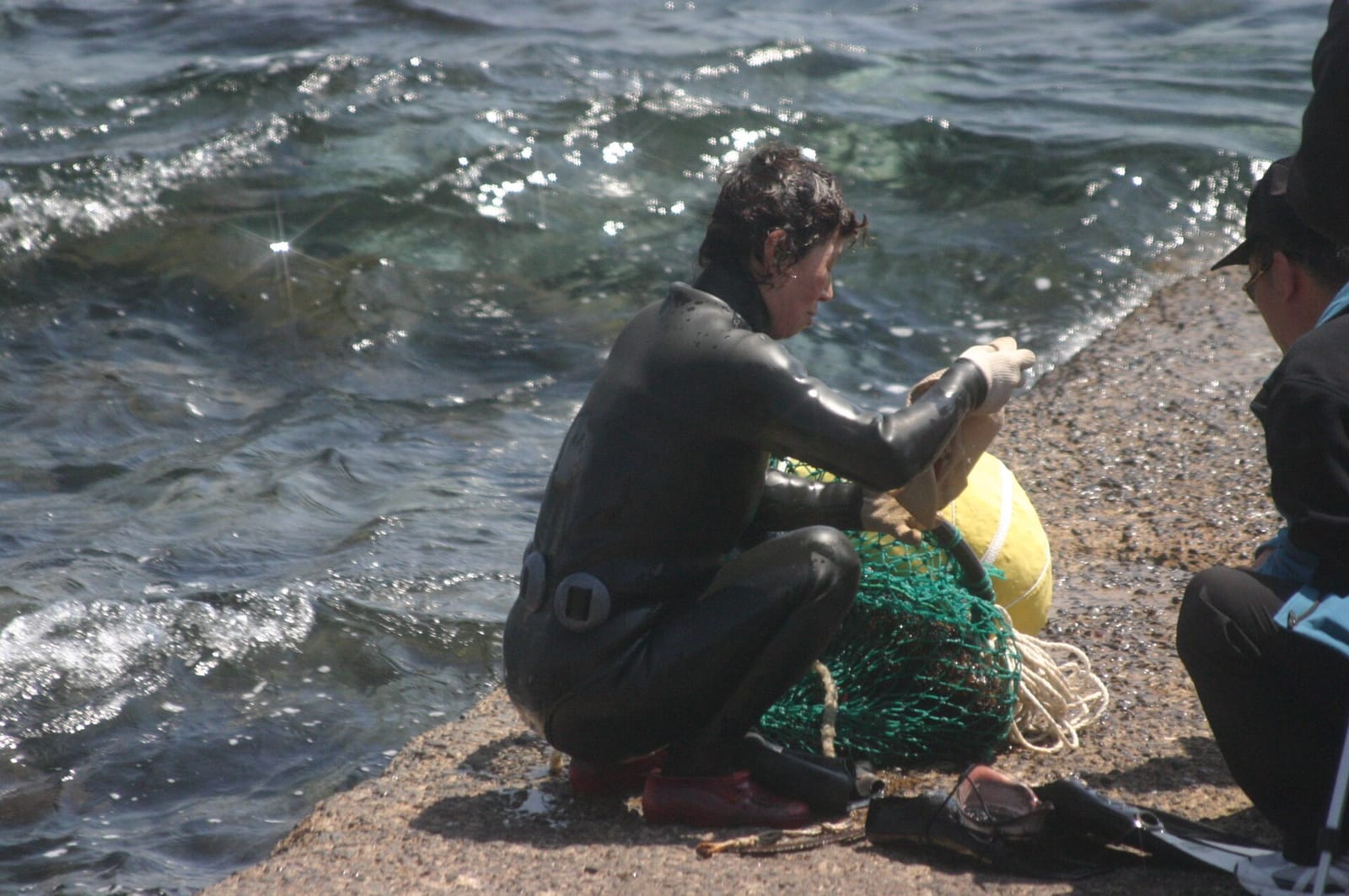
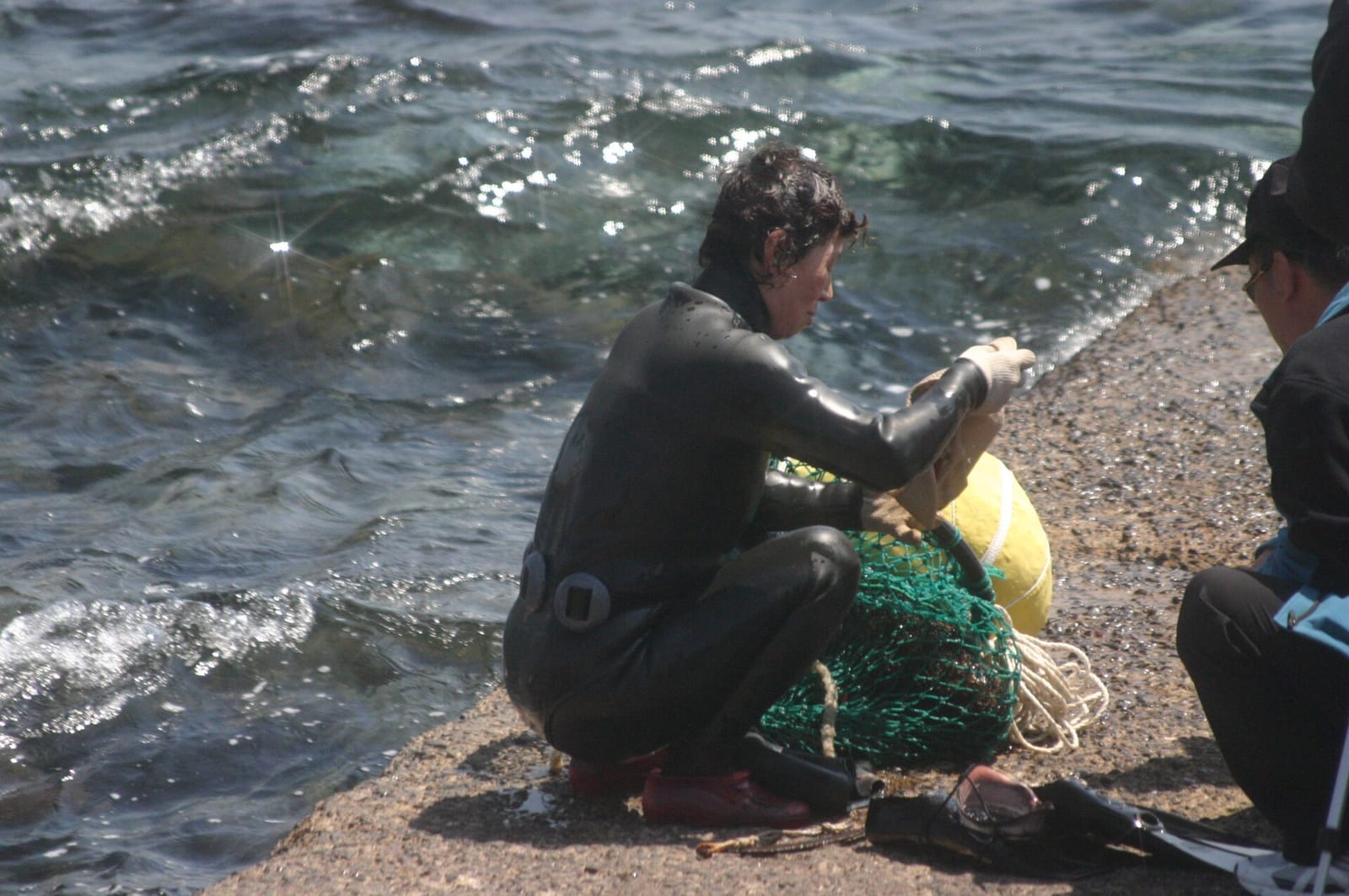
Stand on a rocky stretch of Jeju Island's coast in the morning and you may hear a sharp, whistling breath rise off the water. Locals call it sumbisori, the sound a haenyeo makes when she surfaces and empties her lungs after a dive. The haenyeo, literally "sea women," are Jeju's free-diving harvesters: women, many now in their sixties, seventies, and beyond, who descend on a single breath to gather abalone, sea urchin, conch, and seaweed, exactly as their mothers and grandmothers did.
They are one of Korea's most extraordinary living traditions, recognized by UNESCO, studied by physiologists, and quietly running one of the oldest women-led economies in Asia. This guide explains who the haenyeo are, how their world works, why their numbers are shrinking, and how to encounter them respectfully as a traveler.
Books about the Jeju sea women — compare on AmazonAffiliate link. As an Amazon Associate, EpicKor earns from qualifying purchases at no extra cost to you.
Who Are the Haenyeo?
Haenyeo are professional free-divers who harvest seafood from the waters around Jeju, Korea's volcanic southern island. They dive without oxygen tanks, typically working in depths up to around ten meters and holding their breath for a minute or more per dive, repeating this for hours in a working day, season and weather permitting.
Diving for seafood on Jeju is centuries old, and over time it became overwhelmingly women's work; by the modern era the haenyeo were the recognized breadwinners of many coastal households, an unusual arrangement in Korea's traditionally patriarchal society. The community that grew around this work, with its own rules, rituals, songs, and mutual aid, is what makes the haenyeo more than a fishing method.
That cultural whole is what the world formally recognized. The "Culture of Jeju Haenyeo (women divers)" was inscribed on UNESCO's Representative List of the Intangible Cultural Heritage of Humanity in 2016, and Korea has designated the haenyeo tradition as national intangible cultural heritage as well. In 2023 the Jeju haenyeo fisheries system also received recognition from the UN's Food and Agriculture Organization as a Globally Important Agricultural Heritage System, honoring its sustainable harvesting model.
How the Diving Actually Works
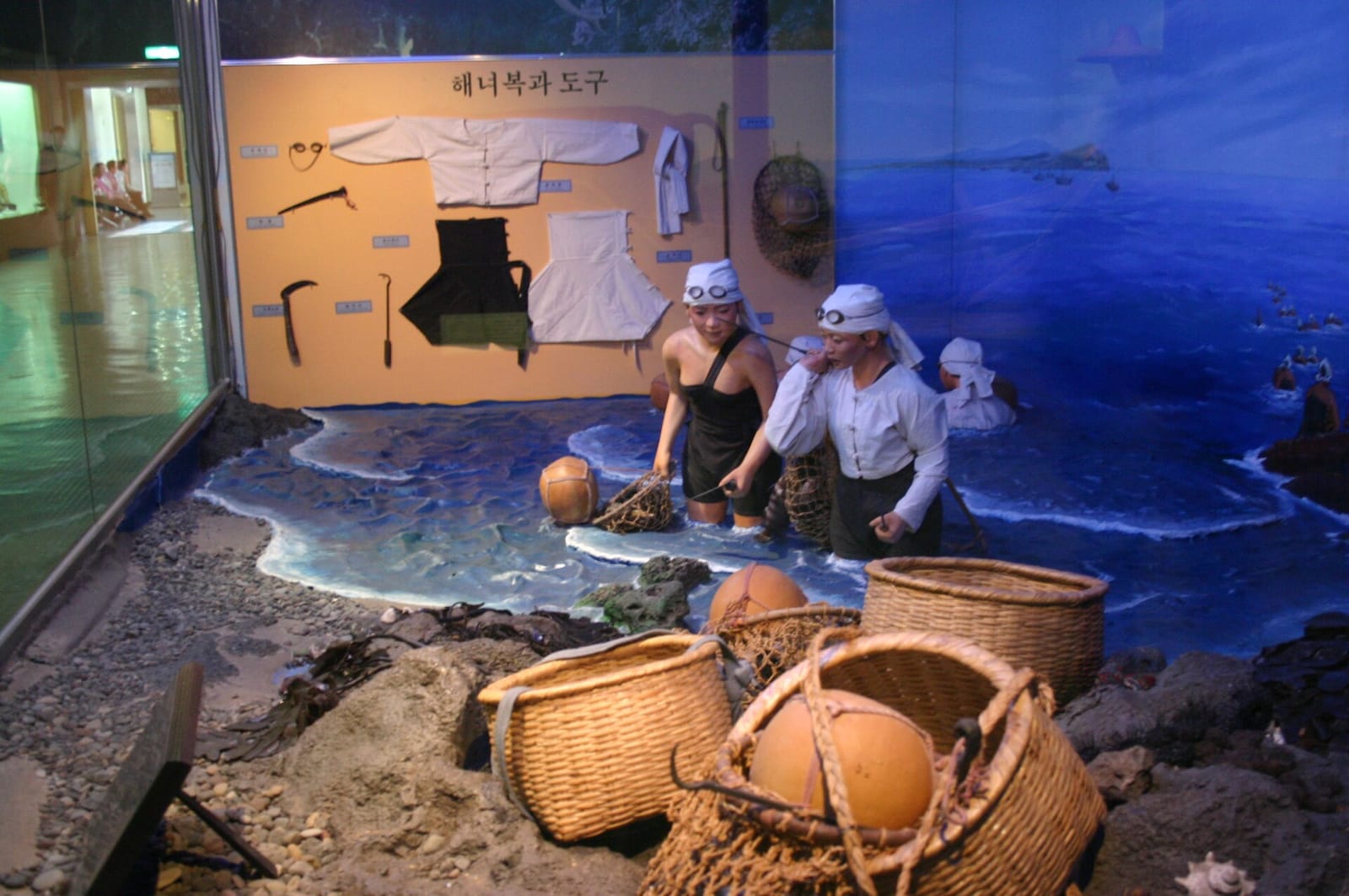
A haenyeo's toolkit is deliberately simple: a wetsuit (cotton mulot garments before the 1970s), a mask, fins, a weight belt, a bitchang pry tool for abalone, a net bag, and the orange tewak, a buoy she rests on between dives and that marks her position from shore.
The skill hierarchy is explicit. Haenyeo communities traditionally rank divers into three grades, and promotion is earned over years, by capability rather than by age alone.
| Rank | Korean | What It Means |
|---|---|---|
| Sanggun | 상군 | Top-grade divers who work the deepest water and lead the group's decisions |
| Junggun | 중군 | Mid-grade divers working intermediate depths |
| Hagun | 하군 | Newer or older divers who work shallow water near shore |
The rules that govern the water are collective. Village fishing cooperatives control who may dive where, seasons are closed to let stocks recover, undersized catch goes back, and the take is limited by lung capacity itself, a natural brake on overfishing. Researchers often describe the haenyeo as practicing sustainability centuries before the word existed, and that logic is central to their FAO recognition.
The Bulteok: A Society of Sisters
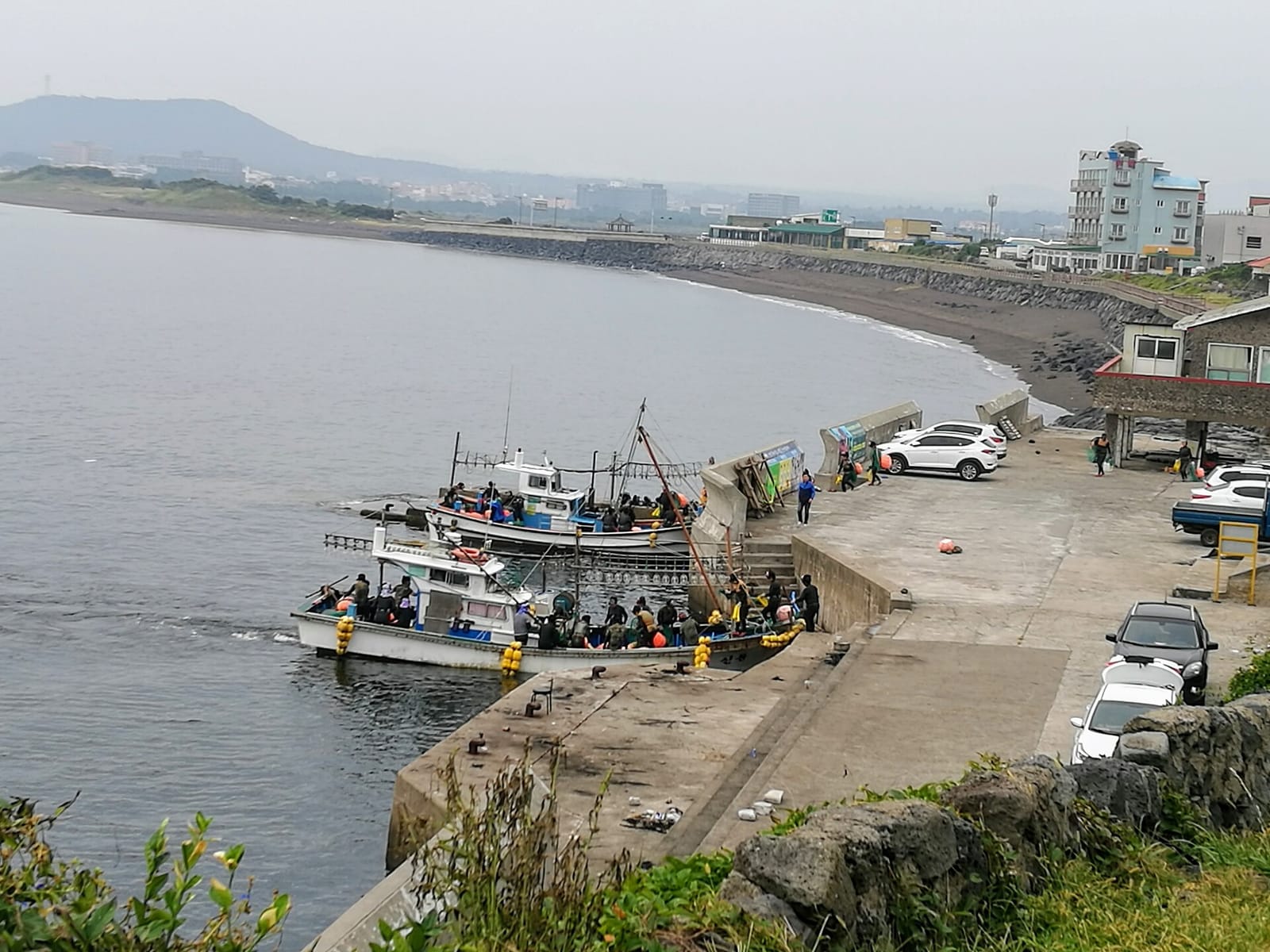
On shore, haenyeo life revolves around the bulteok, traditionally a low stone windbreak with a fire where divers changed, warmed up, and talked. The bulteok functioned as clubhouse, guild hall, and parliament: catch disputes were settled there, sea conditions debated, newcomers assessed, and profits and duties divided.
What outsiders often miss is how egalitarian and mutual the system is. Haenyeo dive in groups and watch each other constantly; the ocean punishes solo pride. Older divers who can no longer work deep water are not pushed out but shift to shallow zones, and communities set aside portions of harvest or income for members in hardship. The haenyeo sing famous rowing and work songs, hold shamanic rites for the sea god to open the season, and pass knowledge from senior women to juniors in the water itself.
It is a matrifocal world in a society that historically expected women elsewhere. That contrast, tough, salt-cured grandmothers running a maritime economy, is a large part of why the haenyeo have become a cultural symbol of female strength in Korea, celebrated in dramas, documentaries, and novels.
Bring the story home: As an Amazon Associate, EpicKor may earn from qualifying purchases. The haenyeo have inspired remarkable books, from novels to photo essays; browse books about the Jeju sea women if you want the full saga after this primer.
From Cotton Clothes to Wetsuits, and a Shrinking Sisterhood
Photographs from the mid-20th century show haenyeo diving in white cotton mulot garments, even in winter. Rubber wetsuits arrived around the 1970s and changed everything: longer working hours, deeper dives, bigger harvests, and less brutal cold, at the cost of new strains on aging bodies.
The harder change is demographic. In the 1960s, Jeju counted tens of thousands of active haenyeo; today official surveys count only a few thousand, and the large majority are past normal retirement age. The reasons are unsurprising: education opened other careers for island daughters, the work is dangerous and physically punishing, and marine stocks face pressure from warming waters and pollution.
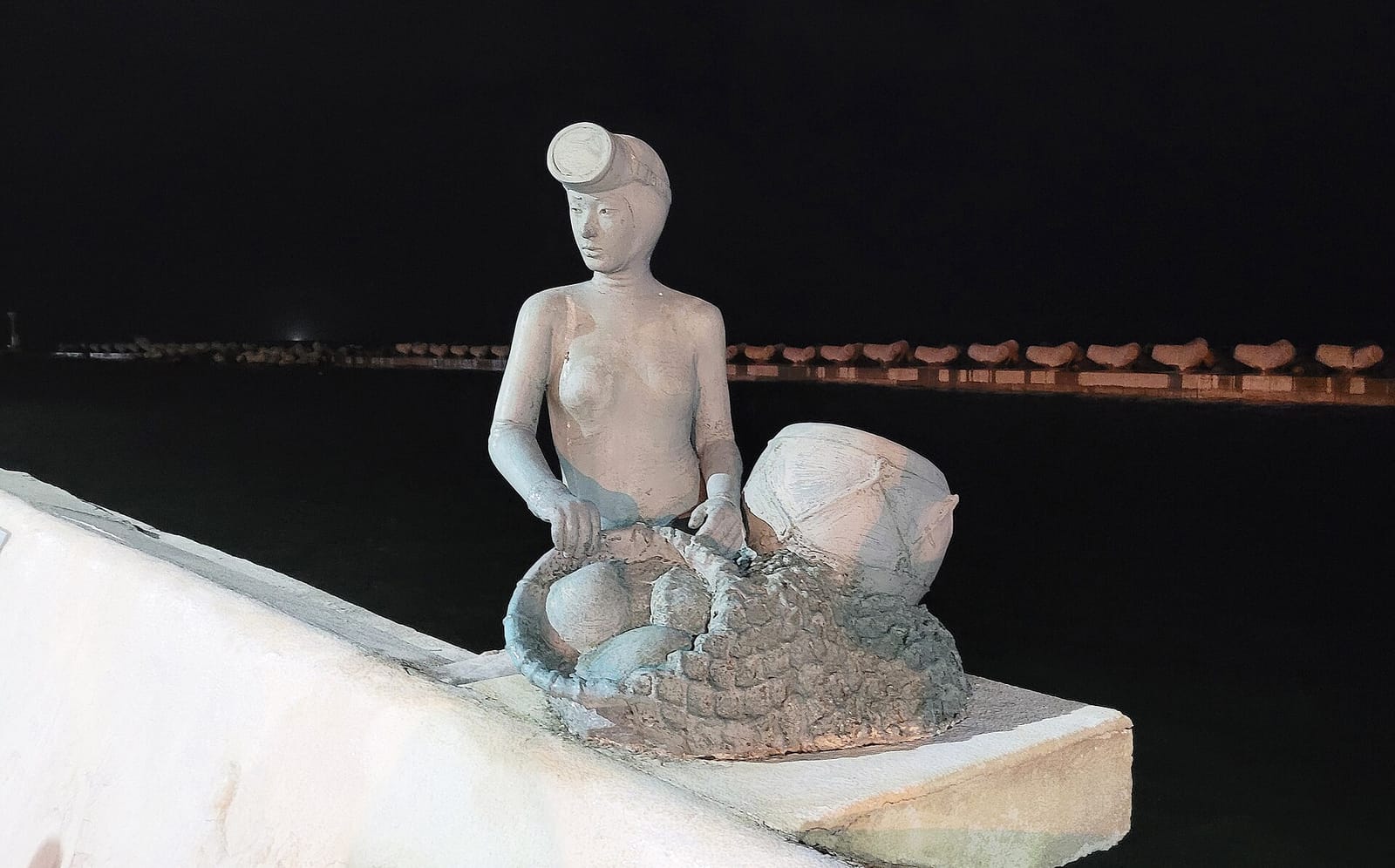
Jeju is fighting for the tradition rather than just archiving it. The island runs haenyeo schools, most famously in Hansupul, where applicants train to join village cooperatives; new divers, including younger women returning from mainland careers, join in small numbers each year. Whether recruitment can outpace retirement is the open question hanging over the culture's second century.
What Science Sees in the Sea Women
The haenyeo are not just a cultural treasure; they are a research subject. Physiologists have studied Jeju's divers for decades because they represent one of the world's longest-running natural experiments in human cold-water adaptation. Early studies documented how divers in thin cotton clothing tolerated winter water that would incapacitate most people, and more recent genetic and physiological research has examined how lifelong diving shapes cardiovascular responses, breath-hold capacity, and cold tolerance among Jeju women. Researchers are careful about how much is training and how much is heritable, but the consistent finding is that decades of daily diving produce measurable adaptation, and that the haenyeo's dive-response profile is exceptional for their age group by any global standard.
The other thing science and chefs agree on: the catch itself is superb. Haenyeo harvest is hand-picked, size-selected, and hours from the water when you eat it. The classic orders are jeonbokjuk (abalone rice porridge, Jeju's signature comfort food), raw or grilled abalone, seongge-guk (sea urchin and seaweed soup), fresh conch sliced thin, and mueo (octopus) dishes. Ordering any of these at a haenyeo-run eatery is the rare tourist transaction where the money lands directly in the diver's apron pocket, which is why every Jeju guide, including this one, tells you to eat your support.
Where to Encounter Haenyeo Respectfully
You can absolutely see haenyeo as a visitor, and your interest genuinely supports the culture, but the difference between appreciation and intrusion matters to working divers.
| Experience | Where | Notes |
|---|---|---|
| Haenyeo Museum | Hado-ri, northeastern Jeju | The definitive overview: tools, mulot clothing, bulteok life, oral histories |
| Diving demonstrations | Below Seongsan Ilchulbong | Scheduled performances by veteran haenyeo; check times locally on the day |
| Haenyeo-run seafood spots | Coastal villages such as those near Seongsan and Gujwa | Simple eateries where divers sell their own catch; the most direct support |
| Working shorelines | Rocky coasts island-wide, mornings | Watch from a distance; tewak floats offshore mean divers are below |
Field etiquette is simple. Do not photograph divers changing or resting without permission, keep drones away from working areas, never touch a tewak or net, and buy what they sell: a plate of fresh sea urchin from the woman who surfaced with it an hour ago is the best transaction on the island.
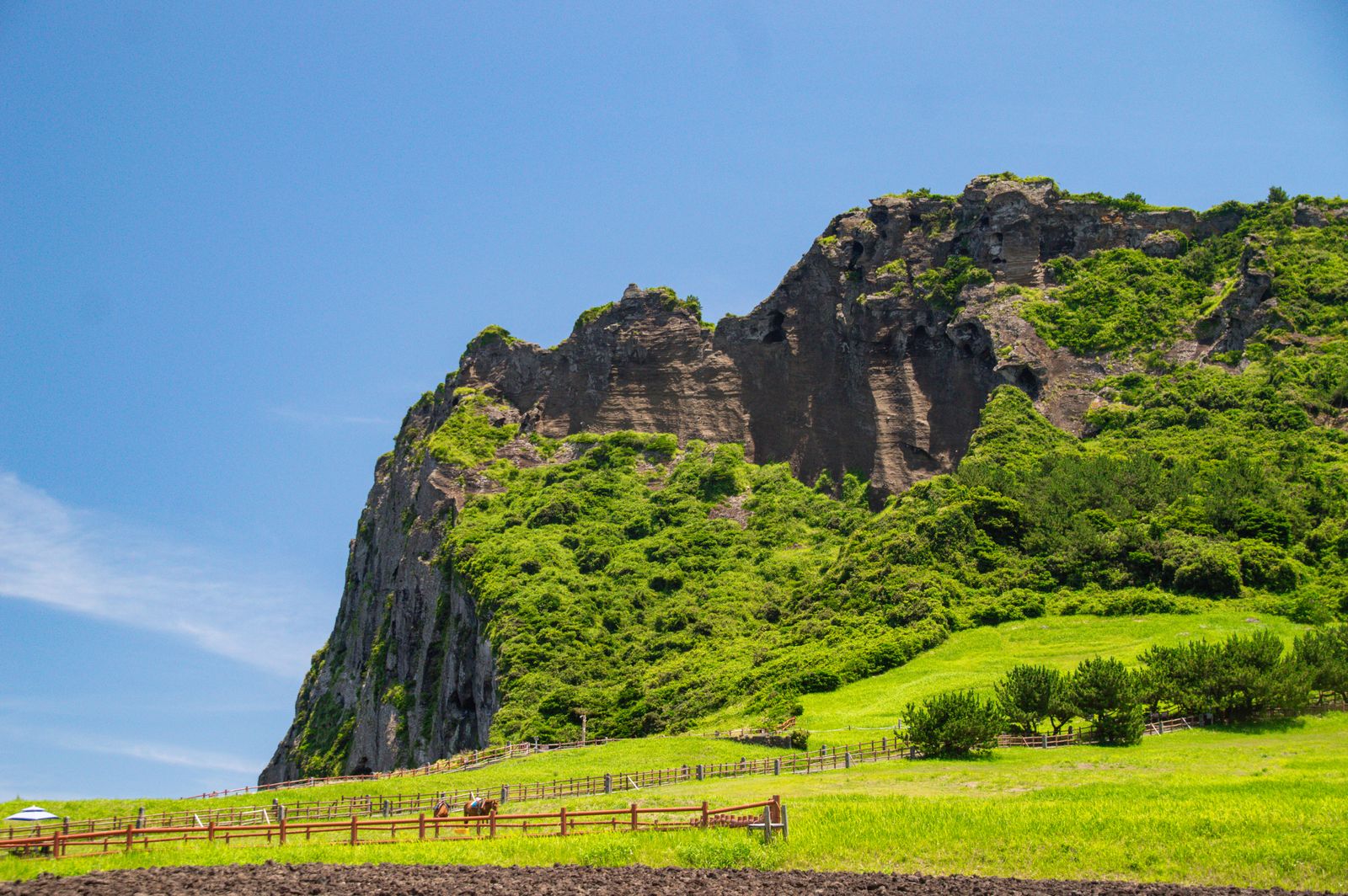
Jeju pairs naturally with Korea's other coastal escapes; if your route includes the mainland's southern coast, our Busan beach guide covers the peninsula's beach culture, and our 7-day Korea itinerary shows where an island hop fits in a first trip.
Packing for a Jeju coast day: Mornings on the volcanic shore are wind-whipped and wet. Browse Korea travel essentials for a light windbreaker, grippy footwear, and a dry pouch before you go rock-hopping to watch the divers.
FAQ
Q: Why don't haenyeo use oxygen tanks?
By community rule and long tradition. Limiting each dive to one breath caps the daily catch, protects stocks for the whole village, and keeps the practice sustainable. It also keeps equipment costs low and the skill in the diver, not the gear.
Q: How deep and how long do haenyeo dive?
Working dives commonly reach several meters, with top-grade sanggun divers working around ten meters, holding their breath for a minute or more per descent. Sessions can run for hours, with the sumbisori whistle marking each recovery breath.
Q: Are there any male haenyeo?
The profession is overwhelmingly female and the culture is defined that way, though men historically dived in earlier centuries and a small number participate in related work today. UNESCO's inscription specifically honors the women divers' culture.
Q: How many haenyeo are left?
Official Jeju surveys in recent years count a few thousand registered haenyeo, most aged over sixty, down from tens of thousands in the 1960s. Haenyeo schools recruit small numbers of new divers each year to slow the decline.
Q: Where can I watch haenyeo dive?
The most reliable option is the scheduled demonstration below Seongsan Ilchulbong, weather permitting; confirm times locally on the day. Otherwise, morning walks along rocky northeastern coasts often reveal working divers, visible by their orange tewak floats.
Q: What does UNESCO recognition actually cover?
The 2016 inscription covers the culture as a whole: the diving knowledge, the cooperative rules, rituals like the sea-god rites, songs, and the transmission of skills between generations, not just the act of free-diving.
Sources
You Might Also Like
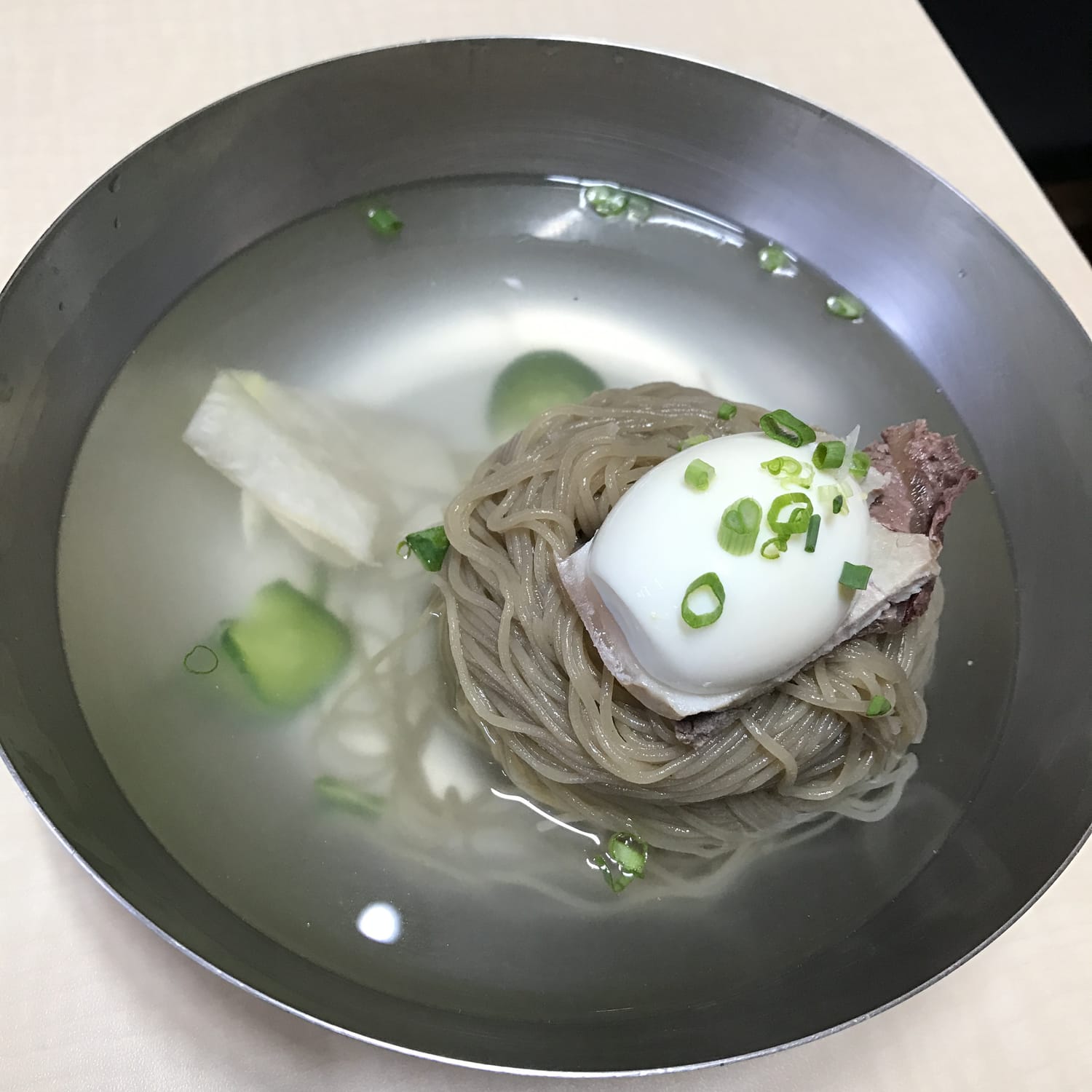
The One Korean Food Foreigners Never Learn to Love: Hamheung Naengmyeon, and Why Koreans Can't See the Problem
Foreigners who eat cheonggukjang and even hongeo still will not pay for this twice. A Korean creator who fed foreigners for years says naengmyeon was the overwhelming number one refusal, and Koreans, who rank it first every summer, cannot see why.
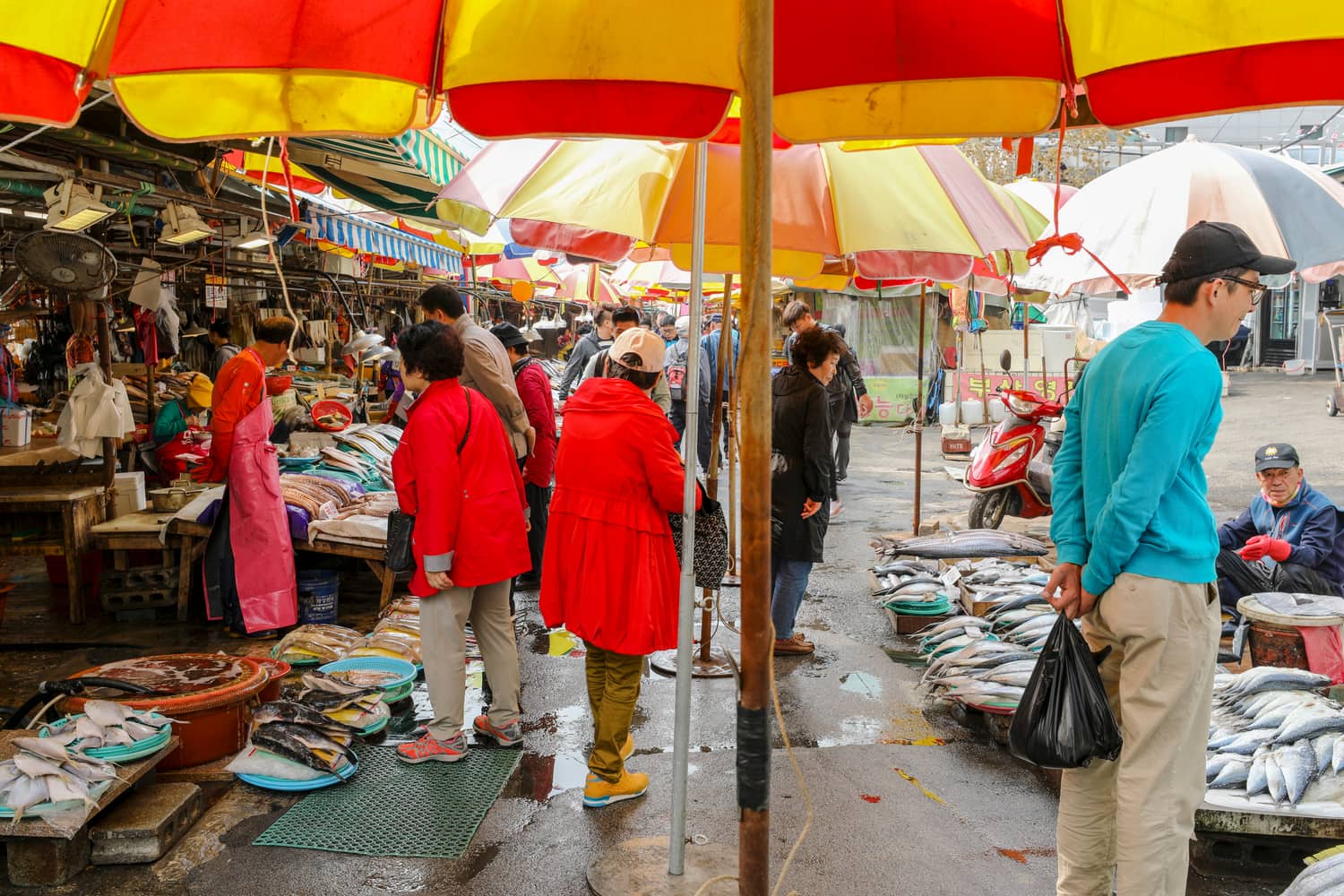
Why Do Koreans Stare at Foreigners? The 5% Country, and Where the Looking Actually Happens
In central Seoul nobody looks at you. In a provincial market, a small town or a subway car of grandmothers, they do. Korea only became a 5%-foreign country in 2025. Where the staring happens, what it means and does not mean, and what to do with it.
Why Koreans Seem Cold to Foreigners: The Gap Between How Korea Sees Itself and How You See It
Foreigners abroad rate Korea 82.3% favourable. Foreigners living in Korea rank Koreans 39th of 46 countries for friendliness, and 84% of Koreans say they would not trust a stranger. Where the gap comes from, and how to get to the other side of it.