Where Foreign Cards Actually Get Swiped in Korea: Seoul Takes 65%, Dermatology Takes 40% of Service Spending, the Top 1% of Shops Take 67%, and ₩166,000 Per Foreign Service Payment
Last updated: September 2026. The merchant figures are from Korea Credit Data (한국신용데이터), whose CashNote sales app is linked to about 328,000 merchants in this analysis, covering January 2023 to June 2026; the cardholder figures are Visa's Korea inbound data for April 2024 to March 2025; the district figures are Cushman & Wakefield Korea's H1 2026 retail report and the retailers' own statements. All were reported in the Korean business press in 2025–26 and are cited at the end.
Korea receives about 18.9 million visitors a year and every one of them pays for almost everything by card, which means the card terminals know something the tourism surveys do not: where foreign card spending in Korea actually lands. Korea Credit Data, whose CashNote app is linked to the card sales of about 328,000 shops, cafés and clinics, separated out the overseas-card transactions in August 2026. The findings are lopsided in every direction. Between January 2023 and June 2026 foreign card spending at small businesses grew 9.6 times, but it is still only 1.2 percent of everything those businesses take. Sixty-five percent of it is spent in Seoul. In Seoul's designated tourist districts foreign cards are 14.6 percent of sales; in an ordinary neighbourhood alley they are 1.3 percent. The top 1 percent of merchants take 66.9 percent of all foreign card money and the top 10 percent take about 90 percent. And when a visitor pays for a service rather than a meal or a shirt, 40 percent of that money goes to dermatology clinics, and across all service businesses the average foreign payment is ₩166,000, against ₩47,000 for a Korean customer.
This guide maps those numbers onto real streets: which districts, which kinds of shop, what the average visitor from each country is buying, and what it tells you about where to bring your card and where a card will not be enough.
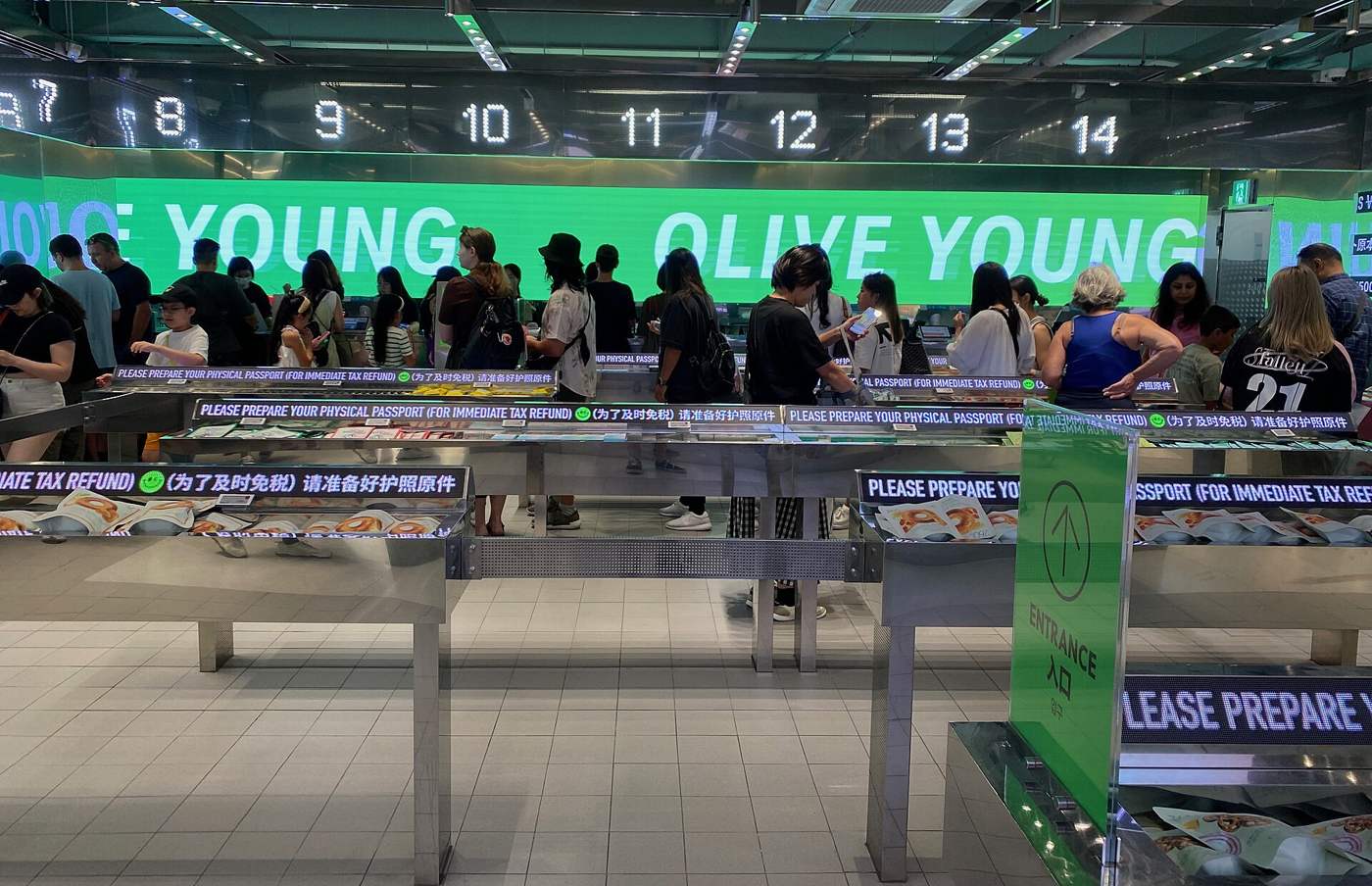
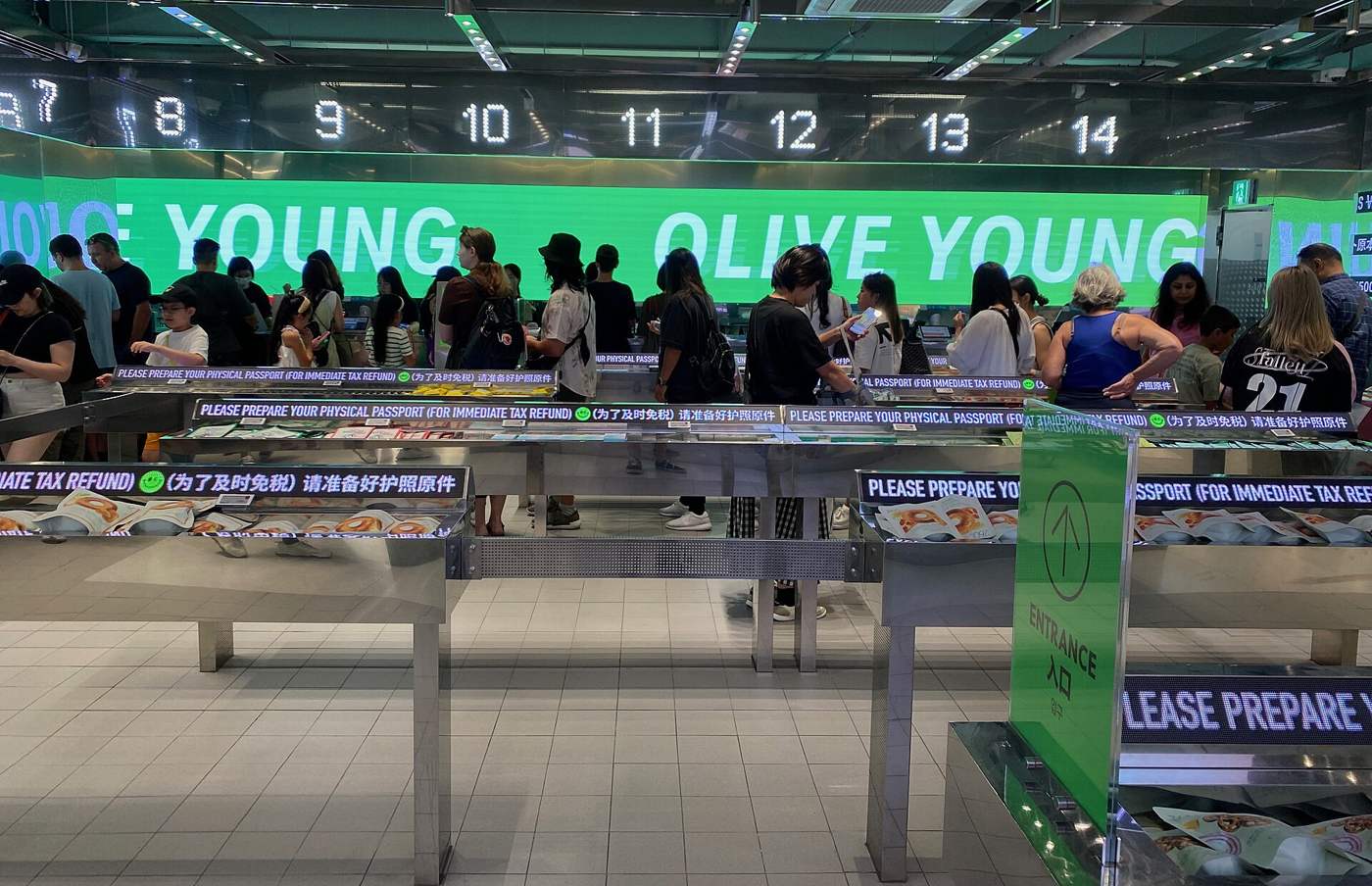
Checkout at Olive Young (올리브영) in Myeongdong (명동), August 2024. Myeongdong–Namdaemun is the top foreign-spending shopping area in the card data. Photo: Sgroey, Wikimedia Commons, CC BY-SA 4.0.
The single biggest line on a visitor's card in Korea is the Olive Young haul, and the sensible move is to price it before you land: the COSRX Advanced Snail 96 Mucin Power Essence is one of the store's best-sellers with foreign shoppers and is also sold on Amazon, so you can buy the bulky items at home and spend your Korea card money on what Olive Young has that Amazon does not. As an Amazon Associate, EpicKor earns from qualifying purchases.
Quick Guide: foreign card spending in Korea, 2026
| Measure | Figure | Source |
|---|---|---|
| Growth in foreign card spending at small businesses, Jan 2023 → Jun 2026 | 9.6× ; share of all small-business card sales 0.2% → 1.2% | Korea Credit Data |
| Where it is spent | Seoul 65% · Gyeonggi 11.3% · Busan 8.2% · Jeju 4.5% (July 2025–June 2026) | Korea Credit Data |
| Fastest-growing regions (year on year) | Busan +60% · Jeju +53.1% | Korea Credit Data |
| Foreign share of sales | Seoul's tourist zones 14.6% · ordinary commercial alleys 1.3% | Korea Credit Data |
| Concentration | Top 1% of merchants take 66.9%; top 10% take about 90% | Korea Credit Data |
| Service spending by category | Dermatology 40% · plastic surgery 14% · other clinics 9% · beauty salons 6% · pharmacies 6% | Korea Credit Data |
| Average payment at service businesses | Foreign ₩166,000 vs Korean ₩47,000 (3.5×); health and medical about 8× | Korea Credit Data |
| Top cardholder origins | United States, Japan, China, Taiwan, Singapore, Hong Kong, Thailand | Visa, Apr 2024–Mar 2025 |
| Healthcare share of Visa inbound spend | 15%, up 58% year on year; Japan 19% of its spend | Visa |
| Myeongdong | Street vacancy 4.4% in Q2 2026, from about half in late 2021; nationwide foreign credit-card spending +50.8% H1 2026 | Cushman & Wakefield |
| Seongsu | Musinsa Megastore Seongsu: 56% of purchases by foreign shoppers, week of 7–13 June 2026 | Musinsa |
Round Lab 1025 Dokdo Toner — the other Olive Young bestseller, priced at home first After the snail essence, the Dokdo toner is another Olive Young staple foreign shoppers carry out in multiples, and it is heavy; the 500 ml bottle is the one to price on Amazon before you fill a suitcase with it. As an Amazon Associate, EpicKor earns from qualifying purchases.
See Round Lab Dokdo Toner 500ml on AmazonSixty-five percent in one city, and mostly in four districts
Seoul's 65 percent (July 2025 to June 2026) is not a surprise; Gyeonggi's 11.3 percent mostly is, until you remember that the outlet malls and the Everland and Suwon day-trips sit in it. What the terminal data adds is how concentrated the Seoul money is inside Seoul. Korea Credit Data compared the foreign share of card sales in the city's designated tourist special zones (관광특구: Myeongdong, Itaewon, Hongdae, Jongno–Cheonggyecheon, Dongdaemun, Jamsil and Gangnam) with ordinary commercial streets: 14.6 percent against 1.3 percent. The average shop in those zones takes one won in seven from a foreign card; a café in an ordinary alley takes one in seventy-five.
Cushman & Wakefield's Myeongdong figures put a timeline on it. At the end of 2021 about half of Myeongdong's small shops were empty (50.3 percent, by the Korea Real Estate Board's count); by the second quarter of 2026 street vacancy was 4.4 percent, down from 5.6 percent a quarter earlier, while foreign visitors' credit-card spending nationwide rose 50.8 percent in the first half. Hongdae (홍대) lagged, with vacancy flat at 10.4 percent. Cushman & Wakefield says large pharmacies with multilingual and tax-free service took over the old cosmetics road-shop units, Laneige opened a flagship and Uniqlo returned after about five years. Our tourist shopping route walks Olive Young, Daiso (다이소) and Musinsa in order and our tax refund guide covers the ₩15,000 minimum that applies to most of it.
Seongsu (성수) is the other end of the same story. It is not a tourist special zone, so its money does not show in the 14.6 percent, but Musinsa (무신사) reported that foreign shoppers made 56 percent of purchases at Musinsa Megastore Seongsu in the week of 7–13 June 2026, peaking at 66 percent. Our Seongsu and Hannam guide and the K-fashion flagship addresses post cover where those shops are and when they open.
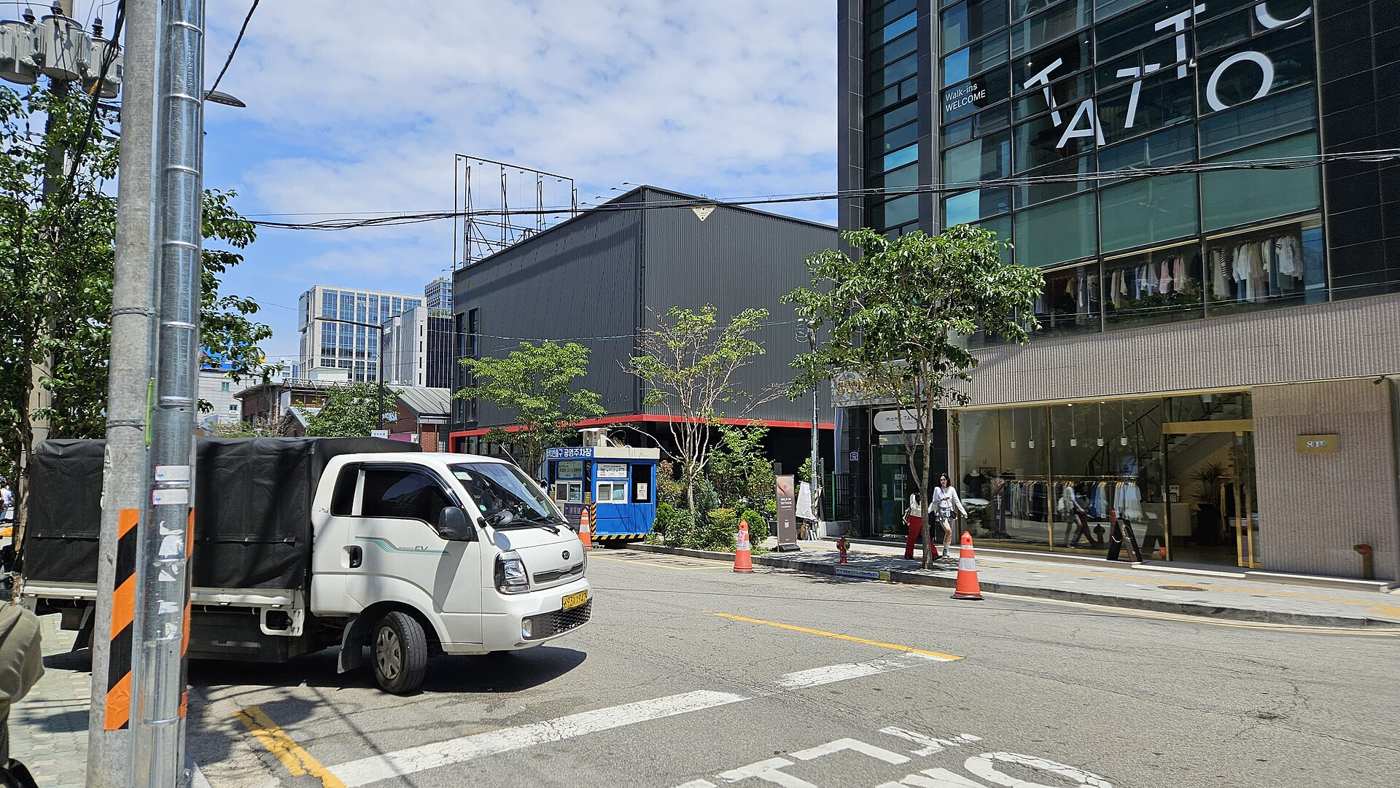
Seongsu-dong in May 2026. Not a designated tourist zone, so it is invisible in the district statistics, but Musinsa says foreign shoppers made 56 percent of purchases at its Seongsu megastore in one June 2026 week. Photo: Aspere, Wikimedia Commons, CC0.
The top 1 percent of shops take two-thirds
The concentration figure is the one the Korean press led with. Sixty-seven percent of foreign card spending at small businesses goes to 1 percent of the merchants, and about 90 percent to the top 10 percent. Korea Credit Data did not name them, but it ranks Myeongdong–Namdaemun top for foreign shopping and Sinnonhyeon–Gangnam station top for clinics. In Seoul the ordinary alley restaurant a visitor might wander into sees 1.3 percent foreign money, one reason it is less likely to have an English menu, and, as our restaurant hours guide explains, it may be closed for its afternoon break when you arrive.
The practical reading is that Korea's foreign-card economy is a handful of streets with everything built for you, and the rest of the country where you are a rounding error, with the corresponding differences in price, English and tolerance for a foreign card that fails. The payment guide covers the card side: which foreign cards fail at which terminals, why T-money and WOWPASS exist, and the small tap that a Korean terminal refuses.
What the service money buys: dermatology, 40 percent
Retail and food take most of the foreign card total, but the service slice is where the terminal data is most revealing. Of foreign card spending on services at small businesses, 40 percent is dermatology (피부과), 14 percent plastic surgery (성형외과), 9 percent other clinics, 6 percent beauty salons and 6 percent pharmacies: more than half goes to dermatology and plastic surgery. Across all service businesses the average foreign payment is ₩166,000, three and a half times the Korean ₩47,000, and in health and medical the gap is about eightfold, which reflects what visitors book: laser toning, skin boosters and the packaged "glow" treatments that Korean patients buy on subscription at a fraction of the walk-in price.
Visa's cardholder data agrees from the other side. Healthcare was 15 percent of Visa's inbound spend in Korea in the year to March 2025, up 58 percent, with Japanese cardholders putting 19 percent of their spending into healthcare, the most of any market; Taiwanese and Hong Kong cardholders' total spending rose 54 and 50 percent. Contactless rose from 6 to 15 percent of foreign Visa payments in the same period. Our beauty clinic versus Olive Young guide is the decision post for that money, and the Seoul glowcation guide puts the clinics, the shops and the recovery days in one itinerary.
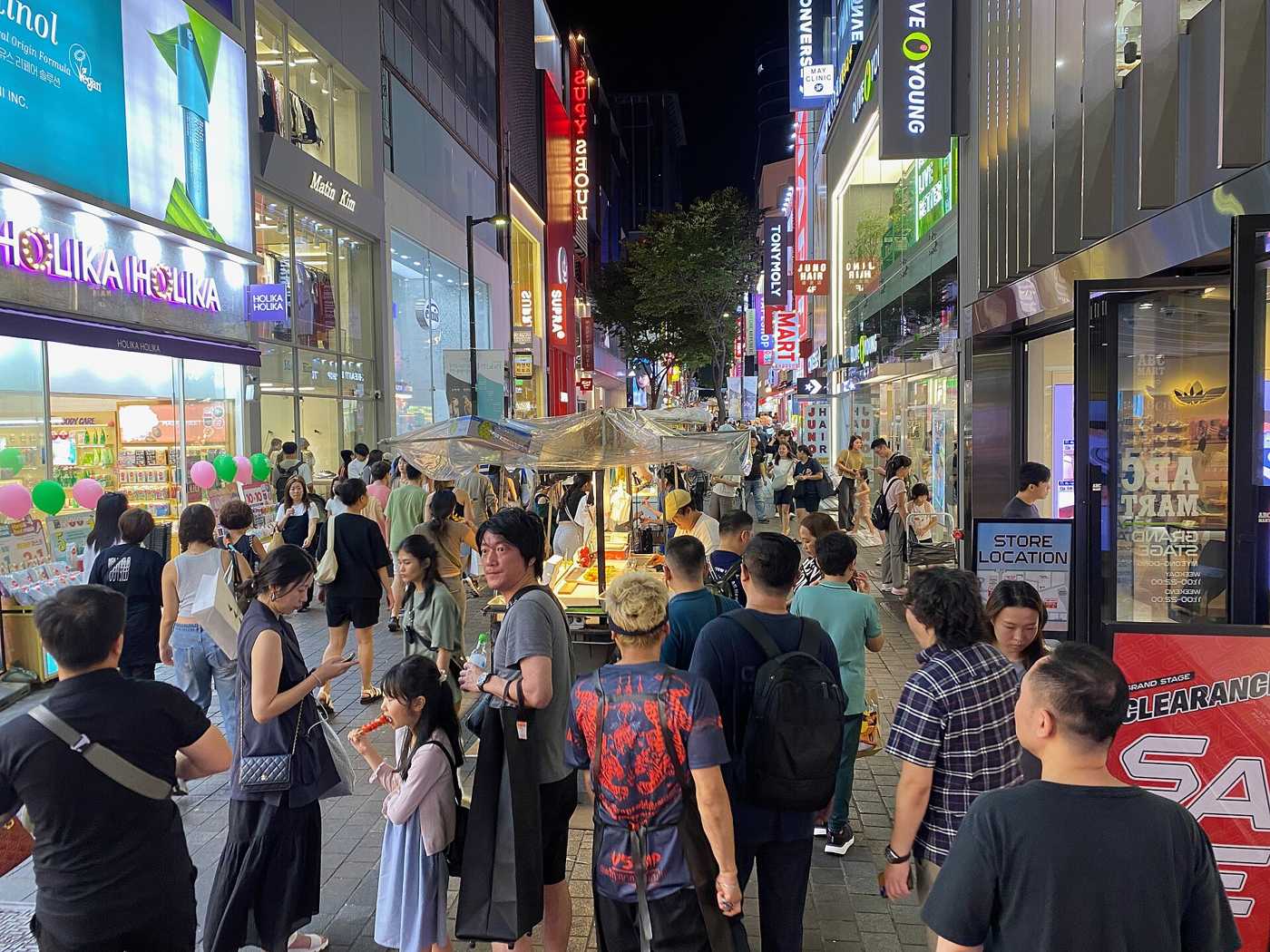
Myeongdong's street-food carts in August 2024. The shops behind the carts are where the 14.6 percent is measured. Photo: Sgroey, Wikimedia Commons, CC BY-SA 4.0.
Busan and Jeju: small shares, fast growth
Busan (부산) takes 8.2 percent of foreign card spending and Jeju (제주) 4.5 percent, but they are the fastest-growing regions, up 60 percent and 53.1 percent respectively. Busan's growth likely reflects the cruise calls and the short-break market that flies into Gimhae for a weekend at Haeundae; Jeju's, the return of Chinese group travel and the families who hire a car there, which is why our Korea car rental guide exists. Neither has a Myeongdong: the foreign money in Busan is spread across Haeundae, Gwangalli, the Jagalchi market area and the Seomyeon shopping streets, and in Jeju it is the airport-area rental counters, the Jeju City and Seogwipo restaurants, and the attractions. A card works everywhere in both; the difference is that outside Seoul the foreign card is still the exception at the counter, and the terminal owner is less likely to know what to do when one fails.
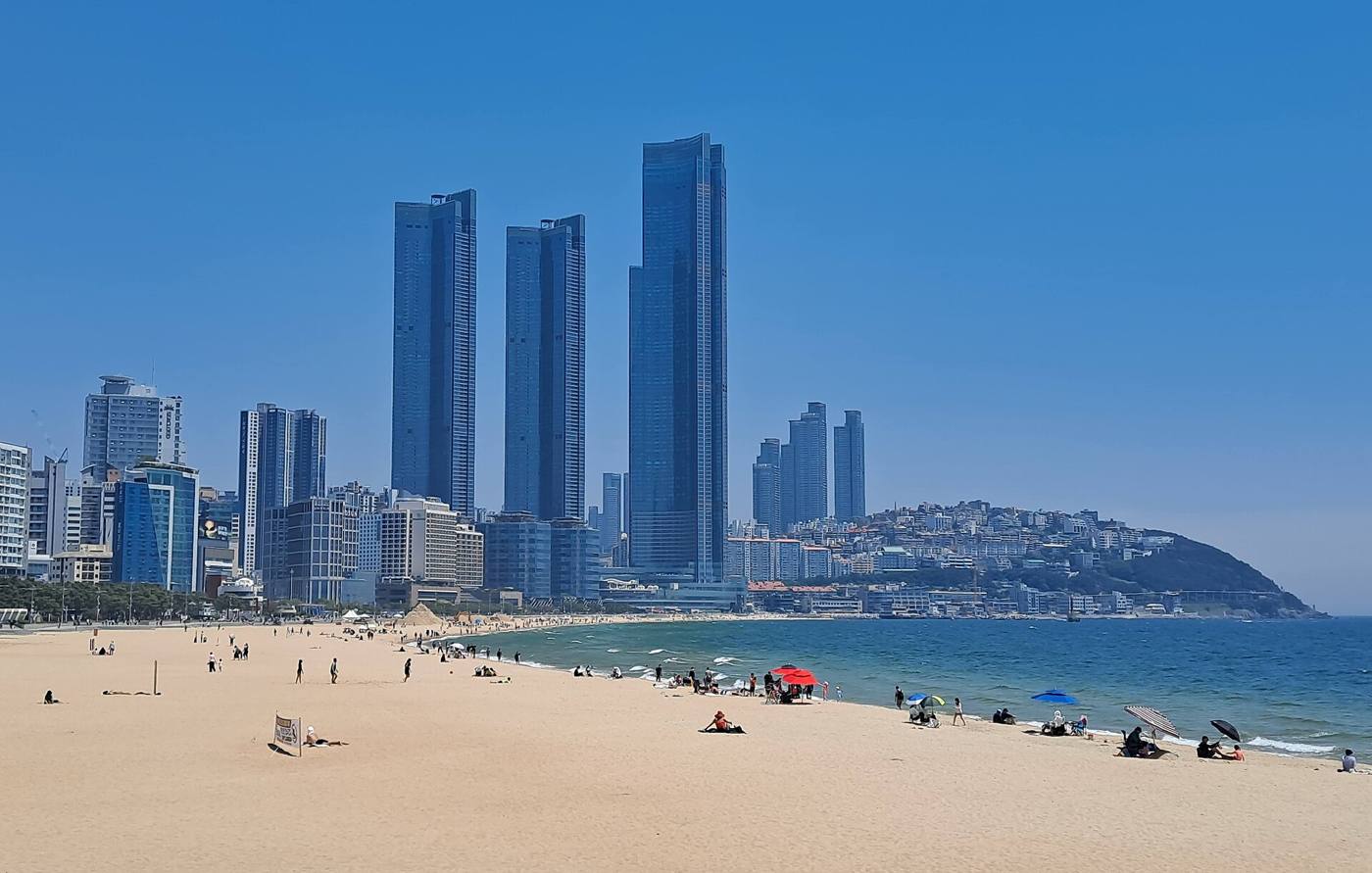
Haeundae (해운대), Busan, May 2024. Busan takes 8.2 percent of Korea's foreign card spending, and its foreign card spending grew 60 percent in a year. Photo: Brit in Seoul, Wikimedia Commons, CC BY-SA 4.0.
Who is spending, by country
Visa's inbound ranking for April 2024 to March 2025 puts the United States first, then Japan, China, Taiwan, Singapore, Hong Kong and Thailand. The order is not the order of visitor numbers (China and Japan send far more people than the United States) because it counts card spend, and American visitors stay longer, pay hotel bills on card and are the least likely to use the Alipay and WeChat rails that carry much of the Chinese spend outside the card data entirely. That is also a caveat on every figure in this post: Korea Credit Data and Visa see cards, and a Chinese visitor paying by Alipay at an Olive Young till is invisible to both. The real foreign share in Seoul's tourist zones is higher than 14.6 percent; the card data is the floor.
The spending profiles differ. In Visa's data Japanese visitors put the largest share into healthcare (19 percent); Chinese visitors spend most in retail (20 percent); China, Taiwan, Singapore, Hong Kong and Thailand all spend above average in department stores and shops; and Singapore has the highest lodging share (13 percent), which is why our Seoul hotel price guide exists. The series hub has the stay lengths and survey answers by country that sit behind this.
What the data means for your own card
- Bring a card that taps, and a backup that does not need to. In Visa's April 2024–March 2025 data contactless rose from 6 to 15 percent of foreign card payments, but the small tap that fails at some Korean terminals is still real; see the payment guide.
- The foreign-built streets are the expensive ones. The 14.6 percent districts have English menus and tax-refund counters and prices set for the people who use them. A ₩14,000 bowl of seolleongtang at a century-old restaurant in Jongno is about one-twelfth of the average foreign service payment.
- Clinic money is the biggest single ticket you will put on the card. With foreign service payments averaging ₩166,000, book the clinic before the trip, not from the hotel, and check what the price includes; the clinic guide has the questions.
- Price the Olive Young basket at home first. The snail essence and the Dokdo toner are on Amazon; the things worth Korea card money are the Olive Young exclusives, the sheet-mask multipacks and anything under ₩10,000 that does not ship.
- Carry cash for the alleys and markets. Alley restaurants, markets and roadside stands are where a foreign card is most likely to be declined, and where a Korean would pay by app.
FAQ
Q: Where do tourists spend the most money in Korea? Seoul takes 65 percent of foreign card spending at small businesses (July 2025 to June 2026), followed by Gyeonggi (11.3 percent), Busan (8.2 percent) and Jeju (4.5 percent). Within Seoul the money concentrates in the designated tourist districts, where foreign cards are 14.6 percent of sales against 1.3 percent on ordinary streets.
Q: What do foreign visitors buy in Korea? Retail and food take most of it; among services, dermatology is 40 percent of foreign card spending, plastic surgery 14 percent, other clinics 9 percent, and beauty salons and pharmacies 6 percent each. The average foreign payment at a service business is ₩166,000, against ₩47,000 for a Korean customer.
Q: Which countries' visitors spend the most in Korea? By Visa's card data for April 2024 to March 2025: the United States, then Japan, China, Taiwan, Singapore, Hong Kong and Thailand. Chinese spending through Alipay and WeChat is not counted in card data, so China's real share is higher.
Q: Is Myeongdong busy again? Yes. About half of Myeongdong's small shops were empty at the end of 2021; street vacancy was 4.4 percent in the second quarter of 2026, according to Cushman & Wakefield Korea, while foreign credit-card spending nationwide rose 50.8 percent in the first half of 2026.
Q: Do small businesses in Korea benefit from tourism? Unevenly. Foreign cards are 1.2 percent of all small-business card sales, and the top 1 percent of merchants take 66.9 percent of that money, the top 10 percent about 90 percent. Most ordinary shops see almost none of it.
Q: Where is foreign spending growing fastest in Korea? Busan (up 60 percent year on year) and Jeju (up 53.1 percent), from small bases; Seoul grew 36.4 percent.
Sources
- Korea Credit Data (한국신용데이터), foreign card spending at small businesses, January 2023–June 2026, as reported by the Korean business press in July–August 2026: 9.6× growth; 0.2% → 1.2% share; Seoul 65%, Gyeonggi 11.3%, Busan 8.2%, Jeju 4.5%; Busan +60%, Jeju +53.1%, Seoul +36.4% (regional figures July 2025–June 2026); Seoul tourist special zones 14.6% vs ordinary commercial alleys 1.3%; top 1% of merchants 66.9%, top 10% about 90%; services: dermatology 40%, plastic surgery 14%, other clinics 9%, beauty salons 6%, pharmacies 6%; average foreign payment at service businesses ₩166,000 vs ₩47,000.
- Visa Korea, inbound cardholder data April 2024–March 2025 (released 2025): origin ranking; healthcare 15% of spend, +58%; Japan's 19% healthcare share; Taiwan and Hong Kong total spend +54% and +50%; contactless 6% → 15%.
- Cushman & Wakefield Korea, retail market reports Q2 2026 and H1 2026: Myeongdong vacancy 4.4% (5.6% in Q1); nationwide foreign credit-card spending +50.8% H1 2026; Hongdae vacancy 10.4%. Korea Real Estate Board, Myeongdong small-shop vacancy 50.3% in Q4 2021.
- Musinsa, foreign share of purchases at Musinsa Megastore Seongsu, 7–13 June 2026 (Sidae Ilbo, 17 June 2026).
- Seoul Metropolitan Government, list of designated tourist special zones (관광특구).
You Might Also Like
Incheon Airport Money Exchange in Korea: The Banks' Own Disclosure Says 4.20% at the Airport vs 1.75% in Town — ₩16,470 on Every $500
Korea's bank federation publishes it: Incheon Airport counters take 4.20% on US dollars and 7% when you sell yen, against 1.75% at city branches. At 11 September rates that is ₩16,470 on $500. Which counters open 24 hours, and the 40% discount sign.
How Much Is a Hotel in Seoul, Korea, Per Night? The Official Numbers by Month, Star Grade and Neighbourhood: ₩207,000 Revenue per Room, ₩460,000 for Central Five-Star, the Cheapest and Dearest Months, and Why Rates Keep Rising
Seoul hotel prices from Korea's own hotel statistics: ₩207,000 revenue per room in 2025, ₩460,000 for a central five-star, 79% occupancy, 71% foreign guests, 1,000 new rooms a year. Month by month, with the weeks that double and the ones that fall.
Tornado Potato: The Korean Invention Everybody Thinks Is Generic Fair Food
The spiral potato on a stick has a named inventor, a debut date in Myeongdong, and patents in six jurisdictions. 회오리감자 was designed in Korea in 2006, and the word itself is a trademark — which is why Korean vendors write 스프링감자 instead.