
Tornado Potato: The Korean Invention Everybody Thinks Is Generic Fair Food
The tornado potato is one of those foods everybody assumes has always existed. A potato cut into one continuous spiral, threaded onto a stick, fried, dusted with flavored powder. You have seen it at a county fair in Texas, at a night market in Bangkok, at a festival in Germany. It reads as generic.
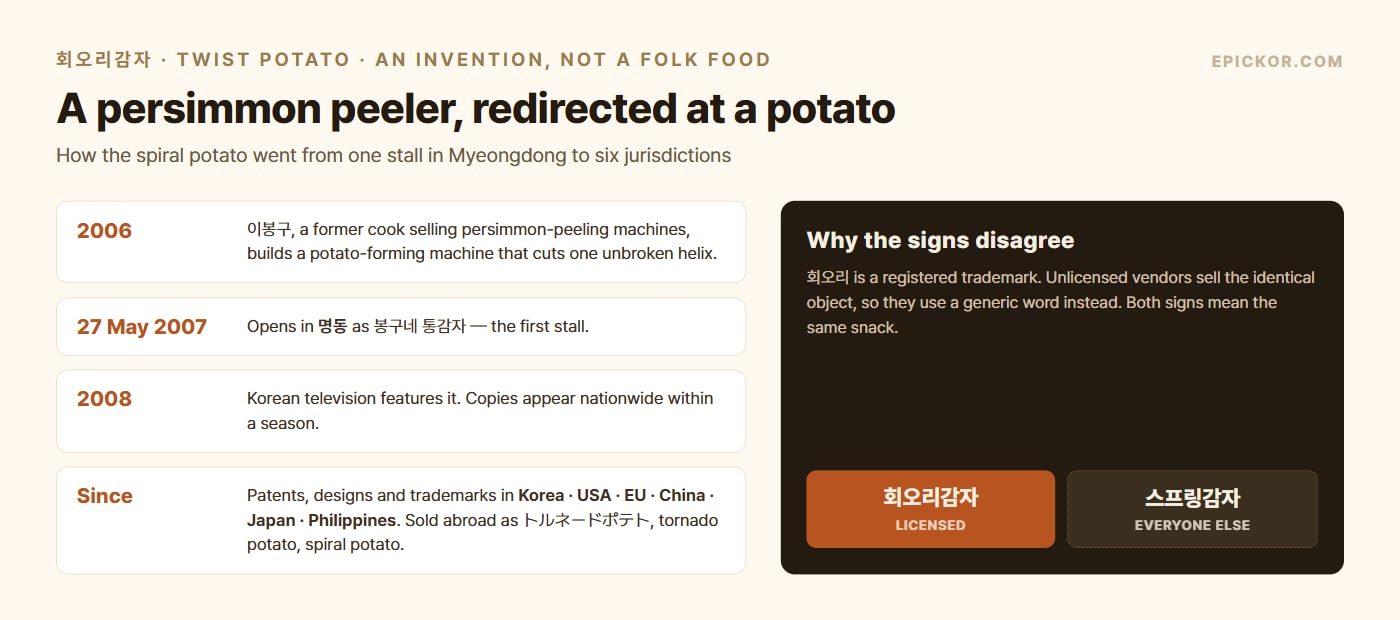
It is not generic. 회오리감자 was designed in Korea in 2006 by a specific person, first sold on a specific street on a specific day, and is protected by patents, designs and trademarks in six jurisdictions. The word 회오리 — "whirlwind" — is a registered trademark, which is why so many Korean vendors selling the identical object write 스프링감자 on their sign instead.
| Korean name | 회오리감자 (also 회오리 감자) |
|---|---|
| Literal meaning | Whirlwind potato |
| Official English brand | Twist Potato — not "tornado potato," which is what the rest of the world calls it |
| Invented | 2006, by 이봉구 (Lee Bong-gu) |
| First sold | 27 May 2007, in Myeongdong, Seoul, as 봉구네 통감자 |
| Company | (주)회오리, Gunpo, Gyeonggi Province |
| Protected in | Korea, United States, European Union, China, Japan, the Philippines |
| Price, Myeongdong | ₩4,000 since July 2023, when Jung-gu's price-display rule brought it down from ₩5,000 |
| What to look for on a sign | 회오리감자 (licensed) or 스프링감자 / 나선형감자 (everyone else) |
It Started With a Machine for Peeling Persimmons
The origin is not a chef's idea. It is an engineering problem.
이봉구 had been selling persimmon-peeling machines, and the business was going badly. He had also worked as a cook. Those two facts collided into a question: could a machine of that kind cut a potato instead — not into slices, but into one unbroken helix that would stay connected on a skewer?
With help from a machinist friend, he built one. The result was a potato-forming machine that takes a whole potato and produces a continuous spring, which is a harder object to make than it looks: the cut has to be deep enough to open into a spiral under heat, and shallow enough that the potato does not fall apart on the stick.
On 27 May 2007 he opened in Myeongdong under the name 봉구네 통감자. Korean television picked it up in 2008, and after that it stopped being one man's stall.
The invention is the machine, not the recipe. That distinction is the whole reason this post is not a recipe post. Anybody can season a fried potato. Almost nobody can cut one into a metre of unbroken spiral in a few seconds, which is why street vendors buy the machine rather than the technique.

Why Korean Signs Say Two Different Things
Walk a Korean festival strip and you will pass two stalls selling what is visibly the same object, one labelled 회오리감자 and the next labelled 스프링감자 or 나선형감자.
That is not regional variation. 회오리 is a registered trademark, and the rights holder recommends exactly those generic alternatives — spring potato, spiral potato — to vendors who are not licensed. So the sign tells you something about the stall's relationship to the patent holder, and nothing whatsoever about the food.
Which is worth knowing for a reason that surprises people: the inventor has largely not gone after street vendors. A patent portfolio across six jurisdictions is expensive, and it has mostly been pointed at machine manufacture and franchise licensing rather than at the person running a cart at a school festival. The copies were allowed to spread, and the spread is what made it a national snack.
You might like: Korean Convenience Store Ice Cups: The Best-Selling Item Is a Cup of Ice
You might like: Cham Bungeoppang: The Korean Fish Snack That Is Four Different Fish Abroad
It Runs on the Potatoes Nobody Else Wanted
This is the part that never makes it into English, and it is the best thing about the product.
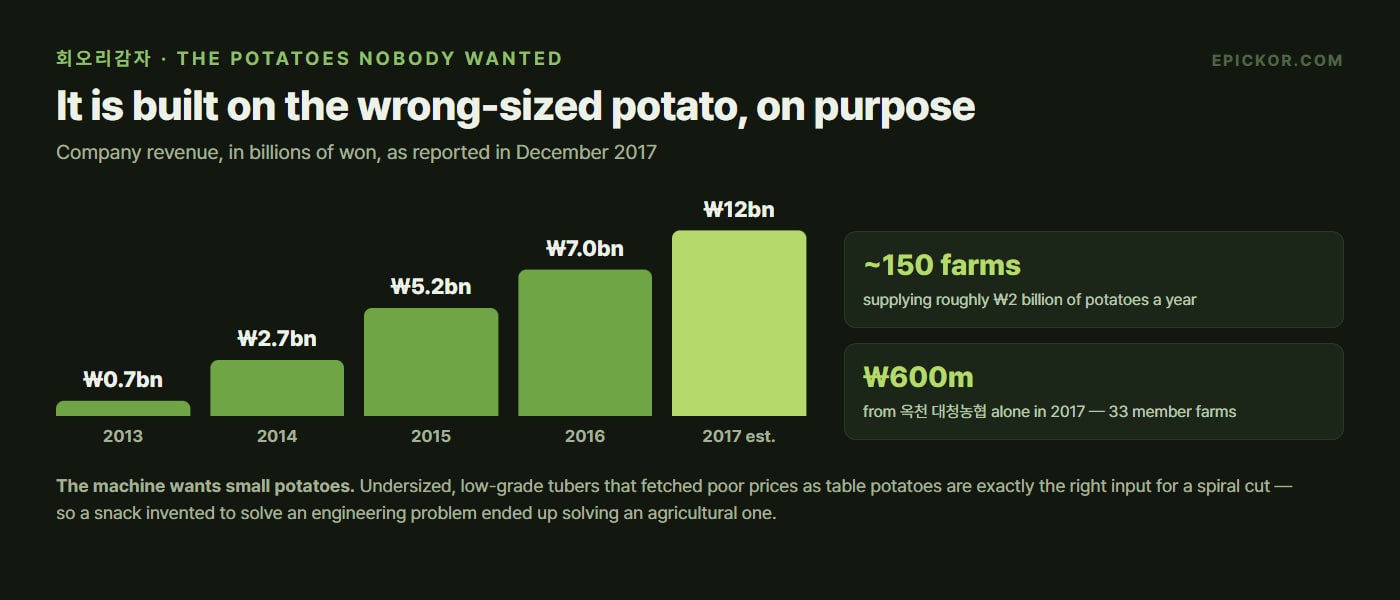
A spiral cut does not want a big potato. It wants a small, regular one — and small, undersized tubers are precisely the grade that Korean farmers struggled to sell at a decent price into the table-potato market. The company's agricultural arm buys them by the ton: roughly ₩2 billion of potatoes a year from about 150 farms, including ₩600 million in 2017 from the Daecheong agricultural cooperative in Okcheon alone, whose potato shipment group had 33 member farms.
As the chairman of that shipment group put it, the buyer does not need large or premium potatoes — it needs a specific smaller size, and that takes pressure off the growers.
The company's own revenue over the same period tracks it: ₩0.7 billion in 2013, ₩2.7 billion in 2014, ₩5.2 billion in 2015, ₩7 billion in 2016, and a projected ₩12 billion in 2017.
So the snack that reads as disposable fair food is, in Korea, a small industrial supply chain that turned a grading problem into a product.
The machine is the actual invention, and consumer versions of the spiral cutter are widely sold — worth understanding before you buy one, because the hand-crank kind and the powered kind produce very different results. As an Amazon Associate, EpicKor earns from qualifying purchases at no extra cost to you.
Where to Actually Eat One in Korea
It is a festival and street food, not a restaurant food, so the honest answer is seasonal and situational rather than a list of addresses.
Where it reliably appears: university-area streets, night markets, seasonal festivals, cherry-blossom and fireworks crowds, amusement parks, and busy tourist strips including Myeongdong where it started. If there is a queue of people eating something on a stick, it is in the mix.
Where to be careful: highway rest stops. Korean coverage is blunt about this — a lot of rest-stop spiral potato is imported frozen product rather than cut fresh on site, and it goes soft. The thing you want is the one cut from a raw potato in front of you and fried to order. If you cannot see a potato going into a machine, lower your expectations.
How it is served: fried, then dusted at the counter from shakers of seasoning powder — cheese, onion, barbecue, honey butter, hot. The seasoning goes on after frying, so you can ask for less. Sausage versions exist, with a frankfurter threaded onto the same skewer under the potato.
Eat it immediately. The entire appeal is the contrast between crisp edges and the softer interior of the coil, and that window is a few minutes long. A spiral potato carried around for twenty minutes is a chewy potato.
The Name Problem, Internationally
The official English brand is Twist Potato. Almost nobody uses it.
Japan settled on トルネードポテト (tornado potato) and スパイラルポテト (spiral potato). English-speaking fairs settled on tornado potato. It became genuinely popular as street food in India and Bangladesh. German and American festival vendors sell it with no reference to Korea at all.
That is the ordinary fate of a well-designed object: it travels faster than its story. But it does mean the search you would naturally type — "tornado potato" — leads to listicles and recipes and never once to 명동 in 2007.
You might like: Samanco: Korea's Fish-Shaped Ice Cream Is Named "Cheap and Plentiful"
Honest Notes
It is a fried potato. Nothing here makes it healthy food, and the seasoning powder is where most of the salt lives. Ask for a light dusting if that matters to you.
Frozen and vacuum-packed versions exist and are not the same experience. The company itself developed vacuum and frozen packing for distribution, and it works well enough for logistics, but a pre-formed potato reheated at a rest stop is a different object from one cut to order. Korean commentary singles this out.
What it costs, and the Myeongdong precedent. In July 2023 Seoul's Jung-gu district office rolled out a 판매가격표시제 — a mandatory price-display rule — on the Myeongdong street-food stalls after a run of overcharging complaints. 회오리감자 came down from ₩5,000 to ₩4,000, the same cut applied to 군만두 and 핫바. That ₩4,000 Myeongdong figure is the most reliable public number attached to this snack, and it is still the top of the market: a stall on a university street or at a smaller local festival typically sits below it. Confirm at the stall — and note that the same coverage recorded vendors taking cash only, which is unusual in Korea and still worth carrying a few notes for.
Away from Myeongdong there is no standard price. This is street and festival food sold by independent vendors; a seasonal festival stall and a permanent shop in a student district will not charge the same, and festival pricing runs high. Look before you queue.
Do not assume the stall is licensed. Most are not, and it does not matter to your snack. The sign is a legal artifact, not a quality signal.
The Korean-invention claim is about this specific product, not about spiral-cut food in general. Cutting food into a helix is not new. What was invented in 2006 is a machine and a format — one continuous potato spring on a stick, fried and seasoned — and it is that package that spread worldwide.
The seasoning is the other half of it. Korean street-snack powders — cheese, onion, honey butter — are what turn a fried potato into this, and they are the part most home attempts skip.
FAQ
Q: Is tornado potato Korean? A: Yes. 회오리감자 was developed in Korea in 2006 by 이봉구 and first sold in Myeongdong, Seoul, on 27 May 2007. It is protected by registrations in Korea, the United States, the EU, China, Japan and the Philippines.
Q: Why do some Korean signs say 스프링감자 instead? A: 회오리 is a registered trademark. Unlicensed vendors use generic terms — 스프링감자 or 나선형감자 — for the identical product.
Q: What is it called in English officially? A: The brand's own English name is Twist Potato. The world calls it tornado potato or spiral potato.
Q: Where do I find one in Seoul? A: Festival strips, night markets, university areas, amusement parks and tourist streets including Myeongdong. It is street food, so availability is seasonal and event-driven rather than fixed.
Q: Is the rest-stop version worth it? A: Usually not. Korean coverage notes that much rest-stop spiral potato is pre-made frozen product that turns soggy. Buy the one you can watch being cut.
Sources Checked
-
Korean-language reference sources for the 2006 development by 이봉구, the persimmon-peeling-machine origin, the 27 May 2007 Myeongdong debut as 봉구네 통감자, the 2008 television exposure, the registrations in Korea / USA / EU / China / Japan / the Philippines, the 회오리 trademark and the recommended generic alternatives 스프링감자 and 나선형감자, the vacuum and frozen packing development, the overseas spread including トルネードポテト in Japan, and the rest-stop frozen-import caution.
-
(주)회오리's official site for the company name, the Gunpo, Gyeonggi location, the official English brand Twist Potato, the product lineup including the sausage version, and the overseas exhibition markets.
-
Korean agricultural press (December 2017) for the farm-supply figures: roughly ₩2 billion of potatoes purchased annually from about 150 farms, ₩600 million from the Okcheon Daecheong agricultural cooperative in 2017, the 33-farm shipment group, the preference for small and low-grade tubers, and company revenue of ₩0.7bn (2013), ₩2.7bn (2014), ₩5.2bn (2015), ₩7bn (2016) and a projected ₩12bn (2017).
-
Korean news coverage (13 July 2023) for Jung-gu's 판매가격표시제 on Myeongdong street stalls, the ₩5,000 to ₩4,000 cut on 회오리감자 alongside 군만두 and 핫바, and the cash-only complaint.
Street-food prices in Korea are set by individual vendors and vary widely by venue and event. Verified August 2026.
You Might Also Like
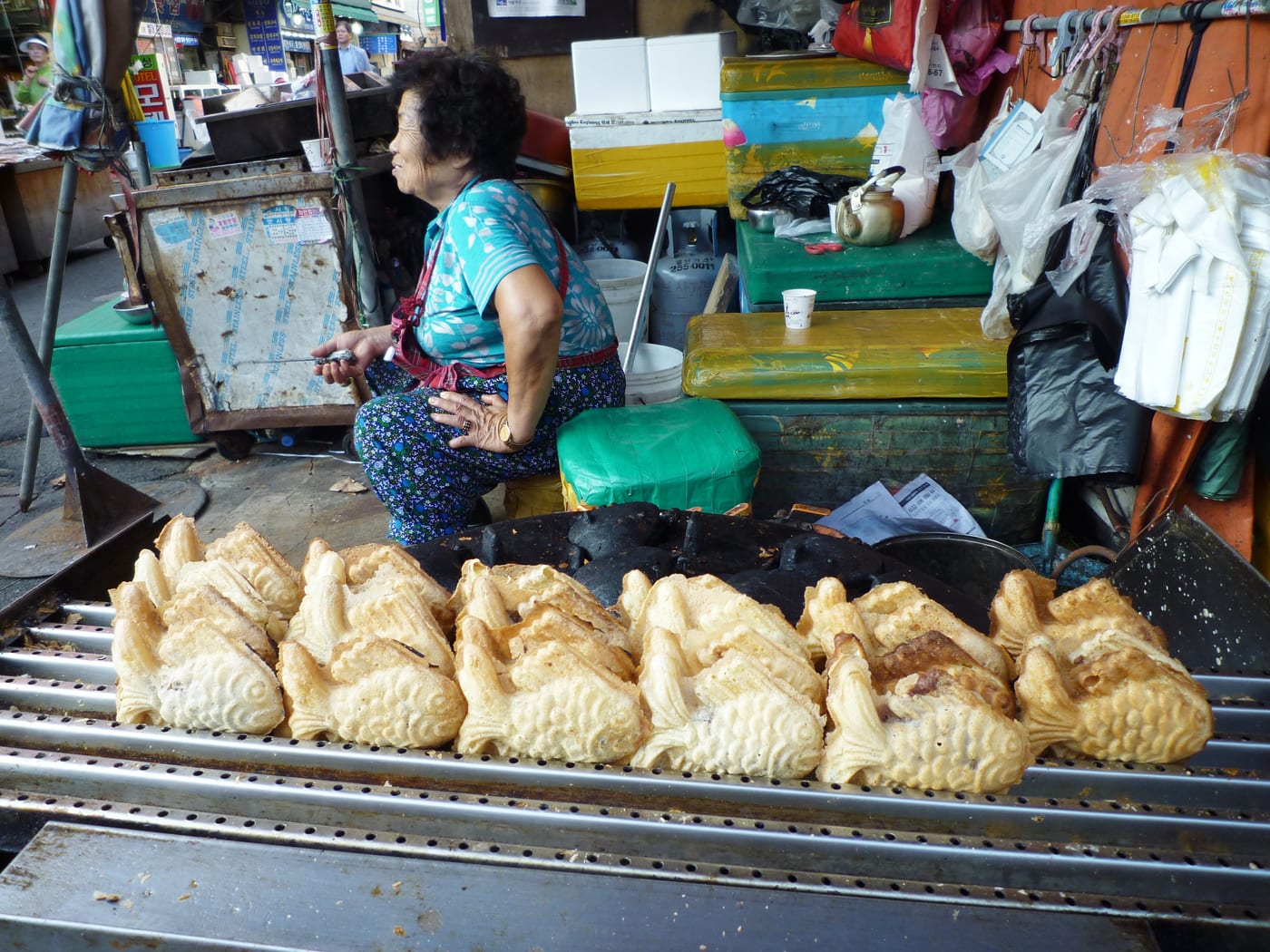
Cham Bungeoppang: The Korean Fish Snack That Is Four Different Fish Abroad
붕어빵 is a winter street food you have to find a cart for. Orion boxed it in 2011, released it in May on purpose, and sold 640 million packs — then renamed it after a different fish in China, Vietnam and Russia.
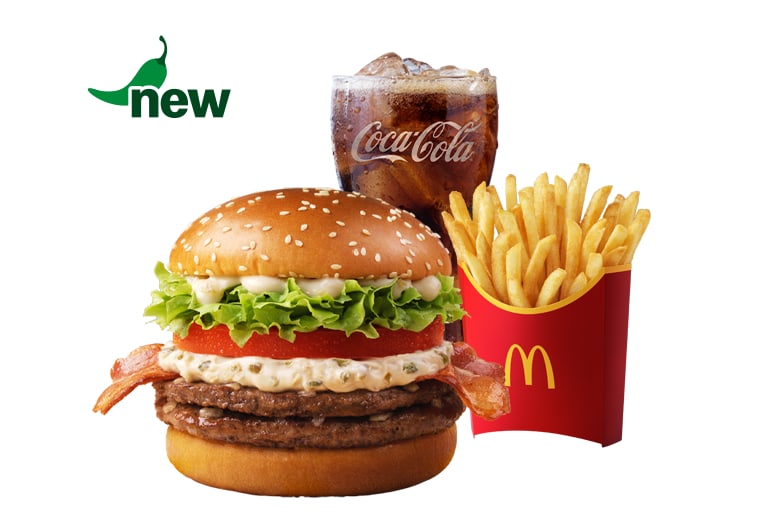
Korean McDonald's: Why the Burgers Are Named After Farm Counties, and What to Order Now
McDonald's Korea has bought 459.2 tonnes of named Korean produce since 2021 and prints the county on the burger — Changnyeong garlic, Jindo spring onion, Jinju pepper. 24 million sold, ₩61.7 billion of measured regional value. Here is what is on the menu now.
Delaffe: Korea's Convenience-Store Coffee Brand That Cut Its Price to ₩900
델라페 is not a drink, it is CU's own label — 150 million units a year, sold as a pouch you pour into a separate cup of ice. In March 2026 five of them dropped to ₩900, which makes the convenience store cheaper than Korea's cheapest café chain.