Who Makes Yopokki? The Korean Tteokbokki Company in Daegu, and Why It Is Not Young Poong Group
Yopokki is made by Young Poong (농업회사법인 영풍), a privately held Daegu food company founded in 1993 that earns about 75% of its sales abroad. It is not the listed zinc smelter Young Poong Corp. In September 2026 it signed a $300 million, four-year US supply deal.
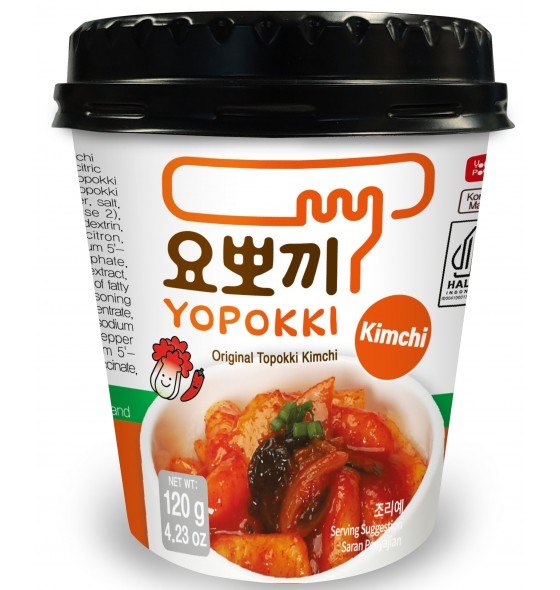
Yopokki, the Young Poong brand this article is about (Original Topokki Kimchi cup, 120 g). Official product image: ypfoods.co.kr, used for identification.
From the Yopokki brand store on Amazon: Yopokki Instant Rabokki Cup, Sweet & Mild Spicy, 2 cupsAffiliate link. As an Amazon Associate, EpicKor earns from qualifying purchases at no extra cost to you.
Quick Answer
Yopokki (요뽀끼) is made by Young Poong Co., Ltd. (농업회사법인(주)영풍), a food manufacturer in Daegu, South Korea. It is a privately held company, founded in August 1993 as Young Poong Trading (영풍물산) and led by its CEO and certified food engineer Jo Jae-gon (조재곤). It is not listed on any stock exchange, and Korea's public disclosure system, DART, carries its registry entry but no public financial filings.
The name causes confusion. Young Poong Corp (영풍), the listed zinc smelter fighting Korea Zinc for control, is a separate company with nothing to do with tteokbokki. Same romanization, different business and city, and no known ownership link.
The Daegu company's story is unusual for Korean food. It sells about three-quarters of what it makes abroad. Korean press put its annual exports at about $35 million (base year not stated), it ships to about 125 countries directly and through distributors, and its largest single country is the United States. Its real product is a technique: rice cakes that stay soft at room temperature for up to a year, which let a fresh-tasting Korean street food travel by sea freight like a cup noodle.
In September 2026 it signed a four-year, $300 million supply deal with a US distributor, starting in 2027. That is far more than the company has shipped before, and whether its factories can keep up is the open question.
Quick Guide: Young Poong (Yopokki) At A Glance
| Item | Detail | Source |
|---|---|---|
| Official name | 농업회사법인(주)영풍, English name Young Poong Co., Ltd. | DART company registry |
| Legal form | Agricultural corporation (농업회사법인), unlisted. DART classifies it as "other corporation" (기타법인) | DART company registry |
| Roots | 1993 per the company (founded as 영풍물산, Young Poong Trading); DART shows 2016-01-01. Converted to an agricultural corporation in January 2014, per the company | Company history page; DART company registry |
| Head office | 64 Seongseogongdanbuk-ro, Dalseo-gu, Daegu (Seongseo Industrial Complex) | DART company registry |
| CEO | Jo Jae-gon (조재곤), Professional Engineer in food technology (식품기술사) | DART registry; company CEO message |
| Ownership | Privately held and founder-led. No outside investor or shareholder register is public | DART registry; Korean press |
| Main brand | Yopokki (요뽀끼), shelf-stable tteokbokki in cups and pouches. Also Matamun (맛다믄), Redcook (레드쿡), Pink Rocket (핑크로켓) | Company brand page; Maeil Shinmun 2022 |
| Export share | About 75% of sales | Dealsite, 6 Nov 2026 |
| Annual exports | About $35 million | Dealsite, 6 Nov 2026 (base year not stated) |
| Reach | About 125 countries, direct and indirect. Europe is the largest region, the US the largest country | Maeil Shinmun 2026; Dealsite |
| Last published revenue | ₩30.6 billion in 2021, up from ₩14.8 billion in 2018 | Maeil Shinmun, 23 Nov 2022 |
| Biggest deal | $300 million over four years from 2027, with an unnamed US distributor | Maeil Shinmun, 21 Sep 2026 |
Yopokki Instant Rabokki Cup — Young Poong's shelf-stable rice cakes and ramen in one cup The brand-store listing for the product this article is about: Sweet & Mild Spicy, two cups, made in Korea and kept at room temperature. Check the current price and other flavours on the listing. As an Amazon Associate, EpicKor earns from qualifying purchases at no extra cost to you.
See the Yopokki Rabokki Cup on AmazonTwo Young Poongs: The Confusion Worth Clearing Up First
Search "Young Poong" in English and most results are about a large listed company in a very public fight. That company has nothing to do with Yopokki.
| Young Poong (Yopokki maker) | Young Poong Corp (zinc smelter) | |
|---|---|---|
| Korean name | 농업회사법인(주)영풍 | (주)영풍 |
| Business | Tteokbokki, rice cakes, Korean pancakes, snacks | Zinc smelting (Seokpo smelter, Bonghwa) and electronics |
| Base | Seongseo Industrial Complex, Daegu | Seoul head office; smelter in North Gyeongsang |
| Listed? | No | Yes, on the Korea Exchange |
| Scale | Exports of about $35 million a year | 2025 standalone revenue of ₩1.19 trillion, with a ₩277.7 billion operating loss |
| In the news for | K-food exports, a US supply deal | The control fight with Korea Zinc, which began in 2024 (Starnews) |
The two share a common Korean company name, 영풍, which means roughly "prosperous wind". Korean company names are not unique across industries, and many businesses use the same few auspicious words. For a buyer, the practical check is the full legal name: the Yopokki maker always carries the 농업회사법인 (agricultural corporation) prefix, and its DART registry shows CEO Jo Jae-gon and a Daegu address.
Who Owns Young Poong?
Short answer: it is a privately held, founder-led Korean company. Nobody outside it publishes a shareholder list, and no outside investor has been reported.
What can be confirmed:
- DART registry. Korea's Financial Supervisory Service lists 농업회사법인영풍 with CEO Jo Jae-gon, corporate registration number 170111-0525496 (a Daegu registry number), and the classification "other corporation" (기타법인), meaning not listed on KOSPI or KOSDAQ. The registry entry shows no public financial filings, so there is no audited shareholder table to read.
- Founder continuity. Jo founded the business in 1993 after about ten years at a large Korean food company, according to a 2022 Maeil Shinmun profile, and he still runs it 33 years later. The company's own CEO message is signed "CEO / Professional Engineer in food technology Jo Jae-gon".
- No IPO yet. In a November 2026 interview with Dealsite, Jo said the company would consider an IPO once sales reach about $100 million, and that he wants to share growth with employees through an employee stock ownership plan. Both are plans, not current facts.
- The legal form limits outside control. As an agricultural corporation, Young Poong falls under Korea's Act on Fostering and Supporting Agricultural and Fishery Business Entities (농어업경영체법). Article 18(1) of the law's Enforcement Decree caps what non-farmers may invest: 90% of total capital when total capital is ₩8 billion or less, and total capital minus ₩800 million when it is larger. Farmers must hold the rest. The company's actual split between farmer and non-farmer holders is not public.
What EpicKor could not confirm: Jo's personal percentage, whether family members hold shares, and whether any private-equity or strategic investor has come in. If those matter for a commercial decision, the corporate register (법인등기부) from Korea's Supreme Court internet registry is the next document to pull.
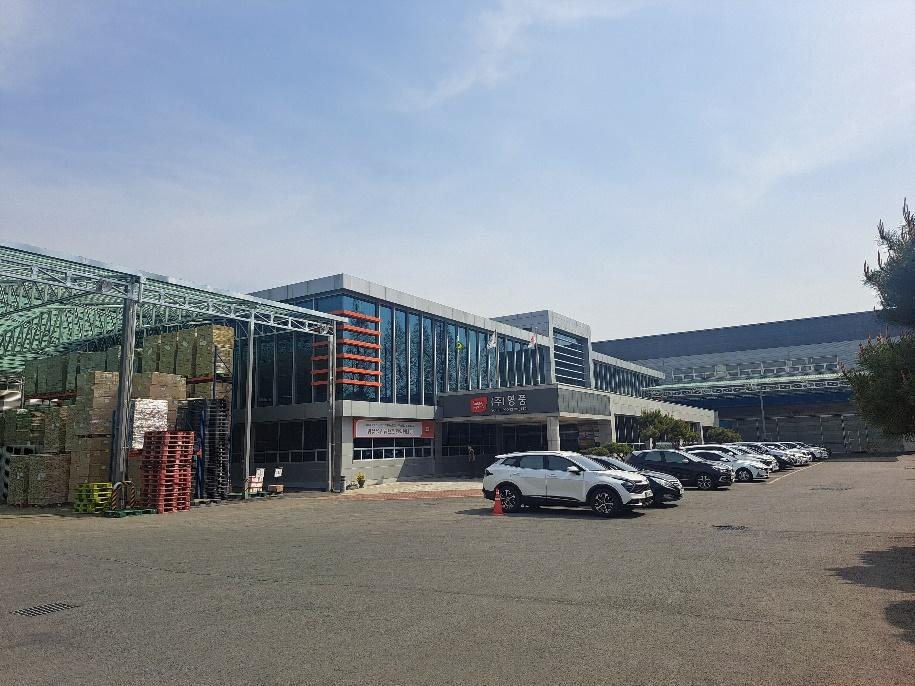
Young Poong's head office and factory in the Seongseo Industrial Complex, Daegu. Official company photo: ypfoods.co.kr company introduction, used for identification.
The Founder Started With Pork Cutlets, Not Rice Cakes
Young Poong did not begin as a tteokbokki company. According to Maeil Shinmun's 2022 profile, Jo's first product was pork cutlet (돈가스), followed by Korean savoury pancakes (부침개). The company's history page shows it registered as a trader in July 1998 and was designated a quarantine site for export meat processing the same month. The goal, Jo told the paper, was always the same: to make Korean food known around the world.
In 2000, a foot-and-mouth disease outbreak forced the company to destroy all of its containers waiting for export, Maeil Shinmun reported. For a small exporter, that loss can end a business. Young Poong survived it, and the lesson stuck: a product that depends on meat and cold chains is fragile. A product made from rice, stable on a shelf, is not.
The timeline below is from the company's own history page, except where another source is named:
| Year | Milestone | Why it matters |
|---|---|---|
| 1993 | Young Poong Trading (영풍물산) founded | The start: a Daegu food exporter, not a farm |
| 2001 | Matamun (맛다믄) trademark registered | Its Korean home-cooking brand, still in use |
| 2003 | Moves to the Seongseo plant; registers as a venture company | Still its home base today |
| 2007 | Tteokbokki manufacturing method patent registered, per the company's history page | The first step toward the shelf-stable product |
| 2012 | First shipment to China (Shanghai); $1 million export tower; in-house research lab approved | Exports become the business, not a side line |
| 2014 | Converted to 농업회사법인(주)영풍, per the company's history page (DART lists 1 January 2016) | The current legal entity |
| 2015 | Hosan-dong campus completed; joins KOTRA Los Angeles branch-office programme | First structured push into the US |
| 2016 | US FDA registration, per the company's history page | Needed before US retail |
| 2017–2019 | $3 million, $5 million and $10 million export towers; MUI halal and gluten-free certification in 2019, per the company's history page | The tower thresholds rose quickly. They are minimums, not actual export totals |
| 2022 | $20 million export tower | The last award on its history page |
The export towers (수출의 탑) are awarded by the Korea International Trade Association for annual export thresholds. Each tower marks a threshold passed, not the actual export total, so they work as a rough public record of export growth for companies that publish nothing else.
The Real Product: Rice Cakes That Do Not Go Hard
Anyone who has bought fresh Korean rice cakes (떡) knows the problem. They harden within a day or two and need refrigeration or freezing to last. That makes fresh tteokbokki a poor export: it has to travel frozen, which is expensive, and it lands in the freezer aisle where shoppers rarely look for snacks.
Young Poong's answer was to make the rice cake itself shelf-stable. Maeil Shinmun reported in 2022 that the company holds a 2013 patent for a room-temperature, long-storage rice cake process, with a shelf life of one year at room temperature. In 2026 the same paper described it as a Korean first for shelf-stable tteokbokki and a world first for shelf-stable cup tteokbokki, both patented. Those "first" claims come from the company and were not independently checked.
The consumer result is the cup on the shelf at your Asian grocery:
- Rice cakes and sauce sachet in one cup, sold at room temperature.
- Add about 50 g of lukewarm water, stir, cover loosely and microwave. Cooking takes 2–3 minutes depending on the package: Maeil Shinmun says about 3 minutes, and Weee!'s listing gives 2 minutes at 1000 W.
- Flavours built for different markets. The brand page lists sweet-and-spicy, hot spicy (辛), golden onion butter, cheese, jjajang (black bean), dakgalbi and even chocolate. Retailers also list rosé and bulgogi versions.
The name is a small piece of Korean wordplay. According to the company, Yopokki takes the friendly Korean sentence ending "-yo" (as in 맛있어요, "it's tasty", and 간편해요, "it's easy") and a shouted "Yo!", and attaches it to tteokbokki.
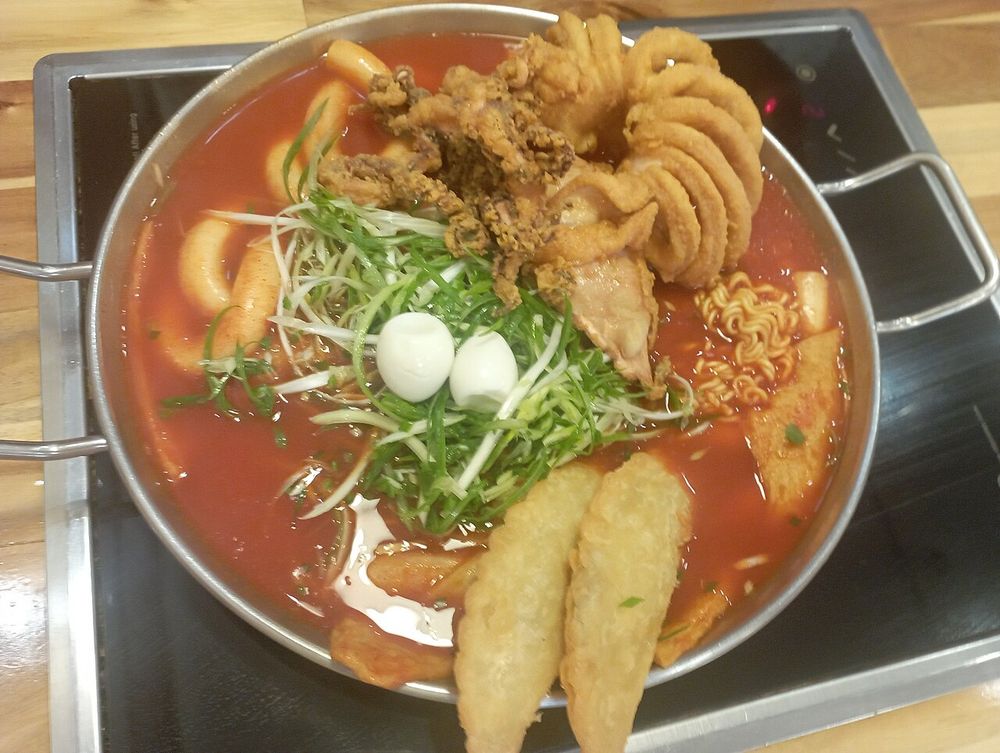
Tteokbokki as served at a Korean restaurant: rice cakes in a gochujang-based sauce. A generic dish photo, not a Yopokki product. Photo: Suohros, Wikimedia Commons, CC BY-SA 4.0.
The certifications follow the same logic. A shelf-stable product only pays off if it can enter many markets, so Young Poong has collected halal (KMF and Indonesia's MUI), kosher, vegan and gluten-free labels plus US FDA registration, and it has completed import registration in India, Indonesia and Russia, Maeil Shinmun reported in 2026.
The Numbers: Exports Pay for Everything
Because Young Poong files no public financial statements, its numbers come from press interviews and awards. Everything published:
| Measure | Figure | Source |
|---|---|---|
| Revenue 2018 | ₩14.8 billion | Maeil Shinmun, 2022 |
| Revenue 2019 | ₩18.1 billion | Maeil Shinmun, 2022 |
| Revenue 2020 | ₩19.5 billion | Maeil Shinmun, 2022 |
| Revenue 2021 | ₩30.6 billion (+57% on 2020) | Maeil Shinmun, 2022; growth is an EpicKor calculation |
| Export towers | $1m (2012), $3m (2017), $5m (2018), $10m (2019), $20m (2022) | Company history; Maeil Shinmun |
| Annual exports, latest | About $35 million | Dealsite, 6 Nov 2026 (year not stated) |
| Export share | About 75% of sales | Dealsite, 2026; 70–75% in Maeil Shinmun, 2022 |
| Implied total sales | About $46.7 million, roughly ₩62 billion | EpicKor estimate: $35m ÷ 0.75, at ₩1,335 per dollar |
| Staff | 94 employees (2022) | Maeil Shinmun, 2022 |
| Production space | About 33,000 m² of production facilities | Dealsite, 2026 |
Read together, the figures describe a company that grew about 4.2 times from ₩14.8 billion in 2018 to an estimated ₩62 billion, with almost all of the growth coming from abroad. That last figure is our estimate, not a reported one, and the export figure behind it has no stated base year. Maeil Shinmun reported in August that the company was aiming for a $30 million export tower in 2026. In our reading, that fits the roughly $35 million in exports Dealsite reported in November.
Jo's stated targets are much bigger: $100 million in sales within five years and $1 billion within ten. He repeated the $100 million and $1 billion export ambition at a March 2026 meeting with President Lee Jae-myung, Maeil Shinmun reported.
Where Yopokki Sells
By region, Europe is the largest market. By country, the United States is. In Europe, the Netherlands and the United Kingdom lead, Dealsite reported.
In the US, Yopokki is a familiar name in online Asian grocery:
- Amazon has a "Yopokki Store" brand page with the Rabokki cups (rice cake plus ramen), jjajang packs and halal cups. Who operates that store, the Korean maker or a US importer, is not stated on the listings.
- Weee!, the US online Asian grocer, listed a two-cup Sweet Mild Spicy pack at $4.99 when EpicKor checked on 24 November 2026, though it showed as out of stock that day.
- Walmart.com carries at least one Yopokki item through a third-party seller.
Young Poong has also courted fans directly: the company says it has taken part in KCON, CJ ENM's K-culture convention, since 2020.
The $300 Million US Deal: What It Is and What It Is Not
On 21 September 2026, Maeil Shinmun reported that Young Poong had signed a three-way export contract worth $300 million (about ₩400 billion) over four years, starting in 2027:
- Company A, a US distributor, handles import, distribution, and retail and online sales.
- Company B, a Korean distribution specialist, coordinates the deal, sourcing and supply chain.
- Young Poong produces.
Neither partner was named. After the US, the company said it plans to use the base to expand into other regions, including Europe.
$300 million over four years is about $75 million a year, more than double the roughly $35 million in annual exports Dealsite reported for all 125 countries combined. That is an EpicKor calculation from the reported figures. If the contract is delivered in full, the US alone would become most of the company.
Separately, the company reported memoranda of understanding worth about $170 million with buyers in the Netherlands ($50 million), India ($75 million) and Türkiye ($30 million), plus smaller ones in Japan, Cambodia, Malaysia, Ukraine, the US, Brazil and Singapore. MOUs in Korean export reporting are statements of intent, not binding orders, and should be read that way.
Honest Counter-Points
Capacity is the bottleneck, and the company says so. Maeil Shinmun reported in July 2026 that demand has been rising about 20% a year and that current equipment cannot keep up with orders. Production is split across several sites, which raises logistics and labour costs. The September report on the US deal noted that the company wants to expand but is held back by industry restrictions (업종 제한) on the land available in its area. Back in 2022, Jo said Daegu's industrial zones had very few sites available for food companies. A $75-million-a-year contract needs factory space that does not yet exist.
The numbers are mostly self-reported. With no public audited accounts, every revenue and export figure here comes from the company through the press or from export awards. The awards are third-party, but they are thresholds, not exact figures. The "Korean first" and "world first" patent claims are the company's own wording.
The partners are anonymous. A $300 million deal with an unnamed US distributor cannot be checked from outside. Until a retailer or importer is named, treat it as a signed framework whose real size depends on orders actually placed.
For shoppers, fresh still wins on texture. Shelf-stable rice cakes are softer and more uniform than fresh garaetteok (가래떡) from a Korean market. The cup is a good late-night substitute, not a replacement for street tteokbokki. If you live near a Korean grocery with refrigerated or frozen rice cakes, those plus a sauce will taste closer to Seoul. Buy the cup for convenience, not authenticity.
Allergens. Weee!'s listing for the cup lists milk, wheat (gluten) and soy. Not every flavour is gluten-free or vegan, so check the specific variant, especially the cheese and cream-based ones.
What Overseas Buyers Can Take From Young Poong
Young Poong shows one way a Korean food SME grows, the opposite of the big-brand story:
- Export first, brand later. It won export towers for years before Korean consumers knew its name. Most of its sales still come from abroad.
- Solve a logistics problem, not a taste problem. Tteokbokki was already loved. What was missing was a version that could cross an ocean without a freezer.
- Certifications are distribution. Halal, kosher, vegan and gluten-free labels each open a different set of shelves.
- Watch capacity before volume. When a small Korean supplier announces a deal several times its current size, the first question for a buyer is where the extra production comes from.
For comparison, Samyang Foods took a similar export-first path with Buldak at far larger scale, while Paldo's Doshirak shows how a Korean instant food can become more famous in one foreign country than at home.
FAQ
Q: Is Yopokki Korean?
A: Yes. Yopokki is made by Young Poong Co., Ltd. (농업회사법인(주)영풍) in Daegu, South Korea, and the products are made in Korea.
Q: Who owns Yopokki?
A: The brand belongs to Young Poong, a privately held company founded in 1993 and still led by its founder-CEO, Jo Jae-gon. It is not listed, and no outside investor has been reported. Exact shareholdings are not public.
Q: Is Yopokki owned by Young Poong Group or Korea Zinc?
A: No. Young Poong Corp, the listed zinc smelter in a control fight with Korea Zinc, is a different company. The Yopokki maker is an agricultural corporation in Daegu, and there is no known ownership link between the two.
Q: Where is Yopokki made?
A: At Young Poong's production sites in the Seongseo Industrial Complex in Dalseo-gu, Daegu.
Q: Why does Yopokki not need refrigeration?
A: The company uses a patented process that keeps rice cakes soft at room temperature for up to about a year, according to Korean press reports. That is what lets it ship by sea and sit on a normal shelf.
Q: Is Yopokki halal?
A: Some Yopokki products are halal-certified (KMF and MUI certifications appear in the company's history), and halal cups are sold under that label. Not every flavour is, so check the halal mark on the specific pack.
Q: How big is the company?
A: Korean press reported annual exports of about $35 million, about 75% of sales. The last published revenue figure was ₩30.6 billion for 2021. EpicKor estimates total sales at around $46.7 million (about ₩62 billion).
Related Reading
- Who Makes Buldak? Samyang Foods: Owners, Factories, Sales: the biggest Korean instant-food export story.
- Doshirak: The Korean Cup Noodle Russia Adopted: another Korean convenience food that grew abroad first.
- Who Makes Melona? Binggrae: a Korean snack brand foreigners know better than its maker.
- Pulmuone Deep Dive: The Korean Company That Quietly Owns America's Tofu Aisle: Korean food built for US shelves.
- Tteokbokki: Korea's Spicy Rice Cakes, Types and Spice Levels: what the cup is trying to recreate.
- Coolpis: The Korean Drink That Exists to Put Out Tteokbokki: what Koreans drink with it.
Sources
- Financial Supervisory Service, DART company overview (기업개황정보) for 농업회사법인영풍, corporate code 01152975: legal name, English name, CEO, classification as other corporation, registration numbers, Daegu address, industry, registry date. dart.fss.or.kr, checked 24 November 2026.
- Young Poong, company history (연혁): 1993 founding as 영풍물산, 1998 trade registration, 2001 Matamun trademark, 2003 Seongseo plant, 2007 patent, 2012 first China shipment and $1m tower, 2014 conversion, 2015 Hosan-dong campus and KOTRA LA programme, 2016 FDA registration, certifications and export towers through 2022, 2024 awards.
- Young Poong, CEO message (CEO 인사말): signed by CEO and Professional Engineer in food technology Jo Jae-gon.
- Young Poong, brand page (브랜드소개): meaning of the Yopokki name, flavour range, Matamun, Redcook and pancake brands.
- Maeil Shinmun, "[기업, 기업인!] <18> 'K-푸드 세계화 원조' 조재곤 농업회사법인 영풍 대표", 23 November 2022: founder's career, pork-cutlet start, 2000 foot-and-mouth loss, 2013 room-temperature patent, brands, 2018–2021 revenue, export share, 94 staff, factories, Daegu site shortage.
- Maeil Shinmun, "125개국 사로잡은 '요뽀끼'…영풍, 세계적 푸드테크 기업 도약", 29 July 2026: 125 countries, certifications, import registrations, 20% annual demand growth, capacity shortfall, split production sites.
- Maeil Shinmun, "[대구경북을 빛낸 베스트80] 영풍, K푸드 세계화 이끄는 푸드테크 명가", 18 August 2026: patent claims, export tower history, $30m target, MOUs worth about $170m, KCON, two Daegu campuses, March 2026 meeting with the president.
- Maeil Shinmun, "영풍 '요뽀끼', 미국 유통망 뚫었다…4년간 3억달러 수출계약", 21 September 2026: $300m, four-year US contract from 2027, structure with Company A and Company B, expansion plans and industry restrictions (업종 제한) on land.
- Dealsite, interview with Young Poong CEO Jo Jae-gon, 6 November 2026: 1993 founding, about $35m annual exports, 75% export share, Europe and US as top markets, Netherlands and UK, 33,000 m² of production space, five- and ten-year targets, IPO condition, employee share plan.
- Starnews, 18 March 2026 and Sidae (sidae.com), 18 March 2026: Young Poong Corp (the zinc smelter) 2025 standalone revenue and operating loss, and the Korea Zinc dispute. Cited only to separate it from the Yopokki maker.
- Enforcement Decree of the Act on Fostering and Supporting Agricultural and Fishery Business Entities (농어업경영체 육성 및 지원에 관한 법률 시행령), Article 18(1), law.go.kr: non-farmer investment cap for agricultural corporations.
- Weee!, Yopokki Instant Tteokbokki Cup listing: two-cup pack price, origin, cooking instructions, allergens. Checked 24 November 2026.
- Amazon.com, Yopokki brand store listings (Rabokki cup, jjajang pack, halal cup), checked 24 November 2026.
Last updated: 24 November 2026. Company facts, history and certifications are from Young Poong's website and its DART registry entry. Revenue for 2018–2021, staff and factory details are as reported by Maeil Shinmun in 2022. Export value, export share, markets, targets and IPO plans are from the CEO's November 2026 interview with Dealsite. The US contract and MOUs are as reported by Maeil Shinmun from company information. Implied total sales and the comparison of the US deal with current exports are EpicKor calculations. Shareholdings are not public and are not estimated here. The Weee! price and Amazon listings were checked on 24 November 2026 and can change. EpicKor has no commercial relationship with Young Poong.
More Business Guides
Who Makes Melona? Binggrae, the Korean Banana Milk Company, and Who Owns It
Melona is Korean: it is made by Binggrae (빙그레), the Banana Milk company, about 41% owned by Kim Ho-youn, younger brother of Hanwha's chairman.
Ottogi (Otoki) Deep Dive: The Korean Food Giant That Wins at Home and Lags Abroad
Ottogi renamed itself Otoki in English in 2024. It sells more curry, mayonnaise and instant rice inside Korea than almost anyone, yet only about 11% of revenue comes from overseas while Samyang Foods runs at 84.5%. Here is why, and what changes by 2030.
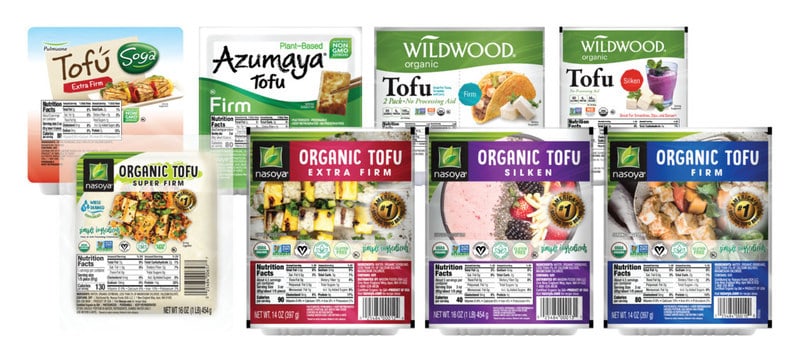
Pulmuone Deep Dive: The Korean Company That Quietly Owns America's Tofu Aisle
Nasoya, Wildwood, Azumaya and Soga are all owned by one Korean company, and none of them say so on the pack. Pulmuone has led the US tofu market for 11 straight years. Its overseas division still lost money in 2025. Both facts are true.