Tteokbokki: Korea's Spicy Rice Cakes, Types and Spice Levels
Ask a lot of Koreans about their first real street-food memory and you'll hear the same thing: a paper cup of tteokbokki, steam rising off chewy rice cakes in a glossy red sauce, eaten standing up on the walk home from school. It's cheap, it's spicy-sweet, and it's everywhere — market stalls, franchise kiosks, convenience-store shelves, and late-night tents.
But here's what trips up a lot of first-time visitors: "tteokbokki" isn't one fixed dish. The sauce, the heat, the toppings, and even the shape of the rice cakes change depending on where you order it. Get it wrong and you might end up with something far spicier than you expected, or a mild version that leaves you wondering what the fuss is about.
This guide breaks down what tteokbokki actually is, the main types you'll see on menus, how spicy each one runs, where to eat it in Seoul, and how to order it without guessing.
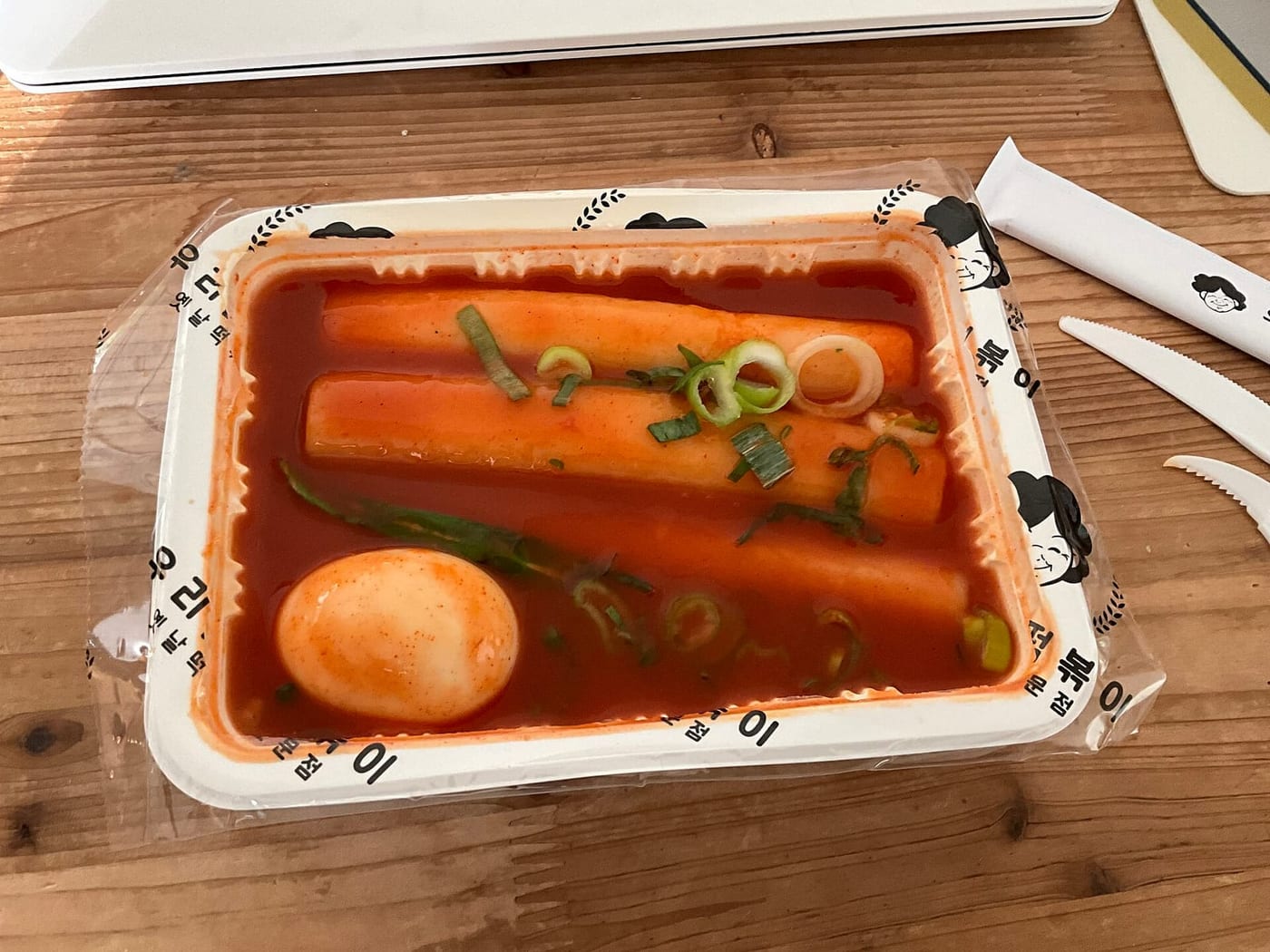
Instant Buldak carbonara tteokbokki — compare on AmazonAffiliate link. As an Amazon Associate, EpicKor earns from qualifying purchases at no extra cost to you.
What Is Tteokbokki, Really?
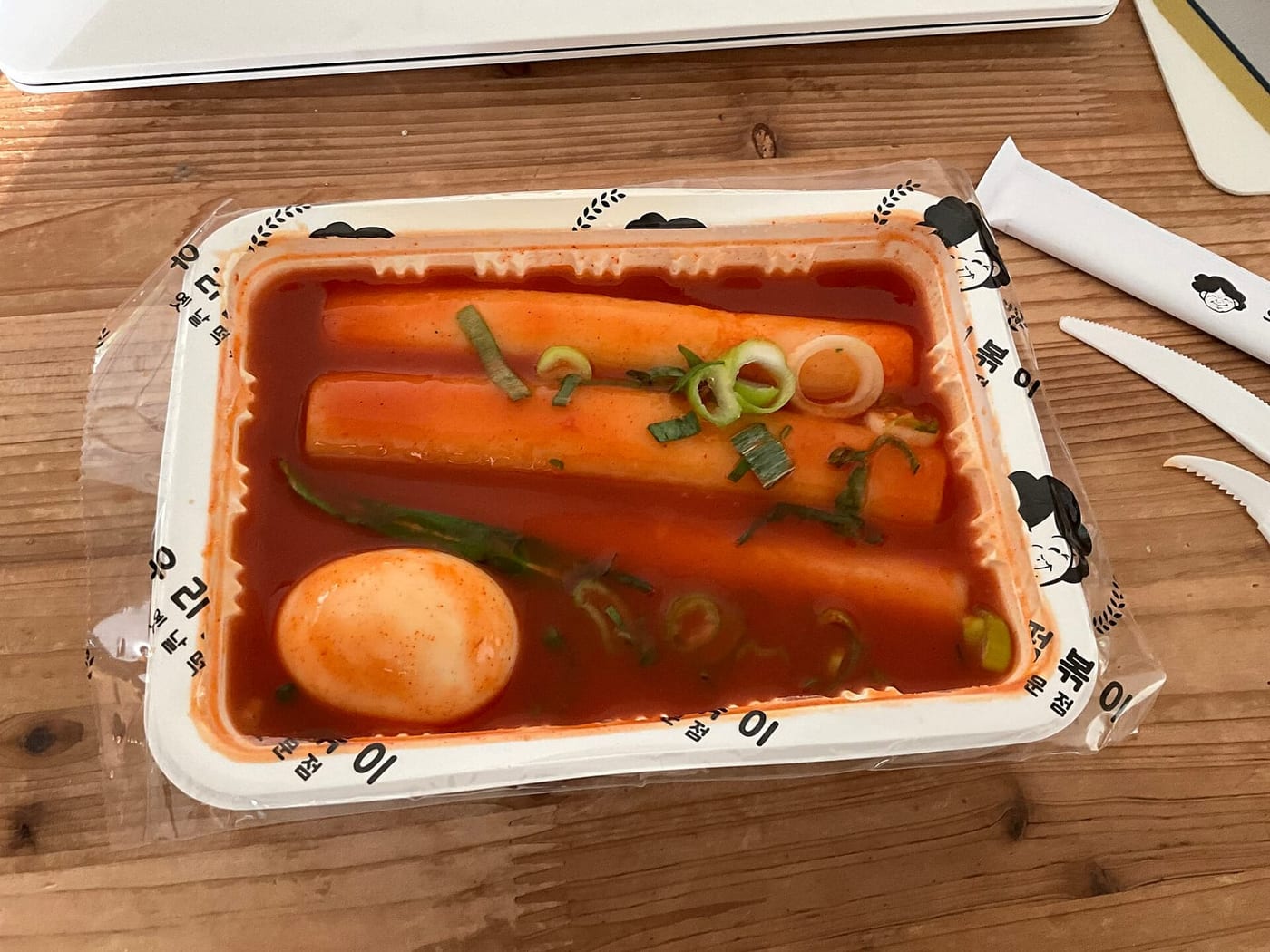
Tteokbokki (떡볶이) refers to Korean rice cakes simmered in a seasoned sauce, most famously a sweet-and-spicy red sauce built on gochujang (fermented chili paste) and gochugaru (chili flakes). The name literally combines tteok (rice cake) and bokki (from bokkeum, "stir-fried"), though today most versions are simmered in sauce rather than dry-fried.
The star ingredient is garaetteok — cylindrical rice cakes made from steamed and pounded rice. For tteokbokki they're usually cut into short, finger-length pieces that stay springy and chewy in the sauce. Some shops use wheat-flour rice cakes (mil-tteok), which are softer and slightly bouncier, while others use pure rice cakes (ssal-tteok), which are chewier and hold their shape longer. Neither is "correct" — it's a texture preference, and plenty of Koreans have a strong opinion about which they like.
Beyond the rice cakes and sauce, the classic street version almost always includes eomuk (fish cake) sheets folded into the pan, plus green onion and sometimes a boiled egg. From there, shops add whatever fits their style: ramen noodles, dumplings, boiled eggs, cabbage, or cheese.
What surprises many people is that spicy tteokbokki is relatively modern. The older, milder ancestor is gungjung tteokbokki ("royal court tteokbokki"), seasoned with soy sauce, beef, and vegetables rather than chili. According to popular Korean food history, the bright-red spicy street version most people picture today was popularized around Seoul's Sindang-dong neighborhood in the mid-20th century and spread from there into a nationwide snack. Treat the exact origin story as food folklore, but the takeaway is real: tteokbokki went from palace side dish to the definitive Korean street snack.
The Main Types You'll See on Menus
Once you know the base, the variations make sense. Here are the styles you're most likely to meet in 2026, from the classic to the crowd-pleasers.
| Style | What's In It | Taste | Best For |
|---|---|---|---|
| Classic gochujang | Rice cakes, fish cake, gochujang, sugar, green onion | Sweet-spicy and chewy | First-timers who want the real thing |
| Rose (rosé) | Gochujang sauce loosened with cream or milk | Creamy, rounded, gentler heat | Anyone who finds plain gochujang too sharp |
| Cheese | Classic base topped with melted mozzarella | Rich, stretchy, milder overall | Cheese lovers and spice-shy eaters |
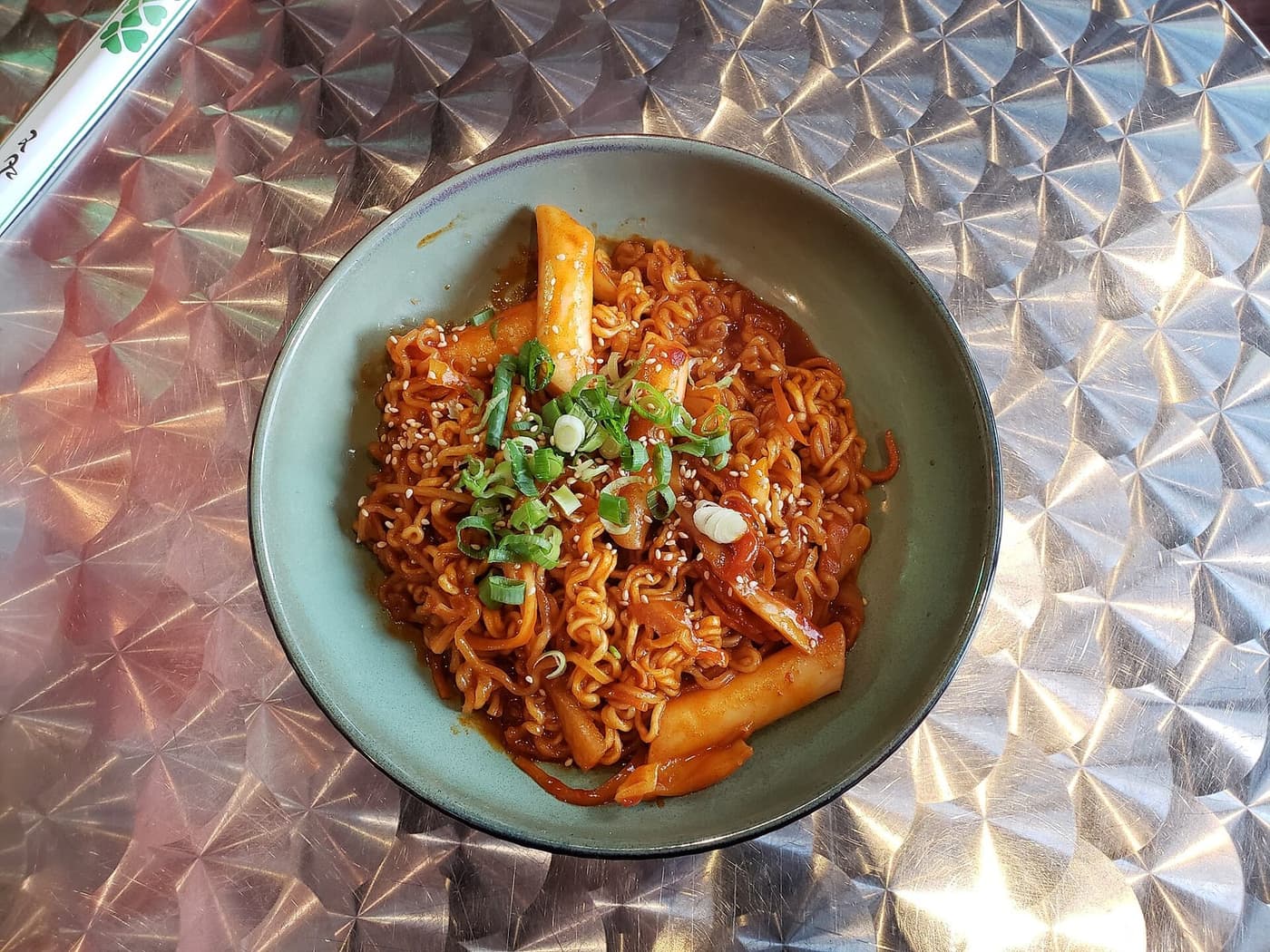
| Rabokki | Tteokbokki plus instant ramyeon noodles | Heartier, a mix of cake and noodle | Sharing and bigger appetites |
| Jjajang | Black-bean sauce instead of chili | Savory and non-spicy | People avoiding chili entirely |
| Gungjung (royal court) | Soy sauce, beef, vegetables, no chili | Savory, mild, refined | Trying the older, non-spicy original |
Two of these deserve a note. Rose tteokbokki became a genuine phenomenon over the last several years: cream tames the gochujang into something closer to a spicy pink pasta sauce, and it converted a lot of people who thought they didn't like tteokbokki. Rabokki — tteokbokki plus a nest of instant ramyeon — is the move when you want a full meal instead of a snack. If you already love Korean instant noodles, EpicKor's Korean ramyun guide explains why that ramen texture works so well soaked in tteokbokki sauce.
Want to taste it before your trip? As an Amazon Associate, EpicKor may earn from qualifying purchases. A carbonara-flavoured instant Buldak tteokbokki is the quickest way to preview that sweet-spicy, chewy texture at home before you order the real thing from a Seoul stall.
See instant Buldak tteokbokki on AmazonSpice Levels and How to Order
The number-one question travelers ask is simple: how spicy is it? The honest answer is that street tteokbokki runs from pleasantly warm to seriously hot, and franchise chains now let you pick a level. Standard tteokbokki is spicy but sweet, so the sugar softens the burn — most people who tolerate mild chili are fine with the default. The "challenge" tiers are a different story.
Here's a rough map of what the spice labels mean when you order at a chain or read a kiosk screen.
| Spice Label (Korean) | Roughly Means | Who It Suits |
|---|---|---|
| 착한맛 / 순한맛 (chakhan / sunhan) | Mild, "friendly" heat | Kids, first-timers, low spice tolerance |
| 기본맛 (gibon) | Standard street-level heat | Most people; the "real" experience |
| 매운맛 (maeun) | Clearly spicy | Regular spicy-food eaters |
| 아주 매운맛 / 극악 (extreme) | Very hot, challenge-tier | Chili veterans, order with milk nearby |
Ordering itself is easy. At a street stall, just point at the tteokbokki and hold up your fingers for how many portions, or say "i-geo juseyo" ("this one, please"). Vendors usually ladle it into a cup or a small dish, and you can add eomuk skewers or fried sides from the same stall. At a franchise, you'll often order at a kiosk: choose the dish, pick a spice level, add toppings like cheese or noodles, then take a number. If you're worried about heat, start at 착한맛 or ask for "deol maepge" ("less spicy"). And keep a drink handy — Korean chili builds, so the third bite is hotter than the first. If you enjoy that slow-building burn, you'll recognize the same effect in EpicKor's Carbo Buldak guide.
Where to Eat Tteokbokki in Seoul
You're never far from tteokbokki in Seoul, but a few options are worth seeking out depending on how much time and appetite you have.
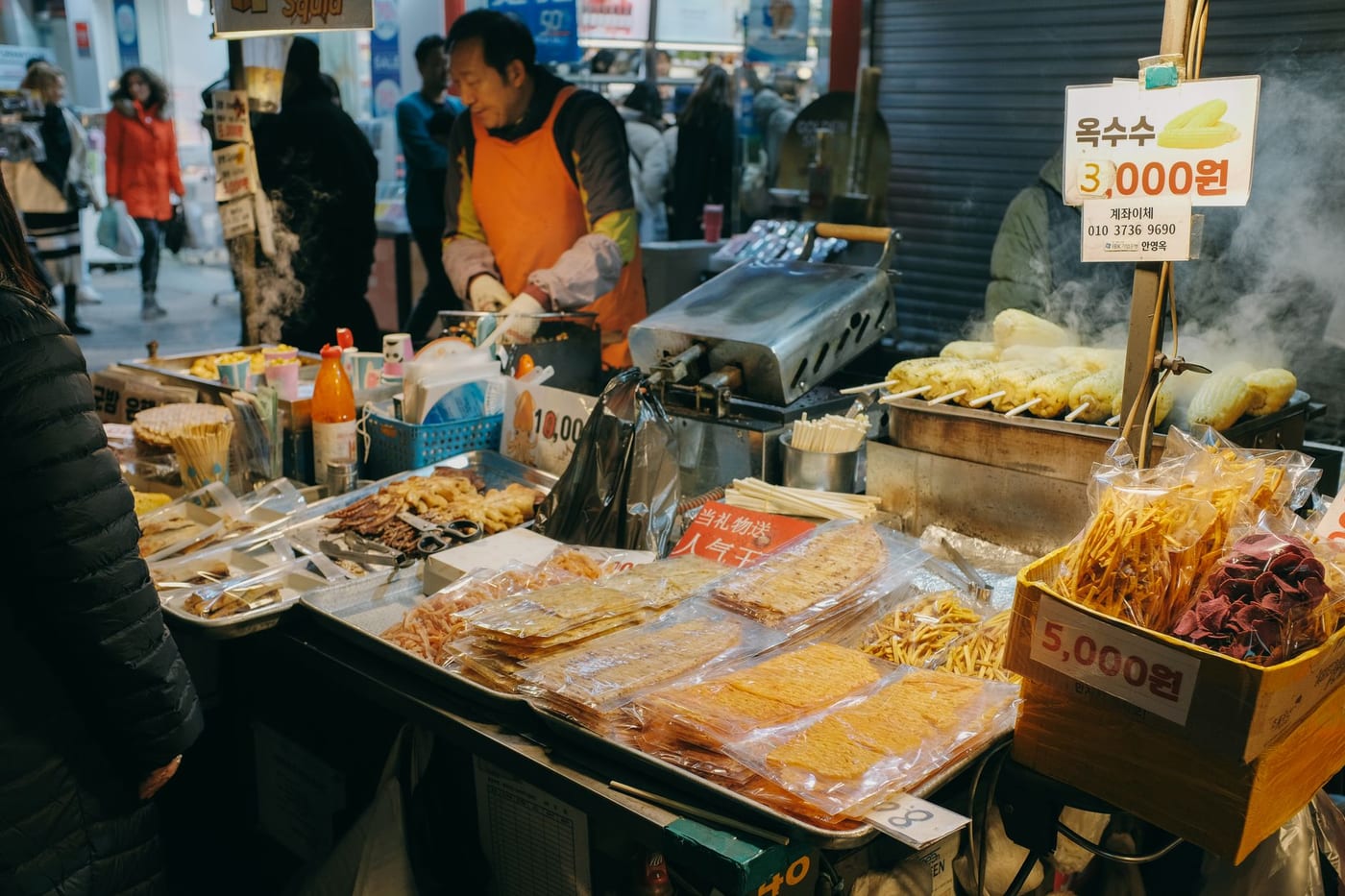
Street stalls and traditional markets are the classic entry point. Markets like Gwangjang and Namdaemun, plus countless neighborhood corners, sell portions you eat standing up, often alongside eomuk, sundae (blood sausage), and fried snacks. It's cheap, fast, and social. For the wider street-tent experience — including the late-night version with drinks — see EpicKor's pojangmacha guide.
Sindang-dong Tteokbokki Town is the pilgrimage stop. This neighborhood is historically tied to spicy tteokbokki and is known for jeukseok tteokbokki, the cook-at-your-table style where a wide pan of rice cakes, noodles, eomuk, dumplings, and vegetables bubbles in front of you. It's built for groups and best enjoyed slowly.
Franchise chains are reliable and everywhere. Names you'll spot across the city include Sinjeon Tteokbokki (신전떡볶이), Yupdduk (엽기떡볶이, known for aggressive heat), and Jaws Tteokbokki (죠스떡볶이), among others. Portions, sets, and spice tiers are standardized, which makes them beginner-friendly. There are also tteokbokki buffets such as Dookki, where you build your own pan from a topping bar — a fun, low-pressure way to try several styles at once.
Here is the part that surprises returning visitors: tteokbokki has crossed into five figures. What was the cheapest hot food in Korea now prices like a full meal at the chains, because a franchise portion is built for two people rather than one.
| What you order | Price, August 2026 |
|---|---|
| Yupdduk 엽기떡볶이, standard | ₩14,000 |
| Yupdduk, rosé or mala | ₩16,000 |
| Yupdduk, mala-rosé | ₩18,000 |
| Market stall portion, eaten standing | Still the cheap option — a few thousand won |
| 떡튀순 set at a neighbourhood 분식 shop | Over ₩10,000 once you add all three |
| Convenience-store cup or tray | Cheapest way to taste it at all |
Franchise prices are the published August 2026 menu; independent shops vary. Tteokbokki price indices rose about 3.3% year on year.
The practical reading: a chain portion is not a snack and not for one person. If you are eating alone or just want a taste, a market stall or a convenience-store tray does the job for a fraction of the price. Order the ₩14,000 pan when there are two of you and it is dinner.
Short on time or want the fastest option? Convenience stores stock cup and tray tteokbokki you can microwave in a minute — genuinely decent, and a good low-stakes first taste. It won't match a fresh market pan, but it'll tell you whether you want the real thing.
How to Make Tteokbokki at Home
Tteokbokki is one of the easiest Korean dishes to recreate, which is part of why it travels so well. The base recipe is forgiving: simmer rice cakes in water or anchovy-kelp stock with gochujang, gochugaru, a little soy sauce, and sugar until the sauce thickens and glosses the cakes. Add fish cake, green onion, and a boiled egg, and you're basically there. Want it milder? Cut the gochugaru and stir in a splash of milk or cream for a quick rose version. Want it heartier? Drop in a block of instant ramyeon for rabokki.
The two things beginners get wrong are texture and balance. If your rice cakes are hard, soak them in warm water first so they soften evenly. And taste as you go — tteokbokki should be sweet and spicy, not just hot, so adjust the sugar until the sauce rounds out. A wide, shallow pan helps the sauce reduce into that signature cling.
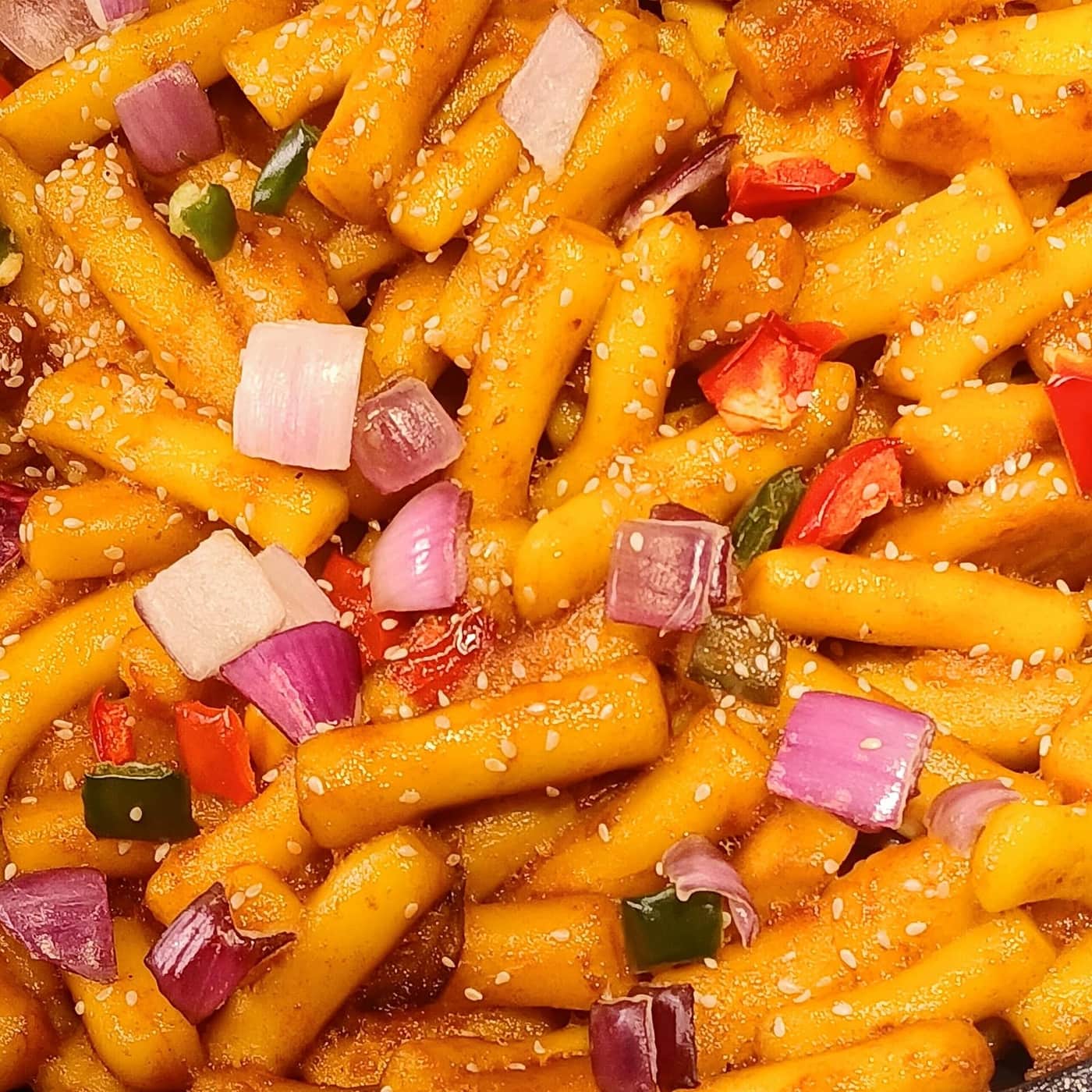
Build a simple home tteokbokki kit: Start with a jar of Korean gochujang and a small Korean ramen pot for rabokki nights. With rice cakes, gochujang, sugar, and fish cake, you can recreate a street-stall bowl without buying ten separate sauces you'll never finish.
See Korean gochujang on AmazonFor a truly no-effort route, instant tteokbokki cups and packs — like Yopokki-style products — come with the rice cakes and a sauce sachet; you just add water and heat. They're a fair substitute on a busy night, even if they can't match the chew of freshly made garaetteok.
Frequently Asked Questions
Q: What is tteokbokki? Tteokbokki is a Korean dish of chewy rice cakes (garaetteok) simmered in a seasoned sauce, most famously a sweet-and-spicy red sauce made with gochujang and chili flakes. It usually includes fish cake and green onion, and it's one of Korea's most popular street foods.
Q: Is tteokbokki very spicy? Standard tteokbokki is spicy but balanced with sugar, so the heat is warm rather than punishing for most people. Many chains now offer mild ("착한맛") to extreme tiers, so you can choose. If you're sensitive to chili, order the mildest level or try rose, cheese, or non-spicy jjajang tteokbokki.
Q: What is rose tteokbokki? Rose (rosé) tteokbokki is a modern version where cream or milk is added to the gochujang sauce, making it creamier and milder. It tastes a bit like a spicy pink pasta sauce and is a great choice for anyone who finds classic tteokbokki too sharp.
Q: What's the difference between tteokbokki and rabokki? Rabokki is tteokbokki with instant ramyeon noodles added to the pan. The rice cakes and noodles share the same spicy sauce, turning a snack into a heartier, shareable meal.
Q: Can vegetarians eat tteokbokki? Not always. The base sauce is often plant-based, but street versions commonly include fish cake (eomuk) and may use anchovy or seafood stock. Ask before ordering, or make it at home with vegetable stock and no fish cake.
Q: Where should first-timers try tteokbokki in Seoul? A traditional market stall (like Gwangjang) is the classic first taste, while Sindang-dong Tteokbokki Town offers the cook-at-your-table experience. Franchise chains and tteokbokki buffets are the most beginner-friendly for choosing your own spice level.
The Bottom Line
Tteokbokki earns its status because it's approachable, customizable, and genuinely fun to eat — a chewy, sweet-spicy snack that scales from a one-dollar market cup to a full table spread with friends. Learn the handful of styles, pick your spice level honestly, and you'll never be stuck staring at a kiosk screen.
Next time you're in Seoul, skip the safe choice and grab a fresh cup from a market stall. Then, if you want to keep exploring Korea's snack-and-street-food world, wander over to EpicKor's everyday Korean foods guide for what locals actually eat beyond the tourist classics.
Sources and further reading:
You Might Also Like
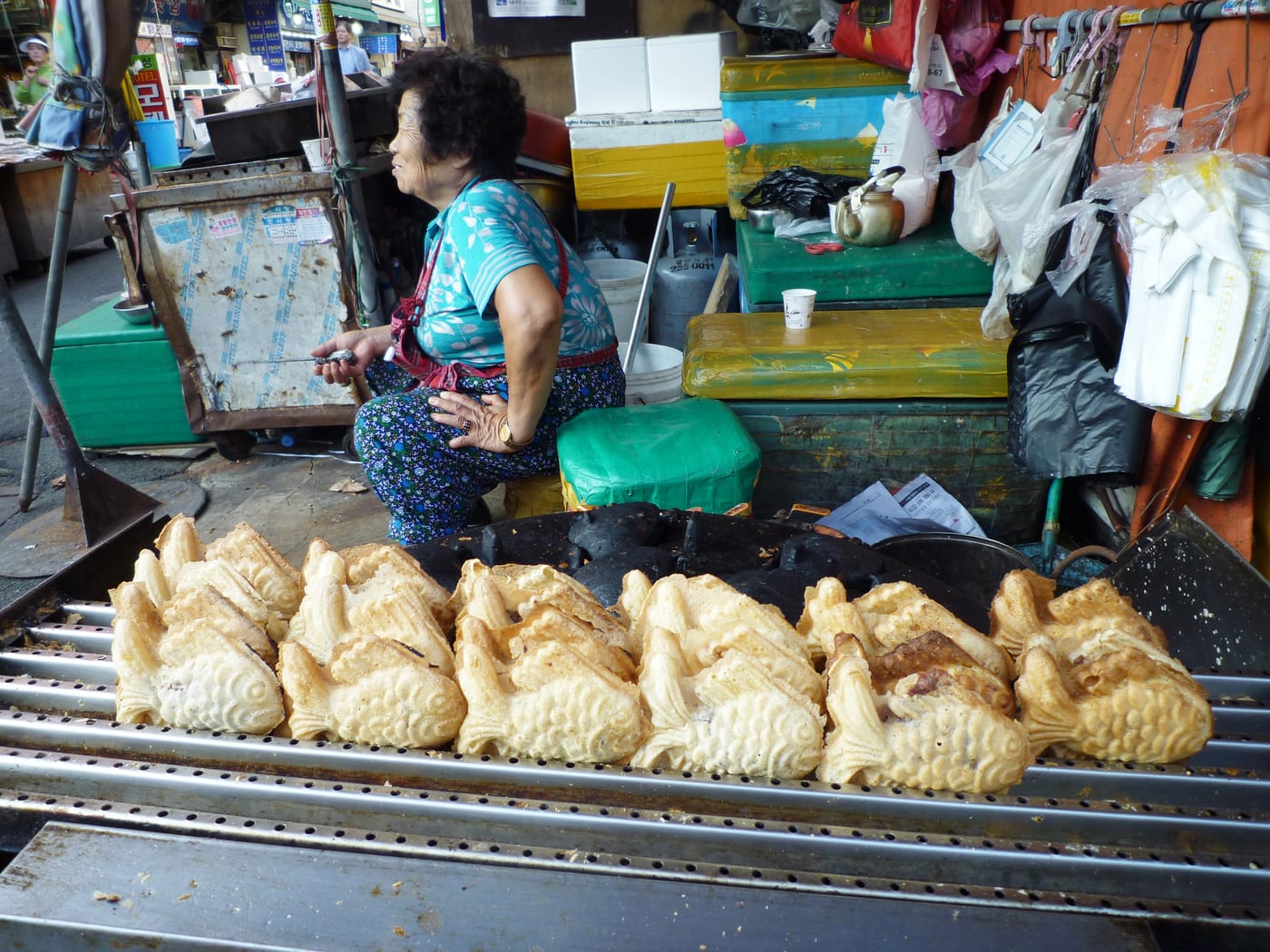
Cham Bungeoppang: The Korean Fish Snack That Is Four Different Fish Abroad
붕어빵 is a winter street food you have to find a cart for. Orion boxed it in 2011, released it in May on purpose, and sold 640 million packs — then renamed it after a different fish in China, Vietnam and Russia.
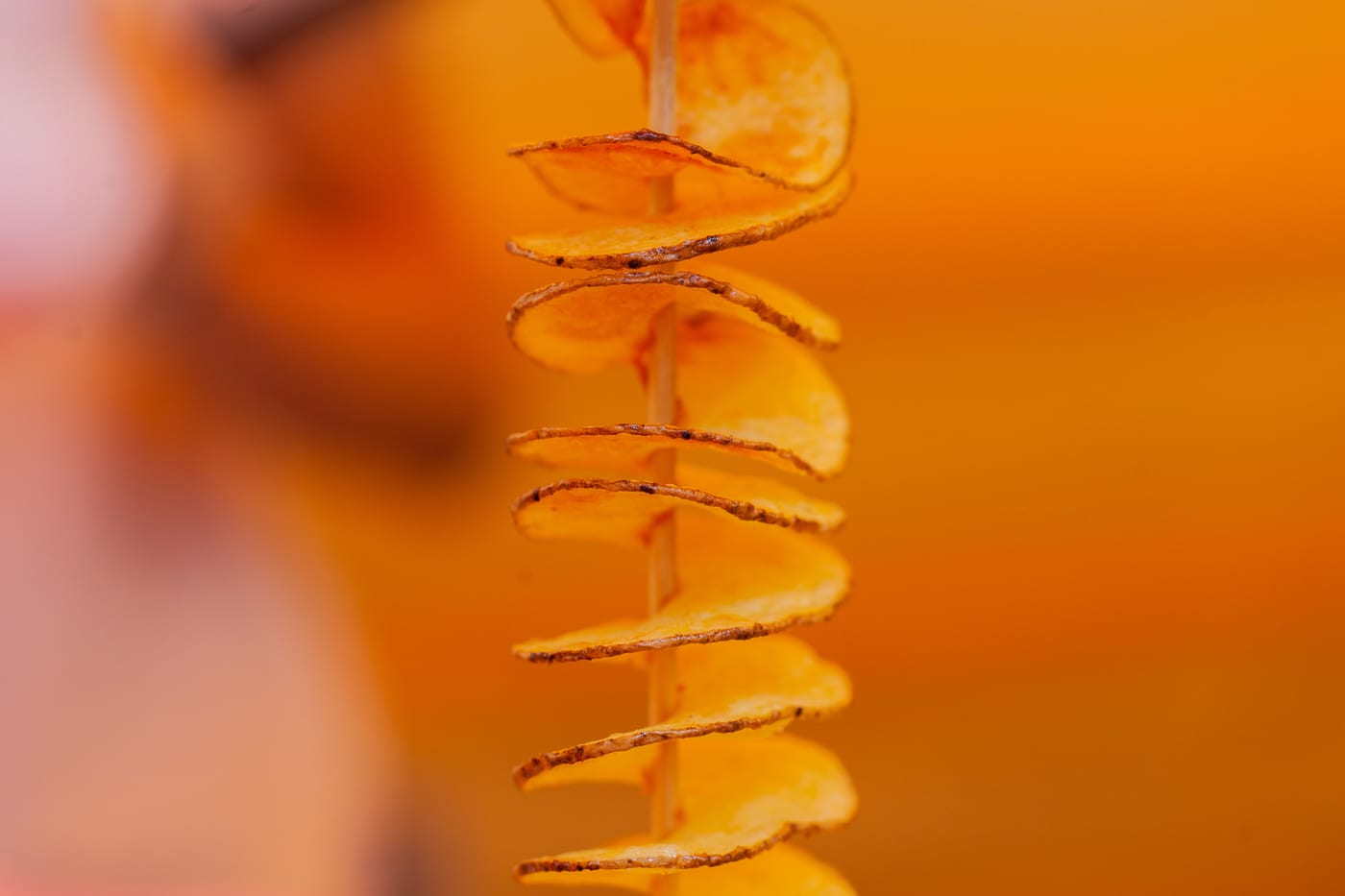
Tornado Potato: The Korean Invention Everybody Thinks Is Generic Fair Food
The spiral potato on a stick has a named inventor, a debut date in Myeongdong, and patents in six jurisdictions. 회오리감자 was designed in Korea in 2006, and the word itself is a trademark — which is why Korean vendors write 스프링감자 instead.
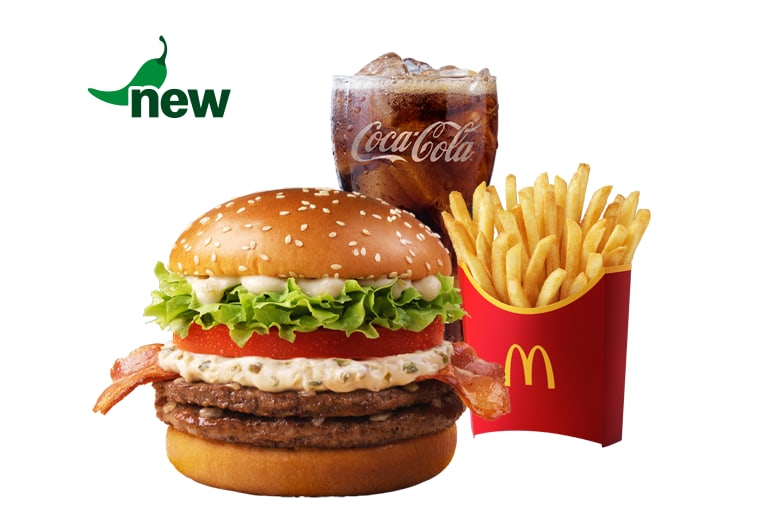
Korean McDonald's: Why the Burgers Are Named After Farm Counties, and What to Order Now
McDonald's Korea has bought 459.2 tonnes of named Korean produce since 2021 and prints the county on the burger — Changnyeong garlic, Jindo spring onion, Jinju pepper. 24 million sold, ₩61.7 billion of measured regional value. Here is what is on the menu now.