Korea Rainy Season Guide: Umbrellas, Jangma, and Travel Tips
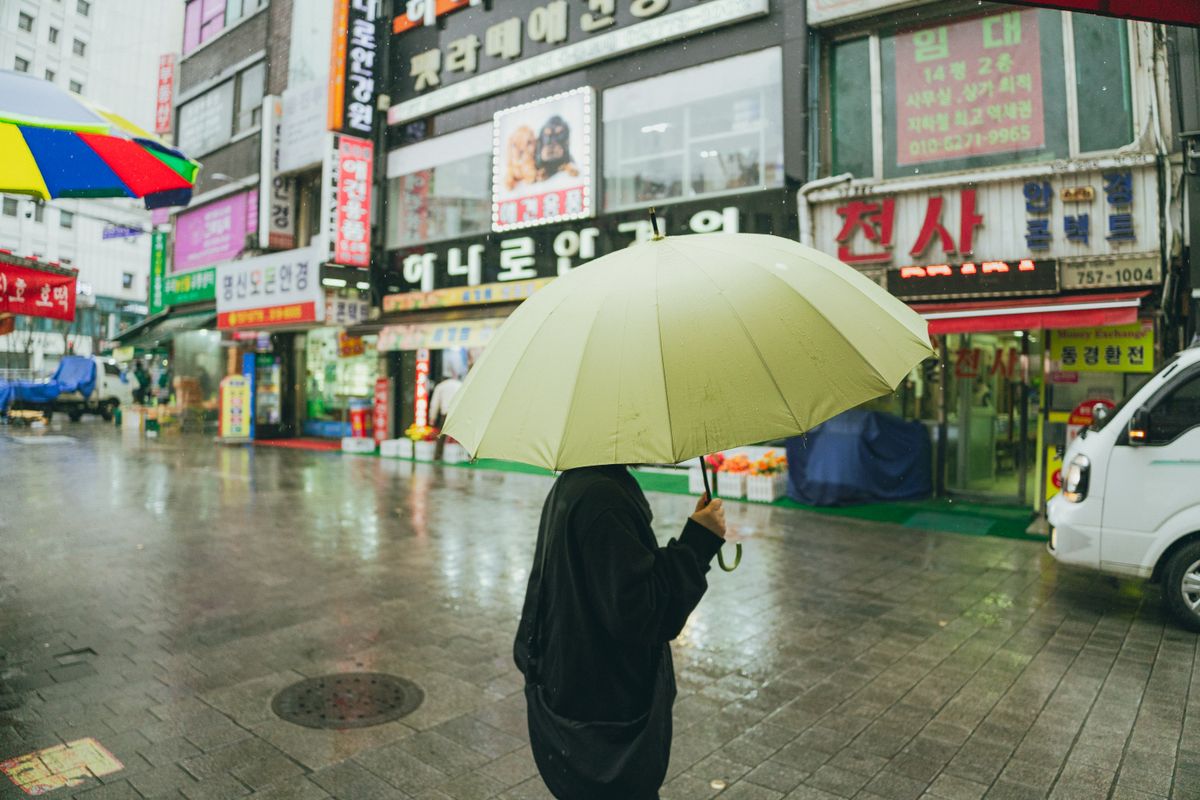
Umbrellas appear quickly in Korea because rain is not only a weather event. It is a city-management problem, a commuting problem, a hairstyle problem, a shoe problem, and sometimes a travel-itinerary problem. In Seoul, one unexpected shower can turn subway stairs, cafe floors, market alleys, palace stones, and bus-stop queues into a wet choreography.
So yes, visitors often notice that Koreans open umbrellas fast, even in light rain. But the better explanation is not "Koreans refuse to get wet." It is that Korea's climate, dense cities, and social habits reward people who prepare early.
This guide explains Korean umbrella culture, jangma rainy season, travel packing, etiquette, and what to do when the forecast changes during a Korea trip.
| Rain issue | Why it matters in Korea | Best visitor habit |
|---|---|---|
| Sudden heavy rain | Summer showers can intensify quickly | Carry a compact umbrella in the day bag |
| Dense sidewalks | Umbrellas collide near stations and crossings | Tilt and close your umbrella early in crowds |
| Wet indoor floors | Subway stairs, cafes, and shops get slippery | Slow down and use umbrella sleeves or stands |
| Outdoor itineraries | Palaces, markets, and hanok lanes are exposed | Keep an indoor backup route ready |
Repel windproof travel umbrella — on AmazonAffiliate link. As an Amazon Associate, EpicKor earns from qualifying purchases at no extra cost to you.
What is jangma?
Jangma is Korea's summer rainy season. The Korea Meteorological Administration explains it as a climatological rainy period connected to the seasonal rain front. Exact timing changes every year, but KMA's 1991-2020 normal data places the rainy season roughly from late June to late July, with regional variation.
KMA normal data lists typical starts around June 25 for the central region, June 23 for the southern region, and June 19 for Jeju, with endings around July 26, July 24, and July 20 respectively. The same normal dataset shows about 31 to 32 days in the rainy-season period and roughly 17 rainy days, depending on region. Those are normals, not a promise for your exact trip week.
For travelers, the lesson is simple: if your Korea trip falls from late June through July, plan as if rain can interrupt outdoor days. If the forecast looks perfect when you book, still bring rain gear.
Why umbrellas come out so fast
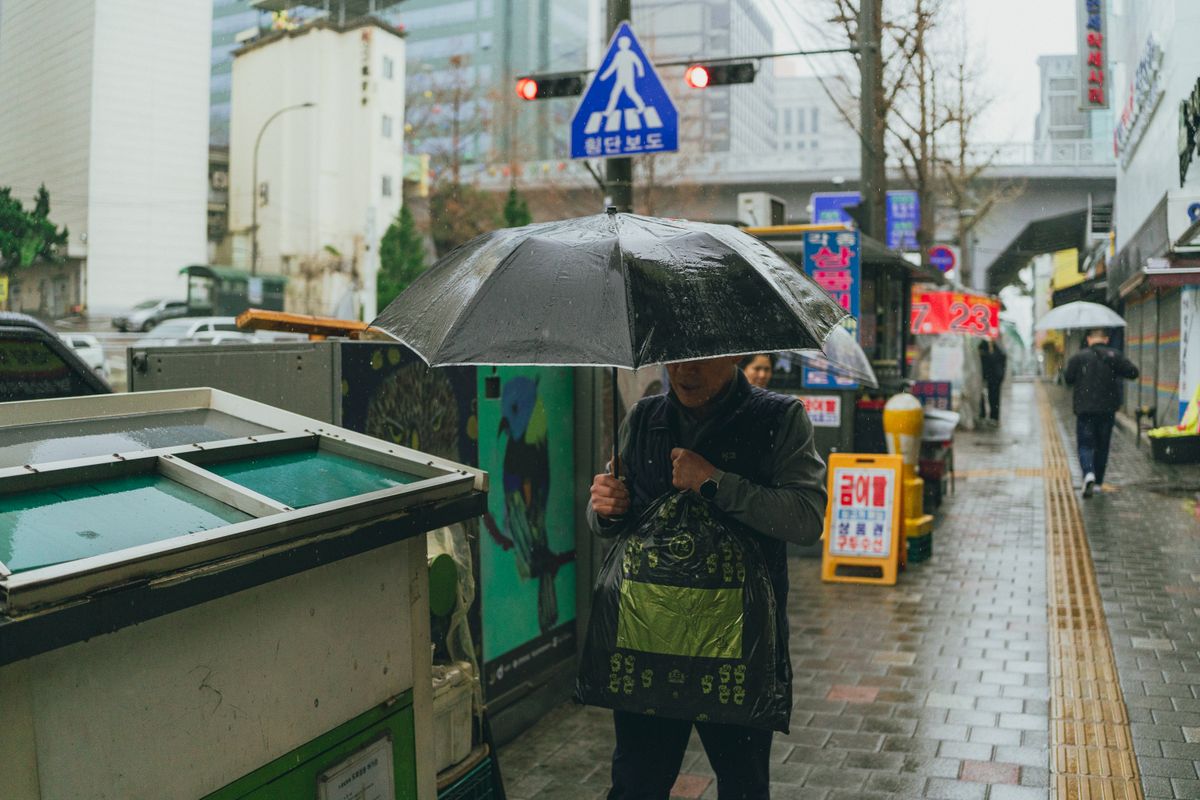
Korean umbrella habits are practical. Many people commute by walking between apartment, bus stop, subway, office, restaurant, and cafe. A few minutes of rain can affect hair, clothes, shoes, bags, phones, and the next indoor space you enter. If you are going to sit in an office, classroom, clinic, salon, restaurant, or meeting room, arriving soaked is inconvenient.
The built environment matters too. Seoul is walkable but dense. A light drizzle at a station exit can become a bottleneck: people pause, open umbrellas, adjust bags, check maps, and decide whether to keep walking. Locals who carry compact umbrellas avoid that little panic.
There is also an etiquette layer. A wet umbrella can drip on floors, seats, other people's shoes, or shop entrances. That is why you may see umbrella sleeves, umbrella stands, drip trays, or people shaking water off before entering. The umbrella is not only protection from rain; it is a way to manage water around other people.
Is the “polluted rain” idea real?
Some Koreans do talk cautiously about first rain, fine dust, yellow dust, or dirty rain, especially after dry polluted days. That does not mean every raindrop is dangerous, and it does not prove popular myths like rain automatically causing hair loss. Avoid turning local caution into exaggerated medical claims.
The useful version is more grounded: rain can mix with urban dust, streets can splash dirty water, and wet hair or clothing can be uncomfortable. If fine dust is a concern, check air-quality and weather information rather than relying on a rumor. If you get caught in the rain, dry off, wash if needed, and keep warm or cool depending on the season.
Korea rewards practical caution, not panic.
Rainy Seoul packing note: As an Amazon Associate, EpicKor may earn from qualifying purchases. Before a summer Korea trip, the Repel windproof umbrella closes to 11.5 inches and survives the sideways gusts that turn a convenience-store umbrella inside out — which is the failure mode jangma actually produces, not gentle drizzle.
How to handle umbrellas politely in Korea
The easiest rule is to make your umbrella smaller before you become someone else's problem. At subway exits, open it after you clear the tight doorway. In crowded crossings, keep it low enough to cover you but high enough not to poke faces. When entering a shop, cafe, museum, or restaurant, look for an umbrella stand, plastic sleeve, or drip area.
Do not shake an umbrella toward other people. Do not rest a wet umbrella on a seat. Do not swing it horizontally while walking. If a place provides plastic sleeves, use them only when needed and dispose of them properly. Some modern buildings prefer reusable stands or drip mats to reduce plastic waste.
On narrow market streets or hanok lanes, a small umbrella is often better than a giant golf umbrella. Big umbrellas protect one person while annoying ten.
Subway exits, cafes, and shops have their own rain rhythm
Rain in Seoul is often most annoying at transition points. The sidewalk may be fine, but the station exit becomes crowded because everyone is deciding whether to open an umbrella, call a taxi, check a map, or wait under the roof. If you stop right at the top of the stairs, you become part of the traffic jam. Step aside first, then adjust.
Cafes and shops create a different problem. A wet umbrella drips onto polished floors, and polished floors become slippery fast. Many places provide umbrella stands or plastic sleeves near the entrance. If there is a stand, use it. If there is no stand, fold the umbrella neatly and keep it pointed downward, away from seats, counters, and other customers' bags.
On buses, keep the umbrella close to your body rather than letting it swing near other passengers' legs. In taxis, close it before the door opens fully if possible, then bring it in carefully. These details are not formal rules, but they make you look much more locally aware.
Rain feels different by season
Summer rain is the one most travelers talk about because it overlaps with heat, humidity, and jangma. A soaked shirt may not feel cold outside, but it can become uncomfortable in air-conditioned subway cars, cafes, and buses. That is why a light dry layer can be useful even in July.
Spring and autumn rain can feel gentler, but temperature swings matter. A clear afternoon can turn into a chilly wet evening, especially if your itinerary includes the Han River, palace grounds, mountain-adjacent neighborhoods, or long waits for buses. In these seasons, a compact umbrella plus a light jacket is often better than a rain jacket alone.
Winter rain or sleet is a different problem. Wet stone, icy patches, and cold wind make footing more important than keeping your hair perfect. If the forecast mentions snow, freezing rain, or icy roads, prioritize shoes and route safety. Korea's winter sidewalks can punish cute shoes with no grip.
Rainy-season packing for Korea
The best Korea rain kit is small enough to carry all day. A perfect umbrella left at the hotel is useless. For most travelers, the kit is compact umbrella, waterproof phone pouch or zip bag, quick-dry layer, shoes with grip, small towel or tissues, and a plan for wet laundry.
VisitKorea's travel basics section reminds visitors to think practically about weather, transportation, emergency information, and travel preparation. Rain affects all of those. It can slow buses, crowd subway exits, make taxis harder to catch, and change whether an outdoor market or palace walk still feels worth it.
| Trip type | Rain priority | Useful backup | Common mistake |
|---|---|---|---|
| Seoul city walk | Compact umbrella and shoes with grip | Subway-connected malls or cafes | Wearing smooth fashion shoes all day |
| Palace or hanok route | Small umbrella and stable footing | Museum, tea house, bookstore | Large umbrella in narrow photo spots |
| Market food day | Wet tissues and bag protection | Covered market lanes or department food hall | Letting paper bags soak through |
| Jeju or coastal trip | Wind-aware rain gear | Indoor cafe, museum, short driving route | Trusting only Seoul weather data |
What to do when rain changes your itinerary
Do not treat rain as a failed day. Korea has strong indoor alternatives: bookstores, department-store food halls, underground shopping streets, museums, cafes, jjimjilbang, board game cafes, PC bangs, malls, and covered markets. The trick is to switch early rather than fighting the forecast until everyone is wet and annoyed.
For Seoul, a rainy-day route can be simple: pick one subway-connected area, eat indoors, add a cafe or bookstore, then leave the prettiest outdoor neighborhood for later. COEX, Gwanghwamun, Myeongdong, Yeouido, Gangnam, Jamsil, and Hongdae all have indoor options nearby, but the best choice depends on where you already are.
Check official weather updates, local map apps, and the sky. KMA operates Korea's national weather service and provides weather information for severe-weather awareness. For a tourist, that means you should not rely only on yesterday's social media itinerary.
A simple rainy-day decision rule
Use a three-level rule instead of overthinking the forecast. If rain is light and your route is mostly subway-connected, keep the plan but shorten exposed walks. If rain is steady or windy, switch outdoor attractions to indoor anchors and save scenic neighborhoods for later. If heavy rain, flooding alerts, lightning, or transport disruption appear, cancel nonessential outdoor movement and stay near your accommodation or a safe indoor area.
This sounds obvious, but travelers often lose time because they try to rescue the exact itinerary. Korea is easier when you separate the goal from the location. If the goal was "eat something memorable," a department-store food hall can replace a market. If the goal was "see Korean design," a museum or bookstore can replace a hanok-lane walk. If the goal was "rest," a jjimjilbang or cafe can beat a wet photo route.
Rain planning is not pessimism. It is how you keep the trip flexible enough to stay enjoyable.
Protect the phone first: If your route includes markets, festivals, beaches, or jangma showers, a JOTO IPX8 waterproof phone pouch keeps the map, the translation app and the tap-to-pay card working — the touchscreen still responds through it, which matters when the alternative is drying a phone in a café.
Related EpicKor guides
For full seasonal planning, read EpicKor's Korea rainy season guide, Korea summer packing list, first-time Korea travel guide, and Seoul rainy-day itinerary. For rain-friendly food and indoor stops, pair this with the pajeon and makgeolli rainy-day guide, department-store food hall guide, and Seoul bookstore and library guide.
Sources and further reading
- Korea Meteorological Administration: Rainy-season normal data.
- Korea Meteorological Administration: Mission and weather-service overview.
- VisitKorea: Travel basics.
FAQ
Q: When is Korea's rainy season? A: It usually falls from late June through late July, but timing varies by year and region. KMA's 1991-2020 normal data places starts around June 19-25 depending on region.
Q: Do I really need an umbrella in Korea? A: Yes, if you are traveling in summer or doing long city walks. A compact umbrella is useful because rain can interrupt subway exits, markets, palaces, and cafe routes quickly.
Q: Is Korean rain dangerous because of pollution? A: Do not panic. Rain can mix with urban dust and street water, but popular claims should not be exaggerated. Check weather and air-quality information, then use normal hygiene and practical rain gear.
Q: What umbrella size is best for Seoul? A: A compact folding umbrella is usually best. Giant umbrellas can be awkward in subway exits, narrow markets, and crowded sidewalks.
Q: What should I pack for jangma? A: Bring a compact umbrella, shoes with grip, waterproof phone protection, quick-dry clothing, small tissues or towel, and an indoor backup route.
Q: What should I do on a rainy day in Seoul? A: Switch to subway-connected indoor routes: COEX, department-store food halls, bookstores, museums, cafes, jjimjilbang, board game cafes, or covered markets.
Video insight: The umbrella culture
You Might Also Like
What Koreans Eat Beyond Tourist Classics: 7 Everyday Favorites
Seven everyday Korean food favorites beyond the usual tourist checklist, with ordering tips for gimbap, jjajangmyeon, bossam, jeon, and market snacks.
Public Toilets in Korea: 78,183 of Them, and the Law That Decides Which You Can Walk Into
Korea has 78,183 public toilets and a law that sorts them into five categories. One of them lets you walk into a private building and use the restroom without buying anything. Plus the 10-minute subway re-entry rule and why the stall has no bin.

Korean Food Scissors Guide: Practical Tools and Hangover Drinks
A practical guide to Korean food scissors, table tools, hangover drinks, and the small convenience habits visitors notice in Korea.