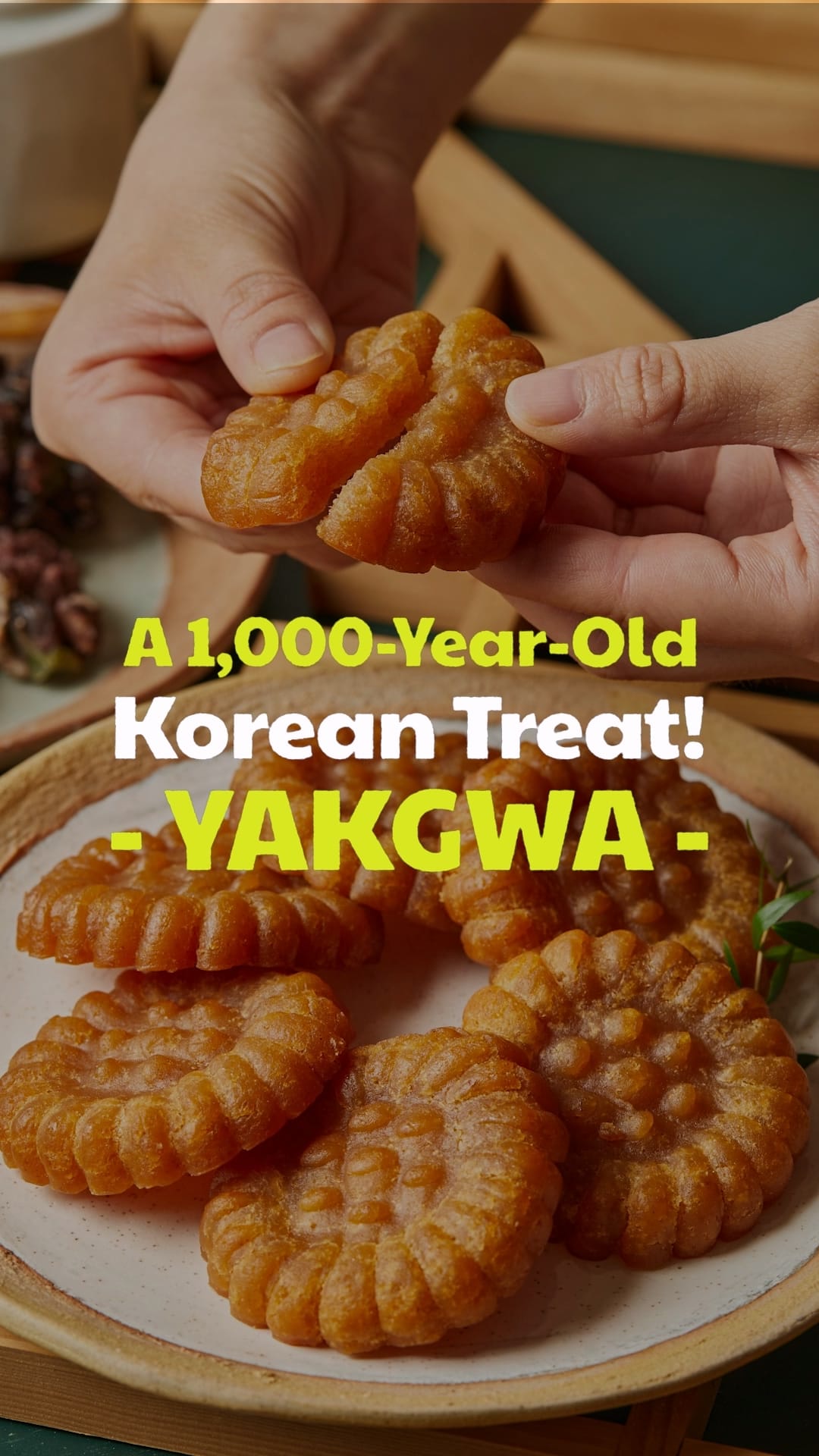
Yakgwa: Korea's Honey Cookie Was Banned Twice, and Now It Sells Out in Minutes
Yakgwa (약과) is a Korean honey cookie: wheat dough kneaded with honey and sesame oil, pressed in a wooden mould, deep-fried, then soaked in syrup.
Two things about it are worth knowing before anything else.
It was banned. Twice, by royal order — in 1192 and again in 1353 — because making it consumed so much grain, honey and oil that prices rose and ordinary people suffered. In Joseon Korea, using it outside three permitted occasions was punishable by 60 strokes of the cane.
And its name is now the Korean phrase for "that's nothing." When a Korean says "이 정도면 약과다", they mean it could be much worse. A word for one of the most expensive things you could eat became the word for trivial.
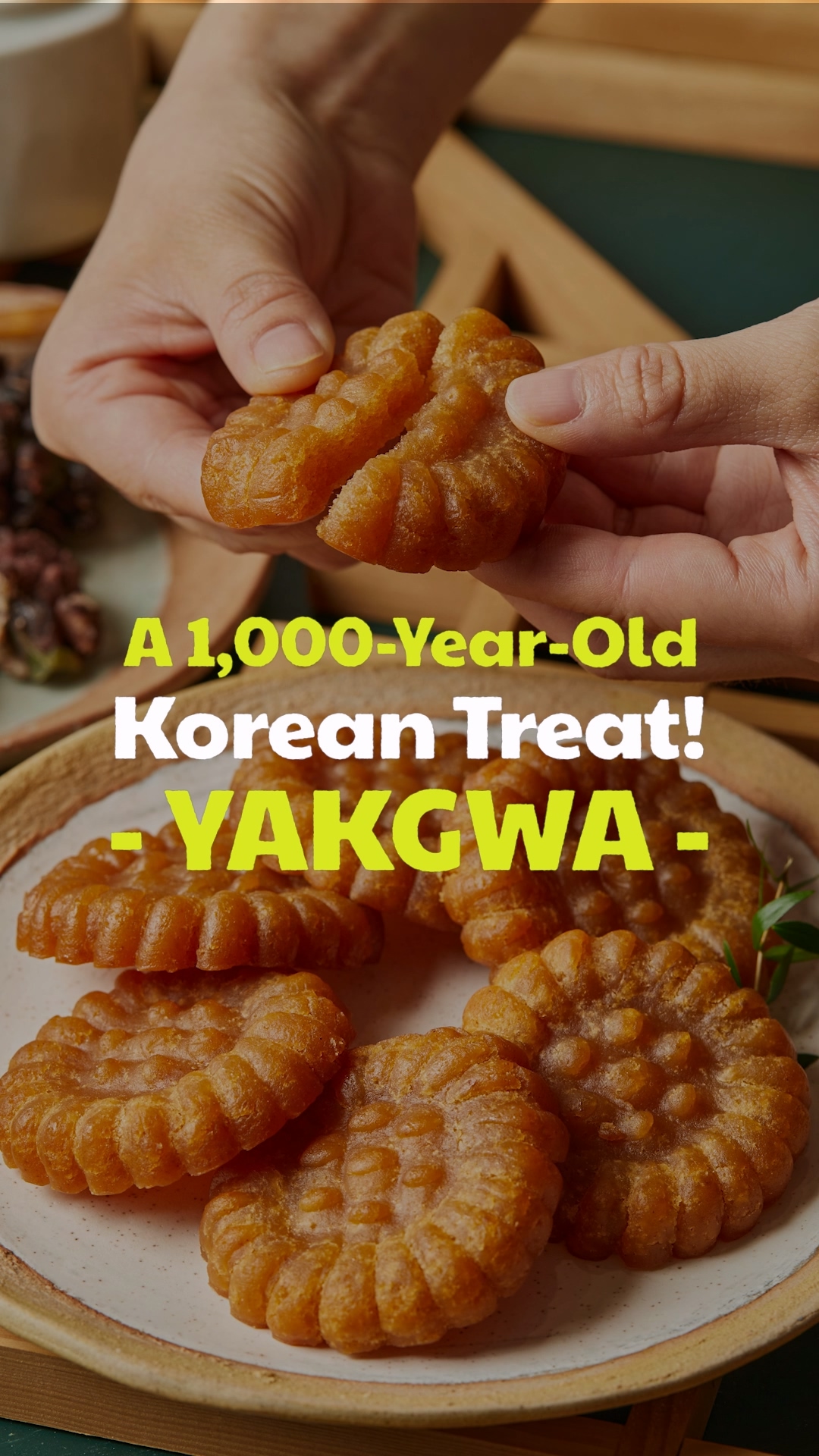
Today it is back, and the most famous maker sells one box per person, three afternoons a week. Koreans call trying to get it 약케팅 — yakgwa plus ticketing.
The Short Answer
| Detail | |
|---|---|
| Korean | 약과 — 약 (medicine) + 과 (confection) |
| Category | 유밀과, the oil-and-honey confection family |
| Made from | Wheat flour, honey, sesame oil, fried, then syrup-soaked |
| Banned | 1192 and 1353 by royal order; Joseon penalty 60 strokes |
| The idiom | "이 정도면 약과다" = "this is nothing" |
| Named-maker entry price | ₩10,900 for a 480g bag of 장인 미니약과 |
| Hardest to buy | 장인약과 파지약과 — Mon/Wed/Fri 5pm, one box each |
| Best pairing | Unsweetened tea, barley tea, or black coffee |
Pair this with EpicKor's Korean traditional desserts guide, Korean snacks and texture guide, and Seoul museum gift shop guide for a fuller food-souvenir route.
The Cookie That Was Too Expensive to Allow
Yakgwa belongs to a category called 유밀과 — literally oil-honey confection. The method has barely changed: wheat flour kneaded with honey and sesame oil, pressed into a carved wooden 약과판 mould, fried in vegetable oil, then steeped in syrup.
Read that ingredient list against a pre-modern economy. Wheat flour, honey and cooking oil were all costly, and yakgwa uses them lavishly. It was not a treat that scaled.
The Korean historical record is blunt about the consequence. The Goryeosa legal prohibitions record that in 1192 an order went out to use tree fruits and nuts instead of 유밀과. In 1353 the ban was issued again. The stated reason both times was that consumption of grain, honey and oil was driving prices up and hurting people's livelihoods.
Joseon kept restricting it. Using 유밀과 outside of 헌수 (a birthday toast to elders), 혼인 (weddings) and 제향 (ancestral rites) was punishable by 장 60대 — 60 strokes of the cane.
So the vague thing English writing says about yakgwa — that it "carries a memory of a time when sweetness felt precious" — is an understatement of a documented fact. This was a dessert the state legislated against.
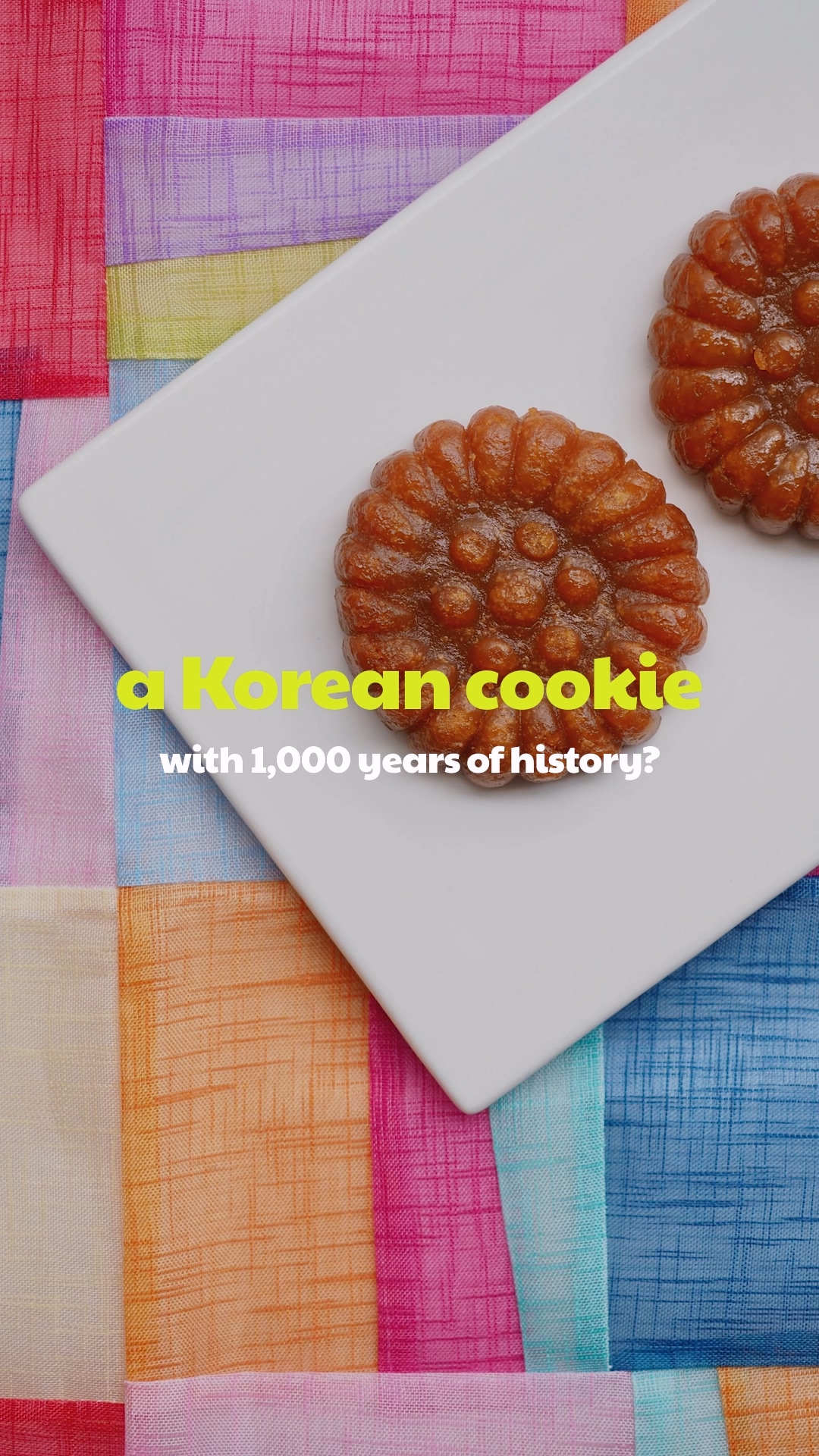
Why "Yakgwa" Came to Mean "No Big Deal"
Here is the turn that makes the whole story worth telling.
Because yakgwa was so valuable, it circulated as a bribe. Then bribery in Korea escalated — wild ginseng, deer antler velvet, things far costlier than a box of cookies. Faced with those, people started waving yakgwa off: 이건 약과네. This one's just yakgwa.
The dismissal stuck and outlived the context. "이 정도면 약과다" is now ordinary Korean for "this is nothing," "it could be worse," roughly what English does with a piece of cake.
Which means the language contains a fossil. Modern Korean uses the name of a luxury item to say something is trivial, because the luxury item was once out-bribed.
You will see this pun used commercially. An ice cream launched during the boom is called 이정도는약과지 — "this much is just yakgwa" — and reportedly grew sales about elevenfold in a month.
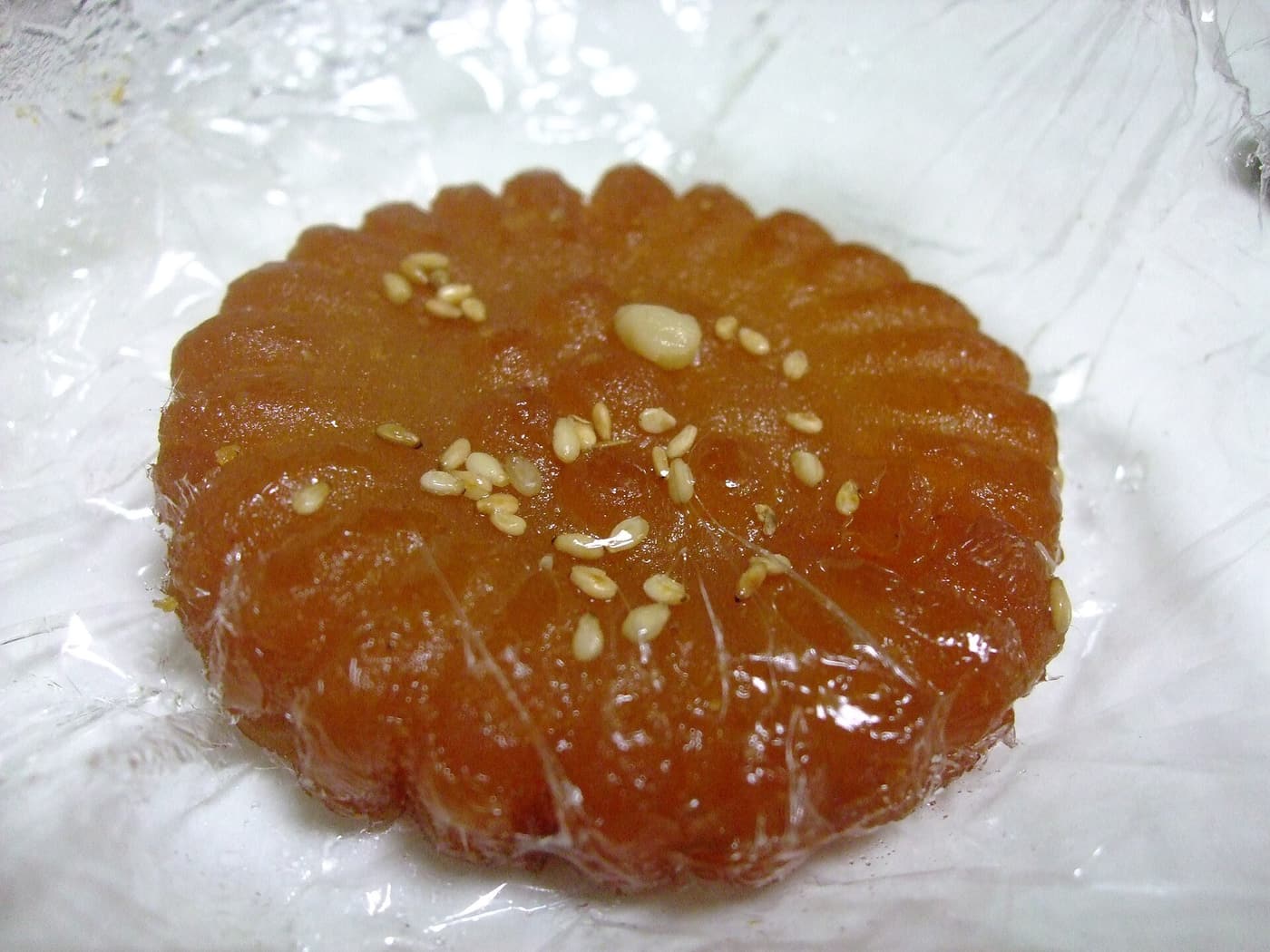
Traditional yakgwa. The shape is pressed from a wooden mould, and the gloss is the honey syrup it soaks in after frying. Photo by Lawren00, CC BY-SA 3.0.
약케팅: How Buying a Cookie Became a Sport
The revival rides the 할매니얼 trend — 할매 (grandmother) plus millennial — the same wave that brought back yanggaeng, mugwort desserts, grain drinks and rice cakes.
But yakgwa did something the others did not: it became genuinely hard to buy. Koreans coined 약케팅, yakgwa + ticketing, for the scramble.
The shop that produced the word is 장인약과 (Jangin Yakgwa) in Uijeongbu, Gyeonggi Province. Its signature is not the pretty version — it is 파지약과, the broken pieces, sold cheaper because they did not survive intact. The shop bills it as the best-selling yakgwa in the country.
How it actually sells: through the website, Mondays, Wednesdays and Fridays at 5pm KST, limited to one box per person.
Current prices from the maker's own shop, as of August 2026:
| Product | Price |
|---|---|
| 못난이 파지약과, 2-pack | ₩16,500 |
| 못난이 파지약과, 4-pack (August limited run) | ₩31,500 |
| 못난이 파지약과, full box (limited quantity) | ₩149,600 |
| 장인 세모약과, 2-pack | ₩20,000 |
| 장인 미니약과, 480g | ₩10,900 |
At the time of writing, three of the seven items on that page were out of stock, including the single 세모약과 and the 480g mini bag. That is the whole phenomenon in one screenshot, and you can check it yourself before believing it.
Two other makers worth knowing, both regional and both doing something specific:
- 버들골수제약과 in Chuncheon, Gangwon — a pastry-style yakgwa, less sugar and more 조청 (grain syrup). Thin, crisp, and notably not sticky, which makes it the easier one to eat with an iced americano.
- 타래약과 in Damyang, Jeollanam-do — hand-twisted rather than moulded, made with Korean wheat and domestic rice syrup, seasoned with ginger and cinnamon.
The mass-market end moved too. CU reported yakgwa product sales up 158.6% year on year in a January during the boom, which is what turned a heritage sweet into a convenience-store category.
Yakgwa tasting at home: As an Amazon Associate, EpicKor may earn from qualifying purchases. If you want the shelf-stable version before a Korea trip, compare yakgwa Korean honey cookies and try them with tea or black coffee rather than treating them like ordinary cookies.
What Yakgwa Actually Tastes Like
Yakgwa is sweet, but the better versions are not only sweet. You may notice honey, grain syrup, toasted sesame oil, ginger, a cinnamon-like warmth, and a faint fried-dough richness.
Texture is the real divider. Think syrup-soaked pastry bite, not crunchy biscuit:
- firm on the outside;
- moist or fudgy inside;
- fragrant from sesame oil or spices;
- sticky enough to slow you down;
- rich enough that one small piece makes sense.
This is why it pairs with bitter or clean drinks — unsweetened tea, barley tea, iced americano, black coffee. Put it next to a sweet drink and the whole thing turns heavy.
개성약과, the Kaesong style, is the one to look for if you dislike density. Repeated folding and pressing gives it a layered, pastry-like structure closer to a flaky biscuit than a syrup brick.
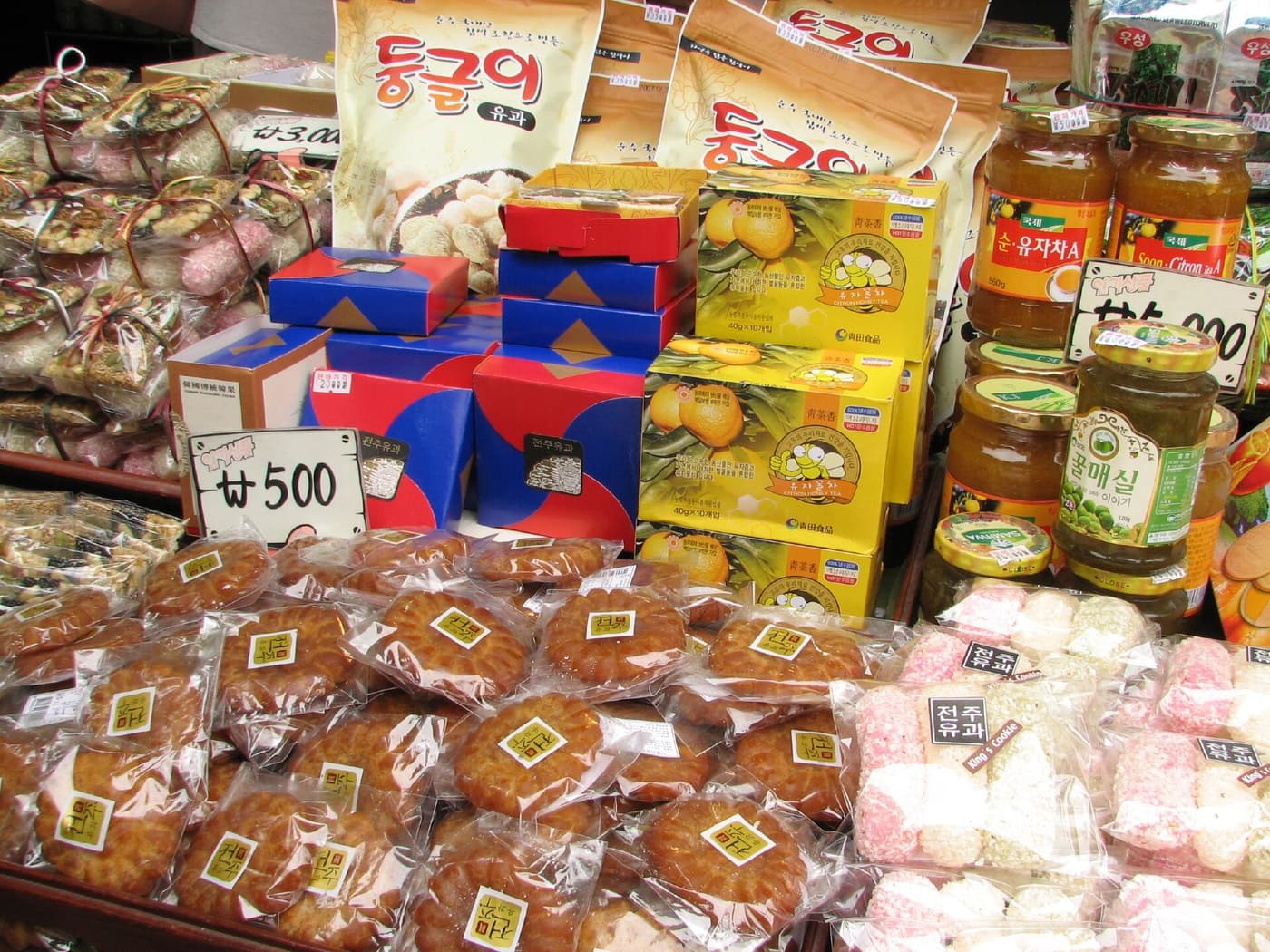
Yakgwa is normally served with tea rather than eaten alone — the tea is what keeps the sweetness manageable. Photo by Amsikle, CC BY-SA 2.0.
Traditional vs Modern
Not every yakgwa is doing the same job. Some are for ritual and holiday trays, some are cafe desserts, some are convenience-store snacks.
| Type | Where you see it | Texture | Best for |
|---|---|---|---|
| Traditional 약과 | Markets, hangwa shops, holiday trays | Dense, syrupy, fragrant | Tea, gifts, cultural tasting |
| 개성약과 | Specialty makers, premium boxes | Layered, flaky | People who find standard yakgwa too dense |
| Mini yakgwa | Snack aisles, souvenir packs | Small, easy to share | Travel snacks, office gifts |
| 파지약과 (broken) | Direct from makers online | Same taste, irregular shape | Eating it yourself, cheaper per gram |
| Yakgwa cookie / ice cream | Cafes, convenience stores, collabs | Cookie or cream base plus sticky topping | Trend tasting |
If you are new to it, start with a small traditional piece, then try a modern cafe version. The contrast is the lesson: one shows why it lasted, the other why it came back.
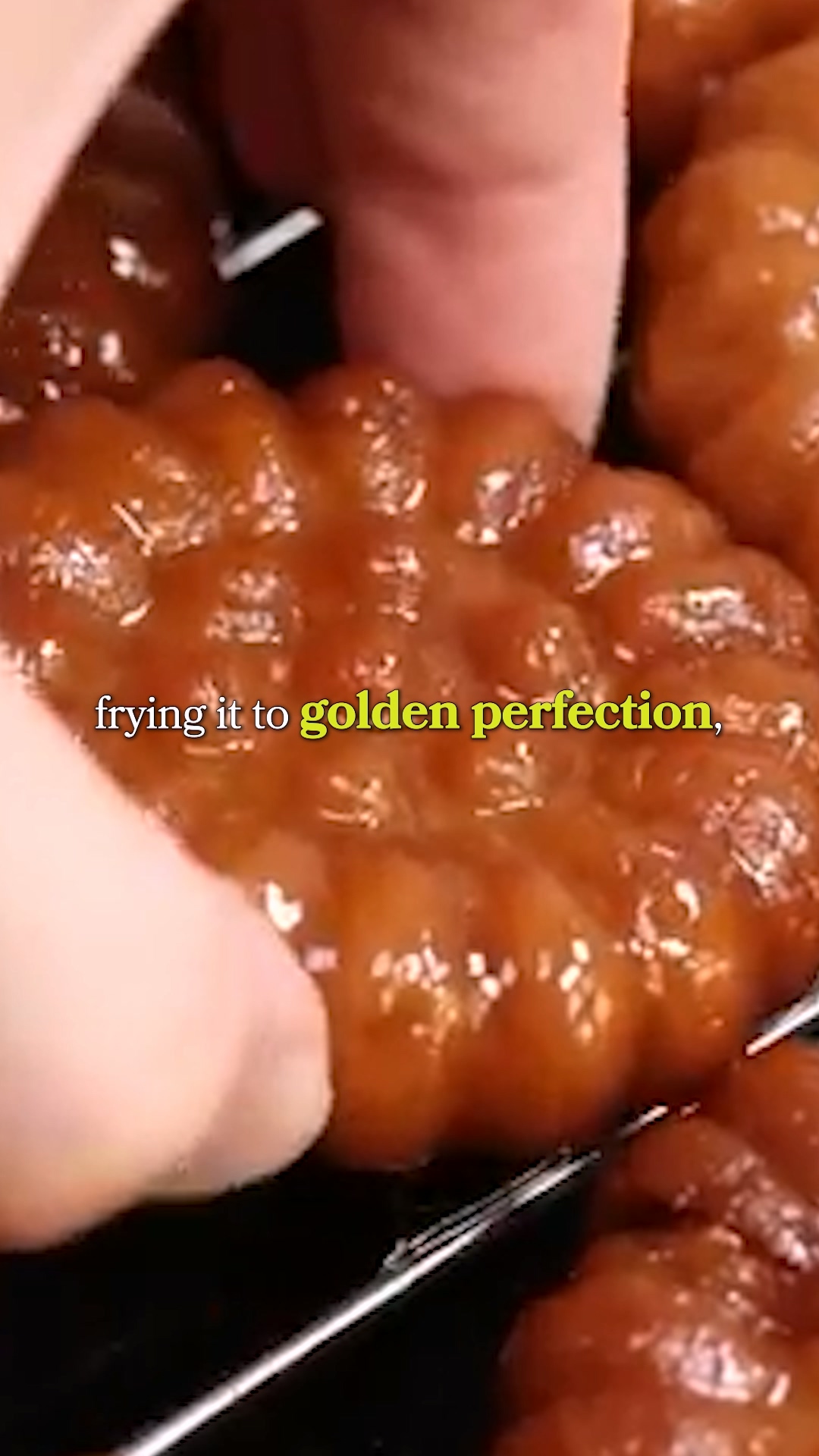
A tip that circulated with the ice cream trend and genuinely works: microwave a yakgwa for about ten seconds before putting it on ice cream. The syrup loosens and the cold cream stops it from setting hard.
How to Buy Without Regret
Yakgwa is small, but bad buying decisions are easy. A giant cheap pack can taste flat. A beautiful premium box may be too sweet for the recipient. Choose by use case.
| Use case | Best choice | What to check | Common mistake |
|---|---|---|---|
| Souvenir for many people | Individually wrapped mini yakgwa | Expiry date, packaging strength | Loose sticky pieces in a warm suitcase |
| Gift for one person | Premium box or specialty-shop set | Sweetness, allergens, storage | Choosing by box design alone |
| First taste | Small traditional piece plus a cafe version | The texture gap between them | Judging the category from one convenience-store item |
| Eating it yourself | 파지약과 broken pieces | Weight per won | Paying extra for a shape you are about to bite |
| Food content | Modern yakgwa dessert | Whether it actually tastes balanced | Ignoring taste for plating |
For travel, choose sealed packaging. Yakgwa is sticky and dense, and loose pieces do not belong in a hot suitcase.
Where to Find It Without the Queue
Traditional markets, department-store food halls, museum shops, convenience stores and Seoul cafes all carry it. Insadong is the natural starting point because the neighbourhood already leans traditional. Department stores are better for a clean gift box.
You do not need 약케팅 to eat good yakgwa. The queue is for one specific maker's broken pieces. A hangwa shop in a market will sell you something excellent, immediately, at a normal price.
Is It Healthy?
No. The 약 in the name means medicine, and older Korean food culture did treat honey and sesame oil as restorative, but this is deep-fried dough soaked in syrup. It is dense, sugary and oily by design.
That is not a reason to avoid it — it is a reason to eat one piece with tea rather than a handful in front of a screen. The traditional serving context, small amounts with unsweetened tea, is also the sensible one.
Common First-Timer Mistakes
Expecting a crunchy cookie. It is a syrup-soaked bite. Judge it as pastry.
Eating it alone without a drink. The tea is not decoration; it is what makes the sweetness work.
Buying the biggest cheapest bag first. Industrial mini yakgwa is fine as a snack but is not what the fuss is about.
Assuming the queue means it is the only good one. 약케팅 is about one shop's supply, not about quality being scarce nationwide.
Judging the whole category from a convenience-store piece. That version exists because the trend went mass-market, not because it is the reference point.
Build the tea pairing: Yakgwa is designed around a bitter drink. Damtuh roasted barley tea (보리차) is the pairing — toasted, caffeine-free and completely unsweetened, which is the half most people are missing before they decide a honey cookie is simply too sweet.
Sources
The 유밀과 prohibition dates, the stated reasons, and the Joseon penalty come from the Encyclopedia of Korean Culture entry on 유밀과. The idiom's bribery origin and the 개성약과 structure are from Korean-language reference material on 약과. The 약케팅 phenomenon, the named regional makers and the CU sales figure come from Nongmin Shinmun's yakgwa feature and Herald Business. Prices and stock status were read from 장인약과's own online shop in August 2026.
Small-maker stock and sale windows change. Check the shop's own page before planning a purchase around it.
FAQ
Q: Why was yakgwa banned in Korea?
A: Because it consumed too much of three expensive things at once — grain, honey and oil. Goryeo ordered tree fruits used in place of 유밀과 in 1192, and banned it again in 1353, both times citing rising prices and hardship for ordinary people. Joseon restricted it to three occasions — elders' birthday toasts, weddings and ancestral rites — with 60 strokes of the cane for using it otherwise.
Q: What does "이 정도면 약과" mean?
A: "This is nothing" or "it could be worse," close to the English a piece of cake. The origin is bribery: yakgwa was valuable enough to be given as one, and when costlier bribes like wild ginseng and deer antler velvet became common, people dismissed yakgwa as trivial by comparison. The phrase outlived the practice.
Q: What is 약케팅?
A: 약과 (yakgwa) + 티케팅 (ticketing) — Korean slang for the scramble to buy yakgwa from a maker that sells out instantly. It was coined around 장인약과 in Uijeongbu, which sells through its website on Mondays, Wednesdays and Fridays at 5pm KST, one box per person.
Q: How much does yakgwa cost in Korea?
A: From 장인약과's own shop in August 2026, a 480g bag of 장인 미니약과 is ₩10,900, a two-pack of 못난이 파지약과 is ₩16,500, and a full limited box is ₩149,600. Market and hangwa-shop prices are usually lower; convenience-store mini yakgwa is cheaper still and is a different product in practice.
Q: What is 파지약과?
A: Broken yakgwa — pieces that cracked in production. Same recipe and taste, irregular shape, lower price. It is the product that made 장인약과 famous, which is unusual: the seconds became the headline item.
Q: Is yakgwa healthy despite the name?
A: No. 약 means medicine and older Korean food culture treated honey and sesame oil as restorative, but yakgwa is fried dough soaked in syrup. Eat one with unsweetened tea, which is how it was served in the first place.
Q: What should a first-timer try?
A: A small traditional piece from a market or hangwa shop, then a modern cafe version, so you can feel the gap. If dense and sticky is not your thing, look for 개성약과, whose repeated folding gives it a layered, flaky structure instead.
You Might Also Like
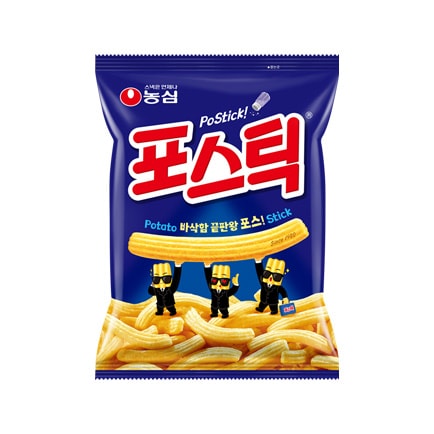
Postick: The Korean Snack That Used to Come With a Ketchup Packet
Postick (포스틱) has been on Korean shelves since 1980, it is only 23% potato, and it shipped with a ketchup sachet until the sachet got too expensive. What it costs now, and the ramyun-powder trick Koreans use on it.
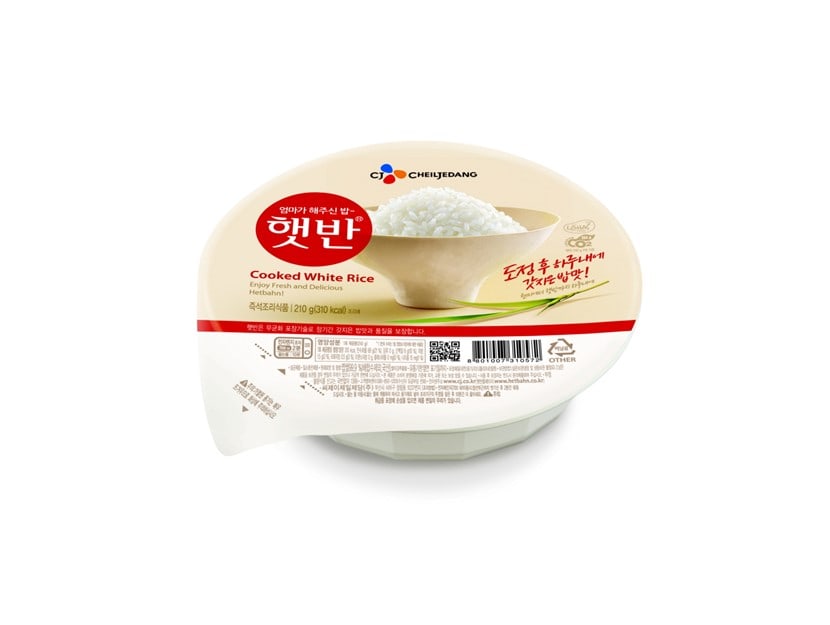
Hetbahn: What Korea's Instant Rice Is Made Of, and How to Heat It Without a Microwave
햇반 is 99.9% Korean rice and water plus 0.1% rice bran extract, sealed in a room cleaner than a hospital ward. The lid prints three cooking times and one of them needs no microwave at all. Prices, varieties, and the mistake almost everyone makes with the film.
Korean Food Prices in August 2026: What Already Rose, and What Changes on the 25th
Four Korean food makers raised prices within three weeks, and Paris Baguette's 127-item increase lands on 25 August. The exact brands, dates and won amounts, why wheat and corn are behind it, and what it actually changes for a visitor.